Preprint
Article

This version is not peer-reviewed.

Effect of Flame Retardants (BDE-47) Exposure on Benthic Organisms from Coastal Areas: Experiment on Symbiont-Bearing Foraminifera of the Genus Peneroplis

  † These authors contributed equally to this work (Co-first authors).

A peer-reviewed version of this preprint was published in:
Toxics 2026, 14(5), 441. https://doi.org/10.3390/toxics14050441

Submitted:

18 March 2026

Posted:

19 March 2026

You are already at the latest version

Abstract

Benthic foraminifera, worldwide single-cell marine organisms, represent an important component of seabed ecosystems. Due to their sensitivity to environmental changes, they are often used as bioindicators, providing an efficient tool in toxicity studies. Among the pollutants affecting marine coastal and estuarine environments, persistent flame retardants such as polybrominated diphenyl ethers (PBDEs) are frequently found. Low-level exposure to BDE-47, a PBDE congener, is known to affect organisms development. In this framework, this study aims to assess the effects of BDE-47 exposure on benthic foraminifera from coastal marine environments. Foraminifera specimens belonging to the symbiont-bearing Peneroplidae family were sampled and exposed to two different BDE-47 concentrations from T0 up to 48 h (T48). Vitality indicators such as changes in pseudopodial activity, movement, reproduction, loss of symbiont algae, and eventual death were monitored during the experiment. Exposure to BDE-47 induced alterations in pseudopodial activity, movement, reproduction, and symbiont retention, with progressive loss of vitality and eventual mortality at increasing exposure levels, highlighting the sensitivity of this species to BDE-47 exposure. These findings suggest the harmful repercussions of PBDE pollution on marine coastal ecosystems, affecting benthic organisms and potentially contributing to biomagnification processes within the food web, with possible implications for human health.

Keywords: 
;  ;  ;  

1. Introduction

Polybrominated diphenyl ethers (PBDEs) are a class of brominated flame retardants extensively incorporated into polymers, textiles, and electronic equipment to reduce their affinity to the fire. PBDEs, especially their form BDE-47, have been detected ubiquitously in worldwide marine water and sediments, due to their slow release from products and waste streams, their hydrophobic character, and their resistance to degradation [1]. Moreover, their chemical-physical characteristics favor persistence and bioaccumulation in aquatic and terrestrial environments.
The ecotoxicological concern surrounding PBDEs arise from their environmental persistence, their potential for long-range transport, and ability to accumulate and biomagnify along aquatic food webs. These properties pose significant ecological and human health threats, as highlighted by regulatory bodies such as EFSA, which have identified potential reproductive, neurodevelopmental, and endocrine disruptive effects associated with PBDE exposure in vertebrate models and food-derived human exposure pathways [1].
Given its strong affinity for particulate matter and sediments, marine benthic compartment represents a major environmental sink for PBDEs and other hydrophobic organic contaminants.
Benthic foraminifera (forams in short) are worldwide unicellular marine organisms that constitute a crucial component of seabed ecosystems and trophic networks. Their ecological role explicates in carbonate production, nutrient cycling, and as a trophic resource for meio- and macrofaunal consumers, acting as biological connection among sediment compartment and the higher foodweb organisms. Thus, in contaminating marine benthic environments these organisms are firstly affected by contaminants and can catch and transfer contaminants to the marine foodweb.
For these reasons, they are often used as bioindicators in toxicity studies on different pollutant affection: changes in abundance, poor diversity, shell deformities, and stress tolerant species within the community assemblage have been consistently associated with anthropogenic stressors such as heavy metals, organic contaminants, and sediment quality deterioration [2,3,4,5,6].
Among forams, the genus Peneroplis comprises medium-to-large symbiont-bearing benthic foraminifera that inhabit shallow photic coastal environments. Their symbiotic association with algae enhances metabolic performance but also gives them higher sensitivity to environmental stressors that interrupt host–symbiont interactions, as well as the bleaching effect shown by other symbiotic marine organisms [7].
Their application in toxicity studies can lead to understanding the impact of pollutants in low-depth marine environments.
Despite substantial evidence of PBDE contamination in sediments and biota, the mechanistic understanding of their effects on microscopic benthic organisms remains limited. Experimental studies have demonstrated that relevant PBDE concentrations can alter larval settlement, bacterial community structures on biofilms, and developmental processes in marine invertebrates, indicating potential sub-lethal effects across multiple phyla [7].
Laboratory culture studies on benthic foraminifera help to link pollutant exposure to specific biological responses under controlled conditions, complementing observational field assessments [8]. While benthic foraminifera have been used extensively as indicators of heavy metal and organic pollution in sediments [6,9], few studies have addressed their responses to hydrophobic persistent organic pollutants like PBDEs. The current experiment aims to fill this knowledge gap by quantifying physiological and behavioral endpoints following acute exposure to BDE-47 in Peneroplis specimens.
By evaluating pseudopodial activity, locomotion, symbiont retention, and asexual reproduction, this study contributes to an understanding of how flame retardant contamination may impact benthic protists and, by extension, broader coastal ecosystem functioning.

2. Results

To evaluate the effects of BDE-47 exposure on the physiology and biology of symbiont-bearing benthic foraminifera, key vitality indicators were monitored on a total number of 90 specimens over a 48 h experimental period. After their contamination, the foraminifera were observed under a fluorescence microscope to assess the uptake of the contaminant. According to Shan et al. [10], the fluorescence emission wavelength of BDE-47 is 410 nm; for this reason, they were observed using the blue-violet filter with a wavelength range of 400–450 nm. All the contaminated specimens showed a vivid blue-violet color, while the specimens from the control Petri dish didn’t (Figure 1).
Pseudopodial activity, symbiont retention, reproduction, and locomotor behavior has been analyzed as these parameters are closely linked to cellular functionality, metabolic balance, and stress response. The following sections describe the observed alterations in these biological traits across control (CTL) and exposed groups (0.05 µg/L; 0.1 µg/L), highlighting potential dose-dependent effects associated with BDE-47 exposure.

2.1. Pseudopodial Activity

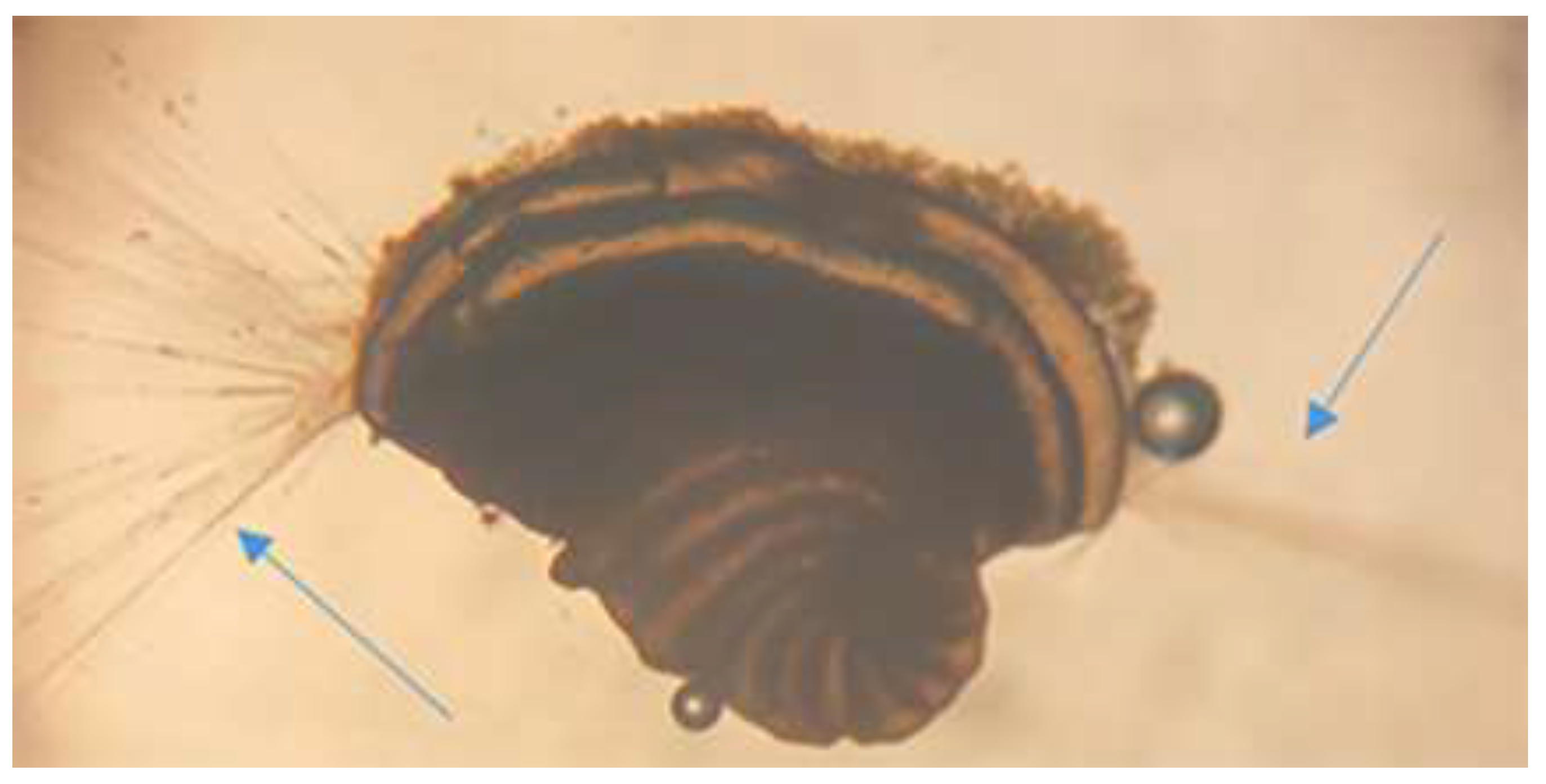
Pseudopods are cellular structure everted and used by forams for substrate attachment, locomotion, food uptake and inter-individual interaction. Their presence is an index of the vitality of the organism (Figure 2).
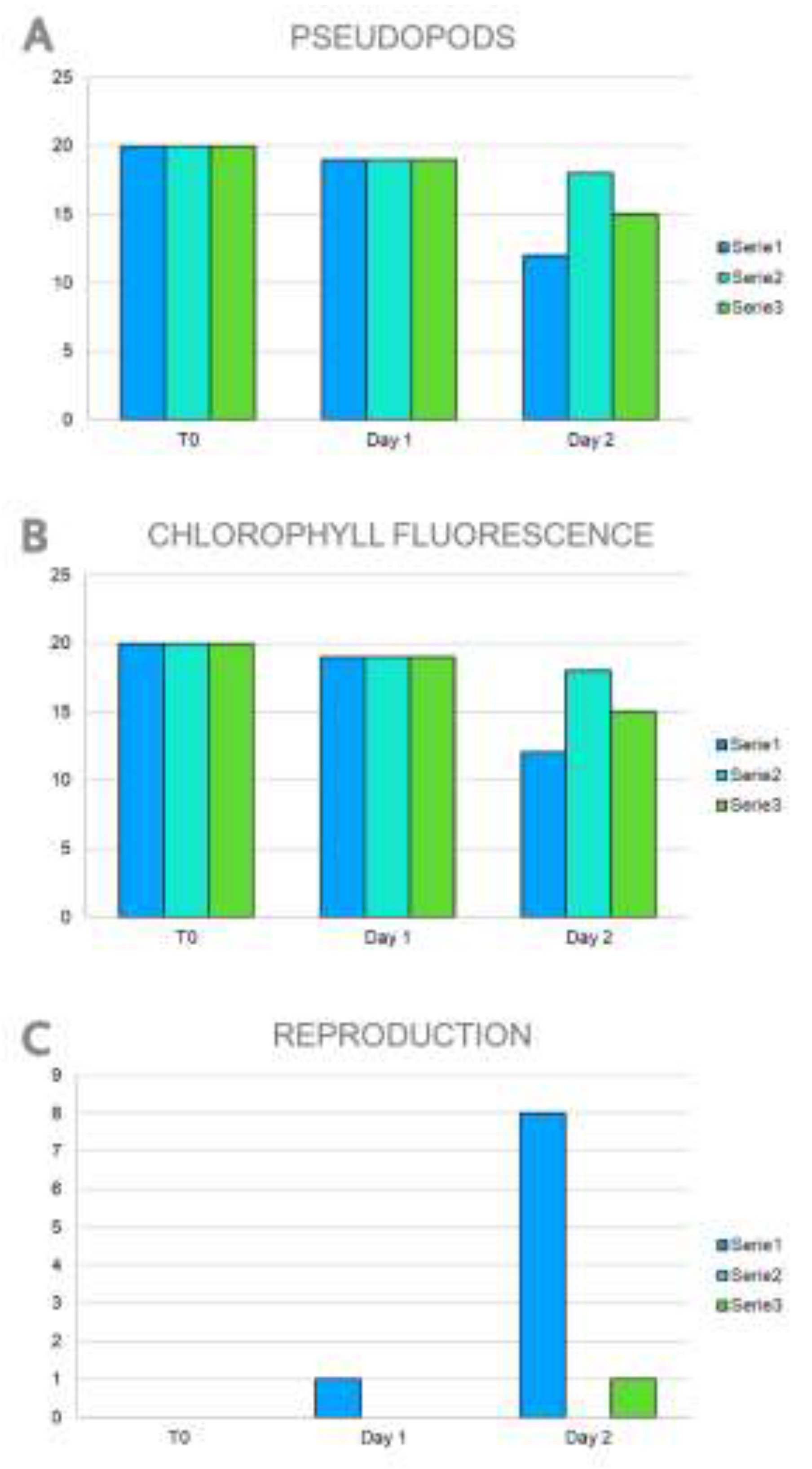
During the experimental period, the specimens actively utilized their pseudopods to adhere to the Petri dish and interact with their surroundings. As shown in Figure 3a, external pseudopods were consistently present across all experimental groups (Control, 0.05, and 0.1 µg/L during the first 24 hours - T0 and D1). This stable activity suggests that short-term exposure to BDE-47 does not trigger acute pseudopodial retraction. However, after 48 hours (T48), a generalized decline in pseudopodial extension was observed. In the CTL group the pseudopodial reduction is due to the asexual reproduction of the individuals, as it is shown by Figure 3c. In contrast, the reduction in pseudopodial activity observed in the contaminated groups was not associated with a corresponding increase in the number of reproducing specimens. This reduction was drastically more pronounced at the highest BDE-47 concentration (0.1 µg/L), where the number of active individuals dropped significantly compared to both the control and the lower concentration. This delayed response indicates progressive cytoskeletal impairment and severe metabolic stress induced by prolonged exposure to the toxicant.

2.2. Symbiont Algae and Reproduction

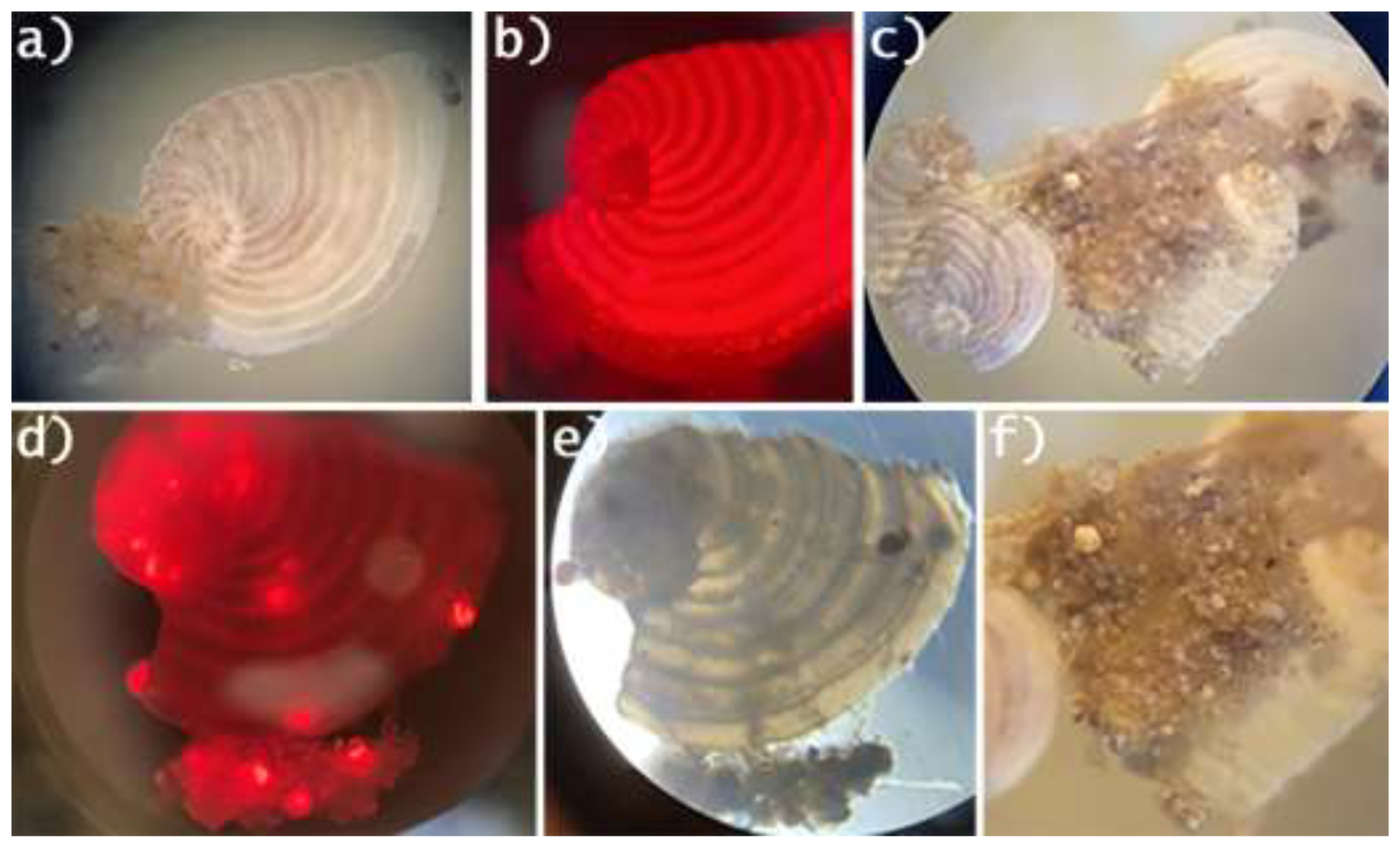
After 12 h on Day 1, asexual reproduction (schizogony) was observed in the control group, with symbionts being successfully transferred to the offspring, confirming the physiological integrity of the holobiont, while no reproductive events occurred in the exposed groups at this stage. At Day 2 8/20 specimens from the CTL group got asexual reproduction (Figure 3c, Figure 4).
Conversely, reproductive activity was almost entirely suppressed in the treated groups, with only one specimen reproducing at 0.1 µg/L (Figure 3c).
A loss of symbionts was observed in one specimen at both 0.1 and 0.05 µg/L in Day 1, and in four specimens at 0.1 µg/L and two specimens at 0.05 µg/L in Day 2 (Figure 3b). This symbiont expulsion suggests a destabilization of the host–symbiont relationship, potentially mediated by oxidative stress or membrane dysfunction induced by BDE-47.
These findings indicate a dose-dependent reproductive inhibition and suggest that symbiont loss represents an early indicator of physiological deterioration, likely compromising long-term survival.

2.3. Locomotor Behavior

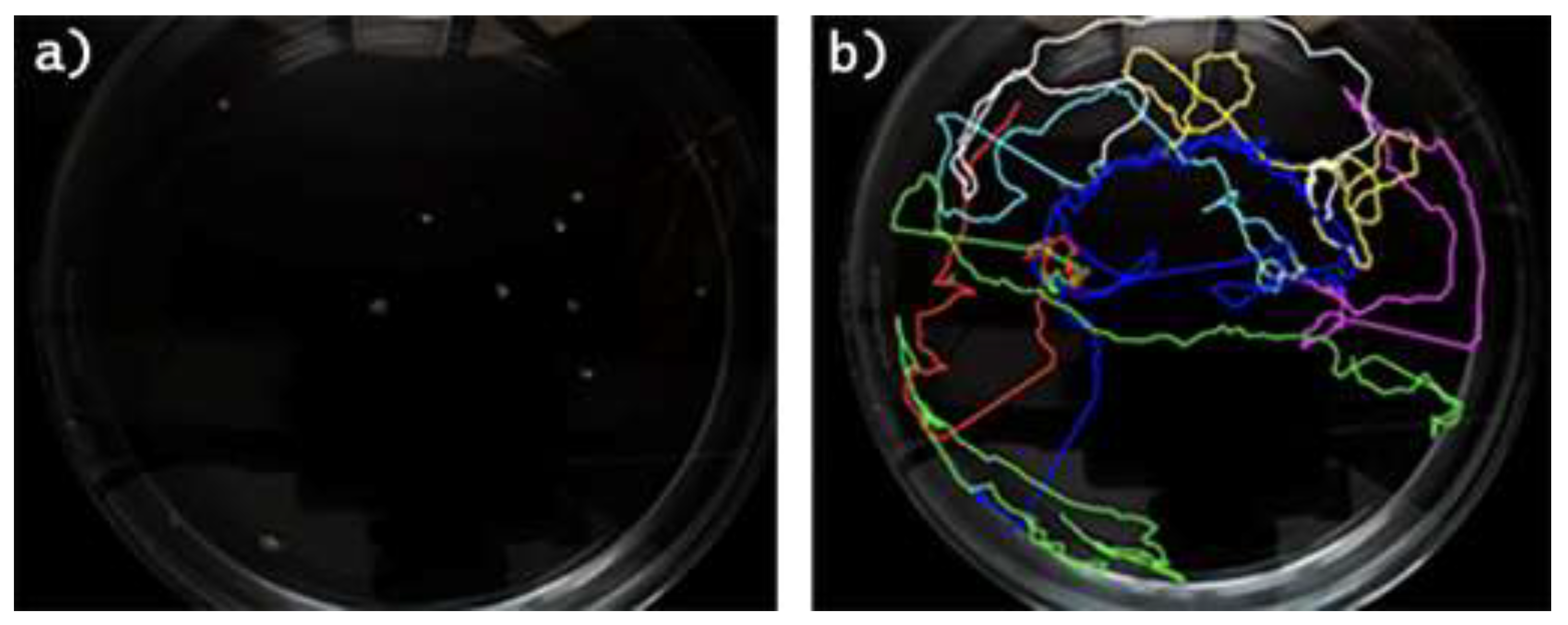
Three Petri dishes, each containing ten individuals of Peneroplis, were continuously monitored for 48 hours using three action cameras (Figure 5).
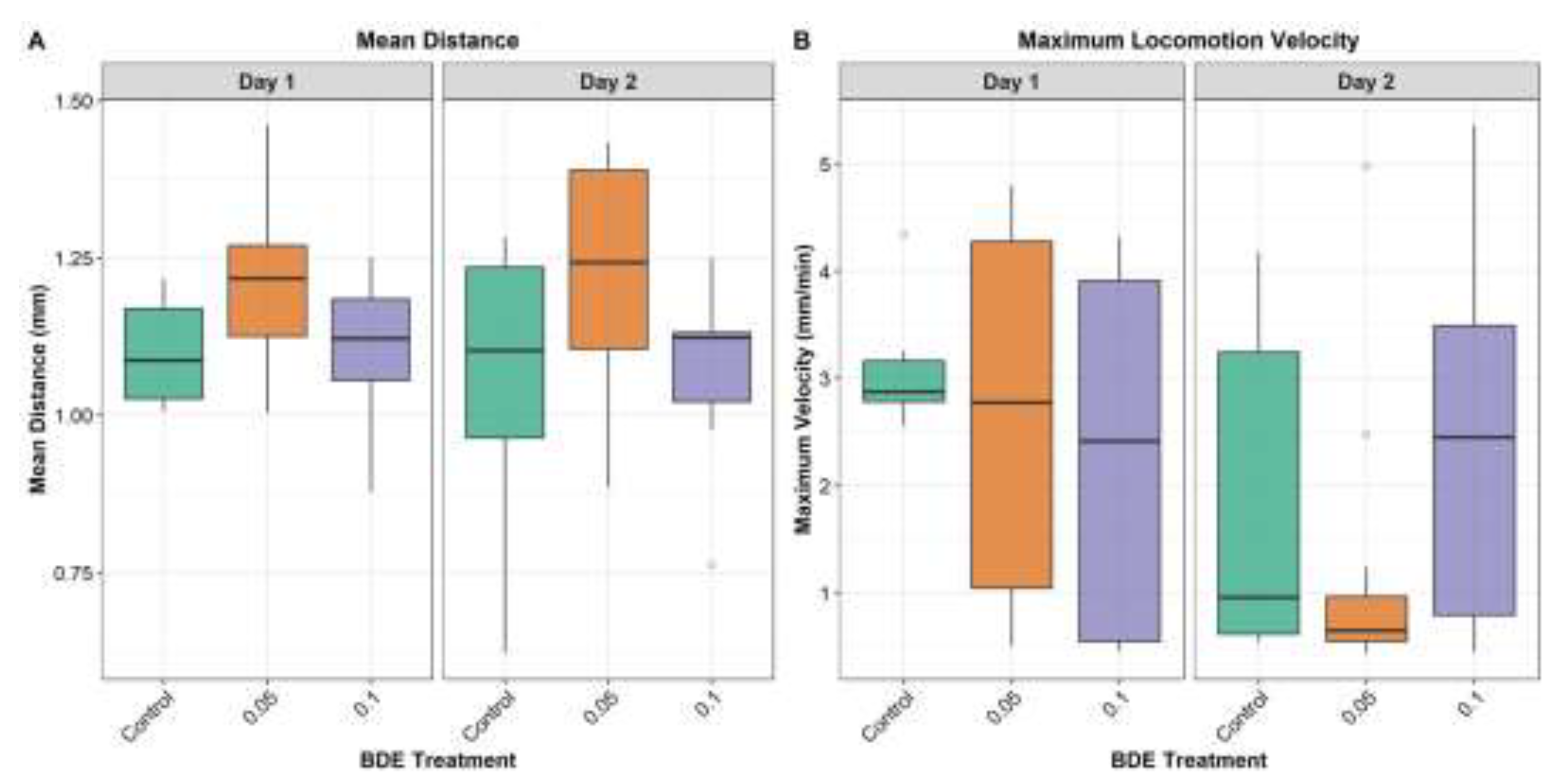
Locomotion was quantified by calculating the mean distance travelled between consecutive frames, recorded at 5-minute intervals, and the maximum velocity reached by each individual. Both parameters were extracted separately for the first and second day of monitoring, considering only daytime recording hours. These measurements yielded the locomotion responses presented in Figure 6.
Statistical analyses were performed to assess the presence of significant differences among experimental groups. In particular, two-way analyses of variance (ANOVA) were conducted to test the effects of experimental day and treatment condition (control vs BDE exposures), as well as their interaction (day × treatment), on locomotion parameters. This approach allowed us to evaluate whether behavioural responses varied between monitoring days, among exposure levels, and whether treatment effects differed depending on the day of observation.
Two-way ANOVA showed that mean distance travelled differed significantly among BDE treatments (F = 6.07, p = 0.004), while neither the effect of monitoring day (F = 0.14, p = 0.706) nor the treatment × day interaction (F = 0.22, p = 0.804) was significant. Tukey post-hoc tests indicated that individuals in the 0.05 exposure travelled a greater mean distance than controls (mean difference = 0.141 mm, 95% CI = 0.031–0.251, p = 0.0087). Mean distance did not differ between 0.1 and control (p = 0.980), whereas the 0.1 group travelled significantly less than the 0.05 group (mean difference = −0.132 mm, 95% CI = −0.242 to −0.022, p = 0.0149).
For maximum velocity, treatment had no significant effect (F = 0.80, p = 0.457), whereas monitoring day was significant (F = 4.62, p = 0.036); peak velocities were lower on Day 2 than on Day 1 (mean difference = −0.799 mm min−1, 95% CI = −1.544 to −0.053, p = 0.036). The treatment × day interaction was not significant (F = 2.02, p = 0.143), and Tukey post-hoc comparisons did not identify significant pairwise differences among treatments for maximum velocity (all adjusted p > 0.46).

3. Discussion

The present study demonstrates that short-term exposure to sub-lethal concentrations of BDE-47 induces measurable physiological and behavioral alterations in symbiont-bearing benthic foraminifera of the genus Peneroplis. The observed response, including reduced pseudopodial activity, inhibition of asexual reproduction, altered locomotor patterns, and symbiont loss, collectively indicate a dose-dependent stress response consistent with early sub-lethal toxicity.

Pseudopodial Impairment and Cytophysiological Stress

Foraminiferal pseudopodial extension depends on dynamic cytoskeletal rearrangements (actin polymerization), membrane trafficking, and tightly regulated intracellular calcium fluxes [11,12]. The significant reduction in pseudopodial activity observed following BDE-47 exposure suggests disruption of one or more of these tightly coordinated processes. Given the lipophilic nature of PBDEs and their known capacity to interact with cellular membranes, BDE-47 may alter membrane fluidity and ion channel function. Membrane perturbation may secondarily disrupt calcium homeostasis, a key regulator of cytoskeletal assembly, and pseudopodial extension. It can also impair actin filament stability and ATP-dependent cytoskeletal remodeling, thereby reducing cellular mobility. Comparable sub-lethal endpoints have been described in foraminifera exposed to heavy metals and hydrocarbons, where decreased pseudopodial extension was interpreted as an early biomarker of metabolic distress and cytological disruption [13,14]. In this context, the reduction in pseudopodial activity is consistent with early impairment of cytoskeleton-dependent functions and can be interpreted as an early biomarker of sub-lethal stress. In the present study, this endpoint co-occurred with additional signs of physiological and functional disturbance, including altered locomotor behaviour, reduced reproductive output, and symbiont destabilization.

Reproductive Inhibition and Population-Level Implications

A marked reduction in asexual reproduction (schizogony) was recorded at the highest concentration. In control conditions, successful reproduction and symbiont transfer to off-spring indicated preserved physiological integrity. Conversely, the complete and near-complete suppression of division in the 0.05 and in the 0.1 µg/L treatment respectively, suggests interference with cell-cycle regulation and/or energetic allocation.
Reproductive output is a critical determinant of population maintenance in benthic foraminifera [15]. Even modest reductions in division rates may translate into altered community structure over ecological timescales. Given the ecological role of larger symbiont-bearing taxa such as Peneroplis spp. in carbonate sediment production and benthic trophic transfer, reproductive impairment may have cascading consequences on sediment stability and ecosystem functioning [16].

Symbiont Loss as a Stress Biomarker

Symbiont expulsion observed in exposed specimens represents a particularly relevant endpoint. The host–symbiont association in Peneroplis spp. is metabolically integrated, with photosynthetic carbon fixation supporting calcification and energy reserves. This mutualistic equilibrium is highly sensitive to oxidative imbalance [7].
BDE-47 exposure has been shown to induce oxidative stress, including biomarkers related to oxidative balance and detoxification pathways, widely documented in marine invertebrates. For example, in Mytilus galloprovincialis, BDE-47 induces dose-dependent changes in gene expression and antioxidant enzyme activity [17], consistent with broader evidence of concentration-dependent ROS production and activation of oxidative stress pathways across taxa, including effects on chlorophyll fluorescence and antioxidant defenses in microalgae [18].
Oxidative destabilization of symbiose membranes may impair host-symbiont communication and promote algal expulsion [19,20]. In symbiont-bearing protists, redox imbalance can also destabilize symbiosome membranes and impair photosynthetic electron transport chains, amplifying intracellular oxidative pressure and ultimately, leading to algal loss. Functionally, symbiont depletion reduces autotrophic energy input, potentially accelerating mortality under prolonged exposure [20,21]. This phenomenon parallels bleaching-like responses described in other marine symbiotic systems subjected to chemical or thermal stress, reinforcing the ecological relevance of this endpoint.
In sea urchin embryos, exposure to BDE-47 has been shown to induce concentration-dependent transcriptional modulation of genes involved in oxidative balance, stress response, and developmental regulation, even at environmentally relevant doses. For example, it has been evidenced that lower concentrations triggered moderate activation of redox-related genes, whereas higher concentrations resulted in broader dysregulation of stress-responsive pathways, supporting the hypothesis that oxidative imbalance represents a primary mode of action of this congener [22]. Although gene expression was not directly assessed in the present work, the dose-dependent symbiont depletion observed in Peneroplis may represent the physiological manifestation of a comparable oxidative imbalance.

Locomotor Responses as Early Behavioural Endpoints

Locomotor analyses provide a functional readout consistent with the progressive stress phenotype inferred from pseudopodial activity, symbiont stability, and reproductive output. Mean distance travelled between consecutive 5-min frames differed among treatments, with individuals exposed to 0.05 µg/L showing significantly greater displacement than controls, whereas the 0.1 µg/L group travelled significantly less than the 0.05 µg/L group and did not differ from controls. This pattern indicates a non-linear behavioural response across exposure levels: moderate exposure was associated with increased displacement, while at the highest concentration this increase was not maintained, suggesting that stronger stress may limit sustained locomotion. For mean distance, neither the effect of monitoring day nor the day × treatment interaction was significant, indicating that treatment-related differences were comparable across daytime observation periods.
In contrast to sustained displacement, maximum velocity was not significantly affected by treatment but declined from Day 1 to Day 2, indicating reduced burst capacity over the monitoring period. This decrease is biologically plausible in the context of reduced pseudopodial extension at later time points and may reflect energetic limitation and/or progressive impairment of cytoskeletal and adhesion efficiency. Visual inspection of the boxplots suggests exposure-related shifts in response distributions, including occasional extreme values at the highest concentration, which may reflect episodic stress-driven movements or reduced regulatory control under stronger physiological challenge. Overall, these results support locomotion-based metrics as sensitive, non-invasive behavioural endpoints for detecting early sub-lethal contaminant effects in micro- and meiofaunal organisms, often preceding overt morphological alterations [5,23].

Ecological and Trophic Implications

The ecological significance of these findings extends beyond individual-level toxicity. PBDEs are persistent, sediment-associated contaminants prone to bioaccumulation and biomagnification along benthic and pelagic food webs. As primary consumers and prey for meiofaunal and macrofaunal organisms, benthic foraminifera may contribute to contaminant transfer across trophic levels.
Sub-lethal impairment of benthic protists could therefore produce dual effects: (i) structural alterations in benthic community composition and carbonate cycling, and (ii) facilitation of contaminant flux toward higher trophic levels. Considering the documented occurrence of PBDEs in coastal sediments and biota, chronic exposure scenarios may pose long-term risks to ecosystem integrity and, indirectly, to human health through seafood consumption pathways.
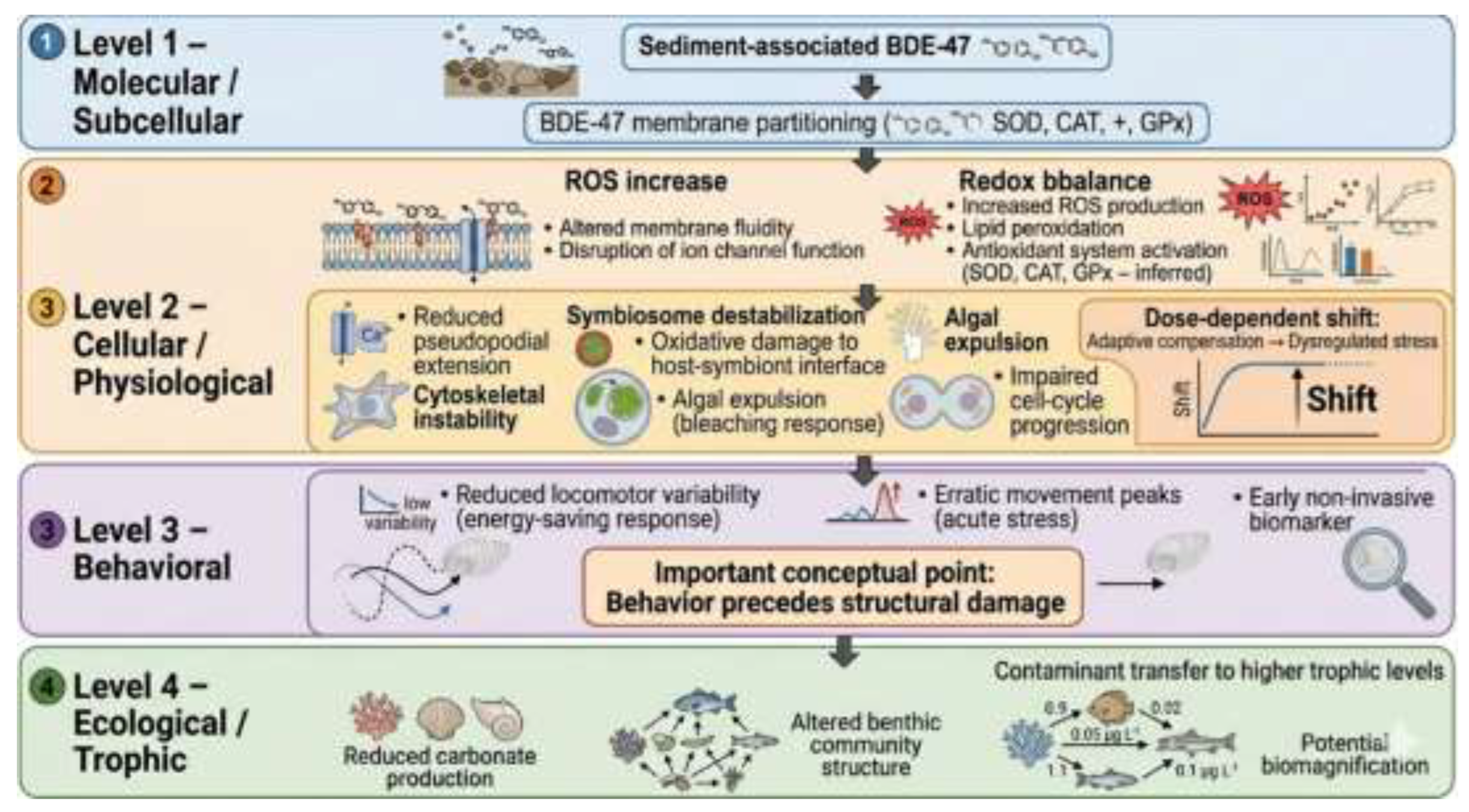
Collectively, these findings support a mechanistic interpretation in which membrane partitioning of BDE-47 initiates redox imbalance and intracellular signaling disruption, ultimately leading to cytoskeletal destabilization, symbiont loss, behavioral alteration, and reproductive impairment. Beyond individual-level effects, these functional disruptions may scale up to influence carbonate production, benthic community dynamics, and contaminant transfer across trophic networks. A conceptual framework summarizing the proposed cascade of events from toxic perturbation to organism-level and ecological responses is presented in Figure 7.

Methodological Considerations and Future Perspectives

Although the experiment was limited to acute (48 h) exposure, the detected responses highlight the sensitivity of symbiont-bearing foraminifera to environmentally relevant BDE-47 concentrations. Future research should address:
* Chronic and multigenerational exposure effects
* Quantification of oxidative stress biomarkers (e.g., antioxidant enzyme activity)
* Calcification rate measurements and shell ultrastructural analysis
* Molecular endpoints (gene expression related to stress and cytoskeletal regulation)
Integrating laboratory bioassays with field-based community analyses would strengthen ecological risk assessment frameworks.
In summary, exposure to BDE-47 induced coordinated morphological, behavioral, and reproductive alterations in Peneroplis, supporting their suitability as sensitive bioindica-tors for persistent organic pollutant assessment in coastal marine ecosystems.

4. Materials and Methods

4.1. Sampling Area and Organism Collection

Ninety Peneroplis spp. specimens have been sampled on 17 May 2021 by manual picking at the lagoon-like coastal basin Stagnone di Marsala (Tp, Italy), in 1 mt depth. Sampling was performed in shallow rocky and algal substrates under natural photic conditions. Specimens were transported in laboratory in site seawater within insulated containers to minimize thermal stress. Upon arrival, individuals were gently rinsed with filtered seawater (0.45 μm) and placed in filtered seawater under controlled laboratory conditions, replicating their natural environment (temperature: 20 °C ± 1 °C; salinity: 39,30 PSU; photoperiod: 15:9 light-dark cycle).

4.2. Experimental Design

After acclimatation (24 h) specimens were distributed into nine glass Petri dishes (30 mL each), with 10 individuals per dish. Individuals were visually inspected under a stereomicroscope to confirm vitality (presence of colored cytoplasm and active pseudopodia). The experimental setup consisted of three groups (n=3 replicates per group): Control (CTL) with filtered seawater without contaminants; Low concentration PBDE 47 (0.05 µg/L); High concentration PBDE 47 (0.1 µg/L). The selected concentrations correspond to 5-fold (0.05 µg/L) and 10-fold (0.1 µg/L) the national environmental quality threshold value (based on European Environmental Quality Standards (EQS) for PBDEs in surface waters (sum of priority congeners including BDE-47; 0.014 µg/L) under Directive 2013/39/EU) [24].
The 2,2′,4,4′-Tetrabromodiphenyl ether (BDE-47; purity ≥97.0%) was purchased from Sigma-Aldrich (Germany). A stock solution was prepared at a concentration of 1000 µg/L by dissolving BDE-47 powder in 0.1% DMSO (dimethyl sulfoxide; ≥99.5%, Sigma-Aldrich). The stock solution was stored in amber glass vials at 4 °C until use.
Working solutions (0.05 and 0.1 µg/L) were freshly prepared by diluting the stock solution in filtered seawater. The final DMSO concentration in exposure media was 0.1% (v/v) and the same solvent concentration was maintained across treatments to ensure comparability. Control groups were exposed to filtered seawater without PBDE addition. All solutions were prepared in glassware to minimize adsorption of the hydrophobic compound to plastic materials.
All experimental units were maintained under static exposure conditions for 48 h. Specimens were observed at five time points: T0 (0 hours: 8 pm); T12 (12 hours: 8 am), T24 (24 hours: 8 pm), T36 (36 hours: 8 am) and T48 (48 hours: 8 pm), and at each time point, vitality indicators and physiological responses such as changes in pseudopodial activity, movement, loss of symbiont algae and reproduction were assessed.

4.3. Pseudopodial Activity

One replicate per concentration has been checked under an optical microscope, in order to determine the presence and extension of pseudopods.

4.4. Symbiont Algae and Reproduction

One replicate per concentration has been checked under fluorescence microscope, with a red filter of 635-780 nm for chlorophyll emission, in order to determine the presence of symbiont algae.

4.5. Locomotor Behavior

Locomotor activity was recorded using three action cameras. One Petri dish per treatment (10 individuals per dish) was monitored by time-lapse imaging (one frame every 5 min) to reconstruct individual trajectories.
Locomotor activity was analyzed separately for each of the two daytime monitoring days (Day 1 on 18/05/2021; Day 2 on 19/05/2021) using the following time windows:
  • CTL: Day 1 from 09:20 to 20:30; Day 2 from 05:40 to 19:15;
  • 0.05 µg/L: Day 1 from 05:35 to 20:25; Day 2 from 05:45 to 19:10;
  • 0.1 µg/L: Day 1 from 05:45 to 20:30; Day 2 from 05:45 to 19:20.
Foraminiferal tracking was performed in Fiji/ImageJ [25] by extracting x–y coordinates for each individual across frames. From individual trajectories, locomotion descriptors were computed separately for Day 1 and Day 2: (i) mean distance travelled between consecutive frames (5-min interval), and (ii) maximum velocity (peak speed) reached within each day.
All statistical analyses were conducted in R [26]. For each locomotion descriptor, differences among groups were tested using two-way analysis of variance (ANOVA) with treatment (CTL, 0.05 µg/L, 0.1 µg/L) and monitoring day (Day 1, Day 2) as fixed factors, including their interaction (day × treatment). Tukey’s HSD post-hoc tests were used for pairwise comparisons. Statistical significance was set at α = 0.05.

5. Conclusions

Sub-lethal exposure to BDE-47 induces measurable morphological and behavioral alterations in symbiont-bearing benthic foraminifera of the genus Peneroplis. Observed effects, including reduced pseudopodial activity, reproductive inhibition, and symbiont loss, act as early stress biomarkers and demonstrate a dose-dependent toxic response.
Given the ecological role of benthic foraminifera in carbonate production and trophic transfer, these findings highlight the potential ecosystem-level consequences of PBDE contamination in coastal environments. Furthermore, considering the biomagnification potential of PBDEs, indirect implications for higher trophic levels and human health cannot be excluded.
This study supports the suitability of symbiont-bearing foraminifera as sensitive bioindicators for assessing the ecotoxicological impact of persistent organic pollutants in shallow marine ecosystems.

Author Contributions

Conceptualization, M.M., and A.C.; methodology, M.M., C.D.B. and M.D.N.; formal analysis, M.M. and M.T.; investigation, M.M., T.M. and A.C.; data curation, M.T.; writing—original draft preparation, M.M. M.D.N, M.T; writing-review and editing, M.M, M.D.N, M.T.; visualization, M.D.N.; supervision, M.M.; project administration, M.M. All authors have read and agreed to the published version of the manuscript.

Funding

This research received no external funding.

Institutional Review Board Statement

Not applicable.

Data Availability Statement

Data are unavailable due to privacy or ethical restrictions.

Conflicts of Interest

The authors declare no conflicts of interest.

References

  1. European Food Safety Authority. Scientific Opinion on Polybrominated Diphenyl Ethers (PBDEs) in Food. EFSA Journal 2011, 9(5), 2156. [Google Scholar] [CrossRef]
  2. Belart, P.; Figueiredo, M. S. L.; Laut, L.; Fontana, L.; Tostes, P.; Villar Rocha, A.; Bonetti, C.; Frontalini, F.; Bouchet, V. M. P.; Lorini, M. L. Using benthic foraminifera as bioindicators of environmental change in coastal lagoons. Marine Environmental Research 2025, 210, 107280. [Google Scholar] [CrossRef] [PubMed]
  3. Malek, M. N. A.; Frontalini, F. Benthic foraminifera as bioindicators of marine pollution: A bibliometric approach to unravel trends, patterns and perspectives. Marine Pollution Bulletin 2024, 199, 115941. [Google Scholar] [CrossRef]
  4. Liu, Z.; He, M.; Han, P.; Dong, S.; Chen, X. Bio-monitoring heavy metal pollution: Insights from benthic foraminiferal assemblages and shell morphology. Frontiers in Marine Science 2025, 12, 1716252. [Google Scholar] [CrossRef]
  5. Tavera Martínez, L.; Marchant, M.; Urbina, M. Are physiological responses in foraminifera reliable environmental stress bioindicators? A systematic review. Environmental Research 2023 216, Pt 2, 114515. [Google Scholar] [CrossRef]
  6. Musco, M.; Cuttitta, A.; Bicchi, E.; Quinci, E. M.; Sprovieri, M.; Tranchida, G.; Mazzola, S. Benthic foraminifera as bio-indicators of anthropogenic impacts in coastal environments: Acqua dei Corsari area case study (Palermo, Italy). Marine Pollution Bulletin 2017, 117(1-2), 75–87. [Google Scholar] [CrossRef]
  7. Titelboim, D.; Dedman, C.J.; Hodgson, R.P.; et al. (6 more authors) Exogenous diatoms ameliorate thermal bleaching of symbiont bearing benthic foraminifera. Proceedings of the Royal Society B: Biological Sciences 2025, 292(2049), 20250596. [Google Scholar] [CrossRef] [PubMed]
  8. Frontalini, F; Semprucci, F; Di Bella, L; Caruso, A; Cosentino, C; Maccotta, A; Scopelliti, G; Sbrocca, C; Bucci, C; Balsamo, M; Martins, MV; Armynot du Châtelet, E; Coccioni, R. The response of cultured meiofaunal and benthic foraminiferal communities to lead exposure: Results from mesocosm experiments. Environ Toxicol Chem 2018, 37(9), 2439–2447. [Google Scholar] [CrossRef] [PubMed]
  9. Abd Malek, M. N.; Frontalini, F. Benthic foraminifera as bioindicators of marine pollution: A bibliometric approach to unravel trends, patterns and perspectives. Marine Pollution Bulletin, Volume Volume 199(2024), 115941. [CrossRef]
  10. Shan, H.; Liu, C.; Wang, Z.; Ma, T.; Shang, J.; Pan, D. A fluorescence-based method for rapid and direct determination of polybrominated diphenyl ethers in water. Journal of analytical methods in chemistry 2015, 2015, 853085. [Google Scholar] [CrossRef]
  11. Goleń, J.; Tyszka, J.; Bickmeyer, U.; Bijma, J. : SiR-actin-labelled granules in foraminifera: patterns, dynamics, and hypotheses. Biogeosciences 2020, 17, 995–1011. [Google Scholar] [CrossRef]
  12. Goleń, J; Tyszka, J; Godos, K; Janse, M. A Model of F-actin Organization in Granuloreticulopodia in Foraminifera: Morphogenetic and Evolutionary Implications from Novel Fluorescent and Polarised Light Observations. Protist 2022, 173(4), 125886. [Google Scholar] [CrossRef] [PubMed]
  13. Martínez, L.T.; Marchant, M.; et al. Benthic Foraminifera as Pollution Biomarkers: a Morphological Approach. Microbial Ecology ( 2023, 86, 2802–2818. [Google Scholar] [CrossRef]
  14. Bubl, M.; Heinz, P.; Wanek, W.; Schagerl, M.; Hofmann, T.; Lintner, M. Impact of heavy metals (Cu, Fe, Pb, Zn) on carbon and nitrogen uptake of the diatom-bearing benthic foraminifera Heterosteginadepressa. Heliyon 2024, 10(6), e27229. [Google Scholar] [CrossRef] [PubMed] [PubMed Central]
  15. Kahanamoku-Meyer, SS; Samuels-Fair, M; Richards, J; Duijnstee, I; Norris, R; Finnegan, S. A nineteenth- and twentieth-century reproductive regime shift in benthic foraminifera from the Santa Barbara Basin, California. Proc Biol Sci. 2025, 292(2045), 20250314. [Google Scholar] [CrossRef] [PubMed] [PubMed Central]
  16. Narayan, G.R.; Reymond, C.E.; Stuhr, M.; Doo, S.; Schmidt, C.; Mann, T.; Westphal, H. Response of large benthic foraminifera to climate and local changes: Implications for future carbonate production. Sedimentology ( 2022, 69, 121–161. [Google Scholar] [CrossRef]
  17. Messina, C.M.; Espinosa Ruiz, C.; Regoli, F.; Manuguerra, S.; D’Agostino, F.; Avellone, G.; Sprovieri, M.; Santulli, A. BDE-47 exposure modulates cellular responses, oxidative stress and biotransformation related-genes in Mytilus galloprovincialis. Fish & Shellfish Immunology 2020, 107, 537–546. [Google Scholar] [CrossRef]
  18. Zhao, Y; Wang, Y; Li, Y; Santschi, PH; Quigg, A. Response of photosynthesis and the antioxidant defense system of two microalgal species (Alexandrium minutum and Dunaliella salina) to the toxicity of BDE-47. Mar Pollut Bull. 2017, 124(1), 459–469. [Google Scholar] [CrossRef] [PubMed]
  19. Marangoni, LFB; Rottier, C; Ferrier-Pagès, C. Symbiont regulation in Stylophora pistillata during cold stress: an acclimation mechanism against oxidative stress and severe bleaching. J Exp Biol. 2021, 224 Pt 3, jeb235275. [Google Scholar] [CrossRef] [PubMed]
  20. Tortorelli, G; Rosset, SL; Sullivan, CES; Woo, S; Johnston, EC; Walker, NS; Hancock, JR; Caruso, C; Varela, AC; Hughes, K; Martin, C; Quinn, RA; Drury, C. Heat-induced stress modulates cell surface glycans and membrane lipids of coral symbionts. ISME J 2025, 19(1), wraf073. [Google Scholar] [CrossRef] [PubMed] [PubMed Central]
  21. Pfab, F.; Detmer, A.R.; Moeller, H.V.; et al. Heat stress and bleaching in corals: a bioenergetic model. Coral Reefs (2024) 2024, 43, 1627–1645. [Google Scholar] [CrossRef]
  22. Di Natale, M. V.; Carroccio, S. C.; Dattilo, S.; Cocca, M.; Nicosia, A.; Torri, M.; Cuttitta, A. Polymer aging affects the bioavailability of microplastics-associated contaminants in sea urchin embryos. Chemosphere 2022, 309, 136720. [Google Scholar] [CrossRef]
  23. Denoyelle, M. Innovative use of foraminifera in ecotoxicology: a marine chronic bioassay for testing potential toxicity of drilling muds. Ecological Indicators 2012, 12, 17–25. [Google Scholar] [CrossRef]
  24. Schindelin, J.; Arganda-Carreras, I.; Frise, E.; Kaynig, V.; Longair, M.; Pietzsch, T.; Cardona, A. Fiji: an open-source platform for biological-image analysis. Nature methods 2012, 9(7), 676–682. [Google Scholar] [CrossRef]
  25. R Core Team. R: A language and environment for statistical computing (Version 4.5.0) [Software; R Foundation for Statistical Computing, 2024; Available online: https://www.R-project.org/.
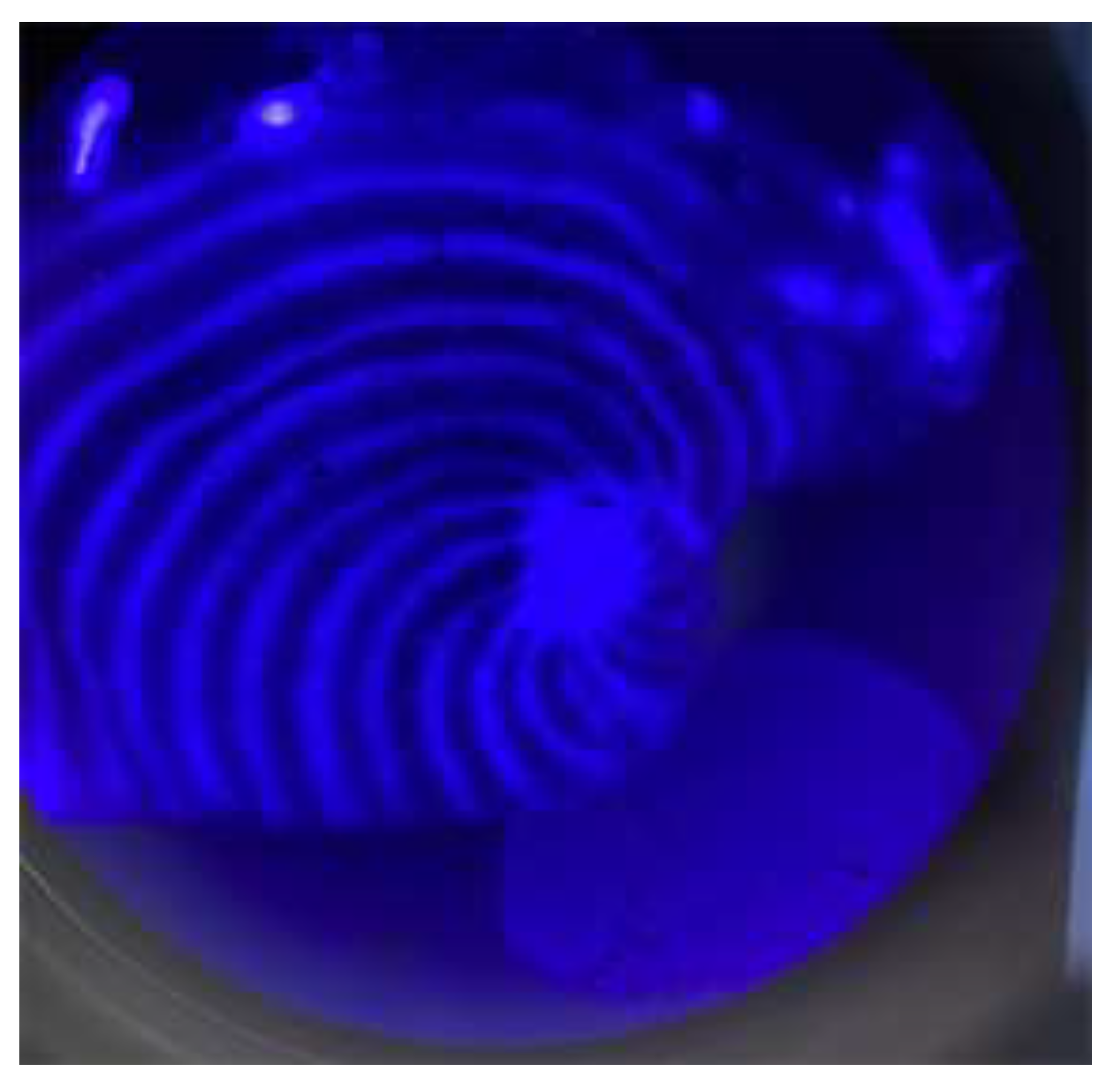
Figure 1. Living specimens of Peneroplis planatus from 0,1 ug/L BDE-47 concentration, T12h.
Preprints 203776 g001
Figure 2. Pseudopodal presence highlighted by the blue arrows.
Preprints 203776 g002
Figure 3. Effects of BDE-47 exposure on Peneroplis specimens over time. The bar charts illustrate the number of individuals (y-axis) showing (a) external pseudopods, (b) chlorophyll fluorescence, and (c) reproduction. Data are reported for the control group (CTL) and two BDE-47 concentrations (0.05 and 0.1 µg/L) at 0, 24 (Day 1), and 48 (Day 2) hours (T0, T24, T48).
Preprints 203776 g003
Figure 4. Living Peneroplis sp. with zooxanthellae within its cell (a); chlorophyll red emission by zooxanthellae in a living foram (b); asexual reproduction with the death of the mother cell (c); fluorescence evidence of the migration of the zooxanthellae within the daughter cells (d); empty shell and daughter cells under optical microscope (e); daughters cell with their zooxanthellae (f).
Preprints 203776 g004
Figure 5. Tracking of ten foraminifera from one Petri dish: T34 (a); T48 (b).
Preprints 203776 g005
Figure 6. Locomotor responses of Peneroplis under BDE-47 exposure during daytime monitoring. Boxplots show (A) mean distance travelled between consecutive frames (5-min interval) and (B) maximum velocity (peak speed) for individual specimens recorded on Day 1 and Day 2. Treatments include control (CTL) and BDE-47 exposures at 0.05 and 0.1 µg/L.
Preprints 203776 g006
Figure 7. Proposed mechanistic cascade of BDE-47 toxicity in Peneroplis spp, integrating all biological levels. Following membrane partitioning, BDE-47 may induce redox imbalance and intracellular signaling disruption, potentially leading to Calcium dysregulation and cytoskeletal instability. These alterations are hypothesized to impair pseudopodial dynamics, destabilize host-symbiont interactions, and interfere with reproduction. Behavioral modifications, including reduced locomotor variability, are interpreted as early functional indicators of sub-lethal stress. At higher levels of organization, these impairments may affect carbonate production, benthic trophic interactions, and contaminant transfer within coastal food webs. Image created through Gemini AI.
Preprints 203776 g007
Disclaimer/Publisher’s Note: The statements, opinions and data contained in all publications are solely those of the individual author(s) and contributor(s) and not of MDPI and/or the editor(s). MDPI and/or the editor(s) disclaim responsibility for any injury to people or property resulting from any ideas, methods, instructions or products referred to in the content.
Copyright: This open access article is published under a Creative Commons CC BY 4.0 license, which permit the free download, distribution, and reuse, provided that the author and preprint are cited in any reuse.
Prerpints.org logo

Preprints.org is a free preprint server supported by MDPI in Basel, Switzerland.

Subscribe

Disclaimer

Terms of Use

Privacy Policy

Privacy Settings

© 2026 MDPI (Basel, Switzerland) unless otherwise stated