

Submitted:
18 March 2026
Posted:
19 March 2026
You are already at the latest version
Abstract
Tourism is highly exposed to external shocks such as pandemics, geopolitical instability, and security related disruptions, which particularly affect small and rural enterprises. Although digital tools are frequently discussed as mechanisms supporting tour-ism competitiveness under volatile tourism flows, consumercentred evidence remains limited. This study examines how consumers in Latvia evaluate digital tools and which factors they associate with rural tourism competitiveness and improvement priorities. The study is guided by a conceptual framework in which digital tools function as intermediary mechanisms linking tourism flow disruptions to rural tourism competitiveness through consumer perceptions of accessibility, convenience, and trust.
A mixed-methods CATI survey (N = 1,004) was conducted in February-April 2025, combining statistical analysis of closed-ended responses with thematic analysis of consumer-defined competitiveness and improvement priorities derived from open-ended questions. The results show that age is the main factor differentiating evaluations of digital tools, while regional and settlement-type differences remain weak. Online booking and digital payments are valued across all age groups, whereas tools such as virtual tours show stronger age-related variation.
When discussing competitiveness, respondents most frequently refer to institutional conditions, promotion, pricing, and digital tools as key competitiveness dimensions. However, when identifying improvements, priorities shift toward diversification of the tourism offer and physical accessibility. Digital tools remain important and are primarily associated with practical functions such as booking, payments, information access, and online visibility that make rural tourism offers easier to find and use. The findings highlight the growing role of digital accessibility and information transparency as foundational conditions for rural tourism competitiveness under uncertain tourism environments.
Keywords:
rural tourism
; digital tools
; competitiveness
; tourism flow disruptions
; consumer perceptions
; geopolitical risk
; Latvia
; mixed methods
1. Introduction
Tourism is one of the world’s fastest-growing economic sectors and an important driver of socio-economic development. Across OECD countries and beyond, tourism contributes to economic growth, employment, infrastructure development, and regional income generation (OECD, 2024; Cox, 2025; Parray & Soudagar, 2023). Given tourism’s importance within the global economy, it is essential to understand the risks that may affect tourism systems and their associated value chains (Parray et al., 2023).
The near-total shutdown of tourism during the COVID-19 pandemic reinforced the sector’s systemic importance as an economic and social force (UN Tourism, 2025). The pandemic severely affected travel and tourism globally, with estimates indicating the loss of 62 million jobs and nearly USD 4.9 trillion in economic losses in 2020 (Papagianni et al., 2024). While tourism has resumed growth, recovery has been uneven and remains sensitive to external shocks such as health crises, extreme weather events and geopolitical instability. In 2019, prior to the pandemic, tourism accounted for 10.3% of global GDP (USD 9.6 trillion) and 10.2% of global employment (333 million jobs) (Cárdenas-García et al., 2024). International tourist arrivals reached a record 1.5 billion in 2019, continuing to outperform long-term growth forecasts (OECD, 2020).
Recent data further illustrates the scale of post-pandemic recovery. According to the World Tourism Barometer, international tourist arrivals between January and September 2025 increased by 5% compared with the same period in 2024 and exceeded 2019 levels by 3%, amounting to just under 1.1 billion international arrivals during those nine months (UN Tourism, 2025). In 2024, travel and tourism’s total contribution to global GDP was approximately USD 11 trillion (Statista Inc., 2025). Despite persistent inflation in tourism services and fluctuating traveler confidence due to trade and geopolitical uncertainties, demand for travel has remained comparatively resilient. In the current context of political tensions in several parts of Europe, the availability of credible safety information becomes particularly important for sustaining travel confidence and responsible tourism behaviour.
1.1. Tourism Risk Environment and Tourism Flow Disruptions
In recent years, the tourism industry in Baltic States has faced multiple overlapping shocks, including the COVID-19 pandemic, the Russian–Ukrainian war, and broader political tensions, as well as natural disasters and climate-change-related impacts on destinations. Political and social instability can quickly interrupt travel plans and generate severe economic hardship in regions dependent on tourism income (Parray & Soudagar, 2023). Compared with many other industries, international tourism is often among the first to be affected by geopolitical risks such as terrorism, armed conflicts or wider political instability, with spill-over effects on transport and hospitality industries (Gozgor et al., 2022). These risks are closely linked to political stability, safety and security, which are central components of destination choice and tourism demand (Papagianni et al., 2024).
Geopolitical risk is commonly defined as the threat associated with wars, terrorist acts, and tensions among states that disrupt the normal and peaceful course of international relations, capturing both the probability of such events and the risks associated with escalation of ongoing crises (Caldara & Iacoviello, 2017). Bohl et al. (2017) conceptualize geopolitical risk as arising from three interacting structures—political, economic and environmental—where political risk reflects power competition and conflict, economic risk reflects market dynamics and crises, and environmental risk reflects changes in the non-human environment, including climate-related disasters (Bohl et al., 2017). Because international tourism relies on stable mobility and cooperative relations, restrictions and deteriorating international relations can disrupt interdependent tourism demand and supply across countries (Khalid et al., 2024). Empirical research continues to report a persistent negative effect of heightened geopolitical tensions on tourism demand and tourist flows (Papagianni et al., 2024; Wujie, 2023), shaping traveler perceptions and decision-making (Grigoriadis et al., 2025).
1.2. Rural Tourism Vulnerability and the Latvian Context
Rural and regional tourism matters for regional development and can act as a vehicle for peripheral regions based on the place-based nature of tourism resources and attractions (Makkonen & Williams, 2024). Economic impact analyses frequently emphasize tourism’s role in public planning, destination marketing and local development decisions (Pole et al., 2025). Rural and regional tourism can also support a more spatially balanced distribution of tourism-related benefits across a country (Lusena-Ezera et al., 2023). However, because rural tourism is embedded within local economic, social and cultural structures, its development is shaped by multiple interrelated drivers across supply, demand and motivations, and even small shifts in tourist flows can generate significant economic and social consequences for rural areas (Streimikiene & Bilan, 2015; Hailemariam & Ivanovski, 2021).
Crisis situations such as the COVID-19 pandemic and geopolitical instability have posed multifaceted challenges for rural tourism operations and communities reliant on tourism-based income (Lieberthal et al., 2024). As a result, tourism smallholders and rural tourism enterprises are often more exposed to livelihood risks (Yu et al., 2023). Evidence from regional business contexts suggests that abrupt changes in tourism flows, inflation, supply chain disruptions and workforce losses (including emigration and conscription-related shortages) can create significant operational pressure, even where businesses avoid complete shutdown (Tomej et al., 2023). At the same time, innovation-oriented approaches such as smart specialization strategies may offer opportunities to stimulate local innovation and competitiveness based on heritage and place-based resources, including through social and digital innovation (Bravaglieri et al., 2025). Yet border and peripheral regions can remain problematic sites for tourism development when assessed through the lens of innovation and competitiveness (Makkonen & Williams, 2024).
Latvia provides a relevant case study for examining rural tourism competitiveness under disruptions. The Ministry of Economics identifies tourism as a key contributor to national development and export revenue, while also noting that high dependency increases exposure to negative demand shocks (Jurkane, 2021). Tourism directly contributed 4.8% of Latvia’s GDP in 2019, while total tourism spending fell by 73% from 2019 to EUR 145.4 million in 2020 and remained at EUR 145.5 million in 2021; employment in tourism-related industries decreased from 8.3% (2019) to 7.1% (2021) (OECD, 2022). These trends highlight both the importance of tourism and its sensitivity to systemic disruptions.
1.3. Digital Tools in Tourism Under Disrupted Travel Conditions
Against this risk background, rural tourism enterprises may increasingly rely on tools that help maintain visibility and reduce perceived uncertainty when travel flows are disrupted. Latvia represents a relevant case due to its tourism structure, regional distribution of tourism activity, and exposure to recent geopolitical disruptions in the Baltic region.
Information and communication technologies have become a persistent driver of tourism development, accelerating the spread of platforms, standards, and service architectures that shape competitiveness across the sector (OECD, 2020). In tourism, technological innovation is linked to improved visitor experience by increasing the availability of information, making services easier to use, and adding elements that strengthen engagement (Wei et al., 2019). Digital tools can add value across the travel journey by supporting information search and planning, enabling booking and payment, enhancing on-site use, and shaping post-visit evaluation through feedback and reviews (Palos-Sanchez et al., 2021). In rural tourism, digital transformation is often treated as a practical condition for competitiveness, helping small providers strengthen destination visibility, improve service delivery, and support the empowerment of local communities through solutions such as online booking systems, social media communication, and community-generated digital content (Aryapranata et al., 2025).
From the consumer perspective, digital touchpoints (e.g., information quality, booking and payment functionality, online presence) may function as signals of accessibility and reliability that shape trust and interest in visiting. Despite extensive research on tourism digitalisation, existing studies predominantly focus on technology adoption from the enterprise perspective. Less attention has been paid to how consumers interpret digital tools as signals of accessibility, reliability, and competitiveness—particularly under conditions of disrupted tourism flows. In such contexts, digital tools may function not only as technological solutions but also as mechanisms that facilitate information access and support travel decision-making. This study therefore examines how consumers interpret and evaluate digital tools under tourism flow disruptions in Latvia, and how these perceptions relate to rural tourism outcomes. This study contributes to the literature in three ways. First, it conceptualises digital tools as consumer-facing mechanisms that support accessibility, information availability, and the usability of rural tourism services under disrupted tourism flows. Second, it combines quantitative survey analysis with qualitative consumer perspectives to examine how consumers evaluate digital tools and discuss competitiveness and improvement priorities in rural tourism. Third, by focusing on the Latvian rural tourism context, the study provides empirical evidence on consumer expectations regarding digital tools in rural tourism enterprises.
1.4. Aim of the Study and Objectives
The aim of this study is to identify consumer expectations and priorities regarding digital tools and other improvement areas that may help rural tourism enterprises remain competitive under conditions of volatile tourism flows in Latvia.
To achieve this aim, the study pursues the following objectives:
- Analyse consumer evaluations of the importance of digital tools and technologies in rural tourism enterprises, examining differences across age groups, regions, and settlement types;
- Explore consumers’ views on the factors that, in their opinion, determine the competitiveness of rural tourism enterprises, based on responses to the open-ended question regarding what enterprises could do to become more competitive;
- Analyse consumer-defined improvement priorities in rural tourism, identifying which changes and development directions respondents consider most necessary to make rural tourism offers easier to choose, understand, and use under changing tourism conditions.
These objectives guide the analysis of (i) socio-demographic variation in evaluations of digital tools and (ii) consumer-defined competitiveness and improvement priorities in rural tourism.
This structure of objectives allows for the integration of quantitative evaluations with qualitative expectations and improvement demands, providing a comprehensive analysis of consumer perspectives on rural tourism competitiveness and development pathways in Latvia.
2. Methodology
2.1. Research Design
This study uses a mixed-methods design to examine consumer perceptions, expectations, and priorities related to digital tools in rural tourism enterprises under tourism flow disruptions. The methodological approach combines: (i) a review of academic literature and secondary data on tourism flows and Latvia’s disruption context (2011–2024); (ii) quantitative analysis of a CATI survey conducted from February to April 2025 (N = 1,004); and (iii) inductive thematic analysis of open-ended survey responses (Creswell & Plano Clark, 2018; Tashakkori & Teddlie, 2010; Braun & Clarke, 2021).
2.2. Survey Design and Data Collection
Primary data were collected via a structured CATI (computer-assisted telephone interviewing) survey administered in Latvia. Prior to the main data collection, a pilot study was conducted with 30 respondents from different regions to test question clarity, scale suitability, and content validity. Based on the pilot results, several items were refined to improve the reliability and clarity of the survey instrument. The sample was designed to achieve broad coverage across age groups, statistical regions, and settlement types. In total, 1,004 valid responses were obtained.
The questionnaire included:
- Socio-demographic variables (age group, region, settlement type);
- Closed-ended items on perceptions of digital tools in rural tourism enterprises measured using Likert-type scales (Likert, 1932);
- Behavioural and attitudinal indicators (including perceived importance of digitalisation);
- Open-ended questions on digitalisation, competitiveness, and desired improvements in rural tourism.
2.3. Quantitative Analysis
Quantitative analysis was conducted in IBM SPSS Statistics (v. 30). Descriptive statistics were used to summarise respondent characteristics and response patterns. Associations between socio-demographic variables and perceptions of digital tools were examined using cross-tabulations and Pearson’s chi-square tests for categorical variables. For ordinal variables, Spearman’s rank correlations were calculated; Pearson correlations were additionally reported where appropriate for comparability with prior studies (Field, 2018; Hair et al., 2019).
2.4. Qualitative Analysis
Open-ended survey responses were analysed using inductive thematic analysis, which is suitable for identifying recurring patterns in meanings and expectations without imposing predefined categories (Braun & Clarke, 2021). The analysis proceeded through an initial familiarisation with the responses, the identification of recurring ideas, and the development of higher-order themes. Because individual responses often covered more than one issue, responses could contribute to multiple themes (Nowell et al., 2017).
2.4.1. Data Inclusion and Handling of Non-Substantive Responses
While all 1,004 respondents completed the survey, not all provided substantive answers to the open-ended questions. Responses containing no meaningful content were excluded from the thematic analysis (e.g., “x”, “–”, “I don’t know”, “no opinion”, “hard to say”). The quantitative analysis retains N = 1,004.
To avoid attributing digital meaning where it was not explicitly stated, the analysis distinguished between: (i) statements about online presence/visibility (e.g., being discoverable online, website/social media presence); (ii) statements about functional digital tools (e.g., online booking, payments, digital information); and (iii) statements about marketing or promotion without explicit reference to digital elements.
2.5. Ethical Considerations
Participation was voluntary and anonymous. Respondents received information about the study purpose, data use, and their right to withdraw at any time. No personally identifiable data were collected, and results are reported only in aggregate, following established ethical standards in social science and tourism research (Bryman, 2016). The quantitative part of the dataset is published in the research data repository Dataverse.lv (Zeverte-Rivza et al., 2025).
3. Theoretical Background
3.1. Risks and Vulnerability in Tourism
Over the past decade, the global tourism industry has faced a series of interconnected shocks, including the COVID-19 pandemic, geopolitical conflicts such as the Russian–Ukrainian war, increasing political instability, climate change impacts, and natural disasters. Political and social instability can rapidly disrupt travel patterns, generating significant economic hardship in regions that depend heavily on tourism-related income (Parray & Soudagar, 2023). Recognizing this vulnerability, countries seeking to sustain tourism development often prioritize peace, political stability and economic security as fundamental preconditions for tourism growth.
Compared with many other economic sectors, international tourism is frequently among the first to be affected by geopolitical risks. Terrorist attacks, armed conflicts, and diplomatic tensions can immediately influence travel intentions, airline operations and cross-border mobility (Gozgor et al., 2022). These risks are closely linked to political stability, safety and security, which are central determinants of destination choice and tourism demand (Papagianni et al., 2024). Geopolitical risk is commonly defined as the threat associated with wars, terrorist acts, and tensions among states that disrupt the normal and peaceful course of international relations, capturing both the probability of such events and the risks arising from their escalation (Caldara & Iacoviello, 2017).
Bohl et al. (2017) conceptualize geopolitical risk as emerging from three interrelated structures: political, economic and environmental. Political risk reflects power competition and conflict between actors, including violent interstate confrontations; economic risk arises from market dynamics such as financial shocks and sectoral crises; while environmental risk is linked to changes in the non-human environment, including climate-change-induced disasters (Bohl et al., 2017). Given tourism’s reliance on stable international relations and cooperative cross-border flows, restrictions and deteriorating geopolitical conditions can disrupt the interdependence between tourism demand and supply (Khalid et al., 2024). Empirical evidence consistently demonstrates that heightened geopolitical tensions exert a persistent negative effect on tourism demand and inbound tourist flows (Papagianni et al., 2024; Wujie, 2023), shaping travelers’ risk perceptions and decision-making processes (Grigoriadis et al., 2023).
3.2. Rural Tourism Development under Structural Constraints
Tourism plays a crucial role in regional economies, with economic impact analyses highlighting its influence on public planning, destination marketing and development strategies (Pole et al., 2025). Tourism is frequently regarded as a vehicle for the development of peripheral and rural regions due to the place-based nature of tourism attractions and resources (Makkonen & Williams, 2024). Rural and regional tourism also enables a more spatially balanced distribution of tourism-related benefits across national territories (Lusena-Ezera et al., 2023).
However, rural tourism development is shaped by complex interactions between economic, social, cultural and institutional factors. Because tourism services represent bundles of goods and experiences that vary according to tourists’ socio-demographic characteristics, length of stay, motivation and travel behavior, even small fluctuations in tourist flows can have disproportionate economic and social impacts in rural areas (Hailemariam & Ivanovski, 2021). Numerous models have been developed to explain the success or failure of rural tourism development based on supply, demand and motivational drivers; nevertheless, rural destinations remain structurally more vulnerable to shocks due to limited infrastructure, restricted access to capital and labor, and higher seasonality (Streimikiene & Bilan, 2015).
Crisis situations such as the COVID-19 pandemic and geopolitical instability have intensified these vulnerabilities. Rural tourism enterprises and communities reliant on tourism-based livelihoods faced abrupt income losses, workforce shortages and heightened uncertainty (Lieberthal et al., 2024). Tourism smallholders are therefore particularly exposed to livelihood risks under crisis conditions (Yu et al., 2023). Evidence from regional business studies indicates that abrupt declines in leisure tourist flows, combined with inflationary pressures and supply chain disruptions, created significant operational challenges for small tourism enterprises, even when complete business closure was avoided (Tomej et al., 2023).
Among instruments and strategies for promoting rural tourism development, smart specialization strategies are a crucial instrument to boost innovation at a regional level. Based on local heritage and resources, rural communities and territories have the potential to become thriving areas of innovation. They also have a high potential for stimulating grassroots action through social and digital innovation, which will ultimately make them desirable places for everyone to live and visit (Bravaglieri et al., 2025). However, as a specific case of peripheral regions, border regions are problematic sites for tourism development from the point of view of innovation and competitiveness (Makkonen & Williams, 2024).
3.3. Tourism Development and Regional Patterns in Latvia
Ministry of Economics stated that tourism is one of Latvia’s main drivers of economic development, and important source of export revenue and a key contributor to GDP. However, the development of tourism also has adverse economic effects, as an economy that is overly dependent on this sector simultaneously becomes more susceptible to negative demand shocks (Jurkane, 2021).
In Latvia, tourism is a significant industry that directly contributed 4.8% of the country's GDP in 2019. After the pandemic, total tourism spending fell 73% from 2019 to EUR 145.4 million in 2020 and remained stable at EUR 145.5 million in 2021. The percentage of workers employed in tourism-related industries decreased from 8.3% in 2019 to 7.1% in 2021 (OECD, 2022).
Latvia’s tourism sector is characterized by pronounced spatial and temporal fluctuations in tourist flows, which are closely linked to external shocks. Figure 1 illustrates the number of tourists accommodated in hotels and other tourist accommodation establishments in Latvia between 2011 and 2024, during the time when Covid pandemic (2019-2023) hit the world and Russian-Ukrainian war (2022).
Tourist arrivals in 2025 have not reached pre-pandemic level, but so far it shows potential growth. Recovery from COVID-19 was slow and was further affected by Russia’s war against Ukraine; however, the resulting inflow of Ukrainian refugees was recorded in official statistics as inbound visitors, which partially inflated the reported tourism figures. Both domestic (16.9%) and foreign (14.6%) visitor nights were booked at higher rates than in 2023, Riga welcomed 1.2 million guests in 2023 (Latvia Travel, 2024). Residents booked 2.6 times as many guest nights as they did in 2019, while non-residents booked 14.1% more guest nights. When it comes to the overall number of nights reserved, Riga continues to top the Baltic State capitals, followed by Tallinn and Vilnius (Central Statistical Bureau of Latvia, 2025).
The majority of guest nights in Latvia were booked by visitors from Lithuania (256.8 thousand), Germany (164.9 thousand), Finland (86.3 thousand), Estonia (84.1 thousand), Poland (68.5 thousand), United Kingdom (67.5 thousand), France (57.9 thousand), USA (56.2 thousand), Spain (38.4 thousand) and Sweden (33.5 thousand) (Central Statistical Bureau of Latvia, 2025). Although statistical data show that the formerly large flow of Russian tourists has significantly decreased, it has been successfully replaced not only by tourists from neighboring countries but also by tourists from nearby European countries.
3.4. Regional Disparities and Competitiveness Challenges in Latvian Rural Tourism
Considering the pandemic and global challenges, Latvia’s tourism industry has undergone significant change (Investment and Development Agency of Latvia, 2025). The biggest risk for the Latvian economy at the moment is the tense geopolitical situation, which could lead to further price hikes. Consumer prices in Latvia are expected to rise by 1.5% in 2025 (Mackevica, 2024).
In many countries, rural areas are less developed than urban areas. They are often perceived as having many problems, such as low productivity, education, and income. Other issues include population shifts from rural to urban areas, low economic growth, declining employment opportunities, impacts on historical and cultural heritage, sharp demographic changes, and low quality of life. In this case tourism development in these areas are also challenging (Liu et al., 2023). Sociocultural definition highlights the cultural value of rural areas, including social and cultural characteristics of rural residents, their social and cultural environment and their construction and perception of rural areas (Dai et al., 2023). To help government and community planners determine if rural tourist development is beneficial, it is essential to comprehend the contributions of rural tourism to rural community development.
As of 1 January 2024, there are five statistical regions in Latvia (Riga, Vidzeme, Kurzeme, Zemgale and Latgale) and the territories thereof coincide with the territories of the planning regions (Central Statistical Bureau of Latvia, 2024). The current planning system is structured around three planning levels –national, regional, and local. In last years, Latvia's tourism sector in the regions encountered many challenges. One of them is that more than half of the country’s population living in Riga and its surrounding municipalities. However, it creates challenges for strategic and spatial planning on national, regional, and local scales (Akmentina, 2023). Although Latvia's regions were actively promoted in foreign markets by national and regional DMOs, 74% of overnight stays by foreign guests were still concentrated in Riga (Van der Steina et al., 2022). Figure 2 shows Spatial distribution of foreign tourists across the statistical regions of Latvia in 2024. It illustrates regional differences in inbound tourism intensity, highlighting the dominant role of the Riga region compared to other statistical regions.
Research from Jurkane, 2021 points to several problems in regional tourism, such as poor infrastructure, problems attracting finance for small businesses, reduced influx of foreign tourists, decreasing number of guests served in accommodation facilities, inability to ensure continuous economic activity of tourism companies, etc. problems. As a positive example, the positive impact of Covid-19 on the company's operations should be mentioned, namely that the number of local tourists had increased (Jurkane, 2021).
The statistical data indicate pronounced regional inequalities in tourist flows (Central Statistical Bureau of Latvia, 2026).
3.5. Tourism Flow Changes and Tendencies under Geopolitical and Pandemic Shocks
Latvia's economy depends significantly on tourism, but the country's post-pandemic recovery has been difficult due to recent crises, such as the nearby threat of Russia's war of aggression against Ukraine, rising consumer costs, and severe seasonality. Security plays a key role in this context. This is an aspect for which tourists rely, for example, on travel warnings issued by their home countries' foreign ministries (BMZ, 2024). Therefore, it's crucial for tourist destinations to take proactive measures to ensure safety and security. By prioritizing safety and security, destinations can create a thriving tourist industry that benefits both visitors and the local economy (Parray & Soudager, 2023). Safety has become an important part of the destination image. Security and safety together influence travel intentions; the tourists’ risk perceptions of personal safety and destination security influence such decisions (Kaszas & Keller, 2022).
Latvia was ranked 39th out of the world's safest nations by Global Finance Magazine. Unquestionably, Latvia provides a secure atmosphere for international visitors, and government agencies are continually striving to guarantee visitors' comfort and safety (Getzoff, 2024).
One of the most critical features was the diversion of tourist flows from eastern to western markets. In Latvia, the number of nights spent by foreign travelers in accommodation establishments dropped and reached a negative growth rate of -1.4% over the period (Van der Steina et al., 2022). In addition, tourist flows from former Soviet republics, mainly Russia, began to decline due to the introduction of a visa regime with these countries. European Union (EU) sanctions and the associated depreciation of the Russian ruble. The Russian market to Latvia decreased by more than 40% in early 2015, leading to a sharp drop in revenue for accommodation establishments, tour operators, agencies, souvenir traders and restaurants. However, the impact of the Russian market does not appear in the overall inbound figures in 2015, as it was compensated for by growth in Nordic and Western European tourists (Van der Steina et al., 2022).
The conflict between Russia and Ukraine prompted the EU to take further number of measures and impose sanctions on Russia. Several measures have been discussed, including the question of whether Russians, and in particular Russian tourists, should be banned from traveling to the Schengen area. In early September 2022, EU member states bordering Russia and Belarus unilaterally imposed visa and entry restrictions on Russians. Thus, minimizing the flow of tourism to the countries they border (Scicluna, 2025). In the fall of 2022, the EU and Latvia suspended the application of the simplified visa regime for Russian citizens, i.e. the visa facilitation agreement was abolished (along with the EU decision regarding Russia) with effect from 12 September 2022 (Ministry of Foreign Affairs of Latvia, 2025).
Between 2011 and 2024, there were significant swings in the number of Russian visitors to Latvia, which were closely linked to political, economic, and epidemiological aspects. From 2011 (174,343 thous.) to 2013 (310,266 thous.), there was a sharp rise in the number of Russian visitors, which peaked in 2013 with over 310,000 Russian nationals traveling to Latvia. Following a modest decline in 2013, there was a significant decline in tourists in 2014 and particularly in 2015 (203,732 thous.), which can be explained by the deterioration of the geopolitical situation and economic sanctions. A significant turning point came in 2020 (72,503 thous.), when due to travel restrictions caused by the Covid-19 pandemic, the number of Russian tourists decreased by more than three times compared to the previous year. In the following years, from 2021 (20,166 thous.) to 2024 (14,105 thous.), tourist flow remained at a very low level, which, in addition to the consequences of the pandemic, was also determined by increased political and visa restrictions.
While theoretical analysis suggests a link between geopolitics and tourism, recent study in Latvia (Pole, 2025) contradicts this notion from perspective of incoming tourists. The geopolitical circumstances surrounding the Russian - Ukrainian war has had little effect on tourists' perceptions of Latvia as a travel destination. Most of the tourists feel safe travelling to Latvia, and they don’t have any safety concerns (Pole et al., 2025).
3.6. Digital Tools and Competitiveness in Rural Tourism
Digital tools increasingly play an important role in shaping how tourism offers are discovered, evaluated, and used in digitalised tourism environments. In this study, they are conceptualised as mechanisms that influence rural tourism competitiveness through consumer perceptions.
Digitalisation can be understood as a set of sociotechnical processes through which technologies are adopted at individual, organisational, and societal levels (Polukhina, 2025). In tourism, this changes how visitors perceive and access services (Chamboko-Mpotaringa & Tichaawa, 2021), and it also reflects growing preferences for online solutions in time-constrained everyday routines (Raga, 2020). As a result, demand for more personalised choice and booking experiences has increased, requiring enterprises to identify customer preferences with greater precision (Zhang, 2023). At the same time, travel-planning expectations differ across age groups in terms of destination choice, purpose, and timing, making audience needs a key consideration in marketing and communication (Starcevic & Konjikusic, 2018).
Digital channels also shape how travellers search for information and use peer content such as reviews, influencing how they evaluate tourism offers and form trust online (Xiang et al., 2015; Ukpabi & Karjaluoto, 2018). This becomes especially relevant in crisis contexts, where digital platforms can help maintain continuity and make planning easier in customer decision-making—for example through online booking and payments, digital information provision, and virtual previews, often complemented by hybrid approaches that preserve personal communication (Bondarenko et al., 2025).
From a competitiveness perspective, digital technologies may enhance tourism performance by improving service quality and enabling experience-oriented offerings, while strengthening customer engagement and satisfaction (Wei et al., 2019). However, tourism competitiveness has no single definition or universal measurement approach; it is typically treated as a multidimensional concept that depends on context-specific determinants and destination characteristics. Within this literature, digitalisation is often described as a potential source of competitive advantage, linked to resilience, efficiency gains, innovation, and more effective marketing (Marakova et al., 2025). Similar conclusions appear in recent tourism-focused reviews, where digital technologies are associated with both experience improvement and competitiveness-related outcomes (Bekele & Raj, 2024).
In rural tourism, competitiveness is commonly linked to the ability of enterprises and destinations to attract and satisfy visitors (Crouch & Ritchie, 2003) while also adapting to changing conditions despite typical structural constraints of peripheral areas (Neumeier & Pollermann, 2014). At the same time, limited or unreliable connectivity in rural and remote locations can restrict the adoption of digital services (Thomas, 2024). In this setting, the visitor’s ability to find, understand, and trust the offer becomes particularly important (Xiang et al., 2015). When digital technologies are applied across business processes in ways that support customer value creation and experience improvement, they can strengthen enterprises’ capacity to adjust under uncertainty and shifting market conditions (Verhoef et al., 2021; Teece, 2018). Finally, the ability to assess and monitor competitiveness remains a precondition for sustainable rural tourism development (Dumitru (Tripon) & Cosma, 2023).
Based on the literature discussed in this section, the following section presents the conceptual framework guiding the empirical analysis of consumer perceptions of digital tools and rural tourism competitiveness.
3.7. Conceptual Framework of the Study
Building on the literature on tourism digitalisation, consumer behaviour, rural tourism competitiveness, and tourism flow disruptions, this study develops a conceptual framework explaining how digital tools influence the competitiveness of rural tourism enterprises under conditions of disrupted tourism flows.
In this framework, tourism flow disruptions—such as pandemics, geopolitical instability, and other crisis situations—are interpreted as contextual conditions that increase uncertainty in travel decision-making. Under such circumstances, consumers rely more strongly on accessible, reliable, and transparent information when evaluating tourism offers.
Digital tools are conceptualised as mechanisms that reduce informational uncertainty and support different stages of the tourism travel decision and service use process. In this study, digitalisation in tourism is interpreted through two interrelated dimensions. The first-dimension concerns digital presence and online visibility, which enable potential visitors to discover and evaluate tourism offers in digital information environments. This includes tools such as websites, social media, and online review platforms that influence the discoverability and perceived credibility of tourism services. The second dimension refers to functional digital solutions that support travel planning and service use. These include tools such as online booking and payment systems, digital maps and guides, QR-code-based information, and virtual tours that facilitate information access, booking, and on-site experience.
Together, these digital tools influence consumer perceptions of accessibility, convenience, trust and transparency, and interest in visiting tourism destinations.
These perceptions in turn shape the perceived competitiveness of tourism enterprises, including those operating in rural tourism contexts, by influencing how easily tourism offers can be discovered, evaluated, and selected in digital information environments.
Figure 3 illustrates the conceptual framework linking tourism flow disruptions, digital tools, consumer perceptions, and rural tourism enterprise competitiveness.
The conceptual framework therefore interprets digital tools as intermediary mechanisms linking external tourism flow disruptions with rural tourism competitiveness through consumer perceptions. This framework guides the empirical analysis presented in the following sections.
4. Results
4.1. Sample Characteristics
The sample comprised 1,004 respondents across all regions of Latvia: Riga (n = 329), Pierīga (n = 222), Vidzeme (n = 83), Kurzeme (n = 122), Zemgale (n = 115), and Latgale (n = 133). By settlement type, respondents were from Riga city (n = 329), other urban areas (n = 374), and rural areas (n = 301). Age distribution was: 18–24 (9.5%, n = 95), 25–34 (14.9%, n = 150), 35–44 (21.6%, n = 217), 45–54 (18.8%, n = 189), 55–64 (18.9%, n = 190), and 65–74 (16.2%, n = 163).
4.2. Age-Related Differences in Perceived Importance of Digital Tools in Rural Tourism
4.2.1. Perceived Use of Advanced Digital Solutions in Rural Tourism Enterprises
Respondents evaluated the statement that rural tourism enterprises use the latest digital opportunities.
Overall, evaluations were moderately positive (N = 1,004): 79.1% of respondents agreed or rather agreed (27.8% and 51.3%, respectively), while 15.4% rather disagreed, 2.0% disagreed, and 3.5% selected “hard to say”. This indicates that digitalisation is broadly acknowledged, but respondents do not view its implementation as equally strong across rural tourism enterprises.
The response distribution differs by age group. Respondents aged 18–24 were more cautious, with a lower share of full agreement (8.4%) and a higher share of “rather disagree” responses (21.1%), indicating a stricter assessment of what counts as advanced digital practice. In contrast, stronger agreement was more common among middle-aged and older respondents, especially in the 45–54 and 55–64 groups (29.6% and 39.5% full agreement, respectively). Respondents aged 65–74 also evaluated digital uptake relatively positively, although with slightly higher uncertainty.
Inferential results confirm that these differences are statistically significant. The Pearson chi-square test indicates an association between age group and perceived use of advanced digital solutions (χ² = 82.294, df = 20, p < 0.001), and the likelihood ratio test is also significant (p < 0.001). The linear-by-linear association is significant (p = 0.021), suggesting a structured age-related pattern. Correlation coefficients indicate a weak but statistically meaningful effect (Pearson’s r = 0.073, p = 0.021; Spearman’s ρ = −0.160, p < 0.001; direction depends on coding).
Substantively, younger respondents evaluate current digital uptake more critically, whereas middle-aged and older respondents assess it more favourably.
4.2.2. Perceived Importance of Technological Innovations and Digital Opportunities
Technological innovations (e.g., online booking, digital payments, virtual tours, and e-commerce) are rated highly across all age groups, with most responses concentrated in the upper part of the scale (8–10). However, the distribution of ratings differs across age groups.
Younger respondents again tend to favour high but not maximal ratings (7–8), whereas respondents aged 35–54 show a stronger shift toward very high evaluations. The oldest age groups (55–64 and 65–74) exhibit a polarised response pattern, combining both very high and relatively low ratings. This indicates heterogeneous attitudes toward advanced digital solutions among older respondents.
The association between age and perceived importance of digital innovations is statistically significant (Pearson χ² = 88.553, p = 0.001), but neither linear-by-linear association nor correlation coefficients indicate a consistent linear trend (Pearson r = 0.045; Spearman ρ = 0.023). This pattern suggests that differences exist across age groups, but these differences do not follow a consistent linear trend.
4.2.3. Age Differentiation Across Specific Digital Tools
The same pattern appears when individual digital tools are examined separately.
- Virtual tours show the strongest differentiation across age groups. Maximum ratings are most frequent among respondents aged 35–54, while younger and the oldest groups show wider dispersion. Linear-by-linear association is highly significant (p < 0.001), with moderate-to-strong correlations (Pearson r = 0.178; Spearman ρ = 0.271).
- Digital guides and maps show a stronger age gradient. Respondents aged 25–44 most frequently assign maximum importance, while younger and older groups show greater variability. The linear trend is statistically significant (p < 0.001), with moderate correlations (Pearson r = 0.117; Spearman ρ = 0.158).
- Digital review platforms are valued across all age groups, with the highest concentration of maximum ratings among respondents aged 35–54. Correlations indicate a weak but significant positive association with age (Pearson r = 0.107; Spearman ρ = 0.153; both p < 0.001). Although the statistical associations are relatively weak, they indicate systematic differences in evaluation patterns across age groups.
- Online booking and digital payments are highly valued across all age groups. Younger respondents appear to treat them as standard service infrastructure, while respondents aged 35–54 most frequently assign maximum importance. Older groups show greater dispersion. Linear association is significant (p = 0.003), with weak positive correlations (Pearson r = 0.092; Spearman ρ = 0.095).
- QR code–based information demonstrates a non-linear and fragmented age pattern. While respondents aged 25–54 evaluate QR codes positively, younger respondents treat them as routine digital elements, and older respondents show pronounced polarisation. Although Pearson correlation is statistically significant (r = 0.124, p < 0.001), Spearman correlation is non-significant (ρ = 0.004, p = 0.892), indicating non-monotonic age effects.
Table 1 summarises the main age-related patterns across digital tools.
Table 1 indicates that the strongest differentiation concerns experience- and trust-related tools (especially virtual tours), while core transactional tools (online booking and payments) show comparatively weaker age effects.
4.2.4. Perceptions of Whether Rural Tourism Enterprises Take Customer Preferences into Account
Perceptions of whether rural tourism enterprises take customer preferences into account are generally positive across all age groups. However, response patterns differ by age: younger respondents more often select moderate agreement categories, while older respondents more frequently choose the strongest agreement categories.
The association between age and evaluation is statistically significant (Pearson χ² = 73.470, p < 0.001). Spearman’s correlation indicates a weak negative relationship (ρ = −0.172, p < 0.001), suggesting that younger respondents tend to assess customer orientation in rural tourism enterprises more cautiously than older respondents.
4.3. Regional and Settlement-Type Convergence of Digital Expectations
Compared with age, differences by region and settlement type are weak and mostly non-significant across the analysed indicators. Although small descriptive differences appear in some distributions, inferential tests do not show meaningful variation by place of residence.
For most digital tools—including online booking, digital payments, digital guides, virtual tours, and QR-based information—Pearson chi-square tests are non-significant (p > 0.05), and correlation coefficients are very weak. This indicates broadly similar digital expectations across Latvia.
The only partial exception is digital review platforms, for which urban respondents report slightly higher importance. However, the effect size is small and of limited practical significance.
Overall, regional and settlement-type differences are minimal, while age remains the main source of variation in digital expectations.
4.4. Qualitative Results: Open-Ended Responses on Competitiveness
Qualitative findings are based on responses to the open-ended question: “In your opinion, what could rural enterprises do to become more competitive?” Competitiveness dimensions were identified based on recurring regularities in respondents’ formulations. Accordingly, the resulting thematic structure reflects how consumers themselves perceive the drivers and constraints of competitiveness, grounded in their experience and practical expectations. This empirical result enables interpretation of what consumers spontaneously prioritise in relation to rural enterprises’ ability to become and remain competitive. Responses were analysed using inductive thematic analysis and grouped into twelve competitiveness dimensions, capturing both enterprise-level actions and perceived structural conditions. Table 2 summarises the competitiveness dimensions derived from open-ended responses (N = 1,004). Because multiple themes could be identified in a single response, the reported percentages represent the share of respondents mentioning each theme and do not sum to 100%.
A central result for this study is that open-ended responses confirm the importance of digitalisation and digital tools as a competitiveness factor from consumer’s perspective. Respondents explicitly connect competitiveness with being visible, being findable, and being able to communicate and serve customers in contemporary ways. This appears in both digital presence and online visibility (n = 87; 8.7%) and innovation, digital tools and smart solutions (n = 112; 11.2%). Importantly, respondents rarely describe these as “innovation” in a novelty-driven sense. Instead, digital tools are framed as practical essentials that make rural tourism easier to access and use, helping visitors find information, plan trips, communicate with providers, and complete transactions. The most common examples include online booking and payments, reliable internet access (Wi-Fi), QR-based information, digital maps and guides, and elements of automation. In this framing, digitalisation functions as baseline infrastructure that improves convenience and perceived reliability and reduces uncertainty in the customer journey. A smaller share of responses also points to more advanced solutions—such as virtual tours or digital tours—as useful ways to understand an offer before arrival. These suggestions are often expressed conditionally: respondents support further digital development, but frequently link feasibility to access to funding and the availability of relevant skills.
Digital presence and online visibility were consistently described as a basic precondition for competitiveness. Respondents emphasised that rural tourism offers must be easy to find online and presented clearly enough to support quick, confident decision-making. Typical references included up-to-date websites with accurate descriptions, active social media profiles, and visibility on widely used platforms and review sites (e.g., Booking, Google Reviews, TripAdvisor). Several responses also pointed to the need for international reach—for example, English-language information and platform presence—suggesting that online visibility is closely tied to both trust and market access, especially under uncertainty.
Marketing and promotion without explicit digital reference (n = 146; 14.5%) is the second most frequently mentioned dimension. Promotion is described as a demand-activation mechanism—through events, local outreach, and traditional media—particularly under seasonal volatility. However, this should not be interpreted as evidence that online visibility is less important. Many respondents used broad formulations such as “more advertising” or “promote yourselves” without specifying channels; these were conservatively classified as marketing and promotion. This suggests that the observed share for explicitly stated online visibility likely underestimates the broader visibility concern in respondents’ reasoning, and part of this promotion discourse may implicitly include digital channels.
The most frequently mentioned dimension is state and institutional support and policy (n = 186; 18.5%). Respondents repeatedly referred to taxation, bureaucracy, regulation, public support, and the broader policy environment as factors shaping whether rural enterprises can develop, invest, and remain competitive. In many responses, these issues were framed not as secondary conditions, but as practical preconditions for improvements in pricing, marketing, service development, and digitalisation. In many responses, digitalisation, diversification, or service improvements are mentioned together with state support or financing, indicating a clear implementation logic: enterprises may know what should be improved, but feasibility depends on external conditions. This also includes references to the need to use or learn to access public support instruments and European funding opportunities (e.g., project-based support, grants, EU programmes).
Closely related, skills, education, and knowledge (n = 96; 9.6%) are frequently mentioned alongside institutional support, pointing to a two-layer implementation logic. External enabling conditions (targeted funding, predictable rules, and reduced bureaucracy) shape what is realistically possible, while internal capacity—especially digital skills and know-how—determines whether available support can be translated into concrete competitiveness gains, particularly in the case of digital transformation.
Price-related concerns were mentioned by 117 respondents (11.7%) and were typically expressed through a value-for-money lens. Respondents stressed the importance of price–quality alignment, affordability for local visitors, and occasional dissatisfaction when prices were perceived to exceed the quality delivered.
Respondents frequently highlighted diversity of the tourism offer and uniqueness (n = 97; 9.7%). A differentiated offer is perceived as an adaptation mechanism under fluctuating tourism flows and seasonality, creating added value beyond accommodation. In practical terms, consumers expect more than a place to stay—additional activities and experiences, events, authenticity, niche products, and a clear distinctive feature that sets one provider apart from others. In addition, 91 respondents (9.1%) pointed to market access and demand conditions—especially seasonality and the limited size of the domestic market—as structural constraints shaping competitiveness beyond the direct control of individual enterprises.
Other themes were mentioned less frequently but remained consistent across responses. Finances were mentioned by 60 respondents (6.0%). Labour and demographic constraints were raised by 48 respondents (4.8%), reflecting concerns about workforce shortages and longer-term rural depopulation. Service quality and visitor experience were highlighted by 46 respondents (6.0%), most often in relation to hospitality, responsiveness, and reliability—factors seen as central for reputation and repeat visits. Sustainability and environmental aspects were mentioned by 46 respondents (4.6%), sometimes framed as a core value, and sometimes as a requirement associated with additional costs or obligations. Cooperation and networks appeared in 40 responses (4.0%), usually in the form of shared platforms, joint offers, or partnerships that could strengthen visibility and reduce individual burdens.
Finally, infrastructure and physical accessibility were noted by 23 respondents (2.3%) and included practical issues such as roads, signage, transport access, and basic on-site facilities; these were often described as prerequisites that require solutions beyond the enterprise level.
To summarise how respondents prioritise competitiveness-related themes overall, Figure 4 presents the relative frequency with which each dimension was mentioned in the open-ended responses.
Figure 4 shows that institutional support is the most frequently mentioned competitiveness dimension, followed by marketing and promotion, price-related considerations, and digital tools. This indicates that respondents frame competitiveness not only through enterprise-level actions, but also through broader structural and economic conditions.
4.5. Expected Improvements in Rural Tourism
Additional qualitative insights were drawn from the open-ended question in which respondents indicated what improvements they would like to see in rural tourism. The analysis focuses on consumer-defined priorities—namely, what visitors consider most necessary to improve so that rural tourism offers are easier to choose, trust, and use. Although the themes overlap with the previously established set of competitiveness factors, the emphasis here is forward-looking, capturing practical expectations and concrete improvement demands under conditions of volatile tourism flows. Figure 5 visualises the relative importance of improvement areas mentioned by respondents.
The most frequently mentioned theme was diversification and uniqueness of the tourism offer (n = 171; 17.0%). Respondents called for more varied on-site activities, family-oriented options, workshops and tastings, and distinctive experiences beyond accommodation (e.g., “something unique”, “more to do once you arrive”). Importantly, many responses implied that diversification should not only exist in practice, but also be communicated clearly in advance so that visitors can understand what each place provides and choose with confidence.
A second strongly represented cluster concerned the basic enabling conditions of rural trips. Respondents frequently highlighted infrastructure and physical accessibility (n = 139; 13.8%)—especially roads, signage, parking, toilets, and public transport access. In parallel, marketing and promotion without specifying channels (n = 146; 14.5%) was commonly expressed as a general need for stronger visibility and outreach.
Digital-related expectations were also prominent. Respondents frequently requested innovation and digital tools (n = 101; 10.1%), ranging from “basic” digital functionality to more advanced solutions that reduce uncertainty before arrival. The most common examples included online booking and payment options, unified platforms or databases, digital maps and guides, QR-based information, virtual tours, and better usability of digital services (including reliable internet/Wi-Fi where relevant). Alongside this, digital presence and online visibility (n = 81; 8.1%) emphasised up-to-date and trustworthy online information, modernised websites, clearer descriptions, and stronger discoverability via widely used channels (including platform presence and review visibility where relevant). Taken together, these two digital dimensions suggest that visitors want rural tourism offers to be both discoverable and verifiable before arrival.
Cost-related concerns remained substantial. Price and affordability (n = 80; 8.0%) were commonly framed through value-for-money expectations and the ability of local families to afford visits. Service quality and experience (n = 88; 8.8%) focused on hospitality, responsiveness, cleanliness, and comfort as conditions for satisfaction and repeat use.
Sustainability and environmental issues (n = 71; 7.1%) appeared mainly as norms of care—cleanliness, waste management, respect for nature, and eco-friendly practices—rather than as a niche preference.
Structural constraints were mentioned less often but remain relevant for interpretation. State and policy support (n = 53; 5.3%) was typically discussed as an enabling condition (e.g., roads, support schemes, administrative burden). Market access and demand (n = 52; 5.2%) reflected concerns about seasonality and limited flows. Mentions of finances (n = 20; 2.0%), skills/education (n = 15; 1.5%), cooperation (n = 14; 1.4%), and labour/demographic constraints (n = 14; 1.4%) were comparatively rare in consumer suggestions, indicating that respondents articulate improvement needs primarily in terms of concrete visitor-facing changes. When skills and know-how were mentioned, they tended to be linked to feasibility—whether enterprises can realistically implement the improvements consumers expect.
To show how general competitiveness priorities translate into concrete improvement demands, Table 3 compares the frequency of each dimension across both open-ended questions.
To show how general competitiveness priorities translate into concrete improvement demands, Table 3 compares the frequency of each dimension across both open-ended questions (N = 1,004). The comparison reveals a consistent pattern: when respondents describe competitiveness in general, they emphasise structural and systemic conditions—especially state and institutional support (18.6%), alongside promotion (14.6%), pricing (11.7%), and digital tools (11.2%).
When asked what should be improved in practice, the emphasis shifts toward visitor-facing and operational fundamentals. The strongest increases occur for diversity of the offer (from 9.7% to 16.7%) and infrastructure and physical accessibility (from 2.3% to 13.1%), suggesting that “improvement” is primarily defined through enhanced on-site usability and richer experiential value. Service quality also gains prominence (from 4.6% to 8.4%), reinforcing the importance of hospitality and reliability once the visit takes place.
In contrast, institutional support (18.6% to 5.0%), skills (9.6% to 1.5%), finances (6.0% to 1.6%), and labour constraints (4.8% to 1.3%) decline sharply in the improvement framing. This does not imply reduced importance; rather, these factors are treated as enabling background conditions, while improvement demands focus on tangible visitor-facing changes. Promotion and digital tools remain relatively stable across both questions, underscoring their dual role in competitiveness logic and practical expectations.
5. Discussion
This section interprets the empirical findings in relation to the conceptual framework and the broader literature on tourism digitalisation, rural tourism competitiveness, and tourism resilience under disrupted travel conditions. Rather than repeating the empirical results, the discussion focuses on explaining how consumer perceptions of digital tools contribute to rural tourism competitiveness in contexts characterised by uncertainty and volatile tourism flows.
5.1. Digital Tools as Visibility and Functional Mechanisms in the Consumer Travel Journey
In this context, digital tools include both functional service tools and digital visibility interfaces that structure the consumer travel journey.
A central contribution of this study is that consumers frame digitalisation primarily through its practical role in the travel journey rather than as innovation for its own sake. This perspective complements existing research that often examines digitalisation primarily from the enterprise adoption perspective. Respondents frequently frame digitalisation as a basic expectation of contemporary tourism services rather than as an optional innovation. Frequently mentioned examples include online booking and payments, digital guides and maps, QR-based information, unified platforms, reliable Wi-Fi, and pre-visit visualisation tools such as virtual tours.
These findings suggest that digitalisation may help stabilise demand under disrupted tourism flows by reducing information asymmetry and facilitating planning under uncertainty. In this sense, digital tools are valued insofar as they make rural tourism offers easier to understand, compare, and verify before arrival. Prior research similarly highlights that virtual tours and other digital interfaces enhance pre-visit understanding and engagement by improving information clarity and usability (Beták et al., 2023; Shikhri & Lanir, 2024).
In this context, digital touchpoints function not merely as technological add-ons, but as signals of accessibility and reliability that influence destination image formation and trust in online environments (Xiang et al., 2015). This interpretation aligns with previous research emphasising that online information quality and digital interfaces function as trust-building signals in tourism decision-making environments. Under volatile travel conditions, such signals become particularly important for supporting informed travel planning and destination evaluation. These findings correspond to the conceptual framework proposed in this study. Under conditions of disrupted tourism flows, digital tools function as intermediary mechanisms that help reduce informational uncertainty and support travel planning. Through this mechanism, digital interfaces shape consumer perceptions of accessibility, convenience and trust, which in turn influence the perceived competitiveness of rural tourism enterprises.
These findings correspond with the conceptual framework proposed in this study, where digital tools function as intermediary mechanisms linking tourism flow disruptions to rural tourism competitiveness through consumer perceptions of accessibility, convenience, and trust.
In this sense, digital interfaces can also be interpreted as elements of tourism system resilience, enabling destinations and enterprises to maintain accessibility and visibility even when tourism flows become unstable.
5.2. Digital Visibility and the Role of Promotion in Rural Tourism Competitiveness
The open-ended results reveal both a methodological and substantive distinction: respondents frequently request “more promotion” without specifying channels, whereas explicit references to online visibility appear less often. Given that unspecified promotion cannot automatically be interpreted as digital, it was coded separately; however, analytically, part of this discourse partially overlaps with online visibility.
This pattern reflects the broader transformation of tourism communication, where destination choice is increasingly shaped by digitally mediated exposure and user-generated content (Christou et al., 2025). From a consumer decision-making perspective, the relationship appears sequential: visibility mechanisms attract attention, while functional digital tools enhance usability and reduce perceived risk, facilitating the transition from interest to actual choice. Although respondents rarely explicitly mention specific social media platforms in the competitiveness question, references to online visibility and discoverability implicitly reflect the growing importance of social media environments in tourism information search.
5.3. Institutional Support and Skills in Shaping Competitiveness
Consumers frame competitiveness as systemically conditioned. Institutional support and policy-related issues (taxation, bureaucracy, regulation, support instruments) dominate the competitiveness question, indicating that respondents evaluate enterprise performance within broader enabling environments. This aligns with arguments that digital adoption is not solely an enterprise-level decision but is shaped by institutional frameworks, regional ecosystems, and knowledge diffusion processes (OECD, 2020).
The frequent linkage between institutional conditions and skills suggests a two-level feasibility logic: supportive policy environments are insufficient without internal competences, while skills alone cannot compensate for structural constraints such as administrative burden or infrastructure gaps. Similar multi-dimensional implementation challenges are noted in recent reviews of rural tourism digital transformation (Haryono et al., 2025). Competitiveness is thus perceived as dependent on both external enabling conditions and internal capacity.
5.4. Experience, Value and Structural Conditions of Rural Tourism Competitiveness
A richer and more diversified tourism offer is perceived as a strategy to mitigate seasonality and demand volatility, while service quality anchors long-term visitor satisfaction and loyalty. Respondents frequently emphasise the importance of unique and diversified tourism offers, including new activities, experiences, and locally distinctive services that can attract visitors and differentiate rural tourism destinations. In this context, digital tools appear primarily as supporting mechanisms rather than as standalone competitiveness drivers. They can help communicate value more clearly and reduce the gap between visitor expectations and actual experience, thereby influencing post-visit evaluations and online reviews (Christou et al., 2025).
Price and affordability feature prominently in the competitiveness framing and remain present in improvement expectations, typically as value-for-money rather than simple “cheapness”. Respondents often connect price concerns to perceived cost pressure and comparisons with neighbouring markets, consistent with the idea that competitiveness is shaped by both enterprise choices and broader structural constraints.
At the same time, improvement priorities indicate that competitiveness is not reducible to pricing alone. When asked to specify concrete improvements, service quality and visitor experience gain prominence, suggesting that competitiveness is sustained not only through pricing but also through reputation and repeat visitation. In consumer logic, visibility attracts attention, functional digital tools enable selection, but the delivered experience ultimately determines retention.
Infrastructure and physical accessibility emerge as highly salient competitiveness prerequisites. Roads, signage, transport access, parking, and public facilities are described as foundational conditions that often exceed the control of individual enterprises and therefore intersect with institutional responsibilities. This reinforces the interpretation of rural competitiveness as a multi-level outcome shaped by both enterprise-level action and public-sector support.
Respondents also highlight structural and demographic constraints specific to the Latvian rural context, including labour shortages, youth outmigration, ageing populations, and limited capacity to offer competitive wages. These factors are framed as systemic risks shaping long-term competitiveness rather than short-term operational adjustments.
These structural conditions also shape how digital solutions can be implemented and used in rural tourism contexts.
Sustainability-related expectations appear less prominently in direct competitiveness evaluations but emerge as normative quality considerations in improvement expectations, suggesting that environmental responsibility is increasingly treated by consumers as a baseline condition rather than a distinctive competitiveness factor.
5.5. Integrating Quantitative and Qualitative Evidence in Understanding Rural Tourism Competitiveness
The quantitative results indicate that age acts as the main factor differentiating the perceived importance of several digital tools, while the qualitative responses reveal broadly shared expectations regarding the availability and accessibility of digital tourism information and services.
The mixed-methods design helps clarify not only what consumers expect from digital tools, but also how these expectations vary across social groups. In relation to the conceptual framework, the results confirm that digital tools influence competitiveness primarily through consumer perceptions rather than through purely technological characteristics. The quantitative analysis shows that age is the strongest moderator of perceived importance across digital tools, whereas region and settlement-type effects remain weak. This complements the thematic findings: consumers broadly converge on digitalisation as functional usability, yet evaluations of experience-oriented tools (e.g., virtual tours) are more differentiated across age groups. This pattern is consistent with prior research showing that travel-planning expectations and digital behaviour vary across age groups, influencing destination choice, information search, and booking preferences (Starcevic & Konjikusic, 2018).
Overall, the findings suggest that the competitive value of digital tools lies not primarily in technological sophistication but in their capacity to reduce uncertainty, support decision-making, and enhance the accessibility of rural tourism offers within increasingly digitalised tourism systems.
6. Conclusions and Implications
6.1. Conclusions
The findings provide empirical support for the conceptual framework proposed in this study, which conceptualises digital tools as intermediary mechanisms linking tourism flow disruptions to rural tourism competitiveness through consumer perceptions.
This study examined how consumers evaluate digital tools in rural tourism and how these tools relate to perceived competitiveness under disrupted tourism flows. By combining quantitative survey analysis with qualitative consumer perspectives, the research provides new empirical insight into how digitalisation is interpreted within rural tourism systems in Latvia.
The findings indicate that digital tools are widely perceived as an important element of rural tourism competitiveness. Consumers associate digitalisation primarily with practical usability and accessibility rather than with technological novelty. Tools such as online booking and payment systems, digital maps and guides, review platforms, QR-based information, and virtual tours are valued because they make tourism offers easier to find, understand, and use. In this sense, digital tools contribute to competitiveness mainly by reducing informational uncertainty and supporting travel decision-making.
The results also demonstrate that the perceived importance of digital tools varies across age groups, while regional and settlement-type differences remain limited. Younger respondents tend to evaluate the current use of digital solutions more critically, whereas middle-aged and older respondents assign higher importance to several digital tools. Core transactional tools, particularly online booking and digital payments, are widely viewed as standard service infrastructure across all age groups, while experience-oriented tools such as virtual tours show stronger differentiation.
Qualitative responses further reveal that consumers interpret competitiveness in rural tourism within a broader structural context. Institutional support, regulatory conditions, and the availability of skills are frequently mentioned as factors shaping the ability of rural enterprises to adopt digital solutions and implement improvements. At the same time, when respondents describe concrete development priorities, emphasis shifts toward visitor-facing aspects such as diversification of the tourism offer, service quality, and physical accessibility.
Taken together, the findings support the conceptual framework proposed in this study, which positions digital tools as intermediary mechanisms linking tourism flow disruptions to rural tourism competitiveness through consumer perceptions. Digital tools contribute to competitiveness primarily by improving the accessibility and usability of tourism information and services throughout the travel planning and service use process. At the same time, their effectiveness depends on complementary factors, including institutional support, enterprise capabilities, and the quality of the tourism experience itself.
More broadly, the findings highlight the growing role of digital accessibility and information transparency as fundamental conditions for rural tourism competitiveness in increasingly uncertain tourism environments. As digital information environments continue to shape tourism decision processes, understanding how consumers interpret digital tools becomes increasingly important for both research and destination management.
6.2. Theoretical Implications
This study contributes to the literature on tourism digitalisation and rural tourism competitiveness by linking digital tools with consumer perceptions and tourism flow disruptions, the study also contributes to discussions on tourism resilience. While much of the existing research focuses on technological adoption at the enterprise level, the findings highlight the importance of consumer perceptions as a mediating mechanism linking digitalisation to competitiveness outcomes.
The results suggest that consumers do not primarily evaluate digital tools as technological innovations but rather as practical mechanisms that reduce uncertainty, facilitate planning, and increase the transparency of tourism offers. This perspective extends existing discussions on tourism digitalisation by emphasising the role of digital tools in shaping consumer trust and decision-making under volatile travel conditions.
By integrating quantitative differentiation across age groups with qualitative insights into consumer priorities, the study also demonstrates that digital expectations are socially differentiated yet broadly consistent across regions. This adds empirical nuance to discussions on rural tourism competitiveness by showing how digitalisation interacts with consumer behaviour, institutional conditions, and structural characteristics of rural tourism systems.
6.3. Managerial Implications
For rural tourism entrepreneurs and destination managers, the findings indicate that digitalisation should be understood primarily as a tool for improving accessibility and usability rather than as an end in itself. Ensuring that tourism offers are clearly presented, easily discoverable online, and supported by reliable booking and payment options appears particularly important for strengthening consumer confidence.
At the same time, the results show that digital tools alone are insufficient to ensure competitiveness. Consumers place strong emphasis on diversified and distinctive tourism experiences, service quality, and convenient physical access. Consequently, effective competitiveness strategies should combine functional digital solutions with experience-oriented offer development and clear value communication.
6.4. Policy Implications
From a policy perspective, the findings indicate that digitalisation and competitiveness in rural tourism cannot be addressed solely at the enterprise level. Consumers frequently associate the feasibility of digital adoption with broader institutional conditions, including access to funding, regulatory frameworks, and the availability of digital skills.
Public policy can therefore play an important role in supporting rural tourism competitiveness by strengthening enabling environments for digitalisation. This includes targeted financial support schemes, investments in digital and physical infrastructure, training and knowledge-transfer initiatives, and support for cooperative platforms that improve visibility and reduce individual enterprise burdens.
6.5. Limitations and Future Research
While the study provides robust insight into consumer perceptions of digital tools in rural tourism, it does not directly assess the digital capabilities or technological readiness of rural tourism enterprises themselves. Consequently, the analysis reflects consumer expectations rather than the supply-side feasibility of implementing these expectations. Future research could address this gap by combining consumer surveys with enterprise-level studies, interviews with tourism entrepreneurs, or assessments of digital adoption in rural tourism businesses.
As the empirical data were collected in Latvia, the findings should be interpreted in relation to the specific institutional, geographic, and tourism system characteristics of the country. Comparative research across multiple countries could further clarify how these patterns vary across different rural tourism contexts.
Author Contributions
Conceptualization, S.Z.-R., I.K-M. and L.P.; methodology, G.G.-Z. and K.F.; software, S.Z.-R.; validation, I.K.-M. and G.G.-Z.; formal analysis, I.K.-M.; investigation, L.P., G.G.-Z. and B.R.; resources, S.Z.-R.; data curation, L.P. and I.K.-M.; writing—original draft preparation, I.K-M. and L.P.; writing—review and editing, S.Z-R. and B.R.; visualization, L.P; supervision, G.G.-Z.; project administration, S.Z.-R.; funding acquisition, S.Z.-R. All authors have read and agreed to the published version of the manuscript.
Funding
This research was supported by the project “Strengthening the Institutional Capacity of LBTU for Excellence in Studies and Research” no 5.2.1.1.i.0/2/24/I/CFLA/002, grant “Increasing Sustainability and Competitiveness Through Green and Digital Innovations in the Rural SMEs”, funded by the Recovery and Resilience Facility.
Institutional Review Board Statement
Not applicable.
Informed Consent Statement
Not applicable.
Data Availability Statement
The original contributions presented in this study are included in the article, and further inquiries can be directed at the corresponding author.
Acknowledgments
We are grateful to the anonymous reviewers for their comments and suggestions. We would like to express our gratitude to all of the editors involved for their assistance throughout the submission process.
Conflicts of Interest
The authors declare no conflicts of interest.
References
- Akmentina, L. (2023): Country Profile of Latvia. Hannover. = ARL Country Profiles. https://www.arl-international.com/knowledge/country-profiles/latvia/rev/4352. (accessed on 18 January 2026).
- Aryapranata, A., Al Rasyid, Y., Agsena, Y. P., Hermanto, S., & Habibie, F. H. (2025). Leveraging digital transformation for sustainable rural tourism in Indonesia. KnE Social Sciences, 10(29), 396–405. [CrossRef]
- Bekele, H., & Raj, S. (2024). Digitalisation and digital transformation in the tourism industry: A bibliometric review and research agenda. Tourism Review. Tourism Review (2025) 80 (4): 894–913. DOI: . [CrossRef]
- BMZ (The Federal Ministry for Economic Cooperation and Development). (2024). An opportunity for sustainable development. Available online: https://www.bmz.de/en/issues/tourism (accessed on 18.01.2026).
- Beták, N., Csapó, J., Horváth, Á., & Dávid, L. D. (2023). Virtual tour as a virtual experience of destination management organisations in Slovakia. GeoJournal of Tourism and Geosites, 47(2), 508–514. [CrossRef]
- Bohl, D., Hanna T., Mapes, B., Moyer, J., Narayan, K., & Wasif, K. (2017). Understanding and Forecasting Geopolitical Risk and Benefits. Frederick S. Pardee Center for International Futures, Josef Korbel School of Global and Public Affairs, University of Denver: Denver, CO, USA, 17 May 2017/ http://dx.doi.org/10.2139/ssrn.3941439.
- Bondarenko, S., Kalaman, O., & Danilova, O. (2025). Digital transformation of the tourism business in an open economy: A comprehensive approach to travel planning and partnerships. Tourism, Hospitality and Catering, (4).
- Braun, V. & Clarke, V. (2021) Thematic Analysis: A Practical Guide. Sage, London.
- Bravaglieri, S., Åberg, H. E., Bertuca, A., & de Luca, C. (2025). Multi-actor rural innovation ecosystems: Definition, dynamics, and spatial relations. Journal of Rural Studies, Vol.114(February), 103492/ . [CrossRef]
- Bryman, A. (2016). Social research methods (5th ed.). Oxford University Press.
- Caldara, D., & Iacoviello, M. (2017). Measuring Geopolitical Risk. American Economic Review 2022, 112(4), 1194–1225/ . [CrossRef]
- Cárdenas-García, P.J., Brida, J.G. & Segarra, V. (2024). Modeling the link between tourism and economic development: evidence from homogeneous panels of countries. Humanit Soc Sci Commun Vol.11(308), 1-12/ . [CrossRef]
- Central Statistical Bureau of Latvia. (2022). TUA010 – Non-resident trips by the country of residence (thousands) 2005–2021. Statistical database: Tourism. Available online: https://data.stat.gov.lv/pxweb/en/OSP_PUB/START__NOZ__TU__TUA/TUA010/table/tableViewLayout1/ (accessed on 22.01.2026).
- Central Statistical Bureau of Latvia. (2024). Statistical regions. Available online: https://stat.gov.lv/en/statistics-themes/environment/nature-resources/publications-and-infographics/21408-statistical (accessed on 12.01. 2026).
- Central Statistical Bureau of Latvia. (2025). In 2024 the number of guest nights booked via collaborative economy platforms in Latvia has risen by 15.1 %. Available online: https://stat.gov.lv/en/statistics-themes/business-sectors/tourism/press-releases/27998-guest-nights-offered-booking-airbnb (accessed on 15.01.2026).
- Central Statistical Bureau of Latvia. (2026). Capacity and occupancy of tourist accommodation establishments by region, city and municipality (TUV050m) 2022 M01 – 2025 M11. Available online: https://data.stat.gov.lv/pxweb/lv/OSP_PUB/START__NOZ__TU__TUV/TUV050m/table/tableViewLayout1/ (accessed on 19.01.2026).
- Chamboko-Mpotaringa, M. & Tichaawa, T.M. (2021). Tourism Digital Marketing Tools and Views on Future Trends: A Systematic Review of Literature. African Journal of Hospitality, Tourism and Leisure, 10(1), pp. 712-726.
- Christou, E., Giannopoulos, A., & Simeli, I. (2025). The evolution of digital tourism marketing: From hashtags to AI-immersive journeys in the metaverse era. Sustainability, 17(13), 6016. [CrossRef]
- Crouch, G. I., & Ritchie, J. R. B. (2003). The competitive destination: A sustainable tourism perspective. CABI.
- Cox, O. (2025). The Role of Tourism and Hospitality in a Country’s Economy. Available online: https://www.berlinsbi.com/blog/the-role-of-tourism-and-hospitality-in-a-country-s-economy (accessed on 06.01.2026).
- Creswell, J. W., & Plano Clark, V. L. (2018). Designing and Conducting Mixed Methods Research (3rd ed.). Thousand Oaks, CA: SAGE.
- Dai, M. L., Fan, D. X. F., Wang, R., Ou, Y. H., & Ma, X. L. (2023). Does rural tourism revitalize the countryside? An exploration of the spatial reconstruction through the lens of cultural connotations of rurality. Journal of Destination Marketing & Management, 29, 100801/ . [CrossRef]
- Dumitru (Tripon), I. M., & Cosma, S. A. (2023). A measurement of rural tourism destinations’ competitiveness. Studia UBB Negotia, 68(1), 81–97. [CrossRef]
- Field, A.P. (2018) Discovering Statistics Using IBM SPSS Statistics. 5th Edition, Sage, Newbury Park.
- Getzoff, M. (2024). Top 100 Safest Countries in the World; Global Finance Magazine: New York, NY, USA, 1 January 2024. Available online: https://gfmag.com/data/safest-countries-world/ (accessed on 09.01.2026).
- Grigoriadis, P., Salepaki, A., Angelou, I., & Kourkouridis, D. (2025). Risk and Resilience in Tourism: How Political Instability and Social Conditions Influence Destination Choices. Tourism and Hospitality, 6(2), 83/ . [CrossRef]
- Hailemariam, A., & Ivanovski, K. (2021). The impact of geopolitical risk on tourism. Current Issues in Tourism, 24(22), 3134–3140/ . [CrossRef]
- Hair, J. F., Babin, B. J., Anderson, R. E., & Black, W. C. (2019). Multivariate Data Analysis (8th ed.). England: Pearson Prentice.
- Haryono, J., Nurbaeti, Sulartiningrum, S., Arafah, W., & Ingkadijaya, R. (2025). Digital transformation of rural tourism villages: A systematic literature review on strategies, challenges, and opportunities for sustainable tourism development. Technium Social Sciences Journal, 73, 359–369.
- Investment and Development Agency of Latvia. (2024). Growth in Latvian Business Tourism. Available online: https://www.latvia.travel/en/growth-latvian-business-tourism (accessed on 16.01.2026).
- Jurkane, K. (2021). Impact of COVID-19 on the Tourism Industry in Latvia. Individual. Society. State. Proceedings of the International Scientific and Practical Conference, 41–47/ . [CrossRef]
- Kaszas, N., & Keller, K. (2022). The Emergence of Safety and Security in the Tourism Strategies of EU Member States. GeoJournal of Tourism and Geosites, 45(4spl), 1717–1725/ . [CrossRef]
- Khalid, U., Okafor, L., & Burzynska, K. (2024). Sanctions and tourist flows: The roles of religion and geography. Annals of Tourism Research Empirical Insights, 5(2), 100-143/ . [CrossRef]
- Lieberthal, B., Jackson, S., & de Urioste-Stone, S. (2024). Risk perceptions and behaviors concerning rural tourism and economic-political drivers of COVID-19 policy in 2020. PLoS ONE, 19(4), e0299841/ . [CrossRef]
- Likert, R. (1932). A technique for the measurement of attitudes. Archives of Psychology, 140, 1–55.
- Liu, YL., Chiang, JT. & Ko, PF. (2023). The benefits of tourism for rural community development. Humanities and Social Sciences Communications Vol.10(137). [CrossRef]
- Lusena-Ezera, I., Bikse, V., Pusaudze, S., Rivza, B., & Pole, L. (2023). The Role of Sustainable Leadership in Promoting the Visibility of the Territories Represented by the Tourism Information Centres of Latvian State Cities. Sustainability, 15(10), 7852/ . [CrossRef]
- Mackevicča, M. (2024). How do Latvian travelers and tourism experts perceive Estonia? Available online: https://static.visitestonia.com/docs/4104893_marta-mackevicalatvian-perception.pdf (accessed on 11.01.2026).
- Makkonen, T., & Williams, A. M. (2024). Cross-border tourism and innovation system failures. Annals of Tourism Research, Vol.105(March), 103735/ . [CrossRef]
- Marakova, V., Wolak-Tuzimek, A., Brożek, K., Sieradzka, K., & Kristofik, P. (2025). The contribution of digital technologies to improving the competitiveness of the tourism sector in European Union countries. Administrative Sciences, 15(12), 486. [CrossRef]
- Ministry of Foreign Affairs of the Republic of Latvia. (2025). Entry into Latvia by Citizens of the Russian Federation. Embassy of the Republic of Latvia, Moscow, 05 March 2025. Available online: https://www2.mfa.gov.lv/en/moscow/consular-information/entry-into-latvia-by-citizens-of-russian-federation (accessed on 19.01.2026).
- Neumeier, S., & Pollermann, K. (2014). Rural tourism as promoter of rural development—Prospects and limitations: Case study findings from a pilot project promoting village tourism. European Countryside, 6(4), 270–296. [CrossRef]
- Nowell, L. S., Norris, J. M., White, D. E., & Moules, N. J. (2017). Thematic analysis: Striving to meet the trustworthiness criteria. International Journal of Qualitative Methods, 16(1). [CrossRef]
- OECD (Organisation for Economic Co-operation and Development). (2020a). Tourism Trends and Policies 2020. Available online: https://www.oecd-ilibrary.org/sites/f528d444-en/index.html?itemId=/content/component/f528d444-en (accessed on 10.01.2026).
- OECD (The Organisation for Economic Co-operation and Development). (2020b). OECD Tourism Trends and Policies 2020. OECD Publishing, Paris/ . [CrossRef]
- OECD (The Organisation for Economic Co-operation and Development). (2022). OECD Tourism Trends and Policies 2022. OECD Publishing, Paris/ . [CrossRef]
- OECD (The Organisation for Economic Co-operation and Development). (2024). Tourism: Policy Issues. Available online: https://www.oecd.org/en/topics/policy-issues/tourism.html (accessed 11.01.2026).
- Palos-Sancheza, P., Saurab, J.R., Velicia-Martinc, F. & Cepeda-Carriond, G. (2021). A Business Model Adoption Based on Tourism Innovation: Applying a gratification theory to mobile applications. European Research on Management and Business Economics Volume 27, Issue 2, May-August 2021, 100149, pp. 1-11.
- Papagianni, E., Evgenidis, A., Tsagkanos, A., & Megalooikonomou, V. (2023). Tourism Demand in the Face of Geopolitical Risk: Insights From a Cross-Country Analysis. Journal of Travel Research, 63(8), 2094-2119/ . [CrossRef]
- Parray, W. A., Soudager, M. A., Ahmad, Z., Yasmin, E., & Darzi, T. A. (2023). Impact of geopolitical risk on tourism demand: Evidence from asymmetric NARDL approach. Journal of Hospitality and Tourism Insights, Vol. 7(2), 2546–2559/ . [CrossRef]
- Pole, L., Rivza, B., & Zeverte-Rivza, S. (2025). The impact socio-economic and geopolitical changes on rural tourism flow. In Proceedings of the 31st International Scientific Conference Research for Rural Development 2025, 429–435/ . [CrossRef]
- Polukhina, A., Sheresheva, M., Napolskikh, D., & Lezhnin, V. (2025). Digital solutions in tourism as a way to boost sustainable development: Evidence from a transition economy. Sustainability, 17(3), 877. [CrossRef]
- Raga, J. (2020). Tourism Informatics. Society Publishing. APA 7th Edition (American Psychological Assoc.) MLA 8th Edition (Modern Language Assoc.), p.273.
- Scicluna, N. (2025). Can Third Country Nationals Be Banned from Schengen? Assessing Member State Unilateral Measures Against Russian Citizens and the Commission’s Response. Journal of Common Market Studies, Vol.63(2), 1726–1742/ . [CrossRef]
- Shikhri, R., & Lanir, J. (2024). Virtual tourism: Towards better user experience in online virtual tours. In Proceedings of the Workshop on Advanced Visual Interfaces and Interactions in Cultural Heritage (AVICH 2024). CEUR Workshop Proceedings.
- Starcevic, S.; Konjikusic, S. (2018). Why Millenials As Digital Travelers Transformed Marketing Strategy in Tourism Industry. In International Thematic Monograph Tourism in Function of Development of the Republic of Serbia, Tourism in the Era of Digital Transformation; University of Kragujevac: Kragujevac, Serbia, 2018; pp. 221–224.
- Statista Inc. (2025). Travel and tourism worldwide– statistics & facts. Available online: https://www.statista.com/topics/962/global-tourism/ (accessed on 12.01.2026).
- Streimikiene, D., & Bilan, Y. (2015). Review of Rural Tourism Development Theories. Transformations in Business & Economics, Vol. 14(2/35), 21-34. Available online: https://www.transformations.knf.vu.lt/35/ge35.pdf (accessed on 03.01.2026).
- Tashakkori, A., & Teddlie, C. (2010). Mixed Methodology: Combining Qualitative and Quantitative Approaches. SAGE Publications.
- Thomas, G. (2024) Challenges and Trends of Digital Innovation in the Tourism Sector: Contemporary Literature Review. Open Journal of Business and Management, 12, 179-190. doi: 10.4236/ojbm.2024.121013.
- Tomej, K., Bilynets, I., & Koval, O. (2023). Tourism business resilience in the time of war: The first three months following Russia’s invasion of Ukraine. Annals of Tourism Research, Vol.99 (March), 103-547/ . [CrossRef]
- Ukpabi, D. C., & Karjaluoto, H. (2018). What drives travelers’ adoption of user-generated content? A literature review. Information & Management, 55(4), 460–475.
- UN Tourism (The United Nations World Tourism Organization). (2025a). Why Tourism? Available online: https://www.untourism.int/why-tourism (accessed 11.01.2026).
- UN Tourism (The United Nations World Tourism Organization. (2025b). World Tourism Barometer: January 2025. Volume 23(1), 1-9/2025. Available online: https://pre-webunwto.s3.eu-west-1.amazonaws.com/s3fs-public/2025-01/UNWTO_Barom25_01_January_EXCERPT_v3.pdf?VersionId=AzILN6U4VW.RbM2oMF2DBpGQreisL4Xa (accessed on 18.01.2026).
- Van der Steina, A., Rozite, M., & Jarvis, J. (2023). Inbound tourism in Latvia during three decades of independence: Development phases, key drivers and challenges. Folia Geographica, Vol.20, 136–146/ . [CrossRef]
- Verhoef, P. C., Broekhuizen, T., Bart, Y., Bhattacharya, A., Dong, J. Q., Fabian, N., & Haenlein, M. (2021). Digital transformation: A multidisciplinary reflection and research agenda. Journal of Business Research, 122, 889–901. [CrossRef]
- Wei, W., Qi, R. & Zhang, L. (2019). Effects of Virtual Reality on Theme Park Visitors’ Experience and Behaviors: A presence perspective. Tourism Management, 71, pp. 282-293.
- WTO (World Tourism Organization) (2021). Digital Transformation. Available online: https://www.unwto.org/digital-transformation, (accessed on 23.12.2025).
- Wujie, X. (2023). The impact of geopolitical risks and international relations on inbound tourism——evidence from China and key source countries. Cogent Social Sciences, 9(2)/ . [CrossRef]
- Xiang, Z., Magnini, V. P., & Fesenmaier, D. R. (2015). Information technology and consumer behavior in travel and tourism: Insights from travel planning using the Internet. Journal of Retailing and Consumer Services, 22, 244–249. [CrossRef]
- Yu, R., Cheng, J., Su, X., & Liang, L. (2023). Tourism smallholders’ perceived risks, resilience, and response strategies in the upper reaches of the Yihe River, China. Ecological Indicators, Vol.154(October), 110-491/ . [CrossRef]
- Zeverte-Rivza, S., Furmanova, K., Grinberga-Zalite, G., Rivza, B., Paula, L., & Kindzule-Millere, I. (2025). Dataset for a general population survey regarding green and digital innovations in rural SMEs (Version 1) [Dataset]. [CrossRef]
- Zhang, Y. (2023). Analysis of the Digital Transformation Development Path for Travel Enterprises. Open Journal of Applied Sciences, 13, pp.1370-1386. [CrossRef]
Figure 1.
Number of tourists accommodated in hotels and other tourist accommodation establishments in Latvia, 2011–2024. Source: Made by authors based on data of Central Statistical Bureau of Latvia, 2025.
Figure 1.
Number of tourists accommodated in hotels and other tourist accommodation establishments in Latvia, 2011–2024. Source: Made by authors based on data of Central Statistical Bureau of Latvia, 2025.
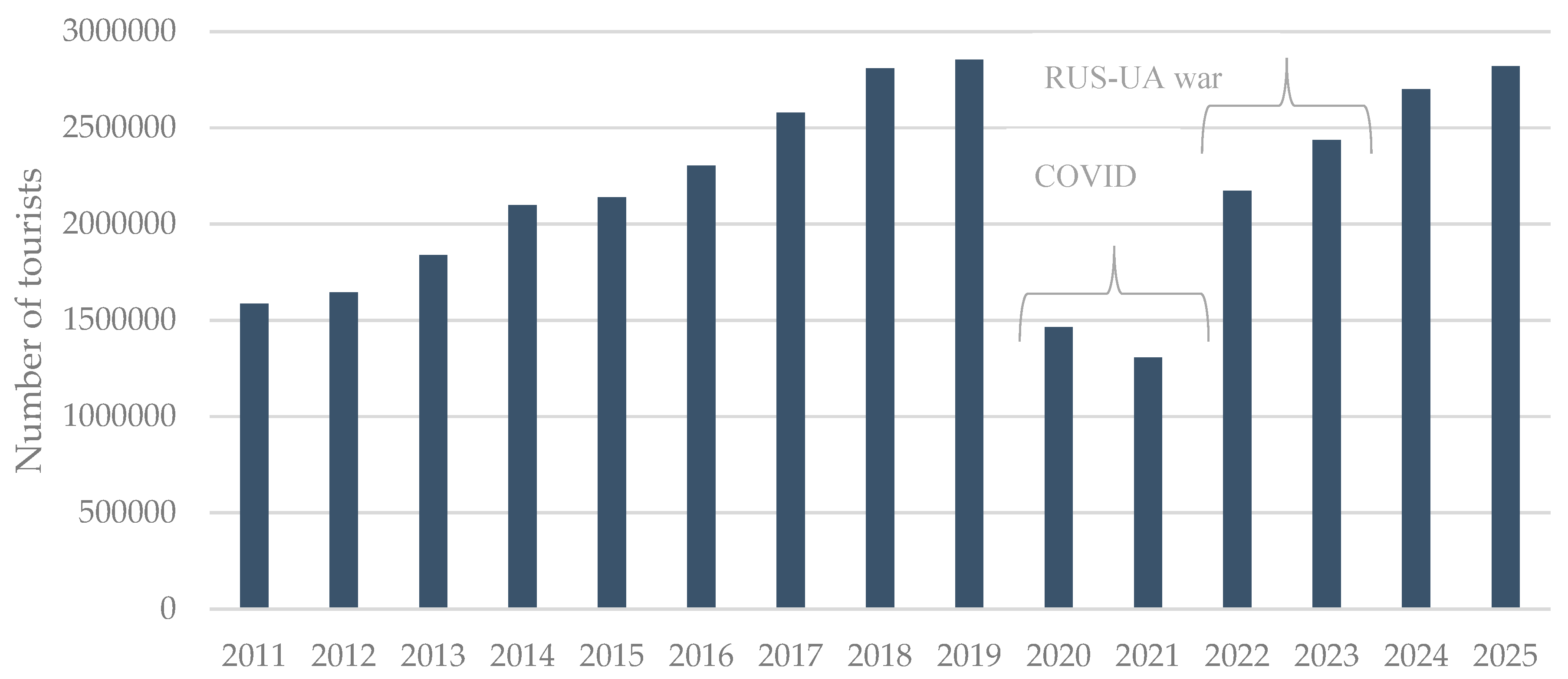
Figure 2.
Foreign tourists by regions of Latvia, 2024, thous. (%). Source: Made by authors based on data of Central Statistical Bureau of Latvia, 2025.
Figure 2.
Foreign tourists by regions of Latvia, 2024, thous. (%). Source: Made by authors based on data of Central Statistical Bureau of Latvia, 2025.
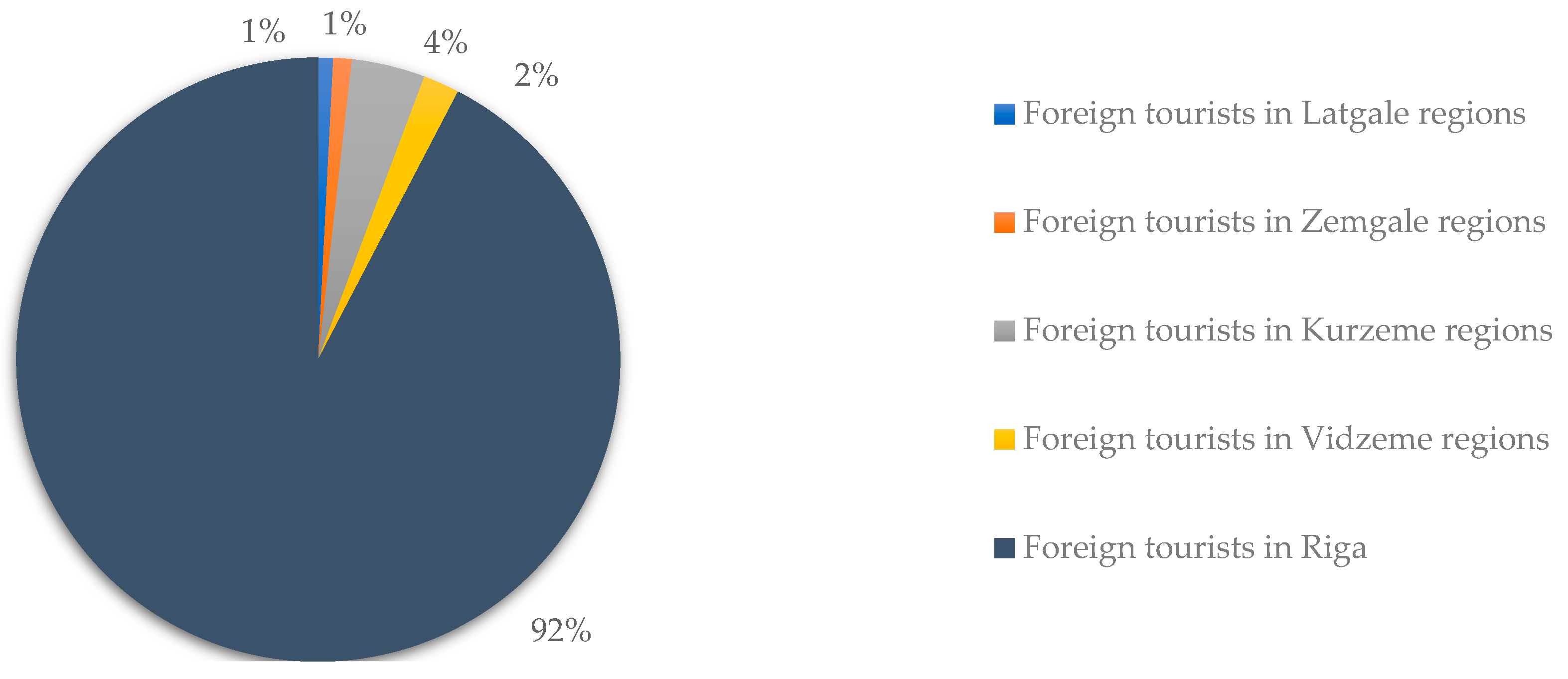
Figure 3.
Conceptual framework linking tourism flow disruptions, digital tools, consumer perceptions, and rural tourism competitiveness. Source: Developed by the authors.
Figure 3.
Conceptual framework linking tourism flow disruptions, digital tools, consumer perceptions, and rural tourism competitiveness. Source: Developed by the authors.
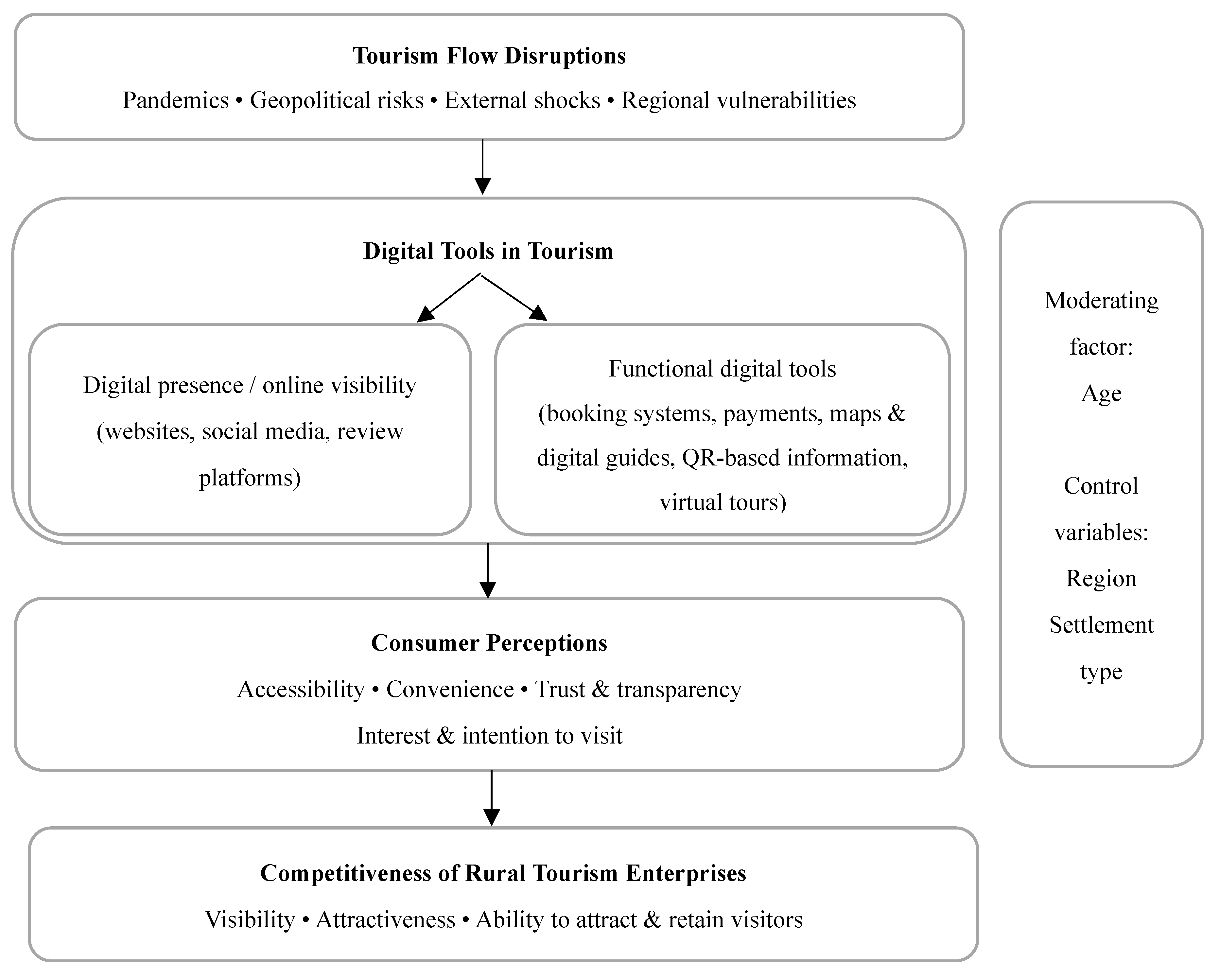
Figure 4.
Relative importance of competitiveness dimensions derived from open-ended responses (N = 1,004).
Figure 4.
Relative importance of competitiveness dimensions derived from open-ended responses (N = 1,004).
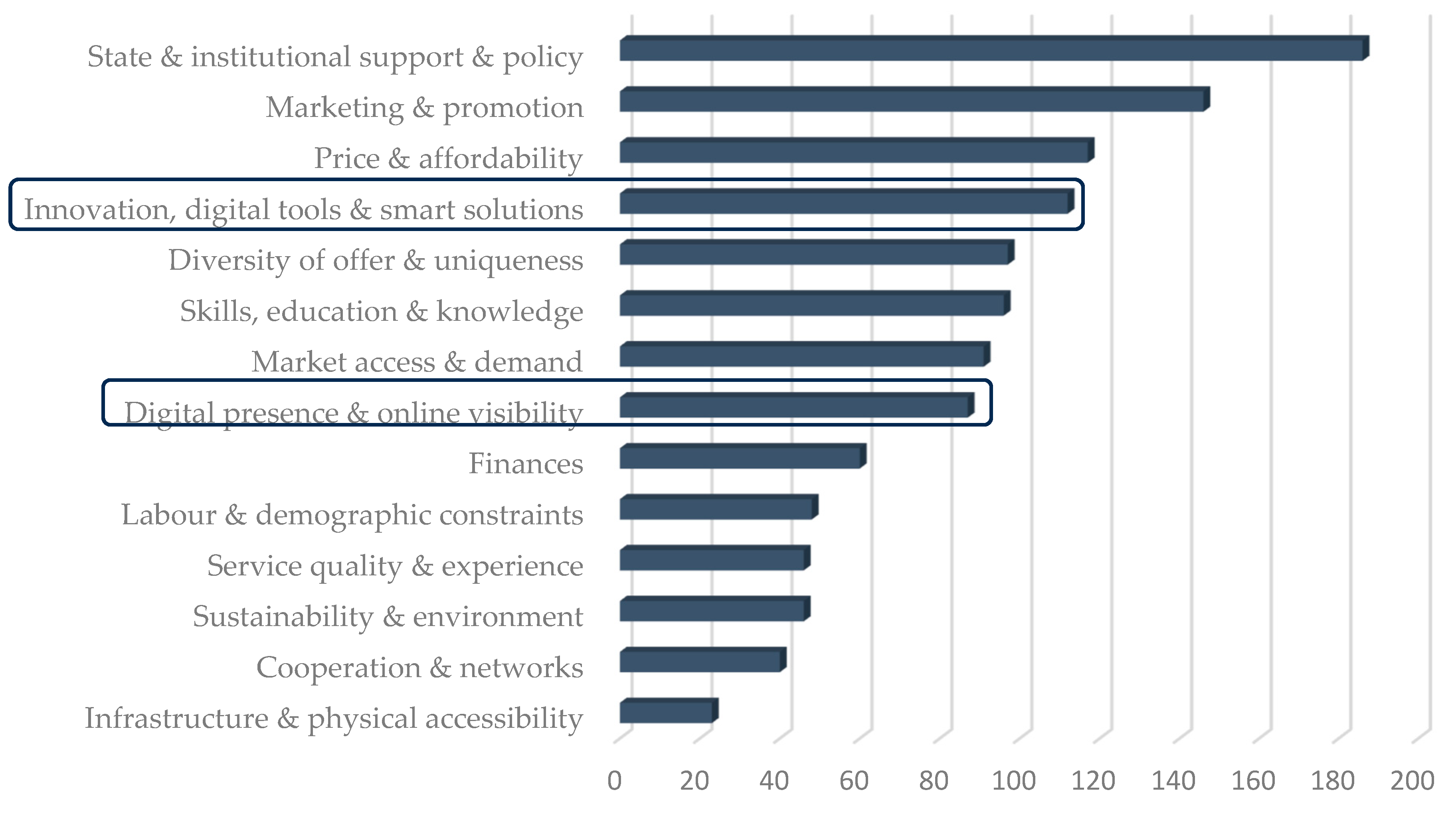
Figure 5.
Expected improvements in rural tourism from the consumer perspective (N = 1,004).
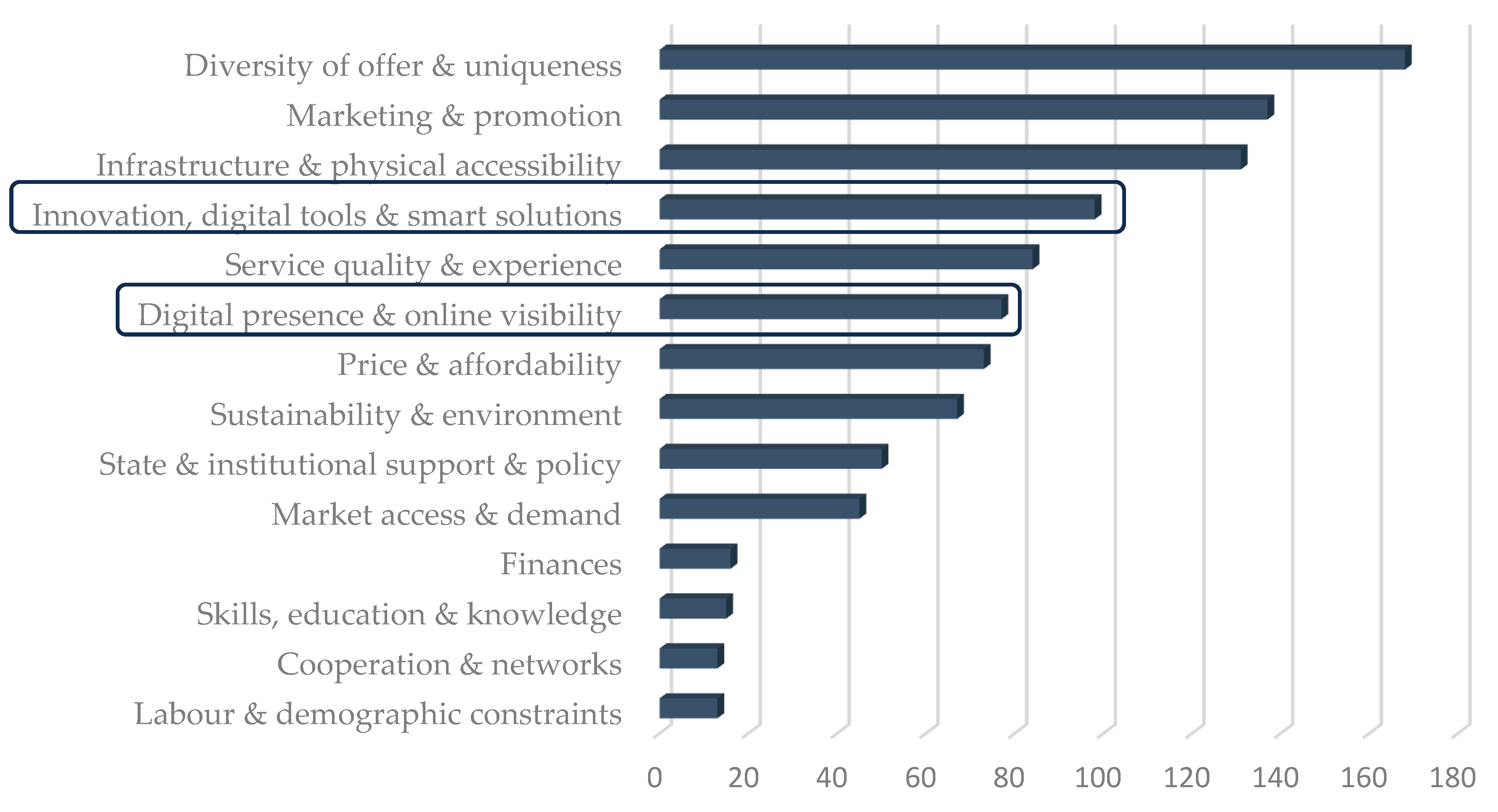

Table 1.
Age-related strength and direction of perceived importance of digital tools in rural tourism.
Table 1.
Age-related strength and direction of perceived importance of digital tools in rural tourism.
| Digital solution | Linear trend (statistics) | Strength of age effect | Conceptual interpretation |
|---|---|---|---|
| Virtual tours | Spearman ρ = 0.271, Pearson r = 0.178, p < 0.001 | Moderately strong | Build pre-visit confidence and support decision-making, with stronger age-related differentiation (higher importance in older groups). |
| Digital guides & maps | Spearman ρ = 0.158, Pearson r = 0.117, p < 0.001 | Moderate | Older respondents value structured, location-based digital information that reduces uncertainty and improves spatial orientation. |
| Digital review platforms | Spearman ρ = 0.153, Pearson r = 0.107, p < 0.001 | Moderate | Act as a trust cue and help reduce uncertainty before choosing; importance tends to be higher in older age groups. |
| Online booking & digital payments | Spearman ρ = 0.095, Pearson r = 0.092, p = 0.003 | Weak–moderate | Support planning and decision-making as basic transaction functionality, with slightly higher importance in middle age groups. |
| QR codes* / e-information | Spearman ρ = 0.004 (n.s.), Pearson r = 0.124, p < 0.001 | Weak / non-linear | Show uneven evaluations across age groups, suggesting a non-linear and usability-driven pattern rather than a clear age trend. |
* While Pearson’s r indicates a statistically significant association between age and perceived importance of QR-based information tools, the near-zero Spearman correlation suggests a non-linear relationship across age groups.
Table 2.
Consumer-defined competitiveness dimensions derived from open-ended responses (N = 1,004).
| Competitiveness dimension | Respondents (n) | % of respondents* | Interpretation |
|---|---|---|---|
| State & institutional support and policy | 186 | 18.5% | Competitiveness is perceived as systemically conditioned. Taxation, bureaucracy, regulation, public support instruments and infrastructure investment define whether rural tourism enterprises can invest, digitalize and develop at all. |
| Marketing and promotion (without explicit digital reference) | 146 | 14.5% | Visibility is understood as a demand-activation mechanism, particularly in local markets and under seasonal volatility, through promotion, events and traditional media. |
| Price and affordability | 117 | 11.7% | Value-for-money emerges as a core competitiveness logic, linking affordability and the price–quality balance to perceived market viability. |
| Innovation, digital tools & smart solutions | 112 | 11.2% | Digitalisation is interpreted primarily as a functional accessibility and friction-reduction mechanism, rather than innovation for its own sake. Competitiveness is associated with online booking and payments, automation, Wi-Fi, QR solutions and similar tools. This dimension is often framed conditionally, depending on access to funding and skills. |
| Diversity of offer and uniqueness | 97 | 9.7% | Differentiation and uniqueness function as adaptive mechanisms to fluctuating tourism flows, enabling added value beyond accommodation and helping to mitigate seasonality. |
| Skills, education and knowledge | 96 | 9.6% | Competences, including digital skills, are perceived as necessary conditions for implementation. This dimension helps explain incomplete digitalisation even when financial support is available. |
| Market access and demand conditions | 91 | 9.1% | Demand base and seasonality are perceived as structural constraints shaping competitiveness beyond individual enterprise performance. |
| Digital presence and online visibility | 87 | 8.7% | Digital visibility functions as an “entry ticket” to competitiveness, enabling accessibility, transparency and trust under conditions of uncertainty and disrupted tourism flows. |
| Finances | 60 | 6.0% | Investment capacity, liquidity, and financing are mentioned as feasibility constraints (distinct from policy-specific support). |
| Labour and demographic constraints | 48 | 4.8% | Labour shortages and demographic trends are perceived as structural risks explaining limits to service quality and development capacity. |
| Service quality and experience | 46 | 4.6% | Experience quality is associated with reputation and repeat demand, often complementing visibility-driven attraction mechanisms. |
| Sustainability and environmental aspects | 46 | 4.6% | Dual competitiveness dimension, balancing environmental values against regulatory requirements and cost pressures. |
| Cooperation and networks | 40 | 4.0% | Collective competitiveness through cooperation, shared platforms and partnerships is perceived as a response to small market size and high marketing costs. |
| Infrastructure & physical accessibility | 23 | 2.3% | Structural preconditions shaping competitiveness, particularly in relation to access, transport, signage, and basic facilities. |
* Multiple coding was allowed; percentages represent the share of respondents mentioning each theme.
Table 3.
Comparison of consumer-defined competitiveness dimensions and improvement priorities (N = 1,004).
Table 3.
Comparison of consumer-defined competitiveness dimensions and improvement priorities (N = 1,004).
| Competitiveness dimension | Importance (n) | % | Expected improvements (n) | % | Change in emphasis |
|---|---|---|---|---|---|
| Digital presence & online visibility | 87 | 8.7% | 77 | 7.7% | Stable digital entry condition |
| Innovation, digital tools & smart solutions | 112 | 11.2% | 98 | 9.8% | Stable functional digital layer |
| Marketing & promotion (offline / non-digital) | 146 | 14.6% | 137 | 13.7% | Demand activation (stable) |
| Price & affordability | 117 | 11.7% | 73 | 7.3% | Structural constraint (declines in improvement framing) |
| Market access & demand | 91 | 9.1% | 45 | 4.5% | Structural constraint |
| Service quality & experience | 46 | 4.6% | 84 | 8.4% | Visitor-facing priority (increase) |
| Infrastructure & physical accessibility | 23 | 2.3% | 131 | 13.1% | Operational usability priority (strong increase) |
| Diversity of offer & uniqueness | 97 | 9.7% | 168 | 16.7% | Core experiential priority (strong increase) |
| Sustainability & environment | 46 | 4.6% | 67 | 6.7% | Normative quality dimension |
| State & institutional support & policy | 186 | 18.6% | 50 | 5.0% | Structural determinant → background condition |
| Finances | 60 | 6.0% | 16 | 1.6% | Internal feasibility constraint |
| Skills, education & knowledge | 96 | 9.6% | 15 | 1.5% | Implementation capacity (background) |
| Cooperation & networks | 41 | 4.1% | 13 | 1.3% | Secondary supportive mechanism |
| Labour & demographic constraints | 48 | 4.8% | 13 | 1.3% | Structural risk factor |
Disclaimer/Publisher’s Note: The statements, opinions and data contained in all publications are solely those of the individual author(s) and contributor(s) and not of MDPI and/or the editor(s). MDPI and/or the editor(s) disclaim responsibility for any injury to people or property resulting from any ideas, methods, instructions or products referred to in the content. |
© 2026 by the authors. Licensee MDPI, Basel, Switzerland. This article is an open access article distributed under the terms and conditions of the Creative Commons Attribution (CC BY) license.
Copyright: This open access article is published under a Creative Commons CC BY 4.0 license, which permit the free download, distribution, and reuse, provided that the author and preprint are cited in any reuse.


