

Submitted:
18 March 2026
Posted:
19 March 2026
You are already at the latest version
Abstract
Background and Objectives. During the past two decades, the 28-day case-fatality rates from acute myocardial infarction (AMI) for both middle-aged and older persons have decreased significantly due to increased access to modern treatment and advances in secondary prevention. Study aim – to determine and evaluate case fatality rates from AMI and trends among the Kaunas 25-64 years population from 2000 to 2023. Materials and Methods. During the study period, data from the population-based Kaunas (Lithuania) Ischemic Heart Disease (IHD) Registry, which was implemented in accordance with the WHO MONICA project recommendations, were used. The study included individuals aged 25-64 who had an AMI or death from coronary heart disease within a 28-day period. The 28-day case-fatality rate from AMI was calculated as the proportion of deaths from AMI among all cases of AMI. To assess trends and their changes, JoinPoint regression was used. Results. Between 2000 and 2023, in males 28-day case-fatality rates from AMI was without significant changes, for females increased significantly (on average, 2.5%/year, p=0.002). The in-hospital case-fatality rates from AMI for both sexes did remained essentially unchanged. The average AMI case-fatality rates in males aged 25-54 and 55-64 were higher than for females. Only the 28-day case-fatality rates in Kaunas females aged 55-64 increased significantly (on average 3.0%/year, p=0.002). The average AMI in-hospital case-fatality rates for both males aged 25-54 and 55-64 were without significant changes as compared with females. When assessing the trend for males 2006 point was established, and no significant trend was observed. For females, 2010 was an important year, as the AMI case-fatality rate increased significantly from 2010 to 2023. When assessing changes in the in-hospital AMI case-fatality rate among males over one year (2015), it was found that significant changes occurred during the 2015-2023 period, with the rate decreasing on average by 14.7%/year. Conclusions. During the past two decades, 28-day case-fatality rates from AMI for males showed no significant changes, while for females increased. The AMI in-hospital case-fatality rates for both males and females did not change substantially. The average AMI case-fatality rates in males were significantly higher than those for females with aging. The AMI 28-day case-fatality rates for Kaunas males in aging groups showed no significant changes, but in females, the rates increased significantly with age.
Keywords:
acute myocardial infarction
; 28-day case-fatality rates
; trends
; sex
; age
1. Introduction
Since the mid-1990s, the acute myocardial infarction (AMI) mortality and the 28- or 30-day case-fatality rates from AMI for both middle-aged and older males and females have decreased significantly [1,2,3]. The AMI 28-day case-fatality rates in males are slightly higher than for females, especially in older age [4]. However, the case-fatality rate for females, especially in younger age groups, is somewhat higher than for males of the same age, although this difference has narrowed in recent years [5,6].
During the past two decades, in some Nordic European countries, the AMI case-fatality rates among middle-aged males (35–54 years) have been decreasing by about 3% per year, while they have been even higher among females (decreasing by about 3.3%/year) [3]. However, in the early 2000s, the case-fatality rates from AMI were higher, especially among those younger than 55 years, although this difference has narrowed over time [3]. In Sweden, the case-fatality rates from AMI among middle-aged (35–54 years) females were significantly higher than those of males during the period 1987–2010, but still, after adjusting for comorbidities, the differences narrowed [7]. The case-fatality rates from AMI among older males have continued to decrease (about 1.2–3.3%/year), partly due to improved treatment, and a significant decrease is also observed in females (about 3.3–3.9%/year in Lithuania and about 3.3% in Germany). The case-fatality rates from AMI in females remain lower than in males [8].
When assessing changes in AMI fatality in older people over the past decades, clear trends in decreasing AMI fatality have been identified for both sexes. In Germany, these rates have decreased by an average of 3%/year among males aged 75–84, and by as much as 10%/year among females [9]. In Norway and Finland, the decrease is also evident, but not as uniform. However, in some regions, inpatient AMI fatality for females over 75 years of age is often still similar to or slightly higher than that of males [3,5,10].
When assessing the differences in case fatality from AMI among young adults (up to 55 years of age), significant differences were found between the sexes, where in the mid-1990s this difference was about 2 times, but the difference has decreased to 1.3 times recently [3,8]. Over time, absolute case-fatality from AMI among females has decreased more rapidly, reducing the differences between younger and some middle-aged groups, although older males often still lag slightly behind females in terms of long-term survival [3].
Studies have shown that the decrease in AMI case-fatality rates over the past decades has been due to significantly improved treatment methods, such as increased rates of percutaneous coronary intervention (PCI), revascularization, and increased use of anticoagulants, beta-blockers, and statins [11,12,13,14,15,16]. Other reasons could include more effective primary and secondary prevention, especially among females, although younger women still often present late due to atypical ischemic symptoms [17]. Other reasons for the decline could include increased awareness and guideline-based care for ischemic heart syndromes, although regional differences in hospital treatment remain [18].
Study aim – to determine and evaluate AMI 28-day case-fatality rates and trends among the Kaunas 25-64 years persons from 2000 to 2023 according to the population-based Kaunas (Lithuania) IHD Register.
2. Materials and Methods
2.1. Study Sample
In this study, we evaluated data collected by the Kaunas IHD Registry during 2000-2023. The Kaunas IHD Registry was implemented following the recommendations of the World Health Organization (WHO) in the framework of the MONICA (Monitoring Trends and Determinants of Cardiovascular Disease) project in 1983 [19]. The Kaunas IHD Registry included approximately 200,000 individuals aged 25-64 years in Kaunas city (Lithuania) every year. All AMI cases and coronary deaths occurring in the 25-64-year-old residents of Kaunas city have been registered. The main data sources were described elsewhere [19].
2.2. Data Definitions
The study assessed data by the final clinical diagnosis of AMI events using codes from the International Classification of Diseases, 10th revision (ICD-10) (codes I21–I22 as acute myocardial infarction and code I20.0 as unstable angina pectoris) and the epidemiological diagnostic categories (EDC) (“definite AMI” and “possible AMI”). The criteria for “possible AMI” are based on the recommendations of the WHO MONICA protocol algorithms regarding clinical presentation (“definite clinic”), cardiac enzyme levels changes (“possible elevation of cardiac enzymes”), and ischemic ECG changes (“possible ischemic ECG changes”) for non-fatal events and the data of clinical investigation (“possible ischemic ECG changes”), and autopsy data (“coronary stenosis > 50%, scar after having had AMI”) and the data in the outpatient documents (“IHD in anamnesis”) for fatal events [19].
Information on the causes of death was obtained from the Kaunas Civil Registry Office and the Lithuanian Cause of Death and its Consequences Register [20]. All medical death certificates were reviewed to verify the diagnosis. The causes of death were coded using the ICD-10 codes [21].
Fatal cases with disease diagnoses I20-I25 were selected and verified. Following the WHO MONICA recommendations, to identify all possible deaths from IHD, other codes were also selected from medical death certificates, which indicated the following causes of death: arterial hypertension (codes I10–I15), other heart diseases (codes I30–I52), cerebrovascular diseases (codes I60–I69), diseases of arteries, arterioles, and capillaries (codes I70–I77), diabetes mellitus (codes E10–E14), obesity (codes E65–E68), dyslipidaemia (code E78), and unclear causes of death (codes R95–R99) [19].
This study used data only from individuals who died within 28 days of AMI onset in hospital and outside hospital, such as at work, on the street, at home, in a medical emergency car, or in the healthcare institution emergency department.
During the implementation of the Kaunas IHD registry, all fatal AMI cases were classified into certain EDCs, and cases with the EDCs “definite AMI”, “probable coronary death”, and “lack of data to confirm or exclude IHD” were included in the analysis.
To ensure data comparability, the same AMI case detection methods, diagnostic criteria, and assurance procedures were used. The results obtained were assessed according to socio-demographic factors, including sex and age.
The AMI overall and in-hospital 28-day case-fatality rates were presented in percentages and analyzed by sex (males and females) and age groups (25–54 years and 55–64 years).
2.3. Statistical Analysis
The 28-day AMI case-fatality rates (in percentage) were calculated as a proportion of deaths to all AMI events multiplied by 100. The 28-day case-fatality from AMI rates were directly adjusted within 10-year age groups to the World Standard Population [22]. To assess trends and their changes as an annual percentage change in the age-standardized and age-specific population rates, JoinPoint regression, using the JoinPoint software Version 5.4.0.0 (Statistical Research and Application Branch, National Cancer Institute, Bethesda, Maryland) was applied [23]. This method detects years in which significant changes in trends appeared (as “JoinPoints”), by using a grid search method and estimates annual percentage changes (APC) in rates between these JoinPoints and average annual percentage change (AAPC) together with 95% confidence intervals (CI) over the whole investigated time period from 2000 to 2023. In our analysis, we focused on AAPC over the whole observed period because analysis of a shorter time period is prone to bias due to low absolute numbers, especially in young females.
The methodology of JoinPoint regression analysis of linkages is based on identifying data breakpoints and fitting various linear regression lines according to a pre-selected size of linkage points [24]. Since a rather long study period was analyzed (24 points), the maximum recommended 4 points were selected for the analysis. Linear approximations were applied in the data analysis according to the maximum possible number of linkage points. At the beginning of the analysis, a zero linkage point model was selected. The possible number of linkage points in the analysis (from 0 to 4) was determined by performing a permutation test. To assess the significance of the results obtained, a two-sided p-value <0.05 was used.
2.4. Ethical Approval
Before the analysis, all patient records/information were anonymized and depersonalized. The study was approved by the Lithuanian Bioethics Committee (No. 14-27/03, 03 Dec 2001) and the Kaunas Regional Biomedical Research Ethics Committee (No. BE-2-39/19, 19 Apr 2021).
3. Results
Over 24 years (2000-2023), a total of 10,912 AMI cases were recorded, of which 3,060 (28.0%) did not survive 28 days from the onset of the disease. It was found that among the AMI patients who did not survive 28 days, 2,535 (30.3%) were males and 525 (20.6%) were females (p<0.0001).
When assessing changes in 28-day AMI case-fatality rates among the middle-aged (25-64 years) population of Kaunas (Lithuania) from 2000 to 2023, it was found that case-fatality rates from AMI for males remained essentially unchanged during this period, while case-fatality rates from AMI for females increased significantly during the corresponding period (on average 2.5%/year, p=0.002) (Figure 1).
Assessing the proportion of in-hospital AMI deaths, it was found that from 2000 to 2023, a total of 620 (20.3%) persons died in the hospitals, of which 482 (19.0%) were males, and 138 (26.3%) were females (p<0.0001). It was found that in the out-of-hospital period, there were more males than females aged 25-64 years, who died from AMI, 2,053 (81.0%) and 387 (73.7%) respectively (p<0.0001).
Evaluating changes in 28-day AMI hospital case-fatality rates among middle-aged (25–64 years) residents of Kaunas (Lithuania) from 2000 to 2023, it was found that AMI case-fatality rates for both men and women did not change substantially during this period (for males -1.9%/year, p=0.2, for females +1.2%/year, p=0.4) (Figure 2).
Table 1 presents the 28-day AMI case-fatality rates (%) and trends from 2000 to 2023 in persons aged 25-64 years by sex and age.
The average 28-day AMI case-fatality rates for both males aged 25-54 and 55-64 were significantly higher than for females. The average 28-day AMI case-fatality rate for Kaunas males aged 25-54 was 23.55%, and for females of the same age, 16.77% (p<0.05). The average 28-day AMI case-fatality rate for Kaunas males and females aged 55-64 was 34.28% and 23.34%, respectively (p<0.05) (Table 1).
For 25–54-year-old males, the 28-day AMI case-fatality rates varied from 11.99% in 2023 to 37.05% in 2021, while the AMI case-fatality rates for females of the same age varied from 0.01% in 2019 to 50% in 2018 (Table 1). In the oldest male age group (55-64 years), the 28-day AMI case-fatality rates varied from 20.13% in 2017 to 41.5% in 2011, while the AMI case-fatality rates for females of the same age ranged from 11.49% in 2011 to 51.22% in 2021 (Table 1).
When assessing changes in AMI 28-day case-fatality rates for Kaunas males aged 25-54 and 55-64 and females aged 25-54 over the past 2 decades, no significant changes were found, but AMI case-fatality rates for Kaunas females aged 55-64 increased significantly (on average 3%/year, p=0.002) (Table 1).
Table 2 presents the 28-day AMI in-hospital case-fatality rates (%) and trends from 2000 to 2023 in the Kaunas residents aged 25-64 years by sex and age.
The average in-hospital AMI case-fatality rates for both males aged 25-54 and 55-64 were without significant changes as compared with females’ case-fatality rates. The average in-hospital AMI case-fatality rates for Kaunas males aged 25-54 were 4.68%, and for females of the same age, 4.09% (p>0.05). The average 28-day in-hospital AMI case-fatality rates for Kaunas males and females aged 55-64 were 9.49% and 7.56%, respectively (p>0.05) (Table 2).
For the 25–54-year-old males, the AMI in-hospital case-fatality rates varied from very low in 2002 and 2019, while the AMI in-hospital case-fatality rates for females of the same age varied from very low in 2004, 2012-2014, 2019-2022 to 10.68% in 2001 (Table 2). In the oldest male age group (55-64 years), the AMI in-hospital case-fatality rates varied from 1.65% in 2017 to 19.86% in 2015, while the AMI in-hospital case-fatality rates for females of the same age varied from very low in 2023 to 16.67% in 2021-2022 (Table 2).
Evaluating changes in AMI hospital case-fatality rates for Kaunas males and females by age groups over the past 2 decades, no significant changes were found (Table 2).
The trends in the 28-day AMI case-fatality rates by sex and age are presented in Table 3. Evaluating the changes in the AMI case-fatality rates for 25–64-year-old males over one year (2006), no significant changes before and after this period. For females aged 25-64, 2010 was an important year point, although no significant changes were observed in 2000-2010, and in the period 2010-2023, the AMI case-fatality in females aged 25-64 increased significantly (on average 5.1%/year, 95% CI 1.3-9.1) (Table 3).
Among males and females aged 25–54, 2021 was a significant point, but the AMI case-fatality trends were without significant changes.
When assessing older (55-64 years) males’ data, the 2019-year point was important, but trends from 2000 to 2019 and from 2019 to 2023 showed no significant changes. Among older (55-64 years) females, the 2009 point was detected. During 2000-2009, the AMI case-fatality trend showed no significant changes; meanwhile, from 2009 to 2023, the 28-day AMI case-fatality rates increased by an average of 5.7%/years, 95% CI 1.7-9.8 (Table 3).
The trends in the AMI in-hospital case-fatality rates by sex and age are presented in Table 4. Assessing the changes in the hospital AMI case-fatality rates for males 25–64-years old over one year (2015), found that significant changes occurred during the 2015-2023 period with the decreasing AMI in-hospital case-fatality rates on average 14.7%/year (95% CI: -24.7; -3.5). For females aged 25-64, the 2003 point was established, although no significant changes were observed in the 2000-2010 and 2010-2023 periods (Table 4).
Among males and females aged 25–54, AMI hospital case-fatality rates in 2007 and 2021 were observed, respectively, but the AMI hospital case-fatality trends showed no significant changes.
When assessing older (55-64 years) males’ data, the 2015-year point was important, but the AMI hospital case-fatality trend from 2000 to 2015 was without significant changes, and during 2015-2023 AMI hospital case-fatality rates significantly decreased on average 18.3%/year (95% CI: -28.5; -6.8). Among older (55-64 years) females, a 2021-year point was established, but during the 2000-2021 and 2021-2023 years, respectively, AMI hospital case-fatality trends were without significant changes (Table 4).
4. Discussion
During 2000-2023, the case-fatality rates from AMI among Kaunas middle-aged males remained essentially unchanged, while among females, they increased significantly. The average case-fatality rates for both males 25-54 and 55-64-years-old were higher than for females in the respective age groups. When assessing changes in AMI case-fatality rates for Kaunas males aged 25-54 and 55-64 years old and females aged 25-54 over the past 2 decades, no significant changes were found, but AMI case-fatality rates for Kaunas females aged 55-64 increased significantly.
Assessing the changes in the AMI case-fatality rates in males 25–64-years-old over one year (2006), no significant changes before and after this period were observed. For females aged 25-64, 2010 was an important year point, although no significant changes were observed in 2000-2010, and in the period 2010-2023, the AMI case-fatality in females aged 25-64 increased significantly. Among males and females aged 25–54, 2021 was a significant point, but the AMI case-fatality trends showed no significant changes. When assessing older (55-64 years) males’ data, the 2019-year point was important, but trends from 2000 to 2019 and from 2019 to 2023 were without significant changes. Among older females, the 2009 point was important, but during 2000-2009, the AMI case-fatality trend was without significant changes; meanwhile, during 2009-2023, an increasing trend was identified.
In the same period, the in-hospital AMI case-fatality rates for both males and females did not change substantially. The average in-hospital AMI case-fatality rates for both males aged 25-54 and 55-64 were without significant changes as compared with females’ case-fatality rates. Evaluating changes in AMI in-hospital case-fatality rates for Kaunas males and females by age groups over the past 2 decades, no significant changes were found.
Evaluating the changes in the AMI case-fatality rates in males 25–64-years-old over one year (2015), it was found that significant changes occurred during the 2015-2023 period, with the decreasing AMI in-hospital case-fatality rates. For females aged 25-64, the 2003 point was established, although no significant changes were observed in the 2000-2010 and 2010-2023 periods. Among males and females aged 25–54, AMI in-hospital case-fatality rates in 2007 and 2021 were observed, respectively, but the AMI hospital case-fatality trends showed no significant changes. When assessing data from older males (55-64 years), the 2015 year point was notable. However, the AMI in-hospital case-fatality trend from 2000 to 2015 showed no significant changes. In contrast, from 2015 to 2023, AMI in-hospital case-fatality rates significantly decreased. Among older females (55-64 years), a 2021-year point was established, but during the 2000-2021 and 2021-2023 periods, respectively, AMI in-hospital case-fatality trends were without significant changes.
Other population-based studies in Europe, of which there were few, reported sex- and age-specific mortality trends, including deaths occurring before hospital admission and deaths within the first 28 or 30 days after hospital admission [4,25]. Studies in France [26] (2006–2014), England [25] (2002–2010), and Spain [4] (1996-2008) found a significant reduction in mortality from AMI among older males (65–84 years), but also decreased among younger males (<65 years). In the KORA MI registry study (Germany), among persons in 25-54 and 55-64 years, no changes were observed in the AMI case-fatality rate during the first 28 days from 2004 to 2015 [9]. In a study in Italy (2009-2018), both males and females had a decreasing mortality rate from AMI. Still, in the age group up to 75 years, the case-fatality rates from AMI were lower in females, and in persons >75 years, and in females were higher than in males [27]. According to data from England from 2015 to 2018, the contribution of case fatality from AMI was largest in women aged 55-64 and 65-74 years and in men aged 75-84 years. Pre-hospital AMI fatality rates were slightly higher in males than in females in most age groups, whereas in-hospital AMI case-fatality was higher in females with aging, including those aged 65-74 years [28].
When evaluating data from the female population, mixed trends were found. Some authors reported a significant decrease in AMI mortality in young females [25,29,30]. Other researchers in Spain and France have also found declining trends in AMI mortality among middle-aged women [4,26]. In contrast, some other researchers presented generalized trends from 6 European countries and reported an increase in 28-day AMI case-fatality among older females (65–74 years) from 2005 to 2010 [5]. In some countries, such as Australia, Canada, New Zealand, and England, when evaluating data on case-fatality from AMI from 2002 to 2015, the highest case-fatality rates were found in England, although the decline in AMI case-fatality rate was also the highest. The decline in case- fatality was greater than the decline in deaths among those under 55 years of age [31].
The decreasing 28-day AMI case-fatality rate may reflect the increased use of evidence-based interventional therapies in acute care settings for AMI patients and the use of drug combinations for the treatment of IHD in AMI patients, which have been recommended in the 2000 guidelines for acute coronary syndromes in older patients [11,32,33]. Given that the persons with the oldest age (55–64 years) have the largest number of fatal AMI cases, but in this age group, we have not observed benefits from improvements in AMI prevention and treatment, as reflected by the sharp increase in AMI case-fatalities, especially AMI fatalities in hospitals during the COVID-19 pandemic. Researchers found that during the COVID-19 pandemic, mortality from circulatory system diseases and mortality from cardiac pathology significantly increased, the number of catheter procedures performed decreased, and coronary care deteriorated both in hospital and at home [34,35,36,37].
Since our 28-day fatality rates includes both deaths occurring before hospital admission and deaths occurring within 28 days of hospital admission, changes in these rates are also influenced by other factors that are of considerable value, especially before hospital admission, such as timely diagnosis of coronary symptoms by healthcare institutions doctors and the quality of coronary care provided to individuals with pre-existing coronary artery disease before hospital admission [38]. When analyzing the data by sex, in our study, 28-day AMI case-fatality rates increased significantly in older females (55–64 years), although in-hospital AMI case-fatality rates did not change during the study.
It remains unclear whether this reflects somewhat less progress in the treatment of AMI in females, or whether, conversely, out-of-hospital AMI case-fatality trends mask possible improvements in the quality of coronary heart care provided after hospitalization.
The development of heart failure (HF) during initial hospitalization is recognized as one of the major prognostic factors for poor outcomes in patients with AMI [39,40]. Factors contributing to the pathogenesis of HF development during AMI hospitalization include exacerbation of pre-existing HF and comorbidities, myocardial necrosis, or mechanical complications. Several studies based on administrative datasets have reported opposing trends in the incidence of HF during AMI [10,41,42].
Probably, that the proportion of HF cases diagnosed during hospitalization for AMI has increased, due to the increase in the average age of hospitalized patients, and the frequency of HF development during hospitalization has decreased due to the implementation of timely and effective myocardial revascularization and troponin-based AMI diagnostics in healthcare institutions, which allows for the identification of milder forms of AMI, therefore the risk of HF development is lower. Some studies have found a smaller and decreasing proportion of AMI cases that had a complication of HF, both in younger and older AMI patients, especially in females [27]. Researchers found that patients with AMI who were diagnosed with HF had up to a 4-fold higher case-fatality rate than patients with AMI who did not have HF, but similar to the youngest and oldest age groups [43].
In recent years, much effort and funding have been invested in Lithuania to improve the management, timely and effective diagnosis, and treatment of AMI, including outpatient and inpatient care of AMI cases [44]. In Lithuania, the currently increasing rate of myocardial reperfusion, as a measure of the effectiveness of AMI treatment, is similar to the data from Western and Northern European countries [45]. All of the above indicators may have contributed to the decreasing trend in AMI case-fatality rates.
It should be noted that during the study period or in separate periods, no significant trends in AMI case-fatality rates were observed in the Lithuanian middle-aged female population, and in the older age group (55–64 years), a significant increase in AMI case-fatality rates was even observed. This may be related to lower access to health care services for females and shortcomings in the management of females with AMI, unclear clinical presentation and diagnosis of the disease, or other serious comorbidities, such as lung disease, diabetes, or kidney disease, among females [46,47,48]. The stability of AMI lethality in females can be explained by different clinical manifestations due to co-morbidities, slightly delayed access to healthcare institutions, and consequently some differences in AMI treatment, which potentially result in more deaths [49,50,51,52].
Some Eastern European countries, such as Poland, Romania, and the Czech Republic, have made significant progress in reducing AMI mortality rates, but significant disparities remain [53]. Despite the improvement, the mortality rate in Lithuania is still quite high (up to 2-fold higher). Poland has achieved the biggest reduction in AMI mortality trends, most likely due to comprehensive prevention and treatment strategies. This improvement is associated with strengthened primary and secondary prevention implementation, wider use of statins, and prompt acute coronary care measures [54]. Romania and the Czech Republic have also made considerable progress, but still face challenges in reducing AMI mortality to the levels observed in Western Europe [55].
Addressing these disparities requires continued investment in improving access to quality health care and implementing targeted interventions to reduce cardiovascular risk factors among Lithuanian females, especially in older age, when females’ hormonal protection ends.
Study Strengths and Limitations
Our study also has some limitations. First, it is a retrospective study, where the data collected on each AMI case depends on the accuracy of medical records in medical histories and the correctness and completeness of the data on life and case history provided in outpatient cards, data on the clinical course, and applied diagnostic procedures, especially in cases where the studied case was very acute and ended in death. In cases of sudden lethal outcome, the data were revised at autopsy, or clinical course data were used if an autopsy procedure was not performed. Cases of AMI resulting in death after hospital discharge were recorded by reviewing the database in the National Cause of Death Registry, including during the COVID-19 pandemic.
We also did not compare AMI cases that ended in death by type of AMI (without ST elevation and with ST elevation), which limited our study results. The MONICA project recommendations do not provide detailed trends in the treatment aspects of AMI cases that could explain the decreasing mortality from IHD; therefore, our results are limited. The accuracy of the study results may have been affected by incorrect coding of death codes for patients with AMI. In our study, we could not rule out the possibility that our results did not show other increasing or decreasing trends during the study period due to incorrect coding, incorrect epidemiological classification of cases, or misdiagnosis, especially in individuals with SARS-CoV-2 infection. Similarly, the diagnosis of an AMI case could have been misleading, especially if the death occurred suddenly outside the hospital, as autopsies are not always performed for cases of sudden death, and diagnoses are made based on previous medical records. Overall, the number of autopsies in Lithuania has decreased threefold over the past 2 decades, limiting the possibilities for correcting the established and revised AMI diagnosis. Therefore, we cannot rule out the assumption and possibility that inaccuracy in the death code on the death certificate could have influenced the study findings. Previous studies have shown that errors in the death certificate lead to inaccurate data, affecting mortality statistics, although previous studies have shown high accuracy in coding AMI cases [56]. Finally, given that previous studies have shown that cardiovascular mortality may be underestimated in younger individuals on death certificates [57], our results may underestimate true mortality in younger age groups.
5. Conclusions
During 2000-2023, 28-day AMI case-fatality rates for males were without significant changes, while for females increased. The in-hospital AMI case-fatality rates for both males and females did not change substantially during this period. The average AMI case-fatality rates for both males aged 25-54 and 55-64 were significantly higher than for females. The 28-day AMI case-fatality rates for Kaunas 25-54 and 55-64-year-old males and females aged 25-54 years over the past two decades showed no significant changes, but in females aged 55-64 years, they significantly increased. The findings emphasize the importance of improving primary and secondary prevention measures effectiveness, diagnostic and logistic improvements, with a focus especially on older females.
Acknowledgments
The authors are very grateful to colleagues who contributed to the collection of data for the Kaunas Ischemic Heart Disease Registry.
Author Contributions
Conceptualization, R.R., L.S. and D.K.-B.; data curation, R.R. and L.S.; formal analysis, R.R.; investigation, R.R., L.S. and D.K.-B.; methodology, R.R., L.S., D.K.-B., A.T. and D.L.; software, R.R.; supervision, R.R., L.S., A.T., S.A., and E.J.; visualization, R.R.; writing—original draft, R.R., L.S. and D.K.-B.; writing—review and editing, A.T., D.L., S.A., and E.J. All authors have read and agreed to the published version of the manuscript.
Institutional Review Board Statement
The study was approved by the Lithuanian Bioethics Committee (ref. No. 14-27/03 December 2001) and by the Kaunas Regional Biomedical Research Ethics Committee (ref. No. BE-2-39/19 April 2021) and complies with the Declaration of Helsinki of the World Medical Association. The latter ethics approval covers the subsequent study period from 2021 to 2023. All patient records/information were anonymized and de-identified before the analysis.
Informed Consent Statement
Patient consent was waived because depersonalized patient data were used for analysis.
Data Availability Statement
The original contributions presented in this study are included in the article; further inquiries can be directed to the corresponding authors.
Conflicts of Interest
The authors declare no conflicts of interest.
Funding Statement
This research received no external funding.
References
- Amini, M; Zayeri, F; Salehi, M. Trend analysis of cardiovascular disease mortality, incidence, and mortality-to-incidence ratio: results from global burden of disease study 2017. BMC Public Health 2021, 21(1), 401. [Google Scholar] [CrossRef]
- Zuin, M; Rigatelli, G; Temporelli, P; Di Fusco, SA; Colivicchi, F; Pasquetto, G; Bilato, C. Trends in acute myocardial infarction mortality in the European Union, 2012-2020. Eur J Prev Cardiol. 2023, 30(16), 1758–1771. [Google Scholar] [CrossRef] [PubMed]
- Kallström, A; Holopainen, I; Kambur, O; Perola, M; Salomaa, V; Havulinna, AS; Ramste, M; Sinisalo, J. Divergent trends in the incidence and mortality of acute myocardial ischaemic syndrome, especially in women. Evidence from Finland in 1996-2021. Ann Med. 2024, 56(1), 2424455. [Google Scholar] [CrossRef] [PubMed]
- Vázquez-Oliva, G; Zamora, A; Ramos, R; Marti, R; Subirana, I; Grau, M; Dégano, IR; Marrugat, J; Elosua, R. Acute Myocardial Infarction Population Incidence and Mortality Rates, and 28-day Case-fatality in Older Adults. The REGICOR Study. In Rev Esp Cardiol (Engl Ed); English, Spanish, 2018; Volume 71, 9, pp. 718–725. [Google Scholar] [CrossRef]
- Dégano, IR; Salomaa, V; Veronesi, G; Ferriéres, J; Kirchberger, I; Laks, T; Havulinna, AS; Ruidavets, JB; Ferrario, MM; Meisinger, C. Acute Myocardial Infarction Trends in Europe (AMITIE) Study Investigators. Twenty-five-year trends in myocardial infarction attack and mortality rates, and case-fatality, in six European populations. Heart 2015, 101(17), 1413–21. [Google Scholar] [CrossRef]
- DeFilippis, EM; Collins, BL; Singh, A; Biery, DW; Fatima, A; Qamar, A; Berman, AN; Gupta, A; Cawley, M; Wood, MJ; et al. Women who experience a myocardial infarction at a young age have worse outcomes compared with men: the Mass General Brigham YOUNG-MI registry. Eur Heart J. 2020, 41(42), 4127–4137. [Google Scholar] [CrossRef] [PubMed]
- Berg, J; Björck, L; Nielsen, S; Lappas, G; Rosengren, A. Sex differences in survival after myocardial infarction in Sweden, 1987-2010. Heart 2017, 103(20), 1625–1630. [Google Scholar] [CrossRef]
- Izadnegahdar, M; Singer, J; Lee, MK; Gao, M; Thompson, CR; Kopec, J; Humphries, KH. Do younger women fare worse? Sex differences in acute myocardial infarction hospitalization and early mortality rates over ten years. J Womens Health (Larchmt) 2014, 23(1), 10–7. [Google Scholar] [CrossRef]
- Krämer, C; Meisinger, C; Kirchberger, I; Heier, M; Kuch, B; Thilo, C; Linseisen, J; Amann, U. Epidemiological trends in mortality, event rates and case fatality of acute myocardial infarction from 2004 to 2015: results from the KORA MI registry. Ann Med. 2021, 53(1), 2142–2152. [Google Scholar] [CrossRef]
- Sulo, G; Igland, J; Vollset, SE; Ebbing, M; Egeland, GM; Ariansen, I; Tell, GS. Trends in incident acute myocardial infarction in Norway: an updated analysis to 2014 using national data from the CVDNOR project. Eur J Prev Cardiol. 2018, 25(10), 1031–1039. [Google Scholar] [CrossRef]
- Amann, U; Kirchberger, I; Heier, M; Golüke, H; von Scheidt, W; Kuch, B; Peters, A; Meisinger, C. Long-term survival in patients with different combinations of evidence-based medications after incident acute myocardial infarction: results from the MONICA/KORA Myocardial Infarction Registry. Clin Res Cardiol. 2014, 103(8), 655–64. [Google Scholar] [CrossRef]
- Dixon, DL; Sharma, G; Sandesara, PB; Yang, E; Braun, LT; Mensah, GA; Sperling, LS; Deedwania, PC; Virani, SS. Therapeutic Inertia in Cardiovascular Disease Prevention: Time to Move the Bar. J Am Coll Cardiol. 2019, 74(13), 1728–1731. [Google Scholar] [CrossRef]
- Toso, A; Leoncini, M; Maioli, M; Villani, S; Bellandi, F; PRATO-ACS. Residual risk after acute coronary syndrome: the PRATO-ACS registry. Eur Heart J. 2021, 42 (Supplement_1), 2466. [Google Scholar] [CrossRef]
- Del Buono, MG; Montone, RA; Iannaccone, G; Rinaldi, R; La Vecchia, G; Camilli, M; Gurgoglione, FL; Russo, M; Lombardi, M; D’amario, D; Niccoli, G. Redefining residual inflammatory risk after acute coronary syndrome. Future Cardiol. 2022, 18(2), 115–123. [Google Scholar] [CrossRef] [PubMed]
- Lou, B; Liu, H; Luo, Y; Jiang, GT; Wu, H; Wang, C; Wu, Y; Zhou, B; Yuan, Z; She, J; Liu, J. In-hospital initiation of PCSK9 inhibitor and short-term lipid control in patients with acute myocardial infarction. Lipids Health Dis. 2022, 21(1), 105. [Google Scholar] [CrossRef] [PubMed]
- Chen, Y; Qiu, J; Ai, T; Wu, Y. The Role of Oral β-Blockers in Patients With Acute Myocardial Infarction with Preserved or Mildly Reduced Left Ventricular Systolic Function: A Systematic Review and Meta-Analysis. Clin Ther. 2025, 47(9), 788–797. [Google Scholar] [CrossRef]
- Weininger, D; Cordova, JP; Wilson, E; Eslava, DJ; Alviar, CL; Korniyenko, A; Bavishi, CP; Hong, MK; Chorzempa, A; Fox, J; Tamis-Holland, JE. Delays to Hospital Presentation in Women and Men with ST-Segment Elevation Myocardial Infarction: A Multi-Center Analysis of Patients Hospitalized in New York City. Ther Clin Risk Manag 2022, 18, 1–9. [Google Scholar] [CrossRef]
- Cangiano, L; Bonomi, A; Cosentino, N; Leoni, O; Trombara, F; Myasoedova, VA; Poggio, P; Trabattoni, D; Agostoni, P; Marenzi, G. Exploring sex differences in mortality among acute myocardial infarction. Open Heart 2025, 12(2), e003517. [Google Scholar] [CrossRef]
- World Health Organization MONICA Project. MONICA Manual; World Health Organization MONICA Project: Geneva, Switzerland, 1990. [Google Scholar]
- Lithuanian Hygiene Institute. 2026. Available online: https://www.hi.lt/sveikatos-informacijos-centras-mirties-atveju-ir-ju-pr.. (accessed on 15 January 2026).
- ICD-10 Codes. Available online: https://icd.who.int/browse10/2019/en#/IX (accessed on 8 January 2026).
- Ahmad, OB; Boschi-Pinto, C; Lopez, AD; Murray, CJL; Lozano, R; Inoue, M. Age Standardization of Rates: A New WHO Standard; (GPE Discussion Paper Series: No. 31. EIP/GPE/EBD); WHO: Geneva, Switzerland, 2001. [Google Scholar]
- Joinpoint Trend Analysis Software. Available online: https://surveillance.cancer.gov/joinpoint/ (accessed on 20 January 2026).
- Kim, HJ; Fay, MP; Feuer, EJ; Midthune, DN. Permutation tests for joinpoint regression with applications to cancer rates. Stat. Med. 2000, 19, 335–351. [Google Scholar] [CrossRef]
- Smolina, K; Wright, FL; Rayner, M; Goldacre, MJ. Determinants of the decline in mortality from acute myocardial infarction in England between 2002 and 2010: linked national database study. BMJ 2012, 344, d8059. [Google Scholar] [CrossRef]
- Meirhaeghe, A; Montaye, M; Biasch, K; Huo Yung Kai, S; Moitry, M; Amouyel, P; Ferrières, J; Dallongeville, J. Coronary heart disease incidence still decreased between 2006 and 2014 in France, except in young age groups: results from the French MONICA registries. Eur J Prev Cardiol. 2020, 27(11), 1178–1186. [Google Scholar] [CrossRef] [PubMed]
- De Luca, L; Cicala, SD; D’Errigo, P; Cerza, F; Mureddu, GF; Rosato, S; Badoni, G; Seccareccia, F; Baglio, G. Impact of age, gender and heart failure on mortality trends after acute myocardial infarction in Italy. Int J Cardiol. 2022, 348, 147–151. [Google Scholar] [CrossRef]
- Asaria, P; Bennett, JE; Elliott, P; Rashid, T; Iyathooray Daby, H; Douglass, M; Francis, DP; Fecht, D; Ezzati, M. Contributions of event rates, pre-hospital deaths, and deaths following hospitalisation to variations in myocardial infarction mortality in 326 districts in England: a spatial analysis of linked hospitalisation and mortality data. Lancet Public Health 2022, 7(10), e813–e824. [Google Scholar] [CrossRef]
- Xu, X; Bao, H; Strait, K; Spertus, JA; Lichtman, JH; D’Onofrio, G; Spatz, E; Bucholz, EM; Geda, M; Lorenze, NP; Bueno, H; Beltrame, JF; Krumholz, HM. Sex differences in perceived stress and early recovery in young and middle-aged patients with acute myocardial infarction. Circulation 2015, 131(7), 614–23. [Google Scholar] [CrossRef]
- Wilmot, KA; O’Flaherty, M; Capewell, S; Ford, ES; Vaccarino, V. Coronary heart disease mortality declines in the United States from 1979 through 2011: evidence for stagnation in young adults, especially women. Circulation 2015, 132(11), 997–1002. [Google Scholar] [CrossRef]
- Camacho, X; Nedkoff, L; Wright, FL; Nghiem, N; Buajitti, E; Goldacre, R; Rosella, LC; Seminog, O; Tan, EJ; Hayes, A; et al. Relative contribution of trends in myocardial infarction event rates and case fatality to declines in mortality: an international comparative study of 1·95 million events in 80·4 million people in four countries. Lancet Public Health 2022, 7(3), e229–e239. [Google Scholar] [CrossRef]
- Antman, EM; Anbe, DT; Armstrong, PW; Bates, ER; Green, LA; Hand, M; Hochman, JS; Krumholz, HM; Kushner, FG; Lamas, GA. American College of Cardiology; American Heart Association Task Force on Practice Guidelines; Canadian Cardiovascular Society. ACC/AHA guidelines for the management of patients with ST-elevation myocardial infarction: a report of the American College of Cardiology/American Heart Association Task Force on Practice Guidelines (Committee to Revise the 1999 Guidelines for the Management of Patients with Acute Myocardial Infarction). Circulation 2004, 110(9), e82-292. [Google Scholar] [PubMed]
- Amann, U; Kirchberger, I; Heier, M; von Scheidt, W; Kuch, B; Peters, A; Meisinger, C. Acute myocardial infarction in the elderly: treatment strategies and 28-day-case fatality from the MONICA/KORA myocardial infarction registry. Catheter Cardiovasc Interv. 2016, 87(4), 680–688. [Google Scholar] [CrossRef] [PubMed]
- Nef, HM; Elsässer, A; Möllmann, H; Abdel-Hadi, M; Bauer, T; Brück, M; Eggebrecht, H; Ehrlich, JR; Ferrari, MW; Fichtlscherer, S. CoVCAD–Study Group. Impact of the COVID-19 pandemic on cardiovascular mortality and catherization activity during the lockdown in central Germany: an observational study. Clin Res Cardiol. 2021, 110(2), 292–301. [Google Scholar] [CrossRef]
- Cipriani, A; Capone, F; Donato, F; Molinari, L; Ceccato, D; Saller, A; Previato, L; Pesavento, R; Sarais, C; Fioretto, P; et al. Cardiac injury and mortality in patients with Coronavirus disease 2019 (COVID-19): insights from a mediation analysis. Intern Emerg Med. 2021, 16(2), 419–427. [Google Scholar] [CrossRef] [PubMed]
- Kiss, P; Carcel, C; Hockham, C; Peters, SAE. The impact of the COVID-19 pandemic on the care and management of patients with acute cardiovascular disease: a systematic review. Eur Heart J Qual Care Clin Outcomes 2021, 7(1), 18–27. [Google Scholar] [CrossRef]
- Čelutkienė, J; Čerlinskaitė-Bajorė, K; Bajoras, V; Višinskienė, R; Lizaitis, M; Budrys, P; Buivydas, R; Gurevičius, R; Šerpytis, P; Davidavičius, G. Collateral effect of the COVID-19 pandemic on cardiology service provision and cardiovascular mortality in a population-based study: COVID-COR-LT. Clin Res Cardiol. 2022, 111(10), 1130–1146. [Google Scholar] [CrossRef] [PubMed]
- Zandecki, L; Sadowski, M; Janion, M; Gierlotka, M; Gasior, M; Polonski, L. Trends in sex differences in clinical characteristics, treatment strategies, and mortality in patients with ST-elevation myocardial infarction in Poland from 2005 to 2011. Coron Artery Dis. 2017, 28(5), 417–425. [Google Scholar] [CrossRef]
- Steg, PG; Dabbous, OH; Feldman, LJ; Cohen-Solal, A; Aumont, MC; López-Sendón, J; Budaj, A; Goldberg, RJ; Klein, W; Anderson, FA, Jr. Global Registry of Acute Coronary Events Investigators. Determinants and prognostic impact of heart failure complicating acute coronary syndromes: observations from the Global Registry of Acute Coronary Events (GRACE). Circulation 2004, 109(4), 494–9. [Google Scholar] [CrossRef] [PubMed]
- Desta, L; Jernberg, T; Löfman, I; Hofman-Bang, C; Hagerman, I; Spaak, J; Persson, H. Incidence, temporal trends, and prognostic impact of heart failure complicating acute myocardial infarction. The SWEDEHEART Registry (Swedish Web-System for Enhancement and Development of Evidence-Based Care in Heart Disease Evaluated According to Recommended Therapies): a study of 199,851 patients admitted with index acute myocardial infarctions, 1996 to 2008. JACC Heart Fail. 2015, 3(3), 234–42. [Google Scholar] [CrossRef]
- Gerber, Y; Weston, SA; Jiang, R; Roger, VL. The changing epidemiology of myocardial infarction in Olmsted County, Minnesota, 1995-2012. Am J Med. 2015, 128(2), 144–51. [Google Scholar] [CrossRef]
- Wellings, J; Kostis, JB; Sargsyan, D; Cabrera, J; Kostis, WJ. Myocardial Infarction Data Acquisition System (MIDAS 31) Study Group. Risk Factors and Trends in Incidence of Heart Failure Following Acute Myocardial Infarction. Am J Cardiol. 2018, 122(1), 1–5. [Google Scholar] [CrossRef]
- Greco, C; Rosato, S; D’Errigo, P; Mureddu, GF; Lacorte, E; Seccareccia, F. Trends in mortality and heart failure after acute myocardial infarction in Italy from 2001 to 2011. Int J Cardiol. 2015, 184, 115–121. [Google Scholar] [CrossRef]
- Kotseva, K; De Bacquer, D; Jennings, C; Gyberg, V; De Backer, G; Rydén, L; Amouyel, P; Bruthans, J; Cifkova, R; Deckers, JW. EUROASPIRE Investigators. Time Trends in Lifestyle, Risk Factor Control, and Use of Evidence-Based Medications in Patients With Coronary Heart Disease in Europe: Results From 3 EUROASPIRE Surveys, 1999-2013. Glob Heart 2017, 12(4), 315–322.e3. [Google Scholar] [CrossRef]
- Barauskas, M; Unikas, R; Žiubrytė, G. Outcomes of in-hospital treatment of cardiac patients who survived cardiac arrest and experienced coronary angiography. Arch Med Sci Atheroscler Dis. 2018, 3, e1–e7. [Google Scholar] [CrossRef]
- Cosentino, N; Bonomi, A; Campodonico, J; Veglia, F; De Ferrari, GM; Genovese, S; Marenzi, G. Can the in-hospital mortality gap between STEMI patients with and without diabetes mellitus be reduced? The cardio-renal hypothesis. Nutr Metab Cardiovasc Dis. 2021, 31(5), 1516–1520. [Google Scholar] [CrossRef] [PubMed]
- Cosentino, N; Resta, ML; Somaschini, A; Campodonico, J; Lucci, C; Moltrasio, M; Bonomi, A; Cornara, S; Camporotondo, R; Demarchi, A; et al. Acute kidney injury and in-hospital mortality in patients with ST-elevation myocardial infarction of different age groups. Int J Cardiol. 2021, 344, 8–12. [Google Scholar] [CrossRef]
- Weizman, O; Marijon, E; Narayanan, K; Boveda, S; Defaye, P; Martins, R; Deharo, JC; Laurent, G; Klug, D; Sadoul, N. FAST-MI Program Investigators. Incidence, Characteristics, and Outcomes of Ventricular Fibrillation Complicating Acute Myocardial Infarction in Women Admitted Alive in the Hospital. J Am Heart Assoc. 2022, 11(17), e025959. [Google Scholar] [CrossRef]
- Crea, F; Battipaglia, I; Andreotti, F. Sex differences in mechanisms, presentation and management of ischaemic heart disease. Atherosclerosis 2015, 241(1), 157–68. [Google Scholar] [CrossRef] [PubMed]
- Aggarwal, NR; Patel, HN; Mehta, LS; Sanghani, RM; Lundberg, GP; Lewis, SJ; Mendelson, MA; Wood, MJ; Volgman, AS; Mieres, JH. Sex Differences in Ischemic Heart Disease: Advances, Obstacles, and Next Steps. Circ Cardiovasc Qual Outcomes 2018, 11(2), e004437. [Google Scholar] [CrossRef] [PubMed]
- Bugiardini, R; Manfrini, O; Cenko, E. Female sex as a biological variable: A review on younger patients with acute coronary syndrome. Trends Cardiovasc Med. 2019, 29(1), 50–55. [Google Scholar] [CrossRef]
- Dekleva, M; Djordjevic, A; Zivkovic, S; Lazic, JS. Specificities of Myocardial Infarction and Heart Failure in Women. J Clin Med. 2024, 13(23), 7319. [Google Scholar] [CrossRef]
- European Health Information Gateway. Available online: https://gateway.euro.who.int/en/ (accessed on 29 January 2026).
- Banach, M; Mastalerz-Migas, A; Wita, K; Myśliwiec, M. Poland takes a lead in effective lipid disorders management healthcare programmes in Europe. Am J Prev Cardiol. 2025, 24, 101346. [Google Scholar] [CrossRef] [PubMed]
- Bruthans, J; Mayer, O; Jarkovsky, J; Zvolsky, M; Bruthans, J. Long-term trends in the incidence, treatment, hospital fatality and subsequent mortality from acute myocardial infarction in the Czech Republic. Biomed Pap Med Fac Univ Palacky Olomouc Czech Repub. 2021, 165(3), 283–290. [Google Scholar] [CrossRef]
- Nedkoff, L; Briffa, TG; Knuiman, M; Hung, J; Norman, PE; Hankey, GJ; Thompson, PL; Geelhoed, E; Sanfilippo, FM; Hickling, S; et al. Temporal trends in the incidence and recurrence of hospitalised atherothrombotic disease in an Australian population, 2000-07: data linkage study. Heart 2012, 98(19), 1449–56. [Google Scholar] [CrossRef]
- Lloyd-Jones, DM; Martin, DO; Larson, MG; Levy, D. Accuracy of death certificates for coding coronary heart disease as the cause of death. Ann Intern Med. 1998, 129(12), 1020–6. [Google Scholar] [CrossRef]
Figure 1.
The trends of 28-day acute myocardial infarction case-fatality rates in Lithuanian urban residents aged 25-64 years by sex during 2000-2023.
Figure 1.
The trends of 28-day acute myocardial infarction case-fatality rates in Lithuanian urban residents aged 25-64 years by sex during 2000-2023.
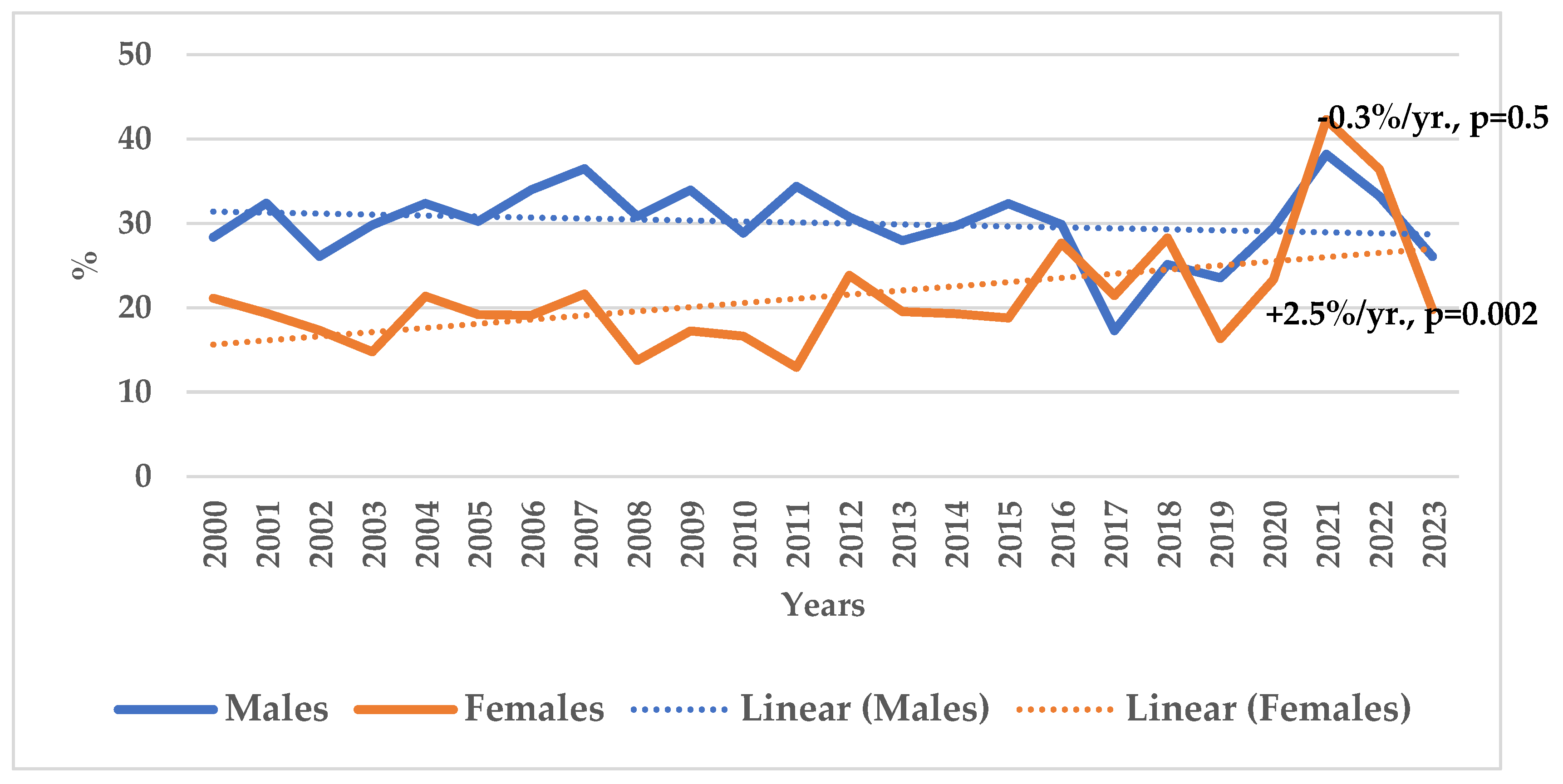
Figure 2.
The trends of in-hospital 28-day acute myocardial infarction case-fatality rates in Lithuanian urban residents aged 25-64 years by sex during 2000-2023.
Figure 2.
The trends of in-hospital 28-day acute myocardial infarction case-fatality rates in Lithuanian urban residents aged 25-64 years by sex during 2000-2023.
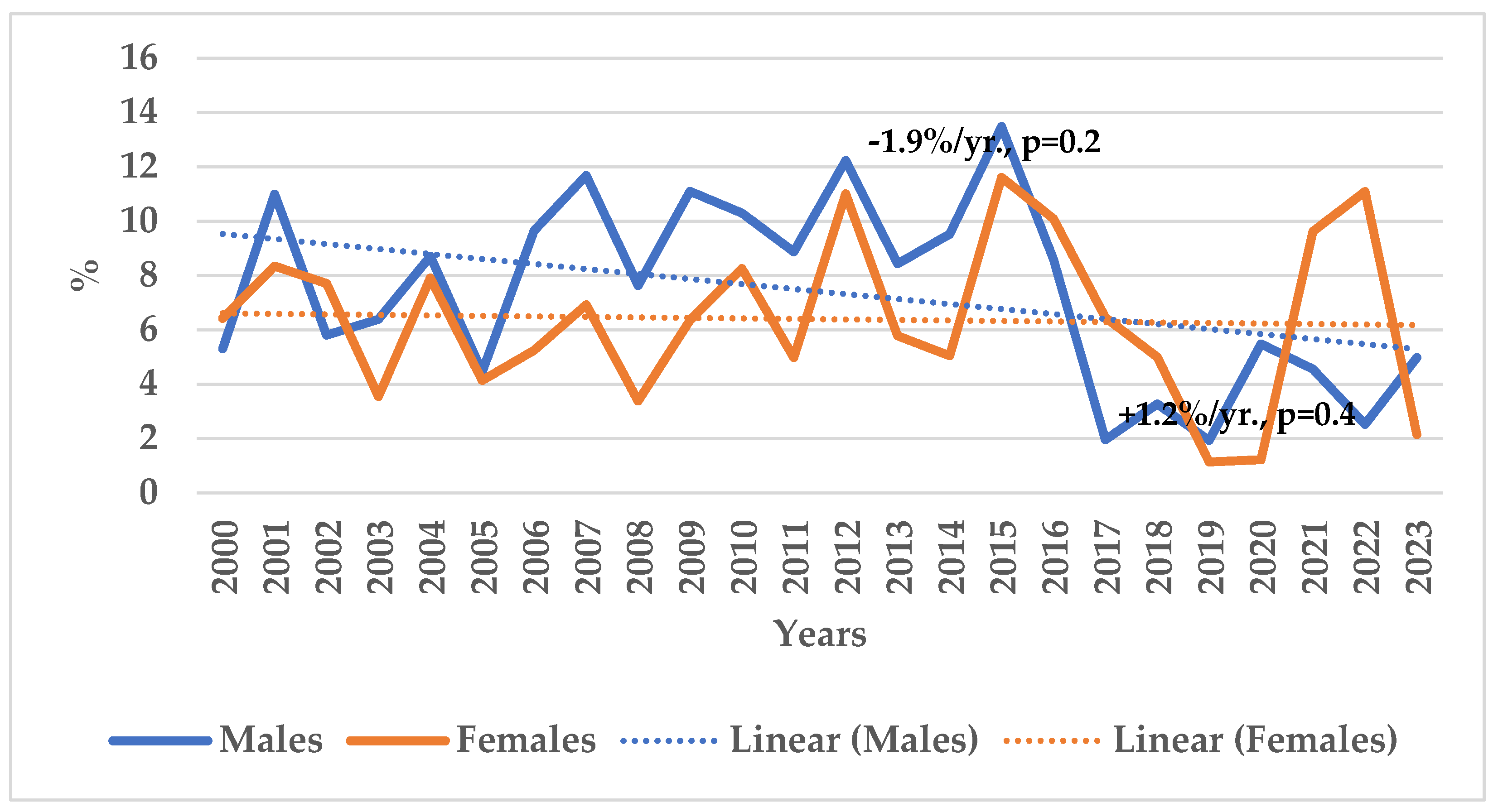

Table 1.
The rates (%) and trends of 28-day acute myocardial infarction case-fatality in the Lithuanian urban residents aged 25-64 years by sex and age during 2000-2023 (JoinPoint regression analysis with 0 JoinPoints).
Table 1.
The rates (%) and trends of 28-day acute myocardial infarction case-fatality in the Lithuanian urban residents aged 25-64 years by sex and age during 2000-2023 (JoinPoint regression analysis with 0 JoinPoints).
| Years | Males | Females | |||
|---|---|---|---|---|---|
| 25-54 | 55-64 | 25-54 | 55-64 | ||
| 2000 | 23.43 | 32.75 | 13.17 | 25.27 | |
| 2001 | 22.17 | 39.25 | 24.23 | 16.67 | |
| 2002 | 18.30 | 32.56 | 16.22 | 17.89 | |
| 2003 | 24.89 | 33.99 | 11.26 | 16.48 | |
| 2004 | 30.39 | 33.74 | 9.30 | 25.69 | |
| 2005 | 26.57 | 32.82 | 8.75 | 23.15 | |
| 2006 | 29.36 | 37.16 | 21.23 | 18.00 | |
| 2007 | 36.76 | 36.24 | 22.63 | 21.28 | |
| 2008 | 27.99 | 32.87 | 18.05 | 11.58 | |
| 2009 | 28.31 | 37.29 | 16.56 | 17.65 | |
| 2010 | 22.02 | 33.62 | 7.63 | 19.57 | |
| 2011 | 24.56 | 41.50 | 15.53 | 11.49 | |
| 2012 | 21.85 | 36.04 | 15.23 | 27.06 | |
| 2013 | 18.99 | 34.78 | 10.40 | 24.62 | |
| 2014 | 17.34 | 37.89 | 14.11 | 21.54 | |
| 2015 | 23.35 | 38.25 | 11.23 | 22.22 | |
| 2016 | 27.32 | 31.58 | 15.59 | 32.81 | |
| 2017 | 12.64 | 20.13 | 21.86 | 21.25 | |
| 2018 | 23.44 | 26.29 | 50.00 | 18.46 | |
| 2019 | 12.62 | 29.86 | 0.01 | 22.97 | |
| 2020 | 25.16 | 32.27 | 17.62 | 26.47 | |
| 2021 | 37.05 | 38.76 | 27.15 | 51.22 | |
| 2022 | 18.72 | 40.12 | 24.69 | 41.86 | |
| 2023 | 11.99 | 32.86 | 10.08 | 25.00 | |
| Average | 23.55 | 34.28 | 16.77 | 23.34 | |
| AAPC1 and | -0.9%/yr., | -0.2%/yr., | +2.2%/yr., | +3.0%/yr., | |
| p-value | 0.3 | 0.6 | 0.2 | 0.002 | |
1AAPC – average annual percent change.
Table 2.
The rates (%) and trends of 28-day in-hospital acute myocardial infarction case-fatality in the Lithuanian urban residents aged 25-64 years by sex and age during 2000-2023 (JoinPoint regression analysis with 0 JoinPoints).
Table 2.
The rates (%) and trends of 28-day in-hospital acute myocardial infarction case-fatality in the Lithuanian urban residents aged 25-64 years by sex and age during 2000-2023 (JoinPoint regression analysis with 0 JoinPoints).
| Years | Males | Females | ||
|---|---|---|---|---|
| 25-54 | 55-64 | 25-54 | 55-64 | |
| 2000 | 2.74 | 7.78 | 5.72 | 6.85 |
| 2001 | 5.81 | 15.03 | 10.68 | 7.14 |
| 2002 | 0.01 | 11.04 | 8.82 | 7.14 |
| 2003 | 3.26 | 9.24 | 3.07 | 3.80 |
| 2004 | 6.08 | 10.56 | 0.01 | 10.99 |
| 2005 | 3.86 | 4.92 | 3.10 | 4.60 |
| 2006 | 7.32 | 11.35 | 8.51 | 3.53 |
| 2007 | 11.25 | 12.03 | 8.62 | 6.33 |
| 2008 | 7.62 | 7.64 | 5.56 | 2.33 |
| 2009 | 4.75 | 14.94 | 5.85 | 6.67 |
| 2010 | 6.81 | 12.99 | 3.97 | 9.76 |
| 2011 | 5.24 | 12.03 | 2.79 | 6.10 |
| 2012 | 5.64 | 16.47 | 0.01 | 15.07 |
| 2013 | 6.21 | 10.45 | 0.01 | 9.26 |
| 2014 | 3.17 | 14.49 | 0.01 | 7.27 |
| 2015 | 4.53 | 19.86 | 5.95 | 14.29 |
| 2016 | 4.67 | 11.18 | 5.80 | 12.24 |
| 2017 | 2.42 | 1.65 | 4.58 | 7.35 |
| 2018 | 3.53 | 3.09 | 9.64 | 3.64 |
| 2019 | 0.01 | 3.27 | 0.01 | 1.72 |
| 2020 | 6.02 | 5.10 | 0.01 | 1.96 |
| 2021 | 4.91 | 4.39 | 0.01 | 16.67 |
| 2022 | 2.04 | 2.83 | 0.01 | 16.67 |
| 2023 | 4.34 | 5.37 | 5.31 | 0.01 |
| Average | 4.68 | 9.49 | 4.09 | 7.56 |
| AAPC1 and | -1.7%/yr. | -2.0%/yr. | -6.7%/yr. | +2.7%/yr. |
| p-value | 0.6 | 0.2 | 0.2 | 0.2 |
1AAPC – average annual percent change.
Table 3.
The trends in age-standardized 28-day acute myocardial infarction case-fatality among the Lithuanian urban residents aged 25-64 years by sex and age during 2000-2023 (JoinPoint regression analysis).
Table 3.
The trends in age-standardized 28-day acute myocardial infarction case-fatality among the Lithuanian urban residents aged 25-64 years by sex and age during 2000-2023 (JoinPoint regression analysis).
| Age groups | Sex | Joinpoints (Years) |
Period 1 |
APC with 95% CI | Period 2 |
APC with 95% CI |
|---|---|---|---|---|---|---|
| 25-64 | Males | 2006 | 2000-2006 | 2.2 (-5.4; 10.4) | 2006-2023 | -0.8 (-2.4; 0.7) |
| Females | 2010 | 2000-2010 | -1.5 (-7.6; 4.9) | 2010-2023 | 5.1 (1.3; 9.1)* | |
| 25-54 | Males | 2021 | 2000-2021 | -0.2 (-2.0; 1.6) | 2021-2023 | -28.2 (-69.8; 70.7) |
| Females | 2021 | 2000-2021 | 3.0 (-1.7; 8.0) | 2021-2023 | -26.4 (-90.1; 450.2) | |
| 55-64 | Males | 2019 | 2000-2019 | -0.7 (-1.9; 0.6) | 2019-2023 | 4.1 (-8.7; 18.7) |
| Females | 2009 | 2000-2009 | -2.5 (-10.7; 6.5) | 2009-2023 | 5.7 (1.7; 9.8)* |
APC-annual percent change; 95% CI–95% confidence interval; *-p<0.05.
Table 4.
The trends in age-standardized in-hospital acute myocardial infarction case-fatality among the Lithuanian urban residents aged 25-64 years by sex and age during 2000-2023 (JoinPoint regression analysis).
Table 4.
The trends in age-standardized in-hospital acute myocardial infarction case-fatality among the Lithuanian urban residents aged 25-64 years by sex and age during 2000-2023 (JoinPoint regression analysis).
| Age group | Sex | Joinpoints (Years) |
Period 1 |
APC with 95% CI | Period 2 |
APC with 95% CI |
|---|---|---|---|---|---|---|
| 25-64 | Males | 2015 | 2000-2015 | 2.2 (-1.5; 6.1) | 2015-2023 | -14.7 (-24.7; -3.5)* |
| Females | 2003 | 2000-2003 | -7.9 (-52.9; 80.1) | 2003-2023 | 1.8 (-2.0; 5.8) | |
| 25-54 | Males | 2007 | 2000-2007 | 19.1 (-18.1; 73.3) | 2007-2023 | -6.4 (-15.7; 4.0) |
| Females | 2021 | 2000-2021 | -8.0 (-18.4; 3.7) | 2021-2023 | 48.1 (-100.0; 467140.0) | |
| 55-64 | Males | 2015 | 2000-2015 | 2.5 (-1.1; 6.3) | 2015-2023 | -18.3 (-28.5; -6.8)* |
| Females | 2021 | 2000-2021 | 4.0 (-0.2; 8.5) | 2021-2023 | -40.6 (-96.8; 988.9) |
APC - annual percent change; 95% CI–95% confidence interval; *-p<0.05.
Disclaimer/Publisher’s Note: The statements, opinions and data contained in all publications are solely those of the individual author(s) and contributor(s) and not of MDPI and/or the editor(s). MDPI and/or the editor(s) disclaim responsibility for any injury to people or property resulting from any ideas, methods, instructions or products referred to in the content. |
© 2026 by the authors. Licensee MDPI, Basel, Switzerland. This article is an open access article distributed under the terms and conditions of the Creative Commons Attribution (CC BY) license (http://creativecommons.org/licenses/by/4.0/).
Copyright: This open access article is published under a Creative Commons CC BY 4.0 license, which permit the free download, distribution, and reuse, provided that the author and preprint are cited in any reuse.


