

Submitted:
17 March 2026
Posted:
18 March 2026
You are already at the latest version
Abstract
Potassium homeostasis is essential for maintaining membrane potential and normal neuromuscular function. Although potassium disturbances are clinically relevant in several species, their prevalence and prognostic significance in pet rabbits remain poorly characterized. This retrospective study evaluated plasma potassium concentrations at admission in 1,773 venous samples from 1,312 pet rabbits and assessed associations with mortality, glycemia, and renal markers (BUN and creatinine) using i-Stat portable analyzer. Normokalemia (3.4–5.7mmol/L) was observed in 78.1% of samples, while hypokalemia and hyperkalemia occurred in 13.9% and 8.0%, respectively. Overall, 7-day mortality was 21.3%, with most deaths (68.7%) occurring within 48 hours. Both hypo- and hyperkalemia were associated with increased mortality, with hyperkalemia conferring the greatest risk (relative risk up to 5.4 at 24 h; P< 0.0001). Potassium concentrations were higher in non-survivors at all time points. Hyperkalemia was also associated with hypoglycemia and azotemia (P< 0.0001), suggesting impaired renal potassium excretion and possible alterations in insulinmediated cellular potassi-um uptake. No consistent association was observed between hyperglycemia and hyperkalemia. These findings indicate that plasma potassium disturbances are common in pet rabbits and are associated with short-term mortality and metabolic derangements. Early identification and correction of potassium imbalances and their causes may improve outcomes in critically ill rabbits.
Keywords:
potassium
; electrolyte
; kalemia
; rabbits
; renal disease
; azotemia
; glucose
; mortality risk
1. Introduction
Potassium (K+) plays a crucial role in numerous cellular processes in vertebrates. The difference in K+ concentration between the intra- and extracellular compartments establishes the cell membrane potential, which is essential for functions such as nerve conduction and muscle contraction. This role cannot be compensated by other cations, making potassium homeostasis critical.[1,2,3] In humans, dogs, cats, horses, and ruminants, alterations in extracellular K⁺ disrupt the concentration gradient across cell membranes, affecting membrane polarization and potentially leading to clinically significant, life-threatening disorders that require prompt therapeutic intervention.[1,2,3,4,5,6,7]
Analytical methods for assessing K⁺ balance are based on measuring extracellular K⁺ concentrations, typically in plasma.[1,8] Disturbances in plasma K⁺ can result from alterations in intake-excretion balance or from shifts between the intracellular and extracellular compartments. Hypokalemia is most commonly caused by low dietary intake, increased losses (e.g., diarrhea, renal losses), iatrogenic dilution of the intravascular compartment (e.g., intravenous fluids low in K⁺), or translocation of K⁺ into cells (as seen with metabolic alkalosis, bicarbonate administration, total parenteral nutrition, insulin-mediated responses, or excessive exogenous or endogenous corticosteroids [cortisol, corticosterone] and mineralocorticoids [aldosterone]). Rabbits are incapable of vomiting, so emesis is not a contributing factor to hypokalemia in this species. In cows, hypokalemia has been associated with intestinal ileus.[9] Hyperkalemia may result from excessive dietary intake, iatrogenic causes (e.g., potassium-containing drugs or excessive intravenous supplementation), reduced excretion, or translocation of K⁺ from the intracellular to the extracellular compartment. Because K⁺ excretion is primarily renal and regulated by adrenal function, kidney and adrenal disorders play a particularly important role in the development of spontaneous hyperkalemia.[1,2,3,5,7,8,10]
In rabbits, hyperglycemia has been reported in association with severe stress, pain, and clinical conditions with poor prognosis, particularly intestinal obstruction.[11] Glucose metabolism in rabbits is primarily regulated by insulin, but the precise mechanisms underlying hyperglycemia in these patients remain unclear. In human medicine, insulin resistance induced by cortisol and inflammatory mediators is thought to contribute to hyperglycemia in critically ill patients.[12,13] Potassium metabolism is also partially regulated by insulin, which promotes K⁺ translocation into the intracellular compartment, thereby lowering plasma K⁺ concentrations. However, disturbances in potassium and their relationship with glycemic disorders have not previously been evaluated in rabbits.
Although potassium homeostasis has been investigated in rabbits, spontaneous plasma potassium disorders and their clinical significance in pet rabbits have been minimally described to date.[10,14,15,16,17,18,19] The aim of this retrospective clinical study was to analyze the laboratory data of rabbit patients seen at our veterinary hospital, with a particular focus on plasma potassium concentrations and their association with mortality. Additionally, we sought to evaluate the relationship between potassium disturbances, glucose concentrations, and common markers of renal function (Blood urea nitrogen (BUN) and creatinine). We hypothesized that pet rabbits exhibit plasma potassium abnormalities, including hypo- and hyperkalemia, and that these disturbances are associated with glucose metabolism disorders, renal dysfunction, and an increased risk of mortality.
2. Materials and Methods
A retrospective study was conducted by reviewing the laboratory results and clinical records of ill pet rabbits admitted between January 2015 and January 2026. Laboratory analyses were performed as part of the patients’ initial diagnostic workup, and all results were archived in annual Microsoft® Excel spreadsheets. Only blood samples collected at admission were included; follow-up analyses were excluded. For rabbits presented multiple times during the study period, inclusion required a minimum interval of four months since the previous visit. Rabbits receiving any medication at the time of presentation were excluded to minimize potential drug-related effects on plasma potassium concentrations.
Extracted data included sex, age, sample quality (assessed visually for hemolysis or lipemia), plasma concentrations of K+, glucose, blood urea nitrogen (BUN), and creatinine, as well as the date of presentation and date of demise (if applicable). Mortality was recorded at 24 hours, 48 hours, and within 7 days of admission, and rabbits were grouped accordingly (Survivors-24h, Non-survivors-24h, Survivors-48h, Non-survivors-48h, Survivors-7d, Non-survivors-7d). Rabbits with unknown outcomes or those euthanized or deceased following surgical procedures were excluded from mortality analyses. Samples showing hemolysis or lipemia were also excluded.
The prevalence of potassium disturbances and their associations with glucose, BUN, creatinine, and outcomes were evaluated. Reference ranges previously established using the same analytical methods were used to interpret the data.[16,20] Normokalemia was defined as plasma K+ of 3.4–5.7 mmol/L, with hypokalemia and hyperkalemia defined as values below or above this range, respectively. Azotemia was defined as BUN >12.5 mmol/L and/or creatinine >221 µmol/L ,[16,21] and rabbits were classified as non-azotemic only if both BUN and creatinine were within normal limits simultaneously. Normoglycemia was defined as plasma glucose of 5.2-13.6 mmol/L [16] with hypo- and hyperglycemia defined as values below or above this range, respectively.
All samples were collected in lithium heparin from the lateral saphenous vein using previously described techniques.[16,22] Samples were processed within 2 minutes using direct ion-selective electrode methods with the i-Stat One portable analyzer (Abaxis Inc., Abbott Point of Care) from 2015–2021 and the i-Stat Alinity V portable analyzer (Zoetis España, Abbott Point of Care) from 2022–2026. Disposable cartridges (i-Stat EC8+, CG8+, and Chem8+) were equilibrated to room temperature prior to use.
Statistical analyses were performed using MedCalc Statistical Software version 20.021 (64-bit). For calculations, extreme values were capped as follows: K+>9 mmol/L set to 9 mmol/L, K+ <2 mmol/L set to 2 mmol/L; BUN >50.9 mmol/L set to 50.9 mmol/L; glucose <1.1 mmol/L set to 1.1 mmol/L; glucose >38.9 mmol/L set to 38.9 mmol/L . Normality of the obtained data was assessed using the Kolmogorov-Smirnov test. Outliers were identified with Tukey’s method but were retained in analyses as they represented valid clinical data. Non-parametric tests (Mann-Whitney U and Kruskal-Wallis) were used for group comparisons, and the Chi-squared test assessed relationships between categorical variables.
3. Results
3.1. Patients
A total of 1773 venous samples from 1312 pet rabbits (735 males, 569 females, and 8 with unregistered sex) collected between January 2015 and February 2026 met the inclusion criteria. A total of 267 rabbits were presented more than once during the study period, contributing multiple samples as follows: 2 samples (n = 159), 3 samples (n = 56), 4 samples (n = 32), 5 samples (n = 9), 6 samples (n = 7), 7 samples (n = 3), and 10 samples (n = 1).
K+ concentrations were determined in all samples. Concurrent measurements of glucose, BUN, and creatinine were available in 1649, 1382, and 271 samples, respectively. No statistically significant differences were observed between males and females in plasma concentrations of potassium, glucose, or BUN (Kruskal-Wallis; P = 0.74, 0.42, and 0.56, respectively). A significant difference was found for creatinine concentrations (Kruskal-Wallis; P = 0.026), with median values higher in males (114.9 µmol/L) compared to females (106.8 µmol/L). Descriptive statistics for these data are presented in Table 1 and Figure 1.
3.2. Prevalence of Potassium, Glycemia, BUN and Creatinine Disturbances
Of the 1773 rabbits, 1385 (78.1%) had normokalemia, 247 (13.9%) had hypokalemia, and 141 (8.0%) had hyperkalemia. Regarding glycemia, 1225 (74.3%) rabbits were normoglycemic, 107 (6.5%) were hypoglycemic, and 317 (19.2%) had hyperglycemia. Elevated BUN and creatinine concentrations were observed in 419 (30.3%) and 52 (19.2%) rabbits, respectively. Overall, azotemia - defined as elevated BUN, creatinine, or both - was present in 431 rabbits, while the absence of azotemia (simultaneously normal BUN and creatinine) was confirmed in 185 rabbits.
3.2. Potassium Disturbances and Mortality
A total of 419 of 1,773 rabbits (23.6%) died within 7 days after admission, while 1,349 survived. Outcome data were unavailable for 5 animals. Thirteen rabbits died following surgery and 29 were euthanized; these cases were excluded from the statistical analyses of mortality. After these exclusions, 377 (21.3%) rabbits were classified as Non-survivors-7d. Among these, 129 rabbits (34.2%) died within the first 24 hours (Non-survivors-24h) and 259/377 (68.7%) died within the first 48 hours (Non-survivors-48h). Overall, mortality rates decreased during the subsequent days (Figure 2). Mortality at all time points (24 h, 48 h, and 7 days) did not differ between males and females (Chi-square test, P > 0.05).
When comparing survivors and non-survivors at 24 hours, 48 hours, and 7 days, plasma potassium concentrations tended to be higher in the non-survivors groups (Mann-Whitney U; P < 0.0001), although considerable overlap in values between groups was observed (Figure 3).
Significant differences in mortality rates at 24 hours, 48 hours, and 7 days post-admission were observed among normokalemic, hypokalemic, and hyperkalemic rabbits (Chi-squared test; P < 0.0001) (Figure 4). Hyperkalemic rabbits exhibited a higher risk of mortality compared to both normokalemic and hypokalemic patients (Table 2).
3.2. Potassium Disturbances and Their Association with Glycemia and Renal Disease Markers (BUN and Creatinine)
Potassium imbalances were associated with disturbances in plasma glucose, BUN, and creatinine. Hyperkalemia was most frequently observed in hypoglycemic rabbits compared to normoglycemic rabbits (Kruskal-Wallis, P = 0.039; Chi-squared, P < 0.0001), in rabbits with elevated BUN compared to those with normal BUN (Kruskal-Wallis, P < 0.0001; Chi-squared, P < 0.0001), in rabbits with elevated creatinine compared to those with normal creatinine (Kruskal-Wallis, P < 0.0001; Chi-squared, P < 0.0001), and in rabbits with azotemia compared to non-azotemic rabbits (Kruskal-Wallis, P < 0.0001; Chi-squared, P < 0.0001) (Figure 5).
4. Discussion
The overall prevalence of abnormal potassium concentrations in pet rabbits was 21.9%, with hypokalemia (13.9%) occurring more frequently than hyperkalemia (8%). This prevalence is lower than that reported in dogs, cats and horses.[3,23] In line with our initial hypothesis, both hypokalemia and hyperkalemia were associated with an increased risk of mortality. Hyperkalemia appeared to be particularly life-threatening, whereas hypokalemia, although clinically relevant, had a more moderate impact on mortality risk in this study. There was considerable overlap in potassium concentrations between survivors and non-survivors. As previously reported in other species, although potassium imbalances are associated with increased mortality, they are not necessarily prognostic indicators; however, when identified, they warrant prompt attention and appropriate therapeutic adjustment.[1,4] Notably, most rabbits (68.7%) admitted to our hospital that did not survive died within the first 48 hours, underscoring the importance of early diagnosis and timely therapeutic intervention in critically ill patients.
Potassium disturbances were also associated with alterations in glycemia and renal function markers (BUN and creatinine). Hyperkalemia was most frequently observed in hypoglycemic rabbits. This finding suggests that low insulin concentrations during hypoglycemia may reduce potassium translocation into the intracellular compartment, thereby increasing the risk of hyperkalemia. No association was identified between hyperglycemia and hyperkalemia. This observation supports the hypothesis that hyperglycemia in ill rabbits is predominantly stress-induced rather than a consequence of insulin resistance. However, several rabbits exhibited concurrent hyperglycemia and hyperkalemia, indicating that insulin resistance or impaired cellular potassium uptake may still occur in at least a subset of patients. Hyperglycemia in rabbits is particularly common in cases of intestinal obstruction. Interestingly, in dogs with intestinal obstructions, hypokalemia is one of the most common findings.[24] Hypokalemia was also observed in 23.2% of the rabbits presenting acute gastric dilatation.[17] Hyperglycemia was not consistently associated with hypokalemia in rabbits in this study.
In other species, severe hyperkalemia most commonly results from renal or adrenal dysfunction.[1,4,8,10,23] In the rabbits included in this study, altered potassium concentrations were likewise associated with disturbances in renal function markers. In particular, hyperkalemia was most frequently observed in animals with evidence of impaired renal function. However, as reported in other species, the association between hyperkalemia and renal failure in rabbits is neither absolute nor consistent.[1,3] Hyperkalemia may also arise from other conditions, including uroperitoneum, severe dehydration, or acidosis.[1,4,8,10,23] Therefore, kalemia value cannot be inferred solely from the renal profile on blood chemistry and direct measurement of potassium concentration is required for accurate diagnostic assessment in each individual patient. Sample quality must be carefully assessed to ensure the reliability and accuracy of the results. Flame photometry and ion-selective electrode (such as the method used in the present study) methods are preferred over optical methods.[25]
In humans, dogs, cats, and horses, Addison’s disease (hypoadrenocorticism) is relatively common, is frequently associated with hyperkalemia, and can be misdiagnosed as renal failure.[1,26] In contrast, spontaneous adrenal gland disease in pet rabbits - primarily hyperplasia and neoplasia - is rare. When reported, it is most associated with elevated sex hormone levels and has not been shown to affect potassium concentrations in this species.[27,28] Several rabbits in this study presented findings compatible with hypoadrenocorticism (hyperkalemia with concomitant hypoglycemia and azotemia). Future studies focused on contrasting clinical and laboratory findings may elucidate the etiologies of potassium imbalances in pet rabbits.
Slight differences in creatinine values between males and females observed in our study can be attributed to an artifact due to relatively small sample size (n=269), a greater muscular mass in male rabbits, or lower capacity of recovery from renal injury in males, as was showed in other mammalian species.[29,30,31,32] The clinical relevance of this finding remains unknown and is likely scarce.
5. Conclusions
Plasma potassium disturbances are relatively common in pet rabbits, although their prevalence is lower than that reported in dogs, cats, or horses, with an overall prevalence of 21.9%. Hypokalemia (13.9%) was more frequent than hyperkalemia (8.0%). Both conditions were associated with increased short-term mortality; however, hyperkalemia carried a markedly higher risk of death, particularly within the first 24–48 hours after admission. Most mortality events occurred early, with nearly 70% of deaths taking place within 48 hours, highlighting the critical importance of rapid assessment and intervention at presentation. There was considerable overlap in potassium concentrations between survivors and non-survivors, indicating that while potassium disturbances represent risk factors, individual potassium values alone are not fully predictive of outcome.
Hyperkalemia was strongly associated with markers of renal dysfunction, including elevated blood urea nitrogen and creatinine concentrations, supporting impaired renal excretion as a major contributing factor. In addition, hyperkalemia was significantly associated with hypoglycemia, suggesting a potential role for altered insulin-mediated potassium regulation in critically ill hypoglycemic rabbits. Notably, hyperkalemia could also occur independently of renal disease and hypoglycemia, indicating that other conditions may contribute to elevated plasma potassium in pet rabbits and warranting further research focused on contrasting clinical and laboratory findings to elucidate the origin of potassium disturbances.
References
- Willard, M.D. Disorders of Potassium Homeostasis. Vet. Clin. North Am. Small Anim. Pract. 1989, 19, 241–263. [Google Scholar] [CrossRef]
- Palmer, B.F.; Clegg, D.J. Physiology and Pathophysiology of Potassium Homeostasis: Core Curriculum 2019. Am. J. Kidney Dis. 2019, 74, 682–695. [Google Scholar] [CrossRef]
- Hoehne, S.N.; Hopper, K.; Epstein, S.E. Retrospective Evaluation of the Severity of and Prognosis Associated with Potassium Abnormalities in Dogs and Cats Presenting to an Emergency Room (January 2014-August 2015): 2441 Cases. J. Vet. Emerg. Crit. Care. 2019, 29, 653–661. [Google Scholar] [CrossRef]
- Sweeney, R.W. Treatment of Potassium Balance Disorders. Vet. Clin. North Am. Food Anim. Pract. 1999, 15, 609–617. [Google Scholar] [CrossRef]
- Beech, J.; Lindborg, S.; Braund, K.G. Potassium Concentrations in Muscle, Plasma and Erythrocytes and Urinary Fractional Excretion in Normal Horses and Those with Chronic Intermittent Exercise-Associated Rhabdomyolysis. Res. Vet. Sci. 1993, 55, 43–51. [Google Scholar] [CrossRef]
- Kogika, M.M.; de Morais, H.A. A Quick Reference on Hypokalemia. Vet. Clin. North Am. Small Anim. Pract. 2017, 47, 229–234. [Google Scholar] [CrossRef]
- Kettritz, R.; Loffing, J. Potassium Homeostasis – Physiology and Pharmacology in a Clinical Context. Pharmacol. Ther. 2023, 249, 108489. [Google Scholar] [CrossRef]
- Yamada, S.; Inaba, M. Potassium Metabolism and Management in Patients with CKD. Nutrients 2021, 13(6), 1751. [Google Scholar] [CrossRef] [PubMed]
- Schneider, S.; Müller, A.; Wittek, T. Concentration of Potassium in Plasma, Erythrocytes, and Muscle Tissue in Cows with Decreased Feed Intake and Gastrointestinal Ileus. J. Vet. Intern. Med. 2016, 30, 679–685. [Google Scholar] [CrossRef] [PubMed]
- Harcourt-Brown, F.M.; Harcourt-Brown, S. Clinical Value of Blood Glucose Measurement in Pet Rabbits. Vet. Rec. 2012, 170(26), 674. [Google Scholar] [CrossRef] [PubMed]
- Galindo, R.J.; Fayfman, M.; Umpierrez, G.E. Expert Consensus on the Glycemic Management of Critically Ill Patients. J. Intensive Med. 2022, 2, 131–145. [Google Scholar] [CrossRef]
- Godinjak, A.; Iglica, A.; Burekovic, A.; Jusufovic, S.; Ajanovic, A.; Tancica, I.; Kukuljac, A. Hyperglycemia in Critically Ill Patients: Management and Prognosis. Med. Arch. 2015, 69(3), 157–160. [Google Scholar] [CrossRef]
- Shrewsberry, W.C.; MacVicar, R. The Effect of High Potassium Intake on Rabbits. In Proceedings of the Oklahoma Academy of Science, 1953; pp. 170–172. [Google Scholar]
- Gallego, M. Laboratory Reference Intervals for Systolic Blood Pressure, Rectal Temperature, Haematology, Biochemistry and Venous Blood Gas and Electrolytes in Healthy Pet Rabbits. Open Vet. J. 2017, 7, 203–207. [Google Scholar] [CrossRef] [PubMed]
- Grace, S.A.; Munday, K.A.; Noble, A.R. Sodium, Potassium and Water Metabolism in the Rabbit: The Effect of Sodium Depletion and Repletion. J. Physiol. 1979, 292, 407–420. [Google Scholar] [CrossRef]
- Ardiaca, M.; Bonvehí, C.; Montesinos, A. Point-of-Care Blood Gas and Electrolyte Analysis in Rabbits. Vet. Clin. North Am. Exot. Anim. Pract. 2013, 16, 175–195. [Google Scholar] [CrossRef] [PubMed]
- Ardiaca García, M.; Montesinos Barceló, A.; Bonvehí Nadeu, C.; del Caz Calvo, A. Blood Gas and Electrolyte Analysis in Rabbits (N=108) Presented with Acute Gastric Dilatation. In Proceedings of the 5th International Conference on Avian, Herpetological and Exotic Mammal Medicine (online event), Budapest, Hungary, 27-30 March 2022; p. 230. [Google Scholar]
- Bonvehí, C.; Ardiaca, M.; Montesinos, A.; Juan-Sallés, C.; Gómez, A.; Teso, B.; Barbero, S.; Ferrera, S.E. Clinicopathologic Findings of Naturally Occurring Rabbit Hemorrhagic Disease Virus 2 Infection in Pet Rabbits. Vet. Clin. Pathol. 2019, 48, 89–95. [Google Scholar] [CrossRef] [PubMed]
- Tausch, K.A. Untersuchungen Über Den Einsatz Des I-STAT®-Blutanalysegerätes Zur Blutgasanalyse Und Bestimmung Weiterer Labordiagnostischer Parameter Bei Kaninchen Und Meerschweinchen. In Dissertation; Tierärztliche Fakultät: Ludwig Maximilians Universität München, 2011. [Google Scholar] [CrossRef]
- Melillo, A. Rabbit Clinical Pathology. J. Exot. Pet Med. 2007, 16, 135–145. [Google Scholar] [CrossRef]
- Bonvehi, C.; Ardiaca, M.; Barrera, S.; Cuesta, M.; Montesinos, A. Prevalence and Types of Hyponatraemia, Its Relationship with Hyperglycaemia and Mortality in Ill Pet Rabbits. Vet. Rec. 2014, 174, 554–559. [Google Scholar] [CrossRef]
- Johnson, P.J. Electrolyte and Acid-Base Disturbances in the Horse. Vet. Clin. North Am. Equine Pract. 1995, 11, 491–514. [Google Scholar] [CrossRef]
- Boag, A.K.; Coe, R.J.; Martinez, T.A.; Hughes, D. Acid-Base and Electrolyte Abnormalities in Dogs with Gastrointestinal Foreign Bodies. J. Vet. Intern. Med. 2005, 19, 816–821. [Google Scholar] [CrossRef]
- Szmacinski, H.; Lakowicz, J.R. Potassium and Sodium Measurements at Clinical Concentrations Using Phase-Modulation Fluorometry. Sens. Actuators B Chem. 2000, 60(1), 8–18. [Google Scholar] [CrossRef]
- Hart, K.A.; Barton, M.H. Adrenocortical Insufficiency in Horses and Foals. Vet. Clin. North Am. Equine Pract. 2011, 27(1), 19–34. [Google Scholar] [CrossRef] [PubMed]
- Fox, R.R.; Crary, D.D. Genetics and Pathology of Hereditary Adrenal Hyperplasia in the Rabbit: A Model for Congenital Lipoid Adrenal Hyperplasia. J. Hered. 1978, 69, 251–254. [Google Scholar] [CrossRef] [PubMed]
- Jekl, V. Adrenal Disease in Small Mammals. Vet. Clin. North Am. Exot. Anim. Pract. 2025, 28, 87–106. [Google Scholar] [CrossRef]
- Franco-Acevedo, A.; Echavarria, R.; Melo, Z. Sex Differences in Renal Function: Participation of Gonadal Hormones and Prolactin. Endocrines 2021, Vol. 2, 185–202. [Google Scholar] [CrossRef]
- Robert, R.; Ghazali, D.A.; Favreau, F.; Mauco, G.; Hauet, T.; Goujon, J.M. Gender Difference and Sex Hormone Production in Rodent Renal Ischemia Reperfusion Injury and Repair. J. Inflamm. (Lond). 2011, 8, 14–22. [Google Scholar] [CrossRef]
- Iwasa, N.; Takashima, S.; Iwasa, T.; Kumazawa, R.; Nomura, S.; Asami, S.; Shimizu, M.; Kobatake, Y.; Nishii, N. Effect of Age, Sex, and Breed on Serum Cystatin C and Creatinine Concentrations in Dogs. Vet. Res. Commun. 2022, 46, 183–188. [Google Scholar] [CrossRef] [PubMed]
- O’Leary, J.G.; Wong, F.; Reddy, K.R.; Garcia-Tsao, G.; Kamath, P.S.; Biggins, S.W.; Fallon, M.B.; Subramanian, R.M.; Maliakkal, B.; Thacker, L.; et al. Gender-Specific Differences in Baseline, Peak, and Delta Serum Creatinine: The NACSELD Experience. Dig. Dis. Sci. 2017, 62, 768–776. [Google Scholar] [CrossRef] [PubMed]
Figure 1.
Histogram for on-arrival plasmatic concentrations of potassium (K), glucose (Glu), BUN and creatinine (Crea) in pet rabbits.
Figure 1.
Histogram for on-arrival plasmatic concentrations of potassium (K), glucose (Glu), BUN and creatinine (Crea) in pet rabbits.
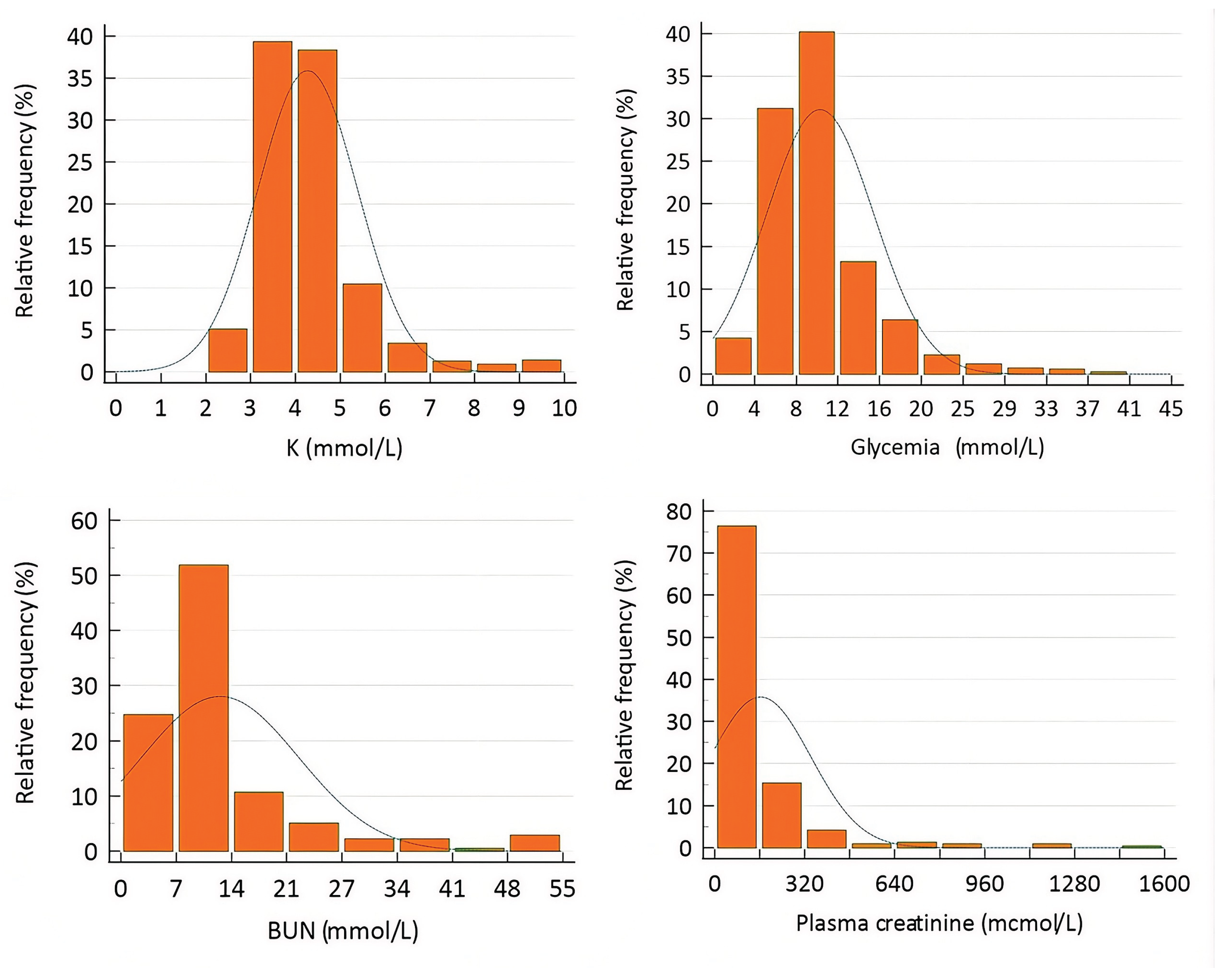
Figure 2.
Daily mortality rate during the first 7 days after admission.
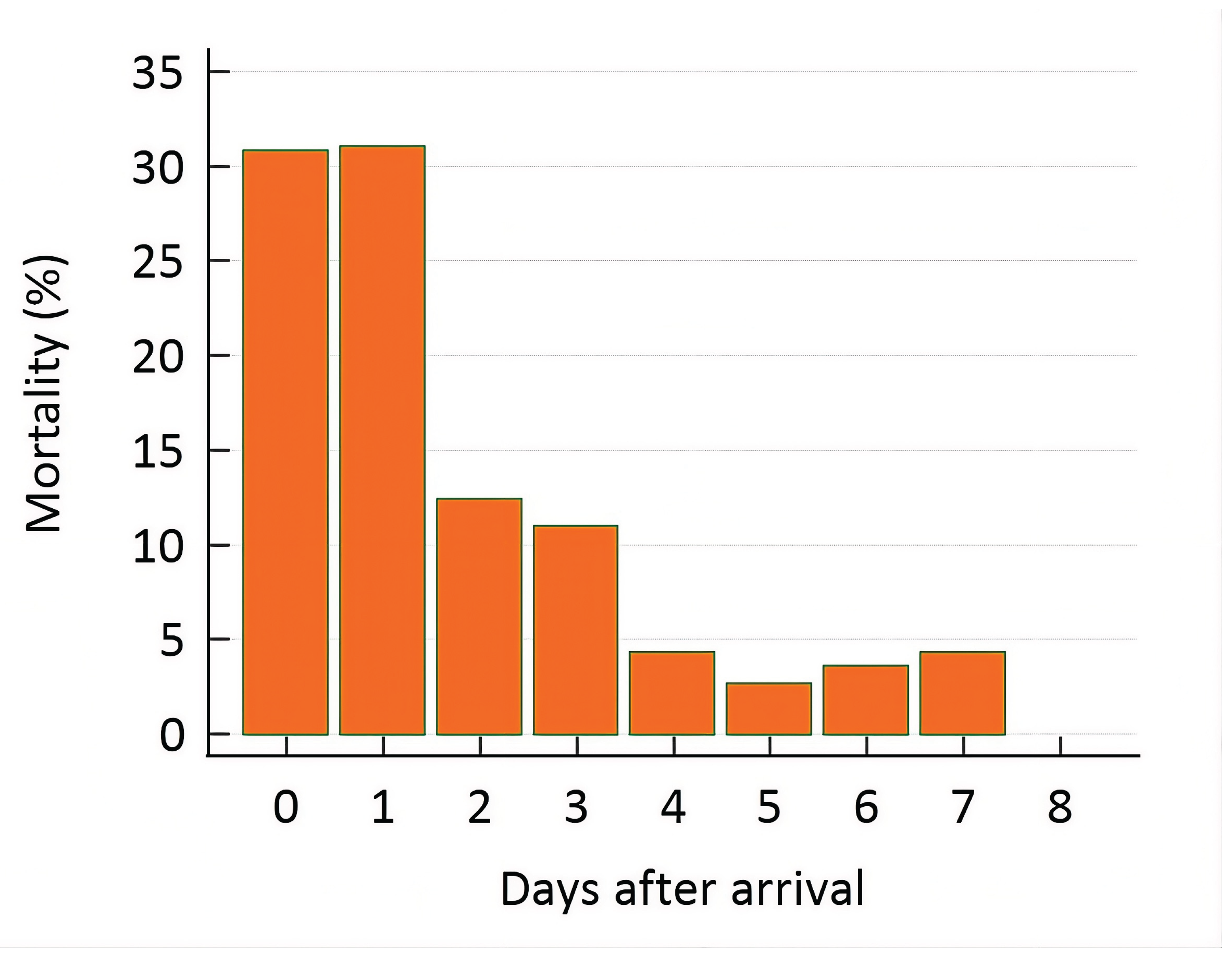
Figure 3.
Potassium (K) concentrations in rabbits in relation to the outcome at 24h, 48h and 7 days after admission.
Figure 3.
Potassium (K) concentrations in rabbits in relation to the outcome at 24h, 48h and 7 days after admission.
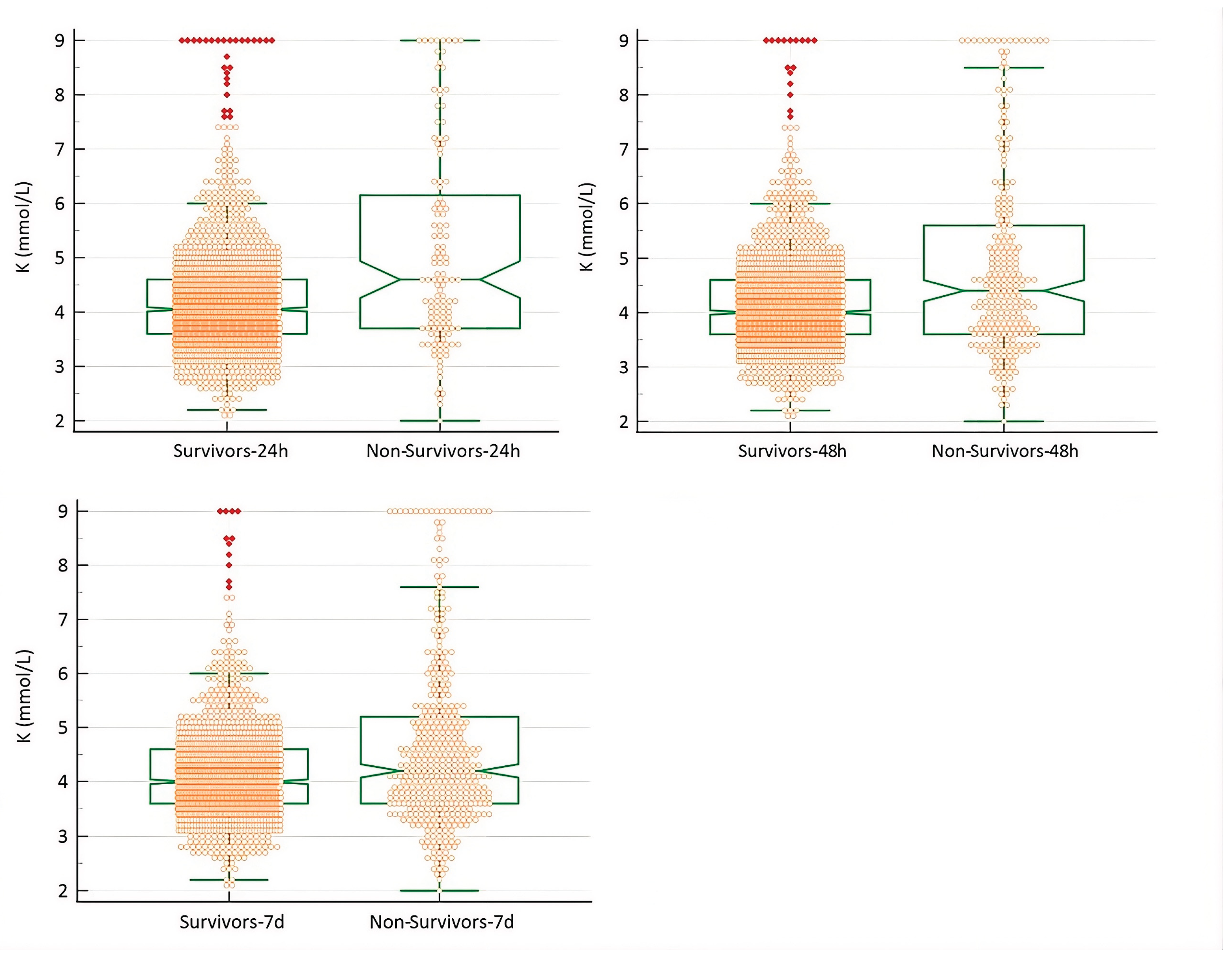
Figure 4.
Frequency charts representing outcome in terms of survival at 24h, 48h and 7 days in rabbits presenting normo-, hypo- or hyperkalemia on admission.
Figure 4.
Frequency charts representing outcome in terms of survival at 24h, 48h and 7 days in rabbits presenting normo-, hypo- or hyperkalemia on admission.
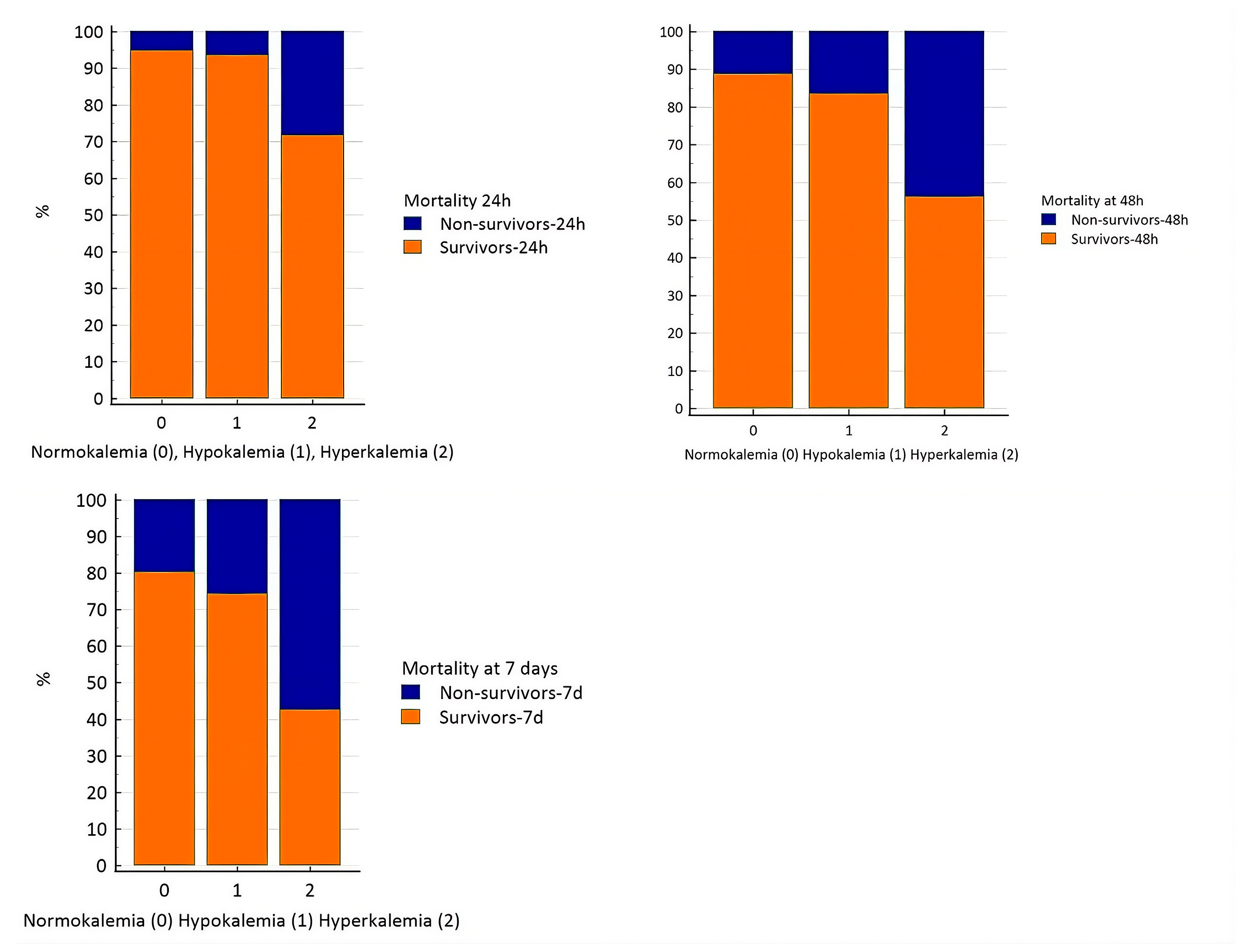
Figure 5.
Frequency charts showing the prevalence of normo-, hypo- and hyperkalemia in rabbits in relation to disbalances of plasmatic concentrations of glucose, BUN, and creatinine.
Figure 5.
Frequency charts showing the prevalence of normo-, hypo- and hyperkalemia in rabbits in relation to disbalances of plasmatic concentrations of glucose, BUN, and creatinine.
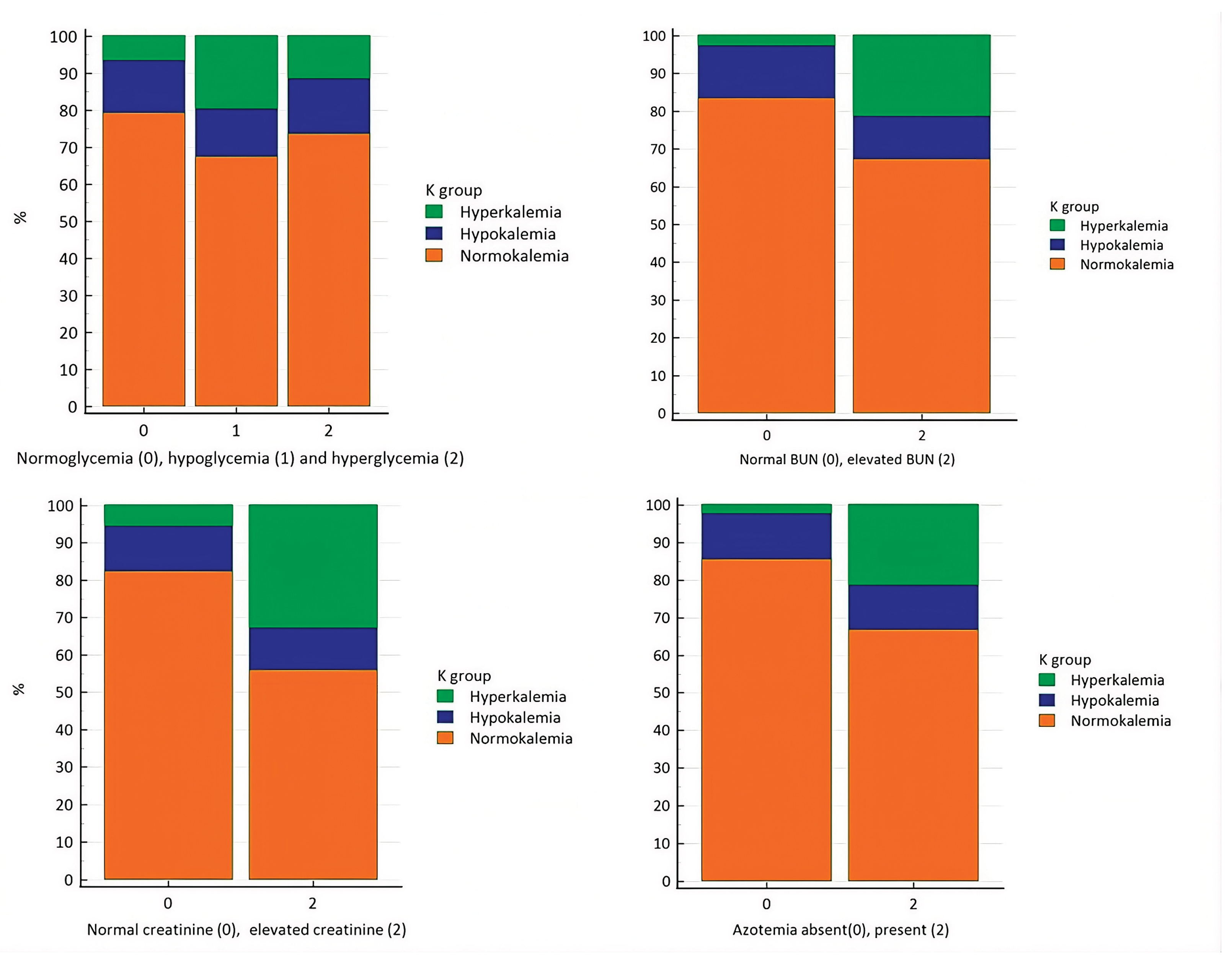

Table 1.
summary statistics for the plasmatic concentrations of K+, glucose, BUN, and creatinine in pet rabbits.
Table 1.
summary statistics for the plasmatic concentrations of K+, glucose, BUN, and creatinine in pet rabbits.
| K+ (mmol/L) | Glucose (mmol/L) |
BUN (mmol/L) |
Crea (µmol/L) |
|
|---|---|---|---|---|
| N | 1773 | 1649 | 1382 | 271 |
| Minimum | 2.0 | 0.83 | 1.1 | 17.7 |
| Maximum | 9.0 | 38.9 | 50.9 | 1644.2 |
| Mean | 4.3 | 10.6 | 13.8 | 205.3 |
| Median | 4.1 | 9.3 | 9.5 | 114.9 |
| Standard deviation | 1.11 | 5.55 | 11.53 | 265.45 |
| Relative standard deviation | 0.26 | 0.52 | 0.84 | 1.29 |
| 25 - 75 Percentiles | 3.6 to 4.7 | 7.3 to 12.2 | 6.9 to 14.9 | 88.4 to 185.6 |
| Kholmogorov-Smirnov test for Normal distribution (p value) | <0.0001 | <0.0001 | <0.0001 | <0.0001 |
| Outliers (Tukey test) N Range |
50 6.4-8.0 |
74 19.6-26.4 |
81 26.9-38.5 |
12 335.9-468.5 |
| Far out values (Tukey test) N Range |
38 8.1-9.0 |
40 27.0-38.9 |
87 39.3-50.9 |
22 477.4-1644.2 |
| N values under lower limit of detection | 1 (<2mmol/L) | 20 (<1.1mmol/L) | 0 | 0 |
| N values over upper limit of detection | 11 (>9mmol/L) | 6 (>38.9mmol/L) | 59 (>50.9mmol/L) | 0 |
Table 2.
Relative risk of mortality at 24h, 48h and 7days and odds ratio in rabbits presented with hypokalemia or hyperkalemia compared to rabbits presented with normokalemia.
Table 2.
Relative risk of mortality at 24h, 48h and 7days and odds ratio in rabbits presented with hypokalemia or hyperkalemia compared to rabbits presented with normokalemia.
| Outcome 24h | Outcome 48h | Outcome 7d | |
|---|---|---|---|
| Hypokalemia Relative risk Odds ratio |
1.2 (P=0.4404) 1.2 (P=0.4424) |
1.5 (P=0.0162)* 1.6 (P=0.0185)* |
1.3 (P=0.0519) 1.4 (P=0.0574) |
| Hyperkalemia Relative risk Odds ratio |
5.4 (P<0.0001)* 7.1 (P<0.0001)* |
3.9 (P<0.0001)* 6.2 (P<0.0001)* |
2.9 (P<0.0001)* 5.4 (P<0.0001)* |
*Statistically significant results.
Disclaimer/Publisher’s Note: The statements, opinions and data contained in all publications are solely those of the individual author(s) and contributor(s) and not of MDPI and/or the editor(s). MDPI and/or the editor(s) disclaim responsibility for any injury to people or property resulting from any ideas, methods, instructions or products referred to in the content. |
© 2026 by the authors. Licensee MDPI, Basel, Switzerland. This article is an open access article distributed under the terms and conditions of the Creative Commons Attribution (CC BY) license (http://creativecommons.org/licenses/by/4.0/).
Copyright: This open access article is published under a Creative Commons CC BY 4.0 license, which permit the free download, distribution, and reuse, provided that the author and preprint are cited in any reuse.


