

Submitted:
16 March 2026
Posted:
17 March 2026
You are already at the latest version
Abstract
Background: Esophagectomy is associated with substantial postoperative morbidity, with infectious complications remaining a leading cause of mortality. Septic shock represents the most severe infectious complication; however, data on its perioperative predictors and long-term impact after esophagectomy are limited. Methods: We conducted a retrospective observational study including consecutive adult patients who underwent esophagectomy with curative intent for esophageal cancer between January 2015 and December 2024 at a tertiary referral center. Postoperative septic shock was defined according to Sepsis-3 criteria. Demographic, clinical, surgical, laboratory, and oncological variables were analyzed. Independent risk factors for septic shock were identified using multivariate logistic regression. Overall survival was assessed using Kaplan–Meier analysis. Results: Among 106 patients, 19 (17.9%) developed postoperative septic shock. These patients had a lower body mass index, reduced preoperative and postoperative albumin levels, and a higher incidence of advanced lymph node involvement. Septic shock was strongly associated with severe postoperative complications, including anastomotic leakage, hemorrhagic shock, acute respiratory distress syndrome, acute kidney failure, and increased rates of PICU readmission. In multivariate analysis, lower albumin levels at PICU admission (OR 0.54; 95% CI 0.29–0.99) and advanced nodal stage (OR 4.98; 95% CI 1.36–18.3) were independently associated with the development of septic shock. Patients who developed septic shock had significantly higher in-hospital mortality (31.6% vs. 1.1%, p < 0.001) and markedly reduced long-term survival, even among those discharged alive. Conclusions: Postoperative septic shock after esophagectomy is a devastating complication with a profound negative impact on both short- and long-term survival. Hypoalbuminemia and advanced lymph node involvement are independent predictors of septic shock. These findings underscore the importance of multidisciplinary perioperative optimization strategies, including nutritional assessment and tailored surgical planning, to mitigate the incidence and consequences of this life-threatening complication.
Keywords:
esophagectomy
; septic shock
; postoperative complications
; hypoalbuminemia
; survival
1. Introduction
Esophageal cancer is the eighth most commonly diagnosed malignancy and the sixth leading cause of cancer-related mortality worldwide, accounting for 5.6% of all cancer-attributable deaths [1,2]. Esophagectomy remains the cornerstone of multidisciplinary treatment for resectable disease; however, it is also one of the most complex procedures in gastrointestinal surgery, with reported 30- and 90-day mortality rates of 2.4% and 4.5%, respectively [3].
Despite advances in surgical techniques, perioperative optimization, and postoperative management, morbidity after curative esophagectomy remains high, approaching 50% even in high-volume centers [1,4,5]. More than half of patients experience multiple postoperative complications, and 20–30% of these are classified as severe [3,4,6,7,8]. Postoperative complications are associated with reduced long-term survival, prolonged hospital stay, impaired quality of life, and increased healthcare costs [9].
Infectious complications are among the most clinically relevant postoperative events due to their frequency and severity. Approximately 25% of patients develop infectious complications, most commonly pneumonia or sepsis secondary to anastomotic leakage [10]. These events have been linked to decreased survival and a higher incidence of metastatic disease compared with patients without postoperative infections [11]. Sepsis and septic shock, in particular, are associated with markedly worse outcomes in critically ill patients, with mortality rates up to twofold higher and in-hospital mortality reaching 46% [13].
Reducing postoperative morbidity and mortality requires a multidisciplinary approach encompassing careful patient selection, optimization of preoperative status, meticulous surgical technique, and intensive postoperative care. In this context, the aim of the present study was to identify perioperative factors associated with the development of septic shock following esophagectomy for esophageal cancer and, secondarily, to evaluate the impact of postoperative complications on short- and long-term survival. In the context of personalized medicine, identifying patient-specific perioperative risk factors may improve risk stratification and facilitate individualized perioperative management strategies aimed at reducing severe complications after esophagectomy.
2. Materials and Methods
2.1. Study Design and Population
We conducted a retrospective observational study including all consecutive adult patients who underwent esophagectomy with curative intent for esophageal carcinoma at the Department of Surgery of Hospital General Universitario Gregorio Marañón between January 2015 and December 2024. The study was approved by the institutional Research Ethics Committee (June 3, 2024; approval number 11/2024), which waived the requirement for written informed consent due to the retrospective design and exclusive use of previously recorded clinicopathological data. All procedures were conducted in accordance with the Declaration of Helsinki.
Eligible patients were aged ≥18 years, had histopathological confirmation of esophageal malignancy, and underwent surgical treatment with curative intent. Patients with missing or incomplete clinical data insufficient for analysis were excluded. Emergency esophageal procedures and cases in which malignancy could not be confirmed as the indication for esophagectomy were also excluded.
2.2. Data Collection and Variables
Clinical data were extracted from electronic medical records. Demographic variables included age, sex, body mass index (BMI), American Society of Anesthesiologists (ASA) physical status classification, smoking status, alcohol consumption, and relevant comorbidities (arterial hypertension, diabetes mellitus, chronic pulmonary disease, chronic kidney disease, and ischemic heart disease).
Oncological variables included tumor location (upper, middle, or lower esophagus; esophageal or gastroesophageal junction), histological subtype, clinical stage, and receipt of neoadjuvant or adjuvant therapy. Pathological staging was performed according to the eighth edition of the American Joint Committee on Cancer (AJCC) TNM classification system [14].
Surgical procedures were classified as Ivor Lewis (intrathoracic anastomosis) or McKeown (cervical anastomosis). Abdominal access was achieved via laparoscopy or laparotomy, and thoracic access via video-assisted thoracoscopy or thoracotomy. Procedures were categorized as open, minimally invasive, or hybrid based on the combination of surgical approaches used.
Intraoperative variables included duration of surgery and anesthesia, use of one-lung ventilation, type of analgesia (epidural or intravenous), intraoperative fluid administration, blood transfusions, and use of vasoactive agents.
Laboratory parameters were collected preoperatively and at admission to the postoperative intensive care unit (PICU), including hemoglobin, leukocyte, lymphocyte, and platelet counts, as well as serum creatinine, glucose, albumin, total protein, C-reactive protein, procalcitonin, and lactate levels.
2.3. Outcomes and Definitions
The primary outcome was the development of postoperative septic shock, defined according to the Sepsis-3 criteria [15] as sepsis requiring vasopressor therapy to maintain a mean arterial pressure ≥65 mmHg and a serum lactate level >2 mmol/L despite adequate fluid resuscitation.
In the postoperative intensive care unit (PICU), sepsis and septic shock were managed according to a standardized institutional protocol based on international guidelines [16], including early resuscitation, source control, empiric antibiotic therapy adjusted to microbiological findings, and advanced hemodynamic and respiratory support.
Postoperative complications were prospectively recorded and classified according to the Esophagectomy Complications Consensus Group (ECCG) definitions (3). Complications were grouped into pulmonary, cardiovascular, gastrointestinal, infectious, neurological, and surgery-specific categories, including anastomotic leakage, tracheoesophageal fistula, chylothorax, pneumothorax, hemorrhagic shock, and surgical site infection.
Secondary outcomes included length of stay in the PICU and hospital, readmission to the PICU, and in-hospital mortality. Long-term follow-up was performed to determine survival status at the time of study closure.
2.4. Statistical Analysis
Statistical analyses were performed using SPSS software (version 25; IBM Corp., Armonk, NY, USA). Categorical variables are presented as absolute frequencies and percentages and were compared using the chi-square test or Fisher’s exact test, as appropriate. Continuous variables are reported as median and interquartile range (IQR) due to non-normal distributions and were compared between groups using the Mann–Whitney U test.
A two-sided p value < 0.05 was considered statistically significant. Analyses primarily focused on identifying differences between patients who developed postoperative septic shock and those who did not, using an exploratory approach to evaluate clinical, perioperative, laboratory, and oncological variables.
To identify factors independently associated with postoperative septic shock, a binary logistic regression analysis was performed. Variables showing an association with septic shock in univariate analyses (p < 0.10), as well as variables considered clinically relevant, were considered for inclusion. Given the limited number of septic shock events, the number of variables included in the multivariable model was deliberately restricted to minimize the risk of overfitting. The final model included two variables—serum albumin level at PICU admission and pathological lymph node involvement (N stage)—which demonstrated the strongest and most consistent associations with the outcome.
3. Results
3.1. Baseline Characteristics and Comorbidities
A total of 106 patients who underwent esophagectomy with curative intent were included in the analysis; 19 patients (17.9%) developed postoperative septic shock. Baseline demographic characteristics and comorbidities were largely comparable between patients who did and did not develop septic shock. However, patients in the septic shock group had significantly lower body weight and body mass index (BMI) compared with those without septic shock (Table 1).
3.2. Laboratory Parameters
Preoperative and early postoperative laboratory parameters are summarized in Table 2. Before surgery, patients who developed postoperative septic shock had significantly lower serum albumin levels and a higher neutrophil-to-lymphocyte ratio compared with those who did not develop septic shock. At admission to the postoperative intensive care unit (PICU), lower albumin levels persisted in the septic shock group. In addition, these patients exhibited higher procalcitonin levels and a greater perioperative deterioration in renal function at PICU admission relative to preoperative values (Table 2).
3.3. Oncological Characteristics
Overall, oncological and tumor-related characteristics were comparable between patients who developed postoperative septic shock and those who did not. However, lymph node involvement was significantly more advanced in the septic shock group (p < 0.001) (Table 3).
3.4. Intraoperative Factors
Most procedures were performed using a minimally invasive or hybrid approach. No significant differences were observed between patients who developed postoperative septic shock and those who did not with respect to any of the intraoperative surgical or anesthetic variables analyzed (Table 4).
3.5. Postoperative Course
Patients who developed postoperative septic shock experienced significantly higher rates of major postoperative complications. These included ventilator-associated pneumonia (OR 10.0; 95% CI 2.1–46.6), acute respiratory distress syndrome (OR 9.58; 95% CI 2.4–38.6), pleural effusion (OR 10.4; 95% CI 3.1–34.7), new-onset atrial fibrillation (OR 9.8; 95% CI 2.9–33.6), acute kidney failure (OR 6.3; 95% CI 2.0–19.8), delirium (OR 4.0; 95% CI 1.2–13.1), and readmission to the postoperative intensive care unit (PICU) (OR 2.99; 95% CI 1.0–8.6).
Surgical complications were also significantly more frequent in the septic shock group, particularly postoperative hemorrhage (OR 11.33; 95% CI 1.9–67.5) and anastomotic leakage (OR 9.3; 95% CI 2.8–30.8). Detailed postoperative medical and surgical complications are summarized in Table 5.
3.6. Multivariate Analysis and Survival
In multivariate logistic regression analysis, two variables were independently associated with the development of postoperative septic shock: lower serum albumin levels at admission to the postoperative intensive care unit (PICU) and advanced lymph node involvement. Lower albumin levels at PICU admission were associated with an increased risk of septic shock (OR 0.54; 95% CI 0.29–0.99; p = 0.003), as was advanced nodal stage (N2/N3) (OR 4.98; 95% CI 1.36–18.3; p = 0.016).
Survival analyses demonstrated a marked impact of postoperative septic shock on long-term outcomes. In the analysis including all patients undergoing esophagectomy, mean survival was 476 days (SE 124) in patients who developed septic shock compared with 2,211 days (SE 160) in those who did not (log-rank p < 0.001). In a second analysis restricted to patients discharged alive after surgery, mean survival remained significantly shorter in the septic shock group (637 days [SE 147] vs. 2,236 days [SE 160]; log-rank p < 0.001) (Figure 1 and Figure 2).
4. Discussion
Septic shock represents the most severe form of infection-related organ dysfunction and, in the postoperative setting, is associated with substantial mortality. The present study confirms that postoperative septic shock following esophagectomy is a complication with major clinical impact, leading to both high in-hospital mortality and markedly reduced long-term survival. Although no universally accepted system exists to comprehensively grade the occurrence and severity of all esophagectomy-related complications [3], septic shock is a clearly defined entity that is typically managed in specialized intensive care units according to well-established guidelines, thereby facilitating meaningful comparisons across centers. Our findings are consistent with previous studies showing that severe infectious complications—particularly anastomotic leakage—adversely affect both short-term clinical outcomes and long-term oncological prognosis [11,17].
Anastomotic leakage remains one of the most serious surgical complications after esophagectomy, with reported incidence rates ranging from 0% to 30% [18]. Clinical presentation varies widely, from subclinical findings to fulminant sepsis [19]. While anastomotic leakage has been extensively studied, data specifically focusing on patients who develop particularly severe clinical courses are limited. In the present cohort, the incidence of anastomotic leakage was slightly higher than that reported in many series (approximately 30%), which may be explained by the fact that our institution is not a high-volume center for this procedure, performing fewer than 50 esophagectomies per year. In our study, anastomotic leakage was the main precipitating factor for postoperative septic shock and early postoperative mortality, reinforcing its role as a key trigger of multiorgan dysfunction, as previously reported [19,20]. Importantly, the clinical impact of anastomotic leakage is strongly influenced by the timing of diagnosis and initiation of treatment [21]. In addition to technical factors, patient-related variables such as malnutrition, systemic inflammation, and exposure to neoadjuvant therapy are known to impair tissue healing by affecting the integrity of the submucosal collagen matrix, thereby increasing the risk of anastomotic failure [22,23].
Patients undergoing esophagectomy frequently exhibit impaired nutritional status due to tumor-related symptoms—including dysphagia, vomiting, reduced oral intake, weight loss, and sarcopenia—as well as the adverse effects of neoadjuvant treatment [24]. In our study, markers of poor nutritional status, including lower body mass index and reduced serum albumin levels (both preoperatively and at PICU admission), were associated with the development of postoperative septic shock. Although albumin levels at PICU admission may also reflect early inflammatory responses or perioperative fluid shifts, these findings underscore the importance of nutritional reserve as a determinant of postoperative resilience. Nevertheless, albumin remains a readily available marker of physiological reserve. This further highlights the need for systematic nutritional assessment and early involvement of nutrition specialists within a multidisciplinary perioperative care pathway for patients undergoing esophagectomy. From a personalized medicine perspective, the identification of hypoalbuminemia as an independent predictor of septic shock highlights the potential value of simple laboratory biomarkers for individualized risk stratification. Early recognition of patients with limited physiological reserve may allow tailored perioperative strategies, including intensified nutritional optimization, closer postoperative monitoring, and earlier intervention in case of clinical deterioration.
We also observed that early postoperative deterioration in renal function was associated with the development of septic shock. Acute kidney injury is a frequent complication after esophagectomy [25] and is primarily related to perioperative hypoperfusion, systemic inflammation, and the neuroendocrine stress response. Importantly, acute kidney injury has been proposed as a sentinel complication that may precipitate dysfunction in distant organs, thereby increasing postoperative morbidity and prolonging hospital stay [26]. In this context, perioperative monitoring of renal function—particularly serum creatinine—should be considered a fundamental component of postoperative surveillance. Our findings suggest that patients who developed septic shock may have experienced greater surgical stress, characterized by hypoperfusion, inflammatory activation, and neuroendocrine dysregulation, which adversely influenced their postoperative course. Such vulnerability may be detected early through simple laboratory assessment at admission to the postoperative intensive care unit (PICU).
Postoperative hemorrhage after esophagectomy is an uncommon but potentially life-threatening complication. The incidence observed in our cohort was comparable to that reported in previous studies [27] and has been linked to the presence of anastomotic leakage [22]. Notably, in our series, all cases of hemorrhagic shock occurred in patients with anastomotic dehiscence, further supporting the close interplay between major surgical complications and the development of severe postoperative deterioration.
Lymphadenectomy is a critical component of curative esophageal cancer surgery and has been associated with improved oncological outcomes; however, it is technically demanding and carries a substantial risk of severe postoperative complications [28]. Advanced lymph node involvement reflects a higher tumor burden and often necessitates more extensive resections, aggressive lymphadenectomy, and increased tissue manipulation, which may predispose patients to severe infectious complications. Previous studies have shown that advanced nodal disease (N2/N3) is independently associated with higher rates of recurrence and severe postoperative morbidity [29]. This association may also be partially explained by the increased physiological frailty and reduced physiological reserve of patients with more advanced oncological disease. These findings also support the concept of a more personalized perioperative risk assessment in esophageal cancer surgery. Integrating oncological factors such as lymph node involvement with clinical and laboratory variables may help identify patients at particularly high risk of severe postoperative complications, thereby facilitating individualized perioperative decision-making and surveillance strategies.
Beyond its immediate clinical impact—driven by multiorgan failure, need for reintubation, vasoactive support, and frequent surgical or endoscopic reinterventions—postoperative septic shock appears to have lasting consequences. This likely explains the markedly increased in-hospital mortality observed in our cohort. More importantly, our data indicate that even among patients discharged alive, septic shock was associated with significantly reduced long-term survival. Survivors of severe surgical sepsis are known to experience persistent physical, cognitive, and psychosocial impairment, with high rates of functional dependence, post–intensive care syndrome, and post-traumatic stress symptoms extending well beyond hospital discharge [30,31]. Consistent with these observations, a recent meta-analysis reported that severe postoperative complications are associated with an average reduction of 8.6 months in 5-year overall survival [1], underscoring their role not only as acute adverse events but also as modifiers of long-term oncological prognosis. Nevertheless, it should be acknowledged that other studies have failed to demonstrate a significant association between postoperative complications and long-term survival [17,32,33], highlighting the ongoing debate in this field.
This study has several limitations. Its retrospective, single-center design and extended inclusion period may limit generalizability, as perioperative management strategies may have evolved over time. In addition, survival analyses were restricted to unadjusted Kaplan–Meier estimates. Owing to the limited number of events—particularly cases of postoperative septic shock—multivariable Cox regression adjusting for relevant prognostic factors such as age, tumor stage, lymph node involvement, and major postoperative complications, including anastomotic leakage, could not be reliably performed without a substantial risk of overfitting. Therefore, although postoperative septic shock was strongly associated with reduced short- and long-term survival, these findings should be interpreted with caution and require confirmation in larger, multicenter studies.
In conclusion, postoperative septic shock after esophagectomy has a profound impact on both in-hospital mortality and long-term survival. Several potentially modifiable risk factors were identified, underscoring the importance of multidisciplinary perioperative optimization strategies involving anesthesiologists, nutrition specialists, surgeons, oncologists, and gastroenterologists to reduce the incidence and consequences of this life-threatening complication. These findings also highlight the potential role of personalized perioperative risk stratification, integrating clinical, nutritional, and oncological variables to identify patients at increased risk and guide individualized management strategies.
Funding
This research received no external funding.
Institutional Review Board Statement
The study was approved by the institutional Research Ethics Committee (June 3, 2024; approval number 11/2024). All procedures were conducted in accordance with the Declaration of Helsinki.
Informed Consent Statement
Requirement for written informed consent was waived due to the retrospective design and exclusive use of previously recorded clinic-pathological data.
Data Availability Statement
The original contributions presented in this study are included in the article. Further inquiries can be directed to the corresponding author(s).
Conflicts of Interest
The authors declare no conflict of interest.
References
- Bona D, Manara M, Bonitta G, Guerrazzi G, Guraj J, Lombardo F, et al. Long-Term Impact of Severe Postoperative Complications after Esophagectomy for Cancer: Individual Patient Data Meta-Analysis. Cancers (Basel). 2024;16:1468. [CrossRef]
- Liu CQ, Ma YL, Qin Q, Wang PH, Luo Y, Xu PF, et al. Epidemiology of esophageal cancer in 2020 and projections to 2030 and 2040. Thorac Cancer. 2022; 14:3.
- Low DE, Alderson D, Cecconello I, Chang AC, Darling GE, D’Journo XB, et al. International consensus on standardization of data collection for complications associated with esophagectomy: Esophagectomy Complications Consensus Group (ECCG). Ann Surg. 2015 30; 262:286–94.
- Manara M, Bona D, Bonavina L, Aiolfi A. Impact of pulmonary complications following esophagectomy on long-term survival: multivariate meta-analysis and restricted mean survival time assessment. Updates Surg. 2024; 76:757–67. [CrossRef]
- Yamashita K, Makino T, Miyata H, Miyazaki Y, Takahashi T, Kurokawa Y, et al. Postoperative Infectious Complications are Associated with Adverse Oncologic Outcomes in Esophageal Cancer Patients Undergoing Preoperative Chemotherapy. Ann Surg Oncol. 2016; 23:2106–14. [CrossRef]
- Aiolfi A, Griffiths EA, Sozzi A, Manara M, Bonitta G, Bonavina L, et al. Effect of Anastomotic Leak on Long-Term Survival After Esophagectomy: Multivariate Meta-analysis and Restricted Mean Survival Times Examination. Ann Surg Oncol. 2023; 30:5564–72.
- Booka E, Takeuchi H, Nishi T, Matsuda S, Kaburagi T, Fukuda K, et al. The Impact of Postoperative Complications on Survivals After Esophagectomy for Esophageal Cancer. Medicine. 2015; 94(33):e1369. [CrossRef]
- Nuytens F, Dabakuyo-Yonli TS, Meunier B, Gagnière J, Collet D, D’Journo XB, et al. Five-Year Survival Outcomes of Hybrid Minimally Invasive Esophagectomy in Esophageal Cancer: Results of the MIRO Randomized Clinical Trial. JAMA Surg. 2021; 156:323–32.
- Fumagalli Romario U, de Pascale S. Esophagectomy-prevention of complications-tips and tricks for the preoperative, intraoperative and postoperative stage. 2023; 75:343–55.
- Kataoka K, Takeuchi H, Mizusawa J, Igaki H, Ozawa S, Abe T, et al. Prognostic impact of postoperative morbidity after esophagectomy for esophageal cancer: Exploratory analysis of JCOG9907. Ann Surg. 2017; 265:1152–7.
- Yamashita K, Makino T, Miyata H, Miyazaki Y, Takahashi T, Kurokawa Y, et al. Postoperative Infectious Complications are Associated with Adverse Oncologic Outcomes in Esophageal Cancer Patients Undergoing Preoperative Chemotherapy. Ann Surg Oncol. 2016; 23:2106–14. [CrossRef]
- Rahmel TI, Schmitz S, Nowak H, Schepanek K, BergmannID L, Halberstadt P, et al. Long-term mortality and outcome in hospital survivors of septic shock, sepsis, and severe infections: The importance of aftercare. PLoS One. 2020;15(2):e0228952. [CrossRef]
- Shankar-Hari M, Phillips GS, Levy ML, Seymour CW, Liu VX, Deutschman CS, et al. Developing a New Definition and Assessing New Clinical Criteria for Septic Shock: For the Third International Consensus Definitions for Sepsis and Septic Shock (Sepsis-3). JAMA. 2016; 315:775–87.
- Amin MB, Greene FL, Edge SB, Compton CC, Gershenwald JE, Brookland RK, et al. The Eighth Edition AJCC Cancer Staging Manual: Continuing to build a bridge from a population-based to a more “personalized” approach to cancer staging. CA Cancer J Clin. 2017; 67:93–9.
- Singer M, Deutschman CS, Seymour C, Shankar-Hari M, Annane D, Bauer M, et al. The Third International Consensus Definitions for Sepsis and Septic Shock (Sepsis-3). JAMA. 2016; 315:801–10. [CrossRef]
- Evans L, Rhodes A, Alhazzani W, Antonelli M, Coopersmith CM, French C, et al. Surviving sepsis campaign: international guidelines for management of sepsis and septic shock 2021. Intensive Care Med. 2021; 47:1181–247. [CrossRef]
- Booka E, Takeuchi H, Suda K, Fukuda K, Nakamura R, Wada N, et al. Meta-analysis of the impact of postoperative complications on survival after oesophagectomy for cancer. BJS Open. 2018; 2:276-84. [CrossRef]
- Blencowe NS, Strong S, McNair AGK, Brookes ST, Crosby T, Griffin SM, et al. Reporting of short-term clinical outcomes after esophagectomy: A systematic review. Ann Surg. 2012; 255:658-66.
- Markar S, Gronnier C, Duhamel A, Mabrut JY, Bail JP, Carrere N, et al. The Impact of Severe Anastomotic Leak on Long-term Survival and Cancer Recurrence After Surgical Resection for Esophageal Malignancy. Ann Surg. 2015; 262:972–80. [CrossRef]
- Rutegård M, Lagergren P, Rouvelas I, Lagergren J. Intrathoracic anastomotic leakage and mortality after esophageal cancer resection: A population-based study. Ann Surg Oncol. 2012; 19:99–103. [CrossRef]
- Ward ST, Dimick JB, Zhang W, Campbell DA, Ghaferi AA. Association between Hospital Staffing Models and Failure to Rescue. Ann Surg. 2019; 270:91–4. [CrossRef]
- Ponten JEH, van der Horst S, Nieuwenhuijzen GAP, Elenbaas TWO, van Hillegersberg R, Luyer MDP. Early severe mediastinal bleeding after esophagectomy: a potentially lethal complication. J Thorac Dis 2013; 5(2):E58.
- Rieff EA, Hendriks T, Rutten HJT, Nieuwenhuijzen GAP, Gosens MJEM, Van Den Brule AJC, et al. Neoadjuvant Radiochemotherapy Increases Matrix Metalloproteinase Activity in Healthy Tissue in Esophageal Cancer Patients. Ann Surg Oncol. 2009 May;16(5):1384-9. [CrossRef]
- Steenhagen E. Preoperative nutritional optimization of esophageal cancer patients. J Thorac Dis. 2019; 11(Suppl 5):S645-S653. [CrossRef]
- Godi I, Feltracco P, Lorenzoni G, Antonelli A, Salvador R, Gregori D, et al. Incidence, Risk Factors, and Consequences of Acute Kidney Injury in Patients Undergoing Esophageal Cancer Surgery: A Historical Cohort. Kidney and Dialysis. 2024; 4:93–104. [CrossRef]
- Bihorac A, Yavas S, Subbiah S, Hobson CE, Schold JD, Gabrielli A, et al. Long-term risk of mortality and acute kidney injury during hospitalization after major surgery. Ann Surg. 2009; 249:851–8. [CrossRef]
- Aoyama T, Atsumi Y, Hara K, Kazama K, Tamagawa H, Tamagawa A, et al. Postoperative bleeding after esophagectomy for esophageal cancer in patients receiving antiplatelet and anticoagulation treatment. Anticancer Res. 2020; 40:2359–64. [CrossRef]
- Nguyen DD, Pham B Van, Tran MD, Nguyen TD, Thai AD, Le K Van, et al. Characteristics of lymph node metastasis and short-term outcome of esophageal squamous-cell carcinoma undergoing minimally invasive esophagectomy: a prospective cross-sectional study (with video). Annals of Medicine & Surgery. 2024; 86:5739–43.
- Gu YM, Yang YS, Hu WP, Wang WP, Yuan Y, Chen LQ. Prognostic value of lymphovascular invasion in patients with esophageal squamous cell carcinoma. Ann Transl Med. 2019; 7:256–256. [CrossRef]
- Prescott HC, Angus DC. Enhancing Recovery From Sepsis: A Review. JAMA. 2018; 319:62–75.
- Iwashyna TJ, Ely EW, Smith DM, Langa KM. Long-term Cognitive Impairment and Functional Disability Among Survivors of Severe Sepsis. JAMA. 2010; 304:1787–94. [CrossRef]
- Tverskov V, Wiesel O, Solomon D, Orgad R, Kashtan H. The impact of cervical anastomotic leak after esophagectomy on long-term survival of patients with esophageal cancer. Surgery. 2022; 171:1257–62. [CrossRef]
- Martin LW, Swisher SG, Hofstetter W, Correa AM, Mehran RJ, Rice DC, et al. Intrathoracic leaks following esophagectomy are no longer associated with increased mortality. Ann Surg. 2005;242:392-9. [CrossRef]
Figure 1.
Survival curve of all patients undergoing esophagectomy.
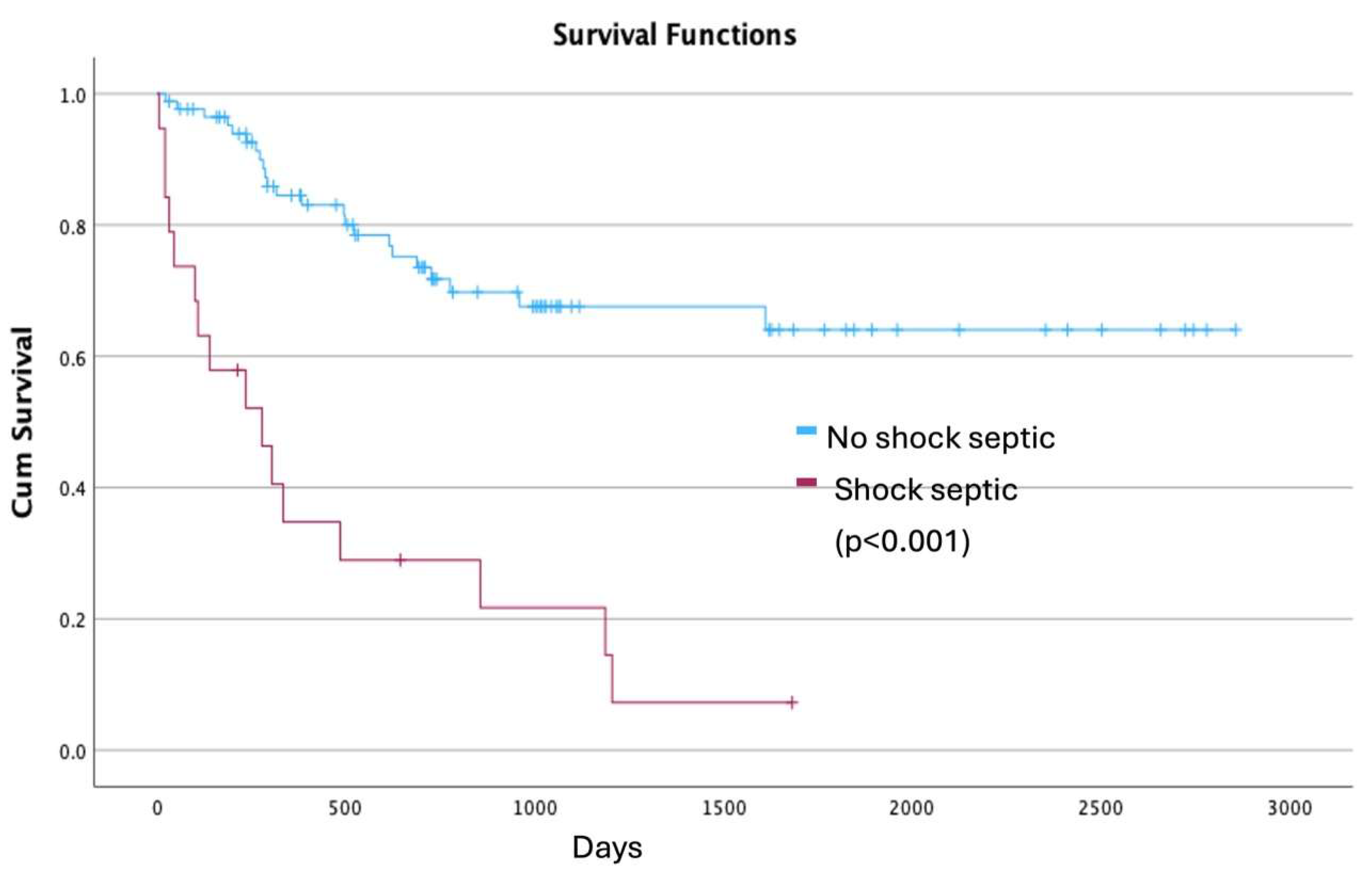
Figure 2.
Survival curve of patients undergoing esophagectomy who were discharged home after surgery.
Figure 2.
Survival curve of patients undergoing esophagectomy who were discharged home after surgery.
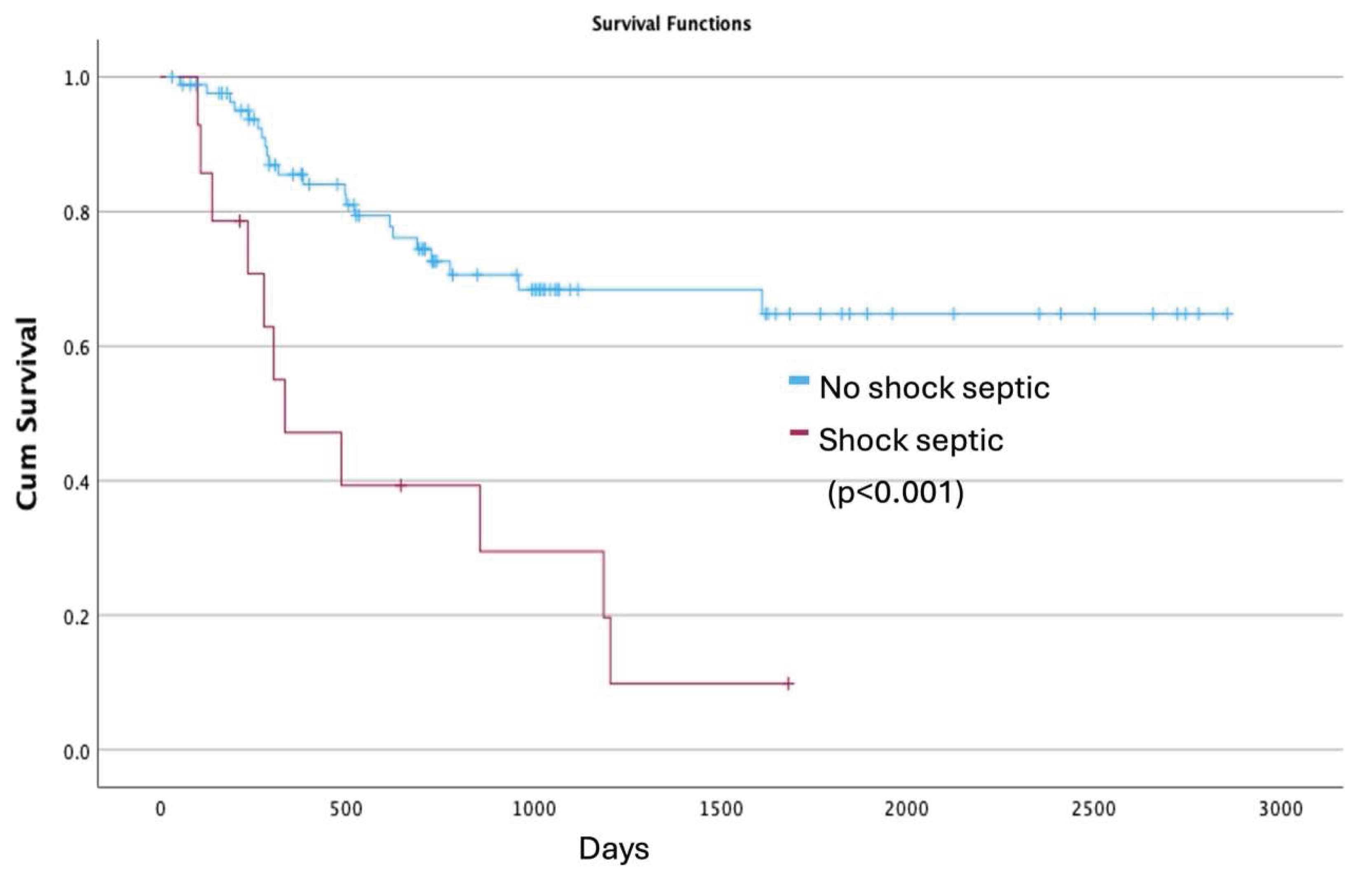

Table 1.
Baseline demographic and clinical characteristics of patients undergoing esophagectomy, stratified by the development of postoperative septic shock.
Table 1.
Baseline demographic and clinical characteristics of patients undergoing esophagectomy, stratified by the development of postoperative septic shock.
| Variable | Total (n=106) | No Septic Shock (n=87) | Septic Shock (n=19) | p value |
|---|---|---|---|---|
| Age, years | 59.5 (51.7–68.0) | 60 (52–68) | 58.0 (52–68) | 0.789 |
| Weight, kg | 72.4 (61.6–83.5) | 74 (63–85) | 65 (58.7–73.0) | 0.046 |
| Height, cm | 170 (166–175) | 170 (167–175) | 168 (160–170) | 0.096 |
| BMI , kg/m2 | 24.9 (22.3–28.5) | 25.5 (22.5–28.2) | 23.4 (20.4–26.2) | 0.036 |
| Male sex, n (%) | 92 (86.8) | 77 (88.5) | 15 (78.9) | 0.789 |
| Active alcohol use, n (%) | 15 (14.1) | 11 (12.8) | 4 (21.1) | 0.272 |
| Former alcohol use, n (%) | 11 (10.3) | 10 (11.6) | 1 (5.3) | 0.368 |
| Active smoker, n (%) | 33 (31.1) | 26 (30.2) | 7 (36.8) | 0.574 |
| Former smoker, n (%) | 37 (34.9) | 31 (36.0) | 6 (31.6) | 0.712 |
| Preoperative corticosteroid therapy, n (%) | 8 (7.5) | 7 (8.1) | 1 (5.3) | 0.556 |
| ASA physical status, n (%) | 0.078 | |||
| • ASA I | 1 (0.9) | 1 (1.2) | 0 (0) | |
| • ASA II | 40 (37.7) | 28 (32.6) | 12 (63.2) | |
| • ASA III | 61 (57.5) | 54 (62.8) | 6 (31.6) | |
| • ASA IV | 4 (3.7) | 3 (3.5) | 1 (5.3) | |
| COPD, n (%) | 4 (3.7) | 3 (3.5) | 1 (5.3) | 0.556 |
| OSA, n (%) | 2 (1.8) | 2 (2.3) | 0 (0) | 0.502 |
| DMNID, n (%) | 13 (12.2) | 13 (15.1) | 0 (0) | 0.062 |
| DMID, n (%) | 3 (2.8) | 2 (2.3) | 1 (5.3) | 0.454 |
| CKD, n (%) | 6 (5.6) | 5 (5.8) | 1 (5.3) | 0.703 |
| Hypertension, n (%) | 44 (41.5) | 37 (43.0) | 7 (36.8) | 0.621 |
| Dyslipidemia, n (%) | 41 (38.6) | 32 (37.2) | 9 (47.4) | 0.411 |
| Ischemic heart disease, n (%) | 6 (5.6) | 6 (7.0) | 0 (0) | 0.292 |
| CHF, n (%) | 1 (0.9) | 1 (1.2) | 0 (0) | 0.819 |
| Atrial fibrillation, n (%) | 5 (4.7) | 5 (5.8) | 0 (0) | 0.361 |
| Hypothyroidism, n (%) | 1 (0.9) | 1 (1.2) | 0 (0) | 0.819 |
| Cerebrovascular disease, n (%) | 3 (2.8) | 3 (3.5) | 0 (0) | 0.546 |
| Chronic liver disease, n (%) | 4 (3.7) | 3 (3.5) | 1 (5.3) | 0.556 |
| PVD, n (%) | 8 (7.5) | 7 (8.1) | 1 (5.3) | 0.556 |
Data are presented as median (interquartile range) or number (%). BMI: Body mass index ASA: American Society of Anesthesiologists; COPD: chronic obstructive pulmonary disease; OSA: obstructive sleep apnea; DMID Diabetes mellitus insulin-dependent, DMNID: Diabetes mellitus non–insulin-dependent; CKD Chronic kidney disease; CHF: Congestive Heart failure; PVD: Peripheral vascular disease.
Table 2.
Preoperative and early postoperative laboratory parameters according to the development of postoperative septic shock.
Table 2.
Preoperative and early postoperative laboratory parameters according to the development of postoperative septic shock.
| Variable | Total (n=106) | No Septic Shock (n=87) | Septic Shock (n=19) | p value |
|---|---|---|---|---|
| Preoperative | ||||
| Hemoglobin, g/dL | 12.6 (11.8-13.7) | 12.65 (11.8-13.6) | 12.6 (11.0-14.1) | 0.745 |
| Platelets, ×109/L | 210 (149-254) | 211.5 (160.0-254.0) | 209.0 (140.0-254.0) | 0.705 |
| INR | 1.02 (0.97-1.09) | 1.02 (0.97-1.10) | 1.00 (0.94-1.07) | 0.617 |
| Fibrinogen, mg/dL | 496 (437-583) | 495 (438-578) | 505 (432-760) | 0.509 |
| Lymphocytes, ×109/L | 1.2 (0.9-1.8) | 1.3 (0.9-1.8) | 1.0 (0.7-1.4) | 0.155 |
| Leukocytes, ×109/L | 6.20 (4.66-7.90) | 5.95 (4.66-7.90) | 6.98 (4.20-10.10) | 0.446 |
| Glucose, mg/dL | 97.0 (89.0-113.5) | 97 (89-113) | 99 (89-121) | 0.863 |
| Creatinine, mg/dL | 0.77 (0.65-0.89) | 0.79 (0.65-0.89) | 0.73 (0.62-0.92) | 0.714 |
| Albumin, g/dL | 4.1 (3.7-4.3) | 4.10 (3.79-4.30) | 3.85 (3.50-4.10) | 0.039 |
| Total proteins, g/dL | 6.6 (6.3-7.0) | 6.60 (6.30-7.00) | 6.70 (6.20-7.20) | 0.551 |
| C-reactive protein, mg/L | 1.50 (0.20-6.70) | 0.80 (0.20-6.20) | 10.75 (0.85-26.85) | 0.496 |
| Procalcitonin, ng/mL | 0.07 (0.03-0.11) | 0.05 (0.03-0.10) | 0.11 (0.07-0.12) | 0.179 |
| Neutrophil-to-lymphocyte ratio | 4.87 (3.50–8.00) | 4.66 (3.31–6.18) | 6.80 (4.05–10.10) | 0.049 |
| Platelet-to-lymphocyte ratio | 166.67 (104.21–262.86) | 158.89 (103.53–236.00) | 237.78 (110.00–310.00) | 0.227 |
| Albumin-to-lymphocyte ratio | 3.28 (2.19–4.50) | 3.19 (2.15–4.40) | 3.60 (2.25–5.11) | 0.398 |
| PICU admission | ||||
| Hemoglobin, g/dL | 11.6 (10.5–12.6) | 11.55 (10.60–12.40) | 11.80 (9.60–13.10) | 0.780 |
| Platelets, ×109/L | 182 (147–224) | 185 (152–223) | 166 (119–248) | 0.632 |
| INR | 1.11 (1.03–1.21) | 1.11 (1.03–1.21) | 1.10 (0.97–1.23) | 0.492 |
| Fibrinogen, mg/dL | 497 (431–609) | 511 (446–597) | 438 (357–693) | 0.326 |
| Lymphocytes, ×109/L | 0.6 (0.4–1.0) | 0.7 (0.4–1.1) | 0.5 (0.3–0.8) | 0.094 |
| Leukocytes, ×109/L | 10.20 (7.95–12.50) | 10.10 (7.90–12.70) | 10.59 (8.60–11.97) | 0.822 |
| Glucose, mg/dL | 144 (119–165) | 144 (115–166) | 147 (124–165) | 0.334 |
| Creatinine, mg/dL | 0.76 (0.58–0.91) | 0.75 (0.57–0.92) | 0.80 (0.66–0.87) | 0.206 |
| Albumin, g/dL | 3.20 (3.00–3.50) | 3.27 (3.06–3.50) | 3.10 (2.30–3.40) | 0.024 |
| Total proteins, g/dL | 5.50 (5.00–5.70) | 5.50 (5.10–5.70) | 5.40 (4.70–6.00) | 0.914 |
| C-reactive protein, mg/L | 21.7 (4.4–60.7) | 21.7 (5.7–60.1) | 57.6 (0.6–114.6) | 0.956 |
| Procalcitonin, ng/mL | 0.10 (0.04–0.17) | 0.07 (0.03–0.14) | 0.19 (0.15–2.17) | 0.044 |
| Lactate, mmol/L | 2.05 (1.30–3.60) | 1.90 (1.30–3.50) | 2.80 (1.80–3.70) | 0.306 |
| Neutrophil-to-lymphocyte ratio | 15.33 (9.82–25.75) | 14.75 (9.34–24.50) | 17.50 (13.82–27.75) | 0.064 |
| Albumin-to-lactate ratio | 1.58 (0.90–2.42) | 1.68 (0.95–2.47) | 1.03 (0.76–1.84) | 0.064 |
| Platelet-to-lymphocyte ratio | 274.29 (175.45–475.56) | 252.43 (173.64–446.00) | 380.00 (181.18–595.00) | 0.145 |
| Albumin-to-lymphocyte ratio | 5.33 (2.95–7.40) | 4.93 (2.91–7.20) | 5.75 (3.00–10.50) | 0.446 |
| Change preoperative to admission PICU | ||||
| Albumin-to-lymphocyte ratio (preop/PICU) | 0.80 (0.50–1.10) | 0.80 (0.49–1.10) | 0.70 (0.50–1.44) | 0.729 |
| Creatinine change, mg/dL | 0.04 (−0.06–0.13) | 0.05 (−0.04–0.14) | 0.06 (−0.19–0.13) | 0.041 |
Data are presented as median (interquartile range). PICU: Postoperative intensive care unit; INR: international normalized ratio.
Table 3.
Preoperative oncologic and tumor characteristics according to the development of postoperative septic shock.
Table 3.
Preoperative oncologic and tumor characteristics according to the development of postoperative septic shock.
| Variable | Total (n=106) | No Septic Shock (n=87) | Septic Shock (n=19) | p value |
|---|---|---|---|---|
| Chemotherapy Neoadjuvant n(%) | 68 (64.1) | 55 (83.3) | 13 (81.3) | 0.547 |
| Radiotherapy Neoadjuvant n(%) | 40 (37.7) | 30 (34.9) | 10 (52.6) | 0.149 |
| Tumor stage (T), n (%) | 0.791 | |||
| • T1 | 9 (8.5) | 8 (9.2) | 1 (5.3) | |
| • T2 | 35 (33) | 27 (31) | 8 (42.1) | |
| • T3 | 48 (45.3) | 40 (46) | 8 (42.1) | |
| • T4 | 14 (13.2) | 12 (13.8) | 2 (10.5) | |
| Nodal stage (N), n (%) | 0.009 | |||
| • N0 | 14 (13.2) | 13 (14.9) | 1 (5.3) | |
| • N1 | 31 (29.2) | 29 (33.3) | 2 (10.5) | |
| • N2 | 42 (39.6) | 34 (39.1) | 8 (42.1) | |
| • N3 | 19 (17.9) | 11 (12.6) | 8 (42.1) | |
| Metastatic stage (M), n (%) | 0.367 | |||
| • M0 | 94 (88.7) | 78 (89.7) | 16 (84.2) | |
| • M1 | 12 (11.3) | 9 (10.3) | 3 (15.8) | |
| Tumor location within esophagus, n (%) | 0.763 | |||
| • Distal | 79 (74.5) | 65 (74.7) | 14 (73.7) | |
| • Middle–distal | 14 (13.2) | 12 (13.8) | 2 (10.5) | |
| • Middle | 7 (6.6) | 6 (6.9) | 1 (5.3) | |
| • Proximal | 6 (5.7) | 4 (4.6) | 2 (10.5) | |
Data are presented as n (%). TNM staging according to the AJCC classification.
Table 4.
Intraoperative surgical and anesthetic characteristics according to the development of postoperative septic shock.
Table 4.
Intraoperative surgical and anesthetic characteristics according to the development of postoperative septic shock.
| Variable | Total (n=106) | No Septic Shock (n=87) | Septic Shock (n=19) | p value |
|---|---|---|---|---|
| Surgical approach, n (%) | 0.594 | |||
| • Open | 17 (16.0) | 12 (14.0) | 5 (26.3) | |
| • Hybrid | 44 (41.5) | 35 (40.7) | 9 (47.4) | |
| •Minimally invasive | 45 (42.5) | 40 (46.5) | 5 (26.3) | |
| Feeding jejunostomy, n (%) | 86 (81.1) | 70 (81.4) | 16 (88.9) | 0.354 |
| Intraoperative radiotherapy, n (%) | 13 (12.3) | 10 (11.9) | 3 (15.8) | 0.430 |
| Type of esophagectomy, n (%) | 0.37 | |||
| • Ivor Lewis | 60 (56.6) | 51(58.6) | 9 (47.4) | |
| • McKeown | 46 (43.4) | 36 (41.4) | 10 (52.6) | |
| Duration of surgery, min | 450 (370–525) | 454 (384–528.5) | 435 (320–470) | 0.192 |
| Duration of anesthesia, min | 579.5 (509–663) | 594 (510–667) | 567 (450–663) | 0.317 |
| Use One-lung ventilation | 81 (76.4) | 69 (79.3) | 12 (63.2) | 0.133 |
| Bronchial blocker, n (%) | 59 (55.7) | 48 (55.2) | 11 (57.9) | 0.956 |
| Epidural analgesia n(%) | 74 (69.8) | 61 (70.1) | 13 (68.4) | 0.828 |
| Use of vasoactive drugs, n (%) | 35 (33.0) | 26 (29.9) | 9 (47.4) | 0.142 |
| Extubated in the operating room, n (%) | 89 (84.0) | 74 (85.1) | 15 (78.9) | 0.36 |
| Red blood cell transfusion, n (%) | 2 (1.9) | 1 (1.2) | 1 (5.3) | 0.342 |
| Crystalloids administered, mL | 2200 (1500–2500) | 2100 (1500–2500) | 2500 (2000–2500) | 0.858 |
| Colloids administered, mL | 250 (0–500) | 150 (0–500) | 500 (500–500) | 0.1 |
Data are presented as n (%) or median (interquartile range). OLV: one-lung ventilation.
Table 5.
Postoperative medical and surgical complications according to the development of postoperative septic shock.
Table 5.
Postoperative medical and surgical complications according to the development of postoperative septic shock.
| Variable | Total (n=106) | No Septic Shock (n=87) | Septic Shock (n=19) | p value |
|---|---|---|---|---|
| Atelectasis n(%) | 12 (11.3) | 9 (10.3) | 3 (15.8) | 0.367 |
| Pleural effusion n(%) | 38 (35.8) | 23 (26.4) | 15 (78.9) | <0.001 |
| Hospital-acquired pneumonia n(%) | 35 (33.0) | 26 (29.9) | 9 (47.4) | 0.142 |
| Ventilator-associated pneumonia n(%) | 8 (7.5) | 3 (3.4) | 5 (26.3) | 0.004 |
| Empyema n(%) | 8 (7.5) | 5 (5.7) | 3 (15.8) | 0.152 |
| Pulmonary embolism n(%) | 2 (1.9) | 2 (2.3) | 0 (0) | 0.672 |
| Acute respiratory distress syndrome n(%) | 10 (9.4) | 4 (4.6) | 6 (31.6) | <0.001 |
| Acute myocardial infarction n(%) | 1 (0.9) | 1 (1.1) | 0 (0) | 0.821 |
| New-onset atrial fibrillation n(%) | 14 (13.2) | 6 (6.9) | 8 (42.1) | <0.001 |
| Cardiac arrest n(%) | 2 (1.9) | 0 (0) | 2 (10.5) | 0.031 |
| Ileus n(%) | 11 (10.4) | 7 (8.0) | 4 (21.1) | 0.107 |
| Biliary leak n(%) | 2 (1.9) | 1 (1.1) | 1 (5.3) | 0.328 |
| Acute kidney failure n(%) | 17 (16.0) | 9 (10.3) | 8 (42.1) | <0.001 |
| Bacteremia n(%) | 8 (7.5) | 5 (5.7) | 3 (15.8) | 0.152 |
| Sepsis (non-shock) n(%) | 33 (31.1) | 26 (29.9) | 7 (36.8) | 0.553 |
| Stroke n(%) | 1 (0.9) | 1 (1.1) | 0 (0) | 0.821 |
| Delirium n(%) | 15 (14.2) | 9 (10.3) | 6 (31.6) | 0.016 |
| Anastomotic leak/dehiscence n(%) | 40 (37.7) | 25 (28.7) | 15 (78.9) | <0.001 |
| Bronchoesophageal fistula n(%) | 7 (6.6) | 5 (5.7) | 2 (10.5) | 0.367 |
| Chylothorax n(%) | 3 (2.8) | 1 (1.1) | 2 (10.5) | 0.082 |
| Pneumothorax n(%) | 8 (7.5) | 6 (6.9) | 2 (10.5) | 0.438 |
| Surgical site infection n(%) | 9 (8.5) | 7 (8.0) | 2 (10.5) | 0.506 |
| Hemorrhagic shock n(%) | 6 (5.7) | 2 (2.3) | 4 (21.1) | 0.004 |
| PICU stay (days) | 5 (2-10.5) | 4 (2-7.3) | 8 (4-26) | 0.008 |
| Hospital length stay (days) | 21 (13-36) | 19 (13-31.5) | 37 (21-72) | 0.011 |
| PICU readmission n(%) | 25 (23.6) | 17 (19.5) | 8 (42.1) | 0.036 |
| Mortality intrahospital n(%) | 7 (6.6) | 1 (1.1) | 6 (31.6) | <0.001 |
Disclaimer/Publisher’s Note: The statements, opinions and data contained in all publications are solely those of the individual author(s) and contributor(s) and not of MDPI and/or the editor(s). MDPI and/or the editor(s) disclaim responsibility for any injury to people or property resulting from any ideas, methods, instructions or products referred to in the content. |
© 2026 by the authors. Licensee MDPI, Basel, Switzerland. This article is an open access article distributed under the terms and conditions of the Creative Commons Attribution (CC BY) license.
Copyright: This open access article is published under a Creative Commons CC BY 4.0 license, which permit the free download, distribution, and reuse, provided that the author and preprint are cited in any reuse.


