

Submitted:
03 June 2026
Posted:
04 June 2026
You are already at the latest version
Preprints on COVID-19 and SARS-CoV-2
Abstract
Antibody-dependent enhancement (ADE) is a paradoxical immunological phenomenon in which pre-existing antibodies facilitate viral entry into host cells rather than conferring protection [1,2]. ADE has been extensively characterised in flaviviral systems, most notably dengue virus (DENV), and presents a significant challenge for vaccine development and antibody-based therapeutic design [1,3]. In coronavirus infections, ADE may operate through both classical Fc gamma receptor (FcγR)-mediated pathways and an intrinsic signalling mechanism involving inhibitory FcγRIIb-mediated suppression of the type I interferon (IFN-I) response [4,5]. Of critical translational relevance is the functionally demonstrated cooperative FcγR–ACE2 entry model for SARS-CoV-2, wherein virus–antibody immune complexes engage Fcγ receptors and require ACE2 interaction for efficient enhancement [6,7]. For SARS-CoV-2 specifically, ADE magnitude appears to be determined by an antibody’s capacity to block spike–ACE2 interaction rather than its neutralisation potency in vitro—a finding distinct from FIPV and other coronavirus ADE systems where classical FcγR-mediated mechanisms predominate without ACE2 co-receptor dependency [6,7]. Feline infectious peritonitis virus (FIPV) represents one of the most rigorously documented biological systems in which antibody-mediated macrophage infection directly determines systemic disease outcome [8,9]. This comprehensive review integrates current knowledge of FcγR biology, IgG subclass dynamics, antibody glycosylation, coronavirus cell entry mechanisms, intracellular signalling cascades, cytokine dysregulation, comparative veterinary immunopathology, and nano-engineered immunomodulatory platforms for ADE-safe vaccine development. No confirmed clinical ADE has been documented to date in mRNA-vaccinated populations, though theoretical risk windows and population-specific vulnerabilities are critically discussed [26,27].
Keywords:
antibody-dependent enhancement
; Fc gamma receptor
; ACE2
; SARS-CoV-2
; FIPV
; coronavirus immunopathology
; IgG4 class switch
; afucosylation
; lipid nanoparticle
; intrinsic ADE
; cytokine storm
; Fc engineering
; veterinary immunology
; nanomedicine
1. Introduction
The global emergence of SARS-CoV-2 and the COVID-19 pandemic renewed scientific scrutiny of antibody-dependent enhancement (ADE), a process in which virus-specific antibodies paradoxically facilitate rather than prevent cellular infection [1,2]. ADE was first described in relation to dengue virus (DENV) in the 1960s and has since been reported in HIV, Zika, West Nile, and multiple coronaviruses [1,3].
Ebola ADE has been reported in pseudovirus and cell-culture systems [3], though its in vivo clinical significance is less well-validated compared to dengue haemorrhagic fever and should not be equated in evidentiary weight. The classical ADE model involves Fc gamma receptor (FcγR)-mediated endocytosis of IgG-opsonised virions into immune cells [2,3,4]. A second pathway—intrinsic ADE—operates via inhibitory FcγRIIb signalling, suppressing antiviral interferon production without necessarily altering viral tropism [4,5].
The mechanistic complexity of ADE in coronaviruses is compounded by the unique biology of these pathogens [10,11]. Unlike flaviviruses, coronaviruses primarily infect epithelial cells through spike glycoprotein interaction with specific host receptors: ACE2 for SARS-CoV-2 and SARS-CoV-1; aminopeptidase N (APN/CD13) for HCoV-229E and feline coronavirus; and DPP4 for MERS-CoV [10,11]. Wang et al. [7] specifically demonstrated that ACE2 can function as a secondary receptor in FcγRdependent ADE of SARS-CoV-2 infection, providing foundational evidence for the cooperative entry model central to this review. Kuzmina et al. [6] further validated this cooperative mechanism using a panel of 364 CoVIC IgG1 mAbs. These findings derive primarily from in vitro THP-1 cell studies and their extrapolation to in vivo clinical contexts requires further validation [6,7]. Recent structural advances using cryo-electron tomography (cryo-ET) have begun to illuminate the molecular geometry of spike-antibodyreceptor interactions [44,45], opening new avenues for understanding cooperative receptor engagement in ADE.
2. Molecular Basis of Antibody-Dependent Enhancement
2.1. Classical Extrinsic ADE: FcγR-Mediated Viral Entry
Classical extrinsic ADE involves the direct facilitation of viral entry into immune cells via Fc receptormediated internalisation of antibody-opsonised virions [1,2]. When viral neutralisation is incomplete—at sub-neutralising antibody concentrations, with low-affinity antibodies, or against heterologous antigenic variants—virus–antibody immune complexes trigger clathrin-mediated endocytosis, delivering replicationcompetent virions to intracellular compartments (Figure 1) [12,13]. Kibria et al. [12] demonstrated antibody-mediated SARS-CoV-2 entry in THP-1 cells. Wieczorek et al. [13] established that neutralisation potency is a poor predictor of ADE magnitude in vitro—consistent with the cooperative receptor model [6,7].
2.2. Intrinsic ADE: FcγRIIb-Mediated IFN-I Suppression
Beyond classical extrinsic ADE, coronaviruses may exploit an intrinsic ADE pathway mediated through the inhibitory receptor FcγRIIb (CD32b) [4,5]. FcγRIIb signals through an immunoreceptor tyrosine-based inhibitory motif (ITIM), recruiting phosphatases SHP-1 and SHP-2 [17,18]. Engagement of FcγRIIb by IgG-opsonised SARS-CoV-2 converges on the JAK-STAT pathway to suppress IFN-I production via induction of SOCS1 and SOCS3 [4,5]. Matveeva [14] provided evidence that SARS-CoV-2 infection of phagocytic immune cells proceeds via FcγR-dependent pathways with downstream immunosuppressive consequences including IFN-I blunting. Intrinsic ADE can operate independently of altered viral entry route —IFN-I suppression affects the entire antiviral transcriptional programme regardless of viral entry mechanism [4,5].
2.3. Antibody Glycosylation and ADE Risk
The glycosylation state of the IgG Fc region at Asn297 profoundly influences FcγR affinity and ADE risk [19,46]. Afucosylated IgG1 exhibits dramatically enhanced binding to FcγRIIIa, increasing ADCC and theoretical ADE potential [19]. Elevated afucosylated anti-spike IgG has been reported in severe COVID-19 patients following natural infection [19]. Regarding mRNA vaccination, while sustained afucosylation is largely absent in antigen-experienced vaccinees, Van Coillie et al. [20] demonstrated that BNT162b2 induces a transient afucosylated anti-spike IgG1 response in naive individuals during the first 2–6 weeks post-primary dose. This early temporal window theoretically represents a period of transiently elevated FcγRIIIa-mediated ADE risk, though no clinical ADE has been reported in this period [20].
2.4. IgG Subclass Dynamics and ADE Risk: The IgG4 Dimension
Repeated SARS-CoV-2 mRNA vaccination induces a progressive class switch toward spike-specific IgG4 antibodies, rising significantly after the second and third doses [21,22]. IgG4 exhibits reduced binding to activating FcγRs (FcγRI, FcγRIIa, FcγRIIIa) while maintaining affinity for the inhibitory FcγRIIb [23], suggesting a paradoxical profile: reduced classical ADE risk but potentially compromised neutralising capacity [21,22]. Irrgang et al. [21] demonstrated this class switch is associated with reduced antibodydependent phagocytosis and increased risk of breakthrough infections [24]. Uversky et al. [22] proposed IgG4 induction may generate immune tolerance to spike protein. The IgG4 shift represents a nuanced consideration for ADE-safe vaccine design requiring ongoing longitudinal surveillance [21,22,23].
3. Fc Gamma Receptor Biology in Immune Cells
3.1. Classification, Structure, and Expression
Fc gamma receptors are encoded on chromosome 1q23, comprising six distinct proteins: FcγRI (CD64),
FcγRIIa (CD32a), FcγRIIb (CD32b), FcγRIIc (CD32c), FcγRIIIa (CD16a), and FcγRIIIb (CD16b) [17,18]. Binding affinities range from ~10 ⁹ M for FcγRI to ~10 ⁵ M for FcγRIIIb [17,18] (Table 1). GM allotypes⁻ ⁻ and FcγR genotypes interact to contribute to ADCC magnitude against SARS-CoV-2 [47].

| FcγR | CD | Kd | Expression | Motif | ADE Relevance |
| FcγRI | CD64 | ~10 ⁹ M⁻ | Monocytes, Macrophages, DCs |
ITAM | Primary ADE mediator; binds monomeric IgG; blockade most pronounced in ADE [6,17] |
| FcγRIIa | CD32a | ~10 ⁷ M⁻ | Macrophages, Neutrophils, Platelets |
ITAM | Activating; central coronavirus ADE receptor; H131R polymorphism [17,18] |
| FcγRIIb | CD32b | ~10 ⁷ M⁻ | B cells, Macrophages, DCs |
ITIM | Sole inhibitory FcγR; intrinsic ADE; IFN-I suppression via SOCS; IgG4 preferential [4,5,23] |
| FcγRIIIa | CD16a | ~10 ⁶ M⁻ | NK cells, Macrophages, Monocytes |
ITAM | ADCC; high-avidity ADE; V158F polymorphism; enhanced by afucosylated IgG [17,19,46] |
| FcγRIIIb | CD16b | ~10 ⁵ M⁻ | Neutrophils only | GPI | Phagocytosis; minimal direct ADE role [17] |
Table 1. ITAM, immunoreceptor tyrosine-based activation motif; ITIM, inhibitory motif; Kd, dissociation constant; DCs, dendritic cells. Table fits one page per standard Frontiers formatting.
Table 2.
ADE Across Major Pathogenic Viruses: Mechanisms, Target Cells, and Clinical Significance [1,2,3,6,7,8,9,14].
| Virus | Family |
ADE Mechanism |
Target Cell |
Key Receptor(s) |
Clinical Impact |
| DENV [1,2] |
Flaviviridae | Classical FcγR |
Monocytes/ Macrophages | FcγRIIa | DHF/DSS; ~25,000 deaths/yr; strongest clinical ADE evidence |
| SARSCoV-2 [6,7,12,13] |
Coronavirida e | Classical + Intrinsic (cooperative FcγR– ACE2) |
Alveolar Macrophages, Monocytes |
FcγRI+FcγRI Ia+ACE2 | COVID-19 cytokine storm; >6M deaths; cooperative ADE validated in vitro |
| SARSCoV-1 [4,5] |
Coronavirida e | Classical FcγR + Intrinsic |
Macrophages, DCs |
FcγRI, FcγRII | In vitro ADE; vaccine-enhanced disease in animal models |
| FIPV [8,9] | Coronavirida e | Classical FcγR (antibodybridged uptake) |
Peritoneal Macrophages | Feline FcγR (uptake receptor) | 100% fatal FIP; ADE is central, well-characterised; natural model |
| Zika [1,3] | Flaviviridae | Classical FcγR |
Placental macrophages, DCs | FcγRIIIa | Congenital Zika risk; cross-reactive DENV Ab implicated |
| Ebola [3] | Filoviridae | Putative FcγR/C1q | Macrophages (in vitro only) | FcγR/C1q (in vitro) | Pseudovirus/cell-culture only; in vivo clinical significance not validated |
Table 2. DHF, dengue haemorrhagic fever; DSS, dengue shock syndrome; FIP, feline infectious peritonitis; DCs, dendritic cells.
3.2. Intracellular Signalling Cascades in ADE
Activating FcγR signalling in macrophages proceeds through Src-family kinase phosphorylation of ITAM tyrosines, generating docking sites for Syk kinase [17,18]. Syk activates PLCγ → IP3/DAG, mobilising intracellular calcium and PKC. Parallel PI3K → PIP3 → Akt/mTOR activation, together with NF-κB and ERK/MAPK transcriptional activation, produces cytokine secretion and phagocytosis [17,18]. In ADE, this cascade is co-opted by internalised virions, producing a dual outcome: enhanced IL-6/IL-10/TNF-α production via the cytokine storm pathway, and blunted IFN-α/β response via viral non-structural protein synergy with intrinsic ADE (Figure 2) [4,5,14,25,48].
3.3. FcγR Polymorphisms and Individual ADE Susceptibility
The FcγRIIa-H131R polymorphism has been associated with differential dengue haemorrhagic fever susceptibility through in vitro studies and epidemiological observations [17]. H131 homozygotes bind IgG immune complexes with higher affinity, driving highly efficient FcγR-mediated viral uptake. This polymorphism is hypothesised to influence macrophage ADE risk in SARS-CoV-2 infection, though no prospective clinical study has yet validated FcγR polymorphisms as predictive biomarkers for COVID-19 ADE [17,47]. GM allotypes and FcγR genotypes have been demonstrated to interact in contributing to ADCC magnitude against SARS-CoV-2 spike-expressing cells [47].
5. The Cooperative FcγR–ACE2 Entry Model
5.1. Rationale, Structural Feasibility, and Experimental Evidence
The FcγR–ACE2 cooperative model, as recently elucidated by Kuzmina et al. [6] and mechanistically supported by Wang et al. [7], indicates that ADE in SARS-CoV-2 is not mediated by FcγR engagement alone but is facilitated by cooperative interaction with ACE2 as a co-factor. Wang et al. [7] specifically demonstrated that ACE2 can function as a secondary receptor in FcγR-dependent ADE of SARS-CoV-2 infection. These findings derive primarily from in vitro THP-1 cell studies and their extrapolation to in vivo clinical scenarios requires further validation [6,7,15]. As shown in Figure 3, an IgG antibody binding the spike RBD positions its Fc region approximately 15–20 nm from the viral membrane—a geometry compatible with simultaneous FcγR and ACE2 engagement [6,45].
Key experimental evidence from Kuzmina et al. [6] includes: (i) 364 CoVIC IgG1 mAbs screened against
THP-1 cells demonstrating dose-dependent ADE peaking at 1 μg/mL, with neutralisation potency (IC50) showing no significant correlation with ADE magnitude (R² = 0.0098) in this in vitro system; (ii) ADE was completely abrogated by combined FcγR and ACE2 blockade; (iii) mAbs with high ACE2-blocking capability (>50% RBD–ACE2 inhibition) were disproportionately associated with strong ADE; and (iv) ADE-mediated infection was productive in THP-1 cells [6]. Crucially, ceftazidime used in these experiments acts as a spike RBD-directed interface disruptor that sterically hinders spike–ACE2 interaction by binding the spike RBD [34]—not an ACE2 receptor antagonist. Other groups have reported abortive or semi-productive infection in primary macrophages via ADE, suggesting THP-1 findings may not fully recapitulate primary macrophage biology [14].
Nakayama and Shioda [26] and Tao et al. [27] have provided comprehensive reviews of SARS-CoV-2related ADE phenomena both in vitro and in vivo, reinforcing the mechanistic coherence of the cooperative entry model while emphasising the need for additional in vivo validation and the absence of confirmed clinical ADE in mRNA-vaccinated populations.
5.2. Implications for Antibody-Based Therapeutics
The cooperative entry model has direct implications for therapeutic monoclonal antibody (mAb) design [6,7,17,35,36]. LALA mutations (L234A/L235A) and LALAPG mutations abrogate activating FcγR binding while preserving Fab functionality [17,36]. The GASDALIE mutation set
6. Intracellular Trafficking and Viral Fate After FcγR-Mediated Entry
Following FcγR-mediated endocytosis, virus-containing phagosomes undergo progressive acidification through early endosomes (EEA1 , Rab5 ) to late endosomes (LAMP-1 , Rab7 ) [12,14]. In situ cryo-ET⁺ ⁺ ⁺ ⁺ by Akıl et al. [44] revealed that SARS-CoV-2 spike undergoes extensive structural rearrangements through fusion intermediates prior to fusion-pore formation, providing mechanistic context for how FcγR-mediated endosomal redirection may alter the fusion process compared to ACE2-mediated plasma membrane fusion. Within macrophages infected via ADE, SARS-CoV-2 replication may proceed through the replicationtranscription complex (RTC) [14]. Importantly, macrophage-infected coronaviruses frequently undergo abortive or semi-abortive replication—sufficient for viral RNA synthesis and protein production but without generating abundant infectious progeny [14]. SARS-CoV-2 encodes at least 16 non-structural proteins and multiple accessory proteins that antagonise IFN-I production at multiple points: RIG-I/MDA5 inhibition via nsp3-PLpro, STING-TBK1-IRF3 signalling disruption via nsp13 ATPase, STAT1/2 nuclear translocation inhibition via ORF6, and ISG expression blockade via nsp1 ribosome stalling [4,25]. Combined with FcγRIIb-SOCS-mediated extrinsic IFN-I suppression, these mechanisms may synergise to create a profoundly immunosuppressive intracellular environment [4,14,25].
7. Veterinary Coronavirus ADE: The FIPV Paradigm
7.1. FCoV Biology and the Biotype Conversion to FIPV
Feline coronavirus (FCoV) is a prevalent enteric pathogen of domestic and wild felids, with seroprevalence reaching 90% in multi-cat environments [37,38]. Two biotypes are recognised: feline enteric coronavirus (FECV)—a benign enteric pathogen—and feline infectious peritonitis virus (FIPV), the causative agent of the a historically highly fatal systemic disease FIP [37,38]. The FECV-to-FIPV biotype conversion (independent of Type I/II serotype classification) arises through spontaneous mutations primarily in the spike S gene and the 3c gene within an individual host [37,38]. The critical distinction is biological: FIPV weaponises nonneutralising antibodies for FcγR-mediated macrophage tropism,producing severe systemic disease historically associated with high mortality in untreated cats (Figure 4) [8,9,37].
7.2. FcγR-Mediated Macrophage Infection: Core ADE Mechanism
The hallmark virological feature distinguishing FIPV from FECV is pronounced macrophage tropism mediated through antibody-dependent FcγR endocytosis [8,9]. Importantly, FIPV acquires enhanced macrophage tropism through antibody-mediated immune complex endocytosis, where FcγR functions as an immune-complex uptake receptor—not a direct viral entry receptor. FIPV infection of macrophages does not involve direct spike–FcγR binding [8,9]. FcγR blockade with anti-FcγR antibodies completely abrogates FIPV macrophage entry, confirming FcγR-dependent ADE as the obligate macrophage infection pathway under antibody-opsonised conditions [8,9].
7.3. Vaccine-Enhanced Disease in FIPV: Translational Lessons
Early FIPV vaccines paradoxically accelerated disease in vaccinated animals—a phenomenon termed ‘early death syndrome’ (AMEFI) [9,38]. Vaccinated cats with non-neutralising anti-spike IgG developed faster, more severe FIP than unvaccinated controls [9]. This underscores a critical principle directly applicable to SARS-CoV-2 vaccine design: sub-protective antibody titres may be worse than no humoral response [9,14]. The approved intranasal FIPV vaccine (Primucell-FIP, Zoetis) achieves protection through mucosal IgA and T cell responses with minimal systemic IgG that could mediate ADE [37,38]. The recent clinical success of GS-441524 in treating FIP with >80% remission rates validates the viral RdRp as a therapeutic target across alphacoronavirus and betacoronavirus systems [39].
| Parameter | SARS-CoV-2 (Human) | FIPV (Feline) |
| Coronavirus lineage | Betacoronavirus (lineage B) | Alphacoronavirus (FCoV type I/II) |
| Primary entry receptor | ACE2 (+ TMPRSS2 co-factor) [10,11] | APN/CD13; antibody-bridged FcγR endocytosis in ADE [8,9] |
| ADE mechanism | Extrinsic (FcγRI+FcγRIIa+ACE2 cooperative) + Intrinsic (FcγRIIb-SOCS) [6,7] | Classical antibody-bridged FcγR immune-complex endocytosis; FcγR is uptake receptor not entry receptor [8,9] |
| Key cytokines | IL-6, IL-10, TNF-α; IFN-I suppressed [4,5,25] | IL-6, TNF-α, IL-1β; IL-12 reduced [37,38] |
| Vaccine risk | No confirmed clinical ADE with mRNA vaccines to date [26,27] | Documented AMEFI (early death syndrome) with whole-virus and recombinant spike vaccines [9,38] |
| Therapeutic antiviral | Remdesivir, Paxlovid, molnupiravir | GS-441524 (remdesivir parent compound) [39] |
| Natural ADE model | Human — ethical constraints limit controlled challenge | YES — natural cat model; controlled challenge studies feasible [8,9,37,38] |
Table 3. Direct comparison of ADE-relevant parameters between SARS-CoV-2 and FIPV.
8. Nano-Engineered Immunomodulatory Platforms for ADE-Safe Vaccination
8.1. Antigen Engineering Principles to Minimise ADE Risk
The central immunological challenge for ADE-safe coronavirus vaccines is selectively eliciting antibodies against the ACE2-binding interface of the RBD while avoiding non-neutralising IgG against NTD, S2, and non-conserved spike regions [6,14,28,29]. The immunological imperative is to elicit neutralising antibodies only against the ACE2-binding interface, depriving the immune system of the targets that typically generate
ADE-bridging non-neutralising IgGs. Prefusion-stabilised spike trimers (HexaPro; 2P variant with K986P/V987P; GSAS furin site mutation) maintain the RBD in an immunologically accessible ‘up’ conformation [28,29]. RBD-only constructs eliminate the NTD and S2 domains from the immunogen entirely [28,29,30].
8.2. Lipid Nanoparticle mRNA Vaccines
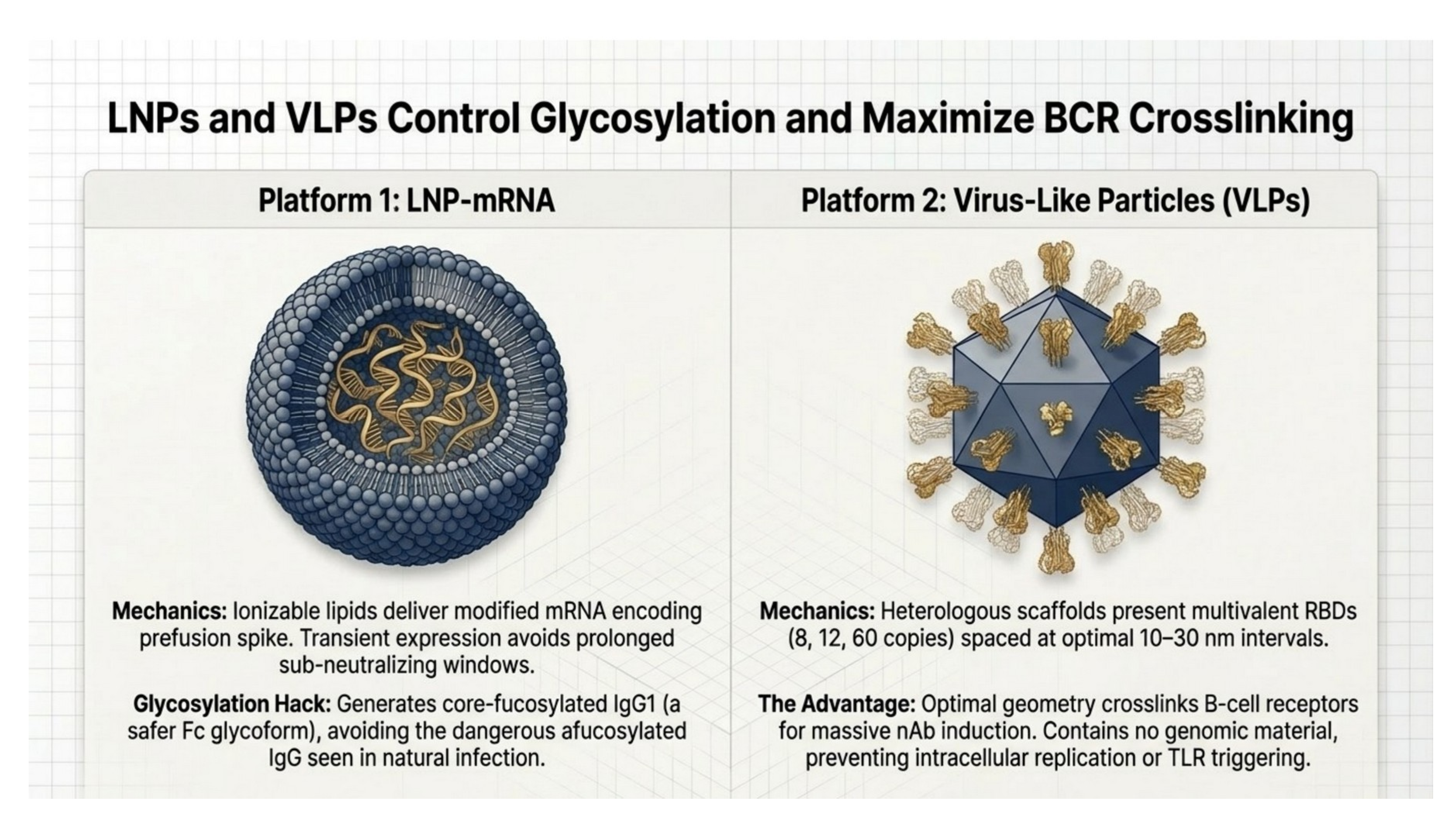
LNP-mRNA vaccines represent the most clinically validated nano-engineered coronavirus platform [40,41]. BNT162b2 and mRNA-1273 use ionisable lipid nanoparticles (~80–200 nm) to deliver modified mRNA encoding prefusion-stabilised spike [40,41]. The glycosylation advantage is critical: LNP-mRNA generates predominantly core-fucosylated IgG1 (a safer Fc glycoform) in antigen-experienced vaccinees, avoiding the dangerous afucosylated IgG seen in natural infection, with the exception of a transient afucosylation window in naive vaccinees [20]. Transient, localised spike expression avoids prolonged subneutralising antibody windows [14,40,41]. No confirmed clinical ADE has been documented to date across hundreds of millions of LNP-mRNA vaccine recipients [40,41].
8.3. Nano-Vaccine Platform Comparison
As illustrated in Figure 5, three principal nano-engineered platforms offer distinct ADE-risk mitigation profiles: LNP-mRNA (generating core-fucosylated IgG1, transient antigen expression), virus-like particles (VLPs; heterologous scaffolds presenting multivalent RBDs at optimal 10–30 nm intervals for BCR crosslinking, containing no genomic material), and PLGA/chitosan polymeric nanoparticles (mucosal sIgA induction that does not engage activating FcγRs, biodegradable sustained antigen release) [28,29,30]. Since VLPs contain no Fc-activating material and present only the ACE2-binding face of the RBD, they substantially reduce stimulation of antibody lineages associated with ADE risk [6,28,29,30].
8.4. Biodegradable Polymeric Nanoparticles (PLGA/Chitosan)
PLGA nanoparticles (100–500 nm) provide biodegradable antigen encapsulation with tunable hydrolytic degradation kinetics for sustained antigen release [28,29,30]. Chitosan nanoparticles (100–600 nm) offer mucosal delivery advantages, facilitating induction of secretory IgA (sIgA) [28,29]. sIgA does not engage activating FcγRs on macrophages, substantially reducing classical ADE risk. However, intranasal delivery may still elicit systemic IgG responses in some individuals, and complement-mediated enhancement pathways are not fully excluded [28,29,30].
Table 4.
Comparative Nano-Engineered Vaccine Platform Evaluation for ADE-Safe Coronavirus Vaccination [28,29,30,40,41].
| Platform | Antigen Type | Size | Adjuva nt? | ADE Risk Mitigation | Stage/Examples |
| LNP-mRNA [40,41] |
Encoded prefusion spike | 80–200 nm |
No (selfadj) | Core-fucosylated IgG Fc; brief Ag expression; no confirmed clinical ADE to date [26,27] | Approved: BNT162b2, mRNA-1273 |
| Virus-Like | RBD/spike | 20–100 | Often | No Fc-activating material; | HPV/HepB approved; |
| Particle [28,29] | multimer on scaffold | nm | coformulat ed | multivalent nAb induction; no genomic material | CoV pre-clinical |
| PLGA NP [29,30] |
Protein/peptide subunit | 100–500 nm |
MPL, CpG |
Sustained release prevents sub-nAb surge window; Th1 bias reduces ADE-prone non-nAb IgG | Pre-clinical CoV; FDAapproved platforms |
| Chitosan NP [28,29] | Mucosal protein Ag | 100–600 nm |
Intrinsic | Mucosal sIgA does NOT engage activating FcγR; substantially reduces classical ADE risk; systemic IgG still possible |
Pre-clinical; intranasal route |
| Self-assembling NP [28,30] | Ferritin-RBD, I3-01 scaffold | 10–50 nm |
Alum/ AS01B | Precise epitope control; enriches ACE2-blocking nAb lineages; avoids NTD immunodominance |
Pre-clinical (HexaPro, SpFN, I53-50) |
Table 4. nAb, neutralising antibody; LNP, lipid nanoparticle; PLGA, poly(lactic-co-glycolic acid).
Author Contributions
Harishkumar J.N.: Conceptualization, Data curation, Formal Analysis, Investigation, Methodology, Visualization, Writing – original draft, Writing – review & editing.
Funding Statement: The author(s) declare that no financial support was received for the research and/or publication of this article.
Conflicts of Interest Statement: The authors declare that the research was conducted in the absence of any commercial or financial relationships that could be construed as a potential conflict of interest.
References
- Halstead, S.B. Dengue antibody-dependent enhancement: knowns and unknowns. Microbiol. Spectr. 2014, 2(6), AID-0022-2014. [Google Scholar] [CrossRef] [PubMed]
- Katzelnick, L.C.; Gresh, L.; Halloran, M.E.; Baptista, L.C.; Fussell, S.; Solano, S.; et al. Antibody-dependent enhancement of severe dengue disease in humans. Science 2017, 358(6365), 929–932. [Google Scholar] [CrossRef]
- Takada, A.; Kawaoka, Y. Antibody-dependent enhancement of viral infection: molecular mechanisms and in vivo implications. Rev. Med. Virol. 2003, 13(6), 387–398. [Google Scholar] [CrossRef]
- Wan, Y.; Shang, J.; Sun, S.; Tai, W.; Chen, J.; Geng, Q.; et al. Molecular mechanism for antibody-dependent enhancement of coronavirus entry. J. Virol. 2020, 94(5), e02015-19. [Google Scholar] [CrossRef]
- Liu, L.; Wei, Q.; Lin, Q.; Fang, J.; Wang, H.; Kwok, H.; et al. Anti-spike IgG causes severe acute lung injury by skewing macrophage responses during acute SARS-CoV infection. JCI Insight 2019, 4(4), e123158. [Google Scholar] [CrossRef] [PubMed]
- Kuzmina, N.A.; Periasamy, S.; Kedarinath, K.; Hernandez, K.; Atyeo, C.; Dennison, S.M.; Li, K.; Bedinger, D.; Schendel, S.L.; Tomaras, G.D.; Ali, H.; Alter, G.; Saphire, E.O.; Bukreyev, A. SARS-CoV-2 antibody-dependent enhancement of infection depends on antibody binding to both ACE2 and Fc receptors. JCI Insight 2026, 11(4), e197773. [Google Scholar] [CrossRef]
- Wang, Z.; Deng, T.; Zhang, Y.; Yang, Y.; An, S.; Chen, P.; et al. ACE2 can act as the secondary receptor in the FcγRdependent ADE of SARS-CoV-2 infection. iScience 2022, 25(12), 105462. [Google Scholar] [CrossRef]
- Olsen, C.W.; Corapi, W.V.; Ngichabe, C.K.; Baines, J.D.; Scott, F.W. Monoclonal antibodies to the spike protein of feline infectious peritonitis virus mediate antibody-dependent enhancement of infection of feline macrophages. J. Virol. 1992, 66(2), 956–965. [Google Scholar] [CrossRef]
- Vennema, H.; de Groot, R.J.; Harbour, D.A.; Dalderup, M.; Gruffydd-Jones, T.; Horzinek, M.C.; et al. Early death after feline infectious peritonitis virus challenge due to recombinant vaccinia virus immunization. J. Virol. 1990, 64(3), 1407–1409. [Google Scholar] [CrossRef]
- Hoffmann, M.; Kleine-Weber, H.; Schroeder, S.; Krüger, N.; Herrler, T.; Erichsen, S.; et al. SARS-CoV-2 cell entry depends on ACE2 and TMPRSS2 and is blocked by a clinically proven protease inhibitor. Cell. 2020, 181(2), 271–280.e8. [Google Scholar] [CrossRef]
- Walls, A.C.; Park, Y.J.; Tortorici, M.A.; Wall, A.; McGuire, A.T.; Veesler, D. Structure, function, and antigenicity of the SARS-CoV-2 spike glycoprotein. Cell. 2020, 181(2), 281–292.e6. [Google Scholar] [CrossRef]
- Kibria, M.G.; Eaton, A.; Bhatt, D.L.; Bhatt, S.; Spriggs, M.; Weaver, E.A. Antibody-mediated SARS-CoV-2 entry in cultured cells. Front Immunol. 2023, 14, 1095429. [Google Scholar] [CrossRef]
- Wieczorek, L.; Zarling, J.M.; Kayser, V. Evaluation of antibody-dependent Fc-mediated viral entry versus neutralization in SARS-CoV-2 infection. Vaccines 2022, 10(9), 1541. [Google Scholar] [CrossRef]
- Matveeva, O. SARS-CoV-2 infection of phagocytic immune cells and COVID-19 pathology. Antivir. Res. 2022, 208, 105452. [Google Scholar] [CrossRef]
- de Alwis, R.; Chen, S.; Gan, E.S.; Ooi, E.E. Impact of immune enhancement on COVID-19 polyclonal hyperimmune globulin therapy and vaccine development. EBioMedicine 2020, 55, 102768. [Google Scholar] [CrossRef] [PubMed]
- Lee, W.S.; Wheatley, A.K.; Kent, S.J.; DeKosky, B.J. Antibody-dependent enhancement and SARS-CoV-2 vaccines and therapies. Nat. Microbiol. 2020, 5(10), 1185–1191. [Google Scholar] [CrossRef]
- Nimmerjahn, F.; Ravetch, J.V. Fcγ receptors as regulators of immune responses. Nat. Rev. Immunol. 2008, 8(1), 34–47. [Google Scholar] [CrossRef]
- Bournazos, S.; Wang, T.T.; Ravetch, J.V. The role and function of Fcγ receptors on myeloid cells. Microbiol. Spectr. 2016, 4(6). [Google Scholar] [CrossRef] [PubMed]
- Larsen, M.D.; de Graaf, E.L.; Sonneveld, M.E.; Plomp, H.R.; Nouta, J.; Hoepel, W.; et al. Afucosylated IgG characterizes enveloped viral infections and correlates with COVID-19 severity. Science 2021, 371(6532), eabc8378. [Google Scholar] [CrossRef]
- Van Coillie, J.; Pongracz, T.; Rahmöller, J.; Geyer, C.E.; Vriesde, M.; Ligthart, P.C.; et al. The BNT162b2 mRNA SARS-CoV-2 vaccine induces transient afucosylated IgG1 in naive but not in antigen-experienced vaccinees. EBioMedicine 2023, 86, 104393. [Google Scholar] [CrossRef]
- Irrgang, P.; Gerling, J.; Kocher, K.; Lapuente, D.; Steininger, P.; Habenicht, K.; et al. Class switch toward noninflammatory, spike-specific IgG4 antibodies after repeated SARS-CoV-2 mRNA vaccination. Sci. Immunol. 2023, 8(79), eade2798. [Google Scholar] [CrossRef]
- Uversky, V.N.; Redwan, E.M.; Makis, W.; Rubio-Casillas, A. IgG4 antibodies induced by repeated vaccination may generate immune tolerance to the SARS-CoV-2 spike protein. Vaccines 2023, 11(5), 991. [Google Scholar] [CrossRef]
- Koneczny, I. A new classification system for IgG4 autoantibodies. Front Immunol. 2018, 9, 97. [Google Scholar] [CrossRef]
- Pérez, C.M.; Muñiz-Diaz, E.; Roura, X.; Prat Arrojo, I.; Nogues, N.; Castellà, A.; et al. Post-vaccination IgG4 and IgG2 class switch associates with increased risk of SARS-CoV-2 infections. J. Infect. 2025. [Google Scholar] [CrossRef]
- Cheung, C.Y.; Poon, L.L.; Ng, I.H.; Luk, W.; Sia, S.F.; Wu, M.H.; et al. Cytokine responses in severe acute respiratory syndrome coronavirus-infected macrophages in vitro. J. Virol. 2005, 79(12), 7819–7826. [Google Scholar] [CrossRef] [PubMed]
- Nakayama, E.E.; Shioda, T. SARS-CoV-2 related antibody-dependent enhancement phenomena in vitro and in vivo. Int. J. Mol. Sci. 2023, 24(5), 4879. [Google Scholar] [CrossRef]
- Tao, T.; Zhao, T.; Yang, Y.; Jiang, W.; Wang, L.; Chen, L.; et al. Antibody-dependent enhancement of coronaviruses: mechanisms, challenges, and therapeutic implications. Front Immunol. 2025, 16, 1545623. [Google Scholar] [CrossRef]
- Keech, C.; Albert, G.; Cho, I.; Robertson, A.; Reed, P.; Neal, S.; et al. Phase 1-2 trial of a SARS-CoV-2 recombinant spike protein nanoparticle vaccine. N Engl. J. Med. 2020, 383(24), 2320–2332. [Google Scholar] [CrossRef]
- Pati, R.; Shukla, M.; Bhol, N.K.; Mishra, S.P.; Mohapatra, S.; Sahu, S.K.; et al. Innovations and trends in SARS-CoV-2 vaccine design. npj Vaccines 2023, 8(1), 84. [Google Scholar] [CrossRef]
- Vogel, A.B.; Kanevsky, I.; Che, Y.; Swanson, K.A.; Muik, A.; Vormehr, M.; et al. BNT162b vaccines protect rhesus macaques from SARS-CoV-2. Nature 2021, 592(7853), 283–289. [Google Scholar] [CrossRef]
- Arvin, A.M.; Fink, K.; Schmid, M.A.; Cathcart, A.; Spreafico, R.; Havenar-Daughton, C.; et al. A perspective on potential antibody-dependent enhancement of SARS-CoV-2. Nature 2020, 584(7821), 353–363. [Google Scholar] [CrossRef]
- Ricke, D.O. Two different antibody-dependent enhancement (ADE) risks for SARS-CoV-2 antibodies. Front Immunol. 2021, 12, 443. [Google Scholar] [CrossRef]
- Shang, J.; Wan, Y.; Luo, C.; Ye, G.; Geng, Q.; Auerbach, A.; et al. Cell entry mechanisms of SARS-CoV-2. Proc. Natl. Acad. Sci. USA 2020, 117(21), 11727–11734. [Google Scholar] [CrossRef] [PubMed]
- Lin, C.D.; Li, Y.; Zhang, Y.B.; Liu, Z.Y.; Mu, X.; Gu, C.; Liu, J.; Li, G.H.; Chen, J.F. Ceftazidime is a potential drug to inhibit SARS-CoV-2 infection in vitro by blocking spike protein–ACE2 interaction. Signal Transduct. Target Ther. 2021, 6(1), 198. [Google Scholar] [CrossRef] [PubMed]
- Bournazos, S.; Gazumyan, A.; Seaman, M.S.; Nussenzweig, M.C.; Ravetch, J.V. Bispecific anti-HIV-1 antibodies with enhanced breadth and potency. Cell. 2016, 165(7), 1609–1620. [Google Scholar] [CrossRef] [PubMed]
- Hale, G. Living in LALA land? Forty years of attenuating Fc effector functions. Immunol. Rev. 2024, 328(1), 422437. [Google Scholar] [CrossRef]
- Pedersen, N.C. An update on feline infectious peritonitis: diagnostics and therapeutics. Vet. J. 2014, 201(2), 133141. [Google Scholar] [CrossRef]
- Pedersen, N.C. A review of feline infectious peritonitis virus infection: 1963–2008. J. Feline Med. Surg. 2009, 11(4), 225–258. [Google Scholar] [CrossRef]
- Murphy, B.G.; Perron, M.; Murakami, E.; Bauer, K.; Park, Y.; Eckstrand, C.; et al. The nucleoside analog GS-441524 strongly inhibits feline infectious peritonitis (FIP) virus in tissue culture and experimental cat infection studies. Vet. Microbiol. 2018, 219, 226–233. [Google Scholar] [CrossRef]
- Polack, F.P.; Thomas, S.J.; Kitchin, N.; Absalon, J.; Gurtman, A.; Lockhart, S.; et al. Safety and efficacy of the BNT162b2 mRNA COVID-19 vaccine. N Engl. J. Med. 2020, 383(27), 2603–2615. [Google Scholar] [CrossRef]
- Baden, L.R.; El Sahly, H.M.; Essink, B.; Kotloff, K.; Frey, S.; Novak, R.; et al. Efficacy and safety of the mRNA-1273 SARS-CoV-2 vaccine. N Engl. J. Med. 2021, 384(5), 403–416. [Google Scholar] [CrossRef]
- Zohar, T.; Alter, G. Dissecting antibody-mediated protection against SARS-CoV-2. Nat. Rev. Immunol. 2020, 20(7), 392–394. [Google Scholar] [CrossRef]
- Corti, D.; Purcell, L.A.; Snell, G.; Veesler, D. Tackling COVID-19 with neutralizing monoclonal antibodies. Cell. 2021, 184(12), 3086–3108. [Google Scholar] [CrossRef]
- Akıl, C.; Xu, J.; Shen, J.; Zhang, P. Unveiling the structural spectrum of SARS-CoV-2 fusion by in situ cryo-ET. Nat. Commun. 2025, 16, 5150. [Google Scholar] [CrossRef] [PubMed]
- Ke, Z.; Oton, J.; Qu, K.; Cortese, M.; Zila, V.; McKeane, L.; et al. Structures and distributions of SARS-CoV-2 spike proteins on intact virions. Nature 2020, 588(7838), 498–502. [Google Scholar] [CrossRef] [PubMed]
- Ferrara, C.; Grau, S.; Jäger, C.; Sondermann, P.; Brünker, P.; Waldhauer, I.; et al. Unique carbohydrate–carbohydrate interactions are required for high affinity binding between FcγRIII and antibodies lacking core fucose. Proc. Natl. Acad. Sci. USA 2011, 108(31), 12669–12674. [Google Scholar] [CrossRef] [PubMed]
- Pandey, J.P.; Namboodiri, A.M.; Nietert, P.J. Immunoglobulin GM and FcγR genotypes interact to contribute to the magnitude of ADCC against SARS-CoV-2 S-transfected cells. Immunogenetics 2025. [Google Scholar] [CrossRef]
- Yin, W.; Xu, Y.; Xu, P.; Cao, X.; Wu, C.; Gu, C.; et al. Structures of the Omicron spike and ACE2 complex reveal a new mechanism of receptor interaction. Science 2022, 375(6584), 1048–1052. [Google Scholar] [CrossRef]
- Bolles, M.; Deming, D.; Long, K.; Agnihothram, S.; Whitmore, A.; Ferris, M.; et al. A double-inactivated severe acute respiratory syndrome coronavirus vaccine provides incomplete protection in mice and induces increased eosinophilic proinflammatory pulmonary response upon challenge. J. Virol. 2011, 85(23), 12201–12215. [Google Scholar] [CrossRef]
- Guzman, M.G.; Alvarez, M.; Halstead, S.B. Secondary infection as a risk factor for dengue hemorrhagic fever/dengue shock syndrome: an historical perspective and role of antibody-dependent enhancement of infection. Arch. Virol. 2013, 158(7), 1445–1459. [Google Scholar] [CrossRef]
Figure 1.
Two mechanistic pathways of antibody-dependent enhancement (ADE) in coronavirus infections [4,5,12,13]. Path A (Classical/Extrinsic ADE): Sub-neutralising IgG enables FcγRIIa-mediated endocytosis of virus– antibody immune complexes into macrophages, resulting in enhanced viral replication and cytokine storm. Path B (Intrinsic ADE): Inhibitory FcγRIIb engagement activates ITIM/SHP-1–2/SOCS1–3 signalling, silencing the IFN-I antiviral response and enabling profound immune evasion without necessarily altering cellular tropism. Key Insight: Intrinsic ADE suppresses antiviral responses even if viral entry occurs via normal ACE2 pathways.
Figure 1.
Two mechanistic pathways of antibody-dependent enhancement (ADE) in coronavirus infections [4,5,12,13]. Path A (Classical/Extrinsic ADE): Sub-neutralising IgG enables FcγRIIa-mediated endocytosis of virus– antibody immune complexes into macrophages, resulting in enhanced viral replication and cytokine storm. Path B (Intrinsic ADE): Inhibitory FcγRIIb engagement activates ITIM/SHP-1–2/SOCS1–3 signalling, silencing the IFN-I antiviral response and enabling profound immune evasion without necessarily altering cellular tropism. Key Insight: Intrinsic ADE suppresses antiviral responses even if viral entry occurs via normal ACE2 pathways.
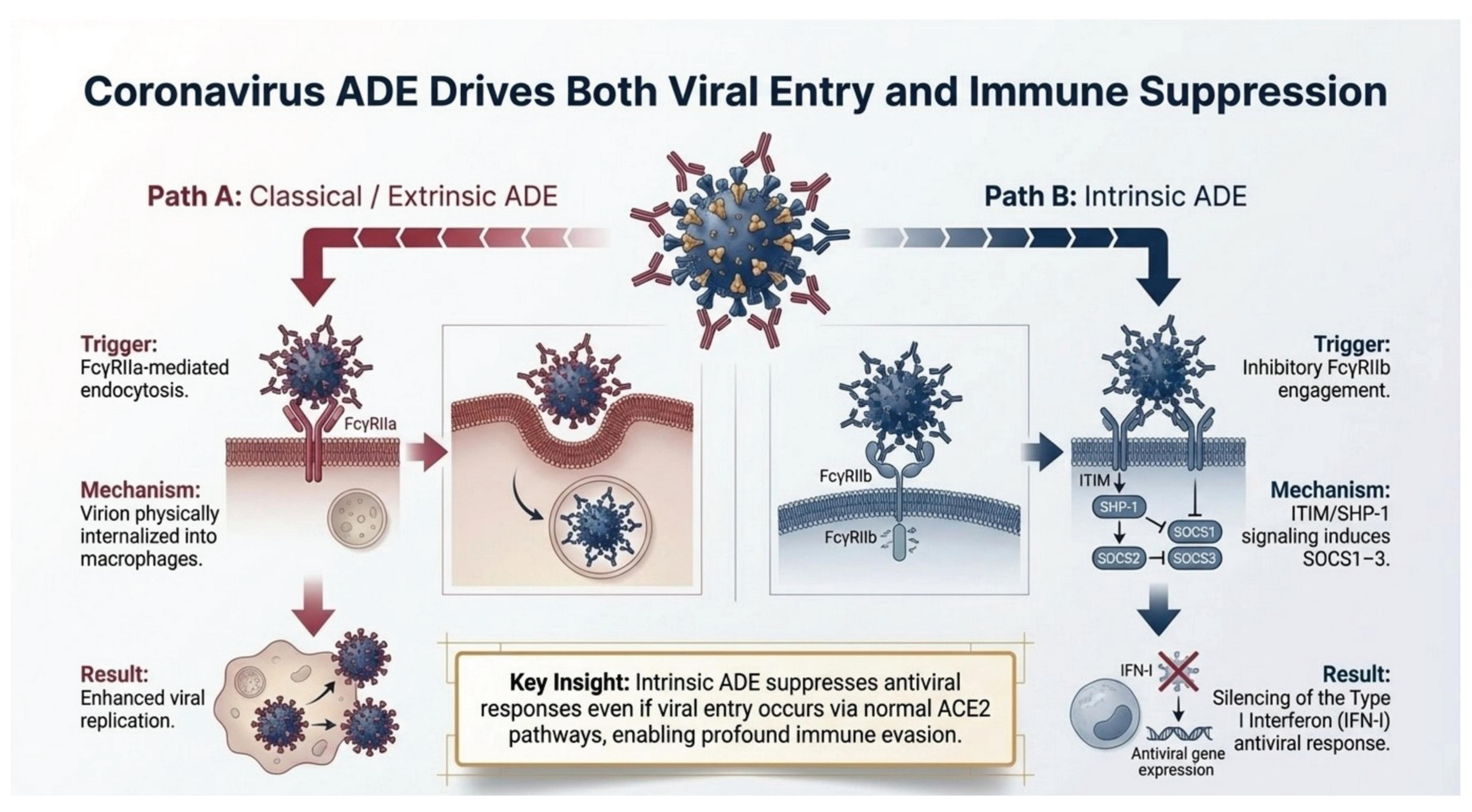
Figure 2.
Intracellular signalling cascade downstream of FcγRIIa engagement during ADE [4,5,17,18]. FcγRIIa engagement triggers Syk kinase and PI3K activation, diverging into two pathogenic outputs: Path 1 (Cytokine Storm Engine) activating NF-κB/ERK-MAPK, producing IL-6, IL-10, and TNF-α; Path 2 (Antiviral Blinder) converging with viral non-structural proteins to synergistically blunt the IFN-α/β response. The macrophage undergoes semi-abortive replication, triggering a massive, highly permissive inflammatory cascade without necessarily producing intact virions [14].
Figure 2.
Intracellular signalling cascade downstream of FcγRIIa engagement during ADE [4,5,17,18]. FcγRIIa engagement triggers Syk kinase and PI3K activation, diverging into two pathogenic outputs: Path 1 (Cytokine Storm Engine) activating NF-κB/ERK-MAPK, producing IL-6, IL-10, and TNF-α; Path 2 (Antiviral Blinder) converging with viral non-structural proteins to synergistically blunt the IFN-α/β response. The macrophage undergoes semi-abortive replication, triggering a massive, highly permissive inflammatory cascade without necessarily producing intact virions [14].
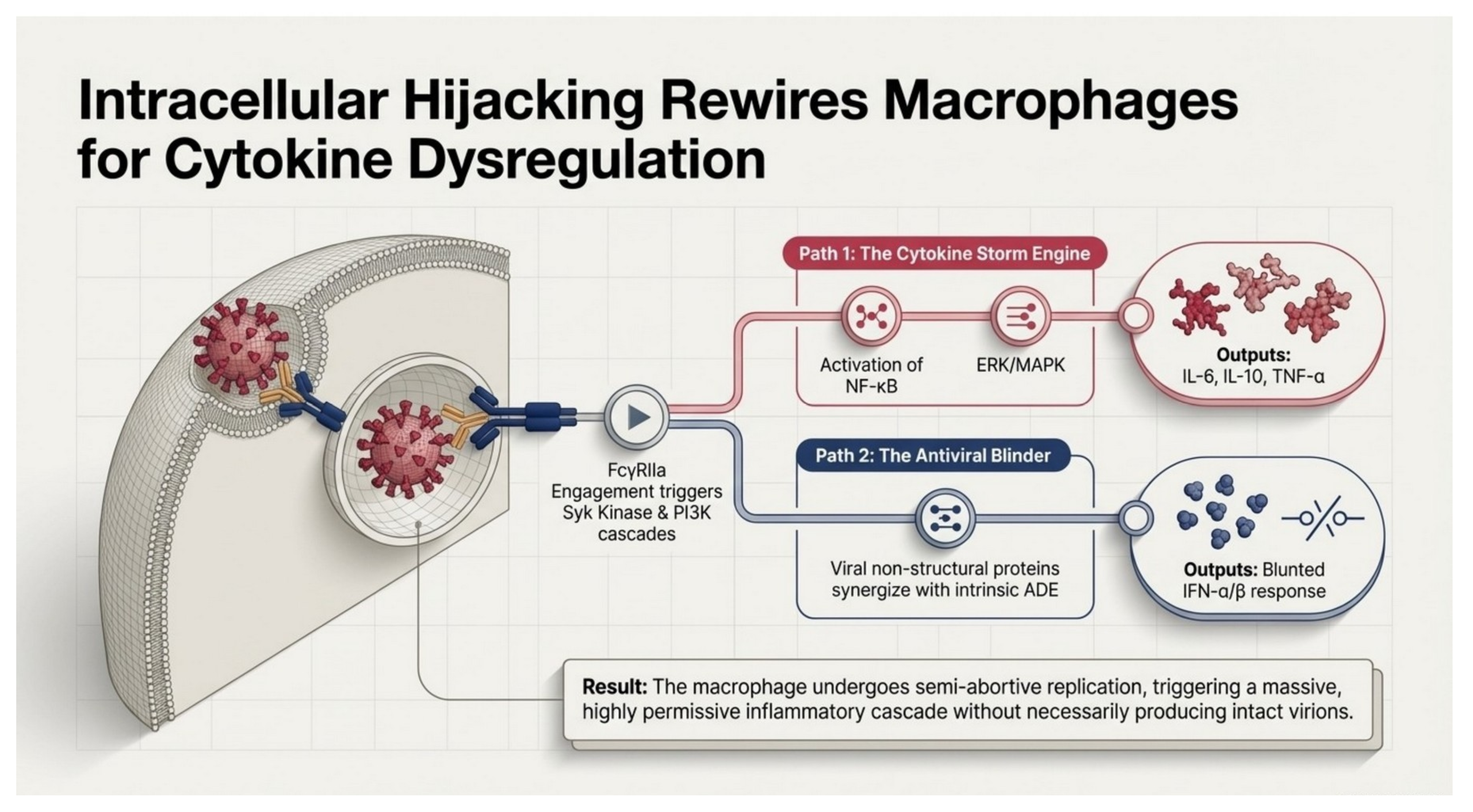
Figure 3.
Structural feasibility of the cooperative FcγR–ACE2 dual-receptor entry mechanism in SARS-CoV-2 [6,7,45]. An IgG antibody binding the spike RBD positions its Fc region ~15–20 nm from the viral membrane— structurally compatible with simultaneous engagement of both FcγR and ACE2 on the macrophage surface. The ternary virus–antibody–cell complex stabilises virus–cell contact, augments endosomal uptake, and converges downstream pathogenic signalling. The immunological consequence: neutralisation potency (IC50) shows no significant correlation with ADE magnitude (R² = 0.0098) in vitro, demonstrating that antibodies blocking ACE2 binding are paradoxically high-ADE-risk.
Figure 3.
Structural feasibility of the cooperative FcγR–ACE2 dual-receptor entry mechanism in SARS-CoV-2 [6,7,45]. An IgG antibody binding the spike RBD positions its Fc region ~15–20 nm from the viral membrane— structurally compatible with simultaneous engagement of both FcγR and ACE2 on the macrophage surface. The ternary virus–antibody–cell complex stabilises virus–cell contact, augments endosomal uptake, and converges downstream pathogenic signalling. The immunological consequence: neutralisation potency (IC50) shows no significant correlation with ADE magnitude (R² = 0.0098) in vitro, demonstrating that antibodies blocking ACE2 binding are paradoxically high-ADE-risk.
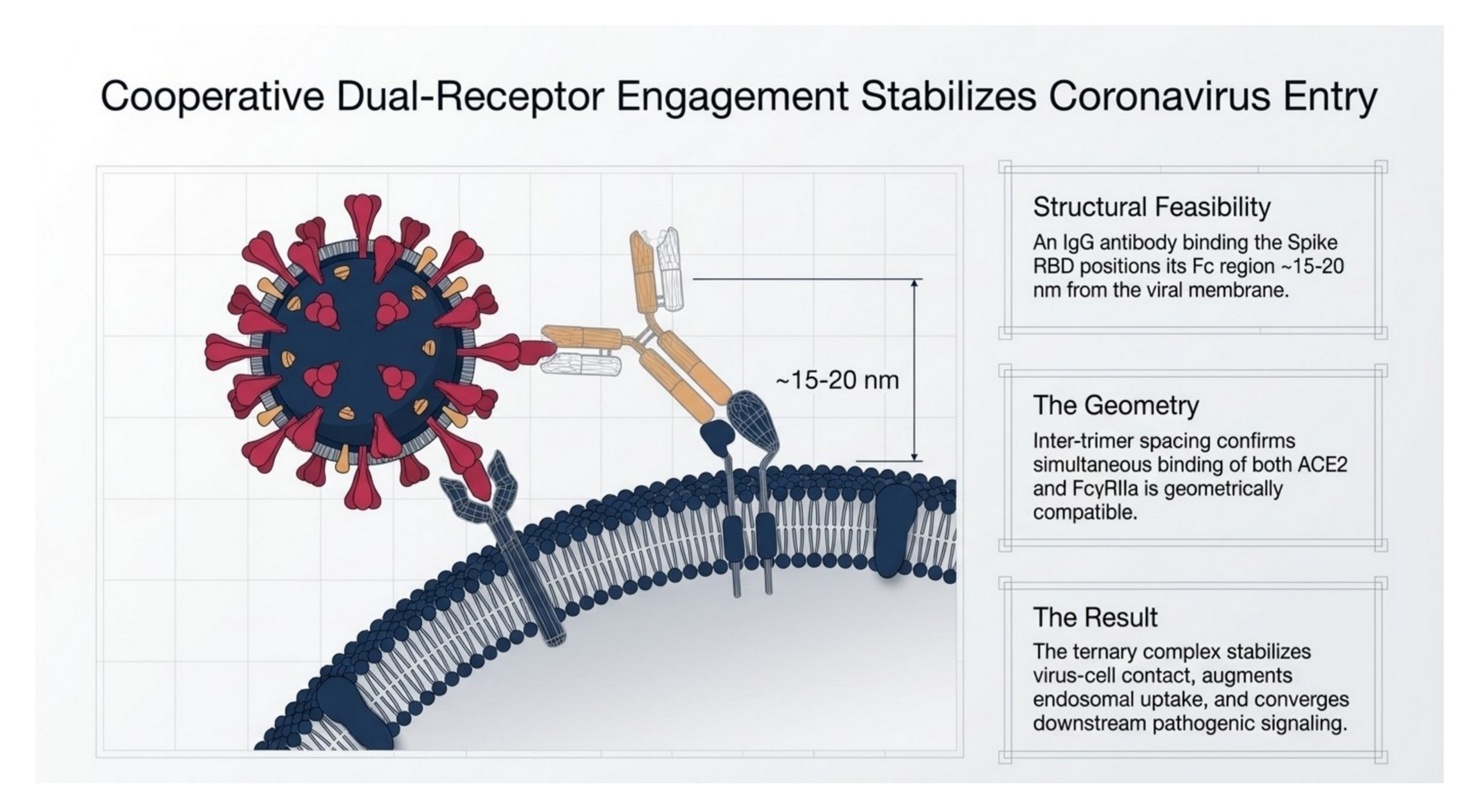
Figure 4.
Feline Infectious Peritonitis Virus (FIPV) provides the definitive ADE paradigm [8,9,37,38]. Spike and 3c gene mutation within an individual host converts the benign feline enteric coronavirus (FCoV) into FIPV, which weaponises non-neutralising anti-FCoV IgG for FcγR-mediated macrophage tropism. The FcγR functions here as an immune-complex uptake receptor—not a direct viral entry receptor—enabling virus replication and dissemination via infected macrophages to produce pyogranulomatous vasculitis and.severe systemic disease historically associated with high mortality in untreated cats FIPV is among the most rigorously documented biological system demonstrating a central role for ADE in coronavirus pathogenesis.
Figure 4.
Feline Infectious Peritonitis Virus (FIPV) provides the definitive ADE paradigm [8,9,37,38]. Spike and 3c gene mutation within an individual host converts the benign feline enteric coronavirus (FCoV) into FIPV, which weaponises non-neutralising anti-FCoV IgG for FcγR-mediated macrophage tropism. The FcγR functions here as an immune-complex uptake receptor—not a direct viral entry receptor—enabling virus replication and dissemination via infected macrophages to produce pyogranulomatous vasculitis and.severe systemic disease historically associated with high mortality in untreated cats FIPV is among the most rigorously documented biological system demonstrating a central role for ADE in coronavirus pathogenesis.
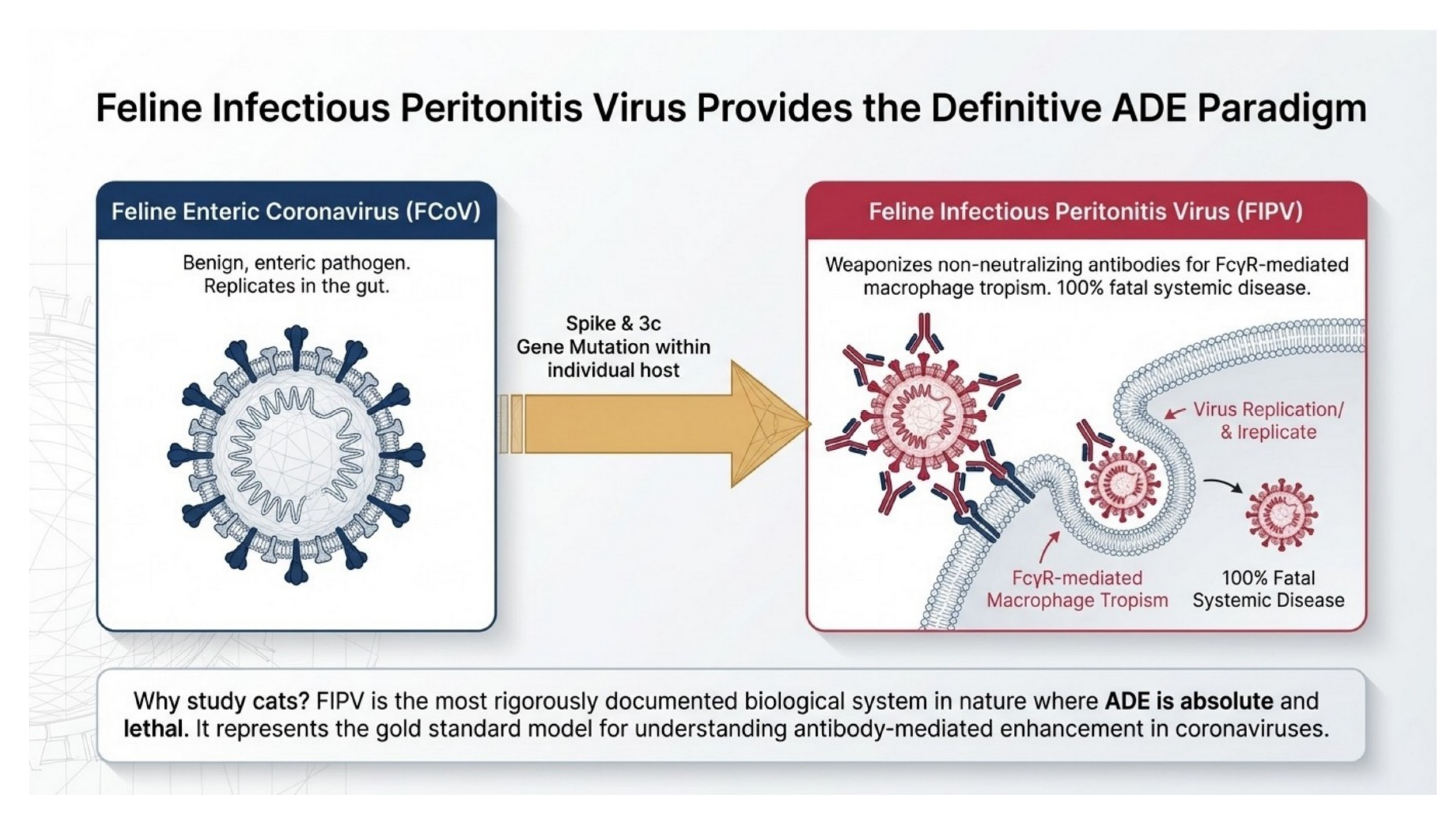
Figure 5.
LNPs and VLPs control glycosylation and maximise BCR crosslinking for ADE-safe coronavirus immunisation [14,28,29,30,40,41]. Platform 1 (LNP-mRNA): Ionisable lipids deliver modified mRNA encoding prefusion spike. Transient expression avoids prolonged sub-neutralising windows. Generates core-fucosylated IgG1 (safer Fc glycoform), avoiding the dangerous afucosylated IgG seen in natural infection [20]. Platform 2 (Virus-Like Particles): Heterologous scaffolds present multivalent RBDs (8, 12, or 60 copies) spaced at optimal 10–30 nm intervals. Optimal geometry crosslinks B-cell receptors for massive nAb induction. Contains no genomic material, preventing intracellular replication or TLR triggering. The core principle: elicit neutralising antibodies only against the ACE2-binding interface of the RBD.
Figure 5.
LNPs and VLPs control glycosylation and maximise BCR crosslinking for ADE-safe coronavirus immunisation [14,28,29,30,40,41]. Platform 1 (LNP-mRNA): Ionisable lipids deliver modified mRNA encoding prefusion spike. Transient expression avoids prolonged sub-neutralising windows. Generates core-fucosylated IgG1 (safer Fc glycoform), avoiding the dangerous afucosylated IgG seen in natural infection [20]. Platform 2 (Virus-Like Particles): Heterologous scaffolds present multivalent RBDs (8, 12, or 60 copies) spaced at optimal 10–30 nm intervals. Optimal geometry crosslinks B-cell receptors for massive nAb induction. Contains no genomic material, preventing intracellular replication or TLR triggering. The core principle: elicit neutralising antibodies only against the ACE2-binding interface of the RBD.
Disclaimer/Publisher’s Note: The statements, opinions and data contained in all publications are solely those of the individual author(s) and contributor(s) and not of MDPI and/or the editor(s). MDPI and/or the editor(s) disclaim responsibility for any injury to people or property resulting from any ideas, methods, instructions or products referred to in the content. |
© 2026 by the author. Licensee MDPI, Basel, Switzerland. This article is an open access article distributed under the terms and conditions of the Creative Commons Attribution (CC BY) license.
Copyright: This open access article is published under a Creative Commons CC BY 4.0 license, which permit the free download, distribution, and reuse, provided that the author and preprint are cited in any reuse.


