

Submitted:
16 March 2026
Posted:
17 March 2026
You are already at the latest version
Abstract
Objectives: This study aimed to evaluate clinical characteristics and treatment outcomes in a cohort of pediatric patients with glaucoma over 10-year period at a tertiary referral center. Methods: Medical records of patients younger than 18 years diagnosed with glaucoma between January 1, 2013, and December 31, 2023, were reviewed. Diagnoses were classified according to the Childhood Glaucoma Research Network (CGRN). Demographic, clinical characteristics and surgical outcomes were analyzed. Statistical analyses included Student’s t-test, one‑way ANOVA, and corresponding non-parametric methods (α = 0.05). Results: A total of 105 patients (168 eyes) were included, with a mean age of 5.52 ± 5.61 years, and a mean duration follow-up of 5.41 ± 3.37 years. Mean baseline intraocular pressure (IOP) was 24.41 ± 10.85 mmHg. Secondary glaucoma was the predominant category (69%), led by glaucoma following cataract surgery (26%). Bilateral disease occurred in 60% of cases, more frequently in secondary forms. Surgery was performed in 57.4% of glaucomatous eyes. All subtypes except glaucoma following cataract surgery (GFCS) achieved significant reductions in IOP from baseline (P < 0.01). Despite effective IOP control, final visual acuity remained limited in many patients, especially those with glaucoma associated with non‑acquired ocular anomalies or following cataract surgery. Worse baseline vision and higher presenting IOP were associated with poorer final acuity. Conclusions: Secondary glaucoma, particularly GFCS, was the most common form of pediatric glaucoma in this cohort. Although IOP control was generally successful, visual outcomes frequently remained suboptimal, highlighting the importance of early detection, comprehensive management, and close long‑term monitoring for children at risk.
Keywords:
pediatric glaucoma
; secondary glaucoma
; cataract surgery
; visual outcomes
; retrospective cohort
1. Introduction
Childhood glaucoma is a heterogeneous group of vision-threatening disorders with an incidence ranging from 2.29 to 5.41 per 100,000 children [1,2]. It is characterized by elevated intraocular pressure (IOP), which can lead to optic nerve damage and irreversible vision loss due to progressive optic neuropathy, corneal opacity or amblyopia if not promptly diagnosed and managed [3,4]. Early diagnosis and appropriate treatment are crucial for preserving vision and improving quality of life in affected children. Compared to adult-onset glaucoma, childhood glaucoma presents unique diagnostic and management challenges due to its variable clinical presentation, diverse etiologies, and the complexities of managing glaucoma in a developing visual system [5,6].
The establishment of the Childhood Glaucoma Research Network (CGRN) classification has improved consistency across studies by clearly distinguishing primary childhood glaucoma from secondary forms associated with ocular anomalies, systemic syndromes, acquired conditions, or prior ocular surgery [7,8]. Understanding the distribution and behavior of these subtypes is essential, as their prevalence, clinical trajectory, and response to treatment can differ substantially.
Management strategies for pediatric glaucoma typically include both surgical and medical approaches aimed at lowering IOP—the only modifiable risk factor known to influence disease progression. Achieving good outcomes in patients with childhood glaucoma may be challenging for clinicians because of the complex nature of the disease [9]. Despite improvements in surgical techniques and pharmacologic options, many children continue to experience suboptimal long-term visual outcomes, underscoring the need for ongoing research into more effective management approaches. Prior studies have highlighted the benefits of early detection and timely intervention in improving long-term outcomes for children with glaucoma [10,11,12,13,14]. However, comprehensive longitudinal data remain limited, particularly across diverse patient populations, making it essential to evaluate long-term trends and identify factors associated with successful disease control and visual preservation.
This 10-year retrospective cohort study provides an in-depth evaluation of the clinical characteristics, management strategies, and outcomes of pediatric patients with glaucoma treated at a tertiary care center. By analyzing a decade of real-world clinical data, we aim to clarify the distribution of glaucoma subtypes, assess the effectiveness of various treatment approaches, and identify factors associated with visual and IOP outcomes. These findings contribute to the growing evidence base needed to optimize care and improve long-term visual prognoses for children affected by glaucoma.
2. Materials and Methods
2.1. Study Population and Ethics
This retrospective cohort study included all patients diagnosed with and treated for pediatric glaucoma at the Akron Children’s Vision Center between January 1, 2013, and December 31, 2023. Eligible patients were younger than 18 years at their initial visit and met the CGRN diagnostic criteria for glaucoma or glaucoma suspect. The study protocol was submitted to the Akron Children’s Hospital Institutional Review Board (IRB) for approval. The requirement for written informed consent was waived due to the retrospective nature of the study. The study was compliant with the US Health Insurance Portability and Accountability Act (HIPAA) of 1996 and adhered to the tenets of the Declaration of Helsinki.
2.2. Patient Characteristics and Classification
Baseline characteristics included age at presentation, sex and race. Clinical characteristics of each of the patients were evaluated according to the criteria proposed by the CGRN classification system. Patients diagnosed with glaucoma were further classified into three groups: (1) Primary childhood glaucoma, including primary congenital glaucoma (PCG) and juvenile open-angle glaucoma (JOAG); (2) Secondary childhood glaucoma, including glaucoma associated with acquired conditions (S_GAC; e.g., steroid-induced, uveitis, trauma, retinopathy of prematurity); glaucoma associated with non-acquired ocular anomalies (S_GNOA; e.g., Peters anomaly, anterior segment dysgenesis, aniridia, microphthalmia, and angle closure glaucoma); glaucoma associated with non-acquired systemic/syndromic disease (S_GNSD; e.g., Sturge-Weber syndrome, Walker-Warburg syndrome, Al-Gazali syndrome, Stickler syndrome); and glaucoma following cataract surgery (S_GFCS); (3) Glaucoma suspect (GS), defined per CGRN criteria as open anterior chamber angle on gonioscopy, with ≥ 1 of the following clinical findings: (1) appearance of the optic disc or retinal nerve fiber layer (RNFL) that is suspicious for glaucomatous damage, (2) a visual field suspicious for glaucomatous damage, or (3) consistent elevation of IOP associated with normal appearance of the optic disc and RNFL and with normal visual field test results.
2.3. Data Collection
Clinical data extracted from the medical record included IOP, visual acuity (VA), refraction and cup-disc ratio (CDR) at baseline and throughout follow-up. IOP was measured in all patients using a combination of at least two instruments – Goldman or Perkins applanation tonometry, Tonopen®, pneumotonometry, or Icare® – either in the clinical or during anesthetic induction. The VA values were recorded under binocular and monocular conditions using the E-HOTV PEDIG protocol and then converted to the logarithm of the minimum angle of resolution (LogMAR) analysis when quantifiable [15,16]. The fixation categories such as a central, steady, and maintained (CSM) were used for patients who were too young to determine the pictures or numbers [17]. The qualitative VA, including count finger (CF), hand motion (HM), light perception (LP), and no light perception (NLP), were noted when standard testing was not feasible. Refractive errors were documented as spherical equivalent.
Interventions during the follow-up course and final outcomes (VA and IOP) at the latest available visit in eyes with a confirmed glaucoma diagnosis were recorded. Data for surgical procedures was reviewed to determine if the patients had received any incisional surgeries (e.g., trabeculectomy, trabeculotomy, goniotomy, Baerveldt glaucoma implantation), cyclodestructive laser procedures (e.g., diode laser endoscopic cyclophotocoagulation), or both.
2.4. Outcome Measures
The primary outcome measures were distribution of glaucoma subtypes according to CGRN criteria and baseline demographic and clinical characteristics. The secondary outcome measures were management strategies (medical, surgical, or both) and treatment outcomes (IOP and VA) at the final follow-up.
2.5. Statistical Analysis
Continuous data were reported as numbers, percentages, and mean ± standard deviation or median ± interquartile range (IQR), where appropriate. The Shapiro-Wilk test was used for the normality of continues data distribution. Two-tailed Student’s t-test was used for comparison between two groups, while the one-way ANOVA followed by Tukey’s multiple comparison post-hoc tests was used among multiple groups. Mann–Whitney U test or Kruskal–Wallis test was performed in case of non-normal distribution. All data analyses were performed in R 4.5.1 (The R Foundation). Results were considered statistically significant when a p-value of <0.05 was observed.
3. Results
3.1. Study Population Characteristics
The demographic features and patient characteristics of the study population are presented in Table 1. A total of 105 pediatric patients (168 eyes) were included in the study. Among them, 94 patients (148 eyes) were diagnosed with glaucoma, while 11 patients (20 eyes) were classified as glaucoma suspects. The cohort was predominantly Caucasian (68.57%). Gender distribution was not significantly different across groups (P = 0.748), although a slight male predominance was observed overall (male-to-female ratio: 1.14 : 1). Subgroup analysis revealed a male predominance in S_GAC (male-to-female ratio: 3.2:1) and a female predominance in S_GNOA (male-to-female ratio: 1:2.5).
The mean age at presentation was 5.52 ± 5.61 years (median 1.58; IQR, 0.25 - 6.75), and the mean follow-up duration was 5.41 ± 3.37 years (median 5.0; IQR, 2.2 - 11.2). Bilateral disease was present in 60% of patients with no significant difference across subtypes (P = 0.481). JOAG (94.7%), S_GNSD (68.8%), S_GFCS (62.5%), and GS (81.8%) were associated with bilateral disease (all P ≤ 0.01), whereas PCG and S_GAC were predominantly unilateral (71.4% and 71.2%, respectively).
Of all glaucomatous eyes, 31% were primary and 69% were secondary. JOAG accounted for 37 eyes (22%) and PCG for 9 eyes (6%). Among the secondary glaucoma, the most prevalent subtype was S_GFCS, affecting 39 eyes (26%), including 23 aphakic eyes, 7 pseudophakic eyes, and 9 eyes with congenital cataract associated with ocular anomalies or systemic disease. Most patients (92%) had open-angle glaucoma (>50% open), while 8% had angle-closure glaucoma (<50% open or acute angle closure). Among the 26 S_GAC eyes (18%), open angles were observed in 90.5% and closed angles in 9.5%. Underlying causes included trauma (33.4%), steroid-induced glaucoma (28.6%), and retinopathy of prematurity (8.3%). S_GNSD accounted for 27 eyes (18%), most commonly due to phakomatoses such as Sturge-Weber syndrome, Von Hippel-Lindau disease, and neurofibromatosis. Other syndromes included Al-Gazali syndrome and Stickler syndrome. S_GNOA affected 10 eyes (6%), predominately associated with aniridia, Peter’s anomaly, and unspecified anterior segment dysgenesis.
3.2. Baseline Ocular Characteristics
Baseline ocular characteristics are summarized in Table 2. Mean baseline IOP of glaucomatous eyes was 24.41 ± 10.89 mmHg. Among the overall glaucoma subtypes, PCG eyes had significantly higher IOP than S_GNOA (P = 0.028) and S_GFCS (P = 0.020) (Figure 1).
Primary glaucomas had larger cup-to-disc ratios (CDR) compared with secondary glaucomas (P = 0.01). Among the secondary forms, S_GNOA demonstrated significantly smaller CDRs than S_GAC (P < 0.008), S_GNSD (P < 0.001), and S_GFCS (P = 0.007). Myopia was more common in PCG and JOAG, while S_GFCS was more frequently hyperopic.
Baseline VA was assessed where feasible. As shown in Table 3, quantitative VA at baseline was unavailable for 23 patients too young for standard testing, though qualitative assessments (e.g., CF, HM, LP, NLP) were recorded. In unilateral disease, non-glaucomatous fellow eyes had substantially better VA than glaucomatous eyes (logMAR ≤0.3 in 51.9% vs 21.7%). When evaluating vision according to VA category rather than glaucoma status, only 26.3% of eyes with logMAR ≤0.3 were glaucomatous, whereas 85.7% of eyes with CF or HM were glaucomatous. In bilateral glaucoma, 32.9% of eyes had logMAR ≤0.3 at presentation.
JOAG eyes had significantly better baseline VA than PCG (P = 0.0017). Among secondary types, S_GAC eyes had superior baseline VA compared with PCG (P = 0.033), while S_GNOA had worse baseline VA than JOAG (P = 0.044) (Figure 2).
3.3. Surgical Interventions
Overall, 59 eyes (40%) underwent incisional glaucoma surgery, 7 eyes (4.7%) underwent cyclodestructive procedures, and 19 eyes (12.8%) received both at some point during follow-up. Additionally, 63 eyes (42.5%) underwent nonglaucoma procedures during the follow-up.
The frequency of glaucoma intervention in each subtype was shown in Figure 3, and specific surgical procedures are detailed in Table 4. Primary glaucomas (PCG and JOAG) had the highest surgical burden, whereas surgical intervention in S_GAC was more selectively pursued based on the likelihood of meaningful visual benefit.
3.4. Follow-Up Outcomes
The mean final IOP across glaucomatous eyes was 17.2 ± 5.4 mmHg. Significant IOP reductions from baseline achieved in PCG (P < 0.01), JOAG (P < 0.001), S_GAC (P < 0.05), S_GNOA (P < 0.01), and S_GNSD (P < 0.01). Although IOP decreased in S_GFCS, the change did not reach statistical significance (Figure 4).
Regarding visual outcomes, JOAG had the highest proportion of eyes with VA ≤0.5 at both baseline and final follow-up. In most subtypes, there was no significant change in logMAR VA between baseline and final follow-up. Complete case analysis (85 eyes) revealed significant VA worsening only in S_GNOA (P = 0.0251). A trend toward poorer VA outcome was also observed in S_GFCS (P = 0.18) and S_GAC (P = 0.19), although these did not reach statistical significance (Figure 5).
4. Discussion
Childhood glaucoma comprises a heterogeneous group of conditions that may present from infancy through adolescence, often resulting in significant long-term visual impairment. In this 10-year retrospective cohort from a tertiary pediatric center, secondary glaucoma accounted for the majority of diagnoses, with glaucoma following cataract surgery emerging as the most common subtype. This predominance is largely attributable to the number of patients who were followed many years after congenital cataract surgery, as well as other conditions associated with pediatric glaucoma. This trend aligns with reports with higher frequencies of secondary glaucoma in similar populations [10,13]. Specifically, S_GFCS emerged as the most common subtype in our cohort, whereas PCG was the least common. These findings are consistent with previous North American data identifying congenital cataract surgery as a leading cause of childhood glaucoma [18,19,20].
The distribution of childhood glaucoma subtypes in pediatric populations varies internationally, influenced by geographic, ethnic, and healthcare system factors [12,13,14,20,21,22]. Many studies outside North America report PCG as the predominant subtype, often attributed to higher rates of consanguinity, genetic founder mutations, or limited access to early surgical care [23,24,25,26,27]. In contrast, our findings mirror those from other Western populations, where improved neonatal screening, genetic counseling, and earlier management of congenital cataracts may contribute to lower PCG rates and higher identification of secondary glaucomas.
Surgical intervention patterns in our cohort reflected disease severity and underlying mechanisms. PCG, JOAG, and S_GNSD demonstrated the highest surgical burden, consistent with their frequently more refractory IOP profiles and congenital anomalies of the trabecular meshwork or outflow system. Although many JOAG patients require surgical management, a substantial proportion in our cohort were effectively managed with medications or laser trabeculoplasty, similar to adult-onset open-angle glaucoma [28]. Conversely, surgical decisions in S_GAC were more individualized; when visual potential was low due to trauma, severe amblyopia, or comorbid pathology, conservative medical management was often appropriate [29].
Although IOP reductions were significant across nearly all glaucoma subtypes, visual outcomes did not show parallel improvement. This discrepancy highlights the multifactorial nature of visual impairment in pediatric glaucoma. Poorer final VA was closely associated with worse baseline acuity and higher presenting IOP, suggesting that many patients were already experiencing significant optic nerve or visual pathway compromise at diagnosis. Subtypes such as PCG, S_GAC, and S_GNOA exhibited consistently poorer visual outcomes, driven by differing mechanisms—ranging from congenital optic nerve vulnerability to trauma-related damage to structural anterior segment anomalies.
Among these, S_GNOA demonstrated a statistically significant decline in VA over time. Given that these eyes commonly have anterior segment dysgenesis or other congenital abnormalities, this trajectory likely reflects inherent structural limitations rather than inadequate IOP management. This finding underscores the importance of counseling families about visual prognosis even when pressure control is achieved.
Importantly, visual acuity outcomes in pediatric glaucoma cannot be attributed solely to glaucomatous optic neuropathy. Amblyopia, high refractive error, nystagmus, and coexisting ocular/systemic anomalies frequently influence final visual potential. While comprehensive pediatric ophthalmic care and amblyopia therapy were provided, the retrospective nature of the study limits our ability to quantify their individual contributions. Prospective evaluations incorporating standardized visual assessments and amblyopia management data would help clarify these relationships.
This study’s strengths include its decade-long follow-up, subspecialty management within a dedicated pediatric glaucoma program, and use of standardized CGRN classification to ensure accurate subtype categorization. Limitations include the retrospective design, modest sample sizes within some subgroups, incomplete quantitative VA measurements in very young children, and the presence of coexisting ocular pathology that can confound the attribution of visual outcomes solely to glaucoma. Future prospective studies incorporating standardized functional assessments, amblyopia treatment data, and quality-of-life measures may further clarify long-term visual trajectories in childhood glaucoma.
5. Conclusions
In this 10-year retrospective study, secondary glaucoma accounted for the majority of pediatric cases, with glaucoma following cataract surgery emerging as the most common subtype. Although meaningful reductions in intraocular pressure were achieved across nearly all glaucoma categories, visual outcomes frequently remained limited. Subtypes such as S_GAC and S_GNOA were associated with particularly poor visual prognoses, reflecting the influence of coexisting structural abnormalities, trauma, inflammation, or congenital anomalies.
These findings highlight the critical importance of early identification, comprehensive multidisciplinary care, and individualized management strategies for children with glaucoma. Improving long-term visual outcomes will require not only effective IOP control but also timely amblyopia management, precise refractive correction, and careful monitoring of associated ocular or systemic conditions. Continued research, including prospective, standardized studies, is needed to further refine treatment paradigms and support better visual prognoses in this vulnerable population.
Author Contributions
Conceptualization, X.G., N.H., and R.W.H. methodology, A.F., N.H.; software, C.L.C.; validation, D.C., N.H. and A.F.; formal analysis, X.G., C.L.C.; investigation, X.G., N.H., and R.W.H.; data curation, A.F., C.L.C.; writing—original draft preparation, X.G.; writing—review and editing, N.H., D.C. and R.W.H., All authors have read and agreed to the published version of the manuscript.
Funding
This research received no external funding.
Institutional Review Board Statement
The study was conducted in accordance with the Declaration of Helsinki and approved by the Institutional Review Board of Akron Children’s Hospital (OHRP #IRB00001524).
Informed Consent Statement
The requirement for informed consent was waived owing to the retrospective nature of the investigation.
Data Availability Statement
The datasets generated and/or analyzed during the current study are available from the corresponding author on reasonable request.
Acknowledgments
The authors thank colleagues at the Akron Children’s Vision Center and Rebecca D. Considine Research Institute for insightful discussions and support.
Conflicts of Interest
The authors declare no conflicts of interest.
Abbreviations
The following abbreviations are used in the manuscript:
IOP Intraocular pressure
CGRN Childhood Glaucoma Research Network
BCVA Best corrected visual acuity
PCG Primary congenital glaucoma;
JOAG Juvenile open angle glaucoma;
S_GAC Secondary associated with acquired conditions;
S_GNOA Secondary glaucoma associated with non-acquired ocular anomalies;
S_GNSD Secondary glaucoma associated with non-acquired systemic/syndromic disease
S_GFCS Secondary glaucoma following cataract surgery
GS Glaucoma suspects
CSM Center, Steady, Maintained
CNSM Center, Not Steady, Maintained
CSNM Center, Steady, Not Maintained
NCSM Not Center, Steady, Maintained
CF or HM Count Finger or Hand Motion
LP Light Perception
NLP No Light Perception
UFF Unable to Fix and Follow
References
- deLuise, V. P.; Anderson, D. R. Primary infantile glaucoma (congenital glaucoma). Surv Ophthalmol 1983, 28, 1–19. [Google Scholar] [CrossRef]
- Aponte, E. P.; Diehl, N.; Mohney, B. G. Incidence and clinical characteristics of childhood glaucoma: a population-based study. Arch Ophthalmol 2010, 128, 478–82. [Google Scholar] [CrossRef] [PubMed]
- Kipp, M. A. Childhood glaucoma. Pediatr Clin North Am 2003, 50, 89–104. [Google Scholar] [CrossRef]
- Alodhayb, S.; Morales, J.; Edward, D. P.; Abu-Amero, K. K. Update on pediatric glaucoma. Semin Ophthalmol 2013, 28, 131–43. [Google Scholar] [CrossRef] [PubMed]
- Papadopoulos, M.; Edmunds, B.; Fenerty, C.; Khaw, P. T. Childhood glaucoma surgery in the 21st century. Eye (Lond) 2014, 28, 931–43. [Google Scholar] [CrossRef] [PubMed]
- Lingham, G.; Thakur, S.; Safi, S.; Gordon, I.; Evans, J. R.; Keel, S. A systematic review of clinical practice guidelines for childhood glaucoma. BMJ Open Ophthalmol 2022, 7, e000933. [Google Scholar] [CrossRef]
- Hoguet, A.; Grajewski, A.; Hodapp, E.; Chang, T. C. A retrospective survey of childhood glaucoma prevalence according to Childhood Glaucoma Research Network classification. Indian J Ophthalmol 2016, 64, 118–23. [Google Scholar] [CrossRef]
- Thau, A.; Lloyd, M.; Freedman, S.; Beck, A.; Grajewski, A.; Levin, A. V. New classification system for pediatric glaucoma: implications for clinical care and a research registry. Curr Opin Ophthalmol 2018, 29, 385–394. [Google Scholar] [CrossRef]
- Karaconji, T.; Zagora, S.; Grigg, J. R. Approach to childhood glaucoma: A review. Clin Exp Ophthalmol 2022, 50, 232–246. [Google Scholar] [CrossRef]
- Taylor, R. H.; Ainsworth, J. R.; Evans, A. R.; Levin, A. V. The epidemiology of pediatric glaucoma: the Toronto experience. J AAPOS 1999, 3, 308–15. [Google Scholar] [CrossRef]
- Fung, D. S.; Roensch, M. A.; Kooner, K. S.; Cavanagh, H. D.; Whitson, J. T. Epidemiology and characteristics of childhood glaucoma: results from the Dallas Glaucoma Registry. Clin Ophthalmol 2013, 7, 1739–46. [Google Scholar] [CrossRef]
- Bouhenni, R. A.; Ricker, I.; Hertle, R. W. Prevalence and Clinical Characteristics of Childhood Glaucoma at a Tertiary Care Children’s Hospital. J Glaucoma 2019, 28, 655–659. [Google Scholar] [CrossRef]
- Surukrattanaskul, S.; Suvannachart, P.; Chansangpetch, S.; Manassakorn, A.; Tantisevi, V.; Rojanapongpun, P. Characteristics and long-term outcomes of childhood glaucoma: a retrospective-cohort study. F1000Res 2021, 10, 165. [Google Scholar] [CrossRef] [PubMed]
- Fujita, A.; Vu, D. M.; Aziz, K.; Chang, T. C.; Chung, I. Y.; Ciociola, E. C.; Friedman, D. S.; Lokhande, A.; Lorch, A. C.; Miller, J. W.; Parikh, P.; Rothman, A. L.; Seresirikachorn, K.; Elze, T.; Zebardast, N.; Consortium, I. R. A. C. Treatment Patterns of Childhood Glaucoma in the United States: Analysis of IRIS(Ⓡ) Registry (Intelligent Research in Sight). Am J Ophthalmol 2024, 271, 210–221. [Google Scholar] [CrossRef] [PubMed]
- Holmes, J. M.; Beck, R. W.; Repka, M. X.; Leske, D. A.; Kraker, R. T.; Blair, R. C.; Moke, P. S.; Birch, E. E.; Saunders, R. A.; Hertle, R. W.; Quinn, G. E.; Simons, K. A.; Miller, J. M. Pediatric Eye Disease Investigator, G., The amblyopia treatment study visual acuity testing protocol. Arch Ophthalmol 2001, 119, 1345–53. [Google Scholar] [CrossRef]
- Holladay, J. T. Visual acuity measurements. J Cataract Refract Surg 2004, 30, 287–90. [Google Scholar] [CrossRef]
- Wallace, D. K.; Morse, C. L.; Melia, M.; Sprunger, D. T.; Repka, M. X.; Lee, K. A.; Christiansen, S. P. American Academy of Ophthalmology Preferred Practice Pattern Pediatric Ophthalmology/Strabismus, P., Pediatric Eye Evaluations Preferred Practice Pattern(R): I. Vision Screening in the Primary Care and Community Setting; II. Comprehensive Ophthalmic Examination. Ophthalmology 2018, 125, P184–P227. [Google Scholar] [PubMed]
- Tam, E. K.; Elhusseiny, A. M.; Shah, A. S.; Mantagos, I. S.; VanderVeen, D. K. Etiology and outcomes of childhood glaucoma at a tertiary referral center. J AAPOS 2022, 26, 117 e1–117 e6. [Google Scholar] [CrossRef]
- Beldick, S. R.; Rockter, A.; Beck, A. D.; Levin, A. V. The Robison D. Harley, MD Childhood Glaucoma Research Network International Pediatric Glaucoma Registry: The First 872 Cases. Ophthalmol Glaucoma 2024. [Google Scholar] [CrossRef]
- Jacobson, A.; Bohnsack, B. L. Visual and surgical outcomes of childhood glaucoma following cataract surgery. J AAPOS 2024, 28, 103993. [Google Scholar] [CrossRef]
- Knight, L. S. W.; Ruddle, J. B.; Taranath, D. A.; Goldberg, I.; Smith, J. E. H.; Gole, G.; Chiang, M. Y.; Willett, F.; D’Mellow, G.; Breen, J.; Qassim, A.; Mullany, S.; Elder, J. E.; Vincent, A. L.; Staffieri, S. E.; Kearns, L. S.; Mackey, D. A.; Luu, S.; Siggs, O. M.; Souzeau, E.; Craig, J. E. Childhood and Early Onset Glaucoma Classification and Genetic Profile in a Large Australasian Disease Registry. Ophthalmology 2021, 128, 1549–1560. [Google Scholar] [CrossRef] [PubMed]
- Kaushik, S.; Senthil, S.; Gupta, V.; Balekudaru, S.; Dubey, S.; Ali, H.; Mandal, A. K. Indian Childhood Glaucoma Study, G., Profile of Newly Diagnosed Childhood Glaucoma in India: Indian Childhood Glaucoma Study (ICGS) Group 1. Ophthalmol Glaucoma 2024, 7, 54–65. [Google Scholar] [CrossRef] [PubMed]
- Qiao, C. Y.; Wang, L. H.; Tang, X.; Wang, T.; Yang, D. Y.; Wang, N. L. Epidemiology of hospitalized pediatric glaucoma patients in Beijing Tongren Hospital. Chin Med J (Engl) 2009, 122, 1162–6. [Google Scholar] [PubMed]
- Mokbel, T. H.; El Hefney, E. M.; Hagras, S. M.; AA, A. L.; Badawi, A. E.; Kasem, M. A.; El Shaer, S. M. Childhood glaucoma profile in Dakahelia, Egypt: a retrospective study. Int J Ophthalmol 2018, 11, 674–680. [Google Scholar]
- Lopes, N. L.; Gracitelli, C. P. B.; Rolim-de-Moura, C. Childhood Glaucoma Profile in a Brazilian Tertiary Care Center Using Childhood Glaucoma Research Network Classification. J Glaucoma 2021, 30, 129–133. [Google Scholar] [CrossRef]
- Liu, Q.; Liu, C.; Li, H.; Yang, X.; Dong, Y.; Feng, X.; Cheng, W. Clinical Analysis of Pediatric Glaucoma in Central China. Front Med (Lausanne) 2022, 9, 874369. [Google Scholar] [CrossRef]
- Mulugeta, T.; Gebremichael, G.; Adugna, S. Childhood glaucoma profile in a Southwestern Ethiopia tertiary care center: a retrospective study. BMC Ophthalmol 2024, 24, 31. [Google Scholar] [CrossRef]
- Papadopoulos, M.; Cable, N.; Rahi, J.; Khaw, P. T.; Investigators. B. I. G. E. S., The British Infantile and Childhood Glaucoma (BIG) Eye Study. Invest Ophthalmol Vis Sci 2007, 48, 4100–6. [Google Scholar] [CrossRef]
- Aktas, Z.; Gulpinar Ikiz, G. D. Current surgical techniques for the management of pediatric glaucoma: A literature review. Front Ophthalmol (Lausanne) 2023, 3, 1101281. [Google Scholar] [CrossRef]
Figure 1.
Baseline IOP across glaucoma subtypes. statistical differences were determined using one-way ANOVA with Tukey post hoc comparisons. Significance levels: *P ≤ 0.05, **P ≤0.01, ***P ≤0.001. Box plot elements: mean = x, centerline = median, box limits = 25th and 75th percentiles, whiskers = min and max.
Figure 1.
Baseline IOP across glaucoma subtypes. statistical differences were determined using one-way ANOVA with Tukey post hoc comparisons. Significance levels: *P ≤ 0.05, **P ≤0.01, ***P ≤0.001. Box plot elements: mean = x, centerline = median, box limits = 25th and 75th percentiles, whiskers = min and max.
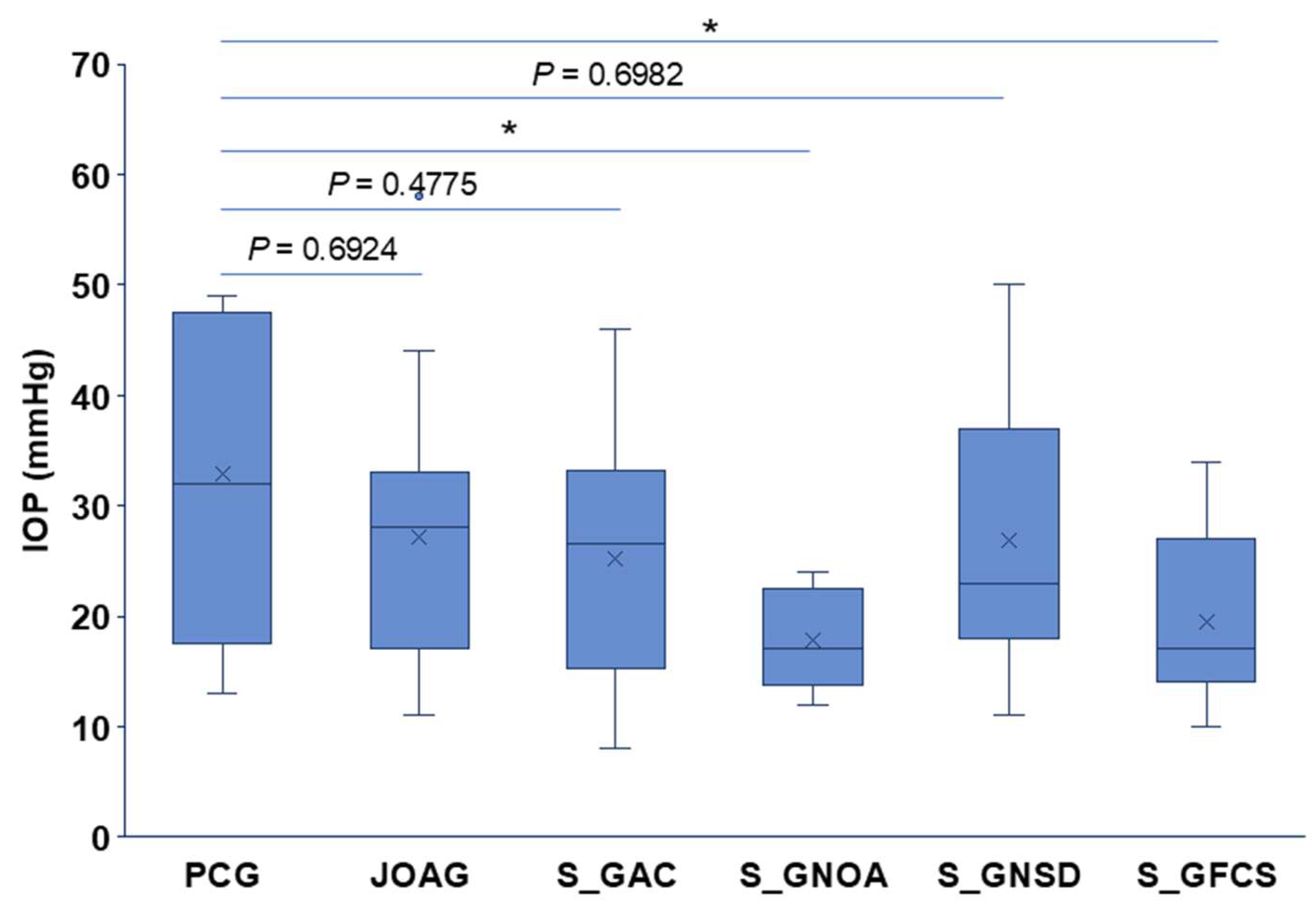
Figure 2.
Baseline BCVA (logMAR) for each glaucoma subtype. Differences were evaluated using one-way ANOVA with Tukey post hoc testing. Significance levels: *P ≤ 0.05, **P ≤0.01, ***P ≤0.001. Box plot elements: mean = x, centerline = median, box limits = 25th and 75th percentiles, whiskers = min and max.
Figure 2.
Baseline BCVA (logMAR) for each glaucoma subtype. Differences were evaluated using one-way ANOVA with Tukey post hoc testing. Significance levels: *P ≤ 0.05, **P ≤0.01, ***P ≤0.001. Box plot elements: mean = x, centerline = median, box limits = 25th and 75th percentiles, whiskers = min and max.
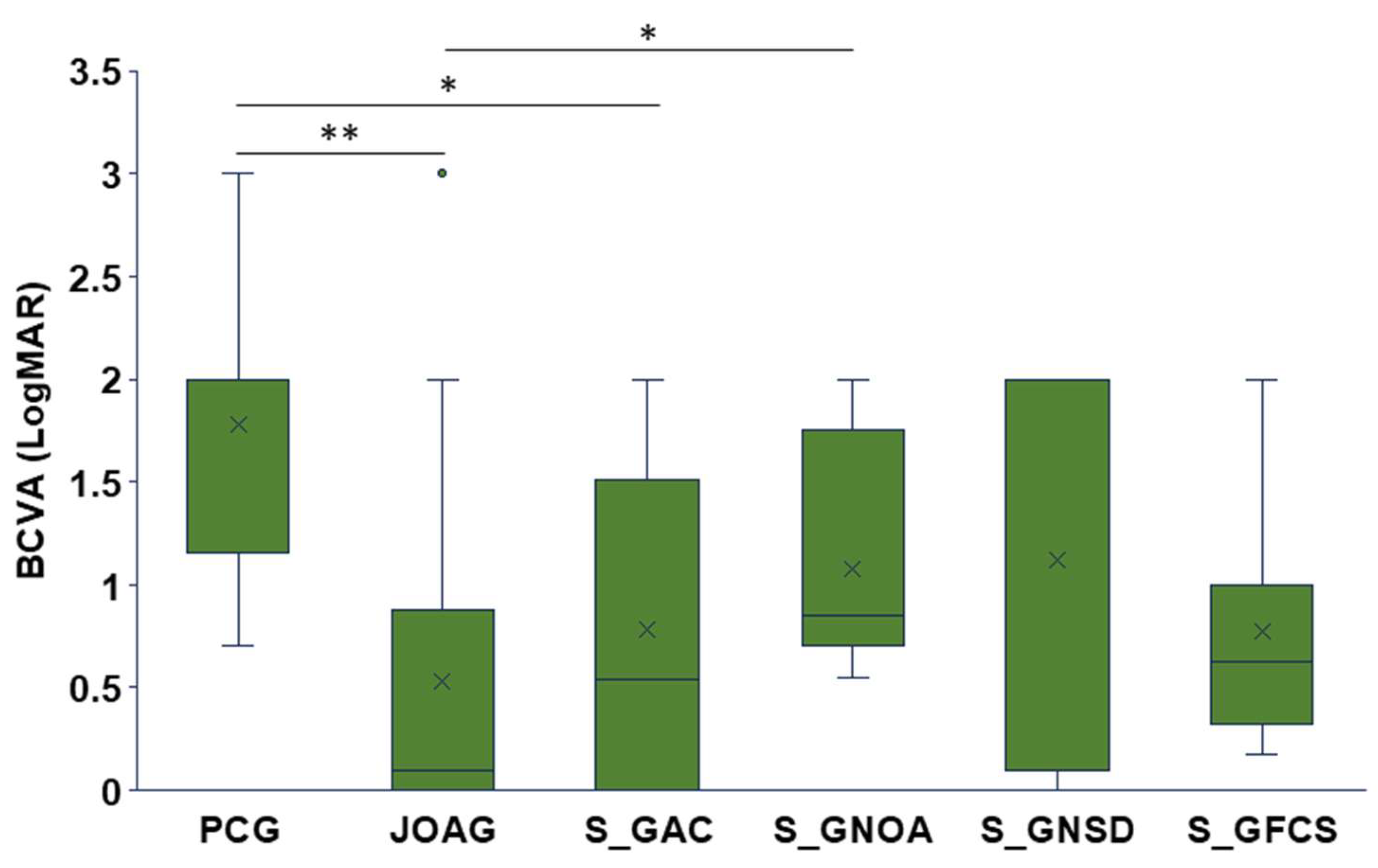
Figure 3.
Frequency and type of glaucoma surgical interventions (incisional, cyclodestructive, or combined) performed in each glaucoma subtype during the study period.
Figure 3.
Frequency and type of glaucoma surgical interventions (incisional, cyclodestructive, or combined) performed in each glaucoma subtype during the study period.
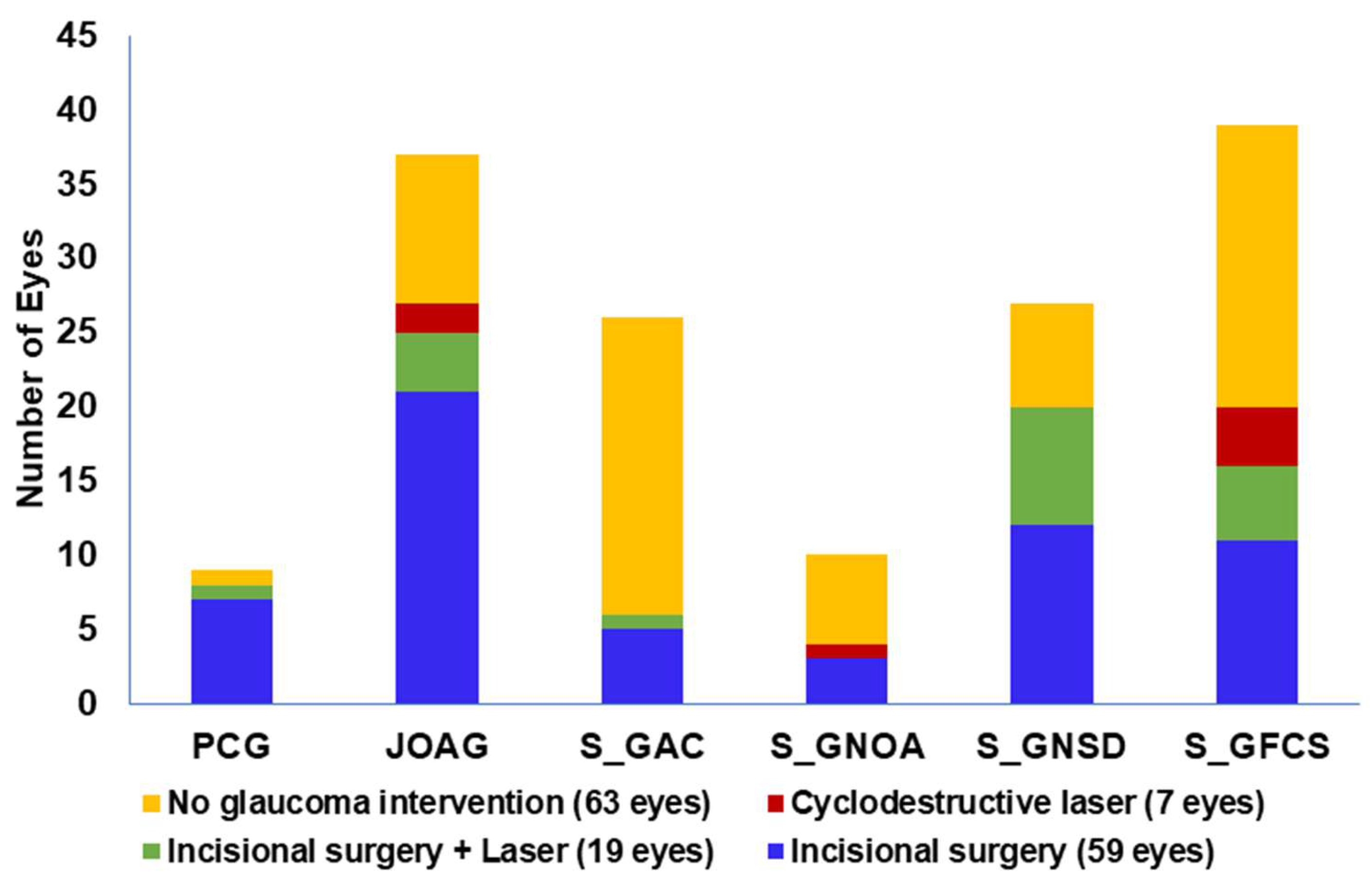
Figure 4.
Comparison of IOP at presentation and at the final follow-up visit across glaucoma subtypes. Paired differences were evaluated using two-tailed Student’s t-tests. Significance levels: *P ≤ 0.05, **P ≤ 0.01, ***P ≤ 0.001. Box plot elements: mean = x, centerline = median, box limits = 25th and 75th percentiles, whiskers = min and max.
Figure 4.
Comparison of IOP at presentation and at the final follow-up visit across glaucoma subtypes. Paired differences were evaluated using two-tailed Student’s t-tests. Significance levels: *P ≤ 0.05, **P ≤ 0.01, ***P ≤ 0.001. Box plot elements: mean = x, centerline = median, box limits = 25th and 75th percentiles, whiskers = min and max.
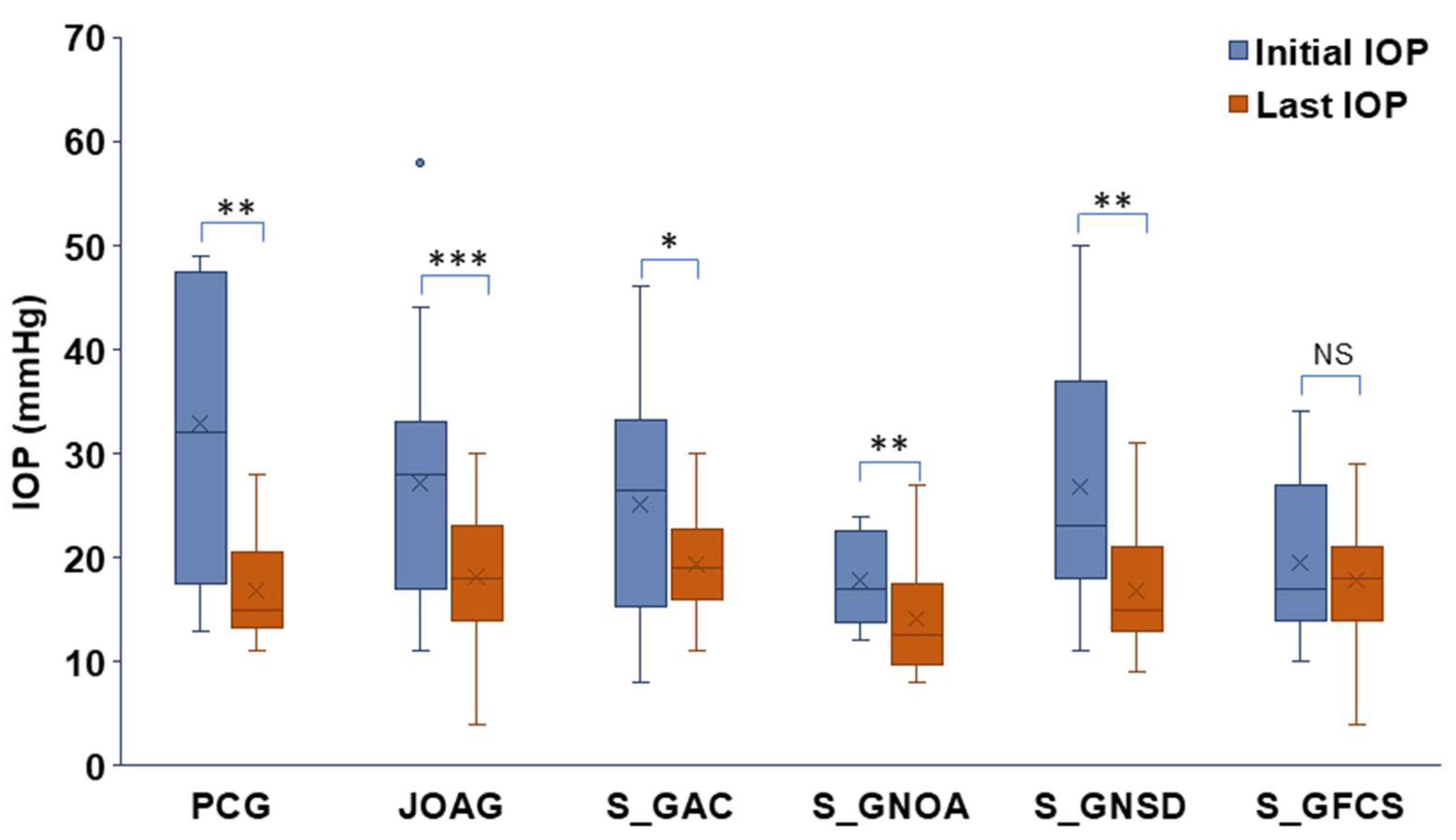
Figure 5.
Comparison of BCVA (logMAR) at presentation and at final follow-up for each glaucoma subtype. Differences were assessed using two-tailed Student’s t-tests. Significance levels: *P ≤ 0.05, **P ≤ 0.01, ***P ≤ 0.001. Box plot elements: mean = x, centerline = median, box limits = 25th and 75th percentiles, whiskers = min and max.
Figure 5.
Comparison of BCVA (logMAR) at presentation and at final follow-up for each glaucoma subtype. Differences were assessed using two-tailed Student’s t-tests. Significance levels: *P ≤ 0.05, **P ≤ 0.01, ***P ≤ 0.001. Box plot elements: mean = x, centerline = median, box limits = 25th and 75th percentiles, whiskers = min and max.
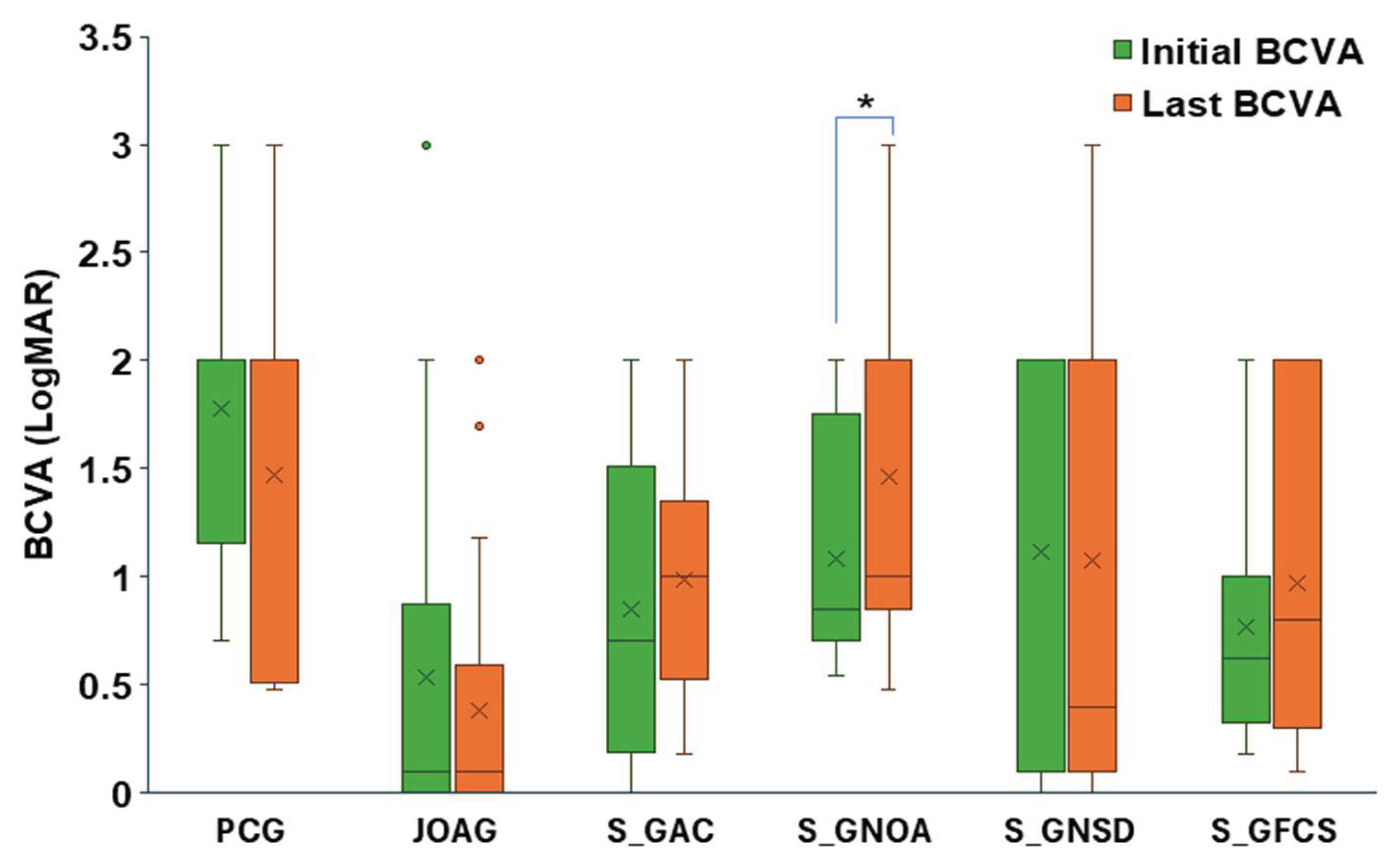

Table 1.
Demographic and clinical characteristics of the study cohort, including distribution of glaucoma subtypes, number of eyes affected, sex, race, age at first and last visits, duration of follow-up, and laterality.
Table 1.
Demographic and clinical characteristics of the study cohort, including distribution of glaucoma subtypes, number of eyes affected, sex, race, age at first and last visits, duration of follow-up, and laterality.
| Characteristics | PCG | JOAG | S_GAC | S_GNOA | S_GNSD | S_GFCS | GS | Total |
|---|---|---|---|---|---|---|---|---|
| Number of patients, n (%) | 7 (6.7) | 19 (18.1) | 21 (20) | 7 (6.7) | 16 (15.3) | 24 (22.9) | 11 (10.5) | 105 (100) |
| Number of eyes, n (%) | 9 (5.4) | 37 (22) | 26 (15.5) | 10 (6.0) | 27 (16.1) | 39 (23.2) | 20 (11.9) | 168 (100) |
| Gender (patients, n) | ||||||||
| 11111Male, n (%) | 4 (51.7) | 9 (47.4) | 16 (76.2) | 2 (28.6) | 9 (56.3) | 12 (50) | 4 (36.4) | 56 (53.3) |
| 11111Female, n (%) | 3 (42.8) | 10 (52.6) | 5 (23.8) | 5 (71.4) | 7 (43.7) | 12 (50) | 7 (63.6) | 49 (46.7) |
| Race, Caucasian, n (%) | 5 (1.0) | 14 (13.3) | 11 (10.5) | 5 (1.0) | 11 (10.5) | 17 (16.2) | 9 (8.57) | 72 (68.57) |
| Age at first visit (year)* | 2.98 (1.91) | 8.24 (7.07) | 7.9 (4.95) | 3.25 (4.7) | 3.9 (3.36) | 3.19 (5.37) | 6.8 (4.39) | 5.52 (5.6) |
| Age at last visit (year)* | 4.26 (1.96) | 14.1 (7.83) | 12.8 (4.23) | 9.06 (3.28) | 9.17 (5.3) | 10.08 (5.48) | 12 (3.89) | 10.93 (5.9) |
| Duration follow-up (year)* | 1.29 (1.71) | 5.86 (3.87) | 4.78 (3.05) | 5.81 (3.72) | 5.27 (3.39) | 6.89 (2.67) | 5.2 (3.23) | 5.41 (3.37) |
| Laterality (patients) | ||||||||
| 11111Bilateral, n (%) | 2 (28.6) | 18 (94.7) | 5 (23.8) | 3 (42.9) | 11 (68.8) | 15 (62.5) | 9 (81.8) | 63 (60) |
| 11111Unilateral, n (%) | 5 (71.4) | 1 (5.3) | 16 (71.2) | 4 (57.1) | 5 (31.2) | 9 (37.5) | 2 (11.2) | 42 (40) |
* Data shown in Mean (SD). Abbreviations: PCG, primary congenital glaucoma; JOAG, Juvenile open angle glaucoma; S_GAC, Secondary associated with acquired conditions; S_GNOA, Secondary glaucoma associated with non-acquired ocular anomalies; S_GNSD, Secondary glaucoma associated with non-acquired systemic/syndromic disease; S_GFCS, Secondary glaucoma following cataract surgery; GS, Glaucoma suspects.
Table 2.
Baseline intraocular pressure (IOP), cup-to-disc ratio (CDR), and spherical equivalent refractive error for each glaucoma subtype. Values are presented as mean ± standard deviation for IOP and CDR, and median (IQR) for refractive error.
Table 2.
Baseline intraocular pressure (IOP), cup-to-disc ratio (CDR), and spherical equivalent refractive error for each glaucoma subtype. Values are presented as mean ± standard deviation for IOP and CDR, and median (IQR) for refractive error.
| Glaucoma subtypes |
IOP (mmHg) | Cup-to-Disc Ratio (CDR) | Spherical Equivalent |
| (Mean ± SD) Eyes (n) | (Mean ± SD) Eyes (n) | (Median, IQR) Eyes (n) | |
| PCG | 32.89 ± 14.31 (n = 9) | 0.64 ± 0.25 (n = 8) | - 2.87, 4.5 (n = 9) |
| JOAG | 27.16 ± 10.41 (n = 37) | 0.61 ± 0.19 (n = 30) | - 4.25, 6.5 (n = 37) |
| S_GAC | 25.17 ± 11.56 (n = 18) | 0.38 ± 0.14 (n = 23) | - 0.50, 4.5 (n = 26) |
| S_GNOA | 17.81 ± 4.61 (n = 10) | 0.28 ± 0.17 (n = 7) | + 0.5, 13.87 (n = 10) |
| S_GNSD | 26.87 ± 12.62 (n = 23) | 0.53 ± 0.25 (n = 21) | - 0.75, 4.87 (n = 27) |
| S_GFCS | 20.47 ± 7.72 (n = 19) | 0.37 ± 0.22 (n = 31) | + 9.63, 8.87 (n = 39) |
| GS | 17.22 ± 3.71 (n = 15) | 0.60 ± 0.21 (n = 16) | + 1.0, 2.75 (n = 20) |
| Overall | 24.41 ± 10.85 (n = 131) | 0.46 ± 0.23 (n = 136) | - 0.63, 4.25 (n =168) |
Table 3.
Baseline visual acuity (VA), categorized by unilateral and bilateral glaucoma, comparing glaucomatous and fellow eyes. Qualitative VA categories (e.g., CSM, CF/HM, LP, NLP) are shown for patients unable to perform quantitative testing. Eyes from 23 patients too young for quantifiable testing were excluded.
Table 3.
Baseline visual acuity (VA), categorized by unilateral and bilateral glaucoma, comparing glaucomatous and fellow eyes. Qualitative VA categories (e.g., CSM, CF/HM, LP, NLP) are shown for patients unable to perform quantitative testing. Eyes from 23 patients too young for quantifiable testing were excluded.
| BCVA (LogMAR) | Unilateral Glaucoma | Bilateral Glaucoma | |||
| Glaucomatous eye | Non-glaucomatous eye | Better seeing eye | Worse seeing eye | Eyes Equal | |
| ≤ 0.3 | 5 | 14 | 4 | 3 | 16 |
| >0.3 - ≤0.6 | 1 | 1 | 4 | 2 | 4 |
| >0.6 - ≤1.0 | 0 | 0 | 1 | 3 | 2 |
| >1.0 | 0 | 0 | 0 | 1 | 0 |
| CSM | 2 | 5 | 2 | 0 | 8 |
| CF or HM | 6 | 1 | 1 | 1 | 0 |
| LP + UFF | 7 | 6 | 1 | 1 | 16 |
| NLP | 2 | 0 | 0 | 0 | 0 |
Table 4.
Distribution of glaucoma surgeries performed across glaucoma subtypes, including trabeculectomy, trabeculotomy, goniotomy, Baerveldt implantation, combined procedures, and cyclodestructive laser treatments.
Table 4.
Distribution of glaucoma surgeries performed across glaucoma subtypes, including trabeculectomy, trabeculotomy, goniotomy, Baerveldt implantation, combined procedures, and cyclodestructive laser treatments.
| Surgery Procedure | PCG | JOAG | S_GAC | S_GNOA | S_GNSD | S_GFCS |
|---|---|---|---|---|---|---|
| eyes, n | eyes, n | eyes, n | eyes, n | eyes, n | eyes, n | |
| Trabeculectomy | 1 | 10 | 2 | 1 | 9 | 3 |
| Trabeculotomy | 1 | 2 | 0 | 0 | 0 | 0 |
| Trabeculectomy + Baerveldt | 0 | 4 | 0 | 0 | 4 | 6 |
| Baerveldt implantation | 2 | 6 | 1 | 1 | 0 | 4 |
| Goniotomy | 3 | 1 | 0 | 0 | 4 | 1 |
| Iridectomy | 0 | 0 | 2 | 1 | 1 | 1 |
| Cyclodestructive laser | 0 | 2 | 0 | 1 | 0 | 4 |
| Baerveldt + Iridex laser | 1 | 2 | 1 | 0 | 2 | 5 |
| Total | 8 | 27 | 6 | 4 | 20 | 20 |
Disclaimer/Publisher’s Note: The statements, opinions and data contained in all publications are solely those of the individual author(s) and contributor(s) and not of MDPI and/or the editor(s). MDPI and/or the editor(s) disclaim responsibility for any injury to people or property resulting from any ideas, methods, instructions or products referred to in the content. |
© 2026 by the authors. Licensee MDPI, Basel, Switzerland. This article is an open access article distributed under the terms and conditions of the Creative Commons Attribution (CC BY) license (http://creativecommons.org/licenses/by/4.0/).
Copyright: This open access article is published under a Creative Commons CC BY 4.0 license, which permit the free download, distribution, and reuse, provided that the author and preprint are cited in any reuse.


