

Submitted:
11 March 2026
Posted:
12 March 2026
You are already at the latest version
Abstract
Research into microalgae as a feedstock for bioproducts is rising due to its advantages over traditional feedstocks. This paper reviews global scientific literature from the last decade, covering 370 papers on microalgae harvesting. Through rigorous bibliometric analysis of Scopus data, we track the technological evolution and emerging trends, examining co-authorship, co-occurrence or bibliographic coupling between keywords, countries, journals, and institutions. Our findings transcend quantitative data, providing a critical evaluation of separation techniques such as membrane filtration, dissolved air flotation, and bio-flocculation. The study highlights that combined harvesting methods are crucial for overcoming economic barriers, potentially reducing the energy burden that currently accounts for up to 50% of production costs. Furthermore, we identify a growing trend in integrating harvesting with wastewater treatment, pointing towards a circular economy. This work provides a roadmap for future research, focusing on scalability and the impact of harvesting on biomass quality for biofuels and high-value bioproducts.
Keywords:
harvesting techniques
; bioproducts
; bibliometric map
; global panorama
1. Introduction
Microalgae, a diverse group of photosynthetic microorganisms, have emerged as a versatile feedstock within the circular bioeconomy in recent years, offering significant strategic potential as a sustainable and renewable source of biofuels, nutraceuticals, and high value-added bioproducts, owing to their superior photosynthetic efficiency [1].
Technological advances in microalgae harvesting encompass a range of approaches, from conventional mechanical methods (such as centrifugation and filtration) to advanced physicochemical and biological processes, including bioflocculation and electroflocculation. These strategies are increasingly integrated into hybrid systems to overcome limitations related to cost and energy efficiency [2,3,4,5]. The selection of an optimal harvesting strategy is dictated by the dilute nature of microalgal cultures (typically 0.5–2.0 g.L−1), the small cell size (3–30 µm ), the desired product, cost-effectiveness, and environmental impact, which pose significant technical challenges for efficient separation [6].
In general, the exploration of biomass harvesting techniques has witnessed a steady surge in global research endeavors. Such technologies are esteemed for their immense potential in exploration, innovation, and advancement, with promising applications bothindustrially and in the market. Notably, the microalgae production sector is recognized as a promising business domain with substantial opportunities.
This study employs bibliometric analysis to systematically map the technological evolution over the past decade, enabling the identification not only of publication trends but also of critical knowledge gaps that hinder the industrial-scale implementation of sepa-ration technologies. This comprehensive assessment can effectively guide future research endeavors, ultimately improving the efficiency, cost-effectiveness, and sustainability of microalgae harvesting processes.
While bibliometric analysis provides a valuable overview of the scientific landscape, it is crucial to delve deeper into the specific harvesting techniques to identify the most promising approaches for efficient and cost-effective microalgae biomass harvesting. The economic viability of microalgae bioproducts hinges significantly on the efficiency of harvesting, which can account for 20-30% of total biomass production costs, making this a key area for innovation and improvement [7,8]. Therefore, a multidimensional assessment becomes necessary, one that transcends the mere description of methods and critically evaluates scalability, energy consumption, and the impact of harvesting techniques on biomass integrity for applications in wastewater treatment and bioenergy.
2. Materials and Methods
In this study, bibliometric mapping was selected to refine the relationships between themost cited keywords, thereby illuminating the primary topics discussed in the literature and potential future approaches to the subject. This analytical method serves as a statistical tool for assessing the productivity of scientific endeavors, offering insights into the progression and advancements of scientific knowledge within the literature.
Hence, the open-access software VOSviewer version 1.6.18 was utilized to generate network maps depicting institutions, countries, keywords, and citations per article. This software facilitates analyses encompassing co-authorship, co-occurrence, citation, biblio-graphic coupling, or co-citation, with an interface to database search. In this study, Elsevier’s Scopus database was employed due to its extensive coverage of the target subject, making it one of the foremost repositories of scientific information in the environmental sector.
Moreover, there are significant discrepancies in how different harvesting techniques impact the composition of the harvested biomass. As demonstrated by, using tannin-based coagulants for flocculation can lead to a reduction in crude protein content compared to centrifugation. This finding is critical because it directly influences the potential appli-cations of the biomass, especially as animal feed or in other bioproducts. Therefore, the choice of harvesting method must consider not only its efficiency in separating microal gae from the culture medium but also its effect on the chemical composition of the harvested biomass, particularly when considering the value of the harvested material for further uses. This also extends to other flocculation methods, and is a reminder that these are not merely a separation process, and may have other effects on the biomass. The analysis functions provided by Scopus, as detailed here, encompass the journal name, document type, year of publication, authors and their affiliations, number of citations, and the keywords previously correlated. These data were imported as a .csv file for further analysis in the predefined software.
The articles were initially sourced from Scopus using the search expression “microalgaeharvesting” and filtering based on titles, abstracts, and keywords of studies publishedwithin the past decade, spanning from 2014 to 2024. This yielded a total of 399 original publications, limited to articles, which were then exported for subsequent analysis in VOSviewer.
This initial search was then filtered to focus specifically on research articles, reviews and book chapters, allowing for a detailed analysis of both the scientific developments in the area, alongside comprehensive analysis of the state of art on the field. This was done in order to ensure a deeper exploration of the most significant advancements and critical analysis. This approach allows us to move beyond a simple overview of publications, and dig into the specifics of each harvesting technique and their associated advantages and limitations, including scalability and economic factors, contributing with a unique assessment of this area.
In the VOSviewer software, the bibliometric map was generated using data exported from the database on December 31, 2024. The map resulted from a co-occurrence analysis encompassing all keywords, wherein the relatedness of items is determined based on the frequency of their co-occurrence in documents. Binary counting was employed with a minimum threshold of 25 occurrences of a term, resulting in the correlation of 41 keywordsout of the total 3459 found.
The bibliometric map facilitated the investigation of a potential area within the scope of the search term “microalgae harvesting” particularly focusing on the various typologies of harvesting techniques employed in research settings. Consequently, the final section of the article delved into the exploration of eight distinct techniques utilized in the field.
This review will not only present the various techniques employed but also critically evaluate their effectiveness, scalability, and economic feasibility, taking into account the diverse applications of microalgae biomass, from biofuels to high-value bioproducts [9,10].
The current understanding is that there are a number of techniques available but thereis no consensus as to which techniques are the most suitable for specific applications, highlighting the need for further critical evaluation.
A closer examination of the literature reveals both similarities and contradictions in the reported effectiveness of various microalgae harvesting techniques. For instance, flocculation, a widely studied method, is approached using different agents, ranging from options such as Moringa oleifera seed extracts and tannin-based coagulants. While some studies, such as, highlight the efficiency of CPAM in forming larger, more resilient flocs, others emphasize the cost-effectiveness and environmental benefits of using Moringa oleifera. This divergence suggests that the optimal choice of flocculant is heavily dependent on the specific application and desired biomass characteristics. Furthermore, the method of flocculation is also of critical importance, as indicated in, where it is shown that the size and stability of the flocs are highly dependent on the type of flocculant used, but also on the operational parameters like cross flow and filtration processes. Moreover, the VOSviewer software facilitated co-authorship analysis, assessing the relatedness of items based on the frequency of co-authored documents. This analysis revealed correlations among 25 countries out of 62, identified in a minimum of 5 documents from each country.
Furthermore, a bibliographic coupling analysis was undertaken to assess the related-ness of items based on shared references. This analysis revealed correlations among 26 organizations out of 920, identified based on a minimum threshold of 3 documents with shared references, resulting in equal numbers of references between institutions. Moreover, correlations were observed among 41 journals out of 131, identified based on a minimum threshold of 2 documents with more than 15 citations per journal.
3. Results and Discussion
3.1. Overview of Publications
In our pursuit of research related to microalgae separation, we retrieved a total of 512 publications from the Scopus database. Initially, we delimited the types of documents, as depicted in Figure 1. These were classified as follows: articles (77.9%), reviews (10.5%), book chapters (6.3%), conference papers (4.5%), erratum (0.4%), retracted (0.2%), and books (0.2%). Notably, articles constituted the majority among the various document types, underscoring the predominant form of scholarly output in this field. This prevalence of articles reflects the ongoing evolution and dynamic nature of research endeavors pertaining to microalgae separation. Over the years, as illustrated in Figure 2, research into microalgae harvesting has witnessed significant growth, with its publication rate peaking in the last year, 2024, with 67 publications. This marks a substantial increase compared to the 34 documents published ten years ago, in 2014.
As we observe in Figure 2 the evolution of research over time, it becomes evident that there has been a notable surge in interest and understanding regarding the subject of microalgae harvesting. This trend underscores the necessity for continued exploration of topics within this domain. However, a bibliometric analysis alone cannot provide a complete picture of the practical challenges and opportunities associated with microalgae harvesting. A critical review of these techniques needs to consider factors such as energy consumption, operational costs, and the impact of different harvesting methods on the quality of the harvested biomass [11].
Therefore, it is crucial to supplement this bibliometric data with a thorough exam-ination of the literature on the various harvesting approaches to assess their real-world applicability. With the expanding scope of study and the escalating number of publications over the years, there arises a crucial need to delve into the various facets and challenges inherent in this field with greater depth and thoroughness. Another area of divergence lies in the application of membrane technologies. While cross-flow filtration is frequently cited for its high dewatering efficiency, studies underscore the challenges of membrane fouling and flux decline.
These issues are often attributed to the build-up of algal cells and organic material on the membrane surface, requiring complex cleaning and operational strategies. In contrast, forward osmosis (FO) emerges as a promising low-energy alternative, with studies showing effective nutrient removal and biomass harvesting, but also facing challenges related to fouling and the balance between biomass concentration and nutrient removal efficiency.
The choice between cross-flow filtration and forward osmosis thus depends on a careful evaluation of operational costs, energy requirements and the specific goals of the harvesting process, whether focused on high dewatering rates or nutrient harvesting. Such a nuanced examination holds the potential to not only propel scientific progress but also foster the development of more effective and sustainable solutions in the utilization and application of microalgae.
Therefore, bibliometric mapping (Figure 3) was employed to examine the predominant themes discussed in the literature and explore the relationships among the most frequently cited words in titles, abstracts, and keywords. This analysis focused specifically on various techniques of microalgae harvesting, with a focus on articles published over the past decade (2014-2024).
The keyword co-occurrence analysis was conducted on the subset of 399 documents classified as “article” within the last decade, obtained through the search for the keyword “microalgae harvesting.” This analysis focused on the correlation among the 41 most promi-nent keywords. Among these keywords, the top 5 most prominent ones were identified as follows: “microalgae harvesting” with 265 mentions, “microorganisms” with 227 mentions, “algae” with 204 mentions, “microalgae” with 219 mentions, “harvesting” with 193 mentions.
Within this framework, the keywords are categorized into three clusters represented by the colors red, green, and blue. The green cluster, consisting of 15 items, focuses on biofuel production. The red cluster, comprising 15 items, emphasizes membrane filtration, recog-nized as a promising technique for biomass concentration during the harvesting process. Lastly, the blue cluster, containing 11 items, centers around the microalgae group, particu-larly highlighting “Chlorella” and its associations with “zeta potential” and “metabolism”.
Bibliometric mapping was employed to evaluate the primary areas of focus and prevalent approaches related to the theme of “microalgae harvesting.” The analysis unveiled that the predominant area of study across all three clusters revolves around the diverse methods of microalgae harvesting and the potential as a bioproduct. The correlation between the keywords in the green cluster emphasizes the intersection of biological and engineering strategies to enhance the efficiency of microalgae harvesting and processing. Techniques such as membrane-based filtration and microfiltration are central to these efforts, allowing for precise dewatering and separation of microalgae and other microorganisms. A significant challenge in these methods is membrane fouling, which is being addressed through the development of advanced materials like polymers.
Controlled studies play a critical role in refining these technologies, ensuring that they are energy-efficient and scalable. The integration of algae biology, membrane technology, and energy optimization is pivotal for advancing sustainable applications in bioenergy, water treatment, and resource harvesting. In the red cluster, the keywords illustrate the synergy between biofuel produc-tion and wastewater treatment using microalgae. Species such as Chlorella are cultivated in nutrient-rich wastewater, effectively capturing essential nutrients while producing valuable biomass. Techniques such as coagulation, flotation, and sedimentation are essential for efficient harvesting, enabling the separation and harvesting of biomass. The iterative reuse of wastewater and biomass further enhances the circular economy, integrating energy harvesting with wastewater management.
The blue cluster further underscores the interconnection between microalgae culti-vation, biofuel production, and wastewater treatment. Microalgae species like Chlorella thrive in wastewater, removing nutrients and simultaneously generating lipid-rich biomass suitable for biodiesel production. The harvesting processes—coagulation, flotation, and sedimentation—are critical for isolating this biomass efficiently. Additionally, the extracted lipids form the basis for biodiesel and other biofuels, while remaining biomass can be repur-posed for other bioproducts. This approach integrates resource harvesting with renewable energy generation, advancing a circular economy model.
Based on these correlations, it is proposed to conduct a bibliometric analysis, which serves as a vital tool in aiding researchers to comprehend academic collaboration, discern research trends, and identify emerging issues within the field, followed by a literature review to explore various microalgae harvesting techniques, such as membrane filtration, coagulation, flotation, and sedimentation, as well as their integration into wastewater man-agement systems, and the bioproducts generated, including biodiesel and other biofuels, highlighting their role in fostering sustainable practices and transitioning toward a circular economy.
Further contradictions arise in the context of integrating microalgae harvesting with wastewater treatment. While many studies promote the use of microalgae for nutrient removal from wastewater, the suitability of the resulting biomass for high-value applica-tions, such as food or cosmetics, is often questioned due to potential contamination. This highlights the need for specific purification methodologies for these contexts.
Additionally, studies such as advocate for the combined treatment of wastewater and microalgae cultivation, emphasizing the potential for simultaneous nutrient removal, biomass production and cost reduction. However, the optimisation of this combined treat-ment requires a careful balancing of many factors, including the selection of microalgae species, operational parameters, and appropriate harvesting technologies, as not all tech-niques can produce high quality biomass for all applications, as well as deal with the high concentration of pollutants present in wastewaters. Hence, there is not a ’one-size fits all’ solution when it comes to wastewater treatment using microalgae.
3.2. Relatedness of Countries
The top 25 countries mentioned in the research on “microalgae harvesting” were investigated, with China leading the list with 142 documents, followed by Malaysia with 34, South Korea with 32, United States with 29 documents, India and Indonesia with 22 each. Additionally, Australia had 21 mentions and Brazil and Spain 22. Belgium presents 16 documents, United Kingdom 15, Taiwan 12, France 11, and Japan 10. Furthermore, Turkey had 9 mentions, while both Saudi Arabia, Pakistan, Thailand and Germany had 8. Canada, Iran and Italy followed with 7 mentions each, Mexico with 6, and Egypt and Qatar with 6 publications each.
While these bibliometric indicators offer a general view of the global distribution of research on microalgae harvesting, it is essential to move beyond a simple quantitative analysis and assess the qualitative contribution of these publications. It is imperative to assess the effectiveness of different harvesting strategies, particularly in different contexts, like large scale operation, and consider a detailed analysis of parameters such as energy and material consumption, and the effects of specific methodologies on the final biomass quality and the economic viability of the different processes [12,13].
Nevertheless, merely examining the number of documents and their distribution does not provide insights into the collaboration between countries and institutions. Therefore, Figure 4a illustrates the bibliometric map depicting the relationship between the expression “microalgae harvesting” and 66 countries.
As depicted in Figure 4a, China, the United States, and South Korea stand out as the countries with the highest degree of global collaboration, as evidenced by the size of their nodes. The figure displays six clusters. The first, shown in purple, includes Turkey, Saudi Arabia, and Italy, suggesting a lower number of publications from the same domain in this group due to its distant proximity to the nodes and to the other clusters.
Furthermore, certain countries exhibit strong collaborations within their respective clusters but lack connections with other clusters. For instance, the purple cluster appears spatially distant, suggesting that the references utilized by this group are not shared with others. Additionally, the yellow cluster reveals significant proximity between the nodes representing Malaysia and Pakistan, indicating a robust co-authorship relationship between them. However, these nodes have limited connections to other group members, such as Thailand and Indonesia. Similarly, within the blue cluster, Iran and Japan exhibit node proximity but weak connections with Taiwan, South Korea and India.
In terms of the red group, comprising Belgium, Brazil, Canada, Egypt, France and Spain, there is notable proximity among the nodes. The proximity of the circles in the dia-gram indicates the frequency of occurrence of countries in the same publications, reflecting robust cooperation among them.
Conversely, the light blue cluster, comprising the United States and Qatar demonstrates minimal co-authorship links among its members. Finally, the green group, consisting of China, Australia, Germany, Mexico, and the United Kingdom, demonstrates a significant spatial margin, indicating lower cooperativity among its members compared to the red group.
Moreover, we can observe that China (Figure 4b), in addition to having the highest number of publications, also has the most collaborations with other countries, which may indicate its high publication rate.
3.3. Relatedness of Institutions
A total of 920 institutions worldwide were found to contribute to research on microal-gae harvesting. Furthermore, close collaborative relationships were identified between institutions within each country (Figure 5).
The five institutions with the highest number of research publications on microalgae harvesting were: State Key Laboratory of Pollution Control and Resource Reuse (10), Key Laboratory of Low-grade Energy Utilization Technology and Systems (7), Institute of Engineering Thermophysics (6), Membrane Technology Group (MTG) and Key Laboratory of Subsurface Hydrology and Ecology in Arid Areas (5).
The large cluster containing 13 institutions, as Beijing Key Lab for Source Control Technology of Water Pollution, Department of Chemical Engineering and Department of Chemical and Biomolecular Engineering, and Key Laboratory of Solid Waste Treatment and Resource Recycle Ministry of Education highlighted in red, demonstrates significant scientific collaboration presenting a strong correlation between them as evidenced by the proximity of the nodes. The smaller clusters consist of only two institutions each. The blue cluster is represented by Key Laboratory of Low-grade Energy Utilization Technology and Institute of Engineering Thermophysics, the purple by Key Laboratory of Subsurface Hy-drology and Ecology in Arid Areas and School of Environmental Science and Engineering, and the yellow by Lab Aquatic Biology and MTG. The blue and purple clusters suggest a higher likelihood of co-citation partnerships due to the proximity of their nodes.
The green cluster comprises the institution with the highest percentage of publications on microalgae harvesting evident from the size of the node, indicating substantial coopera-tion among them and other institutions. Notable members of this cluster include the State Key Laboratory of Pollution Control and Resource Reuse, Shanghai Institute of Pollution Control and Ecological Security, and School of Environmental Science and Engineering (Tongji University).
3.4. Journals and Impact Factors
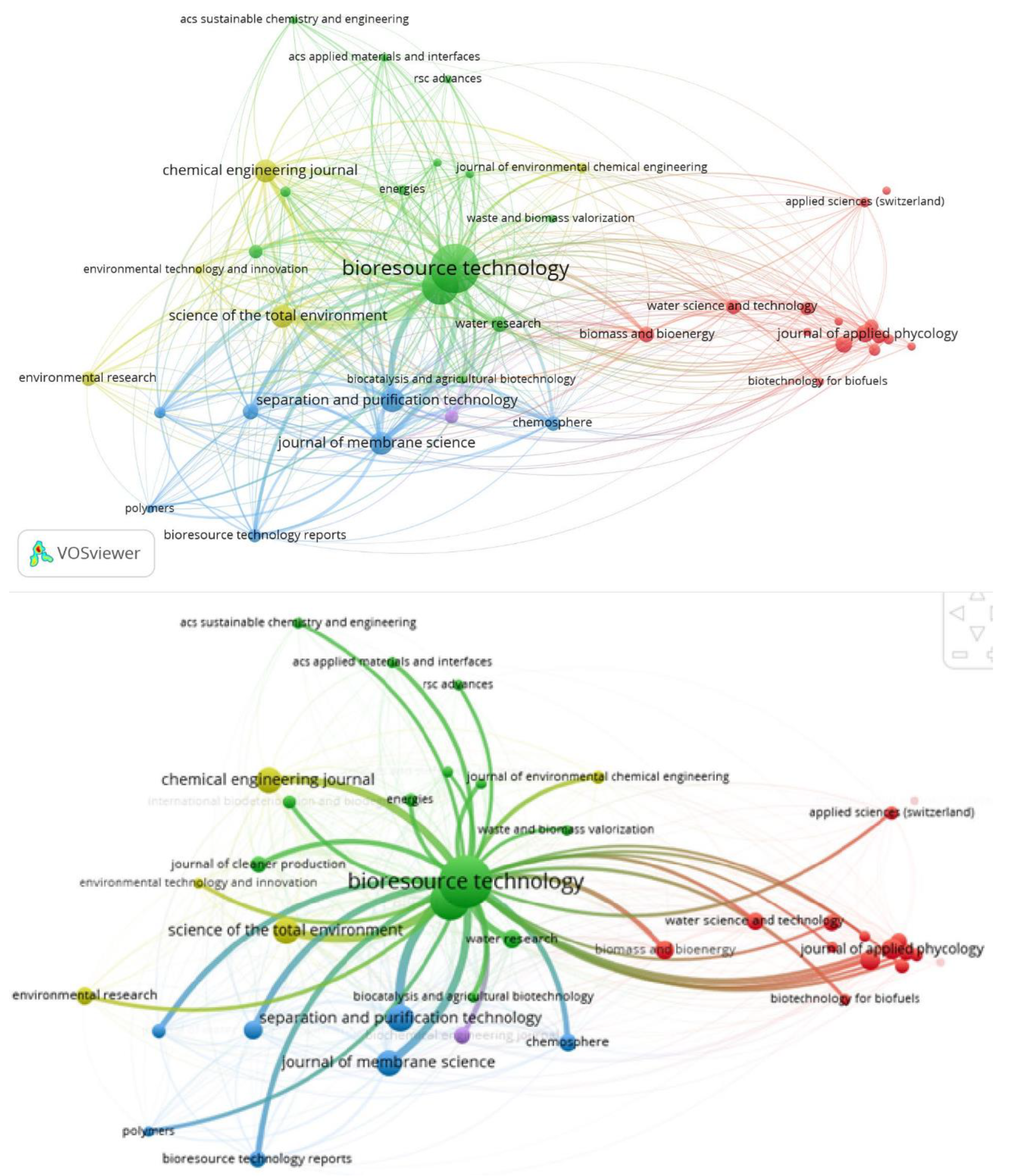
The main journals (Figure 6) that publish articles in the field of microalgae harvesting are determined based on the number of references they share, indicating their significance in the research domain.
The journal Bioresource Technology stands out as the primary publication venue in the field of microalgae, boasting over 64 publications and an impact factor of 9.7. It is widely recognized as a key journal in the microalgae domain. Additionally, many other journals related to environmental research and water treatment also contribute significantly to the field, each with varying impact factors.
There are 5 clusters (Figure 6a), which are divided into the red group with 15 journals, including Applied Biochemistry and Biotechnology, Applied Sciences (Switzerland), BioEn-ergy Research, Biomass and Bioenergy, Biomass Conversion and Biorefinery, Biotechnology for Biofuels and Bioproducts, Biotechnology Progress, Energy Conversion and Manage-ment, Environmental Engineering Research, Environmental Science and Pollution Research, Environmental Technology, Fuel, Journal of Applied Phycology, Journal of Chemical Tech-nology and Biotechnology, and Water Science and Technology. These journals have impact factors ranging from 2.5 to 9.9.
The green group containing ACS Applied Materials and Interfaces, ACS Sustainable Chemistry and Engineering, Algal Research, Biocatalysis and Agricultural Biotechnology, Bioresource Technology, Colloids and Surfaces B: Biointerfaces, Energies, Environmental Science and Technology, International Biodeterioration and Biodegradation, Journal of Cleaner Production, RSC Advances, Waste and Biomass Valorization, and Water Research, ranging from 2.6 to 11.5, covering a diverse range of topics related to microalgae harvesting, sustainable chemistry, environmental science, and engineering.
The blue cluster consists of Bioresource Technology Reports, Chemosphere, Journal of Environmental Management, Journal of Membrane Science, Journal of Water Process Engineering, Polymers, Separation and Purification Technology. These journals have impact factors ranging from 4.7 to 8.4, covering topics related to environmental management, membrane science, and water process engineering.
The yellow cluster includes 5 journals: Chemical Engineering Journal, Environmental Research, Environmental Technology and Innovation, Journal of Environmental Manage-ment, and Science of Total Environmental, with impact factors, respectively, of 13.4, 7.7, 6.7, 8.0 and 8.2, covering a wide range of topics related to environmental research, algal biofuels, and biochemical engineering. Finally, the purple cluster contains 1 journal: Bio-chemical Engineering Journal, with an impact factor of 3.7, focuses on advancing chemical engineering in the development of biological processes, from raw material preparation to product harvesting.
In Figure 6b, the strong relationship of the journal Bioresource Technology from the green cluster with other journals is evident, as it reflects 38 links between them. These con-nections are depicted by thicker connection lines, indicating the strength of the relationship between the journals.
Additionally, the proximity of the nodes with green coloring in relation to the other groups is noteworthy. This suggests a research trend in microalgae harvesting within scientific domains, with a higher number of publications among them.
3.5. Keywords Analysis
With the bibliometric analysis, we can refine the research through a bibliographic review focusing on the paths highlighted in the identified clusters with the highest number of keywords related to separation techniques and the main bioproducts obtained from biomass in Figure 3. Delving further into our research, we concentrated specifically on processes focusing on sanitary effluents using microalgae. Refining the research and elu-cidating trends within the scientific landscape is central to bibliometrics investigations, particularly in the context of wastewater treatment, limited by keywords such as “waste water”, “wastewater management”, “wastewater” and “wastewater treatment”, with a total of 52 documents found in the last 5 years (2020-2024). This targeted approach was necessary, given that the resulting biomass from this process remains unsuitable for human consump-tion, whether in the cosmetics or food industries, due to the inherent contamination of the effluents (sewage).
The focus on wastewater treatment using microalgae requires a different approach, as it addresses the need for sustainable technologies in waste management. This area offers significant potential, but effective harvesting is key for its economic and practical application, in order to optimize the processes and allow scale up, and make it economically feasible, especially when used for biomass production for biofuels and other applications [14,15]. This requires a detailed understanding of both microalgal growth and harvesting techniques in specific contexts, as the operational parameters can significantly impact the overall process viability, including biomass quality. Hence, in the next sections we are aiming to review the major trends in these specific applications.
Additionally, this section allowed us to explore different separation and purification methodologies for bioproducts, as well as understand the challenges and technological innovations related to microalgae. Therefore, while the bibliometric analysis provides an overview, the highlighted trends and gaps presented in this section, enabled us to identify specific studies and applications.
3.6. Technologies for Niomass Separation
This analysis aims to identify the most efficient and sustainable methods, enhancing wastewater treatment and management practices.
Among various harvesting techniques, sedimentation combined with coagulation and flocculation has proven to be the most economically and environmentally advantageous [9].
Microalgae possess a negative charge due to the presence of carboxyl, hydroxyl, and amine groups on their cell membrane (quote). Consequently, coagulation and flocculation mechanisms can effectively destabilize these particles, facilitating their aggregation and subsequent separation from water. Coagulation offers several advantages: it is a quick, straightforward method suitable for large-scale applications across a wide range of species, causes minimal cell damage, and requires less energy. When bioflocculants are used, coagulation becomes an affordable and sustainable option, in contrast to other techniques that are costly, time-consuming, species-specific, and may even introduce toxicity to the harvested biomass [11,16]
A substantial amount of research has focused on flocculation as a critical technique for microalgae harvesting. The literature explores various flocculants, including chitosan, Moringa oleifera (MO), and tannin-based coagulants, highlighting their impact on harvesting efficiency and biomass composition [11,16,17]. While chitosan is known for its effectiveness, its high cost and potential for downstream contamination raise concerns when compared to more environmentally friendly natural flocculants like Moringa oleifera. These natural options offer a more sustainable approach, but often require careful optimisation.
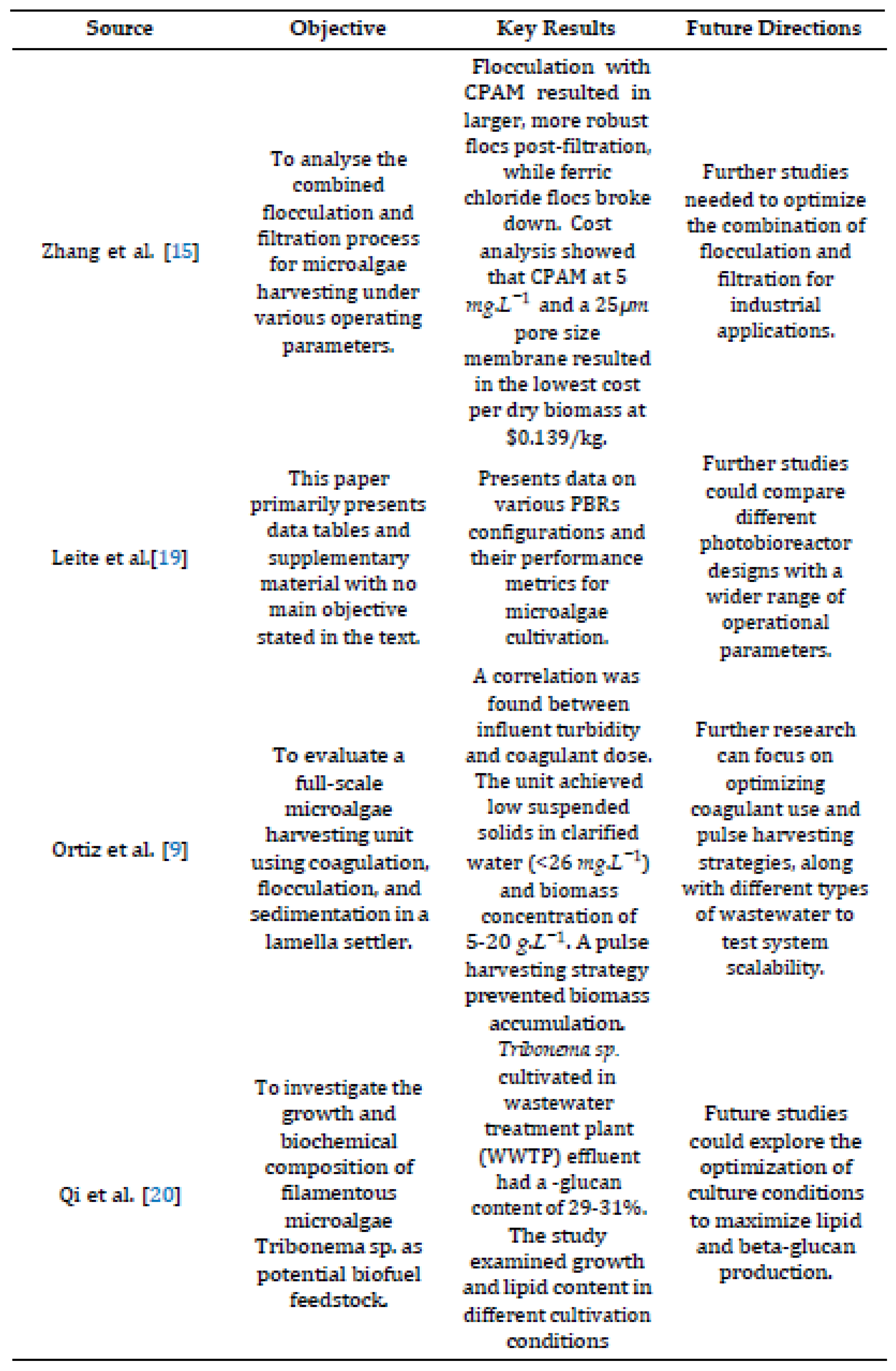
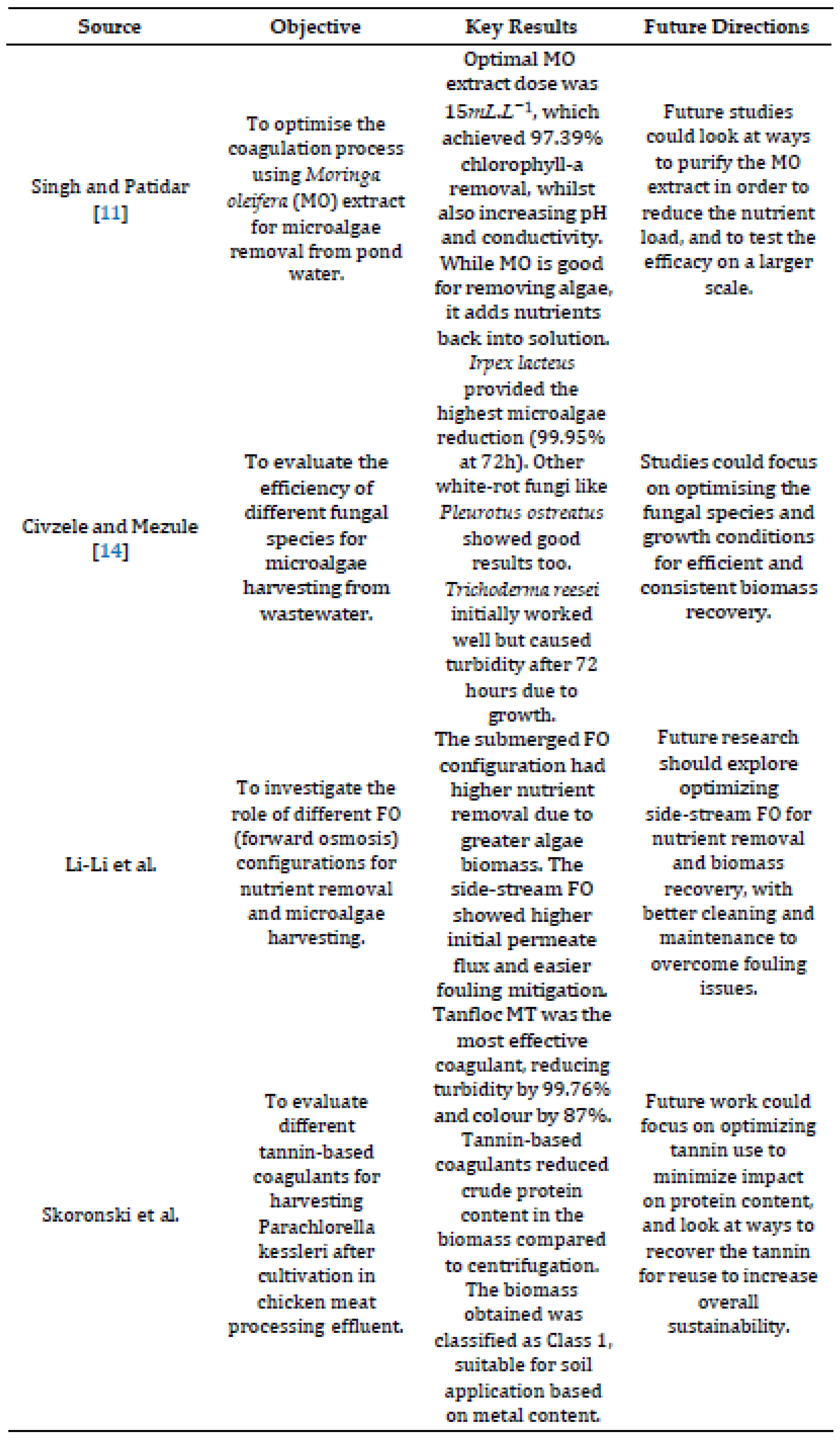
Tannin-based coagulants have demonstrated its potential results in the harvesting of microalgal biomass. Their plant-based origin offers a distinct advantage, as they pose minimal risk of metal contamination, making them particularly suitable for biomass reuse. This characteristic has led to growing interest in their application for harvesting microalgae, especially in nutrient-rich environments like domestic sewage. Vargas et al. [16], evaluated the effectiveness of tannin-based coagulants Tanfloc SG, Tanfloc MTH, and Tanfloc MT for harvesting Parachlorella kessleri microalgae biomass, cultivated in effluents from the thermal processing industry of chicken. The Tanfloc MT coagulant was the most efficient, reducing turbidity by 99.76% and apparent color by 80%. The harvested biomass presented 39.21% crude protein, surpassing that harvested by centrifugation (28.78%). In addition, the technique demonstrated greater sustainability by avoiding contamination of the biomass with metals, a common characteristic in inorganic coagulants.
Despite the good results recorded by Tanfloc, most papers have shown the use of Moringa oleifera (MO) seeds, and their derivatives, to harvest specific microalgae species from culture media. Singh and Patidar [11] examined the effects of MO extract dose, pH, mixing time and rate, settling time, temperature, and biomass concentration. With a dose of 15 mL.L−1 extract, pH 8 and settling time of 20 minutes, the flocculation efficiency was 92.97%. In addition, turbidity was reduced from 388.16 NTU to 8.39 NTU, and there was a significant improvement in water quality, including the reduction of total nitrogen and total phosphorus by 40% and 21%, respectively.
This approach is essential for identifying optimal conditions to enhance microalgal cell and turbidity removal, thereby improving efficiency and cutting costs in large-scale applications. The results suggest that fine-tuning variables like dose, pH, and settling time can make MO a more feasible and eco-friendly approach for microalgae harvesting.
In recent years, bio-flocculation using other microorganisms has emerged as a viable method for harvesting microalgae. The bio-flocculation of microalgae with filamentous fungi from the genus Aspergillus is the most extensively documented approach. By utilizing pellet-assisted harvesting, Civzele and Mezule [14] reported that over 90% removal effi-ciency of Chlorella vulgaris was achieved within 24 hours due to bio-flocculation induced by Aspergillus niger. Similarly, the concentration of Scenedesmus quadricauda decreased by more than 95% in 48 hours when treated with Aspergillus fumigatus. Given the general non-toxicity of this method, its potential cost-effectiveness, and high harvesting efficiency, co-cultivating microalgae with filamentous fungi can be regarded as an efficient and optimal strategy for microalgae harvesting. However, despite the well-documented effectiveness of this technology, it faces challenges such as a lack of large-scale testing, relatively long flocculation times (24-48 h), limitations in reusing the biomass obtained after wastewater treatment, and the risk of potential contamination of wastewater with Aspergillus spores, which could lead to environmental leakage [14].
In the same way, He et al. [18] demonstrated high harvesting of Chlorella pyrenoidosa using Citrobacter W4 bacteria, with an optimized bacterial-algal ratio of 4:1, a flocculation velocity gradient of 26.30 s−1, and a processing time of 6 hours, reaching an efficiency of 87.37% and nearing a theoretical maximum of 93.45%. Both studies emphasize the potential of bio-flocculation as a cost-effective, environmentally friendly method for urban wastewater treatment.
Another technique which offers advantages such as low capital and operational costs, minimal energy consumption, and non-disruptive handling of the cells is the sedimentation, one of the most straightforward harvesting methods [14]. As a gravity-driven solid/liquid separation process, this technique serves a dual purpose: producing large volumes of clari-fied effluent while concentrating microalgal biomass in smaller volumes. This separation is technically challenging due to the small cell size of microalgae (typically 5-20 µm) and their negatively charged cell surfaces, which result in low terminal settling velocities, around 1 cm.h−1 [9].
Ortiz et al. [9] investigated sedimentation coupled with coagulation and flocculation in an inclined plate system, applied in a demonstration-scale unit to treat biomass from pho-tobioreactors. The method used aluminum-based coagulants, such as PAX-18, to form flocs and increase sedimentation efficiency. The technique achieved biomass concentrations be-tween 5 and 20 g.L−1 and a remarkable clarification efficiency, with effluent turbidity below 8 NTU and suspended solids below 26 mg.L−1. The scalability of the system was evidenced by its low energy consumption and ability to treat large volumes of effluents. However, the use of chemical coagulants required care regarding the quality of the harvested biomass, especially for applications requiring high purity.
Alternatively, pH-induced sedimentation has gained interest at high-pH environments for microalgae separation. By adding a base such as sodium hydroxide, the pH level rises, creating conditions that facilitate the coprecipitation of inorganic salts promoting sedimentation [17].
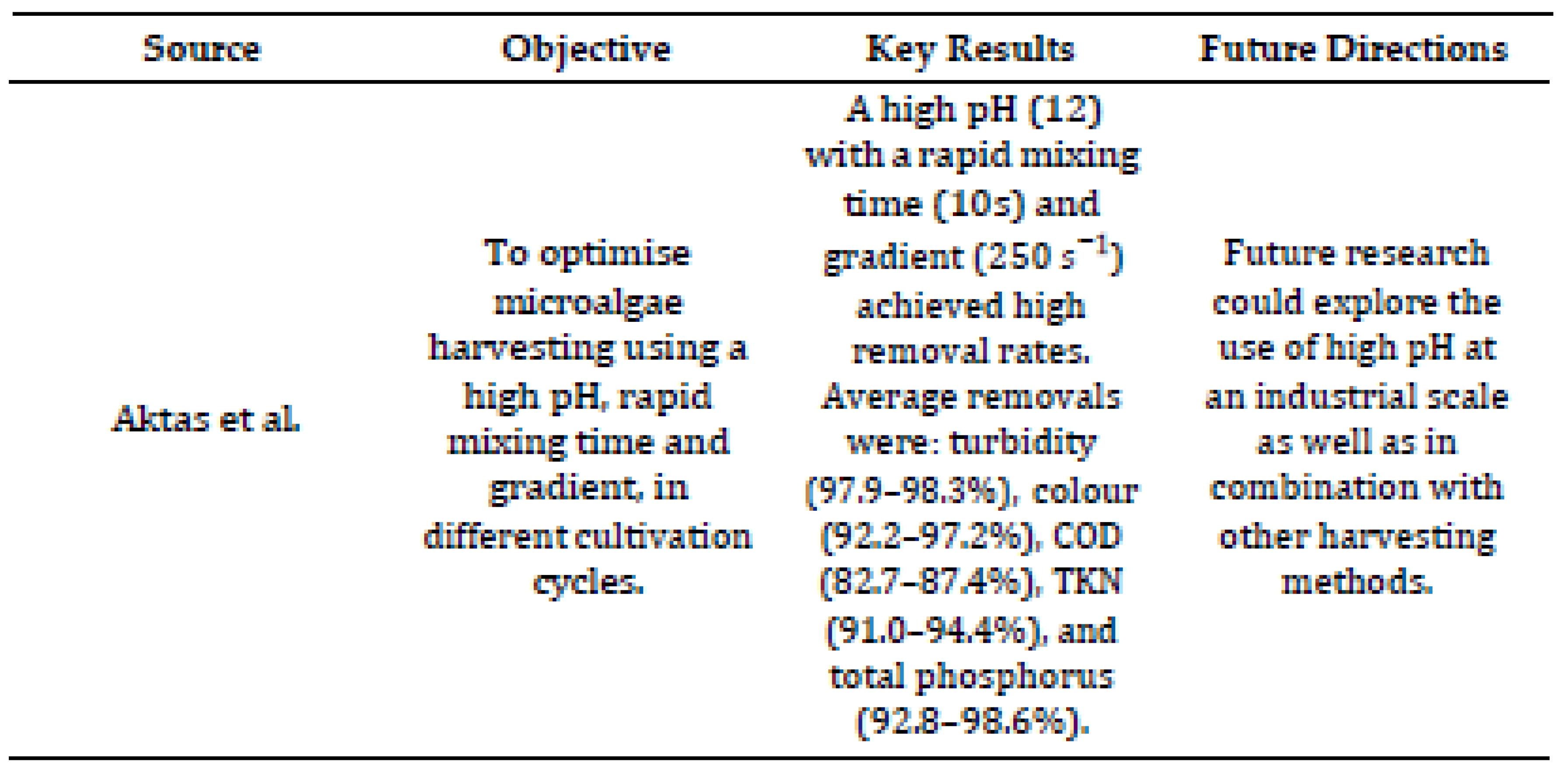
De Souza Leite and Daniel [7] examined the harvesting of microalgae, specifically Chlorella sorokiniana, using pH-induced sedimentation in wastewater effluents. The microalgae were cultivated in a treated wastewater medium from an up-flow anaerobic sludge blanket (UASB) reactor, using a mixture of effluents from a pig farm and a sewage treatment plant. Under optimized conditions (pH 12, velocity gradient of 250 s−1 and mixing time of 10 seconds), the method achieved a harvesting efficiency of over 97.8%. In addition, the technique significantly improved effluent quality, removing up to 98.6% of phosphorus and 94.4% of nitrogen. The harvested biomass also showed high concentration, increasing up to 123 times when combined with centrifugation. Although efficient, the method requires significant volumes of NaOH for pH adjustment, which can increase operating costs depending on the scale.
These studies highlight that both sedimentation techniques are highly efficient and can be adapted to different contexts. While sedimentation coupled with coagulation and flocculation has proven to be more scalable and simpler for large volumes, pH-induced sedimentation has proven to be a cost-effective solution to improve effluent quality and recover high-purity biomass.
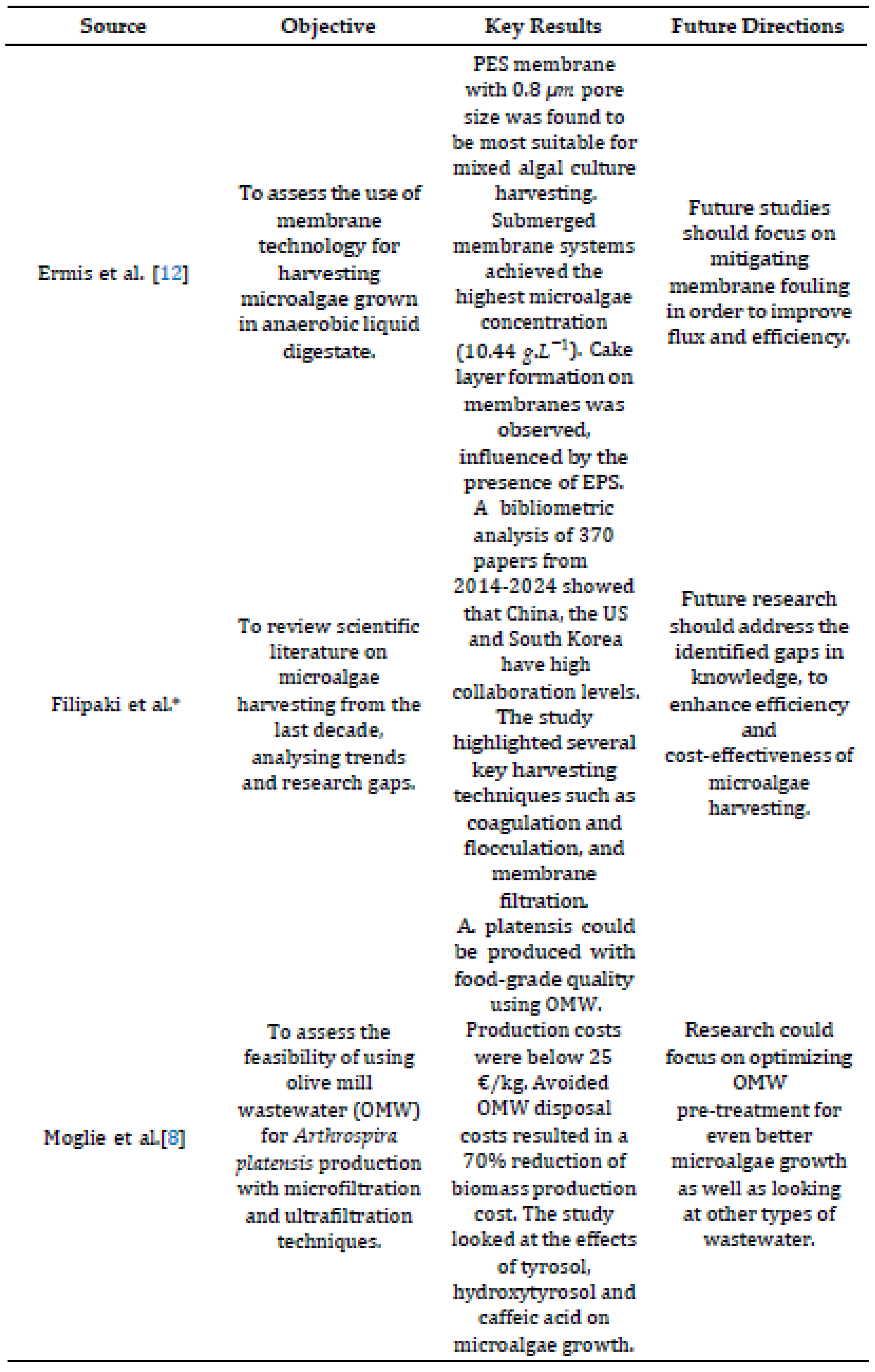
Another process used to harvest is filtration responsible to eliminate the total depen-dence on gravity or kinetic factors, capturing flocs that might escape in a purely gravi-tational process [15]. In recent years, microalgae harvesting processes have increasingly focused on integrating filtration membranes into photobioreactors (PBRs). This configura tion allows in situ biomass harvesting without interrupting microalgae growth or nutrient flow within the system. The integration of filtration within PBRs facilitates the simultane-ous removal of nutrients, such as nitrogen and phosphorus, while recovering microalgae. This has been demonstrated in studies by Ermis et al. [12], Larrode-Larretche and Jin [13], Zhang et al.[15] and Moglie et al. [8] who investigated the performance of different module configurations — side-stream and submerged —, and types of membranes integrated with a microalgae PBRs for nutrients removal and microalgae harvesting.
The three studies analyzed presented distinct approaches for the harvesting of microal-gae using filtration techniques, allowing a quantitative comparison of the results. Moglie et al. [8] investigated the use of microfiltration and ultrafiltration in the treatment of wastewa-ter from olive mills for the cultivation of Arthrospira platensis. The study demonstrated a reduction of approximately 70% in production costs, standing out as an economical and sustainable solution. However, the presence of phenolic compounds in the treated waters negatively impacted the growth rate of the microalgae, although the quality of the biomass obtained remained satisfactory.
Membrane technologies, such as forward osmosis (FO) and dead-end filtration, show promise for microalgae harvesting. However, challenges related to membrane fouling and the need for process optimisation remain significant hurdles [12,13]. The impact of membrane configuration, such as side-stream versus submerged, is also a crucial factor in performance. Different membrane types, such as microfiltration (MF) and ultrafiltration (UF), offer varying degrees of separation and have different operational parameters such as backwashing that can affect membrane fouling and energy consumption.
Zhang et al. [15] analyzed a combined flocculation and microfiltration process using Chlorella sorokiniana. The technique achieved a harvest efficiency of 95.2% and an average permeation flux of 55.5 m−3.m−2.h−1 under optimized conditions, using 5 mg.L−1 cationic polyacrylamide (CPAM) and membranes with 25 µm pores.
Natural coagulants, particularly Moringa oleifera and tannin-based substances, have emerged as effective and environmentally conscious alternatives to chemical coagulants [11,16]. These coagulants often present a lower risk of metal contamination compared to their chemical counterparts, but their performance depends on optimising their application conditions, such as dosage, pH, and mixing times [12]. Variability in composition and performance based on source and processing method is a key challenge that needs to be taken into consideration.
Larronde-Larretche and Jim [13] explored the Forward Osmosis (FO) technique in two configurations, submerged and side-stream, integrated with photobioreactors for the cultivation of Chlorella vulgaris. The submerged configuration stood out for its high efficiency in nutrient removal, achieving 92.9% removal of phosphorus ((PO4)3), 100% of ammonia ((NH3) − N) and 98.7% of total nitrogen (TN). In addition, the biomass concentration reached 0.965 g L-1 after seven days of operation, due to in situ dewatering. However, the system showed salt and biomass accumulation in the reactor, which may affect long-term efficiency. The side-stream configuration, in turn, achieved slightly lower nutrient removal efficiencies (82% phosphorus, 96% ammonia and 94.8% total nitrogen), but demonstrated better biofouling control and ease of cleaning, making it more suitable for continuous operations.
Ermis et al. [12] compared cross-flow and submerged membrane systems for the harvesting of Chlorella vulgaris. The submerged system showed greater efficiency, reaching a biomass concentration of 10.44 g.L−1 , in contrast to the 6.99 g.L−1 obtained in the cross-flow system. Both systems used anaerobic digestate as a culture medium, demonstrating large-scale viability, but faced challenges related to membrane clogging. The submerged system was more efficient in biomass concentration, while the cross-flow system showed greater operational robustness.
The studies indicate that the choice of filtration configuration in PBRs depends on bal-ancing harvesting efficiency, maintenance ease, and operational costs. Microfiltration and ultrafiltration were notable for their cost-effectiveness but encountered challenges related to chemical interference. Submerged configurations demonstrated superior efficiency in harvesting and nutrient removal, whereas lateral flow designs offered greater operational reliability, reduced biofouling, and simplified cleaning procedures.
Another promising method for microalgae harvesting is flotation, which is widely recognized for providing high biomass harvesting in short retention times. Among various flotation techniques, dissolved air flotation (DAF) has been shown to be particularly effec-tive. The DAF process works by generating air bubbles that help microalgae flocs rise to the surface of the system, where they accumulate and can be removed, leading to water clarification [19].
Leite, dos Santos and Daniel [19], explored the use of dissolved air flotation combined with pH modulation as a harvesting method for Chlorella sorokiniana cultured in wastewater.
The technique achieved a microalgae harvesting efficiency of 96.5% to 97.9% and nutrient (phosphorus and nitrogen) removal of 91.8% to 98.3%, optimizing parameters such as pH (12), mixing time (30 seconds), and recirculation rate (20%). In addition, the quality of the treated wastewater was significantly improved, demonstrating the feasibility of the method for large-scale applications.
Qi et al. [20], on the other hand, analyzed electrolytic flotation without coagulation for microalgae species with different degrees of hydrophobicity, a method that generates hydrogen and oxygen bubbles through the electrolysis of water, using inert electrodes.
These bubbles facilitate cell-bubble adhesion, especially in microalgae with high hydropho-bicity, eliminating the need for chemical coagulants. In the study, for Tribonema sp., which is highly hydrophobic, the technique achieved a harvest efficiency of 96.2% with an en ergy consumption of 0.19 kW.h.kg−1 of biomass, making it an efficient and cost-effective approach. In comparison, less hydrophobic microalgae, such as Scenedesmus sp. (55.6%) and Pandorina sp. (42.8%), showed lower harvest efficiency, highlighting the influence of hydrophobicity on cell-bubble adhesion during flotation.
Qi et al. [10] introduced the concept of autoflotation in a photobioreactor, using Tribonema sp. as the dominant species. In this method, self-floating microalgae, such as Tribonema sp., generate oxygen microbubbles through photosynthesis, which adhere to the cells, promoting their natural floating to the surface, without the need for flocculants or external gas supply. The technique achieved a harvest efficiency above 90% in a separation time of 30 minutes. Furthermore, the biomass showed excellent dehydration capacity, with specific filtration resistance (SRF) values of 2.7 × 10¹¹ m.kg−1 , and nutrient removal efficiency above 98%.
These studies indicate that flotation is a promising technique for the harvesting of microalgae, with the potential to be adapted to different conditions and species. While DAF demonstrates high removal efficiency and improvement of wastewater quality, electrolytic flotation and autoflotation stand out for their energy efficiency and operational simplicity. It is noted that several technologies have been applied for microalgae harvesting, including physical, chemical and biological methods. In some cases, two or more methods combined to obtain the maximum biomass yield. The choice of the most appropriate technique depends on the characteristics of the microalgae, the culture medium and the process objectives, whether they are cost reduction, sustainability or maximization of recovered biomass.
3.7. Main Bioproducts of Harvested Biomass
Bio-based methods offer sustainable solutions for microalgae harvesting. Fungal species have shown to be effective for bioflocculation, and microalgae are crucial in wastew-ater treatment [14]. These bio-based approaches leverage biological mechanisms for sep-aration and nutrient harvesting, highlighting a potential pathway to integrate resource harvesting technologies. The text should also include case studies highlighting the most efficient species for different applications and the temperature ranges in which bio-based solutions are most effective.
The production of bio-products from recovered microalgae relies on the valorization of its main components, such as proteins, lipids, and bioactive compounds. Within a biorefinery context, residual microalgal biomass, especially when cultivated in wastewater, is essential for ensuring the economic viability of the process, with anaerobic digestion standing out as an accessible and efficient energy harvesting technique, converting biomass into biogas [21]. Economic viability is a critical factor when selecting a microalgae harvest-ing technology [8]. The cost of harvesting contributes a significant percentage to the total microalgae production costs, making it essential to consider all cost components including capital investment, energy, labour, and flocculant costs. These costs can vary significantly based on the scale of the operation and chosen technology.
Microalgae can assimilate nutrients from wastewater, using (CO2) and sunlight as carbon and energy sources, promoting an ecologically sustainable option for advanced bioremediation. The biomass produced can be converted into renewable biofuels, such as biodiesel, bioethanol, biobutanol, biogas, biohydrogen, and bio-crude oil, with potential applications in food, fertilizers, and pharmaceuticals [10,22]. Therefore, microalgae biorefineries hold promise for sustainable resource harvesting and wastewater purification. Despite their high potential, technical obstacles, such as strain selection, gas transfer, har-vesting, and lighting, still limit the commercial feasibility of bio-product production from microalgae.
This microalgae biorefinery system has gained relevance as a third- and fourth-generation biomass source, requiring less land for cultivation, exhibiting high growth rates and lipid accumulation (ranging from 15 to 77%) under specific conditions, and sequestering (CO2) with high photosynthetic efficiency [23].
A key factor for improving biodiesel production efficiency from microalgae is increas-ing the lipid content of the cells, which can be optimized at the end of the cultivation period, as observed in Chlorella pyrenoidosa in the study of [24].
Biomass harvesting is a major challenge for commercial-scale implementation due to the typically low microalgal concentration in cultivation systems (around 200–500 mg.L−1), the small size of cells (3–30 µm), density similar to the growth medium, and suspension stability, which can increase harvesting costs to as much as 50% of total production costs [10].
Selecting the optimal method for harvesting microalgae from wastewater requires a careful balance between preserving cell integrity (including activity, density, and size) and achieving the desired properties in the final product. Making a parallel with the previous section, centrifugation, while effective for rapid separation, generates high shear forces that can damage delicate algal cells, potentially compromising product quality. Microfiltration is another efficient harvesting method, offering relatively low energy consumption.
However, the concern with membrane fouling is a valid concern, since the use of backwashing to reduce this process consumes considerable energy and water, ultimately lowering the final solid content and decreasing the effectiveness of harvesting. Flocculation-sedimentation, on the other hand, is widely used for its low energy demands and cost-effectiveness. However, it poses a risk of contamination, limiting the harvested biomass’s applications in food, feed, and certain biofuel extraction processes[25]. This drawback un-derscores the importance of carefully evaluating the operational and downstream impacts of each method to select the most suitable approach for microalgal biomass harvesting, balancing efficiency, cost, and end-product quality.
The optimal microalgae harvesting method varies greatly depending on the specific application needs, the microalgal species, and the type of wastewater to be treated [13]. A single best approach does not exist, but rather the most appropriate solution will depend on the context-specific constraints. It is essential to use a decision-making guide or framework to navigate these factors when choosing a method.
4. Conclusions
The harvesting of microalgae has garnered considerable attention from researchers and the public in recent years. As the volume of literature on this subject continues to grow, bibliometrics plays a crucial role in helping researchers understand academic collaboration, research trends, and emerging issues. In this study, we systematically summarized information from all papers regarding countries, institutions and journals.
Although research on microalgae harvesting has been ongoing since the 1970s, it’s only in the last decade that scientific interest in this area has consistently impacted Scopus- indexed journals, indicating a growing trend of publications focusing on microalgae harvesting in the foreseeable future.
While the analysis of keyword co-occurrence suggests that the issue of microalgae harvesting has been examined from various perspectives, the results indicate a particular focus on different harvesting techniques and biomass concentrations. In recent years, researchers have explored techniques encompassing physical, chemical, biological, and magnetic methods to maximize biomass yield.
Furthermore, research on microalgae also paves the way for the development of high-value-added bioproducts. The rich composition of microalgae, with their antioxidant properties, vitamins, proteins, and essential fatty acids, makes them valuable raw materials to produce pharmaceutical, nutraceutical, and food products. These bioproducts have the potential to revolutionize several industries, offering sustainable and high-quality solutions.
Despite significant scientific advancements, there remains a plethora of unanswered questions in this field. It’s essential to acknowledge that the results of this study are contingent on the chosen search parameters and analytical criteria. Further detailed research is warranted to address the remaining gaps in knowledge.
In contrast, the use of bio-flocculants such as white-rot fungi also demonstrates promis-ing results for microalgae harvesting, showing the potential of this process as a more envi-ronmentally friendly approach compared to chemical methods. Furthermore, the use of natural coagulants, such as Moringa oleifera has also been highlighted in, where the authors show that, if properly used, M. oleifera can achieve similar results in terms of flocculation, as chemical coagulants.
Nevertheless, the operational conditions, as well as the type of microalgae species, may have significant impact on the efficacy of the bio-flocculation methods, thus, requiring further studies to better understand these effects and allow for process optimization. The use of natural sources of flocculation has the potential to contribute for the development of sustainable and cost-effective technologies for microalgae biomass harvesting, especially when considering the full life cycle of the processes.
Despite the scientific literature in the field, a holistic approach that encompasses technical and economic aspects related to the wide range of microalgae harvesting processes is still necessary. A thorough review that goes beyond just a description of methods, critically assessing their real-world viability, is required to ensure we move towards more practical and sustainable applications. Therefore, this work aims to provide insights beyond the current knowledge, based on the existing literature, and propose future directions for research and innovation in the area.
Nevertheless, this study offers valuable insights into the global scientific literature on microalgae harvesting. It serves as a foundational resource for future studies that may explore specific sub-topics of microalgae harvesting using distinct keywords and criteria.
Finally, a crucial similarity across multiple studies is the consistent need for further research to optimize existing methods and explore new approaches. The economic via-bility and scalability of microalgae harvesting remain significant challenges, regardless of the technology used. This highlights the importance of combining fundamental research with applied studies to bridge the gaps between laboratory findings and industrial-scale implementation. Therefore, a holistic approach that integrates technical, economic, and environmental considerations is imperative for the sustainable development of the microal-gae industry, and further research is needed to make the harvesting step more efficient and cost effective.
This review goes beyond a quantitative overview of publications, aiming to provide a critical evaluation of different harvesting methods, assessing their suitability for various microalgae applications. This analysis will explore technical feasibility, energy require-ments, and economic viability, addressing the limitations of previous studies and providing a valuable reference for future research in microalgae harvesting [7,16]. This approach will ensure a more comprehensive and impactful contribution to the field.
Author Contributions
Fernanda Filipaki: Conceptualization, Investigation, Writing- Original draft. Rodrigo Braga Moruzzi: Conceptualization, Supervision, Writing- Reviewing and Editing. Gustavo Henrique Ribeiro da Silva: Conceptualization, Supervision, Writing- Reviewing and Editing.
Funding
This research was funded by Brazilian Federal Agency for Support and Evaluation of Graduate Education (CAPES) grant number 88887.666963/2022-00.
Data Availability Statement
Data will be made available on request.
Conflicts of Interest
The authors declare no conflicts of interest.

References
- Roy, M.; Mohanty, K. A comprehensive review on microalgal harvesting strategies: Current status and future prospects. In Algal Research; 2019. [Google Scholar]
- Milledge, J. J.; Heaven, S. A Review Of The Harvesting Of Micro-Algae For Biofuel Production. In Reviews In Environmental Science And Biotechnology; 2013. [Google Scholar]
- Barros, A. I.; Gonçalves, A. L.; Simões, M.; Pires, J. C. M. Harvesting Techniques Applied To Microalgae: A Review. In Renewable And Sustainable Energy Reviews; 2015. [Google Scholar]
- Gerardo, M. L.; Van Den Hende, S.; Vervaeren, H.; Coward, T.; Skill, S. C. Harvesting Of Microalgae Within A Biorefinery Approach: A Review Of The Developments And Case Studies From Pilot-Plants. Algal Research 2015. [Google Scholar] [CrossRef]
- Krishnamoorthy, N.; Unpaprom, Y.; Ramaraj, R.; Maniam, G. P.; Govindan, N.; Arunachalam, T.; Paramasivan, B. Recent Advances And Future Prospects Of Electrochemical Processes For Microalgae Harvesting. Journal Of Environmental Chemical Engineering 2021. [Google Scholar] [CrossRef]
- Danquah, M. K.; Gladman, B.; Moheimani, N.; Forde, G. M. Microalgal Growth Characteristics And Subsequent Influence On Dewatering Efficiency. Chemical Engineering Journal 2009. [Google Scholar] [CrossRef]
- De Souza Leite, L.; Daniel, L. A. Optimization Of Microalgae Harvesting By Sedimentation Induced By High Ph. Water Science And Technology, 2020. [Google Scholar]
- Moglie, M.; Biancini, G.; Norici, A.; Mugnini, A.; Cioccolanti, L. Valorization Of Olive Mill Wastewater For Arthrospira Platensis Production. Cell Reports Sustainability 2024, 1, 100017. [Google Scholar] [CrossRef]
- Ortiz, A.; García-Galán, M. J.; García, J.; Díez-Montero, R. Optimization And Operation Of A Demonstrative Full Scale Microalgae Harvesting Unit Based On Coagulation, Flocculation And Sedimentation. In Separation And Purification Technology; 2021. [Google Scholar]
- Qi, S.; Wang, Z.; Hu, Y.; Lei, J.; Zhan, X.; Stengel, D. B. Selective Enrichment Of Auto-Floating Microalgae For Wastewater Bioremediation And Biofuel/Bioproduct Production. Algal Research 2023. [Google Scholar] [CrossRef]
- Singh, G.; Patidar, S. K. Water Quality Restoration By Harvesting Mixed Culture Microalgae Using Moringa Oleifera. Water Environment Research 2020. [Google Scholar] [CrossRef] [PubMed]
- Ermis, H.; Koyuncu, I.; Altinbas, M. Pilot Scale Microalgae Harvesting By A Membrane: Cross Flow Vs. Submerged Membrane. In Desalination And Water Treatment; 2021. [Google Scholar]
- Larronde-Larretche, M.; Jin, X. The Influence Of Forward Osmosis Module Configuration On Nutrients Removal And Microalgae Harvesting In Osmotic Photobioreactor. Membranes 2022. [Google Scholar] [CrossRef] [PubMed]
- Civzele, A.; Mezule, L. Microalgae Harvesting After Tertiary Wastewater Treatment With White-Rot Fungi. Journal Of Fungi 2022. [Google Scholar] [CrossRef] [PubMed]
- Zhang, B.; Peng, C.; Zhang, S.; Zhang, M.; Li, D.; Wang, X.; Mao, B. Comprehensive Analysis Of The Combined Flocculation And Filtration Process For Microalgae Harvesting At Various Operating Parameters. Science Of The Total Environment 2023. [Google Scholar] [CrossRef] [PubMed]
- Vargas, L. B.; Da C. Primo, T. A. R.; Alves, R. D.; De Farias Neves, F.; Trevisan, V.; Skoronski, E. Application Of A Tannin-Based Coagulant For Harvesting Parachlorella Kessleri Microalgae Cultivated In Chicken Meat Thermal Processing Wastewater. Aquaculture International 2024, 32, 461–476. [Google Scholar] [CrossRef]
- Matter, I. A.; Darwesh, O. M.; El-Baz, F. K. Using The Natural Polymer Chitosan In Harvesting Scenedesmus Species Under Different Concentrations And Cultural Ph Values. International Journal Of Pharma And Bio Sciences 2016. [Google Scholar] [CrossRef]
- He, J.; Ding, W.; Han, W.; Chen, Y.; Jin, W.; Zhou, X. A Bacterial Strain Citrobacter W4 Facilitates The Bio-Flocculation Of Wastewater Cultured Microalgae Chlorella Pyrenoidosa. Science Of The Total Environment 806 2022, 151336. [CrossRef] [PubMed]
- Leite, L. De S.; Dos Santos, P. R.; Daniel, L. A. Microalgae Harvesting From Wastewater By Ph Modulation And Flotation: Assessing And Optimizing Operational Parameters. Journal Of Environmental Management 2020. [Google Scholar] [CrossRef] [PubMed]
- Qi, S.; Chen, J.; Hu, Y.; Hu, Z.; Zhan, X.; Stengel, D. B. Low Energy Harvesting Of Hydrophobic Microalgae (Tribonema Sp.) By Electro-Flotation Without Coagulation. Science Of The Total Environment 2022. [Google Scholar] [CrossRef] [PubMed]
- Avila, R.; García-Vara, M.; López-García, E.; Postigo, C.; López De Alda, M.; Vicent, T.; Blánquez, P. Evaluation Of An Outdoor Pilot-Scale Tubular Photobioreactor for Removal of Selected Pesticides From Water. Science Of The Total 2022. [Google Scholar] [CrossRef] [PubMed]
- Parakh, S. K.; Praveen, P.; Loh, K.-C.; Tong, Y. W. Integrating Gravity Settler With An Algal Membrane Photobioreactor For In Situ Biomass Concentration And Harvesting. Bioresource Technology 2020. [Google Scholar] [CrossRef] [PubMed]
- Islam, Md. B.; Khalekuzzaman, M.; Kabir, S. B.; Hossain, Md. R. Shrimp Waste-Derived Chitosan Harvested Microalgae For The Production Of High-Quality Biocrude Through Hydrothermal Liquefaction. Fuel 2022. [Google Scholar] [CrossRef]
- Huang, K.-X.; Vadiveloo, A.; Zhong, H.; Mao, B.-D.; Qiu, J.; Gao, F. Enhancing The Removal Of Sulfamethoxazole And Microalgal Lipid Production Through Microalgae-Biochar Hybrids. Bioresource Technology 413 2024, 131510. [CrossRef] [PubMed]
- Sun, J.; Jiang, S.; Yang, L.; Chu, H.; Peng, B.-Y.; Xiao, S.; Wan, Y.; Zhou, X.; Zhang, Y. Microalgal Wastewater Recycling: Suitability Of Harvesting Methods And Influence On Growth Mechanisms. Science Of The Total Environment 2023. [Google Scholar] [CrossRef] [PubMed]
Figure 1.
Types of documents found in the search for the keyword “microalgae harvesting”.
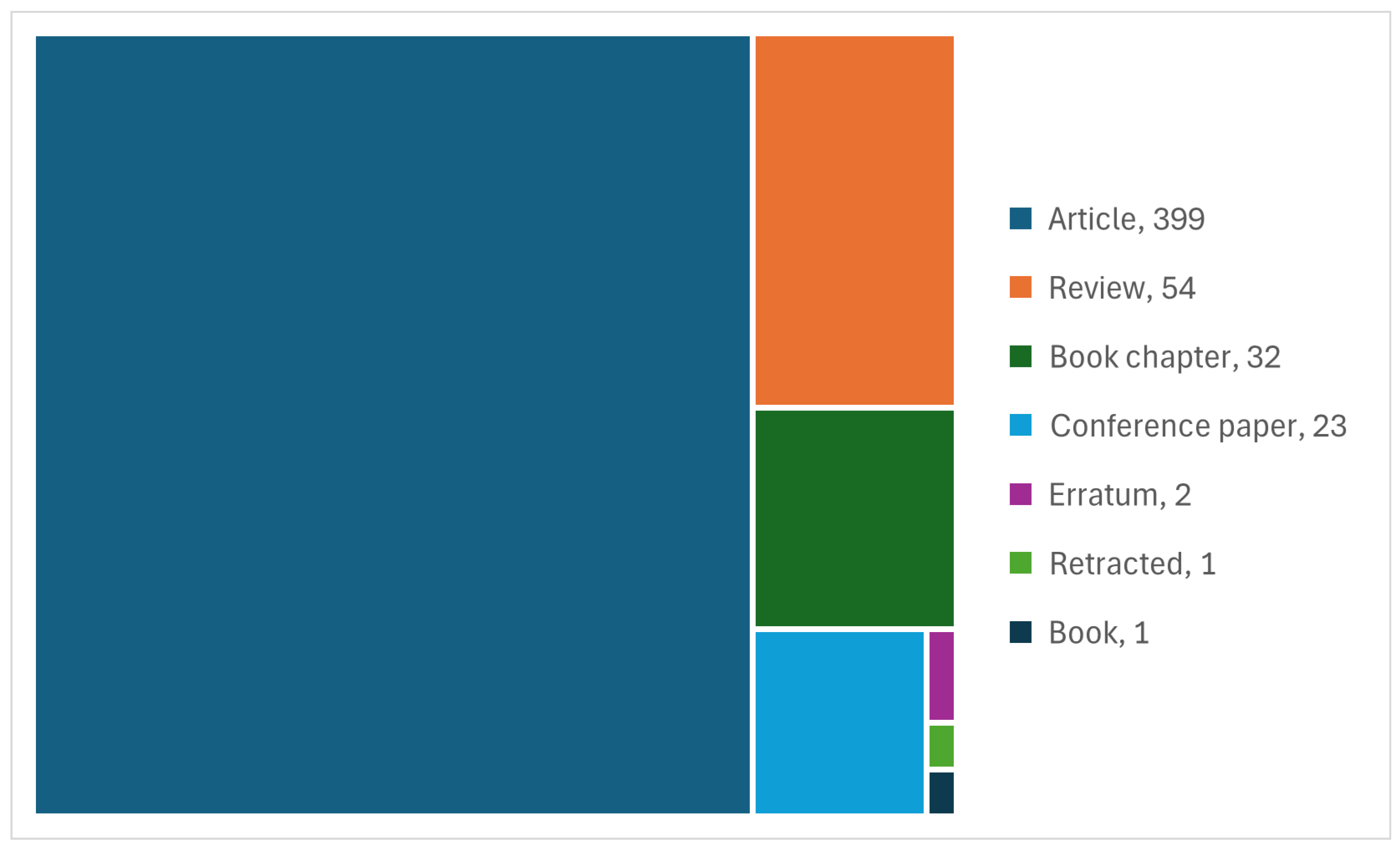
Figure 2.
Evolution of the years in the search for the keyword “microalgae harvesting”.
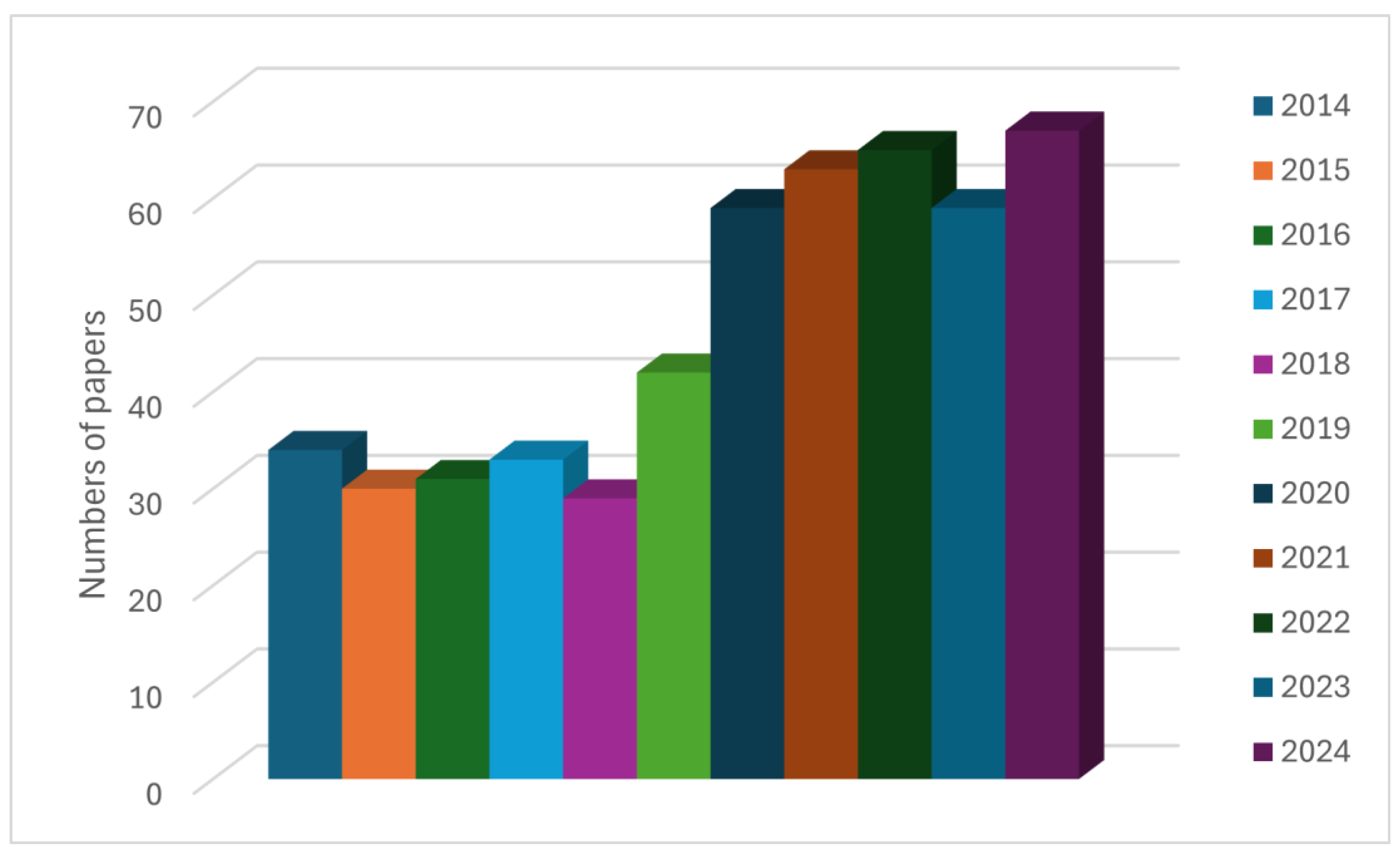
Figure 3.
The network map of co-occurrence keyword for microalgae harvesting research.
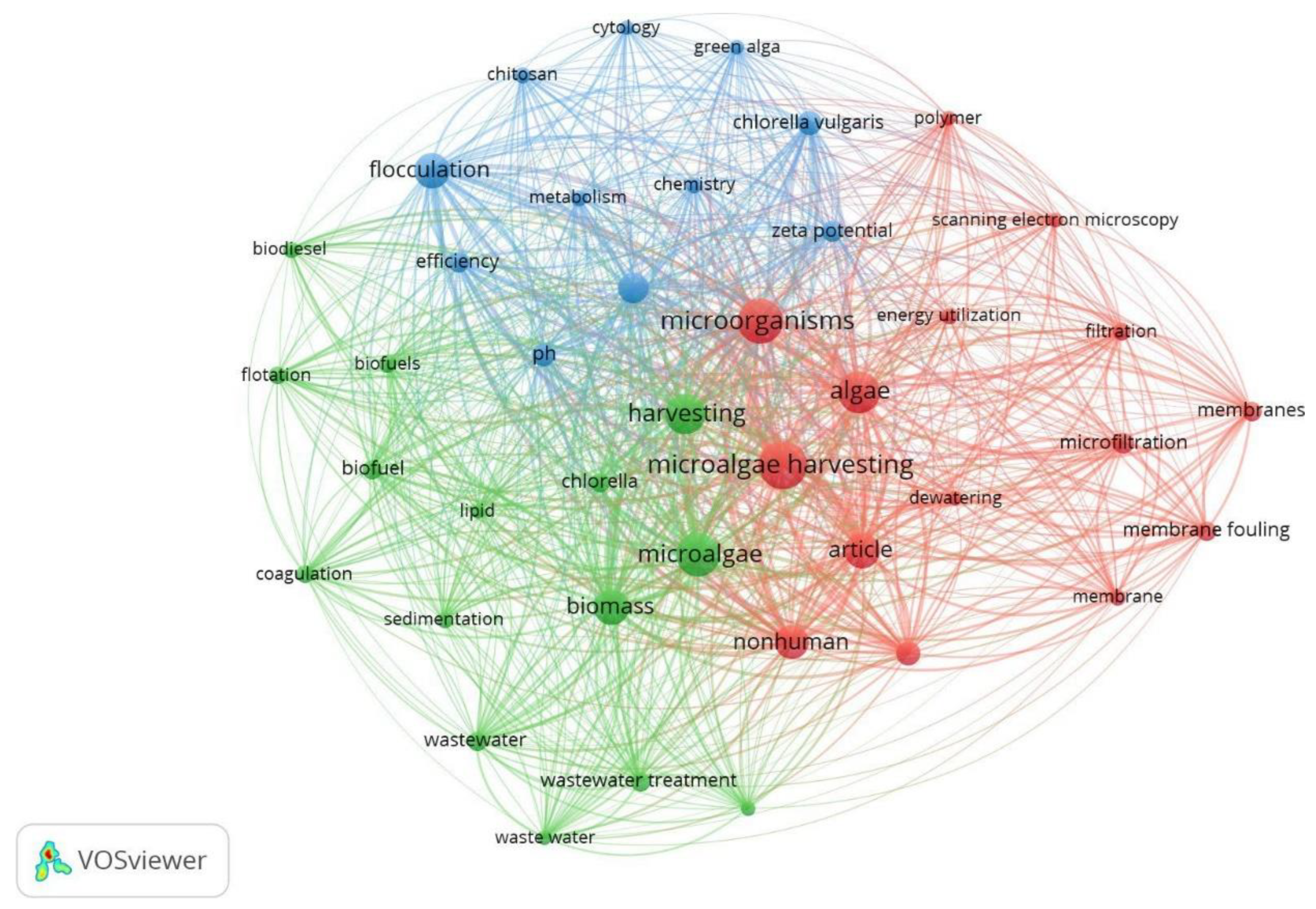
Figure 4.
(a) The network map of co-authorship countries for microalgae harvesting research (b) focus in China.
Figure 4.
(a) The network map of co-authorship countries for microalgae harvesting research (b) focus in China.
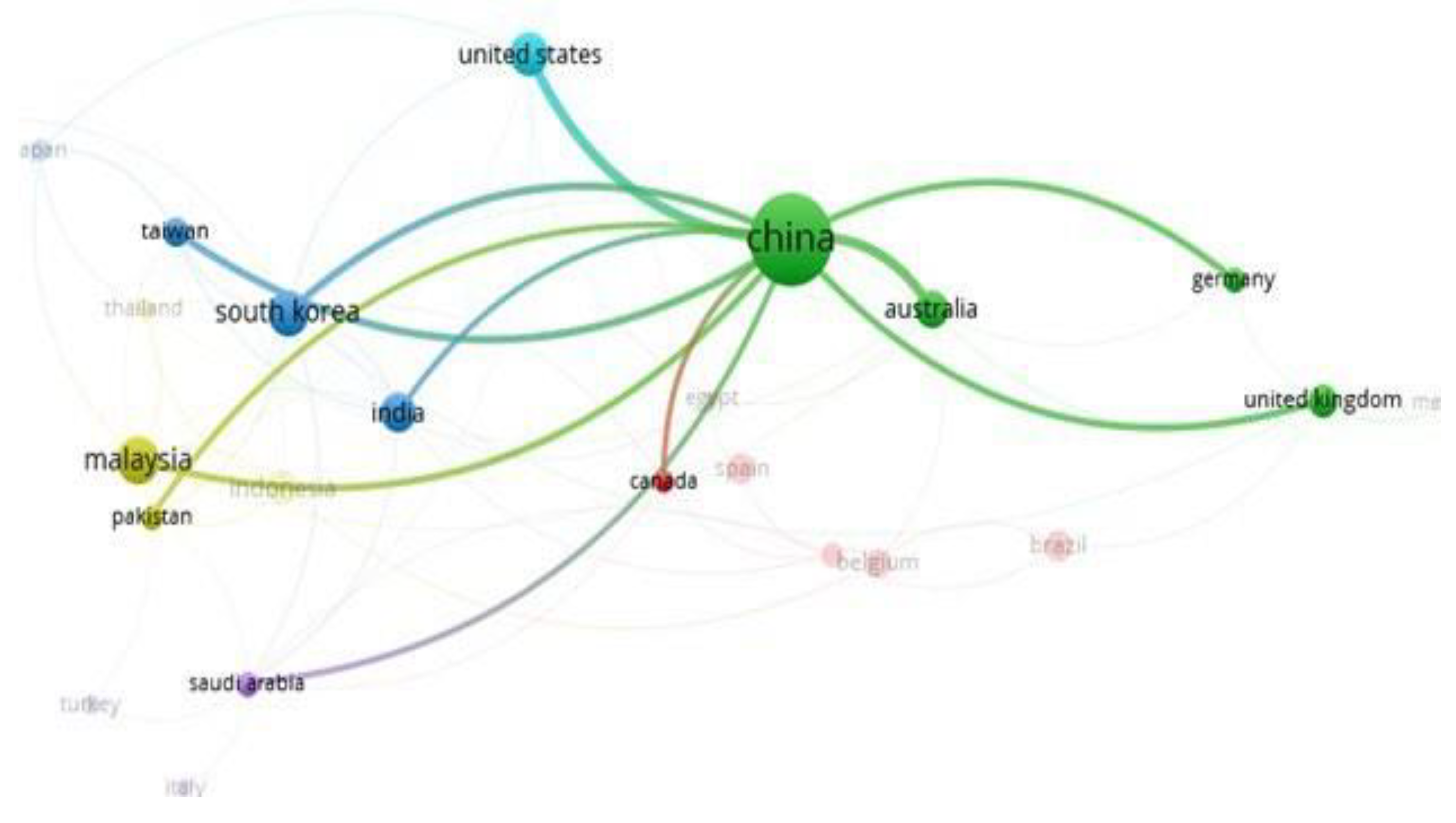
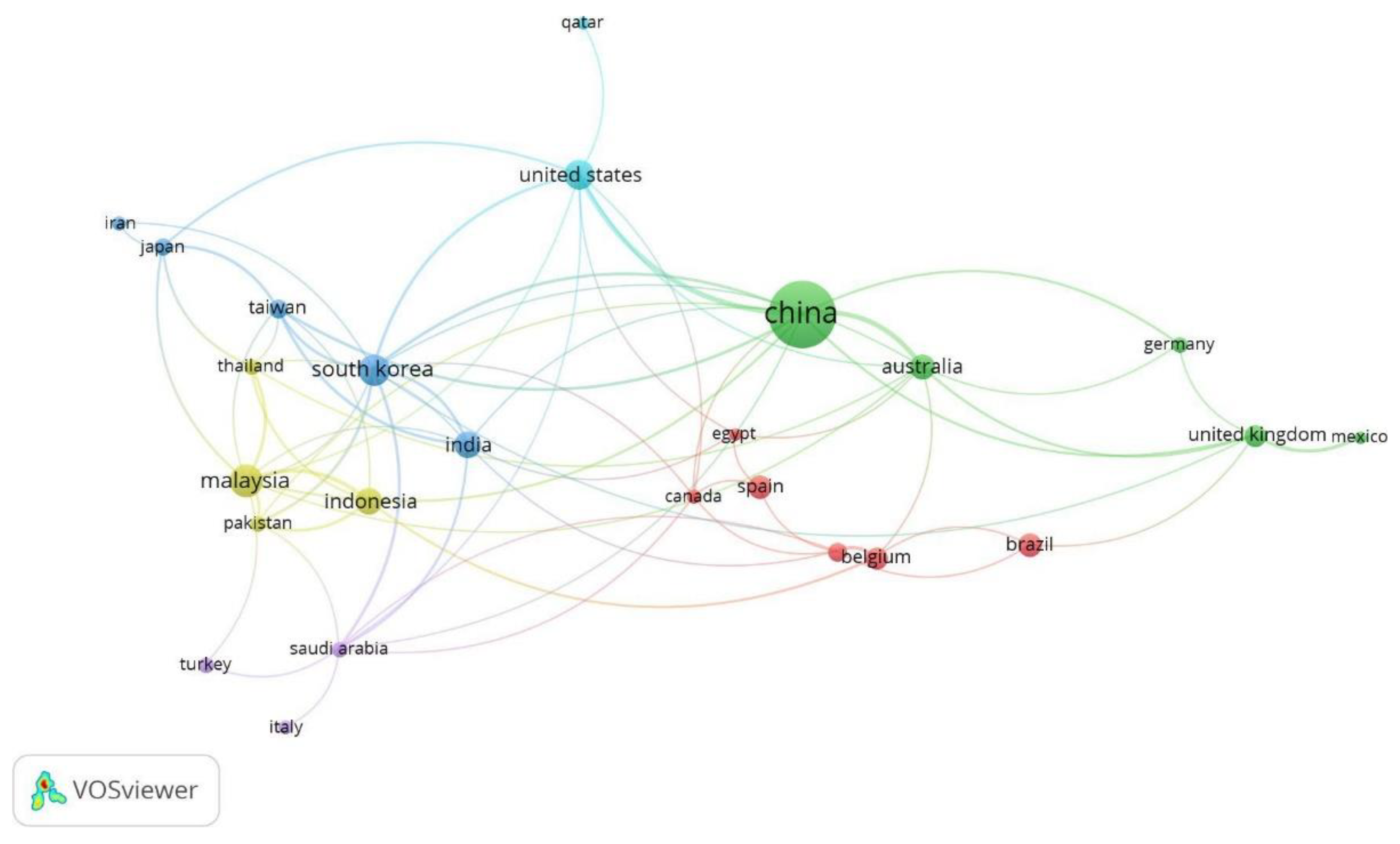
Figure 5.
The network map of bibliographic coupling institutions for microalgae harvesting research.
Figure 5.
The network map of bibliographic coupling institutions for microalgae harvesting research.
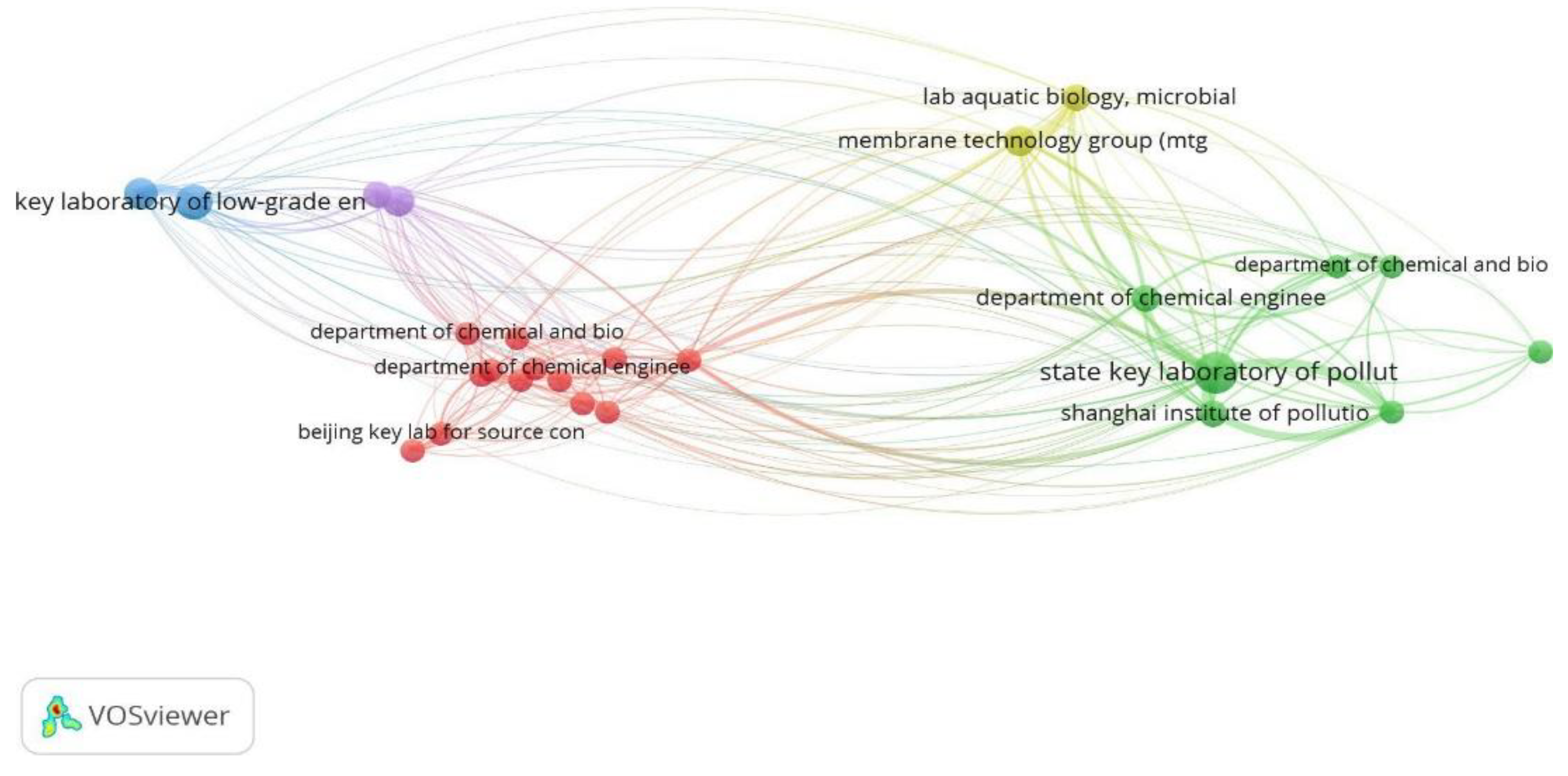
Figure 6.
(a) The network map of bibliographic coupling journals for microalgae harvesting research. (b) focus on Bioresource Technology.
Figure 6.
(a) The network map of bibliographic coupling journals for microalgae harvesting research. (b) focus on Bioresource Technology.
Disclaimer/Publisher’s Note: The statements, opinions and data contained in all publications are solely those of the individual author(s) and contributor(s) and not of MDPI and/or the editor(s). MDPI and/or the editor(s) disclaim responsibility for any injury to people or property resulting from any ideas, methods, instructions or products referred to in the content. |
© 2026 by the authors. Licensee MDPI, Basel, Switzerland. This article is an open access article distributed under the terms and conditions of the Creative Commons Attribution (CC BY) license (http://creativecommons.org/licenses/by/4.0/).
Copyright: This open access article is published under a Creative Commons CC BY 4.0 license, which permit the free download, distribution, and reuse, provided that the author and preprint are cited in any reuse.


