
Submitted:
11 March 2026
Posted:
12 March 2026
You are already at the latest version
Abstract
Organic facies distribution exerts a primary control on hydrocarbon generation potential in clastic-dominated passive margin basins. This study evaluates the spatial and stratigraphic distribution of organic facies and their hydrocarbon potential in the Niger Delta Basin using an extensive organic geochemical dataset. A total of 715 source rock samples from onshore, shallow offshore, and deepwater wells were analyzed using total organic carbon (TOC) and Rock-Eval pyrolysis parameters (S1, S2, S3, HI, OI, Tmax). Organic facies were classified following the Pepper organofacies scheme to assess variations in organic matter type, richness, and generative potential across depositional settings and depobelts. The results show that source rocks of the Akata Formation are dominated by organofacies B and D/E, reflecting mixed marine and terrigenous organic matter with moderate to high hydrogen indices and predominantly oil-prone to mixed oil–gas generative potential. In contrast, source rocks of the Agbada Formation are characterized mainly by organofacies F, dominated by terrestrial organic matter with low hydrogen indices, indicating a gas-prone character. Cretaceous shales beneath the Niger Delta contain mixed organofacies D/E and F and locally exhibit fair to good hydrocarbon potential. TOC values range from 0.1 to 16.9 wt%, with the highest organic richness concentrated within the Akata Formation at depths of approximately 2800–4000 m. Spatial variations in organic facies distribution across depobelts reflect changes in depositional environment, sedimentation rate, and preservation conditions. These results confirm the Akata Formation as the principal effective oil-prone source rock in the Niger Delta Basin and provide important constraints for petroleum system analysis and deepwater exploration risk reduction.
Keywords:
Akata formation
; orgnic facies
; cretaceous
; Niger Delta Basin
1. Introduction
The Niger Delta of Nigeria is one of the Tier one super basins of the world. These super basins possess distinct characteristics, which distinguish them from others. Part of these include the capacity to have produced more than 5 billion bbl of oil and yet to be produced 5 billion bbl, many pays and plays. Additionally, numerous petroleum systems exist, boasting significant infrastructures (Fryklund R. and Stark P,2020, Fryklund R,2018,Fryklund R and Stark P,2019,Whaley J.,2019)
Understanding the distribution and quality of organic facies is fundamental to evaluating hydrocarbon generation potential and reducing exploration risk in sedimentary basins. Organic facies reflect the nature of organic matter input, depositional environment, and early diagenetic conditions, and they exert a primary control on the type, quantity, and phase of hydrocarbons generated. In clastic-dominated passive margin basins, such as the Niger Delta Basin, strong spatial and stratigraphic heterogeneity of source rocks commonly results in complex petroleum systems that are difficult to predict without detailed organic geochemical characterization.
The Niger Delta Basin of Nigeria is one of the world’s most prolific hydrocarbon provinces and is classified as a tier-one super basin. It has produced more than 20 billion barrels of oil and contains significant remaining oil and gas resources. The basin developed as a passive continental margin following the opening of the South Atlantic and is characterized by thick Tertiary sedimentary successions deposited in fluvio-deltaic to deep-marine environments. The stratigraphic framework comprises three main lithostratigraphic units: the marine Akata Formation, the paralic Agbada Formation, and the continental Benin Formation. These formations display pronounced lateral and vertical variations in lithology, organic matter type, and thermal maturity, leading to a complex distribution of hydrocarbon accumulations across onshore, shallow offshore, and deepwater settings.
Despite decades of exploration and research, the identification and relative contribution of effective source rocks in the Niger Delta Basin remain contentious. Early models proposed that hydrocarbons were generated mainly from interbedded shales within the Agbada Formation, with limited contribution from the deeper Akata Formation. Subsequent studies, however, suggested that the volumetrically extensive and deeply buried Akata shales represent the principal source rock, particularly for deepwater oil accumulations. Additional hypotheses propose contributions from underlying Cretaceous shales, further complicating basin-scale petroleum system interpretation. These contrasting models largely arise from limited datasets, restricted stratigraphic coverage, and insufficient integration of organic facies analysis with geochemical parameters.
Previous geochemical studies in the Niger Delta have primarily focused on bulk source rock richness, maturity indicators, or oil–oil and oil–source correlations, with relatively few investigations addressing basin-wide organic facies distribution and heterogeneity. Moreover, most existing studies are based on small datasets or restricted geographic coverage, which limits their applicability to regional petroleum system analysis and frontier deepwater exploration. As exploration activities increasingly target deeper offshore depobelts, a comprehensive understanding of organic facies distribution and hydrocarbon potential across the basin is essential for predicting fluid type, phase behavior, and charge risk.
This study addresses these gaps by presenting a basin-scale evaluation of organic facies distribution and hydrocarbon generation potential in the Niger Delta Basin using an extensive organic geochemical dataset. A total of 715 source rock samples from onshore, offshore, and deepwater wells were analyzed using total organic carbon (TOC) and Rock-Eval pyrolysis data. Organic facies were classified following the Pepper organofacies scheme to characterize organic matter type, richness, and generative potential. The objectives of this study are to (1) identify and classify the dominant organic facies present in the Niger Delta source rocks, (2) evaluate their hydrocarbon generation potential, (3) assess their spatial and stratigraphic distribution across depobelts, and (4) discuss the implications for petroleum system understanding and deepwater exploration in the Niger Delta Basin.
2. Tectonic Evolution
The tectonic framework of the Niger Delta Basin is fundamentally controlled by Cretaceous fracture zones that segment the West African continental margin. These fracture zones, expressed offshore as ridges and troughs in the deep Atlantic, define the boundaries of major sedimentary basins and form the structural margins of the Benue–Abakaliki Trough in southeastern Nigeria. The Benue–Abakaliki Trough represents a failed rift arm related to the triple junction that initiated the opening of the South Atlantic during the Late Jurassic to Early Cretaceous (Burke et al., 1971).Rifting in the Niger Delta region terminated by the Late Cretaceous, after which tectonic deformation became dominated by gravity-driven processes.
Figure 1.
(A) Location of Niger Delta along the west coast of Africa. (B) Structurally defined sub-basins in the Niger Delta clastic wedge. The sub-basins become successively younger seaward.
Figure 1.
(A) Location of Niger Delta along the west coast of Africa. (B) Structurally defined sub-basins in the Niger Delta clastic wedge. The sub-basins become successively younger seaward.
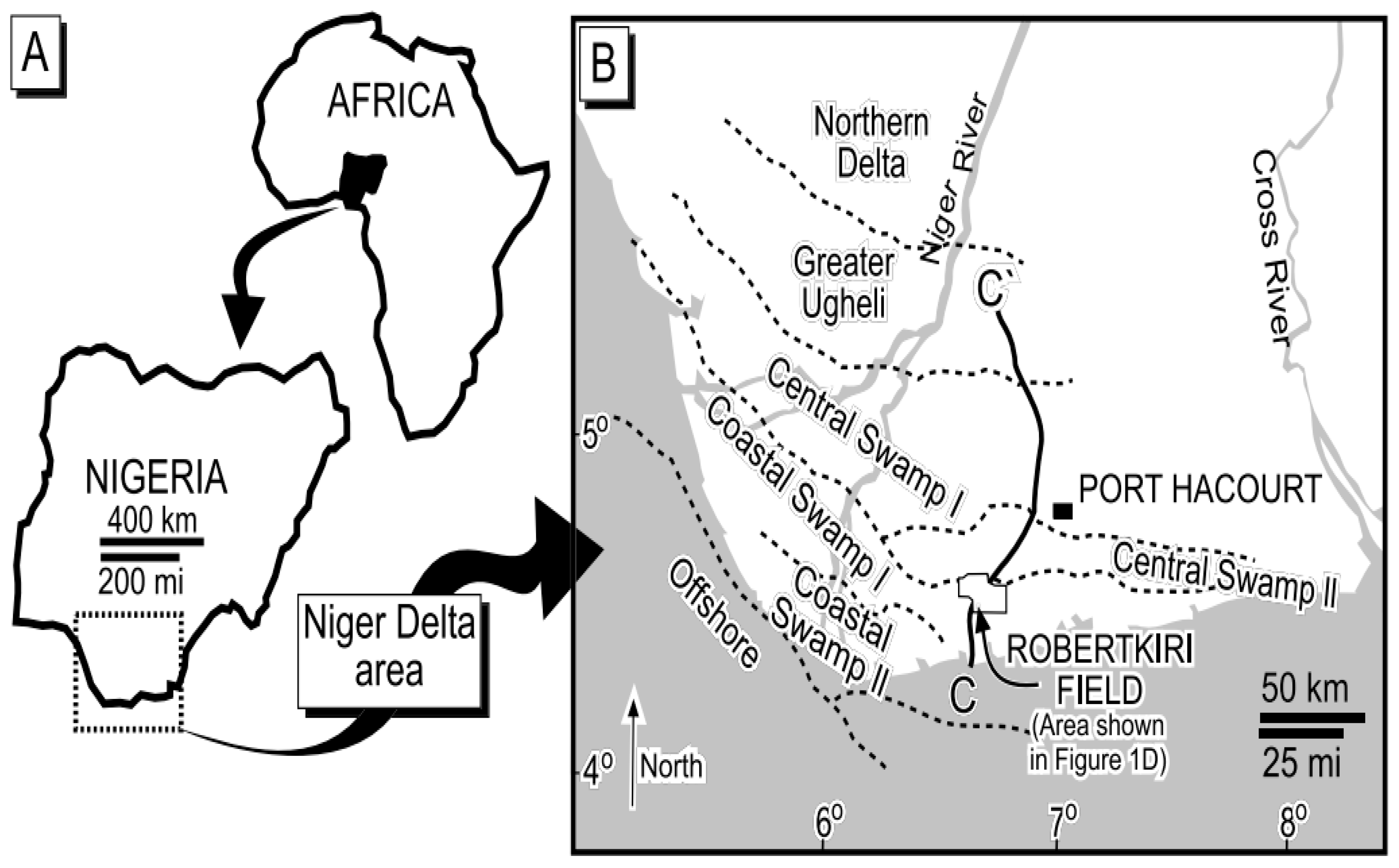
Two principal mechanisms controlled shale mobilization and structural development: (1) rapid loading of undercompacted, overpressured prodelta and slope shales of the Akata Formation by denser delta-front sands of the Agbada Formation, and (2) gravitational instability resulting from the absence of lateral basinward support for the ductile deltaic shales. These processes generated extensive shale diapirism, growth fault systems, collapsed fault crests, rollover anticlines, and associated structural traps. Deformation is largely detached within the upper Akata Formation, with most structural styles expressed in the overlying Agbada Formation (Evamy et al., 1978; Doust and Omatsola, 1990).
Stratigraphy
The sedimentary succession of the Niger Delta Basin records long-term southward progradation of deltaic systems from the Paleocene to the present and comprises one of the thickest Tertiary clastic successions along the West African margin. The stratigraphy is classically divided into three diachronous lithostratigraphic units—the Akata, Agbada, and Benin formations—distinguished by depositional environment, lithofacies characteristics, and sand-to-shale ratios (Short and Stauble, 1967; Whiteman, 1982). These units range in age from Paleocene to Recent and collectively reflect progressive basinward migration of depositional environments in response to high sediment supply and regional subsidence.
The Akata Formation forms the basal unit of the Niger Delta stratigraphy and was deposited in prodelta to deep-marine settings. It consists predominantly of thick, laterally extensive dark grey to black marine shales, with minor intercalations of turbiditic sandstones, silts, and clays. Organic-rich intervals within the Akata Formation contain predominantly Type II and Type III kerogens derived from mixed marine and terrigenous organic matter, making it the principal source rock in the Niger Delta Basin. Benthic foraminiferal assemblages indicate deposition under neritic to bathyal conditions. The Akata shale is commonly overpressured and serves as the primary detachment horizon for gravity-driven deformation, exerting a strong influence on structural style, hydrocarbon migration pathways, and trap development (Stacher, 1995).
Overlying the Akata Formation is the Agbada Formation, which comprises a thick (>3700 m) succession of paralic sediments deposited in fluvio-deltaic to shallow-marine environments. The formation is characterized by alternating sandstone, siltstone, and shale units arranged in upward-coarsening regressive cycles that reflect delta-front progradation and syn-depositional growth fault activity. Sandstone bodies within the Agbada Formation constitute the main hydrocarbon reservoirs of the Niger Delta petroleum system, with porosity values locally reaching up to 40% and permeability commonly in the range of 1–2 darcies. Interbedded shales exhibit variable organic richness and have been proposed as secondary source rocks in localized settings. Lithofacies distribution within the Agbada Formation shows pronounced lateral and vertical heterogeneity, controlled by depositional energy, sediment supply, and structural segmentation of the basin (Weber and Daukoru, 1975; Doust and Omatsola, 1990).
The Benin Formation represents the youngest and most proximal unit of the Niger Delta succession and consists predominantly of continental alluvial and upper delta plain deposits. It attains thicknesses of up to 2500 m and is composed mainly of coarse- to fine-grained, poorly sorted sands with minor clay interbeds, lignite seams, and hematitic grains. These fluvial-dominated sediments show little to no marine influence and are interpreted as non-marine alluvial plain deposits. Due to poor organic matter preservation and low shale content, the Benin Formation is not considered to contribute significantly to hydrocarbon generation or accumulation and primarily functions as an important regional aquifer (Reijers, 2011).
Beneath the Tertiary Niger Delta succession, Upper Cretaceous to Lower Paleocene marine shales of the Araromi, Awgu, and Imo formations are locally present and extend into the Anambra Basin and subsurface delta. These units contain mixed Type II–III kerogens and are interpreted to have contributed to an older Cretaceous petroleum system (Haack et al., 2000). Within the Tertiary succession, Middle Eocene to Pliocene source rocks occur mainly within the Akata Formation and the lower part of the Agbada Formation. These source rocks are dominated by terrigenous organic matter with variable marine input and display a wide range of thermal maturities across the basin. Organic facies range from oil-prone to gas-prone, reflecting variations in depositional environment, preservation conditions, and burial history. Biomarker and sterane distributions indicate strong terrestrial input under predominantly sub-oxic to anoxic conditions. In most depobelts, these source rocks have reached thermal maturity, with the deepest and most distal zones forming effective hydrocarbon kitchens for both oil and gas generation (Bustin, 1988; Peters et al., 2005).
3. Materials and Methods
3.1. Data Acquisition
This study adopts an integrated geological and geochemical approach based on subsurface data generated from oil and gas exploration activities within the Niger Delta Basin. The primary dataset was obtained through collaboration with operating oil and gas companies in Nigeria, with logistical support provided by the Department of Petroleum Resources (DPR). The data comprise organic geochemical measurements from both core and cutting samples collected from wells distributed across the onshore, shallow offshore, and deepwater sectors of the basin. A total of approximately 715 source rock samples were analyzed, providing extensive spatial and stratigraphic coverage across multiple depobelts. Where proprietary datasets were incomplete or unavailable, additional information was sourced from peer-reviewed scientific literature and publicly accessible databases to supplement and validate the primary data.
3.2. Organic Geochemical Analyses
The organic geochemical dataset includes measurements of Total Organic Carbon (TOC), Rock-Eval pyrolysis parameters, and thermal maturity indicators. Rock-Eval pyrolysis data comprise S1, S2, S3, hydrogen index (HI), oxygen index (OI), and maximum pyrolysis temperature (T<sub>max</sub>). Vitrinite reflectance (R<sub>o</sub>) values were used as an independent maturity indicator where available. These parameters were employed to evaluate source rock richness, organic matter type, and thermal maturity across the basin.
3.3. Organic Facies Classification
Organic facies were identified and classified using Rock-Eval-derived parameters, particularly HI and OI values, following the Pepper organofacies classification scheme. This approach allows discrimination between oil-prone, mixed oil–gas-prone, and gas-prone organic matter based on kerogen type and preservation conditions. The distribution of organic facies was evaluated both stratigraphically and spatially to assess variations across depositional environments and depobelts.
3.4. Supporting Geological Data and Analysis
Structural and depth maps were incorporated to constrain burial depth, stratigraphic position, and regional trends in source rock development. Some maps were obtained from published studies, while others were generated through geological interpretation using standard subsurface interpretation software (GENESIS software). These datasets provided contextual constraints for interpreting organic facies distribution and hydrocarbon generation potential.
3.5. Data Integration and Interpretation
All geochemical and geological datasets were integrated to assess source rock quality, organic facies distribution, and hydrocarbon generation potential across the Niger Delta Basin. The combined analysis enabled basin-scale evaluation of spatial and stratigraphic variability in source rock characteristics and provided a framework for understanding petroleum system development across multiple depobelts.
4. Organo-Facies in the Niger Delta Basin
The understanding of the type and distribution of organo-facies within a sedimentary basin and their geochemical characteristics helps in the estimation of the hydrocarbon potential of the basins. This is done by integrating this with geological and geochemical data in order to achieve a better result.In addition, the understanding of organo-facies gives a better insight on the generation of the hydrocarbon quality and produceability. The organo-facies is characterized by the organic matter content, its source, and depositional environment. Therefore, the primary aim of studying organo-facies is to predict the likelihood of finding hydrocarbon sources based on the depositional environment within a sedimentary basin.
Although, little or no work has been done on the type and distribution of organo-facies in the Niger Delta Basin but few work has been conducted on the description of kerogen types in this basin (Ekweozor C. M and Daukoru E.M., 1994,Ekweozor C. M and Daukoru E.M.,1990, Bustin R.M,1988, kweozor C.M and Okoye N.V,1980,Udo O.T and Ekweozor C.M,1988). In a source-rock study on sidewall core and cuttings from the Agbada-Akata transition or uppermost Akata Formation, it was concluded that there are no rich source rocks in the delta. In terms of oil potential, Bustin claimed that their great volume, excellent migration pathways, and excellent drainage have more than compensated the poor source-rock quality. The author believed that high sedimentation rate which cause the rapid hydrocarbon generation and permeable interbedded sandstone further enhance oil potential of his studied source rocks. The average value of total organic-carbon (TOC) content of shale, siltstone and sandstone is between 1.4 to 1.6 wt %(Bustin R.M.,1988). The content of Total Organic Carbon (TOC) appears to differ based on the age of the strata, with a pattern showing a decline in TOC content with the age decreasing (averaging 0.9% in Pliocene strata and 2.2% in the late Eocene). Eocene TOC averages were similar with the average value of TOC for Agbada-Akata shale in two wells between 2.5% and 2.3 wt%(Petroconsutant,1996a). Further, reports indicate TOC values of between 0.4 to 14.4% in paralic sediments of the onshore and offshore (Short K.C and Stauble A.J, ,1967), and in the western part the values ofparalic shale is 5.2%(Nwachukwu J.I and Chukwurah P.I, 1986)
However, it is widely believed that these higher TOC values are limited to thin beds and are best-identified using conventional cores (Hooper R.J and N. G. B. Fitzsimmons R.J,2002). The organic matter found in this type of source rock contains mixed macerals with 85-98% vitrinite, along with some liptinites and amorphous organic matter (Bustin R.M,1988). Hydrogen indices (HI) are frequently low and usually range from 160 to below 50 mg HC/g TOC. Bustin's average of 90 mg HC/g TOC may have been underestimated due to matrix effects on whole-rock pyrolysis of deltaic rock. The HI values of 232 for immature kerogen that were isolated from Agbada-Akata shales (Udo O.T and Ekweozor C.M,1988)
Hence, in this research work, organo-facie types in the Niger Delta(Avbovbo A. A, 1978). The organofacies is classified into 5 main global types; A, B, C, D/E and F (Figure 4.4) which aided further understanding of the hydrocarbon potential of source rocks and how they control the type and amount of hydrocarbon generated (Pepper and Corvi, 1995a)
Accordingly, each organo-facie type is derived from different sedimentary environment and has different organic matter input. For example, organo-facie type B mainly compose of mixtures of algal materials and bacteria while in the case of organo-facie F, woody/plant materials are the dominant constituents. The upper and lower limit of HI is used to identify different orgno-facies in this study (50<F<200, 200<D/E<60, 400<C<600, 600<B<750, and B>750).
In addition, the various types of organo-facies are defined as a set of kerogens originating from shared organic precursors, deposited under comparable environmental conditions, and subjected to similar early diagenetic processes (Pepper and Corvi, 1995a).
In this study, source rocks from the Akata Formation are of marine and mixed types which dominantly belong to Type II Figure 3. a)These types belong to organo-facie type B,D/E and F (Table 1). Thus, in the Niger Delta, source rocks from the Akata Formation are from mixed environment including aquatic marine, which are dominantly from marine algae, and bacteria, with moderate sulfur incorporation, this source rock type produces oil. The Type D/E organo-facie are from terrigenous and non-marine source, with higher plant cuticle contributions. With incorporation from resin, lignin although bacteria was also regarded as part of the principal biomass (Pepper and Corvi, 1995a) .They produce both oil and gas.
Figure 2.
a) Left skewed distribution of both the TOC (Top) for the Organo facies present in the studied wells in Niger delta basin (b) Left skewed distribution HI (Bottom) for the Organo facies present in the studied wells in Niger delta basin.
Figure 2.
a) Left skewed distribution of both the TOC (Top) for the Organo facies present in the studied wells in Niger delta basin (b) Left skewed distribution HI (Bottom) for the Organo facies present in the studied wells in Niger delta basin.
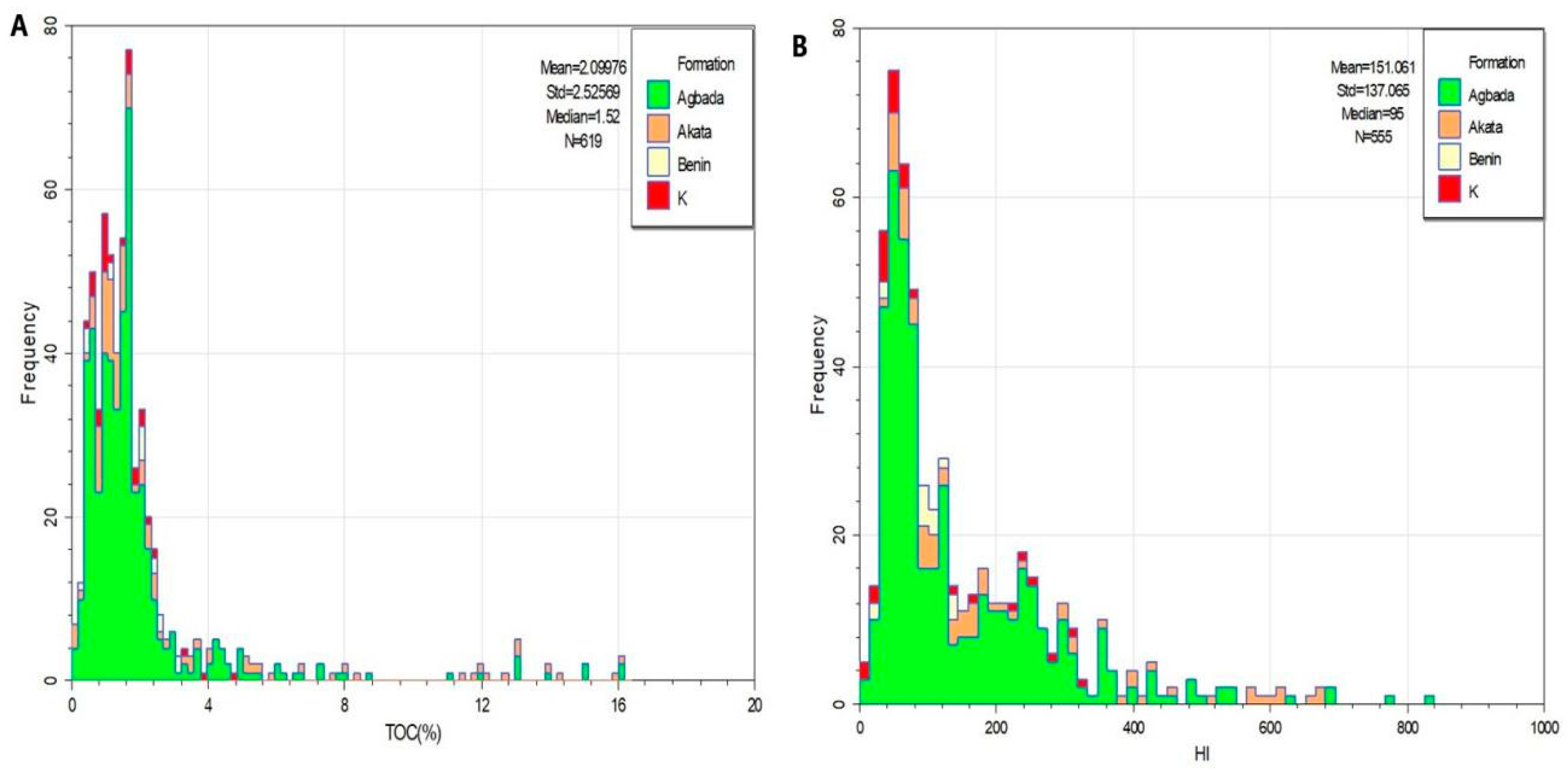
On the other hand, source rocks from the Agbada Formation are of marine and mixed types, which dominantly belong to Type ӀӀӀ .This belong to organo-facie Type Figure 3(a) which are from terrigenous source.
Figure 3.
a) show organofacies B,D/E and F present in Akata formation and (b) Show the Organofacies F present in Agbada Formation of Niger Delta.
Figure 3.
a) show organofacies B,D/E and F present in Akata formation and (b) Show the Organofacies F present in Agbada Formation of Niger Delta.
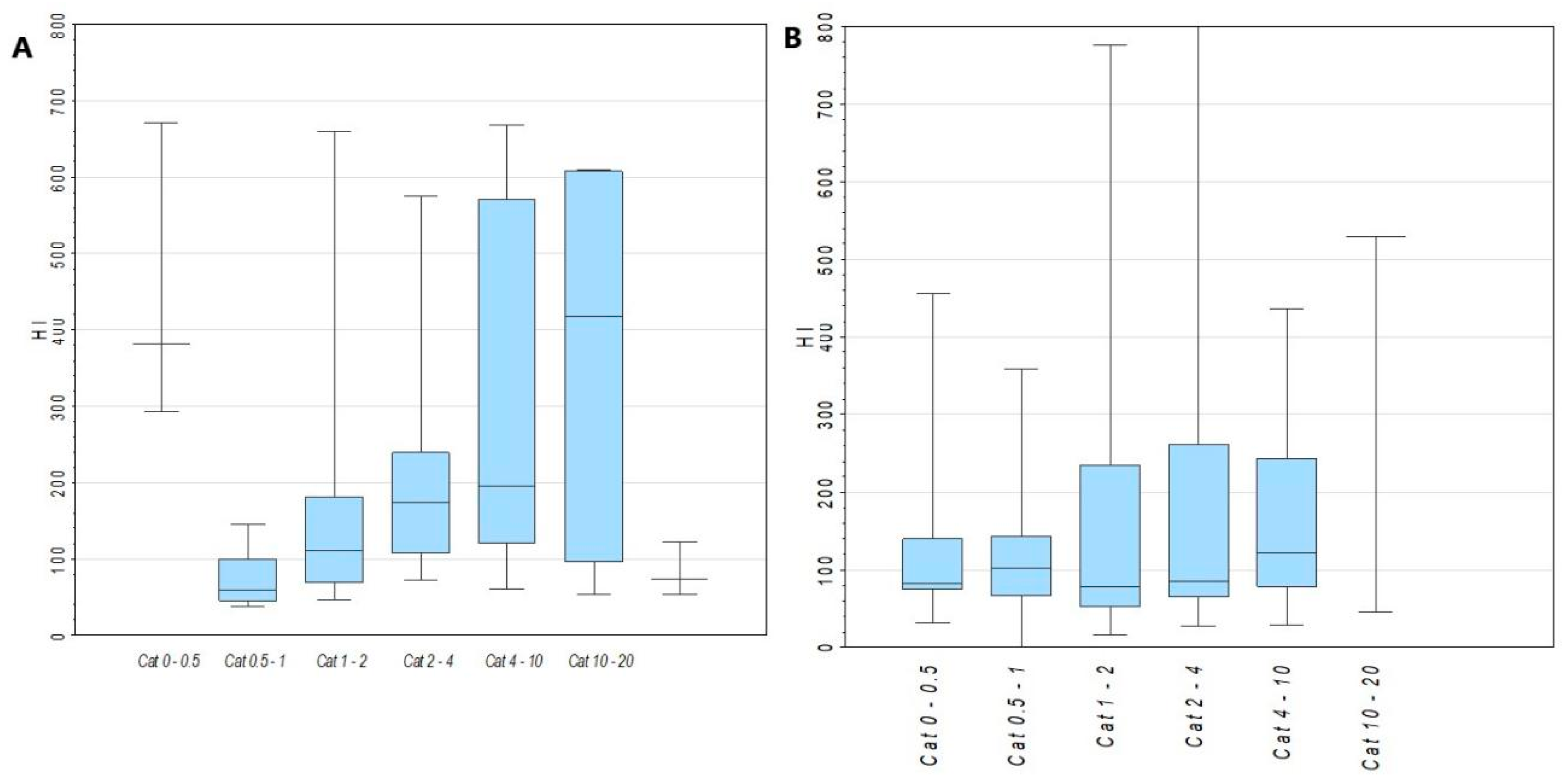
Based on this, the Agbada Formation serve as producer of gas in the Niger Delta. The Type F is mainly from terrigenous sources, which is capable of producing Gas. Moreover, the source rocks of Benin formation contain mainly terrigenous organic matter i.e. Type ӀӀӀ which belongs to the organo-facie Type F (Figure 4) and they are capable of generating gas.
Figure 4.
(a) Show the organofacie F present in Benin formation and (b) Show the organo facies D/E and F present in K-source rocks.
Figure 4.
(a) Show the organofacie F present in Benin formation and (b) Show the organo facies D/E and F present in K-source rocks.
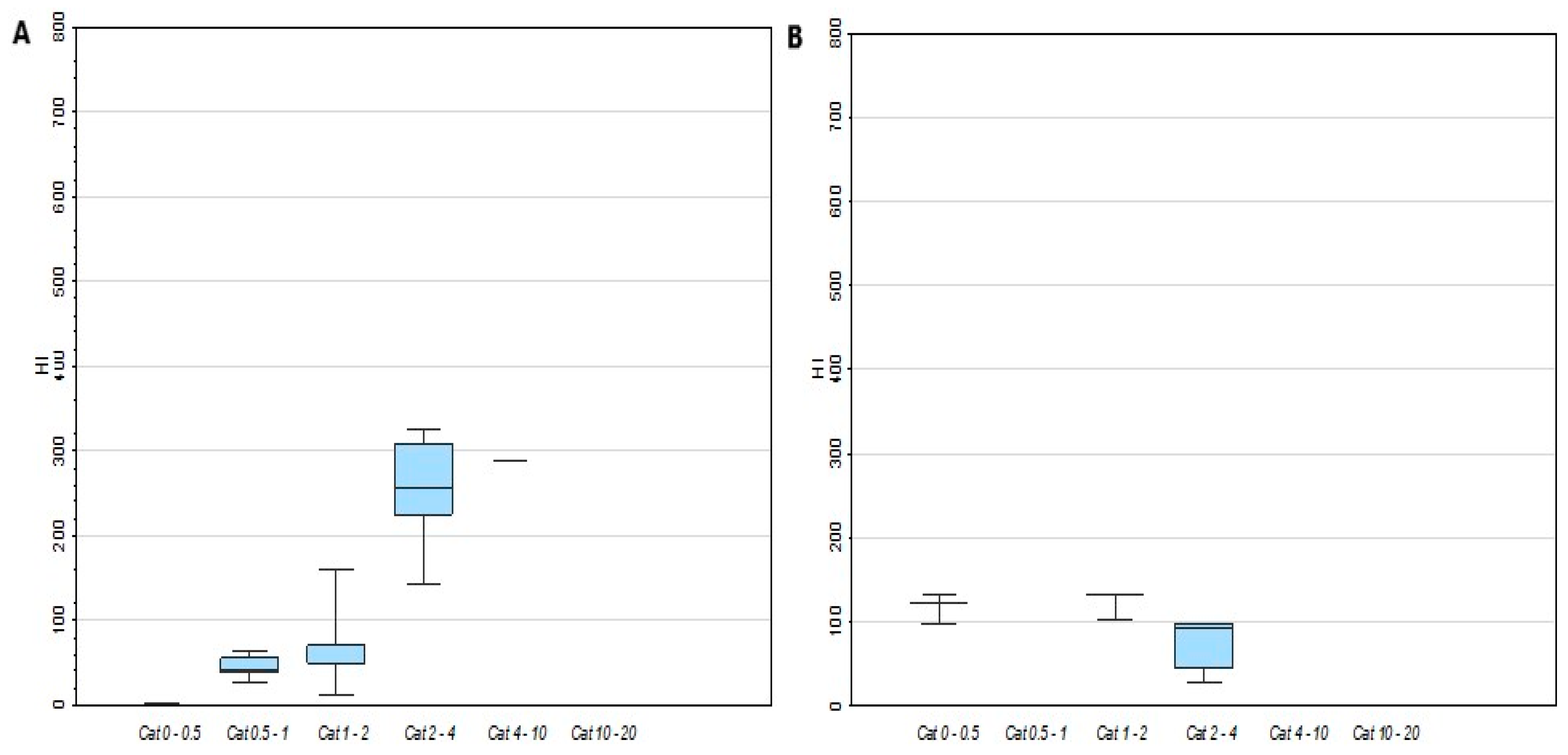
In the western deep-water area and some areas of shallow water in the Northern area of the Niger Delta Basin, the source rocks are dominated by marine organic matter (Non-terrigenous). In addition, the source rocks of cretaceous shales belongs to mixed types and terrigenous which dominantly belong to Type ӀӀ and Type ӀӀӀ (Table 1). This belong to the organo-facie D/E and F, which are from mixed environment including aquatic marine environment with incorporation from marine algae and bacteria and terrigenous sources. Based on this, the cretaceous source rocks can potentially be a producer of oil and gas in Niger delta. However, in the shallow water area, especially in the central part of the basin there are mixed organic matter of both marine and terrigenous origin while in the northwestern and the north-eastern area of the shallow water areas of Niger Delta Basin, terrigenous higher plant organic matter are dominated. It was discovered that organic matter land contribution decreases away from the sea and increases towards the shallow part of the delta and to the land area. It is worthy to note that, the main factor that account for the distribution of hydrocarbons in the delta is the effect of migration and as such, the presence of overpressured seal can effectively trap hydrocarbon more than the normally pressured seal.
The source rocks of Akata Formation have TOC of between >2% and 16.9% and the HI increases from 0.1 - 600 mg/gTOC. The relationship between the HI and TOC reflects the changes in micro-composition of the source rocks. In addition, from the knowledge of marcerals compositions of organic facies, it is found out that the source rocks of Akata Formation in the deep water areas has TOC >2% and they contain marine organic matter such as algae, etc.
From some selected wells from various deep and shallow area in the Niger Delta Basin, results from this study indicate a stack of organic-facies that are strongly associated with D/E to B and F types of organo-facie and these represents Tertiary organo-facies in the Niger Delta Basin. According to the data, it shows that there is a good relationship between the HI and TOC in the marine source rocks of Niger Delta basin. As shown in (Figure 5), it can be seen that they belong to organo-facies B, although the contents of some oxidized organic matters but in minor quantity.
Furthermore, there are some source rocks belonging to the Cretaceous shales with TOC value ranging from 0.4wt % - 5wt% and HI values of between 0.1 - 300mg/gTOC(Figure 5). The source rocks under consideration contain organic material from mixed sources that originate from both marine and higher plants. More specifically, they fall within organo-facies D/E and the terrigenous source organo-facies (Table 1), which accounts for the high vitrinite content derived from terrigenous organic matter. These source rocks are found in the offshore region of the Niger Delta and display a higher amount of organic material from mixed and terrigenous sources.
5. Discussion
5.1. Controls on Organic Facies Development
5.1.1. Depositional Environment
Although, little or no work has been done on the type and distribution of organo-facies in the Niger Delta Basin but few work has been conducted on the description of kerogen types in this basin. Hence, in this research work, organo-facie types in the Niger Delta . The organofacies is classified into 5 main global types; A, B, C, D/E and F (Figure 6) which aided further understanding of the hydrocarbon potential of source rocks and how they control the type and amount of hydrocarbon generated.
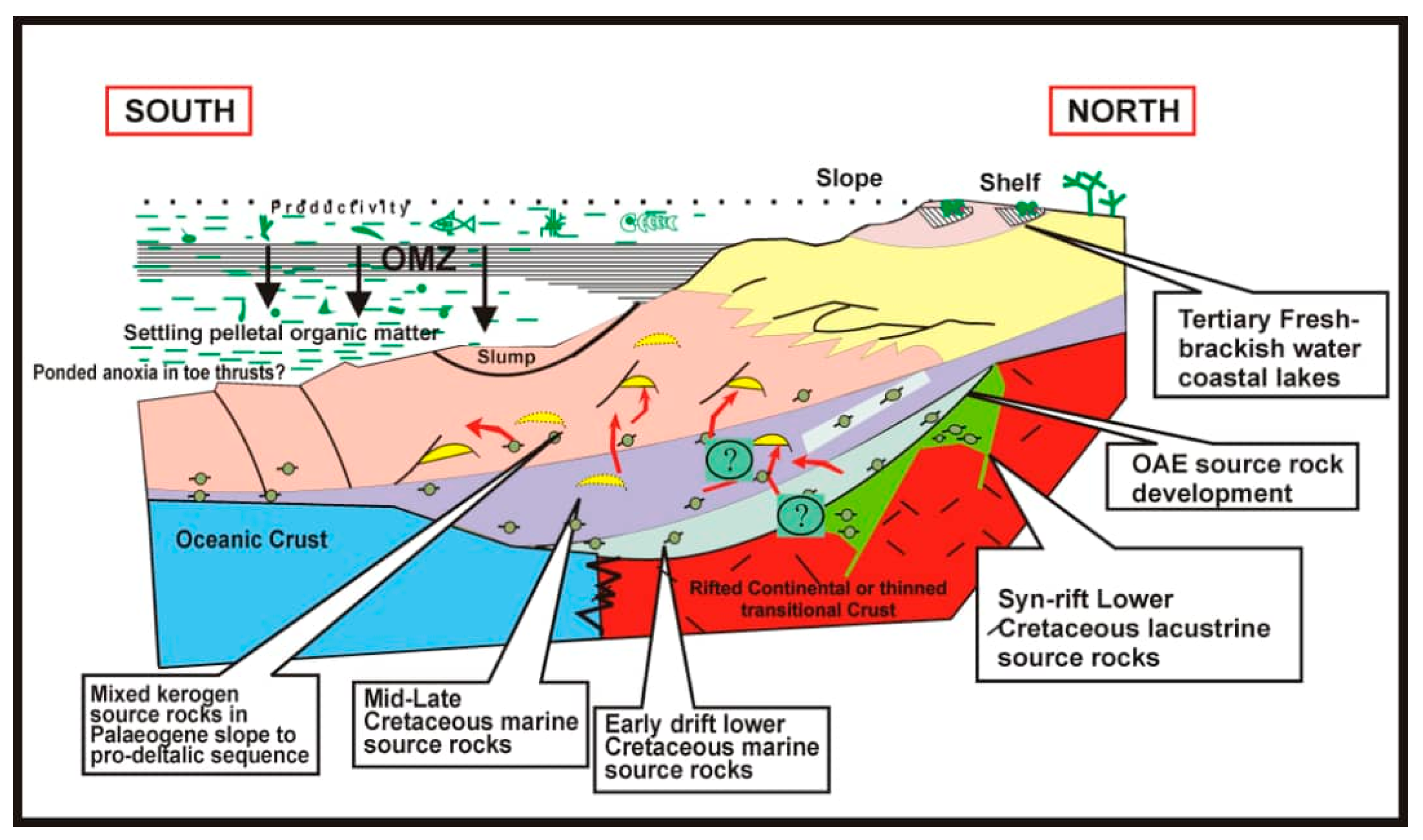
The distribution of organic facies in the Niger Delta Basin is primarily controlled by depositional environment, reflecting variations in proximity to sediment source, water depth, and marine influence(Doust and Omatsola, 1990). Distal prodelta to deep-marine environments associated with the Akata Formation favored the accumulation and preservation of mixed marine–terrigenous organic matter, resulting in the dominance of organofacies B and D/E. These settings promoted reduced clastic dilution and enhanced preservation of hydrogen-rich organic matter under sub-oxic to anoxic conditions (Evamy et al., 1978; Bustin, 1988; Stacher, 1995). In contrast, paralic to shallow-marine environments characteristic of the Agbada Formation received abundant terrestrial organic input from fluvial systems, leading to the predominance of organofacies F, which is typically gas-prone due to higher oxidation levels and lower hydrogen indices (Weber and Daukoru, 1975; Doust and Omatsola, 1990).The systematic basinward increase in oil-prone organic facies reflects the transition from proximal delta plain and delta-front environments to distal marine settings. This relationship highlights the strong control exerted by depositional setting (Figure 7) on organic matter type and, ultimately, hydrocarbon generation potential.
5.1.2. Sedimentation Rate and Dilution
High sedimentation rates associated with rapid delta progradation exert a significant influence on organic facies development through dilution effects. In proximal settings, rapid accumulation of siliciclastic material dilutes organic matter, resulting in lower TOC values and poorer preservation, despite high organic input (Tyson, 1995; Bustin, 1988). This effect is particularly evident in the Agbada and Benin formations, where high sand-to-shale ratios and frequent depositional reworking limit the development of effective source rocks (Weber and Daukoru, 1975; Doust and Omatsola, 1990).

Table 1.
Organic facies associated with Niger Delta Basin.
| Source Rock | Organic Facies | HI(mgHC/gTOC) | %TOCavg | S2avg(mgHC/g Rock) | Kerogen Type | Environment | |
| Benin Formation | F | 40-100 | 1.01 | 0.91 | ӀӀӀ | Terrestrial | |
| Agbada Formation | F | 80-270 | 2.15 | 2.53 | ӀӀӀ | Terrestrial | |
| Akata Formation | D/E- B and F | 20-600 | 2.43 | 2.69 | Ӏ,ӀӀ-ӀӀӀ and ӀӀӀ | Marine/ Terrestrial | |
| K-rocks | D/E and F | 20-300 | 1.93 | 2.73 | ӀӀ and ӀӀӀ | Marine/ Terrestrial |
In contrast, lower net sedimentation rates in distal marine environments allow organic matter to accumulate with less dilution, contributing to higher TOC values and more favorable organic facies within the Akata Formation. These conditions are particularly effective in deepwater depobelts, where sediment bypass and episodic deposition enhance organic matter concentration and preservation (Stacher, 1995; Haack et al., 2000).
5.1.3. Oxygenation and Preservation Conditions
Bottom-water oxygenation played a critical role in determining organic matter preservation and organic facies type. Sub-oxic to anoxic conditions in deeper marine settings favored the preservation of labile marine organic matter, contributing to the development of oil-prone organofacies B and mixed organofacies D/E (Tyson, 1995; Bustin, 1988). In contrast, more oxic conditions in shallow-marine and continental environments promoted oxidation of hydrogen-rich organic components, resulting in the dominance of gas-prone organofacies F (Peters et al., 2005; Doust and Omatsola, 1990).
The prevalence of overpressured shale intervals within the Akata Formation further enhanced organic matter preservation by limiting bioturbation and early oxidation during burial. These preservation conditions are consistent with the observed spatial concentration of oil-prone organic facies in deeper and more distal parts of the Niger Delta Basin (Stacher, 1995; Haack et al., 2000).
5.2. Hydrocarbon Generation Potential of Organic Facies
5.2.1. Oil-Prone Versus Gas-Prone Facies
Organic facies identified in this study display distinct hydrocarbon generation characteristics, consistent with established relationships between kerogen type, hydrogen index, and hydrocarbon yield (Peters et al., 2005; Tissot & Welte, 2013). Organofacies B exhibits the highest oil-generation potential, reflecting its relatively high hydrogen index and mixed marine–terrigenous organic matter composition, a characteristic commonly associated with Type II/II–III kerogen in distal marine to paralic settings of the Niger Delta (Nwankwo et al., 2022; Onojake et al., 2024). Organofacies D/E displays intermediate characteristics and is capable of generating both oil and gas depending on thermal maturity, which is typical of mixed kerogen assemblages undergoing progressive burial and transformation (Peters et al., 2005; Akinlua et al., 2023). In contrast, organofacies F is dominated by terrestrial organic matter with low hydrogen indices and is therefore primarily gas-prone, reflecting a predominance of Type III kerogen commonly reported in proximal Agbada and Benin Formation intervals (Nwankwo et al., 2022; Akinlua & Torto, 2021).
The relative abundance and spatial distribution of these organic facies exert a strong control on hydrocarbon type across the basin, with oil-dominated petroleum systems preferentially associated with deeper, more distal Akata Formation source rocks, and gas-dominated systems linked to more proximal Agbada and Benin Formation intervals where terrestrial organic matter input is higher and maturity conditions favor gas generation (Evamy et al., 1978; Akinlua et al., 2023; Onojake et al., 2024).
5.2.2. Relative Contribution to Basin Charge
At the basin scale, the Akata–Agbada petroleum system represents the dominant hydrocarbon system in the Niger Delta Basin, with the Akata Formation constituting the primary effective source rock and principal charge engine. The Akata shales are regionally extensive, volumetrically significant, and organically rich, containing predominantly oil-prone to mixed Type II–III kerogen. Progressive burial beneath the progradational delta has resulted in widespread hydrocarbon generation, efficient expulsion, and sustained charge into overlying reservoir units (Evamy et al., 1978; Peters et al., 2005; Nwankwo et al., 2022).
Hydrocarbon generation kitchens are concentrated within deeply buried Akata depocenters, from which expelled fluids migrate predominantly via fault-assisted vertical pathways and secondary lateral carrier systems into structurally and stratigraphically trapped reservoirs of the Agbada Formation. As a result, oil-dominated accumulations are preferentially associated with Akata-sourced charge, particularly in distal and deep-water settings where marine organic facies are best developed (Akinlua et al., 2023; Onojake et al., 2024).
The Agbada Formation shales, although locally organic-rich, are volumetrically limited, laterally discontinuous, and characterized by lower hydrogen indices and predominantly gas-prone Type III kerogen. Consequently, their contribution to basin-scale hydrocarbon charge is secondary and localized, with effectiveness largely restricted to proximal depobelts and gas-prone systems (Nwankwo et al., 2022). The Benin Formation is ineffective as a source rock due to poor organic matter preservation under continental depositional conditions.
At greater depths, Cretaceous source rocks (K-rocks) form a distinct, subordinate petroleum system that contributes to the overall charge architecture of the basin. These units, where thermally mature, are capable of hydrocarbon generation and may contribute to deep accumulations or mixed charge signatures through fault-controlled migration pathways. However, their influence is spatially restricted and does not exceed that of the Akata Formation, which remains the dominant source rock controlling hydrocarbon charge across the Niger Delta Basin (Akinlua et al., 2023; Onojake et al., 2024).
5.2.3. Effect of Thermal Maturity
Kerogen thermal maturity in this study is evaluated primarily using vitrinite reflectance (Ro%), with the Thermal Alteration Index (TAI) employed as a supporting indicator. Although both parameters are valid, Ro% provides a more quantitative and reproducible measure of thermal maturity and is therefore preferred for integration with basin-scale maturity maps and Ro% histograms (Peters et al., 2005; Tissot & Welte, 2013). The Ro% histograms and maturity maps show a systematic increase in thermal maturity from proximal to distal depobelts, reflecting progressive burial beneath the progradational Niger Delta sedimentary wedge.
Thermal maturity modulates the timing and extent of hydrocarbon generation but does not override the primary control exerted by organic facies on hydrocarbon phase behavior (Tyson, 1995; Peters et al., 2005). Within the oil window (Ro ≈ 0.6–1.0%), oil-prone organofacies B and mixed organofacies D/E generate predominantly liquid hydrocarbons, consistent with their higher hydrogen indices and mixed marine–terrigenous organic matter composition. At higher maturity levels (Ro > 1.0–1.3%), these facies progressively shift toward wet gas and gas generation, as reflected by the proportion of mature to overmature samples in the Ro% histograms. In contrast, organofacies F, dominated by terrestrial Type III kerogen, generates predominantly gas even at moderate maturity levels (Ro ≈ 0.7–0.9%), in agreement with its persistently low hydrogen index values (Tyson, 1995).
The maturity maps further indicate that the deepest and most distal depobelts are characterized by mature to overmature Akata Formation source rocks (Ro > 1.0%), defining regionally extensive and long-lived generation kitchens capable of sustaining hydrocarbon charge into overlying Agbada reservoirs. At greater depths, Cretaceous source rocks (K-rocks) exhibit higher maturity levels, locally reaching overmature conditions (Ro ≥ 1.3–2.0%), reflecting earlier burial and thermal evolution relative to the Tertiary succession. These K-rocks therefore represent a deeper, secondary petroleum system, capable of gas-dominated generation and contributing to deep accumulations or mixed charge signatures where effective migration pathways exist. Nevertheless, the Ro% distribution confirms that the Akata Formation remains the principal source rock controlling basin-scale hydrocarbon generation and charge, with the contribution of K-rocks spatially restricted and subordinate.
5.3. Implications for Niger Delta Petroleum Systems
5.3.1. Validation of the Akata Formation as the Principal Oil Source
The organic facies distribution documented in this study provides strong geochemical support for the Akata Formation as the principal oil-prone source rock in the Niger Delta Basin. The dominance of organofacies B and D/E, together with favorable organic matter preservation and sufficient burial depth, confirms the Akata Formation as the primary contributor to liquid hydrocarbon generation and charge, particularly in offshore and deep-water settings where marine-influenced facies and higher thermal maturity prevail (Evamy et al., 1978; Peters et al., 2005; Nwankwo et al., 2022; Akinlua et al., 2023).
Figure 8.
Relationship between Tmax and burial depth, and vitrinite reflectance (Ro%) and burial depth, showing the thermal maturity evolution of organic-rich intervals in the Niger Delta Basin.
Figure 8.
Relationship between Tmax and burial depth, and vitrinite reflectance (Ro%) and burial depth, showing the thermal maturity evolution of organic-rich intervals in the Niger Delta Basin.
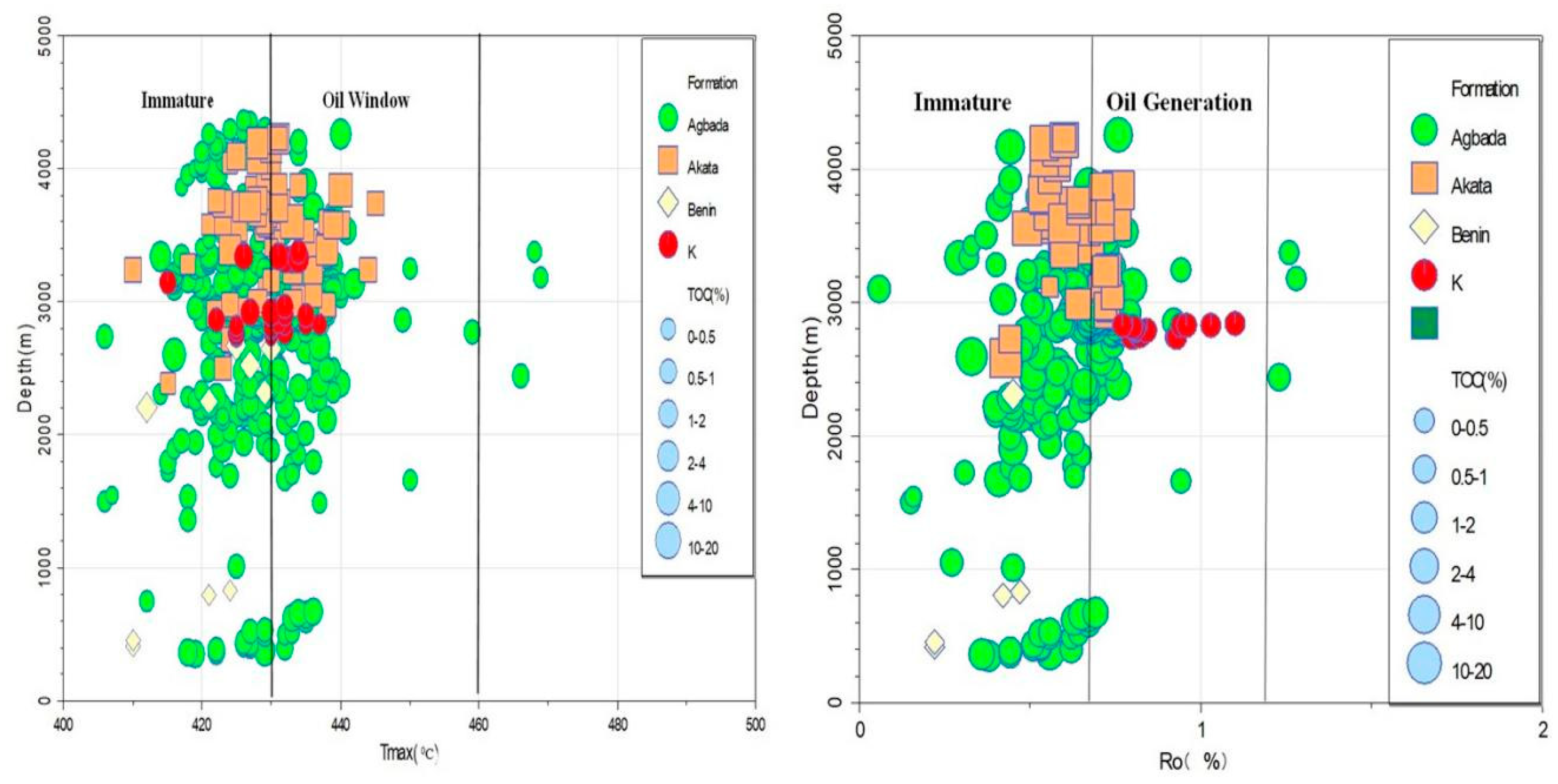
At greater stratigraphic depths, Cretaceous source rocks (K-rocks) constitute a distinct, secondary petroleum system. These units, where thermally mature to overmature, are capable of hydrocarbon generation and are interpreted to contribute mainly gas-dominated hydrocarbons and locally mixed charge signatures in deep structural domains through fault-assisted migration pathways (Akinlua et al., 2023; Onojake et al., 2024). Nevertheless, the organic facies architecture and maturity distribution demonstrate that basin-scale liquid hydrocarbon generation is overwhelmingly controlled by the Akata Formation, with the contribution of K-rocks spatially restricted and subordinate. Although Agbada Formation shales locally attain moderate TOC values, their predominance of gas-prone organofacies F and variable maturity limit their contribution to oil charge. These shales are more likely to act as secondary gas sources or intra-formational contributors rather than basin-scale oil generators.
5.3.2. Significance for Deepwater Exploration
The concentration of oil-prone organic facies within deep-water Akata shales has important implications for ongoing and future exploration in the Niger Delta Basin. Deep-water depobelts are underlain by thermally mature Akata source kitchens that are regionally extensive and capable of charging large structural and stratigraphic traps through fault-assisted migration pathways (Evamy et al., 1978; Peters et al., 2005; Akinlua et al., 2023). The dominance of oil-prone organofacies B and mixed organofacies D/E in these settings supports a high probability of liquid hydrocarbon charge in offshore and deep-water plays, consistent with observed maturity distributions and petroleum system architecture (Nwankwo et al., 2022; Onojake et al., 2024).
At greater depths, Cretaceous source rocks (K-rocks) form a deeper, secondary charge system beneath the Akata Formation. Where thermally mature to overmature, these K-rocks contribute predominantly gas-prone hydrocarbons and locally mixed charge signatures to deep structural domains, particularly where long-lived fault systems provide effective vertical migration pathways (Akinlua et al., 2023). Incorporation of both Akata and K-rock charge components within a facies-based petroleum system framework reduces uncertainty in predicting hydrocarbon phase, charge timing, and play risk in frontier offshore areas of the Niger Delta Basin.
5.4. Comparison with Previous Studies
The results of this study are consistent with previous works that identify the Akata Formation as the dominant source rock for hydrocarbons in the Niger Delta Basin, based on its regional extent, organic facies composition, and thermal maturity evolution (Evamy et al., 1978; Peters et al., 2005; Nwankwo et al., 2022; Akinlua et al., 2023). However, these findings contrast with earlier interpretations that emphasized significant oil generation from Agbada Formation shales, which were commonly based on localized datasets or limited stratigraphic intervals. The observed discrepancy largely reflects differences in dataset size, stratigraphic coverage, burial depth, and analytical focus, particularly with respect to organic facies distribution and maturity constraints.
In addition, this study recognizes the presence of Cretaceous source rocks (K-rocks) as a deeper, secondary petroleum system that has been less explicitly addressed in some earlier basin models. While thermally mature to overmature K-rocks are capable of hydrocarbon generation and may contribute to deep or mixed charge signatures in structurally complex areas, their spatial distribution and volumetric significance remain subordinate to the Akata Formation. Consequently, the integrated organic facies and maturity framework presented here supports a hierarchical source rock model, in which Akata shales dominate basin-scale hydrocarbon generation, Agbada shales provide localized contributions, and K-rocks represent a secondary, depth-restricted charge component (Akinlua et al., 2023; Onojake et al., 2024).
Earlier studies were often based on limited well control, localized sampling, or oil–oil correlation without comprehensive source rock characterization. In contrast, the basin-scale dataset used in this study allows for robust evaluation of organic facies distribution and reduces bias associated with localized anomalies.
By integrating a large geochemical dataset with organic facies analysis, this study provides a more consistent and predictive framework for understanding source rock variability in the Niger Delta Basin. The results reconcile previously conflicting models and clarify the relative roles of different stratigraphic units in hydrocarbon generation.
6. Exploration Implications
Organic facies distribution provides a powerful predictive tool for hydrocarbon phase and charge risk in the Niger Delta Basin. The dominance of oil-prone facies in distal Akata shales allows prediction of oil-rich systems in deepwater depobelts, whereas proximal settings dominated by gas-prone facies are more likely to yield gas or mixed hydrocarbon accumulations.
In deepwater plays, recognition of mature Akata source kitchens reduces source risk and improves confidence in prospect evaluation. Facies-based source characterization also aids in ranking frontier depobelts by hydrocarbon type and charge potential, enabling more efficient allocation of exploration resources. Application of this framework to underexplored offshore areas provides a transferable approach for reducing uncertainty in future exploration campaigns.
7. Conclusions
Organic facies analysis based on TOC and Rock-Eval pyrolysis data from 715 source rock samples reveals that organofacies B, D/E, and F are the dominant organic facies in the Niger Delta Basin, with organofacies B and D/E preferentially developed in distal marine settings and organofacies F dominant in proximal paralic to continental environments.
The Akata Formation contains the most effective hydrocarbon-generating facies, characterized by oil-prone to mixed oil–gas-prone organic matter (organofacies B and D/E), whereas shales of the Agbada Formation are dominated by gas-prone organic matter (organofacies F) and make a limited contribution to basin-scale oil charge.
Spatial and stratigraphic trends demonstrate a clear basinward transition from gas-prone source rocks in onshore and shallow offshore depobelts to increasingly oil-prone source rocks in offshore and deepwater depobelts, reflecting systematic changes in depositional environment, sedimentation rate, and preservation conditions.
The concentration of mature, oil-prone organic facies within deepwater Akata shales confirms the presence of effective source kitchens beneath offshore depobelts and highlights their critical role in charging major hydrocarbon accumulations in the Niger Delta Basin.
These findings provide robust constraints for petroleum system analysis and significantly reduce exploration risk by enabling prediction of hydrocarbon phase and charge potential, particularly in deepwater and frontier exploration settings.
Author Contributions
Methodology, ISLAMIYYAH OPEYEMI RAHEEM; Software, ISLAMIYYAH OPEYEMI RAHEEM; Data curation, ISLAMIYYAH OPEYEMI RAHEEM; Writing – review & editing, ISLAMIYYAH OPEYEMI RAHEEM; Supervision, Wang Feiyu. All authors have read and agreed to the published version of the manuscript.
Funding
This research received no external funding.
Data Availability Statement
The original contributions presented in this study are included in the article. Further inquiries can be directed to the corresponding author(s).
Acknowledgments
The authors acknowledge the Department of Petroleum Resources (DPR), Nigeria, for providing logistical support and access to subsurface data. We are grateful to the operating oil and gas companies in Nigeria for permission to use proprietary geochemical and geological datasets. The authors also acknowledge the academic and technical support provided by the China University of Petroleum, Beijing, which made this research possible.
Conflicts of Interest
The authors declare no conflict of interest.
References
- Akinlua, A., & Torto, N. (2021). Organic geochemistry and petroleum system evolution of the Niger Delta Basin. Journal of African Earth Sciences.
- Akinlua, A., et al. (2023). Source rock evaluation and hydrocarbon generation potential of the Niger Delta Basin. Journal of Petroleum Exploration and Production Technology.
- Akinlua, A., et al. (2023). Source rock maturity and petroleum system evolution of the Niger Delta Basin. Journal of Petroleum Exploration and Production Technology.
- Akinlua, A., & Torto, N. (2021). Organic facies and petroleum system evolution of the Niger Delta Basin. Journal of African Earth Sciences.
- Avbovbo A. A, "Tertiary lithostratigraphy of the Niger Delta," AAPG Bulletin, vol. 62, p. 295–300, 1978. [CrossRef]
- Bustin, R.M., 1988. Sedimentology and organic geochemistry of Niger Delta source rocks. Organic Geochemistry, 12, 279–298.
- Bustin R.M., "Sedimentology and characteristics of dispersed organic matter in Tertiary Niger Delta: origin of source rocks in a deltaic environment," American Association of Petroleum Geologists Bulletin, vol. 72, pp. 277-298, 1988.
- Doust, H., Omatsola, E., 1990. Niger Delta. In: Edwards, J.D., Santogrossi, P.A. (Eds.), AAPG Memoir 48, 201–238.
- Doust, H., Omatsola, E., 1990. Niger Delta. In: Edwards, J.D., Santogrossi, P.A. (Eds.), Divergent/Passive Margin Basins. AAPG Memoir 48, 201–238.
- Evamy, B.D., Haremboure, J., Kamerling, P., Knaap, W.A., Molloy, F.A., Rowlands, P.H., 1978.
- Evamy, B. D., et al. (1978). Hydrocarbon habitat of the Niger Delta. AAPG Bulletin, 62, 277–298.Hydrocarbon habitat of Tertiary Niger Delta. AAPG Bulletin, 62, 1–39.
- Ekweozor C.M and Okoye N.V, "Petroleum source-bed evaluation of Tertiary Niger Delta," vol. 64, pp. 1251-1259, 1980.
- Ekweozor C. M and Daukoru E.M., "Northern delta depobelt portion of the Akata-Agbada(!) petroleum system, Niger Delta, Nigeria," AAPG Memoir, vol. 60, pp. 559-614, 1994.
- Fryklund R. and Stark P., "Super basins- New Paradigm for oil and gas supply," AAPG Bulletin, vol. 104, pp. 2507-2519, 2020. [CrossRef]
- Fryklund R, "Keynotes: Why are Super basins?," 2018.
- Fryklund R and Stark P, "Where is the next Permian Basin?," 2019.
- Whaley J., "Petroleum Geology: What is a super basin?," GeoExPro, vol. 16, pp. 4-9, 2019.
- Haack, R.C., et al., 2000. Niger Delta petroleum systems, Nigeria. AAPG Bulletin, 84, 157–177.
- Hooper R.J and N. G. B. Fitzsimmons R.J., "The role of deformation in controlling depositional patterns in thesouth-centralNigerDelta,westAfrica," JournalofStructural Geology, vol. 24, p. 847–859, 2002. [CrossRef]
- Nwachukwu J.I and Chukwurah P.I., "Organic matter of Agbada Formation, Niger Delta, Nigeria: American Association of Petroleum Geologists Bulletin," vol. 70, pp. 48-55, 1986.
- Nwankwo, C. N., et al. (2022). Integrated source rock characterization of the Niger Delta Basin. Journal of Petroleum Exploration and Production Technology.
- Onojake, M. C., et al. (2024). Organic geochemistry of Niger Delta crude oils and implications for source rock facies. Journal of Petroleum Exploration and Production Technology.
- Onojake, M. C., et al. (2024). Organic geochemical characterization of Niger Delta crude oils. Journal of Petroleum Exploration and Production Technology.
- Pepper A.S and Corvi P.J., "Simple Kinetic models of Petroleum formation. Part 3: Modelling an open system," marine and Petroleum geology, vol. 12, pp. 517-452, 1995b. [CrossRef]
- Peters, K.E., Walters, C.C., Moldowan, J.M., 2005. The Biomarker Guide. Cambridge University Press.
- Petroconsultants, "Petroleum exploration and production database," Petroconsultants, Inc, Houston, TX 77274-0619, 1996a.
- Short K.C and Stauble A.J, "Outline of Geology of Niger Delta," Amer. Assoc. Petrol. Geol. Bull., vol. 57, pp. 761-779, 1967.
- Stacher, P., 1995. Present understanding of the Niger Delta hydrocarbon habitat. AAPG Bulletin, 79, 1361–1378.
- Thomas B.M. "Land plant source rocks for oil and their significance in Australian Basins," Australian Petroleum Association Journal, vol. 22, pp. 164-170. [CrossRef]
- Tissot, B. P., & Welte, D. H. (2013). Petroleum Formation and Occurrence (revised ed.). Springer.
- Tyson, R.V., 1995. Sedimentary Organic Matter: Organic Facies and Palynofacies. Chapman & Hall. → Classic reference for sedimentation rate, dilution, and organic facies controls.
- Udo O.T and Ekweozor C.M., "Comparative source rock evaluation of Opuama Channel Complex and adjacent producing areas of Niger delta," Nigerian Association of Petroleum Explorationists Bulletin, vol. 3, pp. 10-27, 1988.
- Whaley J., "Petroleum Geology: What is a super basin?," GeoExPro, vol. 16, pp. 4-9, 2019.
- Weber, K.J., Daukoru, E., 1975. Petroleum geology of the Niger Delta. Proceedings, 9th World Petroleum Congress, 2, 209–221.
Figure 5.
Plot of HI versus OI indicating kerogen types in the source rocks of the Niger delta and Plot of the frequency of the samples obtained from the rocks in the Niger Delta Basin.
Figure 5.
Plot of HI versus OI indicating kerogen types in the source rocks of the Niger delta and Plot of the frequency of the samples obtained from the rocks in the Niger Delta Basin.
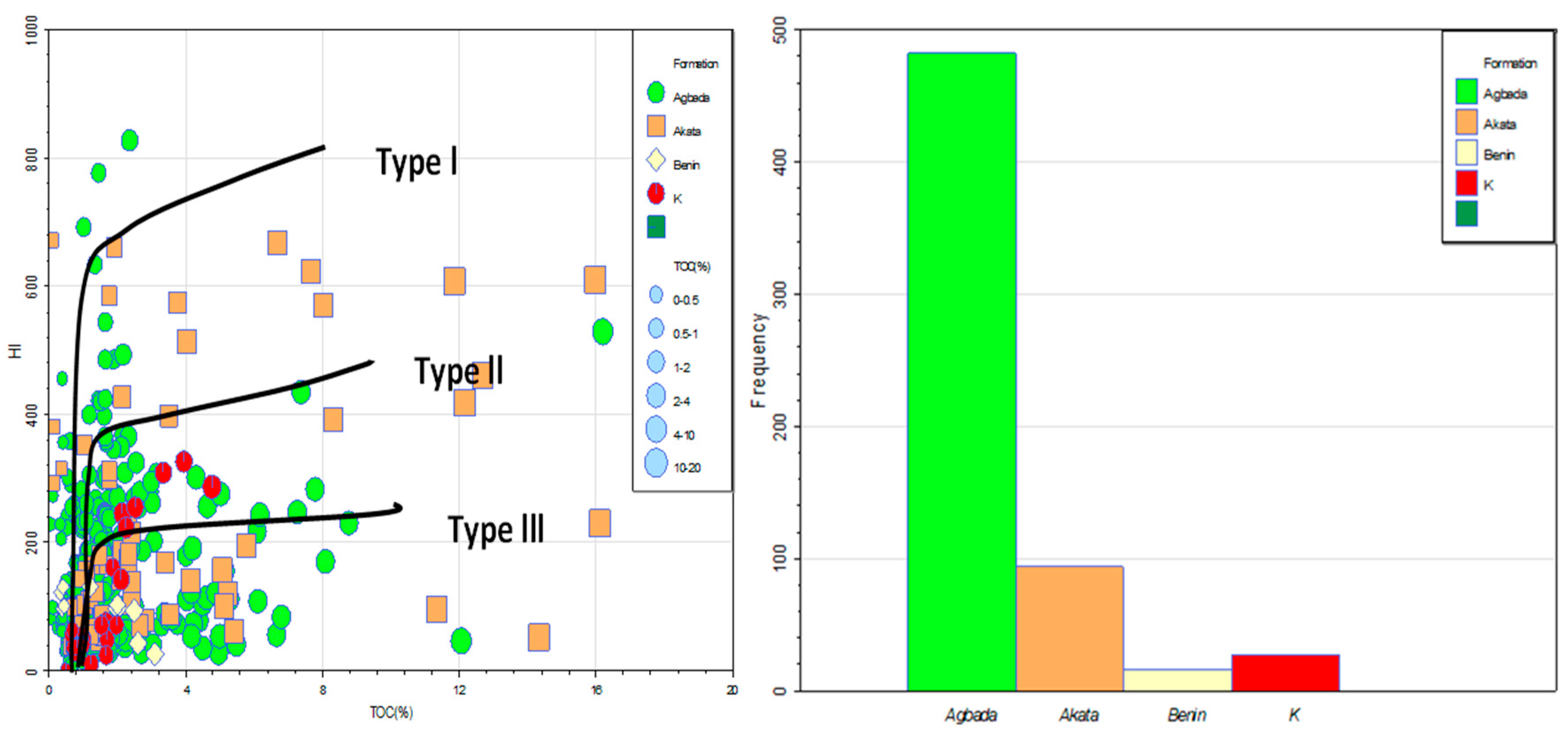
Figure 6.
shows the Niger Delta cross section through the Cretaceous source rocks (Thomas B.M 1982) (Left) and shows the typical organic-facies and its characteristics including environment and its fluid types as a function of chemical and physical properties (Right.
Figure 6.
shows the Niger Delta cross section through the Cretaceous source rocks (Thomas B.M 1982) (Left) and shows the typical organic-facies and its characteristics including environment and its fluid types as a function of chemical and physical properties (Right.
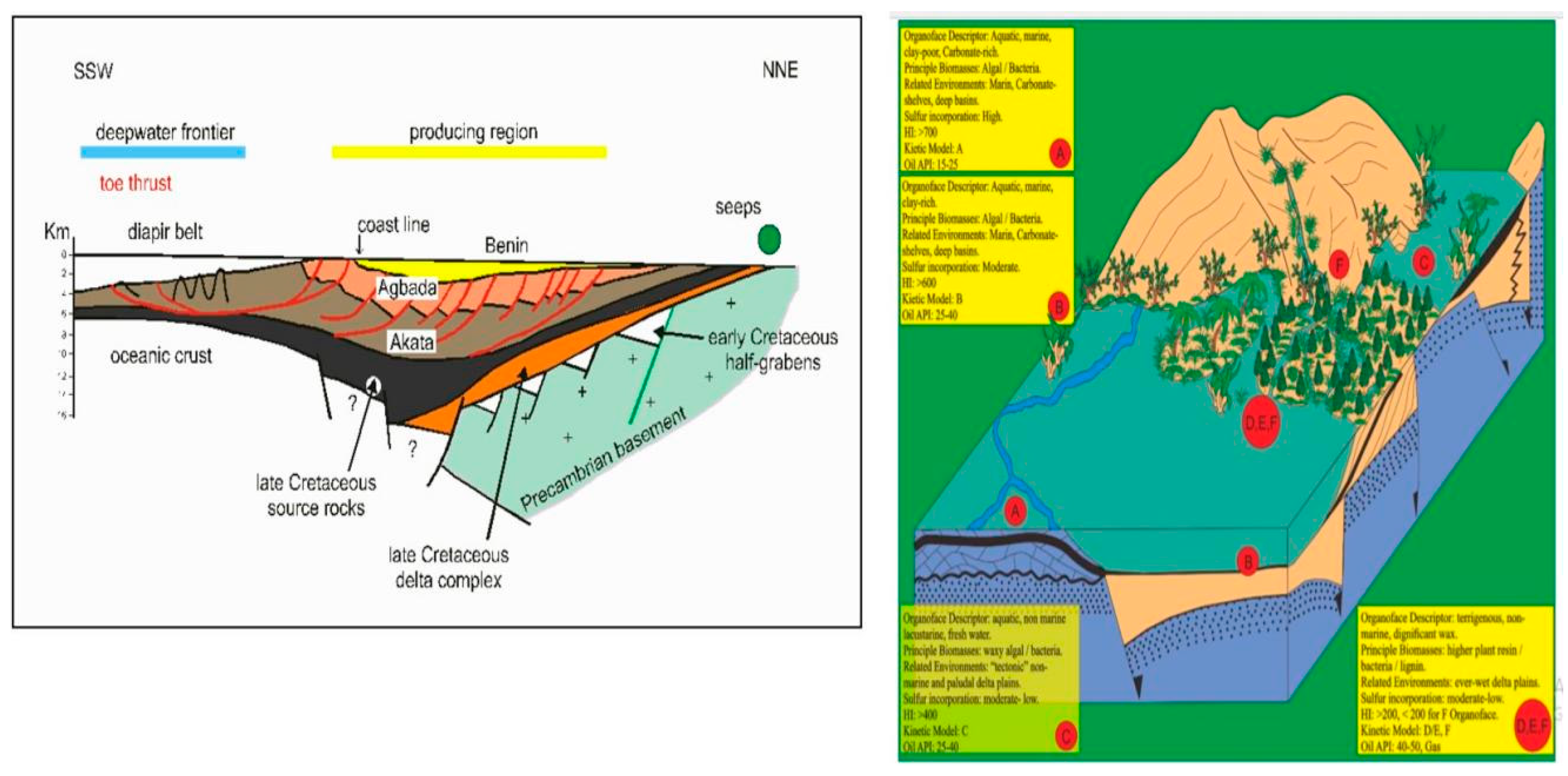
Figure 7.
A model showing the process of development of the probable deep water area source rocks of Niger Delta basin.
Figure 7.
A model showing the process of development of the probable deep water area source rocks of Niger Delta basin.
Disclaimer/Publisher’s Note: The statements, opinions and data contained in all publications are solely those of the individual author(s) and contributor(s) and not of MDPI and/or the editor(s). MDPI and/or the editor(s) disclaim responsibility for any injury to people or property resulting from any ideas, methods, instructions or products referred to in the content. |
© 2026 by the authors. Licensee MDPI, Basel, Switzerland. This article is an open access article distributed under the terms and conditions of the Creative Commons Attribution (CC BY) license (http://creativecommons.org/licenses/by/4.0/).
Copyright: This open access article is published under a Creative Commons CC BY 4.0 license, which permit the free download, distribution, and reuse, provided that the author and preprint are cited in any reuse.


