

Submitted:
05 March 2026
Posted:
09 March 2026
You are already at the latest version
Abstract
Background/Objectives: Targeted neuromodulation therapies are increasingly used for the management of peripheral neuropathy; however, data on symptom and functional outcomes following standardized treatment courses remain limited. This report evaluates the efficacy of NeoGen Neuromodulation treatments administered at the National Neu-ropathy Center, focusing on changes in sensory symptoms and functional task perfor-mance from the first treatment (T1) to the twelfth treatment (T12) over a mean treatment duration of 36 sessions. Methods: Patients completing a standardized 12-treatment course using the NeoGen Neuromodulation device were analyzed. Outcomes included pa-tient-reported sensory symptoms (tingling, numbness, and pain) and measures of func-tional task performance. Changes from baseline (T1) to post-treatment (T12) were assessed to determine treatment effectiveness, response patterns, and areas for clinical optimiza-tion. Results: Patients demonstrated clear and measurable benefits following completion of 12 treatments. The greatest improvements were observed in sensory symptoms, with tingling, numbness, and pain each improving by approximately one point on the se-verity scale. Over half of patients achieved clinically meaningful relief in these sensory domains. Functional improvement was more modest, with meaningful gains observed in approximately one-quarter to one-third of patients. Non-response rates were low, alt-hough residual symptoms and functional limitations remained common. Conclusions: The standard NeoGen Neuromodulation treatment protocol provides substantial relief of sensory neuropathic symptoms, with consistent benefits across patients. While functional gains were less pronounced, the low non-response rate supports overall treatment ef-fectiveness. Persistent symptoms in some patients suggest a potential role for maintenance therapy and adjunctive interventions to optimize long-term outcomes.
Keywords:
peripheral neuropathy
; neuromodulation
; peripheral nerve stimulation
; neuropathic pain
; national neuropathy center
; NeoGen neuromodulation device
1. Introduction
1.1. Background
Neuropathy is a debilitating condition characterized by chronic pain, numbness, tingling, burning sensations, and muscular weakness, all of which can significantly impair quality of life. Neuropathy can stem from various causes, including diabetes, infections such as varicella and HIV, autoimmune diseases such as lupus and rheumatoid arthritis, trauma, medications, vitamin deficiencies, and inherited disorders [1]. Regardless of the underlying cause, neuropathies are often progressive and can affect motor, sensory, and autonomic fibers [1].
While the exact pathophysiology of neuropathy depends on the underlying condition, there are three mechanisms by which peripheral nerves can be injured. Segmental demyelination refers to degeneration of the myelin sheath surrounding axons [2]. The breakdown of myelin typically occurs in segments along the nerve, and the axon is spared. However, signal transduction is often disrupted or lost, as axons depend on the myelin sheath for saltatory conduction and increased action potential firing. A classic example of segmental demyelination is Charcot-Marie-Tooth disease. Another mechanism, known as Wallerian degeneration, occurs when an axon is separated from its cell body, often after nerve severing or compression. The distal fragment of the axon degenerates due to nutrient and cell-signaling deficiencies, triggering apoptosis, and the remnants are cleared by macrophages [3]. Finally, axonal degeneration, also known as dying-back degeneration, occurs when degeneration of an axon starts distally and extends proximally towards the cell body. The distal portion of the axon is vulnerable because its greater distance from the cell body often leads to decreased metabolic support and reduced delivery of survival factors [4]. This type of degeneration is more common in disorders such as diabetes, HIV, hepatitis C virus, and Guillain-Barré syndrome. Furthermore, understanding the underlying causes of neuropathy can help determine its pathophysiology and guide treatment [5].
Standard treatment approaches are typically symptom-focused, offering temporary relief without directly addressing the underlying neurophysiological dysfunction. Initial treatment options include pain medications such as gabapentin, pregabalin, duloxetine, or amitriptyline, as well as topical options such as lidocaine or capsaicin, lifestyle changes (diet, exercise, no smoking), and physical therapy for nerve health and function [6]. Other recommendations include addressing the underlying cause, such as maintaining strict glucose control, alcohol cessation, supplementation of nutrients and vitamins, and clearing infections. Procedural techniques are also an option, including nerve blocks, spinal cord stimulators, transcutaneous electrical nerve stimulation (TENS), and nerve decompression surgeries. Still, the risks and benefits need to be thoroughly discussed with patients before proceeding [7]. For patients experiencing refractory neuropathy, a standardized protocol and treatment plan that provides sustained relief is necessary.
The National Neuropathy Center utilizes targeted neuromodulation therapy to improve peripheral nerve function and local blood flow. This therapeutic approach aims to reduce, and in some cases eliminate, neuropathic symptoms such as numbness, tingling, burning, and tightness. In addition to symptom relief, reported functional improvements have included increased ease with daily activities such as bending or stooping, putting on shoes, sleeping, standing for extended periods, climbing stairs, walking through stores, driving, meal preparation, yard work, and retrieving items from the floor.
Peripheral nerve stimulation (PNS) involves delivering electrical impulses to peripheral nerves via implanted electrodes attached to a generator. Electrical stimulation disrupts nociceptive signals by blocking afferent Aδ and C fibers and acts directly on the nervous system, thereby avoiding systemic effects [8]. Additionally, increased local prostaglandin release in chronic pain increases blood flow to the affected area. Still, PNS has been shown to decrease levels of neurotransmitters and markers of inflammation, thereby reducing the transmission of pain signals [9,10]. A central mechanism of action for PNS has been proposed based on the observation that analgesia is typically achieved at stimulation intensities perceptible to the patient but below the nociceptive threshold, suggesting modulation of central sensory processing rather than direct peripheral nerve blockade [11]. Finally, PNS may decrease ectopic signaling and the rate of Wallerian degeneration [12].
The use of PNS is indicated for chronic pain refractory to conventional therapies. Additionally, temporary PNS can be used for up to 60 days for acute post-surgical pain [13]. While surgical PNS implantation was initially done with surgical dissection to visualize nerves, it is carried out via a percutaneous approach under ultrasound or fluoroscopy guidance [14]. For this procedure, a small electrode is inserted near a specific nerve, and after a positive trial phase, a generator is placed subcutaneously [15]. However, wireless peripheral nerve stimulators are also available, easier to implant, and require fewer leads and wires than traditional systems [16]. Furthermore, several studies have demonstrated the effectiveness of PNS, with at least 50% of patients reporting sustained pain relief [17,18,19,20,21]. However, this study uses a specific 12-treatment protocol to assess the longevity of NeoGen PNS.
NeoGen PNS Neuromodulation uses various frequencies in conjunction with electrical stimulation to increase mitochondrial ATP production and enhance cellular regeneration via mitosis. NeoGen neuromodulation can therefore regenerate small nerve and microvascular tissue, offering healing for the patient rather than just symptom relief.
1.2. Treatment Protocol
Participation in this treatment protocol requires a diagnosis of peripheral neuropathy (either diabetic or idiopathic). Patients are typically treated in 12-visit increments (3 times per week over 1 month), with formal re-evaluation after each treatment cycle. Depending on individual response, some patients complete their treatment after 12 sessions, while others may continue for 24, 36, 48 sessions, or more (M=36). Treatment is concluded when both subjective symptom reports and objective clinical measures indicate resolution or significant improvement.
For patients who achieve meaningful recovery but wish to maintain progress, a maintenance schedule may be recommended, ranging from 1-2 sessions per month to as few as 1-2 sessions per year. All plans of care are individualized and determined by patient-specific outcomes.
1.3. Objective
This clinical review aims to evaluate the effectiveness and practical implications of targeted neuromodulation therapy in a real-world outpatient setting. Specific goals include 1) assessing treatment efficacy across neuropathic and musculoskeletal symptoms using patient-reported outcomes and objective clinical indicators and 2) providing data-driven insights into clinical outcomes and functional quality-of-life improvements for use by healthcare stakeholders.
1.4. Relevance to Insurers and Healthcare Providers
The use of the PNS NeoGen device for chronic pain is relevant to insurers and healthcare providers for three main reasons. First, PNS NeoGen is cost-efficient in that sustained symptom reduction may reduce the frequency of emergency visits, specialist consultations, imaging procedures, and long-term pharmacological management. Second, patient satisfaction levels are high with consistently high response rates supporting the use of non-invasive, neuromodulatory interventions as a viable first-line or adjunct therapy. Third, PNS NeoGen can be used as a chronic care strategy, as findings support ongoing maintenance care for select patients with chronic or recurrent symptoms, aligning with value-based care models that prioritize long-term outcomes and patient-centered care.
2. Materials and Methods
All data were securely handled in compliance with HIPAA regulations to ensure patient privacy and confidentiality. All analyses and findings are based on these securely managed records.
2.1. Data Overview
This analysis is based on 2,682,779 clinical note entries collected from patients treated at the National Neuropathy Center between March 8, 2019, and December 31, 2025. Each entry contains structured and semi-structured data, including patient demographics, visit dates, note types, physician-entered content, and symptom reports. The dataset includes fields such as PATIENTS_ID, DATE_OF_VISIT, NOTE_TYPE, NOTESECTIONTYPE, and a rich free-text DATA field capturing patient-reported outcomes, clinical assessments, and treatment documentation. Listed below is an example data field entry for a typical patient encounter.
2.2. Example Data Field Entry2.3. Data Processing for Clinical Analysis
| Time Spent with Patient: 30 minutes (25 minutes face-to-face) Treatment Number: 4 Placement of Electrodes: Bilateral ankles and toes Symptom Intensity (0–10 Scale): Pain: 0, Numbness: 2, Tingling: 0, Burning: 0, Tightness: 3 Functional Limitation Ratings (1–5 Scale):
Patient Changes Since Start of Treatment: Improvement Recent Functional Issues or Achievements (past 3 days): Good |
The raw dataset was curated through a multi-stage validation, extraction, and subsetting pipeline. The dataset structure was initially validated in consultation with clinical collaborators. A representative sample was manually confirmed for relevance and internal consistency.
Using R, the dataset was filtered to retain only records containing structured symptom severity and functional limitation information. Key variables extracted from the DATA field included treatment number, treatment program, and numeric ratings for symptoms (pain, numbness, tingling, burning, or tightness on a 0–10 scale) and for functional limitations (sleeping, putting on shoes, or yard work on a 1–5 scale). Regular expressions and conditional logic were implemented to standardize the extracted values and resolve inconsistent formatting.
Records related to intake evaluations or initial history of present illness (HPI) visits were excluded to isolate active treatment sessions. Manual treatment count inconsistencies were resolved by reconstructing each patient's visit sequence using treatment numbers and the chronological order of visit dates. This enabled a valid analysis of treatment response trajectories.
2.4. Exclusion Criteria
To avoid misclassification due to incomplete data at the edge of the dataset collection window, patients with their last visit after April 1, 2025, and fewer than 24 treatments were excluded to avoid including in-progress cases.
3. Results
This study consisted of 77,969 treatment-specific records from 3,588 unique patients.
3.1. Data Completeness
Completeness varied across variables, with most symptom and function measures recorded for roughly two-thirds of visits. The percentage of non-missing (complete) data for key variables was as follows: 74.51% of visits assessed pain, 68.48% of visit assessed numbness, 67.48% of visits assessed tingling, 68.00% of visits assessed burning, 68.12% of visits assessed tightness, 71.60% of visits discussed bending or stooping, 65.77% of visits discussed putting on shoes, 65.84% of visits discussed sleeping, 65.65% of visits discussed standing up for an hours, 65.47% of visits discussed going up or down a flight of stairs, 65.95% of visits discussed walking through a store, 64.74% of visits discussed driving for an hour, 65.26% of visits discussed preparing a meal, 64.17% of visits discussed yard work, 65.41% of visits discussed picking up items off the floor (Table 1). This pattern of missingness should be considered when interpreting summary statistics and designing subsequent analyses.
3.2. Demographics and Treatment
The mean age of patients in this cohort was 70.32 years (SD = 11.12), with ages ranging from 20 to 101 years (Figure 1). Patients received an average of 23.5 treatments (SD = 26.7), with a maximum of 243 sessions. The median number of treatments was 15, while the median "final treatment number" per patient was 33, suggesting extended engagement for many patients in this study.
3.3. Symptom Severity at First Visit
At the initial treatment session, patients reported moderate levels of sensory symptoms on a 0–10 scale. The average pain severity was 5.15 (SD = 3.39), the average numbness severity was 5.51 (SD = 3.37), the average tingling severity was 5.00 (SD = 3.40), the average burning severity was 4.05 (SD = 3.69), and the average tightness severity was 4.67 (SD = 3.60). These values indicate that patients typically began treatment with moderate to moderately severe symptom burden across multiple domains.
3.4. Functional Limitations at First Visit
At the initial treatment session, patients also reported difficulty with everyday activities on a 1–5 scale, where higher scores indicate greater impairment. The average reported difficulty level for standing for an hour was 3.38 (SD = 1.53), the average reported difficulty level for going up or down stairs was 3.24 (SD = 1.47), the average reported difficulty level for walking through a store was 3.08 (SD = 1.45), the average reported difficulty level for driving for an hour was 2.53 (SD = 1.53), the average reported difficulty level for preparing a meal was 2.49 (SD = 1.40), the average reported difficulty level for doing yard work was 3.25 (SD = 1.62), and the average reported difficulty level for picking up items from the floor was 2.86 (SD = 1.44). These figures suggest moderate functional limitations at treatment onset, especially for mobility and endurance-related tasks.
3.5. Treatment Completion Patterns
Regarding treatment completion rates, 2,224 patients (62%) completed at least 12 treatments, 1,260 patients (35%) completed at least 24 treatments, 592 patients (16%) completed at least 36 treatments, and 359 patients (10%) completed at least 48 treatments (Figure 2). Early discontinuation was also standard: 192 patients (5%) stopped after just one treatment, and 778 patients (22%) discontinued before completing six treatments.
3.6. Baseline Symptom and Functional Differences
We compared baseline values, such as age, pain severity, and burning severity, at treatment session 1 between patients who completed treatment (≥11 sessions) and those who stopped early (≤3 sessions), using both statistical significance (p values) and clinical significance (based on minimally essential differences). Regarding age, early stoppers were significantly younger, with an average age of 67.4 years, compared with completers, who had an average age of 70.2 years. However, this had a small effect size (d = –0.25) that may nonetheless reflect meaningful differences in treatment persistence by age. Although pain scores were significantly higher among early stoppers (p < .001), the difference, with an average change of 0.83 (d = 0.24), did not meet the threshold for clinical meaningfulness. Burning was the only symptom to meet both statistical (p < .01) and clinical thresholds with a difference of 0.58 (d = 0.16) based on a ≥0.5-point difference on a 0–10 scale. This may indicate that patients with more intense baseline burning sensations were more likely to discontinue early. Finally, all other differences in symptoms and function were statistically significant but clinically small (e.g., differences <0.5 on a 1–5 scale or <1.0 on a 0–10 scale), with effect sizes ranging from 0.06 to 0.28, well below the threshold for medium effects.
While many symptoms showed statistically significant differences between groups, only burning approached a level of clinical concern, and most other differences, while real, were likely too small to affect patient experience or clinical decision-making. This suggests that early discontinuation may be driven more by individual context (e.g., age, expectations, life constraints) than by symptom burden alone.
3.7. Early Non-Response and Treatment Discontinuation
We examined whether patients who discontinued treatment early (≤3 sessions) were more likely to show no improvement in symptoms or functional outcomes between sessions 1 and 3 than those who completed treatment (≥11 sessions). Non-response was defined as a score at session 3 that was equal to or worse than at session 1. Findings showed no evidence that early stoppers were more likely to be non-responders, supporting the conjecture that early discontinuation may be driven more by individual context.
3.8. Efficacy
We assessed treatment efficacy across five core symptoms: pain, numbness, tingling, burning, and tightness. We compared baseline values (T1) to follow-up assessments at treatment 2 (T2), treatment 6 (T6), and treatment 12 (T12). Analyses included only patients with paired measurements at both time points.
For each symptom, we calculated the mean change in score (negative values indicate improvement), the percentage of patients demonstrating improvement, and the statistical significance of the change using paired t-tests.
Across all symptoms, the mean change values became more negative with successive treatments, indicating progressive symptom reduction over time. The proportion of patients reporting improvement also increased between T2 and T12, with many symptoms showing that nearly half of the patients improved by T12. All changes were statistically significant (p < 0.001), suggesting the observed improvements are unlikely to be due to chance.
3.9. Pain
A steady reduction in pain scores was observed, with the mean change increasing in magnitude from –0.31 at the first follow-up (T2) to –0.97 at T12. The proportion of patients reporting improvement rose from 30.6% at T2 to nearly half (47.6%) by T12 (Table 2).
3.10. Numbness
Numbness scores followed a similar trajectory, with early improvement evident at T2 and larger gains by T12. Over half of patients (53.0%) reported improvement at T12, the highest percentage across all symptoms (Table 3).
3.11. Tingling
Tingling demonstrated the largest average change at T12 (–1.12), with over half of patients (50.8%) showing improvement. Notably, substantial changes were already present by T6 (Table 4).
3.12. Burning
Although mean changes in burning scores were more minor in magnitude than for pain or tingling, improvement was still evident, with 41.6% of patients improving by T12 and all comparisons reaching statistical significance (Table 5).
3.13. Tightness
Tightness scores showed progressive improvement across treatments, with 45.0% of patients reporting better scores by T12. The mean change increased in magnitude over time, from –0.25 at T2 to –0.72 at T12.

Table 6.
Comparison of tightness scores between T1 and T2, T1 and T6, and T1 and T12.
| Comparison | n | Mean Change | % Improved | p-value |
|---|---|---|---|---|
| T1 → T2 | 2311 | -0.254 | 28.4 | < 0.001 |
| T1 → T6 | 1825 | -0.530 | 40.1 | < 0.001 |
| T1 → T12 | 1395 | -0.724 | 45.0 | < 0.001 |
3.14. Symptom Trajectories Across 12 Treatments
Figure 3 below displays the mean symptom scores for pain, numbness, tingling, burning, and tightness across twelve treatment sessions. All symptoms showed steady improvement from baseline (T1) to the twelfth session (T12), indicated by declining mean scores over time. The most pronounced early improvements were observed between T1 and T2, followed by a gradual, sustained reduction in symptom severity in subsequent sessions.
Burning demonstrated the largest relative decrease, dropping from a baseline mean of 4.05 to 3.22 at T12. Pain, tingling, and tightness followed similar improvement trajectories, each declining by approximately 1 to 1.2 points on the scale. Numbness, while also improving, remained the highest-rated symptom at all time points, decreasing from 5.51 at baseline to 4.37 at T12.
These results indicate that the treatment program yielded consistent and clinically meaningful reductions in symptom severity, with improvements evident early in the course and maintained through the twelfth session.
3.15. Functional Task Outcomes
Analysis of patients with complete paired data from baseline (T1) to 12 treatments (T12) demonstrated statistically significant functional improvements in 8 of the 10 assessed daily tasks, including, standing up for an hour (p<0.001), bending or stooping (p<0.001), putting on shoes (p<0.001), going up or down a flight of stairs (p<0.001), walking through a store (p<0.001), picking up items from the floor (p<0.001), sleeping (p=0.002), and doing yard work (p=0.002) (Table 7). Tasks showing the largest improvement include standing up for an hour, with a mean change of -0.277; bending or stooping, with a mean shift of -0.194; and going up or down stairs, with a mean change of -0.216 (Table 7).
Although the average changes were modest in magnitude (typically between -0.10 and -0.28 on the task scale), the statistical significance reflects the large sample sizes and consistency of improvement across participants. However, two tasks, preparing a meal (p=0.232) and driving for an hour (p=0.129), did not reach statistical significance, suggesting that either these activities were less affected by the condition at baseline or that improvements in these domains may require more time, targeted intervention, or are less sensitive to the treatment effects. Overall, the results indicate that completing the full 12-treatment course was associated with measurable functional gains in most daily activities assessed, particularly in mobility-related tasks.
3.16. Overall Impact
From T1 to T12, all five symptoms showed statistically significant mean reductions, with the most considerable changes observed for tingling (–1.12), numbness (–1.06), and pain (–0.97). Over half of participants reported improvement in these top three symptoms, and 56–61% met criteria for clinically meaningful change. Burning and tightness also improved, though to a slightly lesser extent (Table 8).
Functional tasks demonstrated smaller but measurable gains. The largest changes were for standing up for an hour (–0.28) and bending or stooping (–0.19), with 28–31% of participants improving in each. Other tasks showed modest or minimal change, with improvement rates still notable but generally below 26% (Table 8).
4. Discussion
This study demonstrates the strong overall efficacy of the PNS NeoGen device in treating peripheral neuropathy. The treatment produced statistically significant reductions across all measured symptoms from T1 to T12. The largest improvements were seen in tingling (–1.12), numbness (–1.06), and pain (–0.97), with over half of patients improving and roughly 57–61% achieving clinically meaningful change. Burning and tightness were also notably enhanced, with 41–45% of patients reporting improvement and 57–61% meeting clinical thresholds.
This is one of the largest studies to date investigating PNS use for peripheral neuropathies, comprising 77,969 treatment-specific records from 3,588 unique patients. In addition to the large sample size, our study also measured multiple variables across symptoms and functional metrics. Many previously published studies on the efficacy of PNS have addressed only symptom improvement, especially pain relief, and generalized functional improvement in activities of daily living. By systematically evaluating symptom-specific outcomes and discrete activities of daily living, this study provides greater clarity regarding the therapeutic effects of PNS in chronic pain and underscores opportunities for further clinical improvement.
Previous studies on the use of PNS for treating peripheral neuropathy refractory to conservative management have demonstrated similar results regarding reduction of pain scores. One retrospective study by Ellen Lin included 63 patients who received PNS therapy. In this study, the average baseline pain score was 7.24, and the average pain score 2-3 weeks after implantation of the PNS device was 3.43, with 84% of patients reporting a reduction in pain at the 2-3 week follow-up appointment [22]. Additionally, a retrospective review of volunteer surveys conducted by Abd-Elsayed et al. included patients with chronic pain who engaged in noninvasive neuromodulation therapy. The results of this study demonstrated an overall pain reduction of 46%, and all functional metrics were improved, with the largest improvements reported in mood and sleep at over 47% [23]. Finally, a similar study conducted by Abd-Elsayed et. al. also investigated the use of PNS therapy for patients with chronic pain. This study demonstrated a statistically significant difference between the average preoperative pain score (6.36) and the average postoperative pain score (4.19), and a mean patient-reported percent improvement in pain following PNS therapy of 49.04% [24]. Furthermore, our study's results support the efficacy of PNS reported in previous literature. None of these previous studies used a device such as the NeoGen frequency neuromodulation device to enhance mitochondrial ATP and support potential cellular regeneration.
While symptom relief was substantial, improvements in functional tasks were minor. The largest gains were seen in standing up for an hour (–0.28) and bending or stooping (–0.19), with 28–31% of patients improving. Most other tasks showed 18–26% improvement rates, suggesting functional recovery lags behind symptom relief for many patients. In a retrospective case series by Warner et Al. exploring outcomes of PNS for chronic pain, patients reported a median functional improvement in activities of daily living at 6 months post-implantation of 73%, with a range of 50% to 88% [25]. Although the improvement in functional tasks was lower in our study, this may be due to several factors. First, the treatment duration was shorter in our study. While the previously mentioned study examined functional outcomes after 6 months of treatment, patients in our study typically received only 12 treatments within 1 month, suggesting that the treatment's longevity could further improve functional outcomes.
Additionally, previous reports have assessed overall functional outcomes, whereas our study assessed individual activities of daily living [26]. This could affect the degree of reported improvement, since patients can specifically identify and assess their ability to complete a task rather than generalizing it to their daily functioning. As such, increasing the duration of treatment or adding adjunctive therapies or rehabilitation would likely improve functional metrics to rates similar to those seen in previous studies conducted for 6 or more months.
While many patients in this study experienced symptomatic relief and functional recovery, a meaningful subset did not show clinically significant changes, especially on lower-baseline or task-related measures. Even among high responders, most patients retained some level of symptoms or task difficulty at T12, consistent with expectations for chronic neuropathic and musculoskeletal conditions. This highlights the need for tailored interventions for those with persistent limitations and reinforces the importance of long-term maintenance or booster strategies. For example, in patients where PNS did not completely resolve symptoms, a multimodal approach is recommended that combines traditional therapies with PNS to increase the potential for long-term pain relief. This could include first-line neuropathic agents such as gabapentin, selective norepinephrine reuptake inhibitors (SNRIs), or tricyclic antidepressants (TCAs), topical therapies, or other interventional pain procedures such as radiofrequency ablation (RFA), nerve blocks, or spinal cord stimulation. Additionally, emerging regenerative and biologic therapies, such as platelet-rich plasma for nerve regeneration or stem cell-based therapies to promote nerve repair, may offer more permanent relief for patients with more severe conditions; however, current research is limited [27,28]. Furthermore, for an overwhelming majority of patients, PNS should be one component of a comprehensive neuropathic pain strategy, and individualized treatment plans should be utilized to improve patient outcomes and quality of life.
Recommendations
Based on the results of this study, the following recommendations have been developed to help physicians using PNS in patients with chronic pain improve the efficacy of neuromodulation therapy and increase patient satisfaction. To tailor support for functional recovery, physical therapy or functional training for patients whose symptom relief outpaces functional gains should be integrated into this treatment protocol. For partial responders, exploring adjunctive or alternative therapies for patients who do not meet clinically meaningful thresholds by mid-treatment may help enhance the protocol. It is also essential to track the relationships between symptoms and functions by analyzing whether symptom improvements translate into functional gains over more extended time frames and by identifying when additional support is needed. For patients with chronic conditions, incorporating maintenance strategies and developing booster protocols to sustain benefits, particularly for those showing a strong initial response, could improve overall outcomes and patient satisfaction. Finally, it is essential to investigate attrition factors by conducting structured surveys and qualitative interviews with patients who discontinue treatment early, and potentially implementing exit interviews for all first-time patients. All together, these recommendations serve to enhance the use of PNS to provide long-term pain relief and improve quality of life for those suffering from chronic pain.
5. Conclusions
In conclusion, this analysis confirms that the NeoGen treatment protocol delivers substantial, clinically meaningful reductions in neuropathic symptom severity for most patients, with more modest but measurable gains in functional ability. The most apparent benefits are seen in sensory symptoms, where over half of patients achieve meaningful improvement. In contrast, task-based measures may require longer treatment, adjunctive therapies, or targeted rehabilitation to achieve similar success rates.
Author Contributions
Conceptualization: S.E.; Methodology: S.E., A.L.; Investigation and data curation: S.E., A.L.; Writing – original draft preparation: M.R.; Writing – review and editing: S.R., A.L., A.A., M.R.; Supervision: S.E., A.A.; All authors have read and agreed to the published version of the manuscript
Funding
This research received no external funding.
Institutional Review Board Statement
The WCG IRB approved a request for a waiver of authorization for use and disclosure of protected health information (study number: 1405469). The Board found that this research meets the requirements for a waiver of consent under 21 CFR 50.22. The study was conducted in accordance with the Declaration of Helsinki and approved by the Institutional Review Board of the National Neuropathy Center (protocol number: 20260373; date of approval: 03/02/2026).
Informed Consent Statement
Not applicable.
Data Availability Statement
The data presented in this study are available on request from the corresponding author due to conditions of the IRB for this project and to avoid violating HIPPA standards.
Acknowledgments
None.
Conflicts of Interest
Alaa Abd-Elsayed is an Editorial Board Member of Pain and Therapy. Alaa Abd-Elsayed was not involved in the selection of peer reviewers for the manuscript nor any of the subsequent editorial decisions. Alaa Abd-Elsayed is also a consultant for Medtronic, Curonix, Avanos, and Averitas. Stephen Erle, Madelyn Reilly, and Andrew Lang have no disclosures to report.
Abbreviations
The following abbreviations are used in this manuscript:
| TENS | Transcutaneous electrical nerve stimulation |
| PNS | Peripheral nerve stimulation |
| NLP | Natural language processing |
| HPI | History of present illness |
| SNRIs | Serotonin-norepinephrine reuptake inhibitors |
| TCAs | Tricycle antidepressants |
| RFA | Radiofrequency ablation |
References
- Hammi, C.; Yeung, B. Neuropathy. In StatPearls [Internet]; StatPearls Publishing: Treasure Island (FL), Jan 2025–. Updated October 15, 2022; Available online: https://www.ncbi.nlm.nih.gov/books/NBK542220/.
- Schenone, A.; Massucco, S.; Schenone, C.; Venturi, C.B.; Nozza, P.; Prada, V.; Pomili, T.; Di Patrizi, I.; Capodivento, G.; Nobbio, L.; Grandis, M. Basic Pathological Mechanisms in Peripheral Nerve Diseases. Int J Mol Sci. 2025, 26, 3377. [Google Scholar] [CrossRef] [PubMed] [PubMed Central]
- Freeman, M.R. Signaling mechanisms regulating Wallerian degeneration. Curr Opin Neurobiol. 2014, 27, 224–31. [Google Scholar] [CrossRef] [PubMed] [PubMed Central]
- Sumner, A.J.; Asbury, A.K. Physiological studies of the dying-back phenomenon. Muscle stretch afferents in acrylamide neuropathy. Brain 1975, 98, 91–100. [Google Scholar] [CrossRef] [PubMed]
- Cashman, C.R.; Höke, A. Mechanisms of distal axonal degeneration in peripheral neuropathies. Neurosci Lett. 2015, 596, 33–50. [Google Scholar] [CrossRef] [PubMed] [PubMed Central]
- Kaye, A.D.; Armistead, G.; Amedio, L.S.; Manthei, M.E.; Ahmadzadeh, S.; Bernhardt, B.; Shekoohi, S. Evolving Treatment Strategies for Neuropathic Pain: A Narrative Review. Medicina (Kaunas) 2025, 61, 1063. [Google Scholar] [CrossRef] [PubMed] [PubMed Central]
- Cavalli, E.; Mammana, S.; Nicoletti, F.; Bramanti, P.; Mazzon, E. The neuropathic pain: An overview of the current treatment and future therapeutic approaches. Int J Immunopathol Pharmacol. 2019, 33, 2058738419838383. [Google Scholar] [CrossRef] [PubMed] [PubMed Central]
- Hallin, R.G.; Torebjörk, H.E. Electrically induced A and C fibre responses in intact human skin nerves. Exp Brain Res. 1973, 16, 309–320. [Google Scholar] [CrossRef] [PubMed]
- Peripheral Nerve Stimulation: A Comprehensive Guide, 1st ed.; Abd-Elsayed, A, Trescot, AM, Eds.; Elsevier: Philadelphia, PA, 2022; ISBN 978-0-323-83007-2. [Google Scholar]
- Papuć, E.; Rejdak, K. The role of neurostimulation in the treatment of neuropathic pain. Ann Agric Environ Med. 2013, 20, 14–17. [Google Scholar]
- Swett, J.E.; Law, J.D. Analgesia with peripheral nerve stimulation: absence of a peripheral mechanism. Pain. 1983, 15, 55–70. [Google Scholar] [CrossRef]
- Deer, T.R.; Jain, S.; Hunter, C.; Chakravarthy, K. Neurostimulation for intractable chronic pain. Brain Sci. 2019, 9, 23. [Google Scholar] [CrossRef]
- Abd-Elsayed, A.; Attanti, S.; Anderson, M.; Dunn, T.; Maloney, J.; Strand, N. Mechanism of Action of Temporary Peripheral Nerve Stimulation. Curr Pain Headache Rep. 2024, 28, 1219–1224. [Google Scholar] [CrossRef] [PubMed]
- Abd-Elsayed, A.; D'Souza, R.S. Peripheral Nerve Stimulation: The Evolution in Pain Medicine. Biomedicines 2021, 10, 18. [Google Scholar] [CrossRef] [PubMed] [PubMed Central]
- Manchikanti, L.; Abd-Elsayed, A.; Kaye, A.D.; Sanapati, M.R.; Knezevic, N.N.; Manocha, V.; Hirsch, J.A. Review of Guidelines for Implantable Peripheral Nerve Stimulation (PNS) in the Management of Chronic Pain. Curr Pain Headache Rep. 2025, 29, 89. [Google Scholar] [CrossRef] [PubMed]
- Abd-Elsayed, A. Wireless peripheral nerve stimulation for treatment of peripheral neuralgias. Neuromodulation: Technology at the Neural Interface 2020, 23, 827–830. [Google Scholar] [CrossRef]
- Campbell, J.N.; Long, D.M. Peripheral nerve stimulation in the treatment of intractable pain. J Neurosurg. 1976, 45, 692–9. [Google Scholar] [CrossRef] [PubMed]
- Law, J.D.; Swett, J.; Kirsch, W.M. Retrospective analysis of 22 patients with chronic pain treated by peripheral nerve stimulation. J Neurosurg. 1980, 52, 482–5. [Google Scholar] [CrossRef] [PubMed]
- Waisbrod, H.; Panhans, C.; Hansen, D.; Gerbershagen, H.U. Direct nerve stimulation for painful peripheral neuropathies. J Bone Joint Surg Br. 1985, 67, 470–2. [Google Scholar] [CrossRef] [PubMed]
- Eisenberg, E.; Waisbrod, H.; Gerbershagen, H.U. Long-term peripheral nerve stimulation for painful nerve injuries. Clin J Pain. 2004, 20, 143–6. [Google Scholar] [CrossRef] [PubMed]
- Stevanato, G.; Devigili, G.; Eleopra, R.; Fontana, P.; Lettieri, C.; Baracco, C.; Guida, F.; Rinaldo, S.; Bevilacqua, M. Chronic post-traumatic neuropathic pain of brachial plexus and upper limb: a new technique of peripheral nerve stimulation. Neurosurg Rev. 2014, 37, 473–79; discussion 479-80. [Google Scholar] [CrossRef] [PubMed] [PubMed Central]
- Lin, E. Peripheral Nerve Stimulation Using High-frequency Electromagnetic Coupling (HF-EMC) Technology to Power an Implanted Neurostimulator With a Separate Receiver for Treating Peripheral Neuropathy. Pain Physician 2024, 27, E725–E730. [Google Scholar] [CrossRef] [PubMed]
- Abd-Elsayed, A.; Gyorfi, M.; Fischman, M.; et al. Reduced Pain and Improved Function Following Short-Term Use of Noninvasive BioWave High Frequency Peripheral Nerve Stimulation for Pain Management. Pain Ther 2023, 12, 553–562. [Google Scholar] [CrossRef] [PubMed]
- Abd-Elsayed, A.; Keith, M.K.; Cao, N.N.; et al. Temporary Peripheral Nerve Stimulation as Treatment for Chronic Pain. Pain Ther 2023, 12, 1415–1426. [Google Scholar] [CrossRef]
- Warner, N.S.; Schaefer, K.K.; Eldrige, J.S.; et al. Peripheral nerve stimulation and clinical outcomes: a retrospective case series. Pain Pract. 2021, 21, 411–418. [Google Scholar] [CrossRef] [PubMed]
- Gilmore, C.A.; Deer, T.R.; Desai, M.J.; Hopkins, T.J.; Li, S.; DePalma, M.J.; Cohen, S.P.; McGee, M.J.; Boggs, J.W. Durable patient-reported outcomes following 60-day percutaneous peripheral nerve stimulation (PNS) of the medial branch nerves. Interv Pain Med. 2023, 2, 100243. [Google Scholar] [CrossRef] [PubMed] [PubMed Central]
- Shang, K.; Liu, Y.; Qadeer, A. Platelet-rich plasma in peripheral nerve injury repair: a comprehensive review of mechanisms, clinical applications, and therapeutic potential. Exp Biol Med (Maywood) 2025, 250, 10746. [Google Scholar] [CrossRef] [PubMed] [PubMed Central]
- Deepa, G.; Shrikrishna, B.H. The role of stem cells in peripheral nerve regeneration: a narrative review. Cureus 2025, 17, e91459. [Google Scholar] [CrossRef] [PubMed]
Figure 1.
Ages of patients on their initial visit. The two modes are likely male vs. female.
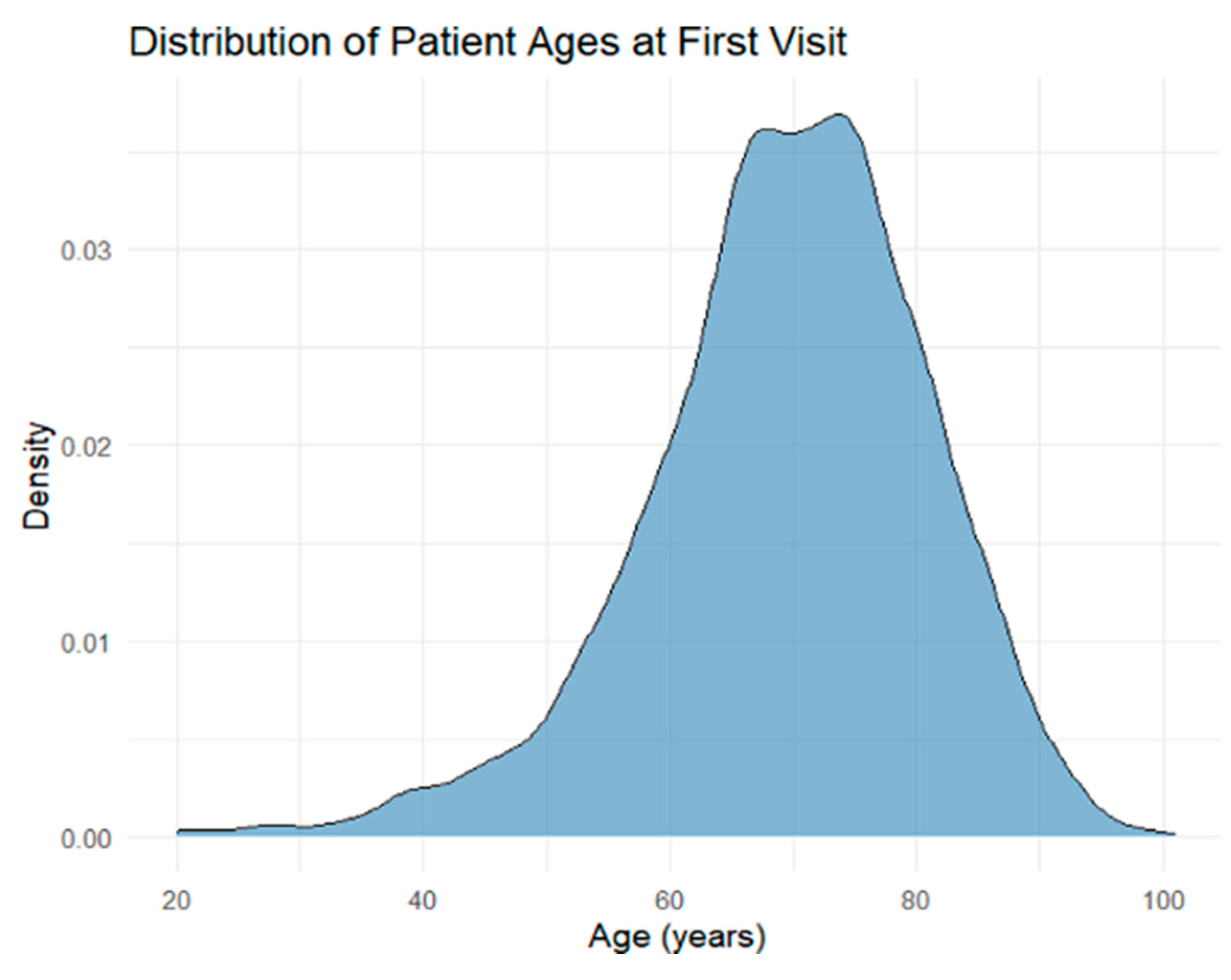
Figure 2.
Distribution of patients by final treatment number. Each bar represents the number of patients whose final recorded treatment session corresponded to a specific treatment number. This visualization highlights common points of discontinuation or completion within the treatment protocol. Peaks at 12 and 24 suggest alignment with standard plan increments, while early drop-offs reflect partial adherence or early opt-out.
Figure 2.
Distribution of patients by final treatment number. Each bar represents the number of patients whose final recorded treatment session corresponded to a specific treatment number. This visualization highlights common points of discontinuation or completion within the treatment protocol. Peaks at 12 and 24 suggest alignment with standard plan increments, while early drop-offs reflect partial adherence or early opt-out.
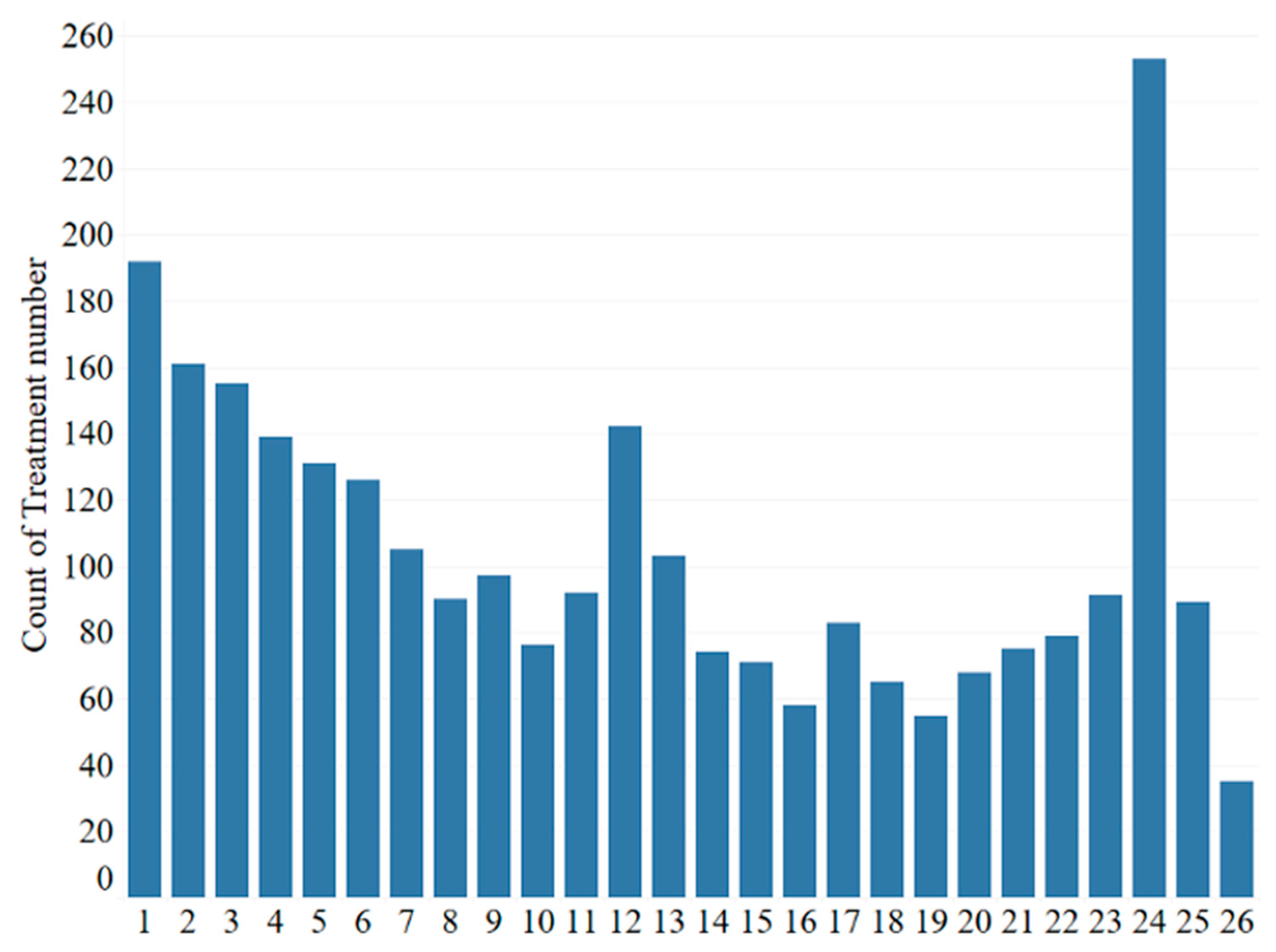
Figure 3.
Symptom Trajectories by Treatment Number.
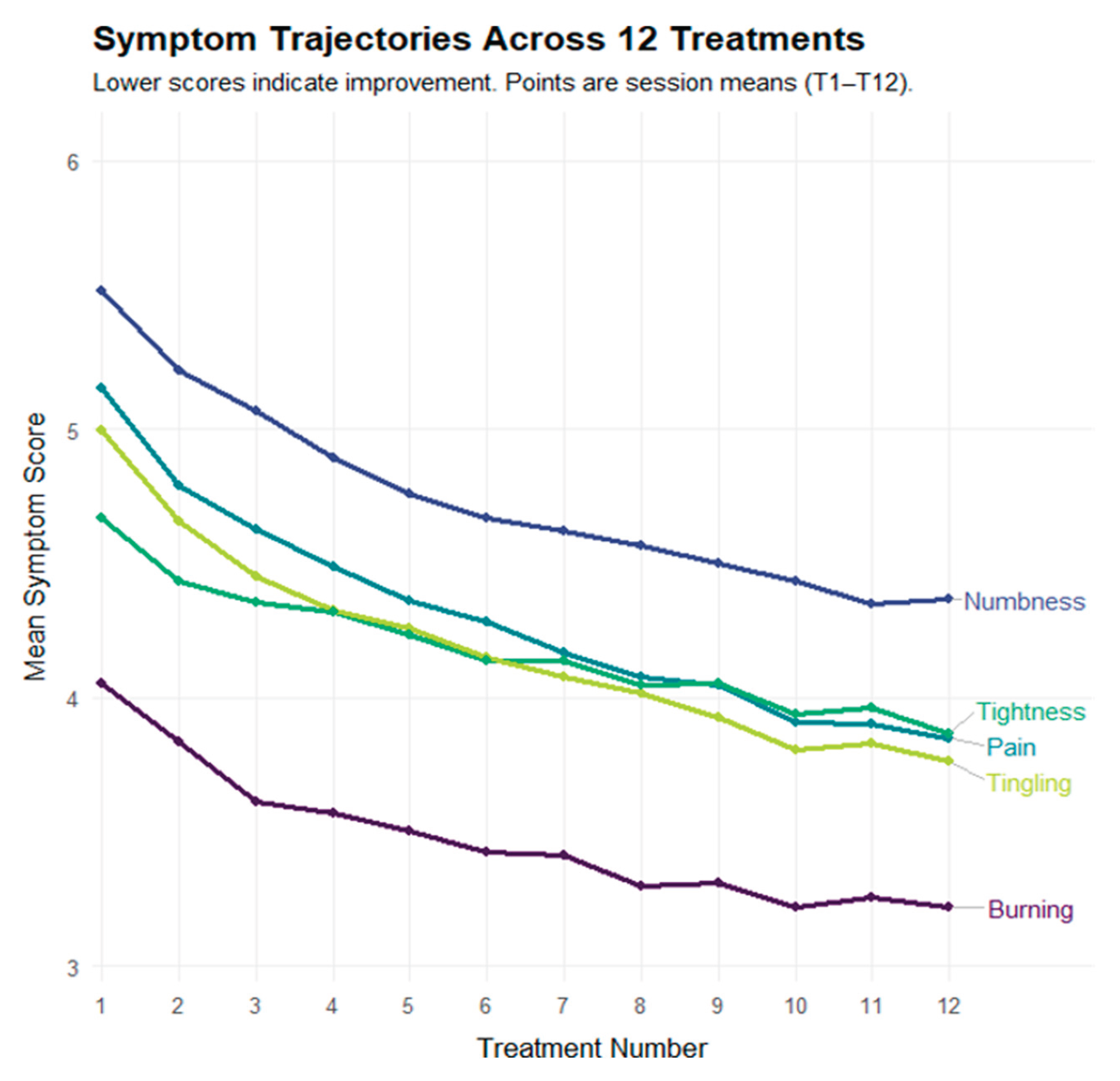
Table 1.
Data completeness per symptom or functional measurement.
| Symptom or Function Measurement | Percent of Complete Data |
|---|---|
| Pain | 74.51% |
| Numbness | 68.48% |
| Tingling | 67.48% |
| Burning | 68.00% |
| Tightness | 68.12% |
| Bending or stooping | 71.60% |
| Putting on shoes | 65.77% |
| Sleeping | 65.84% |
| Standing up for an hour | 65.65% |
| Going up or down a flight of stairs | 65.47% |
| Walking through a store | 65.95% |
| Driving for an hour | 64.74% |
| Preparing a meal | 65.26% |
| Yard work | 64.17% |
| Picking up items from the floor | 65.41% |
Table 2.
Comparison of pain scores between T1 and T2, T1 and T6, and T1 and T12.
| Comparison | n | Mean Change | % Improved | p-value |
|---|---|---|---|---|
| T1 → T2 | 2512 | -0.311 | 30.6 | < 0.001 |
| T1 → T6 | 1975 | -0.712 | 45.2 | < 0.001 |
| T1 → T12 | 2505 | -0.967 | 47.6 | < 0.001 |
Table 3.
Comparison of numbness scores between T1 and T2, T1 and T6, and T1 and T12.
| Comparison | n | Mean Change | % Improved | p-value |
|---|---|---|---|---|
| T1 → T2 | 2365 | -0.304 | 29.9 | < 0.001 |
| T1 → T6 | 1863 | -0.789 | 47.3 | < 0.001 |
| T1 → T12 | 1422 | -1.060 | 53.0 | < 0.001 |
Table 4.
Comparison of tingling scores between T1 and T2, T1 and T6, and T1 and T12.
| Comparison | n | Mean Change | % Improved | p-value |
|---|---|---|---|---|
| T1 → T2 | 2315 | -0.335 | 29.2 | < 0.001 |
| T1 → T6 | 1821 | -0.764 | 45.7 | < 0.001 |
| T1 → T12 | 1376 | -1.120 | 50.8 | < 0.001 |
Table 5.
Comparison of burning scores between T1 and T2, T1 and T6, and T1 and T12.
| Comparison | n | Mean Change | % Improved | p-value |
|---|---|---|---|---|
| T1 → T2 | 2347 | -0.231 | 25.4 | < 0.001 |
| T1 → T6 | 1858 | -0.559 | 37.8 | < 0.001 |
| T1 → T12 | 1412 | -0.695 | 41.6 | < 0.001 |
Table 7.
Function outcome comparison from T1 to T12.
| Task | n | Mean Change | % Improved | p-value |
|---|---|---|---|---|
| Standing up for an hour | 1349 | -0.277 | 30.7 | < 0.001 |
| Bending or stooping | 1435 | -0.194 | 28.4 | < 0.001 |
| Putting on shoes | 1339 | -0.119 | 24.3 | < 0.001 |
| Going up or down a flight of stairs | 1308 | -0.216 | 27.6 | < 0.001 |
| Walking through a store | 1350 | -0.144 | 24.8 | < 0.001 |
| Picking up items from the floor | 1338 | -0.153 | 25.9 | < 0.001 |
| Sleeping | 1335 | -0.101 | 24.0 | 0.002 |
| Preparing a meal | 1328 | -0.0346 | 18.1 | 0.232 |
| Yard work | 1304 | -0.108 | 19.9 | 0.002 |
| Driving for an hour | 1322 | -0.0484 | 19.1 | 0.129 |
Table 8.
Summary of symptom and functional task changes from T1 to T12.
| Domain | Measure | n | Mean change | 95% CI | Cohen's d | % Improved (any) |
% Clinically Meaningful |
|---|---|---|---|---|---|---|---|
| Symptom | Burning | 1412 | -0.695 | -0.867, -0.522 |
-0.21 | 41.6 | 60.7 |
| Symptom | Numbness | 1422 | -1.06 | -1.216, -0.909 |
-0.36 | 53 | 60.1 |
| Symptom | Pain | 1505 | -0.967 | -1.122, -0.811 |
-0.31 | 47.6 | 56.9 |
| Symptom | Tightness | 1395 | -0.724 | -0.9, -0.548 |
-0.22 | 45 | 57.9 |
| Symptom | Tingling | 1376 | -1.12 | -1.294, -0.955 |
-0.35 | 50.8 | 60.9 |
| Task | Bending Or Stooping | 1435 | -0.194 | -0.252, -0.135 |
-0.17 | 28.4 | 28.4 |
| Task | Driving For An Hour |
1322 | -0.048 | -0.111, 0.014 | -0.04 | 19.1 | 19.1 |
| Task | Going Up Or Down A Flight Of Stairs |
1308 | -0.216 | -0.28, -0.152 |
-0.18 | 27.6 | 27.6 |
| Task | Picking Up Items From The Floor |
1338 | -0.153 | -0.212, -0.095 |
-0.14 | 25.9 | 25.9 |
| Task | Preparing A Meal | 1328 | -0.035 | -0.091, 0.022 |
-0.03 | 18.1 | 18.1 |
| Task | Putting On Shoes |
1339 | -0.119 | -0.176, -0.061 |
-0.11 | 24.3 | 24.3 |
| Task | Sleeping | 1335 | -0.101 | -0.164, -0.038 |
-0.09 | 24 | 24 |
| Task | Standing Up For An Hour |
1349 | -0.277 | -0.342, -0.211 |
-0.23 | 30.7 | 30.7 |
| Task | Walking Through A Store |
1350 | -0.144 | -0.202, -0.087 |
-0.13 | 24.8 | 24.8 |
| Task | Yard Work | 1304 | -0.108 | -0.178, -0.039 |
-0.08 | 19.9 | 19.9 |
Disclaimer/Publisher’s Note: The statements, opinions and data contained in all publications are solely those of the individual author(s) and contributor(s) and not of MDPI and/or the editor(s). MDPI and/or the editor(s) disclaim responsibility for any injury to people or property resulting from any ideas, methods, instructions or products referred to in the content. |
© 2026 by the authors. Licensee MDPI, Basel, Switzerland. This article is an open access article distributed under the terms and conditions of the Creative Commons Attribution (CC BY) license (http://creativecommons.org/licenses/by/4.0/).
Copyright: This open access article is published under a Creative Commons CC BY 4.0 license, which permit the free download, distribution, and reuse, provided that the author and preprint are cited in any reuse.


