

Submitted:
05 March 2026
Posted:
06 March 2026
You are already at the latest version
Abstract
Background/Objectives: Vaccination against respiratory viruses—such as respiratory syncytial virus (RSV), pneumococcal disease, influenza, and COVID-19—may reduce the risk of adverse outcomes in older adults with cardiovascular disease. This study conducted a scoping review of the effects of respiratory vaccines in older adults with cardiovascular disease. Methods: We included studies evaluating adults aged ≥60 years with cardiovascular disease who received different types of respiratory vaccines. Eligible designs comprised clinical trials, observational cohort studies, and other relevant studies. Editorials, commentaries, and non-original publications were excluded. A comprehensive and targeted literature search was conducted in PubMed, Scopus, EMBASE, and Web of Science from database inception through January 2026. Results: A total of 26 studies were included, encompassing 1,782,787 adults aged ≥60 years with cardiovascular disease who received various respiratory vaccines. RSV vaccines were associated with a lower incidence of cardiorespiratory hospitalization and stroke among vaccinated individuals. Pneumococcal vaccines showed that sequential dual vaccination strategies were associated with a lower risk of cardiovascular events. Influenza vaccination was associated with improved cardiovascular outcomes, lower mortality, and reduced adverse events. COVID-19 vaccines were associated with reductions in mortality and hospitalizations. These benefits are particularly relevant in an older population with a high burden of comorbidities; therefore, complete vaccination schedules, including booster doses, should be considered a central strategy for prevention and comprehensive management in this high-risk group. Conclusions: Vaccination against respiratory viruses in older adults with cardiovascular disease demonstrates an overall favorable/acceptable profile of efficacy and safety, with reductions in mortality, hospitalizations, and cardiovascular events, without a significant increase in serious adverse events.
Keywords:
vaccines
; respiratory vaccines
; cardiovascular disease
; older adults
; scoping review (Source: MeSH NLM)
1. Introduction
Cardiovascular diseases (CVD) are the leading cause of morbidity and mortality worldwide, with a disproportionately greater burden among older adults [1,2]. Aging is associated with profound remodeling of the immune system, characterized by immunosenescence and a chronic low-grade inflammatory state, which directly contributes to increased susceptibility to infections and to the severity of their complications in older adults [3,4]. In this context, acute respiratory infections represent an important trigger for cardiovascular events such as acute myocardial infarction, stroke, acute heart failure, and venous thromboembolism [5,6,7].
Respiratory pathogens including influenza virus, respiratory syncytial virus (RSV), Streptococcus pneumoniae, and severe acute respiratory syndrome coronavirus 2 (SARS-CoV-2)—are highly prevalent in the older adult population and are associated with substantial cardiovascular morbidity [7,8]. Infections caused by these pathogens may exacerbate CVD by inducing systemic inflammation, endothelial dysfunction, and a prothrombotic state, thereby promoting ischemia, thrombosis, and destabilization of atherosclerotic plaques. In addition, hypoxemia, sympathetic activation, and, in some cases, direct myocardial inflammation or infection may precipitate arrhythmias, heart failure, and acute cardiovascular events, particularly in patients with pre-existing disease [9,10].
Vaccination against respiratory pathogens has been widely implemented as a primary preventive strategy to reduce exacerbations, morbidity, and mortality associated with infections [11]. Current evidence also suggests that vaccines such as those for influenza, pneumococcus, RSV, and COVID-19 may confer additional cardiovascular benefits [12]. Several studies have reported reductions in cardiovascular events, hospitalizations, and all-cause mortality following vaccination; however, the magnitude and consistency of these effects vary according to vaccine type, platform, and the underlying cardiovascular condition [12,13,14,15,16]. Furthermore, standardization is lacking, and the impact of these vaccines in adult populations with cardiovascular disease remains under investigation.
Therefore, the present study conducted a scoping review to systematically map the available research on the efficacy, safety, and immunogenicity of respiratory vaccines in older adults with cardiovascular disease.
2. Materials and Methods
2.1. Protocol and Registration
The study protocol was developed in accordance with the Preferred Reporting Items for Systematic Reviews and Meta-Analyses Protocols (PRISMA-P 2015) guidelines [17]. The scoping review protocol was registered in the Open Science Framework database on January 11, 2026, and is available at (https://osf.io/hrymx/files/fyevr). This scoping review was conducted and reported in accordance with the PRISMA-ScR statement [18].
2.2. Eligibility Criteria
Eligibility criteria were based on the predefined PICO research question framework: P (population), I (intervention), C (comparator), and O (outcomes). The population included adults aged ≥60 years with cardiovascular diseases such as heart failure, coronary atherosclerosis, myocardial infarction, stroke, and atrial fibrillation. Interventions comprised all respiratory vaccines against influenza, respiratory syncytial virus, pneumococcal disease, and COVID-19, regardless of dose (first, second, third, and booster) and vaccine platform or technology. Comparators included placebo or control groups. Outcomes of interest were efficacy/effectiveness (measured by hospitalizations and all-cause mortality), safety (adverse events and/or side effects), and immunogenicity (humoral and cellular immune responses). Eligible study designs included randomized controlled trials, observational cohort studies (population-based or hospital-based), nested case–control studies, and secondary analyses.
Studies were excluded if they included: (i) populations younger than 60 years, including children and adolescents; (ii) older adults without cardiovascular disease and/or healthy individuals; or (iii) other types of vaccines or interventions. We also excluded letters to the editor, editorials, clinical images, comments, notes, correspondence, conference abstracts, reports, narrative reviews, systematic reviews, meta-analyses, in vivo and in vitro studies, books, book chapters, journalistic articles, and opinion pieces. Studies not published in English or without full-text availability were also excluded.
2.3. Information Sources
The preliminary search was conducted on October 1, 2025, and updated on December 15, 2025. The final search presented in this study was conducted on January 11, 2026. Electronic databases searched included PubMed, Scopus, and EMBASE, as well as the Web of Science platform. Gray literature was also explored through Google Scholar. In addition, reference lists of included studies were manually screened to ensure comprehensive coverage.
2.4. Search Strategy
A comprehensive search strategy was developed for each database using MeSH terms from the National Library of Medicine (NLM) and database-specific commands such as TIAB, MeSH, and TS=. The search terms included “Older adults,” “Aging,” “Elderly,” “Influenza Vaccines,” “Respiratory Syncytial Virus Vaccines,” “Pneumococcal Vaccines,” and “COVID-19 Vaccines,” combined using Boolean operators (AND, OR). The search was limited to English-language publications and to studies published between 2016 and 2026 to capture contemporary evidence. The full search strategies for each database are detailed in Supplementary Material 1.
2.5. Selection of Sources of Evidence
All retrieved records were imported into EndNote to remove duplicates and subsequently exported to the Rayyan QCRI web platform for screening. Two reviewers (NLCG and CCCH) independently screened titles and abstracts of potentially eligible studies. Full-text articles were then assessed for eligibility. Disagreements were resolved by consensus.
2.6. Data Charting Process
Two reviewers (NLCG and CCCH) developed a standardized data extraction form to collect key study characteristics, including first author, year of publication, country, study design, total population, age group, sex, cardiovascular condition, inclusion and exclusion criteria, vaccine type, number of doses, vaccine platform/technology, outcomes, and conclusions. Discrepancies were resolved by consensus, and when necessary, a third reviewer (FRMC) was consulted.
2.7. Data Items
Data were collected and synthesized on general study characteristics, including first author, year of publication, and study design. Population characteristics and contextual factors were also extracted, including age, sex, clinical history, risk factors, type of cardiovascular disease, and population size or setting. Regarding interventions, information on vaccine type, vaccine platform or technology, number of doses, and evaluated outcomes—specifically efficacy/effectiveness, safety, and immunogenicity—was collected.
2.8. Synthesis of Results
Quantitative descriptive measures, including frequencies (n) and percentages (%), were used for data analysis and synthesis, along with a qualitative synthesis of the available evidence. Data management and analysis were performed using STATANow, version 19 SE. A PRISMA 2020 flow diagram was used to transparently describe the study selection process. In accordance with PRISMA-ScR methodological guidance for scoping reviews, risk of bias assessment, study quality appraisal, and subgroup or sensitivity analyses were not conducted, as these procedures are not applicable to this type of review design.
3. Results
3.1. Selection of Sources of Evidence
Systematic bibliographic searches were conducted in the previously described databases. A total of 2,003 records were identified; after removing duplicates, 695 manuscripts remained for the screening phase. Through title and abstract review, 115 studies were selected for eligibility assessment. Full-text evaluation led to the exclusion of 50 articles. Subsequently, the remaining 65 manuscripts were analyzed in detail, and 41 studies were excluded for not meeting the predefined inclusion criteria. In addition, the reference lists of the included studies were manually screened, and one additional relevant study was incorporated. Ultimately, a total of 25 studies were included in the review [19,20,21,22,23,24,25,26,27,28,29,30,31,32,33,34,35,36,37,38,39,40,41,42,43]. Figure 1 presents the study selection process for the scoping review.
3.2. Respiratory Syncytial Virus Vaccines
For the qualitative analysis of respiratory syncytial virus vaccines in patients with cardiovascular disease, two studies were included, both corresponding to prespecified secondary analyses of clinical trials published in 2025 and analyzed over follow-up periods spanning 2024–2025. Both studies were based on the Danish DAN-RSV network and included a total of 80,019 patients who received RSV vaccination, with a mean age above 70 years.
The study by Lassen et al. [19] evaluated the effectiveness of the bivalent prefusion F protein–based RSV vaccine (RSVpreF) in adults aged ≥60 years compared with unvaccinated individuals. The results demonstrated a lower incidence of all-cause cardiorespiratory hospitalization in the vaccinated group, with an absolute rate reduction of 2.90 and a vaccine effectiveness of 9.9%.
Similarly, the study by Pareek et al. [20] assessed the effectiveness of the same bivalent vaccine in adults aged ≥60 years with atherosclerotic cardiovascular disease. A lower incidence of stroke was observed in the RSVpreF group compared with the control group; however, effectiveness was similar between groups for most of the evaluated outcomes. Table 1 and Table 2 present in detail the methodological characteristics and main results of the included studies.
3.3. Pneumococcal Vaccines
For the qualitative analysis of the 23-valent pneumococcal polysaccharide vaccine (PPSV23) and the 13-valent pneumococcal conjugate vaccine (PCV13) in older adults with cardiovascular disease, a single study was identified, published in 2024 with a follow-up period from 2012 to 2020.
The study by Tong et al. [21], a retrospective cohort conducted in Hong Kong, evaluated the protective effect of a sequential pneumococcal vaccination strategy compared with single-vaccine administration in 262,421 older adults with cardiovascular disease (single dose: 157,244; sequential vaccination: 72,875). The findings demonstrated that dual sequential vaccination was associated with a lower risk of cardiovascular events compared with either PCV13 alone or PPSV23 alone. These results suggest that a sequential strategy may provide additional benefits in reducing cardiovascular risk and should be considered in clinical decision-making regarding pneumococcal vaccination in this high-risk population.
3.4. Influenza Vaccines
For the qualitative analysis of influenza vaccines in older adults with cardiovascular disease, 18 studies were included, encompassing cohort designs, cohort analyses, case–control studies, self-controlled case series, secondary analyses of trials, and trial emulations. The publication period ranged from 2016 to 2025, with follow-up intervals spanning from 2000 to 2022. Most studies were conducted in Taiwan, followed by China, the United States, and Spain. Overall, 1,501,735 vaccinated older adults (≥60 years) were included.
The study by Hsu et al. [22] evaluated the effect of influenza vaccination on reducing the risk of infarction in older adults, showing that the risk of myocardial infarction may decrease—particularly in men—when there is a good match between the vaccine and circulating strains in individuals older than 65 years. Chiang et al. [23] demonstrated that influenza vaccination is associated with a reduction in major adverse cardiovascular events, myocardial infarction, and stroke. Liu et al. [24] reported dose–response and synergistic protective effects against hemorrhagic stroke in high-risk patients with atrial fibrillation, as well as a reduction in its incidence.
In patients with chronic heart failure, Mohseni et al. [25] found that influenza vaccination is associated with a reduced risk of hospitalization, particularly for cardiovascular causes. Christiansen et al. [26] analyzed survivors of intensive care units and found that vaccinated patients had a lower risk of stroke and one-year mortality compared with unvaccinated individuals. Lam et al. [27] demonstrated that, in older adults with a history of stroke, vaccination was associated with lower risks of post-stroke pneumonia, septicemia, urinary tract infection, and 30-day in-hospital mortality.
Wu et al. [28] evaluated influenza vaccination for secondary prevention of cardiovascular disease, showing significant reductions in all-cause mortality, myocardial infarction or cardiovascular death, and hospitalization for heart failure. Gotsman et al. [29] reported that vaccination in patients with heart failure is associated with improved clinical prognosis, including greater survival and fewer deaths and hospitalizations. Pang et al. [30] showed that vaccination reduces hospitalizations in older adults with cardiovascular or respiratory diseases; additionally, in a cardiovascular subtype analysis, they observed a 15% reduction in in-hospital mortality—more pronounced among patients with stroke—as well as a 6% reduction in the risk of recurrent hospitalization for ischemic heart disease [31].
Regarding dose comparison, Saade et al. [32] found that the high-dose vaccine does not provide additional protection against major cardiovascular events compared with the standard dose. Consistently, Christensen et al. [33] and NajafZadeh et al. [34] reported comparable effectiveness between both doses in terms of hospitalizations for pneumonia or influenza and all-cause mortality. Miró et al. [35] showed that, in patients with heart failure, seasonal influenza vaccination is associated with less severe decompensations and lower one-year mortality. Guo et al. [36] reported that vaccination may reduce the risk of major adverse cardiovascular events and acute coronary syndromes. Lei et al. [37] documented that, in critically ill patients with atrial fibrillation, vaccination is associated with improved survival. Finally, Yang et al. [38] observed that influenza vaccination is associated with a lower risk of ischemic stroke in older adult stroke survivors. Table 3 and Table 4 present in detail the methodological characteristics and main results of the included studies.
3.5. COVID-19 Vaccines
For the analysis of COVID-19 vaccines in adult patients with cardiovascular disease, five studies were included, comprising cohort designs, secondary cohort analyses, and self-controlled case series. The publication period ranged from 2022 to 2025, with follow-up intervals between 2019 and 2022. Overall, 128,158 vaccinated patients were included across the analyzed studies, with a mean age above 70 years.
The study by Akbar et al. [40] showed that COVID-19 vaccination was associated with a dose-dependent reduction in all-cause mortality, as well as lower rates of hospitalization and revascularization procedures. In contrast, Miró et al. [39] observed that COVID-19 vaccination in older adults with acute heart failure was associated with an increase in hospitalizations. Conversely, Johnson et al. [41] reported a significant reduction in all-cause hospitalization rates and mortality in vaccinated older adults with heart failure.
The study by Sindet-Pedersen et al. [42] evaluated the risk of adverse events following vaccination and found that messenger RNA (mRNA)-based vaccines were not associated with an increased risk of heart failure worsening, myocarditis, venous thromboembolism, or all-cause mortality. Similarly, Ye et al. [43] investigated the safety of COVID-19 vaccines and found no increased risk of hospitalization for heart failure, major adverse cardiovascular events, or all-cause hospitalization after administration of BNT162b2 or CoronaVac vaccines in older adults with heart failure. Table 5 and Table 6 provide detailed methodological characteristics and the main findings of the included studies.
4. Discussion
4.1. Respiratory Syncytial Virus Vaccines
Respiratory syncytial virus vaccines in older adults with cardiovascular disease are associated with a lower incidence of all-cause cardiorespiratory hospitalization and a reduction in stroke incidence compared with unvaccinated patients. RSV is an important cause of acute respiratory infections during the fall and winter months and is the leading cause of lower respiratory tract infections in children [44]. However, RSV also significantly affects older adults and can lead to exacerbation of underlying diseases, hospitalization, and death [45]. RSV is identified in 6% to 11% of outpatient visits for respiratory tract infection in older adults and in 6% to 15% of hospitalized patients admitted to intensive care units; moreover, between 1% and 12% of all adults hospitalized with RSV respiratory tract infection die [46]. Epidemiologic studies estimate an RSV disease burden of 5.2 million cases, 470,000 hospitalizations, and 33,000 in-hospital deaths among adults aged ≥60 years in high-income countries [47]. These findings are likely related to deficient RSV F-specific T-cell responses in older adults, contributing to increased susceptibility to severe RSV disease [48].
Recent studies have shown that hospitalization due to RSV respiratory disease is complicated by cardiovascular events in 14% to 22% of adult patients, including worsening congestive heart failure, acute coronary syndrome, and arrhythmias. Furthermore, underlying cardiovascular disease is associated with hospitalization in 45% to 63% of adults with confirmed RSV infection [9]. Adults with RSV infection and underlying cardiovascular disease have a higher risk of experiencing an acute cardiac event compared with those without cardiovascular disease (33.0% vs 8.5%) [7]. These outcomes may be explained by the fact that RSV infections can induce a hypercoagulable state and increased thrombotic risk, driven by higher levels of fibrinogen and thrombin and enhanced platelet binding [9]. From this perspective, RSV vaccination emerges as a potential preventive strategy to reduce cardiovascular risk; however, the specific protective mechanisms in patients with cardiovascular disease have not yet been fully elucidated.
Several clinical trials have demonstrated acceptable efficacy and safety of a single dose of the prefusion RSV F protein–based vaccine adjuvanted with AS01E for preventing acute respiratory infection, lower respiratory tract disease, and severe RSV-related illness in adults aged ≥60 years, regardless of viral subtype and the presence of comorbidities [49,50,51]. These findings are consistent with the results presented. Nevertheless, given the high vulnerability of this population, vaccination decisions should always be made using an individualized risk–benefit assessment framework.
4.2. Pneumonia Vaccines
Pneumococcal vaccines administered sequentially may exert a protective effect by reducing the risk of cardiovascular disease. Pneumonia is an acute respiratory infection of major clinical relevance, with severity ranging from mild illness to life-threatening conditions across all age groups. Pneumococcal infections remain a significant cause of pneumonia and mortality in older adults and have been linked to an increased risk of acute cardiovascular events both during the infectious phase and in the post-infection period [52,53,54,55,56]. Systemic inflammation, platelet activation, and endothelial dysfunction induced by pneumococcal infection are considered key mechanisms in the precipitation of cardiovascular events [9]. In this context, pneumococcal vaccination has been shown to significantly reduce the incidence of invasive pneumococcal disease and all-cause mortality in older adults, with a favorable safety profile [57,58].
Older adults are at high risk for both pneumonia and cardiovascular disease; therefore, preventing both conditions could reduce two of the main sources of disease burden in this population. In this setting, vaccines targeting respiratory pathogens may reduce cardiovascular risk by attenuating the systemic inflammatory response triggered by respiratory infections [21].
Several epidemiological studies have demonstrated that, in patients with cardiovascular disease, influenza vaccination is associated with a reduction in cardiovascular mortality and the incidence of composite cardiovascular events [59]. A meta-analysis reported that vaccination with PPSV23 is associated with a reduced risk of cardiovascular events and acute myocardial infarction (AMI), with a greater effect observed in the older adult population [60]. Consistently, cohort studies have reinforced these findings, showing that sequential vaccination with PCV13 and PPSV23 is associated with an additional reduction in cardiovascular risk compared with single vaccination, an effect that appears to be mediated, at least in part, by a reduction in pneumonia episodes [21]. Overall, these findings are consistent with the results presented and support the potential cardiovascular benefit of pneumococcal vaccination, particularly when sequential strategies are used in high-risk populations.
4.3. Influenza Vaccines
Influenza vaccination in older adults with cardiovascular disease is consistently associated with improved cardiovascular clinical outcomes, reduced mortality, and a lower incidence of adverse events, constituting a safe and clinically relevant intervention in this high-risk population. Influenza, a highly contagious viral respiratory illness, disproportionately affects older individuals and those with chronic conditions. Its clinical spectrum is broad; however, severe cases often progress to pneumonia, acute respiratory distress syndrome, and multiorgan failure [61]. Influenza vaccination is one of the most widely used and studied respiratory vaccines worldwide [62]. It is estimated that more than 500 million doses are administered annually, making it the respiratory vaccine with the highest global coverage and extensive accumulated experience in terms of safety and effectiveness [62]. Its effectiveness may vary according to several factors, including the recipient’s age and immune status, the type of vaccine administered, the circulating influenza virus types, subtypes, and lineages, and the degree of antigenic match between circulating strains and those included in the vaccine [63]. In older adults, the relevance of influenza vaccination is supported by multiple pathophysiological and clinical factors [64].
Older adults, particularly those aged ≥65 years, are at increased risk due to immunosenescence, the presence of chronic comorbidities, and a reduced immune response to vaccination [61]. Aging is associated with immunosenescence, a process characterized by diminished immune responsiveness that increases susceptibility to severe infections and their complications [3,4]. In addition, this population has a higher prevalence of cardiovascular diseases, which may decompensate in the context of acute respiratory infections [7,8,65]. Epidemiological studies report mortality rates ranging from 2.9 to 44.0 per 100,000 individuals among those aged 65–74 years, and from 17.9 to 223.5 per 100,000 among those aged ≥75 years [66]. In this context, influenza vaccines have demonstrated high effectiveness in preventing severe infection-related outcomes [67,68].
The impact of influenza vaccination in older adults with cardiovascular disease is particularly relevant for optimizing coverage in this vulnerable population. Although the underlying biological mechanisms are not fully elucidated, meta-analytic evidence demonstrates cardioprotective effects, reflected in reductions in all-cause mortality, cardiovascular mortality, and the incidence of stroke [69]. A meta-analysis of randomized controlled trials reported that influenza vaccination is associated with a significant reduction in the risk of major adverse cardiovascular events, including a lower incidence of myocardial infarction and cardiovascular mortality [70]. Consistently, other studies have observed significant reductions in all-cause mortality, mortality, and major cardiovascular events in patients with cardiovascular disease [70]. Furthermore, a randomized clinical trial demonstrated that the high-dose influenza vaccine is superior to the standard-dose formulation in reducing hospitalizations due to cardiovascular, respiratory, and heart failure–related causes [71]. These findings are consistent with individual observational evidence in older adults with cardiovascular disease, reinforcing the role of vaccination as a key preventive strategy in this high-risk group.
4.4. COVID-19 Vaccines
The available evidence indicates that COVID-19 vaccination in older adults with cardiovascular disease demonstrates an overall favorable profile of clinical benefit and safety, reflected in reductions in mortality, hospitalizations, and revascularization procedures, without a significant increase in major adverse cardiovascular events associated with mRNA-based or inactivated vaccine platforms. However, the heterogeneity of results—particularly in subgroups such as patients with acute heart failure—highlights the need for individualized assessment and further research to more precisely define the clinical impact in specific high cardiovascular risk settings.
Coronavirus disease 2019, caused by SARS-CoV-2, has led to a major global pandemic over the past four years and is currently behaving as an endemic disease. With the ongoing emergence of new viral variants, COVID-19 remains a relevant public health threat despite the widespread availability of vaccines, which were rapidly approved worldwide to mitigate SARS-CoV-2 infection [72]. The cardiotropic mechanisms of SARS-CoV-2 and its exacerbating effects in older adults are largely related to extrapulmonary processes. Viral entry into cardiomyocytes and endothelial cells via the angiotensin-converting enzyme 2 receptor induces direct myocardial injury and vascular dysfunction, while the systemic inflammatory response promotes a prothrombotic state [73,74]. Additionally, hypoxemia and increased hemodynamic stress favor myocardial ischemia and acute heart failure, along with autonomic and electrolyte disturbances that predispose to arrhythmias [75,76]. In later stages, persistent inflammation, endothelial dysfunction, and myocardial fibrosis contribute to an increased risk of heart failure, arrhythmias, and thromboembolic or cerebrovascular events [75].
Older adults represent a particularly vulnerable group with a high need for vaccine protection, although they may also have increased susceptibility to vaccine-related adverse events [77]. This phenomenon may be partially explained by age-related immunosenescence, in which humoral immunity tends to increase after vaccination, whereas cellular immune responses are often attenuated, potentially limiting the durability and breadth of vaccine-induced protection [78]. Several studies have suggested that COVID-19 vaccination significantly reduces all-cause mortality and disease severity in older adults, including those with underlying cardiovascular disease [40,79]. One study showed that the incidence of thrombotic and venous events, such as myocardial infarction and stroke, is lower following vaccination, and that the risk of cardiovascular complications after SARS-CoV-2 infection is substantially reduced in vaccinated individuals [80]. Additionally, a cohort study in older adults with ischemic heart disease or heart failure demonstrated that COVID-19 vaccination is associated with a dose-dependent reduction in mortality, as well as lower rates of hospitalization for heart failure and coronary revascularization procedures, without a significant increase in major adverse cardiovascular events [40]. In this context, these favorable findings support the incorporation of complete vaccination schedules, including booster doses, as an essential component of secondary prevention strategies in older adults with pre-existing cardiovascular disease and high clinical risk [40].
4.5. Limitations
This study has several limitations that should be considered when interpreting its findings. First, although a comprehensive literature search was conducted across multiple databases, it was restricted to English-language publications; therefore, relevant studies published in other languages may have been excluded. Second, the marked methodological heterogeneity among the included studies, as well as the diversity of observational and experimental designs, limited the feasibility of conducting a robust quantitative analysis and deriving reliable and comparable statistical estimates. Third, detailed stratification by age groups (e.g., 60–69, 70–79, 80–89, and ≥90 years) was not possible, as many primary studies reported aggregated results or focused on specific populations, thereby precluding more precise comparative analyses. Fourth, the methodology and reporting framework inherent to scoping reviews do not support quantitative synthesis due to the substantial heterogeneity among studies. Finally, several studies did not provide complete information on key clinical variables—such as comorbidities, functional status, nutritional status, or degree of frailty—which may significantly influence both the magnitude and quality of the immune response, particularly in older adults with cardiovascular disease.
4.6. Recommendations
Based on the findings of this scoping review, the development and implementation of large-scale clinical trials that explicitly include older adults with different types of cardiovascular disease are recommended, ensuring adequate representation of advanced age subgroups and patients with multimorbidity. These studies should standardize the assessment of efficacy, safety, and immunogenicity outcomes, while also incorporating relevant geriatric variables such as frailty, functional status, nutritional status, and immunosenescence, in addition to the evaluation, control, and monitoring of relevant biomarkers.
Furthermore, it is a priority to promote the development and updating of specific clinical practice guidelines that integrate the available evidence on the effects of respiratory vaccines in older adults with cardiovascular disease, with tailored recommendations according to cardiovascular and geriatric risk profiles. Additionally, public health strategies should be implemented to improve vaccine acceptance, access, and adherence in this population, as well as to evaluate their real-world impact on clinically relevant outcomes such as hospitalizations, cardiovascular events, and mortality. These actions could contribute to optimizing the prevention of respiratory infections and reducing the disease burden in one of the most vulnerable population groups.
5. Conclusions
Vaccination against respiratory viruses in older adults with cardiovascular disease is consistently associated with a favorable profile of clinical efficacy and safety, as evidenced by reductions in all-cause and cardiovascular mortality, lower incidence of hospitalizations, cerebrovascular events, and revascularization procedures, without a significant increase in serious adverse events attributable to the different vaccine platforms. These benefits are particularly relevant in a population characterized by high biological vulnerability, immunosenescence, and a substantial burden of comorbidities, in whom respiratory viral infections act as triggers for cardiovascular decompensation. The systematic implementation of complete vaccination schedules, including booster doses, should be considered a central strategy for both primary and secondary prevention in older adults with cardiovascular disease, with direct implications for public health policies and the optimization of comprehensive care in this high-risk population.
Supplementary Materials
The following supporting information can be downloaded at website of this paper posted on Preprints.org, Supplementary material 1, Design of Search Strategy.
Author Contributions
Conceptualization, F.M.R.C. and N.L.C.G; methodology, N.L.C.G., C.C.C.H. and M.M.U.B.; software, F.M.R.C.; validation, F.M.R.C., N.L.C.G., C.C.C.H. and M.M.U.B.; formal analysis, N.L.C.G. and C.C.C.H.; investigation, N.L.C.G., C.C.C.H. and M.M.U.B.; resources, F.M.R.C.; data curation, F.M.R.C. and N.L.C.G.; writing—original draft preparation, N.L.C.G. and C.C.C.H.; writing—review and editing, F.M.R.C. and N.L.C.G.; visualization, F.M.R.C. and C.C.C.H.; supervision, F.M.R.C.; project administration, F.M.R.C. and N.L.C.G.; funding acquisition, F.M.R.C. All authors have read and agreed to the published version of the manuscript.
Funding
This study was conducted without the support of any external funding sources. Access to databases such as Embase and Scopus, as well as the use of software tools like Rayyan, was provided by Universidad Científica del Sur.
Institutional Review Board Statement
The manuscript is a systematic review, so ethical approval was not required for the study.
Informed Consent Statement
Not applicable.
Data Availability Statement
Additional data related to this paper may be requested from the authors.
Conflicts of Interest
The authors declare no conflicts of interest.
Abbreviations
The following abbreviations are used in this manuscript:
| AMI | Acute myocardial infarction |
| CVD | Cardiovascular diseases |
| RSVpreF | Prefusion F protein–based RSV vaccine |
| RSV | Respiratory syncytial virus |
| SARS-CoV-2 | Severe acute respiratory syndrome coronavirus 2 |
References
- Vervoort, D.; Minthor, L.; Pezzella, A.T. Monitoring, evaluation, and disease surveillance for cardiovascular surgical disease. Global Cardiac Surgery Capacity Development in Low and Middle-Income Countries 2022, 107–111. [Google Scholar]
- Pedretti, R.F.E.; Asteggiano, R.; Gevaert, A.B.; Bowen, T.S.; Caselli, S.; Cornelissen, V.A.; et al. Cardiovascular risk factors management in older adults: a clinical consensus statement from the European Association of Preventive Cardiology of the ESC and the ESC Council for Cardiology Practice. Eur J Prev Cardiol 2025, zwaf175. [Google Scholar] [CrossRef]
- Santoro, A.; Bientinesi, E.; Monti, D. Immunosenescence and inflammaging in the aging process: age-related diseases or longevity? Ageing Res Rev 2021, 71, 101422. [Google Scholar] [CrossRef]
- Moffa, L.; Tana, C. Healthcare-associated infections (HAIs) in the elderly: molecular mechanisms of immunosenescence and clinical, nutritional and therapeutic implications. Int J Mol Sci 2025, 26, 9649. [Google Scholar] [CrossRef] [PubMed]
- Sudnik, P.; Walsh, E.E.; Branche, A.R.; Islam, M.R.; Falsey, A.R. Comprehensive analysis of cardiovascular events and risk factors in patients hospitalized with respiratory syncytial virus. Clin Infect Dis 2026, 82, e396–403. [Google Scholar] [CrossRef] [PubMed]
- Nguyen, T.Q.; Vlasenko, D.; Shetty, A.N.; Zhao, E.; Reid, C.M.; Clothier, H.J.; et al. Systematic review and meta-analysis of respiratory viral triggers for acute myocardial infarction and stroke. Cardiovasc Res 2025, 121, 1330–1344. [Google Scholar] [CrossRef]
- Woodruff, R.C.; Melgar, M.; Pham, H.; Sperling, L.S.; Loustalot, F.; Kirley, P.D.; et al. Acute cardiac events in hospitalized older adults with respiratory syncytial virus infection. JAMA Intern Med 2024, 184, 602–611. [Google Scholar] [CrossRef]
- Rademacher, J.; Therre, M.; Hinze, C.A.; Buder, F.; Böhm, M.; Welte, T. Association of respiratory infections and the impact of vaccinations on cardiovascular diseases. Eur J Prev Cardiol 2024, 31, 877–888. [Google Scholar] [CrossRef] [PubMed]
- Ivey, K.S.; Edwards, K.M.; Talbot, H.K. Respiratory syncytial virus and associations with cardiovascular disease in adults. J Am Coll Cardiol 2018, 71, 1574–1583. [Google Scholar] [CrossRef]
- Stotts, C.; Corrales-Medina, V.F.; Rayner, K.J. Pneumonia-induced inflammation, resolution and cardiovascular disease: causes, consequences and clinical opportunities. Circ Res 2023, 132, 751–774. [Google Scholar] [CrossRef]
- Micheletto, C.; Aliberti, S.; Andreoni, M.; Blasi, F.; Di Marco, F.; Di Matteo, R.; et al. Vaccination strategies in respiratory diseases: recommendation from AIPO-ITS/ETS, SIMIT, SIP/IRS, and SItI. Respiration 2025, 104, 556–574. [Google Scholar] [CrossRef]
- Addario, A.; Célarier, T.; Bongue, B.; Barth, N.; Gavazzi, G.; Botelho-Nevers, E. Impact of influenza, herpes zoster, and pneumococcal vaccinations on the incidence of cardiovascular events in subjects aged over 65 years: a systematic review. Geroscience 2023, 45, 3419–3447. [Google Scholar] [CrossRef] [PubMed]
- Aidoud, A.; Marlet, J.; Angoulvant, D.; Debacq, C.; Gavazzi, G.; Fougère, B. Influenza vaccination as a novel means of preventing coronary heart disease: effectiveness in older adults. Vaccine 2020, 38, 4944–4955. [Google Scholar] [CrossRef] [PubMed]
- Omidi, F.; Zangiabadian, M.; Shahidi Bonjar, A.H.; Nasiri, M.J.; Sarmastzadeh, T. Influenza vaccination and major cardiovascular risk: a systematic review and meta-analysis of clinical trials studies. Sci Rep 2023, 13, 20235. [Google Scholar] [CrossRef] [PubMed]
- Ciszewski, A. Cardioprotective effect of influenza and pneumococcal vaccination in patients with cardiovascular diseases. Vaccine 2018, 36, 202–206. [Google Scholar] [CrossRef]
- Heidecker, B.; Libby, P.; Vassiliou, V.S.; Roubille, F.; Vardeny, O.; Hassager, C.; et al. Vaccination as a new form of cardiovascular prevention: a European Society of Cardiology clinical consensus statement. Eur Heart J 2025, 46, 3518–3531. [Google Scholar] [CrossRef]
- Moher, D.; Shamseer, L.; Clarke, M.; Ghersi, D.; Liberati, A.; Petticrew, M.; et al. Preferred reporting items for systematic review and meta-analysis protocols (PRISMA-P) 2015 statement. Syst Rev 2015, 4, 1. [Google Scholar] [CrossRef]
- Tricco, A.C.; Lillie, E.; Zarin, W.; O’Brien, K.K.; Colquhoun, H.; Levac, D.; et al. PRISMA extension for scoping reviews (PRISMA-ScR): checklist and explanation. Ann Intern Med 2018, 169, 467–473. [Google Scholar] [CrossRef]
- Lassen, M.C.H.; Johansen, N.D.; Christensen, S.H.; Aliabadi, N.; Skaarup, K.G.; Modin, D.; et al. Bivalent RSV prefusion F protein-based vaccine for preventing cardiovascular hospitalizations in older adults: a prespecified analysis of the DAN-RSV trial. JAMA 2025, 334, 1431–1441. [Google Scholar] [CrossRef]
- Pareek, M.; Lassen, M.C.H.; Johansen, N.D.; Christensen, S.H.; Aliabadi, N.; Skaarup, K.G.; et al. Effectiveness of bivalent respiratory syncytial virus prefusion F protein-based vaccine in individuals with or without atherosclerotic cardiovascular disease: the DAN-RSV trial. Eur Heart J 2025, 46, 4291–4298. [Google Scholar] [CrossRef]
- Tong, X.; Gao, L.; Wong, I.C.K.; Chan, V.K.Y.; Wong, A.Y.S.; Mak, J.C.W.; et al. Effects of sequential vs single pneumococcal vaccination on cardiovascular diseases among older adults: a population-based cohort study. Int J Epidemiol 2024, 53, dyae005. [Google Scholar] [CrossRef]
- Hsu, S.Y.; Chen, F.L.; Liaw, Y.P.; Huang, J.Y.; Nfor, O.N.; Chao, D.Y. A matched influenza vaccine strain was effective in reducing the risk of acute myocardial infarction in elderly persons: a population-based study. Medicine (Baltimore) 2016, 95, e2869. [Google Scholar] [CrossRef]
- Chiang, M.H.; Wu, H.H.; Shih, C.J.; Chen, Y.T.; Kuo, S.C.; Chen, T.L. Association between influenza vaccination and reduced risks of major adverse cardiovascular events in elderly patients. Am Heart J 2017, 193, 1–7. [Google Scholar] [CrossRef]
- Liu, J.C.; Wang, T.J.; Sung, L.C.; Kao, P.F.; Yang, T.Y.; Hao, W.R.; et al. Influenza vaccination reduces hemorrhagic stroke risk in patients with atrial fibrillation: a population-based cohort study. Int J Cardiol 2017, 232, 315–323. [Google Scholar] [CrossRef]
- Mohseni, H.; Kiran, A.; Khorshidi, R.; Rahimi, K. Influenza vaccination and risk of hospitalization in patients with heart failure: a self-controlled case series study. Eur Heart J 2017, 38, 326–333. [Google Scholar] [CrossRef]
- Christiansen, C.F.; Thomsen, R.W.; Schmidt, M.; Pedersen, L.; Sørensen, H.T. Influenza vaccination and 1-year risk of myocardial infarction, stroke, heart failure, pneumonia, and mortality among intensive care unit survivors aged 65 years or older: a nationwide population-based cohort study. Intensive Care Med 2019, 45, 957–967. [Google Scholar] [CrossRef]
- Lam, F.; Chen, T.L.; Shih, C.C.; Lin, C.S.; Yeh, C.C.; Lee, Y.J.; et al. Protective effect of influenza vaccination on outcomes in geriatric stroke patients: a nationwide matched cohort study. Atherosclerosis 2019, 282, 85–90. [Google Scholar] [CrossRef]
- Wu, H.H.; Chang, Y.Y.; Kuo, S.C.; Chen, Y.T. Influenza vaccination and secondary prevention of cardiovascular disease among Taiwanese elders—a propensity score-matched follow-up study. PLoS One 2019, 14, e0219172. [Google Scholar] [CrossRef] [PubMed]
- Gotsman, I.; Shuvy, M.; Tahiroglu, I.; Zwas, D.R.; Keren, A. Influenza vaccination and outcome in heart failure. Am J Cardiol 2020, 128, 134–139. [Google Scholar] [CrossRef] [PubMed]
- Pang, Y.; Wang, Q.; Lv, M.; Yu, M.; Lu, M.; Huang, Y.; et al. Influenza vaccination and hospitalization outcomes among older patients with cardiovascular or respiratory diseases. J Infect Dis 2021, 223, 1196–1204. [Google Scholar] [CrossRef] [PubMed]
- Pang, Y.; Liu, X.; Liu, G.; Lv, M.; Lu, M.; Wu, J.; et al. Effectiveness of influenza vaccination on in-hospital death and recurrent hospitalization in older adults with cardiovascular diseases. Int J Infect Dis 2022, 122, 162–168. [Google Scholar] [CrossRef]
- Saade, E.A.; Abul, Y.; McConeghy, K.; Edward Davidson, H.; Han, L.; Joyce, N.; et al. High-dose influenza vaccines for the prevention of hospitalization due to cardiovascular events in older adults in the nursing home: post-hoc analysis of a cluster-randomized trial. Vaccine 2022, 40, 6700–6705. [Google Scholar] [CrossRef]
- Christensen, J.; Johansen, N.D.; Modin, D.; Janstrup, K.H.; Nealon, J.; Samson, S.; et al. Relative effectiveness of high-dose versus standard-dose quadrivalent influenza vaccine in older adults with cardiovascular disease: a prespecified analysis of the DANFLU-1 randomized clinical trial. Circ Cardiovasc Qual Outcomes 2025, 18, e011496. [Google Scholar] [CrossRef] [PubMed]
- NajafZadeh, M.; Shin, H.; Schneeweiss, S.; Wang, S.V.; Solomon, S.D.; Vardeny, O.; et al. High-dose vs. standard-dose influenza vaccine and cardiopulmonary hospitalization or mortality: emulating the INVESTED trial using insurance claims data. Clin Pharmacol Ther 2024, 115, 126–134. [Google Scholar] [CrossRef] [PubMed]
- Miró, Ò.; Ivars, N.; Lopez-Ayala, P.; Gil, V.; Llauger, L.; Alquézar-Arbé, A.; et al. Effect of flu vaccination on severity and outcome of heart failure decompensations. J Card Fail 2023, 29, 734–744. [Google Scholar] [CrossRef]
- Guo, J.; Wang, T.; Liu, Z.; Zeng, W.; Shen, P.; Sun, Y.; et al. Estimating cardiovascular effects of influenza vaccination in older adults: a target trial emulation using proximal causal inference. EClinicalMedicine 2025, 87, 103449. [Google Scholar] [CrossRef] [PubMed]
- Lei, J.; Zheng, L.Z.; Chen, K.Y.; Yang, X.; Tian, Y.; Qiu, Z.H.; et al. Independent effect of influenza vaccination on all-cause mortality in critically ill patients with atrial fibrillation: a retrospective study from the MIMIC-IV database. Int J Cardiol 2025, 433, 133246. [Google Scholar] [CrossRef]
- Yang, T.; Yang, H.; Zhou, T.; Wu, X.; Ye, L. Influenza vaccination and ischemic stroke risk reduction in elderly stroke survivors: a retrospective cohort study with negative control validation. BMC Geriatr 2025, 25, 984. [Google Scholar] [CrossRef]
- Miró, Ò.; Ivars, N.; Espinosa, B.; Jacob, J.; Alquézar-Arbé, A.; López-Díez, M.P.; et al. Effect of seasonal influenza and COVID-19 vaccination on severity and long-term outcomes of patients with heart failure decompensations. Eur J Heart Fail 2025, 27, 152–165. [Google Scholar] [CrossRef]
- Akbar, U.A.; Thyagaturu, H.; Taha, A.; Atti, L.; Khan, A.; Raina, S.; et al. COVID-19 vaccination and cardiovascular outcomes in older adults with coronary artery disease and heart failure: insights from a large propensity-matched cohort study. J Am Heart Assoc 2025, 14, e044546. [Google Scholar] [CrossRef]
- Johnson, K.W.; Patel, S.; Thapi, S.; Jaladanki, S.K.; Rao, A.; Nirenberg, S.; et al. Association of reduced hospitalizations and mortality rates among COVID-19-vaccinated patients with heart failure. J Card Fail 2022, 28, 1475–1479. [Google Scholar] [CrossRef]
- Sindet-Pedersen, C.; Michalik, F.; Strange, J.E.; Christensen, D.M.; Nouhravesh, N.; Gerds, T.A.; et al. Risk of worsening heart failure and all-cause mortality following COVID-19 vaccination in patients with heart failure: a nationwide real-world safety study. Circ Heart Fail 2023, 16, e010617. [Google Scholar] [CrossRef]
- Ye, X.; Huang, C.; Wei, Y.; Li, S.T.H.; Yan, V.K.C.; Yiu, K.H.; et al. Safety of BNT162b2 or CoronaVac COVID-19 vaccines in patients with heart failure: a self-controlled case series study. Lancet Reg Health West Pac 2023, 30, 100630. [Google Scholar] [CrossRef]
- Obando-Pacheco, P.; Justicia-Grande, A.J.; Rivero-Calle, I.; Rodríguez-Tenreiro, C.; Sly, P.; Ramilo, O.; et al. Respiratory syncytial virus seasonality: a global overview. J Infect Dis 2018, 217, 1356–1364. [Google Scholar] [CrossRef] [PubMed]
- Shi, T.; Denouel, A.; Tietjen, A.K.; Campbell, I.; Moran, E.; Li, X.; et al. Global disease burden estimates of respiratory syncytial virus-associated acute respiratory infection in older adults in 2015: a systematic review and meta-analysis. J Infect Dis 2020, 222, S577–S583. [Google Scholar] [CrossRef] [PubMed]
- Wildenbeest, J.G.; Lowe, D.M.; Standing, J.F.; Butler, C.C. Respiratory syncytial virus infections in adults: a narrative review. Lancet Respir Med 2024, 12, 822–836. [Google Scholar] [CrossRef]
- Savic, M.; Penders, Y.; Shi, T.; Branche, A.; Pirçon, J.Y. Respiratory syncytial virus disease burden in adults aged 60 years and older in high-income countries: a systematic literature review and meta-analysis. Influenza Other Respir Viruses 2023, 17, e13031. [Google Scholar] [CrossRef]
- Cherukuri, A.; Patton, K.; Gasser, R.A.; Zuo, F.; Woo, J.; Esser, M.T.; et al. Adults 65 years old and older have reduced numbers of functional memory T cells to respiratory syncytial virus fusion protein. Clin Vaccine Immunol 2013, 20, 239–247. [Google Scholar] [CrossRef] [PubMed]
- Papi, A.; Ison, M.G.; Langley, J.M.; Lee, D.G.; Leroux-Roels, I.; Martinon-Torres, F.; et al. Respiratory syncytial virus prefusion F protein vaccine in older adults. N Engl J Med 2023, 388, 595–608. [Google Scholar] [CrossRef]
- Ison, M.G.; Papi, A.; Athan, E.; Feldman, R.G.; Langley, J.M.; Lee, D.G.; et al. Efficacy and safety of respiratory syncytial virus (RSV) prefusion F protein vaccine (RSVPreF3 OA) in older adults over 2 RSV seasons. Clin Infect Dis 2024, 78, 1732–1744. [Google Scholar] [CrossRef]
- Ison, M.G.; Papi, A.; Athan, E.; Feldman, R.G.; Langley, J.M.; Lee, D.G.; et al. Efficacy, safety, and immunogenicity of the AS01E-adjuvanted respiratory syncytial virus prefusion F protein vaccine (RSVPreF3 OA) in older adults over three respiratory syncytial virus seasons (AReSVi-006): a multicentre, randomised, observer-blinded, placebo-controlled, phase 3 trial. Lancet Respir Med 2025, 13, 517–529. [Google Scholar] [PubMed]
- Garcia-Carretero, R.; Gil-Prieto, R.; Hernandez-Barrera, V.; Gil-de-Miguel, A. Epidemiological and clinical impact of pneumococcal disease in Spain in 2023: a nationwide retrospective analysis. Hum Vaccin Immunother 2025, 21, 2579385. [Google Scholar] [CrossRef]
- Mrabt, F.; Guedes, S. Systematic review on serotypes distribution of pneumococcal pneumonia in adults and the elderly. BMC Public Health 2025, 25, 1194. [Google Scholar] [CrossRef]
- Africano, H.F.; Serrano-Mayorga, C.C.; Ramirez-Valbuena, P.C.; Bustos, I.G.; Bastidas, A.; Vargas, H.A.; et al. Major adverse cardiovascular events during invasive pneumococcal disease are serotype dependent. Clin Infect Dis 2021, 72, e711–e719. [Google Scholar] [CrossRef]
- Dulfer, E.A.; Serbée, M.J.V.; Dirkx, K.K.T.; Schaars, C.F.; Wertheim, H.F.L.; de Jonge, M.I.; et al. Cardiovascular events after invasive pneumococcal disease: a retrospective cohort study. Int J Infect Dis 2024, 147, 107185. [Google Scholar] [CrossRef]
- Wiese, A.D.; Mitchel, E.; Ndi, D.; Markus, T.M.; Talbot, H.K.; Schaffner, W.; et al. Risk of acute myocardial infarction among patients with laboratory-confirmed invasive pneumococcal disease: a self-controlled case series study. Clin Infect Dis 2023, 76, 2171–2177. [Google Scholar] [CrossRef]
- Bulkhi, A.; Khadawardi, H.A.; Dairi, M.S.; Alwafi, H.; Alim, H.M.; Turkistani, Y.A.; et al. Effectiveness of pneumococcal vaccination in reducing hospitalization and mortality among the elderly: a systematic review and meta-analysis. Hum Vaccin Immunother 2025, 21, 2561315. [Google Scholar] [CrossRef]
- Heidenreich, P.A.; Bhatt, A.; Nazir, N.T.; Schaffner, W.; Vardeny, O. 2025 concise clinical guidance: an ACC expert consensus statement on adult immunizations as part of cardiovascular care: a report of the American College of Cardiology Solution Set Oversight Committee. J Am Coll Cardiol 2025, 86, 2085–2098. [Google Scholar] [CrossRef] [PubMed]
- Clar, C.; Oseni, Z.; Flowers, N.; Keshtkar-Jahromi, M.; Rees, K. Influenza vaccines for preventing cardiovascular disease. Cochrane Database Syst Rev 2015, 2015, CD005050. [Google Scholar] [PubMed]
- Marra, F.; Zhang, A.; Gillman, E.; Bessai, K.; Parhar, K.; Vadlamudi, N.K. The protective effect of pneumococcal vaccination on cardiovascular disease in adults: a systematic review and meta-analysis. Int J Infect Dis 2020, 99, 204–213. [Google Scholar] [CrossRef]
- Rosero, C.I.; Gravenstein, S.; Saade, E.A. Influenza and aging: clinical manifestations, complications, and treatment approaches in older adults. Drugs Aging 2025, 42, 39–55. [Google Scholar] [CrossRef]
- Cowling, B.J.; Okoli, G.N. Influenza vaccine effectiveness and progress towards a universal influenza vaccine. Drugs 2024, 84, 1013–1023. [Google Scholar] [CrossRef] [PubMed]
- Uyeki, T.M.; Hui, D.S.; Zambon, M.; Wentworth, D.E.; Monto, A.S. Influenza. Lancet 2022, 400, 693–706. [Google Scholar] [CrossRef] [PubMed]
- Jiang, G.; Zou, Y.; Zhao, D.; Yu, J. Optimising vaccine immunogenicity in ageing populations: key strategies. Lancet Infect Dis 2025, 25, e23–e33. [Google Scholar] [CrossRef]
- Paneni, F.; Diaz Cañestro, C.; Libby, P.; Lüscher, T.F.; Camici, G.G. The aging cardiovascular system: understanding it at the cellular and clinical levels. J Am Coll Cardiol 2017, 69, 1952–1967. [Google Scholar] [CrossRef]
- Iuliano, A.D.; Roguski, K.M.; Chang, H.H.; Muscatello, D.J.; Palekar, R.; Tempia, S.; et al. Estimates of global seasonal influenza-associated respiratory mortality: a modelling study. Lancet 2018, 391, 1285–1300. [Google Scholar] [CrossRef]
- Ferdinands, J.M.; Blanton, L.H.; Alyanak, E.; Chung, J.R.; Trujillo, L.; Taliano, J.; et al. Protection against influenza hospitalizations from enhanced influenza vaccines among older adults: a systematic review and network meta-analysis. J Am Geriatr Soc 2024, 72, 3875–3889. [Google Scholar] [CrossRef] [PubMed]
- Lee, J.K.H.; Lam, G.K.L.; Yin, J.K.; Loiacono, M.M.; Samson, S.I. High-dose influenza vaccine in older adults by age and seasonal characteristics: systematic review and meta-analysis update. Vaccine X 2023, 14, 100327. [Google Scholar] [CrossRef]
- Gupta, R.; Quy, R.; Lin, M.; Mahajan, P.; Malik, A.; Sood, A.; et al. Role of influenza vaccination in cardiovascular disease: systematic review and meta-analysis. Cardiol Rev 2024, 32, 423–428. [Google Scholar] [CrossRef]
- Barbetta, L.M.D.S.; Correia, E.T.; de O, G.R.A.O.C.; Mesquita, E.T. Influenza vaccination as prevention therapy for stable coronary artery disease and acute coronary syndrome: a meta-analysis of randomized trials. Am J Med 2023, 136, 466–475. [Google Scholar] [CrossRef]
- Johansen, N.D.; Modin, D.; Pardo-Seco, J.; Rodriguez-Tenreiro-Sánchez, C.; Loiacono, M.M.; Harris, R.C.; et al. High-dose vs. standard-dose influenza vaccine and cardiovascular outcomes in older adults: the FLUNITY-HD prespecified pooled analysis. Circulation 2025. [Google Scholar] [CrossRef]
- Chen, B.; Farzan, M.; Choe, H. SARS-CoV-2 spike protein: structure, viral entry and variants. Nat Rev Microbiol 2025, 23, 455–468. [Google Scholar] [CrossRef] [PubMed]
- Guzik, T.J.; Mohiddin, S.A.; Dimarco, A.; Patel, V.; Savvatis, K.; Marelli-Berg, F.M.; et al. COVID-19 and the cardiovascular system: implications for risk assessment, diagnosis, and treatment options. Cardiovasc Res 2020, 116, 1666–1687. [Google Scholar] [CrossRef] [PubMed]
- Jone, P.N.; John, A.; Oster, M.E.; Allen, K.; Tremoulet, A.H.; Saarel, E.V.; et al. SARS-CoV-2 infection and associated cardiovascular manifestations and complications in children and young adults: a scientific statement from the American Heart Association. Circulation 2022, 145, e1037–e1052. [Google Scholar] [CrossRef] [PubMed]
- Cenko, E.; Badimon, L.; Bugiardini, R.; Claeys, M.J.; De Luca, G.; de Wit, C.; et al. Cardiovascular disease and COVID-19: a consensus paper from the ESC working groups and ACVC in collaboration with EHRA. Cardiovasc Res 2021. [Google Scholar] [CrossRef]
- Giustino, G.; Pinney, S.P.; Lala, A.; Reddy, V.Y.; Johnston-Cox, H.A.; Mechanick, J.I.; et al. Coronavirus and cardiovascular disease, myocardial injury, and arrhythmia: JACC focus seminar. J Am Coll Cardiol 2020, 76, 2011–2023. [Google Scholar] [CrossRef]
- Liang, C.K.; Lee, W.J.; Peng, L.N.; Meng, L.C.; Hsiao, F.Y.; Chen, L.K. COVID-19 vaccines in older adults: challenges in vaccine development and policy making. Clin Geriatr Med 2022, 38, 605–620. [Google Scholar] [CrossRef]
- la Cruz, R.A.R.D.; Flores-Córdova, J.M.; Calderon-Hernandez, C.C.; Cahuapaza-Gutierrez, N.L.; Ccallalli-Ruiz, N.A.; Runzer-Colmenares, F.M. Humoral and cellular immune responses against SARS-CoV-2 following COVID-19 vaccination in older adults: a systematic review. Vaccines (Basel) 2025, 13, 852. [Google Scholar] [CrossRef]
- Yang, X.H.; Bao, W.J.; Zhang, H.; Fu, S.K.; Jin, H.M. The efficacy of SARS-CoV-2 vaccination in the elderly: a systematic review and meta-analysis. J Gen Intern Med 2023. [Google Scholar] [CrossRef]
- Ip, S.; North, T.L.; Torabi, F.; Li, Y.; Abbasizanjani, H.; Akbari, A.; et al. Cohort study of cardiovascular safety of different COVID-19 vaccination doses among 46 million adults in England. Nat Commun 2024, 15, 6085. [Google Scholar] [CrossRef]
Figure 1.
Selection of studies on respiratory vaccines in older adults with cardiovascular disease. Flow diagram “Preferred Reporting Items for Systematic Reviews and Meta-Analyses” PRISMA 2020.
Figure 1.
Selection of studies on respiratory vaccines in older adults with cardiovascular disease. Flow diagram “Preferred Reporting Items for Systematic Reviews and Meta-Analyses” PRISMA 2020.
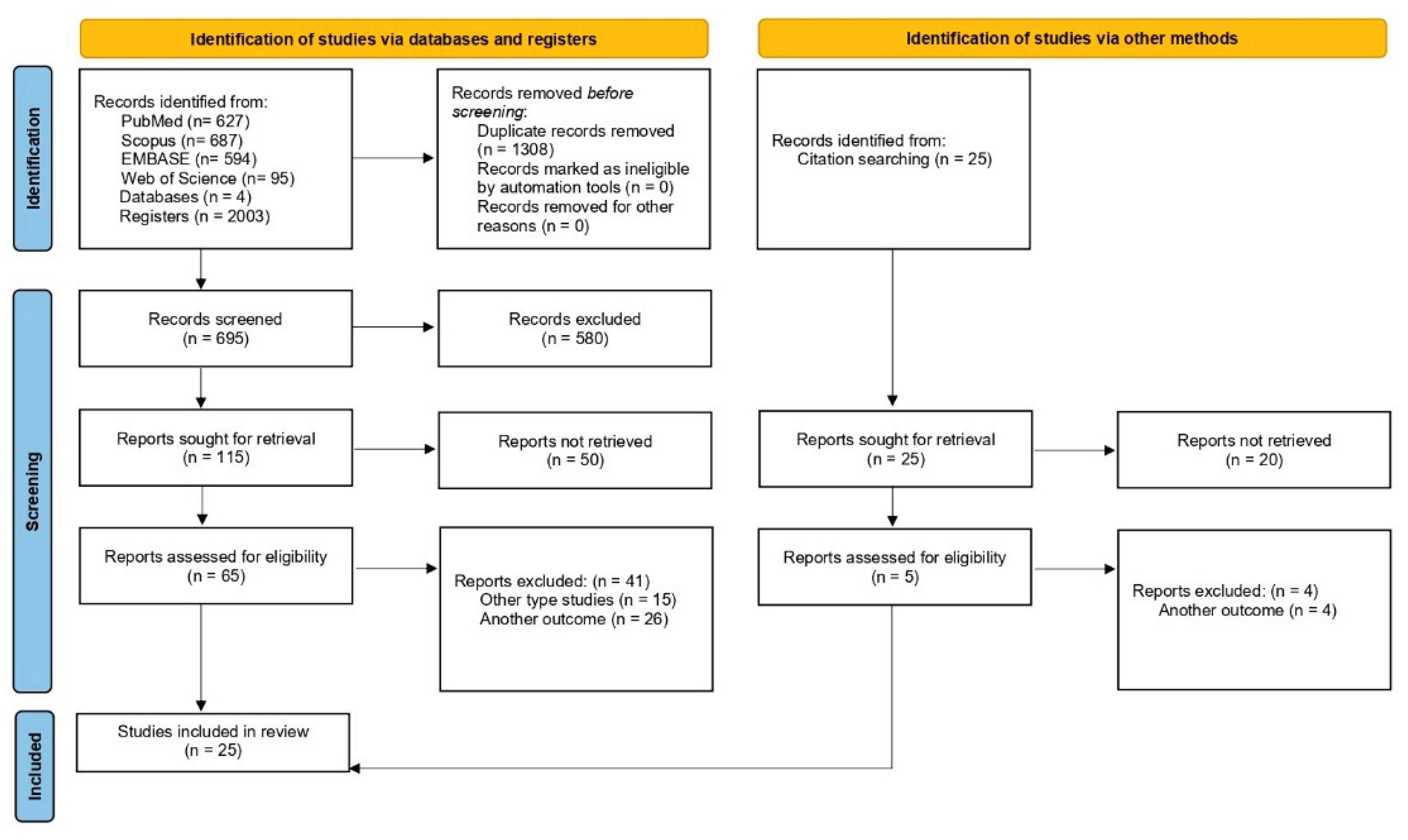

Table 1.
Characteristics and effects of Respiratory Syncytial Virus vaccines in older adults.
| Author /year | Country | Design | Network | Period | Vaccine type | Total sample | Vaccinated sample | Age (Mean/ Median) | Female | Unvaccinated sample | Age | Female | Outcomes | Follow-up |
|---|---|---|---|---|---|---|---|---|---|---|---|---|---|---|
| Lassen et al. 2025 [19] | Denmark | Prespecified secondary analysis of a trial | DAN-RSV | 2024-2025 | RSV Vaccine | 28 662 | 14 377 | 71.8 | 5 186 | 14 285 | 71.8 | 5 038 | Hospitalizations Mortality |
1 year |
| Pareek et al. 2025 [20] | Denmark | Prespecified secondary analysis of a trial | DAN-RSV | 2024-2025 | RSV Vaccine | 131 276 | 65 642 | 71.5 | 21 268 | 65 634 | 69.2 | 21 265 | Effectivity | 1 year |
MACE: Major adverse cardiovascular events; RSV: Respiratory syncytial virus.
Table 2.
Effects of Respiratory Syncytial Virus vaccines in older adults.
| Author /year | Vaccinated sample | Cardiovascular disease | Efficacy All-cause mortality |
Hospitalizations | Safety/ MACE |
Conclusions |
|---|---|---|---|---|---|---|
| Lassen et al. 2025 [19] | 14 377 | AF: 10 126 (70.5%) IHD: 9 746 (67.8%) HF: 2 973 (20.7%) |
VE: -56.5% | VE: -4.7%, HF VE: 1.8%, MI VE: 19.4%, Stroke VE: -2.4%, AF |
- | Lower hospitalizations rate in the vaccinated group |
| Pareek et al. 2025 [20] | 65 642 | Prespecified secondary analysis of a trial | DAN-RSV | 2024-2025 | VE: 9.3%, MACE | The effectiveness of the vaccines was similar to that of the controls |
AF: Atrial fibrillation; ARR: Absolute risk reduction; HF: Heart failure; IHD: Ischemic heart disease; MACE: Major adverse cardiovascular events; MI: Myocardial infarct; VE: Vaccine effectiveness.
Table 3.
Characteristics and effects of Influenza Vaccines in older adults.
| Author /year | Country | Design | Network | Period | Vaccine type | Total sample | Vaccinated sample | Age (Mean/ Median) | Female | Unvaccinated sample | Age | Female | Outcomes | Follow-up |
|---|---|---|---|---|---|---|---|---|---|---|---|---|---|---|
| Hsu et al. 2016 [22] | Taiwan | Retrospective cohort | LHID 2005 |
2007-2008 | Influenza vaccine | 202 058 | 93 051 | 75.91 | 46 243 | 109 007 | 74.55 | 54 069 | Risk of AMI | 9 months |
| Chiang et al. 2017 [23] | Taiwan | Retrospective case-control | NHIRD | 2000-2013 | Influenza vaccine | 160 726 | Case: 29 046 Controls: 33 285 |
76.8 | - | Case: 51 317 Controls: 47 078 |
76.8 | - | MACE | - |
| Liu et al. 2017 [24] | Taiwan | Cohort | NHIRD | 2005-2012 | Influenza vaccine | 6 570 | 2 547 | 74.33 | 1 187 | 4 023 | 72.79 | 1 913 | Risk of HS | - |
| Mohseni et al. 2017 [25] | UK | Self-controlled case series | CPRD | - | Influenza vaccine | 59 202 | 59 202 | 74.7 | 29 553 | - | - | - | Hospitalizations | - |
| Christiansen et al. 2019 [26] | Denmark | Cohort | NHIRD | 2005-2015 | Influenza vaccine | 31 108 | 11 866 | - | 5 192 | 19 242 | - | 67 043 | Hospitalization All-cause mortality |
1 year |
| Lam et al. 2019 [27] | Taiwan | Cohort | NHIRD | 2000 -2009 | Influenza vaccine | 50 496 | 25 248 | - | 11 332 | 25 248 | - | 11 332 | In-hospital mortality Hospitalizations |
30 days |
| Wu et al. 2019 [28] | Taiwan | Retrospective PM-cohort | NHIRD |
2000-2013 | Seasonal influenza vaccine | 8 700 | 4 350 | 76.3 | 1527 | 4 350 | 76.2 | 1 505 | All-cause mortality Hospitalizations |
1 year |
| Gotsman et al. 2020 [29] | Israel | Retrospective cohort | Clalit Health Services | 2017-2018 | Influenza vaccine | 6 435 | 4 440 | 77 | 2 056 | 1 995 | 74 | 970 | All-cause mortality Hospitalizations |
1 year |
| Pang et al. 2021 [30] | China | Retrospective cohort | UEBMI | January 2013– December 2016 | Influenza vaccine | 139 506 | 17 655 | 74 | - | 121 851 | 72.9 | - | In-hospital death | - |
| Pang et al. 2022 [31] | China | Retrospective cohort | UEBMI | January 2013– December 2019 | Influenza vaccine | 713 488 | 95 060 | 74.1 | 53 788 | 618 428 | 72.9 | 343 227 | In-hospital death Hospitalizations |
- |
| Saade et al. 2022 [32] | USA | Post-hoc analysis | CMS | - | Influenza vaccine | 49 175 | 49 175 | 83.8 | 35 674 | - | - | - | Hospitalizations | - |
| Miró et al. 2023 [35] | Spain | Secondary analysis of cohort | EAHFE | January 2018– February 2019 | Influenza vaccine | 6 147 | 1 339 | 85 | 654 | 5 008 | 84 | 2 756 | All-cause mortality Decompensations |
1 year |
| Christensen et al. 2024 [33] | Denmark | Prespecified analysis of randomized clinical trial | DANFLU-1 | 2021-2022 | Influenza vaccine | 2 540 | 2 540 | 72.6 | 909 | - | - | - | All-cause hospitalization Mortality |
1 year |
| NajafZadeh et al. 2024 [34] | USA | Emulator Clinical Trial | Medicare claims data | 2016-2019 | Influenza vaccine | 106 786 | 106 786 | 79.96 | 60 634 | - | - | - | All-cause mortality Hospitalizations |
- |
| Guo et al. 2025 [36] | USA | Target trial emulation | YRHCD | 2020 – 2022 | Influenza vaccine | 339 976 | 169 988 | 72 | 90 414 | 169 988 | 72 | 91 138 | MACE | 2 years |
| Lei et al. 2025 [37] | China | Retrospective PM-cohort | MIMIC-IV | NR | Influenza vaccine | 9 500 | 4 758 | 75.44 | - | 4 742 | 75.76 | - | All-cause mortality | 1 year |
| Miró et al. 2025 [39] | Spain | Secondary analysis of cohort | EAHFE | November - December 2022 | Influenza vaccine | 4 243 | 1 841 | 86 | 1 039 | 2 402 | 84 | 1 359 | All-cause mortality Decompensations |
1 year |
| Yang et al. 2025 [38] | China | Retrospective cohort | RHIP | 2021-2022 | Influenza vaccine | 76 747 | 31 729 | 75 | 15 326 | 45 018 | 76 | 21 851 | Stroke risk |
1 year |
AMI: Acute myocardial infarction; HS: hemorrhagic stroke; MACE: Major adverse cardiovascular disease.
Table 4.
Characteristics and effects of Influenza Vaccines in older adults.
| Author /year | Vaccinated sample | Cardiovascular disease | Efficacy All-cause mortality |
Hospitalizations | Severe decompensations | Safety/MACE | Conclusions |
|---|---|---|---|---|---|---|---|
| Hsu et al. 2016 [22] | 93 051 | Hypertension: 41 371 (44.5%) IHD: 15 904 (17.1%) MI: 313 (0.34%) IS: 6 350 (6.8%) HF: 3 928 (4.2%) |
- | - | - | HR= 0.681, AMI | Vaccination was associated with a reduced risk of AMI |
| Chiang et al. 2017 [23] | 62 331 | Stroke: 46 704 (74.9%) MI: 15 627 (25.1%) |
- | - | - | aOR= 0.80, Stroke aOR= 0.80, MI |
Vaccination is associated with a reduced risk of MACE |
| Liu et al. 2017 [24] | 2 547 | AF: 2 547 (100%) Hypertension: 1 939 (76.13%) CHF: 1 298 (50.96%) |
- | - | - | aHR= 0.72, HS | Vaccination reduces the incidence of hemorrhagic stroke |
| Mohseni et al. 2017 [25] | 59 202 | HF: 59 202 (100%) Hypertension: 38 753 (46%) MI: 41 502 (49.2%) Stroke: 14 522 (17.2%) |
- | Overall IRR= 0.73 | - | - | Vaccination is associated with a lower risk of hospitalizations |
| Christiansen et al. 2019 [26] | 11 866 | MI: 4 067 (11.7%) Stroke: 5 080 (14.6%) CHF: 4 847 (13.9%) Hypertension: 12 773 (36.6%) AF/Flutter: 6 234 (17.9%) |
1 year (aHR= 0.92) |
1 year (aHR= 0.93, MI) 1 year (aHR= 0.98, HF) 1 year (aHR= 0.84, Stroke) |
- | - | Vaccination was associated with a lower risk of stroke and mortality |
| Lam et al. 2019 [27] | 25 248 | Stroke: 25 248 (100%) Hypertension: 9 735 (38.6%) IHD: 1 017 (4.0%) HF: 276 (1.1%) |
30 days (OR= 0.60) |
30 days (OR = 0.91, ICU admission) | - | - | Vaccination associated with reduced post-stroke complications and mortality |
| Wu et al. 2019 [28] | 4 350 | MI: 4 350 (100%) Hypertension: 3 918 (90.07%) HF: 2 062 (47.4%) AF: 660 (15.17%) |
1 year (HR= 0.82) |
HR= 0.83, HF | - | - | Vaccination was associated with a reduced risk of CVD, all-cause mortality and hospitalizations |
| Gotsman et al. 2020 [29] | 4 440 | HF: 4 440 (100%) Hypertension: 3 745 (84%) CHD: 2 992 (67%) MI: 1 904 (43%) AF: 1 743 (39%) Stroke: 1 053 (24%) |
HR= 0.80 | HR=0.83, CVD | - | - | Vaccination was associated with a reduction in deaths and hospitalizations |
| Pang et al. 2021 [30] | 17 655 | NR | aOR= 0.55 | - | - | - | Vaccination was associated with a lower risk of in-hospital death |
| Pang et al. 2022 [31] | 95 060 | IS: 95 060 (100%) IHD: 95 060 (100%) |
aOR= 0.85 | OR= 0.92, IHD OR= 1.04, IS |
- | - | Vaccination was associated with a lower risk of in-hospital death in patients with fewer comorbidities |
| Saade et al. 2022 [32] | 49 175 | HF: 10 160 (20.7%) Hypertension: 39 009 (79.3%) Stroke: 9 813 (20%) |
- | HR= 0.92, MACE HR= 0.96, ACS HR= 0.84, Stroke HR= 0.96, HF |
- | - | Similar reductions in hospitalizations were observed with both doses |
| Miró et al. 2025 [35] | 1 841 | AHF: 1 841 (100%) Hypertension: 1 603 (87.1%) AF: 993 (54%) CAD: 440 (23.9%) |
90 days (HR= 0.831) 1 year (HR= 0.885) |
OR= 0.746, HFD | OR= 0.926 | - | Vaccination is associated with less severe decompensation and lower all-cause mortality |
| Christensen et al. 2024 [33] | 2 540 | Hypertension: 961 (37.8%) IHD: 913 (35.9%) AF: 822 (32.4%) |
IRR= 0.51 | IRR: 0.87, CVD | - | - | All-cause mortality declined in a dose–response pattern |
| NajafZadeh et al. 2024 [34] | 106 786 | Hypertension: 105 315 (98.6%) AF: 63 986 (59.9%) IS: 28 621 (26.8%) AMI: 17 547 (16.4%) |
HR= 0.92 | HR= 0.97 | - | - | All-cause mortality and hospitalizations declined in a dose–response pattern |
| Guo et al. 2025 [36] | 169 988 | Hypertension: 141 085 (83%) HF: 18 441 (10.8%) Stroke: 38 919 (22.9%) ACS: 14 019 (8.2%) |
- | - | - | 1 year (IRR= 0.86, MACE) 1 year (IRR= 0.87, ACS) |
Vaccination was associated with a reduction in MACE and ACS |
| Lei et al. 2025 [37] | 4 758 | AF: 4 758 (100%) Hypertension: 4 084 (76.05%) CHF: 2 447 (45.57%) MI: 1 229 (22.89%) |
1 year (HR= 0.83) |
- | - | - | Vaccination was associated with a reduction in all-cause mortality |
| Miró et al. 2023 [39] | 1 339 | AHF: 1 339 (100%) HVD: 274 (31.5%) |
90 days (HR= 0.885) |
aOR= 0.823 | aOR= 0.934 | - | Vaccination is associated with less severe decompensations and fewer hospitalizations |
| Yang et al. 2025 [38] | 31 729 | Stroke: 31 729 (100%) Hypertension: 17 169 (54.1%) CAD: 2 486 (7.8%) AF: 3 262 (10.3%) |
- | - | - | sHR= 0.84, Stroke recurrence sHR= 0.75, HS sHR= 0.86, IS |
Vaccination associated with reduced ischemic stroke risk |
ACS: Acute coronary syndrome; AHF: Acute heart failure; aHR: Adjusted Hazard Ratio; AF: Atrial fibrillation; AMI: Acute myocardial infarction; aOR: adjusted Odds ratio; CABG: Coronary artery bypass grafting; CAD: Coronary artery disease; CHD: Coronary heart disease; CV: Cardiovascular; CVD: Cardiovascular Disease; CHF: Congestive heart failure; HF: Heart failure; HFD: Heart failure decompensation; HR: Hazard Ratio; HS: Hemorrhagic stroke; HVD: Heart valve disease; ICU: Intensive Care Unit; IHD: Ischemic heart disease; IRR: Incidence rate ratio; IS: Ischemic stroke; MACE: Major adverse cardiovascular events; MI: Myocardial infarct; NR: Not reported; OR: Odds Ratio; sHR: subdistribution Hazard ratio.
Table 5.
Characteristics and effects of Influenza Vaccines in older adults.
| Author /year | Country | Design | Network | Period | Vaccine type | Total sample | Vaccinated sample | Age (Mean/ Median) | Female | Unvaccinated sample | Age | Female | Outcomes | Follow-up |
|---|---|---|---|---|---|---|---|---|---|---|---|---|---|---|
| Akbar et al. 2025 [40] | USA | Retrospective PM-cohort | TriNetX US | December 2020-2022 | COVID-19 vaccine | 148 472 | 74 236 | 73.90 | 25 601 | 74 236 | 74.30 | 25 428 | All-cause mortality | 1-2 years |
| Miró et al. 2025 [39] | Spain | Secondary analysis of cohort | EAHFE | November - December 2022 | COVID-19 vaccine | 4 243 | 3 139 | 85 | 1 769 | 1 104 | 85 | 629 | All-cause mortality Decompensations |
1 year |
| Johnson et al. 2022 [41] | USA | Retrospective cohort | - | January 2021 – January 2022 | COVID-19 vaccine | 7 094 | 3 898 | 73.9 | 1 877 | 3 196 | - | - | All-cause mortality Hospitalizations |
- |
| Sindet-Pedersen et al. 2023 [42] | Denmark | Secondary analysis of cohort | - | 2019 – 2021 | COVID-19 vaccine | 87 734 | 43 850 | - | 15 612 | 43 884 | - | 15 624 | All-cause mortality Worsening Safety |
- |
| Ye et al. 2023 [43] | China | Self-controlled case series | - | February 2021 – March 2022 | COVID-19 vaccine | 8 201 | 3 035 | - | 1 523 | 5 166 | - | 2 901 | Hospitalizations MACE |
- |
MACE: Major adverse cardiovascular events.
Table 6.
Characteristics and effects of Influenza Vaccines in older adults.
| Author /year | Vaccinated sample | Dose | Cardiovascular disease | Efficacy All-cause mortality |
Hospitalizations | Revascularization rates | Safety/ MACE |
Conclusions |
|---|---|---|---|---|---|---|---|---|
| Akbar et al. 2025 [40] | 74 236 | 1st: 28 500 2nd: 3 2000 3rd: 13 736 |
CAD: 67 327 (90.70%) HF: 38 017 (51.12%) Hypertension: 57 591 (77.58%) |
1 year (HR= 0.65, 3rd dose) 2 year (HR= 0.40, 3rd dose) |
1 year (HR= 0.85, HF) 2 year (HR= 0.90, HF) 1 year (HR= 0.94, AF) 2 year (HR= 0.93, AF) |
1 year: PCI (HR= 0.86, CAD) 2 year: PCI (HR= 0.87) 1 year: CABG (HR= 0.83) 2 year: CABG (HR= 0.80) |
1 year (HR= 1.43, Myocarditis) 2 year (HR= 1.36, Myocarditis) |
All-cause mortality declined in a dose–response pattern |
| Miró et al. 2025 [39] | 3 139 | - | HF: 3 139 (100%) Hypertension: 2 713 (86.5%) AF: 1 663 (53%) CAD: 717 (22.8%) |
90 days (aHR= 0.829) 1 year (aHR= 0.91) |
aOR= 1.215 | - | - | Vaccination was associated with increased hospitalizations and lower in-hospital mortality |
| Johnson et al. 2022 [41] | 3 898 | 1st: 3 898 2nd: 3 253 3rd: 1 053 |
HF: 3 898 (100%) Hypertension: 2 529 (64.9%) |
HR= 0.87, 1st dose HR= 0.36, 2nd dose |
HR= 0.68 | - | - | Vaccination was associated with a lower likelihood of all-cause hospitalizations and mortality |
| Sindet-Pedersen et al. 2023 [42] | 43 850 | - | HF: 43 850 (100%) Hypertension: 37 712 (86%) AF: 19 401 (44.2%) IHD: 21 055 (48%) AMI: 10 266 (23.4%) Stroke: 5498 (12.5%) |
90 days (Standardized risk= 2.23%) | - | - | 90 days (Standardized risk= 0.01%, Myocarditis) | Vaccination was associated with a slight reduction in mortality. It was not associated with worsening HF or an increased risk of myocarditis |
| Ye et al. 2023 [43] | 3 035 | - | HF: 3 035 (100%) Hypertension: 1 791 (59%) MI: 341 (11.2%) IS: 40 (1.3%) |
- | 0-13 days (IRR= 0.60, HF) 14-27 days (IRR= 0.60, HF) |
- | 0-13 days (IRR= 0.19, MACE) 14-27 days (IRR= 0.10, MACE) |
Hospitalizations and MACE declined in a dose–response pattern |
aHR: Adjusted Hazard Ratio; AF: Atrial fibrillation; AMI: Acute myocardial infarction; aOR: adjusted Odds ratio; CABG: Coronary artery bypass grafting; CAD: Coronary artery disease; HF: Heart failure; HR: Hazard Ratio; IHD: Ischemic heart disease; IRR: Incidence rate ratio; IS: Ischemic stroke; MACE: Major adverse cardiovascular events; MI: Myocardial infarct; OR: Odds Ratio.
Disclaimer/Publisher’s Note: The statements, opinions and data contained in all publications are solely those of the individual author(s) and contributor(s) and not of MDPI and/or the editor(s). MDPI and/or the editor(s) disclaim responsibility for any injury to people or property resulting from any ideas, methods, instructions or products referred to in the content. |
© 2026 by the authors. Licensee MDPI, Basel, Switzerland. This article is an open access article distributed under the terms and conditions of the Creative Commons Attribution (CC BY) license (http://creativecommons.org/licenses/by/4.0/).
Copyright: This open access article is published under a Creative Commons CC BY 4.0 license, which permit the free download, distribution, and reuse, provided that the author and preprint are cited in any reuse.


