

Submitted:
05 March 2026
Posted:
06 March 2026
You are already at the latest version
Abstract
Background/Objectives: Rates of postoperative recurrence of varicose veins range from 7% to 62%. We analyzed factors associated with recurrent varicose veins (RVVs) of the lower extremities after interventional treatment. Methods: We enrolled 99 patients (114 lower extremities) with RVVs admitted from January 2018 to June 2025 (71 women, 76 limbs; 28 men, 31 limbs; average age (SD) 63.9 (9.8) years). Duplex ultrasound scanning, magnetic resonance venography, or computed tomography venography were performed. The presence of a residual great saphenous vein, primary deep venous valve insufficiency, incompetent perforating veins, and iliac vein stenosis were recorded. We analyzed the charts of patients who underwent operations for recurrent varicose veins for associated factors. Results: We recorded residual trunk of the great saphenous vein in 55 limbs (48.3%), deep venous valve insufficiency in 47 (41.2%), incompetent perforating veins in 7 (6.1%), anterior accessory saphenous vein insufficiency in 2 (1.8%), and small saphenous vein insufficiency in 2 (1.8%). Iliofemoral venography indicated 31 limbs (27.2%; left lower, 24; right lower, 7) with a nonthrombotic iliac vein compression lesion. After identifying associated factors, retreatments—high ligation and stripping of the great saphenous vein or iliac vein stent implantation or small saphenous vein dissection ligation and stripping—were performed. The venous clinical severity score was 7 (interquartile range, 5–10) on admission and 3 (interquartile range, 2–4) 3 months after discharge.Conclusions: RVVs are associated with multiple factors, including inadequate initial surgical techniques, nonthrombotic iliac vein compression lesions, deep venous valve insufficiency, small saphenous vein insufficiency, and incompetent perforating veins. Performing detailed imaging before retreatment is essential to identify factors associated with RVVs and prevent recurrence.
Keywords:
great saphenous vein
; high ligation
; iliac vein
; perforating vein
; recurrent varicose vein
; small saphenous vein
1. Introduction
Varicose veins (VVs) of the lower extremities are common vascular disorders that can cause swelling, pigmentation, and ulcers in the legs. To date, various interventions to treat VVs have been developed, including high ligation (HL) and stripping of the great saphenous vein (GSV), radiofrequency ablation (RFA) of the GSV, endovenous laser ablation of the GSV, and foam sclerotherapy. [1,2,3,4] However, postoperative recurrence remains frequent, with rates ranging from 7% to 62%. [5]
Recurrent varicose veins (RVVs) after surgical treatment may cause swelling, thrombophlebitis, and ulcers in the legs. [6] Patients with RVVs can have physical discomfort and a heavy economic burden. [7]According to recent studies, the factors most likely to give rise to recurrence include the presence of a nonthrombotic iliac vein compression lesion (NIVCL), inadequate stripping of the GSV, reflux in the anterior accessory great saphenous vein (AAGSV) or small saphenous vein (SSV), and the presence of incompetent perforating veins (IPVs). [5,8,9,10] Very few studies have illustrated the weight of each associated factor with RVVs. Therefore, we conducted a retrospective study on patients with RVV in our hospital. We aimed to describe factors associated with the occurrence of RVVs so that recurrence of VVs after surgery could be prevented.
2. Materials and Methods
2.1. Study Population and Examination Methods
We conducted a retrospective review of the data of patients with RVVs who were admitted to Zhongshan Hospital (Xiamen), Fudan University, between January 2018 and June 2025. RVVs were defined as the presence of VVs after interventional treatment, irrespective of the cause and previous treatment. [11]Previous intervention modalities included HL, RFA, VV dissection without HL and or RFA, and foam sclerotherapy alone. All lower limb RVVs enrolled in this study were classified as clinical class C3–C6 according to the clinical, etiological, anatomical, and pathophysiological (CEAP) classification system. Patients who met the following inclusion criteria were enrolled: diagnosed as having VVs after interventional treatment of the unilateral or bilateral lower extremities; with VVs manifesting as a CEAP clinical class of 3 or more; and aged 18 years or older and younger than 90 years. The exclusion criteria were pregnancy, recent cerebral hemorrhage, recent gastrointestinal bleeding, poor general health, and deep venous thrombosis in the lower limbs. Demographic data—including age, sex, laterality, body mass index, and the clinical class of the CEAP classification—were collected from the medical records of each patient.
All patients underwent duplex ultrasound (DUS) in an upright position to evaluate reflux in the GSV, SSV, AAGSV, deep veins, and perforating veins. Reflux was defined as reverse flow of more than 0.5 seconds during a pressure release test. [12]The AAGSV was defined as any vein that accompanied the GSV that was located on the anterior surface of the thigh superficially to the GSV and was not surrounded by a saphenous fascial sheath. [9]An IPV was defined as a perforating vein with a lumen diameter of more than 3.5 mm at the fascia and reflux of more than 0.5 seconds with compression–release maneuvers distal to the perforating vein. [13]All patients underwent computed tomography venography (CTV) or magnetic resonance venography (MRV) to assess the degree of iliac vein stenosis. Digital subtraction angiography (DSA) was recommended if stenosis of the iliac vein was suspected based on CTV or MRV findings. If more than 50% stenosis of the iliac vein was detected using iliofemoral venography, a nonthrombotic iliac vein compression lesion (NIVCL) was also diagnosed. [5,14]This study adhered to the Declaration of Helsinki (revised in 2013) and was approved by the Ethics Committee of Zhongshan Hospital (Xiamen), Fudan University. Informed consent was obtained from all patients.
2.2. Surgical Treatments
Different surgical treatments were performed, depending on the diagnoses revealed at the preoperative examination. For patients who had undergone dissection of VVs alone or foam sclerotherapy alone, without high ligation or RFA of the great saphenous vein, high ligation and stripping of the GSV or RFA was performed to treat the residual main trunk of the GSV. For patients with inadequate stripping of the GSV, stripping of the GSV from the saphenofemoral junction (SFJ) to the medial malleolus, with ligation of the SFJ and inguinal tributaries, was performed to remove the long stump or remaining branches of the GSV. For patients with SSV reflux, stripping of the SSV from the saphenopopliteal junction to the lateral malleolus was performed. For patients with AAGSV reflux, stripping of the AAGSV was performed. If IPV was identified, division and extra-fascial ligation of the IPV and dissection of tributary varicosities was performed. If stenosis of the iliac vein lesion exceeding 50% was detected on DSA, and patients had a CEAP clinical class of more than 3, balloon dilation of the iliac vein or stent placement was considered.
Postoperatively, a class 2 compression stocking was supplied for patients to wear for at least 30 days. All patients underwent outpatient follow-up 1 month and 3 months after discharge. The venous clinical severity score was recorded on admission and reassessed 3 months after discharge.
2.3. Statistical Analysis
Statistical analyses were performed using SPSS for Windows software (version 16.0; SPSS Inc., Chicago, Illinois, USA). Descriptive characteristics are presented as mean (SD) or median (interquartile range). The t-test was used for normally distributed data, whereas the rank-sum test was used for non-normally distributed data. Dichotomous covariates between the groups were compared using the χ2 or Fisher’s exact test. Statistical significance was set at p < 0.05.
3. Results
Ninety-nine patients (114 affected limbs) with RVVs treated from January 2018 to June 2025 were included. The average age (SD) of the cohort was 63.9 (9.8) years (range, 38–85 years) and 71.7% were female. RVVs were present on the left side in 70 patients and on the right side in 44; 13 patients had bilateral RVVs.
All limbs exhibited superficial VVs and ankle edema of venous origin, with 20 limbs having open crural venous ulcers and 4 having healed venous ulcers. According to the clinical CEAP classification, 16 limbs were categorized as C3, 74 as C4, 4 as C5, and 20 as C6 (Table 1). The 114 lower limbs were divided into 2 groups: RVVs in the left lower limb and RVVs in the right lower limb. No significant differences were observed between the two groups regarding demographic characteristics and CEAP classification (p > 0.05; Table 2).
The previous intervention modalities included high ligation and stripping, RFA, dissection of VVs alone, and foam sclerotherapy alone (Table 3).
On duplex ultrasound (DUS) examination, 48.3% of RVV legs had a residual main trunk of the GSV, 41.2% had deep vein valve insufficiency, 6.1% had IPVs, 1.8% had AAGSV reflux, and 1.8% had SSV reflux (Table 4). CTV and MRV findings showed stenosis of the iliac vein in 42 legs. Iliofemoral venography was recommended for these patients. We performed iliofemoral venography on 38 limbs; the remaining 4 limbs did not undergo the procedure due to patient refusal. Among the 38 legs examined using DSA, iliac vein stenosis of greater than 50% was detected in 31 legs; thus, NIVCL was diagnosed in these legs.
No statistically significant difference was observed between the left- and right-lower limb groups regarding the residual main trunk of the GSV, deep vein valve insufficiency, SSV reflux, AAGSV reflux, and IPV. However, the difference in NIVCL diagnosis between the two groups was statistically significant (p < 0.01; Table 5), suggesting a higher prevalence of NIVCLs in patients with left RVVs than in those with right RVVs.
The median venous clinical severity scores significantly decreased from 7 (interquartile range, 5–10) at admission to 3 (interquartile range, 2–4; p < 0.01) at 3 months after discharge (p <0.0001; Figure 1). At 3 months after reoperation, ulcers in all 20 limbs had completely healed. The mean duration of follow-up was 3.42 (0.67) years. No recurrence was observed during postoperative follow-up. The retreatments were performed successfully in all legs, with no cases of deep vein thrombosis or surgery-related deaths.
4. Discussion
Although surgery for VVs of the GSV has greatly progressed, postoperative recurrence remains a substantial challenge for vascular surgeons. The etiology of RVVs are multifactorial. In the present study, we identified some factors associated with RVVs in our clinical practice, including inadequate stripping of the GSV, NIVCL, deep venous valve insufficiency, AAGSV insufficiency, SSV insufficiency, and IPVs. We infer that these associated factors comprise 2 major sources of recurrence following VV surgery. Factors in the first group are attributable to inadequate or incomplete initial treatment, including inadequate stripping of the GSV and AAGSV insufficiency. Factors in the second group are attributable to chronic venous hypertension, including NIVCL and deep venous valve insufficiency, which could lead to recanalization and disease progression.
Factors associated with RVVs include inadequate stripping of the GSV, neovascularization, perforator veins, Budd–Chiari syndrome, and NIVCLs. [5,15,16,17,18] In the present study, inadequate stripping of the GSV was a major factor associated with recurrence. GSV stripping and HL of the SFJ is an important procedure in VV surgery. Leaving long remnants of the GSV or its tributaries may lead to recurrence of VVs. [10,19,20,21,22] In the current study, 55 RVV limbs had previously undergone dissection or sclerotherapy for VVs in the leg without HL of the SFJ and stripping of GSV in the thigh. In our opinion, to reduce recurrence rates, surgeons should combine HL and stripping of the long GVS to the knee, and perform meticulous dissection of the SFJ with division of all the branches. [10] Another possible error that may occur during the initial surgery is incomplete ligation of all branches at the SFJ. [10] AAGSV insufficiency can also induce RVVs. [9] In our study, 2 limbs with RVVs were affected by AAGSV reflux. Several studies have also reported that SSV insufficiency was a cause of VV recurrence. [12,23,24] If surgeons miss the reflux in the initial surgery and do not treat it at the saphenopopliteal junction or in the vein of the popliteal fossa, the persistent reflux of the SSV may induce RVVs. In the present study, 2 RVV limbs were affected by SSV reflux. Preoperative DUS scanning can help surgeons to effectively identify and treat SSV insufficiency to decrease the incidence of recurrence. [24] Lam et al. reported that the recurrence rate of VVs after ultrasound-guided foam sclerotherapy alone was high. [25] In our study, 9 limbs with RVVs were previously treated with foam sclerotherapy alone. This result indicated that foam sclerotherapy alone was undependable for VV surgery.
Among patients with RVVs in the present study, the proportion of female patients was higher than that of male patients, and the proportion of left lower limbs was higher than that of right lower limbs. We performed a statistical analysis of the 2 lateral lower limbs to identify significant causative factors of RVVs in the left lower limbs: The results showed that significantly more cases of RVVs in the left lower limb were due to NIVCL. This may be attributed to the fact that NIVCL was reported to be more common in the left lower limb. [14] Zeng et al. also identified NIVCL as a contributing factor for RVVs. [5] In the present study, NIVCLs were present in 31 limbs with recurrence. This finding may be because NIVCL leads to chronic venous hypertension in the lower limbs, leading to recanalization and disease progression. To exclude NIVCL before performing surgery for VVs and decrease the incidence of recurrence, we recommend performing preoperative CTV or MRV examinations for patients with a CEAP clinical class of 3 or more. If severe stenosis of the iliac vein is detected on CTV or MRV, performing DSA is recommended for such patients (Figure 2A-B). If NIVCL is diagnosed via iliofemoral venography, iliac vein stenosis must be treated before VV surgery to prevent recurrence. In the present study, 31 RVV limbs with severe iliac vein stenosis were identified via DSA. Three months after balloon dilation of the iliac vein and stent placement, VV dissection and foam sclerotherapy were performed. All patients recovered well after reoperation, with no recurrence observed during follow-up.
DUS is a commonly used, noninvasive diagnostic tool for assessing RVVs. [12] With DUS, we can identify the residual main trunk of the GSV, SSV, AAGSV, and IPV. An IPV untreated during the previous surgery may induce dilatation and incompetence of the superficial venous system. [10] In the current study, IPVs were identified in the thighs of 7 RVV limbs using DUS and MRV (Figure 3A-C). We performed ultrasound-guided division and ligation with a small incision to treat these IPVs (Figure 3D).
Deep venous valve insufficiency is another cause of RVVs because it exacerbates venous hypertension in the lower extremities and promotes VV recurrence. [15] In the present study, this type of insufficiency was identified in 47 RVV limbs via DUS. We had not performed operation for deep venous valve insufficiency such as repair of the first valves of the femoral vein surgeries and, instead, we advised patients with this condition to employ long-term wear of gradient compression socks to improve venous function. If secondary deep venous valvular reflux was caused by NIVCL, we recommended performing iliac vein balloon dilation or stent placement for patients manifesting with a CEAP clinical class of more than 3. The venous clinical severity scores of patients followed up for 3 months after discharge were significantly lower than those at admission, indicating a significant improvement in treatment outcomes.
This study had some limitations due to its retrospective nature. First, this study used a small population at a single institution. Second, the follow-up duration of the study was short. Third, we did not use intravascular ultrasonography to assess iliofemoral vein lesions because it is relatively expensive to perform. In the future, we will conduct a randomized trial to compare the rate of recurrence according to different treatments to determine the optimal therapy for VVs.
5. Conclusions
RVVs are caused by multiple factors, including inadequate techniques used in the initial surgery, NIVCL, deep venous valve insufficiency, and IPVs. We suggest using DUS to evaluate the hemodynamics of a patient’s VVs before surgery. Long residual GSVs should be avoided, and the ligation of the SFJ and inguinal tributaries should be carefully performed. MRV or CTV should be performed for patients with NIVCL; DSA should be performed when compression of the iliac vein is severe. If severe iliac vein compression is identified, and the patient has a CEAP clinical class of more than 3, we recommend treating the NIVCL before performing the VV surgery to reduce venous reflux and venous hypertension. Conducting diagnostic imaging before retreatment is essential for patients with RVVs to identify the causative factors of recurrence and improve clinical outcomes.
Author Contributions
Conceptualization, Gang.Chen. and Yue.Lin.; methodology, Gang.Chen.; software, Gang.Chen.; validation, Gang.Chen., Yue.Lin. and Ya.Peng.; formal analysis, Gang.Chen.; investigation, Shichai.Hong.; resources, Xiang.Hong.; data curation, Xiang.Hong.; writing—original draft preparation, Gang.Chen.; writing—review and editing, Lu.Weifeng.; visualization, Lixin.Wang.; supervision, Weiguo.Fu.; project administration, Lixin.Wang. and Weiguo.Fu.; funding acquisition, Weifeng.Lu. All authors have read and agreed to the published version of the manuscript.
Funding
This research was funded by the Xiamen Medical and Health Guidance Project (grant number: 3502Z20244ZD1108), Xiamen Municipal Medical and Health Key Project (grant number: 3502Z20234003), and Fujian Natural Science Foundation Fund (grant number: 2022J011422).
Institutional Review Board Statement
The study was conducted in accordance with the Declaration of Helsinki, and approved by the Ethics Committee of Zhongshan Hospital (Xiamen), Fudan University (Approval No. B2025-005R).
Informed Consent Statement
Informed consent was obtained from all subjects involved in the study.
Data Availability Statement
The data that support the findings of this study are available from the corresponding author upon reasonable request.
Conflicts of Interest
The authors declare no conflicts of interest. The funders had no role in the design of the study; in the collection, analyses, or interpretation of data; in the writing of the manuscript; or in the decision to publish the results.
Abbreviations
The following abbreviations are used in this manuscript:
| AASV GSV IPVs LLG NIVCL RLG RVVs SSV HL RFA CEAP RVVs DSA CTV MRV DUS |
anterior accessory saphenous vein great saphenous veins incompetent perforating veins left limbs group nonthrombotic iliac vein compression lesion right limbs group recurrent varicose veins small saphenous vein high ligation of the great saphenous vein radiofrequency ablation of the great saphenous vein clinical, etiological, anatomical, and pathophysiological classification system recurrent varicose veins digital subtraction angiography computed tomography venography magnetic resonance venography duplex ultrasound |
References
- Whing, J.; Nandhra, S.; Nesbitt, C.; et al. Interventions for great saphenous vein incompetence. Cochrane Database Syst Rev 2021, 8(8), CD005624. [Google Scholar] [CrossRef]
- Zhai, Y.; Lu, Y.-M.; Lu, W.; et al. Radiofrequency ablation of the great saphenous vein in the treatment of varicose veins of the lower extremities [J]. Ann Ital Chir 2022, 235. [Google Scholar] [PubMed]
- Nakashima, M.; Kobayashi, M. Endovenous Laser Ablation Combined with Stripping Technique for Large Saphenous Varicose Veins: The Selection of Operation Technique. Annals of Vascular Diseases 2019, 12(4), 514–518. [Google Scholar] [CrossRef]
- Karacalilar, M.; Kutas, H.B. Approach to tortuous vena saphena magna with insufficiency: Foam sclerotherapy. Vascular 2023, 31(5), 1003–1010. [Google Scholar] [CrossRef]
- Zeng, M.; Teng, B.; Zhao, Y.; et al. Effectiveness of iliac vein stenting combined with endovenous laser treatment of recurrent varicose veins associated with iliac vein compression. Quant Imaging Med Surg. 2023, 13(9), 5986–5995. [Google Scholar] [CrossRef]
- Fischer, R.; Chandler, J.G.; Stenger, D.; et al. Patient characteristics and physician-determined variables affecting saphenofemoral reflux recurrence after ligation and stripping of the great saphenous vein. J Vasc Surg. 2006, 43(1), 81–87. [Google Scholar] [CrossRef]
- van Groenendael, L; van der Vliet, JA; Flinkenflögel, L; et al. Treatment of recurrent varicose veins of the great saphenous vein by conventional surgery and endovenous laser ablation. J Vasc Surg. 2009, 50(5), 1106–1113. [Google Scholar] [CrossRef] [PubMed]
- Lv, W.; Wu, X.J.; Collins, M.; et al. Analysis of a series of patients with varicose vein recurrence. J Int Med Res. 2012, 40(3), 1156–1165. [Google Scholar] [CrossRef]
- Svidersky, Y.; Goshchynsky, V.; Migenko, B.; et al. Anterior accessory great saphenous vein as a cause of postoperative recurrence of veins after radiofrequency ablation. J Med Life 2022, 15(4), 563–569. [Google Scholar] [CrossRef] [PubMed]
- Cina, G.; Narese, D.; Amicucci, V.; et al. Recurrent varicose veins of the legs: a single centre experience. Clin Ter. 2014, 165(4), 183–186. [Google Scholar] [CrossRef] [PubMed]
- De Maeseneer, M.G.; Kakkos, S.K.; Aherne, T.; et al. Editor’s Choice - European Society for Vascular Surgery (ESVS) 2022 Clinical Practice Guidelines on the Management of Chronic Venous Disease of the Lower Limbs. Eur J Vasc Endovasc Surg 2022, 63, 184–267. [Google Scholar] [CrossRef]
- Allegra, C.; Antignani, P.L.; Carlizza, A. Recurrent varicose veins following surgical treatment: our experience with five years follow-up. Eur J Vasc Endovasc Surg. 2007, 33(6), 751–756. [Google Scholar] [CrossRef]
- Ozsvath, K; Hager, E; Harlander-Locke, M. Current techniques to treat pathologic perforator veins. J Vasc Surg Venous Lymphat Disord. 2017, 5(2), 293–296. [Google Scholar] [CrossRef]
- Ye, K.; Lu, X.; Li, W.; et al. Long-term outcomes of stent placement for symptomatic nonthrombotic iliac vein compression lesions in chronic venous disease. J Vasc Interv Radiol. 2012, 23(4), 497–502. [Google Scholar] [CrossRef] [PubMed]
- Hua, W.R.; Yi, M.Q.; Jun, W.X.; et al. Causes of recurrent lower limb varicose veins after surgical interventions in 141 limbs - five-year retrospective analysis of two centers. Vascular 2014, 22(4), 267–273. [Google Scholar] [CrossRef] [PubMed]
- Kostas, T.; Ioannou, C.V.; Touloupakis, E.; et al. Recurrent varicose veins after surgery: a new appraisal of a common and complex problem in vascular surgery. Eur J Vasc Endovasc Surg. 2004, 27(3), 275–282. [Google Scholar] [CrossRef]
- Kusagawa, H.; Ozu, Y.; Inoue, K.; et al. Clinical Results 5 Years after Great Saphenous Vein Stripping. Ann Vasc Dis. 2021, 14(2), 112–117. [Google Scholar] [CrossRef] [PubMed]
- BONTINISA; BONTINISV; KOUDOUNASG. Interventions for the treatment of recurrent varicose vein disease arising from the saphenofemoral junction or the great saphenous vein: a systematic review and meta-analysis [J]. Int Angiol 2024, 43(5), 485. [Google Scholar] [CrossRef]
- Gad, M.A.; Saber, A.; Hokkam, E.N. Assessment of causes and patterns of recurrent varicose veins after surgery. N Am J Med Sci. 2012, 4(1), 45–48. [Google Scholar] [CrossRef]
- Zaraca, F.; Ebner, H. Causes and treatment of recurrent varices of the lower limbs. Chir Ital. 2005, 57(6), 761–765. [Google Scholar]
- Musil, D.; Herman, J.; Duda, M. Recurrence of varices in lower extremities. Vnitr Lek. 2004, 50(8), 587–590. [Google Scholar] [PubMed]
- Herman, J.; Musil, D.; Tichy, M.; et al. Recurrent varicose veins: causes and neovascularisation. A 17-year experience. Int Angiol. 2015, 34(1), 53–59. [Google Scholar] [PubMed]
- Cardia, G.; Catalano, G.; Rosafio, I.; et al. Recurrent varicose veins of the legs. Analysis of a social problem. G Chir. 2012, 33(11-12), 450–454. [Google Scholar] [PubMed]
- Perrin, M.; Gillet, J.L. Management of recurrent varices at the popliteal fossa after surgical treatment. Phlebology 2008, 23(2), 64–68. [Google Scholar] [CrossRef]
- Lam, Y.L.; Lawson, J.A.; Toonder, I.M.; et al. Eight-year follow-up of a randomized clinical trial comparing ultrasound-guided foam sclerotherapy with surgical stripping of the great saphenous vein. Br J Surg. 2018, 105(6), 692–698. [Google Scholar] [CrossRef]
Figure 1.
Comparison of the venous clinical severity scores of patients with recurrent varicose veins at admission and 3 months after discharge. (****: p <0.0001).
Figure 1.
Comparison of the venous clinical severity scores of patients with recurrent varicose veins at admission and 3 months after discharge. (****: p <0.0001).
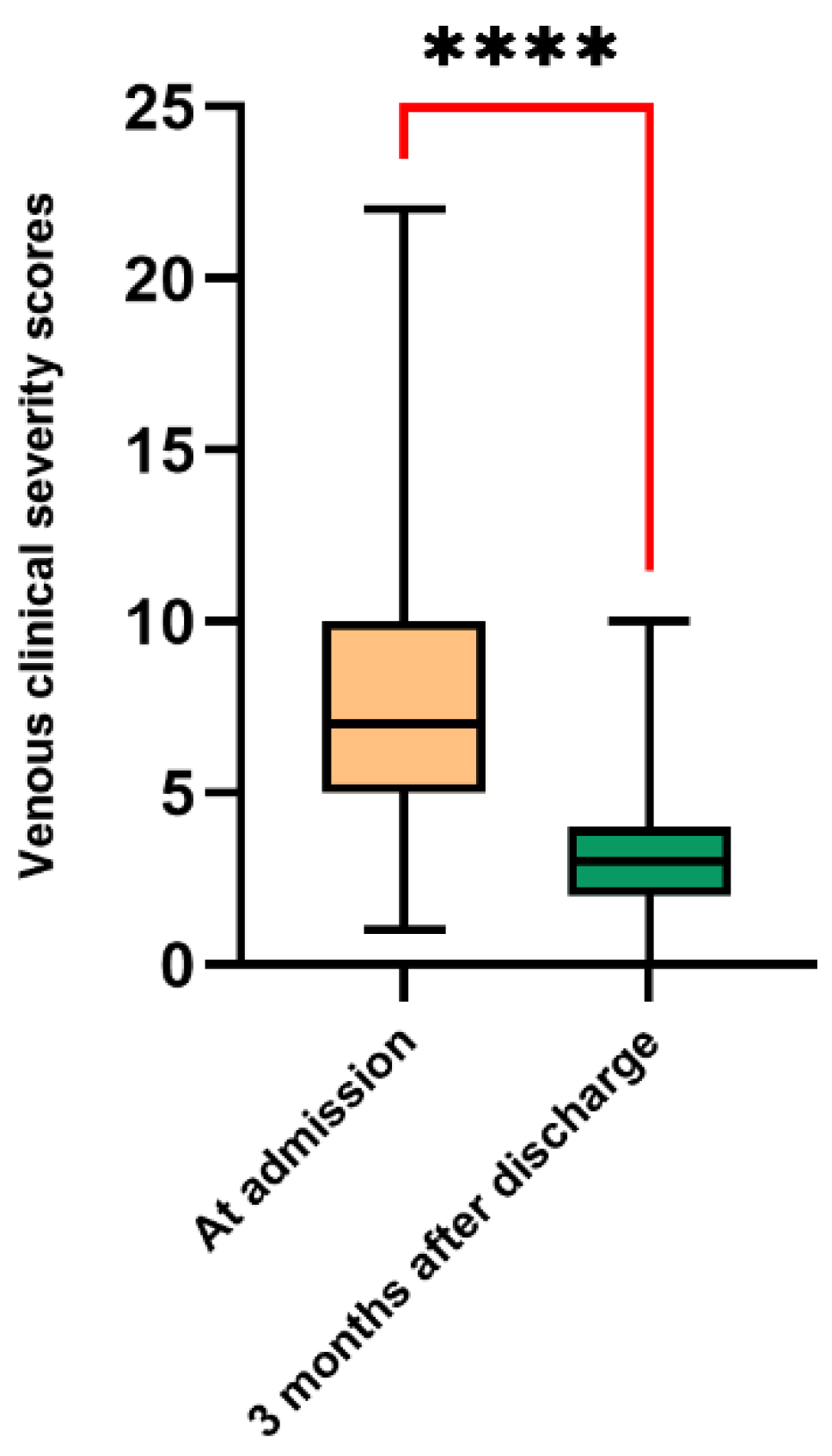
Figure 2.
Stenosis of the left common iliac vein and collateral circulation of the pelvis on magnetic resonance venography image and transfemoral venography image in a 56-year-old woman with recurrent varicose veins. A. Stenosis of the left common iliac vein (green arrow) and collateral circulation of the pelvis were shown in the magnetic resonance venography image. B. Stenosis of the left common iliac vein (blue arrow) and collateral circulation of the pelvis were shown during transfemoral venography.
Figure 2.
Stenosis of the left common iliac vein and collateral circulation of the pelvis on magnetic resonance venography image and transfemoral venography image in a 56-year-old woman with recurrent varicose veins. A. Stenosis of the left common iliac vein (green arrow) and collateral circulation of the pelvis were shown in the magnetic resonance venography image. B. Stenosis of the left common iliac vein (blue arrow) and collateral circulation of the pelvis were shown during transfemoral venography.
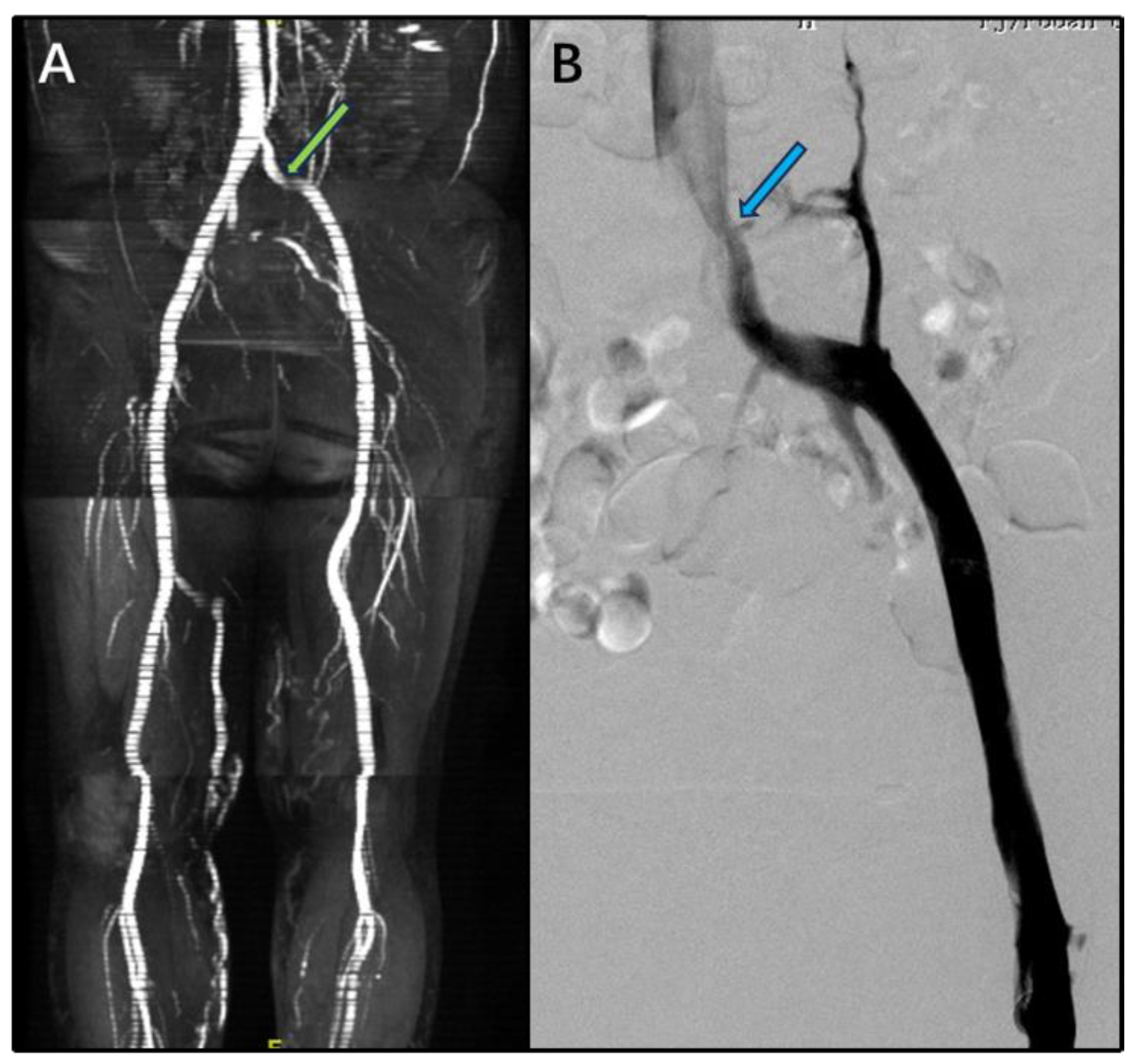
Figure 3.
Examination images of the same woman with recurrent varicose veins showing an incompetent perforating vein in the area of the right femoral vein. A. An incompetent perforating vein in the area of the right femoral vein (yellow arrow) was identified in the magnetic resonance venography image. B. The 2-dimensional ultrasound image showed the incompetent perforating vein (blue arrow) in the area of the femoral vein. C. The color Doppler flow image showed the incompetent perforating vein (purple arrow) in the area of the femoral vein. D. The intraoperative photo in this patient showed an incompetent perforating vein (green arrow) in the area of the femoral vein.
Figure 3.
Examination images of the same woman with recurrent varicose veins showing an incompetent perforating vein in the area of the right femoral vein. A. An incompetent perforating vein in the area of the right femoral vein (yellow arrow) was identified in the magnetic resonance venography image. B. The 2-dimensional ultrasound image showed the incompetent perforating vein (blue arrow) in the area of the femoral vein. C. The color Doppler flow image showed the incompetent perforating vein (purple arrow) in the area of the femoral vein. D. The intraoperative photo in this patient showed an incompetent perforating vein (green arrow) in the area of the femoral vein.
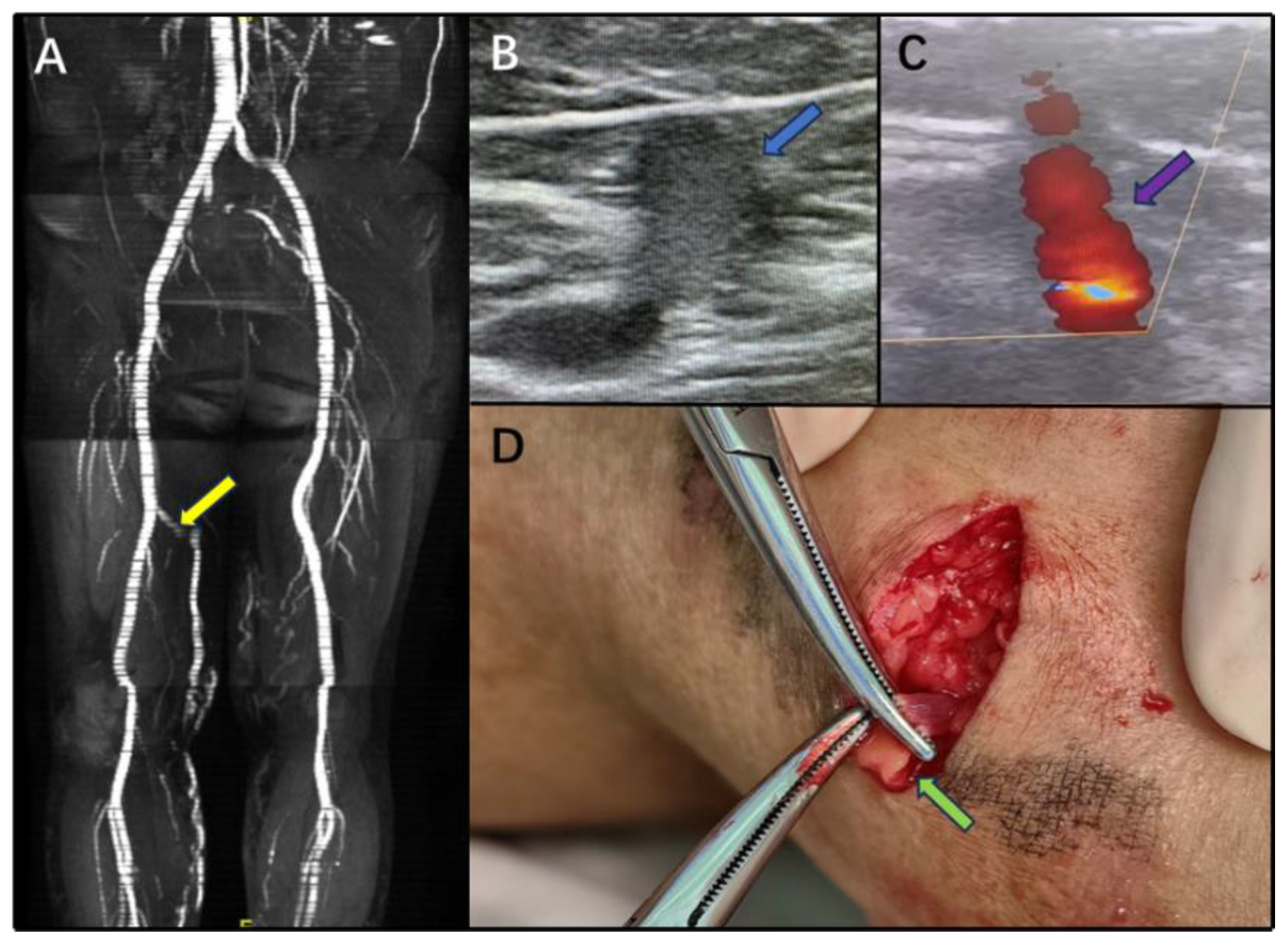

Table 1.
Demographic and lesion characteristics of patients with recurrent varicose veins.
| Characteristic | Value |
|---|---|
| Sex [n (%)] | |
| Female | 71 (71.7) |
| Male | 28 (28.3) |
| Mean age (years) | 63.9 ± 9.8 |
| Body mass index | 24.9 ± 2.5 |
| Laterality of RVVs limb [n (%)] | |
| Left | 70 (61.4) |
| Right | 44 (38.6) |
| Clinical CEAP classification [n (%)] | |
| C3 | 16 (14.0) |
| C4 | 74 (64.9) |
| C5 | 4 (3.5) |
| C6 | 20 (17.5) |
CEAP, clinical, etiological, anatomical, and pathophysiological classification system; RVVs, recurrent varicose veins.
Table 2.
Comparison of the demographic and lesion characteristics of patients with recurrent var -icose veins in the left and right limb groups.
Table 2.
Comparison of the demographic and lesion characteristics of patients with recurrent var -icose veins in the left and right limb groups.
| Characteristic | LLG | RLG | t/χ2 | p Value |
|---|---|---|---|---|
| Sex [n (%)] | 0.20 | 0.65 | ||
| Female | 52 (74.3) | 31 (70.5) | ||
| Male | 28 (28.3) | 13 (29.5) | ||
| Mean age (years) | 63.9 ± 9.8 | 63.7 ± 8.7 | −0.18 | 0.81 |
| Body mass index | 24.9 ± 2.5 | 25.6 ± 2.3 | 1.87 | 0.07 |
| Clinical CEAP classification [n (%)] | 1 (2.3) | 3.85 | 0.28 | |
| C3 | 16 (14.0) | 11 (25.0) | ||
| C4 | 74 (64.9) | 31 (70.5) | ||
| C5 | 4 (3.5) | 13 (29.5) | ||
| C6 | 20 (17.5) | 63.7 ± 8.7 |
CEAP, clinical, etiological, anatomical, and pathophysiological classification system; RVVs, recurrent varicose veins.
Table 3.
Previous surgical treatment of limbs with recurrent varicose veins.
| Previous surgical treatment | Number of RVVs limbs (%) |
|---|---|
| HL | 56 (49.1) |
| RFA | 3 (2.6) |
| Only varicose vein dissection | 46 (40.3) |
| Only foam sclerotherapy | 9 (8.0) |
HL, high ligation of the great saphenous vein; RFA, radiofrequency ablation of the great saphenous vein.
Table 4.
Examination findings of patients with recurrent varicose veins.
| Finding | Number of RVVs limbs (%) |
|---|---|
| Residual main trunk of the GSV | 55 (48.3) |
| Deep venous valves insufficiency | 47 (41.2) |
| NIVCL | 31 (27.2) |
| IPVs | 7 (6.1) |
| AASV insufficiency | 2 (1.8) |
| SSV insufficiency | 2 (1.8) |
AASV, anterior accessory saphenous vein; GSV, great saphenous veins; IPVs, incompetent perforating veins; NIVCL, nonthrombotic iliac vein compression lesion; RVVs, recurrent varicose veins; SSV, small saphenous vein.
Table 5.
Comparison of factors influencing recurrence in patients with recurrent varicose veins in the left and right limb groups.
Table 5.
Comparison of factors influencing recurrence in patients with recurrent varicose veins in the left and right limb groups.
| Factor, n (%) | LLG | RLG | t/χ2 | p Value |
|---|---|---|---|---|
| NIVCL | 4.61 | 0.03 | ||
| Yes | 24 (34.3) | 7 (15.9) | ||
| No | 46 (65.7) | 37 (84.1) | ||
| Residual main trunk of the GSV | 1.33 | 0.25 | ||
| Yes | 32 (45.7) | 25 (56.8) | ||
| No | 38 (54.3) | 19 (43.2) | ||
| Deep venous valve insufficiency | 1.51 | 0.22 | ||
| Yes | 32 (45.7) | 15 (34.1) | ||
| No | 38 (54.3) | 29 (65.9) | ||
| IPVs | 0.06 | 0.81 | ||
| Yes | 4 (5.7) | 3 (6.8) | ||
| No | 66 (94.3) | 41 (93.2) | ||
| AASV insufficiency | 0.11 | 0.74 | ||
| Yes | 1 (1.4) | 1 (2.3) | ||
| No | 69 (98.6) | 43 (97.7) | ||
| SSV insufficiency | 1.28 | 0.26 | ||
| Yes | 2 (2.9) | 0 (0) | ||
| No | 68 (97.1) | 44 (100.0) |
AASV, anterior accessory saphenous vein; GSV, great saphenous veins; IPVs, incompetent perforating veins; LLG, left limbs group; NIVCL, nonthrombotic iliac vein compression lesion; RLG, right limbs group; RVVs, recurrent varicose veins; SSV, small saphenous vein.
Disclaimer/Publisher’s Note: The statements, opinions and data contained in all publications are solely those of the individual author(s) and contributor(s) and not of MDPI and/or the editor(s). MDPI and/or the editor(s) disclaim responsibility for any injury to people or property resulting from any ideas, methods, instructions or products referred to in the content. |
© 2026 by the authors. Licensee MDPI, Basel, Switzerland. This article is an open access article distributed under the terms and conditions of the Creative Commons Attribution (CC BY) license (http://creativecommons.org/licenses/by/4.0/).
Copyright: This open access article is published under a Creative Commons CC BY 4.0 license, which permit the free download, distribution, and reuse, provided that the author and preprint are cited in any reuse.


