

Submitted:
04 March 2026
Posted:
06 March 2026
You are already at the latest version
Abstract
Vaccine hesitancy has evolved from episodic resistance to a structural threat to global health systems. Although opposition to vaccination has accompanied immunisation since its inception, contemporary hesitancy reflects a transformation driven by digital information ecosystems, political polarisation, institutional mistrust, and shifting risk perceptions. Its consequences extend beyond individual vaccine refusal to systemic vulnerabilities within immunisation programs. Here, wesynthesisee historical and contemporary evidence to examine vaccine hesitancy as a multilevel phenomenon shaped by sociocultural identities, psychological heuristics, and political governance structures. Tracing its trajectory from early smallpox resistance to COVID-19–era polarization, we identify recurring patterns of mistrust, moral framing, and autonomy-based resistance that re-emerge across contexts. We argue that vaccine hesitancy operates not merely as an attitudinal deficit but as a reflection of broader fractures in social trust and institutional legitimacy. We further analyse how clustering of under-immunised populations, digital misinformation amplification, and politicisation of public health undermine immunisation resilience. Evidence suggests that durable solutions require trust-centred governance, community co-production of health strategies, behavioral insight informed communication, and structural reforms that address inequity and historical injustice. Reconceptualising vaccine hesitancy as a systems-level vulnerability reframes immunisation programs as social contracts as much as biomedical interventions. Strengthening these contracts will be central to sustaining global vaccination gains in an era defined by misinformation, institutional fragility, and recurrent pandemic threats.
Keywords:
vaccine hesitancy
; immunization programs
; public health
; sociocultural factors
; psychological drivers
; political influence
Introduction:
Defining Vaccine Hesitancy and Its Global Health Relevance
Vaccine hesitancy, defined by the World Health Organization (WHO) 2019 [1] as the delay in accepting or refusing vaccines despite their availability, remains one of the top threats to global health. While vaccines have been instrumental in reducing morbidity and mortality from infectious diseases, hesitancy undermines immunization programs, leading to disease resurgence and public health crises. For instance, the resurgence of measles in high-income countries [2] and the challenges in achieving widespread COVID-19 vaccine coverage underscore the consequences of vaccine reluctance [3]. The phenomenon is complex, driven by a combination of individual, community, and systemic factors, necessitating a nuanced understanding for effective mitigation strategies.
Historical Evolution of Vaccine Hesitancy
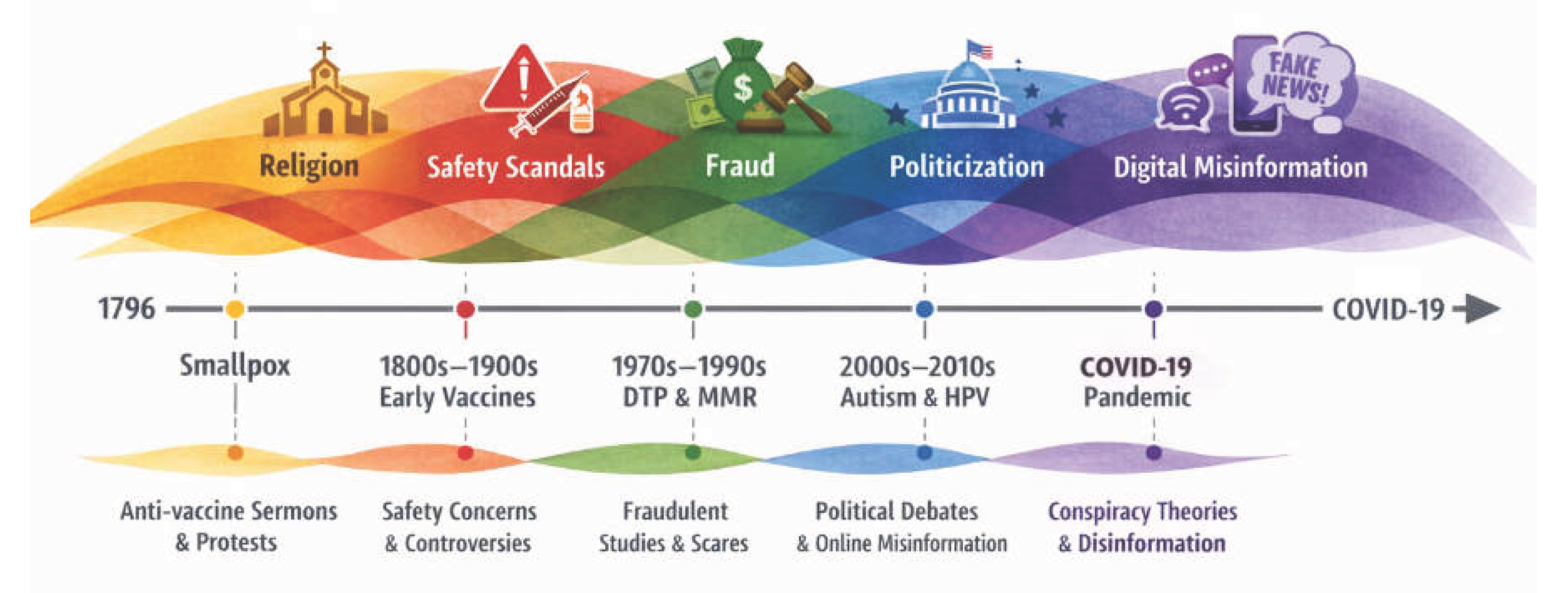
Vaccine hesitancy is not a modern issue but has evolved alongside vaccination programs. In the 18th and 19th centuries, opposition to smallpox vaccination emerged due to religious beliefs, distrust in medical interventions, and concerns over government mandates [4]. The 20th century witnessed increasing resistance during the polio and diphtheria vaccine rollouts, often fueled by fears of adverse effects [5]. More recently, controversies surrounding the measles-mumps-rubella (MMR) vaccine in the late 1990s, following fraudulent claims linking it to autism, intensified parental concerns about vaccine safety [6,7]. The COVID-19 pandemic further exposed global vaccine hesitancy, exacerbated by misinformation, political divisions, and disparities in vaccine access [8]. This historical trajectory highlights that while the underlying themes of hesitancy persist, the specific concerns and resistance mechanisms have shifted in response to sociocultural, psychological, and political landscapes.
Figure 1.
Timeline of Vaccine Hesitancy Archetypes.
Significance of Examining Sociocultural, Psychological, and Political Drivers
Understanding the persistence of vaccine hesitancy requires an interdisciplinary approach. Sociocultural factors such as religious beliefs, traditional medicine practices, and community trust in healthcare providers are critical in shaping vaccine acceptance. Psychological determinants, including cognitive biases, fear, and conspiracy theories, influence individual decision-making. Meanwhile, political forces including government policies, political polarization, and the role of pharmaceutical companies impact public trust in vaccination efforts. The interplay of these factors varies across populations and historical contexts, highlighting the need for targeted interventions that address the specific concerns of different communities.
Objectives of the Review
This review seeks to provide a comprehensive analysis of vaccine hesitancy, tracing its historical development and exploring its sociocultural, psychological, and political drivers. It aims to elucidate how these factors collectively shape public attitudes toward vaccination and to examine their implications for immunization programs worldwide. By synthesizing evidence from diverse disciplines, this review intends to inform policymakers, public health experts, and vaccinologists on effective strategies to mitigate vaccine hesitancy and strengthen immunization efforts.
Roadmap of the Review
Following this introduction, the second section will provide a historical perspective on vaccine hesitancy, tracing its evolution from early vaccination campaigns to contemporary challenges. The third section will explore sociocultural drivers, including religious and cultural influences, misinformation, and trust in healthcare systems. The fourth section will delve into psychological determinants such as cognitive biases, fear-driven decision-making, and the role of behavioral science in understanding vaccine hesitancy. The fifth section will analyze political and policy-driven factors, including the impact of government regulations, political polarization, and pharmaceutical industry dynamics. The sixth section will examine the consequences of vaccine hesitancy on immunization programs and public health outcomes. The seventh section will present evidence-based strategies for combating hesitancy, including public health communication techniques, community engagement models, and policy recommendations. Finally, the conclusion will summarize key insights and outline future directions for research and intervention in the field of vaccine hesitancy.
By adopting a multidisciplinary perspective, this review aims to contribute to the growing body of literature on vaccine acceptance and provide a foundation for actionable strategies to address one of the most pressing challenges in global health.
II. Historical Perspective on Vaccine Hesitancy
Vaccine hesitancy has existed for as long as vaccines themselves, manifesting in various forms across different historical periods. While scientific advancements have significantly improved vaccine safety and efficacy, public skepticism has persisted, evolving alongside sociocultural, psychological, and political dynamics. We examined the historical trajectory of vaccine hesitancy, from early resistance to smallpox vaccination in the 18th and 19th centuries to mid-20th-century concerns surrounding mass immunization campaigns, culminating in modern controversies such as the measles-mumps-rubella (MMR) vaccine and COVID-19 vaccine skepticism [6,7,8]. These case studies highlight patterns of mistrust, misinformation, and resistance that have shaped public attitudes toward vaccination over time.
- A.
- Early Hesitancy: Resistance to Smallpox Vaccination (18th–19th Centuries)
Smallpox was one of the deadliest infectious diseases before the development of the first vaccine by Edward Jenner in 1796 [9]. Despite its potential to save lives, Jenner’s cowpox-based inoculation method faced immediate resistance. In England, religious opposition was a key factor, as some individuals viewed vaccination as an unnatural intervention that interfered with divine will. Others were skeptical of the safety and efficacy of the procedure, as early vaccination methods lacked standardized protocols, and adverse reactions fueled public fears.
In the 19th century, vaccine mandates introduced by European governments intensified resistance. The Vaccination Act of 1853 in the United Kingdom made smallpox vaccination compulsory for infants, leading to significant public backlash and the formation of anti-vaccination leagues [11]. The Anti-Vaccination League of London (1866) and similar movements in the United States argued that vaccination violated personal liberties and bodily autonomy [12]. Political cartoons and pamphlets depicted vaccines as dangerous or even linked to animal-human hybridization, reinforcing public anxieties.
Despite opposition, smallpox vaccination programs continued, demonstrating early instances of the tension between public health policy and individual freedoms a theme that remains central to vaccine hesitancy today. The eventual eradication of smallpox in 1980, following a global immunization campaign led by the WHO, showcased the power of vaccines while also underscoring the enduring challenge of vaccine resistance [12,13].
- B.
- Mid-20th Century: Mass Immunization Campaigns and Emerging Concerns
The mid-20th century marked the rise of large-scale immunization programs aimed at controlling infectious diseases such as polio, diphtheria, and measles. However, public hesitancy persisted, particularly regarding the safety of newly developed vaccines [14].
One of the most significant cases of vaccine hesitancy in this era was the Cutter Incident (1955) in the United States, in which a batch of polio vaccines produced by Cutter Laboratories was improperly inactivated, resulting in live poliovirus being administered to thousands of children [15,16]. This led to over 250 cases of vaccine-induced polio, causing widespread fear and temporarily undermining public confidence in vaccination. The U.S. government responded by implementing stricter vaccine safety regulations, which ultimately restored trust and allowed polio immunization programs to proceed successfully.
Similarly, during the Swine Flu vaccination campaign of 1976, concerns about vaccine side effects intensified when reports linked the vaccine to Guillain-Barré Syndrome (GBS), a rare neurological disorder [16]. Although subsequent investigations found the risk to be minimal, the public's reaction led to widespread vaccine refusal and a loss of confidence in government-led immunization initiatives. This case highlighted the role of media narratives and government transparency in shaping vaccine acceptance.
Despite these setbacks, immunization programs continued to expand globally. The WHO’s Expanded Programme on Immunization (EPI) in 1974 aimed to provide universal vaccine coverage for children, significantly reducing morbidity and mortality from preventable diseases [17,18]. However, mistrust in governmental and pharmaceutical institutions remained a recurring theme, setting the stage for future vaccine hesitancy movements.
- C.
- Modern Vaccine Hesitancy: MMR Controversy and COVID-19 Vaccine Skepticism
By the late 20th and early 21st centuries, vaccine hesitancy had become more pronounced, driven by misinformation, declining trust in scientific authorities, and the rapid spread of anti-vaccine narratives through mass media and digital platforms [4]. The MMR vaccine controversy (1998) represents one of the most damaging instances of modern vaccine hesitancy [6]. A now-debunked study by Andrew Wakefield, published in The Lancet, falsely claimed a link between the MMR vaccine and autism [7,19]. Although the study was later retracted and Wakefield was discredited, the damage was done, vaccination rates dropped significantly in several countries, leading to outbreaks of measles and other preventable diseases. The MMR scare exemplified the profound impact that scientific misinformation can have on vaccine acceptance and demonstrated the difficulty of reversing public opinion once fear is entrenched.
The COVID-19 pandemic (2020–2022) further amplified global vaccine hesitancy. While vaccines were developed in record time using novel mRNA technology, skepticism surrounding their safety, efficacy, and speed of approval led to widespread hesitancy [20,21,22]. Key drivers included:
- Misinformation and Conspiracy Theories: False claims about microchips, infertility, and DNA alteration proliferated across social media [23].
- Political Polarization: In countries like the U.S., vaccine attitudes became entangled with political ideologies, with some groups viewing mandates as government overreach [24].
- Historical Mistrust: Communities with histories of medical exploitation, such as African American populations in the U.S. (e.g., the Tuskegee Syphilis Study), exhibited lower vaccine confidence [25].
Despite extensive public health campaigns, COVID-19 vaccine hesitancy resulted in suboptimal vaccination coverage, prolonging the pandemic and leading to excess morbidity and mortality. The pandemic underscored the need for proactive vaccine communication strategies, trust-building measures, and policy-driven interventions to combat hesitancy.
- D.
- Patterns and Shifts in Vaccine Hesitancy Over Time
Across history, vaccine hesitancy has been shaped by recurring themes: mistrust in medical authorities, concerns over safety, resistance to government mandates, and the rapid spread of misinformation. However, key shifts have occurred:
- From Local to Global Resistance: Early hesitancy was often regionally contained, whereas modern movements leverage global digital networks to spread skepticism.
- The Role of Media: While historical vaccine hesitancy was fueled by print pamphlets and political cartoons, today’s misinformation spreads through social media and online communities.
- Scientific Advancements vs. Public Doubt: Despite significant improvements in vaccine safety and efficacy, public concerns have evolved rather than disappeared, reflecting deeper societal anxieties rather than purely scientific skepticism.
Understanding the historical trajectory of vaccine hesitancy provides critical insights into contemporary challenges. While scientific advancements continue to improve vaccines, hesitancy remains an enduring public health concern. The transition from religious and personal liberty objections in the 19th century to misinformation-fueled resistance in the 21st century highlights the evolving nature of vaccine skepticism . By recognizing historical patterns and addressing modern hesitancy drivers, public health efforts can be better tailored to ensure high vaccine acceptance and immunization coverage.
III. Sociocultural Drivers of Vaccine Hesitancy
Vaccine hesitancy is deeply rooted in sociocultural factors that shape individual and community perceptions of immunization. While scientific evidence supports the safety and efficacy of vaccines, cultural traditions, religious beliefs, historical experiences, and the spread of misinformation continue to influence vaccine acceptance. These sociocultural dynamics vary across regions and populations, underscoring the need for context-specific interventions to improve vaccine uptake. This section explores four key sociocultural drivers of vaccine hesitancy: religious and cultural beliefs, misinformation and social media influence, community trust in healthcare systems, and geographical differences in vaccine hesitancy trends.
- A.
- Religious and Cultural Beliefs: Resistance Due to Faith-Based Perspectives
Religious and cultural beliefs have played a central role in shaping vaccine perceptions, with both historical and contemporary examples illustrating faith-based resistance to immunization. Many religious groups oppose vaccines due to concerns about their composition, potential side effects, or the belief that vaccination interferes with divine will [26,27].
- For example, in the Netherlands, the Bible Belt, a region with a high concentration of conservative Protestant communities, has experienced periodic measles outbreaks due to religious objections to vaccination [28]. Some members of these communities believe that immunization demonstrates a lack of faith in divine protection.
- Similarly, in Pakistan and Afghanistan, vaccine hesitancy, particularly regarding polio vaccination, has been linked to religious misinformation and conspiracy theories [29]. Some Islamic clerics have propagated the belief that vaccines contain haram (forbidden) ingredients such as pork-derived gelatin or that they are a Western ploy to sterilize Muslim populations. These narratives have contributed to violent resistance against vaccination campaigns, including attacks on healthcare workers.
- In the United States, some Christian fundamentalist groups reject vaccines on moral and ethical grounds [30]. Hesitancy surrounding the human papillomavirus (HPV) vaccine has been particularly pronounced among religious conservatives, who argue that vaccinating adolescents against a sexually transmitted infection may promote promiscuity [31]. Despite evidence showing that the HPV vaccine significantly reduces cervical cancer risk, these religious concerns have slowed its uptake.
Cultural beliefs also shape vaccine hesitancy. In parts of West Africa, traditional medicine and spiritual healing practices often compete with biomedical interventions.
- During the 2014–2016 Ebola outbreak, rumors spread that foreign medical teams were using vaccines to infect people rather than protect them. Such mistrust led some communities to reject vaccination efforts, exacerbating the crisis [32].
To address religious and cultural hesitancy, public health authorities have engaged faith-based leaders to promote vaccine acceptance. In Nigeria, for instance, collaboration with Islamic scholars helped to increase polio vaccination rates, demonstrating the importance of culturally sensitive interventions.
- B.
- Misinformation and Social Media Influence: The Role of Digital Platforms in Amplifying Hesitancy
The digital revolution has transformed how people access health information, with social media emerging as a powerful but often problematic source of vaccine-related discourse. While digital platforms provide opportunities for public health education, they have also facilitated the rapid spread of vaccine misinformation, fueling hesitancy worldwide.
A major turning point in modern vaccine hesitancy was the MMR vaccine controversy, which gained traction in the late 1990s and early 2000s, primarily due to the fraudulent study by Andrew Wakefield [7,19]. Despite overwhelming scientific evidence debunking any link between the MMR vaccine and autism, the misinformation spread widely on platforms such as Facebook, YouTube, and Twitter, leading to declining vaccination rates and subsequent measles outbreaks in the United Kingdom, United States, and Europe.
The COVID-19 pandemic further demonstrated the dangers of vaccine misinformation. False claims about the mRNA vaccines altering human DNA, causing infertility, or containing microchips circulated rapidly online. Anti-vaccine influencers, conspiracy theorists, and even some political figures amplified these narratives, eroding trust in public health recommendations [20,21,22].
- In Brazil, misinformation campaigns led some populations to reject COVID-19 vaccines, particularly in rural and Indigenous communities. Similarly, in India, viral WhatsApp messages falsely claimed that the COVID-19 vaccine contained cow blood, sparking resistance among Hindu communities [33].
Unlike traditional anti-vaccine movements that relied on localized pamphlets or word-of-mouth, today's misinformation campaigns operate at a global scale, making them harder to counter. Social media algorithms often prioritize sensational content, meaning that vaccine misinformation spreads faster than corrective scientific information. A study published in Nature found that vaccine-related misinformation received more engagement than factual content, highlighting the challenge of combating digital misinformation [34,35].
Governments and public health organizations have responded by implementing fact-checking initiatives, collaborating with social media companies, and launching digital literacy campaigns. However, given the deeply entrenched nature of misinformation, reversing vaccine hesitancy driven by social media remains a significant challenge.
- C.
- Community Trust and Perceptions of Healthcare Systems: The Impact of Historical Medical Injustices on Trust
Trust in healthcare institutions plays a crucial role in vaccine acceptance. Communities that have historically experienced medical exploitation, unethical research, or systemic healthcare disparities are more likely to exhibit vaccine hesitancy.
One of the most well-documented cases of medical mistrust is the Tuskegee Syphilis Study (1932–1972) in the United States, where African American men were denied treatment for syphilis as part of a government-run experiment [36]. The revelation of this unethical study has had lasting effects on African American communities, contributing to skepticism toward public health initiatives, including vaccination. Studies have shown that Black Americans are more likely than other racial groups to express concerns about vaccine safety, with historical injustices playing a key role in their hesitancy.
Similarly, in South Africa, the legacy of apartheid-era medical discrimination has fostered distrust in government-led health campaigns [37]. During the COVID-19 pandemic, some South Africans expressed fears that vaccines were being used as a form of population control, reflecting broader concerns about historical healthcare inequalities [38].
In Indigenous communities worldwide, past experiences with forced medical interventions, sterilization programs, and inadequate healthcare services have led to vaccine skepticism. For example, in Canada, Indigenous populations were disproportionately hesitant about COVID-19 vaccines due to previous government-led medical abuses [39]. To address these concerns, health authorities collaborated with Indigenous leaders, using culturally tailored approaches that emphasized autonomy and community involvement.
Building trust requires consistent engagement, transparency, and community involvement in vaccine decision-making. Healthcare institutions must address historical grievances while ensuring culturally competent communication strategies.
- D.
- Geographical Differences: Vaccine Hesitancy Trends in High-Income vs. Low-Income Countries
Vaccine hesitancy varies significantly across high-income and low-income settings, influenced by differing healthcare infrastructures, educational levels, and sociopolitical dynamics.
In high-income countries (HICs) such as the United States, France, and Germany, vaccine hesitancy is often driven by individualistic values, political polarization, and a preference for "natural" immunity over-vaccination. France has one of the highest levels of vaccine skepticism globally, with surveys showing that a significant proportion of the population distrusts vaccines despite access to high-quality healthcare [40].
In contrast, in low-income countries (LICs), such as those in sub-Saharan Africa, vaccine hesitancy tends to be linked to lack of access, misinformation, and historical mistrust of Western medical interventions. For example, during the Ebola crisis, some West African communities rejected vaccines due to colonial-era medical exploitation [32]. However, in many LICs, vaccine demand often exceeds supply, demonstrating that hesitancy is not always the primary barrier to immunization. Interestingly, middle-income countries such as Brazil and India exhibit both vaccine enthusiasm and hesitancy, often depending on regional disparities, education levels, and political influences [41].
Sociocultural drivers of vaccine hesitancy are complex, context-dependent, and deeply rooted in historical, religious, and digital landscapes. Addressing these challenges requires multifaceted interventions tailored to specific cultural contexts. By engaging religious leaders, combating misinformation, rebuilding trust in healthcare systems, and recognizing regional hesitancy patterns, global health efforts can be more effectively designed to promote vaccine acceptance and strengthen immunization programs.
IV. Psychological Factors Influencing Vaccine Hesitancy
Vaccine hesitancy is not solely a result of misinformation or cultural beliefs; it is also deeply influenced by psychological mechanisms that shape individual decision-making. Psychological drivers of hesitancy operate at both conscious and subconscious levels, often leading individuals to reject vaccines despite overwhelming scientific evidence of their safety and efficacy. This section explores three key psychological factors influencing vaccine hesitancy: cognitive biases and risk perception, fear and anxiety (including conspiracy theories), and established behavioral models such as the Health Belief Model (HBM) and other psychological frameworks.
- A.
- Cognitive Biases and Risk Perception: How Heuristics Shape Vaccine Decision-Making
Cognitive biases play a critical role in how individuals assess vaccine risks and benefits. People rarely evaluate information in a purely rational manner; instead, they rely on mental shortcuts (heuristics) that can lead to systematic errors in judgment.
Availability Heuristic: This bias leads individuals to overestimate the likelihood of rare adverse events if they have recently heard about them. For example, if a media outlet highlights a case of vaccine-induced myocarditis, individuals may perceive this risk as more common than it is. Studies have shown that repeated exposure to such cases can increase vaccine hesitancy, even when the overall risk is extremely low compared to the risks of the disease itself [42].
- Omission Bias: Many vaccine-hesitant individuals prefer inaction over action, even when action (vaccination) is objectively safer. This occurs because the psychological burden of experiencing an adverse event due to vaccination feels greater than the risk of harm from inaction (contracting the disease). A study in Vaccine found that parents who refused childhood vaccines often cited concerns about the possibility of vaccine side effects, even when the likelihood of harm from the disease was significantly higher [43].
- Negativity Bias: Negative information has a greater impact on decision-making than positive information. Anti-vaccine content on social media exploits this bias by emphasizing rare adverse effects, often ignoring the overwhelming benefits of vaccines. A study analyzing Twitter vaccine discussions found that negative vaccine-related tweets were shared more frequently than positive ones, reinforcing vaccine hesitancy [44].
- Confirmation Bias: Individuals tend to seek information that confirms their existing beliefs and ignore evidence that contradicts them. Vaccine-hesitant individuals are more likely to engage with anti-vaccine content and dismiss scientific studies that support vaccination [45]. This creates echo chambers where misinformation flourishes.
Understanding these biases is crucial for designing effective communication strategies. Risk communication efforts should emphasize comparative risks (e.g., "The risk of severe COVID-19 is 100 times greater than the risk of vaccine-induced myocarditis") and use personal stories to counterbalance negative perceptions.
- B.
- Fear, Anxiety, and Conspiracy Theories: Psychological Barriers to Vaccine Uptake
Fear is a powerful motivator of vaccine hesitancy. While fear can sometimes encourage vaccination (e.g., fear of severe disease), it can also work in the opposite direction, leading to avoidance behavior.
- Vaccine Safety Concerns and Anxiety Disorders
Some individuals experience vaccine-related anxiety, which manifests as needle phobia, fear of side effects, or distrust in pharmaceutical companies. Studies have found that up to 10% of adults suffer from needle phobia, leading to vaccine avoidance [46]. During the COVID-19 pandemic, reports of side effects such as temporary fever or fatigue led some individuals to avoid vaccination due to heightened anxiety about their body’s response [47].
- 2.
- The Role of Conspiracy Theories
Conspiracy beliefs significantly contribute to vaccine hesitancy. People with high levels of mistrust in institutions are more likely to believe that vaccines are harmful or part of a covert agenda [48]. Common conspiracy narratives include:
- Depopulation Myths: Claims that vaccines are designed to sterilize populations, which have been particularly prevalent in some African and South Asian communities [51].
- Empirical studies have demonstrated a strong correlation between conspiracy thinking and vaccine refusal. One study published in Psychological Medicine found that individuals who believed in COVID-19-related conspiracies were three times more likely to refuse the vaccine [52].
- 3.
- Countering Fear and Misinformation
Addressing these fears requires tailored interventions:
- Cognitive-behavioral approaches can help individuals manage vaccine-related anxiety.
- Misinformation debunking should focus on preemptively correcting false narratives before they spread.
- Trusted messengers, such as community leaders and doctors, should engage in transparent communication to rebuild trust [53].
- C.
- Health Belief Model & Behavioral Theories: Explaining Hesitancy Using Psychological Frameworks
Several behavioral science models help explain vaccine decision-making. The Health Belief Model (HBM) is one of the most widely used frameworks for understanding health-related behaviors, including vaccine acceptance and hesitancy.
- Health Belief Model (HBM)
The HBM suggests that an individual’s decision to vaccinate depends on four key perceptions:
- Perceived Susceptibility: How likely they believe they are to contract the disease.
- Perceived Severity: How serious they think the disease is.
- Perceived Benefits: The extent to which they believe vaccination will protect them.
- Perceived Barriers: Factors preventing vaccination, such as fear of side effects.
Studies show that individuals who perceive vaccines as highly beneficial and see themselves as susceptible to disease are more likely to get vaccinated [54]. Conversely, those who perceive higher barriers (e.g., fear of adverse effects) are more likely to refuse vaccination.
- 2.
- Theory of Planned Behavior (TPB)
The Theory of Planned Behavior suggests that vaccination decisions are influenced by:
- Attitudes: Beliefs about vaccines.
- Subjective Norms: Social pressure from family, peers, or authorities.
- Perceived Behavioral Control: Whether they feel capable of accessing and receiving the vaccine.
- Empirical studies have shown that positive social norms (e.g., seeing friends and family get vaccinated) can significantly increase vaccine uptake. Campaigns that emphasize "most people are getting vaccinated" have been effective in overcoming hesitancy [55].
- 3.
- Dual-Process Theory: System 1 vs. System 2 Thinking
According to dual-process theory, humans use two modes of thinking:
- System 1 (fast, intuitive): Emotional, automatic responses (e.g., "I heard vaccines are dangerous, so I won’t take them").
- System 2 (slow, analytical): More rational, evidence-based reasoning.
Anti-vaccine messaging often appeals to System 1 thinking (fear, outrage, anecdotes), while pro-vaccine campaigns typically use System 2 (scientific evidence, statistics). To be effective, vaccine advocacy must integrate emotionally compelling messages that counterbalance fear while reinforcing trust. Psychological factors play a pivotal role in vaccine hesitancy, shaping how individuals perceive risk, process information, and respond to public health messaging. Cognitive biases such as availability heuristics and omission bias distort risk perception, while fear, anxiety, and conspiracy theories create psychological barriers to vaccine uptake. Behavioral models like the Health Belief Model and Theory of Planned Behavior offer insights into vaccine decision-making and provide frameworks for designing effective interventions. Addressing psychological drivers requires targeted communication strategies, trust-building efforts, and proactive engagement with communities to reshape vaccine narratives and improve immunization rates worldwide.
V. Political and Policy-Driven Factors in Vaccine Hesitancy
Vaccine hesitancy is not merely a product of individual beliefs or sociocultural influences; it is also profoundly shaped by political decisions, government policies, and economic interests. Political dynamics can either enhance public trust in vaccines or fuel skepticism, depending on how policies are implemented, communicated, and perceived. This section explores key political and policy-driven factors that influence vaccine hesitancy, including government mandates, political polarization, economic interests in the pharmaceutical industry, and the COVID-19 pandemic as a case study.
- A.
- Government Policies and Mandates: The Impact of Mandatory Vaccination Laws
Government policies on vaccination range from voluntary recommendations to strict mandates. Countries with strong pro-vaccine policies often see higher immunization rates, but mandates can also trigger resistance, particularly when public trust in institutions is low.
- i.
- Mandatory Vaccination and Public Resistance
Historically, mandatory vaccination policies have been met with both compliance and backlash. For example, in the United States and European nations, school-entry vaccine mandates have successfully increased childhood immunization rates [56,57]. However, in contexts where mandates are perceived as coercive, they can provoke resistance.
-
The U.S. Experience:
- -
- All 50 U.S. states require childhood vaccinations for school enrollment, but philosophical, religious, and medical exemptions vary [57].
- -
- States with lenient exemption policies (e.g., Texas, and Oregon) report higher rates of vaccine-preventable diseases due to the clustering of unvaccinated individuals [58].
- -
- The 2019 measles outbreak in New York led to removing religious exemptions, demonstrating how policy adaptation can curb vaccine hesitancy [59].
-
Europe’s Mixed Approaches:
-
Low- and Middle-Income Countries (LMICs):
- -
- -
- Government efforts to enforce immunization (e.g., linking vaccination to welfare benefits) have had mixed results, with some communities perceiving them as authoritarian interventions.
- B.
- Political Polarization and Mistrust: How Politics Shapes Vaccine Attitudes
Vaccine hesitancy is highly politicized in many regions, with political ideologies influencing individual vaccine decisions. The COVID-19 pandemic further highlighted how political affiliations shape vaccine attitudes.
-
Partisan Divide in Vaccine Attitudes
- In the United States, vaccine acceptance became a partisan issue, with Republicans expressing more significant skepticism than Democrats [64].
- Surveys showed that individuals with conservative political beliefs were more likely to oppose vaccine mandates, linking them to government overreach and loss of personal freedoms [65].
- In Brazil, political loyalty to former president Jair Bolsonaro correlated with lower vaccine uptake due to his dismissive stance on COVID-19 [66].
-
Mistrust in Government and Health Institutions
- In many LMICs, vaccine hesitancy is fueled by historical distrust in governments and Western-funded health initiatives.
- Kenya’s 2014 tetanus vaccine campaign faced resistance from religious and political leaders who falsely claimed the vaccine was a sterilization too [67].
- In Eastern Europe, low trust in government institutions correlates with higher vaccine refusal rates, particularly in countries with authoritarian histories [68].
Political polarization undermines public health efforts, making it crucial to depoliticize vaccine messaging and engage trusted messengers outside of governmental institutions.
- C.
- Pharmaceutical Industry and Economic Influences: Public Perception of Big Pharma’s Role
Public trust in vaccines is often entangled with perceptions of the pharmaceutical industry, commonly referred to as “Big Pharma” [49,50]. While pharmaceutical companies play an essential role in vaccine development and distribution, concerns over profit motives, transparency, and corporate influence on public health policies contribute to hesitancy.
-
Concerns Over Profit-Driven Motives
- The global vaccine market is valued at over $50 billion annually, leading to accusations that pharmaceutical companies prioritize profits over public health [69].
- During the COVID-19 pandemic, debates over vaccine patents and pricing fueled skepticism, particularly in low-income countries that struggled with vaccine access while wealthier nations secured large stockpiles.
-
Past Pharmaceutical Scandals and Trust Erosion
- The 1999 Rotavirus vaccine recall due to safety concerns increased pediatric vaccine hesitancy in the early 2000s [72].
-
Industry-Government Ties and Perceived Conflicts of Interest
- The fast-tracked approval of COVID-19 vaccines under Operation Warp Speed led some to believe that political and economic incentives influenced regulatory decisions more than safety data [73].
- Transparency in clinical trial data and independent oversight are crucial in counteracting narratives that vaccines are rushed or unsafe.
- D.
- COVID-19 Case Study: How Political Responses Affected Vaccine Uptake
The COVID-19 pandemic serves as a real-time case study of how political and policy-driven factors influence vaccine hesitancy.
-
Divergent Government Responses
- Countries with centralized public health messaging (e.g., New Zealand) saw higher trust and compliance, whereas nations with fragmented messaging (e.g., U.S., Brazil) experienced greater vaccine hesitancy [75].
-
Misinformation and Political Leaders’ Influence
-
Vaccine Equity and Global Hesitancy
- Vaccine hoarding by high-income countries through advance purchase agreements led to delayed access in LMICs, reinforcing distrust in Western pharmaceutical companies.
- The suspension of AstraZeneca’s vaccine in Europe due to rare clotting events amplified global hesitancy, despite the vaccine’s overall safety profile [78].
Political and policy-driven factors significantly shape vaccine hesitancy, influencing public perceptions through government mandates, political polarization, economic interests, and crisis management strategies. While strong policies can increase vaccine uptake, mandates that are perceived as coercive often backfire. Political division erodes public trust, making bipartisan public health messaging critical for success. Additionally, addressing concerns over pharmaceutical industry influence is essential in improving vaccine confidence. The COVID-19 pandemic illustrates how political leadership, misinformation, and global inequities can either promote or hinder vaccine uptake. Moving forward, public health strategies must be depoliticized, incorporate community engagement, and emphasize transparency in vaccine policies to restore trust and increase global immunization rates.
VI. Impact on Immunization Programs and Public Health
Vaccine hesitancy has a direct and profound impact on immunization programs and public health outcomes, often leading to a decline in vaccination rates and a resurgence of preventable diseases. As hesitancy spreads, the goal of herd immunity becomes increasingly difficult to achieve, leaving populations vulnerable to outbreaks. This section explores the correlation between vaccine hesitancy and disease resurgence, the challenges declining vaccination rates pose to herd immunity, and reviews country-specific interventions that have successfully addressed these challenges. The use of data from WHO and CDC will help strengthen these arguments.
- A.
- Vaccine Coverage and Disease Outbreaks: Correlation Between Hesitancy and Resurgence of Diseases
Vaccine hesitancy directly correlates with declining vaccination rates, which in turn leads to the resurgence of vaccine-preventable diseases. A drop in vaccination coverage allows diseases that were previously under control to spread again, putting vulnerable populations, such as infants and the immunocompromised, at higher risk.
-
Case Studies: Resurgence of Diseases
-
Measles Outbreaks in the United States:
- -
- Measles, once virtually eliminated in the U.S., experienced a dramatic resurgence in recent years. According to CDC data, the number of measles cases surged from just 37 in 2010 to 1,282 in 2019, with unvaccinated populations contributing significantly to the outbreaks [79]. Vaccine hesitancy among communities that rejected the MMR vaccine was a major driver of these outbreaks, particularly in areas with high exemption rates [7,19].
- -
- The 2019 outbreak highlighted how communities with pockets of unvaccinated individuals can become hotspots for the spread of preventable diseases. In New York, for example, a large outbreak of measles occurred in Orthodox Jewish communities due to lower vaccination coverage [80].
-
- Polio Resurgence in Afghanistan and Pakistan:
Despite global efforts to eradicate polio, vaccine hesitancy has led to continued outbreaks, particularly in regions of Afghanistan and Pakistan [81,82].
- In Pakistan, religious and political opposition to vaccination efforts has resulted in persistent low vaccination rates, contributing to the continued circulation of the virus. In 2020, Pakistan reported 84 cases of polio, despite major efforts to eradicate the disease [83].
- Misinformation and conspiracy theories surrounding the safety of vaccines, often promoted by local political and religious leaders, have slowed vaccination campaigns, leaving entire regions vulnerable.
- iii.
- Diphtheria Outbreaks in Yemen:
Yemen’s ongoing humanitarian crisis and vaccine hesitancy have led to outbreaks of diphtheria. According to WHO data 2020, from 2017 to 2020, Yemen experienced more than 9,000 cases of diphtheria [84]. The conflict and the subsequent breakdown of public health infrastructure worsened vaccine delivery.
- Resistance to immunization due to religious and cultural beliefs has also fueled the spread of preventable diseases, complicating efforts to eradicate diseases like diphtheria.
- B.
- Herd Immunity Challenges: The Consequences of Declining Vaccination Rates
The concept of herd immunity relies on a sufficient proportion of the population being vaccinated, thereby reducing the overall spread of a disease. When vaccine coverage declines due to hesitancy, herd immunity thresholds are not met, and diseases can spread more easily within communities.
-
The Declining Threshold for Herd Immunity
-
For diseases like measles, the required vaccination coverage to achieve herd immunity is about 95%. However, recent outbreaks have shown that many communities are falling below this threshold due to hesitancy and refusal.
- -
- For instance, in 2019, a significant portion of Europe and North America fell below the required coverage, leading to measles resurgence [85].
- -
- The impact of this was especially severe in the global South, where infrastructure challenges and lack of access to vaccines combined with hesitancy led to reduced coverage and a loss of herd immunity, particularly for diseases like polio and measles.
-
-
Impact on Immunization Programs
-
Declining Immunization Rates: A decline in vaccination rates, driven by hesitancy, weakens the immune buffer provided by herd immunity. As a result, diseases that were once controlled begin to re-emerge.
- -
- Polio in Afghanistan and Pakistan continues to circulate in regions where less than 80% of children are vaccinated [86]. This leads to localized outbreaks, delaying the global eradication of the disease.
- -
- Rubella and Congenital Rubella Syndrome (CRS), which were near-eliminated in many parts of the world, are on the rise due to incomplete vaccination coverage [87].
-
Increased Healthcare Burden: Resurgent diseases place a heavy burden on healthcare systems, especially in low-resource settings.
- -
- A study in Sub-Saharan Africa found that measles outbreaks caused unprecedented spikes in hospital admissions, putting pressure on an already strained healthcare infrastructure [88].
- -
- Additional resources are needed to contain outbreaks, manage the treatment of affected individuals, and address the public health consequences.
-
- C.
- Country-Specific Interventions and Lessons Learned: Review Successful Strategies
Despite the challenges posed by vaccine hesitancy, several countries have successfully implemented strategies to overcome public resistance and increase vaccine uptake. By examining successful case studies, we can glean insights into what works and what may be replicable in other regions.
- i.
- Nigeria: Community Engagement in Vaccine Campaigns
Nigeria’s polio vaccination campaigns provide an excellent example of how community engagement can overcome vaccine hesitancy.
-
The “Stop Polio Now” campaign in Nigeria successfully leveraged local religious and community leaders to engage skeptical populations [89].
- -
- In Northern Nigeria, where vaccine hesitancy was particularly pronounced, local imams and religious leaders were crucial in dispelling myths about the polio vaccine.
- -
- The integration of health campaigns with local governance and trusted community figures created a sense of ownership and accountability, increasing vaccination uptake.
- -
- By tailoring messages to local cultural and religious contexts, these interventions significantly reduced resistance and led to an increase in immunization rates.
- ii.
- Japan: Addressing Vaccine Safety Concerns
In Japan, concerns over vaccine safety led to a decline in vaccine coverage. The country responded by improving communication and transparency about vaccine safety.
-
The Japanese Ministry of Health collaborated with medical professionals to provide clear and transparent information on vaccine efficacy and safety.
- -
- Public campaigns emphasized the importance of vaccination in preventing severe diseases like measles, rubella, and influenza, which had been resurging due to low immunization rates.
- -
- Japan saw a recovery in vaccine confidence after these initiatives, which helped restore high vaccination coverage [90].
- iii.
- Australia: National Immunization Programs
Australia’s National Immunization Program (NIP) offers a model for comprehensive national vaccination campaigns.
-
Australia implemented state-sponsored financial incentives for parents to vaccinate their children, alongside education campaigns about the importance of immunization.
- -
- These efforts resulted in one of the highest immunization rates globally, with coverage consistently above 90% for all childhood vaccines.
- -
- Australia's strategy of combining incentives with education was particularly effective in overcoming vaccine hesitancy, demonstrating the importance of government leadership in public health campaigns [91].
The impact of vaccine hesitancy on immunization programs and public health is both immediate and profound. Declining vaccination rates due to hesitancy have contributed to the resurgence of diseases that were previously under control, significantly undermining public health efforts. As vaccine-preventable diseases spread, the failure to achieve herd immunity presents a major challenge. Successful interventions, such as those in Nigeria, Japan, and Australia, offer valuable lessons on how to combat hesitancy through community engagement, transparent communication, and targeted policy initiatives. Moving forward, global health efforts must focus on depoliticizing vaccination, addressing misinformation, and fostering trust in healthcare systems to overcome vaccine hesitancy and secure a healthier future for all.
VII. Strategies to Combat Vaccine Hesitancy
Vaccine hesitancy remains a critical barrier to achieving high vaccination coverage globally. As we navigate the complex sociocultural, psychological, and political drivers that fuel vaccine reluctance, it is essential to explore strategies that can address these issues and ultimately improve immunization rates. This section discusses public health communication approaches, community engagement and trust-building, combating misinformation, and policy recommendations, highlighting innovative and scalable solutions to combat vaccine hesitancy.
- A.
- Public Health Communication Approaches: Effective Messaging Strategies
Effective communication is central to overcoming vaccine hesitancy. Public health campaigns need to be tailored to the diverse and complex factors driving vaccine reluctance. Several messaging strategies have been identified as particularly effective in improving vaccine uptake.
- i.
- Tailored Messaging and Audience Segmentation
A one-size-fits-all approach to communication is rarely effective. Public health messaging needs to be tailored to specific audiences based on their unique concerns, backgrounds, and attitudes toward vaccination.
- For example, parents of young children may be most concerned about vaccine safety, while older adults might be more focused on the effectiveness of vaccines in preventing severe disease.
-
Research on health communication has shown that framing messages to emphasize benefits, such as personal and community protection, resonates more strongly with hesitant populations than focusing on the risks of non-vaccination.
- -
- For example, the "Protect Yourself, Protect Your Community" framing effectively highlights the collective benefits of vaccination while addressing individual concerns.
- -
- Messages should also be empowering rather than coercive. In contrast to scare tactics or fear-based messaging, positive messages focusing on health, protection, and community solidarity have proven to be more persuasive.
- ii.
- Trust and Credibility of the Source
Trust in the source of information is a key factor in the effectiveness of public health messaging. Health professionals and trusted community figures (e.g., religious leaders, local influencers) play a pivotal role in shaping attitudes toward vaccines.
- Endorsements from healthcare providers have been shown to significantly increase vaccine acceptance, particularly when they engage in open and empathetic conversations about vaccine safety [92].
- Community leaders, particularly in marginalized groups, can help mitigate skepticism and reduce mistrust of vaccines. This is evident in Nigeria’s polio eradication campaigns, where local religious leaders served as trusted voices to advocate for vaccination [93].
- iii.
- Crisis Communication and Transparency
During health crises such as the COVID-19 pandemic, communication must prioritize transparency and timely updates. People are more likely to trust messages when the information is presented honestly and clearly, particularly regarding vaccine safety and efficacy.
- In the case of COVID-19, open discussions about the rapid vaccine development process and post-vaccination monitoring helped reassure the public.
- Governments and health organizations should regularly share evidence regarding vaccine development, efficacy, and safety in an accessible and understandable manner.
- B.
- Community Engagement and Trust-Building: Grassroots Interventions
Building trust is foundational to overcoming vaccine hesitancy. Community engagement initiatives, especially at the grassroots level, have been shown to be a highly effective strategy in addressing local concerns and promoting vaccine acceptance.
- i.
- Engaging Local Leaders and Influencers
Grassroots interventions that leverage local leaders and trusted community figures are among the most successful methods to combat vaccine hesitancy.
- Religious leaders and community influencers are uniquely positioned to frame vaccination as part of community responsibility, often in alignment with religious or cultural values. For example, Islamic scholars in Pakistan have worked to dispel myths surrounding the polio vaccine, particularly in regions where religious concerns were a significant driver of vaccine hesitancy [95].
- ii.
- Health Education and Dialogue
Beyond the dissemination of information, engaging in two-way dialogue allows individuals to voice their concerns and have their questions answered.
- Health education programs that invite open discussions, rather than just broadcasting information, can reduce fear and suspicion. These programs should provide a space for individuals to express doubts, which health workers can then address in real time.
- Community vaccination champions trusted individuals who have received vaccines and can speak to their experience can also help normalize vaccination. These champions can bridge the gap between medical experts and the local population, fostering trust and encouraging peers to get vaccinated [96].
- C.
- Combating Misinformation: The Role of AI and Fact-Checking Initiatives
Misinformation, especially on social media, is one of the most potent drivers of vaccine hesitancy. In today’s digital age, combating misinformation is crucial for maintaining public health confidence. Several strategies, particularly AI-powered tools and fact-checking initiatives, have proven effective in curbing the spread of false vaccine information.
- i.
- AI-Driven Monitoring and Detection of Misinformation
AI can be utilized to track the spread of misinformation across digital platforms, identifying false narratives and tracing their sources.
- Social media platforms such as Twitter and Facebook have partnered with fact-checking organizations to monitor and remove vaccine-related misinformation [97].
- Additionally, AI algorithms can be used to detect patterns in misinformation and identify emerging anti-vaccine trends, enabling proactive intervention by public health authorities [98].
- Natural language processing (NLP) models can assist in identifying false claims by comparing them to verified databases, flagging content for human review and swift action [99].
- ii.
- Collaborative Fact-Checking Initiatives
Fact-checking is another critical tool in the fight against misinformation. Independent fact-checking organizations such as PolitiFact, FullFact, and Health Feedback have become valuable allies in debunking myths about vaccines.
- These organizations debunk misinformation by presenting evidence-based facts and highlighting the scientific consensus on vaccine safety and efficacy.
- Governments and health organizations should collaborate with these fact-checkers to counter misinformation at the source, especially by disseminating clear, concise, and accurate information that can be easily shared on social media platforms.
- Proactive messaging is equally important fact-checking organizations should not only react to misinformation but also disseminate correct information to prevent the spread of false narratives in the first place [100].
- D.
- Policy Recommendations: Evidence-Based Approaches to Increasing Vaccine Acceptance
Policy interventions play a crucial role in increasing vaccine acceptance. Governments must implement evidence-based policies that encourage vaccination while addressing the root causes of hesitancy.
- i.
- Mandatory Vaccination with Exemptions
Mandatory vaccination laws have proven to be effective in ensuring high vaccination rates, particularly in settings like schools and healthcare settings. However, these mandates must be accompanied by the opportunity for legitimate exemptions, such as for medical reasons or in exceptional cases.
- Countries like Australia and France have implemented no-jab, no-pay policies, which financially incentivize vaccination by limiting access to government benefits for unvaccinated individuals [101,102]. These policies should be implemented ethically and with sensitivity, ensuring that people are not alienated or punished for genuinely held concerns.
- ii.
- Incentives for Vaccination
Incentives can be a powerful tool to increase vaccine uptake, especially in hard-to-reach communities. Monetary incentives, free transportation to vaccination sites, or vaccine certificates can encourage individuals to take action.
- Culturally appropriate incentives are particularly effective in low-resource settings. In some African countries, vaccination cards that allow people to access other services have been used as a tool to increase vaccination uptake.
- iii.
- Strengthening Immunization Infrastructure
To make vaccines more accessible, governments must also invest in strengthening immunization infrastructure. This includes improving vaccine distribution, particularly in remote areas, and ensuring that healthcare workers are equipped with the tools and training to effectively address vaccine concerns in the community.
Combating vaccine hesitancy requires a multi-faceted approach that combines effective public health communication, grassroots community engagement, advanced technologies for combating misinformation, and strong policy frameworks. By leveraging evidence-based strategies and innovative solutions, it is possible to address the underlying drivers of vaccine hesitancy and increase vaccination rates. As vaccine-preventable diseases continue to threaten public health, these strategies provide the means to ensure that immunization programs can meet the challenges posed by vaccine hesitancy and safeguard global health.
Conclusion and Future Directions
The global fight against vaccine hesitancy is an ongoing challenge that has profound implications for public health, requiring a comprehensive understanding of the sociocultural, psychological, and political drivers that contribute to vaccine reluctance. This review has explored the historical evolution of vaccine hesitancy, highlighted the key sociocultural, psychological, and political factors at play, and underscored their significant impact on immunization programs worldwide. Addressing vaccine hesitancy is not just about promoting vaccines but also about building trust, improving communication, and enhancing community engagement.
A. Key Takeaways
- Sociocultural Factors: The influence of religious beliefs, cultural norms, misinformation, and social media has been a critical factor in shaping vaccine hesitancy. In particular, misinformation and social media play a pivotal role in amplifying fear, spreading false narratives, and increasing distrust in vaccines. Additionally, historical medical injustices and the lack of trust in healthcare systems exacerbate vaccine resistance, especially in marginalized communities. Understanding and engaging these populations through culturally sensitive and empathetic communication is essential to addressing these challenges.
- Psychological Factors: Cognitive biases, risk perception, and fear are central to understanding vaccine hesitancy. Cognitive heuristics, such as availability bias and confirmation bias, affect how people interpret information related to vaccines. Furthermore, psychological barriers like fear and anxiety about vaccine safety contribute to reluctance. Behavioral frameworks like the Health Belief Model provide useful insights into understanding these psychological dynamics and developing tailored interventions to improve vaccine uptake.
- Political and Policy Factors: Government policies, political polarization, and economic influences also shape attitudes toward vaccination. The global response to COVID-19 highlighted the impact of political polarization on vaccine acceptance. Policies that are clear, transparent, and based on scientific evidence can significantly improve vaccine coverage. Moreover, trust in government health directives can be bolstered by policies that promote community engagement and equity in vaccine distribution.
- Impact on Immunization Programs: Vaccine hesitancy has led to disease outbreaks and undermined efforts to achieve herd immunity. The decline in vaccine coverage in some regions has contributed to the resurgence of preventable diseases, threatening public health efforts globally. Innovative country-specific interventions, such as community-led vaccination campaigns, have demonstrated success in overcoming hesitancy, proving that localized, culturally sensitive approaches are effective.
- Strategies to Combat Vaccine Hesitancy: Multi-pronged strategies that include effective communication, community engagement, and countering misinformation are vital in addressing hesitancy. Public health messaging must be transparent, empathetic, and delivered through trusted local influencers to counter misinformation. AI tools and fact-checking initiatives also play an essential role in debunking myths and providing the public with accurate, evidence-based information.
Future Directions of Vaccine Hesitancy Research
As we move forward, there is a pressing need to continue exploring the complex, multi-dimensional nature of vaccine hesitancy. Future research should delve deeper into the sociocultural and psychological dynamics that shape attitudes toward vaccines in different populations. Areas that warrant further investigation include:
- The role of digital platforms and AI in spreading both misinformation and reliable information, and how these can be harnessed to combat hesitancy.
- Longitudinal studies examining the evolution of vaccine attitudes over time, particularly in response to major global health events like pandemics.
- Investigating the economic and policy factors influencing vaccine accessibility, equity, and uptake, especially in low-income settings where hesitancy may be compounded by systemic barriers to healthcare.
Additionally, cross-disciplinary approaches that bring together experts in public health, psychology, communication studies, and political science will be critical to understanding and addressing the root causes of vaccine hesitancy. Integrating insights from behavioral economics, sociology, and cultural studies will allow for a more nuanced understanding of the psychosocial mechanisms behind vaccine decision-making.
A Call to Action for Global Health Stakeholders
- The need to address vaccine hesitancy has never been more urgent. With emerging infectious diseases and ongoing challenges like COVID-19, global health experts, policymakers, and community leaders must prioritize addressing the root causes of vaccine hesitancy to safeguard public health.
- As we continue to face new threats from preventable diseases, a collaborative, interdisciplinary approach will be essential. Governments, global health organizations, and civil society must invest in targeted communication campaigns, community outreach programs, and policy reforms that empower individuals to make informed decisions about vaccination. Local communities must be at the center of these efforts, ensuring that interventions are culturally appropriate and resonate with the concerns of the people they aim to serve.
- To truly overcome vaccine hesitancy, stakeholders must not only focus on changing individual behaviors but also on transforming the systems that perpetuate mistrust. This requires a long-term commitment to building health system resilience, promoting health equity, and ensuring that vaccination programs are accessible, trustworthy, and well-resourced. As global health experts, it is our responsibility to amplify the voices of the marginalized, address misinformation, and champion vaccination as a global public good.
- Let us move forward with renewed determination, collaboration, and a shared commitment to overcoming vaccine hesitancy and achieving global health security for all. Together, we can build a future where vaccines protect the most vulnerable and prevent the resurgence of deadly diseases worldwide.
Author Contributions
Ngnotouom Ngnokam Tania Cyrielle conceived the idea ANGYIBA Serge Andigema, collected and analyzed the data and information and rotated in writing different sections of the drafts. All authors read and approved the final manuscript. .
Funding
This research did not receive any funding from funding agencies in the public, commercial, or non-profit making sector.
Acknowledgments
Nil.
Ethical Approval
Not required.
Conflicts of Interest
No conflict of interest exists.
References
- Ten threats to global health in 2019. n.d. Available online: https://www.who.int/news-room/spotlight/ten-threats-to-global-health-in-2019.
- Mahase, E. WHO warns “measles is back” as virus spreads across Europe, America, and Afghanistan. BMJ 2025, r528. [Google Scholar] [CrossRef]
- Sinuraya, R. K.; Nuwarda, R. F.; Postma, M. J.; Suwantika, A. A. Vaccine hesitancy and equity: lessons learned from the past and how they affect the COVID-19 countermeasure in Indonesia. Globalization and Health 2024, 20(1). [Google Scholar] [CrossRef]
- Kopel, J. An exploration of vaccination in the 19th century through the eyes of Dr. Albert Mackey. Baylor University Medical Center Proceedings 2022b, 35(4), 505–509. [Google Scholar] [CrossRef]
- History of polio vaccination. n.d. Available online: https://www.who.int/news-room/spotlight/history-of-vaccination/history-of-polio-vaccination.
- Taylor, B.; Miller, E.; Farrington, C.; Petropoulos, M.; Favot-Mayaud, I.; Li, J.; Waight, P. A. Autism and measles, mumps, and rubella vaccine: no epidemiological evidence for a causal association. The Lancet 1999b, 353(9169), 2026–2029. [Google Scholar] [CrossRef] [PubMed]
- Rao, T. S.; Andrade, C. The MMR vaccine and autism: Sensation, refutation, retraction, and fraud. Indian Journal of Psychiatry 2011b, 53(2), 95. [Google Scholar] [CrossRef]
- Kricorian, K.; Civen, R.; Equils, O. COVID-19 vaccine hesitancy: misinformation and perceptions of vaccine safety. Human Vaccines & Immunotherapeutics 2021, 18(1). [Google Scholar] [CrossRef] [PubMed]
- World Health Organization; WHO. Smallpox. 1 November 2019. Available online: https://www.who.int/health-topics/smallpox.
- United Kingdom Vaccination Act 1853 Policy Navigator. n.d. Available online: https://navigator.health.org.uk/theme/united-kingdom-vaccination-act-1853.
- Hussain, A.; Ali, S.; Ahmed, M.; Hussain, S. The Anti-vaccination movement: a regression in modern medicine; Cureus, 2018. [Google Scholar] [CrossRef]
- Strassburg, M. A. The global eradication of smallpox. American Journal of Infection Control 1982, 10(2), 53–59. [Google Scholar] [CrossRef]
- History of smallpox vaccination. n.d. Available online: https://www.who.int/news-room/spotlight/history-of-vaccination/history-of-smallpox-vaccination.
- Montero, D. A.; Vidal, R. M.; Velasco, J.; Carreño, L. J.; Torres, J. P.; M. a. B., O; Tovar-Rosero, Y.; Oñate, A. A.; O’Ryan, M. Two centuries of vaccination: historical and conceptual approach and future perspectives. Frontiers in Public Health 2024, 11. [Google Scholar] [CrossRef]
- Fitzpatrick, M. The cutter incident: How America’s first polio vaccine led to a growing vaccine crisis. 1 March 2006. Available online: https://pmc.ncbi.nlm.nih.gov/articles/PMC1383764/.
- Historical vaccine concerns Vaccine Safety. 31 July 2024. Available online: https://www.cdc.gov/vaccine-safety/historical-concerns/index.html.
- 50th anniversary of the Expanded Programme on Immunization (EPI). 1 January 2024. Available online: https://www.who.int/news-room/events/detail/2024/01/01/default-calendar/50th-anniversary-of-the-expanded-programme-on-immunization-(epi).
- Shattock, A. J.; Johnson, H. C.; Sim, S. Y.; Carter, A.; Lambach, P.; Hutubessy, R. C. W.; Thompson, K. M.; Badizadegan, K.; Lambert, B.; Ferrari, M. J.; Jit, M.; Fu, H.; Silal, S. P.; Hounsell, R. A.; White, R. G.; Mosser, J. F.; Gaythorpe, K. a. M.; Trotter, C. L.; Lindstrand, A.; Bar-Zeev, N. Contribution of vaccination to improved survival and health: modelling 50 years of the Expanded Programme on Immunization. The Lancet 2024, 403(10441), 2307–2316. [Google Scholar] [CrossRef]
- Eggertson, L. Lancet retracts 12-year-old article linking autism to MMR vaccines. Canadian Medical Association Journal 2010, 182(4), E199–E200. [Google Scholar] [CrossRef] [PubMed]
- Troiano, G.; Nardi, A. Vaccine hesitancy in the era of COVID-19. Public Health 2021, 194, 245–251. [Google Scholar] [CrossRef] [PubMed]
- Mir, S.; Mir, M. The mRNA vaccine, a swift warhead against a moving infectious disease target. Expert Review of Vaccines 2024, 23(1), 336–348. [Google Scholar] [CrossRef] [PubMed]
- Xu, J.; Wu, Z.; Wass, L.; Larson, H. J.; Lin, L. Mapping global public perspectives on mRNA vaccines and therapeutics. Npj Vaccines 2024, 9(1). [Google Scholar] [CrossRef] [PubMed]
- Caceres, M. M. F.; Sosa, J. P.; Lawrence, J. A.; Sestacovschi, C.; Tidd-Johnson, A.; Rasool, M. H. U.; Gadamidi, V. K.; Ozair, S.; Pandav, K.; Cuevas-Lou, C.; Parrish, M.; Rodriguez, I.; Fernandez, J. P. The impact of misinformation on the COVID-19 pandemic. AIMS Public Health 2022, 9(2), 262–277. [Google Scholar] [CrossRef]
- Bolsen, T.; Palm, R. Politicization and COVID-19 vaccine resistance in the U.S. In Progress in Molecular Biology and Translational Science; 2022; pp. 81–100. [Google Scholar] [CrossRef]
- Roat, C.; Webber-Ritchey, K. J.; Spurlark, R. S.; Lee, Y. Black Americans receiving the COVID-19 vaccine and Effective strategies to overcome barriers: An Integrative literature review. Journal of Racial and Ethnic Health Disparities 2022, 10(5), 2577–2587. [Google Scholar] [CrossRef]
- Anderson, K.; Creanza, N. A cultural evolutionary model of the interaction between parental beliefs and behaviors, with applications to vaccine hesitancy. Theoretical Population Biology 2023, 152, 23–38. [Google Scholar] [CrossRef]
- Tiwana, M. H.; Smith, J. Faith and vaccination: a scoping review of the relationships between religious beliefs and vaccine hesitancy. BMC Public Health 2024, 24(1). [Google Scholar] [CrossRef]
- Knol, M. J.; Urbanus, A. T.; Swart, E. M.; Mollema, L.; Ruijs, W. L.; Van Binnendijk, R. S.; Wierik, M. J. T.; De Melker, H. E.; Timen, A.; Hahné, S. J. Large ongoing measles outbreak in a religious community in the Netherlands since May 2013. Eurosurveillance 2013). Large ongoing measles outbreak in a religious community in the Netherlands since May 2013. Eurosurveillance, 18(36, 18(36). [Google Scholar] [CrossRef]
- Ittefaq, M.; Abwao, M.; Rafique, S. Polio vaccine misinformation on social media: turning point in the fight against polio eradication in Pakistan. Human Vaccines & Immunotherapeutics 2021, 17(8), 2575–2577. [Google Scholar] [CrossRef]
- Exline, J. J.; Pait, K. C.; Wilt, J. A.; Schutt, W. A. Demonic and Divine Attributions around COVID-19 Vaccines: Links with Vaccine Attitudes and Behaviors, QAnon and Conspiracy Beliefs, Anger, Spiritual Struggles, Religious and Political Variables, and Supernatural and Apocalyptic Beliefs. Religions 2022, 13(6), 519. [Google Scholar] [CrossRef]
- Morales-Campos, D. Y.; Zimet, G. D.; Kahn, J. A. Human papillomavirus vaccine hesitancy in the United States. Pediatric Clinics of North America 2023, 70(2), 211–226. [Google Scholar] [CrossRef] [PubMed]
- Muzembo, B. A.; Ntontolo, N. P.; Ngatu, N. R.; Khatiwada, J.; Suzuki, T.; Wada, K.; Kitahara, K.; Ikeda, S.; Miyoshi, S. Misconceptions and Rumors about Ebola Virus Disease in Sub-Saharan Africa: A Systematic Review. International Journal of Environmental Research and Public Health 2022, 19(8), 4714. [Google Scholar] [CrossRef] [PubMed]
- Endo, P. T.; Santos, G. L.; De Lima Xavier, M. E.; Campos, G. R. N.; De Lima, L. C.; Silva, I.; Egli, A.; Lynn, T. Illusion of Truth: Analysing and classifying COVID-19 fake news in Brazilian Portuguese language. Big Data and Cognitive Computing 2022, 6(2), 36. [Google Scholar] [CrossRef]
- Di Domenico, G.; Nunan, D.; Pitardi, V. Marketplaces of Misinformation: A study of how vaccine misinformation is legitimized on social media. Journal of Public Policy & Marketing 2022, 41(4), 319–335. [Google Scholar] [CrossRef]
- Winters, M.; Christie, S.; Melchinger, H.; Iddrisu, I.; Hassan, H. A.; Ewart, E.; Mosley, L.; Alhassan, R.; Shani, N.; Nyamuame, D.; Lepage, C.; Thomson, A.; Atif, A. N.; Omer, S. B. Debunking COVID-19 vaccine misinformation with an audio drama in Ghana, a randomized control trial. Scientific Reports 2025, 15(1). [Google Scholar] [CrossRef]
- About the untreated syphilis study at Tuskegee The U.S. Public Health Service Untreated Syphilis Study at Tuskegee. 4 September 2024. Available online: https://www.cdc.gov/tuskegee/about/index.html#:~:text=Background,found%20in%20the%20National%20Archives.&text=Group%20of%20men%20in%20Untreated,in%20research%20are%20ongoing%20today.
- Mayosi, B. M.; Benatar, S. R. Health and Health Care in South Africa — 20 Years after Mandela. New England Journal of Medicine 2014, 371(14), 1344–1353. [Google Scholar] [CrossRef]
- Steenberg, B.; Sokani, A.; Myburgh, N.; Mutevedzi, P.; Madhi, S. A. COVID-19 vaccination rollout: Aspects of hesitancy in South Africa. Vaccines 2023, 11(2), 407. [Google Scholar] [CrossRef]
- Mosby, I.; Swidrovich, J. Medical experimentation and the roots of COVID-19 vaccine hesitancy among Indigenous Peoples in Canada. Canadian Medical Association Journal 2021, 193(11), E381–E383. [Google Scholar] [CrossRef] [PubMed]
- Jourdain, O. Resistance to vaccination in France: History and the influence of social media. Journal of Gynecology Obstetrics and Human Reproduction 2020, 50(7), 101997. [Google Scholar] [CrossRef] [PubMed]
- Ali, H. A.; Hartner, A.; Echeverria-Londono, S.; Roth, J.; Li, X.; Abbas, K.; Portnoy, A.; Vynnycky, E.; Woodruff, K.; Ferguson, N. M.; Toor, J.; Gaythorpe, K. A. Vaccine equity in low and middle income countries: a systematic review and meta-analysis. International Journal for Equity in Health 2022, 21(1). [Google Scholar] [CrossRef]
- Pourrazavi, S.; Fathifar, Z.; Sharma, M.; Allahverdipour, H. COVID-19 vaccine hesitancy: A Systematic review of cognitive determinants. Health Promotion Perspectives 2023, 13(1), 21–35. [Google Scholar] [CrossRef] [PubMed]
- McKee, C.; Bohannon, K. Exploring the reasons behind parental refusal of vaccines. The Journal of Pediatric Pharmacology and Therapeutics 2016, 21(2), 104–109. [Google Scholar] [CrossRef] [PubMed]
- Lanyi, K.; Green, R.; Craig, D.; Marshall, C. COVID-19 Vaccine hesitancy: Analysing Twitter to identify barriers to vaccination in a low uptake region of the UK. Frontiers in Digital Health 2022, 3. [Google Scholar] [CrossRef]
- Biella, M.; Orrù, G.; Ciacchini, R.; Conversano, C.; Marazziti, D.; Gemignani, A. Anti-Vaccination Attitude and vaccination Intentions against COVID-19: A Retrospective Cross-Sectional Study investigating the role of media consumption. PubMed 2023, 20(4), 252–263. [Google Scholar] [CrossRef]
- Love, A. S.; Love, R. J. Considering Needle Phobia among Adult Patients During Mass COVID-19 Vaccinations. Journal of Primary Care & Community Health 2021, 12. [Google Scholar] [CrossRef]
- Rabail, R.; Ahmed, W.; Ilyas, M.; Rajoka, M. S. R.; Hassoun, A.; Khalid, A. R.; Khan, M. R.; Aadil, R. M. The Side Effects and Adverse Clinical Cases Reported after COVID-19 Immunization. Vaccines 2022, 10(4), 488. [Google Scholar] [CrossRef]
- Salman, M.; Mallhi, T. H.; Tanveer, N.; Shehzadi, N.; Khan, H. M.; Mustafa, Z. U.; Khan, T. M.; Hussain, K.; Mohamed, M. S.; Maqbool, F.; Aftab, R. A.; Butt, M. H.; Panda, D. S.; Alotaibi, N. H.; Khedr, A. I. M.; Alanazi, A. S.; Alatawi, A. D.; Alzarea, A. I.; Sulatana, K.; Khan, Y. H. Evaluation of Conspiracy Beliefs, Vaccine Hesitancy, and Willingness to Pay towards COVID-19 Vaccines in Six Countries from Asian and African Regions: A Large Multinational Analysis. Vaccines 2022, 10(11), 1866. [Google Scholar] [CrossRef]
- Blaskiewicz, R. The Big Pharma conspiracy theory. Medical Writing 2013b, 22(4), 259–261. [Google Scholar] [CrossRef]
- Achore, M.; Braimah, J. A.; Dowou, R. K.; Kuuire, V.; Ayanore, M. A.; Bisung, E. Institutional trust, conspiracy beliefs and Covid-19 vaccine uptake and hesitancy among adults in Ghana. PLOS Global Public Health 2024, 4(10), e0003852. [Google Scholar] [CrossRef] [PubMed]
- Foreign anti-vaccine disinformation spreads to West Africa First Draft. 2 September 2022. Available online: https://firstdraftnews.org/long-form-article/foreign-anti-vaccine-disinformation-reaches-west-africa/.
- Islam, M. S.; Kamal, A. M.; Kabir, A.; Southern, D. L.; Khan, S. H.; Hasan, S. M. M.; Sarkar, T.; Sharmin, S.; Das, S.; Roy, T.; Harun, M. G. D.; Chughtai, A. A.; Homaira, N.; Seale, H. COVID-19 vaccine rumors and conspiracy theories: The need for cognitive inoculation against misinformation to improve vaccine adherence. PLoS ONE 2021, 16(5), e0251605. [Google Scholar] [CrossRef]
- Shen, A. K.; Browne, S.; Srivastava, T.; Kornides, M. L.; Tan, A. S. Trusted messengers and trusted messages: The role for community-based organizations in promoting COVID-19 and routine immunizations. Vaccine 2023, 41(12), 1994–2002. [Google Scholar] [CrossRef]
- Zampetakis, L. A.; Melas, C. The health belief model predicts vaccination intentions against COVID-19: A survey experiment approach. Applied Psychology Health and Well-Being 2021, 13(2), 469–484. [Google Scholar] [CrossRef] [PubMed]
- Cucchiarini, V.; Lunn, P.; Robertson, D.; Viale, R. Using social and behavioral science to support COVID-19 pandemic response. In Springer eBooks; 2023; pp. 1–41. [Google Scholar] [CrossRef]
- Greyson, D.; Vriesema-Magnuson, C.; Bettinger, J. A. Impact of school vaccination mandates on pediatric vaccination coverage: a systematic review. CMAJ Open 2019, 7(3), E524–E536. [Google Scholar] [CrossRef]
- Farina, S.; Maio, A.; Gualano, M. R.; Ricciardi, W.; Villani, L. Childhood Mandatory Vaccinations: Current Situation in European Countries and Changes Occurred from 2014 to 2024. Vaccines 2024, 12(11), 1296. [Google Scholar] [CrossRef]
- Bednarczyk, R. A.; King, A. R.; Lahijani, A.; Omer, S. B. Current landscape of nonmedical vaccination exemptions in the United States: impact of policy changes. Expert Review of Vaccines 2018b, 18(2), 175–190. [Google Scholar] [CrossRef]
- Kaushik, A.; Fomicheva, J.; Boonstra, N.; Faber, E.; Gupta, S.; Kest, H. Pediatric vaccine hesitancy in the United States—The growing problem and strategies for management including motivational interviewing. Vaccines 2025, 13(2), 115. [Google Scholar] [CrossRef] [PubMed]
- Vicentini, C.; Garzaro, G.; Cornio, A. R.; Bosio, D.; Bergamaschi, E.; Parravicini, G. P.; Zotti, C. M. The Italian policy of mandating SARS-CoV-2 vaccination for healthcare workers: Analysis of the policy processes and preliminary outcomes. Health Policy 2022, 128, 49–54. [Google Scholar] [CrossRef] [PubMed]
- Larson, H. J.; Clarke, R. M.; Jarrett, C.; Eckersberger, E.; Levine, Z.; Schulz, W. S.; Paterson, P. Measuring trust in vaccination: A systematic review. Human Vaccines & Immunotherapeutics 2018, 14(7), 1599–1609. [Google Scholar] [CrossRef]
- Warraich, H. J. Religious opposition to polio vaccination. Emerging Infectious Diseases 2009, 15(6), 978a–9978. [Google Scholar] [CrossRef] [PubMed]
- Ezezika, O.; Mengistu, M.; Opoku, E.; Farheen, A.; Chauhan, A.; Barrett, K. What are the barriers and facilitators to polio vaccination and eradication programs? A systematic review. PLOS Global Public Health 2022, 2(11), e0001283. [Google Scholar] [CrossRef]
- Motta, M. Republicans, not Democrats, are more likely to endorse Anti-Vaccine misinformation. American Politics Research 2021, 49(5), 428–438. [Google Scholar] [CrossRef]
- Lim, J.; Moon, K. Political ideology and trust in government to ensure vaccine safety: Using a U.S. survey to explore the role of political trust. International Journal of Environmental Research and Public Health 2023, 20(5), 4459. [Google Scholar] [CrossRef] [PubMed]
- Razafindrakoto, M.; Roubaud, F.; Castilho, M. R.; Pero, V.; Saboia, J. Investigating the ‘Bolsonaro effect’ on the spread of the Covid-19 pandemic: An empirical analysis of observational data in Brazil. PLoS ONE 2024, 19(4), e0288894. [Google Scholar] [CrossRef] [PubMed]
- Statement from WHO and UNICEF on the Tetanus Vaccine in Kenya | WHO | Regional Office for Africa. WHO | Regional Office for Africa. 13 March 2025. Available online: https://www.afro.who.int/news/statement-who-and-unicef-tetanus-vaccine-kenya.
- Costa-Font, J.; Garcia-Hombrados, J.; Nicińska, A. The institutional origins of vaccines distrust: Evidence from former-Soviet countries. PLoS ONE 2023, 18(3), e0282420. [Google Scholar] [CrossRef]
- Market Information for Access Initiative (MI4A). Global vaccine market report 2024. VACCINES. 2024. Available online: https://cdn.who.int/media/docs/default-source/immunization/mi4a/who_global_vaccine_market_report_2024_vdraft.pdf?sfvrsn=d7bffd94_5&download=true.
- Van Zee, A. The promotion and marketing of OxyContin: commercial triumph, public health tragedy. American Journal of Public Health 2008, 99(2), 221–227. [Google Scholar] [CrossRef]
- Crofts, P.; Van Rijswijk, H. The horror of corporate harms: purdue pharma and the opioid epidemic. Crime Law and Social Change 2024, 82(4), 935–960. [Google Scholar] [CrossRef]
- Schwartz, J. L. The first rotavirus vaccine and the politics of acceptable risk. Milbank Quarterly 2012, 90(2), 278–310. [Google Scholar] [CrossRef]
- Operation Warp Speed: Accelerated COVID-19 vaccine development status and efforts to address manufacturing challenges. U.S. GAO, 11 February 2021. Available online: https://www.gao.gov/products/gao-21-319.
- Guan, Y. The effectiveness of coercive measures in motivating vaccination: Evidence from China during the COVID-19 pandemic. Global Public Health 2025, 20(1). [Google Scholar] [CrossRef]
- Officer, T. N.; McKinlay, E.; Imlach, F.; Kennedy, J.; Churchward, M.; McBride-Henry, K. Experiences of New Zealand public health messaging while in lockdown. Australian and New Zealand Journal of Public Health 2022, 46(6), 735–737. [Google Scholar] [CrossRef]
- Da Fonseca, E. M.; Nattrass, N.; Lazaro, L. L. B.; Bastos, F. I. Political discourse, denialism and leadership failure in Brazil’s response to COVID-19. Global Public Health 2021, 16(8–9), 1251–1266. [Google Scholar] [CrossRef]
- Thompson, M. R. Brute force governance: public approval despite policy failure during the COVID-19 pandemic in the Philippines. Journal of Current Southeast Asian Affairs 2022, 41(3), 399–421. [Google Scholar] [CrossRef]
- Petersen, M. B.; Jørgensen, F.; Lindholt, M. F. Did the European suspension of the AstraZeneca vaccine decrease vaccine acceptance during the COVID-19 pandemic? Vaccine 2021, 40(4), 558–561. [Google Scholar] [CrossRef]
- Measles cases and outbreaks Measles (Rubeola). 14 March 2025. Available online: https://www.cdc.gov/measles/data-research/index.html.
- McDonald, R.; Ruppert, P. S.; Souto, M.; Johns, D. E.; McKay, K.; Bessette, N.; McNulty, L. X.; Crawford, J. E.; Bryant, P.; Mosquera, M. C.; Frontin, S.; Deluna-Evans, T.; Regenye, D. E.; Zaremski, E. F.; Landis, V. J.; Sullivan, B.; Rumpf, B. E.; Doherty, J.; Sen, K.; Zucker, H. A. Notes from the Field: Measles Outbreaks from Imported Cases in Orthodox Jewish Communities — New York and New Jersey, 2018–2019. MMWR Morbidity and Mortality Weekly Report 2019, 68(19), 444–445. [Google Scholar] [CrossRef]
- GPEI-Hamid Jafari: the polio endgame and its challenges. n.d. Available online: https://polioeradication.org/news-categories/wpv/#:~:text=Afghanistan%20shares%20many%20of%20these,it%20will%20stay%20that%20way.
- Siddiqui, E.; Khalid, M.; Khan, M. S.; Waafira, A. Polio resurgence in Pakistan: unraveling the causes and addressing the consequences. Infection Ecology & Epidemiology 2024, 15(1). [Google Scholar] [CrossRef] [PubMed]
- Mbaeyi, C.; Baig, S.; Khan, Z.; Young, H.; Kader, M.; Jorba, J.; Safdar, M. R.; Jafari, H.; Franka, R. Progress toward Poliomyelitis Eradication — Pakistan, January 2020–July 2021. MMWR Morbidity and Mortality Weekly Report 2021, 70(39), 1359–1364. [Google Scholar] [CrossRef] [PubMed]
- Al-Dar, A. A.; Al-Qassimi, M.; Ezzadeen, F. H.; Qassime, M.; Murtadha, A. M. A.; Ghaleb, Y. Diphtheria resurgence in Sada’a-Yemen, 2017–2020. BMC Infectious Diseases 2022, 22(1). [Google Scholar] [CrossRef]
- Parums, D. V. A Review of the Resurgence of Measles, a Vaccine-Preventable Disease, as Current Concerns Contrast with Past Hopes for Measles Elimination. Medical Science Monitor 2024, 30. [Google Scholar] [CrossRef] [PubMed]
- World Health Organization; WHO. Pakistan and Afghanistan: the final wild poliovirus bastion. 4 January 2019a. Available online: https://www.who.int/news-room/feature-stories/detail/pakistan-and-afghanistan-the-final-wild-poliovirus-bastion.
- Ou, A. C.; Zimmerman, L. A.; Alexander, J. P.; Crowcroft, N. S.; O’Connor, P. M.; Knapp, J. K. Progress toward rubella and Congenital rubella Syndrome Elimination — Worldwide, 2012–2022. MMWR Morbidity and Mortality Weekly Report 2024, 73(8), 162–167. [Google Scholar] [CrossRef]
- Nchasi, G.; Paul, I. K.; Sospeter, S. B.; Mallya, M. R.; Ruaichi, J.; Malunga, J. Measles outbreak in sub-Saharan Africa amidst COVID-19: A rising concern, efforts, challenges, and future recommendations. Annals of Medicine and Surgery 2022, 81. [Google Scholar] [CrossRef]
- World Health Organization; Governments of Nigeria; Pakistan and Afghanistan. GLOBAL EMERGENCY ACTION PLAN 2012-2013 Action to stop polio now in Nigeria, Pakistan and Afghanistan. 2012. Available online: https://polioeradication.org/wp-content/uploads/2016/07/2.5_7IMB.pdf.
- Hosoda, M. Vaccine hesitancy in Japan: From a perspective on medical uncertainty and Trans-Scientific Theory. F1000Research 2023, 11, 1103. [Google Scholar] [CrossRef]
- Commonwealth of Australia; Department of Health; Department of Health. National Immunisation Strategy for Australia 2019–2024. Report No. 12231; National Immunisation Strategy for Australia 2019–2024. 2019. [Google Scholar]
- Fisher, K. A.; Nguyen, N.; Fouayzi, H.; Singh, S.; Crawford, S.; Mazor, K. M. Impact of a physician recommendation on COVID-19 vaccination intent among vaccine hesitant individuals. Patient Education and Counseling 2022, 106, 107–112. [Google Scholar] [CrossRef]
- GPEI-Religious leaders fuelling demand for polio vaccines and health services in Nigeria. n.d. Available online: https://polioeradication.org/news/religious-leaders-fuelling-demand-for-polio-vaccines-and-health-services-in-nigeria/.
- Nasir, S.; Aliyu, G.; Ya’u, I.; Gadanya, M.; Mohammad, M.; Zubair, M.; El-Kamary, S. S. From intense rejection to advocacy: How Muslim clerics were engaged in a polio eradication initiative in northern Nigeria. PLoS Medicine 2014, 11(8), e1001687. [Google Scholar] [CrossRef]
- User, S. In Pakistan, religious leaders help change misconceptions about the polio vaccine. n.d. Available online: https://www.endpolio.com.pk/media-room/field-stories/in-pakistan-religious-leaders-help-change-misconceptions-about-the-polio-vaccine.
- Kaufman, J.; Overmars, I.; Leask, J.; Seale, H.; Chisholm, M.; Hart, J.; Jenkins, K.; Danchin, M. Vaccine Champions Training Program: Empowering community Leaders to advocate for COVID-19 vaccines. Vaccines 2022, 10(11), 1893. [Google Scholar] [CrossRef]
- Broniatowski, D. A.; Simons, J. R.; Gu, J.; Jamison, A. M.; Abroms, L. C. The efficacy of Facebook’s vaccine misinformation policies and architecture during the COVID-19 pandemic. Science Advances 2023b, 9(37). [Google Scholar] [CrossRef]
- Gawande, M. S.; Zade, N.; Kumar, P.; Gundewar, S.; Weerarathna, I. N.; Verma, P. The role of artificial intelligence in pandemic responses: from epidemiological modeling to vaccine development. Molecular Biomedicine 2025, 6(1). [Google Scholar] [CrossRef] [PubMed]
- Boulieris, P.; Pavlopoulos, J.; Xenos, A.; Vassalos, V. Fraud detection with natural language processing. Machine Learning 2023, 113(8), 5087–5108. [Google Scholar] [CrossRef]
- Porter, E.; Wood, T. J. The global effectiveness of fact-checking: Evidence from simultaneous experiments in Argentina, Nigeria, South Africa, and the United Kingdom. Proceedings of the National Academy of Sciences 2021, 118(37). [Google Scholar] [CrossRef]
- Gravagna, K.; Becker, A.; Valeris-Chacin, R.; Mohammed, I.; Tambe, S.; Awan, F. A.; Toomey, T. L.; Basta, N. E. Global assessment of national mandatory vaccination policies and consequences of non-compliance. Vaccine 2020, 38(49), 7865–7873. [Google Scholar] [CrossRef] [PubMed]
- Burns, S.; Bhoyroo, R.; Leavy, J. E.; Portsmouth, L.; Millar, L.; Jancey, J.; Hendriks, J.; Saltis, H.; Tohotoa, J.; Pollard, C. The impact of the no jab no play and no jab no pay legislation in Australia: a scoping review. International Journal of Environmental Research and Public Health 2023, 20(13), 6219. [Google Scholar] [CrossRef]
Disclaimer/Publisher’s Note: The statements, opinions and data contained in all publications are solely those of the individual author(s) and contributor(s) and not of MDPI and/or the editor(s). MDPI and/or the editor(s) disclaim responsibility for any injury to people or property resulting from any ideas, methods, instructions or products referred to in the content. |
© 2026 by the authors. Licensee MDPI, Basel, Switzerland. This article is an open access article distributed under the terms and conditions of the Creative Commons Attribution (CC BY) license (http://creativecommons.org/licenses/by/4.0/).
Copyright: This open access article is published under a Creative Commons CC BY 4.0 license, which permit the free download, distribution, and reuse, provided that the author and preprint are cited in any reuse.


