

Submitted:
05 March 2026
Posted:
06 March 2026
You are already at the latest version
Abstract
Background and Clinical Significant: Patent ductus arteriosus (PDA) is a common car-diovascular disorder in extremely low birth weight(ELBW) infants, for which surgical ligation is indicated when pharmacologic closure fails. Sudden increases in afterload combined with immature myocardial contractility can lead to post-ligation cardiac syn-drome, which usually occurs within hours after surgery. However, acute intraoperative hemodynamic collapse during PDA ligation has rarely been described. Case Presenta-tion: A preterm infant born at 24 weeks and 3 days of gestation with a birth weight of 890 g underwent emergency PDA ligation for a hemodynamically significant PDA refractory to pharmacological treatment. Fifteen minutes after skin incision, the infant developed severe hypoxemia, bradycardia, and non-measurable noninvasive blood pressure, which required immediate hemodynamic resuscitation with manual ventilation, fluid admin-istration, and dopamine and dobutamine infusions. Hemodynamics gradually recovered after completion of ductal ligation, whereas hypoxemia persisted. Postoperative chest radiography revealed a left-sided pneumothorax, and oxygen saturation stabilized after pleural air aspiration. The subsequent clinical course was uneventful, and typical post-ligation cardiac syndrome did not develop. Conclusions: This case suggests that intraoperative hemodynamic collapse during PDA ligation may share pathophysiologic features with post-ligation cardiac syndrome, and that concomitant pneumothorax can further aggravate hemodynamic instability by worsening hypoxemia and reducing venous return.
Keywords:
patent ductus arteriosus
; extremely low birth weight infant
; post-ligation cardiac syndrome
1. Introduction
Patent ductus arteriosus (PDA) is a common cardiovascular complication in extremely low birth weight (ELBW) infants. Wani et al. reported that the incidence of PDA was 56.2% in preterm infants with birthweights below 1000 g and 50% in those with gestational ages less than 30 weeks [1,2]. Pharmacological management with indomethacin or ibuprofen is typically used as first-line therapy [3]. However, surgical ligation is required in patients who fail medical treatment or present with contraindications such as bleeding diathesis or necrotizing enterocolitis [4,5]. Although surgical ductal ligation is an effective and commonly used method for PDA closure, it may be associated with various hemodynamic complications [3,6]. Among these, post-ligation cardiac syndrome (PLCS) is the most prominent [2]. PLCS typically occurs within hours after surgery and is characterized by hypotension and impaired cardiac function resulting from an abrupt increase in systemic vascular resistance combined with immature myocardial contractility [2]. While postoperative complications after PDA ligation are relatively well documented, intraoperative hemodynamic instability has been rarely reported. In ELBW infants, early recognition and mechanistic interpretation of these events are particularly challenging due to limited hemodynamic monitoring and immature cardiovascular regulatory mechanisms. Therefore, understanding the clinical significance and pathophysiology of acute circulatory collapse during PDA ligation is important. This case report describes an episode of sudden hemodynamic collapse during PDA ligation in an 890 g preterm infant. Although typical PLCS did not develop postoperatively, the clinical features observed intraoperatively were consistent with the pathophysiology of PLCS, namely acute increases in afterload in the setting of limited myocardial reserve. This case highlights the importance of recognizing anesthetic considerations and clinical implications of intraoperative hemodynamic instability in ELBW infants undergoing PDA ligation.
2. Case Presentation
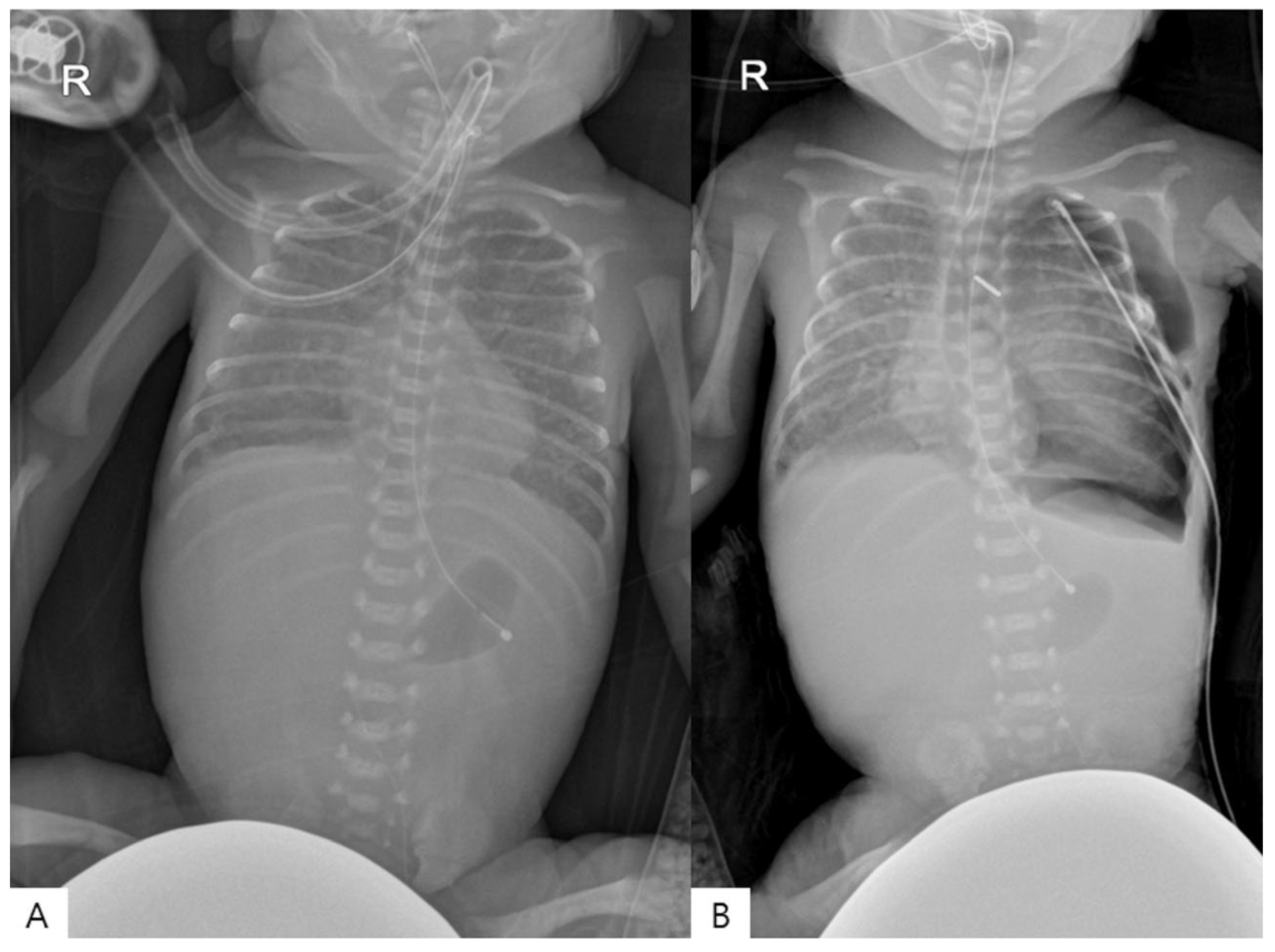
A male ELBW infant was born at a gestational age of 24 weeks and 3 days with a birth weight of 890 g. Immediately after birth, he was admitted to the neonatal intensive care unit (NICU) due to severe perinatal asphyxia, presenting with a heart rate 50 bpm and an oxygen saturation of 20%. Endotracheal intubation and mechanical ventilation were initiated. The patient was maintained on mechanical ventilation for respiratory distress syndrome secondary to surfactant deficiency. Transthoracic echocardiography performed on postnatal day 2 revealed a PDA measuring 0.93 mm. Pharmacologic treatment with Ibuprofen (10 mg) was attempted. However, follow-up echocardiography on postnatal day 7 demonstrated persistence and progression of the PDA, measuring 1.18 mm with a bidirectional shunt. Subsequently, the patient exhibited clinical deterioration, including a decrease in urine output to 1.0 cc/kg/hr. Follow-up echocardiography on postnatal day 8 revealed a ductal diameter of 1.8 mm, left atrial and left ventricular dilatation, and an aorta–left pulmonary artery pressure gradient of 15 mmHg (Figure 1). Based on these findings, the patient was diagnosed with a hemodynamically significant PDA, and emergency PDA ligation was planned. Upon arrival in the operating room, the patient remained intubated and was transported with manual ventilation using a bag-valve device. Anesthesia was induced with sevoflurane 3.0% and rocuronium 0.5 mg. Considering the infant’s small size, a neonatal blood pressure cuff was placed on a finger and a pulse oximetry probe was attached to the palm for monitoring. Surgery was performed via posterolateral thoracotomy in the right lateral decubitus position. At the start of surgery, vital signs were stable, with a blood pressure of 42/18 mmHg, heart rate of 158 beats per minute, and oxygen saturation of 98%. Fifteen minutes after the start of surgery, oxygen saturation abruptly decreased to 77%. Although the fraction of inspired oxygen (FiO2) was increased to 0.7, oxygen saturation further declined to 35%. Simultaneously, noninvasive blood pressure (NIBP) became unmeasurable, and the heart rate dropped to 45 beats per minute, indicating severe bradycardia and hypotension. FiO2 was increased to 1.0, and manual ventilation was resumed, resulting in improvement of oxygen saturation to 95%. However, NIBP remained unmeasurable, and bradycardia persisted for up to 12 minutes following the event, although electrocardiography demonstrated a normal sinus rhythm throughout. Dobutamine and dopamine (prepared as 1.47 mL diluted in 50 cc) were initiated at doses of 5 µg/kg/min each, and intravenous fluid administration (1:4 mixture of 5% dextrose and normal saline) was increased to 10 cc/hr. A profound hemodynamic collapse, characterized by the inability to measure blood pressure, persisted for approximately 20 minutes. Immediately after completion of PDA ligation by the surgeon, blood pressure gradually recovered to 41/17 mmHg, and heart rate improved to 132 bpm. Despite hemodynamic recovery, oxygen saturation did not improve adequately with mechanical ventilation. Therefore, manual ventilation with FiO2 1.0 was continued until the end of surgery, maintaining oxygen saturation at approximately 95%. Neuromuscular blockade was reversed using pyridostigmine, and spontaneous respiration returned; however, adequate oxygen saturation could not be maintained without manual ventilation. The patient was transferred to the NICU while continuing manual ventilation. Upon arrival in the NICU, high-frequency oscillatory ventilation was initiated with FiO2 1.0, frequency 13 Hz, mean airway pressure 13 cmH2O, and amplitude 30. Vital signs at that time were as follows: blood pressure 36/11 mmHg, heart rate 159 beats per minute, respiratory rate 60 breaths per minute, oxygen saturation 90%, and body temperature 36℃. A subsequent chest radiograph confirmed a left pneumothorax (Figure 2). After aspiration of 30 cc of air through the inserted chest tube, oxygen saturation normalized to 99%. The patient subsequently stabilized, with blood pressure remaining at approximately 54/28 mmHg and heart rate at 155 beats per minute, and showed gradual clinical improvement after management of the pneumothorax.
3. Discussion
This case describes an episode of acute hemodynamic collapse occurring during PDA ligation in an ELBW infant with a birth weight of 890 g. Hemodynamic deterioration following PDA ligation is classically recognized as PLCS, which typically develops several hours after surgery [2]. In contrast, the present case is distinguished by the occurrence of abrupt and profound hemodynamic collapse during and immediately after the ligation procedure itself.
PLCS refers to a hemodynamic state characterized by an abrupt increase in left ventricular afterload following ductal closure, along with the loss of left-to-right shunting that previously contributed to systemic cardiac output. These changes result in a sudden rise in systemic vascular resistance and a reduction in pulmonary blood flow, leading to decreased left ventricular preload. Consequently, cardiac output may decline, predisposing affected infants to hypotension and low cardiac output syndrome [7]. Thus, PDA ligation promptly relieves pulmonary overcirculation while simultaneously imposing an abrupt hemodynamic burden on the left ventricle [8]. The most critical pathophysiological mechanism underlying this process is left ventricular afterload mismatch [9]. In the early postnatal period, when the ductus arteriosus remains patent, the left ventricle ejects a substantial portion of its output into the low-resistance pulmonary circulation and consequently adapts to a relatively low afterload environment. However, following surgical ligation, the elimination of this low-resistance shunt abruptly exposes the left ventricle to a markedly increased systemic vascular resistance [7]. The immature myocardium of preterm infants has limited capacity to compensate for acute increases in afterload, which can result in reduced cardiac output and subsequent hemodynamic instability. The present case demonstrates that hemodynamic alterations induced by PDA ligation may manifest as immediate intraoperative circulatory collapse without a delayed onset. This finding suggests that, in ELBW infants undergoing PDA ligation, hemodynamic instability is not confined to the postoperative period but may also occur during the intraoperative phase. In addition to the hemodynamic alterations described above, intraoperative vagal stimulation represents another plausible mechanism contributing to the cardiovascular instability observed in this case. Anatomically, the ductus arteriosus lies in close proximity to the vagus nerve and the left recurrent laryngeal nerve [10]. During surgical exposure and ligation of the ductus, direct traction or manipulation of these structures may provoke a pronounced parasympathetic reflex response, resulting in bradycardia [10,11]. ELBW infants are particularly vulnerable to such vagal responses due to immaturity of autonomic nervous system regulation, which may amplify the severity of vagally mediated bradycardia. In this case, the severe hypoxemia that accompanied the hemodynamic collapse was likely associated with the pneumothorax identified postoperatively. Pneumothorax occurring during PDA ligation can increase intrathoracic pressure, thereby impairing venous return and exacerbating hypotension [12]. In this patient, oxygen saturation could not be restored with mechanical ventilation but was temporarily maintained with manual ventilation, suggesting that the reduced lung compliance caused by pneumothorax was transiently overcome by the application of higher airway pressures. However, such high-pressure ventilation may have further compromised venous return, thereby reducing preload and potentially exacerbating the hemodynamic instability in the setting of left ventricular afterload mismatch, which may explain the prolonged period during which blood pressure could not be measured. In addition, forced lung expansion during manual ventilation may have contributed to the development or aggravation of a delayed pneumothorax, which could explain the persistent difficulty in maintaining adequate oxygen saturation after arrival in the NICU. The subsequent stabilization of oxygen saturation following aspiration of 30 mL of air through the chest tube suggests that the hemodynamic instability observed in this case resulted from a complex interplay between cardiac dysfunction related to left ventricular afterload mismatch and a surgical complication in the form of pneumothorax.
Although NIBP could not be measured for approximately 20 minutes, this period was not interpreted as a state of complete cardiac arrest. Bradycardia was observed. However, continuous electrocardiographic monitoring demonstrated a persistent normal sinus rhythm, indicating preserved electrical cardiac activity. In addition, the possibility of transient measurement failure related to the use of a finger-mounted blood pressure cuff could not be excluded. Considering the surgeon’s intraoperative observation of ongoing cardiac activity, the event in this case was more likely attributable to a transient hemodynamic disturbance occurring during ductal ligation rather than irreversible circulatory arrest. Accordingly, dopamine and dobutamine were administered to provide immediate support for the acute hypotension and reduced cardiac output observed during the ligation process. In PLCS, milrinone, a phosphodiesterase type 3 inhibitor, is commonly used to mitigate left ventricular dysfunction and afterload mismatch. Milrinone reduces systemic afterload, enhances cardiac output, and improves myocardial relaxation, thereby facilitating hemodynamic recovery [13]. In situations such as the present case, where acute circulatory collapse occurs intraoperatively, the vasodilatory effects of milrinone must be considered because of the potential risk of exacerbating hypotension [14]. Therefore, catecholamine-based inotropic and vasopressor agents were administered as first-line therapy to achieve rapid stabilization of systemic perfusion. This case has several limitations. First, invasive arterial blood pressure monitoring was not performed, which limited precise quantification of intraoperative hypotension. Second, the exact timing of pneumothorax development during surgery could not be clearly determined, as it was identified postoperatively. Manual ventilation administered to manage hypoxemia secondary to pneumothorax may have increased intrathoracic pressure and reduced venous return, which might have contributed to the prolonged hypotensive state. Third, as this is a single case report, there are inherent limitations in establishing a definitive causal relationship among ductal ligation, pneumothorax, and hemodynamic collapse.
4. Conclusions
PLCS has traditionally been recognized as a postoperative complication occurring within hours after PDA ligation. However, this case suggests that the same underlying pathophysiology, an abrupt increase in left ventricular afterload in the setting of limited myocardial reserve, may manifest as immediate circulatory collapse during the ligation process itself. This observation highlights the need to recognize that PLCS-like hemodynamic collapse may occur not only in the postoperative period but also during intraoperative management in ELBW infants.
Author Contributions
Conceptualization, J.C. and H.S.J.; methodology, J.C..; software, J.C..; validation, J.C.; formal analysis, J.C..; investigation, J.C., Y.H.S., H.R.C., H.Y.G., J.Y.J., J.S.P. and S.I.; resources, D.H.K.; data curation, J.C.; writing—original draft preparation, J.C.; writing—review and editing, J.C.; visualization, J.C.; supervision, J.C.; project administration, J.C.; funding acquisition, J.C. All authors have read and agreed to the published version of the manuscript.
Funding
This work was supported by the Soonchunhyang University Research Fund.
Institutional Review Board Statement
The study was conducted in accordance with the Declaration of Helsinki, and approved by the Institutional Review Board of Soonchunhyang University College of Medicine (IRB number: SCHCA 2025-12-023, approved on 31 December 2025). This case report is based on a retrospective review of fully de-identified clinical information obtained during routine clinical care.
Informed Consent Statement
Patient consent was waived by the Institutional Review Board because the report contains no identifiable personal information and all clinical data were fully anonymized.
Data Availability Statement
Data is contained within the article.
Conflicts of Interest
The authors declare no conflict of interest.
Abbreviations
| PDA | Patent ductus arteriosus |
| ELBW | Extremely low birth weight |
| PLCS | Post-ligation cardiac syndrome |
| FiO2 | Fraction of inspired oxygen |
| NIBP | Noninvasive blood pressure |
| NICU | Neonatal intensive care unit |
References
- Wani, G.R.; Parray, N.A.; Lone, M.R.; Ganie, N.A.; Hussain, A.; Islam, J.U.; Mohammad, S.M.; Mohammad, S.M. Association of Patent Ductus Arteriosus (Pda) with Prematurity and Low Birth Weight Neonates. Int. J. Contemp. Pediatrics 2019, 6, 781–785. [Google Scholar] [CrossRef]
- McNamara, P.J.; Sehgal, A. Towards Rational Management of the Patent Ductus Arteriosus: The Need for Disease Staging. Arch. Dis. Child. Fetal Neonatal Ed. 2007, 92, F424–F427. [Google Scholar] [CrossRef] [PubMed]
- Ishida, S.; Yamaguchi, A.; Ooka, M.; Kenmochi, M.; Nakanishi, H. Evaluation of Postoperative Complications for Patent Ductus Arteriosus in Extremely-Low-Birthweight Infants. Pediatr. Int. 2022, 64, e14759. [Google Scholar] [CrossRef] [PubMed]
- Teixeira, L.S.; Shivananda, S.P.; Stephens, D.; Van Arsdell, G.; McNamara, P.J. Postoperative Cardiorespiratory Instability Following Ligation of the Preterm Ductus Arteriosus Is Related to Early Need for Intervention. J. Perinatol. 2008, 28, 803–810. [Google Scholar] [CrossRef] [PubMed]
- Raval, M.V.; Laughon, M.M.; Bose, C.L.; Phillips, J.D. Patent Ductus Arteriosus Ligation in Premature Infants: Who Really Benefits, and at What Cost? J. Pediatr. Surg. 2007, 42, 69–75, discussion 75. [Google Scholar] [CrossRef] [PubMed]
- Mandhan, P.; Brown, S.; Kukkady, A.; Samarakkody, U. Surgical Closure of Patent Ductus Arteriosus in Preterm Low Birth Weight Infants. Congenit. Heart Dis. 2009, 4, 34–37. [Google Scholar] [CrossRef] [PubMed]
- Noori, S.; Friedlich, P.; Seri, I.; Wong, P. Changes in Myocardial Function and Hemodynamics after Ligation of the Ductus Arteriosus in Preterm Infants. J. Pediatr. 2007, 150, 597–602. [Google Scholar] [CrossRef] [PubMed]
- Abdel-Bary, M.; Abdel-Baseer, K.A.; Abdel-Latif, A.F.; Abdel-Naser, M.A.; Nafie, M.; Eisa, K.M. Left Ventricular Dysfunction Postsurgical Patent Ductus Arteriosus Ligation in Children: Predictor Factors Analysis. J. Cardiothorac. Surg. 2019, 14, 168. [Google Scholar] [CrossRef] [PubMed]
- Ross, J., Jr. Afterload Mismatch and Preload Reserve: A Conceptual Framework for the Analysis of Ventricular Function. Prog. Cardiovasc. Dis. 1976, 18, 255–264. [Google Scholar] [CrossRef] [PubMed]
- Zarrabi, K.; Ravanfar, P.; Azimifar, A.; Ghaffarpasand, F. Profound Bradycardia Following Patent Ductus Arteriosus Closure; a Rare but Correctable Event. Bull. Emerg. Trauma 2013, 1, 130–132. [Google Scholar] [PubMed]
- Choudhury, M.; Gupta, A.; Krithika, K.; Bharadwaj, V.; Devagourou, V. Ligation of Patent Ductus Arteriosus in Preterm Infant with Comorbidities: An Unforgotten Nightmare. J. Neonatal Crit. Care Anesth. 2024, 1, 46–48. [Google Scholar] [CrossRef]
- Imran, J.B.; Eastman, A.L. Pneumothorax. JAMA 2017, 318, 974. [Google Scholar] [CrossRef] [PubMed]
- Sehgal, A.; Francis, J.V.; Lewis, A.I. Use of Milrinone in the Management of Haemodynamic Instability Following Duct Ligation. Eur. J. Pediatr. 2011, 170, 115–119. [Google Scholar] [CrossRef] [PubMed]
- Samiee-Zafarghandy, S.; Raman, S.R.; van den Anker, J.N.; McHutchison, K.; Hornik, C.P.; Clark, R.H.; Brian Smith, P. Best Pharmaceuticals for Children Act-Pediatric Trials Network Administrative Core, C. Safety of Milrinone Use in Neonatal Intensive Care Units. Early Hum. Dev. 2015, 91, 31–35. [Google Scholar] [CrossRef] [PubMed]
Figure 1.
Transthoracic echocardiographic image obtained on postnatal day 8 demonstrating a hemodynamically significant patent ductus arteriosus. (A) Two-dimensional echocardiography shows a ductal diameter of approximately 1.8 mm. (B) Color doppler imaging demonstrates bidirectional shunt flow across the ductus arteriosus.
Figure 1.
Transthoracic echocardiographic image obtained on postnatal day 8 demonstrating a hemodynamically significant patent ductus arteriosus. (A) Two-dimensional echocardiography shows a ductal diameter of approximately 1.8 mm. (B) Color doppler imaging demonstrates bidirectional shunt flow across the ductus arteriosus.
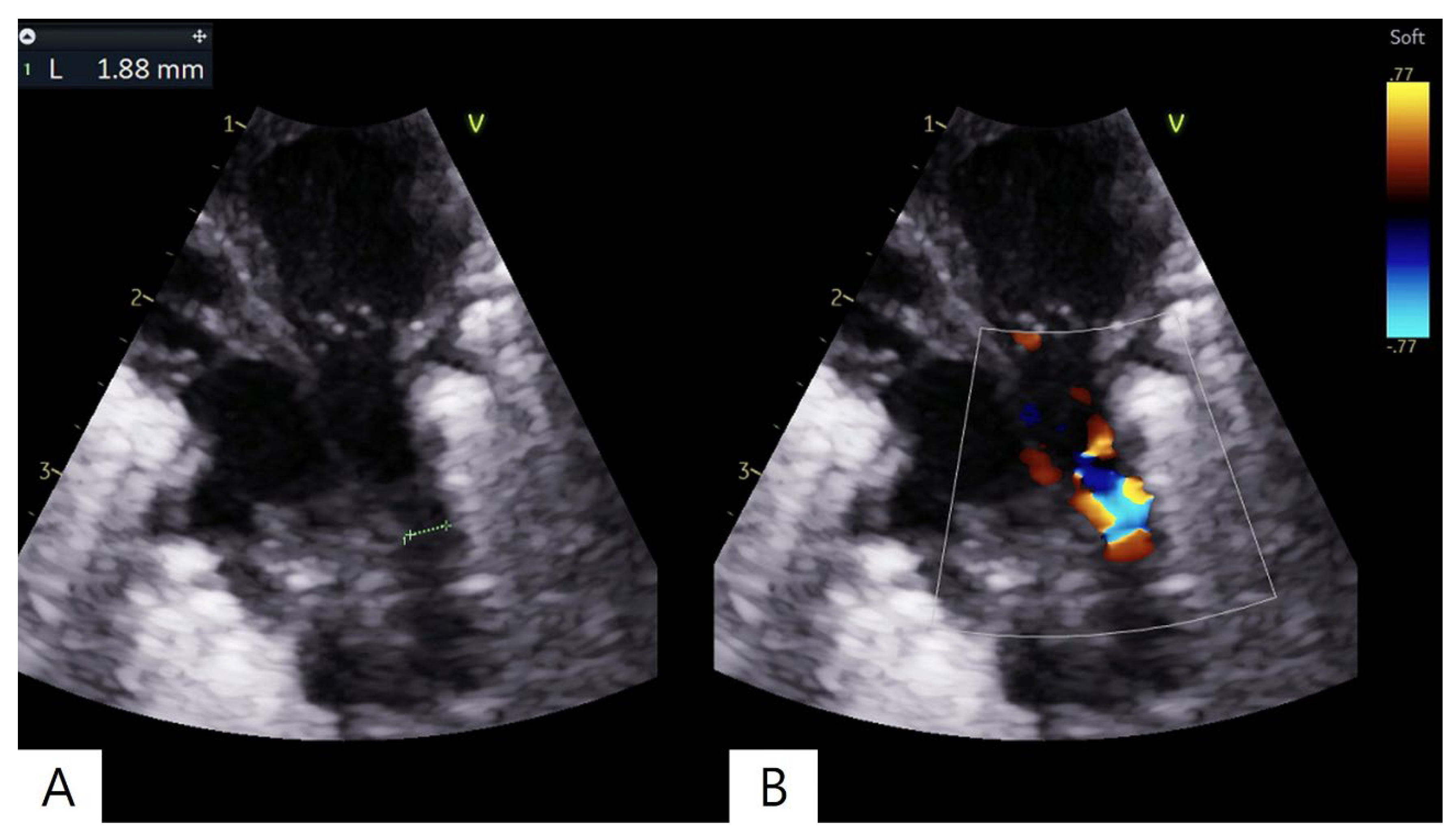
Figure 2.
Preoperative and postoperative anteroposterior chest and abdominal radiograph. (A) Preoperative image shows diffuse bilateral lung haziness without pneumothorax. (B) Postoperative image reveals a left-side pneumothorax.
Figure 2.
Preoperative and postoperative anteroposterior chest and abdominal radiograph. (A) Preoperative image shows diffuse bilateral lung haziness without pneumothorax. (B) Postoperative image reveals a left-side pneumothorax.
Disclaimer/Publisher’s Note: The statements, opinions and data contained in all publications are solely those of the individual author(s) and contributor(s) and not of MDPI and/or the editor(s). MDPI and/or the editor(s) disclaim responsibility for any injury to people or property resulting from any ideas, methods, instructions or products referred to in the content. |
© 2026 by the authors. Licensee MDPI, Basel, Switzerland. This article is an open access article distributed under the terms and conditions of the Creative Commons Attribution (CC BY) license (http://creativecommons.org/licenses/by/4.0/).
Copyright: This open access article is published under a Creative Commons CC BY 4.0 license, which permit the free download, distribution, and reuse, provided that the author and preprint are cited in any reuse.


