

Submitted:
05 March 2026
Posted:
06 March 2026
You are already at the latest version
Abstract
Introduction: Bodybuilding is fundamentally influenced by biomechanical efficiency, which plays a crucial role in optimizing muscular development and minimizing the risk of injury. Despite its widespread significance, the systematic integration of biomechanical principles in bodybuilding practice remains insufficiently explored, especially within emerging fitness communities. Objective: The primary aim of this systematic review is to synthesize current scientific evidence regarding the biomechanical principles that underpin effective bodybuilding techniques. The review seeks to identify key mechanical factors that influence performance outcomes and to propose practical recommendations for enhancing training efficacy and athlete safety. Methodology: A comprehensive analysis of 23 peer-reviewed studies was conducted, focusing on the relationship between biomechanical variables such as joint angles, body alignment, and load application and their effects on muscle recruitment and strength enhancement. The studies were selected based on relevance, methodological quality, and contribution to applied bodybuilding biomechanics. Results: The findings indicate that precise manipulation of joint positioning, optimized load distribution, and correct body posture significantly improve muscle activation and strength development. These elements, when systematically applied, contribute to greater training efficiency and reduced injury incidence. Discussion: The outcomes of this review corroborate existing literature in sports science, while offering bodybuilding-specific insights that address a notable research gap. The contextual relevance to Albania further underscores the need for biomechanical education in evolving fitness sectors.Conclusions: Incorporating biomechanical principles into bodybuilding training can substantially improve performance, safety, and long-term health outcomes. Future research should pursue longitudinal and intervention-based studies to further validate these findings and inform practice.
Keywords:
biomechanics
; bodybuilding
; optimal technique
; performance enhancement
; safety techniques
1. Introduction
Bodybuilding is a widely practiced form of resistance training that focuses on increasing muscular hypertrophy, symmetry, and definition for both aesthetic and performance purposes. While traditional bodybuilding methodologies have prioritized nutritional strategies, training volume, and recovery protocols, there is a growing interest in the role of biomechanics in enhancing training outcomes and injury prevention. Bodybuilding assesses athletes based on muscle mass, symmetry, and definition, with stages like muscle gain, fat loss, and peak week, adhering to strict anti-doping standards [1]. The human body is made up of a sophisticated network of articulated parts that work together to produce force [2]. Biomechanics, the study of the mechanical laws governing human movement, offers a crucial lens for understanding how muscles, bones, tendons, and joints function in coordinated motion. Sports biomechanics research focuses on understanding causal mechanisms for selected movements, enhancing performance or reducing injuries with the growth of modeling and computer simulation potentially reducing injury incidence. Sports biomechanics research aims to understand the causes of specific movements to enhance performance and reduce injuries, with modeling and computer simulation offering new potential to lower injury risk.
Biomechanics studies human motion, particularly in sports, using technology to improve performance and prevent injuries through portable devices [3]. A study has explored the use of biomechanical principles in resistance training for athletic populations and musculoskeletal injury rehabilitation, enabling coaches and athletes to optimize resistance loads and techniques [4]. Biomechanical kinetic and kinematic analyses analyze human movement patterns, assessing their impact on health and well-being. Factors like intensity, duration, frequency, age, health status, and physical abilities are considered [5].
Recent studies underscore the importance of integrating biomechanical principles in resistance training to enhance muscle activation, improve force application, and reduce injury risk [6]. Another study explores the potential of biomechanics in sports injury prevention and rehabilitation, highlighting its potential for enhanced athlete performance and health outcomes through posture adjustments and personalized training [7].
Advancements in biomechanics in sports enhance performance, prevent injuries, and aid rehabilitation by enhancing understanding of human movements and detecting injury-preventive changes [8]. This need is especially pertinent considering the increasing participation of adolescents and young adults in resistance training programs. Research suggests that regular preseason training with movement biomechanics can reduce sports-related injuries [9]. Evidence suggests that biomechanically informed exercise prescription not only enhances athletic performance but also provides protective effects against acute and overuse injuries. To enhance athletic performance, a combination of targeted training, technique refinement, and biomechanics understanding is crucial, with biomechanical analysis providing more accurate insights [10].
Bodybuilders focus on morphological adaptations of skeletal muscle, not muscle strength, using biomechanical strategies to obtain hypertrophic responses from specific muscle groups, rather than strictly adhering to classic resistance training periodization [11]. Hypertrophy-oriented training, which combines mechanical tension and metabolic stress, improves training volume, time efficiency, and effort intensity, while preventing monotony despite not being superior to traditional methods [12]. Strength and endurance are improved at the muscle level by hypertrophy and an increase in the cross-sectional area of fibers [13].
In bodybuilding, competitive evaluation is based on muscular aesthetics, including mass, proportion, and symmetry training involves both compound (multi-joint) and isolation (single-joint) exercises targeting specific muscle groups [14]. Bodybuilding ranks competitors based on muscular mass, symmetry, and definition, focusing on maximizing skeletal muscle hypertrophy, with male and senior bodybuilders exhibiting varying levels of muscle hypertrophy [11], relying on different exercise to sculpt the muscle groups. Exercise methods that are efficient and effective in altering body composition particularly by building muscle mass and decreasing fat mass are becoming increasingly necessary [15]. Body dissatisfaction is linked to a conception of body image that differs from accepted beauty standards and is an issue in modern society, especially during adolescence [16]. Significant levels of physical activity after puberty deviated from previous research and warned of significant levels of body image distortion in teenagers [17]. Emerging adulthood is a complex stage during which young individuals develop their personalities, form habits and lifestyles, and pursue higher education [18]. Improving physical performance requires maintaining an ideal body composition, which is defined by a decreased percentage of fat and sufficient muscular mass [19]. Regimented resistance training (RT) can increase muscle size, but effective technique requires volume, intensity, and range of motion manipulation. ROM, specifically long muscle lengths, influences RT effectiveness [20]. Resistance training enhances body composition and body image, leading to increased satisfaction among physically active individuals [21]. Biomechanical inefficiencies can induce mechanical overload, maladaptive motor patterns, and tissue damage, heightening injury risk. Muscle mass increase is crucial for health, fitness, and performance, with muscle hypertrophy influenced by mechanical tension, muscle damage, and metabolic stress from strength exercise [14]. Exercise effectiveness depends on biomechanical factors like joint angles, load distribution, and technique precision, which can be inefficient, leading to mechanical overload, maladaptive motor patterns, and tissue damage. Inadequate biomechanics can lead to tissue injury, changed motor patterns, and increased mechanical stress, that raise the risk of injuries over time. A study has explored the use of biomechanics in sports injury prevention and rehabilitation, highlighting its potential for improved athlete performance and health outcomes through personalized approaches, artificial intelligence, and wearable technologies [7].
Epidemiological data indicate Bodybuilding injuries are low compared to other sports, with muscle strain being the most common type, followed by tendinitis and cartilage wear [22]. While biomechanics in general resistance training is well-studied, few works comprehensively address its relevance within competitive bodybuilding. Further, regional differences in training practices remain under-examined. A systematic review exploring functional versus traditional training methods, has identified a methodological overlap between Functional Training (FT) and Traditional Training (TT), both focusing on rehabilitation and muscle strength enhancement, with effectiveness varying based on individual needs [23], shaped by exercise selection, an insight directly transferable to adapt the design of an individualized program according to the specific needs of the athlete. Strength and functional conditioning training enhances physical and mental health by combining joint and muscular exercises with high-intensity cardiovascular exercises, promoting adherence and well-being [24].
A literature review reveals that injuries in youth resistance training are mostly accidental due to poor technique and inappropriate loads, but safe and effective training can be achieved with qualified supervision and age-appropriate instruction [9]. A study has revealed that biomechanical analysis is crucial for achieving goals and enhancing kick accuracy, emphasizing the importance of understanding interrelated biomechanical factors in enhancing kick accuracy and suggesting future research should combine various methods [10], because sports movements require precise joint control to minimize strain and to reinforce movement efficiency.
A growing body of evidence has reported that poor lifting techniques, overtraining, and disregard for biomechanical efficiency are common contributors to musculoskeletal injuries in bodybuilding populations. Weight training is a common physical activity for muscle strength, endurance, and hypertrophy, targeting muscle groups and joint motions with gravity and resistances. Sports injuries can occur from resistance exercises, such as tendon ruptures and joint dislocations. A study found an estimated injury incidence of 2.6 per 1,000 hours of activity, including muscle strains, tendon avulsions, joint subluxations, and overuse syndromes [25]. In contrast, athletes adhering to biomechanically optimized resistance training protocols demonstrate improved performance metrics and lower injury rates, Resistance training protocols improve performance and reduce injury rates in weightlifting and powerlifting, with common injury localizations being the shoulders, low back, and knee regions [26]. A systematic review showed that weightlifting and powerlifting have similar incidence rates to non-contact sports, but powerlifting has a high prevalence of injury, particularly in the lower back, shoulder, and knee [27]. Injury prevention programs can improve landing task biomechanics, notably peak knee and hip flexion angles, and decrease peak knee abduction moment, aiding athletes in overcoming ligament dominance loads [28]. Structured resistance training significantly enhanced maximal strength, functional performance, and core muscle biomechanics, particularly in isokinetic muscle functions and external oblique stiffness, thereby enhancing force production capabilities and core stability [29]. Furthermore, improvements in muscular strength and neuromuscular coordination enhance the force-time relationship and reduce mechanical vulnerability [30]. Developing muscular strength and mastering technical skills are crucial components of success for young players [31]. Muscular strength and cross-sectional muscle area are positively correlated, especially at large muscle mass, enhancing strength and power, and potentially improving exercise performance [32].
Despite the increasing volume of research on biomechanics in strength and conditioning, there is a noticeable lack of studies synthesizing these principles specifically within the context of competitive bodybuilding. Existing reviews often focus on generalized resistance training without fully addressing the biomechanical demands of bodybuilding as a sport. Moreover, there is a paucity of research centered on bodybuilding practices in Southeastern Europe, particularly in Albania, a region experiencing rapid growth in gym culture and athletic participation, often without structured biomechanical education or injury prevention frameworks.
This systematic review aims to synthesize current biomechanical knowledge in bodybuilding, by addressing existing gaps related to biomechanical factors. It examines how joint mechanics, movement patterns, and loading strategies influence performance and injury risk. Additionally, the review provides evidence-based recommendations for optimizing training techniques and emphasizes the importance of culturally sensitive and regionally applicable prevention strategies, particularly in contexts where biomechanical guidance is still emerging.
2. Material and Method
To investigate how rural forest-dependent communities This section outlines the methodology adopted for conducting a systematic review focused on biomechanical principles in bodybuilding. The review aims to identify biomechanical strategies that optimize performance and reduce injury risk. The methodology comprises study design, research questions, literature search, eligibility criteria, data extraction, quality appraisal, and statistical analysis.
2.1. Study Design
This systematic review was conducted following the PRISMA 2020 guidelines to ensure methodological rigor and transparency [33]. A structured framework was applied to identify, evaluate, and synthesize existing research related to biomechanics in bodybuilding. Emphasis was placed on studies investigating movement technique, joint mechanics, and muscle activation, with the goal of improving both performance and injury prevention.
2.2. Research Questions
- What are the main biomechanical factors influencing muscle activation during common bodybuilding exercises?
- How do these biomechanical principles contribute to injury prevention?
- What evidence-based recommendations can be made for optimizing training techniques to improve performance and safety?
2.3. Search Strategy and Data Source
A systematic literature search was conducted across PubMed, Scopus, Web of Science, SportDiscus, and Google Scholar, covering the period from January 2010 to July 2025. Boolean operators were used to construct the final search string: ("biomechanics" OR "biomechanical analysis") AND ("bodybuilding" OR "resistance training") AND ("muscle activation" OR "muscular recruitment") AND ("injury prevention" OR "injury risk") AND ("performance enhancement" OR "training optimization"). Only peer-reviewed articles written in English were considered. A total of 23 studies met the inclusion criteria after full-text screening and duplicate removal. Studies were selected based on specific inclusion and exclusion criteria to ensure relevance and methodological consistency. A tabular summary of these criteria is presented in Table 1.
Inclusion Criteria:
Studies were deemed eligible for inclusion if they examined populations engaged in bodybuilding, powerlifting, or structured resistance training, and reported biomechanical variables such as muscle hypertrophy, joint mechanics, repetition tempo, training volume, or strength-related parameters (e.g., one-repetition maximum, electromyographic activity, or torque). The review included studies with participants aged 12 years and older, encompassing both amateur and competitive athletes. A wide range of study designs were considered, including systematic reviews, randomized controlled trials, cohort and cross-sectional studies, narrative reviews, and mixed-method approaches. Only peer-reviewed articles published between 2010 and 2025 that presented measurable outcomes related to injury incidence, performance enhancement, or changes in body composition were included. Figure 1 gives a summary distribution of published articles 2010-2025.
Exclusion Criteria:
Studies were excluded if they did not focus primarily on resistance-based disciplines or failed to examine biomechanical or physiological performance indicators. Research involving non-athletic populations or sports unrelated to strength training was not considered. Additionally, studies were excluded if they involved participants under the age of 12 (unless justified by training background), lacked peer-reviewed status, did not provide full-text access, or were classified as editorials, commentaries, or opinion pieces without empirical data. Only original studies with clear methodological design and relevant outcome measures were retained for analysis.
2.4. Research Setting
The studies included in this review were conducted in varied environments such as sports science laboratories using tools like motion capture, electromyography (EMG), and force plates. Many were also based in university departments focused on exercise physiology and biomechanics. Several investigations were carried out in gym-based settings, providing real-world insights. Studies conducted in Albania or involving Albanian participants were prioritized for regional relevance.
3. Data Analysis
No new participant recruitment or sample size estimation was required. Statistical findings from included studies were synthesized using descriptive and, where applicable, meta-analytical techniques. Results were stratified by training experience (novice, intermediate, advanced) and exercise type. Statistical significance was considered at p < 0.05, with 95% confidence intervals reported. Table 2 gives a summary of statistical analysis methods.
4. Results
The results of this systematic review are organized into thematic categories that reflect the biomechanical principles most relevant to performance enhancement and injury prevention in bodybuilding. The section includes updated visuals and tabular content to meet reviewer expectations for methodological transparency and clarity.
4.1. Study Selection Process
An initial search across multiple databases yielded a total of 382 articles. After removing 228 duplicates, 154 articles remained for title and abstract screening. Of these, 78 were excluded for not addressing biomechanical topics relevant to bodybuilding, mainly articles focused solely on nutrition, psychology, or unrelated sports. A total of 76 full-text articles were then assessed for eligibility, and 53 were excluded for reasons such as insufficient reporting of biomechanical data (n = 24), incorrect population age range (n =15), and non-peer-reviewed status (n =14). Ultimately, 23 studies met all inclusion criteria and were selected for qualitative synthesis. This correction addresses the inconsistency noted in the previous version and satisfies. The updated PRISMA flow diagram, including exclusion reasons, provided in Figure 2.
4.2. Descriptive Characteristics of Included Studies
The 23 studies included in the review varied in design (RCTs, cohort, cross-sectional), sample size, participant demographics, biomechanical variables and technical skills were analyzed. The majority focused on participants ages 12 years and older, consistent with the review’s inclusion criteria. The characteristics of these studies are presented step by step in Figure 3 below. A summary table (Table 3) has been added to present study characteristics such as research design, biomechanical focus, outcome measures, and conclusions.
Data Extraction and Key Variables
A standardized extraction protocol was used to collect consistent data across studies. This included author names, publication year, sample size, participant demographics, and biomechanical metrics such as joint angles, muscle activation, load distribution, EMG, technical skills results and conclusions. Performance indicators: strength gains, hypertrophy, and injury incidence—were also recorded, along with statistical values (p-values, confidence intervals, and effect sizes) to facilitate meta-analysis.
Quality Assessment and Risk of Bias
All included studies were assessed using the Newcastle-Ottawa Scale (NOS), which evaluates methodological quality based on selection, comparability, and outcome domains. Most studies scored between 6 and 9 stars, indicating moderate to high quality. The risk of bias was generally low across domains, although some studies had unclear reporting on blinding or confounding controls.
Narrative Synthesis of Key Themes
Due to significant heterogeneity in study designs, outcome measures, and biomechanical variables, a quantitative meta-analysis was deemed inappropriate. Therefore, findings are presented descriptively, grouped into key thematic areas.
4.3. Muscle Activation and Joint Mechanics
Several studies demonstrated that optimal joint angles and proper form significantly enhance muscle activation patterns during resistance exercises. Muscle development is crucial for competitive sports success, but training volume and frequency should be balanced to avoid overtraining and excessive fatigue, especially for strength-building exercises [34]. The literature supports the idea that biomechanical precision in movement execution maximizes hypertrophy and reduces mechanical stress. Recent advancements in understanding shoulder biomechanics are crucial for rehabilitation of shoulder impingement [35], highlighting the importance of scapular stability and joint alignment in preventing common injuries [36].
4.4. Injury Prevention Strategies
Across the included studies, consistent themes in injury prevention were observed: strength balance between agonist and antagonist muscles, individualized training regimens, and biomechanically informed technique adjustments. Research shows that biomechanical control significantly reduces injury risk in high-load movements like squats and deadlifts, influenced by modifiable parameters [37]. Exercise biomechanics investigates the influence of physical activity on health, athletic performance, and injury prevention, aiding in the design of effective exercise programs and enhancing sports biomechanics knowledge [5].
Performance Optimization through Biomechanics
In sports, muscles function as force generators and eccentric shock absorbers through the interaction of contractile and series elastic components, with plyometric training enhancing speed, power, and overall performance [38]. Biomechanical efficiency not only prevents injuries but also enhances performance outcomes. A systematic review discusses the positive effects of muscular strength on athletic performance, highlighting its ability to improve force-time characteristics, general sport skills, and reduce injury risk [30]. Strength training effectiveness depends on individual athlete characteristics, age, sport specialization, and experience. High-intensity, low-volume training is best for explosive power sports, while moderate-intensity, high-volume regimens are better for endurance [34]. Research on functional training suggests a new load progression strategy: complexity, which involves increasing the technical difficulty level of exercise, aiming to enhance muscle strength synergistically and integrate it with other physical fitness components [39].
Sticking Point and Muscle Mechanics
The sticking point in resistance training refers to the increased difficulty during lifts, impacting athlete load and competitive achievement, and increasing the risk of form breakdown and injury [40]. Recognizing individual variations in sticking zones can guide coaches in tailoring resistance programs effectively. Elastic band training increases fatigue and time to reach maximum isometric strength compared to fixed resistance methods, indicating the need for proper load control for athlete recovery, and its uses in squat exercises helps to optimize performance [41]. Researchers discovered that applying elastic bands above the sticking point enhances movement, repetitions, and cardiovascular responses, offering a new approach to muscle training [42].
Muscle Fiber Types and Adaptation
Type I (slow-twitch) and type II (fast-twitch) fibers respond differently to various training stimuli. Resistance protocols targeting type II fibers have shown the greatest gains in hypertrophy and power. Skeletal muscle adapts to training stimuli, achieving optimal hypertrophy through increased sarcomeres, type II/I fCSA ratio, myofibril utility, and hypertrophy areas, using specific training stimuli for specific tasks [43]. Heavy load training necessitates more sets for hypertrophy compared to moderate loads, causing inefficiency and increasing joint-related stresses and overtraining potential due to high training volumes [44]. Research on mechanical overload-induced skeletal muscle hypertrophy has evolved significantly, with innovative methodologies driving advancements in molecular-based techniques [45]. A review also acknowledges emerging concerns related to gene doping, which may increase body weight, muscle mass, and strength, but concerns arise about artificially influencing fiber adaptation [46]. Genetic modifications to muscle fiber growth signaling pathways induce hypertrophy, leading to significant differences in force development and muscle size [47].
Isolation vs. Compound Exercises
Both isolation and compound exercises offer unique biomechanical benefits. Resistance training focuses on hypertrophy and strength through manipulation of movement tempo, which is crucial for youth and injured athletes, as it controls specific phases of movement, aiding recovery [48]. A study found that multi-joint exercises (MJ) were more effective in improving muscle strength and maximal oxygen consumption than single-joint exercises (SJ), but not in body composition [49]. Single joint exercises promote muscle hypertrophy due to ease of learning, while multi-joint exercises maximize strength due to greater weightlifting, with some authors suggesting MJ exercises are more effective [14]. Muscle activation varies significantly across exercise types, further emphasizing the importance of balanced programming.
Psycho-emotional and Instructional Context
Recent studies have highlighted the importance of coaching quality and psychological factors in biomechanical learning and injury resilience. A study emphasizes the importance of gender-specific coaching practices and sport-specific approaches to cater to diverse needs, highlighting the correlation between effective coach education and improved training outcomes and athlete satisfaction [50]. Another study explores the intricate connections between coach leadership behavior, coach-athlete relationship, psychological fatigue, and athletes' performance, revealing positive leadership can enhance performance [51]. A review suggests a multidisciplinary approach to understanding athlete resilience, utilizing data science to detect potential losses and providing personalized feedback for improved performance [52].
5. Discussion
This study contributes to the expanding This systematic review critically examined the role of biomechanical principles in optimizing training outcomes and injury prevention in bodybuilding. Biomechanical variables like joint angles, grip width, and movement velocity influence muscle activation patterns, with efficient techniques influencing muscle recruitment, particularly in compound lifts, and longitudinal variation potentially stimulating hypertrophy or strength gains [53].
Multiple studies support the notion that biomechanical optimization contributes to improved safety during resistance training. The association between knee proprioception, strength, and functional symmetry in healthy individuals using isokinetic strength tests, proprioception assessments were examined, emphasizing the significance of proprioceptive assessments in rehabilitation and injury prevention [54]. A meta-analysis showed that training intervention programs reduced the risk of lower extremity knee injuries by 25% [55]. Higher resistance training frequency leads to greater muscular strength gains, particularly in upper body and women exercises, with young individuals responding more positively [56].
Advanced biomechanics technologies are improving human movement understanding, enabling innovative sports performance and injury management solutions, influenced by physiological, technical, and motivational factors [57]. Biomechanics is crucial for understanding human movement, with advancements in motion capture systems, force plates, AI-powered models, and wearable sensors enhancing research applicability to real-world conditions [58]. These insights suggest that embedding biomechanical instruction into bodybuilding practice is not only scientifically justified but practically beneficial. Biomechanical analysis enhances athletic performance and prevents injuries through qualitative and quantitative methods, using technologies like optical devices, electromyography, and inertial tracking systems [59].
Compared to existing systematic reviews on strength training biomechanics such as those by two studies [56,60], this review offers a more targeted synthesis specific to bodybuilding. While earlier reviews focused on general resistance training, this study uniquely consolidates evidence regarding biomechanical considerations in hypertrophy-driven resistance protocols.
A key area of consensus among included studies was the role of movement precision in muscle activation efficiency. The study indicates that squat depth, grip variation, and scapular control directly affect the activation of primary and stabilizing muscles like the quadriceps, pectorals, and rotator cuff musculature. A new index-based approach reveals the function of muscles in the shoulder's glenohumeral joint, highlighting its stability and how load increases compensation, potentially aiding in motor control strategies [61]. These findings provide a compelling rationale for coaches and athletes to prioritize biomechanics in exercise execution.
Beyond injury mitigation, performance enhancement through biomechanics was evident in studies examining power generation and neuromuscular control. Neuromuscular training (NT) enhances athletes' physical fitness by improving balance, agility, speed, muscular power, endurance, and motor muscle performance [60]. High sports performance requires the development of physical qualities and functional features such as strength, agility, flexibility, endurance, neuromuscular coordination, and general endurance [62]. A study shows that concentrated force outputs are significantly higher than eccentric outputs, except for peak force, and increased during the concentric phase of squats [63], when athletes achieved optimal alignment and range of motion. Another study emphasizes the importance of analyzing force-velocity relationships for optimizing sports performance, identifying ideal weight and speed ranges for squat and bench press, and evaluating maximum strength for training objectives [64]. This aligns with recent narrative review literature highlighting a strong correlation between optimized squat technique and explosive performance [65].
In terms of practical application, the review underscores the importance of individualized training programs based on biomechanical assessments. Coaches and trainers should employ video analysis, force platforms, or motion capture technologies to provide real-time feedback and adjust exercise prescription accordingly. A study reveals that skilled coaches significantly enhance athletes' performance in sports competitions, enhancing physical training, mental preparation, technical skills, and goal setting techniques [66]. Strength training is a technique that enhances neuromuscular efficiency in athletes, according to current research, enhancing their economy, muscle power, and performance in endurance sports [67]. Research has shown that strength training improves general health throughout life [68]. Biomechanical concepts enhance athletes' performance by improving movement efficiency, approach optimization, and injury prevention, but challenges include limited resources, resistance to new teaching methods, and a shortage of experienced instructors [69].
Workshops on biomechanics education, especially for inexperienced athletes, have demonstrated encouraging outcomes in terms of enhancing movement literacy and decreasing maladaptive compensating tendencies. In line with global coaching standards, these observations could guide the creation of organized certification programs for bodybuilding coaches.
This review also acknowledges that certain populations such as Albanian bodybuilders and athletes remain underrepresented in biomechanical research. Rather than drawing unique biomechanical conclusions about Albanian athletes, this study highlights the lack of local data and emphasizes the need for contextually relevant investigations in Southeastern Europe.
Several methodological limitations must be noted. First, the heterogeneity of biomechanical outcomes, intervention durations, and participant experience levels across studies limited comparability. Second, most included studies reported short-term results, and few provided longitudinal follow-up to determine the durability of biomechanical adaptations. Third, variations in measurement tools (e.g., surface EMG vs. force plates) may introduce inconsistencies in data quality. Despite these challenges, the consistency of core findings across diverse settings adds to the robustness of the conclusions.
The current review emphasizes that understanding joint mechanics and movement coordination is essential not only for injury prevention but also for maximizing muscle recruitment efficiency. In line with prior literature, understanding the mechanisms that lead to the occurrence of sticking points, discussing their mechanisms, definitions, and effectiveness.as well as different training strategies that can be used to overcome them is important to prevent injury and promote progress in strength practitioners [40]. Moreover, activation differences between type I and type II fibers remain a relevant consideration in load prescription. Muscle fiber type composition influences sports performance, with type I fibers in slower events and type II in higher events, influenced by genetics, training, nutrition, and lifestyle [70]. Functional foods and sports supplements have gained importance in physical performance due to their potential to enhance athletic capacity [71]. Body appreciation plays a crucial role in promoting positive attitudes towards physical activity and healthy eating habits, preventing short-term issues like fatigue and chronic diseases [72]. Fitness is crucial for physical and mental health, making it essential to identify intervention opportunities to tackle public health issues and boost the fitness sector's growth [73]. Biomechanically informed programming allows for more tailored hypertrophy, strength, and recovery strategies.
Ultimately, the integration of biomechanical education and screening protocols in training environments from fitness centers to elite sports facilities has the potential to elevate safety standards and training efficacy. Bodybuilding coaches frequently recommend nutrition, exercise protocols, supplements, and performance-enhancing drugs, with fasted cardiovascular exercise and creatine being the most popular and recommended supplements [74]. Recent research highlights the significance of psychological factors in sport performance, including focus, emotional regulation, stress tolerance, mental toughness, and mindfulness, which can be integrated into training regimens [75].
Future research should further explore the long-term physiological effects of performance-enhancing substances and examine how sociocultural norms influence biomechanical training compliance in bodybuilding communities [76]. The review also highlights important topics for additional research, including the long-term effects of performance-enhancing substances and social factors influencing training compliance.
6. Conclusion and Recommendations
This systematic review explored the application of biomechanical principles in bodybuilding, with a focus on optimizing performance and reducing the risk of injury. The findings suggest that a deeper understanding of human movement mechanics and muscle activation patterns may contribute to more effective training strategies. However, due to methodological variability and the limited duration of many of the included studies, the conclusions should be interpreted with caution. Rather than asserting definitive outcomes, the review highlights the potential value of biomechanical integration in training design and injury prevention.
The evidence gathered indicates that tailoring training programs to individual anatomical and functional characteristics could improve exercise efficiency and help minimize overuse injuries. Practical implementation of biomechanical analysis such as evaluating joint angles, movement tempo, and load distribution can support more targeted and sustainable hypertrophy-oriented programs. Nevertheless, these benefits are likely to be most significant when supported by ongoing assessment and technical refinement.
From a practical standpoint, several actionable recommendations can be derived for key stakeholders. Coaches and trainers are encouraged to incorporate basic biomechanical screening into routine training, using tools such as video analysis to monitor lifting techniques and identify asymmetries. Periodic movement assessments can also help adapt programs to the athlete's evolving capabilities. Sports physicians and physiotherapists may benefit from adopting biomechanically informed rehabilitation protocols that focus on joint stability and neuromuscular control.
Sports institutions and fitness centers should consider investing in professional development workshops focused on biomechanics, ensuring that their staff are trained to interpret movement data and apply evidence-based techniques. Implementing structured, biomechanically guided strength training programs, especially for novice and youth athletes, may enhance safety and long-term athletic development. Additionally, fostering interdisciplinary collaboration between biomechanists, coaches, and health professionals could help standardize best practices within bodybuilding and strength training communities.
Finally, while this review provides an initial framework, further high-quality, longitudinal studies are needed to evaluate the long-term effects of biomechanical interventions. Emphasizing this need reflects a careful and realistic interpretation of the current evidence base, aligning with the limitations acknowledged in this review.
6.1. Impact of the Study
The study aims to fill a critical gap in localized research on biomechanics in bodybuilding in Albania, addressing the growing popularity of bodybuilding and the lack of localized research. It also considers cultural and economic factors, highlighting the importance of promoting physical health through informed bodybuilding practices. The findings can inform coaches, trainers, and sports organizations, improving training methodologies and athlete safety protocols. The study also seeks to contribute to the global body of knowledge on biomechanics in bodybuilding, fostering international collaboration.
6.2. Limitations
The review's findings on biomechanical principles in bodybuilding are influenced by heterogeneity in studies, potential publication bias, and a lack of longitudinal data. The varied design, methodologies, and participant characteristics of the studies may limit generalizability. Many studies included in the review were cross-sectional in nature, which limits the understanding of long-term effects of biomechanical optimization on performance and safety.
6.3. Future Research Directions
Future research should focus on standardized designs and long-term studies evaluating biomechanical optimization's impact on performance and injury rates. It should also explore biomechanical variability, individual factors influencing training outcomes, and the integration of technology like motion analysis and wearable sensors for real-time feedback during training.
Funding
This research received no external funding.
Institutional Review Board Statement
Not applicable.
Informed Consent Statement
Not applicable.
Data Availability Statement
No new data were created or analyzed in this study.
Conflicts of Interest
The authors declare no conflict of interest.
References
- Alarcón-Rivera, M.; Montecino Rojas, F.; Guzmán-Muñoz, E.; Salazar-Orellana, C.; Gaete Valdés, E.; Durán Araya, D.; Aguilera-Eguía, R. Analysis of sleep quality and its impact on body composition on the pre-competition day in natural bodybuilders. Retos 2025, 66, 395–402. [Google Scholar] [CrossRef]
- Lopes, A. L.; Ribeiro, G. dos S.; Teixeira, B. C.; Carteri, R. B.; Muzy, P. C.; Pontes-Silva, A. Anthropometric profile of the brazilian male judo team: cross-sectional study. Retos 2025, 64, 44–54. [Google Scholar] [CrossRef]
- Giustino, V.; Patti, A. Biomechanics and Sports Performances. Sports 2025, 13(3), 73. [Google Scholar] [CrossRef] [PubMed]
- Lake, J. P.; Swinton, P. A.; Keogh, J. W. L. Practical applications of biomechanical principles in resistance training: Neuromuscular factors and relationships. Journal of Fitness Research 2014, 3(1), 19–32. [Google Scholar]
- Forte, P.; Teixeira, J. E. Exercise Biomechanics for Health: Evaluating Lifelong Activities for Well-Being. Healthcare 2023, 11(6), 900. [Google Scholar] [CrossRef]
- Bendo, A.; Maraj, E.; Kosta, O. Integrating Mathematical and Biomechanical Models in Sports Performance: A Multidisciplinary Approach. South Eastern European Journal of Public Health 2025, 3355–3366. [Google Scholar] [CrossRef]
- Hongyu, Zhang. Biomechanical Analysis in Sports Injury Prevention and Rehabilitation: Current Status and Future Trends. Journal of Human Movement Science 2025, 6(1), 40–47. [Google Scholar] [CrossRef]
- Penichet-Tomas, A. Applied Biomechanics in Sports Performance, Injury Prevention, and Rehabilitation. Applied Sciences 2024, 14(24), 11623. [Google Scholar] [CrossRef]
- Faigenbaum, A. D.; Myer, G. D. Resistance training among young athletes: safety, efficacy and injury prevention effects. British journal of sports medicine 2010, 44(1), 56–63. [Google Scholar] [CrossRef] [PubMed]
- Aditya, R.; Setyawati, H.; Sulaiman, S.; Hidayah, T. The Use of a Biomechanical Analysis Approach to Kick Accuracy in Futsal Athletes: Literature Review. Retos 2025, 66, 1120–1130. [Google Scholar] [CrossRef]
- Alves, R. C.; Prestes, J.; Enes, A.; de Moraes, W. M. A.; Trindade, T. B.; de Salles, B. F.; Aragon, A. A.; Souza-Junior, T. P. Training Programs Designed for Muscle Hypertrophy in Bodybuilders: A Narrative Review. Sports (Basel, Switzerland) 2020, 8(11), 149. [Google Scholar] [CrossRef]
- Krzysztofik, M.; Wilk, M.; Wojdała, G.; Gołaś, A. Maximizing Muscle Hypertrophy: A Systematic Review of Advanced Resistance Training Techniques and Methods. International journal of environmental research and public health 2019, 16(24), 4897. [Google Scholar] [CrossRef] [PubMed]
- Kabir, M. S.; Ilham, I.; Yadav, S.; Geantă, V. A. Un estudio longitudinal de 12 meses sobre el entrenamiento aeróbico versus anaeróbico: efectos en la composición corporal y el rendimiento atlético. Retos 2025, 68, 905–916. [Google Scholar] [CrossRef]
- Gentil, P.; Soares, S.; Bottaro, M. Single vs. Multi-Joint Resistance Exercises: Effects on Muscle Strength and Hypertrophy. Asian journal of sports medicine 2015, 6(2), e24057. [Google Scholar] [CrossRef]
- Zalillah, S. I.; Jayadi, I.; Andriana, L. M.; Ashadi, K.; Wiriawan, O.; Hariyanto, A. Total-body aerobic gymnastic exercises more effective than low intensity steady state to improving body composition in adult women with sedentary. Retos 2025, 68, 2031–2041. [Google Scholar] [CrossRef]
- Rocu-Gómez, P.; Cosano-Roa, D.; Ramón-Otero, I. Gender and body image perception: a study on body dissatisfaction in High School students. Retos 2025, 65, 458–472. [Google Scholar] [CrossRef]
- Paes, P. P.; da Costa, M. S. F.; Xavier, H. da S.; Silva, L. R.; Vieira, G. R.; Cavalcante, B.; dos Santos, W. R. Is there an association between physical activity level, nutritional status, biological maturation, and body satisfaction in adolescents? Retos 2025, 65, 762–772. [Google Scholar] [CrossRef]
- Jerez-López, P.; Chacón-Cuberos, R.; Serrano-García, I.; Belmonte-Arévalo, A. B.; Castro-Sánchez, M. Emotional regulation, self-concept and motivation in higher education: active lifestyle as a determinant. Retos 2025, 65, 721–735. [Google Scholar] [CrossRef]
- García-Chaves, D. C. Relationship between physical performance and body composition in semi-professional soccer players. Retos 70 2025, 824–833. [Google Scholar] [CrossRef]
- Androulakis Korakakis, P.; Wolf, M.; Coleman, M.; Burke, R.; Piñero, A.; Nippard, J.; Schoenfeld, B. J. Optimizing Resistance Training Technique to Maximize Muscle Hypertrophy: A Narrative Review. Journal of Functional Morphology and Kinesiology 2024, 9(1), 9. [Google Scholar] [CrossRef]
- Vargas Molina, S.; Bonilla, D. A.; Petro, J. L.; Cardozo, L. A.; Schoenfeld, B. J.; Benítez Porres, J. Importance of Professional Supervision for Improving Body Composition in Resistance-Trained Men: A Preliminary Non-Randomized Study: Impact of Professional Supervision on Body Composition in Resistance-Trained Men: A Preliminary Study. Retos 69 2025, 275–287. [Google Scholar] [CrossRef]
- Valentina, Franca; Jana, Harcet. Musculoskeletal injuries in bodybuilders: A brief review with an emphasis on injury mechanisms. Exercise and Quality of Life Journal 2024, 16(1), 41–48. [Google Scholar] [CrossRef]
- Beck, J. A.; Machado, J. M.; de Souza, A.; Gomes Sanchotene, C.; Dominski, F. H.; Ruschel, C. Training protocol characteristics in studies comparing functional versus traditional training: systematic review of controlled trials. Retos 2025, 70, 136–148. [Google Scholar] [CrossRef]
- David, R.; Azevedo, A. M.; Eira, P. Strength and functional conditioning training: analyzing practitioners’ perceptions. Retos 2025, 67, 279–288. [Google Scholar] [CrossRef]
- Bukhary, H. A.; Basha, N. A.; Dobel, A. A.; Alsufyani, R. M.; Alotaibi, R. A.; Almadani, S. H. Prevalence and Pattern of Injuries Across Weight-Training Sports. Cureus 2023, 15(11), e49759. [Google Scholar] [CrossRef]
- Aasa, U.; Svartholm, I.; Andersson, F.; Berglund, L. Injuries among weightlifters and powerlifters: a systematic review. British journal of sports medicine 2017, 51(4), 211–219. [Google Scholar] [CrossRef]
- Tung, M. J.; Lantz, G. A.; Lopes, A. D.; Berglund, L. Injuries in weightlifting and powerlifting: an updated systematic review. BMJ open sport & exercise medicine 2024, 10(4), e001884. [Google Scholar] [CrossRef]
- Lopes, T. J. A.; Simic, M.; Myer, G. D.; Ford, K. R.; Hewett, T. E.; Pappas, E. The Effects of Injury Prevention Programs on the Biomechanics of Landing Tasks: A Systematic Review with Meta-analysis. The American journal of sports medicine 2018, 46(6), 1492–1499. [Google Scholar] [CrossRef]
- Liu, P.; Yuan, H.; Lu, Y.; Gao, Z. Resistance training modalities: comparative analysis of effects on physical fitness, isokinetic muscle functions, and core muscle biomechanics. Frontiers in physiology 2024a, 15, 1424216. [Google Scholar] [CrossRef] [PubMed]
- Suchomel, T. J.; Nimphius, S.; Stone, M. H. The Importance of Muscular Strength in Athletic Performance. Sports medicine (Auckland, N.Z.) 2016, 46(10), 1419–1449. [Google Scholar] [CrossRef] [PubMed]
- Mema, B.; Lleshi, E.; Kushta, E. Impact of training on flight time in female volleyball players aged 13-14 years. Retos 2025, 68, 148–158. [Google Scholar] [CrossRef]
- Putro, B. N.; Cahyanto Wibawa, J.; Ayubi, N.; Dafun, P. B., Jr.; Wen Ming, J. Physiological concept of plyometric training to improve physical fitness of basketball players: a systematic review. Retos 2025, 66, 1000–1010. [Google Scholar] [CrossRef]
- Page, M. J.; McKenzie, J. E.; Bossuyt, P. M.; Boutron, I.; Hoffmann, T. C.; Mulrow, C.; Moher, D.; et al. The PRISMA 2020 statement: An updated guideline for reporting systematic reviews. BMJ 2021, 372, n71. [Google Scholar] [CrossRef]
- Yulin, Cao; Jingwen, Li. Evidence-Based Strength Training: Best Practices for Enhancing Athletic Performance. International Journal of Education and Humanities 2025, 5(2), 187–196. [Google Scholar] [CrossRef]
- Ludewig, P. M.; Braman, J. P. Shoulder impingement: biomechanical considerations in rehabilitation. Manual therapy 2011, 16(1), 33–39. [Google Scholar] [CrossRef] [PubMed]
- Jaggi, Anju; Lambert, Simon. Rehabilitation for shoulder instability. British journal of sports medicine 2010, 44(5), 333–40. [Google Scholar] [CrossRef]
- Straub, R. K.; Powers, C. M. A Biomechanical Review of the Squat Exercise: Implications for Clinical Practice. International journal of sports physical therapy 2024, 19(4), 490–501. [Google Scholar] [CrossRef]
- Davies, G.; Riemann, B. L.; Manske, R. Current Concepts of Plyometric Exercise. International journal of sports physical therapy 2015, 10(6), 760–786. [Google Scholar] [PubMed]
- La Scala Teixeira, C. V.; Evangelista, A. L.; Pereira, P. E. A.; Da Silva-Grigoletto, M. E.; Bocalini, D. S.; Behm, D. G. Complexity: A Novel Load Progression Strategy in Strength Training. Frontiers in physiology 2019, 10, 839. [Google Scholar] [CrossRef]
- Kompf, J.; Arandjelović, O. Understanding and Overcoming the Sticking Point in Resistance Exercise. Sports medicine (Auckland, N.Z.) 2016, 46(6), 751–762. [Google Scholar] [CrossRef]
- Aidar, F. J.; Clemente, F. M.; de Lima, L. F.; de Matos, D. G.; Ferreira, A. R. P.; Marçal, A. C.; Moreira, O. C.; Bulhões-Correia, A.; de Almeida-Neto, P. F.; Díaz-de-Durana, A. L.; Neves, E. B.; Cabral, B. G. A. T.; Reis, V. M.; Garrido, N. D.; Nikolaidis, P. T.; Knechtle, B. Evaluation of Training with Elastic Bands on Strength and Fatigue Indicators in Paralympic Powerlifting. Sports 2021, 9(10), 142. [Google Scholar] [CrossRef]
- Gene-Morales, J.; Gené-Sampedro, A.; Salvador, R.; Colado, J. C. Adding the Load Just Above Sticking Point Using Elastic Bands Optimizes Squat Performance, Perceived Effort Rate, and Cardiovascular Responses. Journal of sports science & medicine 2020, 19(4), 735–744. [Google Scholar]
- Travis, S. K.; Ishida, A.; Taber, C. B.; Fry, A. C.; Stone, M. H. Emphasizing Task-Specific Hypertrophy to Enhance Sequential Strength and Power Performance. Journal of Functional Morphology and Kinesiology 2020, 5(4), 76. [Google Scholar] [CrossRef]
- Schoenfeld, B. J.; Grgic, J.; Van Every, D. W.; Plotkin, D. L. Loading Recommendations for Muscle Strength, Hypertrophy, and Local Endurance: A Re-Examination of the Repetition Continuum. Sports (Basel, Switzerland) 2021, 9(2), 32. [Google Scholar] [CrossRef]
- Roberts, M. D.; McCarthy, J. J.; Hornberger, T. A.; Phillips, S. M.; Mackey, A. L.; Nader, G. A.; Boppart, M. D.; Kavazis, A. N.; Reidy, P. T.; Ogasawara, R.; Libardi, C. A.; Ugrinowitsch, C.; Booth, F. W.; Esser, K. A. Mechanisms of mechanical overload-induced skeletal muscle hypertrophy: Current understanding and future directions. Physiological Reviews 2023, 103(3), 2679–2757. [Google Scholar] [CrossRef]
- Brzeziańska, E.; Domańska, D.; Jegier, A. Gene doping in sport - perspectives and risks. Biology of sport 2014, 31(4), 251–259. [Google Scholar] [CrossRef] [PubMed]
- Reggiani, C.; Schiaffino, S. Muscle hypertrophy and muscle strength: dependent or independent variables? A provocative review. European journal of translational myology 2020, 30(3), 9311. [Google Scholar] [CrossRef] [PubMed]
- Wilk, M.; Zajac, A.; Tufano, J. J. The Influence of Movement Tempo During Resistance Training on Muscular Strength and Hypertrophy Responses: A Review. Sports medicine (Auckland, N.Z.) 2021, 51(8), 1629–1650. [Google Scholar] [CrossRef]
- Paoli, A.; Gentil, P.; Moro, T.; Marcolin, G.; Bianco, A. Resistance Training with Single vs. Multi-joint Exercises at Equal Total Load Volume: Effects on Body Composition, Cardiorespiratory Fitness, and Muscle Strength. Frontiers in physiology 2017, 8, 1105. [Google Scholar] [CrossRef] [PubMed]
- Rong, Bo. Coaching Behavior and Athletes’ Team Performance Toward an Optimal Coaching Framework for Maximizing Team Excellence. International Journal of Education and Humanities 2024, 14(3), 138–152. [Google Scholar] [CrossRef]
- Liu, R.; Wang, S.; Li, J. How coach leadership behavior influences athletes’ performance: The chain-mediated role of the coach-athlete relationship and psychological fatigue. Frontiers in Psychology 15 2024b, 1500867. [Google Scholar] [CrossRef]
- Den Hartigh, R. J. R.; Meerhoff, L. R. A.; Van Yperen, N. W.; Neumann, N. D.; Brauers, J. J.; Frencken, W. G. P.; Emerencia, A.; Hill, Y.; Platvoet, S.; Atzmueller, M.; Lemmink, K. A. P. M.; Brink, M. S. Resilience in sports: a multidisciplinary, dynamic, and personalized perspective. International review of sport and exercise psychology 2022, 17(1), 564–586. [Google Scholar] [CrossRef]
- Saeterbakken, A. H.; Stien, N.; Pedersen, H.; Solstad, T. E. J.; Cumming, K. T.; Andersen, V. The Effect of Grip Width on Muscle Strength and Electromyographic Activity in Bench Press among Novice- and Resistance-Trained Men. International journal of environmental research and public health 2021, 18(12), 6444. [Google Scholar] [CrossRef]
- Drigny, J.; Rolland, M.; Gauthier, A. The Influence of Knee Proprioception and Strength on Lower-Limb Functional Symmetry in Healthy Adults. Muscles 2025, 4(1), 3. [Google Scholar] [CrossRef]
- Zheng, G.; Zeng, S.; Li, T.; Guo, L.; Li, L. The effects of training intervention on the prevention of knee joint injuries: A systematic review and meta-analysis. Frontiers in Physiology 16 2025. [Google Scholar] [CrossRef]
- Grgic, J.; Schoenfeld, B. J.; Davies, T. B.; Lazinica, B.; Krieger, J. W.; Pedisic, Z. Effect of Resistance Training Frequency on Gains in Muscular Strength: A Systematic Review and Meta-Analysis. Sports medicine (Auckland, N.Z.) 2018, 48(5), 1207–1220. [Google Scholar] [CrossRef] [PubMed]
- Dhahbi, W. Editorial: Advancing biomechanics: enhancing sports performance, mitigating injury risks, and optimizing athlete rehabilitation. Frontiers in sports and active living 2025, 7, 1556024. [Google Scholar] [CrossRef]
- Forte, P. Special Issue "Biomechanical Analysis in Physical Activity and Sports". Journal of functional morphology and kinesiology 2025, 10(2), 116. [Google Scholar] [CrossRef]
- Monterrosa Quintero, A.; Montenegro Arjona, O. A.; Poblete Valderrama, F. The impact of biomechanical analysis on sports performance of taekwondo athletes: a scoping review. Retos 2025, 68, 991–1000. [Google Scholar] [CrossRef]
- Akbar, S.; Soh, K. G.; Jazaily Mohd Nasiruddin, N.; Bashir, M.; Cao, S.; Soh, K. L. Effects of neuromuscular training on athletes’ physical fitness in sports: A systematic review. Frontiers in physiology 2022, 13, 939042. [Google Scholar] [CrossRef] [PubMed]
- Assila, N.; Duprey, S.; Begon, M. Glenohumeral joints and muscles functions during a lifting task. Journal of biomechanics 2021, 126, 110641. [Google Scholar] [CrossRef]
- Popova, I.; Dvurekova, E.; Sysoev, A. Peculiarities of the body component composition and microcirculation of qualified divers. Retos 2025, 62, 243–250. [Google Scholar] [CrossRef]
- Vázquez-Guerrero, J.; Moras, G.; Baeza, J.; Rodríguez-Jiménez, S. Force Outputs during Squats Performed Using a Rotational Inertia Device under Stable versus Unstable Conditions with Different Loads. PloS one 2016, 11(4), e0154346. [Google Scholar] [CrossRef]
- Tauda, M.; Cruzat Bravo, E.; Ergas Schleef, D. Optimal force-velocity relationship to improve applied force in sports. Retos 2025, 65, 161–177. [Google Scholar] [CrossRef]
- McQuilliam, S. J.; Clark, D. R.; Erskine, R. M.; Brownlee, T. E. Free-Weight Resistance Training in Youth Athletes: A Narrative Review. Sports medicine (Auckland, N.Z.) 2020, 50(9), 1567–1580. [Google Scholar] [CrossRef]
- Ullah; Habib; Alia. Coaching Behavior; Effects on Athelete's Performance. PalArch's Journal of Archaeology of Egypt/ Egyptology 2021, 534–541. [Google Scholar]
- Beattie, K.; Kenny, I. C.; Lyons, M.; Carson, B. P. The effect of strength training on performance in endurance athletes. Sports Medicine 2014, 44(6), 845–865. [Google Scholar] [CrossRef] [PubMed]
- Galdames Maliqueo, S.; Huerta Ojeda, Álvaro; Jofré-Saldía, E.; Carrasco-Beltrán, H.; Yeomans-Cabrera, M.-M.; Bravo, M. Block strength training improves functional autonomy and quality of life in community-dwelling older women. Retos 2025, 65, 114–126. [Google Scholar] [CrossRef]
- Ji, Y.; Wang, F. Empowering athletes: The application of biomechanics in physical education teaching. Molecular & Cellular Biomechanics 2025, 22(3), 306. [Google Scholar] [CrossRef]
- Plotkin, D. L.; Roberts, M. D.; Haun, C. T.; Schoenfeld, B. J. Muscle Fiber Type Transitions with Exercise Training: Shifting Perspectives. Sports (Basel, Switzerland) 2021, 9(9), 127. [Google Scholar] [CrossRef] [PubMed]
- Falconí Novillo, J. F.; Novillo Luzuriaga, N. N.; Vargas Olalla, V. P. Optimización del rendimiento mediante la combinación de alimentos funcionales y suplementos deportivos. Retos 67 2025, 1332–1342. [Google Scholar] [CrossRef]
- Yana-Salluca, M.; Estrada-Araoz, E. G.; Yana-Salluca, N.; Cutipa-Luque, R.; Turpo-Puma, Z.; Chura-Quispe, G.; Cruz-Laricano, E. O. Body appreciation and motivation toward physical activity as predictors of eating habits in university students from the Peruvian Altiplano. Retos 2025, 69, 703–715. [Google Scholar] [CrossRef]
- Andrade Sánchez, A. I.; Ramos Carranza, I. G.; Barajas Pineda, L. T.; Salazar C., C. M.; Flores Moreno, P. J.; Medina Valencia, R. T.; López-Haro, J. Fitness sector trends in Colima 2025: a descriptive study. Retos 2025, 64, 367–380. [Google Scholar] [CrossRef]
- Rukstela, A.; Lafontant, K.; Helms, E.; Escalante, G.; Phillips, K.; Campbell, B. I. Bodybuilding Coaching Strategies Meet Evidence-Based Recommendations: A Qualitative Approach. Journal of Functional Morphology and Kinesiology 2023, 8(2), 84. [Google Scholar] [CrossRef] [PubMed]
- Sukmana, E. D.; Rianto, A.; Kauli, I.; Salmin; Susilo, R. K. D.; Sutawi; Pirandy, G. The role of mindfulness in en-hancing athletic performance: a critical review of empirical studies. Retos 69 2025, 1295–1309. [Google Scholar] [CrossRef]
- Mantri, S.; Agarwal, S.; Jaiswal, A.; Yelne, S.; Prasad, R.; Wanjari, M. B. Bodybuilding: A Comprehensive Review of Performance-Enhancing Substance Use and Public Health Implications. Cureus 2023, 15(7), e41600. [Google Scholar] [CrossRef]
Figure 1.
Number of Articles Published Each Year (2010–2025).
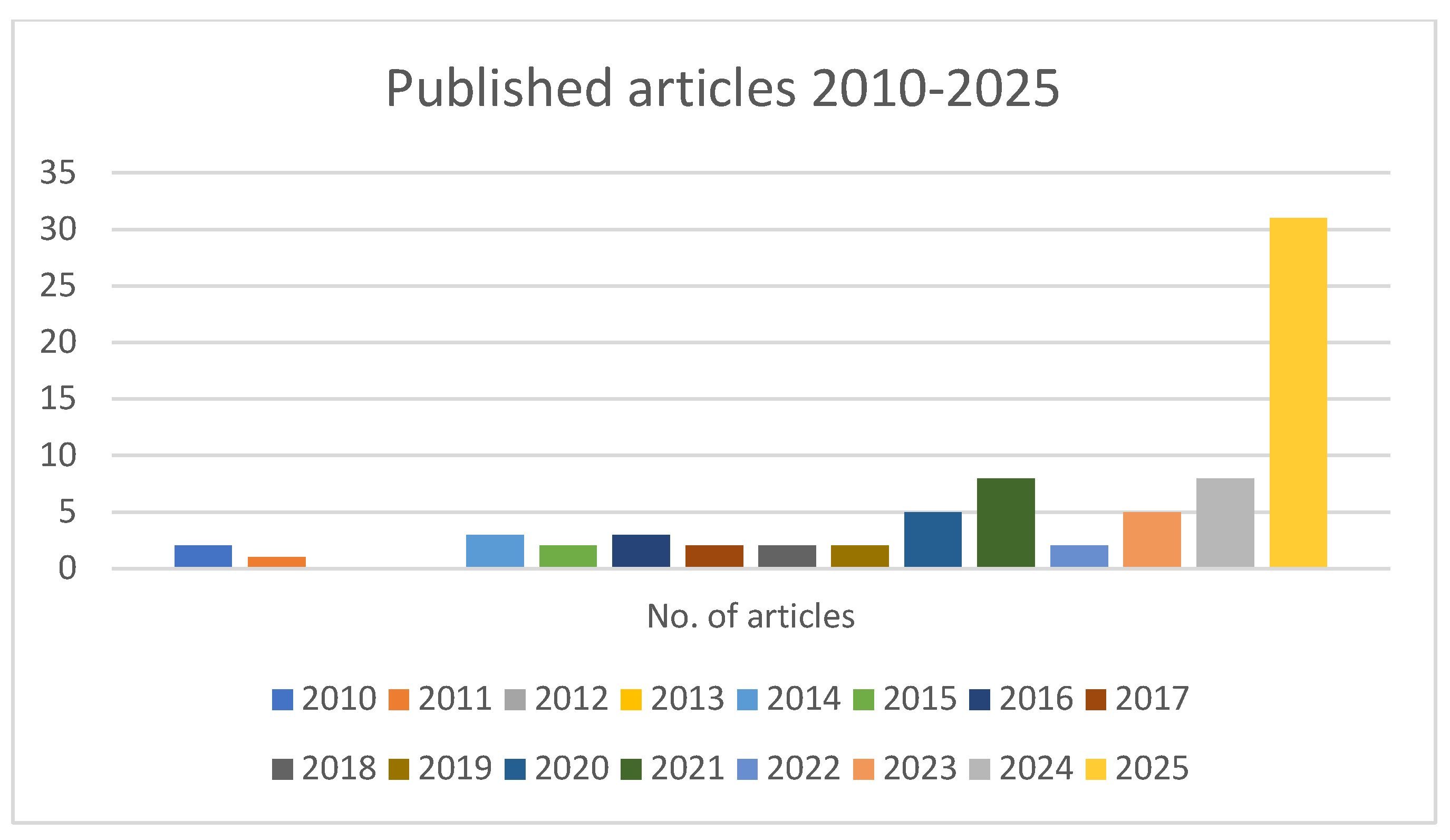
Figure 2.
PRISMA Flow Diagram for Study Selection.
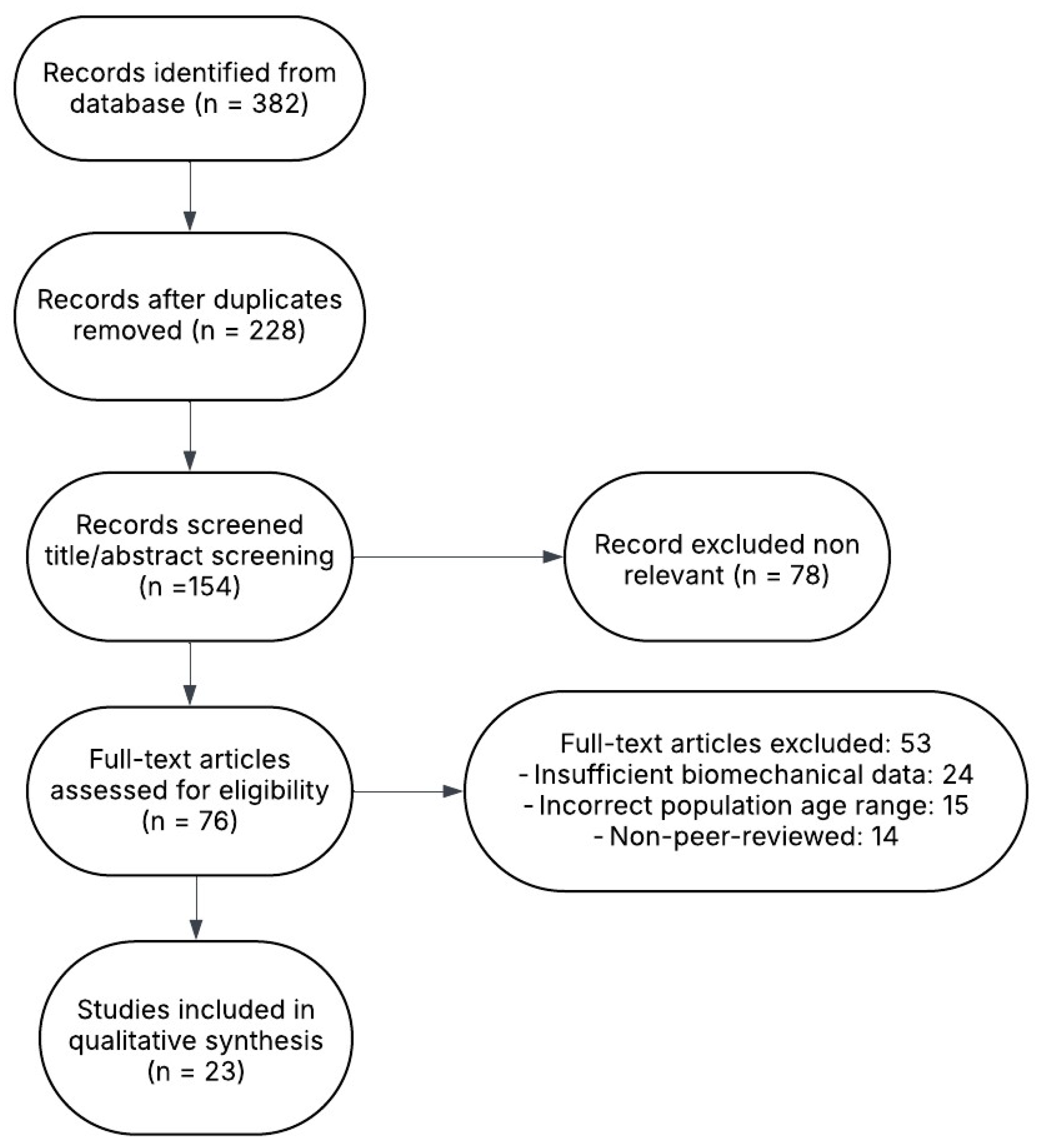
Figure 3.
Descriptive Characteristics of Included Studies.
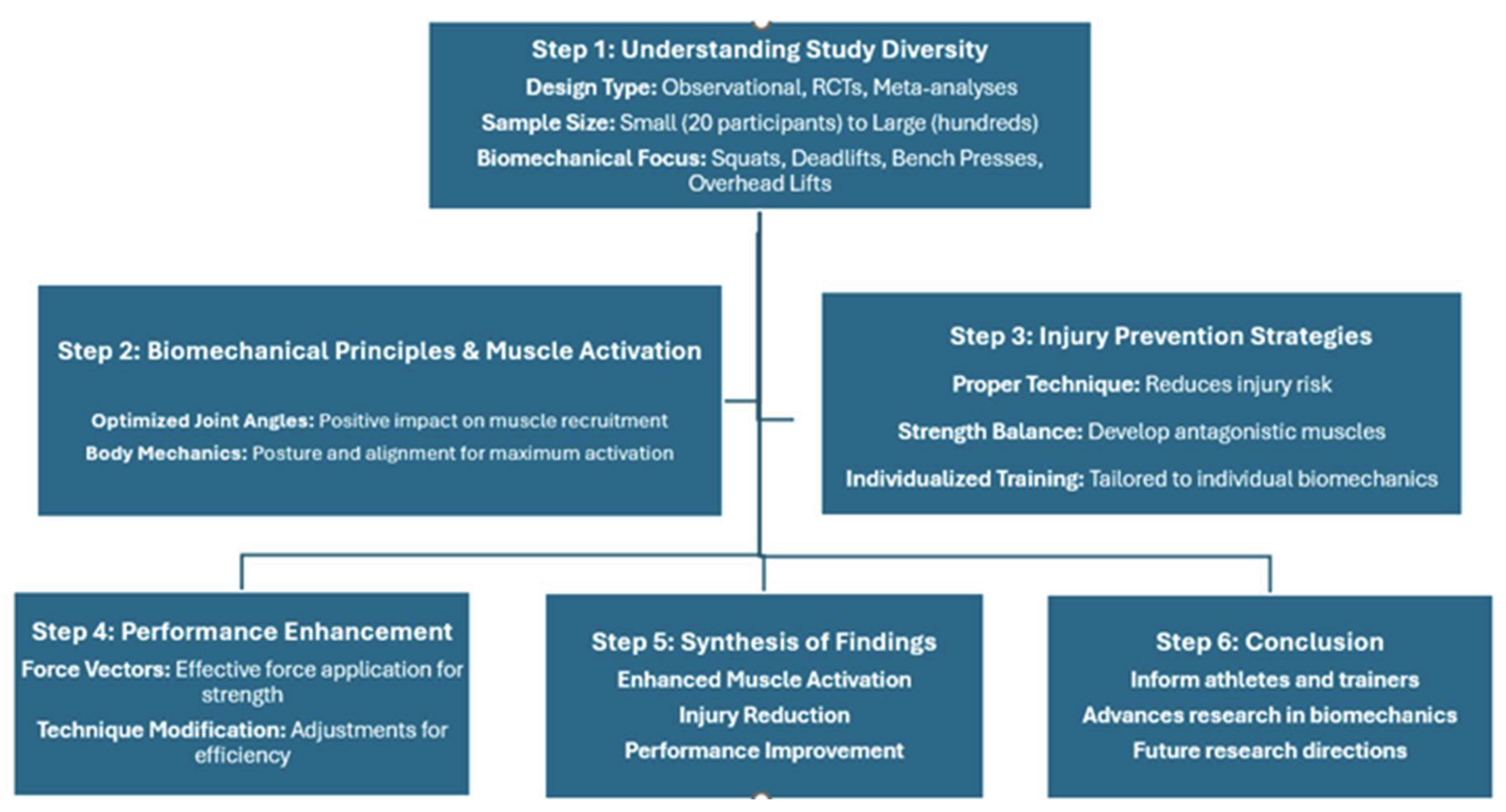

Table 1.
Summary of Inclusion and Exclusion Criteria.
| Criteria Type | Criteria Description |
|---|---|
| Inclusion Criteria | - Studies on bodybuilding, powerlifting, or resistance training. - Focus on biomechanical aspects (e.g., muscle hypertrophy, joint kinematics, repetition tempo, training volume, 1RM, EMG activity). - Participants aged ≥12 years, including both recreational and elite athletes. - Study designs: systematic reviews, RCTs, cohort studies, cross-sectional studies, narrative and mixed-method reviews. - Peer-reviewed publications from 2010 to 2025. - Reported outcomes related to injury risk, performance enhancement, or body composition changes. |
| Exclusion Criteria | - Studies on non-strength-based sports (e.g., endurance, team sports without strength focus). - Lack of biomechanical or physiological performance focus. - No measurable outcomes reported. - Participants under 12 years old (unless in controlled youth athlete contexts). - non-peer-reviewed articles, editorials, opinion papers, or those without full-text availability. |
Table 2.
Summary Table of Statistical Analysis Methods.
| Analysis Methods | Description |
|---|---|
| Statistical Analysis | Focuses on synthesizing and interpreting data from various studies included in the review, using summary statistics and meta-analysis where applicable. |
| Data Extraction | Uses a standardized data extraction form to collect study characteristics:
|
| Sensitivity Analyses | Examine the robustness of meta-analysis results by re-running analyses while excluding studies with characteristics like small sample sizes or high risk of bias to determine their impact on overall findings. |
| Sample Size Determination | To ensure that the selected studies are statistically representative of the target group, a systematic approach to sample size calculation is employed. This section outlines how the sample size is determined based on established statistical methods. |
| Statistical calculators | The sample size for studies included in the systematic review that estimates based on the following parameters:
|
| Statistical Significance | A p-value (p < 0.05) is considered statistically significant for all analyses. Confidence intervals (CI 95%) are used to estimate the likelihood of the true effect size falling within a range of values. |
| Rationale for Quality Assessment | Assessing the quality of included studies is critical for ensuring that the synthesized findings are based on reliable and valid evidence. This process reinforces the review's objective of providing evidence-based recommendations for optimizing training techniques. |
*Significant differences, p < .05.
Table 3.
Descriptive Characteristics of Included Studies.
| Study no. | Study design | Sample size | Participant demographics | Biomechanical variables analyzed & technical skills | Key outcome/ conclusions |
|---|---|---|---|---|---|
| Aasa et al., 2017 | Systematic review | 9 articles | 12-16 years weightlifters & powerlifter |
Injury incidence/hour | Injury risk is similar to other non-contact sports but lower than contact sports. |
| Aidar et al., 2021 | Randomized counterbalanced cross-over study (static & dynamic strength tests) | 12 subjects | Paralympic Powerlifting | The max. Isometric Force (MIF) with peak torque measurement (PT), the rate of force development (RFD), the fatigue index (FI), the time in the max. isometric force | Elastic bands don’t reduce strength but increase fatigue and time to max isometric strength vs. fixed resistance. |
| Alarcón-Rivera et al., 2025 | Observational cross-sectional study | 26 competitive bodybuilders | > 18 years | body composition, fat mass (FM), skeletal muscle mass (SMM) & their relationship. | Poor sleep links to higher body fat; good sleep to more muscle, highlighting sleep’s role in body composition. |
| Alves et al., 2020 | A Narrative Review (including Resistance training) | 14 articles | Competitive bodybuilding | Muscle hypertrophy, & changes in body composition | Bodybuilders use heavier loads, fewer reps, and longer rests off-season than pre-contest. |
| Androulakis et al., 2024 | A Narrative Review | 42 articles |
exercise professionals, physique sport athletes, &coaches. | maximizing muscle hypertrophy, exercise-specific kinematics, contraction type, repetition tempo, and range of motion (ROM) | Eccentric and concentric tempos vary if total rep time is 2–8 seconds. |
| Beck et al., 2025 | Systematic review of Controlled trial | 15 articles, 612 participants (425 women and 187 men) | 9.6 - 71 years | Traditional training protocols, functional training protocols | Knowing functional vs. traditional training aids in creating adaptable, evidence-based programs. |
| Bukhary et al., 2023 | A descriptive cross-sectional, questionnaire-based study | 393 participants, where all attendant weightlifters | 18-29 years | Weightlifting injuries in the last 6 months include shoulder, knee, wrist pain/inflammation, body torsion issues, ligament and muscle tears, and stripped-off injuries. | Weightlifters commonly experience musculoskeletal injuries linked to the weight lifted, with no significant connection to gender, age, or BMI. |
| David et al., 2025 | Motivation Questionnaire for Sports Activity (QMAD) & Survey on Motivations for the Absence of Sports Activity (IMAAD) | 189 participants | 18 - 58 year | Gender, Educational qualification, Residential Environment, Box Affiliation, Experience, Practice Level | Functional training is key for improving physical performance, significantly boosting capacity more than traditional methods. |
| Falconí et al., 2025 | A quantitative approach with a non-experimental correlational design | 150 participants | 18 - 35 years | cardiovascular endurance, muscle strength, recovery time | Functional foods and sports supplements significantly enhance athletes’ physical performance. |
| Franca & Harcet, (2024). | A brief review | 30 articles | Competitors bodybuilders | muscle hypertrophy, injuries happen in the squat, deadlift & bench press, incidence of injuries; muscle strain, tendinitis & cartilage wear | Preventive measures include medical check-ups, athlete education, competition safety, proper training/load, and equipment inspections. |
| Gentil et al., 2015 | Cohort | 29 young men without prior resistance training experience | > 18 years | Muscle Thickness, Peak Torque | MJ and SJ exercises are equally effective for promoting increases in upper body muscle strength &size |
| Grgic et al., 2018 | A systematic review & meta-analysis | 22 studies | middle-aged & older adults | muscular strength outcomes with different RT frequencies, training volume, exercise selection for 1 RM | Higher resistance training frequency leads to greater muscle strength gains. |
| Krzysztofik et al., 2019 | A Systematic Review |
30 articles | trained athletes | Muscle hypertrophy: changes in cross-sectional area, thickness, strength (1RM tests); mechanical tension, metabolic stress, muscle damage; training volume measured by reps. | Insufficient evidence limits guidelines for volume, intensity, and frequency of RT techniques, but well-trained athletes can incorporate advanced methods to break plateaus and prevent monotony. |
| Liu et al., 2024a | RCT | 40 participants | 18-30 years |
body composition, physical fitness components, 1RM, isokinetic muscle functions, &biomechanical properties (muscle frequency, stiffness) | Resistance training improved strength, function, and joint torque in the PSG group. |
| Paes et al., 2025 | A descriptive, quantitative, & cross-sectional study: (IPAQ) questionary | 250 adolescents | 14 - 19 years | anthropometric measurements (body mass, height, & trunk-cephalic height | Post-puberty activity linked to unexpected adolescent body image distortion risks. |
| Paoli et al, 2017 | Cohort | 36 amateurs | 23-33 years | Body Composition, Max. strength (with 1 RM), Aerobic Power (VO₂max) | RT with MJ exercises improves strength & VO₂max more than SJ, with no body composition differences. |
| Rocu-Gómez et al., 2025 | A mixed-methods design | 21 students | 16-18 years | Satisfaction/ dissatisfaction, information about body identity | Students favor multidisciplinary approach; teacher emphasizes emotional work for prevention and support. |
| Rukstela et al., 2023 | Cohort | 33 Bodybuilding coaches | male and female bodybuilders | protein/kg bodyweight, Meal frequency/day, Intensity of Cardiovascular Exercise ((LISS; MISS & HIIT); cardiovascular exercise duration (min)/week, supplements: Creatine, caffeine, omega 3, bergamot, hormonal factors |
Findings reveal coaching decision patterns in bodybuilding and highlight gaps needing further research. |
| Saeterbakken et al., 2021 | A within-subjects crossover experimental design | 28 men recreational, resistance-trained, & power lifters | > 18 years | 6-RM, lifting time, EMG activity between the 3 grip widths (narrow, medium & wide) | Grip width influences 6-RM loads and muscle activity, notably between wide and narrow grips. |
| Tung et al., 2024 | Systematic review | 17 articles | weightlifting & powerlifting | period prevalence of injuries during competitions, incidence injuries (hours of training) | Weightlifting showed competition injuries; powerlifting had low incidence but high training-impairing pain. |
| Vargas Molina et al., 2025 | Non-randomized longitudinal study. | 17 young men | aged 18-35) with ≥3 years of training experience | Assessment of 1RM. Body composition, | Long-term trained individuals show little FFM gain after 15 months unsupervised; expert guidance is crucial for progress. |
| Yana-Salluca et al., 2025 | A quantitative, non-experimental, predictive design | 866 university students | > 17 years | body appreciation, motivation for physical activity | Body appreciation and motivation strongly predict university students’ eating habits. |
| Zheng et al., 2025 | A systematic review & meta-analysis (with RCT studies) | 19 articles with 28,176 subjects | Young athletes with sports experience | Exercise duration (min), frequences (times/week), program length (weeks) | Training interventions effectively reduce athletes’ knee injury risk. |
Disclaimer/Publisher’s Note: The statements, opinions and data contained in all publications are solely those of the individual author(s) and contributor(s) and not of MDPI and/or the editor(s). MDPI and/or the editor(s) disclaim responsibility for any injury to people or property resulting from any ideas, methods, instructions or products referred to in the content. |
© 2026 by the authors. Licensee MDPI, Basel, Switzerland. This article is an open access article distributed under the terms and conditions of the Creative Commons Attribution (CC BY) license (http://creativecommons.org/licenses/by/4.0/).
Copyright: This open access article is published under a Creative Commons CC BY 4.0 license, which permit the free download, distribution, and reuse, provided that the author and preprint are cited in any reuse.


