

Submitted:
04 March 2026
Posted:
05 March 2026
You are already at the latest version
Abstract
Forest fires in the Amazon rainforest pose a critical environmental challenge, with impacts on biodiversity, atmospheric composition, and climate regulation. Fire activity has intensified in recent decades due to climate variability and increasing anthropogenic pressure, raising concerns about a potential shift of the Amazon from a carbon sink to a carbon source. This study analyzes the spatial and temporal variability of fire activity across the Amazon basin, with a focus on the Brazilian region, over the period 2001–2022. The analysis is based on satellite-derived active fire data from NASA’s Fire Information for Resource Management System (FIRMS), obtained from the Moderate Resolution Imaging Spectroradiometer (MODIS) and the Visible Infrared Imaging Radiometer Suite (VIIRS). Fire Radiative Power (FRP) is used as a proxy for fire intensity and combustion processes. The observed increase in fire activity post-2012 is primarily attributed to the deployment of the VIIRS sensor, which offers superior sensitivity for detecting small-scale and low-intensity fires Pronounced peaks of fire activity are observed in 2004, 2005, 2007, and after 2019. Statistical analyses reveal strong interannual variability and cyclical behavior in FRP, linked to variations in drought conditions, precipitation, land-use change, and environmental policy. Overall, the study highlights the value of multi-sensor satellite observations for long-term fire monitoring on the Amazon.
Keywords:
brazilian amazon
; fire activities
; remote sensing
; satellite monitoring
1. Introduction
The Amazon Basin is a vast region of South America dominated by the Amazon rainforest, the largest tropical rainforest on Earth. This ecosystem hosts exceptional biological diversity and plays a fundamental role in regulating global biogeochemical cycles, atmospheric circulation, and climate at both regional and global scales [1]. At the same time, the Amazon is strongly shaped by social, economic, and political processes, as land-use decisions and environmental policies directly influence forest conservation and degradation.
Over recent decades, deforestation has emerged as one of the principal threats to the Amazon biome. Forest loss is primarily driven by agricultural expansion, livestock production, land grabbing, land speculation, unsustainable logging, and poorly planned infrastructure development [2]. These processes have altered extensive forest areas, increased landscape fragmentation and reduced ecosystem resilience.
Fire has become an increasingly important disturbance factor in the Amazon. During the dry season, typically extending from June to November, fires are widely used for land clearing and agricultural management. However, climate variability and recurrent droughts have enhanced forest flammability by reducing vegetation moisture and increasing fuel availability [3]. Extreme drought events, such as those recorded in 2005 and 2010, were associated with large-scale climate anomalies and widespread fire activity across the basin [4]. Nevertheless, fire occurrence does not always scale linearly with drought severity, indicating the influence of additional non-climatic drivers. Fires release substantial amounts of greenhouse gases and aerosols, intensify climate–fire feedback, and accelerate forest degradation, raising concerns that the Amazon could shift from a carbon sink to a net carbon source [2,5,6].
Since the mid-1990s, the frequency of extreme drought events in the Amazon has increased, accompanied by rising fire activity and associated emissions, with pronounced ecological and economic impacts, particularly in Brazil [4,7]. Understanding how fire regimes respond to the combined effects of climate variability and human pressure is therefore essential for assessing ecosystem resilience and supporting effective mitigation and land management strategies.
Satellite remote sensing provides an indispensable means of monitoring fire activity across large and inaccessible regions such as the Amazon. Fire detection and characterization rely primarily on observations from polar-orbiting satellites operated by the National Aeronautics and Space Administration (NASA) and partner agencies. NASA’s Fire Information for Resource Management System (FIRMS) (https://firms.modaps.eosdis.nasa.gov/, accessed May 2023) distributes near real-time active fire data derived from the Moderate Resolution Imaging Spectroradiometer (MODIS) and the Visible Infrared Imaging Radiometer Suite (VIIRS). MODIS instruments aboard the Terra and Aqua satellites have enabled global fire monitoring since the early 2000s, while VIIRS sensors aboard Suomi-NPP and NOAA-20 ensure data continuity with improved spatial resolution and enhanced sensitivity to small and low-intensity fires [7,8].
Previous studies have evaluated MODIS and VIIRS fire products in terms of detection performance and estimates of Fire Radiative Power (FRP). Although both sensors capture consistent temporal patterns, differences in spatial resolution and detection algorithms lead to systematic differences in FRP estimates [8,9]. The combined use of MODIS and VIIRS thus enables a more comprehensive characterization of fire activity across heterogeneous land-cover types and fire regimes.
In this study, fire activity in the Amazon rainforest is analyzed for the period 2001–2022 using active fire data from MODIS and VIIRS distributed through NASA’s FIRMS platform. Fire activity is characterized in terms of frequency (number of detected events) and intensity, quantified using FRP. To investigate the role of climate variability, satellite-based precipitation data from the Global Precipitation Measurement (GPM) IMERG product are also employed, allowing assessment of precipitation anomalies and drought conditions in relation to fire activity.
The main objective of this study is to characterize the spatial and temporal patterns of fire activity in the Amazon over the past two decades and to evaluate the relative influence of climatic variability and non-climatic factors. Particular attention is given to periods of extreme fire activity, including the drought years of 2005 and 2010 and the recent period from 2019 to 2021, during which high fire frequency and intensity occurred despite near-average precipitation conditions. By integrating fire counts, FRP, and precipitation data, this study aims to improve understanding of the combined role of climate and human activities in shaping fire regimes in the Amazon region.
2. Materials and Methods
Space-based remote sensing from NASA’s Earth Observing System (EOS) (https://firms.modaps.eosdis.nasa.gov/, accessed May 2023) and the Fire Information for Resource Management System (FIRMS) provides near real-time observations of Earth’s surface and plays a key role in monitoring environmental change and fire activity. FIRMS distributes active fire data derived from the Moderate Resolution Imaging Spectroradiometer (MODIS) and the Visible Infrared Imaging Radiometer Suite (VIIRS), enabling global and regional fire detection and supporting fire management and strategic monitoring efforts. In addition, precipitation data from the Global Precipitation Measurement (GPM) mission were used to examine the relationship between drought conditions and the occurrence and spread of forest fires.
2.1. Study Domain
The study area was defined to cover Brazil, which hosts most of the Amazon rainforest. Although the Amazon basin extends across several South American countries, approximately 60% of the forest is located in Brazil, making it the most representative region for analysing large-scale fire dynamics within the Amazon biome. For this reason, all satellite data used in this study were downloaded and processed considering Brazil as the geographical area of interest.
Fire activity was analyzed in relation to the main vegetation formations characterizing Brazil and the Amazon region, specifically tropical forest, savanna, and grassland ecosystems (Figure 1). These land-cover types differ markedly in vegetation structure, fuel availability, and moisture conditions, which strongly influence fire occurrence and intensity.
The spatial distribution of land-cover classes was derived from the MapBiomas dataset (https://plataforma.monitorfogo.mapbiomas.org/, accessed December 2025), which provides harmonized land-use and land-cover information for Brazil. As illustrated in Figure 1, tropical forest formations dominate the central and northern regions of the country, corresponding to the core of the Amazon biome, whereas savanna and grassland formations are primarily located in the southern and eastern transition zones. This spatial heterogeneity plays a critical role in shaping regional fire regimes and enables a more comprehensive assessment of fire activity across Brazil’s diverse ecological domains.
Table 1 illustrates which sensors and corresponding time periods will be utilized for the qualitative and quantitative analyses in the following chapters.
2.2. GPM Sensor
Annual precipitation data were obtained from the Global Precipitation Measurement (GPM) Final Run product (GPM_3IMERGHH v07), provided as time-averaged multi-satellite precipitation estimates with gauge calibration. The dataset consists of half-hourly precipitation rates at a spatial resolution of 0.1°, expressed in millimeters per hour (mm h⁻¹). For each year, mean precipitation rates were computed by averaging all half-hourly observations over the corresponding annual period.
Cumulative annual precipitation totals (mm year⁻¹) were derived by converting mean precipitation rates to annual values using appropriate temporal scaling factors (hours per day and days per year). The resulting rasters represent the total annual precipitation accumulated in each grid cell. Spatially averaged precipitation values were then calculated over the domain territory to enable consistent comparison with interannual fire activity.
The GPM mission's primary instruments are onboard the GPM Core Observatory spacecraft, jointly led by the National Aeronautics and Space Administration (NASA) and the Japan Aerospace Exploration Agency (JAXA), was launched in 2014 to provide high-resolution, near-global precipitation estimates and to ensure continuity with earlier missions such as the Tropical Rainfall Measuring Mission (TRMM, 1997–2015). The integration of multiple satellite observations within the GPM framework allows improved characterization of precipitation variability across diverse climatic regimes.
Annual precipitation data from GPM were analyzed for the period 2001–2022 to assess the influence of hydrological variability on fire activity in the area. The use of satellite-based precipitation estimates ensures spatial consistency and supports the identification of drought and wet years relevant to fire regime dynamics.
2.3. MODIS and VIIRS Sensors
Fire activity was analyzed using satellite-based products for detecting active fires, which originate from the Moderate Resolution Imaging Spectroradiometer (MODIS) and the Visible Infrared Imaging Radiometer Suite (VIIRS) and are distributed via NASA's/FIRMS web-portal. Detailed descriptions of the data products are publicly available and include information such as the latitude and longitude of the fire pixels, brightness temperature, the fire radiative power (FRP), and the detection confidence. The active fire data from MODIS were obtained from the Collection 6 Level-2 fire products (MOD14 for Terra and MYD14 for Aqua) and analyzed for the period from 1 January 2001 to 31 December 2022, with a nominal spatial resolution of approximately 1 km. The active fire data from VIIRS were retrieved from the 375 m product for active fires (VNP14IMG) and analyzed for the period from January 1, 2012, to December 31, 2022, for the Suomi-NPP and NOAA-20 platforms.
In this study, fire activity was characterized by using fire radiative power (FRP) in megawatts (MW), which is a quantitative measure of fire intensity and allows for the assessment of spatial and temporal patterns of active fires.
2.4. Fire Radiative Power
Accurate quantification of fuel consumption, trace gas emissions, and aerosol release from biomass burning is essential for understanding the global carbon cycle, land–atmosphere interactions, and weather dynamics [10]. Traditionally, fuel consumption has been estimated as the product of the burned area, pre-fire fuel load, and combustion completeness, where burned area is expressed in square meters, fuel load in kilograms per square meter, and combustion completeness as a dimensionless factor ranging from 0 to 1 [11].
An alternative approach was introduced by Kaufman [12], who proposed the rate of fire radiative energy release as a proxy for combustion rate. This concept enabled the use of Fire Radiative Power (FRP) observations from polar-orbiting satellites to characterize active fire properties [13,14,15], estimate biomass consumption and emissions of trace gases and aerosols [16,17], and infer smoke plume injection heights [18,19].
Data regarding the timing, spatial coordinates, and radiative properties of MODIS active fire pixels are stored in different formats [20]. The data currently available for download in the FIRMS web portal use Level 2 Fire Products from Collection 6 (abbreviated as MOD14 for Terra and MYD14 for Aqua), as these datasets provide the geographic and image coordinates as well as the FRP for each 1-km active fire pixel detected by MODIS. In addition, users can obtain near real-time (NRT) 375-m VIIRS active fire product (abbreviated VNP14IMG) data generated by NASA's Land, Atmosphere Near Real-Time Capability for EOS (LANCE) system. The former is also distributed in formats compatible with GIS systems (e.g., ASCII, shapefiles). VIIRS NRT active fire data is intended primarily for use in fire management applications that require access to low-latency data. However, users are cautioned that there may be gaps in coverage resulting from temporary interruptions in the NRT data processing chain.
2.5. Quality Check
Additional quality control procedures were applied to the fire datasets to ensure the robustness of the analysis. For MODIS, fire pixel confidence is provided as a continuous metric ranging from 0 to 100% and is commonly categorized into low, nominal, and high confidence levels. The choice of a confidence threshold involves a trade-off between minimizing false detections and maximizing detection sensitivity. VIIRS active fire products use a comparable three-level confidence classification (low, nominal, and high), based on contextual and radiometric tests for pixel-level quality assessment.
In this study, only high-confidence fire detections were retained to reduce the influence of false alarms and ambiguous thermal signals. Specifically, MODIS fire pixels with confidence values exceeding 80% and VIIRS fire pixels classified as high confidence were selected, following established practice in active fire analyses [7,8,9,10,11,12,13,14,15,16,17,18,19,20,21]. In addition, Fire Radiative Power (FRP) values below 100 MW were excluded to further limit the contribution of noise and minor thermal anomalies [15]. The resulting filtered FRP dataset was used as the primary parameter to characterise fire intensity and to analyse the spatial and temporal variability of active fires across the region.
2.6. QGIS and Average Procedures
All spatial and statistical analyses presented in Chapter 3 were performed using the open source geographic information system QGIS, using data downloaded in shapefile format. This software was chosen based on the availability of the file type and its ability to manage large georeferenced data sets while performing statistical operations directly on vector layers.
The shapefiles are downloaded for each year in the specified domain and contain the date and time of acquisition, the confidence level, and the fire radiative power (FRP).
All datasets were filtered as specified in chapter 2.5 on quality control, and the statistical indicators were then calculated annually using the QGIS attribute table and field calculation tools. The following parameters were calculated for each year and sensor.
The final representation of the data was carried out by importing the data from QGIS into Excel calculation software.
3. Results
3.1. Analysis of Average Annual Precipitation with GPM Sensor
Figure 2 shows the interannual variability of average annual precipitation over Brazil, derived from the GPM IMERG Final Run dataset for the period 2001–2022, calculated as annual spatial averages over the study domain following the same procedure described in Section 2.6. Annual precipitation values range from approximately 1370 mm year⁻¹ to 1650 mm year⁻¹, illustrating the considerable variability from one year to the next throughout the study period. Higher precipitation amounts were observed in 2009 (1608 mm year⁻¹) and 2011, when the highest annual average precipitation in the entire time series (1644 mm year⁻¹) was recorded. In contrast, 2012 and 2013 were relatively dry, with the lowest annual precipitation recorded in 2013 (1373 mm year⁻¹). These dry years were followed by a partial recovery in precipitation, with values generally above 1450 mm year⁻¹ in the subsequent period. Overall, the time series does not show a monotonically increasing or decreasing trend, but instead highlights the pronounced interannual variability of precipitation in the region.
This variability aligns with previous studies highlighting the pronounced interannual fluctuations of precipitation, driven by large-scale atmospheric and oceanic processes, including variations in moisture transport and circulation patterns [4,22]. Mean annual precipitation across the basin is approximately 2200 mm yr⁻¹, with higher totals exceeding 3000 mm year⁻¹ in the northwestern Amazon and lower values of ~ 1000 – 1500 mm year⁻¹ in the southern and eastern regions [23].
The use of satellite-based precipitation estimates from the GPM mission provides spatially consistent coverage of the entire study area and provides a reliable basis for analyzing the role of hydrological variability in driving fire activity, as explained in the following sections.
The alternation between wetter and drier conditions at the basin level is also consistent with the major climatic anomalies described in the literature. In particular, Marengo and Espinoza [4] identified the years 2005, 2010, and 2015–2016 as severe drought events in the Amazon region, associated with significant hydrological and ecological impacts. Although these events are not always fully captured by annual precipitation averages at the watershed level, they represent well-documented extreme hydroclimatic conditions that strongly influence ecosystem functioning and vulnerability to fires.
3.2. Qualitative Analysis of Firepower
To complement the quantitative analyses presented below, a qualitative assessment of the spatial distribution of active fires was carried out. This analysis used monthly fire maps derived from FIRMS. Although the figures displayed extend over a broad portion of the Amazon basin, all fire detections refer exclusively to the Brazilian domain, consistent with the study area defined in Section 2.1.
Clearly, this qualitative assessment was conducted for the entire period from 2001 to 2022, and, for that reason, the shown images refer to specific months. In particular, in the dry-season core months (August, October, and December), when fire activity typically reaches its maximum extent. For each selected month, fire distributions were examined across the full time series, in order to identify recurring spatial patterns and periods of enhanced fire activity. The figures presented in this section therefore represent illustrative examples, selected to highlight years characterised by particularly significant fire events for each month, rather than an exhaustive display of all years.
Clearly, from 2001 to 2011, only MODIS data were available, while observations from VIIRS have also been available since 2012, resulting in an increased number of detected fire events [7]. Accordingly, Figure 3 and Figure 4, and Figure 5 show representative examples of years with particularly high fire frequencies. These maps highlight the areas most affected by fire activity, while a quantitative comparison of fire occurrences and the analysis of temporal trends are presented in Section 3.3.
Figure 3 (a, b, c) shows the distribution of fires detected in August 2004, 2017, and 2021. The comparison shows that a peak in fire activity was already recorded in 2004 based only on MODIS data (Figure 3a), while 2017 and 2021 report a renewed increase in fires, partly due to the improved detection capabilities of VIIRS (Figure 3 b, c), which was introduced after 2012. In particular, Figure 3(b) and Figure 3(c) show a significant increase in fires compared to Figure 3(a) in areas classified as grassland or managed open vegetation in Figure 1, which can be partly explained by the addition of VIIRS data after the launch of the SUOMI spacecraft in 2012.
Figure 4 shows the distribution of fires detected in October for the years 2004, 2017, and 2021. The comparison indicates that October 2004 already recorded a remarkably high number of events, even though only MODIS data were available. In contrast, the years 2017 and 2021 highlight a renewed intensification of fire activity, consistent with the increasing detections from VIIRS. These maps emphasize that October is typically one of the peak months for fire activity, with events concentrated in the transition zones between tropical forest and grassland land type.
Figure 5 illustrates the distribution of fires detected in December for the years 2017, 2019, and 2021. Compared to August and October, December is characterized by a higher occurrence of fires in the north-eastern coastal regions of Brazil, mainly affecting non-forest and managed land-cover types. These fires are frequent but, in most cases, less intense, reflecting the prevalence of fine fuels in open and anthropogenic landscapes. Overall, this pattern highlights a clear seasonal shift in fire activity across the study area, which differs from what is observed during the core dry-season months.
The spatial distributions of fires shown in Figure 3 and Figure 4, and Figure 5 correspond to the main land cover types in the Brazilian Amazon region shown in Figure 1. Most fires are concentrated in the southern and southeastern parts of the region, particularly in areas characterized by forest edges, transitional land cover types, and landscapes affected by human intervention. In these zones, the combined effects of seasonal drought and anthropogenic stress favor medium to high fire intensity. Otherwise, the central areas with dense and humid tropical forests are generally less affected. However, prolonged droughts and human activities can still trigger severe fires, as observed in 2004, 2007, and 2010. In conclusion, the observed spatial patterns reflect the combined influence of ecological conditions, fuel availability, and human activities, and this fact highlights the importance of an integrated approach to analysing regional fire regimes.
3.3. Quantitative Analysis of Firepower
The quantitative analysis of Fire Radiative Power (FRP) associated with fire activity in the Amazon Rainforest was carried out using statistical indicators: maximum, mean, median, and standard deviation values. These metrics were used to characterize both the magnitude and variability of fire intensity.
Figure 6 presents the interannual variability of FRP derived from MODIS observations for the period 2001–2022, combining annual mean FRP values, maximum FRP values, and the associated standard deviation.
The time series indicates strong variability in fire intensity over the years. Mean and maximum FRP values tend to be higher in the early 2000s, while 2010 clearly stands out as one of the most intense fire years in the entire record. This year is notable not only for the high FRP values, but also for the overall spread of fire activity.
The standard deviation remains high throughout the entire period. This suggests that FRP values often vary greatly within a single year and that low- and high-intensity fires occur simultaneously in the study area. In other words, fire activity is not uniform either spatially or in terms of intensity. This behavior is likely related to the heterogeneity of the territory. As shown in Figure 2, the study area encompasses a variety of land cover types and environmental conditions associated with different fire regimes. Fire activity is more frequently observed along the southern and southeastern parts of the basin, particularly in areas affected by forest disturbances and seasonal drought (Figure 3, Figure 4 and Figure 5). In contrast, fire intensity is generally lower in the central and wetter forest areas.
Taken together, these spatial differences help explain the large interannual variations observed in the FRP statistics derived from MODIS. They also suggest that regional characteristics and land use patterns play an important role in shaping the observed fire intensity signals.
Figure 7 shows the FRP statistics derived from VIIRS observations for the period 2012–2022, including annual averages, maximum values, and the associated standard deviation. The VIIRS time series shows significant interannual variability in both the mean and maximum FRP, with several years standing out due to relatively high fire intensity.
Compared to MODIS, the FRP values derived from VIIRS are generally lower, although the two sensors show similar temporal patterns. This behavior has already been described in the literature and can be largely explained by differences in sensor characteristics. In particular, the higher spatial resolution of VIIRS (375 m) compared to MODIS (approximately 1 km) improves the detection of small and less intense fires, but often leads to lower pixel-level FRP estimates for concurrent fire events [8,9,21]. Additional factors, such as differences in spatial sampling, spectral sensitivity, saturation effects, and viewing angle dependence, also play a role and contribute to the fact that the FRP values derived from MODIS and VIIRS cannot be considered directly interchangeable. Therefore, caution should be exercised when comparing the absolute FRP values between the two datasets.
Overall, the combined analysis of FRP statistics derived from MODIS and VIIRS underscores the strong temporal variability of fire intensity in the Brazilian Amazon. At the same time, it emphasizes the importance of considering sensor-specific characteristics and spatial heterogeneity when interpreting long-term fire activity patterns.
3.4. Qualitative Analysis of Firepower
To assess fire intensity, the total number of events detected using MODIS-FRP and VIIRS-FRP data was analyzed, and the fires were classified by grouping FRP values into 10 categories. Cumulative FRP values are reported in units of 10⁴ MW, consistently with the normalization applied in Table 2 and Table 3. Table 2 and Table 3 report, respectively for MODIS (2001–2022) and VIIRS (2012–2022), the annual number of fire events per FRP class together with the corresponding cumulative FRP values.
The MODIS-based analysis highlights marked interannual variability in cumulative FRP, with several years characterized by significantly higher fire intensity. Periods of high cumulative FRP correspond to years previously identified as major fire seasons, while years with lower cumulative values indicate reduced fire activity and/or wetter conditions. This variability reflects the combined influence of climate anomalies and land use dynamics operating on a regional scale.
For the VIIRS period (2012–2022), cumulative FRP values are generally lower than those derived from MODIS, while showing consistent interannual fluctuations (Table 3).
The distribution among FRP classes confirms the predominance of low, to moderate, intensity fires, with most detections falling within the lowest FRP ranges and only a very small percentage associated with high-intensity fires. This pattern is consistent with the typical fire regime in the Amazon basin, where most fires are related to surface burning and land management practices rather than large canopy fires.
Figure 8 shows the yearly time series of the cumulative FRP from MODIS (green bars) and VIIRS (blue bars) retrievals averaged over the study area.
A direct comparison between MODIS and VIIRS during the overlapping period shows that the two sensors display similar temporal patterns in cumulative FRP. However, clear differences in magnitude are also evident. These differences are mainly linked to sensor-specific characteristics, especially spatial resolution and fire detection algorithms.
VIIRS, with its finer spatial resolution of 375 m, is more sensitive to small and low-intensity fires. MODIS, with a coarser spatial resolution of about 1 km, instead tends to report higher FRP values for coincident fire pixels. This effect is largely related to spatial aggregation within the MODIS pixel and has been widely discussed in previous studies [8,9,15,21].
Looking again at Figure 6 and comparing it with Figure 8, it can be seen that years characterized by high maximum FRP values also tend to have a high cumulative FRP. However, while Figure 6 highlights the intensity of the most extreme events, Figure 8 reflects the overall contribution of all fire classes. This difference allows for a clearer distinction between isolated episodes of high intensity and years dominated by widespread fires of moderate intensity.
Looking at the results as a whole, the class-based FRP analysis confirms that fire intensity in the Amazon is highly variable, both in time and across space. From this analysis, this variability does not appear to be driven by a single factor. Rather, it reflects the combined influence of hydroclimatic variability and land-use dynamics, particularly in areas affected by deforestation and sustained human pressure. Similar conclusions have been reported in different studies on Amazonian fire regimes, which highlight the interaction between climate conditions and anthropogenic processes [10,20].
3.5. Total Number of Events
The temporal evolution of the total number of fire events detected by MODIS and VIIRS over the study period are shown in Figure 9.
The temporal evolution of fire events reveals a marked variability from one year to another. The pattern indicates that fire activity is not stable over time. Probably, the trend of the total number of events responds to a combination of environmental conditions and human-related drivers that vary from year to year.
Early in the record, during the MODIS-only era, several years stand out for their high fire activity. These years are consistent with the elevated cumulative FRP values discussed in Section 3.4. They are followed by intervals during which fire activity decreases noticeably, suggesting the influence of both climatic variability and changes in land-use practices over time.
In fact, as it’s shown from 2012, the inclusion of VIIRS observations, adds further detail to the analysis. Even so, during the overlapping period, the total number of events detected by MODIS remains comparable to, or in some cases higher than, those reported by VIIRS. This is mainly related to the combined coverage of the Terra and Aqua platforms and their higher temporal sampling frequency. At the same time, VIIRS provides a more detailed picture of the spatial distribution of fire activity.
In the most recent years, fire activity shows a renewed increase, in agreement with the patterns observed in the cumulative FRP analysis. Notably, this increase also occurs in years that are not characterized by extreme rainfall deficits. This suggests that, alongside climatic factors, anthropogenic drivers such as deforestation, land clearing, and changes in land management practices are playing an increasingly important role in shaping fire occurrences in the Amazon. The combined analysis of fire counts and FRP therefore points to the coexistence of climatic and human controls on the regional fire regime [24].
3.6 Annual Cumulative Precipitation and Fire Occurrence
In Figure 10 we have reported annual average precipitation with maximum fire radiative power (FRP) values. The comparison shows a tendency for maximum FRP values to increase in years with low precipitation, although this relationship is not strictly linear.
Years with higher precipitation levels, such as 2009 and 2011, are generally associated with lower maximum FRP values recorded by MODIS. This suggests that fires could be less intense under wetter conditions. In contrast, years affected by severe hydrological anomalies, particularly 2005 and 2010, show significant peaks in maximum FRP. This behavior is consistent with the higher flammability observed during droughts and supports the previously discussed relationship between dry conditions and intense fire activity (Section 2.4).
However, this relationship is not always precise in fact, examples like 2012 and 2013 are characterized by low rainfall and the maximum FPR and event values shown (Figure 11) are not high, as in years of severe drought, this behaviour may suggest that rainfall deficit alone is not sufficient to trigger the most intense fire seasons. In fact, recent studies focus on short-term precipitation anomalies, but also on vegetation conditions, fuel accumulation and land use dynamics [5,25]
In recent years, 2020 shows relatively high maximum FRP values in both MODIS and VIIRS data, even though precipitation was close to the long-term average. This suggests that high fire intensity can occur even without severe drought conditions, indicating an increasing role of non-climatic factors.
Figure 11 compares annual precipitation with the total number of detected fires. In general, years with lower rainfall tend to coincide with a higher number of fire events. This is clearly visible in years such as 2005, 2007, and 2010, confirming what was already discussed in previous sections.
At the same time, the relationship between rainfall and fire frequency is not constant throughout the entire period. From around 2019 onwards, both MODIS and VIIRS show a new and persistent increase in the number of detected fires, even though annual precipitation remains close to average values. In other words, fire activity stays high despite the absence of extreme rainfall deficits.
In contrast to the behaviour observed for the years 2013, the years 2020 and 2021 show high and prolonged fire activity, despite rainfall values being close to the long-term average. This trend has been widely associated with increased deforestation rates and weakened enforcement of environmental regulations in recent years [2,5].
As already highlighted, the ambiguity between rainfall and the occurrence of fires suggests that factors other than climate are becoming increasingly important. This highlights the importance of considering both climate variability and land use dynamics when interpreting recent trends in fire activity.
5. Conclusions
Fires are an important part of the Earth system and have wide effects on ecosystems, biogeochemical cycles, and the atmosphere. In recent decades, these effects have become increasingly evident, as fire activity has intensified in many regions of the world, including the Amazon. In this context, satellite observations of active fires have become a key tool for studying fire dynamics over large areas and for understanding their impacts on air quality, climate processes, and ecosystem functioning.
In this study, fire activity in the Amazon rainforest was analysed using MODIS and VIIRS satellite data over a period of more than twenty years. The results confirm the value of remote sensing for capturing both the intensity and the frequency of fires in a region as large and heterogeneous as the Amazon. A clear increase in fire activity emerges after 2012, with a particularly strong intensification during the period 2019–2021. Both the spatial analysis and the statistical indicators consistently show that some of the most intense fire years occurred in 2004, 2005, 2007, 2010, and again between 2019 and 2021.
When fire activity is analysed together with precipitation data from the GPM mission, the strong influence of hydrological variability becomes evident. Severe drought years, such as 2005 and 2010, coincide with very high FRP values and an increased number of fires, in agreement with previous studies [4]. On the other hand, wetter years like 2009 and 2011 are characterized by much lower FRP values, confirming the role of rainfall in limiting fire intensity. At the same time, the lack of extreme FRP peaks in 2012–2013, despite lower precipitation compared to 2011, shows that fire behaviour cannot be explained by rainfall alone. Vegetation conditions and land-use patterns also play an important role in shaping the fire response.
The persistence of high fire intensity and frequent fire events during the period 2019–2021, even though precipitation remained close to average values, suggests a partial decoupling between climate forcing and fire activity. This points to an increasing influence of non-climatic drivers, especially in areas already affected by deforestation and repeated human disturbance, as also highlighted by recent literature.
Overall, the results indicate that fire regimes in the Amazon are controlled by the combined effects of climate variability and human pressure. Drought conditions clearly amplify fire intensity and fire occurrence, but human activities can maintain high levels of fire activity even in the absence of extreme drought. These findings highlight the need for integrated monitoring approaches that combine long-term satellite observations with climatic and land-use information [26]. Such approaches are essential to better understand ongoing changes in fire regimes and to support more effective strategies for fire mitigation and the conservation of the Amazon rainforest.
6. Patents
This research did not result in any patents.
Author Contributions
Conceptualization, M.T. and U.R.; methodology, M.T.; software, M.T. and A.C. ; validation, U.R.; formal analysis, M.T.; investigation, M.T.; resources, M.T., S.D.N. and G.P. ; data curation, M.T.; writing—original draft preparation, M.T.; writing—review and editing, U.R. and G.P.; visualization, S.D.N., S.V. and A.C.; supervision, U.R. and G.P.; project administration, G.P. All authors have read and agreed to the published version of the manuscript.
Funding
This research received no external funding.
Data Availability Statement
The datasets analyzed during the current study are publicly available. MODIS and VIIRS active fire data were obtained from NASA’s Fire Information for Resource Management System (FIRMS) (https://firms.modaps.eosdis.nasa.gov/). Precipitation data were retrieved from the Global Precipitation Measurement (GPM) IMERG Final Run product available through NASA’s Precipitation Processing System. Land-use and land-cover data were obtained from the MapBiomas Project platform (https://plataforma.monitorfogo.mapbiomas.org/). Spatial analyses were conducted using the open-source Geographic Information System QGIS. Processed datasets generated during the study are available from the corresponding author upon reasonable request.
Acknowledgments
The authors acknowledge the MODIS and VIIRS science teams and the NASA FIRMS personnel for providing open access to active fire data products. The authors also thank the NASA Global Precipitation Measurement (GPM) mission scientists for the production and dissemination of IMERG precipitation datasets. The MapBiomas Project is acknowledged for providing land-use and land-cover data used in this study. The authors gratefully acknowledge the Università Politecnica delle Marche (UNIVPM) and the National Research Council, Institute of Atmospheric Sciences and Climate (CNR-ISAC), for institutional support. The open-source Geographic Information System QGIS is also acknowledged for supporting spatial analysis and data processing. The authors would also like to thank Enrico Mancinelli for his valuable support during the final preparation of the manuscript.
Conflicts of Interest
The authors declare no conflict of interest.
Abbreviations
The following abbreviations are used in this manuscript:
| FRP | Fire Radiative Power |
| FIRMS | Fire Information for Resource Management System |
| MODIS | Moderate Resolution Imaging Spectroradiometer |
| VIIRS | Visible Infrared Imaging Radiometer Suite |
| GPM | Global Precipitation Measurements |
| IMERG | Integrated Multi-satellite Retrievals for GPM |
| EOS | Earth Observating System |
References
- Lima, C.H.R.; et al. Unraveling the role of temperature and rainfall on active fires in the Brazilian Amazon. J. Geophys. Res. Biogeosci. 2018, 123, 117–128. [Google Scholar] [CrossRef]
- Gatti, L.V.; Basso, L.S.; Miller, J.B.; et al. Amazonia as a carbon source linked to deforestation and climate change. Nature 2021, 595, 388–393. [Google Scholar] [CrossRef]
- D’Amato, G.; Vitale, C.; De Martino, A.; Viegi, G.; Lanza, M.; Molino, A.; Sanduzzi, A.; Vatrella, A.; Annesi-Maesano, I.; D’Amato, M. Climate change, allergy and asthma, and the role of tropical forests. World Allergy Organ. J. 2017, 10, 11. [Google Scholar] [CrossRef] [PubMed]
- Marengo, J.A.; Espinoza, J.C. Extreme seasonal droughts and floods in Amazonia: Causes, trends and impacts. Int. J. Climatol. 2016, 36, 1033–1050. [Google Scholar] [CrossRef]
- Aragão, L.E.O.C.; Anderson, L.O.; Fonseca, M.G.; Rosan, T.M.; Vedovato, L.B.; Wagner, F.H.; Silva, C.V.J.; Silva, C.H.L.; Arai, E.; Aguiar, A.P.D.; et al. 21st century drought-related fires counteract the decline of Amazon deforestation carbon emissions. Nat. Commun. 2018, 9, 536. [Google Scholar] [CrossRef] [PubMed]
- Nepstad, D.C.; Stickler, C.M.; Soares-Filho, B.; Merry, F. Interactions among Amazon land use, forests and climate: prospects for a near-term forest tipping point. Philos. Trans. R. Soc. Lond. B Biol. Sci. 2008, 363, 1737–1746. [Google Scholar] [CrossRef] [PubMed]
- Giglio, L.; Schroeder, W.; Justice, C.O. The collection 6 MODIS active fire detection algorithm and fire products. Remote Sens. Environ. 2016, 178, 31–41. [Google Scholar] [CrossRef]
- Li, F.; Zhang, X.; Kondragunta, S.; et al. Comparison of fire radiative power estimates from VIIRS and MODIS observations. J. Geophys. Res. Atmos. 2018. [Google Scholar] [CrossRef]
- Fu, Y.; Li, F.; Yu, H.; et al. Fire detection and fire radiative power in forests and low-biomass lands in Northeast Asia: MODIS versus VIIRS fire products. Remote Sens. 2020, 12, 2870. [Google Scholar] [CrossRef]
- Bowman, D.M.J.S.; Balch, J.K.; Artaxo, P.; Bond, W.J.; Cochrane, M.A.; D’Antonio, C.M.; DeFries, R.S.; Doyle, J.C.; Harrison, S.P.; Johnston, F.H.; et al. Fire in the Earth system. Science 2009, 324, 481–484. [Google Scholar] [CrossRef]
- Seiler, W.; Crutzen, P.J. Estimates of gross and net fluxes of carbon between the biosphere and the atmosphere from biomass burning. Clim. Change 1980, 2, 207–247. [Google Scholar] [CrossRef]
- Kaufman, Y.J.; Justice, C.O.; Flynn, L.P.; et al. Potential global fire monitoring from EOS-MODIS. J. Geophys. Res. 1998, 103, 32215–32238. [Google Scholar] [CrossRef]
- Wooster, M.J.; Zhang, Y.H. Boreal forest fires burn less intensely in Russia than in North America. Geophys. Res. Lett. 2004, 31, L20505. [Google Scholar] [CrossRef]
- Smith, A.M.S.; Wooster, M.J. Remote classification of head and backfire types from MODIS fire radiative power observations. Int. J. Wildland Fire 2005, 14, 249–254. [Google Scholar] [CrossRef]
- Ichoku, C.; Giglio, L.; Wooster, M.J.; Remer, L.A. Global characterization of biomass-burning patterns using satellite measurements of fire radiative energy. Remote Sens. Environ. 2008, 112, 2950–2962. [Google Scholar] [CrossRef]
- Ellicott, E.; Vermote, E.; Giglio, L.; Roberts, G. Estimating biomass consumed from fire using MODIS FRE. Geophys. Res. Lett. 2009, 36, L13401. [Google Scholar] [CrossRef]
- Kaiser, J.W.; et al. Biomass burning emissions estimated with a global fire assimilation system based on observed FRP. Biogeosciences 2012, 9, 527–554. [Google Scholar] [CrossRef]
- Val Martin, M.; et al. Smoke injection heights from fires in North America. Atmos. Chem. Phys. 2010, 10, 1491–1510. [Google Scholar] [CrossRef]
- Mazzoni, D.; Logan, J.A.; Diner, D.J.; Kahn, R.A.; Tong, L.; Li, Q. A data-mining approach to associate MISR smoke plume heights with MODIS fire measurements. Remote Sens. Environ. 2007, 107, 138–148. [Google Scholar] [CrossRef]
- Giglio, L.; Randerson, J.T.; van der Werf, G.R. Analysis of daily, monthly, and annual burned area using GFED4. J. Geophys. Res. Biogeosci. 2013, 118, 317–328. [Google Scholar] [CrossRef]
- Schroeder, W.; Oliva, P.; Giglio, L.; Csiszar, I.A. The new VIIRS 375 m active fire detection data product: Algorithm description and initial assessment. Remote Sens. Environ. 2014, 143, 85–96. [Google Scholar] [CrossRef]
- Mu, Y.; Jones, C. An observational analysis of precipitation and deforestation age in the Brazilian Legal Amazon. Atmos. Res. 2022, 271, 106122. [Google Scholar] [CrossRef]
- Arvor, D.; Funatsu, B.M.; Michot, V.; Dubreuil, V. Monitoring rainfall patterns in the Southern Amazon with PERSIANN-CDR data. Remote Sens. 2017, 9, 889. [Google Scholar] [CrossRef]
- Silveira, M.V.F.; Petri, C.A.; Broggio, I.S.; et al. Drivers of Fire in the Brazilian Amazon: Recent Trends and Policy Implications. Remote Sens 2020. [Google Scholar]
- Phillips, O.L.; Aragão, L.E.O.C.; Lewis, S.L.; et al. Drought sensitivity of the Amazon rainforest. Science 2009, 323, 1344–1347. [Google Scholar] [CrossRef] [PubMed]
- Alencar, A.A.C.; Arruda, V.L.S.; Silva, W.V.d.; Conciani, D.E.; Costa, D.P.; Crusco, N.; Duverger, S.G.; Ferreira, N.C.; Franca-Rocha, W.; Hasenack, H.; et al. Long-Term Landsat-Based Monthly Burned Area Dataset for the Brazilian Biomes Using Deep Learning. Remote Sens. 2022, 14, 2510. [Google Scholar] [CrossRef]
Figure 1.
Study area with the six Brazilian biomes, and its corresponding land use and land cover classes according to the MapBiomas Collection 6.
Figure 1.
Study area with the six Brazilian biomes, and its corresponding land use and land cover classes according to the MapBiomas Collection 6.
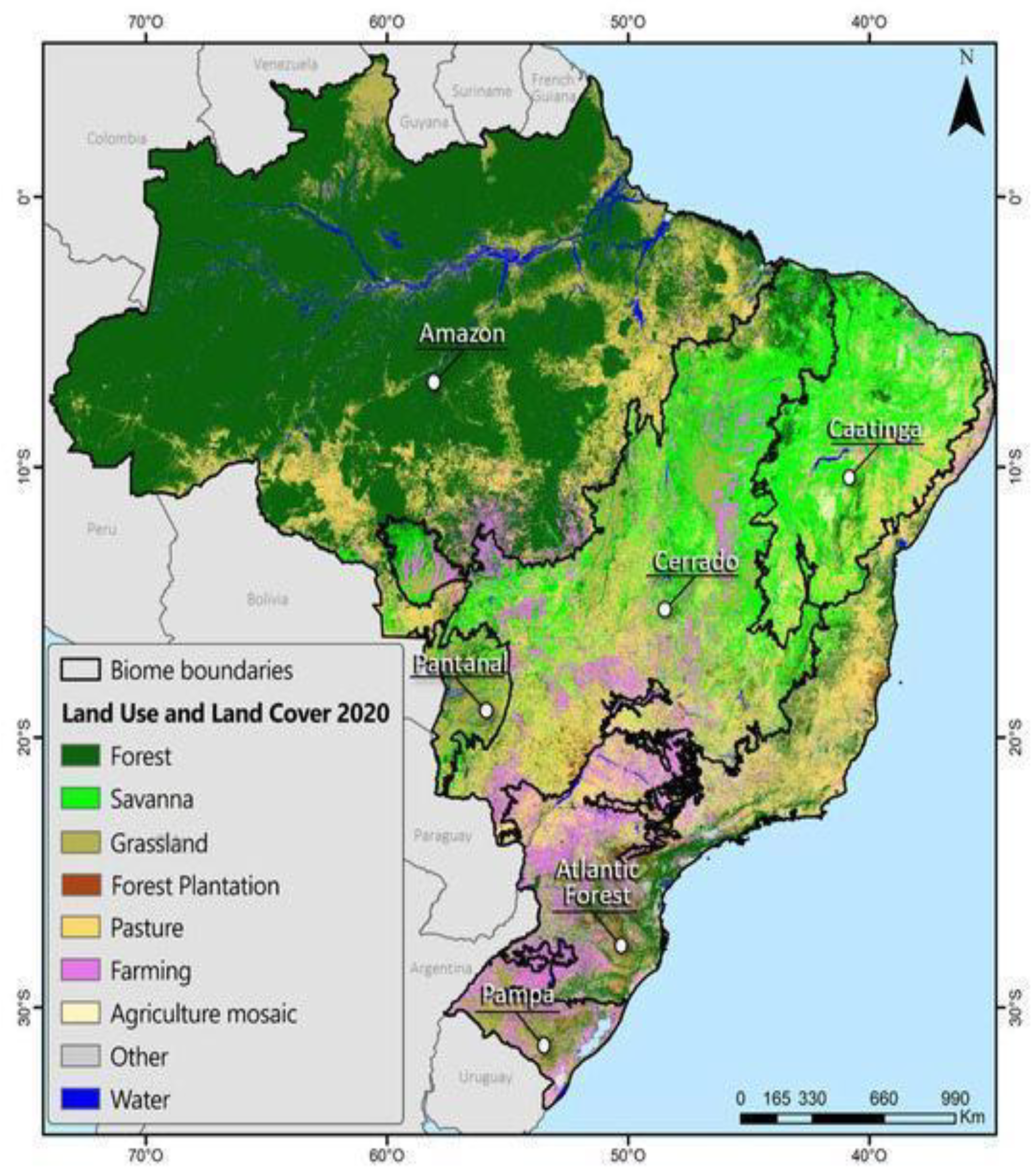
Figure 2.
Average annual precipitation for the period 2001–2022 derived from GPM data.
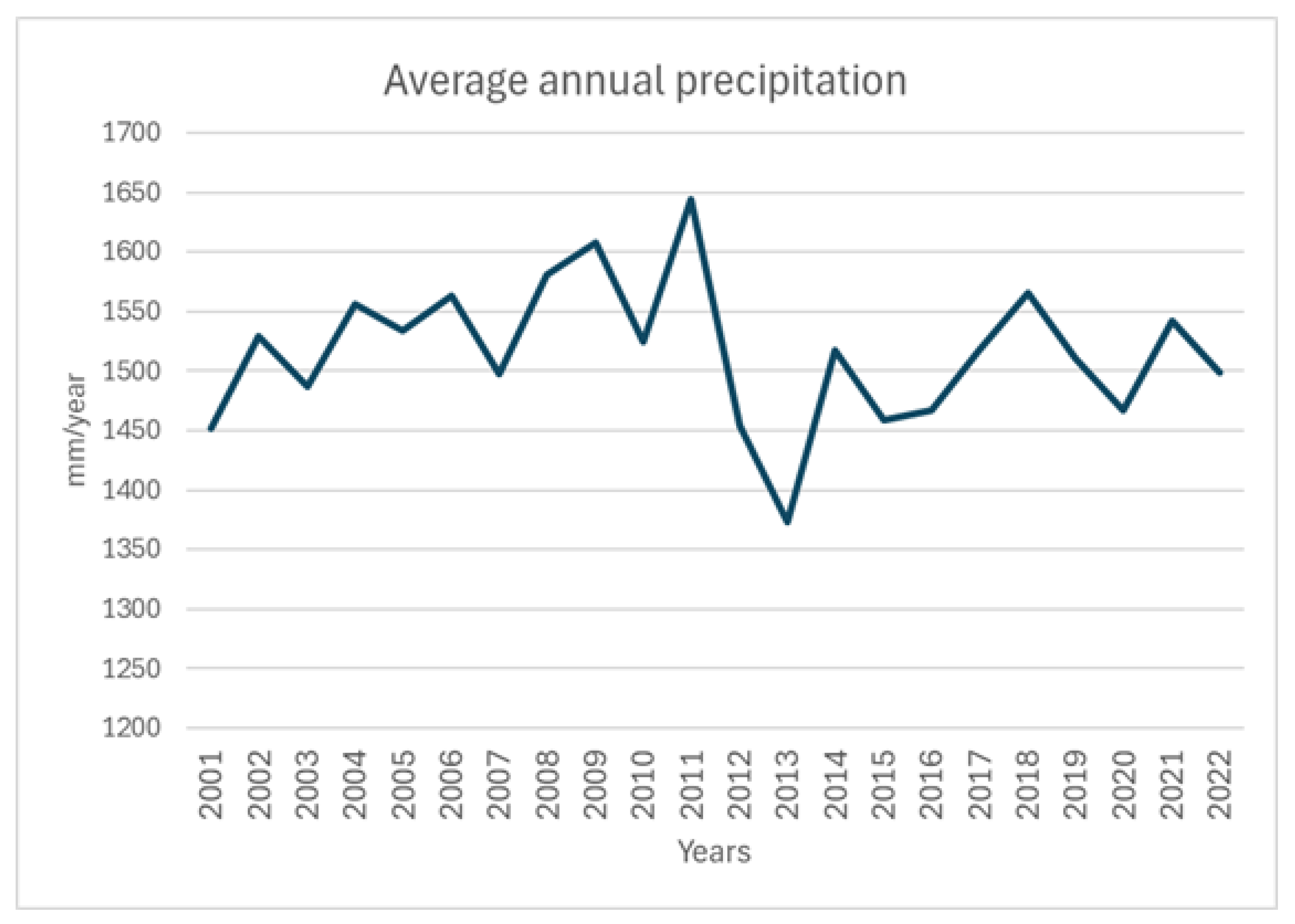
Figure 3.
Monthly fire map of Brazil for August (a) 2004, (b) 2017, and (c) 2021 from FIRMS.
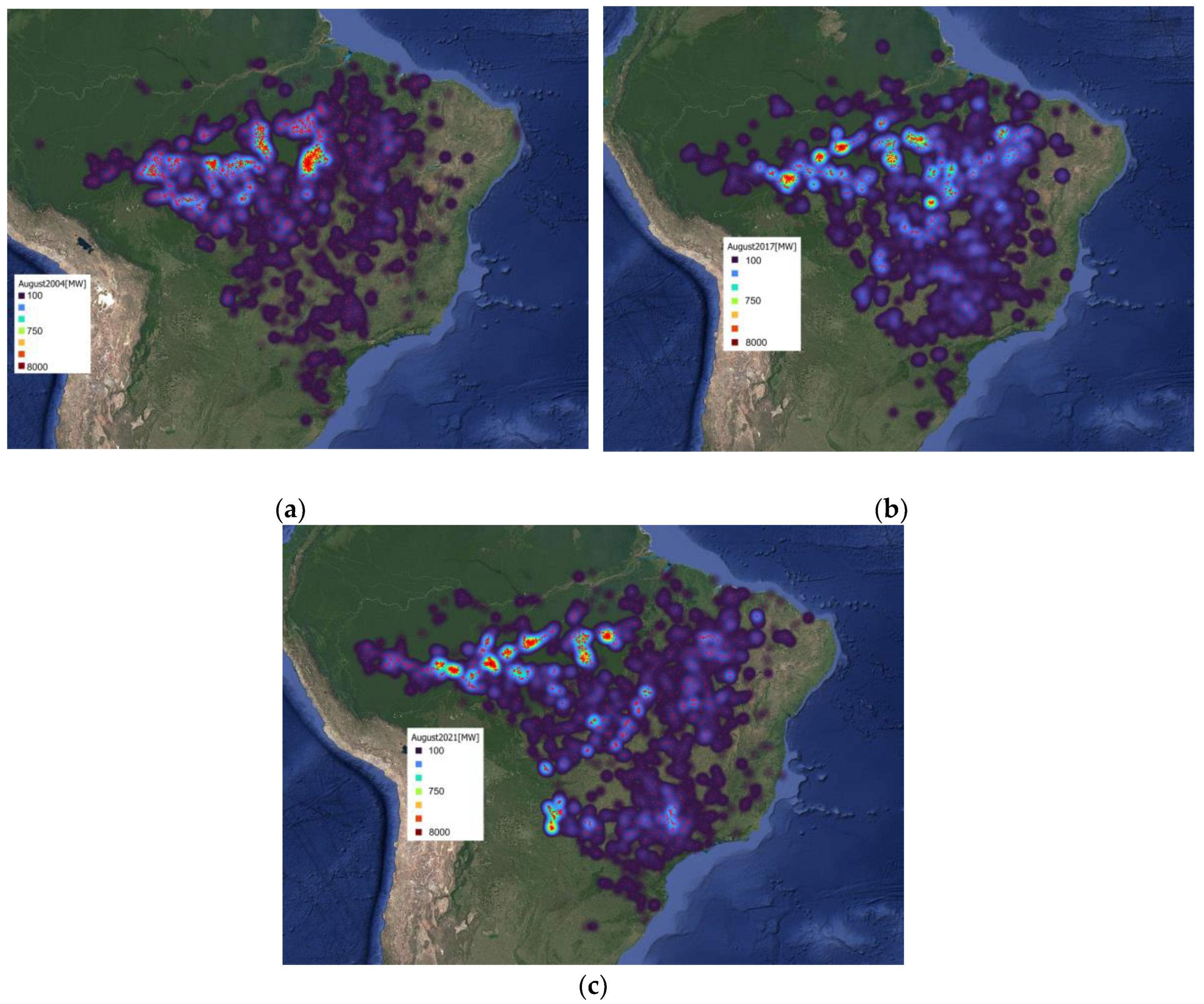
Figure 4.
Monthly fire map of Brazil for October (a) 2004, (b) 2017, and (c) 2021 from FIRMS.
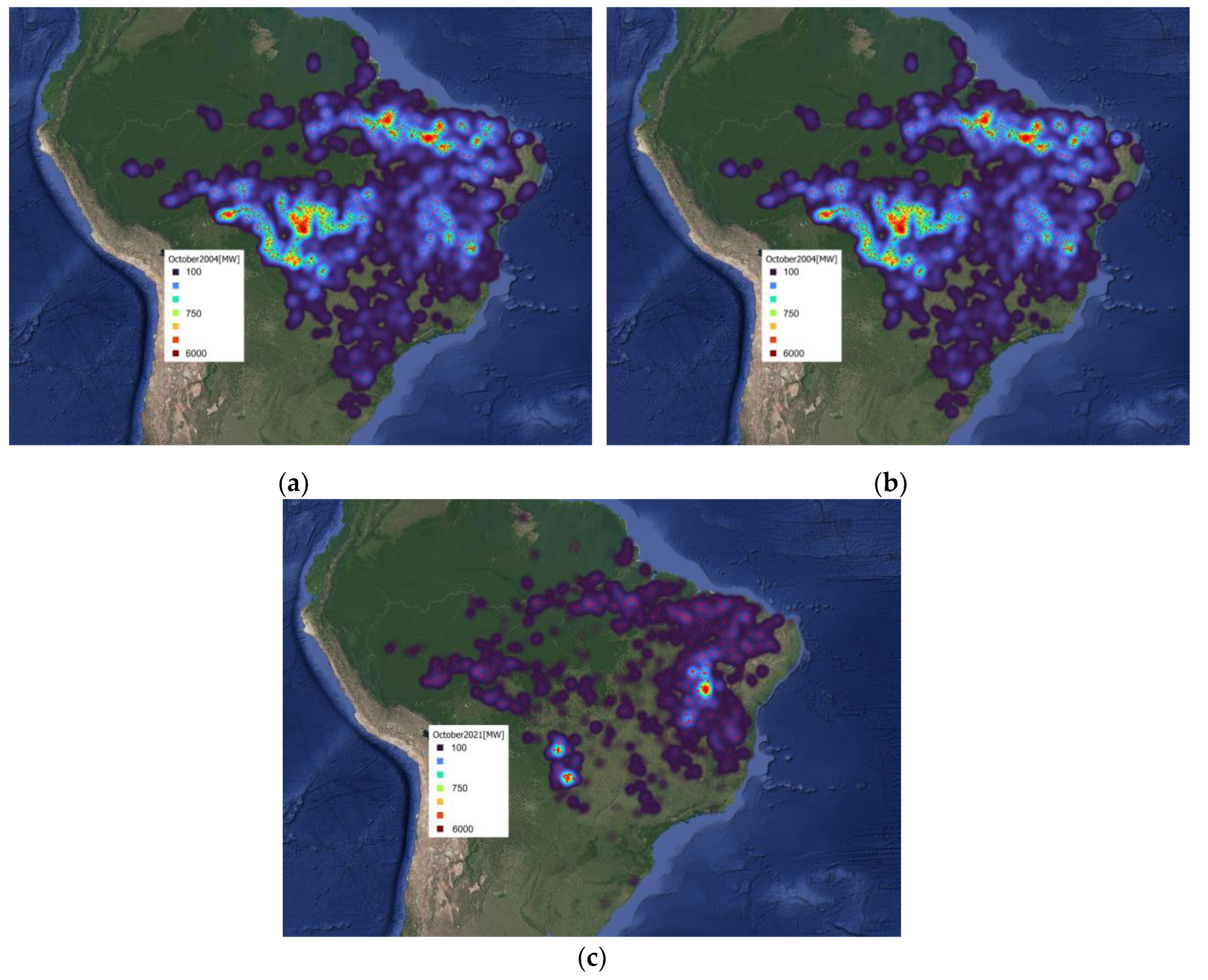
Figure 5.
Monthly fire map of Brazil for December (a) 2017, (b) 2019, and (c) 2021 from FIRMS
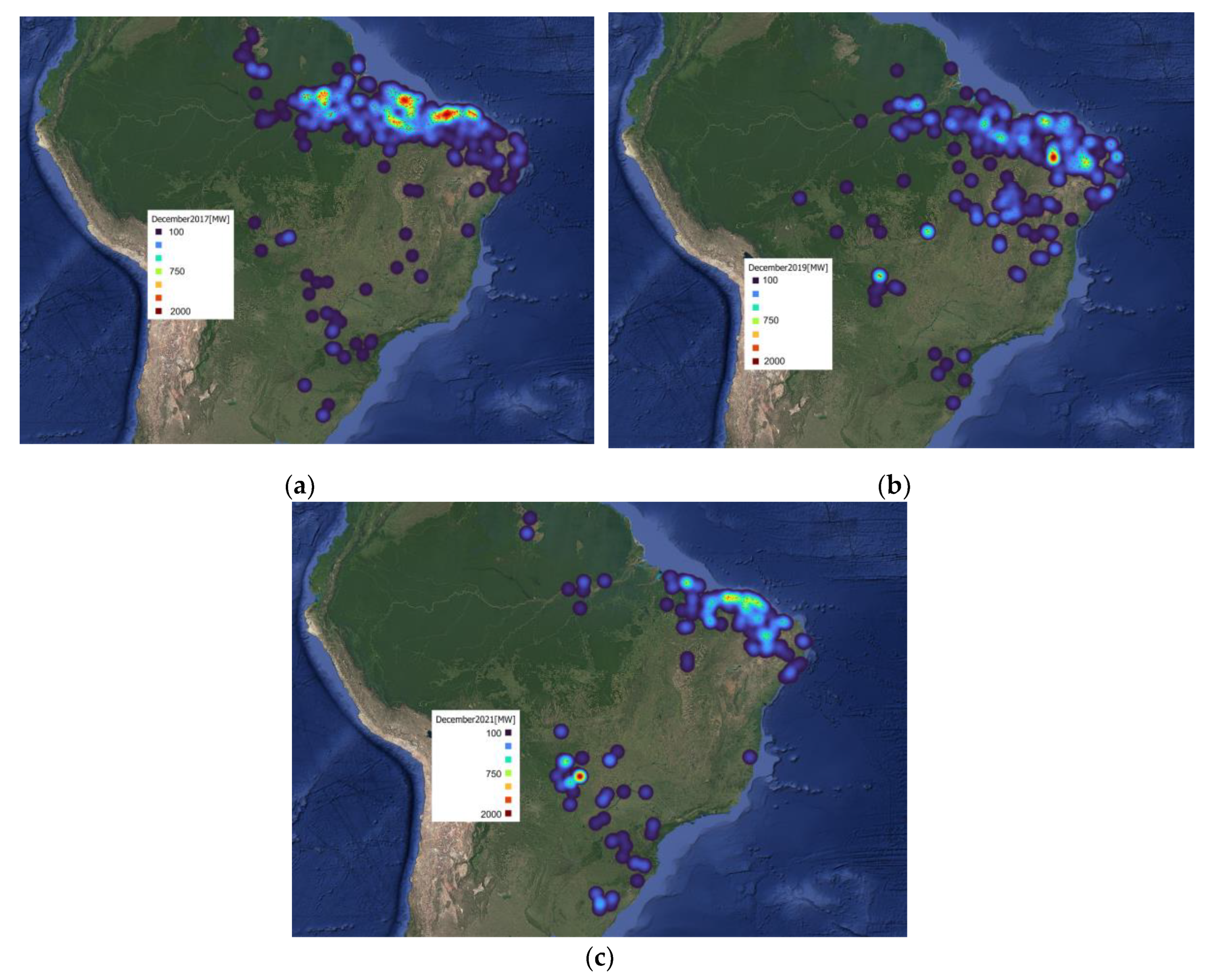
Figure 6.
Trend of yearly maximum FRP and annual mean values of FRP with relative distribution of standard deviation (MODIS)
Figure 6.
Trend of yearly maximum FRP and annual mean values of FRP with relative distribution of standard deviation (MODIS)
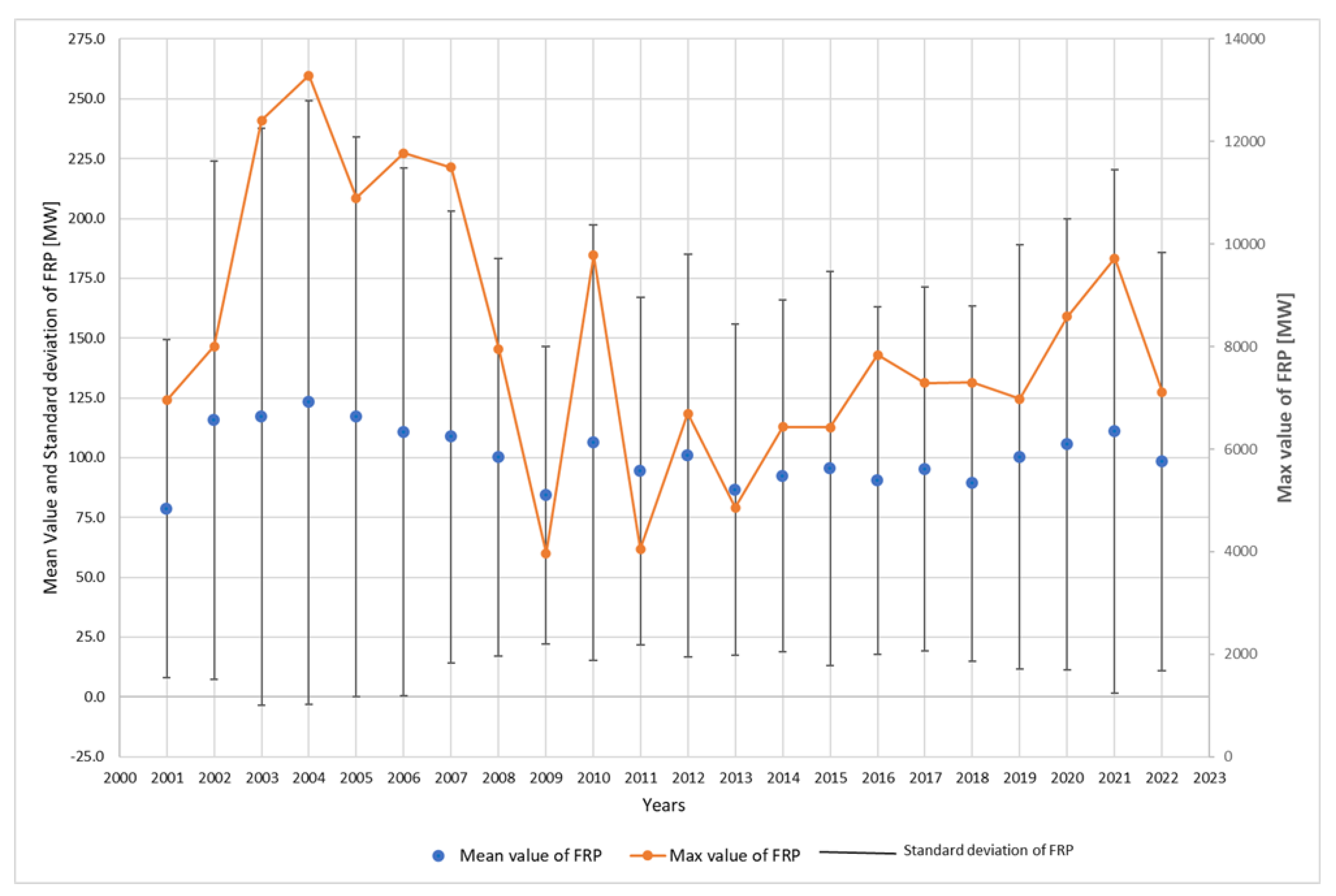
Figure 7.
Trend of yearly maximum FRP and annual mean values of FRP with relative distribution of standard deviation (VIIRS)
Figure 7.
Trend of yearly maximum FRP and annual mean values of FRP with relative distribution of standard deviation (VIIRS)
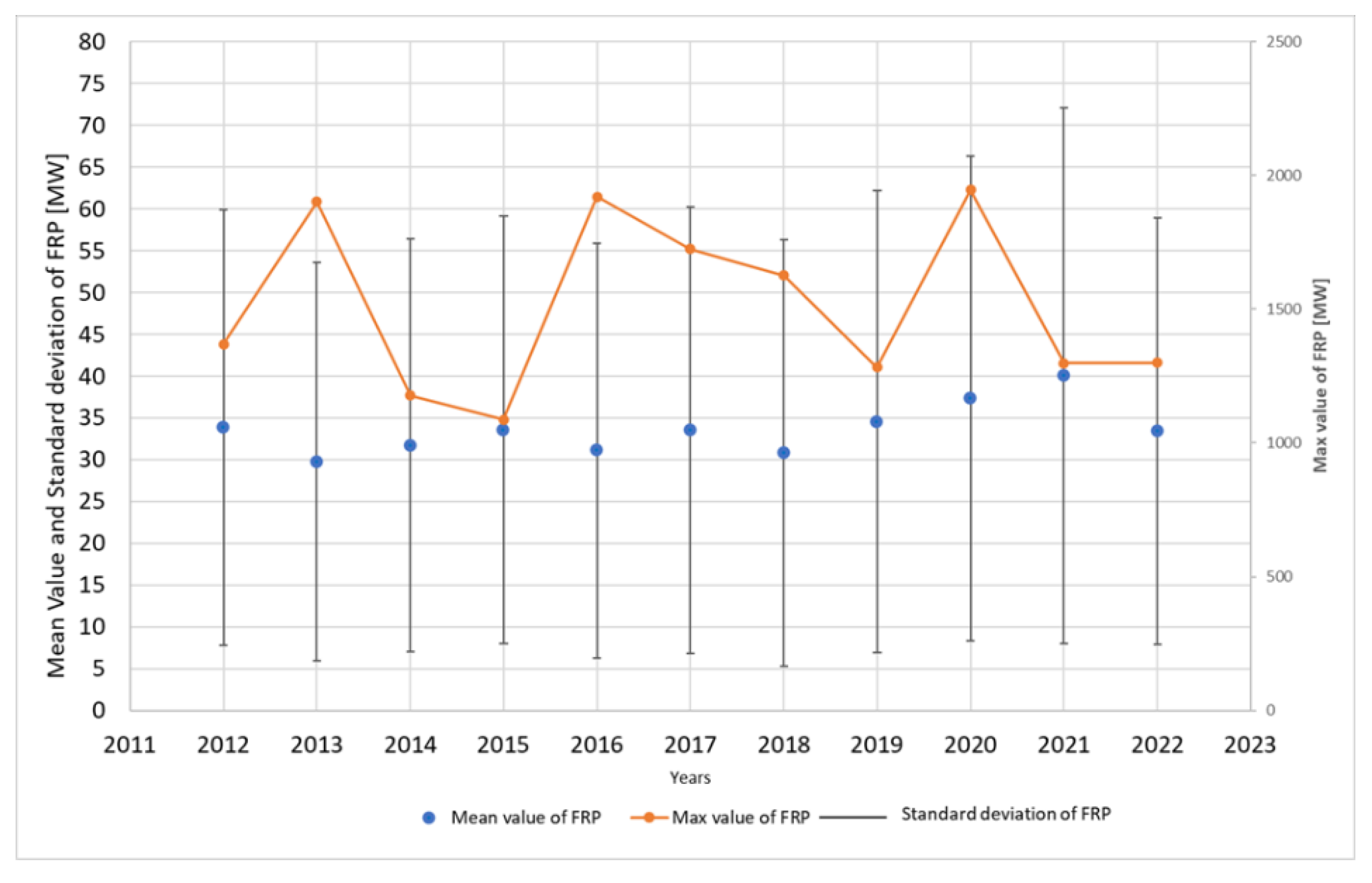
Figure 8.
Comparison between yearly trend of cumulative fire radiative power (FRP) retrieved with (a) MODIS and (b) VIIRS S-NPP over the study area from 2012 to 2022.
Figure 8.
Comparison between yearly trend of cumulative fire radiative power (FRP) retrieved with (a) MODIS and (b) VIIRS S-NPP over the study area from 2012 to 2022.
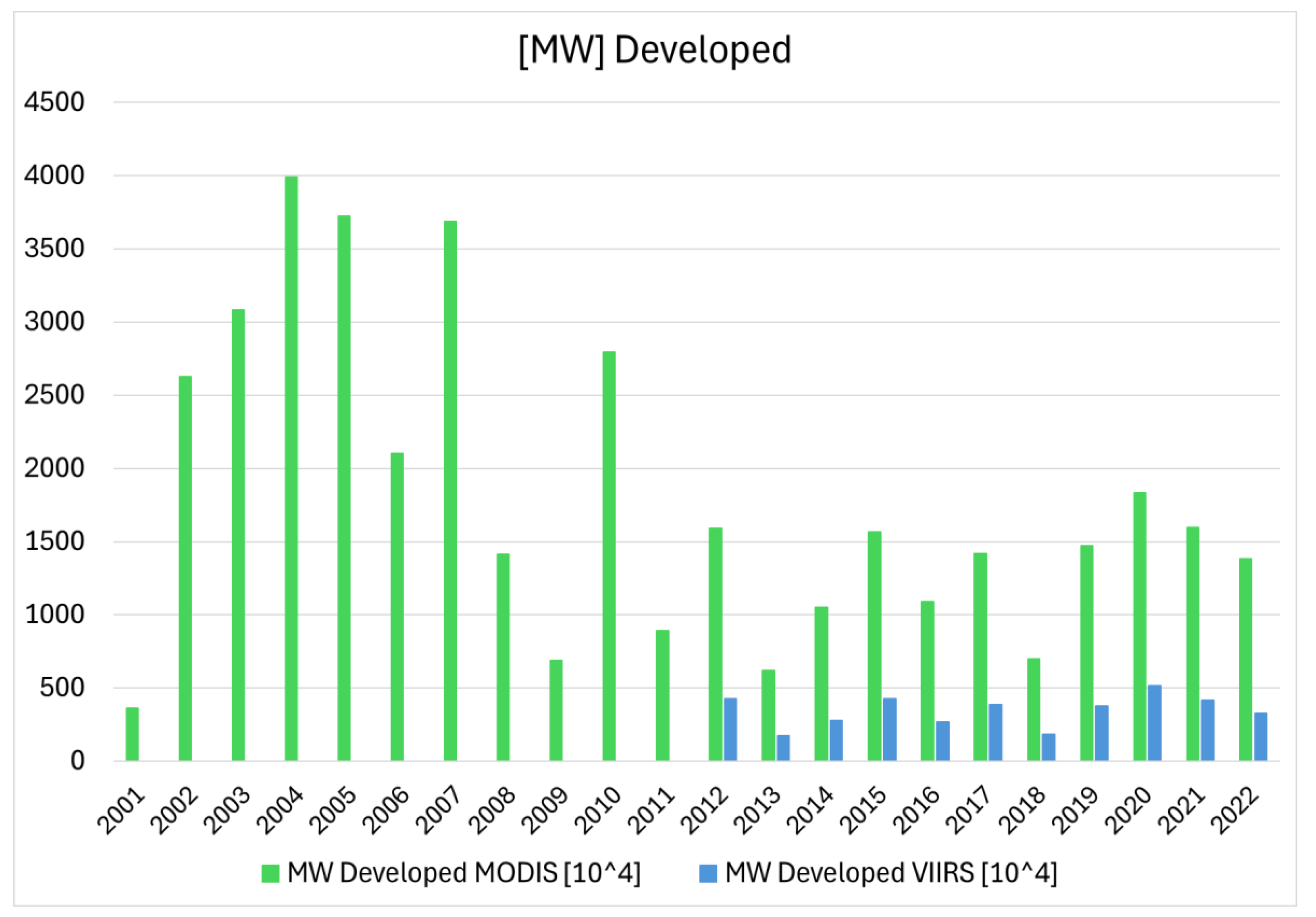
Figure 9.
Histogram describing the trend of the annual total number of events about MODIS and VIIRS FRP data
Figure 9.
Histogram describing the trend of the annual total number of events about MODIS and VIIRS FRP data
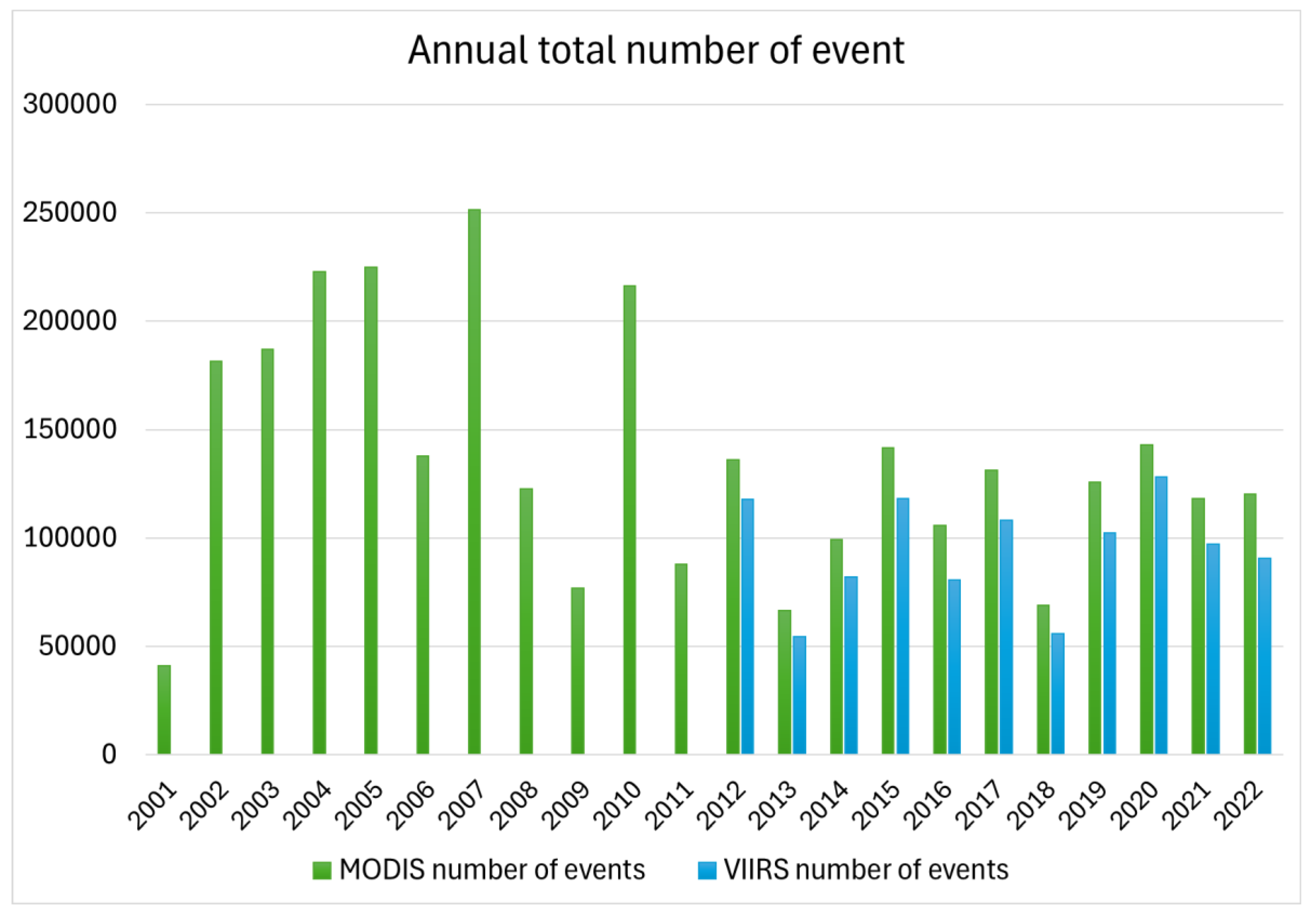
Figure 10.
Comparison between annual precipitation (left y axis) and maximum Fire Radiative Power (FRP) values (right axis) derived from MODIS (2001–2022) and VIIRS (2013–2022).
Figure 10.
Comparison between annual precipitation (left y axis) and maximum Fire Radiative Power (FRP) values (right axis) derived from MODIS (2001–2022) and VIIRS (2013–2022).
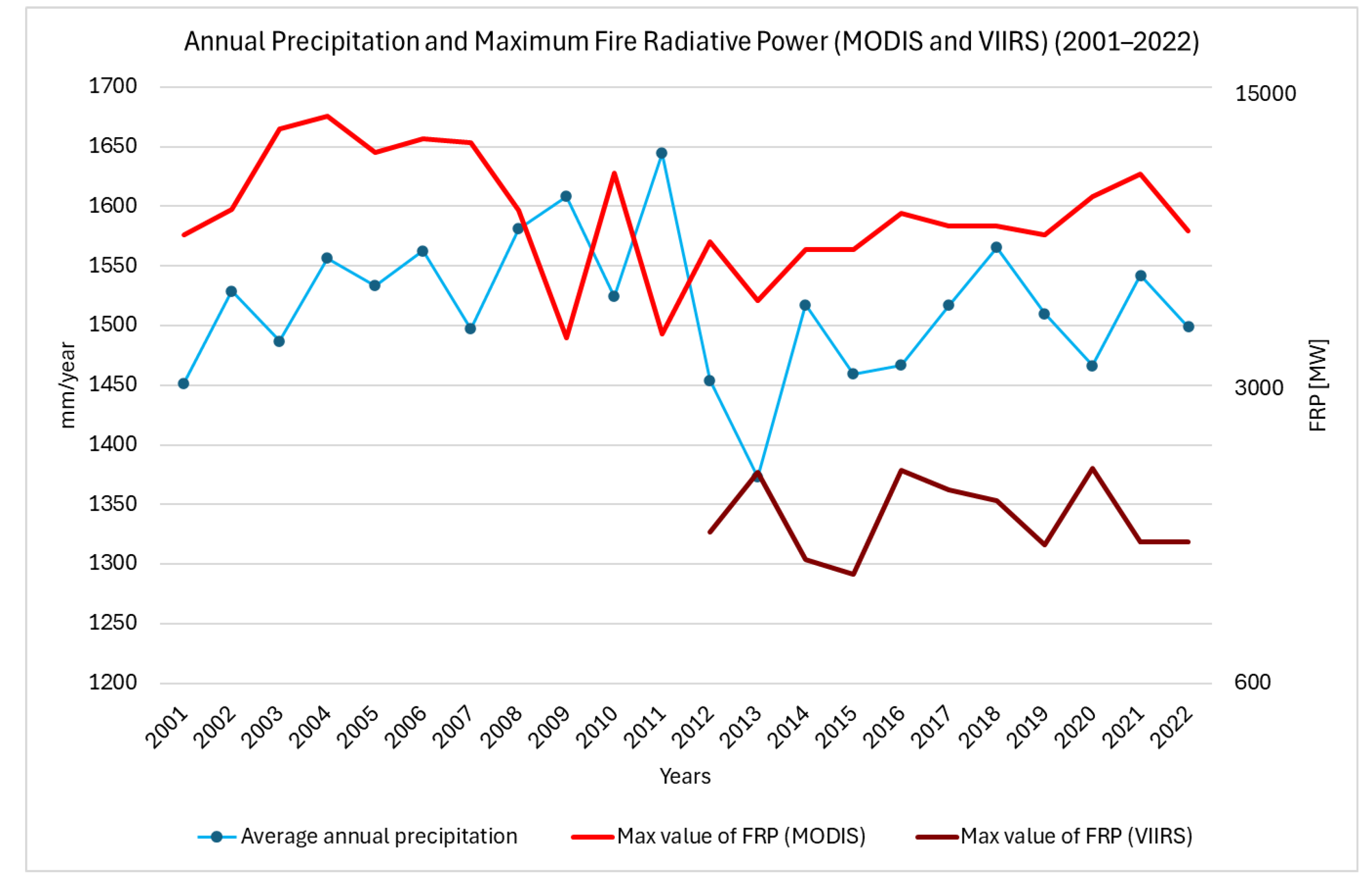
Figure 11.
Annual precipitation (left axis) compared with the total number of fire events detected by MODIS (2001–2022) and VIIRS (2013–2022).
Figure 11.
Annual precipitation (left axis) compared with the total number of fire events detected by MODIS (2001–2022) and VIIRS (2013–2022).
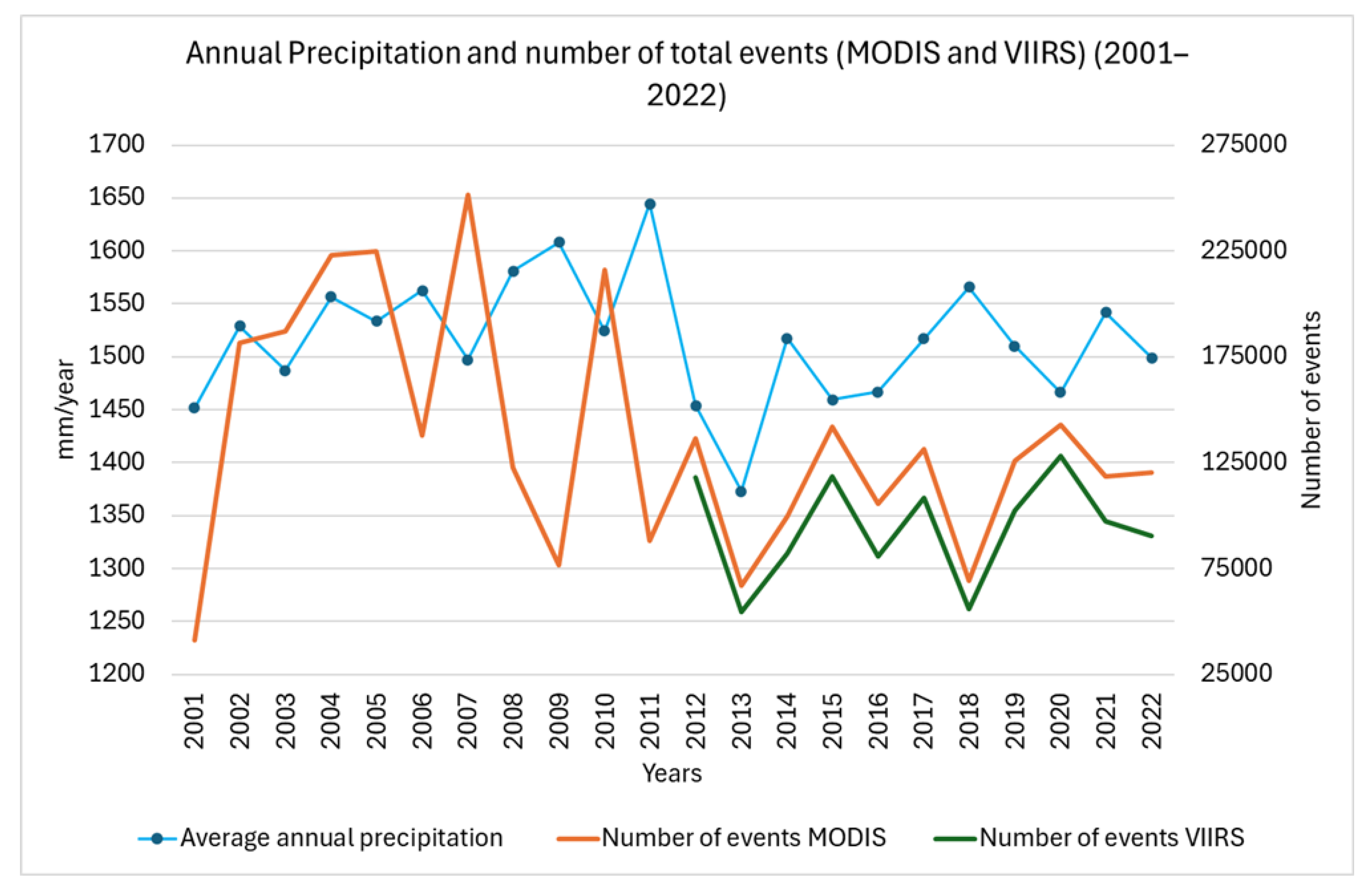

Table 1.
Time Periods analysed for each platform/sensor
| Platform | Sensor | Launched | Data analysed |
| Terra | MODIS | 18/12/1999 | 01/01/2001 – 31/12/2022 |
| Aqua | MODIS | 04/05/2002 | 01/01/2001 – 31/12/2022 |
| SUOMI-NPP | VIIRS | 28/10/2011 | 01/01/2012 – 31/12/2022 |
Table 2.
Yearly number of fire events for each fire radiative power (FRP) class and the cumulative FRP (last column) for MODIS retrieval over the study area from 2001 to 2022.
Table 2.
Yearly number of fire events for each fire radiative power (FRP) class and the cumulative FRP (last column) for MODIS retrieval over the study area from 2001 to 2022.
| Years | Numbers of events | FRP classes | MW developed | |||||||||
| 0 - 10 | 10 -20 | 20 -50 | 50 -80 | 80 - 100 | 100 - 200 | 200 - 300 | 300 - 700 | 700 - 1000 | 1000 - MAX | [10^4] | ||
| 2001 | 41062 | 659 | 6604 | 16479 | 6730 | 2470 | 5311 | 1488 | 1224 | 143 | 122 | 364 |
| 2002 | 181656 | 1313 | 15887 | 65627 | 33040 | 13215 | 29819 | 10127 | 9808 | 1590 | 1871 | 2630 |
| 2003 | 186966 | 1154 | 16265 | 60164 | 34029 | 13640 | 30637 | 10369 | 9726 | 1634 | 1990 | 3086 |
| 2004 | 222935 | 1348 | 18870 | 79037 | 40313 | 16347 | 37470 | 12830 | 12632 | 2166 | 2701 | 3991 |
| 2005 | 224859 | 1963 | 20735 | 79934 | 40333 | 16221 | 37123 | 12833 | 12190 | 2003 | 2310 | 3723 |
| 2006 | 137997 | 970 | 11664 | 51592 | 25162 | 10194 | 22452 | 7233 | 6950 | 1062 | 1194 | 2103 |
| 2007 | 251476 | 2005 | 22479 | 90104 | 46330 | 18757 | 42099 | 14026 | 12761 | 1931 | 1873 | 3688 |
| 2008 | 122735 | 927 | 10340 | 46119 | 23083 | 9307 | 20242 | 6389 | 5343 | 726 | 647 | 1415 |
| 2009 | 76762 | 614 | 7065 | 32105 | 14524 | 5418 | 11280 | 3110 | 2420 | 316 | 211 | 688 |
| 2010 | 216295 | 1769 | 19101 | 77804 | 40343 | 16091 | 36408 | 12024 | 10732 | 1511 | 1355 | 2797 |
| 2011 | 88097 | 499 | 7758 | 34468 | 16765 | 6381 | 13872 | 4294 | 3531 | 465 | 361 | 893 |
| 2012 | 136253 | 1280 | 12509 | 50696 | 25442 | 9956 | 21986 | 7067 | 6086 | 897 | 780 | 1594 |
| 2013 | 66749 | 460 | 6195 | 27543 | 12811 | 4779 | 9790 | 2772 | 2133 | 292 | 229 | 621 |
| 2014 | 99431 | 783 | 9297 | 39124 | 18592 | 7294 | 15348 | 4628 | 3805 | 479 | 418 | 1051 |
| 2015 | 141753 | 2543 | 16346 | 53021 | 24966 | 9924 | 21145 | 6882 | 5894 | 864 | 755 | 1568 |
| 2016 | 105708 | 1359 | 11183 | 41269 | 19256 | 7416 | 15939 | 4708 | 4049 | 504 | 415 | 1091 |
| 2017 | 131240 | 1654 | 13637 | 48945 | 24027 | 9457 | 20684 | 6464 | 5599 | 729 | 540 | 1421 |
| 2018 | 69022 | 709 | 7222 | 27692 | 12580 | 4802 | 10158 | 3115 | 2418 | 330 | 274 | 702 |
| 2019 | 125854 | 1614 | 13572 | 46354 | 23025 | 8889 | 19505 | 6236 | 5522 | 831 | 807 | 1475 |
| 2020 | 143037 | 1627 | 14819 | 51368 | 25997 | 10446 | 22650 | 7595 | 7003 | 1042 | 1059 | 1836 |
| 2021 | 118365 | 1402 | 11887 | 42508 | 20950 | 8462 | 18926 | 6511 | 6219 | 914 | 1010 | 1598 |
| 2022 | 120335 | 1249 | 12927 | 45473 | 21992 | 8627 | 18173 | 5665 | 5074 | 756 | 756 | 1382 |
Table 3.
Yearly number of fire events for each fire radiative power (FRP) class and the cumulative FRP (last column) for VIIRS retrievals over the study area from 2012 to 2022.
Table 3.
Yearly number of fire events for each fire radiative power (FRP) class and the cumulative FRP (last column) for VIIRS retrievals over the study area from 2012 to 2022.
| Years | Numbers of events | FRP classes | MW developed | |||||||||
| 0 - 10 | 10 -20 | 20 -50 | 50 -80 | 80 - 100 | 100 - 200 | 200 - 300 | 300 - 700 | 700 - 1000 | 1000 - MAX | [10^4] | ||
| 2012 | 117847 | 23836 | 44270 | 31582 | 7152 | 2874 | 5880 | 1541 | 769 | 33 | 5 | 429 |
| 2013 | 54678 | 11775 | 21874 | 14398 | 2756 | 1052 | 2101 | 501 | 260 | 9 | 5 | 175 |
| 2014 | 82053 | 17191 | 31840 | 21798 | 4546 | 1756 | 3545 | 949 | 465 | 20 | 5 | 280 |
| 2015 | 118305 | 22929 | 45044 | 32187 | 7479 | 2777 | 5672 | 1536 | 722 | 33 | 5 | 428 |
| 2016 | 80778 | 16987 | 31734 | 21246 | 4526 | 1669 | 3428 | 791 | 426 | 17 | 13 | 270 |
| 2017 | 108370 | 21254 | 41429 | 29561 | 6667 | 2430 | 4997 | 1374 | 684 | 44 | 9 | 390 |
| 2018 | 55931 | 11847 | 22256 | 14699 | 3046 | 1062 | 2141 | 569 | 339 | 14 | 8 | 185 |
| 2019 | 102466 | 20236 | 38319 | 28191 | 6261 | 2380 | 4991 | 1342 | 787 | 44 | 7 | 380 |
| 2020 | 128228 | 23243 | 45601 | 36585 | 9050 | 3447 | 7298 | 1960 | 1076 | 61 | 9 | 516 |
| 2021 | 97286 | 17412 | 34228 | 27036 | 7005 | 2743 | 6026 | 1753 | 1084 | 54 | 15 | 418 |
| 2022 | 90583 | 17886 | 34319 | 24590 | 5682 | 2074 | 4369 | 1127 | 589 | 17 | 3 | 327 |
Disclaimer/Publisher’s Note: The statements, opinions and data contained in all publications are solely those of the individual author(s) and contributor(s) and not of MDPI and/or the editor(s). MDPI and/or the editor(s) disclaim responsibility for any injury to people or property resulting from any ideas, methods, instructions or products referred to in the content. |
© 2026 by the authors. Licensee MDPI, Basel, Switzerland. This article is an open access article distributed under the terms and conditions of the Creative Commons Attribution (CC BY) license (http://creativecommons.org/licenses/by/4.0/).
Copyright: This open access article is published under a Creative Commons CC BY 4.0 license, which permit the free download, distribution, and reuse, provided that the author and preprint are cited in any reuse.


