

Submitted:
16 February 2026
Posted:
05 March 2026
You are already at the latest version
Abstract
Background: Intravascular lithotripsy (IVL) has emerged as a safe and effective modality for treating severely calcified coronary lesions. While the Shockwave system is well-established, clinical data on newer IVL platforms such as the Shunmei ShockFast system remain limited.
Objectives: To evaluate the safety, feasibility, and procedural outcomes of the ShockFast IVL device in patients with heavily calcified de novo coronary artery disease.
Methods: We conducted a prospective, single-center case series of 16 patients undergoing percutaneous coronary intervention (PCI) with the ShockFast IVL system between June and December 2025. Inclusion required angiographic or optical coherence tomography (OCT) evidence of severe coronary calcification. The primary endpoints were acute procedural success and in-hospital major adverse cardiovascular events (MACE). Secondary endpoints included device deliverability, calcium fracture (by OCT), and post-stent expansion metrics.
Results: All patients underwent successful lithotripsy delivery with the ShockFast IVL system. Acute procedural success was 100%, with no intraprocedural complications, abrupt closure, or in-hospital MACE. OCT was performed in 50% of cases and demonstrated calcium fractures in all imaged lesions, with ≥2 fractures in 63% of cases. Median stent expansion was 90% [IQR 9], with no major malapposition or edge dissections. Quantitative coronary analysis showed a median acute lumen gain of 1.86 mm [0.62].
Conclusions: The ShockFast IVL system demonstrated excellent safety and procedural performance in this first-in-center experience. Outcomes were comparable to those reported with the established Shockwave IVL platform. These findings support the clinical feasibility of ShockFast as a novel tool for calcium modification in complex PCI.
Keywords:
coronary artery disease
; severe coronary calcifications
; intravascular lithotripsy
; optical coherence tomography
Introduction
Severe coronary artery calcification remains one of the most challenging entities of percutaneous coronary intervention (PCI) with increased risk of stent failure, higher rates of peri-procedural complications and worse long-term outcomes [1,2,3,4,5].
The prevalence of coronary calcification increases with age – for example, over 90% of men and 70% of women above 70 years old have coronary calcific plaque. [6,7]. These calcified lesions often necessitate specialized plaque modification techniques and devices to enable adequate lesion preparation and stent deployment. Traditionally, operators have relied on non-compliant balloons and/or atherectomy devices to modify calcium [8,9,10,11]. While effective in many cases, these conventional technologies have limitations, including risk of significant periprocedural complications (such as embolization, severe dissections, or perforations) [8,12]. This has driven the search for alternative, safer calcium modification strategies in PCI [13].
Among them intravascular lithotripsy (IVL) was first introduced for coronary use around 2017 – 2018 (following CE-mark approval in 2017) and adapts the principles of extracorporeal shockwave lithotripsy (used to break kidney stones) for intracoronary use [14]. Instead of ablating or cutting plaque, IVL delivers pulsatile acoustic pressure waves via a specialized balloon catheter to selectively fracture calcified plaque in situ, while leaving surrounding soft tissue largely unharmed.
The Shockwave™ C2 coronary IVL system (Shockwave Medical, Santa Clara, CA, USA) was the first such device that demonstrated a high rate of lesion modification success with an excellent safety profile in clinical studies [15,16]. Mechanistically, intracoronary imaging has confirmed that IVL produces multiple calcium fractures within the plaque, which facilitates greater lumen expansion and stent deployment. Beyond controlled trials, real-world registries have corroborated these findings: IVL is consistently associated with high success rates and low complication rates across various patient subsets [17,18,19,20,21,22]. Since its introduction in 2021, the adoption of coronary IVL has grown rapidly, at times even exceeding the use of atherectomy in contemporary practice, underlining the perceived ease of use and safety by operators.
Encouraged by the success of Shockwave™ IVL, new lithotripsy catheters have been developed. One such device is the ShockFast™ coronary IVL system (Shunmei Medical, China), which received regulatory approval in some countries and has shown promising initial results, but published clinical data remain currently extremely limited. Therefore, we present our first clinical experience using the Shunmei ShockFast™ IVL catheter for severe calcified de-novo coronary lesions.
Material and Methods
Study population
Consecutive patients presenting between June 2025 and December 2025 with acute or chronic coronary syndromes and severely calcified de-novo coronary artery lesions undergoing PCI were prospectively included at a tertiary swiss center. This prospective study stems from the Cardio-FR registry (NCT04185285), a registry initiated in January 2015 at the University & Hospital of Fribourg (Switzerland) and still prospectively ongoing. The registry is conducted in accordance with the Declaration of Helsinki, was approved by the Institutional Review Board and received approval from the local ethics committee (003-REP-CER-FR). All patients provided written informed consent.
Study Eligibility Criteria
The angiographic inclusion criteria were as follows: at least one stenosis of >50% of diameter stenosis, with ≤ 50 mm of lesion length, distal reference vessel diameter of 2.0 to 4.0 mm by visual estimation and presence of severe calcifications. Severe calcification was classified by according to the modified ACC/AHA angiographic classification for coronary artery calcification [23,24,25].
The OCT inclusion criteria were defined as the presence of a revised or original OCT Calcium Score of more than 3 points [26,27].
Exclusion criteria included severe impaired acute or chronic renal disease, cardiogenic shock, severe chronic obstructive pulmonary disease, allergy to the contrast agent.
Study device
The ShockFast™ (Shunmei Medical, China) coronary IVL system and coronary IVL catheter received the CE marking on May, 18th 2025. It consists of a 0.014-inch guidewire-compatible, contrast fluid-filled balloon angioplasty catheter with 2 lithotripsy emitters incorporated into the shaft of either a 12-mm or 15-mm-long balloon segment (see Figure 1). The coronary IVL system is delivered on a rapid exchange catheter and is available in 2.5-, 2.75-, 3.0-, 3.25-, 3.5-, and 4.0-mm diameters. Each catheter is intended for a single use and can provide up to 120 total pulses delivered in 10 pulses per cycles, singularly or in total by double-pressing the delivery button. Balloon treatment pressure and nominal pressure are 4 and 6 atm, respectively, with a rated burst pressure of 10 atm.
Study procedure
Patients that signed informed consent and met study eligibility criteria were included. Intracoronary imaging by OCT was highly encouraged but not mandatory. When performed, at least 3 time points were requested: at baseline (or pre-IVL treatment), directly post-IVL treatment and following stent deployment and its optimisation. The IVL catheter was planned as the upfront treatment and delivered over a 0.014-inch guidewire of choice. If the lesion was deemed uncrossable or if the IVL catheter could not be advanced, adjunctive treatment (e.g., buddy wire, guiding catheter extension, pre-dilatation or atherectomy) was performed at operator’s discretion before reinsertion of the IVL catheter.
A 1:1 sized – to distal reference vessel diameter (RVD) – IVL balloon was inflated to 4-6 atm with delivery of all pulses to the target lesion. The IVL treatment was repeated until full IVL balloon expansion was achieved or until all pulses were depleted. If there was still persistent incomplete lesion preparation despite maximum number of pulses (i.e., residual stenosis >50%), an additional IVL catheter was used. Additional non-compliant balloon (NCB) dilatation was performed after IVL treatment and prior to stent implantation to improve lumen gain. Dual antiplatelet therapy (DAPT) was prescribed as per current guidelines and accordingly to the patient’s clinical presentation [28,29].
Data Analysis and Data Management
All angiographic imaging data were analysed offline via the Philips Azurion intervention suite integrated quantitative coronary analysis (QCA) software. OCT images were analysed offline via the OPTIS Software (Abbott Vascular Inc., Santa Clara, CA, USA). Source data were collected offline by local investigators and subsequently transferred into an electronic data capture system for statistical analysis.
OCT image analysis
OCT image analysis was performed offline using the OPTIS Software (Abbott Vascular Inc., Santa Clara, CA, USA). If images were not already correctly calibrated, they were recalibrated using the dedicated adjustment tool. For each case we collected the following quantitative measurements: minimum lumen area (MLA) (mm2), minimum lumen diameter (MLD) (mm), proximal and distal reference mean diameter (mm), proximal and distal external elastic lamina (EEL) mean diameter (mm) measured at 5 mm proximally and distally to the lesion length, lesion length (mm), calcium arc (degrees), calcium thickness (mm), calcium length (mm), lumen gain after IVL treatment (mm2), final minimal stent area (MSA) (mm2), acute lumen gain (mm2), final stent expansion (SE) (%). Additionally, we collected the following qualitative characteristics: presence of calcified nodule, type of calcified nodule – eruptive or non-eruptive – , revised OCT calcium score [27], original OCT calcium score [26], presence of calcium fractures after IVL treatment, presence of proximal or distal medial edge dissections, presence of minor or major (> 400 um for a length of more than 1 mm) malapposition [30,31].
Endpoints
The primary safety endpoint of this study was the incidence of in-hospital major adverse cardiovascular events (MACE), defined as a composite of cardiac death, target vessel myocardial infarction (TV-MI), and TIA/stroke. Device-related complications such as coronary perforation, flow-limiting dissection, abrupt vessel closure, or sustained ventricular arrhythmias were also monitored.
The primary efficacy endpoint was acute procedural success, defined as achievement of angiographic success of the treating ShockFast™ IVL catheter device with a residual diameter stenosis <30% by visual angiographic assessment and/or stent expansion of > 80% by OCT, no flow-limiting dissection, no no-reflow phenomenon, in-hospital MACE.
Secondary endpoints included device success, defined as successful delivery, activation, and completion of lithotripsy cycles at the target lesion.
No formal hypothesis testing was performed, as this was an observational, exploratory case series intended to assess the initial feasibility, safety, and procedural characteristics of the ShockFast™ IVL system in a real-world coronary population.
Statistical Analysis
Categorical variables are displayed as absolute numbers and percentages. Continuous variables are presented as means (± standard deviation) or medians (interquartile ranges [IQRs]), as appropriate. All the analyses were conducted using STATA version 17 (College Station, Texas, USA).
Results
In total we included 16 patients that presented severely calcified lesions as assessed by angiographic or OCT means and were treated with the ShockFast™ IVL. Of these 5 (31%) were females, only 4 (25%) presented diabetes mellitus, half of them had a previous PCI and 12 (75%) presented with a chronic coronary syndrome. 4 (25%) patients presented with acute coronary syndromes with either STEMI or NSTEMI/UA as clinical presentation. Further additional clinical characteristics are shown in Table 1.
The main treated vessel was the RCA (63%), and most patients (88%) presented a lesion classified as type C according to the AHA/ACC angiographic calcium classification. We observed no balloon-uncrossable lesions and no atherectomy was performed. Predilatation before ShockFast™ IVL usage was performed in 12 (75%) patients. Median maximal diameter of the ShockFast™ IVL balloon was 2.5 mm [1] and no additional predilatation or lesion preparation was performed after the IVL use. DES implantation followed in 14 (88%) patients, whereas 2 (12%) were treated with a drug coated balloon (DCB) only strategy. Postdilatation of the implanted stent with an NCB followed in all patients. We observed no abrupt vessel closure, no-reflow phenomenon, dissections or perforations with an acute procedural success and device success of both 100%. Additional angiographic characteristics and periprocedural outcomes are displayed in Table 2 and Table 6, respectively.
At QCA analysis, the median length of the 16 treated lesions was 28.9 mm [11.8], with a median reference vessel diameter of 2.5 mm [0.46] and a median MLD of 1.21 mm [1.06]. The pre-procedural percentage diameter stenosis (%DS) was 89.5% [17] with an important improvement after ShockFast™ IVL treatment with a residual %DS of 60.5% [32]. Final MLD after DES implantation and postdilatation reached a median 3.1 mm [0.53] with a median 1.86 mm [0.62] acute lumen gain. Further QCA analysis characteristics are presented in Table 3.
OCT was performed in half of the patients and confirmed the severity of the treated calcified lesions with a revised OCT calcium score of 3 in 7 (87%) patients and an original OCT calcium score of 4 in all analysed patients. Notably, eruptive calcified nodules were present in 3 (38%) patients. Fractures were shown in every OCT run after ShockFast™ IVL treatment with ≥ 2 fractures present in 5 (63%) patients. (see Figure 2).
Acute procedural success was optimal as assessed by OCT means with a median final MSA of 4.97 mm2 [3.53] and a median SE of 90% [9]. Furthermore, no major malapposition, medial proximal or distal edge dissections were noted. Additional OCT data is presented in Table 4.
Peri-procedurally we observed no in-hospital MACE, with no post-procedural myocardial infarction (type 4a) as further confirmed by the absence of dynamic changes in cardiac biomarkers (pre-procedural CK-MB at 16 U/L [6] and post-procedural CK-MB at 15 [9]) as seen in Table 5.

Table 6.
Periprocedural outcomes.
| N of patients = 16 | |
| Pre-discharge ECG modifications, n (%) | 0 (0) |
| Post-procedural MI type 4a, n (%) | 0 (0) |
| In-hospital MACE, n (%) | 0 (0) |
Data are mean (SD = standard deviation), median (IQR = interquartile range) or number (n = number; % = percentage), as appropriate. ECG = electrocardiogram; MI = myocardial infarction; MACE = major adverse cardiovascular events .
Discussion
In this first-in-center experience, we report the safety and procedural feasibility of the Shunmei ShockFast™ intravascular lithotripsy (IVL) system in a series of patients presenting heavily calcified de-novo coronary artery lesions. Our findings suggest that this novel IVL system achieves consistent lesion modification and stent optimization with an excellent procedural safety profile, mirroring outcomes previously reported with the established Shockwave™ IVL technology [21,22].
IVL has established itself as an effective and user-friendly alternative to atherectomy, conventional or specialized balloon strategies, offering selective calcium fracture with minimal soft tissue trauma. Since its introduction, Shockwave™ IVL has demonstrated high procedural success and low complication rates in both controlled trials and real-world registries and has become a routine tool in the treatment of calcified lesions [12,13,14,20,21,32,33,34,35,36,37,38]. The introduction of new IVL platforms such as ShockFast™ aims to further expand the therapeutic landscape.
Our prospective case series included 16 patients treated with ShockFast™ IVL for severely calcified lesions, of whom the majority had chronic coronary syndromes and complex Type C lesions. Despite lesion complexity, we achieved 100% device and procedural success, with no observed cases of perforation, flow-limiting dissection, no-reflow, or in-hospital MACE. These findings are consistent with the favorable safety profile reported with the established Shockwave™ IVL, where serious complications such as perforations have been reported in <0.5% of cases in multicenter trials like DISRUPT CAD III and IV [21,22,35,38]. Importantly, no lesion required additional atherectomy, and even in tight lesions, balloon deliverability was high, with pre-dilation needed in three-quarters of cases.
Intravascular imaging, when performed, confirmed the hallmark features of effective IVL therapy [39,40,41]. OCT analysis showed post-lithotripsy calcium fracture in all imaged lesions, with ≥2 fractures observed in over 60% of cases – comparable to published OCT substudies of Shockwave™ IVL, where 79 – 82% of lesions demonstrated calcium disruption. Moreover, acute lumen gain, final minimal stent area and stent expansion were optimal, with a median final stent expansion of 90% and absence of major malapposition or edge dissection. These results underscore ShockFast™ ability to generate sufficient radial force to fracture both superficial and deep calcium, improving vessel compliance and optimizing final stent geometry.
Procedural efficacy, measured by angiographic residual stenosis and quantitative coronary analysis, was consistent with expectations for effective plaque modification. Post-stenting minimum lumen diameter improved substantially, and acute gain exceeded 1.8 mm. The degree of lumen gain achieved with ShockFast™ is similar to outcomes reported with Shockwave™ in studies such as DISRUPT CAD II and III, where high procedural success (≥92%) and favorable angiographic and imaging results confirmed IVL's effectiveness in modifying calcified plaque [20,21,35,42].
Our findings also highlight the potential utility of ShockFast™ in diverse lesion and patient subsets, including long lesions and complex vessel anatomies. The deliverability of the balloon was consistently high, and in no case was lesion crossing unsuccessful.
Our study must be interpreted within the context of its limitations. The small sample size and lack of a control group restrict definitive conclusions regarding comparative effectiveness. Additionally, the study focused on acute procedural success, strategy success and in-hospital outcomes with absence of mid- and long-term clinical follow-up. Furthermore, intravascular imaging was not performed in all cases, limiting full mechanistic assessment of calcium fracture and stent expansion across the cohort. Nevertheless, the consistency of procedural success, absence of adverse events, and reproducibility of calcium fracture support the hypothesis that ShockFast™ performs similarly to the established IVL standard.
Head-to-head comparative studies between ShockFast™ and Shockwave™ IVL systems – ideally incorporating core lab-adjudicated imaging endpoints and clinical follow-up – will be critical to further define their relative performance, particularly in high-risk anatomical subsets such as left main or bifurcation disease. Economic analyses may also help determine the value proposition of alternative IVL systems in cost-conscious healthcare environments.
Conclusions
This first-in-center clinical experience demonstrated the safety, deliverability and efficacy of the new ShockFast™ coronary IVL system in the treatment of severely calcified de novo coronary lesions. The device consistently achieved lesion modification, stent expansion, and procedural success without complications. Compared to the well-established Shockwave™ IVL system, ShockFast™ appears to deliver similar acute outcomes. These findings support the integration of ShockFast™ into the calcium modification toolkit for complex PCI. Larger studies with longer-term follow-up and head-to-head comparison with the established Shockwave™ IVL system are warranted to confirm ShockFast™ clinical durability and further clarify its role in contemporary practice.
Funding
Independent funding was provided by the Fonds Scientifique Cardiovasculaire.
Institutional Review Board Statement
The research reported in this paper adhered to CONSORT guidelines. The study was conducted in accordance with the Declaration of Helsinki, and the protocol was approved by the Commission cantonale d'éthique de la recherche sur l'être humain CER (003-REP-CER-FR) on 01-05-2015.
Informed Consent Statement
The authors confirm that patient consent forms have been obtained for this article.
Conflicts of Interest
The authors declare no conflicts of interest.
Abbreviations
| PCI | percutaneous coronary intervention |
| OCT | optical coherence tomography |
| IQR | Interquartile range (IQR) |
| BMI | Body Mass index |
| CAD | coronary artery disease |
| MI | myocardial infarction |
| PCI | Percutaneous coronary intervention |
| CABG | coronary artery bypass grafting |
| STEMI | ST elevation myocardial infarction |
| NSTEMI | non-ST elevation myocardial infarction |
| UA | unstable angina |
| CCS | chronic coronary syndrome |
| LVEF | left ventricular ejection fraction. |
| RCA | right coronary artery disease |
| LAD | left anterior descending artery |
| ACC/AHA | American College of Cardiology/American Heart Association |
| DES | Drug eluting stent |
| atm | atmosphere |
| DCB | drug coated balloon |
| IVL | intravascular lithotripsy |
| SC | semi-compliant |
| NC | non-compliant. |
| QCA | quantitative coronary analysis |
| MLD | minimal lumen diameter |
| RVD | reference vessel diameter. |
| MLA | minimal lumen area |
| MLD | minimal lumen diameter |
| EEL | external elastic lamina |
| MSA | minimal stent area. |
| CK | creatine kinase |
| CK-MB | creatine kinase MB. |
| ECG | electrocardiogram |
| MI | myocardial infarction |
| MACE | major adverse cardiovascular events. |
References
- Allison, MA; Criqui, MH; Wright, CM. Patterns and risk factors for systemic calcified atherosclerosis. Arterioscler Thromb Vasc Biol. 2004, 24(2), 331–6. [Google Scholar] [CrossRef] [PubMed]
- Madhavan, MV; Tarigopula, M; Mintz, GS; Maehara, A; Stone, GW; Généreux, P. Coronary artery calcification: pathogenesis and prognostic implications. J Am Coll Cardiol. 2014, 63(17), 1703–14. [Google Scholar] [CrossRef]
- Généreux, P; Redfors, B; Witzenbichler, B; Arsenault, MP; Weisz, G; Stuckey, TD; et al. Two-year outcomes after percutaneous coronary intervention of calcified lesions with drug-eluting stents. Int J Cardiol. 2017, 231, 61–7. [Google Scholar] [CrossRef] [PubMed]
- Kobayashi, Y; Okura, H; Kume, T; Yamada, R; Kobayashi, Y; Fukuhara, K; et al. Impact of target lesion coronary calcification on stent expansion. Circ J. 2014, 78(9), 2209–14. [Google Scholar] [CrossRef] [PubMed]
- Guedeney, P; Claessen, BE; Mehran, R; Mintz, GS; Liu, M; Sorrentino, S; et al. Coronary Calcification and Long-Term Outcomes According to Drug-Eluting Stent Generation. JACC Cardiovasc Interv. 2020, 13(12), 1417–28. [Google Scholar] [CrossRef] [PubMed]
- Raggi, P; Gongora, MC; Gopal, A; Callister, TQ; Budoff, M; Shaw, LJ. Coronary artery calcium to predict all-cause mortality in elderly men and women. J Am Coll Cardiol. 2008, 52(1), 17–23. [Google Scholar] [CrossRef]
- Chen, NX; Moe, SM. Vascular calcification: pathophysiology and risk factors. Curr Hypertens Rep. 2012, 14(3), 228–37. [Google Scholar] [CrossRef]
- Généreux, P; Lee, AC; Kim, CY; Lee, M; Shlofmitz, R; Moses, JW; et al. Orbital Atherectomy for Treating De Novo Severely Calcified Coronary Narrowing (1-Year Results from the Pivotal ORBIT II Trial). Am J Cardiol. 2015, 115(12), 1685–90. [Google Scholar] [CrossRef]
- Kini, AS; Vengrenyuk, Y; Pena, J; Motoyama, S; Feig, JE; Meelu, OA; et al. Optical coherence tomography assessment of the mechanistic effects of rotational and orbital atherectomy in severely calcified coronary lesions. Catheter Cardiovasc Interv. 2015, 86(6), 1024–32. [Google Scholar] [CrossRef]
- Pinilla-Echeverri, N; Bossard, M; Hillani, A; Chavarria, JA; Cioffi, GM; Dutra, G; et al. Treatment of Calcified Lesions Using a Dedicated Super-High Pressure Balloon: Multicenter Optical Coherence Tomography Registry. Cardiovasc Revasc Med. 2023, 52, 49–58. [Google Scholar] [CrossRef]
- Cioffi, GM; Vercelli, L; Avdijaj, D; Madanchi, M; Göldi, T; Attinger-Toller, A; et al. Rotational Atherectomy Combined With Super High-Pressure Noncompliant Balloon in Severe or Recurrent In-Stent Restenosis. Journal of Interventional Cardiology 2025, 2025(1), 8869530. [Google Scholar] [CrossRef]
- Gissler, MC; Kaier, K; Rahimi, F; Bacmeister, L; Rilinger, J; Heger, LA; et al. In-hospital outcomes of intravascular lithotripsy compared to rotational atherectomy and cutting/scoring balloon angioplasty. Clin Res Cardiol 2026. [Google Scholar] [CrossRef]
- Jurado-Román, A; Gonzálvez, A; Galeote, G; Jiménez-Valero, S; Moreno, R. RotaTripsy: Combination of Rotational Atherectomy and Intravascular Lithotripsy for the Treatment of Severely Calcified Lesions. JACC Cardiovasc Interv. 2019, 12(15), e127–e9. [Google Scholar] [CrossRef]
- Brinton, TJ; Ali, ZA; Hill, JM; Meredith, IT; Maehara, A; Illindala, U; et al. Feasibility of Shockwave Coronary Intravascular Lithotripsy for the Treatment of Calcified Coronary Stenoses. Circulation 2019, 139(6), 834–6. [Google Scholar] [CrossRef]
- Kereiakes, DJ; Hill, JM; Ben-Yehuda, O; Maehara, A; Alexander, B; Stone, GW. Evaluation of safety and efficacy of coronary intravascular lithotripsy for treatment of severely calcified coronary stenoses: Design and rationale for the Disrupt CAD III trial. Am Heart J. 2020, 225, 10–8. [Google Scholar] [CrossRef]
- Salazar, CH; Gonzalo, N; Aksoy, A; Tovar Forero, MN; Nef, H; Van Mieghem, NM; et al. Feasibility, Safety, and Efficacy of Intravascular Lithotripsy in Severely Calcified Left Main Coronary Stenosis. JACC: Cardiovascular Interventions 2020, 13(14), 1727–9. [Google Scholar] [CrossRef]
- Wong, B; El-Jack, S; Newcombe, R; Glenie, T; Armstrong, G; Khan, A. Calcified Coronary Lesions Treated With Intravascular Lithotripsy: One-Year Outcomes. J Invasive Cardiol. 2020, 32(7), E200–e1. [Google Scholar] [CrossRef] [PubMed]
- Karimi Galougahi, K; Patel, S; Shlofmitz, RA; Maehara, A; Kereiakes, DJ; Hill, JM; et al. Calcific Plaque Modification by Acoustic Shock Waves: Intravascular Lithotripsy in Coronary Interventions. Circ Cardiovasc Interv. 2021, 14(1), e009354. [Google Scholar] [CrossRef] [PubMed]
- Wiens, EJ; Sklar, JC; Wei, YH; Aleem, Q; Minhas, K. Real-world outcomes in treatment of highly calcified coronary lesions with intravascular shockwave lithotripsy. Indian Heart J. 2021, 73(5), 653–5. [Google Scholar] [CrossRef]
- Ali, ZA; Kereiakes, D; Hill, J; Saito, S; Di Mario, C; Honton, B; et al. Safety and Effectiveness of Coronary Intravascular Lithotripsy for Treatment of Calcified Nodules. JACC: Cardiovascular Interventions 2023, 16(9), 1122–4. [Google Scholar] [CrossRef] [PubMed]
- Kereiakes, DJ; Hill, JM; Shlofmitz, RA; Klein, AJ; Riley, RF; Price, MJ; et al. Intravascular Lithotripsy for Treatment of Severely Calcified Coronary Arteries: 2-Year Results—Disrupt CAD III Study. JACC: Cardiovascular Interventions 2023, 16(19), 2472–4. [Google Scholar]
- Visinoni, ZM; Jurewitz, DL; Kereiakes, DJ; Shlofmitz, R; Shlofmitz, E; Ali, Z; et al. Coronary intravascular lithotripsy for severe coronary artery calcification: The Disrupt CAD I-IV trials. Cardiovascular Revascularization Medicine 2024, 65, 81–7. [Google Scholar] [CrossRef]
- Ellis, SG; Vandormael, MG; Cowley, MJ; DiSciascio, G; Deligonul, U; Topol, EJ; et al. Coronary morphologic and clinical determinants of procedural outcome with angioplasty for multivessel coronary disease. Implications for patient selection. Multivessel Angioplasty Prognosis Study Group. Circulation 1990, 82(4), 1193–202. [Google Scholar] [CrossRef]
- Moushmoush, B; Kramer, B; Hsieh, AM; Klein, LW. Does the AHA/ACC task force grading system predict outcome in multivessel coronary angioplasty? Cathet Cardiovasc Diagn 1992, 27(2), 97–105. [Google Scholar]
- Mintz, GS; Popma, JJ; Pichard, AD; Kent, KM; Satler, LF; Chuang, YC; et al. Patterns of calcification in coronary artery disease. A statistical analysis of intravascular ultrasound and coronary angiography in 1155 lesions. Circulation 1995, 91(7), 1959–65. [Google Scholar] [CrossRef]
- Fujino, A; Mintz, GS; Matsumura, M; Lee, T; Kim, SY; Hoshino, M; et al. A new optical coherence tomography-based calcium scoring system to predict stent underexpansion. EuroIntervention 2018, 13(18), e2182–e9. [Google Scholar] [CrossRef]
- Sato, T; Matsumura, M; Yamamoto, K; Sugizaki, Y; Shlofmitz, E; Moses, JW; et al. A Revised Optical Coherence Tomography–Derived Calcium Score to Predict Stent Underexpansion in Severely Calcified Lesions. JACC: Cardiovascular Interventions 2025, 18(5), 622–33. [Google Scholar] [CrossRef] [PubMed]
- Valgimigli, M; Bueno, H; Byrne, RA; Collet, JP; Costa, F; Jeppsson, A; et al. 2017 ESC focused update on dual antiplatelet therapy in coronary artery disease developed in collaboration with EACTS: The Task Force for dual antiplatelet therapy in coronary artery disease of the European Society of Cardiology (ESC) and of the European Association for Cardio-Thoracic Surgery (EACTS). Eur Heart J. 2018, 39(3), 213–60. [Google Scholar] [PubMed]
- Vrints, C; Andreotti, F; Koskinas, KC; Rossello, X; Adamo, M; Ainslie, J; et al. 2024 ESC Guidelines for the management of chronic coronary syndromes. Eur Heart J. 2024, 45(36), 3415–537. [Google Scholar]
- Prati, F; Romagnoli, E; Burzotta, F; Limbruno, U; Gatto, L; La Manna, A; et al. Clinical Impact of OCT Findings During PCI: The CLI-OPCI II Study. JACC: Cardiovascular Imaging 2015, 8(11), 1297–305. [Google Scholar] [PubMed]
- Räber, L; Mintz, GS; Koskinas, KC; Johnson, TW; Holm, NR; Onuma, Y; et al. Clinical use of intracoronary imaging. Part 1: guidance and optimization of coronary interventions. An expert consensus document of the European Association of Percutaneous Cardiovascular Interventions. EuroIntervention 2018, 14(6), 656–77. [Google Scholar] [CrossRef]
- Chambers, JW; Feldman, RL; Himmelstein, SI; Bhatheja, R; Villa, AE; Strickman, NE; et al. Pivotal Trial to Evaluate the Safety and Efficacy of the Orbital Atherectomy System in Treating De Novo, Severely Calcified Coronary Lesions (ORBIT II). JACC: Cardiovascular Interventions 2014, 7(5), 510–8. [Google Scholar] [CrossRef]
- Hill, JM; Kereiakes, DJ; Shlofmitz, RA; Klein, AJ; Riley, RF; Price, MJ; et al. Intravascular Lithotripsy for Treatment of Severely Calcified Coronary Artery Disease. J Am Coll Cardiol. 2020, 76(22), 2635–46. [Google Scholar] [CrossRef]
- Kereiakes, DJ; Di Mario, C; Riley, RF; Fajadet, J; Shlofmitz, RA; Saito, S; et al. Intravascular Lithotripsy for Treatment of Calcified Coronary Lesions: Patient-Level Pooled Analysis of the Disrupt CAD Studies. JACC: Cardiovascular Interventions 2021, 14(12), 1337–48. [Google Scholar] [PubMed]
- Kereiakes, DJ; Hill, JM; Shlofmitz, RA; Klein, AJ; Riley, RF; Price, MJ; et al. Intravascular Lithotripsy for Treatment of Severely Calcified Coronary Lesions: 1-Year Results From the Disrupt CAD III Study. Journal of the Society for Cardiovascular Angiography & Interventions 2022, 1(1), 100001. [Google Scholar] [CrossRef]
- Neleman, T; Ziedses des Plantes, AC; Daemen, J. Coronary lithotripsy – a state of the art review. Trends in Cardiovascular Medicine 2023, 33(4), 215–22. [Google Scholar] [CrossRef] [PubMed]
- Phagu, AAS; van Oort, MJH; Oliveri, F; Bingen, BO; Mincione, G; Paradies, V; et al. Comparison of Procedural and Clinical Outcomes of Angiography- Versus Imaging-Guided Percutaneous Coronary Intervention With Intravascular Lithotripsy. Catheter Cardiovasc Interv. 2025, 106(2), 869–78. [Google Scholar] [CrossRef] [PubMed]
- Saito, S; Yamazaki, S; Takahashi, A; Namiki, A; Kawasaki, T; Otsuji, S; et al. Intravascular Lithotripsy for Vessel Preparation in Severely Calcified Coronary Arteries Prior to Stent Placement - Primary Outcomes From the Japanese Disrupt CAD IV Study. Circ J. 2021, 85(6), 826–33. [Google Scholar] [CrossRef]
- Sekimoto, T; Fujiyoshi, K; Kawakami, R; Madra, A; Tanaka, T; Shin, D; et al. Comparison of Vascular Injury From Intravascular Lithotripsy, Cutting, or Ultra-High-Pressure Balloons During Coronary Calcium Modification. JACC Cardiovasc Interv. 2025, 18(17), 2093–104. [Google Scholar] [CrossRef] [PubMed]
- Emori, H; Shiono, Y; Kuriyama, N; Honda, Y; Ebihara, S; Kadooka, K; et al. Calcium Fracture After Intravascular Lithotripsy as Assessed With Optical Coherence Tomography. Circ J 2023, 87(6), 799–805. [Google Scholar] [CrossRef]
- Kawai, K; Sato, Y; Hokama, JY; Kawakami, R; Konishi, T; Ghosh, SKB; et al. Histology, OCT, and Micro-CT Evaluation of Coronary Calcification Treated With Intravascular Lithotripsy: Atherosclerotic Cadaver Study. JACC Cardiovasc Interv. 2023, 16(17), 2097–108. [Google Scholar] [CrossRef] [PubMed]
- Ali, ZA; Nef, H; Escaned, J; Werner, N; Banning, AP; Hill, JM; et al. Safety and Effectiveness of Coronary Intravascular Lithotripsy for Treatment of Severely Calcified Coronary Stenoses: The Disrupt CAD II Study. Circ Cardiovasc Interv. 2019, 12(10), e008434. [Google Scholar] [CrossRef] [PubMed]
Figure 1.
The Shunmei ShockFast ™ IVL system.
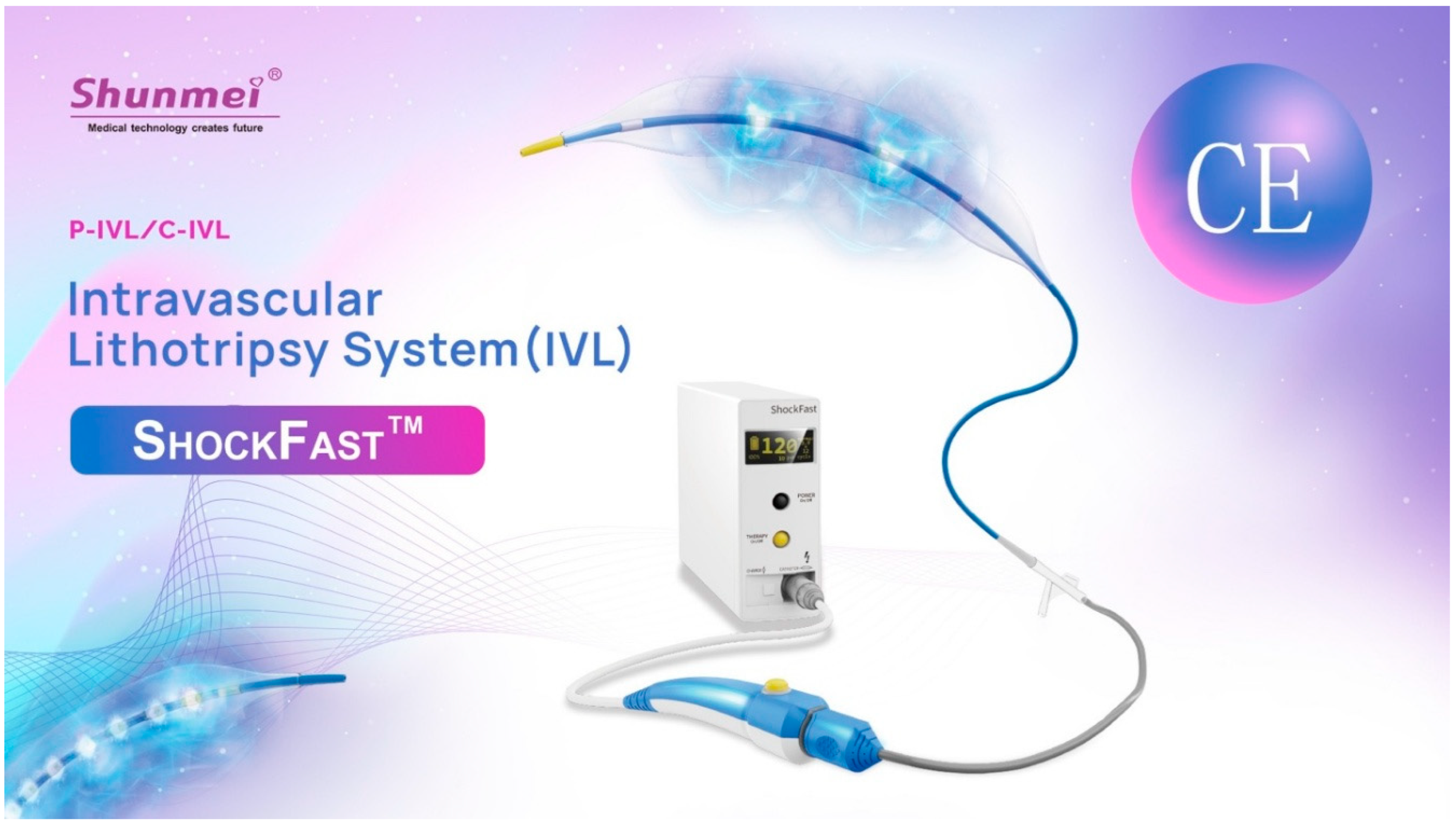
Figure 2.
OCT case example of treatment with the Shunmei ShockFast™ IVL system. Figure 2A – Initial MLA before IVL treatment. Presence of a concentric mixed deep and superficial thick calcification. Figure 2B - Cross section near the MLA with presence of diffuse circonferential, deep and superficial, thick calcium. Figure 2C – Presence of an eccentric, deep calcification. Figure 2A’ – MLA directly after ShockFast™ IVL treatment with presence of lumen gain (from 3.31 mm2 to 5.44 mm2) and two calcium fractures (12 o’clock and 3 o’clock, respectively). Figure 2B’ – Same cross section as 2B with evidence of a deep, large, calcium fracture and significant lumen increase. Figure 2C’ – Eccentric deep calcification after ShockFast™ IVL treatment; although eventual fracture assessment is limited there is the clear presence of a dissection (9 o’clock) and lumen gain. Figure 2A’’ and 2B’’ – Final OCT run after stent implantation and optimization. The stent is greatly apposed and expanded with evidence of stretched calcium fractures and important lumen gain. Figure 2C’’ – Although the deep eccentric calcification was not clearly fractured, there is great lumen gain.
Figure 2.
OCT case example of treatment with the Shunmei ShockFast™ IVL system. Figure 2A – Initial MLA before IVL treatment. Presence of a concentric mixed deep and superficial thick calcification. Figure 2B - Cross section near the MLA with presence of diffuse circonferential, deep and superficial, thick calcium. Figure 2C – Presence of an eccentric, deep calcification. Figure 2A’ – MLA directly after ShockFast™ IVL treatment with presence of lumen gain (from 3.31 mm2 to 5.44 mm2) and two calcium fractures (12 o’clock and 3 o’clock, respectively). Figure 2B’ – Same cross section as 2B with evidence of a deep, large, calcium fracture and significant lumen increase. Figure 2C’ – Eccentric deep calcification after ShockFast™ IVL treatment; although eventual fracture assessment is limited there is the clear presence of a dissection (9 o’clock) and lumen gain. Figure 2A’’ and 2B’’ – Final OCT run after stent implantation and optimization. The stent is greatly apposed and expanded with evidence of stretched calcium fractures and important lumen gain. Figure 2C’’ – Although the deep eccentric calcification was not clearly fractured, there is great lumen gain.
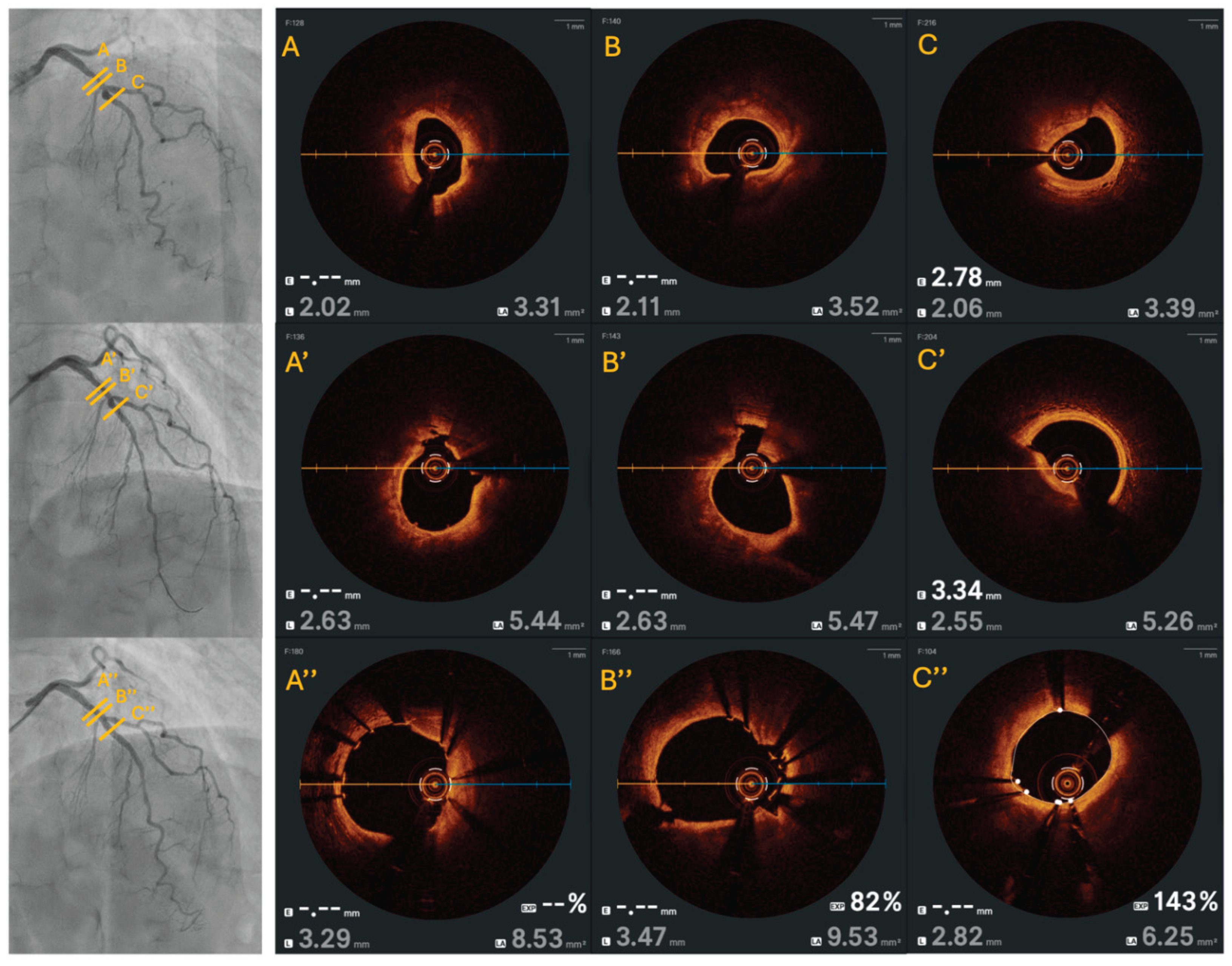
Table 1.
Clinical characteristics.
| N of patients = 16 | |
| Age, n (±SD) | 76.4 ± 7 |
| Female, n (%) | 5 (31) |
| BMI, kg/m2 [IQR] | 28 [11.4] |
| Diabetes mellitus, n (%) | 4 (25) |
| Dyslipidemia, n (%) | 15 (94) |
| Arterial hypertension, n (%) | 14 (88) |
| Active smoking, n (%) | 4 (25) |
| Family history for CAD, n (%) | 3 (19) |
| Chronic alcohol consumption, n (%) | 2 (13) |
| Previous MI, n (%) | 2 (13) |
| Previous PCI, n (%) | 8 (50) |
| Previous CABG, n (%) | 1 (6) |
| Clinical presentation, n (%) | |
| STEMI | 1 (6) |
| NSTEMI/UA | 3 (19) |
| CCS | 12 (75%) |
| LVEF, % [IQR] | 60 [17] |
Data are mean (SD = standard deviation), median (IQR = interquartile range) or number (n = number; % = percentage), as appropriate. BMI = Body Mass index; CAD = coronary artery disease; MI = myocardial infarction; PCI = Percutaneous coronary intervention; CABG = coronary artery bypass grafting; STEMI = ST elevation myocardial infarction; NSTEMI = non-ST elevation myocardial infarction; UA = unstable angina; CCS = chronic coronary syndrome; LVEF = left ventricular ejection fraction.
Table 2.
Angiographic characteristics.
| N of patients = 16 | |
| Number of vessels treated per procedure, n [IQR] | 1 [0] |
| Vessel treated, n (%) | |
| RCA, n (%) | 10 (63) |
| LAD, n (%) | 6 (37) |
| ACC/AHA coronary lesion calcification | |
| Severe calcification, n (%) | 16 (100) |
| Type B2, n (%) | 3 (19) |
| Type C, n (%) | 13 (81) |
| DES implantation, n (%) | 14 (88) |
| Number of DES implanted, n [IQR] | 2 [2] |
| Maximum DES diameter, mm [IQR] | 3 [4] |
| DES total length, mm (±SD) | 43±27 |
| DES implantation pressure, atm (±SD) | 12±6 |
| DCB use, n (%) | 2 (13) |
| Predilation before IVL | |
| SC balloon, n (%) | 5 (31) |
| SC balloon max. diameter, mm [IQR] | 1.5 [1] |
| SC balloon max. pressure, atm [IQR] | 14 [4] |
| NC balloon, n (%) | 12 (75) |
| NC balloon max. diameter, mm [IQR] | 2.5 [0.375] |
| NC balloon max. pressure, atm [IQR] | 16 [7] |
| ShockFast™, n (%) | 16 (100) |
| ShockFast™ max. diameter, mm [IQR] | 2.5 [1] |
| ShockFast™ max. pressure, atm [IQR] | 6 [0] |
| SchockFast™ pulses, pulses [IQR] | 120 [35] |
| Postdilatation, n (%) | 16 (100) |
Data are mean (SD = standard deviation), median (IQR = interquartile range) or number (n = number; % = percentage), as appropriate. RCA = right coronary artery disease; LAD = left anterior descending artery; ACC/AHA = American College of Cardiology/American Heart Association; DES = Drug eluting stent; atm = atmosphere; DCB = drug coated balloon; IVL = intravascular lithotripsy; SC = semi-compliant; NC = non-compliant.
Table 3.
QCA Analysis.
| N of patients = 16 | |
| Initial MLD, mm [IQR] | 1.21 [1.06] |
| Distal reference diameter (RVD), mm [IQR] | 2.5 [0.46] |
| Initial diameter stenosis, % [IQR] | 89.5 [17] |
| Lesion length, mm [IQR] | 28.9 [11.8] |
| Post-ShockFast™ MLD, mm [IQR] | 2.1 [0.64] |
| Post-ShockFast™ residual diameter stenosis, % [IQR] | 60.5 [32] |
| Final MLD, mm [IQR] | 3.1 [0.53] |
| Acute Lumen Gain, mm [IQR] | 1.86 [0.62] |
| Final diameter stenosis, % [IQR] | 11.5 [9] |
Data are mean (SD = standard deviation), median (IQR = interquartile range) or number (n = number; % = percentage), as appropriate. QCA = quantitative coronary analysis; MLD = minimal lumen diameter; RVD = reference vessel diameter.
Table 4.
OCT characteristics.
| N of patients = 8 | |
| Initial MLA, mm2 [IQR] | 3.1 [1.6] |
| Initial MLD, mm [IQR] | 1.94 [0.86] |
| Proximal reference diameter, mm [IQR] | 3.5 [0.90] |
| Proximal EEL reference diameter, mm [IQR] | 4.36 [0.41] |
| Distal reference diameter, mm [IQR] | 2.5 [0.36] |
| Distal EEL reference diameter, mm [IQR] | 3.27 [0.47] |
| Lesion length, mm [IQR] | 41.5 [28.2] |
| Calcified nodule, n (%) | 3 (38) |
| Eruptive calcified nodule, n (%) | 3 (100) |
| Calcium arc, degrees [IQR] | 274 [90] |
| Calcium thickness, mm [IQR] | 1.75 [0.29] |
| Calcium longitudinal length, mm [IQR] | 25.4 [21] |
| Revised OCT Calcium Score | |
| Score 2, n (%) | 1 (13) |
| Score 3, n (%) | 7 (87) |
| Original OCT Calcium Score | |
| Score 4, n (%) | 8 (100) |
| Presence of calcium fractures after ShockFast™, n (%) | 8 (100) |
| Calcium fractures > 2, n (%) | 5 (63) |
| Post ShockFast™ MLA, mm2 [IQR] | 4.14 [3] |
| Final MSA, mm2 [IQR] | 4.97 [3.53] |
| Acute lumen gain, mm2 [IQR] | 1 [2.85] |
| Final Stent Expansion, % [IQR] | 90 [9] |
| Malapposition, n (%) | 3 (38) |
| Major malapposition, n (%) | 0 (0) |
| Medial edge dissection, n (%) | 0 (0) |
Data are mean (SD = standard deviation), median (IQR = interquartile range) or number (n = number; % = percentage), as appropriate. OCT = optical coherence tomography; MLA = minimal lumen area; MLD = minimal lumen diameter; EEL = external elastic lamina; MSA = minimal stent area.
Table 5.
Pre- and post-procedural cardiac biomarkers.
| N of patients = 16 | |
| Initial Troponin, ng/L [IQR] | 19 [15] |
| Initial CK, U/L [IQR] | 76 [43] |
| Initial CK-MB, U/L [IQR] | 16 [6] |
| Pre-discharge Troponin, ng/L [IQR] | 35 [201] |
| Pre-discharge CK, U/L [IQR] | 97.5 [41] |
| Pre-discharge CK-MB, U/L [IQR] | 15 [9] |
Data are mean (SD = standard deviation), median (IQR = interquartile range) or number (n = number; % = percentage), as appropriate. CK = creatine kinase; CK-MB = creatine kinase MB.
Disclaimer/Publisher’s Note: The statements, opinions and data contained in all publications are solely those of the individual author(s) and contributor(s) and not of MDPI and/or the editor(s). MDPI and/or the editor(s) disclaim responsibility for any injury to people or property resulting from any ideas, methods, instructions or products referred to in the content. |
© 2026 by the authors. Licensee MDPI, Basel, Switzerland. This article is an open access article distributed under the terms and conditions of the Creative Commons Attribution (CC BY) license (http://creativecommons.org/licenses/by/4.0/).
Copyright: This open access article is published under a Creative Commons CC BY 4.0 license, which permit the free download, distribution, and reuse, provided that the author and preprint are cited in any reuse.


