

Submitted:
27 February 2026
Posted:
04 March 2026
You are already at the latest version
Abstract
Bertolotti's Syndrome is a congenital condition characterized by chronic low back pain stemming from a lumbosacral transitional vertebra (LSTV). While LSTV anatomy is present in approximately 20% of the population, the syndrome is clinically defined only when the LSTV is confirmed as the pain generator. This review synthesizes the latest understanding of the condition, ranging from its genetic origins in HOX gene patterning defects to modern clinical management. We examine the biomechanical alterations caused by LSTV and discuss the advantages of Jenkins classification over Castellvi classification. The diagnostic protocol is presented as a multi-step process, emphasizing the necessity of fluoroscopy-guided diagnostic injections to distinguish incidental findings from true pathology. Finally, we present the consensus treatment protocol based on latest findings and identify critical gaps in the literature regarding standardized care protocols and long-term surgical outcomes.
Keywords:
Bertolotti's Syndrome
; chronic low back pain (LBP)
; lumbosacral transitional vertebra (LSTV)
; Hox genes
; Jenkins classification
; Castellvi classification
1. Introduction
Bertolotti’s Syndrome (BSy) represents a complex and often underdiagnosed cause of chronic low back pain, originating from a congenital anomaly at the lumbosacral junction. First described in 1917 by Italian surgeon Mario Bertolotti, the syndrome establishes a clinical link between a specific anatomical variant called the lumbosacral transitional vertebra (LSTV) and the onset of chronic low back pain (Alonzo et al., 2018).
Several studies have tried to ascertain the incidence rate for LSTV in the general population. However, there is a large variance ranging between 4-36% of people having LSTV across different studies (Crane et al., 2021; Hsieh et al., 2000). The most accurate figure on the incidence of LSTV in the general population was found to be close to 20% after analysis of radiological images of 6200 individuals (Uçar et al., 2013). Although LSTV is present in nearly 1 in 5 people, we do not observe a similar number of people diagnosed with Bertolotti’s Syndrome.
Despite the high prevalence of LSTV in the general population, there remains a lack of comprehensive resources that bridge the gap between the biological origins of the condition and its clinical management. This review aims to address this deficit by integrating the genetic basis of Bertolotti’s Syndrome with the latest consensus on diagnostic protocols and treatment options. We provide a high-level overview of the most recent findings that provides the latest understanding the syndrome’s complexity beyond simple anatomical classification. Furthermore, we identify critical areas where further research is needed, particularly regarding the standardization of conservative care and the evaluation of long-term surgical outcomes, to better inform future therapeutic strategies.
2. Methods
A comprehensive search of the literature was conducted using PubMed for articles published up to November 2025. The search strategy utilized a combination of keywords including “Bertolotti’s Syndrome,” “lumbosacral transitional vertebra,” and “LSTV”. Priority was given to systematic reviews, meta-analyses, retrospective cohort studies as well as case reports published within the last 15 years to capture the modern consensus on diagnostic and treatment protocols. Articles were restricted to English-language publications.
2.1. LSTV Classification
The modern classification of LSTV anatomy was first introduced by Antonio Castellvi to characterize the different types of transitional anatomy observed in patients (Castellvi et al., 1984). However, this classification has several limitations. First, the classification was developed to identify lumbosacral disc herniations in patients. It does not consider the role of LSTV in causing Bertolotti’s Syndrome. Furthermore, the Castellvi classification has been used erroneously when diagnosing patients. Second, it fails to consider the contact of the enlarged transverse process to the iliac crest. These limitations were addressed by Dr. Arthur Jenkins and his team in their revised LSTV classification system termed the Jenkins classification (Jenkins, O’Donnell, et al., 2023).
2.2. Jenkins Classification of LSTV
(illustrations below have been adapted from Jenkins, O’Donnell, et al., 2023)
Type 1:
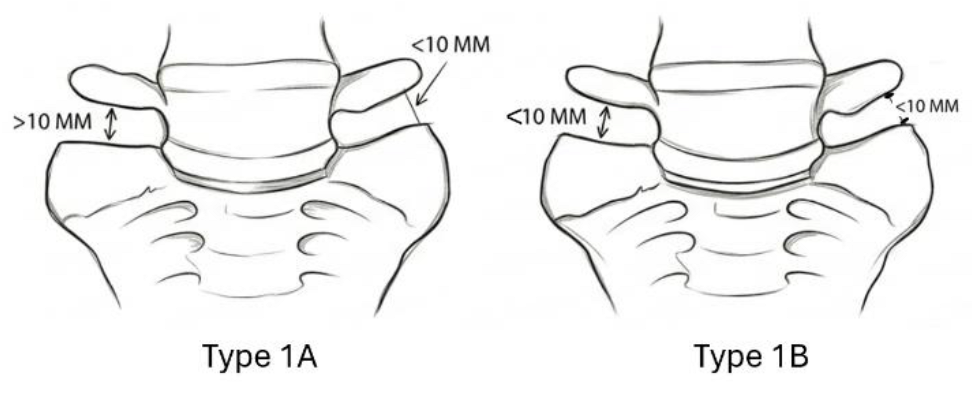
Type 1A - Enlarged transverse process on the last lumbar segment with less than 10mm gap, but over 2mm gap, between the transverse process and sacral ala on one side only. The other side has “normal” distance over 10mm.
Type 1B - Both transverse processes of the last lumbar segment have less than 10mm gap, but over 2mm gap, between the transverse process and sacral ala.
Type 2:
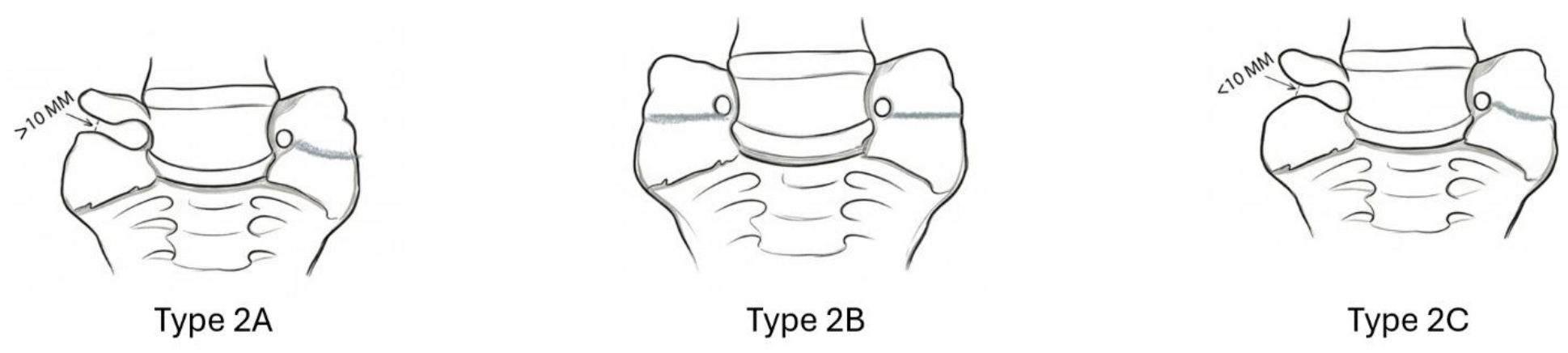
Type 2A - Incomplete lumbarization/sacralization with enlarged transverse process that creates a pseudo-articulation with itself and the sacrum (less than 2mm distance) on one side only. The other side has “normal” distance of above 10mm.
Type 2B - Symmetrical anatomy where both transverse processes have a pseudo-articulation on both sides with the sacrum with less than 2mm distance.
Type 2C - Hybrid anatomy where one transverse process has Type II anatomy (i.e., forms pseudo-articulation with the sacrum) and the other transverse process has Type IA anatomy (i.e., has between 2mm to 10mm distance between itself and the sacrum).
Type 3:
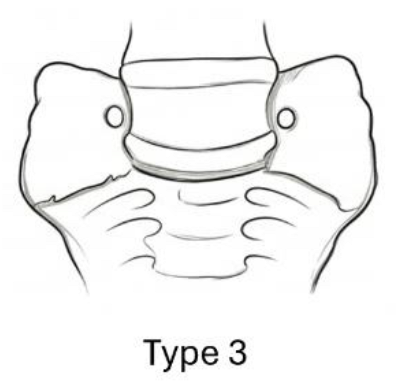
Bilateral lumbarization/sacralization with complete osseous (bone) fusion of the transverse processes to the sacrum.
Type 4:
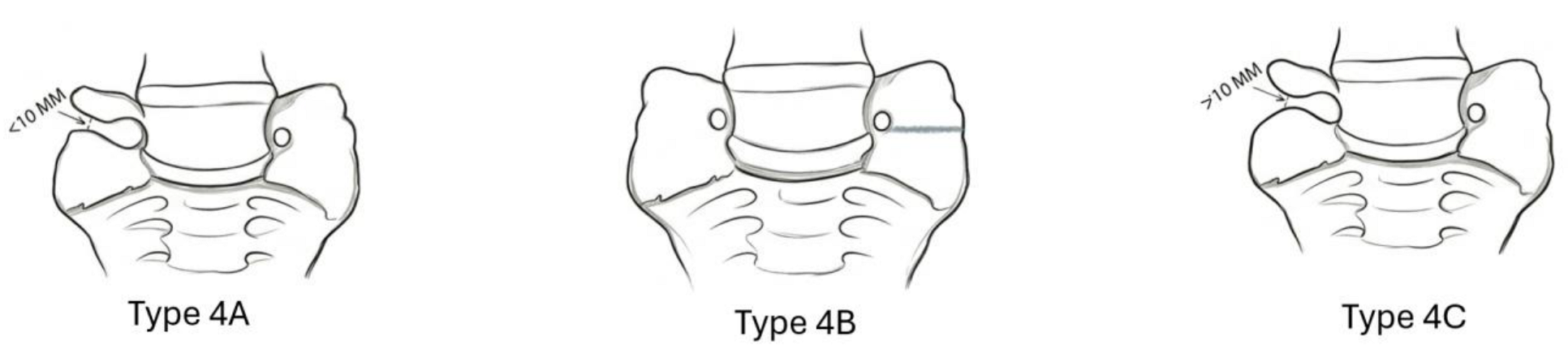
Type 4A - Lumbarization/sacralization with complete osseous fusion of transverse process to the sacrum on one side only. The other side has Type I anatomy with transverse process at distance of less than 10mm from sacrum.
Type 4B - Lumbarization/sacralization with complete osseous fusion (i.e., Type 3 like anatomy) on one side and an incomplete lumbarization/sacralization of the transverse process on other side (i.e., type 2 like anatomy).
Type 4C - Lumbarization/sacralization with complete osseous fusion of transverse process to the sacrum on one side only. The other side has “normal” anatomy with transverse process at distance of more than 10mm from sacrum.
3. Symptoms Observed in Patients with Bertolotti’s Syndrome
The presence of LSTV is an anatomical observation. Bertolotti’s Syndrome, however, is a clinical diagnosis made only when this LSTV is definitively identified as the source of a patient’s chronic low back pain and associated symptoms (Crane et al., 2021).
This distinction is of paramount clinical importance because a significant portion of individuals with LSTV remain entirely asymptomatic throughout their lives. The challenge for clinicians, therefore, is not merely to identify the LSTV on an imaging study but to rigorously prove its causal relationship to the patient’s pain (Alonzo et al., 2018). This diagnostic hurdle is a primary reason why the condition is frequently overlooked, leading to prolonged periods of patient suffering and ineffective treatments directed at other potential pain sources. Some of the factors contributing to this diagnostic hurdle include:
Large variance in age of symptom onset - Patients with Bertolotti’s Syndrome tend to present with chronic lower back pain that started early in life. Some patients have been diagnosed as early as mid-to-late teens (Ali & Enchev, 2023). A recent retrospective cohort study of 150 individuals by Jenkins et al. showed that the average age of the cohort was 49 years old (Jenkins, O’Donnell, et al., 2023). This large variance contributes to the delays in patients getting an accurate diagnosis.
Heterogeneity in presentation of symptoms - The primary symptoms observed in majority of patients is chronic low back pain (LBP). A systematic review indicated that approximately 96.4% of diagnosed patients report low back pain. Due to the difficulty in diagnosing the condition, patients frequently suffer for extended periods before confirmation. Research has noted a mean symptom duration of approximately 3.5 years (41.4 months) (Zhu et al., 2023).
Besides the LBP, some patients experience radiating pain into their legs mimicking sciatica caused by compression of the L5 nerve root. Furthermore, patients can experience pain localized to the gluteal region, hips, and groin area (Zhu et al., 2023).
Presence of ‘collateral damage’ – Individuals with Bertolotti’s Syndrome may present with a myriad symptoms. This variety arises from several factors including the different types of LSTV, the presence of comorbidities (e.g., disc herniation), and other congenital conditions (hEDS). Despite this, it is important to note that some symptoms are largely maintained across most individuals. These include pain symptoms considered to be typically mechanical in nature, i.e., aggravated by movement. The main aggravators of symptoms tend to be lumbar flexion and rotation. Some patients also experience discomfort from prolonged sitting and certain sleeping positions.
4. Biomechanical Changes Due to Bertolotti’s Syndrome
The presence of LSTV fundamentally alters the biomechanics of the lumbosacral spine initiating a cascade of pathological changes that can lead to pain. In a normal spine, forces are distributed through the mobile lumbar segments to the stable sacropelvic complex. However, an LSTV introduces hypomobile lumbar segment resulting in hypermobility and greater forces applied on the segment immediately above (Alonzo et al., 2018).
The altered biomechanics can result in patients presenting with lower back pain. The source of this pain can be attributed to various factors stemming from the changes caused by the LSTV. Some of these sources of pain include:
4.1. Direct Effect of LSTV
- Arthritis of the pseudo-articulation – In LSTV types where the transverse process forms a “false joint” with the sacrum (i.e., type II & type IV), the bone-on-bone contact leads to mechanical grinding, inflammation, and the formation of osteophytes. This can lead to direct localized, aching pain (Poe, 2013).
- Radiculopathy – Radiculopathy (i.e., pain radiating down the leg) can occur through several mechanisms. This can be caused by direct compression of the exiting L5 nerve root due to the enlarged transverse process. Alternatively, the local inflammation caused by osteophyte formation due to pseudo-articulation can lead to irritation of the exiting L5 nerve root. Alternatively, the hypermobility at the L4-L5 level due to LSTV can cause disc herniation at that level (Jancuska et al., 2015).
4.2. Secondary Effects of LSTV
- Myofascial pain – The body’s attempt to stabilize the anomalous anatomy can cause increased strain on the musculature around the LSTV. This can lead to hypertonicity in the Quadratus Lumborum (QL) and the Iliopsoas that can cause formation of chronic strain and trigger points in these muscles (Jain et al., 2013).
- Contralateral facet joint stress – The asymmetrical motion caused by unilateral LSTV can place excessive load on the facet joint on the opposite side of the pseudo-articulation. This can lead to facet joint pain and development of arthritis (Jancuska et al., 2015).
- Adjacent segment disease – Compensatory hypermobility of the segment above the LSTV can lead to acceleration of degeneration of the disc. This, in turn, leads to higher incidence of disc herniation, annular tears (i.e., tear of the outer wall of the disc), and spinal stenosis compared to individuals with normal anatomy (Crane et al., 2021).
5. Genetic Basis for Bertolotti’s Syndrome
Bertolotti’s Syndrome is a congenital condition that occurs due to an error in the early embryonic stages of development. The development of a lumbosacral transitional vertebra, the basis for Bertolotti’s Syndrome, is a consequence of a developmental patterning defect.
The family of genes involved in determining the segmentation of the spine segments are the HOX gene family. These genes are a family of transcription factors that determine whether each vertebra becomes a cervical, thoracic, lumbar or sacral segment (Lawrence et al., 2024; Rux & Wellik, 2017). The formation of a lumbosacral transitional anatomy falls to two sets of HOX genes: HOX10 and HOX11. HOX10 genes confer the development of non-rib bearing vertebra, i.e., lumbar vertebral segments whereas HOX11 genes are responsible for the development of the sacrum (Carapuço et al., 2005).
Taken together, we ascertain that LSTV is a consequence of a homeotic transformation resulting from a boundary shift in the expression pattern of HOX genes, namely HOX10 and HOX11 gene groups. Cranial shift of the expression of HOX11 genes may result in the partial or complete sacralization of the last lumbar segment. Conversely, caudal shift of the expression of HOX10 genes can confer partial or complete lumbarization at the S1 level.
6. Congenital Conditions Associated with Bertolotti’s Syndrome
Several congenital conditions have been observed in patients diagnosed with Bertolotti’s Syndrome. Based on currently available literature, the co-incidence of these congenital conditions and Bertolotti’s Syndrome is purely correlative; neither causative links nor commonalities in the genetic changes leading to these conditions has been found. However, there is indication that the presence of transitional anatomy at the lumbosacral segment means there is higher likelihood of finding transitional anatomy (e.g., thoracolumbar, or cervicothoracic) at other levels. Some of the conditions that have been observed in patients are shown below:
- Hypermobility Ehlers-Danlos Syndrome (hEDS) – hEDS is a rare heritable tissue disorder that causes general joint hypermobility. It is the most common type of EDS, accounting for about 90% of cases. Some patients with hEDS have also been shown to have Craniocervical Instability (CCI) and Thoracic Outlet Syndrome. The specific genes that cause hEDS have not been elucidated. As such, there is no laboratory test that can definitively identify patients with hEDS (Gensemer et al., 2021).
- Spina Bifida Occulta - Spina bifida is a rare congenital disorder where there is incomplete neural tube closure during fetal development. Spina bifida occulta is a mild version of this condition where a gap is present between the vertebrae (Imbard et al., 2013).
- Cervical stenosis - Cervical stenosis is caused by the narrowing of the spinal canal in the cervical spine. Cervical stenosis can be congenital or acquired due to degenerative changes after birth (Goodwin & Hsu, 2023).
- Extra L6 vertebra – An L6 vertebra is formed due to the complete lumbarization of the S1 vertebra (Matson et al., 2020). This likely stems from incorrect spine segmentation during development determined by the HOX gene family (Carapuço et al., 2005).
- Thoracic outlet syndrome (TOS) – TOS describes a set of symptoms in the neck and shoulder characterized by numbness, tingling, and pain. This is caused by the compression of the nerves and blood vessels traversing the narrow space between the clavicle and the first rib. Neurogenic TOS, caused by the compression of the C5-T1 brachial plexus nerve roots, accounts for over 90% of TOS cases. Furthermore, patients with a cervical rib (i.e., a transitional anatomy) are predisposed to developing neurogenic TOS (Jones et al., 2019).
7. Diagnosis of Bertolotti’s Syndrome
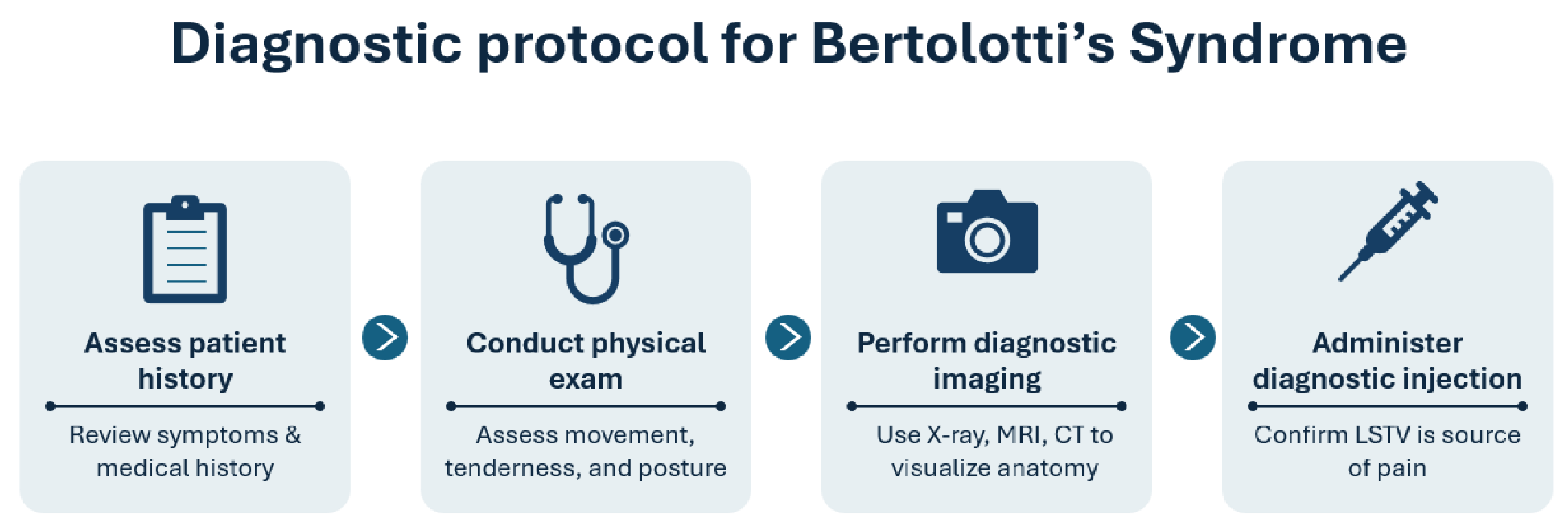
Clinical presentation of pain symptoms in patients with Bertolotti’s Syndrome is not always straightforward. Therefore, the diagnosis of Bertolotti’s Syndrome is a multi-step process that requires a critical review of patient history, thorough physical evaluation, precise imaging, and administration of a diagnostic injection.
7.1. Diagnostic Protocol for Bertolotti’s Syndrome
7.1.1. Assess Patient History
Patients with Bertolotti’s Syndrome tend to present with chronic lower back pain that started early in life. In some patients, symptoms may have been initiated after a specific incident such as a fall or a car accident. However, this is not always the case. Given the lack of consistent triggers for symptom onset, the patient history alone cannot provide sufficient information to make a determination.
7.1.2. Conduct Physical Exam
Physical exam can reveal localized tenderness around the posterior superior iliac spine (PSIS), the SI joint, and the paraspinal muscles (Adams et al., 2018). Furthermore, individuals may present with limited lumbar range of motion as well as positive tests on the FABER and Gaenslen tests (Adams et al., 2018; Alonzo et al., 2018). Given the non-specificity of a physical exam in diagnosing Bertolotti’s Syndrome, it is important that it is coupled with the appropriate radiological imaging and diagnostic injections.
7.1.3. Diagnostic Imaging
Diagnostic imaging is a critical component in the diagnostic protocol for Bertolotti’s Syndrome. It is used to identify the presence, and type, of LSTV. Furthermore, it helps identify other potential pathologies that could be contributing to the patient’s symptoms. The imaging modalities utilized are as follows:
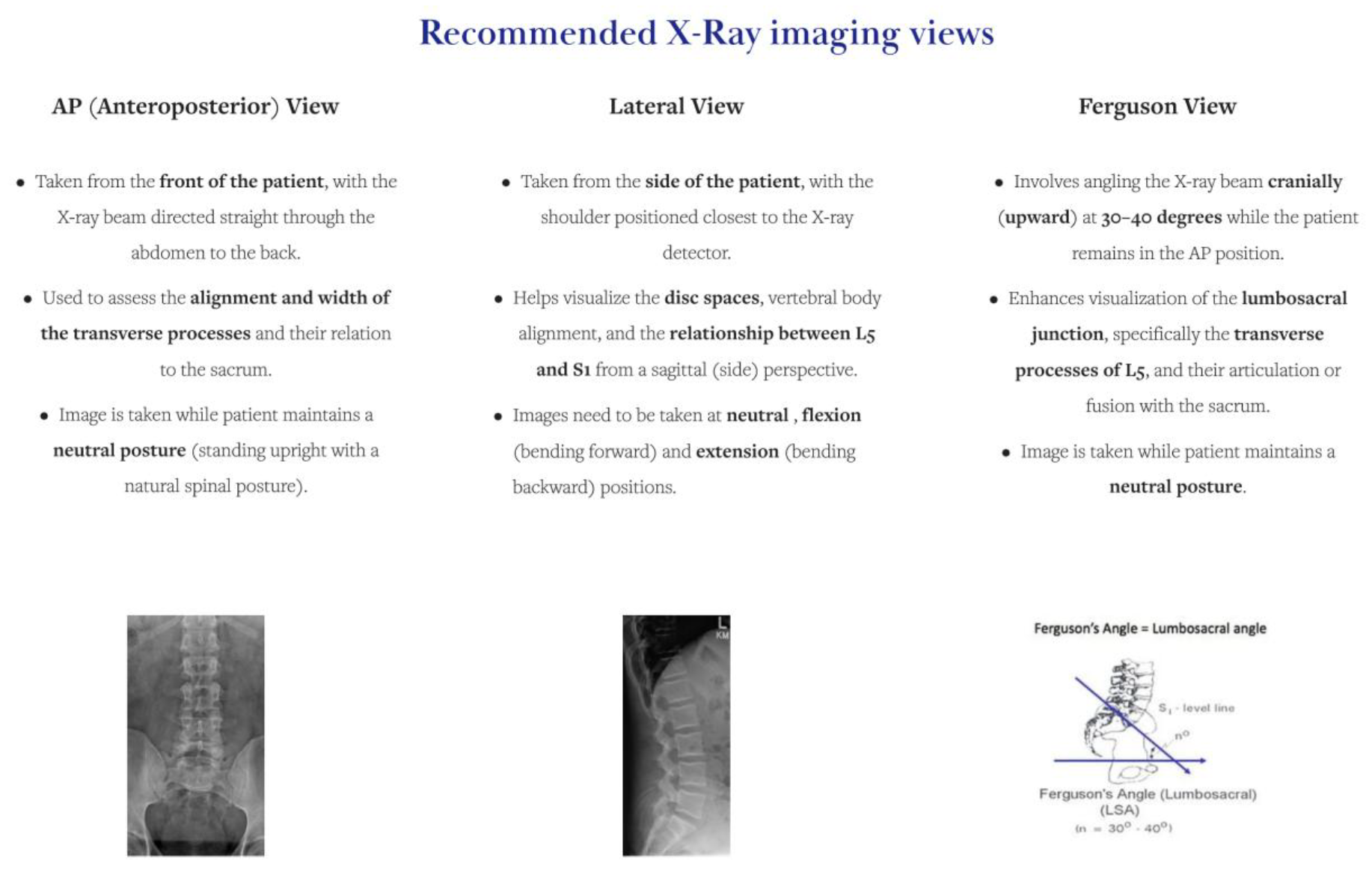
X-ray – Clear visualization of the lumbosacral region for the purpose of identifying LSTV requires a combination of three imaging views and three positional postures: anteroposterior (AP), lateral, and Ferguson view (Konin & Walz, 2010). The Ferguson view is the most important imaging view as it provides an unobstructed view of the lumbosacral junction.
Magnetic Resonance Imaging (MRI) – MRI goes beyond identifying the presence of LSTV. It helps to clearly evaluate soft tissue in the lumbosacral region. It helps identify any comorbidities that could be the source of the patient’s pain such as disc herniation, annular tear, facet joint arthrosis, and nerve root compression (Alonzo et al., 2018).
Computed Tomography (CT) scan – This is considered to be the best method to visualize LSTV. However, it is not the first-line imaging technique for assessing the presence of LSTV since it exposes patients to higher levels of radiation (Konin & Walz, 2010). CT images are used develop a 3D model of the lumbosacral region which can, in turn, aid in the devising appropriate surgical approach. In certain cases, SPECT/CT scans are used to locate the site of pain. This technique uses a radioactive tracer that localizes to sites of osteoblast activity which localizes to the sites of arthrosis formed due to the pseudo-articulation formed by LSTV (Riyami et al., 2017). It is important to note that patients with Bertolotti’s Syndrome may not always have positive signal on SPECT/CT scan. A negative SPECT/CT scan results does not rule out LSTV as the pain generator. This must be confirmed using diagnostic injection.
7.1.4. Diagnostic Injection
The presence of LSTV does not necessarily mean that it is the pain generator. The final and most critical step in the diagnostic protocol for Bertolotti’s Syndrome is the fluoroscopy-guided diagnostic injection at the site of pseudo-articulation with just a local anesthetic (e.g., lidocaine or bupivacaine). The injection is considered to be positive if the patient experiences more than 80% reduction in their pain symptoms (Jain et al., 2013; Jenkins et al., 2023). A negative result after the injection indicates that the LSTV is likely not the pain generator.
8. Treatment Options for Bertolotti’s Syndrome
The management of Bertolotti’s Syndrome follows a standard treatment cascade which begins with the least invasive options and progresses to more involved procedures. Here, we aggregated the treatment cascade into three steps: Conservative therapy, interventional therapy, and surgery.
8.1. Step 1 – Conservative Therapy
This step follows an integrative approach which utilizes pharmacotherapeutics, activity modification and physical therapy. Conservative approaches have had varying degrees of success in mitigating pain symptoms and delaying the need for surgical intervention (Crane et al., 2021; Jain et al., 2013). Nevertheless, it is critical that all conservative therapeutic approaches are explored before considering surgery.
Pharmacotherapeutics – Patients with Bertolotti’s Syndrome experience pain due to the inflammation caused by the arthritic pseudo-articulation or through secondary effects of the LSTV. These symptoms can be mitigated using non-steroidal anti-inflammatory drugs (NSAIDs) such as Naproxen, Meloxicam and Ibuprofen. Meloxicam is preferred for long-term management of symptoms over Naproxen given its selectivity in its mechanism of action as well as lower risk of causing ulcers or renal side effects (Hopkins et al., 2025; Wojtulewski et al., 1996). In patients presenting with severe muscle spasms in response to pain, a muscle relaxant may also be prescribed.
Activity modification – When discussing the altered biomechanics due to LSTV, we highlighted that certain movements lead to aggravation of symptoms in patients. Providing guidance to patients on how to modify daily activities to reduce strain can be an effective way to reduce pain. These recommendations should include:
- Avoiding provocative movements – Counsel patients to avoid or modify activities that require repetitive lumbar flexion, rotation and extension. Furthermore, high impact activities such as jumping exercises should be reduced or avoided.
- Proper lifting mechanics – Instruct patients proper lifting techniques (i.e., bending at the knees and keeping load close to the body) and to avoid excessive loading of the back. Patients should work closely with their physical therapist to determine safe ways to perform activities that induce strain on the lower back.
Physical therapy – Patients with Bertolotti’s Syndrome have altered biomechanics due to the LSTV. These changes include hypermobility at adjacent segments, core instability, and asymmetric muscle tonicity in the lower back. To devise the best treatment approach that is specific to each patient, a physical therapist should perform thorough examination. The treatment protocol should aim to improve core stability and teach the patient ways to safely perform daily tasks without increasing pain levels.
8.2. Step 2 – Interventional Therapy
If the conservative therapeutic approaches fail to provide adequate relief, interventional pain management techniques such as corticosteroid injections and radiofrequency ablation (RFA) become important second line intervention for patients. Due to the paucity of published research on the use of injections or RFA for treating Bertolotti’s Syndrome, we have relied on case reports and small-scale studies in our analysis.
Corticosteroid injection to the pseudo-articulation can be administered in order to alleviate inflammation (Holm et al., 2017). This, coupled with conservative therapies outlined above can provide lasting pain relief for patients. In some cases, corticosteroid injections only provide temporary relief requiring periodic re-administration (Jain et al., 2013).
In some patients, L4/L5 facet joint RFA has been used to successfully reduce pain levels (Burnham, 2010; Yadav et al., 2024). Based on our findings, there is no consensus on the relative efficacy of the different type of RFA techniques: thermal, cooled or pulsed RFA. This further emphasizes the need of further clinical research to identify interventional pain management techniques that would be effective for Bertolotti’s Syndrome patients.
8.3. Step 3 – Surgery
When a comprehensive course of conservative and interventional management fails to provide lasting relief for a patient with debilitating pain from Bertolotti’s Syndrome, surgical intervention becomes a viable option. Irrespective of the surgical approach used, a positive response to a diagnostic injection of local anesthetic into the anomalous joint is required to confirm that the pseudo-articulation is a primary source of the patient’s pain (Jenkins, Chung, et al., 2023; McGrath et al., 2022). Two surgical approaches are commonly used to directly address the direct effects of LSTV: resection (transverse processectomy) or fusion.
Resection surgery aims to directly address the source of mechanical pain by surgically removing or “shaving down” the enlarged transverse process. This eliminates the bone-on-bone contact responsible for mechanical grinding, inflammation, and the formation of osteophytes (Poe, 2013). Given recent advances, resection surgery utilizes minimally invasive surgical techniques using microscopic tubular resection or endoscopic resection. These utilize smaller incisions and specialized instruments to minimize damage to the surrounding muscles and tissues (Ahn et al., 2024). Resection surgery is typically performed in patients with minimal co-morbidities; namely, patients that do not have spinal stenosis, significant degeneration of adjacent segments, disc herniation, nor the presence of other congenital conditions associated with Bertolotti’s Syndrome.
Fusion surgery aims to completely eliminate motion at the painful segment by creating a solid bridge of bone, effectively making the transitional vertebra a permanent part of the sacral base. This is typically achieved with posterolateral fusion using bone graft material and stabilization with pedicle screws and rods (Jenkins, Chung, et al., 2023). Bone grafts are infused with Recombinant Bone Morphogenic Protein-2 (rhBMP-2) to ensure successful fusion.
Resection vs Fusion
There is likely no “one size fits all” surgical approach for Bertolotti’s Syndrome patients. The right surgical approach must take into account a multitude of factors such as the type of LSTV, patient co-morbidities, age of patient, surgical history, and more. Resection surgery holds appeal to many patients given the minimally invasive approach and the fast recovery time. However, it does come with the risk of introducing further instability. The LSTV, while pathological, often provides some degree of abnormal stability to the lumbosacral junction. Removing this structure without addressing underlying instability can lead to poor long-term outcomes (Jenkins, Chung, et al., 2023).
On the other hand, Fusion is generally considered the more appropriate choice for patients who have evidence of spinal instability, advanced degenerative disc disease at the adjacent level, spondylolisthesis, or in cases where a simple resection is deemed likely to cause further spine instability. However, fusion surgery can come with its own set of risks including accelerating degeneration of segments above fusion site (i.e., adjacent segment disease) and hardware related issues.
A recent retrospective cohort study of 150 individuals by Jenkins et al. has taken steps to develop a systematic framework that uses the anatomy of the LSTV for determining the appropriate surgical approach (Jenkins, Chung, et al., 2023). Patient outcomes were tracked up to 2 years post-surgery. Based on these results, the authors offer surgical recommendations for the different classes of LSTV: resection surgery for Type 1 patients, bilateral fusion surgery for Type 2 patients, and unilateral fusion for Type 4 patients. To our knowledge, this is the first study to attempt to associate a surgical approach that yields the best outcomes based on a patients’ LSTV anatomy. It lays a strong foundation upon which further studies can build upon to develop a robust clinical protocol to select the appropriate surgical technique that yields the best outcomes for the patient.
9. Conclusions and Areas for Further Investigation
9.1. What we Know so Far
Bertolotti’s Syndrome is a congenital condition that arises from an anatomical variation in the lower spine, known as a lumbosacral transitional vertebra (LSTV). It is important to note that the presence of LSTV itself does not mean a patient will develop Bertolotti’s Syndrome. Although the specific genetic changes leading to LSTV are not fully elucidated, it is understood to be a patterning defect rooted in embryological expression of HOX gene family.
An accurate diagnosis of Bertolotti’s Syndrome requires an integrative, multi-step approach. The pathway begins with taking detailed patient history and conducting thorough physical exam. Next, radiological imaging (e.g., X-ray, CT, MRI) to identify the LSTV and potential associated comorbidities. The final, critical step is often a physiological confirmation using diagnostic injection of the pseudo-articulation. This rigorous process is essential to distinguish an incidental anatomical finding from a true pain generator.
9.2. Areas for Further Investigation
Despite significant advances in understanding and managing Bertolotti’s Syndrome, there are several critical areas that merit investigation.
- Broad adoption of unified LSTV classification system – While the Jenkins classification offers a robust methodology that addresses the diagnostic limitations of the Castellvi classification, it has yet to be widely adopted across the medical field. Establishing a standardized nomenclature specific to Bertolotti’s Syndrome is critical for ensuring effective communication between diverse specialties, including radiology, neurology, and pain management. A unified language is the first step toward systematically documenting patient presentations, which will eventually allow researchers to aggregate data and correlate specific symptom profiles with distinct LSTV classifications.
- Standardization of conservative care protocols - While the principles of targeted physical therapy are broadly understood, there are no specific protocols to address the issues that arise in patients with Bertolotti’s Syndrome. Therefore, development and validation of standardized, evidence-based PT protocols could improve the efficacy of non-operative care, potentially reducing the number of patients who require surgery.
- Clarity on effective surgical techniques – There are limited studies currently available that investigate long-term outcomes of patients that have undergone surgery. There should be more studies aimed at developing a surgical protocol based on large-scale, long-term, evaluation of patient outcomes. Furthermore, there currently exists only one study (Jenkins, Chung, et al., 2023) that attempts to systematize the selection of a surgical approach based on the specific anatomy and symptoms of the patient. Although it is a great start, more studies are required to validate the findings before it can be widely adopted. The target state should be a clear rubric surgeons can utilize to determine the appropriate surgical approach for a patient.
- Establish global patient registry – The establishment of a global patient registry is critical for tracking the natural history of Bertolotti’s Syndrome outside of select surgical populations. Integrating Patient-Reported Outcome Measures (PROMs) into this registry will provide a quantifiable metric for patient burden that imaging alone cannot capture. This data is vital for enhancing diagnostic rigor, as it allows for the correlation of specific LSTV types with functional impairments. Ultimately, a robust dataset of PROMs will reveal the long-term efficacy of various interventions, guiding the development of more effective, patient-centered treatment protocols.
References
- Adams, R.; Herrera-Nicol, S.; Jenkins, A. L. Surgical Treatment of a Rare Presentation of Bertolotti’s Syndrome from Castellvi Type IV Lumbosacral Transitional Vertebra: Case Report and Review of the Literature. Journal of Neurological Surgery Reports 2018, 79(3), e70–e74. [Google Scholar] [CrossRef]
- Ahn, Y. H.; Seo, J. H.; Ju, C. I.; Kim, P. Surgical Options for Bertolotti Syndrome. Journal of Minimally Invasive Spine Surgery and Technique 2024, 9(2), 170–179. [Google Scholar] [CrossRef]
- Ali, M.; Enchev, Y. A rare cause of low back pain in adolescence – Bertolotti syndrome: A case report. Surgical Neurology International 2023, 14, 383. [Google Scholar] [CrossRef]
- Alonzo, F.; Cobar, A.; Cahueque, M.; Prieto, J. A. Bertolotti’s syndrome: An underdiagnosed cause for lower back pain. Journal of Surgical Case Reports 2018, 2018(10), rjy276. [Google Scholar] [CrossRef]
- Burnham, R. Radiofrequency sensory ablation as a treatment for symptomatic unilateral lumbosacral junction pseudarticulation (Bertolotti’s syndrome): A case report. Pain Medicine (Malden, Mass.) 2010, 11(6), 853–855. [Google Scholar] [CrossRef]
- Carapuço, M.; Nóvoa, A.; Bobola, N.; Mallo, M. Hox genes specify vertebral types in the presomitic mesoderm. Genes & Development 2005, 19(18), 2116–2121. [Google Scholar] [CrossRef] [PubMed]
- Castellvi, A. E.; Goldstein, L. A.; Chan, D. P. K. Lumbosacral Transitional Vertebrae and Their Relationship With Lumbar Extradural Defects. Spine 1984, 9(5), 493. [Google Scholar] [CrossRef]
- Crane, J.; Cragon, R.; O’Neill, J.; Berger, A. A.; Kassem, H.; Sherman, W. F.; Paladini, A.; Varrassi, G.; Odisho, A. S.; Miriyala, S.; Kaye, A. D. A Comprehensive Update of the Treatment and Management of Bertolotti’s Syndrome: A Best Practices Review. Orthopedic Reviews 2021, 13(2), 24980. [Google Scholar] [CrossRef] [PubMed]
- FABER Test. Physiopedia. n.d. Available online: https://www.physio-pedia.com/FABER_Test.
- Gensemer, C.; Burks, R.; Kautz, S.; Judge, D. P.; Lavallee, M.; Norris, R. A. Hypermobile Ehlers-Danlos syndromes: Complex phenotypes, challenging diagnoses, and poorly understood causes. Developmental Dynamics: An Official Publication of the American Association of Anatomists 2021, 250(3), 318–344. [Google Scholar] [CrossRef]
- Goodwin, A. M.; Hsu, W. K. Congenital Cervical Stenosis: A Review of the Current Literature. Current Reviews in Musculoskeletal Medicine 2023, 16(9), 438–445. [Google Scholar] [CrossRef] [PubMed]
- Holm, E. K.; Bünger, C.; Foldager, C. B. Symptomatic lumbosacral transitional vertebra: A review of the current literature and clinical outcomes following steroid injection or surgical intervention. SICOT-J 2017, 3, 71. [Google Scholar] [CrossRef] [PubMed]
- Hopkins, S.; Yang, V.; Liew, D. F. Choosing a nonsteroidal anti-inflammatory drug for pain. Australian Prescriber 2025, 48(4), 139–144. [Google Scholar] [CrossRef]
- Hsieh, C.-Y. J.; Vanderford, J. D.; Moreau, S. R.; Prong, T. Lumbosacral transitional segments: Classification, prevalence, and effect on disk height. Journal of Manipulative & Physiological Therapeutics 2000, 23(7), 483–489. [Google Scholar] [CrossRef]
- Imbard, A.; Benoist, J.-F.; Blom, H. J. Neural Tube Defects, Folic Acid and Methylation. International Journal of Environmental Research and Public Health 2013, 10(9), 4352–4389. [Google Scholar] [CrossRef]
- Jain, A.; Agarwal, A.; Jain, S.; Shamshery, C. Bertolotti Syndrome: A Diagnostic and Management Dilemma for Pain Physicians. The Korean Journal of Pain 2013, 26(4), 368–373. [Google Scholar] [CrossRef]
- Jancuska, J. M.; Spivak, J. M.; Bendo, J. A. A Review of Symptomatic Lumbosacral Transitional Vertebrae: Bertolotti’s Syndrome. International Journal of Spine Surgery 2015, 9. [Google Scholar] [CrossRef]
- Jenkins, A. L.; Chung, R. J.; O’Donnell, J.; Hawks, C.; Jenkins, S.; Lazarus, D.; McCaffrey, T.; Terai, H.; Harvie, C.; Matsoukas, S. Redefining the Treatment of Lumbosacral Transitional Vertebrae for Bertolotti Syndrome: Long-Term Outcomes Utilizing the Jenkins Classification to Determine Treatment. World Neurosurgery 2023, 175, e21–e29. [Google Scholar] [CrossRef]
- Jenkins, A. L.; O’Donnell, J.; Chung, R. J.; Jenkins, S.; Hawks, C.; Lazarus, D.; McCaffrey, T.; Terai, H.; Harvie, C. Redefining the Classification for Bertolotti Syndrome: Anatomical Findings in Lumbosacral Transitional Vertebrae Guide Treatment Selection. World Neurosurgery 2023, 175, e303–e313. [Google Scholar] [CrossRef]
- Jones, M. R.; Prabhakar, A.; Viswanath, O.; Urits, I.; Green, J. B.; Kendrick, J. B.; Brunk, A. J.; Eng, M. R.; Orhurhu, V.; Cornett, E. M.; Kaye, A. D. Thoracic Outlet Syndrome: A Comprehensive Review of Pathophysiology, Diagnosis, and Treatment. Pain and Therapy 2019, 8(1), 5–18. [Google Scholar] [CrossRef] [PubMed]
- Konin, G. P.; Walz, D. M. Lumbosacral Transitional Vertebrae: Classification, Imaging Findings, and Clinical Relevance. AJNR: American Journal of Neuroradiology 2010, 31(10), 1778–1786. [Google Scholar] [CrossRef]
- Lawrence, J. E. G.; Roberts, K.; Tuck, E.; Li, T.; Mamanova, L.; Balogh, P.; Usher, I.; Piapi, A.; Mazin, P.; Anderson, N. D.; Bolt, L.; Richardson, L.; Prigmore, E.; He, X.; Barker, R. A.; Flanagan, A.; Young, M. D.; Teichmann, S. A.; Bayraktar, O.; Behjati, S. HOX gene expression in the developing human spine. Nature Communications 2024, 15(1), 10023. [Google Scholar] [CrossRef]
- Matson, D. M.; MACCORMICK, L. M.; SEMBRANO, J. N.; POLLY, D. W. Sacral Dysmorphism and Lumbosacral Transitional Vertebrae (LSTV) Review. International Journal of Spine Surgery 2020, 14 (Suppl 1), S14–S19. [Google Scholar] [CrossRef]
- McGrath, K. A.; Thompson, N. R.; Fisher, E.; Kanasz, J.; Golubovsky, J. L.; Steinmetz, M. P. Quality-of-life and postoperative satisfaction following pseudoarthrectomy in patients with Bertolotti syndrome. The Spine Journal: Official Journal of the North American Spine Society 2022, 22(8), 1292–1300. [Google Scholar] [CrossRef]
- Poe, L. B. Bertolotti’s Syndrome | Radsource. 27 December 2013. Available online: https://radsource.us/bertolottis-syndrome/.
- Riyami, K. S. A.; Alahmed, S. M.; Saad, Z. Z.; Bomanji, J. Evaluation and Identification of Lumbosacral Transitional Vertebra Causing Intractable Low Back Pain Utilizing Bone Single-Photon Emission Tomography with Computed Tomography. World Journal of Nuclear Medicine 2017, 16(4), 328–330. [Google Scholar] [CrossRef] [PubMed]
- Rux, D. R.; Wellik, D. M. Hox genes in the adult skeleton: Novel functions beyond embryonic development. In Developmental Dynamics; 2017. [Google Scholar] [CrossRef]
- Uçar, D.; Uçar, B. Y.; Coşar, Y.; Emrem, K.; Gümüşsuyu, G.; Mutlu, S.; Mutlu, B.; Çaçan, M. A.; Mertsoy, Y.; Gümüş, H. Retrospective Cohort Study of the Prevalence of Lumbosacral Transitional Vertebra in a Wide and Well-Represented Population. Arthritis 2013, 2013, 461425. [Google Scholar] [CrossRef] [PubMed]
- Wojtulewski, J. A.; Schattenkirchner, M.; Barceló, P.; Le Loët, X.; Bevis, P. J.; Bluhmki, E.; Distel, M. A six-month double-blind trial to compare the efficacy and safety of meloxicam 7.5 mg daily and naproxen 750 mg daily in patients with rheumatoid arthritis. British Journal of Rheumatology 1996, 35 Suppl 1, 22–28. [Google Scholar] [CrossRef]
- Yadav, R. K.; Thakur, J. P.; Amatya, S. P.; Sherpa, T. Radiofrequency Ablation for Treatment of Symptomatic Bertolotti’s Syndrome II B. Journal on Musculoskeletal Ultrasound and Pain Medicine 2024, 9(1), 17. [Google Scholar] [CrossRef]
- Zhu, W.; Ding, X.; Zheng, J.; Zeng, F.; Zhang, F.; Wu, X.; Sun, Y.; Ma, J.; Yin, M. A systematic review and bibliometric study of Bertolotti’s syndrome: Clinical characteristics and global trends. International Journal of Surgery 2023, 109(10), 3159. [Google Scholar] [CrossRef]
Disclaimer/Publisher’s Note: The statements, opinions and data contained in all publications are solely those of the individual author(s) and contributor(s) and not of MDPI and/or the editor(s). MDPI and/or the editor(s) disclaim responsibility for any injury to people or property resulting from any ideas, methods, instructions or products referred to in the content. |
© 2026 by the author. Licensee MDPI, Basel, Switzerland. This article is an open access article distributed under the terms and conditions of the Creative Commons Attribution (CC BY) license (http://creativecommons.org/licenses/by/4.0/).
Copyright: This open access article is published under a Creative Commons CC BY 4.0 license, which permit the free download, distribution, and reuse, provided that the author and preprint are cited in any reuse.


