

Submitted:
02 March 2026
Posted:
03 March 2026
You are already at the latest version
Abstract
Background and Objectives: Anticholinergic burden (ACB) cumulatively leads to adverse outcomes and increased mortality. Taiwan's NHIRD prevalence studies indicate ~60% of elderly patients (≥65) annually receive anticholinergic medications. In those with polypharmacy, 60–80% were exposed to anticholinergic medications, which was linked to higher risks of pneumonia, myocardial infarction, and stroke. This study aims to survey physicians’ knowledge and attitudes on Anticholinergic Burden (ACB) in Taiwan, directly addressing a recognized gap in clinical practice. Materials and Methods: This nationwide, anonymized online 3-month survey (July–September 2025), used the KAP framework. Physicians from 92 hospitals across Taiwan were invited to participate via e-mail. The survey covered demographics, ACB knowledge, attitudes, practices, and feedback, utilizing branching logic. Data was analyzed and presented descriptively. Of 62 respondents, only 23% of physicians were aware of the term 'Anticholinergic Burden' (ACB). Knowledge of specific common medication ACB scores was low (average 1.86/10), and respondents showed significant uncertainty regarding the risks associated with high ACB. Despite 53% of physicians (33/62) rating ACB assessment as "Important/Very Important," this rarely translated into practice: most never calculated scores, and only one did so routinely. Fifty-six participants' overwhelming demand for increased ACB education emphasizes the critical need for training to close both the identified knowledge and knowledge-practice gaps. Conclusions: Physician’s knowledge of medicines with anticholinergic property is relatively low in Taiwan despite the awareness of its importance. There is a clear knowledge and knowledge-practice gap which can be addressed through targeted educational activities.
Keywords:
anticholinergic burden
; older adults
; Taiwan
1. Introduction
Anticholinergic burden (ACB) refers to the cumulative effect of medications that block acetylcholine receptors, leading to adverse outcomes such as dry mouth, constipation, cognitive decline, and increased mortality risk.[1] Common contributors to anticholinergic burden include first-generation antihistamines (e.g., diphenhydramine, chlorpheniramine), antidepressants, and bladder medications, which are measured using scales such as the Anticholinergic Cognitive Burden (ACoB) and the Drug Burden Index (DBI).[2,3,4] Common examples include oxybutynin, tolterodine, solifenacin, fesoterodine, and trospium, which exhibit high ACB scores (typically 2-3 on standard scales) and correlate with cognitive decline, dry mouth, constipation, and dementia risk with long-term use.[3] Older adults are particularly vulnerable to the effects of anticholinergic burden due to physiological changes, such as decreased cholinergic reserve, and the common use of multiple medications (polypharmacy). Many drugs possess varying degrees of anticholinergic activity. When several of these medications are taken concurrently, their individual effects can compound, resulting in a significantly higher overall anticholinergic burden. This cumulative effect can lead to more severe anticholinergic symptoms and increased health risks in the elderly population. A study in New Zealand showed that around 20-50% of seniors are exposed to ACB scores of 3 or higher, which are linked to higher risks of dementia, falls, and frailty, as well as increased cognitive impairment and mortality.[2]
Research on anticholinergic burden (ACB) highlights the need for improved monitoring of medication effects, including routine ACB screening in electronic health records—especially in large databases such as Taiwan’s National Health Insurance Research Database (NHIRD). Prevalence studies show roughly 60% of older adults (≥65 years) receive an anticholinergic medication at least once per year; among those with polypharmacy, 60–80% exposure has been associated with increased risk of incident pneumonia (adjusted OR 1.33).[5] NHIRD cohorts also demonstrated that recent ACB increases was associated with acute cardiovascular events (myocardial infarction and stroke) in 317,446 hospitalized seniors from 2011-2018, using case-crossover designs to control biases.[6] Other risks include dementia (HR ≈ 1.05 for high ACB, though not always statistically significant) and an increasing burden among middle-aged and elderly populations, underscoring the importance of prescribing patterns in Taiwan's universal coverage system.[7] Incorporating ACB measurement tools into guidelines for older adults and providing education to doctors to minimize unnecessary prescriptions is essential to tackle this challenge.[8] However, a recent study in the UK showed that physicians have limited knowledge and awareness of ACB management and prescribing practices for older patients. Despite this, they demonstrate positive attitudes toward their role in ACB management and a willingness to receive further education.[9] This study aims to explore the physicians’ knowledge and attitudes in Taiwan regarding ACB in their practice. We envisage that findings from this work could help identify any knowledge gap which would benefit from structured training programs as well as to identify any knowledge-practice gaps.
2. Materials and Methods
Study Design
This nationwide anonymised online survey was distriuted via the Research Electronic Data Capture (REDCap) platform, hosted at the University of Aberdeen.10 The survey was designed using the KAP (Knowledge, Attitudes, and Practices) framework. It was adapted from previous similar work in the UK with the author's permission.[9]
Setting and Participants
We invited physicians from 92 hospitals located throughout all regions of Taiwan, comprising three major healthcare settings: medical centers, regional hospitals, and district hospitals. The same list of hospitals in the Taiwan Patient Safety Culture Survey (TPSCS) was used.[11]
Interventions
We conducted the survey over 3 month-period between (July and September 2025). Survey invitation was sent via email to medical staff on behalf of the study team by hospital coordinators. The email included an invitation letter, participant information leaflets in both English and Chinese, and the survey URL. Participation in the survey was voluntary, and responses were collected anonymously. Participants provided consent by accepting to complete the survey voluntarily. The question types included tick-box (true/false and yes/no), multiple-choice, open-ended, Likert scales, and satisfaction rankings (survey feedback). The survey took around 10 minutes to complete and included the following sections:
a) Participant demographics (hospital classification and medical specialty).
b) Participant knowledge of the ACB (6 items).
c) Participant attitudes toward the ACB (4 items).
d) Prescribing practices related to the ACB (8 items).
e) Survey feedback (2 items).
The survey used a branching structure. For example, if respondents were unaware of the term "anticholinergic burden," the survey skipped the knowledge and attitude sections, as they were irrelevant to the participant. A reminder email was sent one month after the initial invitation. Participants who completed the survey had the chance to win one of 10 gift cards, each valued at 300 NTS, in a lucky draw.
Statistical Analysis
Data were impoted from the REDCap online platform. We analyzed only complete answers. The quantitative data, primarily categorical, were expressed as numbers with percentages in parentheses. REDCap generated a combination of frequency tables, pie charts, and bar charts to illustrate data.
3. Results
3.1. Demographics
A total of 62 physicians participated in the survey; the majority are from "Emergency Medicine" (18 participants). The remaining participants are distributed across various specialties, including clinical neurophysiology, geriatric medicine, and general medicine, etc. Of them, 5 were from clinic, 1 from district hospital, 51 from medical center and 5 from regional hospital. The first question asked if the physicians knew the term 'ACB.' Fourteen out of sixty-two physicians (23%) said they were aware of it. (Table 1)
3.2. Knowledge
Physicians were asked to accurately quantify the anticholinergic burden (ACB) score for ten commonly used medications: Bisoprolol, Loperamide, Sertraline, Furosemide, Amlodipine, Quinine Sulfate, Oxybutynin, Diazepam, Isosorbide Mononitrate, and Metformin. (Table 2)
The average correct score was 1.86 out of 10, with a range of 0 to 6. Among the ten medications, Oxybutynin had the highest ACB score of 3. Of the 14 respondents, 14.3% (n = 2) correctly identified this score, while 50.0% (n = 7) answered 'do not know'. (Figure 1) All 7 physicians said they didn’t know how to calculate the ACB score for ten common medications, even though they knew the term 'anticholinergic burden' (ACB). They also admitted they didn’s understand which medications in a patient's history have anticholinergic properties or how many conditions are linked to these medications.
Figure 2 showed a survey identifying side effect associated with a high anticholinergic burden (ACB) score in older patients for 10 commonly used medications. The findings include high rates of incorrect answers and uncertainty, particularly for conditions such as urinary incontinence and delirium, which had no correct responses. Open-angle glaucoma and gastro-oesophageal reflux disease (GERD) also showed significant inaccuracies and uncertainty among respondents. In contrast, Stroke and Falls had a higher number of correct responses, indicating better awareness.
3.3. Attitude
Figure 3 showed physicians’ beliefs regarding the importance of assessing anticholinergic burden in patients and of being aware of the consequences of prescribing anticholinergic medications to older adults. Of the 62 respondents, 30 rated the assessment of anticholinergic burden as “Important,” while 27 emphasized the importance of awareness regarding prescribing consequences in this population.
Figure 4 shows awareness and educational needs regarding ACB. The largest group of participants is unaware of ACB but requires more education. Fifty-six out of sixty-two participants still need more education on ACB. The results suggest an opportunity for educational outreach to bridge this gap.
3.4. Practice
There was only one family physician in the clinic who considered the anticholinergic burden and utilized the anticholinergic burden score. Twenty-nine participants responded to questions regarding their consideration and calculation of the anticholinergic burden and/or their use of the anticholinergic burden score. Over half of the respondents indicated that they never consider or calculate the anticholinergic burden. Most participants (22 physicians) reported that they never calculate the anticholinergic burden score. Notably, only one family physician at the clinic consistently evaluates anticholinergic burden and uses the score. (Figure 5)
Two physicians who never considered the anticholinergic burden or use the anticholinergic burden score calculation in their practice believed that assessing the anticholinergic burden in patients and being aware of the consequences of prescribing anticholinergic medications to older adults was "Not important at all."
Twenty-nine physicians reported their use of the ACB score in documenting a patient's medication history: 2 often, 1 always, 4 rarely, and 22 never. If physicians perform the anticholinergic burden score and find it to be high, many of them (11 participants) will discuss the results with their patients. (Figure 6)
4. Discussion
While a recent UK nationwide study focused on emergency medicine physicians' knowledge, attitudes, and practices (KAP) concerning anticholinergic burden (ACB),[9] this Taiwanese survey extended its investigation to include other medical specialties. This Taiwanese survey similarly found consistent global lack of knowledge and poor practice about ACB. Physicians in Taiwan, only 23% of surveyed physicians recognized ACB, with an average score of just 1.86/10 for identifying ACB in common medications. While a UK study reported higher ACB awareness among emergency medicine specialists (54.6%), over half of them still lacks knowledge of ACB score and side effects for commonly used medicines, achieving scores of only 2.9/10 for medications and 4.1/10 for side effects, often misattributing conditions like urinary incontinence.[9]
The Anticholinergic Cognitive Burden (ACoB) scale, which assigns scores from 0 to 3 based on a drug's cognitive effects, stands out for its high quality, ranking among the top for rigor and applicability (75% AGREE II) out of nineteen reviewed instruments. The ACoB shows the strongest correlation with mortality trends.[13] Tools such as the ACB calculator are available to aid in quantifying anticholinergic burden for deprescribing strategies.[12] Despite the availability and validation of these tools, physicians who are aware of ACB in this study only averaged 1.86 out of 10 correct ACB scores for ten commonly used medications, with 50% expressing uncertainty about high-burden medications. Furthermore, all seven respondents who were aware of the term 'ACB' but lacked comprehensive knowledge reported their inability to identify specific anticholinergic drugs or conditions linked to high ACB, including delirium (for which 0% responded correctly) and urinary incontinence. These findings are likely to cause the observed high ACB exposure in Asian elderly populations, where 60% of Taiwanese seniors receive anticholinergics annually, elevating pneumonia risk (OR 1.33).[5] These results show a strong need for specific training to help doctors better understand ACB and use it correctly.
Over 53% of Taiwanese physicians rated ACB assessment as "Very Important" (10%) or "Important" (44%). This is similar to the UK study at 88.9% reporting importance in older patients, 83.3% feeling responsible, and 88.9% desiring ED-specific training, despite 70.4% claiming postgraduate knowledge acquisition.[9] This receptivity persists amid Taiwan's rising ACB trends linked to cardiovascular events (case–case–time–control OR 1.38, 95% CI 1.34–1.42 for ACB 1–2 vs 0; OR 2.03, 95% CI 1.98–2.09 for ≥3 vs 0) in 317,446 seniors.[6]
In this study, 47% (29/62) never considered ACB, 76% (22/29) never calculated/documented scores; only one clinic family physician applied it routinely; and 38% (11/29) would discuss high scores. UK data showed 69.4% (52/75 prescribers) rarely/never considered ACB, 81.3% never calculated scores, and just 1.3% always did so—though 61.7% would alert the admitting team’s post-high score.9 Both indicate suboptimal deprescribing, contrasting ACB scale validations studies suggesting intervention at scores >2.
Across Taiwan (several specialties and settings) and the UK (emergency medicine), similar KAP gaps show the need to include ACB education in training programs — especially since the UK Royal College of Emergency Medicine (RCEM) does not explicitly cover ACB in its curriculum despite its relevance to prescribing safety. In Taiwan's NHIRD context, mandatory electronic alerts could leverage positive attitudes,[6] alike to UK proposals for emergency medicine pharmacist/polypharmacy team collaborations and general practitioner (GP) system red-flagging. Recent research shows that higher anticholinergic burden (ACB) raises the risk of serious events like heart problems.[6] Other studies show emergency doctors and staff have gaps in knowledge and practice about ACB. [9] Together, these findings mean we should teach ED clinicians how to measure and reduce ACB. Using REDCap to deliver short training, validated ACB scales to screen patients, and ED-specific education would help turn research into practice and lower risks such as falls, delirium, and heart events—especially for patients taking many medicines.[6,9]
A recent prospective cohort study in a Thai tertiary hospital found a significant ACB in older hospitalized adults, with nearly 38% having high ACB scores (≥3) at discharge, often increasing during their stay. Common contributors included benzodiazepines, corticosteroids, and antihistamines. High ACB at discharge was slightly associated with increased one-year mortality.[14] Hospital physicians and clinical pharmacists should routinely review medications for high anticholinergic burden (ACB score ≥3) during admission and discharge, using tools like the ACB scale, Beers Criteria, or STOPP/START. Anticholinergics should be used at the lowest effective dose for the shortest duration, with gradual tapering to avoid withdrawal effects. This study from Taiwan contributes to the understanding of the vital role of responsive medication review and informed prescribing, grounded in both knowledge and careful practice in improving outcomes for older patients.
Top of Form
A primary limitation of this study is the low participation rate: only 62 physicians responded from 92 targeted hospitals. This low response rate inherently limits statistical power and introduces a risk of selection bias, potentially leading to overrepresentation of highly motivated respondents. This mirrors findings from the analogous UK study, which reported a similarly low response rate of 2.8% among emergency specialists.[9] Such low engagement rates across both studies suggest a self-selection bias favoring engaged clinicians rather than yielding a truly representative cross-section of the physician population. Next, respondents skewed toward emergency medicine (29%) and medical centers, underrepresenting primary care, geriatrics, or rural district hospitals despite nationwide intent. Emergency dominance may inflate perceived gaps, as this specialty handles acute elderly presentations but lacks routine ACB focus. Lastly, reliance on self-reported practices risks social desirability bias, where physicians overstate positive attitudes despite rare ACB calculations. No objective verification of prescribing behaviors exists, unlike database studies linking ACB to outcomes.
5. Conclusions
This study reveals a significant disparity between physicians' positive attitudes toward anticholinergic burden (ACB) management and their actual knowledge and practices regarding ACB management in Taiwan. Most participating physicians showed limited awareness, with only a small fraction knowing the term 'ACB,' and their ability to accurately identify ACB scores for common medications was notably low. This knowledge deficit extended to the identification of conditions associated with high ACB scores, such as urinary incontinence and delirium. Despite these knowledge gaps, a large majority of physicians generally viewed ACB management positively, rating assessment and understanding prescribing risks as 'Important' or 'Very Important.' However, this positive attitude rarely translated into widespread clinical practice, as most respondents never calculated ACB scores, and only a single-family physician regularly applied it. A few physicians who deemed ACB management 'Not important at all' consistently reported that they never incorporated it into their practice. The findings from this study, along with comparative data, highlight suboptimal deprescribing practices that contradict recommended ACB intervention guidelines, underscoring a widespread and inconsistent approach to ACB consideration and calculation in clinical practice. The overwhelming demand for more ACB education from most participants further emphasizes the urgent need for targeted training to bridge these critical gaps.
Author Contributions
Conceptualization, All authors; methodology, P.D., K.P. and N.K.; validation, K.P., N.K.; formal analysis, P.D.; investigation, K.P., N.K. and P.K.M.; resources, K.P.; data curation, N.K.; writing—original draft preparation, N.K.; writing—review and editing, All authors; visualization, P.D., N.K.; supervision, K.P., P.K.M; project administration, N.K.; funding acquisition, N.K. All authors have read and agreed to the published version of the manuscript.”.
Funding
This study is supported by the Faculty of Pharmacy at Chiang Mai University. The primary researcher received funding for the Taiwan visit from the Taiwan Experience Education Program (TEEP) and the National Research Council of Thailand.
Institutional Review Board Statement
This nationwide anonymised online survey received ethical approval from the Institutional Review Board (IRB) of Kaohsiung Medical University. Approval number: T-Kaohsiung Medical University-43514, date of approval: 27 June 2024. KMUHIRB-E(II)-20240236 (ER physicans) and KMUHIRB-E(II)-20250159 (All specialists).
Informed Consent Statement
Informed consent was obtained from all subjects involved in the study. Participants provided consent by accepting to complete the survey voluntarily.
Data Availability Statement
The data presented in this study are available on request from the corresponding author due to privacy.
Acknowledgments
During the preparation of this manuscript, the author used CgatGPT for the purposes of generate certain sections of the text and to assist with text editing. The authors have reviewed and edited the output and take full responsibility for the content of this publication.
Conflicts of Interest
The authors declare no conflicts of interest. The funders had no role in the design of the study; in the collection, analyses, or interpretation of data; in the writing of the manuscript; or in the decision to publish the results.
Abbreviations
The following abbreviations are used in this manuscript:
| ACB | Anticholinergic burden |
| ACoB | Anticholinergic Cognitive Burden |
| DBI | Drug Burden Index |
| REDCap | Research Electronic Data Capture |
References
- Suresh, A.V.; Sargent, P. Reducing anti-cholinergic burden in older patients. Clin Med (Lond) 2022, 22 (Suppl 4), 75–76. [Google Scholar] [CrossRef] [PubMed]
- Hilmer, S.N.; Gnjidic, D. The anticholinergic burden: From research to practice. Aust Prescr. 2022, 45(4), 118–120. [Google Scholar] [CrossRef] [PubMed]
- Hay-Smith, J.; Herbison, P.; Ellis, G.; Moore, K. Anticholinergic drugs versus placebo for overactive bladder syndrome in adults. Cochrane Database Syst Rev 2002, (3), CD003781. [Google Scholar] [CrossRef]
- Hilmer, S.N.; Mager, D.E.; Simonsick, E.M.; Cao, Y.; Ling, S.M.; Windham, B.G.; et al. A drug burden index to define the functional burden of medications in older people. Arch Intern Med. 2007, 167(8), 781–787. [Google Scholar] [CrossRef] [PubMed]
- Lee C.Y.; Cheng Y.D.; Cheng W.Y.; Tsai T.H.; Huang K.H. The prevalence of anticholinergic drugs and correlation with pneumonia in elderly patients: A population-based study in Taiwan. Int J Environ Res Public Health. 2020;17(17):6260. Published 2020 Aug 28. [CrossRef] [PubMed]
- Huang, W.; Yang, A.S.; Tsai, D.H.; Shao, S.; Lin, S.; Lai, E.C.; et al. Association between recently raised anticholinergic burden and risk of acute cardiovascular events: Nationwide case-case-time-control study. BMJ 2023, 382, e076045. [Google Scholar] [CrossRef] [PubMed]
- Liu, Y.P.; Chien, W.C.; Chung, C.H.; Chang, H.A.; Kao, Y.C.; Tzeng, N.S. Are anticholinergic medications associated with increased risk of dementia and behavioral and psychological symptoms of dementia? A Nationwide 15-Year Follow-Up Cohort Study in Taiwan. Front Pharmacol. Published. 2020, 11, 30. [Google Scholar] [CrossRef] [PubMed]
- Phutietsile, G.O.; Nishtala, P.S. Rethinking anticholinergic burden in older adults: Innovative approaches to detection and management. Expert Review of Clinical Pharmacology 2025, 18(8), 551–562. [Google Scholar] [CrossRef] [PubMed]
- Dilokthornsakul, P.; Stewart, C.; Moss, P.; Soiza, R.L.; Birse, F.; Subbarayan, S.; et al. Evaluating the Anticholinergic Burden in Older Patients: Comprehensive Insights from a Nationwide Survey Among Emergency Medicine Specialists in the UK. Geriatrics (Basel) Published. 2025, 10(6), 137. [Google Scholar] [CrossRef] [PubMed]
- Harris, P.A.; Taylor, R.; Minor, B.L.; Elliott, V.; Fernandez, M.; O’Neal, L.; et al. The REDCap consortium: Building an international community of software platform partners. J Biomed Inform. 2019, 95, 103208. [Google Scholar] [CrossRef] [PubMed]
- Tran Y.; Liao H.H.; Yeh E.H.; Ellis L.A.; Clay-Williams R.; Braithwaite J. Examining the pathways by which work-life balance influences safety culture among healthcare workers in Taiwan: Path analysis of data from a cross-sectional survey on patient safety culture among hospital staff. BMJ Open. 2021;11(11):e054143. Published 2021 Nov 2. [CrossRef] [PubMed]
- Anticholinergic Burden Calculator. Available online: https://www.acbcalc.com (accessed on 29 March 2024).
- Lozano-Ortega, G.; Johnston, K.M.; Cheung, A.; Wagg, A.; Campbell, N.L.; Dmochowski, R.; et al. A review of published anticholinergic scales and measures and their applicability in database analyses. Arch Gerontol Geriatr. 2020, 87, 103885. [Google Scholar] [CrossRef] [PubMed]
- Tiranaprakij, P.; Srisuma, S.; Putthipokin, K.; Ruangritchankul, S. Anticholinergic burden and clinical outcomes among older adults admitted in a tertiary hospital: A prospective cohort study. PLoS ONE. 2025, 20(9), E0332946. [Google Scholar] [CrossRef] [PubMed]
Figure 1.
Results of identifying the anticholinergic burden (ACB) score in older patients for ten commonly used medications.
Figure 1.
Results of identifying the anticholinergic burden (ACB) score in older patients for ten commonly used medications.
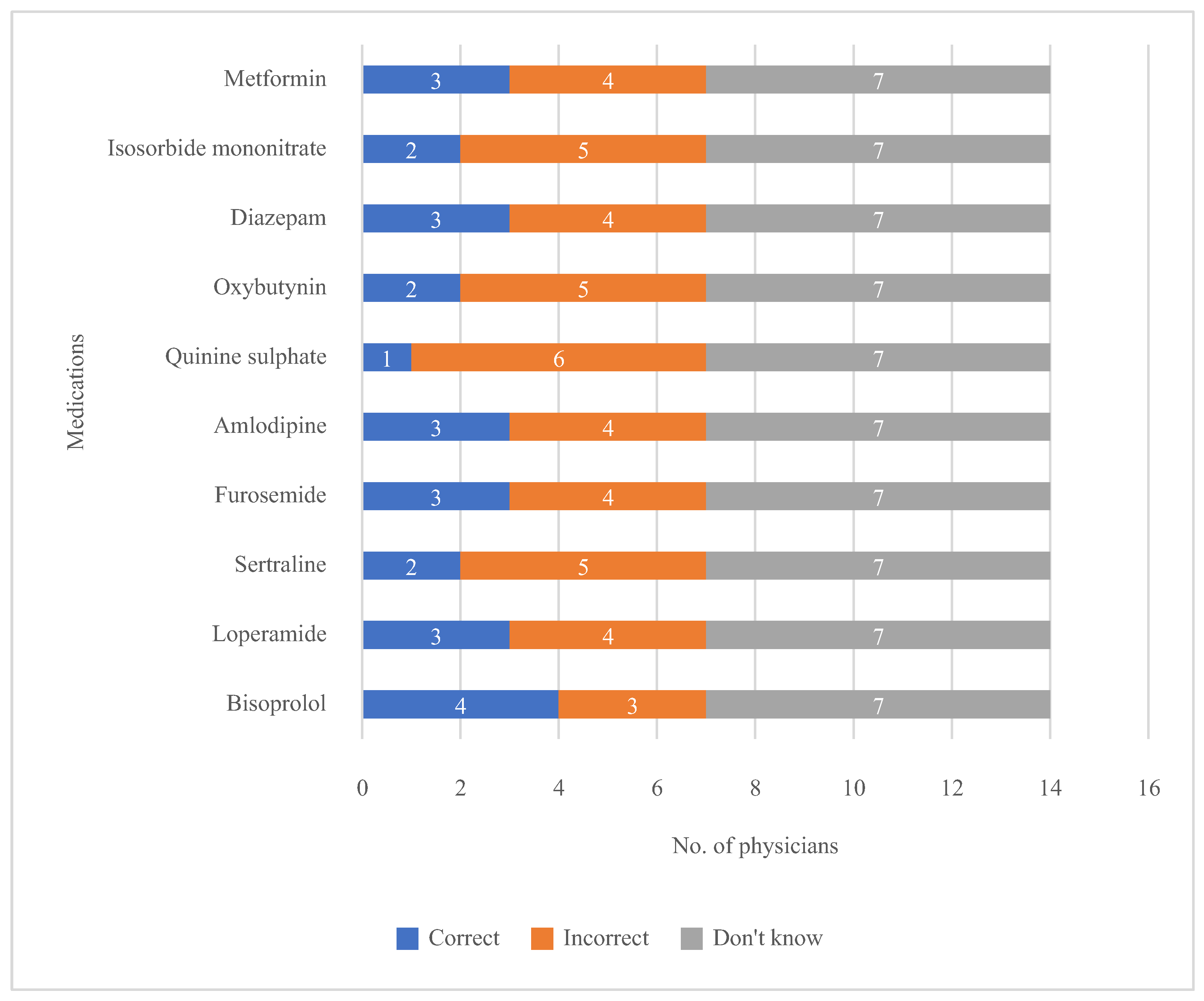
Figure 2.
Results of identifying side effects associated with a high anticholinergic burden (ACB) score in older patients.
Figure 2.
Results of identifying side effects associated with a high anticholinergic burden (ACB) score in older patients.
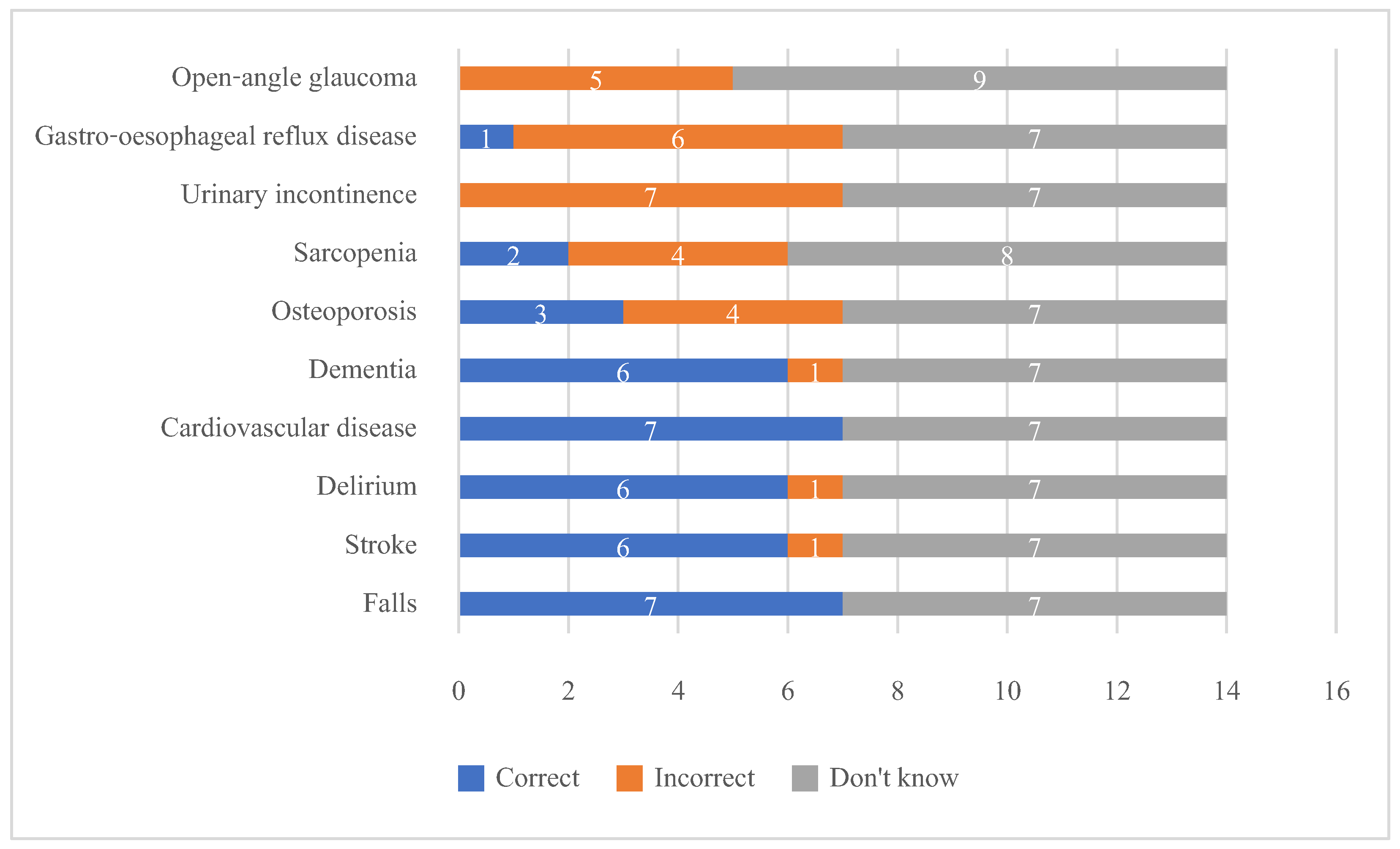
Figure 3.
Physicians’ perspectives on the importance of evaluating anticholinergic burden.
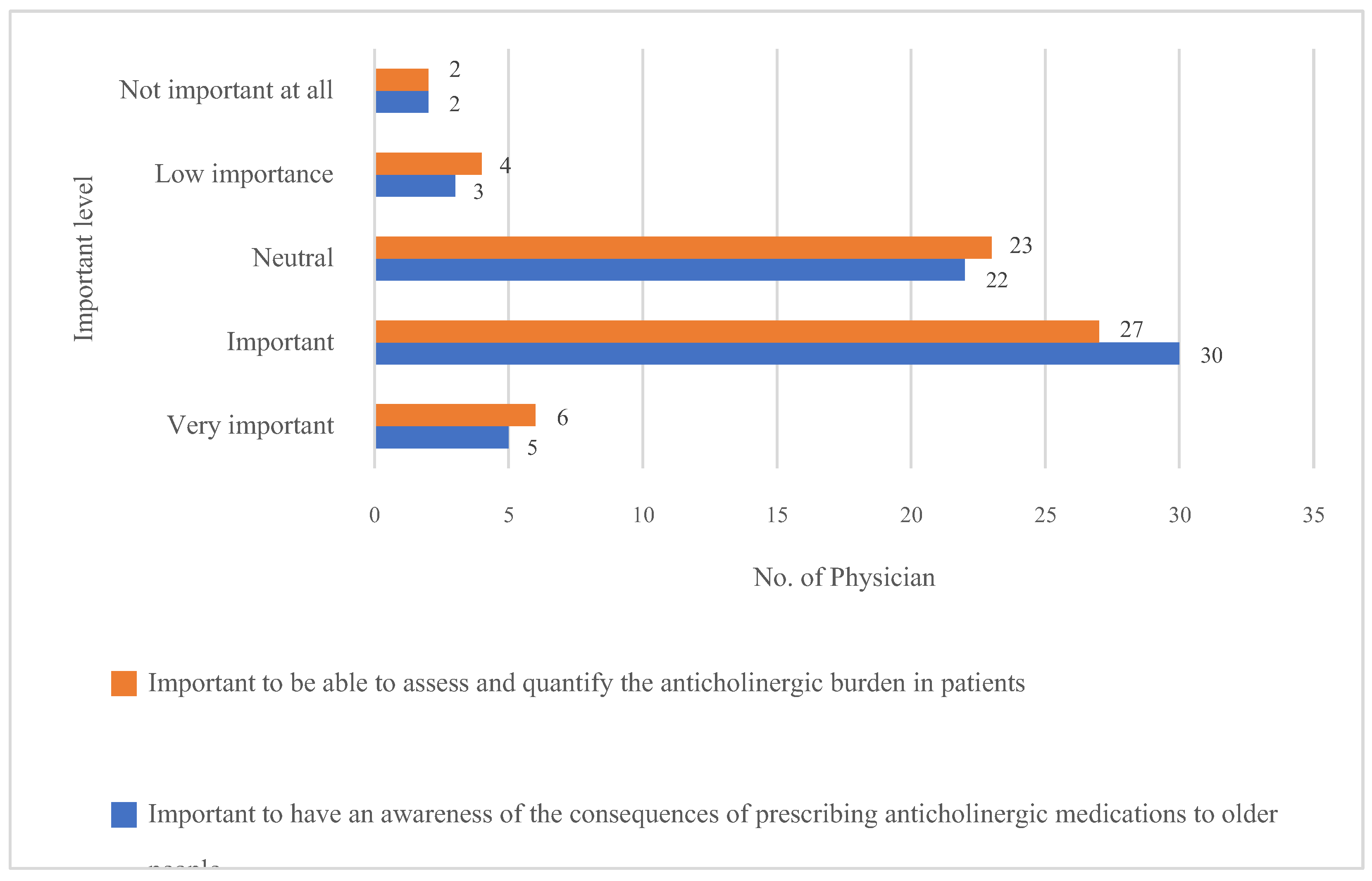
Figure 4.
Awareness and educational needs regarding ACB.
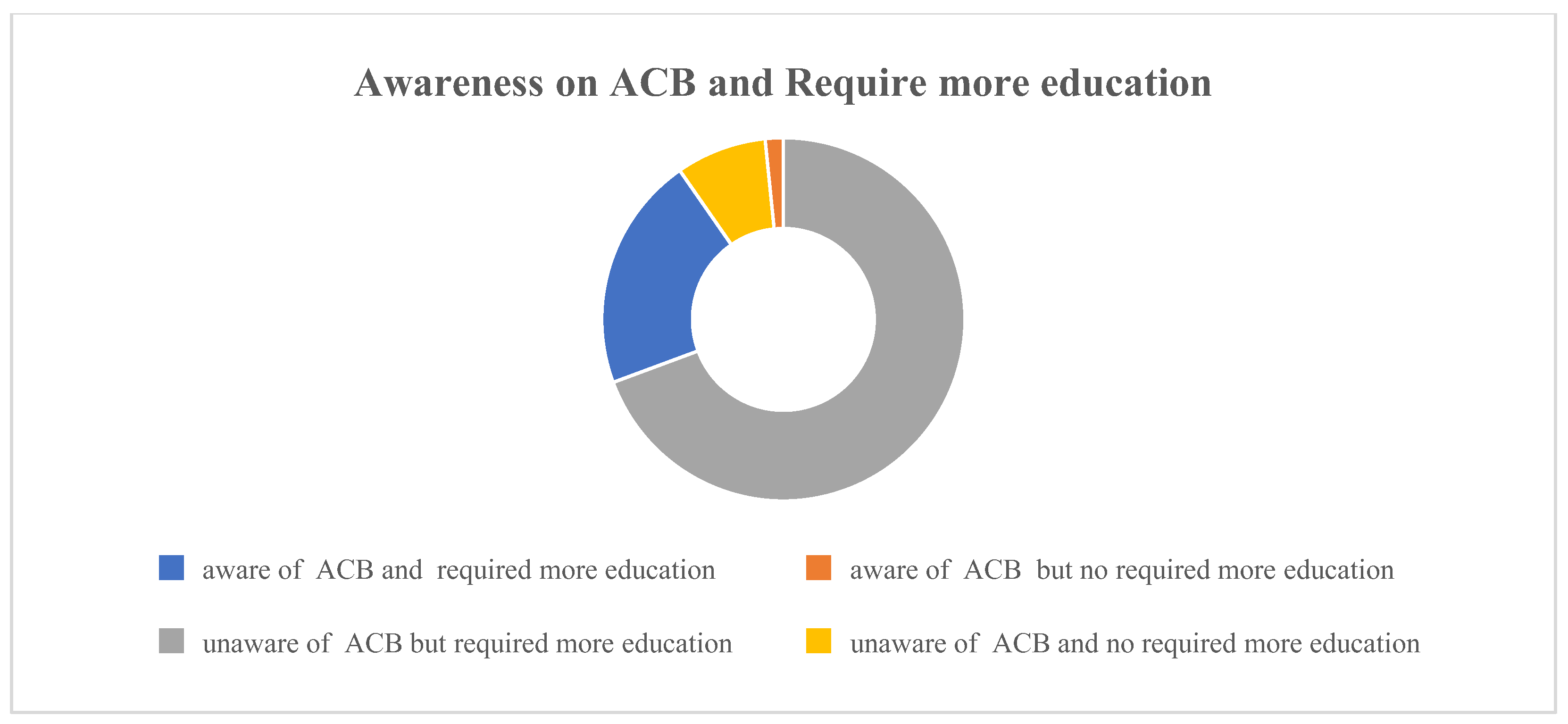
Figure 5.
Often practice of considering the anticholinergic burden and/or using the anticholinergic burden score.
Figure 5.
Often practice of considering the anticholinergic burden and/or using the anticholinergic burden score.
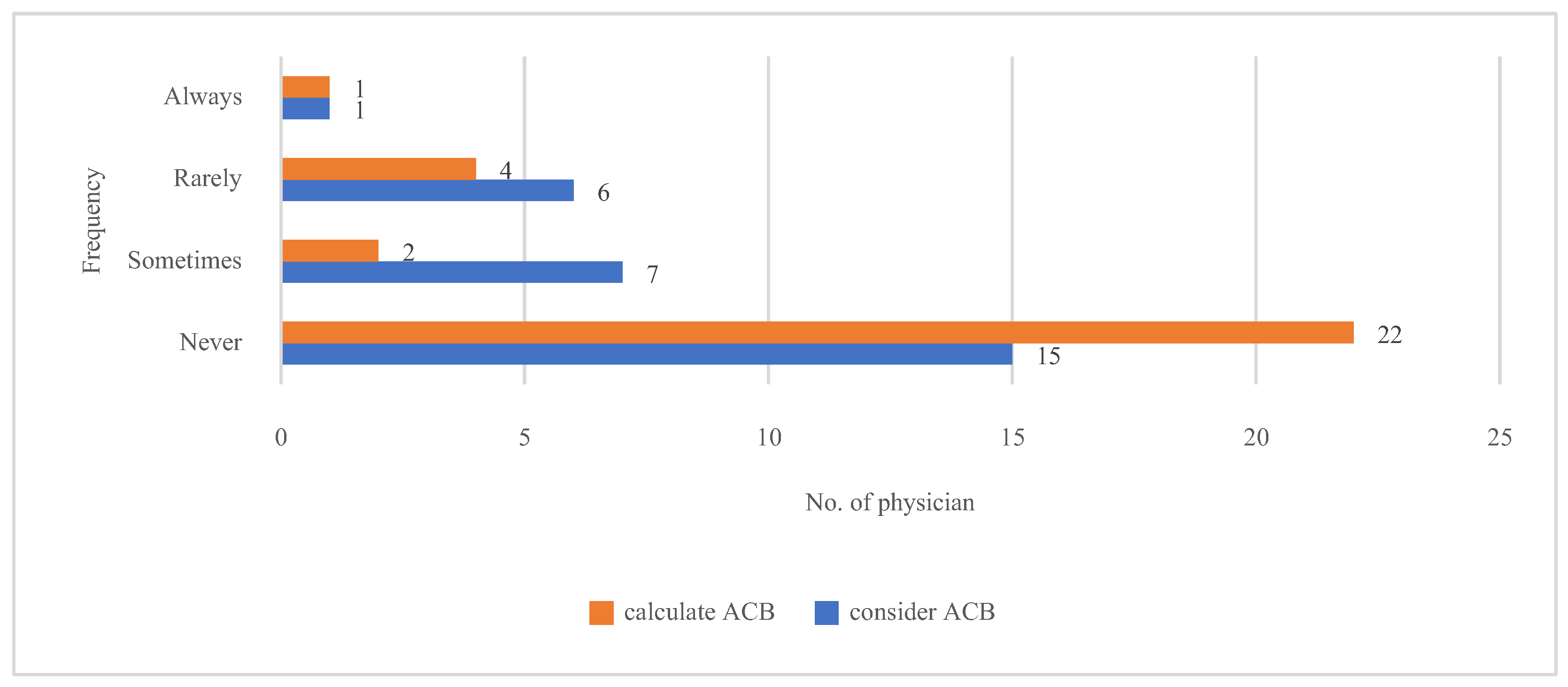
Figure 6.
Often action of considering the high anticholinergic score.
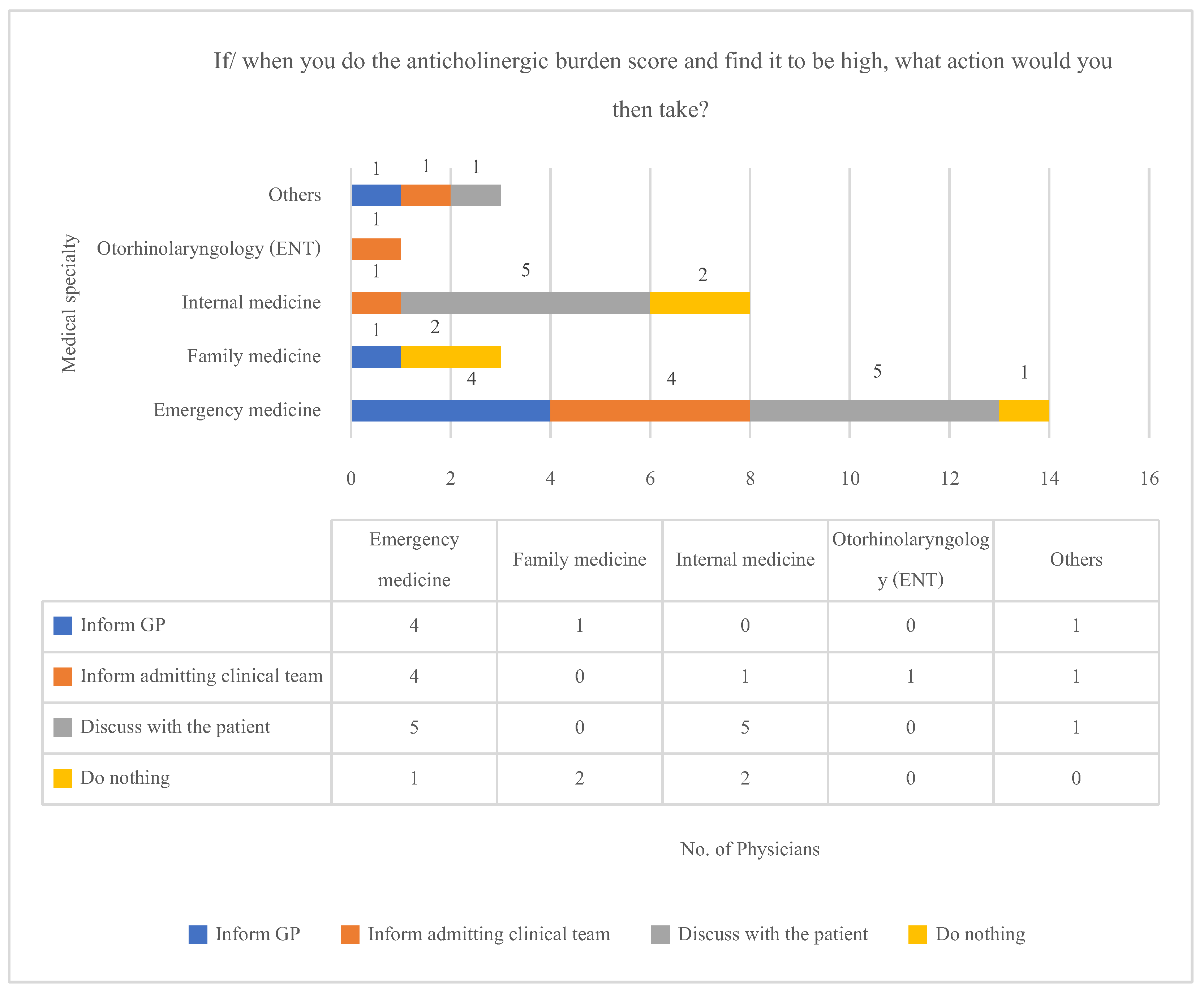

Table 1.
Demographics.
| Medical specialty |
Hospital classification |
No. of Physicians |
No. Physicians who are aware of ACB | |
|---|---|---|---|---|
| Yes | No | |||
| Emergency medicine | Medical center | 27 | 3 | 24 |
| Regional hospital | 3 | 1 | 2 | |
| District hospital | 1 | 1 | 0 | |
| Clinic | 1 | 1 | 0 | |
| Family Medicine | Medical center | 6 | 1 | 5 |
| Clinic | 1 | 1 | 0 | |
| Internal Medicine | Medical center | 7 | 1 | 6 |
| Regional hospital | 2 | 1 | 1 | |
| Orthopedics | Medical center | 1 | 0 | 1 |
| Otorhinolaryngology (ENT) | Medical center | 1 | 1 | 0 |
| Rehabilitation Medicine | Clinic | 1 | 0 | 1 |
| Others | Medical center | 9 | 3 | 6 |
| Clinic | 2 | 0 | 2 | |
| Total | 62 | 14 | 48 | |
Table 2.
Anticholinergic burden (ACB) score of the 10 medications listed in the survey.
| Medication | ACB score | |
|---|---|---|
| Bisoprolol | 0 | |
| Quinine sulphate | 0 | |
| Furosemide | 0 | |
| Amlodipine | 0 | |
| Sertraline | 0 | |
| Metformin | 1 | |
| Diazepam | 1 | |
| Isosorbide mononitrate | 1 | |
| Loperamide | 1 | |
| Oxybutynin | 3 |
* ACB scores of the 10 medications are based on the ACB calculator.[12].
Disclaimer/Publisher’s Note: The statements, opinions and data contained in all publications are solely those of the individual author(s) and contributor(s) and not of MDPI and/or the editor(s). MDPI and/or the editor(s) disclaim responsibility for any injury to people or property resulting from any ideas, methods, instructions or products referred to in the content. |
© 2026 by the authors. Licensee MDPI, Basel, Switzerland. This article is an open access article distributed under the terms and conditions of the Creative Commons Attribution (CC BY) license (http://creativecommons.org/licenses/by/4.0/).
Copyright: This open access article is published under a Creative Commons CC BY 4.0 license, which permit the free download, distribution, and reuse, provided that the author and preprint are cited in any reuse.


