

Submitted:
27 February 2026
Posted:
02 March 2026
You are already at the latest version
Abstract
Background: Cardiovascular diseases are the main cause of mortality and morbidity in Portugal, with coronary artery bypass grafting (CABG) being one of the most performed surgeries by cardiothoracic centers. After cardiac surgery, patients often experience a decrease in physical capacity, which results in an increased risk of mortality or hospitalization expenditures. The objective of this systematic review was to characterize changes in respiratory function in patients undergoing CABG. Methods: This systematic review followed the Preferred Reporting Items for Systematic Reviews and Meta-Analysis. Web of Science, Pubmed, SCOPUS, and Sport Discus were searched using a predefined research strategy to identify relevant original studies published until August 2025. To be included, studies must have assessed adult patients submitted to CABG who evaluated the respiratory function before and after cardiac surgery. Studies that reported other types of cardiac surgery were excluded. The Risk of Bias in Non-randomized Studies-of-Exposure and the Cochrane risk-of-bias tool for randomized trials were used to analyse the risk of bias of the selected studies. Results: After screening 1184 potential articles, six studies met the inclusion criteria. Studies included participants with CABG (n=324), with a mean age ranging between 54.05 ± 13.6 and 67 ± 10 years. Conclusions: All included studies reported significant postoperative reductions in respiratory function following CABG in forced vital capacity, forced expiratory volume in one second, maximal inspiratory pressure and maximal expiratory pressure. This systematic review highlighted the decline in pulmonary function following CABG, supporting the clinical importance of monitoring these impairments to enhance health-related quality of life.
Keywords:
pulmonary function
; respiratory muscle strength
; health outcomes
; coronary artery bypass surgery
; cardiac surgery
Introduction
Cardiovascular diseases have been increasing worldwide and are the major cause of mortality and morbidity in Portugal [1]. In this context, coronary artery bypass grafting (CABG) is one of the most frequently performed surgeries by cardiothoracic centers [1,2], since surgical treatment remains the best therapeutic option for better survival [3].
During the initial weeks after cardiac surgery, many patients experience a decrease in physical capacity and autonomic nervous system disfunction [4], that can increase hospitalizations and mortality risk [5,6]. It is also frequent for these patients to experience a significant reduction in quality of life, due to impairment of psychosocial well-being promoting stress and depression [7] that can result in increased hospital costs [3].
Respiratory dysfunction after coronary artery bypass grafting is very common and significantly contributes to impairments in physical capacity, being one of the major causes of morbidity and mortality after CABG [8]. Respiratory function can be evaluated using a manometer to measure respiratory muscle strength through the maximal inspiratory pressure (MIP) and maximal expiratory pressure (MEP) generated at the mouth [9,10]. In addition, air volume and airflow rates can be assessed through spirometry, with forced vital capacity (FVC) and forced expiratory volume in one second (FEV1) being the most relevant parameters in patients undergoing cardiac surgery (13).
To the best of our knowledge, there is currently no systematic review and meta-analysis available that investigates the evidence regarding the impact of CABG on respiratory function. Respiratory impairment after CABG can contribute to postoperative complications which contributes to a delay in recovery and a reduction in health-related quality of life [5,6]. Given the prevalence and clinical impact of these alterations, a synthesis of the available evidence is crucial to clarify the magnitude of the respiratory changes following cardiac surgery. This knowledge is essential for guiding clinical decisions and developing recovery strategies, considering their clinical importance for patient prognosis following cardiac surgery. Therefore, this systematic review aims to investigate the changes in respiratory function in patients undergoing coronary artery bypass grafting. We hypothesized that coronary artery bypass grafting is associated with a significant postoperative reduction in respiratory function.
Material and Methods
This systematic review followed the Preferred Reporting Items for Systematic Reviews and Meta-analysis (PRISMA). The protocol has been registered at the PROSPERO International Prospective Register of Systematic Reviews under the registration number: CRD420251086180.
Eligibility criteria
Studies that met the following criteria defined by the PECOS framework [11] were included in this systematic review (Table 1): (1) studies that included participants submitted to CABG; (2) studies that evaluated respiratory function before and after cardiac surgery; (3) studies that reported data for individuals over 18 years of age; (4) studies published until August 2025. Studies that reported other type of cardiac surgeries were excluded from this systematic review.
Search Strategy
The search for this systematic review was conducted in the following databases: Web of Science, Pubmed, SCOPUS, and Sport Discus, accessed between June 15, 2025, and August 7, 2025. The search strategy included all types of studies designs using descriptors to filter the data: (“cardiac rehabilitation” OR “heart surgery” OR “coronary heart disease” OR “cardiac surgery” OR “coronary artery bypass grafting” OR “GABG”) AND (“respiratory function” OR “respiratory muscle strength” OR “muscle strength” OR “inspiratory muscle training”) AND (“adult”). This was supplemented by manually searching the reference lists of the selected articles to search for all potentially relevant studies.
Selection Process and Data Extraction
Studies initially identified in the database searches were imported to EndNote 21 (Clarivate, Philadelphia) and duplicates were removed automatically. In the first phase, two reviewers (GF and PM) independently searched for relevant studies in the initial selection, based on title and abstract. In the second phase, the full text of the selected studies was reviewed based on the defined eligibility criteria [12]. In case of disagreement, the decision to include or not the study was resolved through inclusion of a third reviewer (DM). This process of studies selection was made independently by two authors (GF and PM). The characteristics of the studies, including name of the authors, sample size, sex, age, methodological design, timing of assessment, respiratory function outcomes and main conclusions were collected.
Study Risk of Bias Assessment
The Risk of Bias in Non-randomized Studies-of-Exposure (ROBINS-E) was used independently by two reviewers to evaluate the quality and risk of bias of the observational studies identified as eligible. This scale addresses seven domains: confounding, measurement of exposure, selection of participants, post-exposure interventions, missing data, measurement of outcomes, and selective reporting of results [13]. In each study, each domain can be rated as “low”, “high”, or “some concerns” [13].
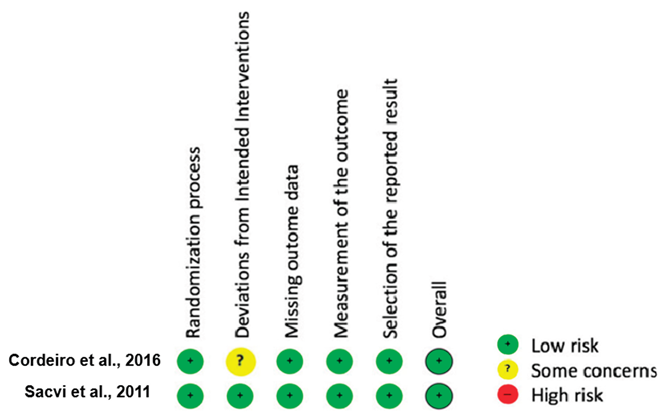
To assess the risk of bias for each randomized controlled trial, the Cochrane risk-of-bias tool for randomized trials (ROB 2) was applied independently by two investigators. The ROB 2 evaluates five domains: randomization process, deviations from intended interventions, missing outcome data, measurement of the outcome and selection of the reported result [14]. In each randomized controlled trial, the assessment can be categorized as “Low” or “High” risk of bias, or it can indicate “Some concerns” [14].
Results
The sequence followed for selecting the studies included in this systematic review is shown in the search strategy flowchart (Figure 1). The initial literature search identified a total of 1184 potentially eligible studies. After excluding studies based on duplicates (35), titles and abstracts (1149), 12 full-text articles were examined according to inclusion and exclusion criteria. Afterwards, 6 studies were excluded for the reasons presented in Figure 1, and 6 studies remained for analysis.
Details of the six studies included in this systematic review are presented in Table 2. The six studies included patients submitted to CABG (n = 324), with a mean age ranging between 54.05 ± 13.6 and 67±10 years. The review included two randomized controlled trials and four cohort studies, with patients from both sexes (75% males and 25% females). The study from Johnson et al. [15], does not report patients sex. All studies assessments were made in local hospitals; specifically, the studies from Cordeiro et al. [3] and Riedi et al. [16] were conducted in Brazil, Naseer et al. [9] in Saudi Arabia, Sacvi et al. [17] in Turkey, and Urell et al. [10] in Sweden. Sacvi et al. [17] performed the CABG with saphenous vein grafts and left internal mammary artery and Urell et al. [10] made a median sternotomy. Other included studies do not specify the cardiac surgery procedure.
Cordeiro et al. [3], Johnson et al. [15], Sacvi et al. [17] and Riedi et al. [16] evaluated patients before surgery and again before discharge (1 week after surgery). Naseer et al. [9], Johnson et al. [15] and Urell et al. [10] assessed patients before surgery and two months after surgery. All studies excluded emergency cardiac surgery. Cordeiro et al. [3] used an analogic manometer to assess respiratory muscle strength and considered the best result of three evaluations. Johnson et al. [15] used an electronic spirometer (Spirometer #61000; Welsh Allan, Pneumocheck, Skaneatles Falls, NY) and a manometer (Boehringer Inspiratory Force Meter #4100; Norristown, PA) with the patients sitting upright with a pillow on their chest to minimize pain. Riedi et al. [16] used an analogic manometer (Wika MV300 model) and the test was performed with the patients sitting with the lower limbs pending and feet resting on the ground. The test was performed three times, and the best value was considered for analysis. Naseer et al. [9] assessed patients with a spirometry device and a manometer (undisclosed equipments) in a seated position and performed the test three times, considering the best value. Sacvi et al. [17] used a spirometry device (Spirolab, Medical International Research, and Rome, Italy) and a portable electronic mouth pressure device (Micro MPM, Micro Medical Ltd, Kent, UK) to test pulmonary function in a seated position, considering the best value from the three performed evaluations. Urell et al. [10] also used a spirometry tool (Jaeger MasterScreenPFT/Bodybox - Intramedic, Bålsta, Sweden) and a manometer in a seated position to assess respiratory function.
Johnson et al. [15] revealed some postoperative complications, such as cough (n = 15), phlegm (n = 11), wheeze (n = 6), dyspnea (n = 6), and episodes of bronchitis (n = 1). Riedi et al. [16] reported postoperative complications, such as cough and dyspnea (n = 5), bronchospasm, hypoxemia or atelectasis (n = 12), pneumonia, pneumothorax or pleural effusion (n = 6), and ventilation failure or intubation (n = 3).
Urell et al. [10] demonstrated that two months after cardiac surgery there was a decrease in MIP (73 ± 22 cmH2O) and a significant decrease in MEP (115 ± 38 cmH2O) compared to the preoperative values (78 ± 24 and 122 ± 33 cmH2O, respectively). This study similarly verified that FEV₁ was significantly reduced in patients submitted to cardiac surgery (3.0 ± 0.8 to 2.8 ± 0.7 cmH2O) [10]. These results are in line with Naseer et al. [9], who demonstrated that there was a significant reduction in FEV₁ values after cardiac surgery compared to the preoperative ones (2.87 ± 0.45 to 2.5 ± 0.68 cmH2O) [9]. This study also demonstrated a reduction in MIP (81.75 ± 22.04 to 74.56 ± 18.86 cmH2O) and a significant decrease in MEP (98.55 ± 22.24 to 88.86 ± 18.14 cmH2O) values after cardiac surgery. Johnson et al. [15] showed that FVC (3.51± 0 82 to 2 91± 0 72 cmH2O), FEV₁ (2.74 ± 0.74 cmH2O) and MEP (93 ± 28 to 89 ± 26 cmH2O) values all reduced in patients submitted to CABG. Savci et al. [17] also demonstrated a significant decrease in pulmonary function between preoperative values and discharge, more precisely in FVC (85.00 ± 13.71 to 66.43 ± 14.42 % in control group and 88.00 ± 16.36 to 64.00 ± 14.94 % in intervention group), FEV₁ (77.24 ± 14.59 to 64.29 ± 14.90 % in control group and 85.95 ± 16.75 to 63.73 ± 15.06 % in intervention group), and MEP (101.71 ± 22.22 to 73.43 ± 25.52 cmH2O in control group and 106.55 ± 33.27 to 69.82 ± 14.60 cmH2O in intervention group). A reduction in MEP (89.18 ± 30.18 to 66.8 ± 22.11 cmH2O) and MIP (106.2 ± 49.42 to 91.5 ± 52.2 cmH2O) values after cardiac surgery was also observed by Riedi et al. [16] compared to preoperative values, and a significant reduction in MIP was observed in Cordeiro et al. [3] (97.5 ± 18.2 to 69.5 ± 14.9 cmH2O in control group and 94.2 ± 16.2 to 83.1 ± 19.1 cmH2O in intervention group) and Savci et al. [17] (84.62 ± 17.26 to 57.24 ± 19.48 in control group and 82.64 ± 29.31 to 95.45 ± 30.32 in intervention group).
As mentioned, the four included observational studies were assessed using the ROBINS-E (Table 3), while the two randomized controlled trials were evaluated using the ROB-2 (Table 4). The randomized controlled studies included were rated as having a “low risk” of bias, and the observational studies as having “Moderate” risk of bias.
Discussion
The objective of this systematic review was to assess the impact of CABG on respiratory function. The results demonstrated a consistent impairment in maximal inspiratory pressure, maximal expiratory pressure, forced vital capacity, and forced expiratory volume in one second following coronary artery bypass grafting, with moderate-to-large effect sizes for most variables, indicating a clinically relevant impairment in respiratory function during the early postoperative period.
After cardiac surgery, respiratory dysfunction is one of the most frequent causes of morbidity and mortality, potentially leading to longer hospital stay and higher costs associated with the surgery [3,18]. Cargnin et al. [19] reported an association between reduced respiratory muscle function and the development of postoperative pulmonary complications, although this study analysed patients submitted to heart valve replacement surgery. Similarly, Hermes et al. [5] described that respiratory muscle dysfunction in patients undergoing CABG may contribute to delayed pulmonary recovery due to decreased functional capacity.
Cordeiro et al. [3] proposed that the systemic inflammatory response triggered by cardiac surgery is associated with alterations in pulmonary function, which can lead to a reduction in lung compliance, pulmonary edema, and/or a decrease in functional residual capacity. These changes were associated with a postoperative reduction in MIP in both groups, more significant in the control group (Cohen’s d = -1.68) that followed the normal post-surgical care routine of the unit (undisclosed protocol). In the training group, MIP also decreased, but with a moderate effect size (Cohen’s d = -0.63), suggesting that inspiratory muscle training attenuated the postoperative reduction in inspiratory muscle strength. In addition to the pulmonary changes proposed by Cordeiro et al. [3], diaphragm weakness - a frequent consequence in patients requiring mechanical ventilation, which is common in the postoperative period after CABG - is associated with a significant decline in respiratory function and a higher mortality risk [20,21].
Nasser et al. [9] suggested a relationship between lung function and a decrease in inspiratory muscle strength. The authors speculate that the reduction in respiratory function observed eight weeks after surgery was associated with restricted chest movements caused by pain related to the surgical procedure. The declines in FEV₁ and MEP were of moderate magnitude (Cohen’s d = −0.64 and −0.48, respectively), whereas the decrease in MIP was smaller (Cohen’s d = −0.35), suggesting a limited impact on inspiratory muscle strength. Urell et al. [10] also proposed an association between decreased inspiratory muscle strength and impaired lung function with differences in respiratory muscle strength two months after surgery, although with effect sizes of Cohen’s d = −0.22 for MIP, −0.20 for MEP, and −0.27 for FEV₁, suggesting a limited clinical impact.
Johnson et al. [15] reported pulmonary complications two months after surgery in patients who underwent coronary artery bypass grafting, showing significant postoperative reductions in FVC, FEV₁ and MEP, that persisted for at least eight weeks with a moderate-to-large effect sizes for FVC (Cohen’s d = −0.78) and FEV₁ (Cohen’s d = −0.76), and a small effect for MEP (Cohen’s d = −0.15), indicating a greater impact on lung volumes than expiratory muscle strength. Riedi et al. [16] demonstrated a significant decrease in respiratory muscle strength in the postoperative period, with a large effect size on MEP (Cohen’s d = −0.85) and a small effect size on MIP (Cohen’s d = −0.29) assessed one week after surgery. Despite differences in the timing of patient assessment, both studies reported the same type of complications, although Johnson et al. [15] did not provide information regarding whether the patients performed any type of postoperative rehabilitation while patients from Riedi et al. [16] study performed a physiotherapy intervention according to the standard hospital protocol.
Sacvi et al. [17] reported large postoperative reductions in the control group for FVC (Cohen’s d = −1.32), FEV₁ (Cohen’s d = −0.88), MEP (Cohen’s d = −1.18), and MIP (Cohen’s d = −1.49). In the intervention group, which underwent inspiratory muscle training, declines were also observed for FVC (Cohen’s d = −1.53), FEV₁ (Cohen’s d = −1.39), and MEP (Cohen’s d = −1.43), but MIP showed a small positive effect (Cohen’s d = 0.43). These results demonstrated that CABG significantly reduces pulmonary function, but inspiratory muscle training, which was applied in the intervention group, attenuated the decline of the MIP in the early postoperative period.
The surgical procedure induces a systemic inflammatory response that affects lung compliance and thoracic expansion, leading to reduced functional capacity and an impaired in respiratory function, which increases the risk of postoperative complications [3,15]. Additionally, the surgery can cause pain and alterations in chest wall mechanisms, contributing to the development of atelectasis or pneumonia, prolonging hospital stay, and delaying recovery [10,17]. Moreover, the use of mechanical ventilation – common after surgery - may result in diaphragm dysfunction, further contributing to the postoperative decline in respiratory function [20,21].
To address the postoperative decline in respiratory function following coronary artery bypass grafting, several strategies have been proposed to reestablish respiratory muscle strength and improve overall functional capacity [3]. Respiratory muscle training enhances airway clearance, reduces thoracic pain, increases maximal inspiratory and expiratory pressures, and prevents muscle fatigue, contributing to the recovery of pulmonary function [3,8,22]. Moreover, this intervention has shown promising effects on psychological outcomes, such as anxiety and depression, improving health-related quality of life [3,8,22]. Evidence suggests that such strategies can attenuate the negative impact of surgery on [20] respiratory function, promoting faster pulmonary recovery and potentially reducing postoperative complications and hospital stay [8,22].
Limitations
Although efforts were made to control the methodology as rigorously as possible, this systematic review has some limitations. The use of different postoperative interventions or rehabilitations protocols, as well as different times of assessment, limits the interpretation of the findings. Further research should include other types of cardiac surgery, and well-established protocols for respiratory muscle assessment.
Conclusions
This systematic review demonstrates consistent postoperative impairments in pulmonary function following coronary artery bypass grafting, confirming a decline in respiratory muscle function. The evidence suggests that respiratory muscle training plays a crucial role in the postoperative management of cardiac surgery patients, contributing to the recovery of respiratory muscle strength and enhancing health-related quality of life.
References
- Fonseca, C; Bras, D; Araujo, I; Ceia, F. Heart failure in numbers: Estimates for the 21st century in Portugal. Rev Port Cardiol (Engl Ed) 2018, 37, 97–104. [Google Scholar] [CrossRef]
- Song, Y; Ren, C; Liu, P; Tao, L; Zhao, W; Gao, W. Effect of Smartphone-Based Telemonitored Exercise Rehabilitation among Patients with Coronary Heart Disease. J Cardiovasc Transl Res. 2020, 13, 659–67. [Google Scholar] [CrossRef]
- Cordeiro, AL; de Melo, TA; Neves, D; Luna, J; Esquivel, MS; Guimaraes, AR; et al. Inspiratory Muscle Training and Functional Capacity in Patients Undergoing Cardiac Surgery. Braz J Cardiovasc Surg. 2016, 31, 140–4. [Google Scholar] [PubMed]
- Pantoni, CBF; Thommazo-Luporini, LD; Mendes, RG; Caruso, FCR; Castello-Simoes, V; Mezzalira, D; et al. Effect of continuous positive airway pressure associated to exercise on the breathing pattern and heart rate variability of patients undergoing coronary artery bypass grafting surgery: a randomized controlled trial. Braz J Med Biol Res. 2021, 54, e10974. [Google Scholar] [CrossRef]
- Hermes, BM; Cardoso, DM; Gomes, TJ; Santos, TD; Vicente, MS; Pereira, SN; et al. Short-term inspiratory muscle training potentiates the benefits of aerobic and resistance training in patients undergoing CABG in phase II cardiac rehabilitation program. Rev Bras Cir Cardiovasc. 2015, 30, 474–81. [Google Scholar]
- Patel, DK; Duncan, MS; Shah, AS; Lindman, BR; Greevy, RA, Jr.; Savage, PD; et al. Association of Cardiac Rehabilitation With Decreased Hospitalization and Mortality Risk After Cardiac Valve Surgery. JAMA Cardiol. 2019, 4, 1250–9. [Google Scholar] [CrossRef]
- Brown, TM; Pack, QR; Aberegg, E; Brewer, LC; Ford, YR; Forman, DE; et al. Core Components of Cardiac Rehabilitation Programs: 2024 Update: A Scientific Statement From the American Heart Association and the American Association of Cardiovascular and Pulmonary Rehabilitation. Circulation 2024, 150, e328–e347. [Google Scholar] [CrossRef]
- Dos Santos, TD; Pereira, SN; Portela, LOC; Cardoso, DM; Lago, PD; Dos Santos Guarda, N; et al. Moderate-to-high intensity inspiratory muscle training improves the effects of combined training on exercise capacity in patients after coronary artery bypass graft surgery: A randomized clinical trial. Int J Cardiol. 2019, 279, 40–6. [Google Scholar] [CrossRef]
- Naseer, BA; Al-Shenqiti, AM; Ali, ARH; Aljeraisi, T. Effect of cardiac surgery on respiratory muscle strength. J Taibah Univ Med Sci. 2019, 14, 337–42. [Google Scholar] [CrossRef] [PubMed]
- Urell, C; Emtner, M; Hedenstrom, H; Westerdahl, E. Respiratory muscle strength is not decreased in patients undergoing cardiac surgery. J Cardiothorac Surg. 2016, 11, 41. [Google Scholar] [CrossRef] [PubMed]
- Morgan, RL; Whaley, P; Thayer, KA; Schunemann, HJ. Identifying the PECO: A framework for formulating good questions to explore the association of environmental and other exposures with health outcomes. Environ Int. 2018, 121, 1027–31. [Google Scholar] [CrossRef]
- Ardern, CL; Buttner, F; Andrade, R; Weir, A; Ashe, MC; Holden, S; et al. Implementing the 27 PRISMA 2020 Statement items for systematic reviews in the sport and exercise medicine, musculoskeletal rehabilitation and sports science fields: the PERSiST (implementing Prisma in Exercise, Rehabilitation, Sport medicine and SporTs science) guidance. Br J Sports Med. 2022, 56, 175–95. [Google Scholar] [PubMed]
- Higgins, JPT; Morgan, RL; Rooney, AA; Taylor, KW; Thayer, KA; Silva, RA; et al. A tool to assess risk of bias in non-randomized follow-up studies of exposure effects (ROBINS-E). Environ Int. 2024, 186, 108602. [Google Scholar] [CrossRef] [PubMed]
- Sterne, JAC; Savovic, J; Page, MJ; Elbers, RG; Blencowe, NS; Boutron, I; et al. RoB 2: a revised tool for assessing risk of bias in randomised trials. BMJ. 2019, 366, l4898. [Google Scholar] [CrossRef]
- Johnson, D; Hurst, T; Thomson, D; Mycyk, T; Burbridge, B; To, T; et al. Respiratory function after cardiac surgery. J Cardiothorac Vasc Anesth. 1996, 10, 571–7. [Google Scholar] [CrossRef] [PubMed]
- Riedi, C; Mora, CTR; Driessen, T; Coutinho, MDG; Mayer, DM; Moro, FL; et al. Relation between respiratory muscle strength with respiratory complication on the heart surgery. Revista Brasileira De Cirurgia Cardiovascular 2010, 25, 500–5. [Google Scholar]
- Savci, S; Degirmenci, B; Saglam, M; Arikan, H; Inal-Ince, D; Turan, HN; et al. Short-term effects of inspiratory muscle training in coronary artery bypass graft surgery: a randomized controlled trial. Scand Cardiovasc J. 2011, 45, 286–93. [Google Scholar] [CrossRef]
- Silva, CR; Andrade, LB; Maux, DA; Bezerra, AL; Duarte, MC. Effectiveness of prophylactic non-invasive ventilation on respiratory function in the postoperative phase of pediatric cardiac surgery: a randomized controlled trial. Braz J Phys Ther. 2016, 20, 494–501. [Google Scholar] [CrossRef]
- Cargnin, C; Karsten, M; Guaragna, J; Dal Lago, P. Inspiratory Muscle Training After Heart Valve Replacement Surgery Improves Inspiratory Muscle Strength, Lung Function, and Functional Capacity: A RANDOMIZED CONTROLLED TRIAL. J Cardiopulm Rehabil Prev. 2019, 39, E1–E7. [Google Scholar] [CrossRef]
- Supinski, GS; Morris, PE; Dhar, S; Callahan, LA. Diaphragm Dysfunction in Critical Illness. Chest 2018, 153, 1040–51. [Google Scholar] [CrossRef]
- Jung, B; Moury, PH; Mahul, M; de Jong, A; Galia, F; Prades, A; et al. Diaphragmatic dysfunction in patients with ICU-acquired weakness and its impact on extubation failure. Intensive Care Med. 2016, 42, 853–61. [Google Scholar] [CrossRef] [PubMed]
- Girgin, Z; Cigerci, Y; Yaman, F. The Effect of Pulmonary Rehabilitation on Respiratory Functions, and the Quality of Life, following Coronary Artery Bypass Grafting: A Randomised Controlled Study. Biomed Res Int. 2021, 2021, 6811373. [Google Scholar] [CrossRef] [PubMed]
Figure 1.
Search strategy flowchart.
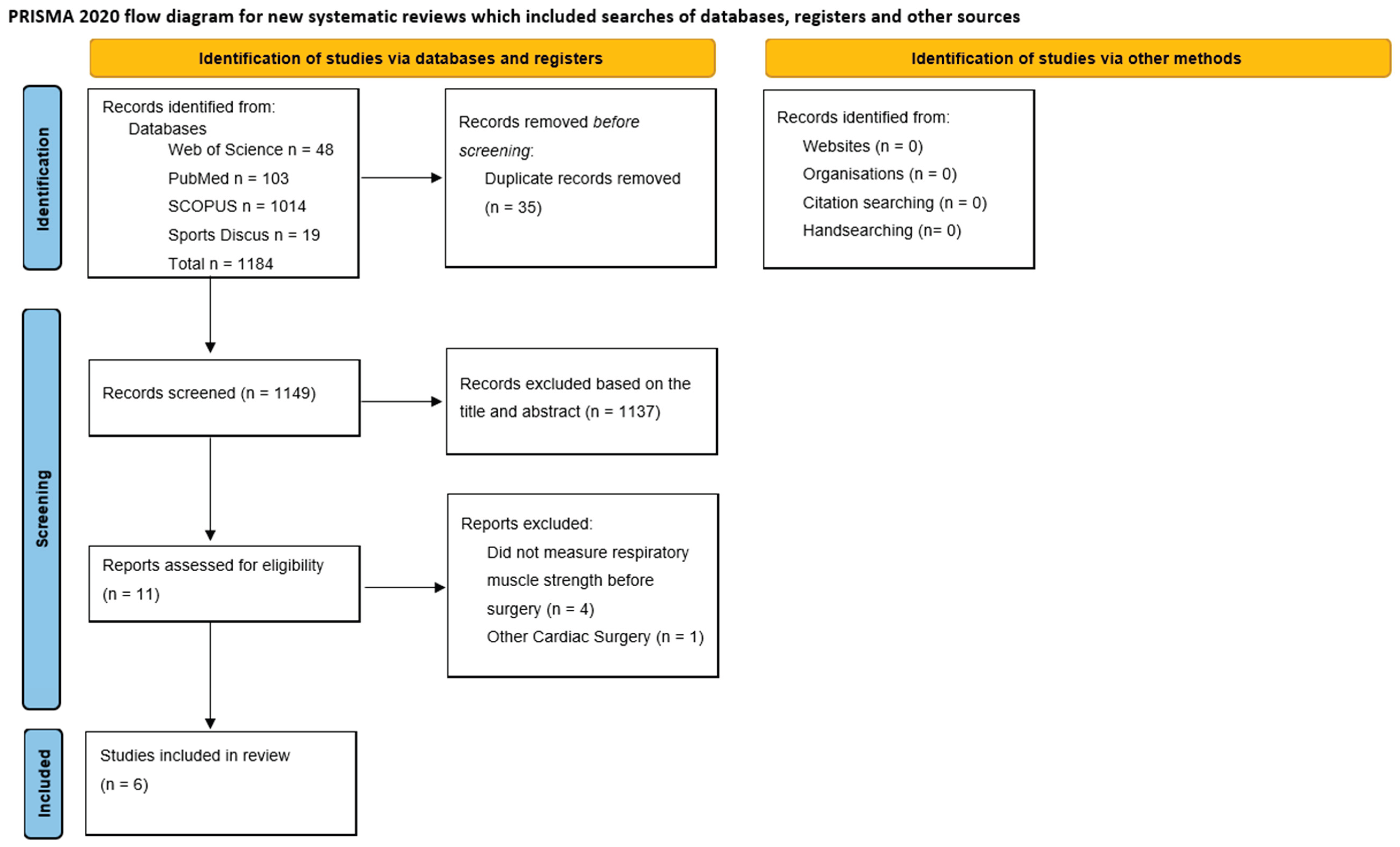

Table 1.
Search strategy and inclusion/exclusion criteria based on PECOS strategy.
| PECOS | Inclusion criteria | Exclusion criteria | Search term | |
|---|---|---|---|---|
| Population | Individuals with more than 18 years of age submitted to coronary artery bypass grafting | Individuals with less than 18 years of age or submitted to other types of cardiac surgery | Adult | |
|
Exposure Comparison |
Individuals submitted to coronary artery bypass grafting | Individuals submitted to other types of cardiac surgery | Cardiac rehabilitation Heart surgery Coronary heart disease Cardiac surgery Coronary artery bypass grafting GABG |
|
| Pre-post surgery respiratory function comparison | ||||
| Outcome | Respiratory function | No respiratory function assessment or other outcomes evaluated | Respiratory function Respiratory muscle strength Muscle strength Inspiratory muscle training |
|
| Study Design | Original research articles | Systematic reviews, meta-analysis and editorials | ||
Table 2.
Characteristics of the included studies.
| Authors | Sample size and sex | Age | Study Design | Timing of Assessment | Respiratory Function Outcome | Main Conclusions |
|---|---|---|---|---|---|---|
| Cordeiro et al., 2016 | Control group (25) M - 16; F - 9 |
Control Group: 57 ± 14.7 | Randomized controlled trial | Preoperative and at discharge | Maximal inspiratory pressure | Significant reduction in maximal inspiratory pressure in both groups after surgery, more significant in the control group (97.5 ± 18.2 to 69.5 ± 14.9 cmH2O in the control group, p = 0.00001, and 94.2 ± 16.2 to 83.1 ± 19.1 cmH2O in the intervention group, p < 0.01). |
| Intervention group (25) M - 11; F - 14 |
Intervention: 56.4 ± 13 | |||||
| Johnson et al., 1996 | 90 patients | CABG: 65 ± 8.8 | Observational study | Preoperative, at discharge and 8 weeks after discharge | Forced vital capacity Maximal expiratory volume in one second Maximal expiratory pressure |
Postoperative changes in respiratory muscle strength persisted up to at least 8 weeks after surgery (FVC 3.51± 0.82 to 2 91± 0.72 cmH2O, p < 0.01; FEV₁ 2.74 ± 0.74 to 22.2 ± 0.63 cmH2O, p < 0.01; MEP 93 ± 28 to 89 ± 26 cmH2O, p > 0.01). |
| Naseer et al., 2019 | 28 patients | 65 ± 7 | Observational study | Preoperative and 8 weeks after surgery | Forced expiratory volume one second Maximal inspiratory pressure Maximal expiratory pressure |
Significantly decreased in all outcomes observed 8 weeks after surgery, showing a relationship between a reduction in inspiratory muscle strength and lung function (FEV₁ 2.87 ± 0.45 to 2.5 ± 0.68 cmH2O, p = 0.0001; MIP 81.75 ± 22.04 to 74.56 ± 18.86 cmH2O, p = 0.146; MEP 98.55 ± 22.24 to 88.86 ± 18.14 cmH2O, p = 0.019). |
| Riedi et al., 2010 | 34 patients | 54.05 ± 13.6 | Observational study | Preoperative and 5 days after surgery | Maximal inspiratory pressure Maximal expiratory pressure |
Significantly decreased in respiratory muscle strength in the postoperative period (MEP 89.18 ± 30.18 to 66.8 ± 22.11 cmH2O, p > 0.05, and MIP 106.2 ± 49.42 to 91.5 ± 52.2 cmH2O, p < 0.05) |
| Sacvi et al., 2011 | Control group (21) M - 19; F - 2 |
Control group: 57.48 ± 11.48 | Randomized controlled trial | Preoperative and 5 days after surgery | Forced expiratory volume one second Forced vital capacity Maximum inspiratory pressure Maximum expiratory pressure |
Significantly decreased in all outcomes five days after cardiac surgery in both groups, with a reduction in lung function (FVC 85.00 ± 13.71 to 66.43 ± 14.42 %, p < 0.05, in the control group, and 88.00 ± 16.36 to 64.00 ± 14.94 %, p < 0.05, in the intervention group; FEV₁ 77.24 ± 14.59 to 64.29 ± 14.90 %, p < 0.05 in the control group and 85.95 ± 16.75 to 63.73 ± 15.06 %, p < 0.05, in the intervention group); MEP 101.71 ± 22.22 to 73.43 ± 25.52 cmH2O, p < 0.05, in the control group, and 106.55 ± 33.27 to 69.82 ± 14.60 cmH2O, p < 0.05, in the intervention group; ); MIP 84.62 ± 17.26 to 57.24 ± 19.48 cmH2O, p < 0.05, in the control group and 82.64 ± 29.31 to 95.45 ± 30.32 cmH2O, p < 0.05, in the intervention group) |
| Intervention group (22) M – 19; F - 3 |
Intervention group: 62.82 ± 8.69 | |||||
| Urell et al., 2016 | 16 patients | 67 ± 10 | Observational study | Preoperative and 2 months after surgery | Maximal inspiratory pressure Maximal expiratory pressure Forced expiratory volume one second |
Differences in respiratory muscle strength two months after surgery, although an association between decreased inspiratory muscle strength and impaired lung function was shown (MIP 78 ± 24 to 73 ± 22 cmH2O, p = 0.19; MEP 122 ± 33 to 115 ± 38 cmH2O, p = 0.018; FEV₁ 3.0 ± 0.8 to 2.8 ± 0.7 cmH2O, p = 0.001) |
Table 3.
Quality assessment scores of selected studies (ROBINS-E).
| Confounding | Selection | Measurement of exposure | Departure from exposure | Missing data | Measurement of outcomes | Reported results | Overall bias | |
| Johnson et al., 1996 | M | M | L | M | L | L | M | M |
| Naseer et al., 2019 | M | M | L | M | L | M | M | M |
| Riedi et al., 2010 | M | M | L | M | M | M | M | M |
| Urell et al., 2016 | M | M | L | M | L | M | M | M |
L: low; M: moderate.
Table 4.
Quality assessment scores of selected studies (Cochrane risk-of-bias tool 2 for randomized trials).
Table 4.
Quality assessment scores of selected studies (Cochrane risk-of-bias tool 2 for randomized trials).
 |
Disclaimer/Publisher’s Note: The statements, opinions and data contained in all publications are solely those of the individual author(s) and contributor(s) and not of MDPI and/or the editor(s). MDPI and/or the editor(s) disclaim responsibility for any injury to people or property resulting from any ideas, methods, instructions or products referred to in the content. |
© 2026 by the authors. Licensee MDPI, Basel, Switzerland. This article is an open access article distributed under the terms and conditions of the Creative Commons Attribution (CC BY) license (http://creativecommons.org/licenses/by/4.0/).
Copyright: This open access article is published under a Creative Commons CC BY 4.0 license, which permit the free download, distribution, and reuse, provided that the author and preprint are cited in any reuse.


