

Submitted:
27 February 2026
Posted:
02 March 2026
You are already at the latest version
Abstract
Background: Metabolic dysfunction associated steatotic liver disease (MASLD) is a slow evolutionary condition from inflammation to cirrhosis. Manual therapy applied to the liver could optimize its visceral function and relieve inflammation. Given that MASLD prevalence increases with aging and reduced mechanical and metabolic stimulation, understanding non-pharmacological interventions becomes increasingly relevant in older populations. The main objective was to assess the usefulness of visceral manipulation therapy (VMT) on liver steatosis and insulin resistance measured by hepatic steatosis index (HSI) and the homeostasis model assessment (HOMA). Materials and Methos: An open label, randomized clinical trial of patients with MASLD. Patients with steatosis determined by HSI (> 36 indicate steatosis) were randomly assigned in a 1:1 ratio to receive either manual therapy or nothing. Participants were recruited between April and September 2024. VMT was performed by the same osteopathic therapist following a precise protocol for four weeks. The primary endpoint was changes from basal score to after proceeding in the HSI and HOMA. The secondary endpoints were changes in other non-invasive scores to evaluate steatosis, steatohepatitis and fibrosis. All patients received standard care according to their condition. Results: Forty participants, 20 each group, were finally included. Patients undergoing manual therapy experienced a significant mean reduction in the HOMA (7.22 vs. 5.5 p=0.018) and HSI (47.40 vs. 45.55 p=0.036) value after intervention. These findings did not appear in the control group: HOMA (4.17 vs. 4.7 p=NS), and HSI (42.6 vs. 41.9 p=NS). The secondary endpoints there were not changes of the scores to assess steatohepatitis or fibrosis neither experimental nor control group. Conclusions: VMT could be an adjuvant treatment in early stages of hepatic steatosis due to metabolic conditions improving insulin resistance and inflammation.
Keywords:
MASLD
; visceral manipulation therapy
; osteopathic visceral manipulation
; HOMA
; hepatic steatosis
1. Introduction
Hepatic steatosis is due to excessive accumulation of lipids in hepatocytes [1]. It is one of the most common causes of chronic liver disease in older adults, with a steadily increasing prevalence that mirrors the expansion of cardiometabolic risk factors such as obesity and type 2 diabetes within a rapidly aging global population [2,3]. Liver disease associated with metabolic dysfunction encompasses both fat infiltration and steatohepatitis, which is defined as the presence of fat causing lipotoxicity and inflammatory damage to hepatocytes [1]. The presence of metabolic syndrome (obesity, dyslipidemia, hypertension, aging and glucose intolerance) increases the likelihood that a patient will have metabolic steatohepatitis rather than simple steatosis [1]. Aging not only increases the prevalence of MASLD but is also associated with higher liver-related mortality and progressive complications, highlighting the need for preventive and therapeutic strategies specifically tailored to older populations [4].The pathogenesis is poorly understood but appears to be related to insulin resistance. Recently, it has been switched the name from non-alcoholic fatty liver disease (NAFLD) to metabolic dysfunction associated steatotic liver disease (MASLD) [1]. Prior knowledge about NAFLD could be transferred to MASLD [5].
Mechanobiology is the field that studies how mechanical forces are perceived by cells and transformed into biochemical signals that regulate various biological processes, such as development, growth, proliferation, motility, and metabolism [6]. Chronic liver diseases, such as fibrosis and cancer, lead to a rigid liver due to perpetual activation of liver cells and portal fibroblasts into myofibroblasts. Mechanical forces, determined by the mechanical properties of the extracellular matrix or the pressure of the circulating blood flow, are sensed and transmitted by mechanoreceptors to the cell. Thus, mechanotransduction seems to influence on its function. The forces applied to the liver are perceived, amplified and transmitted inside the cells to the nucleus, regulating gene transcription and biological responses [7].
Manual therapy in visceral problems has shown beneficial effects on various pathologies related to internal organs, as observed in several recent studies, including gastrointestinal symptoms and functional disorders, such as irritable bowel syndrome and functional constipation [8,9]. Manual therapy applied to the liver and diaphragm could improve the mobility of internal organs, optimize visceral function, and relieve inflammation or stiffness in specific areas of the abdomen.
Although, there is no evidence related to metabolic liver disease, preliminary findings provide a promising information for the use of visceral manipulation therapy (VMT) in the improvement of functional symptoms in metabolic disorders such as liver steatosis. The aim of this study is to evaluate the effect of manual therapy applied to the liver and diaphragm in the hepatic steatosis and insulin resistance measured by changes in hepatic steatosis index (HSI) and the homeostasis model assessment (HOMA).
2. Material and Methods
2.1. Study Design and Population
We conducted an open label, randomized clinical trial (NCT06338618) of patients with MASLD diagnosis. Participants were men or women, 18 years of age or older, who had hepatic steatosis evaluated by abdominal echography. Participants were recruited between April and September 2024 as described in talbe 1. They also have metabolic criteria for MASLD according to international definition [1] and an hepatic steatosis index (HSI) score of 36 or higher [7]. HSI values below 30 indicate that MASLD can be ruled out, HSI values of 36 and above indicate that MASLD positive diagnosis in highly likely.
Patients were randomly assigned in a 1:1 ratio to receive either manual therapy added to standard care or continued with standard care alone. All participants were following in the cardiovascular risk clinic of the department of internal medicine (University Hospital Juan Ramón Jiménez, Huelva, Spain). Those subjects who matched the selection criteria and agreed to participate were selected consecutively for their randomization.
The exclusion criteria were hepatic fibrosis defined by FIB-4 > 2.67, liver cirrhosis, type 1 diabetes, plasma triglycerides over 500 mg/dl, advance chronic kidney disease (stage ≥ G4), life expectancy less one year, any contraindications for VMT and denial or withdrawal of informed consent.
Demographic, anthropometric, clinical and laboratory variables were collected at baseline and after followed up. The physician responsible decided the treatment before screening visit. All patients were clinically followed up for at least 6 weeks after procedure. The occurrence of clinical events was registered.
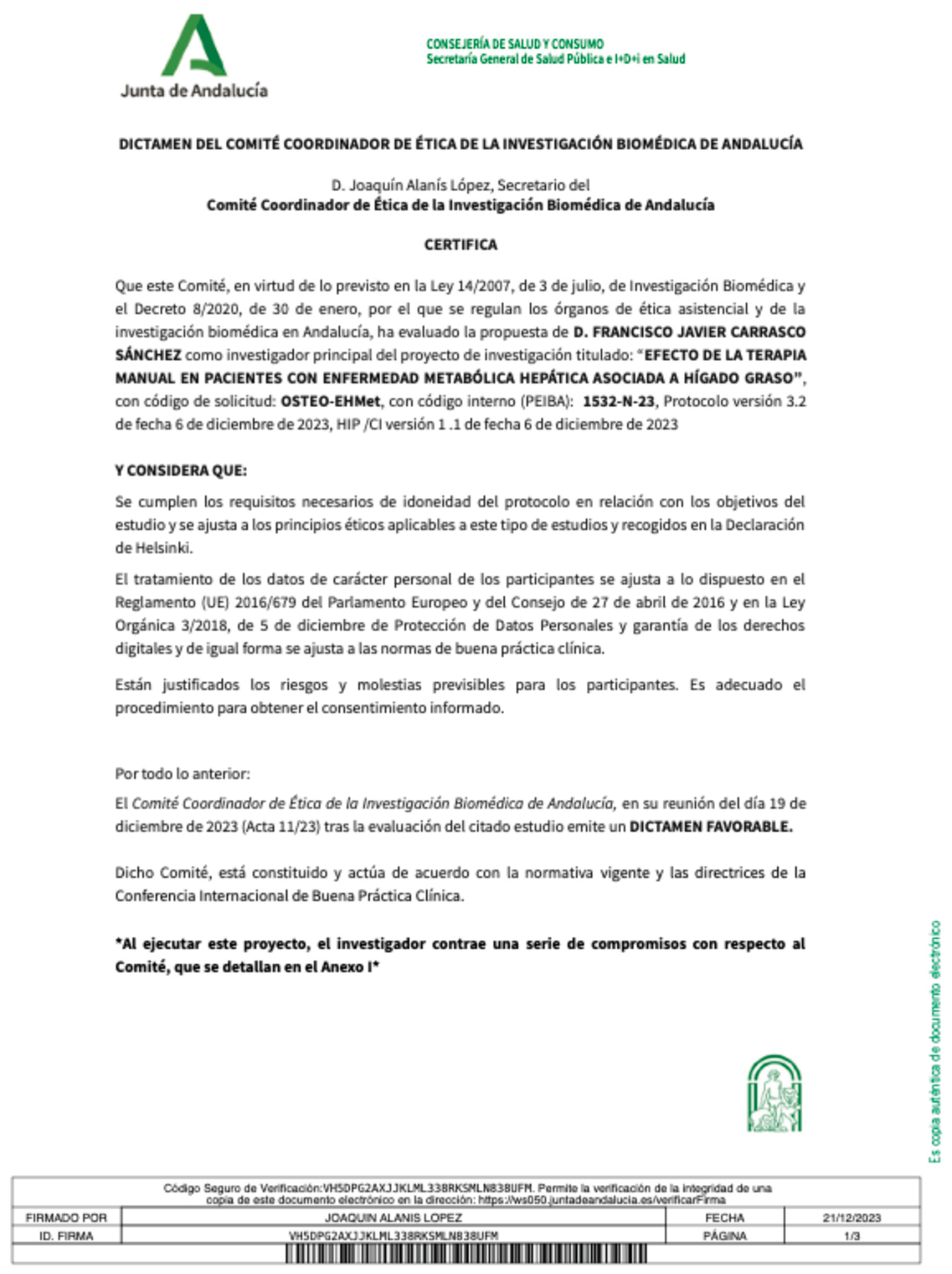
The study was conducted in accordance with the ethical standards of the Declaration of Helsinki [11], and the confidentiality of patient data was respected. This study received ethical approval by the Ethical Research Coordinator Committee of Andalusia, Spain, (CCEIBA). Before their participation, patients were given written information regarding the objectives and procedures of the study and agreed to participate by signing a statement of informed consent.
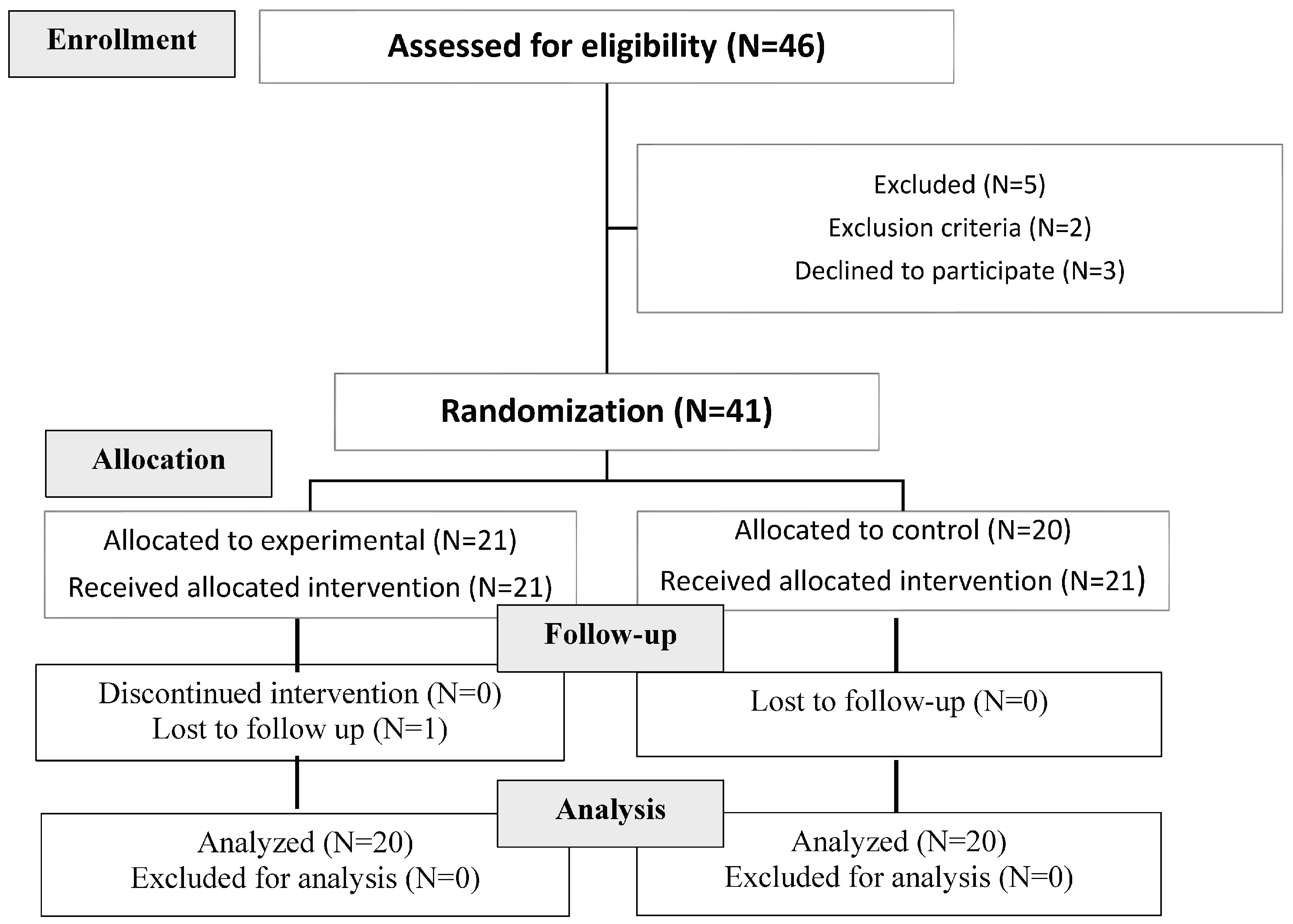
Figure 1.
Flow Diagram.
2.2. Study Protocol
To avoid a high level of withdrawal, participants only received 2 sessions a week for 4 weeks with a duration of 40 minutes each. The same procedure was performed on all subjects by the same osteopathic therapist. Exercise and taking pain relievers are not allowed 72 hours before procedure.
Supine and lateral diaphragm stretching technique: the therapist stands in front of the patient's head, using the ulnar edge of the hands on the lower edge of the rib cage. The procedure consists of asking the patient to take a deep breath while the therapist, through a subsequent displacement of his body, raises the rib wall, seeking to generate a relaxation of the tissues in the epigastric region. For lateral, the patient is placed on the unaffected side, with the arm on the side to be treated in abduction and antepulsion. The therapist, making contact on the anterior rib rim, asks the patient to breathe deeply while elevating the hemithorax on the treated side to increase thoracic amplitude and improve rib cage mobility.
The technique of inhibition of the phrenic center is carried out in supine position, in which the therapist places one hand on the umbilical region, orienting the fingers towards the head, and the other on the sternum, with the fingers directed towards the feet. During patient inspiration, the abdominal hand slides down the rib ridge, while the thoracic hand exerts pressure on the sternum, performing a movement that seeks to increase elasticity in the epigastric area.
A global hemodynamic maneuver of the abdomen was performed in supine or trendelemburg position. The therapist uses the ulnar edge of the hands to drag the skin toward the pubic symphysis and then performs a vibration during expiration. The goal of this technique is to elevate the visceral system and create a vascular vacuum effect by lowering the diaphragm.
Lateral recumbent liver pumping techniques are performed with the patient in the left lateral recumbency, with the legs bent to facilitate relaxation of the abdominal muscles. The therapist places his hands on the diaphragmatic hemicupola to be treated and, during the patient's expiration, exerts a compression that is abruptly released at the end of inspiration. This technique seeks to promote the mobility of the liver and improve circulation in the area. In supine position, a similar procedure is used, where the therapist, located contralaterally to the liver, exerts pressure on the right rib grill during expiration and performs a sudden release of pressure during inspiration, to improve hepatic mobility. In seated position, the therapist performs lateral flexion movements of the trunk while compressing the right rib cage during expiration, promoting circulation and mobility of the liver.
Janse's technique is performed supine, with the therapist taking a fold of skin in the direction of the liver and performing a vibration in the right hypogastric area during expiration, to improve visceral mobility and optimize hepatic circulation. Toggle Recoil's technique, the patient performs a forced inhalation while the therapist compresses the right hypogastric area, suddenly releasing pressure in the treated area. This maneuver favors the mobility of the liver and the improvement of visceral function.
Failor's technique, the therapist performs a compression of the right hypogastric area while inducing long breathing cycles in the patient, applying pressure during expiration and favoring the elasticity of the liver tissue.
2.3. End Points and Assessments
The primary endpoint was changes from basal score to after proceeding in the hepatic steatosis index (HSI) and the homeostasis model assessment (HOMA). The HSI was calculated using the formula = 8 ALT/AST body mass index (BMI) 2 (if diabetes) 2 (if female) and HOMA = fasting serum glucose (mg/dL) x fasting insulin (mIU/L)/40. The HSI have an area under curve ROC (Receiver Operating Characteristic) of 0.812 (95% CI, 0,801 – 0.824). It was also found that at values below 30, HSI ruled out MASLD with a sensitivity of 93.1% and at values above 36, HSI detected MASLD with a specificity of 92.4%.
The secondary endpoints were also changes after following up in other non-invasive scores to evaluate inflammation and fibrosis.
NAFLD Liver Fat Score (1.18× metabolic syndrome +0.45× diabetes (2, if yes; 0, if no) +0.15× FSI (mU/L) +0.04× AST (U/L) −0.94× (AST/ALT) −2.89) for measure steatosis. Its optimal cut-off value was set at -0.640 (86% sensitivity and 71% specificity), meaning that in patients who scored below, NAFLD/MASLD could be ruled out and in patients who scored above, NAFLD/MASLD is likely to be diagnosed.
HAIR model [hypertension (>=135/85 mm Hg), increased ALT (> 40 UI/l) and raised insulin resistance (HOMA >3.8)] for steatohepatitis (MASH), three of these variables would indicate the presence of MASH (89% specificity).
AST To Platelet Ratio Index [APRI (AST p/AST normal higher level) x 100/platelets 109/L)] score < 0.5 ruled out fibrosis. The 0.7 threshold was found to be 77% sensitive and 72% specific whilst the 1.0 threshold was found to be 61% sensitive an 64% specific for severe fibrosis
FIB-4 (age (years) × AST (UI/L)]/[platelets (109/L) × ALT (UI/L)] ½). A score <1.45 had a negative predictive value of 90% for fibrosis. In contrast, a FIB-4 >3.25 would have a 97% specificity and a positive predictive value of 65% for advanced fibrosis.
NAFLD-fibrosis score [-1.675 + 0.037 × age (year) + 0.094 × BMI (kg/m2) + 1.13 × IFG/diabetes (yes = 1, no = 0) + 0.99 × AST/ALT ratio - 0.013 × platelet (×109/L) - 0.66 × albumin (g/dL)] with scores lower than -1.455 correlate with the absence of significant fibrosis (F0-F2 fibrosis), scores from -1.455 to 0.675 correlate with an indeterminate and scores greater than 0.675 indicate the presence of significant fibrosis (F3-F4 fibrosis).
2.4. Data Analysis
Results are showed as means (standard deviation, SD) or medians (25th to 75th percentile) for continuous variables and numbers (%) for categorical variables.
The baseline characteristics were compared by the X2 statistic for the qualitative variables. Means were contrasted using a Student's T-test for the same or different variances (Levene's test) and medians with a Mann-Whitney U Test (variables with non-parametric distribution).
The primary endpoints (means of HSI and HOMA before and after intervention) were compared either in experimental and control group using a paired T-Student or a paired Mann-Whitney U test according to normality. Afterwards, secondary endpoints were also analyzed following the same tests. We also analyzed participants according to different subgroups such as arGLP1 treatment, diabetes and BMI.
All statistical analysis were performed using SPSS software (version 29.0.2.0). A two-sided p value < 0.05 was considered statistically significant.
3. Results
3.1. Patient Characteristics and Randomization
From January through July 2024, a total of 46 patients were assessed for eligibility, five of them were excluded (two had exclusion criteria and three declined to participate). A total of 41 patients were randomly assigned to receive visceral manual therapy (21 patients) or standard care (20 patients). Of these patients, one of the experimental group did not complete the intervention due to loss to follow-up. All the patients in the control group finished the follow-up (flow diagram in figure 1). None of participants developed side effects.
The characteristics and laboratory findings of the patients at baseline were similar in the two groups (Table 1).
Nearly half of the patients had diabetes, with excellent metabolic control, and two thirds had obesity. There were not differences in age, gender, BMI and blood pressure. Although the comorbidities were similar, the level of triglycerides were higher in the intervention group. The use of drugs was also quite similar, except treatment with omega-3 fatty acids for hypertriglyceridemia. Regarding laboratory findings, levels of basal glycemia, HbA1c, LDL-cholesterol and c-protein were slightly higher in patients underwent visceral manual therapy.
The findings in non-invasive scores to evaluate steatosis, steatohepatitis and fibrosis in the two groups after interventions are showed in Table 2. Patients in the experimental group had higher HOMA and HSI score. None of the patients had scores indicating steatohepatitis or fibrosis. There are no differences in scores for MASH and fibrosis between two groups.
3.2. Outcomes
Patients undergoing manual therapy experienced a significant mean reduction in the HOMA (7.22 vs. 5.5 p=0.018) and HSI (47.40 vs. 45.55 p=0.036) value after intervention. They also had a significant reduction of NAFLD score (median 1.42 vs. 1.32 p< 0.001) as additional marker for hepatic steatosis. These findings did not appear in the control group: HOMA (4.17 vs. 4.7 p=NS), HSI (42.6 vs. 41.9 p=NS) and NAFLD score (1.43 vs. 1.41 p=NS). Regarding secondary endpoints there were not changes of the scores to assess steatohepatitis or fibrosis neither experimental nor control group, (Table 3).
Eighteen patients (12 from experimental group and 6 from control group) were taken arGLP1. As expected, these patients improved their HSI score after following up (46.62 vs. 44.94, difference -1.68 p=0.028. However, there were no differences in HOMA score (6.47 vs. 5.58 p=0.275).
Participants after VMT experimented a slight significant reduction in weight, therefore BMI (33.43 vs. 32.40 kg/m2 p < 0.001). BMI was similar in the placebo group (31.61 vs. 31.35 p=0.465). Regarding liver enzymes, AST did not show differences, but there was a significant reduction of ALT level (42.6 vs. 39.2 p=< 0.01), Figure 3.
Diabetes did not affect in HOMA and HSI scores changes (Table 4).
4. Discussion
In our study, participants who received VMT according to a fix protocol focus on osteopathic liver treatment reached a significant reduction in biomarker scores indicating the presence of hepatic steatosis, HSI and NAFLD liver fat score, and insulin resistance, measured by HOMA, mainly related to declines in body weight, triglycerides and liver enzymes levels. To our knowledge, our study is the first randomized controlled trial which shows the effect of VMT, added to standard care, in patients suffering from MASLD.
Prevalence of MASLD increases with obesity, measured as body mass index or waist circumference [13]. Gamma-glutamyl transferase increases in MASLD to protect against insulin resistance due to its antioxidant activity [14]. Although triglycerides are strongly associated with MASLD, weight loss of at least 7–10% is needed to improve most of the histopathological features of MASLD [15].
Patients in the intervention group demonstrated a significant decrease in the HOMA value (from mean value of 7.22 to 5.5 a difference of -1.72 p=0.018). On the other hand, both HSI (from mean value of 47.4 vs. 45.5 a difference of -1.9 p=0.036) and NAFLD liver fat score (from median value of 1.42 vs. 1.32 a difference of -0.10 p< 0.01) showed a significant reduction from baseline to after intervention. These findings were not observed in the control group.
Growing evidence supports the central role of systemic metabolic dysfunction in MASLD progression. Simple metabolic indices such as the triglyceride–glucose index (TyG) and visceral adiposity index (VAI) demonstrate good discriminative capacity for moderate-to-severe steatosis and improve risk stratification when combined with conventional fibrosis scores [16]. In parallel, the evolving pharmacological landscape emphasizes agents that primarily modulate insulin resistance, lipid metabolism, and systemic inflammation—including GLP-1 receptor agonists, pan-PPAR agonists, and thyroid hormone receptor-β agonists—rather than targeting the liver in isolation [17].
Recent pathophysiological models further suggest that MASLD may reflect an “oxygen–nutrient mismatch,” in which excessive portal nutrient delivery overwhelms hepatic oxidative capacity, predisposing to hypoxic injury and fibrosis [15]. Within this framework, insulin resistance becomes a key amplifier of metabolic overload. Collectively, these findings support the concept that MASLD is fundamentally a systemic metabolic disorder and highlight the clinical relevance of interventions capable of modulating metabolic regulation beyond pharmacotherapy alone [18].
Weight loss is the main objective in the management of patients with obesity or overweight in MASLD [19]. It is well known that weight loss correlates with reductions in insulin resistance and free fatty acid concentrations. The direct trial reported that a weight loss of approximately 15% in patients with type-2 diabetes was associated with a substantial decrease in liver fat content and recovery of beta cell function [20]. For that, this fact is the mainstay of MASLD treatment and the main variable in improving hepatic steatosis activity scores.
The theory of mechanobiology could explain why visceral manipulation has beneficial effects on MASLD. Osteopathic visceral treatment involves manual techniques that could influence the mechanical properties of the liver and surrounding tissues, possibly improving the mobility of visceral organs, reducing stiffness, and upgrading circulation. These changes may contribute to an improvement in insulin sensitivity and secondarily reduce liver fat [3]. At the molecular level, mechanical forces are sensed and transmitted into hepatic cells via allosteric activation of mechanoreceptors on the cell membrane, leading to the activation of various mechanotransduction pathways and then regulating cell function. Thus, the application of mechanomedicine might be an adjuvant treatment for liver diseases [21].
Aging is associated with reduced physical activity levels, diminished diaphragmatic excursion, and decreased variability of intra-abdominal pressure. These mechanical changes may reduce physiological hepatic mobilization and microcirculatory stimulation. Within this framework, the mechanical component of MASLD pathophysiology deserves attention, as decreased mechanical stimuli over time may contribute to impaired metabolic regulation and hepatic perfusion. Our findings suggest that restoring controlled mechanical stimulation through visceral manual therapy may represent a complementary approach, particularly relevant in the context of aging [3].
Although there is no direct evidence on the relationship between visceral manipulation and insulin resistance. Yosri et al [22] demonstrated in women with polycystic ovarian syndrome, a disorder of unclear origin, where insulin resistance plays a very important role, 50% to 70% of women with polycystic ovary regardless of weight are insulin resistant, that visceral manipulation yielded an improvement in menstrual pain, irregularities, and premenstrual symptoms.
Techniques that focus on the diaphragm and liver aim to improve liver microcirculation and lymphatic drainage, which could help reduce inflammation and perhaps fibrosis as well [4]. Although fibrosis was not the objective of the study, patients with FIB-4 >2.67 were excluded, no modifications were observed in the different scores to evaluate fibrosis such as APRI, FIB-4 and NAFLD-fibrosis score. Since liver fibrosis is a late-stage progression of MASLD, these results are promising, as they suggest a possible role of visceral manipulation in the early stages of the disease.
In the experimental group HSI decreased mainly due to reduced BMI and liver enzymes. These findings are consistent with the known effects of manual therapy on reducing body fat and improving metabolic function. In our study, we also observed a reduction of ALT (from 42.6 to 39.2 a difference of -3.4 p<0.01) without differences in AST levels.
There are other examples of improving symptoms in gastrointestinal diseases. A single blind control trial on 52 children with refractory chronic functional constipation unresponsive to the standard medical treatment was randomly allocated to visceral manipulation or standard care (26 each group) for 4 weeks. At the end of treatment, patients in the intervention group showed an improvement in abdominal pain, painful defecation, stool consistency and defecation frequency, with a significantly decreased of dose of laxative [23]. The manual osteopathic technique also produces an improvement in gastroesophageal reflux disease symptoms one week after treatment, cervical mobility, and C4 spinous process pain threshold [24].
As expected, hypertriglyceridemia was frequent in MASDL patients, even greater in the intervention group, which means they had higher inflammation. Visceral manipulation was successful even in patients with a higher degree of metabolic involvement.
Nearly half of the patients had diabetes, with excellent metabolic control (HbA1c around 6.0%). Diabetes did not influence in HIS score in both groups. Eighteen patients, 12 and 6 respectively, were taken GLP1 analogues. These drugs alone or in combination with SGLT2 inhibitors are beneficial effects on liver steatosis that goes beyond glucose control, especially by weight loss and its effects on biomarkers such as hepatic amino transaminases, triglycerides, high-sensitivity C-reactive protein or intrabdominal fat. Carretero-Gomez et al [25] demonstrate reduction in HIS and FLI (fatty liver index) scores in patients with diabetes and obesity and HSI according to MASLD. The same investigation group also studied the effect of semaglutide alone on HSI and FIB-4 at 24 weeks in patients with type-2 diabetes. At 24 weeks, there was a significant reduction in HSI (-2.36 (95%CI 1.83-2.9) p < 0.00001) and FIB-4 (-0.075 (95%CI 0.015-0.14) p < 0.016), mainly related to declines in body weight, triglyceride levels, insulin resistance (estimated by the triglyceride-glucose index), and liver enzymes. Authors concluded that weekly subcutaneous semaglutide had a beneficial effect on liver steatosis that went beyond glucose control [26]. In our study patients under GLP1 analogs also showed a significant reduction in HSI (p=0.028), but HOMA value did not reach statistical significance.
Recently clinical trials to evaluate efficacy and safety of semaglutide [27], tirzepatide [28], retatrutide [29] and survodutide [30] in patients with metabolic dysfunction associated steatohepatitis with and without fibrosis open a promising window of evidence.
The main limitation of the study was the fact that it had a small sample and a relatively short follow-up period. Further, the patients presented a high BMI, with a very rigid abdomen, so that the application of the techniques was difficult. On the other hand, it is unknown whether the effect is long-lasting or, more likely, additional therapies would be needed to maintain the beneficial effects.
5. Conclusions
The results of this clinical trial have shown that VMT, also called osteopathic visceral manipulation, added to standard care could impact positive metabolic effects on patients with MASLD without fibrosis. So VMT, focus on liver and abdominal techniques, could be considered as a possible adjuvant treatment for the management of early stages of MASLD, these results highlight the potential relevance of mechanical modulation as an adjuvant strategy in MASLD management. Considering the progressive reduction in mechanical and metabolic stimuli associated with aging, future research should explore the role of targeted mechanical interventions in older populations at risk of metabolic liver disease.
Author Contributions
Data collections were undergone by Carrasco-Sánchez and Quintero-Lozano. Socarras-Alonso did the visceral manipulation techniques. All authors have equally contributed to the conception, design and writing of the manuscript.
Funding
This research did not receive any specific grant from funding agencies in the public, commercial or not-for-profit sectors
Appendix
1. Ethics Committee approval
2. Patient Consent
CONSENTIMIENTO INFORMADO – CONSENTIMIENTO POR ESCRITO DEL PACIENTE
CONSENTIMIENTO INFORMADO – INFORMACIÓN AL PACIENTE
Antes de proceder a la firma de este consentimiento informado, lea atentamente la información que a continuación se le facilita y realice las preguntas que considere oportunas.
Titulo del proyecto:
EFECTO DE LA TERAPIA MANUAL EN PACIENTES CON ENFERMEDAD METABÓLICA HEPÁTICA ASOCIADA HIGADO GRASO
Investigador Principal:
D. Francisco Javier Carrasco Sánchez
Hospital Universitario Juan Ramón Jiménez
Teléfono: +34 671539754
Naturaleza:
Este documento es un consentimiento informado por escrito para participar en un estudio de ensayo clínico realizando un protocolo de intervención basado en técnicas manuales con el fin de reducir los indicadores inflamatorios hepáticos, así como la sensibilidad al dolor.
Lea este documento atentamente y realice todas las preguntas que estime oportuna al investigador que le esté proponiendo participar. En caso de necesitar información adicional o alguna aclaración con posterioridad, podrá dirigirse a los teléfonos indicados.
Si decide participar en este proyecto, deberá firmar un consentimiento informado.
Importancia:
Usted tiene una clínica compatible con un proceso inflamatorio del hígado, a esto se le llama síndrome metabólico hepático. En su condición actual, su hígado está sufriendo un proceso inflamatorio y de fibrosis degenerativo debido a una alteración en el metabolismo. Una disminución de la movilidad hepática está relacionada con un empeoramiento de la enfermedad. En la actualidad está demostrado que una dieta equilibrada y unos hábitos de vida saludables como la práctica de ejercicio físico mejoran significativamente la sintomatología y frenan la evolución de la enfermedad. Es el aumento del movimiento hepático inducido por el movimiento repetitivo ampliado del diafragma durante el ejercicio el principal causante de esa mejora en la movilidad hepática dando como resultado una disminución de la inflamación. Es por ello por lo que se pretende demostrar que las técnicas manuales de bombeo hepático también son efectivas para disminuir los marcadores inflamatorios hepáticos, así como la mejora de la percepción del dolor.
Protocolo de intervención manual hepático
Le proponemos realizar dos intervenciones semanales durante cuatro semanas, un total de 8 sesiones y cada sesión consta de 12 técnicas destinadas a movilizar principalmente la zona abdominal correspondiente con el hígado (parte superior derecha del abdomen), así como la parrilla costal y la zona baja del abdomen.
En cada una de las 8 sesiones se realizarán las mismas técnicas y cada intervención durara aproximadamente 40 minutos.
Las técnicas se realizarán en series de 10 ciclos respiratorios. Todas las intervenciones se realizarán en un laboratorio silencioso, sin corrientes de aire, con temperatura y humedad controladas (24°C ± 1°C, humedad relativa 25-35%).
Deberá abstenerse de cualquier tipo de ejercicio desde el día anterior y no se le permite tomar analgésicos o relajantes musculares durante las 72 horas previas a la intervención.
Se realizarán dos mediciones de marcadores bioquímicos, uno antes del protocolo y otro al finalizar, así como diferentes mediciones para valorar la sensibilidad al dolor.
Dichas mediciones consisten en medir el umbral de dolor de forma bilateral en algunos nervios periféricos como pueden ser la rama oftálmica del nervio trigémino (situado en la cara), trapecio superior (hombro), apófisis espinosa de C4 (cuello) y el músculo tibial anterior (pierna).
Implicaciones para el donante/paciente:
- La participación en el estudio es totalmente voluntaria.
- Usted puede retirarse del estudio cuando así lo manifieste, sin dar explicaciones y sin que esto repercuta en sus cuidados médicos.
- Todos los datos carácter personal, obtenidos en este estudio son confidenciales y se tratarán conforme a la Ley Orgánica 03/2018 de Protección de Datos de Carácter Personal.
- La información obtenida se utilizará exclusivamente para los fines específicos de este estudio.
Riesgos de la investigación para el paciente:
Usted puede experimentar ligero dolor costal y aumento del peristaltismo abdominal, mareos, nauseas o hiperventilación.
Análisis de sangre; molestias propias de la realización de la técnica.
Beneficios para el paciente
Disminución de los escores bioquímicos relacionados con la inflamación, mejora de la sensibilidad a la insulina, mejora del metabolismo hepático, disminución de la sensibilidad visceral, disminución en la percepción del dolor.
Satisfacción en contribuir en el avance del tratamiento de la enfermedad hepática metabólica asociada al hígado graso.
EFECTO DE LA TERAPIA MANUAL EN PACIENTES CON ENFERMEDAD METABÓLICA HEPÁTICA ASOCIADA A HIGADO GRASO
Yo (Nombre y Apellidos) con DNI:
................................................................................................................................
- He leído el documento informativo que acompaña a este consentimiento (Información al Paciente)
- He podido hacer preguntas sobre el estudio
- He recibido suficiente información sobre el estudio
- He hablado con el profesional sanitario informador:
…………………………………………………………
- Comprendo que mi participación es voluntaria y soy libre de participar o no en el estudio.
- Se me ha informado que todos los datos obtenidos en este estudio serán confidenciales y se tratarán conforme establece la Ley Orgánica 03/2018 de Protección de Datos de Carácter Personal.
- Se me ha informado de que la información obtenida sólo se utilizará para los fines específicos del estudio.
- Deseo ser informado/a de mis datos médicos y otros de carácter personal que se obtengan en el curso de la investigación, incluidos los descubrimientos inesperados que se puedan producir, siempre que esta información sea necesaria para evitar un grave perjuicio para mi salud o la de mis familiares biológicos.
Si No
Comprendo que puedo retirarme del estudio:
- Cuando quiera
- Sin tener que dar explicaciones
- Sin que esto repercuta en mis cuidados médicos
Presto libremente mi conformidad para participar en el proyecto titulado
EFECTO DE LA TERAPIA MANUAL EN PACIENTES CON ENFERMEDAD METABÓLICA HEPÁTICA ASOCIADA A HIGADO GRASO
| Firma del paciente | Firma del profesional |
| (o representante legal en su caso) | sanitario informador |
| Nombre y apellidos:……………. | Nombre y apellidos: …………….... |
| DNI: | |
| Fecha: ……………………………… | Fecha: ………………………. |
SOLICITUD DE REVOCACIÓN DEL CONSENTIMIENTO INFORMADO
TÍTULO DEL PROYECTO: EFECTO DE LA TERAPIA MANUAL EN PACIENTES CON ENFERMEDAD METABÓLICA HEPÁTICA ASOCIADA HIGADO GRASO
DATOS DEL SOLICITANTE:
D/Dña.__________________________________________________, mayor de edad, con domicilio en la C/_______________________________________________nº_____, localidad _______________________Provincia _________________________ C.P. ___________ con D.N.I./Pasaporte/NIE (u otro documento acreditativo válido)____________________, por medio del presente escrito manifiesta su deseo de revocar el consentimiento, de conformidad con el artículo 17 del Real Decreto 1720/2007, de 21 de diciembre, por el que se aprueba el Reglamento de desarrollo de la Ley Orgánica 03/2018, de protección de datos de carácter personal.
SOLICITA
- Revocar el consentimiento otorgado para el tratamiento de mis datos de carácter personal, de conformidad con lo establecido en la normativa vigente sobre protección de datos.
- Cese en la participación del proyecto
| Firma del paciente | Firma del profesional |
| (o representante legal en su caso) | sanitario informador |
| Nombre y apellidos:………………. | Nombre y apellidos: …………….... |
| DNI: | |
| Fecha: ……………………………… | Fecha: ………………………. |
References
- Rinella, M.E.; Lazarus, J.V.; Ratziu, V.; et al. A Multisociety Delphi Consensus Statement on New Fatty Liver Disease Nomenclature. Hepatology 2023, 78, 1966–1986. [CrossRef]
- Song, S.J.; Lai, J.C.T.; Wong, G.L.H.; et al. Can We Use Old NAFLD Data under the New MASLD Definition? J. Hepatol. 2024, 80, e54–e56. [CrossRef]
- Clayton-Chubb, D.; Scott, R.A.; Roberts, S.K.; et al. Metabolic Dysfunction-Associated Steatotic Liver Disease in Community-Dwelling Older Adults: Prevalence, Risk Factors and Association with Frailty and Functional Outcomes. J. Gerontol. A Biol. Sci. Med. Sci. 2024, 79, 1543–1552. [CrossRef]
- Huang, S.; Hu, W.; Fang, T. The Global Impact of Non-Alcoholic Fatty Liver Disease (Including Cirrhosis) in the Elderly from 1990 to 2021 and Future Projections of Disease Burden. PLoS ONE 2025, 20, e0325961. [CrossRef]
- Bjornsson, E.S. The Importance of Age for Liver-Related Mortality in Patients with Metabolic Dysfunction-Associated Steatotic Liver Disease. Hepatobiliary Surg. Nutr. 2024, 13, 124–127. [CrossRef]
- Mitten, E.K.; Baffy, G. Mechanotransduction in the Pathogenesis of Non-Alcoholic Fatty Liver Disease. J. Hepatol. 2022, 77, 1642–1656. [CrossRef]
- Kang, N. Mechanotransduction in Liver Diseases. Semin. Liver Dis. 2020, 40, 84–90. [CrossRef]
- Bercík, P.; Bouley, L.; Dutoit, P.; et al. Quantitative Analysis of Intestinal Motor Patterns: Spatiotemporal Organization of Nonneural Pacemaker Sites in the Rat Ileum. Gastroenterology 2000, 119, 386–394. [CrossRef]
- Bercík, P.; Wang, L.; Verdú, E.F.; et al. Visceral Hyperalgesia and Intestinal Dysmotility in a Mouse Model of Postinfective Gut Dysfunction. Gastroenterology 2004, 127, 179–187. [CrossRef]
- Lee, J.H.; Kim, D.; Kim, H.J.; et al. Hepatic Steatosis Index: A Simple Screening Tool Reflecting Nonalcoholic Fatty Liver Disease. Dig. Liver Dis. 2010, 42, 503–508. [CrossRef]
- Wen, B.; Zhang, G.; Zhan, C.; et al. The 2024 Revision of the Declaration of Helsinki: A Modern Ethical Framework for Medical Research. Postgrad. Med. J. 2024. [CrossRef]
- Ricard, F. Tratado de Osteopatía Visceral y Medicina Interna. Tomo II: Sistema Digestivo; MEDOS: Madrid, Spain, 2016.
- Gaggini, M.; Morelli, M.; Buzzigoli, E.; et al. Non-Alcoholic Fatty Liver Disease (NAFLD) and Its Connection with Insulin Resistance, Dyslipidemia, Atherosclerosis and Coronary Heart Disease. Nutrients 2013, 5, 1544–1560. [CrossRef]
- Dongiovanni, P.; Stender, S.; Pietrelli, A.; et al. Causal Relationship of Hepatic Fat with Liver Damage and Insulin Resistance in Nonalcoholic Fatty Liver. J. Intern. Med. 2018, 283, 356–370. [CrossRef]
- Stefan, N.; Staiger, H.; Häring, H.U. Dissociation between Fatty Liver and Insulin Resistance: The Role of Adipose Triacylglycerol Lipase. Diabetologia 2011, 54, 7–9. [CrossRef]
- Bende, F.; Szabó, B.; Sándor, J.; et al. Association between Visceral Adiposity and the Prediction of Hepatic Steatosis and Fibrosis in Patients with Metabolic Dysfunction-Associated Steatotic Liver Disease. J. Clin. Med. 2025, 14, 3405. [CrossRef]
- Patel, P. Treatment Landscape of Metabolic-Dysfunction-Associated Steatotic Liver Disease. J. Clin. Med. 2025, 14, 6060. [CrossRef]
- Lake-Bakaar, G. Metabolic Dysfunction-Associated Steatotic Liver Disease (MASLD): New Perspectives on an Evolving Epidemic. J. Clin. Med. 2025, 14, 8872. [CrossRef]
- Tacke, F.; Horn, P.; Wong, V.W.; et al. EASL-EASD-EASO Clinical Practice Guidelines on the Management of Metabolic Dysfunction-Associated Steatotic Liver Disease (MASLD). J. Hepatol. 2024, 81, 492–542. [CrossRef]
- Hickman, I.J.; Jonsson, J.R.; Prins, J.B.; et al. Modest Weight Loss and Physical Activity in Overweight Patients with Chronic Liver Disease Results in Sustained Improvements in Alanine Aminotransferase, Fasting Insulin, and Quality of Life. Gut 2004, 53, 413–419. [CrossRef]
- Li, N.; Zhang, X.; Zhou, J.; et al. Multiscale Biomechanics and Mechanotransduction from Liver Fibrosis to Cancer. Adv. Drug Deliv. Rev. 2022, 188, 114448. [CrossRef]
- Yosri, M.M.; Hamada, H.A.; Yousef, A.M. Effect of Visceral Manipulation on Menstrual Complaints in Women with Polycystic Ovarian Syndrome. J. Osteopath. Med. 2022, 122, 411–422. [CrossRef]
- Zakaryaei, S.A.; Ravanbakhsh, M.; Javaherizadeh, H.; et al. Effect of Visceral Manipulation on Children with Refractory Chronic Functional Constipation: A Randomized Controlled Trial. Arq. Gastroenterol. 2024, 61. [CrossRef]
- Eguaras, N.; Rodríguez-López, E.S.; Lopez-Dicastillo, O.; et al. Effects of Osteopathic Visceral Treatment in Patients with Gastroesophageal Reflux: A Randomized Controlled Trial. J. Clin. Med. 2019, 8, 1738. [CrossRef]
- Carretero Gómez, J.; Ena, J.; Seguí Ripoll, J.M.; et al. Effect of Newer Antihyperglycemic Drugs on Liver Steatosis Indices in Patients with Diabetes and Obesity. Curr. Med. Res. Opin. 2021, 37, 1867–1873. [CrossRef]
- Carretero-Gómez, J.; Carrasco-Sánchez, F.J.; Fernández-Rodríguez, J.M.; et al. Effect of Semaglutide on Fatty Liver Disease Biomarkers in Patients with Diabetes and Obesity. Rev. Clin. Esp. 2023, 223, 134–143. [CrossRef]
- Newsome, P.N.; Buchholtz, K.; Cusi, K.; et al. A Placebo-Controlled Trial of Subcutaneous Semaglutide in Nonalcoholic Steatohepatitis. N. Engl. J. Med. 2021, 384, 1113–1124. [CrossRef]
- Loomba, R.; Hartman, M.L.; Lawitz, E.J.; et al. Tirzepatide for Metabolic Dysfunction–Associated Steatohepatitis with Liver Fibrosis. N. Engl. J. Med. 2024, 390, 299–310. [CrossRef]
- Jastreboff, A.M.; Kaplan, L.M.; Frías, J.P.; et al. Triple-Hormone-Receptor Agonist Retatrutide for Obesity: A Phase 2 Trial. N. Engl. J. Med. 2023, 389, 514–526. [CrossRef]
- Sanyal, A.J.; Bedossa, P.; Fraessdorf, M.; et al. A Phase 2 Randomized Trial of Survodutide in MASH and Fibrosis. N. Engl. J. Med. 2024, 391, 185–197. [CrossRef]
Figure 2.
Study Techniques: (A) Heiling technique, (B) Janse technique, (C) Failor technique, (D) Liver pumping techniques in lateral decubitus.
Figure 2.
Study Techniques: (A) Heiling technique, (B) Janse technique, (C) Failor technique, (D) Liver pumping techniques in lateral decubitus.
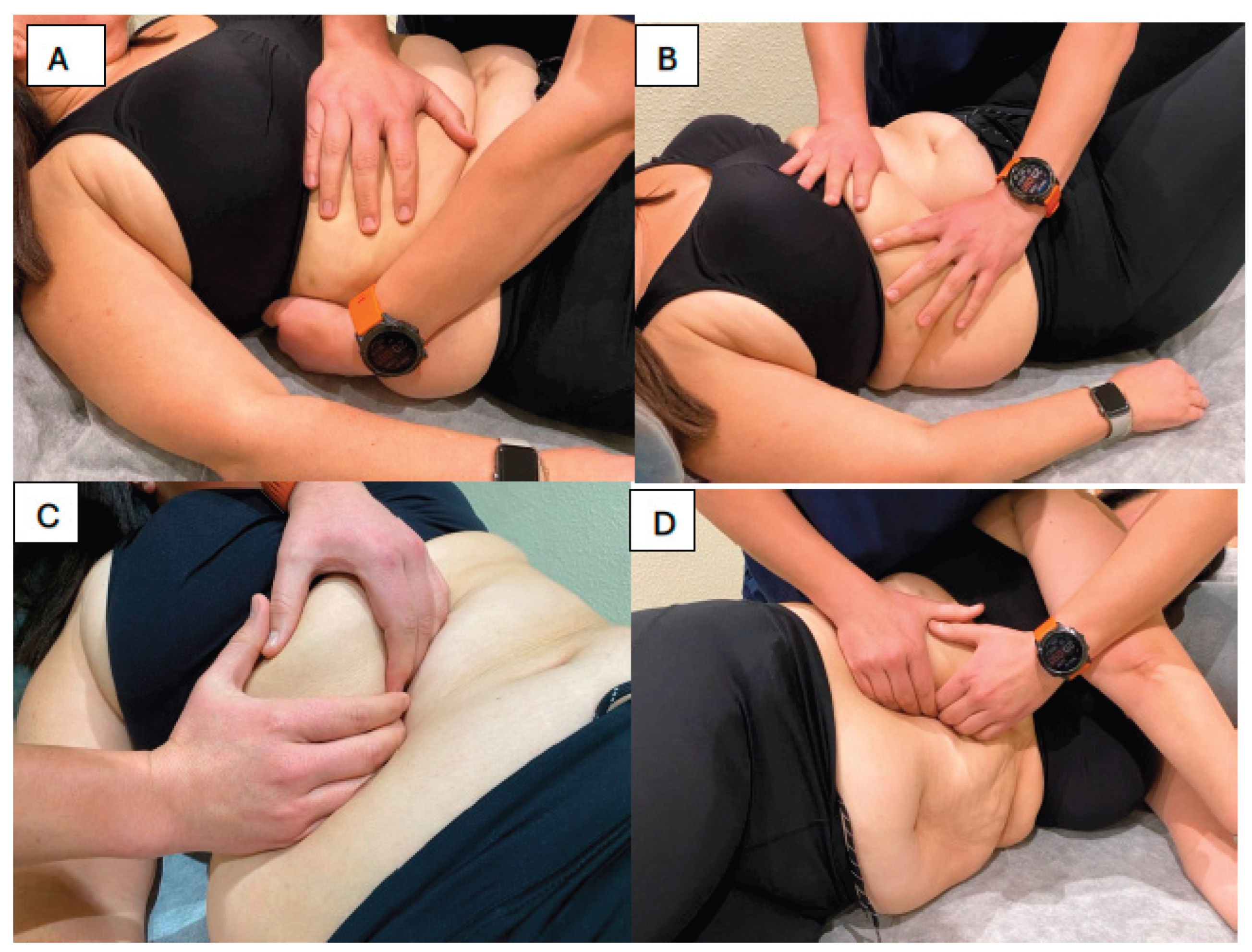
Figure 3.
Changes in BMI, AST and ALT after visceral intervention in the experimental group. BMI, body mass index; AST, Aspartate transaminase; ALT, Alanine transaminase.
Figure 3.
Changes in BMI, AST and ALT after visceral intervention in the experimental group. BMI, body mass index; AST, Aspartate transaminase; ALT, Alanine transaminase.

Table 1.
The Clinical and laboratory characteristics of the patients at baseline.
| Visceral Manual Therapy (N=20) |
Control Group (N=20) |
P value | |
| Male, n (%) | 10 (50) | 16 (80) | 0.047 |
| Age, mean (SD) | 52 (13,39) | 54,5 (11,83) | 0.264 |
| BMI, mean (SD) | 33,4 (4,68) | 31,6 (3,06) | 0.076 |
| Smoking, n (%) | 3 (15) | 3 (15) | 1 |
| Systolic BP, n (%) | 136.8 (20.22) | 141.65 (22.60) | 0.24 |
| Diastolic BP, n (%) | 89.65 (11.82) | 85,1 (11.67) | 0.11 |
| Comorbidities, n (%) | |||
| Obesity (BMI >30) | 15 (75) | 14 (70) | 0.723 |
| Type 2 Diabetes, n (%) | 10 (50) | 7 (35) | 0,337 |
| Hypercholesterolemia, n (%) | 16 (80) | 16 (80) | 1 |
| Hypertriglyceridemia, n (%) | 16 (80) | 8 (40) | 0.010 |
| Peripheral arterial disease, n (%) | 4 (20) | 2(10) | 0.376 |
| Chronic Kidney disease, n (%) | 3 (15) | 3 (15) | 1 |
| Medical Treatment, n (%) | |||
| Statins | 16 (80) | 13 (65) | 0.288 |
| Fibrates | 6 (30) | 2 (10) | 0.114 |
| Ezetimibe | 12 (60) | 9 (45) | 0.342 |
| Omega-3 | 6 (30) | 1 (5) | 0.037 |
| Metformin | 15 (75) | 7 (35) | 0.011 |
| SGLT2 inhibitors | 11 (55) | 5 (25) | 0.053 |
| GLP1 analogues | 12 (60) | 6 (30) | 0.057 |
| Insulins | 3 (15) | 1 (5) | 0.292 |
| ACE inhibitors/ARB | 15 (75) | 14 (70) | 0.723 |
| Betablockers | 5 (25) | 3 (15) | 0.429 |
| Diuretics | 12 (60) | 9 (45) | 0.342 |
| Calcio Antagonist | 9 (45) | 10 (50) | 0.752 |
| Hemoglobin | 13.95 (1.53) | 14.21 (1.57) | 0.299 |
| Plaquettes | 267,550 (7,3010.80) | 262,400 (51,657.17) | 0.399 |
| Glucose | 125 (46.47) | 102.15 (13.08) | 0.020 |
| Urea | 41.29 (17.48) | 39.05 (17.77) | 0.323 |
| Creatinine | 0.86 (0.25) | 0.97 (0.19) | 0.059 |
| Sodium | 140.4 (2.74) | 141.20 (2.69) | 0.179 |
| Potassium | 4.69 (0.40) | 4.48 (0.46) | 0.065 |
| Albumin | 4.58 (0.36) | 4.63 (0.26) | 0.325 |
| AST | 29 (15.71) | 22.55 (6.99) | 0.051 |
| ALT | 42.6 (25.71) | 28.05 (12.15) | 0.014 |
| GGT | 73.15 (66.54) | 54.85 (60) | 0.183 |
| Bilirubin | 0.44 (0.19) | 0.53 (0.23) | 0.098 |
| LDH | 173.15 (39.74) | 178.30 (25.58) | 0.314 |
| Total Cholesterol | 155.5 (33.93) | 164.8 (44.82) | 0.232 |
| LDL-Cholesterol | 71.84 (34.36) | 94.5 (42.79) | 0.036 |
| HDL-Cholesterol | 43.54 (11.40) | 50.35 (11.36) | 0.033 |
| No-HDL Cholesterol | 111.85 (31.43) | 113.5 (46.87) | 0.448 |
| Triglycerides | 214.55 (115.38) | 130.35 (63.01) | 0.004 |
| Apolipoprotein B | 85.80 (21.26) | 83.75 (25.07) | 0.391 |
| Ferritin, median (25th-75th) | 133 (50.9-174.9) | 169 (56.9-376) | 0.327 |
| C-protein | 5.02 (5.2) | 2.75 (2.57) | 0.044 |
| HbA1c for T2D | 6.66 (1.3) | 5.81 (0.79) | 0.009 |
| UACR, median (25th-75th) | 7 (2.7-35.1) | 4.9 (2.5-8.1) | 0.192 |
BMI, body mass index; BP, blood pressure; SGLT2, sodium-glucose cotransporte-2; GLP1, Glucagon-like peptide-1; ACE, angiotensin converting enzyme; ARB, angiotensin receptor blockers. AST, Aspartate transaminase; ALT, Alanine transaminase; GGT, Gamma-glutamyl transferase; LDH, Lactate dehydrogenase; UACR, urinary albumin/creatinine ratio.
Table 2.
Basal scores to evaluate insulin resistance, steatosis, steatohepatitis and fibrosis.
|
Visceral Manual Therapy Group (N=20) |
Control Group (N=20) |
P value | |
| HOMA (mean, SD) | 7.22 (4.77) | 4.17 (2.2) | 0.008 |
| HIS (mean, SD) | 47.40 (6.17) | 42.60 (4.53) | 0.004 |
| NAFLD score (median, 25th-75th) | 1.42 (0.17-2.62) | 1.43 (-0.4-1.82) | 0.672 |
| HAIR (median, 25th-75th) | 2 (1-2) | 1 (1-2) | 0.127 |
| FIB-4 (mean, SD) | 1.03 (0.75) | 0.95 (0.39) | 0.356 |
| APRI (mean, SD) | 0.35 (0.24) | 0.252 (0.08) | 0.054 |
| NAFLD fibrosis (mean, SD) | -91.44 (12.9) | -92.55 (12.32) | 0.784 |
HOMA, homeostasis model assessment; HIS, hepatic steatosis index; NAFLD liver fat score; HAIR, hypertension, increased ALT and raised insulin resistance, FIB-4, fibrosis 4; NAFLD-fibrosis score.
Table 3.
Means (SD) or median (25th-75th) basal and after proceedings according to group intervention.
Table 3.
Means (SD) or median (25th-75th) basal and after proceedings according to group intervention.
| Visceral Manual Therapy (N=20) | |||
| Basal Score | After proceedings | P value | |
| HOMA (mean, SD) | 7.22 (4.77) | 5.5 (3.20) | 0.018 |
| HIS (mean, SD) | 47.40 (6.17) | 45.55 (4.8) | 0.036 |
| NAFLD score (median, 25th-75th) | 1.42 (0.17-2.62) | 1.32 (0.35-2.63) | <0.001 |
| HAIR (median, 25th-75th) | 2 (1-2) | 1 (1-2) | 0.527 |
| FIB-4 (mean, SD) | 1.03 (0.75) | 1.07 (0.67) | 0.600 |
| APRI (mean, SD) | 0.35 (0.24) | 0.34(0.21) | 0.950 |
| NAFLD fibrosis (mean, SD) | -91.44 (12.9) | -90.35(13.0) | 0.480 |
| Triglycerides (mean, SD) | 214 (115) | 188 (145) | 0.290 |
| Body Mass Index (mean, SD) | 33.43 (8.6) | 32.40 (4.2) | <0.001 |
| Control Group (N=20) | |||
| Basal Score | After proceedings | P value | |
| HOMA (mean, SD) | 4.17 (2.2) | 4.7 (2.22) | 0.266 |
| HIS (mean, SD) | 42.60 (4.53) | 41.9 (3.7) | 0.228 |
| NAFLD score (median, 25th-75th) | 1.43 (-0.4-1.82) | 1.41(0.26-2.1) | 0.125 |
| HAIR (median, 25th-75th) | 1 (1-2) | 1(1-1.75) | 0.257 |
| FIB-4 (mean, SD) | 0.95 (0.39) | 0.99 (0.48) | 0.533 |
| APRI (mean, SD) | 0.252 (0.08) | 0.247 (0.08) | 0.302 |
| NAFLD fibrosis (mean, SD) | -92.55 (12.32) | -92.30 | 0.535 |
| Triglycerides (mean, SD) | 130.8 (63) | 156.4 (136) | 0.352 |
| Body Mass Index (mean, SD) | 31.6 (3.0) | 31.3 (2.6) | 0.865 |
HOMA, homeostasis model assessment; HIS, hepatic steatosis index; NAFLD liver fat score; HAIR, hypertension, increased ALT and raised insulin resistance, FIB-4, fibrosis 4; NAFLD-fibrosis score.
Table 4.
Means (SD) basal and after proceedings according to diabetes or GLP1 agonist.
| Diabetes Mellitus (N=17) | |||
| Basal Score | After proceedings | P value | |
| HOMA (mean, SD) | 5.59 (4.8) | 5.25 (3.3) | 0.708 |
| HIS (mean, SD) | 44.53 (5.1) | 43.32 (4.5) | 0.074 |
| GLP1 agonist (N=18) | |||
| Basal Score | After proceedings | P value | |
| HOMA (mean, SD) | 6.47 (5.03) | 5.58 (3.40) | 0.275 |
| HIS (mean, SD) | 46.62 (5.7) | 44.94 (5.03) | 0.028 |
GLP1, Glucagon-like peptide-1; HOMA, Homeostasis Model Assessment.
Disclaimer/Publisher’s Note: The statements, opinions and data contained in all publications are solely those of the individual author(s) and contributor(s) and not of MDPI and/or the editor(s). MDPI and/or the editor(s) disclaim responsibility for any injury to people or property resulting from any ideas, methods, instructions or products referred to in the content. |
© 2026 by the authors. Licensee MDPI, Basel, Switzerland. This article is an open access article distributed under the terms and conditions of the Creative Commons Attribution (CC BY) license.
Copyright: This open access article is published under a Creative Commons CC BY 4.0 license, which permit the free download, distribution, and reuse, provided that the author and preprint are cited in any reuse.


