

Submitted:
26 February 2026
Posted:
27 February 2026
You are already at the latest version
Abstract
Environmental awareness is playing an increasingly important role in all segments of the world, with sustainability and recycling being key elements. The aim of the research is to examine the challenges companies face in terms of sustainability when implementing procurement and supply chain management processes related to interior design. The research focused on four main questions: how procurement and supply chain man-agement are reflected in construction processes, what challenges these processes face, and how they can influence the sustainable use of materials in architectural supply chains.
The literature review was based on a systematic literature review using the PRISMA screening process and the PEO framework, utilizing the SCOPUS database and pro-cessing 70 scientific articles following the selection process. During the research, I also used the Critical Incident Technique (CIT), in which I asked interior designers about their positive and negative experiences with the procurement of sustainable materials and supply chain management processes. The methodology thus provided deeper insight into the decision-making processes of professionals, where sustainability conflicts with eco-nomic and operational realities. The qualitative research was supplemented by a ques-tionnaire survey, which aimed to assess sustainability, its prevalence, and professional obstacles.
The results of the research show that this topic is a research gap, but the openness of professionals shows a positive trend. Companies face numerous challenges related to new technologies and environmental awareness in order to create or transform well-functioning supply chain management processes.
Keywords:
systematic literature review
; supply chain management
; procurement
; interior design
; sustainability
1. Introduction
Day by day, social responsibility and environmental awareness play an increasingly important role. To achieve this goal, there is a growing demand for companies to take sustainability into account in their design processes. Interior design and architecture have also seen a significant upsurge in this awareness [1]. However, architects still face many barriers as they do not have as many sustainable choices as they need [2]. Promoting environmentally friendly behavior among consumers and companies has become a vital task to reduce harmful environmental impacts [3]. This has increased demand for more sustainable materials, innovative design processes, and efficient supply chain management practices.
In most cases, building design processes are carried out by first designing the form and facade of the building and do not consider the comfort of consumers and users, nor do they strive for sustainability [4].
The aim of this research is to investigate the challenges that companies face when implementing sustainability-related procurement and supply chain management processes for interior design. This research examines how sustainability can be more effectively integrated into the procurement and supply chain stages, ensuring that materials used in interior design are sustainable and efficient. By understanding the challenges and opportunities facing industry professionals, this research aims to identify the most important solutions for improving sustainability in the construction industry and interior design.
The following four research questions were identified:
- How does procurement appear in the construction process?
- How does supply chain management appear in construction processes?
- What are the challenges of procurement and supply chain management in construction?
- How does sustainable use of materials affect construction supply chains?
The research will provide a deeper insight into sustainable procurement and supply chain management in construction processes, and the challenges and solutions in these areas. In response to these questions, the research combines a Systematic Literature Review (SLR), Critical Incident Technique (CIT) and questionnaire survey to examine both theoretical and practical aspects.
The research will be based on a Systematic Literature Review, which will help answer the research questions by identifying and presenting all relevant literature. This required working with the SCOPUS database, where the articles can be found. In the database, the keywords compiled by the PEO framework had to be transformed into a coherent command to ensure that only authoritative journals would appear because of the filtering. However, this was not a sufficient result to achieve the research objective, so the PRISMA method was the last step to reach the final starting point. With the PRISMA approach, different criteria could be defined to obtain the narrowest result.
After the Systematic Literature Review, this research also applied the Critical Incident Technique (CIT) to gain practical insights into how the procurement and supply chain management processes affect sustainability in interior design. This methodology focuses on collecting detailed reports based on the experiences of professionals, enabling the identification of successful and unsuccessful practices.
The structure of the research, therefore, starts with the methodology, where the SCOPUS database, the PEO framework and the PRISMA methodology are introduced. The PEO framework can be divided into categories, which are population, exposure and outcome. Keywords relevant to the topic will be grouped into these sections to be entered into the SCOPUS database. The results obtained will be filtered using PRISMA, it is possible to set several criteria in the database to reduce the number of journals obtained.
For the qualitative part of the research, the study used the Critical Incident Technique (CIT), a method to identify positive and negative incidents based on professional experiences. This approach helps to identify specific situations, where sustainability aspects have been successfully or unsuccessfully applied in the procurement and supply chain processes.
The second primary research was a questionnaire survey aimed at exploring attitudes, experiences, and challenges related to sustainable procurement practices in interior design. The questions in the questionnaire examined the use of sustainability tools, factors influencing purchasing decisions, the role of digital solutions, and the prevalence of sustainable materials.
The results showed that although digital tools and BIM systems are increasingly supporting sustainable decision-making, the scarcity of available materials, lack of client knowledge and traditional business structures are significant barriers. Materials procurement and supply chain management play a key role in sustainable interior design practice.
The positive experiences analyzed in the CIT methodology were mainly related to conscious design choices, such as local sourcing of materials, reuse of furniture or use of digital tools. Conversely, negative experiences were most often caused by instability in the supply chain, difficult availability of sustainable materials and low environmental awareness among clients. The interviews also confirmed a change in the professional attitudes of interior designers, with an increasing emphasis on durability, reuse and long-term value creation, rather than the trend-following approach of the past.
The results highlight that sustainability considerations are becoming increasingly important, but there are numerous obstacles and challenges to their practical implementation. Professional experience and questionnaire data show that awareness and intention are already present, but these require digitization, more transparent supply systems, and training.
2. Materials and Methods
In this chapter, the Systematic Literature Review, the Critical Incident Technique and a questionnaire survey are used to help achieve the research objectives and answer the research questions, so that an effective conclusion can be reached.
To produce a reliable and credible study, the SCOPUS database was used. SCOPUS is a tool that provides a comprehensive overview of global interdisciplinary scientific information, covering all scientific sectors. The database can be searched by keywords, resulting in many literature articles. A search was initiated using the selected keywords, resulting in a total of 480 articles, which was reduced to 70 articles using the PEO framework and the PRISMA filtering process.
The PEO framework can be split into three parts, which can be used to categorize keywords into different categories. As a result, a chain can be formed to filter the resulting articles and thus obtain a more accurate result to answer the research questions [5].
The population category includes supply chain management, manufacturing, transportation, and purchasing, as these terms are generally relevant to answering the research questions. Within this exposure, interior architecture, architectural design, and interior environment are included, which are relevant to the population and result in a narrower search solution. Ultimately, the outcome is determined by the impact of the exposure on the population, in this case consumer attitudes, consumer choice, design flexibility, environmental impact reduction, consumer behavior and sustainability. As this research addresses a bottleneck, several keywords were needed to obtain a realistic result.
During the systematic literature review in the SCOPUS database, several criteria were selected, which could be reduced to identify almost only authoritative sources. The following criteria were used in the PRISMA screening process:
- The articles must be published between 2014 and 2025.
- The resulting set should be narrowed down to five disciplines: engineering; business, management and accounting; economics, econometrics and finance; decision sciences; and social sciences.
- The articles received must be in English.
- Articles must be submitted to journals.
- Journals must be open access.
The journals received should be self-screened. In this section, the journals were read and interpreted. Articles that were not relevant to the research topic were excluded, which will allow a credible and relevant study to be produced.
The Critical Incident Technique can be a very useful research methodology, but it has several limitations. The CIT relies on the memories of the individuals who are participating in the research and the memories about past which can lead to reliability issues [6,7]. The CIT is a qualitative method designed to draw out the most memorable aspects of an event or experience from the research’s participants [8].
Many aspects can influence the recalled incidents such as the length of time since the event occurred, as well as how large of an impression it made on the participant. As Flanagan [9] stated if the incidents collected are recent and the observation is detailed enough, the results are usually satisfactory, and to counteract this reliability the researchers using this method usually try to stimulate the memory recollection of the participant to get more detailed observation descriptions.
The research process of the critical incident technique [9]:
- Establish the general aims.
- Establish plans and specifications.
- Collect the data.
- Analyze the data.
- Interpret and report the data.
The majority of the studies using CIT either does not clearly specify what behaviors or events can be considered as a critical incident during the research, or they just refer to a previous study for the definition [7]. The critical incidents usually include three main features: they describe the given situation; they give a report about the actions and behavior of the key participants of the incident, and they also describe the outcome of the incident. These incidents are usually apostrophe as effective of ineffective examples of a given action.
Questions asked during the Critical Incident Technique for interior designers.
- Please think back to an interior design project, where you had a positive experience with the sourcing of sustainable materials!
- Do you have a positive experience, when you think about a supply chain management process?
- Please recall a project, where you had a difficult or unpleasant experience with sourcing sustainable materials!
- Please recall a project, where you had a difficult or unpleasant experience with supply chain management.
- How has your attitude towards sustainable material use and sourcing changed?
- What challenges do you face, when sourcing sustainable materials for interior design projects?
- Do you use digital tools or technologies to optimize supply chain management or material selection?
- Do you have examples where a sustainable procurement decision has positively impacted customer satisfaction or the long-term success of a project?
- Is there anything else you think is important to share about sustainable interior materials procurement and supply chain?
The method used is based on the principles of subjective research, according to which reality is not a concrete formulation, data are subjective and knowledge is socially constructed [10]. The principles of social constructionism thus guide both the research methodology and the assumptions regarding the interpretation of behavior [11]. Personality is not considered to be constant but rather it is believed that personality derives from an individual’s interpretation of their own behavior and the interpretations of others participating in the social context [12].
The second methodology of the primary research was a questionnaire survey, which provided even more quantitative data for the study. The questionnaire began with demographic questions, asking respondents to provide the following information: gender, age group, highest level of education, field of study, and sector of employment. The second section dealt with interior design in general from a sustainability perspective, with an emphasis on procurement and supply chain management processes. Most questions were answered on a Likert scale, where 1 was the lowest value and 6 was the highest, which ensured that neutral answers were avoided. The questions included the importance and presence of sustainability in the respondents’ everyday lives and professional fields. The survey also examined the extent to which the respondents agreed with the following statements:
- Sustainable procurement results in long-term cost savings.
- Incorporating sustainability considerations into supply chain management increases the value of the project.
- Customers increasingly expect the use of sustainable materials in interior design projects.
- The pursuit of sustainability often slows down procurement processes.
- In the construction industry, the use of sustainable materials is increasingly becoming a competitive advantage.
- Optimizing transportation processes is key to sustainable construction.
- Sustainable logistics solutions reduce costs.
- The geographical distance for sourcing raw materials has a significant impact on sustainability.
- Logistics digitalization increases supply chain transparency and efficiency.
Based on the responses to the questionnaire, four cross-tabulation analyses were prepared, examining several demographic and professional variables. First, gender and the frequency of sustainable solutions were raised, followed by the assessment of the importance of sustainability by three generations and how important they consider sustainability to be in their professional field or everyday life. The third cross-tabulation analysis focused on educational attainment and the assessment of the prevalence of sustainable material use in interior design. Finally, the relationship between different sectors and the assessment of sustainability was examined to determine whether respondents viewed it as an opportunity or a burden.
Most of the questions in the questionnaire can be measured on an ordinal scale, so the research examined the relationships between the variables using Spearman’s rank correlation. During the analysis, it examined the correlation coefficients, significance levels, direction, and strength. It highlighted four relationships, which are as follows:
- the correlation between digital solutions and material transparency,
- the correlation between everyday sustainability and procurement challenges,
- the correlation between sustainable suppliers and material transparency,
- the correlation between the spread of material use and cost savings.
It analyzed the open question using text mining, examining the frequency of keywords, of which 20 most characteristic appeared in the form of a word cloud. The study also analyzed the responses thematically, creating six main categories, each with a percentage frequency: training and awareness, financial incentives, technology and digitization, supplier transparency and accessibility, regulation and control, and quality and reliability.
3. Results
This chapter presents the results of research conducted based on four main questions. It examines how procurement and supply chain management appear in construction processes, what challenges they pose, and how sustainable material use affects interior design supply chains. The results provide practical insights into both the obstacles and opportunities, highlighting the growing role of digital tools, the impact of customer attitudes, and the shift towards value-based, sustainable design practices.
3.1. Bibliometric Analysis
After to the keyword search, the 480 journals were reduced to 70 articles. This reduction, correlation and analysis is presented below.
The PRISMA methodology was used for the Systematic Literature Review. To ensure reliability and credibility, the SCOPUS database was utilized, where unlimited keywords could be entered.
The keyword search returned 480 articles. First, the publication period was filtered to 2014–2025, narrowing the results to 404 articles. Then five disciplines were set as criteria: engineering; business; economics, econometrics; decision sciences; and social sciences - reducing the list to 313 articles. Filtering by English language further reduced the number to 310. The fourth step, selecting journals, caused the largest drop: 168 journals remained. After applying open-access filtering, 86 journals remained. Finally, non-relevant articles were eliminated during content analysis, reducing the list by another 16, leaving 70 useful journals for the research.
Figure 1 illustrates the reduction in the number of articles in the SCOPUS database, showing how many articles remain that meet the set criteria after the set criteria. In total, six screening processes were applied to the journals.
Summarizing the data, out of 480 journals, 410 journals have been declined in the process of defining and adjusting the various criteria, so a total of 70 journals will be presented.
The first screening criterion was the duration of publication, to analyze the period between 2014 and 2025. This means that even the oldest data is only 11 years old and therefore most likely to contain true and relevant information today. In total, 12 years of data are included in the chart, but the year 2025 is not a full year, while the others are. The average number of publications over the years is rounded up to 7 journal articles.
2016 was the only year in which no articles were published for these keywords and criteria over the entire period. A larger jump in the number of published articles can be observed in 2018, as only 3 and 4 publications were observed until then. However, after 8 journals published in 2018, a decline can also be observed, as the figures dropped to 4 and 6 articles. In 2021, the previous year’s result was doubled, with 12 journals published. In 2022, there was another decline, but in 2023 there were 16 journals published along these keywords and criteria, and in 2024 there were 19. The study was completed in March 2025 and 2 articles were published in three months at the beginning of the year. The number of journals published between 2014 and 2025 is shown in Figure 2.
3.2. Content Analysis
The relevant journals retained in the SCOPUS database using the PEO framework and PRISMA screening processes are briefly analyzed in this chapter. The journals have been categorized into six main groups according to the research, which are: supply chain management, procurement, sustainability, carbon emissions, energy efficiency, and innovation.
3.2.1. Supply Chain Management
In order to create new and alternative materials, a well-defined design and manufacturing process is needed. Ecological considerations must be considered to minimize the constraints on the various project processes. If this is achieved, it is possible to produce a sustainable product from the design ideas, through prototyping, to commercialization [13].
To build a sustainable supply chain management process, an improved supply chain and building information modelling are needed [14]. Thus, human-centeredness, sustainability and resilience must become an integral part of the industrial revolution. This will require the design and analysis of market-oriented manufacturing processes [15].
Automation and sustainability play a key role in building information modelling. It has the potential to improve the procurement, transport and construction processes, which in turn enables the analysis and maintenance of existing buildings [16].
3.2.2. Procurement
The types of building materials have increased dramatically, making it difficult to choose the right products. However, there is an opportunity for project participants to select the most desirable and optimal combination for their building elements, with as little human intervention as possible in the selection process [17].
Sustainable procurement must consider peripheral elements as well as design measures, but this poses a major challenge for consumers [18].
Integrating building information modelling into traditional procurement management approaches could revolutionize the construction industry, allowing remote access to information and preventing waste. However, achieving these goals comes with several challenges, such as lack of support from senior management, inadequate BIM-skilled workforce, adherence to traditional processes, and limited understanding of the role of BIM in circularity and sustainability [19].
3.2.3. Sustainability
The circular economy model supports the reduction of environmental impacts in the construction industry by analyzing the whole life cycle of buildings [20], while the use of green technologies is in line with sustainability trends [21]. The evolution of sustainability in the construction industry is linked to the emergence of permanent settlements and the potential for renewable energy storage solutions [22,23]. Industrial architecture aims at designing sustainable, intelligent lightweight buildings [24], while the introduction of complex environmental and economic assessment methods enables a holistic approach [25].
3.2.4. Carbon Dioxide Emissions
The increase in urbanization has made it a priority to reduce the thickness of building slabs and use low-emission insulation materials [26]. In addition, the design optimization of three-dimensional reinforced concrete frame structures is also aimed at minimizing CO2 emissions [27]. There is also potential to further reduce the carbon footprint of precast concrete composite slab manufacturing by optimizing component production, logistics and construction [28].
3.2.5. Carbon Dioxide Emissions
Global energy consumption and CO2 emissions from buildings are continuously increasing, with biomimicry [29] and renewable energy sources [30] providing innovative solutions. Life cycle analysis is important for sustainability [31], circular design and the use of recycled materials. Models help to measure CO2 emissions [32], while solar and photovoltaic systems [33] further reduce energy demand.
3.2.6. Innovation
Cultural heritage, integrated design and virtual modelling are increasingly important in sustainable architecture [34]. Material use is optimized through algorithms, 3D concrete printing and SI housing systems [35,36,37]. Spatial informatics helps to design urban densification, and visualizations and recycling technologies reduce environmental pressures [38].
3.3. Critical Incident Technique
Critical Incident Technique is not only concerned with scientific behavior analysis, but also conducts a more holistic examination of human experiences and the aspects of meaning that people attach to activities [39].
The Critical Incident Technique involves developing a detailed plan for data collection. This makes it possible to identify critical events and record critical behaviors, which helps in analyzing the data. Hughes [40] highlighted the four most important aspects of this process, which are situation, relevance, extent and observers.
-
Situation: The research must define the location (Where?), the participants (Who?) and the activity (What?).
- Where?: The research was at two interior design studios in Győr, Hungary.
- Who?: The participants were five female and male interior designers with 10-20-25 years of experience.
- What?: Each participant was interviewed in person and asked to recall two types of situations. One focused on sustainable procurement and supply chain processes in interior design, and the other one focused on the challenges and failures which were related to sustainability.
- Relevance: In this research, critical incidents are specific interior design projects in which sustainability played a central role in procurement or supply chain management. These events are relevant, because they highlight real-life decisions, their consequences, and provide deeper insight into how sustainability is interpreted and applied in practice.
This research applies a broader concept of the critical situations, which includes complex processes such as supplier selection, customer negotiations and material design. The aim is to explore how interior designers experience and respond to sustainability challenges during key phases of the project.
- 3.
-
Extent: The depth of the data collected during the interviews was significantly enhanced using a targeted, CIT-based questionnaire. These were designed to obtain specific examples of successful and unsuccessful experiences with sustainable material procurement and supply chain management in interior design projects.Participants were asked to reflect on the following topics:
- Positive experience with source sustainable materials.
- Difficulties or unpleasant experiences in source sustainable materials.
- Attitude towards the use and procurement of sustainable materials.
- Clients satisfaction in relation to sustainable decisions.
- Challenges with source sustainable materials.
- Positive experience related to a supply chain management.
- Challenges or negative situations related to the supply chain management.
- Use of digital tools or technologies to support sustainability.
- 4.
- Observers: The primary observers of these events were the interior designers themselves, who provided detailed, first-hand accounts based on their personal professional experiences. Their thoughts were stimulated by structured interview questions that prompted them to engage in in-depth recollection, subjective evaluation, and critical reflection on their role in sustainability-oriented design.
Participants were encouraged not only to describe what happened, but also to analyze the reasons for and consequences of their actions and decisions. They recounted in greater depth emotional reactions, professional dilemmas and cultural influences.
The researcher’s role was to facilitate these conversations in a neutral and open manner, supporting participants in recalling vivid and meaningful situations.
4 levels of data analysis were developed, including responses from the five interior designers. These were the project type, critical interaction, CIT descriptor and dimension. These levels based on Hughes [40] where the levels categorized by framework.
-
Level 1: project types: categorize the type of planning or procurement situation.
- interior refurbishment
- urban regeneration
- material procurement
- supply chain management
- digital tools
- client communication
-
Level 2: critical interactions: identifies specific actions or decisions of the five interior designers.
- choosing a sustainable material
- restoring used furniture
- sourcing locally
- dealing with a logistical problem
- using digital tools to make a decision
- convincing a customer of a sustainable solution
-
Level 3: CIT descriptors: the quality of the event is determined (positive or negative, effective or difficult).
- positive – P
- negative – N
- effective – E
- ineffective – IE
- easy – EA
- hard – H
-
Level 4: dimensions: reflects the interior designers’ thoughts, feelings and attitudes about the case.
- cognitive response – CR
- affective response – AR
- cultural influence – CI
- professional reflection – PR
Table 1 analyses and compares the elements defined at 4 levels, which are: project types, critical interactions, CIT descriptions and dimensions. The positive experiences (P) were mostly related to conscious, creative re-use. The negative experiences (N) were mainly related to logistical or procurement shortcomings. The use of digital tools supported more conscious decision making (CR). The emotional responses (AR) were common in failure experiences but also appeared as positive memories in successful projects. The professional reflections (PR) show that sustainable practice is not only a technical experience but also an identity-forming experience.
3.4. Questionnaire Survey
In this phase, eight specific questions were defined relating to sustainable materials, reliable suppliers, supply chain processes, and various obstacles. Participants could choose from sustainable materials such as wood, recycled metals, environmentally friendly paints, recycled textiles, and upholstery to indicate which materials they had encountered before. It was suggested that higher prices, difficult accessibility, longer delivery times, and quality issues pose greater challenges to sustainable procurement. Likert scale options were also available to decide how easy it is to find a reliable sustainable supplier, how transparent the origin of sustainable materials is in the supply chain, and how important digital solutions are in the supply chain. Respondents could then choose from the given criteria which they considered to be the biggest obstacles to sustainability in construction procurement and the supply chain, and which solutions they considered to be the most effective in developing sustainable procurement and supply chains. The last mandatory question was about interior design. After that, respondents could choose from the given criteria which they considered to be the biggest obstacles to sustainability in construction procurement and supply chains, and which solutions they considered to be the most effective in developing sustainable procurement and supply chains. The last mandatory question was about whether sustainability in interior design is seen more as an opportunity or a burden. The questionnaire ended with an open-ended question asking respondents what they considered to be the most important factor in implementing sustainable procurement and supply chains in interior design.
3.4.1. Descriptive Statistics
The questionnaire on sustainable procurement and supply chain management was completed by 73 people, of whom 37 were women (50.7%) and 36 were men (49.3%).
The research grouped the respondents by age according to generation, with 30 respondents (41.1%) belonging to Generation Z (1997-2012), 22 respondents (30.1%) belonging to Generation Y (1981-1996), and 21 respondents (28.8%) belonging to Generation X (1965-1980).
In terms of educational attainment, more than half of the respondents (52.1%) had a higher education degree, 31.5% had a secondary education degree (vocational school, technical secondary school, high school), 13.7% had completed a master’s degree or specialized further training, while 2.7% had a doctoral degree.
Four fields of study were represented in particularly high proportions. Twenty-three respondents (31.5%) had a background in civil engineering or architectural engineering, and 15 respondents (20.5%) had a background in interior design or home furnishing, making these respondents significant for my research. However, the other pillars of my research are logistics and supply chain management, which 12 people (16.4%) had, and economics or management, which 15 people (20.5%) had. In addition, there were also a smaller number of professions such as structural engineering technicians, building engineers, and industrial carpenters.
Based on their qualifications, respondents primarily work in six sectors: construction, interior design, procurement, logistics, nuclear energy, and the automotive industry. This diversity clearly reflects the fact that sustainability is a relevant issue in many industries.
Most of the questions used a six-point Likert scale to assess sustainability, its practical application, and the challenges associated with it. Based on the responses, it can be concluded that respondents consider sustainability to be important in their professional field and in their everyday lives, with an average score of 5.1. The results show that sustainability is not just a theoretical concept, but also a professional principle.
When examining the practical presence of sustainable solutions, the average score given by respondents was 3.8. The answers to this question reflect that sustainability is not present in everyday life, but the initiative is already noticeable, as 71.3% of respondents encounter these solutions more often, 11 of them on a daily basis.
Responses regarding the sustainability of materials used in interior design were divided, with an average score of 3.7. According to 71.2% of respondents, the use of sustainable materials is not very widespread, while 6.8% believe it is very common. This correlation is illustrated in Figure 3, in which respondents gave their answers on a six-point Likert scale.
According to respondents, sustainable procurement can result in long-term cost savings, as sustainable operations are not only beneficial from an environmental perspective, but also from an economic one. The average score for this question was 4.9, as all respondents agreed to some extent.
Most respondents believed that, from a practical point of view, incorporating sustainability considerations into supply chain processes can increase the value of a project, as the average score was 5. However, striving for sustainability often slows down procurement processes. This is a real problem, as the average score was 4.1.
The biggest challenges to sustainable procurement include high prices (5.4), difficult accessibility (4.9), and longer delivery times (4.8). Quality appears to be the least problematic, with an average score of 3.6, as the use of sustainable materials does not necessarily mean differences in quality. Figure 4 shows the proportion of respondents who considered the listed aspects to be challenges related to procurement.
Respondents rated the availability of reliable sustainable suppliers at an average of 3.4, which indicates that there is significant room for improvement in this area. However, it is also important to monitor the origin of sustainable materials in the supply chain, as this area also has an average rating of only 3.9, indicating moderate confidence.
Respondents considered the presence of digitalization to be particularly important in a sustainable supply chain, with an average rating of 5.7. According to 69.8% of respondents, digital solutions are key to achieving sustainability goals.
There are several obstacles to implementing sustainability principles in the construction procurement and supply chain sector, with 60.3% of respondents citing high prices as the biggest influencing factor. However, the lack of reliable suppliers (49.35%), longer delivery times (37%), and inadequate regulation and control (35.6%) also appear to be significant challenges in procurement and supply chain management processes. Figure 5 illustrates how many respondents consider the listed factors to be obstacles to the implementation of sustainability in construction procurement and supply chains.
In order to increase sustainable procurement and supply chain efficiency, 67.1% of respondents believe that training and awareness raising among professionals should be the primary goal. In addition, important solutions to these problems could include the introduction of financial incentives and subsidies (53.4%), the possibility of digital monitoring (41.1%), and ensuring more transparent supplier systems (38.4%).
The majority of respondents viewed the relationship between interior design and sustainability as positive, with 63% seeing it as an opportunity, while 11% saw it as a burden. However, 21.9% saw it as both an opportunity and a burden, and only 3% did not see a significant impact from sustainability.
Summarizing the descriptive statistics, it can be concluded that sustainability plays a particularly important role among respondents, both in their professional and everyday lives. They have typically encountered sustainable solutions and opportunities in their work, but younger generations consider the pursuit of sustainability to be more important, as it could shape a new direction for the future.
According to respondents, the biggest challenges include high costs, limited accessibility, and longer delivery times. To ensure efficiency, digital solutions play a particularly important role, as do continuous training and awareness-raising among professionals, and the introduction of various financial incentives and subsidies.
3.4.2. Cross-Tabulation Analysis
Based on the responses to the questionnaire, four cross-tabulation analyses were prepared, examining several demographic and professional variables. First, gender and the frequency of sustainable solutions were raised, looking at the extent to which women and men encounter sustainable solutions in their daily work. Next, the three generations and their assessment of the importance of sustainability were examined to determine how important they consider sustainability to be in their professional field or everyday life. The third cross-tabulation analysis focused on educational attainment and the assessment of the prevalence of sustainable materials in interior design. Finally, the relationship between different sectors and the assessment of sustainability was examined to determine whether respondents viewed it as an opportunity or a burden.
Women accounted for 50.7% of respondents, while men accounted for 49.3%, further confirming that there was a noticeable difference in the assessment of the prevalence of everyday sustainable solutions. Among male respondents, most gave a rating of 4, which represents 16 people, or 44%, which can be considered a medium frequency. However, in the case of women, the responses were more evenly distributed, with 11 people each, or 30%, choosing ratings of 4 and 5. In both cases, extreme values were less common, suggesting that these solutions are gradually becoming part of everyday work. This finding also suggests that women perceive and encounter sustainable solutions more often than men in their daily work.
The questionnaire was completed by three generational groups: Generation X (1965-1980), Generation Y (1981-1996), and Generation Z (1997-2015), which made it possible to analyze how important sustainability is to these age groups in their professional lives or in their daily work. Both Generation X and Generation Y gave a score of 6, meaning that they consider this issue to be very important. Generation X accounted for 43%, while Generation Y accounted for 50%. However, 46.7% of Generation Z gave a score of 6, while 26.7% gave a score of 5. The lowest extreme value was not typical for any of the groups, and values of 2 and 3 appeared only in negligible proportions. This suggests that all age groups rate the issue of sustainability above average, which is a positive trend for the future. Table 2 shows the importance of sustainability in the everyday lives of different generations.
Based on the relationship between educational attainment and the prevalence of sustainable material use, it can be concluded that respondents with higher educational attainment generally have a more positive attitude towards the use of sustainable materials. Sixty-eight percent of respondents with secondary education (vocational school, technical secondary school, high school) and 65% of respondents with higher education (college, university) gave a rating of 3 or 4, which suggests that higher educational attainment is associated with a more positive attitude towards sustainable material use. high school) and 65% of those with higher education (college, university), which suggests that they do not perceive the use of sustainable materials as widespread and common. The scores of those with a master’s degree or specialized further education are much higher, with a total of 62% giving scores of 4 or 5, which indicates a more conscious awareness of the use of sustainable materials. The two respondents with doctoral degrees also rated this statement positively, giving values of 4 and 5 for the prevalence of sustainable material use in interior design. Table 3 shows the prevalence of sustainable material use in interior design according to respondents with different levels of education.
The final analysis was conducted by sector, which clearly shows how the specific characteristics of different industries can influence the assessment of sustainability in interior design. In the construction industry, 68% of respondents, and in interior design or home furnishing, 66.7% believe that sustainability is more of an opportunity, which is considered positive feedback, while only 10.5%–13.3% consider it a burden. Forty-one point seven percent of those working in logistics and procurement and 51.1% of those working in the economic or management sector see sustainability as an opportunity. In these sectors, too, only a negligible proportion perceive it as a burden. However, employees in the nuclear energy sector and the automotive industry tend to view sustainability as a burden, with values ranging from 50% to 75%. Overall, it can be said that sustainability is seen more as an opportunity in creative and construction-related professions, while it is perceived more as a challenge in technical sectors.
3.4.3. Correlation Analysis
The purpose of the correlation analysis was to reveal the various relationships between attitudes, perceptions, and practical experiences related to sustainability. To examine this, the research used Spearman’s rank correlation analysis, taking into account that the variables in the questionnaire were ordinal, six-point Likert scale values. During the analysis, it examined four relationships: the role of digital solutions, everyday sustainability experiences, the availability of sustainable suppliers, and the assessment of the spread of sustainable material use.
The relationship between the assessment of the role of digital solutions and the transparency of the origin of sustainable materials was examined. Spearman’s rank correlation does not assume a nominal distribution, making it an ideal solution for analyzing data sets. Based on the results obtained, a significant, medium-strength positive relationship can be demonstrated between these two factors, as ρ=0.385, p<.001, N=73. This can be interpreted to mean that respondents who attach greater importance to digital solutions in the supply chain are more likely to perceive the origin of sustainable materials as more transparent. Table 4 shows a moderately strong significant correlation between sustainable digital solutions and the transparency of the origin of sustainable materials.
Digitalization plays a key role in the development of sustainable supply chains, as the more advanced digital solutions are available, the more transparent procurement processes and the documentation of the origin of materials can be. However, in addition to digitalization, other factors can also influence transparency, such as suppliers or corporate strategy. This finding is consistent with a systematic review of the literature, as digitalization can increase transparency and efficiency in order to achieve sustainability goals.
The next relationship examined was the perception of sustainable solutions experienced in everyday work and the challenges of sustainable procurement. Based on the results obtained during the correlation, three significant correlations can be demonstrated, as all p >.05. Among the patterns of relationships, the dimensions of higher price–difficult accessibility, higher price–longer delivery time, and difficult accessibility–longer delivery time were significant. It can thus be concluded that even if respondents encounter sustainable solutions in their everyday lives and work, this does not significantly influence the challenges associated with sustainable procurement. This is because the frequency of encountering sustainable solutions does not make the challenges more transparent or easier to perceive. Table 5 illustrates how everyday sustainable solutions relate to the factors of higher price, difficult accessibility, longer delivery times, and quality issues.
Four challenges were mentioned in the question: higher prices, difficult accessibility, longer delivery times, and quality issues. There is a significant, moderate, or strong positive correlation between the difficulties mentioned, as, according to the respondents, the challenges of sustainable procurement are complex and interrelated problems. This relationship is also supported by research in the literature, as the achievement of sustainability goals is a systemic and multidimensional task. There is a significant, weak correlation between the assessment of the availability of sustainable suppliers and the transparency of the origin of sustainable materials, as the values are as follows: ρ=.251, p=.031, N=73. This finding suggests that respondents who believe it is easier to access reliable sustainable suppliers perceive the origin of sustainable materials in supply chains to be more transparent. Table 6 shows a significant correlation between the availability of sustainable suppliers and the transparency of sustainable materials.
Transparency is not only determined by the availability and accessibility of reliable, sustainable suppliers, as described in the literature review chapter. The development of sustainable supplier networks through various tracking systems and certifications, as well as the regulatory environment and the availability of information, also contribute to improving the transparency of supply chains.
The last correlation concerns the analysis of how widespread the use of sustainable materials is in interior design and whether sustainable procurement can result in long-term cost savings. Based on the results obtained, there was no significant correlation, as the values of the two variables were ρ=.046, p= 699, N=73. The low value suggests that the prevalence of sustainable materials in interior design does not influence the long-term cost savings of procurement. Table 7 shows the correlation between the prevalence of sustainable material use and long-term cost savings.
Cost savings in sustainable procurement can be influenced by other factors, such as professional experience, incentive subsidies, and professional training, which can validate the widespread use of sustainable materials.
3.4.4. Text Mining
At the end of the questionnaire, this research asked respondents to explain their suggestions and opinions on what they considered to be the most important factor in implementing sustainable procurement and supply chains in interior design processes. It analyzed the responses using text mining methods to identify the most common keywords, expressions, and topics.
As a result of examining the frequency of occurrence of keywords, 20 keywords were highlighted, the most common of which were: training, awareness, support, cost, supplier, control, regulation, digitization, quality, and system. These responses clearly reflect that knowledge development, the introduction of financial incentives, and economic and technological development are essential for successful sustainability solutions.
The research also analyzed the responses to the open-ended question thematically, creating six main categories, each with a percentage frequency: training and awareness (28%), financial incentives (24%), technology and digitalization (18%), supplier transparency and accessibility (16%), regulation and control (14%), and quality and reliability (12%).
Training and awareness: Most respondents cited a lack of education and awareness-raising as reasons for the ineffectiveness of sustainable procurement, as training and further education are essential tools for successfully introducing a process. Without increasing professional awareness, it is not possible to achieve systemic change.
Financial incentives: Financial support and various funding opportunities could be important factors in the development of sustainable procurement and supply chains, as several respondents mentioned high prices and costs.
Technology and digitalization: According to respondents, digital tracking and modern technological solutions could be key elements of sustainable operations.
Supplier transparency and accessibility: To ensure sustainability, it is essential that the supply chain is reliable and transparent, so it is important to select the right suppliers, obtain the necessary certifications, and ensure regular audits. To achieve efficient operation, sustainable solutions must be easily accessible so that emerging needs can be met quickly.
Regulation and control: According to respondents, in order for sustainable procurement to develop, it is essential that these processes are reflected at the institutional and legislative levels. It should be emphasized that procurement and the supply chain should form a unified system of rules and that interior design projects should be subject to stricter control.
Quality and reliability: The procurement of quality materials is extremely important for companies to remain competitive in the market, as sustainable materials do not necessarily mean lower quality. Materials and suppliers must also be reliable, as this criterion also has great added value in achieving success.
Based on text mining, it can be concluded that respondents consider awareness raising, training, easy accessibility, and financial incentives to be the milestones of sustainable procurement and supply chains. There is also a high demand for digitalization solutions, but high costs and regulatory gaps make it difficult to establish sustainable processes in interior design.
4. Discussion
In this chapter, the research questions were answered and analyzed. The aim of the research was to investigate the challenges companies face in implementing procurement and supply chain management processes related to interior design from a sustainability perspective.
Below is a brief analysis of the first research question, how procurement is embedded in the construction process.
In the construction industry, procurement is present in a number of aspects, including sustainability. One of the most important is that procurement is based on the needs of the client, as the building has to be based on the imagined needs. However, thanks to continuous development and innovation, the proportion of human intervention in the selection process can now be reduced. Thanks to evolving technology, it is now possible to access materials and information remotely.
In order to achieve this, the parties involved in procurement must work together to achieve sustainable production. As construction is a costly project, care must be taken during procurement to reduce costs to fit within a certain budget to help and support consumers.
The second research question concerned the supply chain management processes and how they appear in the construction processes.
Supply chain management is one of the driving forces behind the construction process. It also contributes to fast delivery, proper quality control and worker safety. To achieve all these goals, an elaborate design and manufacturing process is needed to produce a sustainable product. This requires the use of a building information modelling system and a lean process.
Improved supply chain management takes into account people-centeredness, sustainability and flexibility, allowing the preparation of market-oriented production processes. The successful application of building information modelling requires the continuous improvement of building material management, which can be defined as a core function of supply chain management.
The third research question was about the challenges of procurement and supply chain management in the construction industry.
The challenges of procurement include identifying a set of relevant options, coupled with consideration of the value perceived by users. The integration of building information modelling faces a few challenges, such as lack of senior management support, inadequately skilled workforce, adherence to traditional processes, and limited understanding of the role of BIM in circularity and sustainability.
Supply chain management challenges include cost and time overruns and unstable business environments leading to low profitability, quality and stakeholder dissatisfaction. The link between sustainability and supply chain management is dependent on high upfront costs, lack of collaboration, lack of skilled staff and lack of a compatible contractual framework.
The fourth and final research question is about the impact of sustainable use of materials on architectural supply chains.
Sustainable use of materials is an increasingly important issue in the world, including in architecture. There is a strong emphasis on renewable as well as recycled materials in material procurement. Examples of such materials include fabrics, reliable adaptive load-bearing structures, transparent concrete, bio-based materials and prefabricated coreless fibre rolls.
Supply chain management processes are created by integrating complex design, including sustainability. A circular model has also been introduced, where materials are reused or dismantled components are incorporated into new projects. As a result, a new actor is emerging in the supply chain, creating new logistics systems.
To provide adequate quality assurance, various certification standards are also needed, increasing the administrative burden but also creating a more reliable image. However, it has been shown in many places that sustainable use of materials in procurement and supply chain management is a challenge because of a lack of knowledge and experience.
Using the Critical Incident Technique, a detailed analysis of the positive and negative experiences shared by the interviewees revealed correlations and patterns that reflect the sustainability challenges and opportunities of interior design practice in material procurement and supply chain management.
Most of the positive experiences were related to cases where the interior designers made conscious decisions to use sustainable materials, source locally or reuse furniture. These cases were not only professionally successful, but also generated positive feedback on an emotional level from interior designers and clients alike. Such projects often resulted in a more unique, value-based outcome, which increased client satisfaction and established a long-term project identity.
The negative experiences were mainly related to instability in the supply chain management, unavailability of sustainable materials, and lack of knowledge or resistance from customers. Participants often reported that they were forced to compromise on sustainability during the project, resulting in professional and emotional frustration. The pressure of mass-produced, short-lived products and the social narrative of “new everything is good” were highlighted as particular problems.
The use of digital tools has had a positive impact on sustainable decision-making, but their use is not yet widespread. Interviews suggest that these tools facilitate informed material choices and allow for a more transparent assessment of the environmental impact of materials.
The interviewees’ accounts clearly show a change in professional attitudes: while at the beginning of their careers visuality and current trends dominated, nowadays durability, recycling and value-based design have become more important. This transformation is not only shaping design practice but is also reflected in communication with clients and in decision-making processes.
The results of the questionnaire survey show that respondents consider sustainability to be more important than average, but the level of implementation is still moderate. According to respondents, the biggest obstacles are high prices, limited access, and longer delivery times. Digitalization is essential for the development of efficient sustainable supply chains, a conclusion that is also supported by the literature.
Analysis of the cross-tabulation shows that women perceive and encounter sustainable solutions more often than men in their everyday work. However, all age groups rate sustainability above average, which points to a positive direction for the future. Based on the relationship between educational attainment and the prevalence of sustainable material use, it can be concluded that respondents with higher educational attainment generally have a more positive view of the use of sustainable materials. It should also be noted that sustainability is seen more as an opportunity in creative and construction-related professions, while it is perceived more as a challenge in technical sectors.
Correlation analysis shows that respondents who attach greater importance to digital solutions in the supply chain are more likely to perceive the origin of sustainable materials as more transparent. Even if stakeholders encounter sustainable solutions, this does not significantly influence the challenges associated with sustainable procurement or the reduction of related costs. However, respondents who find it easier to access reliable sustainable suppliers perceive the origin of sustainable materials in supply chains as more transparent.
Training and awareness, as well as the lack of financial incentives, emerged as recurring problems during text mining. Digitization and supplier transparency must evolve in order to develop an efficient supply chain for sustainability, which requires continuous regulation and monitoring.
5. Conclusions
The research provided a deeper insight into sustainable procurement and supply chain management in the construction process, as well as challenges and solutions in these areas.
The aim of the research was to investigate the challenges companies face in implementing sustainability-related procurement and supply chain management processes for interior design. Four research questions were also identified and answered following a content analysis. A systematic literature review was applied for the research, using the SCOPUS database. The results obtained could be reduced by using the PEO framework and the PRISMA screening process, which left 70 relevant journals.
The journals were also statistically analyzed, followed by a content analysis of the articles, for which 6 categories were identified: supply chain management, procurement, sustainability, carbon emissions, energy efficiency and innovation.
The first research question concerned how procurement is reflected in the construction process. Procurement takes many forms, including in meeting customer needs, selection processes, access to materials, cost reduction, and customer support.
The second research question focused on supply chain management is the driving force behind construction processes. Well-designed design and manufacturing phases contribute to fast delivery, proper quality control and worker safety. The improved supply chain considers people-centricity, sustainability and flexibility, allowing for the preparation of market-oriented manufacturing processes.
The third research question asked about the challenges faced by procurement and supply chain management. One of the most important of these issues affecting both areas is the lack of technical knowledge and understanding, which will certainly need to be developed in the future.
The fourth question was about influencing the use of materials in construction supply chains. It has a major impact, as renewable and recycled materials are leading to a new logistics system, as new actors have entered the processes.
Another methodological pillar of the study is the application of the Critical Incident Technique. The CIT methodology involved a semi-structured interview with two experienced interior designers, in which the participants presented the background, impacts and consequences of their sustainable procurement decisions through positive and negative examples. Critical incident analysis identified different behavioral patterns, attitudes and emotional reactions from the interviews.
Data analysis was conducted at four levels as project types, critical interactions, CIT descriptors and dimensions. The findings show that sustainable choices have mostly resulted in positive client experience, uniqueness and professional satisfaction. However, there are a number of barriers to making such choices, including availability of materials, price sensitivity, limited use of digital tools and lack of environmental awareness among clients.
The application of the CIT methodology has enabled the exploration of deep contextual experiences that go beyond traditional behavioral analysis and shed light on the complexity of sustainable design, individual value choices and system-level gaps. The results of this research can contribute to rethinking future design practices and procurement strategies, and to the wider integration of sustainable approaches in the interior design sector.
Descriptive statistics, cross-tabulation analysis, correlation analysis, and text mining results complemented each other to present the current state of sustainable procurement and supply chains as they relate to interior design. Commitment to sustainability is widespread among respondents, regardless of generational and educational differences.
Author Contributions
Conceptualization, A.P. and L.B.; methodology, A.P. and L.B.; software, A.P.; resources, L.B.; writing—original draft preparation, A.P.; writing—review and editing, A.P, L.B. and E.B.B.; visualization, A.P.; supervision, L.B. and E.B.B.; project administration, L.B. and E.B.B.; All authors have read and agreed to the published version of the manuscript.
Funding
This research received no external funding.
Institutional Review Board Statement
Not applicable.
Informed Consent Statement
Informed consent was obtained from all subjects involved in the study.
Data Availability Statement
The data presented in this study are available on request from the corresponding author.
Conflicts of Interest
The authors declare no conflicts of interest.
References
- Masood, O.I.; Al-Hady, M.I.A.; Ali, A.K.M. Applying the Principles of Green Architecture for Saving Energy in Buildings. Energy Procedia 2017, 115, 369–382. [Google Scholar] [CrossRef]
- Hayles, C. Environmentally sustainable interior design: A snapshot of current supply of and demand for green, sustainable or fair-trade products for interior design practice. International Journal of Sustainable Built Environment 2015, 4(1), 100–108. [Google Scholar] [CrossRef]
- Gale, A.; Martin, D.S.; Kelly, M.; Duffey, M.A. The Burnout Phenomenon: A comparative study of student attitudes toward collaborative learning and sustainability. Journal of Interior Design 2014, 39(1), 17–31. [Google Scholar] [CrossRef]
- Brebbia, C.A.; Sendra, J.J. The Sustainable City XII; WIT Press: Southampton, UK; Boston, MA, USA, 2017. [Google Scholar]
- Bettany-Saltikov, J. How to Do a Systematic Literature Review in Nursing: A Step-By-Step Guide; Open University Press: Maidenhead, UK, 2012. [Google Scholar]
- Chell, E. Critical Incident Technique. In Qualitative Methods and Analysis in Organizational Research: A Practical Guide; Symon, G., Cassell, C., Eds.; Sage: Thousand Oaks, CA, USA, 1998. [Google Scholar]
- Gremler, D. The Critical Incident Technique in Service Research. Journal of Service Research 2004, 7(1), 65–89. [Google Scholar] [CrossRef]
- Ruben, B.D. What patients remember: A content analysis of critical incidents in health care. In Health Communication; 1993; Volume 5, pp. 1–16. [Google Scholar]
- Flanagan, J. The Critical Incident Technique. Psychological Bulletin 1954, 51(4), 327–358. [Google Scholar] [CrossRef] [PubMed]
- Morgan, G.; Smircich, L. The case for qualitative research. Academy of Management Review 1980, 5(4), 491–500. [Google Scholar] [CrossRef]
- Chell, E.; Haworth, J.; Brearley, S. The Entrepreneurial Personality: Cases, Concepts and Categories; Routledge: London, UK, 1991. [Google Scholar]
- Hampson, S.E. The Construction of Personality; Routledge & Kegan Paul: London, UK, 1988. [Google Scholar]
- Chayaamor-Heil, N.; Houette, T.; Demirci, Ö.; Badarnah, L. The Potential of Co-Designing with Living Organisms: Towards a New Ecological Paradigm in Architecture. Sustainability 2024, 16(2), 673. [Google Scholar] [CrossRef]
- Selvanesan, H.; Satanarachchi, N. Potential for synergetic integration of Building Information Modelling, Blockchain and Supply Chain Management in construction industry. ITcon 2023, 28, 662–691. [Google Scholar] [CrossRef]
- Lehmann, J.; Lober, A.; Häußermann, T.; Rache, A.; Ollinger, L.; Baumgärtel, H.; Reichwald, J. The Anatomy of the Internet of Digital Twins: A Symbiosis of Agent and Digital Twin Paradigms Enhancing Resilience (Not Only) in Manufacturing Environments. Machines 2023, 11(5), 504. [Google Scholar] [CrossRef]
- Fernández-Mora, V.; Navarro, I.J.; Yepes, V. Integration of the structural project into the BIM paradigm: A literature review. Journal of Building Engineering 2022, 53, 104318. [Google Scholar] [CrossRef]
- Khanzadi, M.; Kaveh, A.; Moghaddam, M.R.; Pourbagheri, S.M. Optimization of Building Components with Sustainability Aspects in BIM Environment. Periodica Polytechnica Civil Engineering 2019, 63(1). [Google Scholar] [CrossRef]
- Boström, M.; Gilek, M.; Hedenström, E.; Jönsson, A.M. How to achieve sustainable procurement for ‘peripheral’ products with significant environmental impact? Sustainability: Science, Practice and Policy 2015, 11(1), 21–31. [Google Scholar] [CrossRef]
- Al-Raqeb, H.; Ghaffar, S.H.; Haitherali, H.; Gopakumar, A. Overcoming Barriers to Implementing Building Information Modelling in Kuwait’s Ministry of Public Works: A Framework for Sustainable Construction. Buildings 2024, 14(1), 130. [Google Scholar] [CrossRef]
- Malabi Eberhardt, L.C.; Rønholt, J.; Birkved, M.; Birgisdottir, H. Circular Economy potential within the building stock – Mapping the embodied greenhouse gas emissions of four Danish examples. Journal of Building Engineering 2021, 33, 101845. [Google Scholar] [CrossRef]
- Švajlenka, J.; Kozlovská, M.; Pošiváková, T. Analysis of Selected Building Constructions Used in Industrial Construction in Terms of Sustainability Benefits. Sustainability 2018, 10(12), 4394. [Google Scholar] [CrossRef]
- Burgos, M.J.M.; de Toledo, H.S.Á.; Lezcano, R.A.G.; de Mera, A.G. The Sedentary Process and the Evolution of Energy Consumption in Eight Native American Dwellings: Analyzing Sustainability in Traditional Architecture. Sustainability 2020, 12(5), 1810. [Google Scholar] [CrossRef]
- Jung, C.; Awad, J. Sharjah Sustainable City: An Analytic Hierarchy Process Approach to Urban Planning Priorities. Sustainability 2023, 15(10), 8217. [Google Scholar] [CrossRef]
- Ilkovičová, Ľ.; Ilkovič, J. Industrial Buildings—Dialogue Between Architecture and Structure. Eng 2024, 5(4), 3092–3107. [Google Scholar] [CrossRef]
- Hasik, V.; Ororbia, M.; Warn, G.P.; Bilec, M.M. Whole building life cycle environmental impacts and costs: A sensitivity study of design and service decisions. Building and Environment 2019, 163, 106316. [Google Scholar] [CrossRef]
- Rankin, K.H.; Arceo, A.; Isin, K.; Saxe, S. Embodied GHG of missing middle: Residential building form and strategies for more efficient housing. Journal of Industrial Ecology 2024, 28(3), 455–468. [Google Scholar] [CrossRef]
- Negrin, I.; Kripka, M.; Yepes, V. Multi-criteria optimization for sustainability-based design of reinforced concrete frame buildings. Journal of Cleaner Production 2023, 425, 139115. [Google Scholar] [CrossRef]
- Li, X.; Xie, W.; Yang, T.; Lin, C.; Jim, C.Y. Carbon emission evaluation of prefabricated concrete composite plates during the building materialization stage. Building and Environment 2023, 232, 110045. [Google Scholar] [CrossRef]
- Chayaamor-Heil, N.; Hannachi-Belkadi, N. Towards a Platform of Investigative Tools for Biomimicry as a New Approach for Energy-Efficient Building Design. Buildings 2017, 7(1), 19. [Google Scholar] [CrossRef]
- Erba, S.; Pagliano, L. Combining Sufficiency, Efficiency and Flexibility to Achieve Positive Energy Districts Targets. Energies 2021, 14(15), 4697. [Google Scholar] [CrossRef]
- Kneifel, J.; O’Rear, E.; Webb, D.; O’Fallon, C. An Exploration of the Relationship between Improvements in Energy Efficiency and Life-Cycle Energy and Carbon Emissions using the BIRDS Low-Energy Residential Database. Energy and Buildings 2018, 160, 77–91. [Google Scholar] [CrossRef] [PubMed]
- Maulidevi, N.U.; Aji, B.S.K.; Hikmawati, E.; Surendro, K. Modeling Integrated Sustainability Monitoring System for Carbon Footprint in Higher Education Buildings. IEEE Access 2023, 11, 1–11. [Google Scholar] [CrossRef]
- Odeh, S. Thermal Performance of Dwellings with Rooftop PV Panels and PV/Thermal Collectors. Energies 2018, 11(7), 1879. [Google Scholar] [CrossRef]
- Reisinger, J.; Knoll, M.; Kovacic, I. Design space exploration for flexibility assessment and decision making support in integrated industrial building design. Optimization and Engineering 2021, 22, 1693–1725. [Google Scholar] [CrossRef]
- Esenarro, D.; Porras, E.; Ventura, H.; Figueroa, J.; Raymundo, V.; Castañeda, L. Use of Digital Tools (Wikihouse System) in Multi-Local Social Housing. Sustainability 2024, 16(8), 3231. [Google Scholar] [CrossRef]
- Breseghello, L.; Naboni, R. Toolpath-based design for 3D concrete printing of carbon-efficient architectural structures. Additive Manufacturing 2022, 56, 102872. [Google Scholar] [CrossRef]
- Cao, X.; Li, X.; Yan, Y.; Yuan, X. Skeleton and Infill Housing Construction Delivery Process Optimization Based on the Design Structure Matrix. Sustainability 2018, 10(12), 4570. [Google Scholar] [CrossRef]
- Li, H.; Chen, H. Research on Green Consumption Based on Visual Evaluation Method—Evidence from Stone Flooring Industry. Sustainability 2023, 15(13), 10453. [Google Scholar] [CrossRef]
- Kain, D. Owning significance: The critical incident technique in research. In Foundations for Research: Methods of Inquiry in Education and the Social Sciences; deMarrais, K., Lapan, S.D., Eds.; Lawrence Erlbaum Associates: Mahwah, NJ, USA, 2004; pp. 69–85. [Google Scholar]
- Hughes, H.; Williamson, K.; Lloyd, A. Critical incident technique: Exploring methods in information literacy research. Topics in Australasian Library and Information Studies 2007, 28(4), 49–66. [Google Scholar]
Figure 1.
Keyword search in the SCOPUS database along different criteria, with an apparent reduction in the number of relevant journals.
Figure 1.
Keyword search in the SCOPUS database along different criteria, with an apparent reduction in the number of relevant journals.
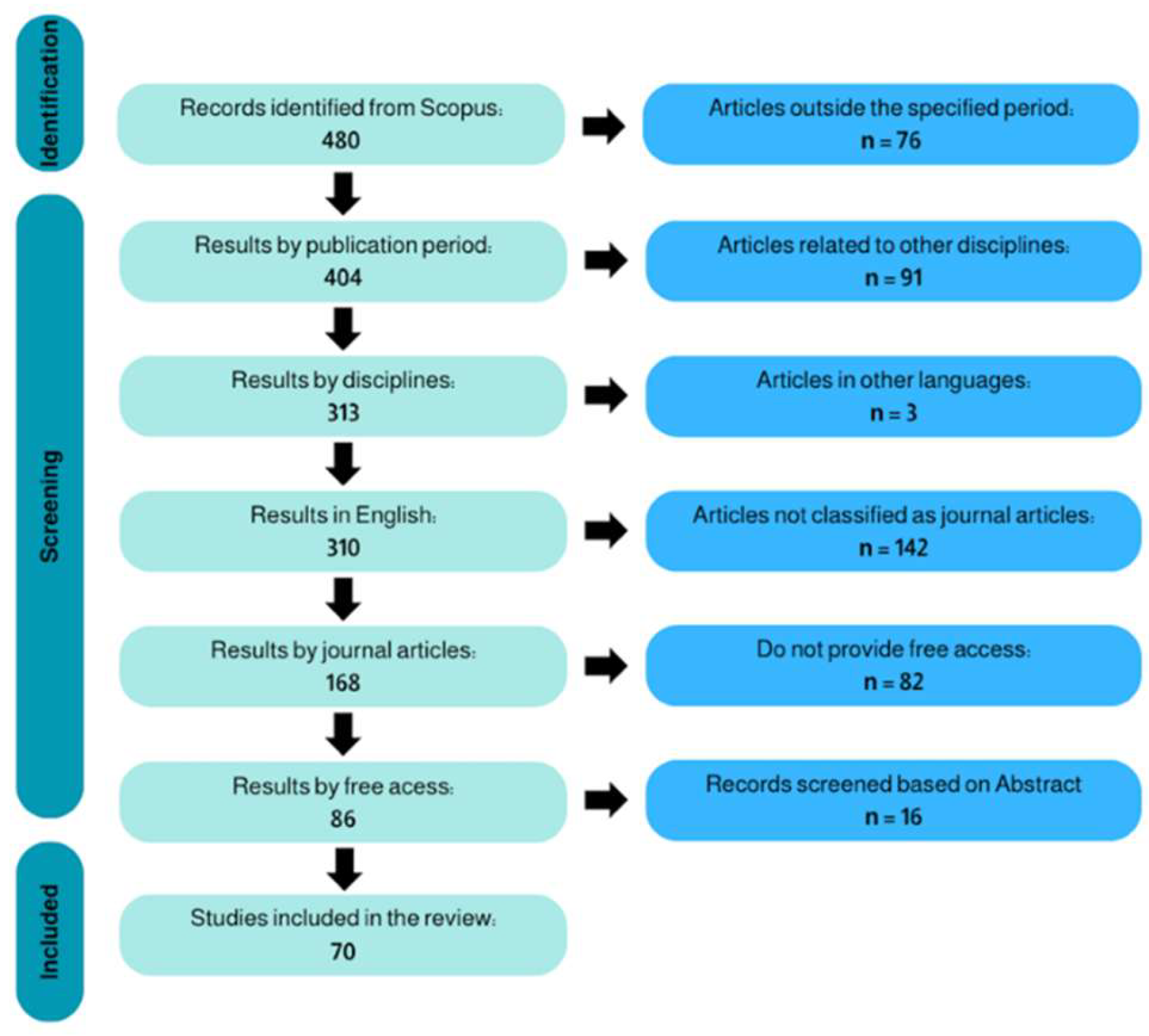
Figure 2.
Number of journals published in the research topic and corresponding keywords between 2014 and 2025.
Figure 2.
Number of journals published in the research topic and corresponding keywords between 2014 and 2025.
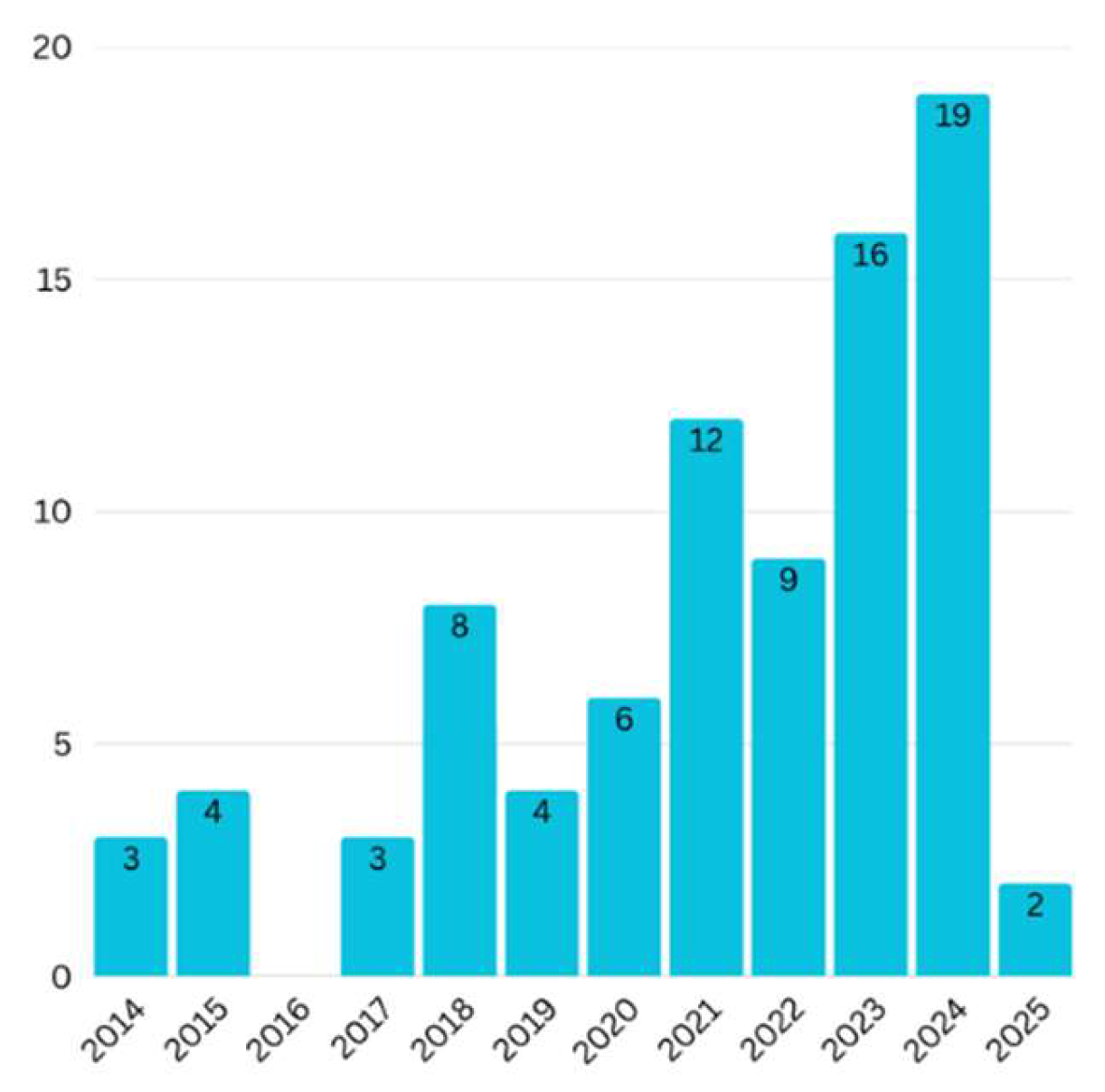
Figure 3.
The spread of sustainable material use in interior design.
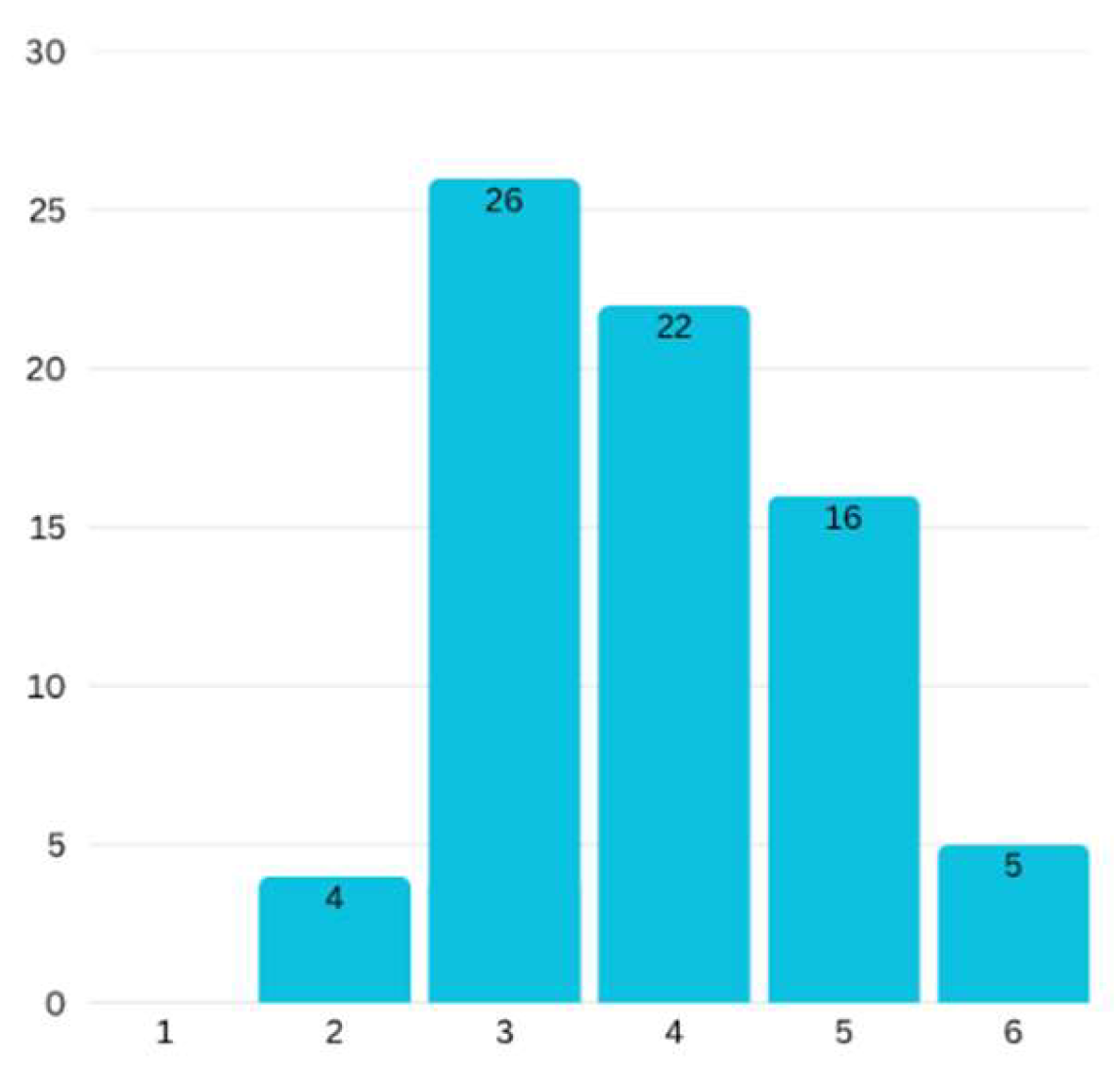
Figure 4.
The challenges of sustainable procurement, such as higher prices, difficult accessibility, longer delivery times and quality issues.
Figure 4.
The challenges of sustainable procurement, such as higher prices, difficult accessibility, longer delivery times and quality issues.
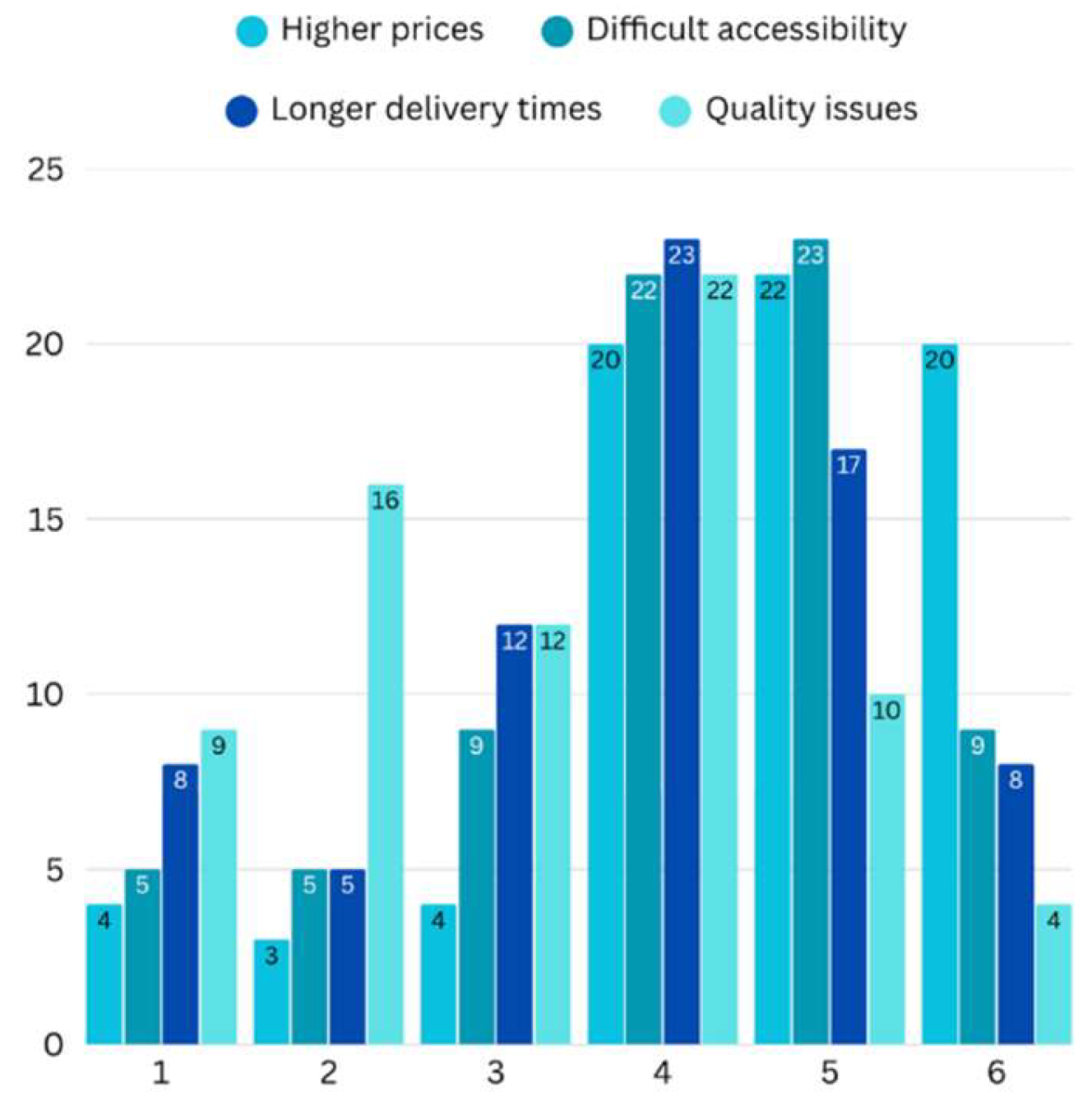
Figure 5.
The challenges of sustainable procurement, such as higher prices, difficult accessibility, longer delivery times and quality issues.
Figure 5.
The challenges of sustainable procurement, such as higher prices, difficult accessibility, longer delivery times and quality issues.
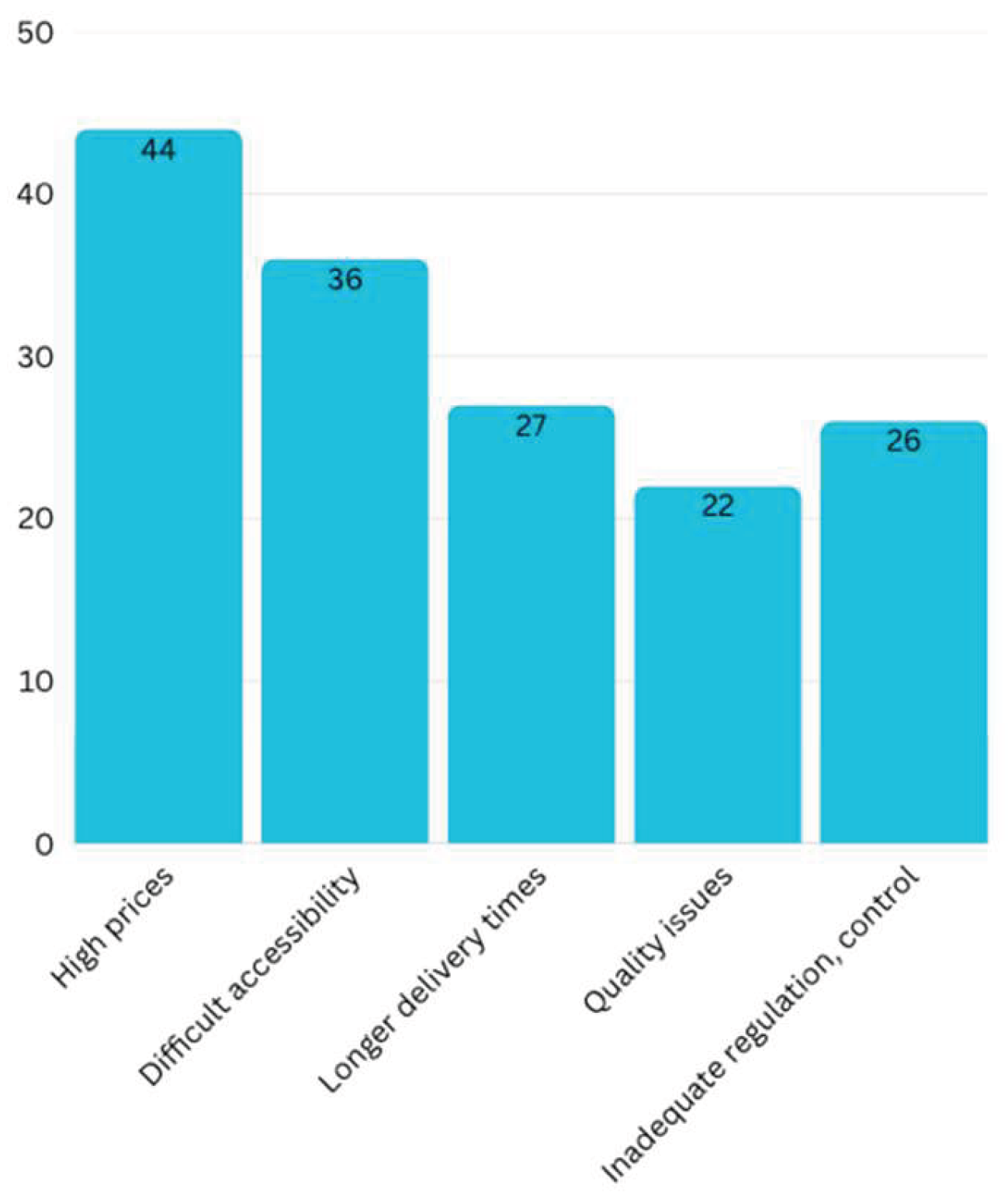

Table 1.
Categorization of the 4 levels based on the interviews conducted.
| Level 1: project type | Level 2: critical interaction | Level 3: CIT description | Level 4: dimension |
|---|---|---|---|
| Interior refurbishment | Antique furniture reuse | P, E | CR, AR |
| Urban regeneration | Lack of sustainable insulation material | N, IE, H | AR |
| Material procurement | Delivery delays | N, IE | AR, PR |
| Supply chain management | BIM and LCA use | P, E | CR |
| Digital tools | Adoption of sustainable solution | P, E | PR |
| Client communication | Renovation | P, E | AR, CR |
Table 2.
The importance of sustainability in the everyday lives of generations.
| The importance of sustainability in everyday life | 2 | 3 | 4 | 5 | 6 | Total amount |
| Generation X: 1965-1980 | 5 | 7 | 9 | 21 | ||
| Generation Y: 1981-1996 | 1 | 4 | 6 | 11 | 22 | |
| Generation Z: 1997-2012 | 2 | 2 | 1 | 15 | 10 | 30 |
| Total amount | 3 | 2 | 10 | 28 | 30 | 73 |
Table 3.
Prevalence of sustainable material use by educational attainment.
| The importance of sustainability in everyday life | 2 | 3 | 4 | 5 | 6 | Total amount |
| Doctoral degree | 1 | 1 | 2 | |||
| Higher education | 2 | 17 | 8 | 6 | 5 | 38 |
| Secondary education | 1 | 8 | 10 | 4 | 23 | |
| Master’s program | 1 | 1 | 3 | 5 | 10 | |
| Total amount | 4 | 26 | 22 | 16 | 73 |
Table 4.
The role of digital solutions and transparency regarding the origin of sustainable materials.
Table 4.
The role of digital solutions and transparency regarding the origin of sustainable materials.
| Variables | 1 | 2 |
| The role of digital solutions in a sustainable supply chain | - | .385*** |
| Transparency regarding the origin of sustainable materials | - |
Table 5.
Everyday sustainable solutions and the challenges of sustainable procurement.
| Variables | 1 | 2 | 3 | 4 | 5 |
| Encountering sustainable solutions | - | -.161 | -.063 | -.075 | 0.126 |
| Higher price | - | .420*** | .449*** | .244* | |
| Difficult accessibility | - | .625*** | −.063 | ||
| Longer delivery times | - | .133 | |||
| Quality issues | - |
Table 6.
Accessibility of sustainable suppliers and transparency of materials.
| Variables | 1 | 2 |
| Ease of finding reliable sustainable suppliers | - | .251* |
| Transparency of the origin of sustainable materials | - |
Table 7.
Promotion of sustainable material use and long-term cost savings.
| Variables | 1 | 2 |
| The spread of sustainable material use | - | .046 |
| Sustainable procurement results in long-term cost savings | - |
Disclaimer/Publisher’s Note: The statements, opinions and data contained in all publications are solely those of the individual author(s) and contributor(s) and not of MDPI and/or the editor(s). MDPI and/or the editor(s) disclaim responsibility for any injury to people or property resulting from any ideas, methods, instructions or products referred to in the content. |
© 2026 by the authors. Licensee MDPI, Basel, Switzerland. This article is an open access article distributed under the terms and conditions of the Creative Commons Attribution (CC BY) license (http://creativecommons.org/licenses/by/4.0/).
Copyright: This open access article is published under a Creative Commons CC BY 4.0 license, which permit the free download, distribution, and reuse, provided that the author and preprint are cited in any reuse.


