

Submitted:
26 February 2026
Posted:
27 February 2026
You are already at the latest version
Abstract
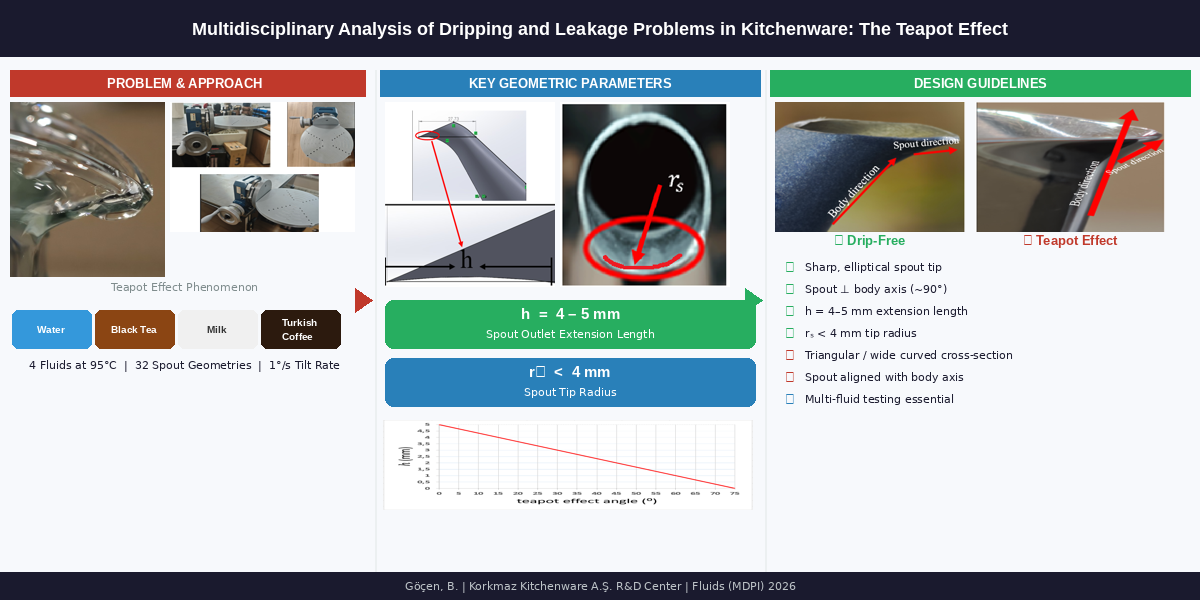
This study investigates the dripping and leakage problem in kitchenware known as the "teapot effect" through a multidisciplinary experimental approach encompassing fluid mechanics, material science, and ergonomic design. Unlike previous studies confined to idealized geometries and single-fluid analyses, this work systematically examines 32 distinct spout geometries from commercially available teapots, coffee pots, and milk jugs under realistic operating conditions. Experiments were performed using four fluids with contrasting rheological properties water, boiling black tea, cow's milk, and Turkish coffee on a precision rotating platform operating at 1°/s to isolate surface tension, gravitational, and geometric effects from inertial forces. Three quantitative parameters were measured for each specimen: capillary dome angle, teapot effect angle range, and optimum pouring angle. Results demonstrate that spout tip geometry is the dominant controlling parameter. Thin-lipped elliptical cross-sections effectively suppressed dripping, whereas triangular and wide curved geometries produced the teapot effect across broad pouring angle ranges reaching up to 70°. A spout outlet extension length of 4–5 mm combined with a spout tip radius below 4 mm was found necessary and sufficient for clean flow separation. Furthermore, suspended particles and proteins in milk and Turkish coffee were shown to intensify the teapot effect by disrupting contact line dynamics at the spout tip. These findings provide quantitative design thresholds directly applicable to industrial kitchenware development.
Keywords:
teapot effect
; kitchenware
; dripping
; spout outlet extension length
; spout tip radius
; spout geometry
1. Introduction
Dripping and leakage problems are frequently encountered during liquid transfer in kitchenware such as teapots, kettles, and coffee pots, which are commonly used in daily life [1,2,3,4,5,6]. This seemingly simple action is a complex hydrodynamic instability phenomenon known as the “teapot effect” in fluid mechanics literature [6,7]. This phenomenon, in which the fluid adheres to the surface and trickles down the exterior of the vessel rather than detaching from the spout tip, leads to aesthetic issues such as undesirable staining and liquid loss. Furthermore, during the transfer of hot liquids (e.g., tea, coffee, milk), it can result in burns that compromise user safety [8,9]. The teapot effect not only leads to user complaints but also manifests as a significant engineering problem [7,10,11].
Reiner pointed out that the teapot effect phenomenon cannot be explained solely by surface tension, stating that the rotational kinetics of the fluid also plays a decisive role in this behavior [6]. Subsequently, Keller (1957) and Kistler & Scriven (1994) suggested that this phenomenon arises from a pressure difference associated with the Bernoulli principle [7,12]. At low flow velocities at the spout outlet, the liquid tends to adhere to the surface as capillary forces dominate the forward momentum. In contrast, at high velocities, the liquid detaches from the surface to form a steady flow [11,13]. While hydrophilic surfaces increase the tendency for dripping, superhydrophobic coatings facilitate the detachment of the liquid from the surface [11]. With subsequent studies, modern and more comprehensive approaches have interpreted the teapot effect as a delicate interplay among inertia, capillarity, and gravity [14]. It has been established that the fundamental basis of the problem lies in the complex balance between the liquid’s forward inertia and the surface’s capillary adhesion forces [15,16]. The teapot effect is addressed not only as a physical phenomenon but also as a multidisciplinary subject linked to material selection, geometric design, and user ergonomics [10,15,17,18].
It is known from studies conducted to date that the exit angle, shape, and outlet geometry of the spout are directly related to the dripping problem [9,17]. Among all these factors, the most critical one playing a decisive role in flow separation is the geometry of the spout tip [14,16]. Rounded spout-tip edges facilitate liquid adhesion to the surface, whereas sharp-edge designs constitute one of the key parameters in preventing the teapot effect [15]. Additionally, to prevent dripping when terminating the liquid flow, it is recommended that the lower lip of the spout be designed as a downward curved structure [17]. An examination of the existing solution proposals in the literature indicates that sharp spout edge designs [9,15] and the use of superhydrophobic surface coatings are specified for the optimization of spout geometry to prevent the teapot effect [11,19].
In light of the information gathered from the literature, it is evident that the vast majority of studies have been conducted using idealized simple geometries or uniform standard laboratory setups. There is a lack of comprehensive analysis regarding the comparative performance of various spout structures such as those found in teapots, coffee pots, tea makers, milk jugs, and kettles utilized in the kitchenware industry, each specialized for distinct fluid properties (viscosity, surface tension, density, etc.) and specific usage scenarios. Conventional studies remain insufficient in providing a comparative assessment of how geometric differences, such as the wide mouth structure of a Turkish coffee pot versus the narrow and elongated spout of a teapot, influence flow separation behavior.
The majority of existing studies have been conducted through theoretical modeling, simplified experimental setups, or single-type container geometries. In many cases, the flow separation behavior has been investigated on idealized cylindrical or simple curved surfaces, while real usage conditions and commercial product geometries have been considered only to a limited extent. A substantial portion of the literature focuses exclusively on teapots, and no comprehensive study has been identified that comparatively examines spout designs across different kitchen utensils such as coffee pots and milk jugs. As a result, spout geometry in industrial kitchenware design is often determined through experience-based and intuitive approaches rather than systematic quantitative analysis. However, different kitchen appliances operate under varying volume capacities, pouring angles, and flow conditions. Therefore, a single spout design cannot be expected to yield optimal performance for all types of kitchenware. This gap in the literature underscores the necessity of a comparative and quantitative geometric evaluation of the teapot effect with respect to device type.
This study comparatively investigates the role of different spout geometries and fluid types in the formation of the teapot effect in commonly used kitchen utensils such as teapots, coffee pots, and milk jugs. Spout geometries were defined using measurable parameters including curvature radius, outlet angle, and lip structure, and were evaluated based on criteria such as dripping tendency and flow separation behavior. In this way, the study aims to provide not merely an observational assessment but a quantitative comparison grounded in experimental data.
The findings of this research are intended to contribute to two primary domains. First, they aim to provide a practical perspective to theoretical models by experimentally demonstrating the influence of spout-tip geometry on the liquid’s adhesion behavior to solid surfaces within the academic literature. Second, from an industrial standpoint, the study seeks to offer concrete design parameters and guiding principles for kitchenware manufacturers and R&D engineers to develop drip-free and ergonomically optimized products.
2. Materials and Methods
In the experiments, various industrially used spout profiles (sharp edged, rounded, long channeled, etc.) were examined through experimental and visual analysis methods. Within the scope of the study, the flow behaviors of 32 different spout geometries were observed and analyzed at various pouring angles.
2.1. Experimental Setup
The experimental setup used to determine the impact of the teapot effect on spout design is illustrated in Figure 1. The setup consists of a rotating flat plate system. This apparatus was constructed using a 360 degree rotary table divisor mechanism capable of providing precise inclination angles. Additionally, it comprises a flat platform concentrically connected to the mobile mechanism. This specialized test setup was developed to accurately determine the kinematic parameters and flow separation points of the teapot effect phenomenon. The planar platform integrated onto the divisor mechanism is designed to allow the samples to be fixed from the base. Angular control of the system is achieved via a precision control lever on the divisor, which enables a vibration free and incremental tilting motion.
The kitchen utensils to be examined (teapots, coffee pots, and milk jugs) were securely fixed onto the test platform, and the flow process was observed. During the experiments, the specimens were gradually inclined in the negative y axis (−y) direction, within a range of 0° to 90° relative to the gravitational vector. The inclination angle was determined from the section illustrated in Figure 2.
In fluid mechanics, maintaining a very low pouring rate approximately 1°/s minimizes dynamic effects and effectively suppresses inertial forces. This approach enables the investigation to focus primarily on surface tension, gravitational, and geometric effects. [20,21,22]. In contrast to existing studies in the literature, this research employed not only water but also fluids with different rheological properties that reflect real usage scenarios of kitchen utensils, including black tea, cow’s milk, and Turkish coffee. Flow experiments were conducted while the test fluids were at their boiling temperatures.
The primary objective of selecting different fluids is to observe the impact of viscosity and density differences on the teapot effect and spout geometry. Thus, how surface tension and wettability parameters alter the teapot effect in various types of beverages, and how spout geometry responds to these changes, is experimentally addressed in the literature for the first time within this scope.
2.2. Experimental Process
In experiments aimed at elucidating the relationship between the spout structure of various kitchen appliances and the teapot effect, the process proceeds as illustrated in Figure 3.
Variations in the formation of the teapot effect among different fluids were observed to arise from parameters such as viscosity, particulate structure, and surface tension, as presented in Table 1. Milk and Turkish coffee were specifically included to enable the testing of stovetop coffee pots, coffee machine pots, and milk jugs under realistic operating conditions. In total, the spout structures of 32 different kitchen utensils including teapots, milk jugs, stovetop coffee pots, and coffee machine pots were examined, and corresponding flow experiments were conducted.
As illustrated in Figure 5, the experiments were conducted by placing the test kitchen utensil on the rotating platform, filling it with the test fluid to an appropriate level, and sequentially determining the angles corresponding to the “capillary dome (”, “teapot effect ()” and the “optimum pouring angle ()” The “capillary dome” shown in Figure 4, is defined as the angle () at which a stable, convex liquid meniscus forms at the spout tip before the onset of continuous flow.
The teapot-effect angle range (), is defined as the range of inclination angles at which the liquid inside the container adheres to the outer wall at the spout outlet instead of separating as a free stream. The optimum pouring angle () on the other hand, is defined as the range of inclination angles under typical daily use conditions at which a clean, drip-free flow is achieved without wall adhesion.
The aforementioned capillary dome, teapot effect, and optimum pouring angles are determined within the range of 0°–90° using the experimental setup shown in Figure 5. In the experiments conducted within the scope of this study, the inclination angle range where the teapot effect initiates and terminates is recorded. The optimum pouring angle was defined as the angular range where continuous jet separation occurred without wall adhesion and without post-pour dripping within 3 seconds.
Within the scope of the experiments, 32 distinct spout types constructed from stainless steel and glass materials including teapots, milk jugs, and coffee pots were examined in detail. Each experiment was conducted in triplicate for each sample, and the reported angles represent the mean values. The maximum deviation between replicates is approximately ±0.5°. In addition to the various inclination angles described above, the spout structure was also analyzed using geometric quantities. The technical specifications of the spout outlet tip are presented in Table 2, where cross-sectional areas are provided both visually and numerically. The inclusion of this data aims to facilitate the investigation of the teapot effect at the outlet cross section of the spout.
In the experiments, the tilting rate was set to 1°/s in order to dampen the influence of inertial forces in the liquid. Under very slow flow conditions, as implemented in this study, Equation (1) is employed to evaluate the ratio of viscous forces to surface tension effects.
In Equation (1), denotes the capillary number, (Pa.s) represents the dynamic viscosity, (m/s) is the characteristic flow velocity (m/s), and (N/m) denotes the surface tension. The tendency of the liquid at the spout tip to adhere to the solid surface is governed by the balance of surface tension forces illustrated in Figure 6 [20,21,22]. Whether the flow separates cleanly from the spout or follows the surface downward (wetting behavior) depends on the surface energy of the spout material. As shown in Equation (2), this balance is described by Young’s equation.
represents the surface energy of the dry spout exposed to air and corresponds to the force that tends to attract the liquid toward the solid surface. denotes the interfacial tension between the solid and the liquid and represents the resistance to liquid adhesion on the solid surface. is the surface tension between the liquid and the surrounding gas, reflecting the cohesive forces between liquid molecules that hold the fluid together and separate it from the air. Here corresponds to the contact angle. If the liquid wets the surface and tends to adhere to the spout. Conversely, if the liquid does not effectively wet the surface, and the flow separates more easily from the spout tip [20,22].
3. Results
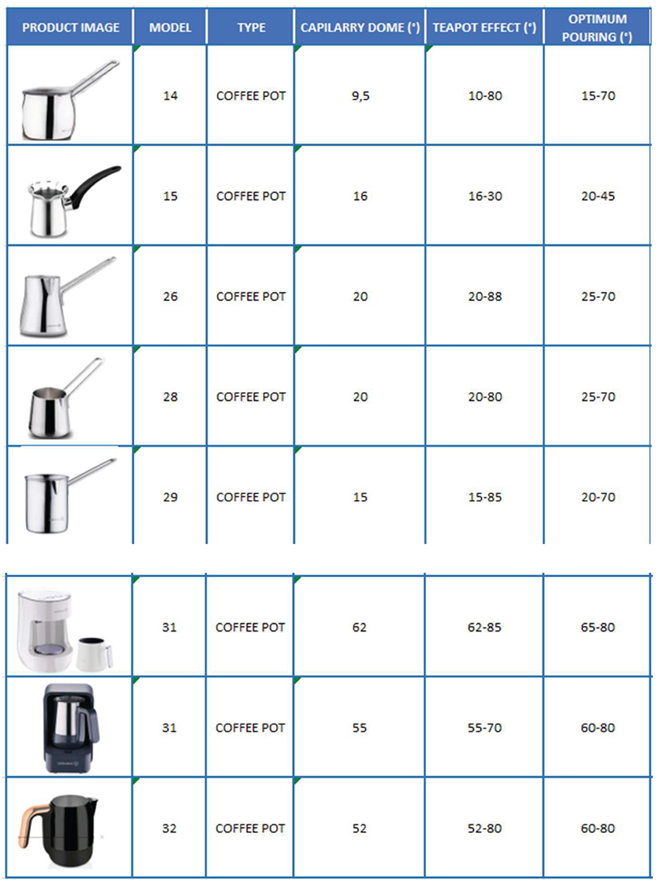
It was observed that the angles obtained from the experiments conducted for the various fluids shown in Table 2 and Table 3, and 4 varied significantly upon comparison. Considering the variation in angles based on the type of fluid utilized (water, milk, and Turkish coffee), the parameters identified as influencing the teapot effect include: spout cross-sectional geometry, cross-sectional area, fluid type, and spout material.
3.1. Spout Cross-Sectional Area
The fluid outlet cross-sectional areas at the spout exit were compared. It was observed that the magnitude of the cross-sectional area, by itself, is not an influential parameter in the teapot effect phenomenon.
3.2. Fluid Type
It was observed that as the fluid type changes, the capillary dome angle increases prior to the initiation of flow due to the influence of viscosity. Additionally, the teapot effect has begun to be observed in spout models where it was not previously seen. Furthermore, it was determined that the teapot effect angle range, previously observed with tea, has increased. For instance, a comparative examination of Table 2 and Table 3 reveals that while no teapot effect was observed in the experiment conducted with tea for spout model 15, the teapot effect was observed at an inclination between 14–37° in the experiment with milk. In fact, the surface tension of milk is lower than that of tea due to the fats and proteins it contains (Table 1). Low surface tension causes milk to wet the surface more easily. However, when hot milk dries at the tip of the spout or comes into contact with heat, it forms a protein film. This film increases surface roughness, triggering the pinning of the contact line at the spout tip in subsequent pours and making the dripping problem persistent. [11,23,24]. Turkish coffee is the most complex fluid from a fluid mechanics perspective because it is a suspension (containing coffee grounds/particles). While the coffee oils within it reduce surface tension, the ground particles create a roughness effect at the contact line of the spout tip. These particles prevent the fluid from detaching cleanly from the spout tip. Furthermore, as the coffee foam is poured, it continuously disrupts the surface tension equilibrium at the spout tip, leading to flow instability and dripping [11,23,24].
3.3. Spout Materials
The 32 different spout varieties utilized in the experiments consist of two material types: glass and stainless steel. These two materials exhibit distinct surface roughness levels, which influence the teapot effect. Among the three different glass spout models, the teapot effect was observed in one instance. As illustrated by the teapot in Figure 7, despite the fact that the surface roughness of glass (0.005–0.02) is significantly lower than that of stainless steel (0.40–0.80), the occurrence of the teapot effect underscores the necessity of prioritizing spout geometry in the analysis.

Table 2.
Spout cross-sectional geometries and measurement data for black tea fluid across the test samples.
Table 2.
Spout cross-sectional geometries and measurement data for black tea fluid across the test samples.
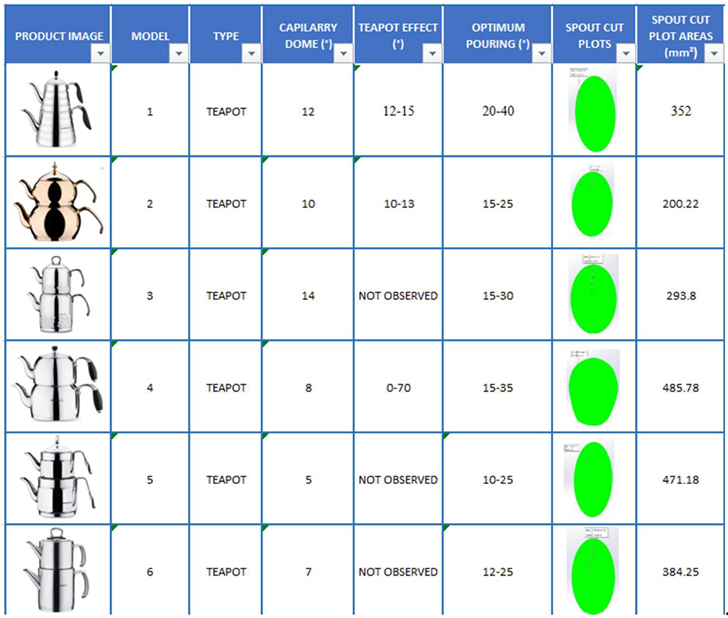
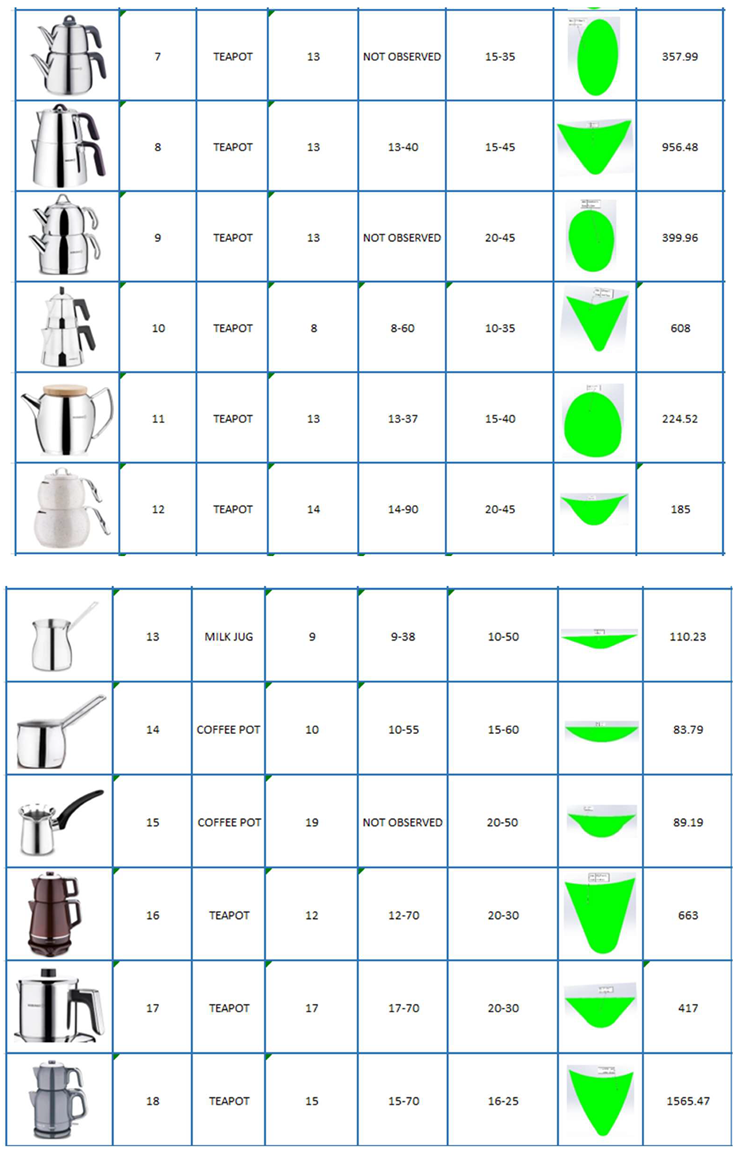
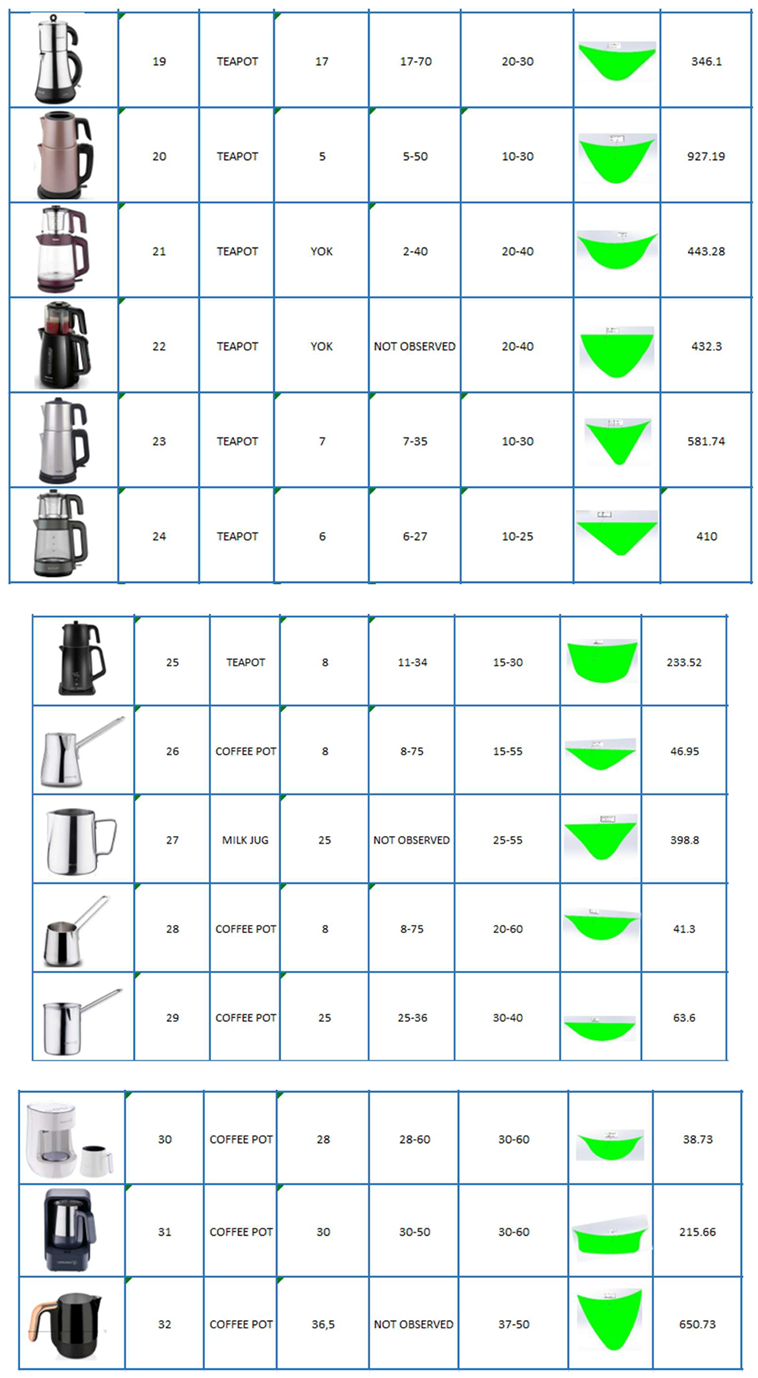
Table 3.
Measurement data for milk fluid in stovetop Turkish coffee pots and milk jugs.
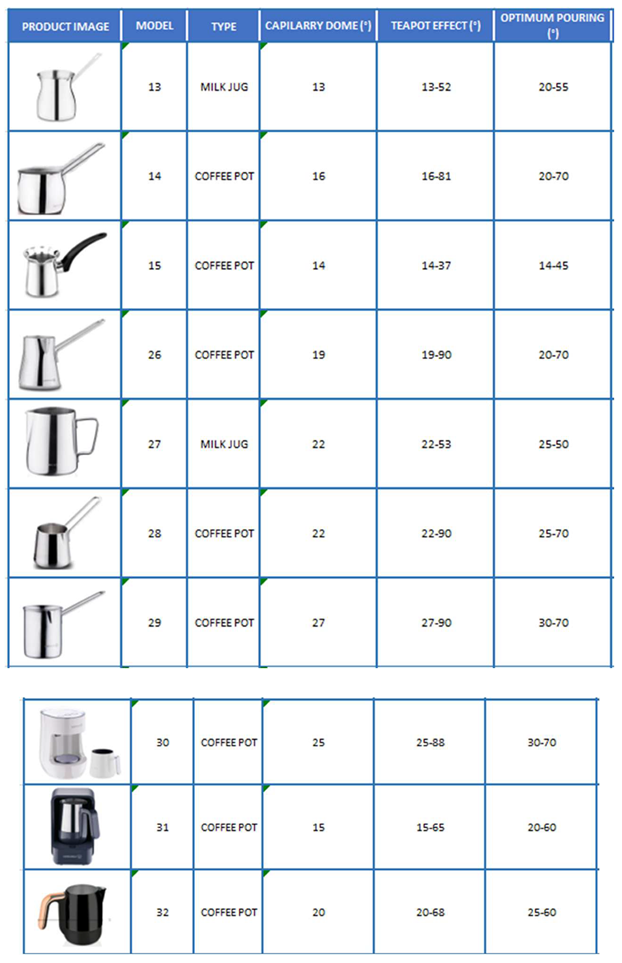
Table 4.
Measurement data for Turkish coffee fluid in stovetop Turkish coffee pots.
3.4. Spout Cross-Sectional Geometry
Among the various spout types, cross-sectional geometry emerges as one of the most decisive parameters of the teapot effect. In elliptical spout cross sections with thin openings, the teapot effect was largely absent or manifested only within a narrow range of angles. Conversely, triangular spout cross sections were identified as the geometry where the teapot effect was most frequently observed across the widest angular range. In wide curved cross sections, the teapot effect occurred over a broad interval of pouring angles.
It has been demonstrated that the extension at the tip of the spout, illustrated in Figure 8 and defined as the spout outlet extension length (), ensures drip-free discharge by minimizing the influence of surface tension at the moment of fluid separation, thereby preventing the flow from diverting underneath the spout. This conclusion was drawn from the observation of the teapot effect in spout designs where this length was absent. The spout varieties physically depicted in Figure 9 and Figure 10 are protected from the teapot effect owing to this specific design feature.
As shown in Figure 9, a spout outlet extension length in the range of 4–5 mm significantly suppresses the teapot effect, as illustrated in the graph presented in Figure 11. This design approach is exemplified by the spout geometry shown in Figure 12.
The spout designs shown in Figure 13 represent examples of wide and flattened outlet geometries. When focusing on the spout configuration illustrated in Figure 12, it can be observed that the flow detaches abruptly from the spout tip without following a horizontal trajectory, thereby promoting the occurrence of the teapot effect. Flow experiments confirmed that this type of geometry, as well as similar configurations, is susceptible to the teapot effect. Specifically, spout tips aligned in the same direction as the main body axis as seen in Figure 12 constitute a design that facilitates liquid adhesion and subsequent dripping. To mitigate the teapot effect, the spout tip should be geometrically separated from the body axis and oriented perpendicularly to it, as exemplified in Figure 9 and Figure 10. Furthermore, the tip should gradually narrow and sharpen as it extends away from the body to promote clean flow separation.
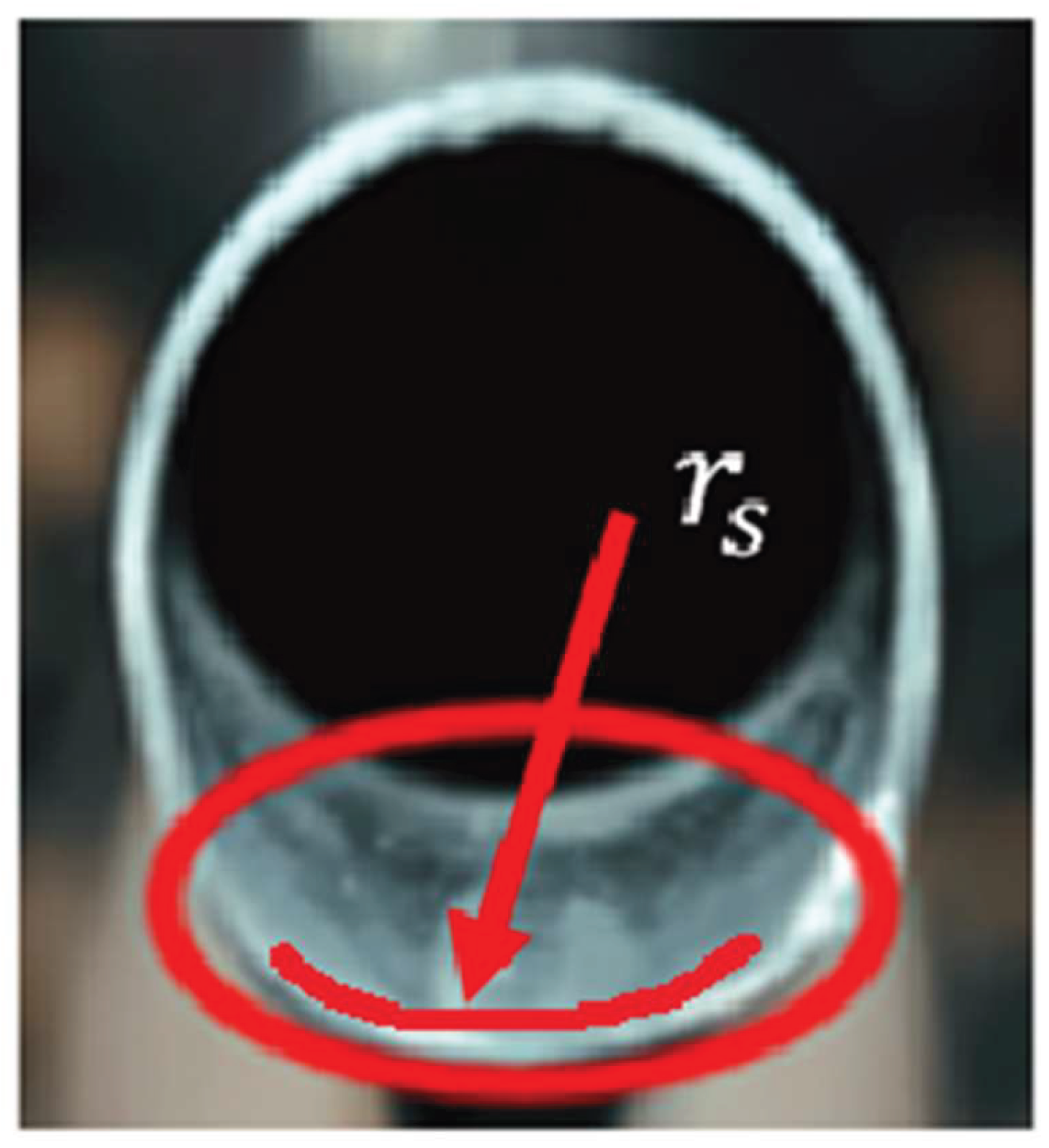
Upon examining the experimental data in Table 3 regarding Models 1 and 2, which feature elliptical cross-sections, it is observed that they yield consistent yet varying results in terms of flow stability. In Model 1 (Model 1=352 mm²) and Model 2 (Model 2=200.22 mm²) the teapot effect angles occurred within very narrow and manageable ranges of 12-15° and 10-13° respectively. This finding indicates that while elliptical geometry facilitates the laminarization of the flow, achieving complete separation also requires the specific spout outlet extension length and narrowness characteristics discussed in the preceding sections. For instance, the irregular cross-sectional structure and large area 485.78 mm² of Model 4 led to flow instability over an exceptionally wide range of 0-70° This confirms that wide and irregular surfaces increase the fluid's adhesion area to the metal, causing the liquid to trail beneath the spout. A noteworthy finding is that Model 5 showed no teapot effect despite having a low capillary dome angle of only 5°. This suggests that hydrodynamic success is governed not only by macro-geometry (capillary dome angle) but also by micrometric spout tip features such as sharpness, narrowness, and length. Despite its large area 471 mm² the high flow separation performance of Model 5 implies that the spout lip geometry is designed with sufficient sharpness to compel flow separation. Consequently, the parameter denoted as “” in Figure 14 is defined; this value is identified as the “spout tip radius”.
In the experiments, product samples exhibiting and not exhibiting the teapot effect were comparatively analyzed, and it was determined that spout models with an rₛ value exceeding 4 mm showed a pronounced teapot effect. Accordingly, in addition to the parameter h, optimization of the rₛ parameter was also found to be necessary.
4. Discussion
The experimental findings of this study provide a comprehensive and quantitatively grounded perspective on the teapot effect in commercially available kitchenware, extending beyond the idealized geometries that have dominated the existing literature.
Spout Tip Geometry as the Primary Governing Parameter
The central hypothesis of this study that spout tip geometry, rather than cross-sectional area alone, governs flow separation behavior is strongly confirmed by the experimental data. The finding that elliptical, thin-lipped cross-sections suppress the teapot effect while triangular and wide curved geometries promote it across broad angular ranges is consistent with the theoretical predictions of Keller (1957) and Kistler & Scriven (1994), who attributed flow adhesion to pressure differentials at the spout exit governed by the Bernoulli principle [7,12]. In sharp elliptical geometries, the converging flow channel accelerates the fluid toward the spout tip, increasing the local inertia-to-capillarity ratio and thus favoring clean detachment. Conversely, wide and irregular outlet geometries distribute the exiting flow laterally, reducing the local flow velocity and allowing capillary adhesion forces to dominate a behavior that aligns with the low-capillary-number regime described by Duez et al. [13] and Lorenceau & Quéré [16].
A particularly significant finding is that cross-sectional area, in isolation, does not determine teapot-effect susceptibility. Model 5, despite its large outlet area of 471 mm², exhibited no teapot effect, whereas Model 4, with a comparable area of 485.78 mm², produced flow instability across an exceptionally wide angular range of 0–70°. This result directly challenges the intuitive assumption prevalent in experience-based industrial design that smaller outlet areas inherently reduce dripping. Instead, it demonstrates that micrometric spout tip features such as sharpness, narrowness, and the presence of an outlet extension length (h) are the decisive parameters. This finding has direct practical implications for R&D engineers, suggesting that geometric precision at the spout tip warrants far greater design attention than overall outlet sizing.
Spout Outlet Extension Length and Tip Radius as Quantitative Design Thresholds
The identification of the spout outlet extension length (h) of 4–5 mm and the spout tip radius (rₛ) below 4 mm as critical thresholds for drip-free performance constitutes one of the most actionable contributions of this study. These parameters provide a quantitative basis for design decisions that have previously been made intuitively. The mechanism by which the h parameter prevents dripping is consistent with the flow separation theory proposed by Reiner [6]: an extended outlet physically displaces the contact line away from the main body of the vessel, reducing the effective wetted surface area available for capillary adhesion and making it geometrically unfavorable for the liquid to divert beneath the spout. The rₛ parameter operates through a complementary mechanism; a sharper spout tip reduces the contact area between the exiting liquid and the solid surface, thereby lowering the capillary adhesion force as described by Young's equation. Together, these two parameters define a geometric design space within which drip-free performance can be reliably achieved across multiple fluid types a finding that advances beyond the single-geometry, single-fluid analyses that characterize the majority of prior work [15,17].
Spout Axis Orientation
The observation that the teapot effect was present in all spout specimens aligned with the main body axis is a finding of direct ergonomic and design significance. When the spout continues along the same axis as the vessel body, the exiting liquid encounters an uninterrupted solid surface beneath the flow path, which sustains capillary contact and promotes wetting. In contrast, spouts oriented perpendicularly to the body axis create a geometric discontinuity that compels flow separation. This result is in agreement with recommendations in the literature regarding downward-curved lower lip designs [17], but extends that principle by demonstrating that full axial deviation rather than mere lip curvature is necessary for consistent drip-free performance across a range of fluid types and pouring angles.
Fluid Type and Rheological Complexity
The multi-fluid experimental approach adopted in this study reveals that the teapot effect is not a purely geometric phenomenon but is also strongly modulated by the rheological properties of the fluid. The observation that milk induced the teapot effect in spout Model 15, where black tea had produced no such effect, highlights the role of surface-active agents in altering wetting behavior. The fats and proteins in milk reduce surface tension relative to tea, lowering the energy barrier for surface wetting and making milk more susceptible to capillary adhesion. Furthermore, the formation of a protein film at the spout tip upon thermal exposure creates a persistent roughness that pins the contact line in subsequent pours a mechanism consistent with contact-line pinning theories [23,24] and transforms what would otherwise be a transient wetting event into a recurring dripping problem. This finding has practical implications for the design of milk jugs and stovetop coffee pots, where repeated high-temperature contact with protein-rich fluids is routine.
Turkish coffee represents the most rheologically complex case examined in this study, as it constitutes a particulate suspension rather than a homogeneous fluid. The combined effect of coffee oils reducing surface tension, suspended grounds creating contact-line roughness, and foam disrupting surface tension equilibrium at the spout tip generates a compounding set of conditions that intensify the teapot effect beyond what would be predicted from the bulk fluid properties alone. This result suggests that existing theoretical models, which are largely formulated for Newtonian fluids [14,16], may require extension to account for suspension dynamics and interfacial contamination effects in real beverage applications. Future studies employing high-speed imaging and contact-angle goniometry could quantify these mechanisms more precisely.
Material Effects and the Primacy of Geometry
The stainless steel and glass specimens examined in this study exhibited markedly different surface roughness values 0.40–0.80 μm and 0.005–0.02 μm, respectively yet the teapot effect was observed in one of the three glass spout models. This finding confirms that surface roughness, while a contributing factor, is subordinate to spout geometry in determining dripping behavior. This result is broadly consistent with the conclusions of Duez et al. [11], who demonstrated that superhydrophobic coatings can eliminate the teapot effect, but also showed that the underlying geometric configuration determines the baseline susceptibility against which surface treatment must act. The implication for industrial design is that surface coating strategies should be considered as a secondary optimization layer, applied after geometric parameters have been optimized, rather than as a primary solution.
Ergonomic Implications
From an ergonomic standpoint, the wide teapot-effect angle ranges observed in certain specimens up to 70° in Model 4 and 8–75° in the stovetop coffee pot spout represent a substantial usability burden. A user pouring from such a vessel must either tilt the wrist to an uncomfortable extreme or generate sufficient initial flow velocity to overcome capillary adhesion, neither of which is compatible with safe, controlled pouring of hot liquids. The optimum pouring angle data generated in this study provide, for the first time, a quantitative ergonomic benchmark for kitchenware spout design: a narrow and high-angle optimum pouring window is strongly preferable, as it aligns with the natural wrist motion range and minimizes the risk of scalding. Future research integrating these findings with biomechanical wrist motion data could establish a comprehensive ergonomic design standard for kitchenware.
Limitations and Future Research Directions
Several limitations of this study should be acknowledged. First, all experiments were conducted under quasi-static tilting conditions at 1°/s, which effectively isolates surface tension and gravitational effects but does not capture the dynamic pouring behavior typical of real use, where sudden wrist motions introduce significant inertial effects. Future work should examine the teapot effect under dynamic pouring conditions using instrumented pouring rigs. Second, the fluid temperatures were maintained at approximately 95°C throughout testing; the effect of temperature-dependent changes in surface tension and viscosity across the full operational temperature range of each beverage warrants separate investigation. Third, the study examined stainless steel and glass exclusively; the growing prevalence of ceramic, polymer-coated, and titanium-coated kitchenware surfaces introduces additional wettability variables that should be addressed in subsequent studies. Finally, the extension of the quantitative design parameters identified here specifically the h and rₛ thresholds to computational fluid dynamics (CFD) models would enable predictive screening of new spout geometries prior to physical prototyping, significantly reducing development costs for kitchenware manufacturers.
5. Conclusions
In conclusion, from an ergonomic perspective, an ideal spout should provide a predictable response to the user’s wrist motion. The wide range of teapot-like effects observed in spout samples poses a significant ergonomic risk to the user. In such products, the user must either bend the wrist beyond comfortable limits or apply an excessively high initial pouring velocity to prevent dripping. The experiments conducted within the scope of this study demonstrate that, rather than the magnitude of the spout cross-sectional area, the cross-sectional form, outlet angle, outlet extension length, and outlet radius are the dominant factors governing flow separation. Irregular and flattened geometries promote lateral spreading of the liquid, thereby intensifying the teapot effect. In contrast, sharp elliptical forms center the flow, promote stable jet separation, and mitigate the teapot effect. The teapot effect was observed in all spout specimens designed along the same axis as the main body. Accordingly, it has been established that the spout outlet must deviate from the body axis by approximately 90°. In spouts continuing in alignment with the body, the liquid tends to follow the external surface of the container. Optimization of both the outlet extension length (h) and the spout tip radius (rₛ) was identified as a necessary design criterion to eliminate the teapot effect. An outlet extension length (h) between 4–5 mm and a spout tip radius (rₛ) smaller than 4 mm, combined with a progressively narrowing and sharpening outlet geometry, are required for drip-free performance. Wide and flattened outlet sections should be strictly avoided. Following geometric optimization, surfaces with lower wettability should be preferred. The variation in teapot-effect severity among different fluids further highlights the necessity of multi fluid testing. The experimentally derived design parameters presented in this study are intended to serve as reference guidelines for the design and manufacturing of beverage preparation utensils in kitchen applications.
Funding
This research was funded by Korkmaz Kitchenware A. S. R&D Center, and the APC was funded by Korkmaz Kitchenware A. S. R&D Center.
Data Availability Statement
All data obtained within the scope of this study are under the control and storage of the R&D center and are filed digitally and physically. Data may be shared upon request and under the necessary conditions.
Conflicts of Interest
The funders had no role in the design of the study, in the collection, analyses, or interpretation of data, in the writing of the manuscript, or in the decision to publish the results.
References
- Ayar, İ.; Tarakcı, H. Kahve Dükkanında Türk Kahvesi: Tüketici Tutumları Üzerine Bir Araştırma. Türk Turizm Araştırmaları Dergisi 2021, 5, 1070–1087. [Google Scholar] [CrossRef]
- Ağuş, A.; Kocagöz, E.; Aslan, M. Tüketicilerin Çay ve Kahve Tüketim Alışkanlıkları Üzerine Bir İnceleme. In Proceedings of the Online International Conference on Empirical Economics and Social Sciences, 2021. [Google Scholar]
- Bayramova, G. Türk Kahvesi Pişirme Yöntemleri ve Tarihsel Gelişiminin Ürün Tasarımı Bağlamında İncelenmesi. Master's Thesis, Marmara Üniversitesi, Istanbul, Turkey, 2019; pp. 1–108. [Google Scholar]
- Onurlubaş, E.; Çakırlar, H. Tüketicilerin Süt ve Süt Ürünleri Tüketimini Etkileyen Faktörlerin Belirlenmesi Üzerine Bir Araştırma. Çankırı Karatekin Üniversitesi Sosyal Bilimler Enstitüsü Dergisi 2016, 7, 217–242. [Google Scholar]
- Örnek, A. Kahve ve Türkiye'de Kahve Kültürü. In Gastronomi Alanında Tematik Araştırmalar I; Çizgi Kitabevi: Konya, Turkey, 2022; Volume 1, p. 38. [Google Scholar]
- Reiner, M. The teapot effect…a problem. Phys. Today 1956, 16–20. [Google Scholar] [CrossRef]
- Keller, J.B. Teapot Effect. J. Appl. Phys. 1957, 28, 859–864. [Google Scholar] [CrossRef]
- Ouellette, J. Physicists say they've finally solved the teapot effect for real this time. Available online: https://arstechnica.com (accessed on 19 February 2026).
- Göçen, B. Mutfaktaki İçecek Demleme ve Hazırlama Aletlerindeki Damlatma Problemi ve İncelenmesi. In Proceedings of the 9th International Halich Congress on Multidisciplinary Scientific Research, Istanbul, Turkey, 2025. [Google Scholar]
- Nishio, Y.; Ogawa, T.; Niwa, K.; Chiba, H. Experimental and numerical study on liquid pouring from a beverage can. J. Food Eng. 2021, 1–12. [Google Scholar] [CrossRef]
- Duez, C.; Ybert, C.; Clanet, C.; Bocquet, L. Wetting Controls Separation of Inertial Flows from Solid Surfaces. Phys. Rev. Lett. 2010, 104, 1–4. [Google Scholar] [CrossRef] [PubMed]
- Kistler, S.F.; Scriven, L.E. The teapot effect: sheet-forming flows with deflection, wetting and hysteresis. J. Fluid Mech. 1994, 263, 19–62. [Google Scholar] [CrossRef]
- Duez, C.; Ybert, C.; Clanet, C.; Bocquet, L. Beating the teapot effect. Phys. Rev. Lett. 2009, 1–4. [Google Scholar]
- Scheichl, B.; Bowles, R.; Pasias, G. Developed liquid film passing a smoothed and wedge-shaped trailing edge: small-scale analysis and the 'teapot effect' at large Reynolds numbers. J. Fluid Mech. 2021, 926, 1–40. [Google Scholar] [CrossRef]
- Kibar, A. Investigation of the Teapot Effect. Acta Phys. Pol. A 2023, 144, 26–34. [Google Scholar] [CrossRef]
- Scheichl, B. Introduction: Applying Perturbation and Related Methods to Rationally Describe the "Teapot Effect" Under Capillary and Weak Viscous Action. In Interfacial Flows: The Power and Beauty of Asymptotic Methods; Springer: Berlin, Germany, 2025; pp. 1–27. [Google Scholar]
- Ma, H.; Halabi, K.N.M.; Li, N. A Research on the Ceramic Tea Set Design Based on Ergonomics. In Proceedings of the 3rd International Symposium on Water, Ecology and Environment, 2022. [Google Scholar]
- Liu, S.F.; Chang, J.F.; Hsiao, Y.T.; Wu, C.H. Smart Tea Utensil Design for Improving Beginners' Tea. Sustainability 2023, 15, 1–27. [Google Scholar] [CrossRef]
- Zeng, Z. The Formation of the Teapot Effect under Different Forces. Acad. J. Sci. Technol. 2023, 7, 222–226. [Google Scholar] [CrossRef]
- Pritchard, P.J.; Leylegian, J.C. Fox and McDonald's Introduction to Fluid Mechanics, 8th ed.; John Wiley & Sons: Hoboken, NJ, USA, 2011; pp. 1–877. [Google Scholar]
- Gerhart, P.M.; Gerhart, A.L.; Hochstein, J.I. Munson, Young and Okiishi's Fundamentals of Fluid Mechanics, 8th ed.; John Wiley & Sons: Hoboken, NJ, USA, 2016. [Google Scholar]
- White, F.M.; Xue, H. Fluid Mechanics, 9th ed.; McGraw-Hill Education: New York, NY, USA, 2021; pp. 1–882. [Google Scholar]
- Walstra, P.; Jenness, R. Dairy Chemistry and Physics; Wiley: New York, NY, USA, 1984; pp. 1–479. [Google Scholar]
- Rao, M.A. Rheology of Fluid, Semisolid, and Solid Foods, 3rd ed.; Springer: New York, NY, USA, 2014; pp. 1–470. [Google Scholar]
- Khomyakov, A.P.; Mordanov, S.V.; Khomyakova, T.V. The experimental data on the density, viscosity, and boiling temperature of the coffee extract. In Proceedings of the IOP Conference Series: Earth and Environmental Science, Ekaterinburg, Russia, 2020. [Google Scholar]
- Sahin, S.; Sumnu, S.G. Physical Properties of Foods; Springer: New York, NY, USA, 2005; pp. 1–257. [Google Scholar]
- Çengel, Y.A.; Cimbala, J.M. Fluid Mechanics: Fundamentals and Applications; McGraw-Hill: New York, NY, USA, 2006; pp. 1–915. [Google Scholar]
Figure 1.
Experimental setup and its front-top perspective view.
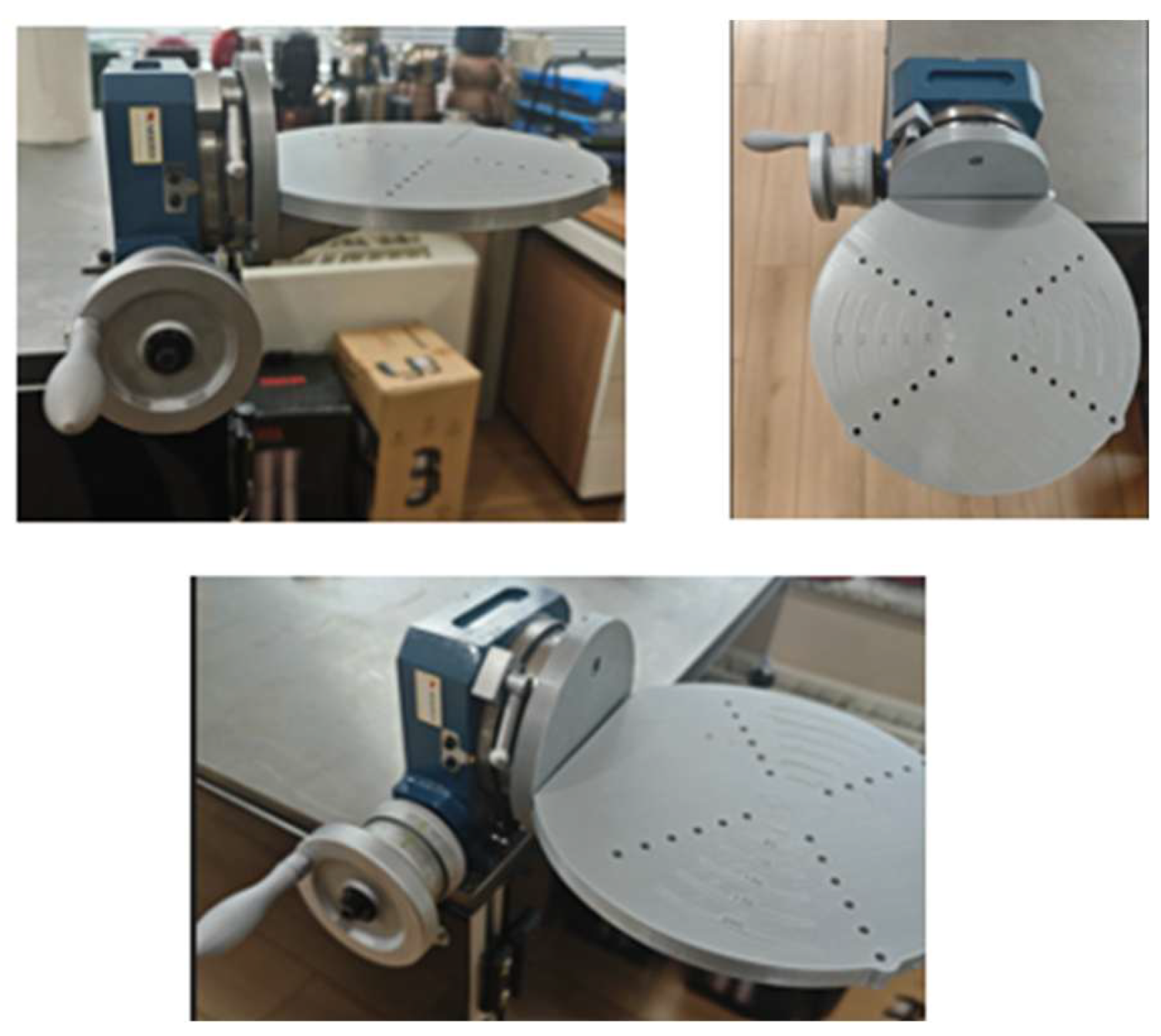
Figure 2.
Experimental setup and reading of the inclination angle.
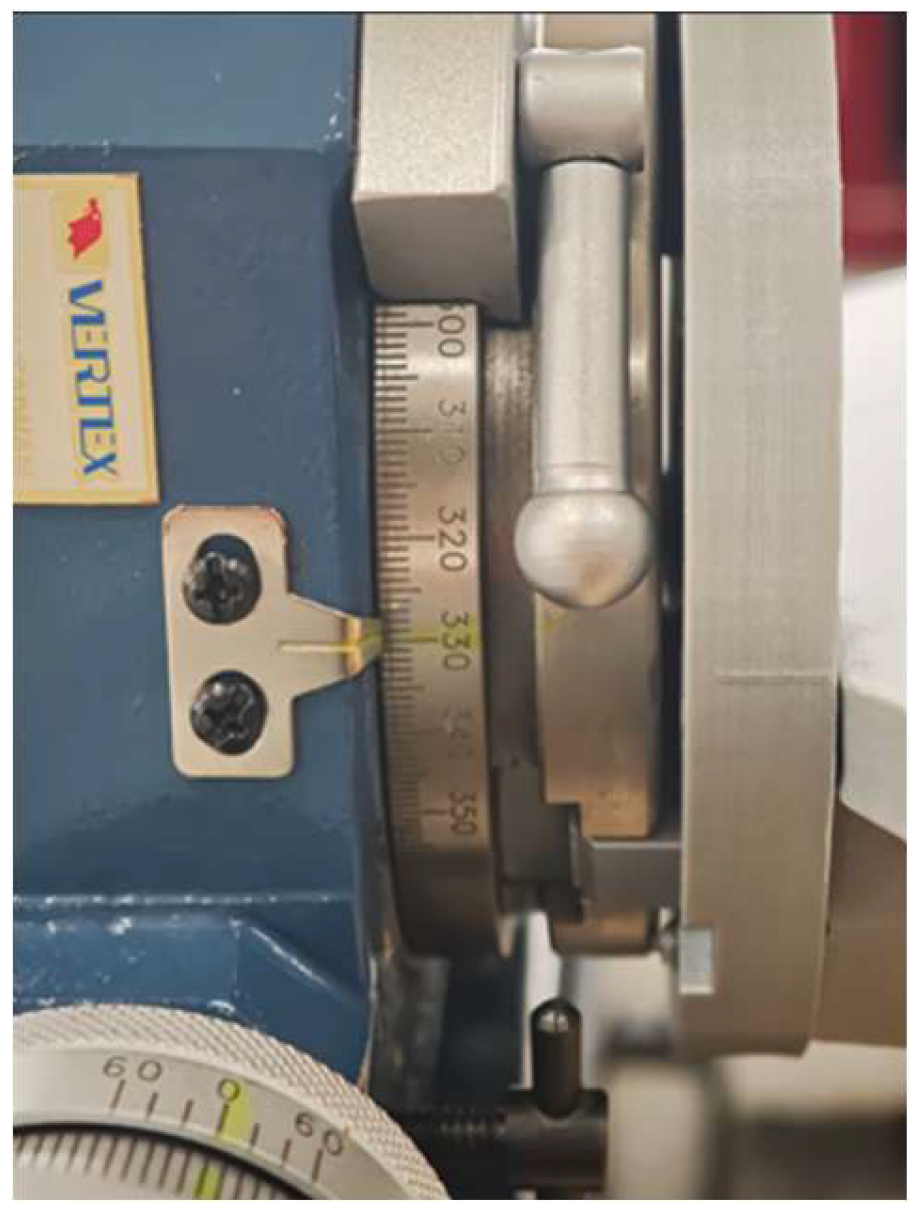
Figure 3.
Experimental stages and process.
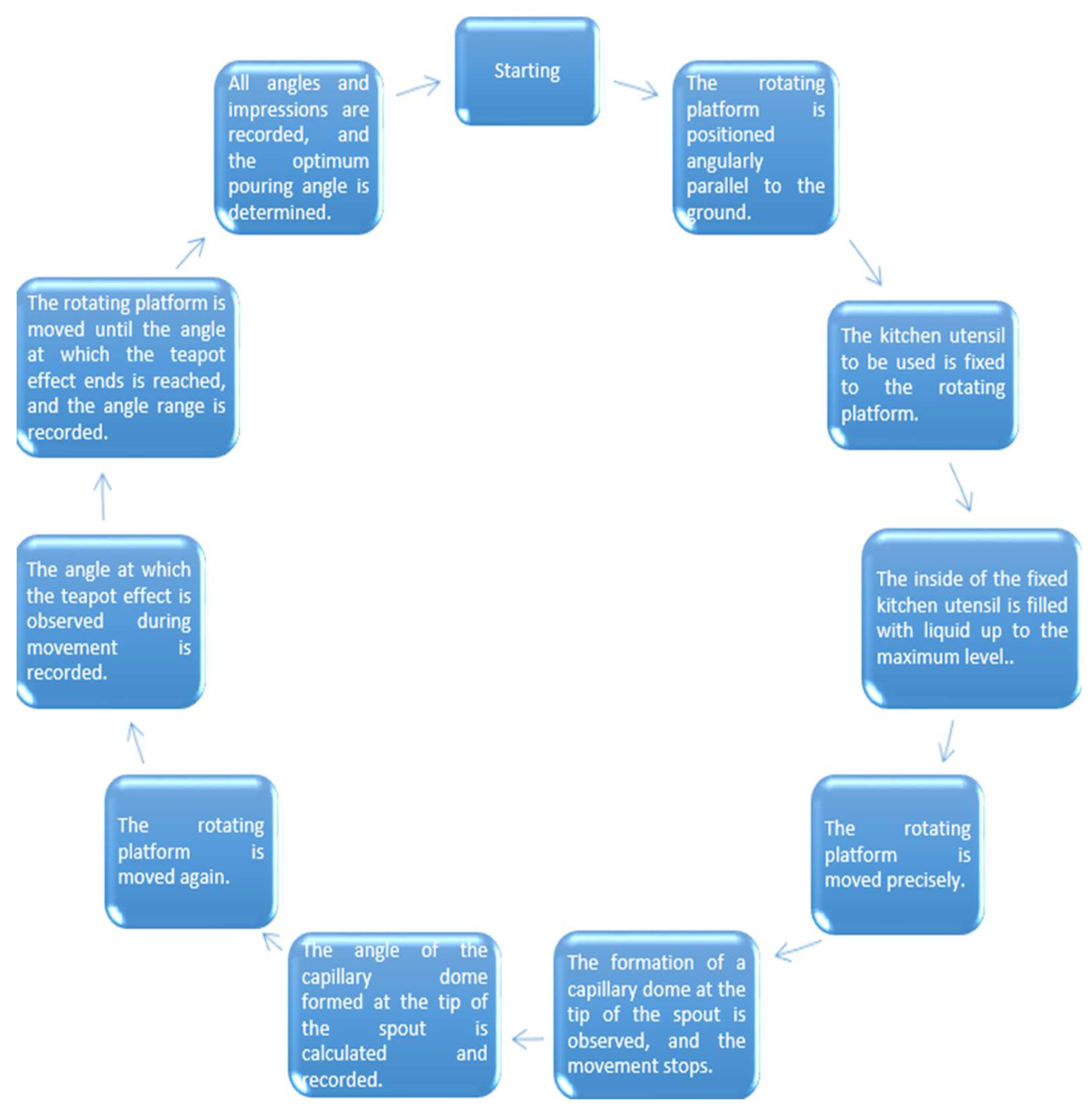
Figure 4.
Capillary dome formed in the spout tip.
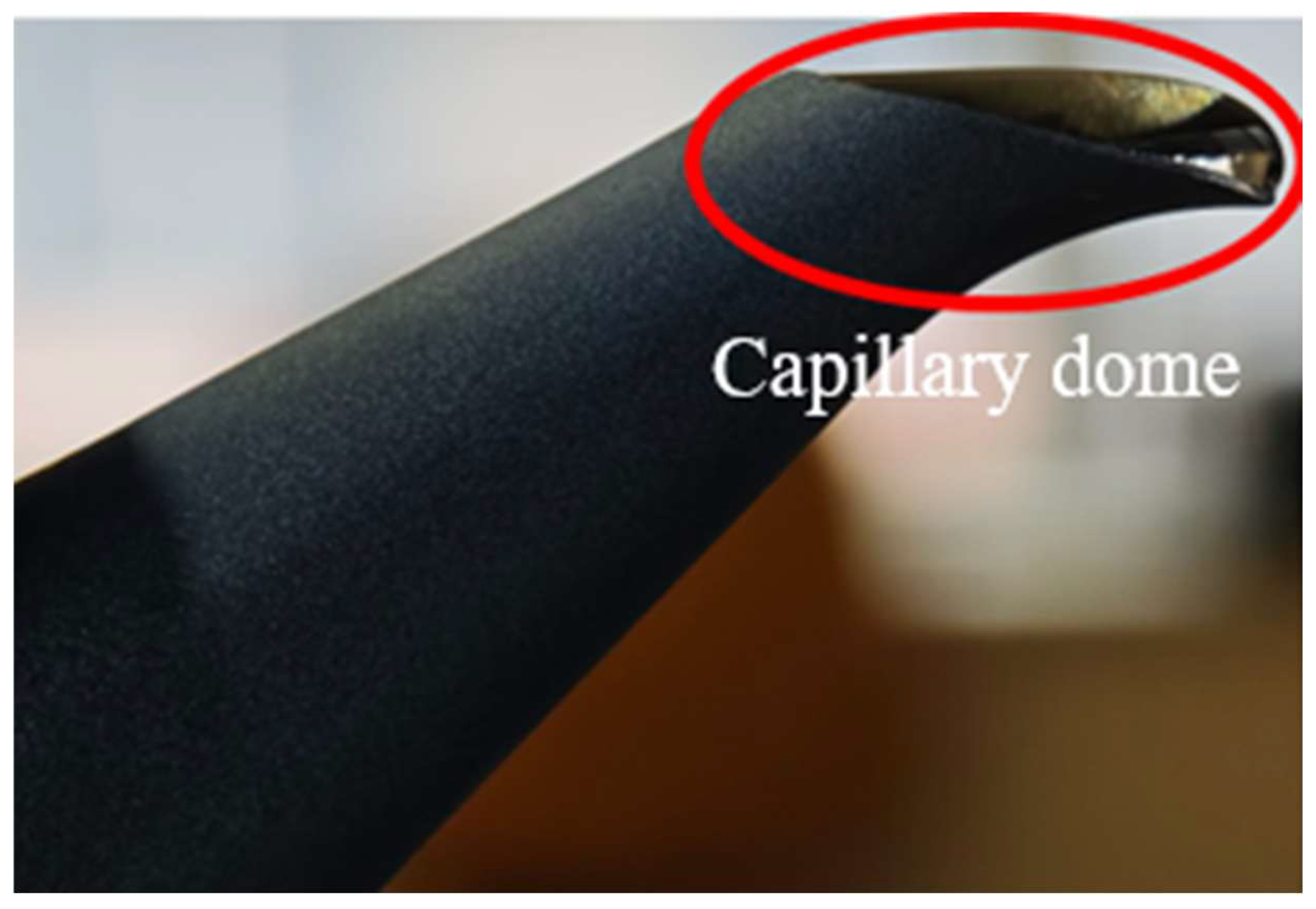
Figure 5.
Positioning of the kitchenware in the experimental setup.
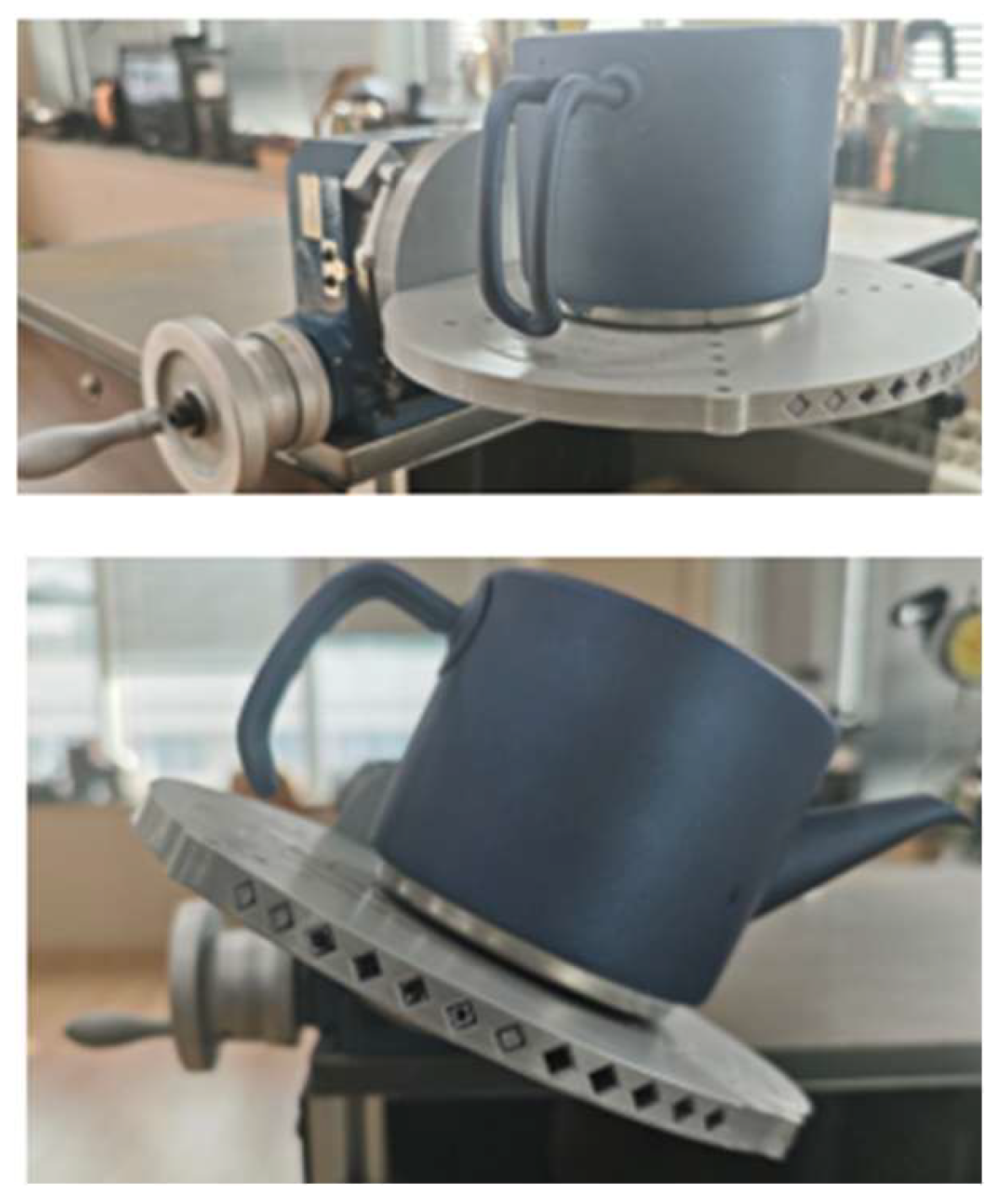
Figure 6.
Surface wettability and capillary dome formation.
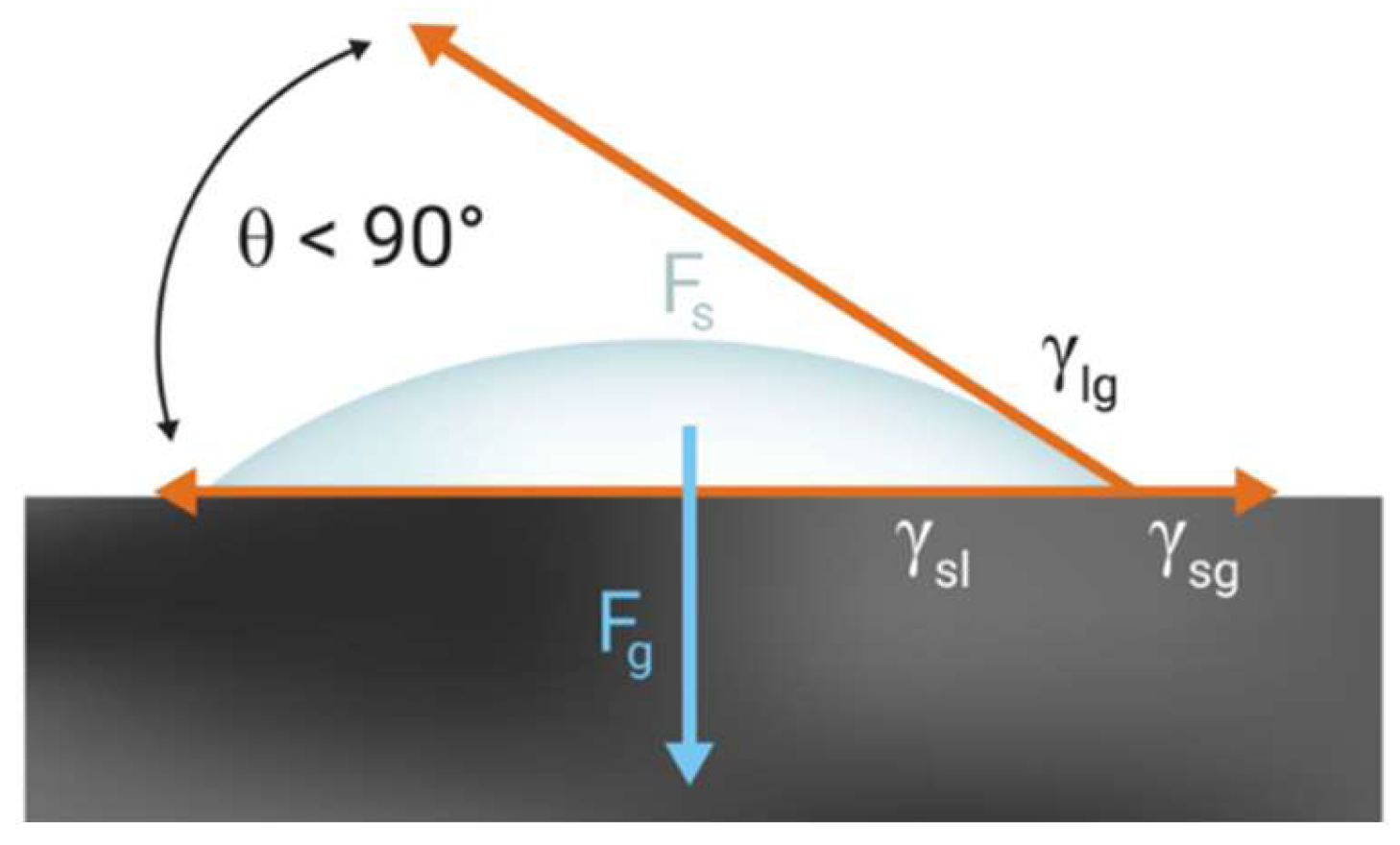
Figure 7.
Spout model exhibiting the teapot effect in a glass teapot.
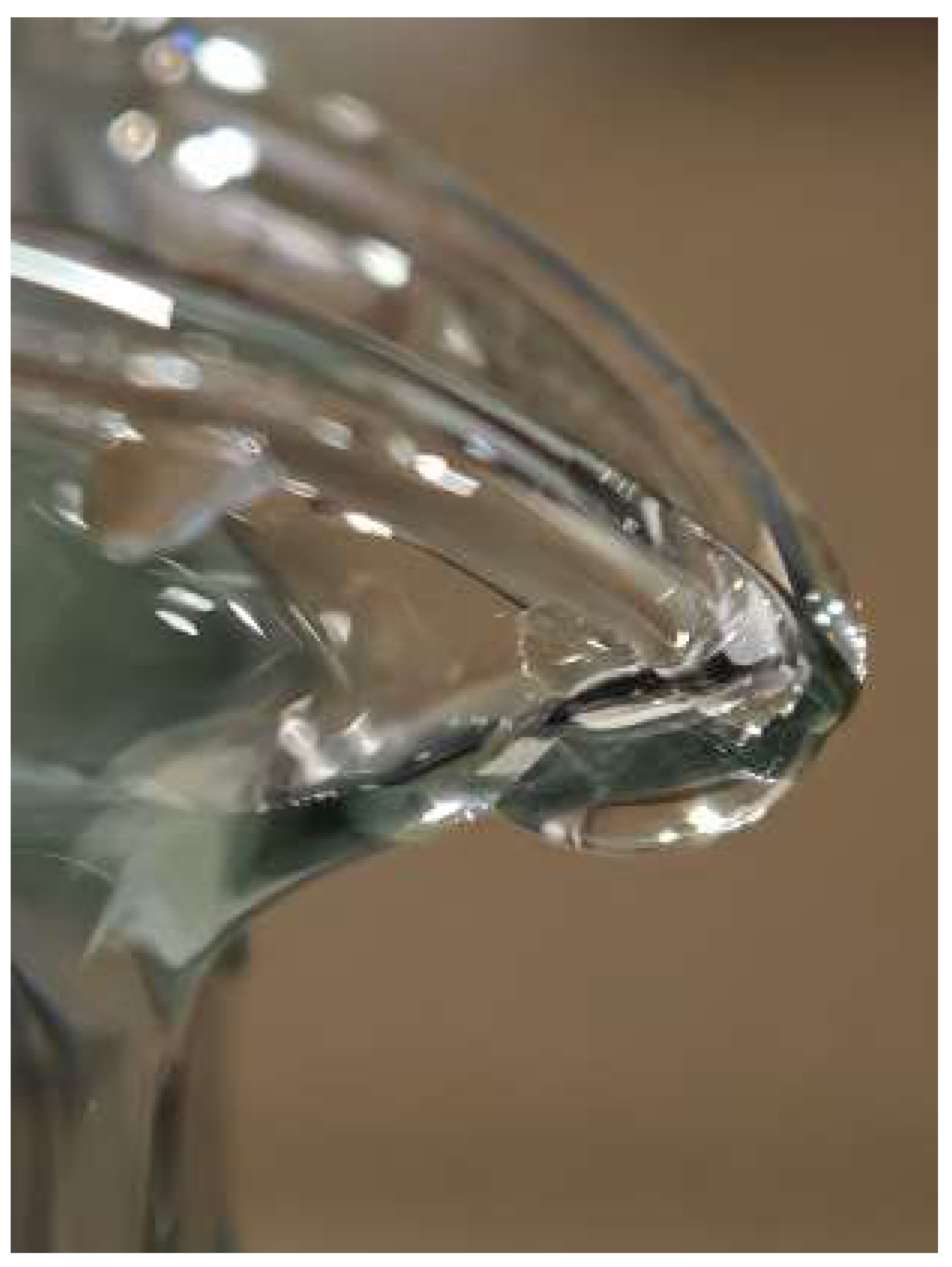
Figure 8.
The length of "h" in the spout.
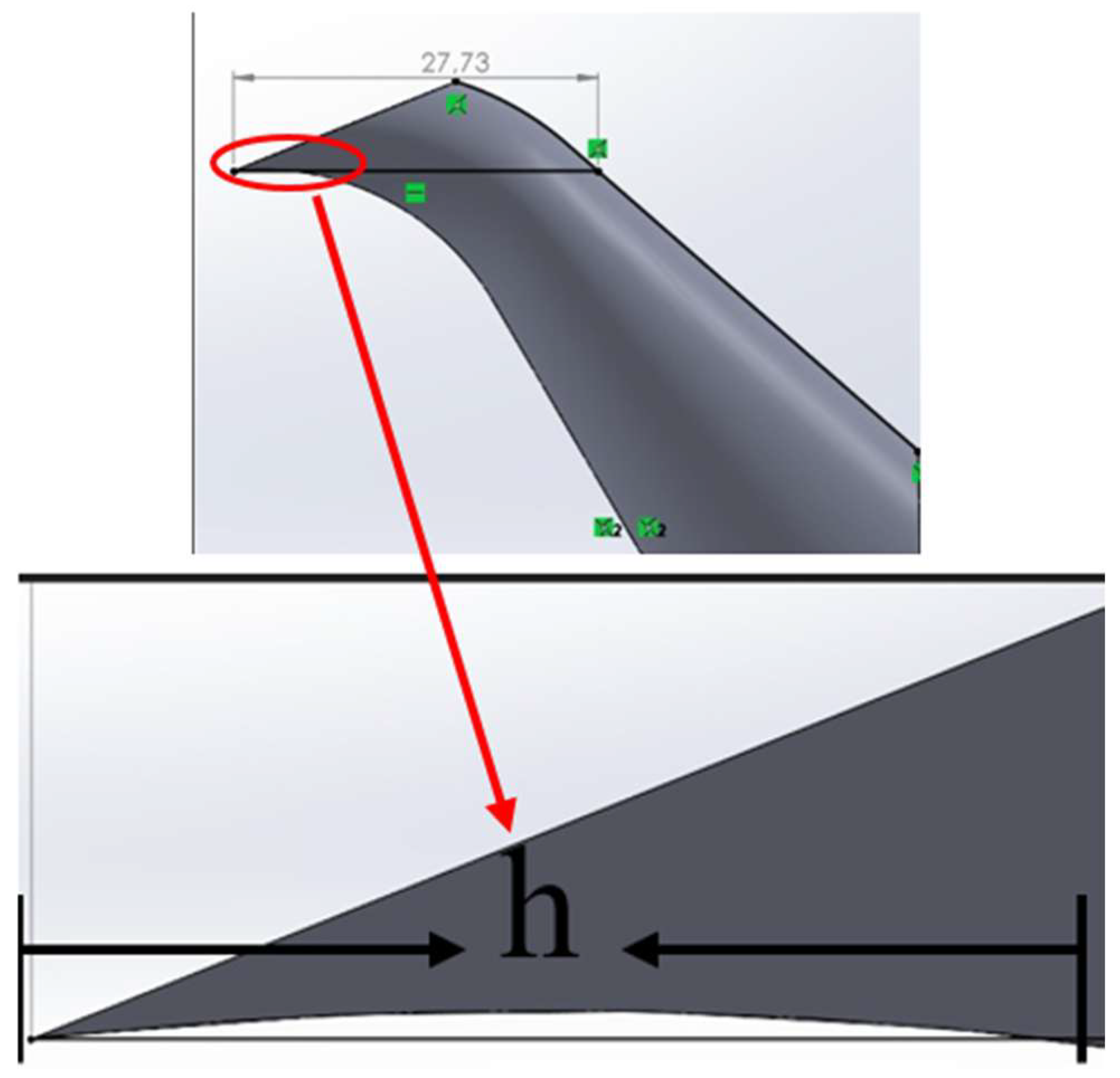
Figure 9.
Stainless steel spout sample with an elliptical cross-section.
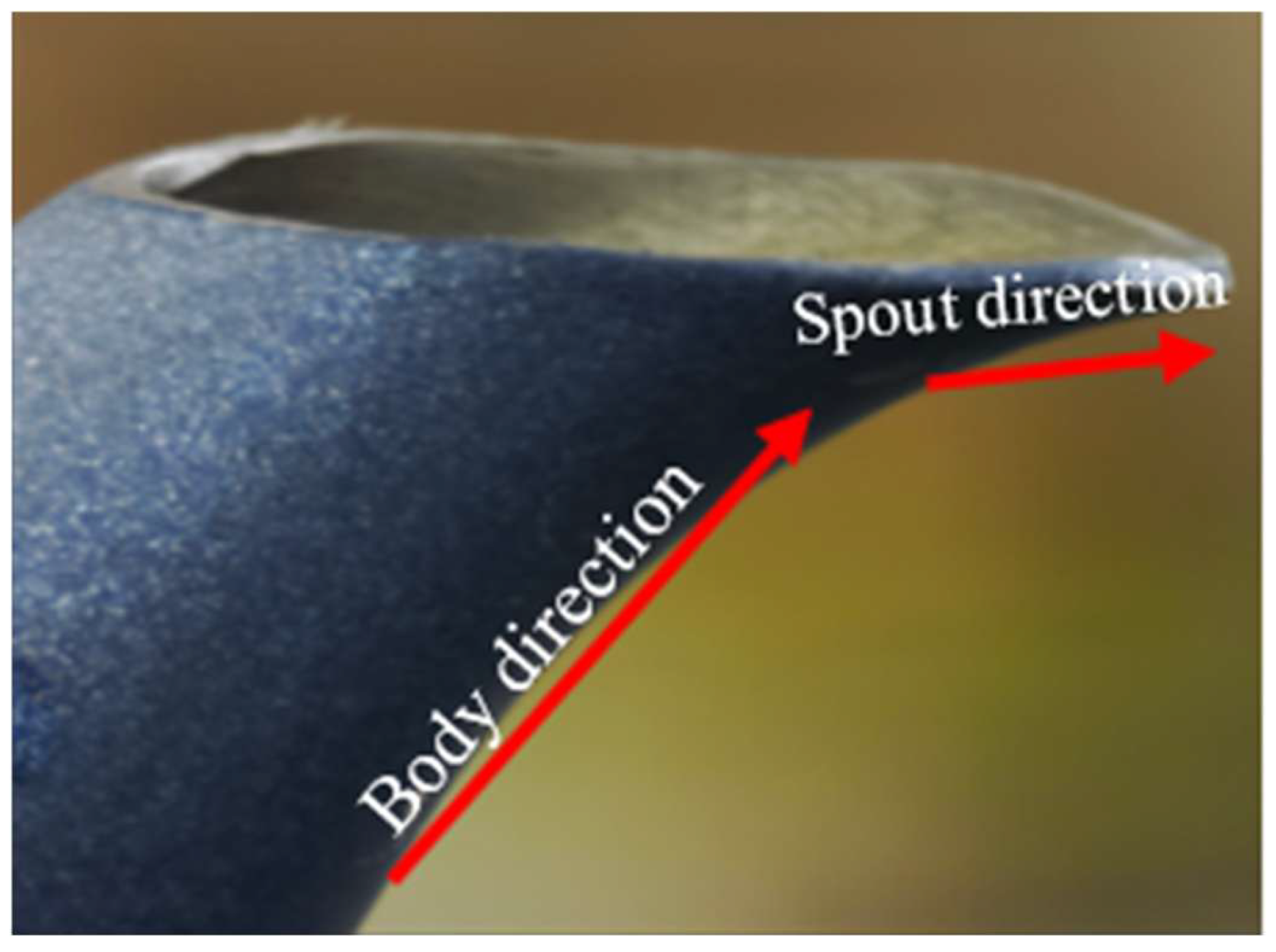
Figure 10.
Glass spout geometry.
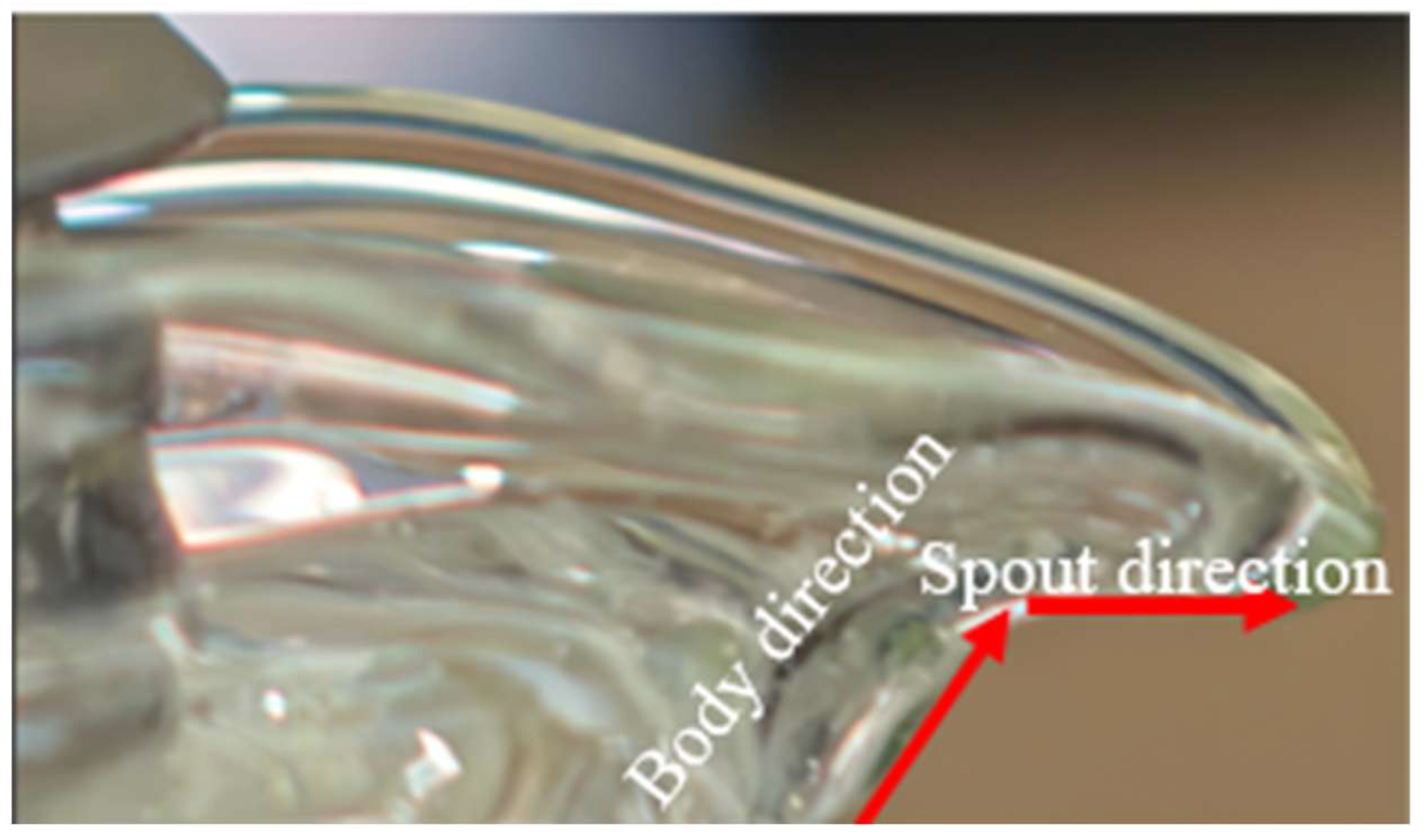
Figure 11.
h - teapot effect angle (°) relation graph.
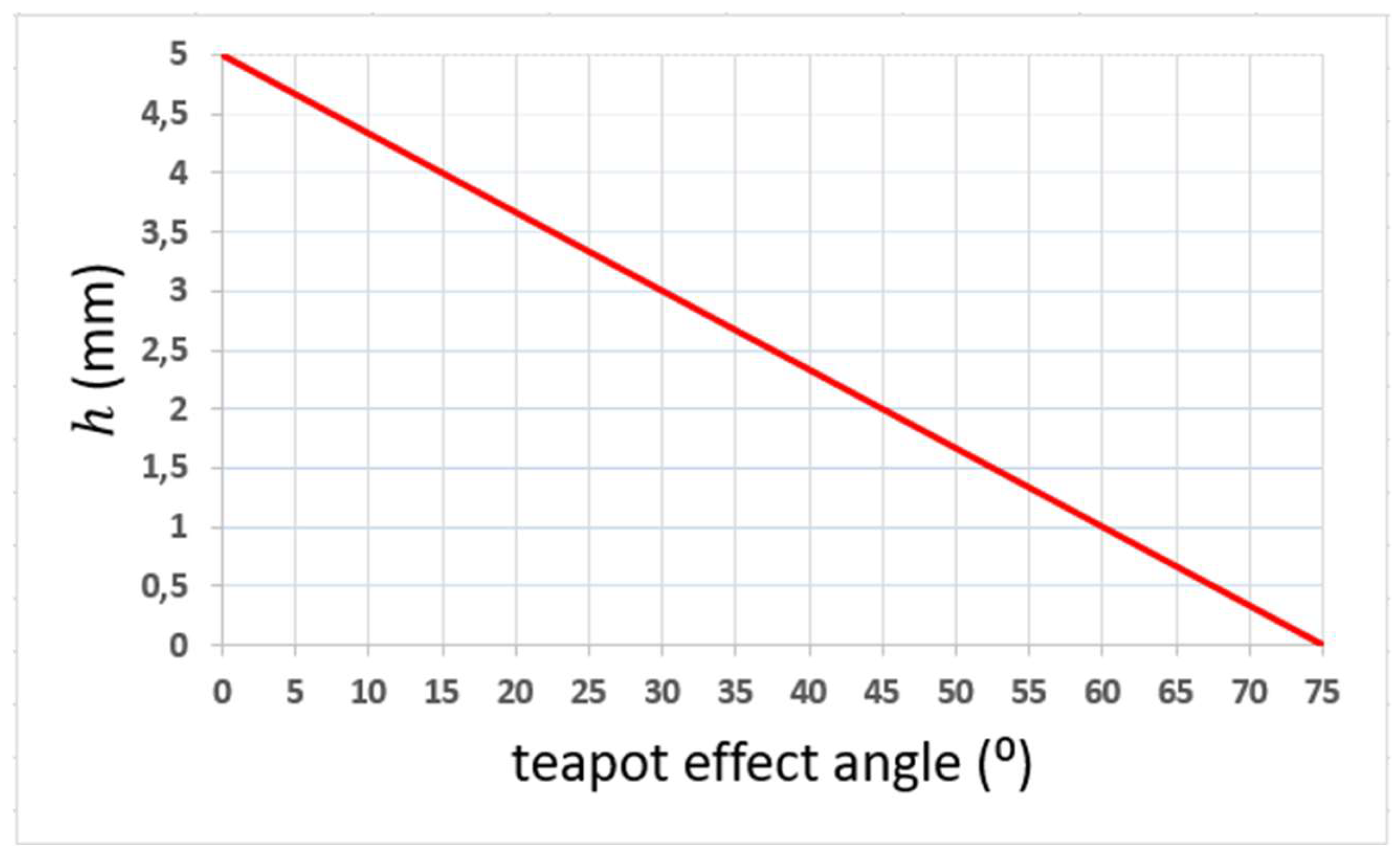
Figure 12.
Stainless steel spout model sample exhibiting the teapot effect.
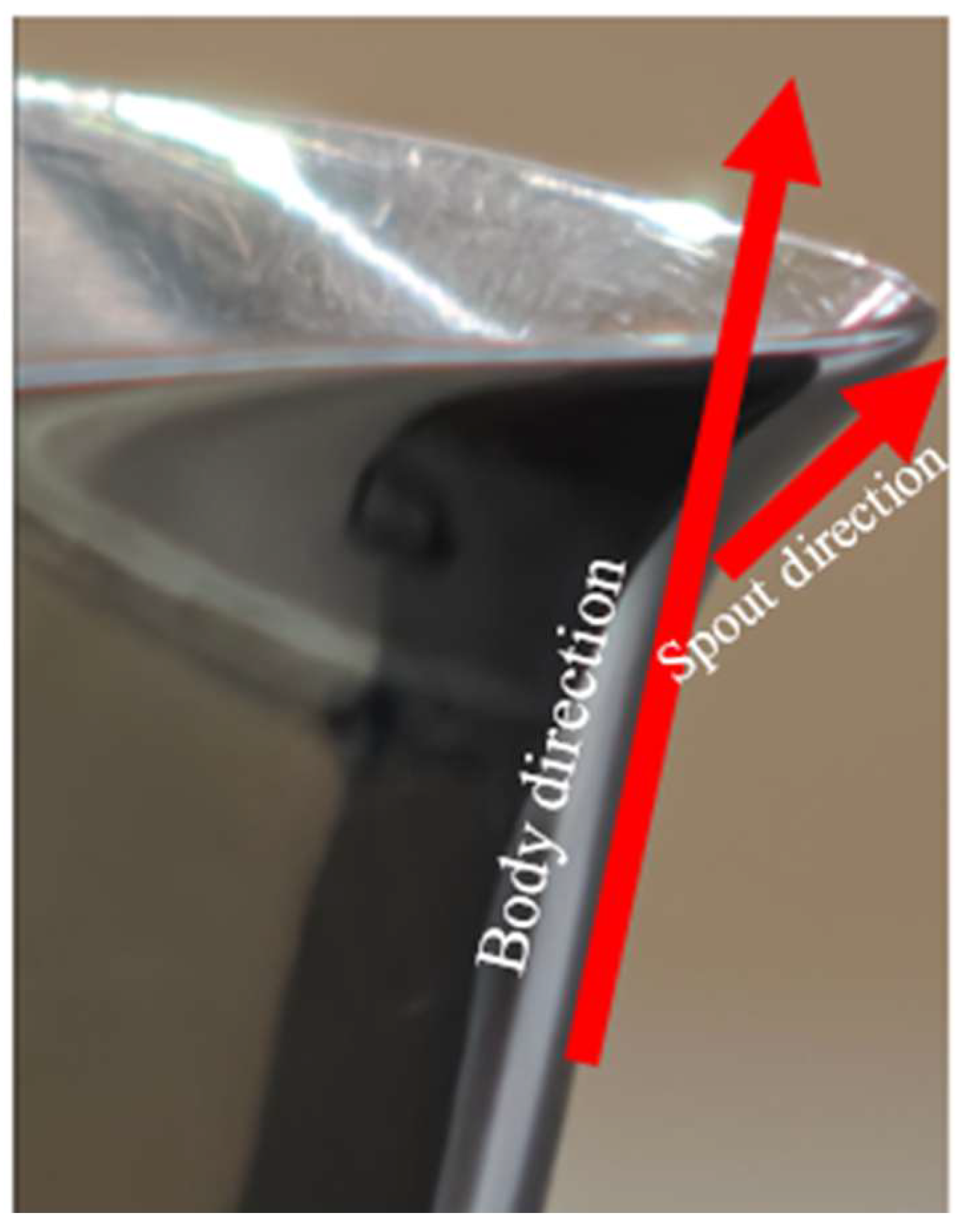
Figure 13.
Wide spout tip geometry.
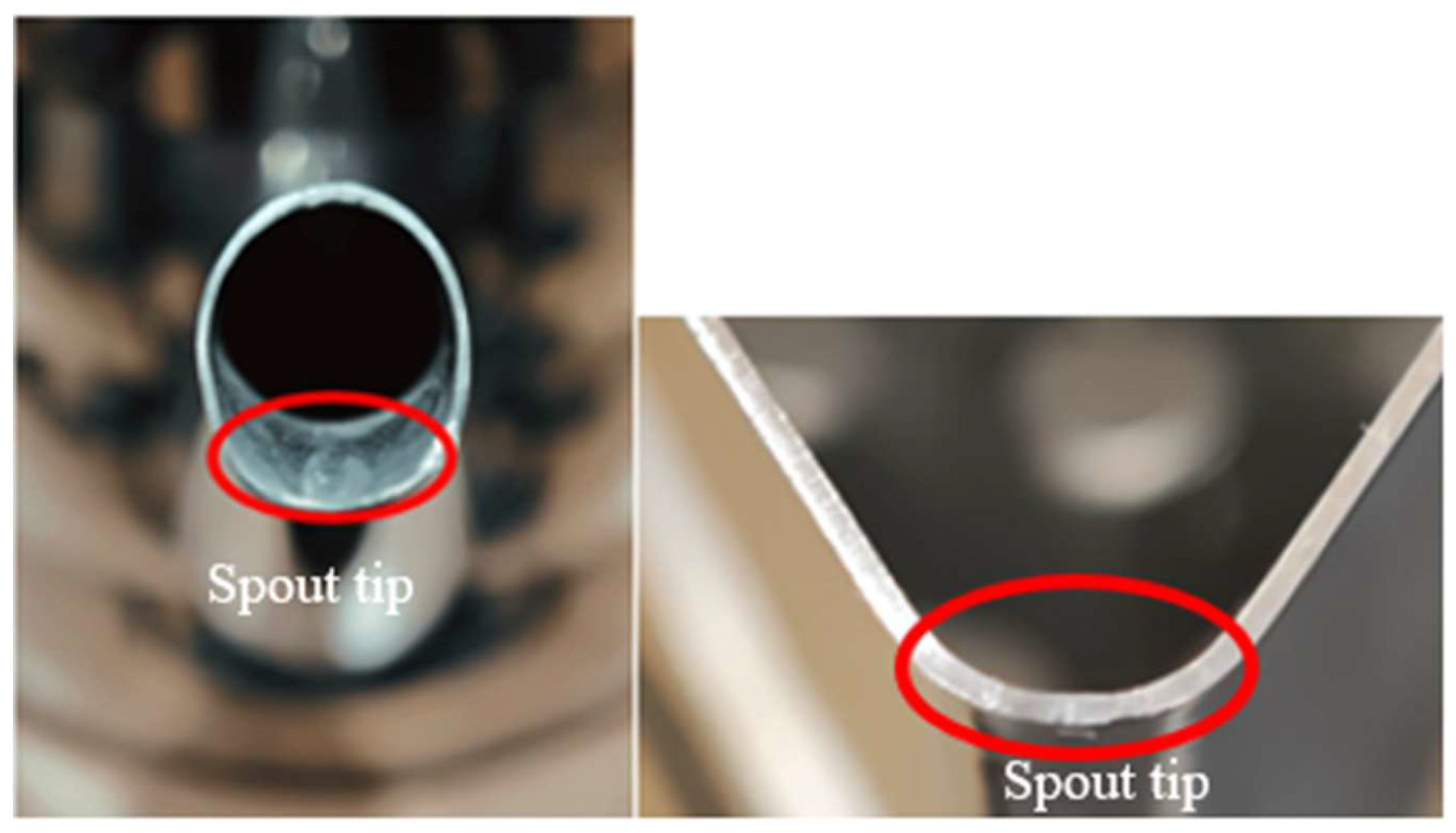
Figure 14.
Spout tip radius.

Disclaimer/Publisher’s Note: The statements, opinions and data contained in all publications are solely those of the individual author(s) and contributor(s) and not of MDPI and/or the editor(s). MDPI and/or the editor(s) disclaim responsibility for any injury to people or property resulting from any ideas, methods, instructions or products referred to in the content. |
© 2026 by the authors. Licensee MDPI, Basel, Switzerland. This article is an open access article distributed under the terms and conditions of the Creative Commons Attribution (CC BY) license (http://creativecommons.org/licenses/by/4.0/).
Copyright: This open access article is published under a Creative Commons CC BY 4.0 license, which permit the free download, distribution, and reuse, provided that the author and preprint are cited in any reuse.


