
Submitted:
14 February 2026
Posted:
27 February 2026
You are already at the latest version
Abstract
Competency-Based Education (CBE) represents a significant shift from traditional higher education, emphasizing learning outcomes and mastery of specific skills over time-based credit systems. Synthesizing findings from 73 peer-reviewed empirical studies and official institutional data, the analysis examines the core principles of CBE, its implementation frameworks, and its practical application in higher education institutions. The analysis further reveals how CBE addresses current challenges in postsecondary education, including providing flexible learning pathways, developing industry-relevant skills, and achieving measurable learning outcomes. Through institutional case studies and implementation strategies, this analysis provides a framework for understanding CBE's role in transforming higher education and assessing student achievement.
Keywords:
competency-based education
; traditional teaching
; credit system
; achievement m easures
1. Introduction
Universities and colleges around the world are under growing pressure to demonstrate their value, enhance student success, and adapt programs to evolving workforce requirements. The traditional credit-hour system, which gauges progress based on time in class rather than actual learning, is seen as outdated for today’s needs. As a more effective alternative, competency-based education is gaining popularity, emphasizing mastery of specific, well-defined skills instead of merely tracking class hours.
Competency-Based Education (CBE) marks a significant shift in how we approach teaching, assessment, and the recognition of learning achievements. Instead of adhering to a fixed schedule, students advance once they demonstrate mastery of specific knowledge, skills, and abilities. This approach offers significant benefits for adult learners, working professionals, and students with varied educational backgrounds and experiences. To implement CBE successfully in higher education, institutions must do more than adopt new teaching techniques. They need to thoroughly revise curriculum design, faculty training, assessment methods, and administrative processes. Additionally, CBE helps meet the growing demand for accountability, transparency, and data-driven educational strategies.
Competency-Based Education and Traditional Credit Systems in Higher Education
Competency-Based Education (CBE) marks a major shift from traditional credit systems that rely on time, focusing instead on students' mastery of specific skills and knowledge. Unlike conventional approaches that award degrees based on seat time and credit hours, CBE evaluates students on their ability to complete practical tasks and apply what they've learned (Klein-Collins, 2012; Guthrie & Berkner, 2023; Silva et al, 2023). This approach enables learners to advance at their own pace, potentially speeding up their education once they show proficiency, or taking additional time to master difficult topics without being limited by semester schedules (Johnstone & Soares, 2014).
For over a century, the traditional credit system has relied on the Carnegie Unit principle, which associates learning with classroom hours and awards credit based on contact time rather than actual learning outcomes (Laitinen, 2012; Gervais, 2016). While this approach provides structure and consistency across different institutions, critics argue that it does not accurately assess learning, resulting in graduates who meet degree requirements but may lack essential skills for success in the workforce (Nodine, 2016). In contrast, Competency-Based Education (CBE) programs emphasize clearly defined learning outcomes and require students to demonstrate mastery through authentic assessments, portfolios, and practical tasks, making them potentially more aligned with employer expectations and workforce needs (Soares, 2012).

Table 1.
Comparison of CBE and the Traditional Credit System (Adapted from: Jancevska & Stankovska, 2025; Klein-Collins, 2012; Johnstone & Soares, 2014; Laitinen, 2012; Mendenhall, 2012; Nodine, 2016).
Table 1.
Comparison of CBE and the Traditional Credit System (Adapted from: Jancevska & Stankovska, 2025; Klein-Collins, 2012; Johnstone & Soares, 2014; Laitinen, 2012; Mendenhall, 2012; Nodine, 2016).
| Aspect | Competency-Based Education (CBE) | Traditional Credit System |
| Learning Focus | Mastery of specific competencies and skills | Completion of credit hours and coursework |
| Time Structure | Flexible, self-paced progression | Fixed semester/quarter schedules |
| Assessment Method | Demonstration of competency through authentic assessments | Grades based on exams, assignments, and participation |
| Progression Criteria | Proven mastery of learning outcomes | Accumulation of predetermined credit hours |
| Student Support | Individualized coaching and mentoring | Traditional classroom instruction with office hours |
| Degree Completion | Based on demonstrated competencies | Based on credit hour accumulation (typically 120+ hours) |
| Cost Structure | Often subscription-based or competency-based pricing | Per-credit-hour or flat tuition rates |
| Employer Recognition | Growing acceptance, emphasis on skills | Well-established, universally recognized |
| Quality Assurance | Focus on learning outcomes and real-world application | Emphasis on accreditation and standardized processes |
| Flexibility | High flexibility for working adults and non-traditional students | Limited flexibility, structured schedules |
Therefore, this research examines how higher education institutions can strategically implement Competency-Based Education frameworks to enhance student learning outcomes, maintain academic standards, and ensure institutional sustainability. The report addresses the following research question:
R Q 1:
How can higher education institutions effectively implement Competency-Based Education frameworks to enhance student learning outcomes while maintaining academic rigor and institutional sustainability?
To address this central question, the research objectives include:
(1) Analyzing the effectiveness of different CBE implementation models across diverse institutional contexts and student populations.
(2) Evaluating the impact of CBE on student engagement, learning outcomes, and degree completion rates compared to traditional credit-hour systems.
(3) Identifying critical success factors and barriers in CBE implementation, including institutional culture, faculty readiness, and technological infrastructure requirements
(4) Examining the alignment between CBE competency frameworks and industry workforce demands to assess graduate employability and career advancement outcomes.
(5) Developing evidence-based recommendations for sustainable CBE implementation strategies that address accreditation compliance, resource allocation, and quality assurance mechanisms.
(6) Investigating the long-term implications of CBE adoption on higher education accessibility, equity, and institutional competitiveness in an increasingly dynamic educational landscape.
2. Methodology
Conducting systematic literature reviews is an effective method for gathering and synthesizing the latest research on a specific topic (Linnenluecke et al., 2020). This study follows the PRISMA 2025 guidelines, the most widely respected framework for comprehensive reviews (Page et al., 2021). The PRISMA process comprises four main stages: searching academic databases for relevant studies, screening records against predefined criteria, assessing full texts for relevance and methodological quality, and extracting and synthesizing data from the selected studies. This structured approach enhances transparency, reproducibility, and rigor in the review process, helping to reduce bias.
Using PRISMA makes the article selection process in systematic reviews more transparent and improves reporting quality (PRISMA, 2025). Therefore, the current papers utilized the PRISMA Model to identify the most relevant publications from the chosen sources articles.
The primary search keywords included “Competency-based Education,” “Traditional Teaching and Students’ Competencies,” “Credit System and Students’ Achievement Measures,” and “Competency-Based Education and Workforce.” Searches were carried out on Google Scholar, ERIC, Scopus, and the Institutional Successful Case Studies. The initial Google Scholar search, limited to the past 10 years, retrieved 100 articles. The ERIC search focused on peer-reviewed, full-text articles and resulted in 50 hits using the same keywords. For Scopus, the search employed the same keywords, filtered for publications from 2018 to 2025, in the Education subject area, and for articles, yielding 70 results.
Eligibility Criteria
The study's inclusion criteria centered on the terms “Competency-Based Education," "Educational Technology,” "Pedagogical Applications," “Employability,” and "Technological Innovation.” Emphasizing these themes enables the researcher to develop a comprehensive understanding of “Competency-Based Education” in higher education.
Figure 1 presents the PRISMA flowchart, which illustrates the detailed process of article selection. Before the screening process, 125 duplicate articles were identified and excluded. Then, 15 articles were excluded from the initial screening of the articles based on the following four criteria:
1- Time Frame: Research published from 2015 to December 2025, to capture the conducted research and best practices.
2- Educational Level: Studies related to post-secondary institutions such as universities and colleges.
3- Publication Type: Peer-reviewed articles and relevant conference papers presenting either theoretical or empirical results.
4- Case studies highlighting successful CBE implementations by accredited universities around the world.
A closer examination of the abstracts and titles led to the exclusion of 12 articles that were not relevant to the review's focus. Subsequently, 73 articles were included in the review based on the selection criteria outlined in the four stages of the PRISMA Model.
The researcher carried out a thematic integrative literature review to answer the research question. The chosen studies emphasize the characteristics of CBE and its pedagogical importance. To explore this, the analysis includes five case studies from accredited universities that use CBE as their teaching approach. This work is backed by institutional documents and scholarly articles, providing a thorough overview of Competency-Based Education. Moreover, recent market research reports offer contextual insights into its scope and economic influence.
3. Fundamental Principles of Competency-Based Education
3.1. Student-Centered Learning Philosophy
Competency-Based Education focuses on each student's unique learning needs and progress rather than on institutional convenience or conventional schedules. It recognizes that students come from varied backgrounds, have different experiences, and have diverse learning styles. By allowing students to progress at their own pace, CBE accommodates these differences and enables them to focus on challenging topics while revisiting familiar material as needed (Burnette, 2016; Competency-Based Education Network, 2017; Gibson & Smith, 2023).
The student-centered approach offers adaptable learning opportunities, enabling students to showcase their competencies through diverse methods such as portfolios, projects, examinations, and experiential activities. Recognizing that learning occurs through various avenues, it is evident that students can attain mastery through multiple pathways. This concept emphasizes personalized educational experiences tailored to each student's specific needs, rather than a uniform approach. Student agency plays a crucial role in this paradigm; within Competency-Based Education (CBE) systems, students assume greater responsibility for their educational progression, making informed choices about pacing, strategies, and assessment methods (Gervais, 2016; Gamrat et al., 2023; Sturgis & Casey, 2018). Such increased autonomy necessitates robust support mechanisms, including academic advising, mentoring programs, and accessible resources, to facilitate student success.
3.2. Outcome-Based Assessment Framework
At CBE, educators hold that learning outcomes should be clearly defined, measurable, and pertinent to real-world situations. The framework emphasizes output indicators that demonstrate actual learning achievement, rather than input measures such as contact hours or credits earned. Consequently, competencies are defined as specific, observable skills or behaviors that students must demonstrate to progress. To effectively implement the outcome-based approach, meticulous competency mapping is essential, detailing key knowledge, skills, and abilities for each program or course. Competencies are generally structured hierarchically, with foundational ones supporting more advanced competencies. This framework emphasizes transparency, enabling students to understand expectations and monitor their progress toward competencies (Porter & Polikoff, 2012; U.S. Department of Education, 2015; SANGWA, 2025). Within this framework, assessment depends on established standards rather than peer comparisons, supporting mastery learning principles that enable students to succeed with adequate effort and support. Additionally, the framework emphasizes authentic assessment techniques that demonstrate real-world applications of knowledge and skills.
Table 2.
Competency Framework Development Template (Adapted from: Gamrat et al., 2023; Porter & Polikoff, 2012; U.S. Department of Education, 2015; Nodine, 2016; SANGWA, 2025).
Table 2.
Competency Framework Development Template (Adapted from: Gamrat et al., 2023; Porter & Polikoff, 2012; U.S. Department of Education, 2015; Nodine, 2016; SANGWA, 2025).
| Competency Domain | Specific Competencies | Performance Indicators | Assessment Methods | Proficiency Levels |
| Communication | Written Communication | Produces clear, coherent written documents | Portfolio review, Writing samples | Novice, Developing, Proficient, Advanced |
| Oral Communication | Delivers effective presentations | Presentation evaluation, Peer feedback | Novice, Developing, Proficient, Advanced | |
| Digital Communication | Uses technology tools effectively | Technology demonstrations, Digital portfolios | Novice, Developing, Proficient, Advanced | |
| Critical Thinking | Problem Analysis | Identifies and analyzes complex problems | Case study analysis, Problem-solving exercises | Novice, Developing, Proficient, Advanced |
| Solution Development | Develops innovative solutions | Project-based assessments, Research projects | Novice, Developing, Proficient, Advanced | |
| Evaluation Skills | Evaluates information and arguments | Critical analysis papers, Peer review | Novice, Developing, Proficient, Advanced | |
| Professional Skills | Teamwork | Collaborates effectively in teams | Team project evaluations, Peer assessments | Novice, Developing, Proficient, Advanced |
| Leadership | Demonstrates leadership capabilities | Leadership portfolios, 360-degree feedback | Novice, Developing, Proficient, Advanced | |
| Ethical Reasoning | Applies ethical principles to decisions | Ethics case studies, Reflection essays | Novice, Developing, Proficient, Advanced |
3.3. Flexible Pacing and Progress
Traditional higher education typically follows fixed schedules that may not suit each student's unique needs or background. Competency-Based Education (CBE) promotes flexible pacing, allowing students to progress once they demonstrate mastery of skills rather than adhering to a rigid timetable. This approach recognizes that some learners may need more time to grasp complex topics, while others may demonstrate competence more quickly. Flexible pacing applies not only to completing individual courses but also to entire program pathways. Students with considerable prior experience can progress more quickly by building on skills they already possess. In contrast, those who require additional support can access supplementary learning options to further develop their skills.
The flexible pacing principle also recognizes that learning is not always linear. Students may need to revisit foundational concepts or make connections among skills, which may require repeated learning cycles. CBE systems support these natural learning processes by providing multiple opportunities to demonstrate competency and allowing students to progress when they are ready rather than on a fixed schedule. This approach promotes both efficiency and effectiveness in education (Guthrie & Berkner, 2023; Mendenhall, 2012; Linnenluecke et al., 2020).
3.4. Mastery-Based Learning Standards
CBE operates on the idea that all students can achieve mastery given enough time and the right support. Unlike traditional grading, which might accept partial understanding, mastery-based standards require students to fully grasp and correctly apply skills before moving on to more advanced tasks. This approach sets clear performance standards defining successful competency (Garira, 2020; Mendenhall, 2012; Kuh et al., 2014). These standards are usually explained through detailed rubrics that outline different performance levels and offer guidance for both students and instructors (see Table 3). The focus is on learning quality rather than just covering more content.
With mastery-based learning, students take repeated steps to improve. If they don't meet the standards initially, they receive feedback and additional learning opportunities to reach the required level. This approach fosters a growth mindset, viewing learning as an ongoing process rather than a fixed measure of ability.
4. Procedural Framework for Implementation
4.1. Competency Identification and Mapping
Implementing CBE begins with thorough competency identification and mapping that define the knowledge, skills, and abilities students must demonstrate. This process involves careful analysis of program outcomes, industry standards, and stakeholder requirements to ensure that competencies are relevant, up-to-date, and appropriately challenging (Bouchrika, 2025; Caldwell, 2019; Sangwa, 2025).
Competency mapping typically requires input from various stakeholders, including faculty, industry experts, alumni, and students. This collaborative approach ensures that competencies align with both academic requirements and practical, real-world skills. The process typically begins with broad program-level competencies, which are subsequently broken down into specific, measurable learning outcomes (Book, 2014; Cunningham & Hillier, 2013; Driessen et al., 2008).
The procedure involves sequencing competencies and identifying prerequisites to establish logical learning progressions. This sequencing ensures that students first develop a strong foundation of knowledge and skills before advancing to more complex tasks. Additionally, the mapping process highlights opportunities to integrate competencies across different courses or learning experiences.
Quality assurance is essential to the competency mapping process. This encompasses regular review cycles, industry validation procedures, and verifications to ensure compliance with accreditation standards. Additionally, the process must be sufficiently flexible to accommodate changes in industry requirements or emerging developments in knowledge.
Table 4.
CBE Implementation Timeline (Adapted From: Adelman et al., 2014; Cunningham & Hillier, 2013; Caldwell, 2019; Gervais, 2016; Guthrie & Berkner, 2023; Sturgis & Casey, 2018).
Table 4.
CBE Implementation Timeline (Adapted From: Adelman et al., 2014; Cunningham & Hillier, 2013; Caldwell, 2019; Gervais, 2016; Guthrie & Berkner, 2023; Sturgis & Casey, 2018).
| Phase | Duration | Key Activities | Deliverables | Stakeholders |
| Planning | 6 months | Stakeholder engagement, Needs assessment, Resource planning | Implementation plan, Budget allocation | Administration, Faculty, Students |
| Design | 12 months | Competency mapping, Curriculum development, Assessment design | Competency frameworks, Course materials | Faculty, Industry partners, Students |
| Pilot | 6 months | Small-scale implementation, Testing, and refinement | Pilot program results, Feedback reports | Faculty, Students, Administration |
| Implementation | 18 months | Full program launch, Faculty training, Student support | Operational programs, Support systems | All stakeholders |
| Evaluation | Ongoing | Assessment of outcomes, Continuous improvement | Evaluation reports, Improvement plans | Administration, Faculty, External evaluators |
4.2. Curriculum Design and Development
Designing the CBE curriculum marks a major shift from traditional course-based approaches to competency-based modules. This approach organizes educational content around groups of competencies rather than disciplines, resulting in more integrated and practical learning experiences. During development, backward design principles are employed, beginning with what students need to learn and then working backward to determine the necessary content, resources, and assessments. In this context, assessment for understanding must be grounded in performance-based tasks and projects that are as authentic as possible. An assessment grounded in authentic work calls for learners and educators to learn two important points. First, they must learn how the world beyond school uses the knowledge and skills being taught and learned. Second, learners must learn why individual modules that develop discrete knowledge and skills are meaningful and how such work leads to mastery of more complex and interesting performance tasks (Sturgis & Casey, 2018; SANGWA, 2025; Wiggins & McTighe, 2005). In this framework, every element of the curriculum is aligned with the goal of achieving specific competencies, rather than simply covering content for its own sake.
With a modular curriculum, students can follow learning paths tailored to their individual needs and backgrounds. Modules are flexible and can be rearranged to create personalized educational experiences while maintaining academic rigor and coherence. To support this, educators use prerequisite matrices to guide students through competency-based modules. The curriculum also incorporates authentic learning experiences that connect academic concepts to real-world contexts, such as work-based learning, internships, capstone projects, and industry collaborations (Kuh et al., 2014; Porter & Polikoff, 2012; Telling & Serapioni, 2025; Western Governors University, 2023; U.S. Department of Education, 2015). These opportunities enable students to showcase their skills in professional settings.
4.3. Assessment Strategy Development
Developing assessment strategies for CBE requires comprehensive methods that accurately measure competency achievement across various areas. This process involves creating assessment portfolios that employ multiple evaluation techniques, including performance-based assessments, portfolio reviews, standardized tests, and hands-on demonstrations. The assessment development process emphasizes criterion-referenced evaluation methods, which compare student performance to established standards rather than ranking students against each other. It also involves designing detailed rubrics that clearly define performance expectations and ensure consistent evaluation criteria among different assessors.
Multiple assessment opportunities are essential components of Competency-Based Education (CBE) assessment strategies. Students must have access to diverse methods to demonstrate their achievement of competencies, accommodating various learning styles and contextual settings. This process entails establishing reassessment protocols that enable students to demonstrate progress and development over time. Additionally, developing such strategies involves using technology-enhanced evaluation techniques that deliver immediate feedback and support adaptable learning pathways. These technologies include online simulations, virtual reality applications, and automated assessment systems that provide comprehensive performance analytics (Kuh et al., 2014; Porter & Polikoff, 2012; Sturgis & Casey, 2018; Silva et al., 2023; Vargas et al., 2025).
4.4. Faculty Development and Support
Effective implementation of Competency-Based Education (CBE) relies on comprehensive faculty development programs that cover both the philosophical foundations and the practical skills of competency-oriented teaching. These programs equip faculty with specialized teaching strategies, assessment methods, and effective student support. The training should include designing competency-based curricula and helping faculty develop learning experiences focused on achieving specific competencies rather than merely delivering content. Emphasizing active learning, authentic assessments, and personalized teaching, this approach ensures that faculty are well prepared to foster competency development (Nodine, 2016; Voorhees & Milam, 2005; Zakaria et al., 2025).
Sustainable support systems are essential for faculty development, encompassing peer mentoring, communities of practice, and ongoing professional growth opportunities. Faculty require continuous assistance as they shift from merely disseminating information to becoming facilitators of learning. This transition also requires faculty evaluation and recognition systems that align with Competency-Based Education (CBE) principles. Conventional evaluation methods may not adequately capture the outcomes of competency-based teaching, necessitating new metrics and approaches to appropriately acknowledge faculty efforts in fostering student competency.
4.5. Technology Integration and Infrastructure
Implementing Competency-Based Education (CBE) involves establishing a strong technological foundation that enables flexible learning paths, tracks competency development, and manages assessments. This requires selecting and implementing Learning Management Systems (LMS), competency-monitoring tools, and assessment platforms tailored for CBE. The integration process focuses on ensuring interoperability and efficient data handling to accurately track student progress across various competencies and educational activities. Moreover, these systems should offer real-time analytics, support student self-assessment, and allow faculty to intervene when needed (see Table 5).
Digital badge and credential systems are essential components of the infrastructure supporting Competency-Based Education (CBE). They facilitate widespread recognition of competency achievements and provide portable credentials that students can share with employers or educational institutions. The system also offers training and support for faculty and students on utilizing these technologies effectively. For CBE to thrive, all stakeholders must develop proficiency in the tools required for learning, assessment, and tracking progress.
5. Application Examples in Higher Education
5.1. Case Study 1: University of Wisconsin Flexible Option
The University of Wisconsin Flexible Option stands out as a prominent competency-based education (CBE) program in higher education. Launched in 2013, it allows students to earn degrees by demonstrating their competencies instead of completing conventional coursework (Specht-Boardman et al., 2021). Primarily aimed at adult learners with substantial work experience or prior learning, who are often underserved by traditional programs, the program incorporates several core features typical of successful CBE initiatives. Students benefit from personalized support provided by academic coaches rather than standard instructors, offering tailored guidance throughout their educational journey. The competency assessments measure students' knowledge and skills through diverse methods, such as portfolios, projects, and exams.
Program outcomes demonstrate the effectiveness of CBE methods for adult learners, with students reporting high satisfaction with the flexibility and relevance of their learning experiences. The program excels at supporting students who might not otherwise complete degree programs, including working adults, military members, and students with family responsibilities. Moreover, the UW Flexible Option program deepens understanding of the challenges and solutions in implementing CBE. These insights underscore the importance of robust student support systems, faculty training in competency-based teaching, and active employer participation in validating competency frameworks.
5.2. Case Study 2: Southern New Hampshire University College for America
Southern New Hampshire University's College for America offers a competency-based education (CBE) model that supports working adults through strategic employer partnerships. The program emphasizes practical skills and competencies that enhance workplace performance and meet specific job requirements. Through project-based learning, students demonstrate their skills by completing real-world tasks aligned with their current jobs. This approach provides immediate benefits for both students and employers, demonstrating how CBE can foster valuable partnerships among students, employers, and educational institutions (Hansen, 2018).
Assessment methods within the College for America program encompass peer evaluations, supervisor feedback, and portfolio development, thereby offering multiple perspectives on student competency achievement. This multi-source approach enhances the validity and reliability of assessments, providing students with comprehensive feedback. The program has demonstrated success in increasing degree completion rates and improving student satisfaction. Participants report that the program provides relevant, applicable learning experiences that cultivate their professional skills. Employers observe positive outcomes, including improved employee performance and heightened job satisfaction among participants.
5.3. Case Study 3: Purdue University Global's ExcelTrack Programs
Purdue University Global's ExcelTrack programs exemplify how competency-based education (CBE) can be incorporated into traditional university frameworks (Starnes, 2019). They illustrate how established institutions can modify CBE principles to serve a diverse student body. These programs blend competency evaluations with standard academic requirements, forming hybrid models that uphold academic integrity while providing flexibility. The ExcelTrack program offers personalized learning pathways, enabling students to progress after demonstrating mastery of competencies, all within the bounds of traditional schedules and support systems. This hybrid model addresses common challenges faced by purely CBE programs, such as issues with financial aid, transfer credits, and employer recognition.
Assessment strategies within ExcelTrack programs integrate conventional academic evaluations with competency-based assessments, offering diverse methodologies to gauge student learning and advancement. This holistic approach facilitates the development of both academic comprehension and practical competencies among students. Empirical data indicate that hybrid competency-based education models can effectively serve diverse student populations while upholding academic standards and promoting sustainable success. Students appreciate the flexibility and real-world applicability of competency-based elements, as well as the benefits of traditional academic support resources.
5.4. Case Study 4: Northeastern University's Align Program
Northeastern University's Align program illustrates how competency-based education (CBE) can be utilized in specialized professional training, especially in computer science, for students lacking technical backgrounds (Schmidt et al., 2025). The program demonstrates the practical use of CBE principles to foster specific skill development and equip students for particular career shifts. Its design focuses on developing competencies through immersive, intensive learning experiences that combine theoretical knowledge with hands-on skills. Students progress through structured competency modules, starting with fundamental skills and advancing to more complex programming and system design tasks.
Assessment methods within the Align program primarily emphasize project-based evaluation, which closely mirrors real-world software development practices. Students demonstrate their competencies through portfolios, coding challenges, and collaborative projects designed to simulate professional environments. This authentic approach provides students with practical experience and effectively showcases their skills to prospective employers. As a result, the program achieves high graduate employment rates and receives positive feedback from employers regarding graduates' capabilities. Furthermore, it highlights how competency-based education (CBE) effectively prepares students for rapid career transitions by emphasizing core skills rather than comprehensive curricular coverage.
5.5. Case Study 5: Western Governors University
Western Governors University (WGU) illustrates how expanding competency-based education can be highly impactful. Founded in 1997 by 19 U.S. governors, WGU has become the largest competency-based college in the nation, offering a flexible yet rigorous academic model tailored for working adults. Its approach removes traditional semester schedules and grading systems, instead requiring students to prove mastery of specific skills through assessments, projects, and practical tasks before moving on to the next courses. Students pay a fixed fee every six months and can speed up their progress by quickly completing competencies. Some earn bachelor's degrees in less than two years, while others take more time to acquire complex skills without any penalties (Mendenhall, 2012).
WGU's achievements are remarkable: by 2023, the university has awarded more than 352,000 degrees and educates over 185,000 students nationwide. Its innovative use of technology, including personalized mentorship and competency-based assessments, has established a scalable model that meets regional accreditation standards and produces graduates with skills aligned to industry needs. Graduates of WGU report an average income increase of $22,200 within two years of completing their degrees. Additionally, the university offers lower-than-average tuition, with students paying about $8,000 annually compared to the national average of over $12,000 (Western Governors University, 2023).
6. Implementation Challenges and Solutions
6.1. Institutional Resistance and Cultural Change
Implementing competency-based education (CBE) often encounters strong resistance in institutions due to entrenched traditions, faculty worries, and administrative challenges (Kelchen, 2015; Vargas et al., 2025). Higher education systems heavily reliant on credit-hour models tend to resist changes in educational delivery and assessment methods. Faculty opposition mainly stems from concerns about increased workload, pedagogical uncertainty, and threats to academic freedom. Transitioning faculty roles to focus on facilitating learning rather than content specialization can threaten their traditional academic identities. Additionally, faculty may be apprehensive about the time and effort required to develop competency-based curricula and assessment tools (Levine et al., 2022; Zakaria et al., 2025).
Administrative resistance often arises from worries about meeting accreditation requirements, effects on financial aid, and operational hurdles. Switching to CBE requires significant updates to student data systems, policies, and procedures, which can strain administrative resources (Porter & Reilly, 2014). To reduce resistance, institutions should adopt thorough change management approaches that tackle both theoretical and practical issues. These include phased implementations, pilot initiatives, and active engagement with stakeholders to garner support for CBE (Jonker et al., 2022). Offering faculty development focused on teaching methods and providing ongoing assistance can help lower resistance and enhance the institution's ability to implement CBE (Gibson & Smith, 2023; Jancevska & Stankovska, 2025).
6.2. Accreditation and Regulatory Compliance
CBE programs encounter intricate accreditation and regulatory challenges, often facing standards that emphasize faculty qualifications, library facilities, and contact hours rather than focusing on actual learning outcomes and competency development (Book, 2014; American Institutes for Research, 2025). Federal financial aid rules, typically tied to credit hours and standard academic calendars, pose particular challenges for CBE programs (Silva et al., 2023). To thrive, these programs need to prove their equivalence to traditional ones while preserving the flexibility that appeals to students.
State authorization requirements can create obstacles for CBE programs, especially those operating across multiple states or employing innovative delivery methods (Guthrie & Berkner, 2023). These standards often reflect traditional educational criteria and may not adequately address CBE's distinctive features. Overcoming accreditation and regulatory challenges involves engaging with accrediting bodies and agencies to establish appropriate standards and processes for CBE (Kelchen, 2015; Vargas et al., 2025). This includes presenting evidence of CBE's effectiveness and working together to develop new evaluation frameworks that focus on learning outcomes rather than input metrics.
6.3. Quality Assurance and Credibility
CBE programs must establish rigorous quality assurance systems to ensure that competency standards are stringent, relevant, and consistently upheld (Baartman et al., 2014). It is essential for stakeholders, such as employers, educational bodies, and professional associations, to trust that CBE credentials truly represent the achievement of competencies. Validating these competencies poses a major challenge, as it requires ongoing reviews and updates to remain relevant and current (Wiggins & McTighe, 2005; Vargas et al., 2025). This process demands ongoing collaboration with industry experts, academics, and other stakeholders who can offer valuable insights into the relevance of the competencies.
Assessment reliability and validity present additional quality assurance challenges because CBE programs need to prove that their evaluation methods correctly measure competency achievement (Van Der Vleuten & Schuwirth, 2005; Ellikkal & Rajamohan, 2025). This process includes thorough assessment development, such as pilot testing, statistical analysis, and continuous adjustments informed by performance data (Singh, 2024). Addressing these issues requires comprehensive quality management systems that include regular reviews, stakeholder feedback, and continuous improvements (Garira, 2020; Jancevska & Stankovska, 2025). These systems must strike a balance between flexibility and consistency to maintain high standards in CBE programs while accommodating individual student needs and circumstances.
6.4. Resource Requirements and Sustainability
Implementing Competency-Based Education (CBE) requires significant upfront investments in curriculum development, technology infrastructure, faculty training, and administrative upgrades (Book, 2014). These expenses can strain institutional budgets, particularly for smaller or financially constrained colleges. Moreover, the ongoing operational costs for CBE programs often differ considerably from traditional programs due to variations in faculty-student ratios, technological needs, and administrative overhead. It is essential to carefully assess and manage these cost differences to ensure the program's sustainability over the long term (Porter & Reilly, 2014).
Revenue models for CBE programs often differ from traditional approaches, typically relying on subscription fees or competency charges instead of standard tuition (Silva et al., 2023). These alternative models demand careful financial planning and can create challenges for institutional budgeting and resource distribution. To address resource limitations, institutions may adopt phased rollouts, gradually spreading costs and utilizing early lessons before committing to large investments (Gibson & Smith, 2023). Collaborations with employers, technology providers, and other institutions can also help share expenses and resources, fostering the development of sustainable CBE programs (American Institutes for Research, 2025).
7. Benefits and Advantages of CBE
7.1. Student-Centered Learning Outcomes
CBE provides significant benefits for students by focusing on personalized learning needs and offering flexible pathways for advancement (Açıkgöz & Babadoğan, 2021; Bouchrika, 2025). Students can quickly move through mastered competencies, allowing more time for complex subjects and making learning more efficient. Additionally, the competency-based approach clearly defines expectations and criteria for progression, reducing uncertainty and easing anxiety related to academic progress (Henri et al., 2017). This transparency helps students understand exactly what they need to do to advance, supporting more targeted and meaningful learning efforts.
CBE programs often provide better support for adult learners and working professionals compared to traditional programs. They accommodate various schedules, family duties, and life situations (McDonald, 2018). The flexible setup of CBE allows students to balance their education, careers, and personal lives. Additionally, recognizing prior learning offers a key benefit, as CBE can validate skills and knowledge gained through work, military service, or other nontraditional routes (Book, 2014; American Institutes for Research, 2025). This recognition can significantly decrease the time needed to earn a degree and may also reduce educational costs.
7.2. Industry Alignment and Workforce Preparation
CBE programs typically better meet industry needs and workforce demands than traditional academic pathways (Telling & Serapioni, 2025). They focus on practical skills and knowledge directly applicable to jobs, producing graduates who are more prepared for employment. Engagement from industry in shaping these competencies ensures CBE programs adapt to evolving workplace requirements and technological changes (Porter & Reilly, 2014; Bouchrika, 2025). This collaboration strengthens the link between educational institutions and employers, aiding graduates in finding jobs and advancing their careers.
CBE programs frequently incorporate work-based learning, offering students practical, real-world experiences while allowing employers to evaluate potential hires (Parson et al., 2018). These experiences benefit both sides by facilitating better-informed hiring decisions and ensuring candidates' skills more closely match job requirements. Additionally, the clearly defined and measurable competencies of CBE give employers a better understanding of graduates' skills, reducing uncertainties during hiring and improving the recruitment process (Henri et al., 2017; Edutech Global, 2025).
7.3. Institutional Efficiency and Innovation
CBE can improve institutional efficiency by enabling students with prior experience or knowledge to finish their degrees faster (Book, 2014). This can boost throughout, optimize resource use, and reduce costs for students. Moreover, the competency-based approach promotes innovative teaching strategies, with faculty emphasizing learning outcomes instead of merely covering content (Açıkgöz & Babadoğan, 2021). Such a shift may result in more effective teaching methods and increased student engagement.
CBE programs often use technology more extensively than conventional programs, enabling cost reductions and greater scalability (Henri et al., 2017; Ellikkal & Rajamohan, 2025). Integrating technology into learning and assessment processes facilitates personalized experiences for students and reduces per-student costs. Additionally, the data-intensive nature of CBE programs provides institutions with superior insights into student progress and overall program efficacy, supporting continuous improvement and more informed decision-making (Porter & Reilly, 2014).
8. Future Directions and Trends
8.1. Technology Integration and Digital Innovation
The future of CBE is poised for substantial integration of advanced technologies, which will improve personalized learning, assessment accuracy, and progress tracking (Kang et al., 2025; Petrova, 2025). Artificial intelligence and machine learning are anticipated to create adaptive learning paths tailored to each student's unique needs and preferences (Cengage Group, 2025). Studies show that AI-driven training correlates strongly with increased student engagement and higher competency scores, as well as providing individualized feedback that allows students to adjust their learning strategies in real time (Ellikkal & Rajamohan, 2025). Furthermore, virtual and augmented reality tools could offer immersive and realistic assessment settings that simulate real-world scenarios (Henri et al., 2017). These developments could give students safe environments to practice complex skills and demonstrate competencies that are hard to evaluate through traditional methods.
The integration of AI into education has become a key strategic focus as it continues to reshape industries and redefine job roles (Petrova, 2025; UNESCO, 2025). Recent policies, such as the 2025 executive order aimed at promoting AI education for American youth, highlight the need to develop AI skills to prepare students for an AI-centric workforce (White House, 2025). AI literacy is now seen as a fundamental skill across various disciplines, with frameworks being created to support primary and secondary schools worldwide (Chiu, 2025; OECD, 2025; World Economic Forum, 2025). These advances emphasize AI's vital role in personalizing learning experiences, while also raising important issues related to equity, access, and ethics in education.
Blockchain technology has the potential to create secure, portable credentialing systems, enabling students to collect and transfer competency-based credentials seamlessly across schools and employers (Edutech Global, 2025; VerifyEd, 2025a). The worldwide digital credentials market is anticipated to reach $1.13 billion by 2026, with blockchain-based solutions fueling this growth at a compound annual rate of 21.7% (VerifyEd, 2025b). These systems can support more adaptable career paths and better methods for skill recognition. Blockchain's decentralized ledger ensures an unalterable, tamper-proof record for each credential, cutting verification times from weeks to seconds (VerifyEd, 2025a, 2025c). Furthermore, advanced analytics and data visualization tools can give students, faculty, and administrators valuable insights into learning progress and skill levels, aiding individual improvement and overall program development (Porter & Reilly, 2014).
8.2. Micro-Credentials and Stackable Qualifications
The future of CBE is likely to focus on micro-credentials and stackable qualifications, allowing students to gradually develop skills through various providers (Stefaniak & Carey, 2019; MITR Media, 2025). These approaches could lead to more flexible and responsive educational pathways tailored to changing career demands. Industry-specific micro-credentials might provide targeted, current professional development opportunities that keep pace with technological and industry shifts (Digital Promise, 2014; Gamrat et al., 2023). These credentials can supplement traditional degrees or serve as standalone options for professional certification.
The market for digital badges has expanded swiftly, with 74 million badges issued worldwide—an increase of 73% since 2020, highlighting the rapid growth of digital credentialing systems (VerifyEd, 2025c). Modern platforms leverage blockchain technology to produce tamper-proof digital certificates and badges that learners can add to their digital profiles. Employers are increasingly demanding verified digital credentials for hiring decisions (VerifyEd, 2025a, 2025c). Stackable credential systems allow students to develop skills from multiple sources, creating personalized qualifications that match their career goals and interests. These systems often offer more flexibility and customization than traditional degree programs. When micro-credentials are combined with standard degrees, they can form hybrid qualifications that combine the depth of traditional education with the flexibility and relevance of competency-based approaches (Council of Chief State School Officers, 2020).
8.3. Global Standardization and Portability
Future progress in CBE is likely to promote more international standardization of competency frameworks (Telling & Serapioni, 2025). This trend would make it easier for students and professionals to showcase their skills across different countries and education systems worldwide. Additionally, creating international competency databases and recognition systems could establish global platforms for validating and transferring skills (Edutech Global, 2025). These efforts are expected to broaden international educational and job opportunities while maintaining quality standards (OECD, 2018; OECD, 2025).
Collaborative efforts to build competency typically involve multiple countries and institutions working together to create shared standards for particular professions or industries (Telling & Serapioni, 2025). These collaborations can result in more unified, internationally accepted qualification systems. Establishing international standards for competency evaluation might offer dependable, uniform methods for assessing and comparing skills across various cultural and educational backgrounds (UNESCO, 2017, 2025). The Organization for Economic Co-operation and Development highlights that blockchain technology could significantly accelerate credential verification processes, reducing administrative burdens and supporting global mobility and recognition (Edutech Global, 2025).
9. Conclusion
CBE marks a major transformation in higher education by tackling many challenges faced by postsecondary institutions (Kelchen, 2015; Kang et al., 2025). Emphasizing learning outcomes, CBE provides more adaptable, relevant, and effective educational options for a diverse student population. Core principles such as student-centered learning, outcome-focused assessment, flexible pacing, and mastery standards foster educational environments that cater to individual needs while maintaining high academic standards (Henri et al., 2017; Jancevska & Stankovska, 2025). These values also meet modern demands for accountability, transparency, and data-driven teaching. Successful CBE implementation involves detailed planning to define competencies, develop curricula, assess progress, train faculty, and utilize technology (Porter & Reilly, 2014; Vargas et al., 2025). Its effectiveness relies on thorough planning, stakeholder engagement, and continuous support to address both theoretical and practical components.
The applications of CBE highlighted in this analysis show that it can be successfully implemented across different institutional settings and student groups (Book, 2014; American Institutes for Research, 2025). These examples offer valuable insights into effective approaches and possible challenges, helping to guide future development of CBE. Implementing CBE presents substantial challenges, such as institutional resistance, regulatory issues, quality assurance, and resource demands (Levine et al., 2022; Zakaria et al., 2025). However, these challenges can be overcome through strategic planning, engaging stakeholders, and phased implementation. The advantages of CBE, improved student outcomes, greater alignment with industry needs, and increased institutional efficiency, make the effort for successful adoption worthwhile (Henri et al., 2017; Bouchrika, 2025).
The future of CBE is expected to include continuous technological progress, more micro-credentialing options, and greater efforts toward international standardization (Kang et al., 2025; Petrova, 2025). These changes will offer new opportunities for increased access, greater flexibility, and broader recognition, all while upholding the high standards valued by higher education stakeholders. CBE is more than just an alternative learning model; it signifies a fundamental transformation in how higher education can better support students, employers, and society (Açıkgöz & Babadoğan, 2021; Telling & Serapioni, 2025). As higher education adapts to technological, economic, and social shifts, CBE offers a framework for creating more flexible, efficient, and equitable education systems.
The effective implementation of CBE depends on the ongoing dedication of all stakeholders, including students, faculty, administrators, employers, and policymakers (Porter & Reilly, 2014; American Institutes for Research, 2025). As institutions build the necessary capacity, systems, and culture for successful competency-based education, this commitment must be maintained. As higher education continues to adopt CBE, continuous research and evaluation are essential to assess its effectiveness, identify best practices, and address new challenges (Kang et al., 2025; Vargas et al., 2025). These studies will help refine and advance CBE strategies, ensuring they adapt to the evolving needs of students and society.
Contribution of Author: Hany Zaky is the sole author of the article.
Funding
This research received no external funding.
Institutional Review Board Statement
Ethical review and approval were waived for this study because it relied exclusively on publicly available resources.
Informed Consent Statement
Participant consent was waived because the study relied exclusively on publicly available data.
Data Availability Statement
The data and materials supporting the reported results are available on the Open Science Framework (OSF) at https://osf.io/avtp2/ (access https://osf.io/f2jtx/overview?view_only=4e6851a267004e8cb0d443c5726c2416).
Conflicts of Interest
The authors declare no conflict of interest.
References
- Adelman, C.; Ewell, P.; Gaston, P.; Schneider, C. G. The degree qualifications profile: A learning-centered framework for what college graduates should know and be able to do to earn the associate, bachelor's, or master's degree; Lumina Foundation, 2014. [Google Scholar]
- Açıkgöz, T.; Babadoğan, M. C. Competency-based education: Theory and practice. Psycho-Educational Research Reviews 2021, 10(3), 67–95. [Google Scholar] [CrossRef]
- American Institutes for Research. Postsecondary competency-based education. 10 June 2025. Available online: https://www.air.org/resource/spotlight/postsecondary-competency-based-education.
- Baartman, L. K. J.; Bastiaens, T.; Kirschner, P. A.; Van der Vleuten, C. P. M. Quality assurance in assessment: An introduction to this special issue. Studies in Educational Evaluation 2014, 43, 1–4. [Google Scholar] [CrossRef]
- Book, P. A. All hands on deck: Ten lessons from early adopters of competency-based education. In Western Interstate Commission for Higher Education; 2014. [Google Scholar]
- Bouchrika, I. Competency-based education guide: Benefits & differences to traditional education for 2026. Research.com. 7 November 2025. Available online: https://research.com/education/competency-based-education.
- Burnette, D. M. The renewal of competency-based education: A review of the literature . The Journal of Continuing Higher Education 2016, 64(2), 84–93. [Google Scholar] [CrossRef]
- Cengage Group. 4 ways AI has impacted education: 2025 AI education impact. 2025. Available online: https://www.cengagegroup.com/news/perspectives/2025/ais-impact-on-education-in-2025/.
- Chiu, T. K. F. AI literacy and competency: Definitions, frameworks, development and future research directions. In Interactive Learning Environments; Advance online publication, 2025. [Google Scholar] [CrossRef]
- Clement, J. What is a digital badge? Accredible. 18 November 2025. Available online: https://www.accredible.com/blog/what-is-a-digital-badge.
- Competency-Based Education Network. Quality principles for competency-based education programs . 2017. Available online: https://www.cbenetwork.org/.
- Council of Chief State School Officers. Understanding micro-credentials. 2020. Available online: https://ccsso.org.
- Cunningham, J. B.; Hillier, E. Informal learning in the workplace: Key activities and processes . Education + Training 2013, 55(1), 37–51. [Google Scholar] [CrossRef]
- Digital Promise Digital badges. 2014. Available online: https://digitalpromise.org.
- Driessen, E.; van Tartwijk, J.; Dornan, T. The self-critical doctor: Helping students become more reflective. BMJ 2008, 336(7648), 827–830. [Google Scholar] [CrossRef]
- Edutech Global. Digital credentials in education: The future of academic recognition. 26 November 2025. Available online: https://edutech.global/digital-credentials-in-education/.
- Ellikkal, A.; Rajamohan, S. Role of artificial intelligence in enhancing competency assessment and transforming curriculum in higher vocational education. Frontiers in Education 2025, 10, 1551596. [Google Scholar] [CrossRef]
- Gervais, J. The operational definition of competency-based education. The Journal of Competency-Based Education 2016, 1(2), 98–106. [Google Scholar] [CrossRef]
- Caldwell, C. The evolution of competency-based education: Lessons from Western Governors University. Educause Review 2019, 54(4), 48–63. [Google Scholar]
- Gamrat, C.; Zimmerman, H. T.; Dudek, J.; Peck, K. A systematic review of the opportunities and challenges of micro-credentials for multiple stakeholders: learners, employers, higher education institutions and government. International Journal of Educational Technology in Higher Education 2023, 20, 52. [Google Scholar] [CrossRef] [PubMed]
- Garira, E. Needs assessment for the development of educational interventions to improve quality of education: A case of Zimbabwean primary schools. Social Sciences & Humanities Open 2020, 2(1), 100020. [Google Scholar] [CrossRef]
- Gibson, R.; Smith, W. Competency-based learning: Four challenges and impediments. The EvoLLLution. 29 June 2023. Available online: https://evolllution.com/opinions/competency-based-learning-challenges-impediments.
- Guthrie, H.; Berkner, J. Competency-based education updated April 2023. Policy Navigator. 2023. Available online: https://pnpi.org/wp-content/uploads/2023/04/CBEPrimer_Apr23.pdf.
- Hansen, S. E. W. Improving educational and financial effectiveness through innovation: A case study of Southern New Hampshire University's College for America. International Journal of Educational Development 2018, 58, 149–158. [Google Scholar] [CrossRef]
- Henri, M.; Johnson, M. D.; Nepal, B. A review of competency-based learning: Tools, assessments, and recommendations. Journal of Engineering Education 2017, 106(4), 607–638. [Google Scholar] [CrossRef]
- Hora, M. T.; Oleson, A. K. Examining study habits in undergraduate STEM courses from a situative perspective. International Journal of STEM Education 2017, 4, 1. [Google Scholar] [CrossRef]
- Jancevska, S.; Stankovska, A. Implementing competency-based education through the personalized monitoring of primary students' progress and assessment. Education Sciences 2025, 15(2), 252. [Google Scholar] [CrossRef]
- Johnstone, S. M.; Soares, L. Principles for developing competency-based education programs . Change: The Magazine of Higher Learning 2014, 46(2), 12–19. [Google Scholar] [CrossRef]
- Jonker, G.; Schultz, K.; Rosenberg, E.; Connors, S.; Mennin, S.; Ten Cate, O.; Watling, C. Managing curriculum reform in the transition to competency-based education using entrustable professional activities. In Entrustable professional activities and entrustment decision-making in health professions education; Ten Cate, O., Chen, L. L., Hoff, R. J., Eds.; National Center for Biotechnology Information, 2022; pp. 1–15. Available online: https://www.ncbi.nlm.nih.gov/books/NBK619375/.
- Kang, I.-G.; Moussavi, R.; Castle, C. E.; Pittack, C.; McEathron, S. R. A scoping umbrella review of competency-based education: Part I – A descriptive analysis of trends, practices, and gaps. Competency-Based Education Research Journal 2025, 2(8). [Google Scholar] [CrossRef]
- Kelchen, R. The landscape of competency-based education: Enrollments, demographics, and affordability; American Enterprise Institute, 2015. [Google Scholar]
- Klein-Collins, R. Competency-based degree programs in the U.S.: Innovation, challenges, and opportunities . In Council for Adult and Experiential Learning; 2012. [Google Scholar]
- Kuh, G. D.; Jankowski, N.; Ikenberry, S. O.; Kinzie, J. Knowing what students know and can do: The current state of student learning outcomes assessment in US colleges and universities; National Institute for Learning Outcomes Assessment, 2014. [Google Scholar]
- Laitinen, A. Cracking the credit hour; New America Foundation, 2012. [Google Scholar]
- Levine, E.; Bers, T. H.; Evenbeck, S. E.; Johnson, D. E.; Kuh, G. D.; Kinzie, J.; Swing, R. L. Barriers or costs? Understanding faculty resistance to instructional changes associated with curricular reform. Canadian Medical Education Journal 2022, 13(3), 75–83. [Google Scholar] [CrossRef]
- Linnenluecke, M.K.; Marrone, M.; Singh, A.K. Conducting Systematic Literature Reviews and Bibliometric Analyses. Aust. J.Manag. 2020, 45, 175–194. [Google Scholar] [CrossRef]
- McDonald, N. A private, nonprofit university's experiences designing a competency-based degree for adult learners. The Journal of Continuing Higher Education 2018, 66(1), 34–45. [Google Scholar] [CrossRef]
- Mendenhall, R. W. Western Governors University. In Game changers: Education and information technologies; Oblinger, D. G., Ed.; EDUCAUSE, 2012; pp. 185–196. Available online: https://library.educause.edu/resources/2012/5/chapter-9-western-governors-university.
- Mendenhall, R. What is competency-based education? Change: The Magazine of Higher Learning 2012, 44(2), 16–23. [Google Scholar]
- Media, MITR. The future of credentialing: Micro-credentials and digital badges. 29 July 2025. Available online: https://www.mitrmedia.com/resources/blogs/the-future-of-credentialing-micro-credentials-and-digital-badges/.
- Nodine, T. R. How did we get here? A brief history of competency-based higher education in the United States. The Journal of Competency-Based Education 2016, 1(1), 5–11. [Google Scholar] [CrossRef]
- OECD. The future of education and skills: Education 2030; OECD Publishing, 2018; Available online: https://www.oecd.org/education/2030-project/.
- OECD. Empowering learners for the age of AI: An AI literacy framework for primary and secondary education. 2025. Available online: https://ailiteracyframework.org/.
- Page, M.J.; McKenzie, J.E.; Bossuyt, P.M.; Boutron, I.; Hoffmann, T.C.; Mulrow, C.D.; Shamseer, L.; Tetzlaff, J.M.; Moher, D. Updating Guidance for Reporting Systematic Reviews: Development of the PRISMA 2020 Statement. J. Clin. Epidemiol. 2021, 134, 103–112. [Google Scholar] [CrossRef] [PubMed]
- Parson, L.; Childs, B.; Elzie, P. Using competency-based curriculum design to create a health professions education certificate program that meets the needs of students, administrators, faculty and patients. Health Professions Education 2018, 4(3), 207–217. [Google Scholar] [CrossRef]
- Petrova, M. Strategies for developing AI competencies in higher education. Frontiers in Education 2025, 10, 1683909. [Google Scholar] [CrossRef]
- Porter, S. R.; Reilly, K. Competency-based education as a potential strategy to increase learning and lower costs. In HCM Strategists; 2014. [Google Scholar]
- Porter, S. R.; Polikoff, M. S. Measuring student engagement in competency-based education. Educational Assessment 2012, 17(4), 187–208. [Google Scholar]
- PRISMA. PRISMA flow diagram . 2025. Available online: https://www.prismastatementorg/prisma-2020-flow-diagram.
- SANGWA, S. Global Convergence Toward Competency-Based Education for the Knowledge Economy. Open Journal of Transformative Education & Lifelong Learning (ISSN: 3105-305X) 2025, 1(2). [Google Scholar] [CrossRef]
- Schmidt, L. W.; Kidder, C. J.; Akhmetov, I.; Bebis, M.; Jamieson, A. C.; Lionelle, A.; Maravetz, S.; Rollins, S.; Selinger, E. An MS in CS for non-CS majors: A ten year retrospective. In Proceedings of the 56th ACM Technical Symposium on Computer Science Education V. 1; Association for Computing Machinery, 2025; pp. 1–7. [Google Scholar] [CrossRef]
- Silva, E.; White, T.; Toch, T. The Carnegie Unit: A century-old standard in a changing education landscape; Carnegie Foundation for the Advancement of Teaching, 2023. [Google Scholar]
- Singh, T. Validity in student assessment: Implications for competency. Karabük Üniversitesi Tıp Fakültesi Dergisi 2024, 17(1), 1–8. [Google Scholar] [CrossRef]
- Soares, L. A disruptive look at competency-based education: How the innovative use of technology will transform the college experience . In Center for American Progress.; 2012. [Google Scholar]
- Specht-Boardman, R.; Chalasani, S.; Kostka, K.; Kite, L.; Brower, A. The University of Wisconsin Flexible Option is an effective model to prepare students for a recovering economy. Journal of Competency-Based Education 2021, 6(1), e1235. [Google Scholar] [CrossRef]
- Starnes, D. How Purdue Global is expanding Purdue U's access to adult learners [Interview]. Higher Ed Dive. 9 January 2019. Available online: https://www.highereddive.com/news/how-purdue-global-is-expanding-purdue-us-access-to-adult-learners/545554/.
- Stefaniak, J.; Carey, K. Instilling purpose and value in the implementation of digital badges in higher education. International Journal of Educational Technology in Higher Education 2019, 16, 44. [Google Scholar] [CrossRef]
- Sturgis, C.; Casey, K. Quality principles for competency-based education . In Competency Works; 2018. [Google Scholar]
- Telling, K.; Serapioni, M. Five visions of competence-based education and curricula as travelling policies: A systematic research review 1997–2022. Journal of Curriculum Studies 2025, 57(1), 1–28. [Google Scholar] [CrossRef]
- UNESCO. Competency-based learning: A global perspective; UNESCO-UNEVOC International Centre for Technical and Vocational Education and Training, 2017. [Google Scholar]
- UNESCO. AI competency framework for teachers. 2025. Available online: https://www.unesco.org/en/articles/ai-competency-framework-teachers.
- U.S. Department of Education. Competency-based learning or personalized learning . Office of Educational Technology, 2015. [Google Scholar]
- Van Der Vleuten, C. P.; Schuwirth, L. W. T. Assessing professional competence: From methods to programmes. Medical Education 2005, 39(3), 309–317. [Google Scholar] [CrossRef] [PubMed]
- Vargas, H.; Arredondo, E.; Heradio, R.; de la Torre, L. Standardizing course assessment in competency-based higher education: An experience report. Frontiers in Education 2025, 10, Article 1579124. [Google Scholar] [CrossRef]
- VerifyEd. Digital badges required for in education 2025. 2025a. Available online: https://www.verifyed.io/blog/digital-badges-required-education.
- VerifyEd. What are blockchain digital credentials? An expert guide (2025). 2025b. Available online: https://www.verifyed.io/blog/blockchain-digital-credentials.
- VerifyEd. Online learning: What it is and how digital credentials transform 2025. 2025c. Available online: https://www.verifyed.io/blog/online-learning-digital-credentials.
- Voorhees, R. A.; Milam, J. H. The hidden costs of competency-based education. The Journal of Applied Research in the Community College 2005, 12(2), 163–170. [Google Scholar]
- Western Governors University. 2023 annual report: Innovating for the individual . 2023. Available online: https://www.wgu.edu/blog/introducing-2023-annual-report2404.html.
- Western Governors University. Annual report: Student outcomes and institutional effectiveness; Western Governors University, 2023. [Google Scholar]
- House, White. Advancing artificial intelligence education for American youth [Executive Order 14277]. 23 April 2025. Available online: https://www.whitehouse.gov/presidential-actions/2025/04/advancing-artificial-intelligence-education-for-american-youth/.
- Wiggins, G.; McTighe, J. Understanding by design, 2nd ed.; Association for Supervision and Curriculum Development, 2005. [Google Scholar]
- World Economic Forum. Why AI literacy is now a core competency in education. May 2025. Available online: https://www.weforum.org/stories/2025/05/why-ai-literacy-is-now-a-core-competency-in-education/.
- Zakaria, N. S.; Ahmad Rashid, N. A.; Jantan, M. R.; Kasim, N. Transitioning to competency-based education in nursing: A scoping review of curriculum review and revision strategies. BMC Nursing 2025, 74 24, 1111. [Google Scholar] [CrossRef]
Figure 1.
PRISMA Flowchart for Literature Research and Selection.
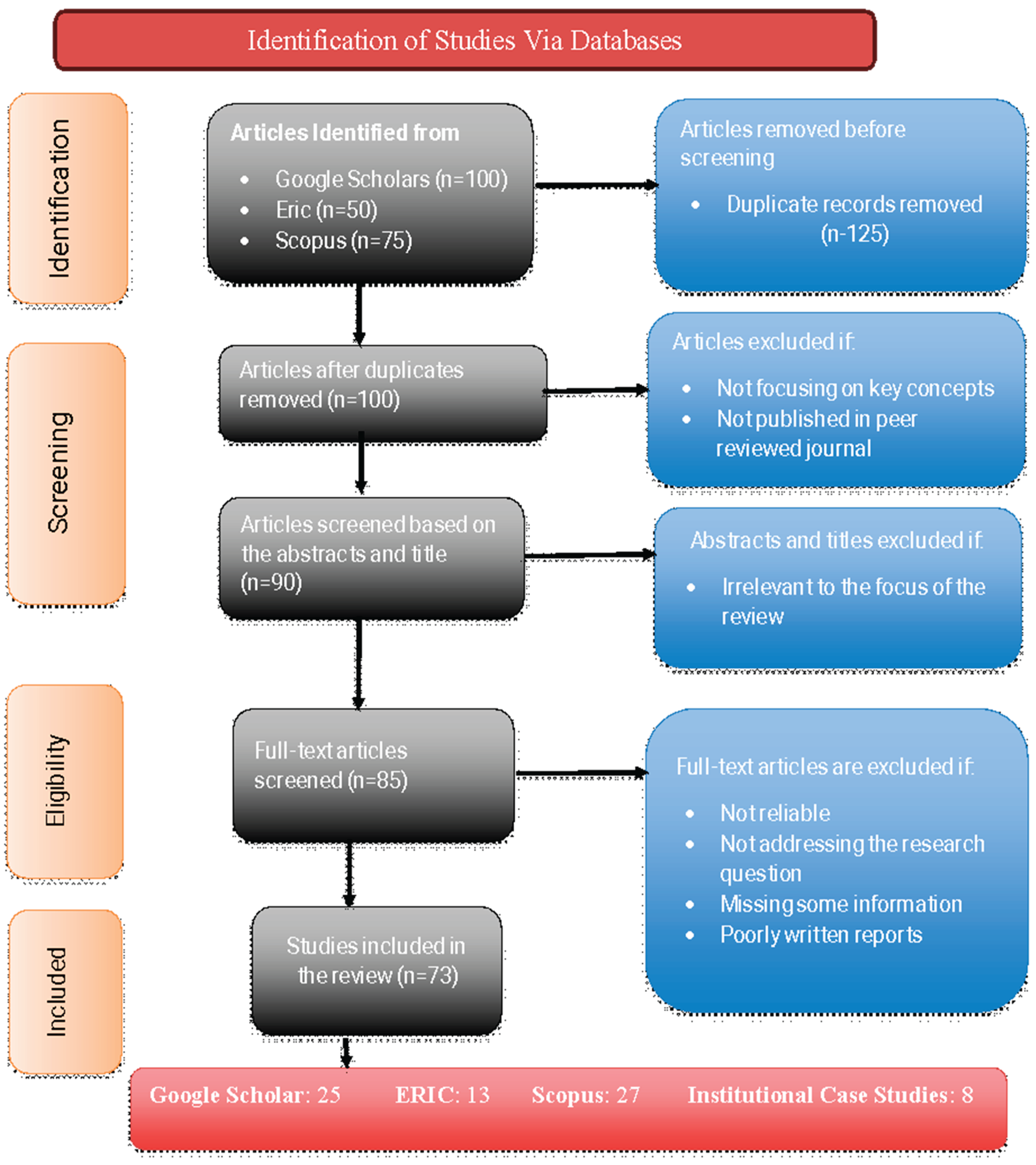
Table 3.
Assessment Rubric Example (Adapted From: Johnstone & Soares, 2014; Jancevska & Stankovska, 2025; Klein-Collins, 2012; Competency-Based Education Network, 2017).
Table 3.
Assessment Rubric Example (Adapted From: Johnstone & Soares, 2014; Jancevska & Stankovska, 2025; Klein-Collins, 2012; Competency-Based Education Network, 2017).
| Competency | Unsatisfactory (1) | Developing (2) | Proficient (3) | Advanced (4) |
| Problem Solving | Fails to identify key issues or develop solutions | Identifies some issues, but solutions are incomplete | Identifies key issues and develops appropriate solutions | Identifies complex issues and develops innovative solutions |
| Communication | Communication is unclear and ineffective | Communication is generally clear but may lack precision | Communication is clear, accurate, and appropriate | Communication is apparent, persuasive, and engaging |
| Collaboration | Does not contribute effectively to team efforts | Contributes minimally to team success | Contributes effectively to team goals | Provides exceptional leadership and facilitation |
| Research Skills | Fails to locate or evaluate relevant sources | Locates some sources, but the evaluation is limited | Locates and evaluates relevant sources effectively | Demonstrates sophisticated research and evaluation skills |
Table 5.
Technology Requirements Checklist (Adapted from: Sturgis & Casey, 2018; Western Governors University, 2023; Linnenluecke el. al, 2020; VerifyEd, 2025a; VerifyEd, 2025b, VerifyEd., 2025c).
Table 5.
Technology Requirements Checklist (Adapted from: Sturgis & Casey, 2018; Western Governors University, 2023; Linnenluecke el. al, 2020; VerifyEd, 2025a; VerifyEd, 2025b, VerifyEd., 2025c).
| Technology Component | Required Features | Implementation Priority |
| Learning Management System | Competency tracking, Flexible pacing, Portfolio management | High |
| Assessment Platform | Multiple assessment types, Automated scoring, Analytics | High |
| Student Information System | CBE-compatible records, Transcript management, Reporting | High |
| Digital Badging System | Micro-credential issuance, Verification, Stackability | Medium |
| Analytics Dashboard | Real-time reporting, Predictive analytics, Visualization | Medium |
| Mobile Applications | Student access, Progress tracking, Notifications | Low |
Disclaimer/Publisher’s Note: The statements, opinions and data contained in all publications are solely those of the individual author(s) and contributor(s) and not of MDPI and/or the editor(s). MDPI and/or the editor(s) disclaim responsibility for any injury to people or property resulting from any ideas, methods, instructions or products referred to in the content. |
© 2026 by the authors. Licensee MDPI, Basel, Switzerland. This article is an open access article distributed under the terms and conditions of the Creative Commons Attribution (CC BY) license (http://creativecommons.org/licenses/by/4.0/).
Copyright: This open access article is published under a Creative Commons CC BY 4.0 license, which permit the free download, distribution, and reuse, provided that the author and preprint are cited in any reuse.


