
Submitted:
08 February 2026
Posted:
11 February 2026
You are already at the latest version
Abstract
Intangible cultural heritage (ICH) is a cornerstone of national identity, driving economic development and social cohesion globally. Yangliuqing New Year Woodblock Paintings, a representative Chinese national ICH, face development bottlenecks due to insufficient internal innovation and ineffective external interventions, with existing research lacking holistic analysis of its historical evolution and contemporary challenges. This study aims to establish a dynamic framework for its innovative development. It first identifies cultural ecological factors via representative case analysis, then employs an integrated EWM-DEMATEL-ISM model to quantify these factors, determine their core components, and map their influence relationships. The results reveal that technical factors, cultural merit, and resource factors constitute the core cultural ecology of Yangliuqing New Year Paintings, with cultural merit as the deep-layer cultural gene, technical factors as the intermediate maintenance force, and resource factors as the surface-level interface. Three feasible innovative development paths are proposed, centered on activating cultural merit, upgrading technical factors, and optimizing resource allocation. This research provides a new analytical perspective for Yangliuqing New Year Paintings and offers insights for the sustainable development of other ICH categories by integrating historical context with future-oriented strategies.
Keywords:
intangible cultural heritage (ICH)
; yangliuqing new year woodblock paintings
; cultural ecology
; cultural gene
; EWM-DEMATEL-ISM model
; innovative inheritance
; cultural sustainability
1. Introduction
In an era where the spiritual lives of modern society's residents are universally impoverished, intangible cultural heritage (ICH) has been widely integrated with modern cultural industries to address the latter's weak spiritual core. By leveraging ICH to drive the development of modern cultural industries and harnessing the collective memory and shared values embedded within it, we help modern cultural industries build a bridge to humanity's profound spiritual civilization. Through means such as borrowing and transformation, the spiritual essence of ICH is integrated into modern cultural industries, enabling them to better meet consumer needs.
Danilo Giglitto et al.[1] explored ICH activities in immigrant and refugee communities and found that refugees in host countries can better integrate into host societies through such activities. Yang Zhang et al.[2] analyzed the potential and challenges of developing ICH tourism in Macao’s gaming-dominated tourism industry by examining the impact of economic benefits and cultural protection responsibilities on decision-making . Zhaoyu Chen,[3] meanwhile, provided a detailed discussion on how Macao’s ICH culture can be integrated with the tourism industry, analyzing its multi-stakeholder dynamics and collaborative mechanisms to further demonstrate the feasibility of integrating ICH with modern cultural industries . Claudia Melis et al.[4] highlighted the importance of ICH for national identity through an analysis of the process of establishing ICH discourse in Scotland, providing a logical justification for ICH protection while neglecting its dynamic inheritance . Similarly, Zheng Cui et al.[5] combined the current state of ICH research in China to argue that ICH can help strengthen national identity and cultural confidence, while also noting that current research overemphasizes the perspective of "engineering resilience" and lacks sufficient focus on "evolutionary resilience" .
The ideal outcome of integrating intangible cultural heritage (ICH) with modern cultural industries is, for ICH, to preserve cultural traditions while rejuvenating them in modern society, and for modern cultural industries, to obtain economic benefits while acquiring a strong spiritual core. However, due to the rapid development of society, ICH has fallen behind the times without external assistance and it is difficult to directly integrate it with modern cultural industries for development and utilization. It is necessary to first inherit and develop ICH so that it can regain vitality and then promote the development of modern cultural industries. Under the traditional perspective, the inheritance and development of ICH is difficult to balance between the "engineering resilience" and "evolutionary resilience". Therefore, this paper proposes a cultural ecology inheritance and development framework that combines ICH cultural genes, social environment, and natural environment. Within the cultural ecology framework, a comprehensive and in-depth analysis of "engineering resilience" can be conducted on ICH to identify the key cultural genes and core of cultural ecology for the inheritance and development of ICH. It can also achieve the resilient evolution of ICH in the current society through cultural genes and the core of cultural ecology within the framework. The following will demonstrate this framework through a cultural ecology analysis of Yangliuqing New Year Paintings, an ICH.
At present, China's national intangible cultural heritage is mainly divided into ten categories: folk literature, traditional music, traditional dance, traditional drama, traditional opera, traditional sports, traditional art, traditional craftsmanship, traditional medicine, and folklore.[6] To improve the reference value of the research, Yangliuqing New Year Paintings are selected as the research object. Yangliuqing New Year Paintings are among the first batch of national intangible cultural heritage in China. They are chosen as the research object because they involve many types of ICH. In the official classification of ICH, Yangliuqing New Year Paintings are regarded as traditional folk art. Moreover, Yangliuqing New Year Paintings are inseparable from the Chinese Spring Festival, and pasting New Year paintings belongs to folklore. As folk art, Yangliuqing New Year Paintings use woodblock overprinting and hand-painted color. Its woodblock overprinting technology is derived from traditional block printing technology, which belongs to the ICH of traditional craftsmanship. The hand-painted part of Yangliuqing New Year Paintings is all elaborate and heavily colored, with more than ten processes for facial painting alone, all of which are influenced by the orthodox court painting school. In addition, in terms of themes, Yangliuqing New Year Paintings encompass myths, novels, dramas, philosophy, and many other contents. The traditional Peking Opera stage is also often used as the creative object of Yangliuqing New Year Paintings, so it is also known as "Yangliuqing Opera New Year Paintings"[7]. Therefore, the research on the integration of Yangliuqing New Year Paintings with modern cultural industries can provide a reference for other ICH involved in Yangliuqing New Year Paintings.
2. Materials and Methods
The research framework for integrating Yangliuqing New Year Paintings with modern cultural industries primarily adopts the theory of cultural ecology, improved by coupling with cultural gene theory in cultural research.
Cultural ecology is a concept proposed by American cultural anthropologist Julian Steward in Theory of Culture Change: A Multilinear Evolutionary Methodology.[8] Cultural ecology builds on the concept of human ecology to distinguish it from social ecology[9]. It studies cultural changes involved in human adaptation to the environment, emphasizing that the interaction between culture and the environment is the driving force of cultural development, and proposes the concept of the cultural ecological core, which is considered the focal point of interaction between culture and the environment8. Cultural ecology links culture with the environment, arguing that specific cultural forms are the result of adaptation to specific environments, and that cultural adaptation to the environment is a key factor promoting cultural change. The core of cultural research lies in studying the relationships and processes of mutual influence between the environment and human culture[10].
Research on cultural ecology is divided into two schools: ecological research explaining cultural change and cultural research analogizing culture to an ecosystem. The former excels in analyzing the relationship between technological innovation-driven evolution and natural conditions in ecosystems, leaning toward a natural science approach to cultural innovation and evolution. The latter focuses on evaluating the complexity and integrity of culture itself, proposing cultural issues and ideal goals for cultural construction, and emphasizing a methodological perspective on culture as a multi-faceted whole. This study combines the methodological in-depth analysis of cultural change and cultural systems in cultural ecology, horizontally analyzing the engineering resilience of Yangliuqing New Year Paintings through cultural ecology and its core, and vertically analyzing their evolutionary resilience, thus proposing reliable ideal goals for their inheritance and development[11].
Cultural ecology analysis can identify the interaction between culture and the environment in cultural development, facilitating multi-angle analysis of the causes of historical and cultural formation and indicating paths for current cultural development[12]. Nan Yang et al[13]. discussed problems in ICH inheritance, its advantages, and proposed inheritance strategies using cultural ecology . Jonathan Dovey et al[14]. constructed a systematic approach for agglomeration of small and micro-enterprises and their influence in the creative economy through cultural ecology . Rowan Bailey[15] systematically described the current development of cultural ecology in the UK and pointed out its lack of depth in micro-level research. Cultural ecology theory argues that culture is created by humans to cope with the environment to meet needs, forming an effective interaction chain through engagement with various environments. Culture embodies environmental influences on humans and human imprints of environmental transformation. Therefore, cultural ecology suggests that different cultures generated in the same environment often share the same cultural ecology, leading to insufficient micro-level depth in studies of individual specific cultures. To address this, this study introduces the concept of cultural genes when using cultural ecology to analyze culture.
"Cultural genes" were first proposed by American anthropologists Alfred L. Kroeber and Clyde Kluckhohn, later defined by British biologist Richard Dawkins as "memes"—the basic units of transmission and simulation of human representative culture[16]. Cultural genes carry the spiritual content of culture through historical inheritance or development, promoting cultural dissemination, cohesion among similar cultures, and cultural growth. As dynamic elements in cultural development, cultural genes ensure the continuity and progress of culture, serving as its "dynamic resilience."
Cultural ecology theory emphasizes the relationship between culture and the environment, arguing that culture always adapts to the environment and that cultures emerging from the same environment share similarities. This approach is insufficient for studying individual cultures, easily neglecting their uniqueness. Cultural gene theory, by contrast, emphasizes analysis of cultural subjects in cultural development. Thus, when analyzing the cultural subjects of Yangliuqing New Year Paintings' cultural ecology, introducing cultural gene theory integrates its advantages in explaining the endogenous origins of cultural inheritance with the systematic perspective on cultural adaptation to external environments in cultural ecology. Establishing a coupling mechanism between the two within the cultural ecology framework(Figure 1)—from the endogenous logic of cultural subjects and the dimension of mutual ecological niche construction—complements the neglect of cultural agency in cultural ecology theory. Environmental changes affecting culture represent the development of cultural gene lineages, while cultural genes exist within cultural ecology. Cultural ecology considers the cultural ecological core as the most creative part of culture, crucial for both its status and operation, capable of effectively activating cultural ecology through this core[17]. Cultural genes, as the spiritual core of culture, are indirectly influential in cultural ecological operations due to their inherent invisibility. To identify the cultural ecological core and cultural genes of Yangliuqing New Year Paintings, this study summarizes cultural ecology and introduces algorithms to calculate importance, classify influence relationships, and quantify results.
Importance calculation requires a weight-determination model, while influence relationships necessitate factor analysis and network analysis models. This study employs the EWM-DEMATEL-ISM integrated model.
EWM (Entropy Weight Method) is an objective weighting method based on information entropy[18]. By calculating the information entropy of evaluation indicators, it measures their uncertainty or dispersion to determine weights in comprehensive evaluation, yielding absolute rank order under criteria layers. Smaller information entropy indicates greater variability and information content, thus higher weights[19], with entropy weight results being objective[20]. While EWM and AHP (Analytic Hierarchy Process) are both weighting models, coupling them ensures objectivity with some subjectivity, producing more persuasive comprehensive weights. However, this study's numerous indicators exceed AHP's RI maximum value, precluding AHP calculation due to inaccurate criteria layer division. To avoid pure objectivity in EWM, expert scoring criteria from AHP are used as raw data.
DEMATEL (Decision Making Trial and Evaluation Laboratory), proposed by Gabus and Fontela of Battelle Laboratory, uses graph theory and matrix tools for systematic analysis[21]. It explores logical relationships within systems to construct direct influence matrices, calculating each element's degree of influence and being influenced to determine cause degree and centrality, ultimately depicting causal links to help decision-makers grasp contradictions. While DEMATEL reveals relative influence degrees, it cannot accurately represent influence relationships.
ISM (Interpretative Structural Method) is a systematic analysis tool for complex interrelationships and hierarchies among elements[22]. It identifies constituent or influencing factors through investigation or technical means, then analyzes connections via matrix models to derive a multi-level hierarchical structure model[23]. ISM uses DEMATEL's comprehensive influence matrix for in-depth calculations, transforming DEMATEL's two-dimensional causal links into multi-level structures to visualize influence relationships[24].
Construction of an appropriate indicator framework
Within the cultural ecology framework, Yangliuqing New Year Paintings are designated as the target layer, their cultural ecology as the criteria layer (comprising culture, natural environment, and social environment), and an indicator layer is established for criteria layer content to construct a complete cultural ecology framework. Cultural genes and the cultural ecological core are both vital—cultural genes for the whole culture, and the core for normal operation of cultural factors. Thus, indicator layers are evaluated from two perspectives: 1) absolute importance to the overall cultural ecology of Yangliuqing New Year Paintings; 2) relative importance and influence relationships among indicators within the cultural ecology. Cultural genes and the cultural ecological core are both absolutely and relatively important, with the latter also crucial in relationships among all indicators.
For absolute importance, experts score indicators using the scale in Table 1 to establish judgment matrix Y, with weights calculated by EWM (Equations 1-4) as absolute importance results. For relative importance, expert scoring based on Table 1's relative influence scale establishes judgment matrix Z, from which DEMATEL calculates comprehensive influence matrices and relative results (Equations 5-10). ISM then processes DEMATEL's matrix K to derive indicator relationship networks (Equations 11-14). Cultural genes are identified by integrating absolute and relative importance results, while the cultural ecological core is determined by combining these with relationship networks, guiding inheritance and development of Yangliuqing New Year Paintings through these networks.
EWM① De-quantization and standardisation of the data.
where
Yijis the value of different governance models j under the ith indicator.
Xijis the normalised value.
EWM② Normalization of the indicator.
Qij-normalisation of the indicators (i=1.... .n,j=1... .m) .
EWM③ Determination of the information entropy of each indicator Ej.
Ej-normalisation entropy .
EWM④ Determination of the weight of each W by information entropy Ej:
K is the number of indicators, and k=0.3607 in this paper .
DEMATEL① Normalization of the direct impact matrix.
The is the maximum value of the row sum in the matrix Z
DEMATEL② Calculation the comprehensive impact matrix.
DEMATEL③ Calculate the influence degree.
The fiis the elements in the comprehensive impact matrix sum according to the row.
DEMATEL④ Calculation the influenced degree.
The eiis the elements in the comprehensive impact matrix sum according to the columns.
DEMATEL⑤ Calculation of the centrality degree.
Miis the sum of fiadd ei.
DEMATEL⑥ Calculation the cause degree.
Niis the difference of fisubtract ei.
ISM① Calculation the global impact matrix.
I is the identity matrix.
ISM② Calculation the reachable impact matrix.
The r is a given threshold value to set a influence relation with a small degree of influence, so as to facilitate the classification hierarchy. As r value directly affects the calculation of reachable impact matrix and the classification hierarchy, this study calculated different threshold values of the influence relation with a small degree of influence. directly affects the calculation of reachable impact matrix and the classification hierarchy, this study calculated different threshold values of the overall impact matrix respectively. The results corresponding to different threshold values are given in the later section.
ISM③ Classification hierarchy of the reachable impact matrix.
R(Si) is the row result of Siin the reachable impact matrix;
A(Si) is the column result of Siin the reachable impact matrix.
Normal Analysis of Yangliuqing New Year Paintings
Before calculating the indicators, it is necessary to analyse what indicators are included in the criterion layer under the target layer Yangliuqing New Year paintings, which requires analysing Yangliuqing New Year paintings from the cultural ecological framework, and extracting the cultural and ecological factors that appear in the formation and development of Yangliuqing New Year paintings to build up a complete indicator layer.
Regarding the formation process of Yangliuqing New Year Paintings, it is generally believed that New Year paintings can be traced back to the Door Gods of the Pre-Qin period. At that time, the Door Gods were Shentu and Yulei, mainly appearing on the doors of noble tombs, intended to guard the tombs and suppress evil spirits to pacify the souls[25]. This form was expanded in the Tang Dynasty. According to legend, Emperor Taizong of Tang had trouble sleeping for a period due to evil spirits invading his dreams. One day, a fierce-looking figure appeared in his nightmare and drove away the evil spirits. Emperor Taizong happily asked who the person was, and he replied that his name was Zhong Kui. Because of his ugly appearance, Zhong Kui had repeatedly passed the imperial examinations but was rejected due to his looks. At home, he could only go out on the street late at night when no one was around because his appearance scared people. He often encountered wandering ghosts and fought with them, gradually developing some skills. Sensing that the emperor was troubled by evil spirits, he specially came to relieve Emperor Taizong's worries.When Emperor Taizong woke up, he was overjoyed and ordered the painter Wu Daozi to depict Zhong Kui's image according to his dream. Zhong Kui was appointed as the Saint of Blessing and House Suppression, and his images were painted and awarded to princes and ministers to ward off evil spirits and protect their homes[26]. At that time, Emperor Taizong's generals Qin Shubao and Yuchi Gong heard about the emperor's troubles and volunteered to guard the door for him at night[27]. As capable generals of Emperor Taizong, Qin Shubao and Yuchi Gong had fought bravely on the battlefield. They not only excelled in martial arts but also possessed a powerful spiritual deterrence when glaring angrily. However, Qin Shubao and Yuchi Gong were not immediately made into New Year painting Door Gods. It was not until the Song Dynasty that they were produced and pasted as Door Gods in New Year paintings. Since the Song Dynasty, the audience for Door God New Year paintings shifted from the upper rulers to ordinary folk, and New Year paintings reached maturity[28].
The official emergence of Yangliuqing woodblock New Year paintings dates back to the mid-Ming Dynasty[29]. In terms of production, Yangliuqing New Year paintings combined woodblock printing with hand-painting. The types of New Year paintings produced included not only door god paintings but also mythological legends, doll paintings, lady paintings, novels, operas, and special themes. Yangliuqing New Year paintings served as wall decorations to adorn spaces, pray for blessings, set off festive atmospheres, and serve an educational function[30].
Construction of Yangliuqing New Year Paintings under Cultural Ecology Framework
These conclusions were drawn from previous studies on Yangliuqing New Year paintings. However, the discussions on their development process lack rigor, with narratives being fragmented, making it difficult to excavate the cultural ecological factors in their evolution. Therefore, within the analytical framework of cultural ecology coupled with cultural genes, this paper aims to identify cultural ecological factors and establish a cultural ecological hierarchy for Yangliuqing New Year paintings by analyzing the formation and development of their classic works.
Yangliuqing New Year paintings have a long history, with many classic works passed down through generations, such as Riddles Made Elegantly in Nuanxiangwu, Water Tank Fish, Kirin Delivering the Son, Lian Nian You Yu(means abundance year after year), and San Xing Zai Hu(means take fortune, luck and longevity to home). These classic works generally cover themes like myths, operas, and novels, as well as subjects such as figures, animals, and plants, all conveying auspicious meanings and possessing educational significance, making them representative of Yangliuqing New Year paintings. However, further selection of the most representative works for analysis is required.
Riddles Made Elegantly in Nuanxiangwu recreates a scene from Dream of the Red Chamber, where during the cold winter, under the suggestion of Grandmother Jia, Jia Baoyu and his sisters gather in Nuanxiangwu, Jia Xichun's residence, to create lantern riddles for fun. The painting depicts the magnificent interior of Nuanxiangwu with carved beams and colorful lanterns, showcasing the opulence of the Jia family and the festive atmosphere. In the close-up, Jia Baoyu leans on an armchair, discussing riddles with his sisters. By the desk, a woman holds a brush to write down riddles, while another sister lifts the curtain to join in. In the depth of the painting, Grandmother Jia, dressed in a red splendid outfit, sits in the inner room, looking kindly at her grandchildren.
Except for Jia Baoyu and Grandmother Jia, who have distinct identifying features, the women's clothing and hairstyles are quite similar, making it impossible to distinguish each character's prototype, requiring viewers to conjecture and analyze. The figures in the painting are rendered using Chinese painting techniques, with flat-line drawing and coloring, while the interior space employs a technique called "line method painting" in the Qing Dynasty, borrowing Western focal perspective to create a three-dimensional effect. Riddles Made Elegantly in Nuanxiangwu focuses on depicting indoor human activities, serving as a visualization of literary works. The visualization of Dream of the Red Chamber was not first appearance by Yangliuqing New Year paintings; it first appeared in the works of Jiao Bingzhen and Leng Mei, who combined Chinese meticulous figure painting with Western perspective. Yangliuqing New Year paintings continued this integration. When creating the figures in Riddles Made Elegantly in Nuanxiangwu, the traditional lady images in Yangliuqing New Year paintings were retained without obvious differentiation, mainly to give way to the work's educational and symbolic meanings. To maximize the festive atmosphere of the Spring Festival, the characterization was weakened, and the painting primarily conveys harmonious family life with clear generational order through the figures. In addition to educating viewers to respect elders, it also reinforces the ideal of a "scholarly family" rooted in traditional ethics[31](Figure 2).
"Kirin Delivering the Son" originated from the myths and legends of the Jin Dynasty, in which the Jin Dynasty's "Gleanings" recorded that a kirin spat out a jade book at the home of Confucius before he was born, symbolising the descent of the sage. Since the Tang Dynasty, the unicorn has gradually evolved into a beast of prey, and in the Qing Dynasty, it became a popular subject for New Year's paintings. In the Yangliuqing New Year Paintings, the unicorn is often depicted as a benevolent beast with antlers, dragon scales, and a cow's tail, carrying a child or a noblewoman on a pack, and the background is decorated with auspicious motifs such as streaming clouds, lotus blossoms, and Yuanbao, etc. The picture is mostly symmetrically laid out, with delicate lines and bright colours, and the combination of overprinting on wooden boards and hand-colouring implies that the unicorn descends and that wealth and prosperity are assured. It is often sent to newlyweds(Figure 3).
"San Xing Zai Hu" depicts the three stars of Fortune, Luck and Longevity, representing prayers for all five blessings, which are derived from "Shangshu - Hongfan", namely longevity, wealth and prosperity, well-being, good morals and a good end, which cover all aspects of life. Longevity" is the first of the five blessings, meaning a long and healthy life and the ability to enjoy the beauty of life. "A good end" means a successful life and leaving this world with no regrets, corresponding to the longevity star in the New Year's paintings(Figure 4); "Fortune" represents material prosperity. "Fortune" represents material prosperity and spiritual fulfilment, corresponding to the star of Luk in the Chinese New Year's paintings; "Kangning" emphasises peace of mind and body, and "Good Virtue" refers to high morality and helpfulness, corresponding to the star of Fortune in the Chinese New Year's paintings; "Three Stars in the Household" is people's ideal of the ideal of the "Three Stars in the Household", corresponding to the star of Fortune in the Chinese New Year's paintings. Three Stars in the Household" is the embodiment of people's pursuit and aspiration for an ideal life in the New Year's paintings.
Yangliuqing New Year's Paintings of "Nuan Xiang Wu Ya Zhi Chun Deng Mi", "Kirin Delivering the Son", "San Xing Zai Hu" are outstanding in moral meaning and edification, but all three works as the subject of the New Year's Paintings are widely used in other types of New Year's Paintings[32], "The Dream of Red Mansions" New Year's Paintings itself is the development of character paintings and illustrations borrowed from "The Dream of Red Mansions" as the New Year's Paintings in addition to Yangliuqing, the Taohuawu New Year Paintings of Suzhou, there is also the New Year's Paintings of the Dream of Red Mansions, because of its deep connection with Confucius, "Kirin Delivering the Son" is very popular in Yangjiabu New Year Paintings, Shandong Province, and so on, and "San Xing Zai Hu" is even more popular because of Taoist beliefs that have appeared in all parts of China, from northwestern Gansu to southeastern Guangzhou, and from southwestern Mianyang New Year Paintings to northeastern Tianjin, there are special expressions of the "San Xing Zai Hu" in the New Year Paintings, so that all the three works don't have the uniqueness of the Yangliuqing New Year Paintings, and they can't represent the Yangliuqing New Year Paintings well.
"Water Tank Fish" is the original subject of Yangliuqing New Year's Paintings, the content of the New Year's Paintings is only a big carp, slightly richer will be added some lotus, but will not add too much content, very simple, seems to be incompatible with the Yangliuqing New Year's Paintings of paintings to be in the theatre, a single look at the "Water Tank Fish" of the New Year's Paintings can only be known as the fish, and only combined with the use of the conditions of the jar can be complete. In the era of backward water conditions, households in Yangliuqing would use tanks to store water, but in the Yellow River system the river water is turbid, and after playing the water need to add stone vanadium stirring to purify the water, and so on, until the reflection of the fish's shadow in the tank shows that the water has been clear enough to drink[33]. Benefiting from the geographical advantages of the Ziya River, the South Canal and the Daqing River, the residents of Yangliuqing make their living from water, and agriculture and fishery together constitute the recipes of Yangliuqing families, so the people of Yangliuqing not only hope for food abundance, but also look forward to the abundance of fish in the water, borrowing the fish and the Yu homophonic sound, and creating the carp New Year's paintings, which are pasted on the top of the tank, and the paintings are reflected in the tank, and every time when scooping up the water the water waves generated by the carp in the paintings are driven to wiggle, like the carp in the river swimming in the river. Each time the water wave generated by scooping up water will drive the carp in the painting to sway, resembling the figure of carp swimming in the river. Adults use the "Fish in a water Tank" to pray for their wishes, while small children initially build up their feelings for water through the "Fish in a Tank"[34](Figure 5).
In terms of innovation, symbolism and edification, ""Water Tank Fish"" can represent Yangliuqing New Year Paintings, but ""Water Tank Fish"" belongs to Yangliuqing New Year Paintings' "rough work" because the audience is the common people, and in order to reduce the selling price, the production cost is compressed, not only the paper and pigment are limited, but also the woodblock printing and streamlining of the drawing process are also increased in the manpower, which belongs to the "rough work" of Yangliuqing New Year Paintings. It is "rough work", with rough lines, bright colour, lack of delicate brushwork rendering, and fewer levels of artistic expression. Coupled with the popularity of tap water in modern society, the water tank has become history, and it is difficult to reproduce the unique visual experience of the "Tank Fish" for lack of a carrier, and therefore it is not suitable to represent Yangliuqing New Year Paintings.
"Lian Nian You Yu" as the famous Yangliuqing New Year Painting, popular from Yangliuqing to the whole country, the content of the New Year Painting is mainly a doll holding a plump fish, holding a lotus flower in his hand, from the theme "Lian Nian You Yu" covers the main themes of Yangliuqing New Year Painting and "Lian Nian You Yu" can be reduced to artificial hand-painted as rough work for sale or refined carving as fine work for appreciation, in terms of artistic expression, "Lian Nian You Yu" is rich in layers, not only conveying the wish for a rich life, but also implying the interpretation of filial piety. In terms of artistic expression, "Lian Nian You Yu" is rich in layers, not only conveying the wish for a rich life, but also containing the interpretation of filial piety. Although the content of the picture is not much, and there are only two parts of the main body of the picture, each part is worth pondering by the viewer, and the spirit of the conveyance will become more profound with the depth of the viewer's study[35](Figure 6).
"Lian Nian You Yu" presents a doll holding a big fish, in fact, this image is inspired by the "Jin Book" "Twenty-four filial piety" in the Wang Xiang lying on the ice to catch carp (a story from the Twenty-four Filial Exemplars, a classic Confucian text, and carp means abundance in homophonic ), works with a strong filial piety, and then in-depth observation of the New Year's Eve paintings, the doll left and right headdresses are different, the species of the big fish is difficult to distinguish, but only through the fish, the doll, the lotus flower to receive the auspiciousness! Joyfulness.
Although the theme of "Lian Nian You Yu" is not original, the content of the theme has been highly modified. In the original "Twenty-four Filial Piety", Wang Xiang is a male, and he is lying on the ice to ask for carp, and winter is not the season for growing lotus flowers, while "Lotus Year" in Yangliuqing New Year Paintings, the dolls in the paintings are half-male, half-female, and the big fishes in the paintings are not carp and not crucian carp. For the purpose of auspicious symbolism, lotus flowers are added to the picture to complete the visual image of "Lian Nian"(lotus and year), based on which it is believed that "Lotus Year with Surplus" can represent Yangliuqing New Year Paintings.
Case study validation of Cultural Ecology Framework in Yangliuqing New Year Paintings
In "Lian Nian You Yu" of the cultural-ecological framework, a series of developments from Wang Xiang's prototype to the final heirloom work are the results of the influence of Yangliuqing culture and environment. As a social resource, the archetypal story was chosen by Yangliuqing culture to be processed and created as a New Year's picture, because the archetypal story is similar to Yangliuqing's natural climate and geography, and the values embedded in the story are in line with Yangliuqing's social customs and ideological propaganda, especially because the craftsmen who initially made the New Year's picture fled from the war to Yangliuqing, so their nostalgia for the loss of their family members and their yearning to abide by the principle of filial piety are all contained in the story, and through the creation of the story, they express their hope for peace and stability. The nostalgia for lost family members and the desire to observe filial piety are all embedded in the story, and the desire for peace is expressed through the creation of the story, and then successive generations of craftsmen have improved the prototype of the story in accordance with the people's aesthetics and living habits, and finally presented "Lian Nian You Yu" through the Yangliuqing New Year's paintings, engraving technology and other technical factors.
The prototype of the story, Wang Xiang, is male. The local people in Yangliuqing take pride in the prosperity of their descendants and do not emphasize the idea of valuing men over women, they think that it is good to have both male and female descendants (the Chinese word ”hao” means good, was compromised by the women and men), so the craftsmen of the yearly paintings combined the dolls in "Lian Nian You Yu" with the young children's headdresses in which the girl is a bun and the boy is a pigtail, and the dolls' headdresses were made with one side of buns and the other side of pigtail, which is good for the purpose of "women" and the "sons", the prototype of the story, the fish is the carp, and the artisan of the yearly paintings The fish in the story is a carp, but the craftsmen of the New Year paintings thought that the carp could not satisfy the people's exuberant aesthetic demand, and combined with the rich fishery resources of Yangliuqing, the Yangliuqing New Year Paintings created a kind of fish that did not exist in the reality: koi carp's body is covered with big scales, crucian carp's head with eyes protruding out of the gills, catfish with slender whiskers, goldfish with graceful tails, the craftsmen of the New Year Paintings chose the parts of the various kinds of fish they could get access to, and they got their inspirations from the actions of the carps that jumped out of the water to chew on the lotus flowers. Piecing together a complete picture improves the perception of the New Year's paintings to meet the aesthetic requirements of the viewer, the perception is improved after the expansion of the audience, different economic conditions of the audience of the New Year's paintings have different requirements, so the "Lotus Years of Prosperity" will be different after the printing of the line drawings, continue to overlay the printing supplemented by the hand-painted as a rough work sold at a low price, the colour of all the hand-painted is the price of the higher fine work.
Drawing on the connotation of the story of the crouching ice to seek carp, Yangliuqing culture developed a unique image of the New Year's painting under the influence of the environment, and now the relationship between "Lotus Years of Prosperity" and the crouching ice to seek carp has been weakened, especially when the craftsmen inscribed the words "Lotus Years of Prosperity" on the New Year's paintings, and each word can be found to correspond with each other on the paintings, with lotus corresponding to the lotus flower, year corresponding to the catfish's whiskers, there corresponding to the young, and the remaining corresponding to the fish. The young child holding the fish and the lotus flower conveys the hope for a prosperous year, and the young child of both sexes represents the wish for a prosperous heir. After the production process of "Lian Nian You Yu" is fixed, it represents the perfect performance of the New Year's painting "Lian Nian You Yu", at this time, the influence of Yangliuqing culture and the environment reaches the optimal level, and under the influence of their mutual influence, the cultural symbols and symbols with the characteristics of the environment, the cultural meanings and connotations with the characteristics of Yangliuqing New Year's paintings, as well as the cultural merit and cultural brands with the characteristics of the two have emerged. brand. Each object in a New Year's painting develops into a cultural symbol of Yangliuqing New Year's paintings, and the New Year's paintings with auspicious symbols make the individual cultural symbols have the cultural symbols of good luck, expectation, etc.
Because of these cultural symbols, these cultural symbols will be borrowed and used in the creation of new New Year's paintings, which increase the cultural symbols of new New Year's paintings and make the cultural symbols more diversified, and the richness in cultural symbols makes the New Year's paintings have the function of edification and possess cultural merit, and some classic New Year's paintings have cultural connotations, cultural merit, and cultural brands. The richness of cultural symbols and meanings makes the year paintings have a corrective effect and a cultural merit, and some classic cultural symbols and year paintings are bound with Yangliuqing year paintings and become the cultural symbols of Yangliuqing year paintings, and Yangliuqing year paintings have gradually developed and matured into a cultural brand.
All the cultural ecological factors of Yangliuqing New Year Paintings within the framework of cultural ecological theory were obtained through the analysis of "Lian Nian You Yu", were shown on Table 2. The AHP-entropy weight model was used to calculate the importance rankings of all the factors to Yangliuqing New Year Paintings, and then the DEMATEL was used to calculate the importance rankings of the factors to each other, and the ISM model was used to present the relationship rankings of the cultural ecological factors, and combined with the AHP-entropy weight model and the AHP-entropy weight model to find out the cultural ecological core.
Firstly, experts were invited to score the absolute importance of all the factors in Yangliuqing New Year paintings and the relative importance of each other within all the factors respectively, and according to the scoring rules in Table 2 to get the scoring matrix Y for absolute importance and matrix Z for relative importance.
The scoring matrix was calculated by EWM. The scoring table was calculated by DEMATEL, through the DEMATEL calculation scoring table to get the integrated impact matrix T. The relationship diagram showing the interconnection between factors was presented through the matrix calculated by ISM.
3. Results
This section may be divided by subheadings. It should provide a concise and precise description of the experimental results, their interpretation, as well as the experimental conclusions that can be drawn.
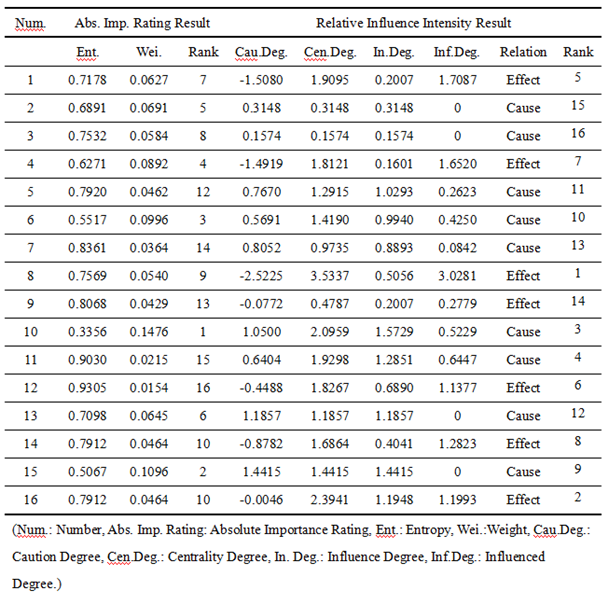
The entropy weight of the scoring matrix is calculated in Table 2. The DEMATEL calculation is applied to the scoring table, and the centrality and causality degrees constitute the Figure 7 and Figure 8. The calculation results are obtained in Table 3.
The impact of on the results of ISM calculation is shown in Figure 9. From the figure, it can be seen that when takes the value of 0.1, the relationship of each factor has a certain degree of confidence, so takes 0.1, at this time, ism calculates the reachable matrix K, and through the reachable matrix to get the ism model of the relationship between the cultural and ecological factors of the Yangliuqing New Year paintings is shown in Figure 9.
.
Through entropy weight calculation, it is found that the most important cultural ecological factors for Yangliuqing New Year Paintings are 10 technical factors, 15 cultural merit, 6 resource factors, 4 aesthetic level, 2 cultural brand, in the DEMATEL calculation results, it is found that for the cultural ecology of Yangliuqing New Year Paintings, the importance of each cultural ecological factor is 8 cultural symbols, 16 living habits, 10 technical factors, 11 cultural Symbol, 1 peace degree, combined with DEMATEL attributes of each factor, 8, 16, 1 for the result factor, 10, 11 for the cause factor, in Yangliuqing New Year Paintings, the result factor is affected by the cause factor, after the change of the cause factor, the affected result factor will change accordingly, and if the result factor is changed, the cause factor will not change accordingly and still need to be artificially altered. Comparing with the corresponding change of the result factor, the artificial change is not only more troublesome, but also has a lower success rate, so we need to select the important cause factors in the DEMATEL results, and rank them according to the degree of importance: 12 natural climate as the result factor, 4 aesthetic level as the result factor, 14 consciousness system as the result factor, 15 cultural merit as the cause factor, 6 resource factor as the cause factor, and 5 cultural symbols as the cause factor. DEMATEL calculates that the important factors for the cultural ecology of Yangliuqing New Year Paintings are 10 technological factors, 11 cultural symbols, 15 cultural merit, 6 resource factors, and 5 cultural symbols, and there are three overlaps with the entropy algorithm results, 10 technological factors, 15 cultural merit, and 6 resource factors, which means that no matter for the cultural ecology of Yangliuqing New Year Paintings or for the elements within the cultural ecology, the technological factors, cultural merit, and resource factors are the result factors. This shows that no matter for the cultural ecology of Yangliuqing New Year Paintings or the elements within the cultural ecology, the technical factors, cultural merit and resource factors are quite important, so the technical factors, cultural merit and resource factors are regarded as the core factors of the cultural ecology of Yangliuqing New Year Paintings.
It can be seen from Figure 10. the drawing of the relationship between the cultural ecological factors of Yangliuqing New Year Paintings based on ISM's reachability matrix that the cultural ecological factors of Yangliuqing New Year Paintings are divided into three dimensions, in which the cultural merit is at the deep dimension (Level5), which is the essential property of the system, with long-term stability, and can be treated as the cultural genes, and the technological factors are at the intermediate dimension (Level3, Level4), which manages the organisation of the Surface phenomena also reflect deep logic, resource factors are at the surface dimension (Level1, Level2), and the surface level is an easy-to-observe phenomenon, driven by the middle and deep levels.
4. Discussion
Authors should discuss the results and how they can be interpreted from the perspective of previous studies and of the working hypotheses. The findings and their implications should be discussed in the broadest context possible. Future research directions may also be highlighted.Cultural merit are in the deep dimension of the relationship network, mainly influencing the intermediate dimension, and the intermediate dimension factors affected by cultural merit are all high weighted factors, these factors affected by cultural merit carry the influence of cultural merit to contact with other factors, and other factors are indirectly affected by cultural merit, so cultural merit are the driving force of the whole cultural ecosystem; technological factors in the intermediate dimension are directly affected by cultural merit, and they have less superficial influence than other factors in the intermediate dimension, so technological factors are the driving force of the cultural ecosystem. On the one hand, the technology factor is directly affected by cultural merit, on the other hand, it is less affected by the surface dimension than other factors in the middle layer, and it mainly interacts with other factors in the intermediate dimension, which are important factors for the functioning of the cultural ecosystem, so the technology factor is the maintenance force for the functioning of the cultural ecosystem; the resource factor is located in the surface dimension, and it affects the other factors in the same dimension, and also has influence on many factors in the intermediate dimension, and is the most direct force for the cultural ecosystem. Resource factors are at the surface level, interacting with other factors at the same dimension, and with many factors at the intermediate dimension, and are the most intuitive and concrete manifestation of the cultural ecosystem.
In the theoretical framework constructed in this study, the cultural ecology developed by Yangliuqing New Year Paintings throughout history encompasses multiple aspects of culture, society, and nature, with a clear hierarchical structure. The core cultural ecological factors of Yangliuqing New Year Paintings, ranked from deepest to shallowest in their level of existence, are cultural merit—technical factors—resource factors.
Deep-layer cultural merit provide the entire cultural ecology with an abstract spiritual orientation. The merit serve as the cultural genes that have continuously extended throughout the development of Yangliuqing New Year Paintings, influencing other factors without being reciprocally affected.
Middle-layer technical factors, particularly technical elements, develop concrete methodologies according to this spiritual orientation and are manifested through surface-level expressions. Technical factors are influenced by deep-layer cultural merit while maintaining the operation of the entire ecology. Upgrading technical factors is equivalent to safeguarding the entire cultural ecology.
Surface-layer resource factors are the most easily alterable. However, changes in resource factors directly affect the user experience of Yangliuqing New Year Paintings: they can either attract consumers to deeper cultural understanding or trigger negative emotions toward the culture.
This hierarchical structure illustrates that cultural merit form the immutable spiritual core, technical factors act as the dynamic bridge for ecological operation, and resource factors serve as the flexible interface for engaging with the public. Together, they constitute the multidimensional cultural ecological system of Yangliuqing New Year Paintings.
Dimension 1: Activating the Cultural Merit of Yangliuqing New Year Paintings
Based on this, the long-term goal of Yangliuqing New Year Paintings combined with modern culture industry is to activate the core of culture and ecology through cultural genes, fully activate the cultural merit of Yangliuqing New Year Paintings, and drive the change of technical factors through the activation of cultural merit, which will in turn affect the resource factors; the cultural merit of Yangliuqing New Year Paintings is expressed in the practical value of decorations, and the spiritual value of allegory and edification, and the New Year Paintings used as the decorations of the buildings are no longer popular nowadays, and the kernel of spiritual value conveyed in other objects is still necessary. Nowadays, it is no longer popular to use the paintings as building decorations, but the decorations of other objects are still necessary, and the kernel of spiritual value conveyed in the paintings is still in line with the times, only the way of expression is outdated. By expressing the traditional cultural merit in a contemporary way, it affects the middle layer, especially the technological factors to be renewed for the times, and then it further affects the surface to complete the new life of the Yangliuqing New Year Paintings in the modern society.
Dimension 2: Activating the Cultural Ecology Core of Yangliuqing New Year Paintings
The short-term goal is to activate the core of cultural ecology, and express the cultural gene through the core of cultural ecology. In the cultural ecology of Yangliuqing New Year Paintings, besides the cultural gene, the technical factors of the core of cultural ecology also have an important position, and through the activation of the technical factors, the middle layer and the surface layer can also be influenced, and the technical factors of Yangliuqing New Year Paintings are expressed as "hooking, carving, printing, painting, and mounting", which is the creation path of Yangliuqing New Year Paintings. The technical factors of Yangliuqing New Year Paintings are "hooking, engraving, printing, painting and mounting", which is the creation path of Yangliuqing New Year Paintings, and the iterative progress of technical factors can also make Yangliuqing New Year Paintings to achieve a certain degree of rejuvenation, and thanks to the direct relationship with the superficial factors, the revitalisation technology can make traditional Yangliuqing New Year Paintings intuitively reduce the differences brought about by the times, but because it cannot affect the deeper level, the revitalised technical factors are still the expression of traditional However, because the deeper layers cannot be affected, the technical factors of revitalisation are still expressions of traditional cultural merit, and the spiritual values conveyed will be weakened although the sense of view is different.
Dimension 3: Activating the Cultural Ecology Factors of Yangliuqing New Year Paintings
Besides, in the core of cultural ecology, under the premise of not changing the cultural merit and technical factors, the activation of resource factors will also bring about the change of the whole Yangliuqing cultural ecology, the resource factors are in the surface layer, which are related to the other factors in the surface layer as well as the intermediate layer, but the surface layer is governed by the management of the intermediate dimension, and it is very difficult to make the intermediate layer make the right change through the activation of the resource factors, and it is necessary to avoid the phenomenon of mere stacking of resources in modern cultural industry, when promoting the combination of Yangliuqing New Year paintings. When promoting the combination of Yangliuqing New Year Paintings with modern culture industry, it is necessary to avoid the phenomenon of simple stacking of resources in modern culture industry, too many and too many resources will not only not bring the change of culture ecology, but even prevent the cultural ecology of traditional Yangliuqing New Year Paintings from running, and the weird situation of rigid tradition juxtaposition modernity will appear.
Author Contributions
Conceptualization, W.L. and Q.W.; methodology, Q.W.; software, Q.W.; validation, W.L. and Q.W.; formal analysis, Q.W.; investigation, Q.W.; resources, W.L.; data curation, W.L.; writing—original draft preparation, Q.W.; writing—review and editing, W.L.; visualization, Q.W.; supervision, W.L.; project administration, W.L.; funding acquisition, W.L. All authors have read and agreed to the published version of the manuscript.
Funding
This research received no external funding.
Informed Consent Statement
Informed consent was obtained from all subjects involved in the study.
Data Availability Statement
All data associated with this study are available from the corresponding author without undue reservation.
Conflicts of Interest
The authors declare no conflicts of interest.
Abbreviations
| MDPI | Multidisciplinary Digital Publishing Institute |
| DOAJ | Directory of open access journals |
| TLA | Three letter acronym |
| LD | Linear dichroism |
References
- Giglitto, D.; Ciolfi, L.; Bosswick, W. Building a bridge: opportunities and challenges for intangible cultural heritage at the intersection of institutions, civic society, and migrant communities. Int. J. Heritage Stud. 2021, 28, 74–91. [Google Scholar] [CrossRef]
- Hsu, F.C.; Zhang, S.; Zhang, Y.; Lee, T.J. Decision-making behavior in the sustainable development of intangible cultural heritage tourism. Int. J. Tour. Res. 2022, 24, 800–812. [Google Scholar] [CrossRef]
- Chen, Z. Visualizing experiencescape – from the art of intangible cultural heritage. Curr. Issues Tour. 2021, 25, 559–578. [Google Scholar] [CrossRef]
- Melis, C.; Chambers, D. The construction of intangible cultural heritage: A Foucauldian critique. Ann. Tour. Res. 2021, 89. [Google Scholar] [CrossRef]
- Zhang, Z.; Cui, Z.; Fan, T.; Ruan, S.; Wu, J. Spatial distribution of intangible cultural heritage resources in China and its influencing factors. Sci. Rep. 2024, 14, 1–14. [Google Scholar] [CrossRef] [PubMed]
- China National Intangible Cultural Heritage Website. Available online: https://www.ihchina.cn/project#target1.
- Baicheng, Qi; Hongna, Gao. A Study on the Evolution of the Images of Yangliuqing New Year Pictures Depicting Operatic Scenes in the Qing Dynasty[J]. Journal of Chinese Traditional Opera 2025, 46(01), 37–47. [Google Scholar]
- Opler, M.E.; Steward, J.H. Theory of Culture Change: The Methodology of Multilinear Evolution. Am. Sociol. Rev. 1956, 21, 387. [Google Scholar] [CrossRef]
- Bingzhong, Gao. The Concept and Application of Cultural Ecology [J]. Journal of Tsinghua University (Philosophy and Social Sciences Edition) 2024, 39(02), 168-174 + 238-239. [Google Scholar]
- Fei, Yi. An Analysis of the Philosophical Basis of Traditional Chinese Creation Thoughts [J]. Forum on Chinese Culture 2018, (01), 46–50. [Google Scholar]
- Qingxiang, Zhu. Research on the Sustainable Development Path of Traditional Handicraft Intangible Cultural Heritage Based on Cultural Ecology [J]. Beijing Cultural Creativity 2022, (05), 24–31. [Google Scholar]
- Jianjun, Tang. Cultural Ecology: A New Perspective for the Study of Kite Culture [J]. Folklore Studies 2007, (04), 265–272. [Google Scholar]
- Yang, N.; Zang, X.; Chen, C. Inheritance Patterns under Cultural Ecology Theory for the Sustainable Development of Traditional Handicrafts. Sustainability 2022, 14, 14719. [Google Scholar] [CrossRef]
- Dovey, J.; Moreton, S.; Sparke, S.; Sharpe, B. The practice of cultural ecology: network connectivity in the creative economy. Cult. Trends 2016, 25, 87–103. [Google Scholar] [CrossRef]
- Bailey, R. Cultural Ecology. In The Encyclopedia of Human Geography; Springer Nature Switzerland: Cham, 2024; pp. 1–10. [Google Scholar]
- Interpreting Genes: Information from DNA[M]; POLLACK, ROBERT; Yu-ling, YANG, Translators; China Youth Publishing House: Beijing, 2000; pp. 68–72. [Google Scholar]
- Jiayu, Wang; Mingming, Su; Haohan, Dou. Identification of the Dilemmas and Inheritance and Development of Handicraft Intangible Cultural Heritage from the Perspective of Cultural Ecology - Based on the Perspective of Practitioners [J]. Tourism Science 1–12.
- Chen, P. Effects of the entropy weight on TOPSIS. Expert Syst. Appl. 2021, 168. [Google Scholar] [CrossRef]
- Huiqiang, Cui; Wenxin, Yi. Safety Assessment of the Survey Ship Sailing in Rough Seas Based on Entropy Weight-TOPSIS [J]. Marine Technology 2023, (06), 14–18. [Google Scholar]
- Ning, Zhou; Zhongzhou, Fan; Yi, Zhao. Location Selection of Pilot Embarkation Waters under Rough Sea Conditions Based on the Entropy Weight-TOPSIS Model [J]. Journal of Shanghai Maritime University 2020, 41(1), 46–50. [Google Scholar]
- GABUS, A F E. World problems, an invitation to further thought within the framework of DEMATEL[J]; Battelle Geneva Research Center: Geneva, Switzerland, 1972; pp. 1–8. [Google Scholar]
- Meher, P.; Mishra, R.K. Assessing the influence of factors affecting stock market: an ISM approach. Qual. Res. Financial Mark. 2025, 18, 332–355. [Google Scholar] [CrossRef]
- Mkedder, N.; Das, M. Metaverse integration challenges: An in-depth ISM and MICMAC analysis. J. Retail. Consum. Serv. 2023, 77. [Google Scholar] [CrossRef]
- Huo, T.; Cong, X.; Cheng, C.; Cai, W.; Zuo, J. What is the driving mechanism for the carbon emissions in the building sector? An integrated DEMATEL-ISM model. Energy 2023, 274. [Google Scholar] [CrossRef]
- Hui, Wang. Ancient Chinese New Year Pictures [M]; China Commercial Press: Beijing, 2015; pp. 78–114. [Google Scholar]
- Xu, J.; Chaiyakut, P.; Panthupakorn, P. The Value and Significance of Tianjin Yangliuqing Woodblock New Year Paintings for Designing Cultural and Creative Products. วารสาร มนุษยศาสตร์ และ สังคมศาสตร์ มหาวิทยาลัย ราชภัฏ บ้าน สมเด็จเจ้าพระยา 2024, 18(2), 313–339. [Google Scholar]
- Hongli, Tan. New Year Pictures [M]; China Social Press: Beijing, 2010; pp. 87–96. [Google Scholar]
- Jia, Z.; China, N.A.M.O. The study of Yangliuqing New Year Picture. Art Orient 2019, 8, 7–25. [Google Scholar] [CrossRef]
- Yafeng, Huang. New Year Pictures [M]; China Federation of Literary and Art Circles Publishing House: Beijing, 2011; pp. 80–86. [Google Scholar]
- Jicai, Feng. A Brief Account of the History of Tianjin New Year Pictures [J]. Forum on Folk Culture 2009, (01), 4–8. [Google Scholar]
- Hao, Wu. Between Refinement and Vulgarity: The Visual Rhetoric of Lin Daiyu's Image in the Illustrations of A Dream of Red Mansions [J]. Studies on A Dream of Red Mansions 2024, (03), 229–248. [Google Scholar]
- Min, Feng. Regional Characteristics of Chinese Woodblock New Year Pictures and Their Comparative Study [J]. Journal of Zhengzhou University (Philosophy and Social Sciences Edition) 2005, (05), 170–173. [Google Scholar]
- Ping, Guo. The Continuation and Restoration of Traditions - Interview with Huo Qingyou, the Inheritor of Yangliuqing New Year Pictures [J]. National Arts 2015, (04), 74–80. [Google Scholar]
- Fa, Zhang. The Beauty of Chinese Ancient Woodblock Prints and New Year Pictures: Nature, Positioning and the Evolution of Types[J]. Academic Research 2025, (03), 151–161+178+2. [Google Scholar]
- Zheng, S.; Hui, X. Study on the Analysis and Disassembly Method of Traditional Folk Patterns in Tianjin: A Case Study of Yangliuqing New Year Painting*. 4th International Conference on Culture, Education and Economic Development of Modern Society (ICCESE; LOCATION OF CONFERENCE, RussiaDATE OF CONFERENCE, 2020; pp. 291–296. [Google Scholar]
Figure 1.
Framework of four-step approach to inherit and develop Yangliuqing New Year Paintings.
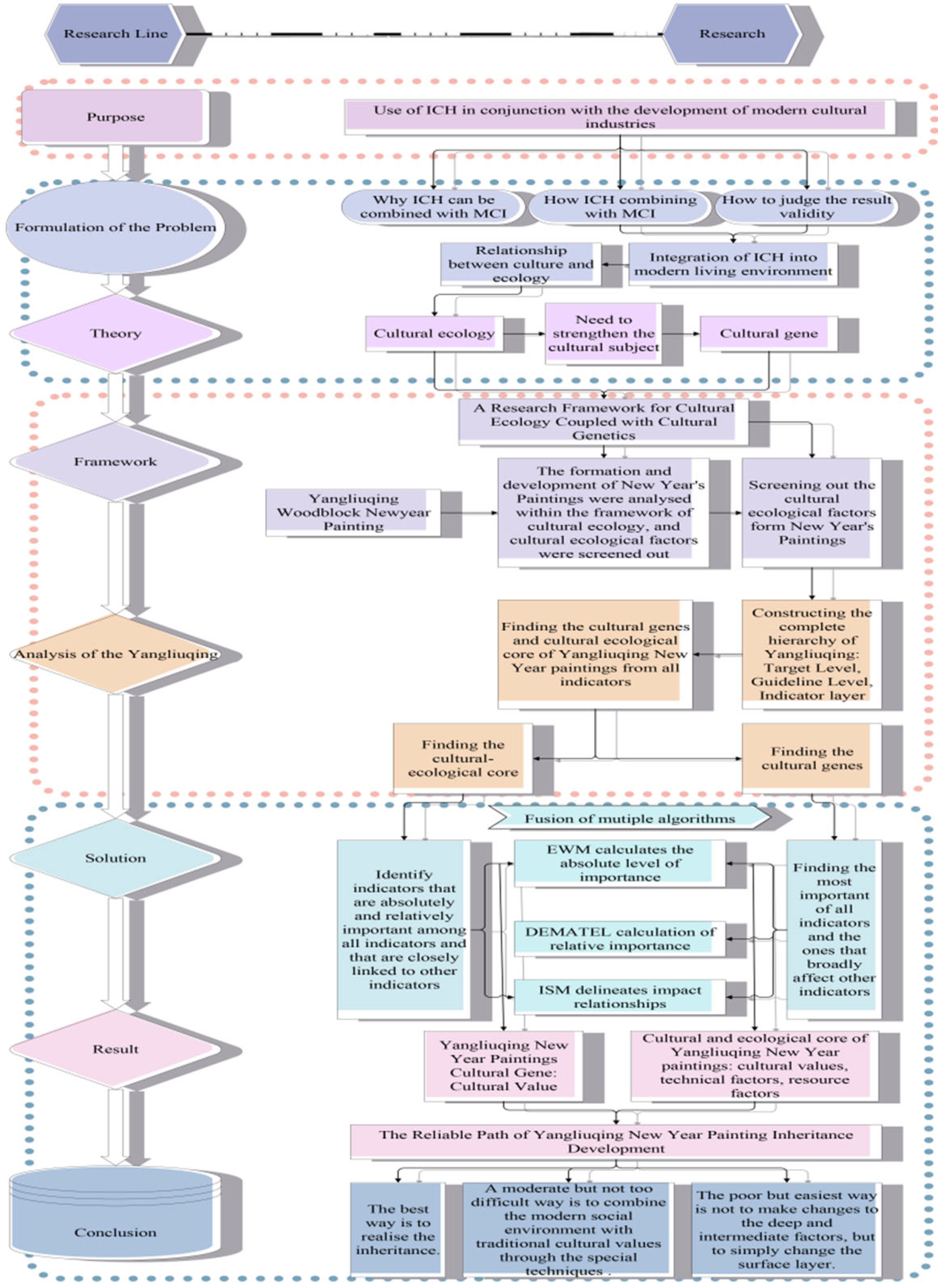
Figure 2.
New Year Paintings about Dream of Red Chamber.
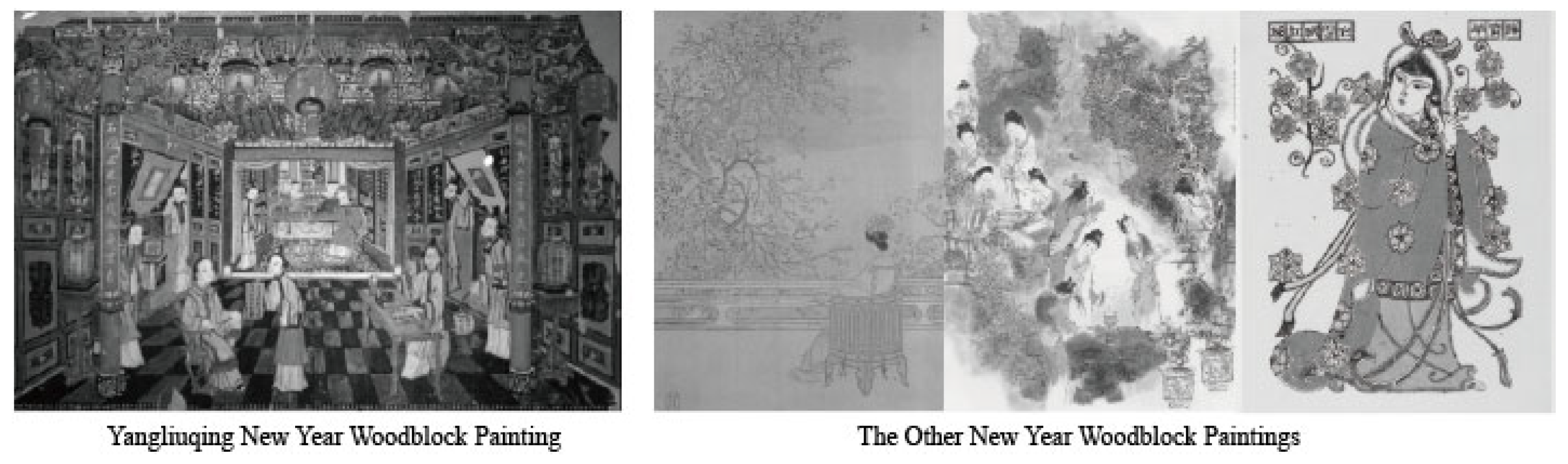
Figure 3.
New Year Paintings about Kirin Delivering the sons.
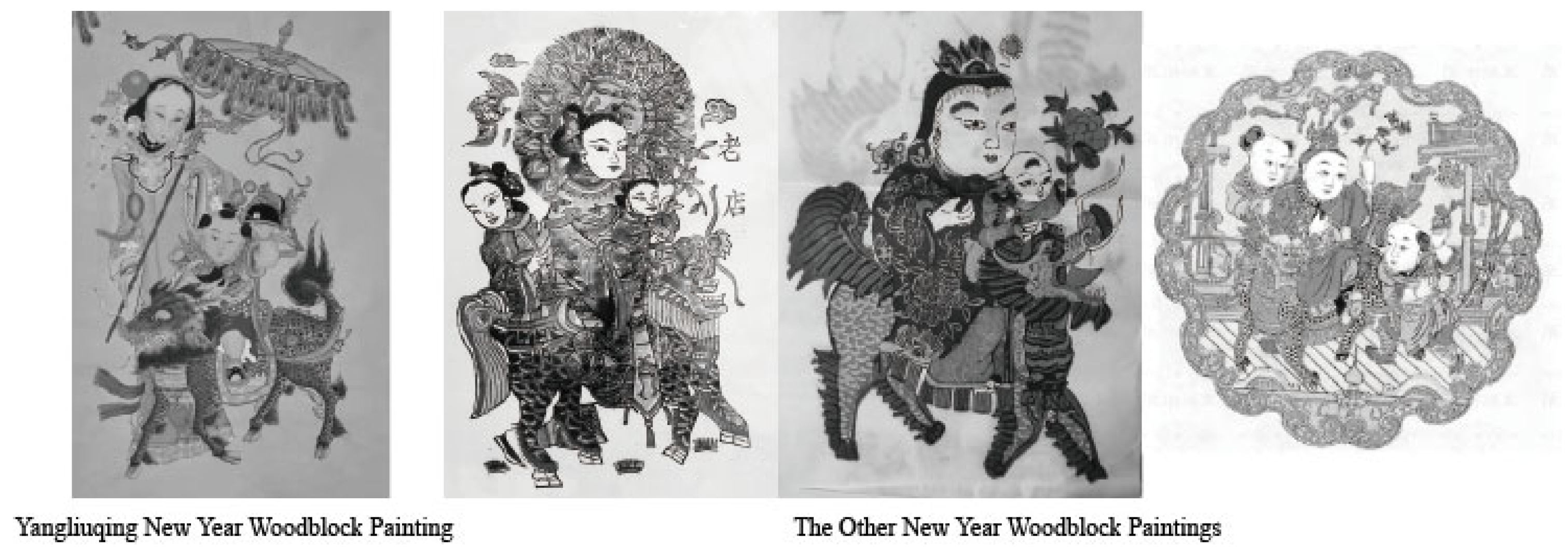
Figure 4.
New Year Paintings about San Xing Zai Hu.
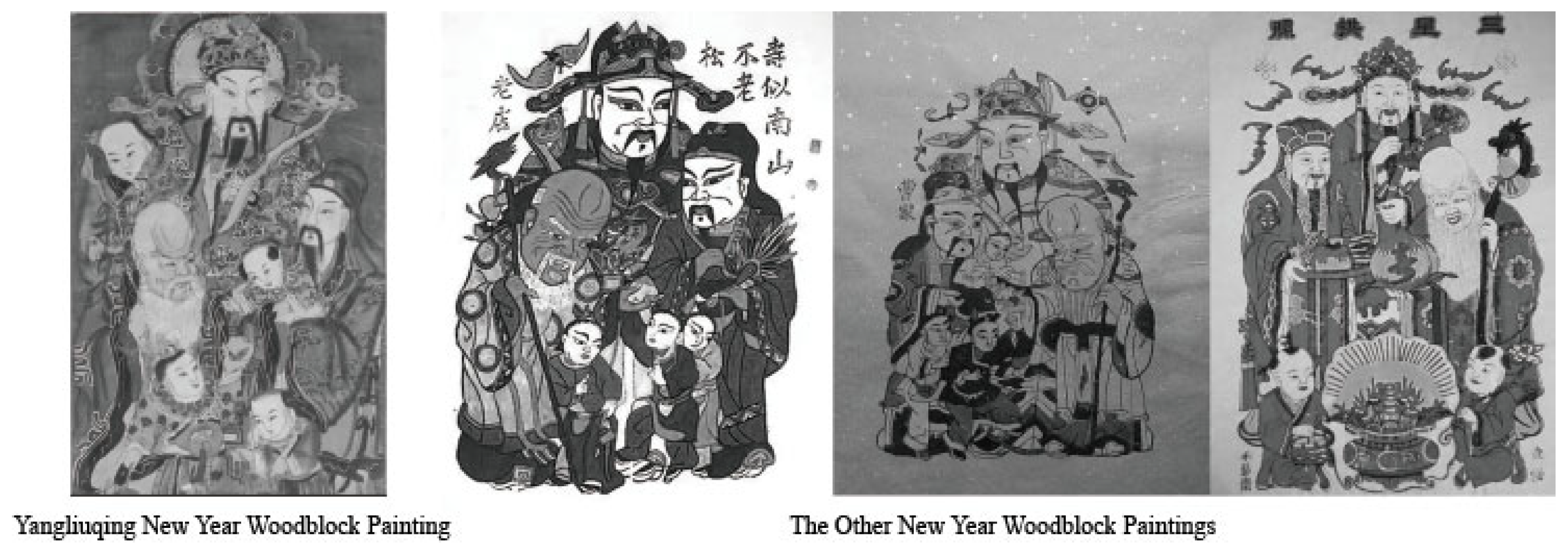
Figure 5.
New Year Paintings about Water Tank Fish.
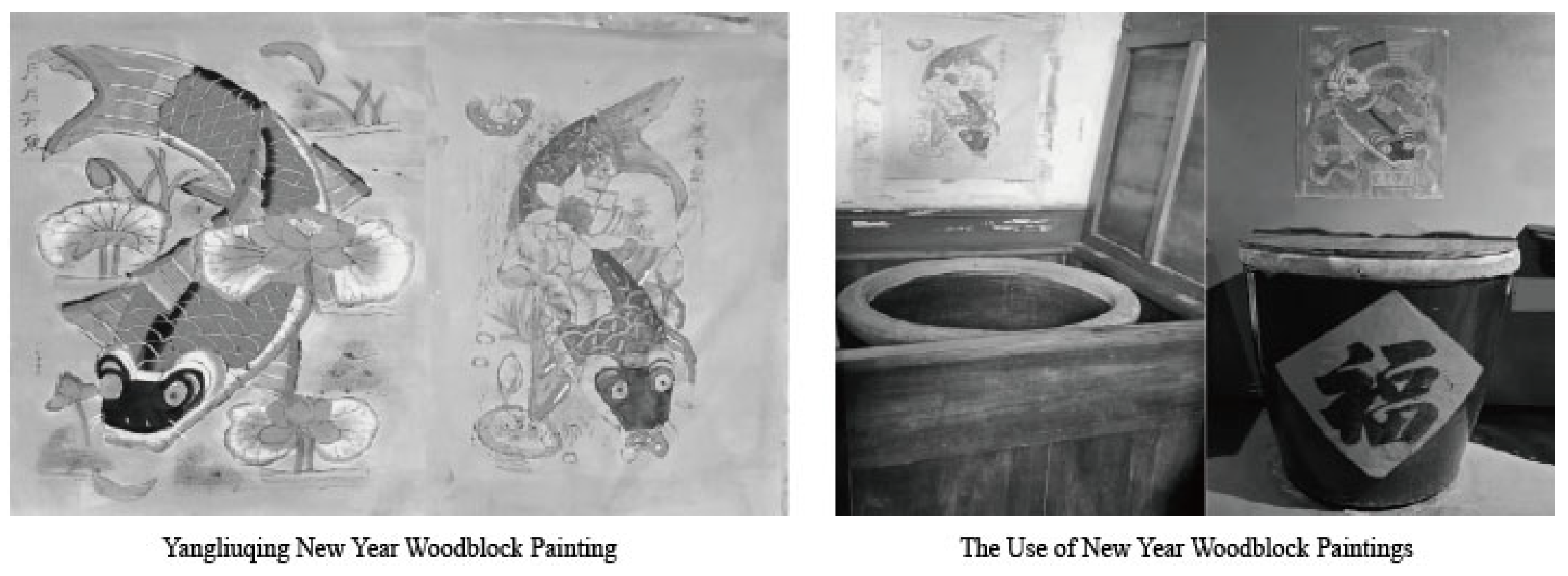
Figure 6.
The component of the Lian Nian You Yu.
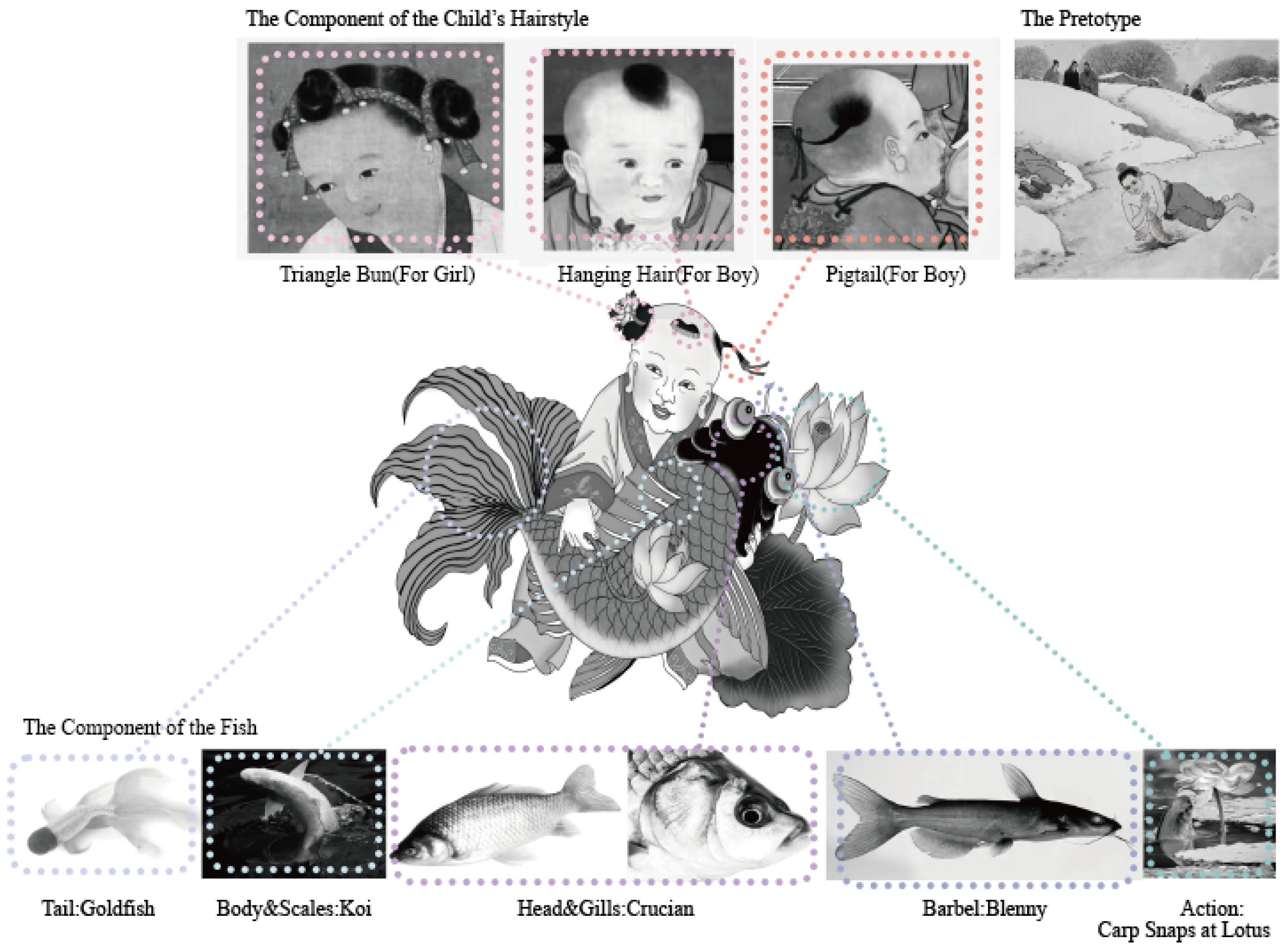
Figure 7.
The cause and centrality degree in DEMATEL.
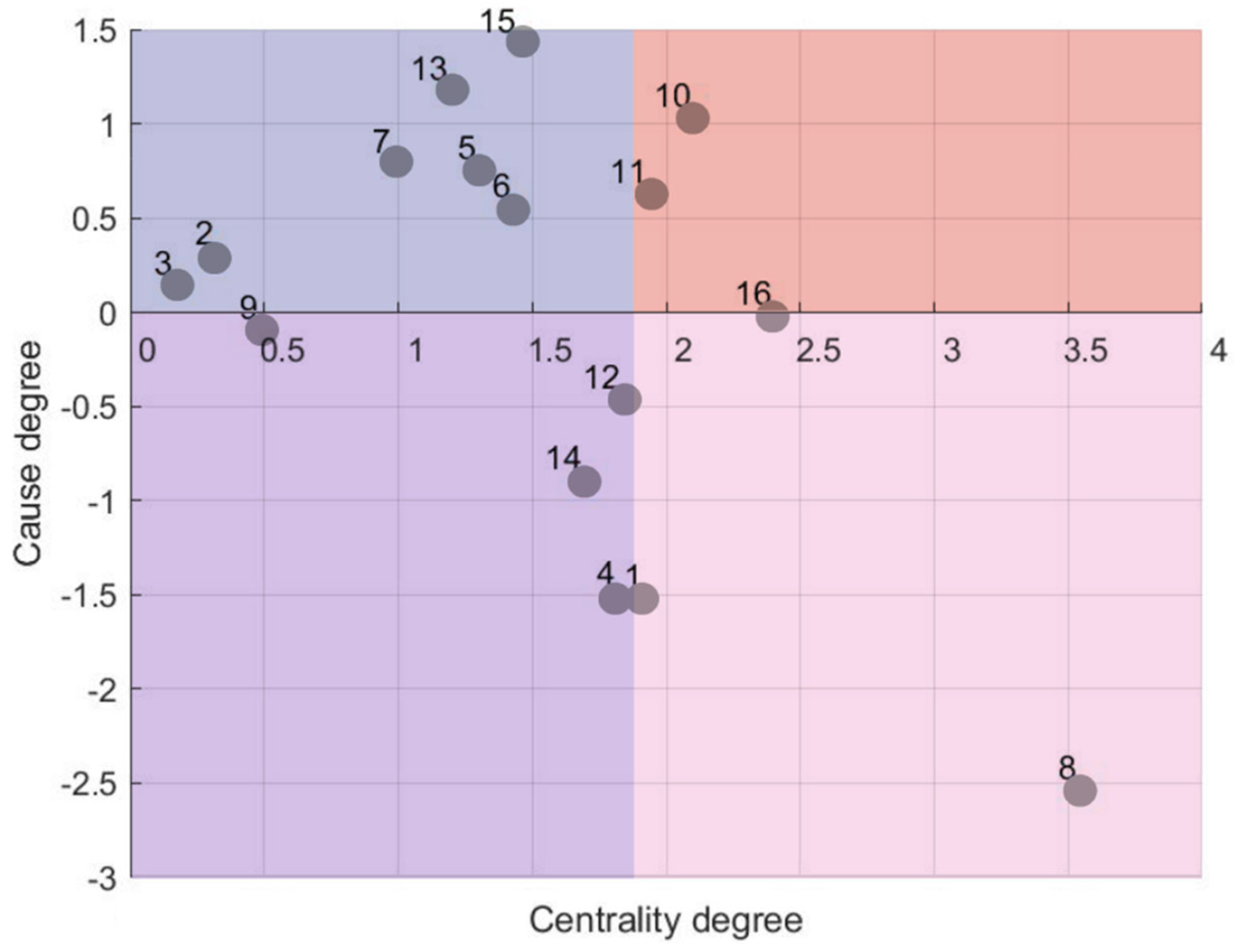
Figure 8.
The influenced and influence degree in DEMATEL.
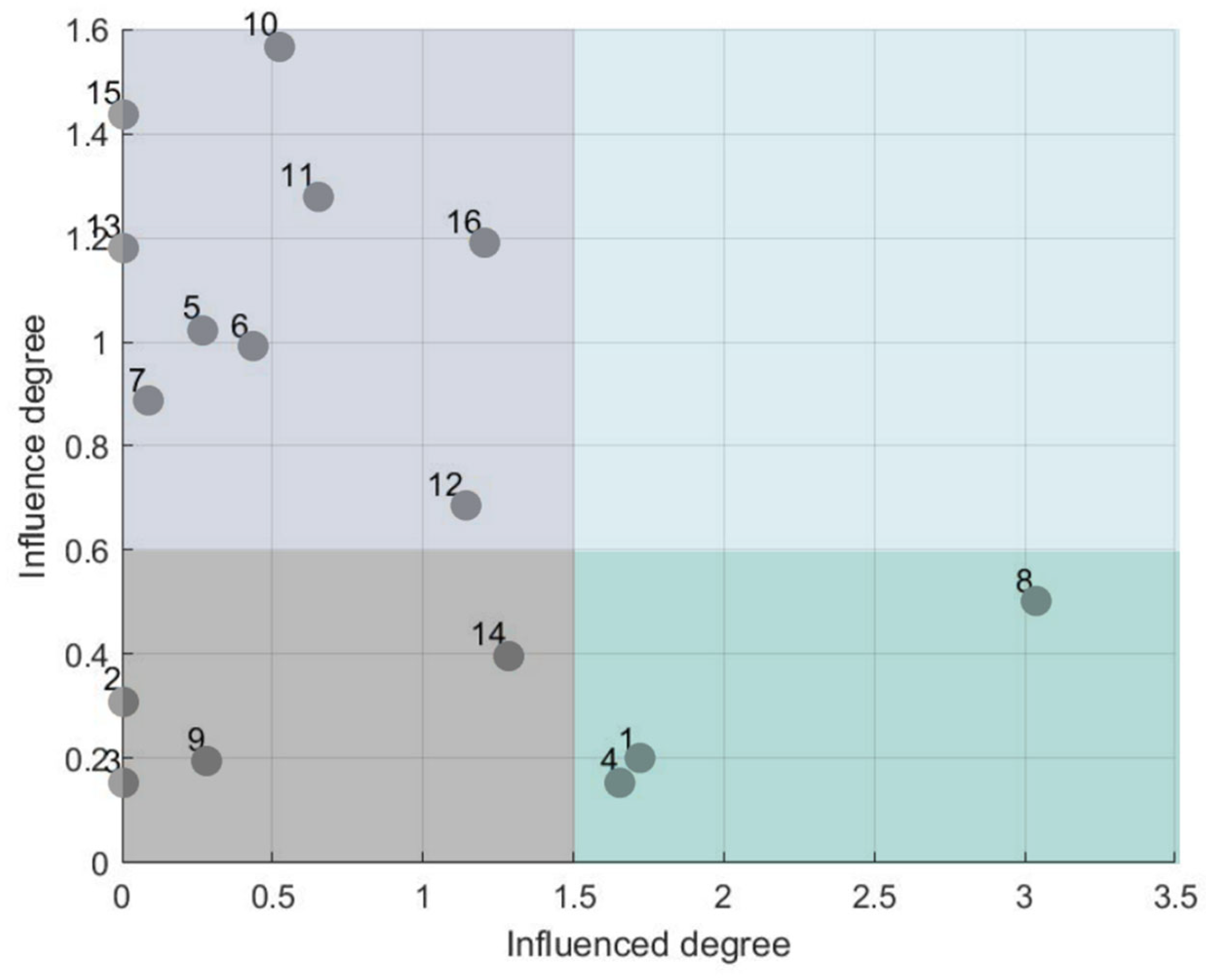
Figure 9.
Figure 9. The different calculation results underneath the different
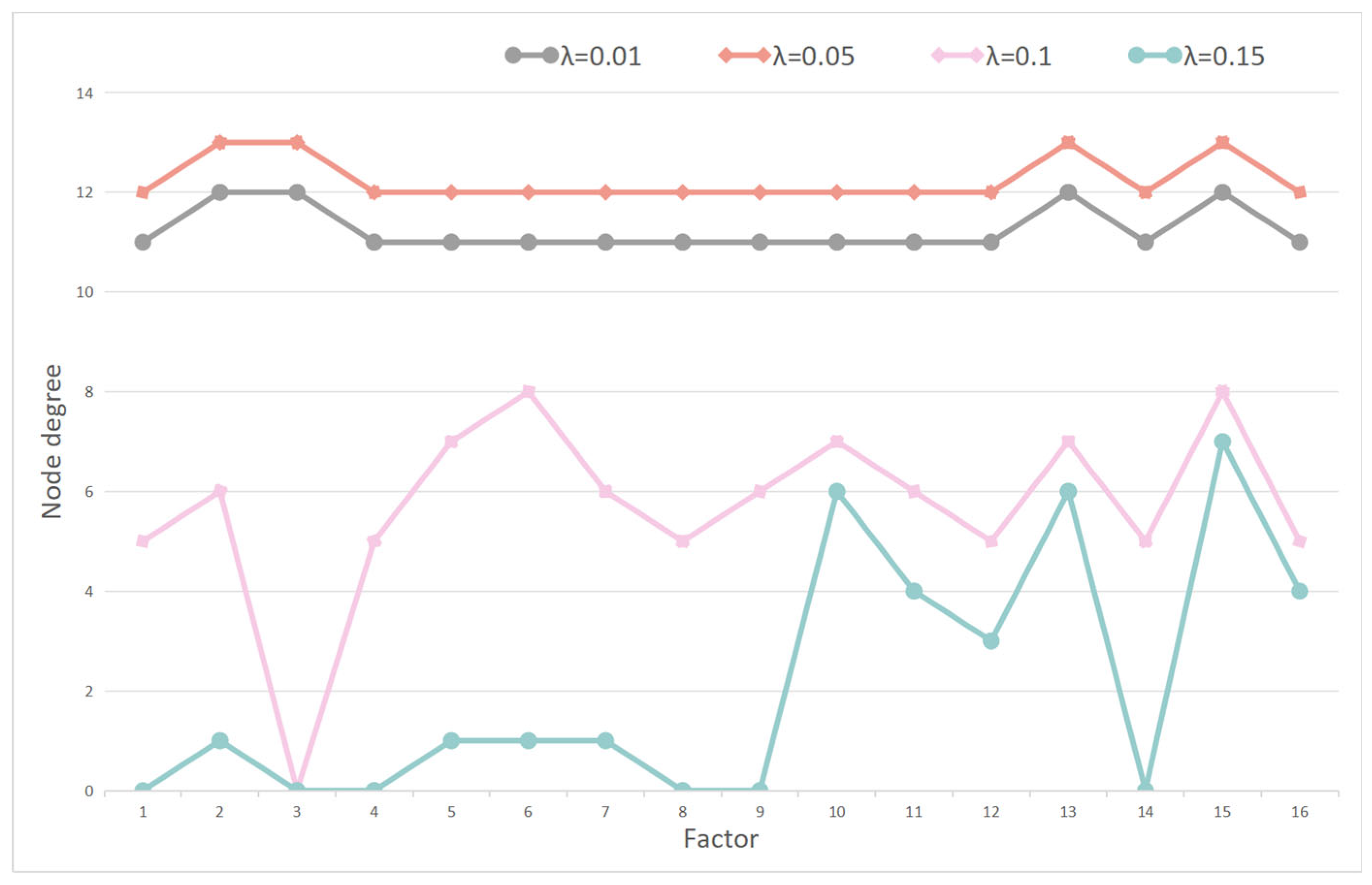
Figure 10.
The results of relationship between factors calculated by ISM.
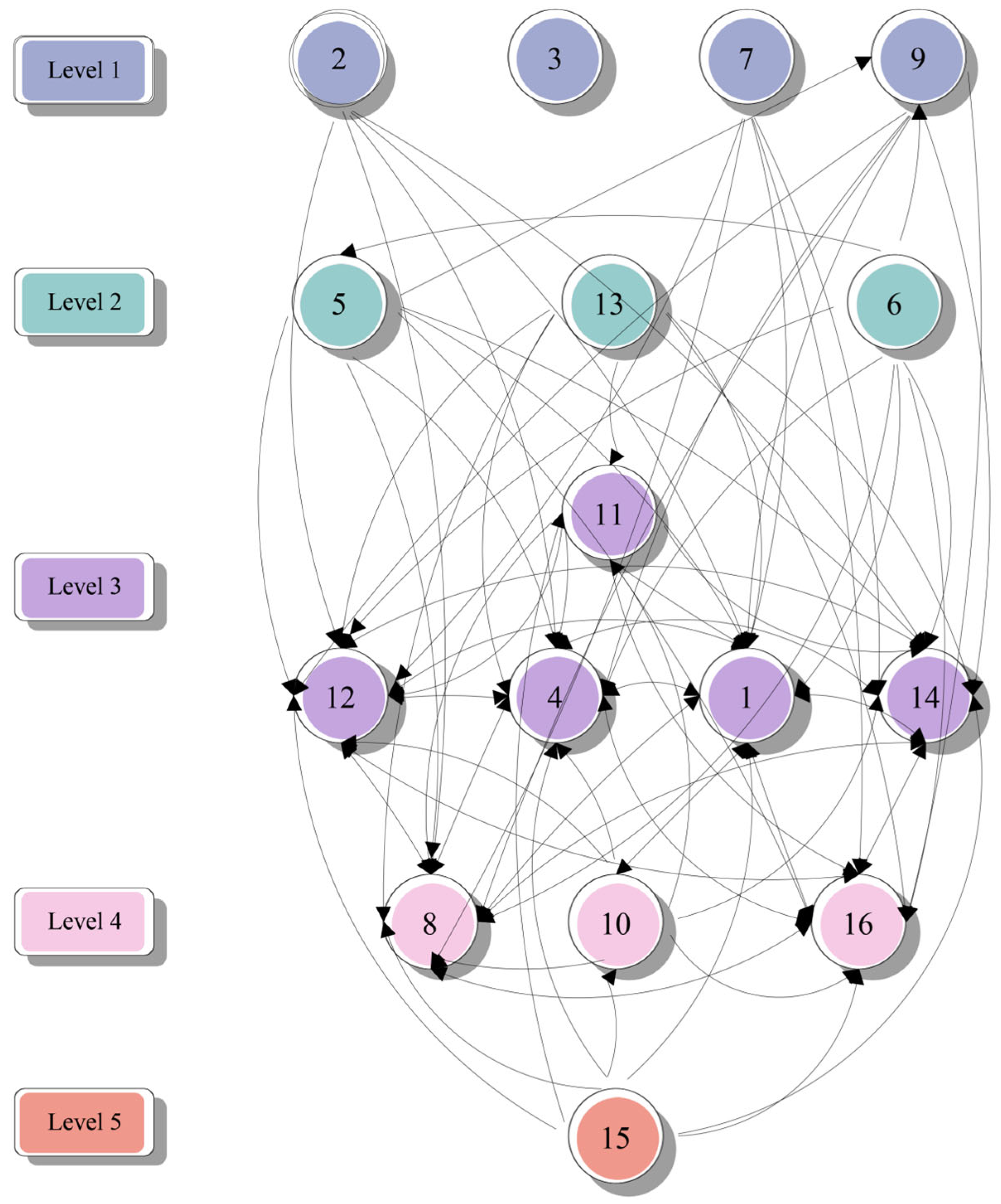

Table 1.
Absolute Importance and Relative Influence Scales.
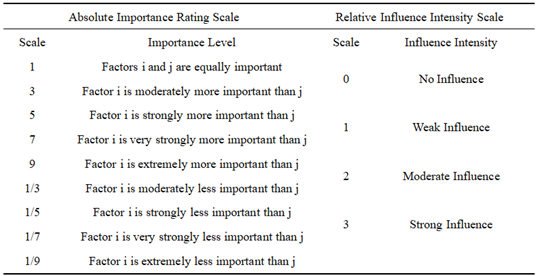 |
Table 2.
The Cultural Ecology Factor of Lian Nian You Yu.
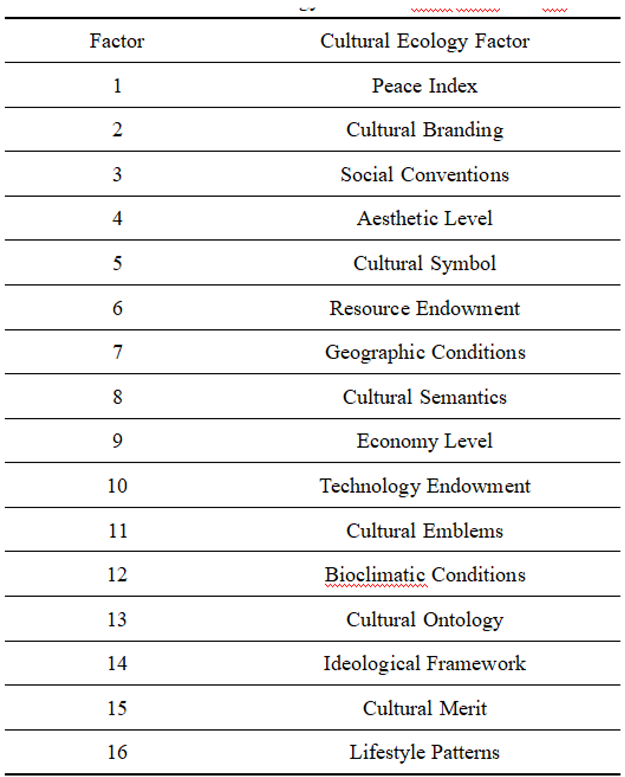 |
Table 3.
The results of two calculations.
 |
Disclaimer/Publisher’s Note: The statements, opinions and data contained in all publications are solely those of the individual author(s) and contributor(s) and not of MDPI and/or the editor(s). MDPI and/or the editor(s) disclaim responsibility for any injury to people or property resulting from any ideas, methods, instructions or products referred to in the content. |
© 2026 by the authors. Licensee MDPI, Basel, Switzerland. This article is an open access article distributed under the terms and conditions of the Creative Commons Attribution (CC BY) license (http://creativecommons.org/licenses/by/4.0/).
Copyright: This open access article is published under a Creative Commons CC BY 4.0 license, which permit the free download, distribution, and reuse, provided that the author and preprint are cited in any reuse.