Preprint
Case Report

This version is not peer-reviewed.

Clinical Decision-Making in High-Risk Cross-Platform Redo-TAVI: Pre-Emptive Coronary Wiring and Chimney Stenting

Submitted:

03 February 2026

Posted:

05 February 2026

You are already at the latest version

Abstract

Background: Redo transcatheter aortic valve implantation (TAVI) in patients with prior transapical SAPIEN 3 valves carries a significant risk of coronary obstruction. Chimney stenting is an established strategy to maintain coronary perfusion in high-risk valve-in-valve (ViV) procedures. Case Description: An 87-year-old woman presented with NYHA class IV symptoms due to severe restenosis of a 20-mm SAPIEN 3 valve implanted in 2017. Computed tomography revealed stent extension beyond the sinotubular junction, posing a risk of right coronary artery (RCA) occlusion. A transfemoral redo-TAVI using a 23-mm Medtronic Evolut FX+ valve was performed with pre-positioned chimney stenting. During valve deployment, inferior ST-segment elevation occurred, necessitating immediate RCA stenting. A second distal RCA stent addressed residual stenosis. Final angiography confirmed preserved coronary flow and optimal valve function; Discussion: Careful preprocedural evaluation—including CT-based assessment of coronary height, sinus anatomy, and virtual valve modeling—is essential in high-risk ViV or redo-TAVI cases. The chimney technique provides an effective bailout for acute coronary obstruction, while procedural strategies such as commissural alignment and the cusp-overlap technique can optimize procedural and hemodynamic outcomes.; Conclusions: Planned coronary protection using chimney stenting enables safe and effective redo transfemoral TAVI in patients with complex anatomy and prior transapical valve implantation, ensuring hemodynamic success and minimizing complications.

Keywords: 
;  ;  ;  ;  ;  ;  

1. Introduction

Redo transcatheter aortic valve implantation (TAVI) in patients with a prior transapical SAPIEN 3 valve carries a substantial risk of coronary obstruction, particularly in those with low-lying coronary ostia or small sinuses of Valsalva. Chimney stenting has emerged as a well-established strategy to preserve coronary perfusion during high-risk valve-in-valve (ViV) or redo-TAVI procedures. By deploying a coronary stent parallel to the transcatheter valve, this technique maintains uninterrupted blood flow to the coronary arteries and mitigates the risk of ischemic complications. Meticulous pre-procedural planning and precise procedural execution are essential to optimize outcomes and minimize stent-related adverse events [1]
Although coronary protection strategies such as chimney stenting have been previously described, this case report provides several unique and educational contributions to the existing literature. First, it describes a cross-platform redo-TAVI, transitioning from a small 20-mm balloon-expandable SAPIEN 3 valve to a self-expanding 23-mm Evolut FX+ prosthesis—an uncommon and technically demanding scenario that remains underreported. Second, the patient presented with complete right coronary ostial coverage by the original stent frame, a rare and high-risk anatomical configuration that necessitated comprehensive CT-based planning, virtual valve modeling, and commissural alignment to anticipate and prevent coronary obstruction. Third, despite pre-emptive coronary protection, the patient developed an intra-procedural inferior STEMI, providing an instructive example of the practical application and clinical value of planned chimney stenting as an immediate bailout strategy. Finally, this case illustrates how advances in transfemoral access enabled the safe treatment of a patient who had been considered unsuitable for this approach in 2017.
Collectively, these features underscore the educational value and distinctive clinical relevance of the case, offering insights highly pertinent to contemporary practice as redo-TAVI procedures become increasingly prevalent.

2. Case Description

An 87-year-old woman was transferred from an outside institution for advanced assessment of suspected severe degeneration and stenosis of a previously implanted bioprosthetic aortic valve. The patient had initially undergone a transapical transcatheter aortic valve implantation (TAVI) in May 2017, during which a 20-mm balloon-expandable Edwards SAPIEN 3 valve was deployed for the treatment of native severe aortic stenosis. Eight years post-procedure, she presented with progressive heart failure symptoms corresponding to New York Heart Association (NYHA) functional class IV, characterized by dyspnea at rest, orthopnea, and bilateral lower-limb edema. On clinical examination, marked pitting edema was evident in both legs, and the patient also described a persistent nonproductive cough. Cardiac auscultation revealed a grade 2/6 midsystolic murmur, most prominent at the right upper sternal border. Her body mass index (BMI) was 16.9 kg/m², derived from a body weight of 40 kg and a height of 154 cm.
Coronary angiography performed in 2025 revealed no significant obstructive coronary artery disease. Her medical background is also significant for iron-deficiency anemia, managed with intermittent intravenous iron therapy, and a cerebrovascular accident in 2016, which left no residual neurological deficits. Orthopedic history includes right total hip arthroplasty performed for degenerative joint disease.
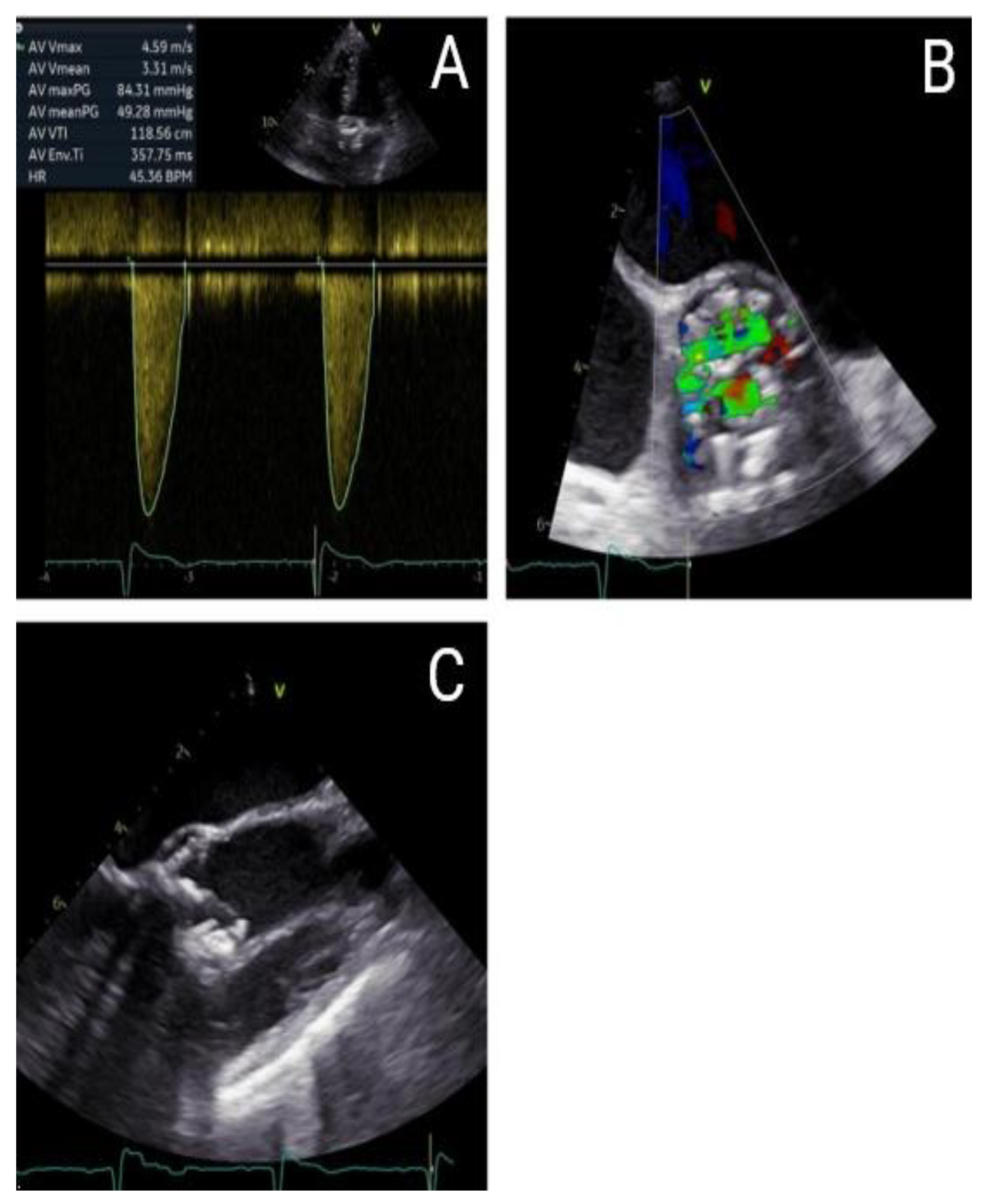
Transthoracic and transesophageal echocardiography confirmed pronounced structural deterioration of the patient’s previously implanted bioprosthetic aortic valve. Hemodynamic assessment revealed a peak transvalvular gradient of 84 mmHg, a mean gradient of 49 mmHg, and a peak velocity of 4.59 m/s, consistent with severe aortic stenosis. The left ventricular outflow tract (LVOT) measured 17.3 mm, and the aortic valve area (AVA) was calculated at 0.63 cm², with an indexed AVA of 0.474 cm²/m², confirming critical obstruction. Cardiac output was 3.48 L/min, with a stroke index of 56.18 mL/m² and a cardiac index of 2.61 L/min/m². Mild aortic regurgitation was also noted (Figure 1A), while left ventricular ejection fraction remained preserved.
Laboratory studies demonstrated an elevated NT-proBNP level of 1,662 pg/mL, reflecting increased myocardial wall stress and symptomatic heart failure. Transesophageal echocardiography corroborated the presence of severe stenosis and advanced structural deterioration; however, accurate valve planimetry was precluded due to significant acoustic shadowing and imaging artifacts (Figure 1B and Figure 1C).
Surgical risk assessment indicated a logistic EuroSCORE I of 41.92% and a EuroSCORE II of 11.44%, reflecting a high operative risk.
Figure 1. Echocardiographic Assessment of Bioprosthetic Aortic Valve (A) Continuous-wave (CW) Doppler performed on admission, demonstrating elevated transvalvular gradients. (B) Transesophageal echocardiography (TEE), short-axis view, showing turbulent flow across the bioprosthetic valve on color Doppler, indicative of severe stenosis. (C) TEE, long-axis view, revealing marked calcification of the bioprosthetic valve on admission.
Preprints 197358 g001
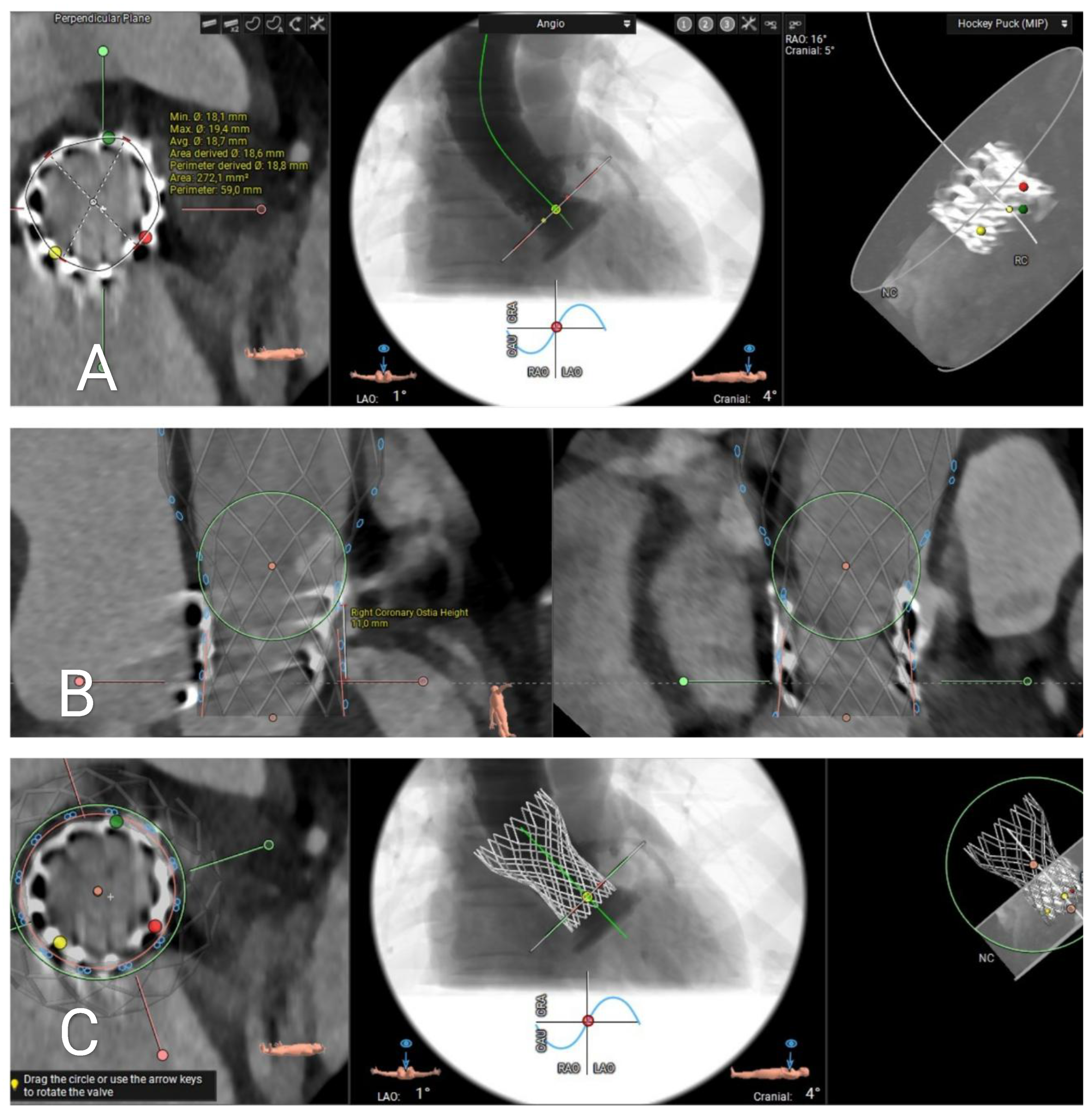
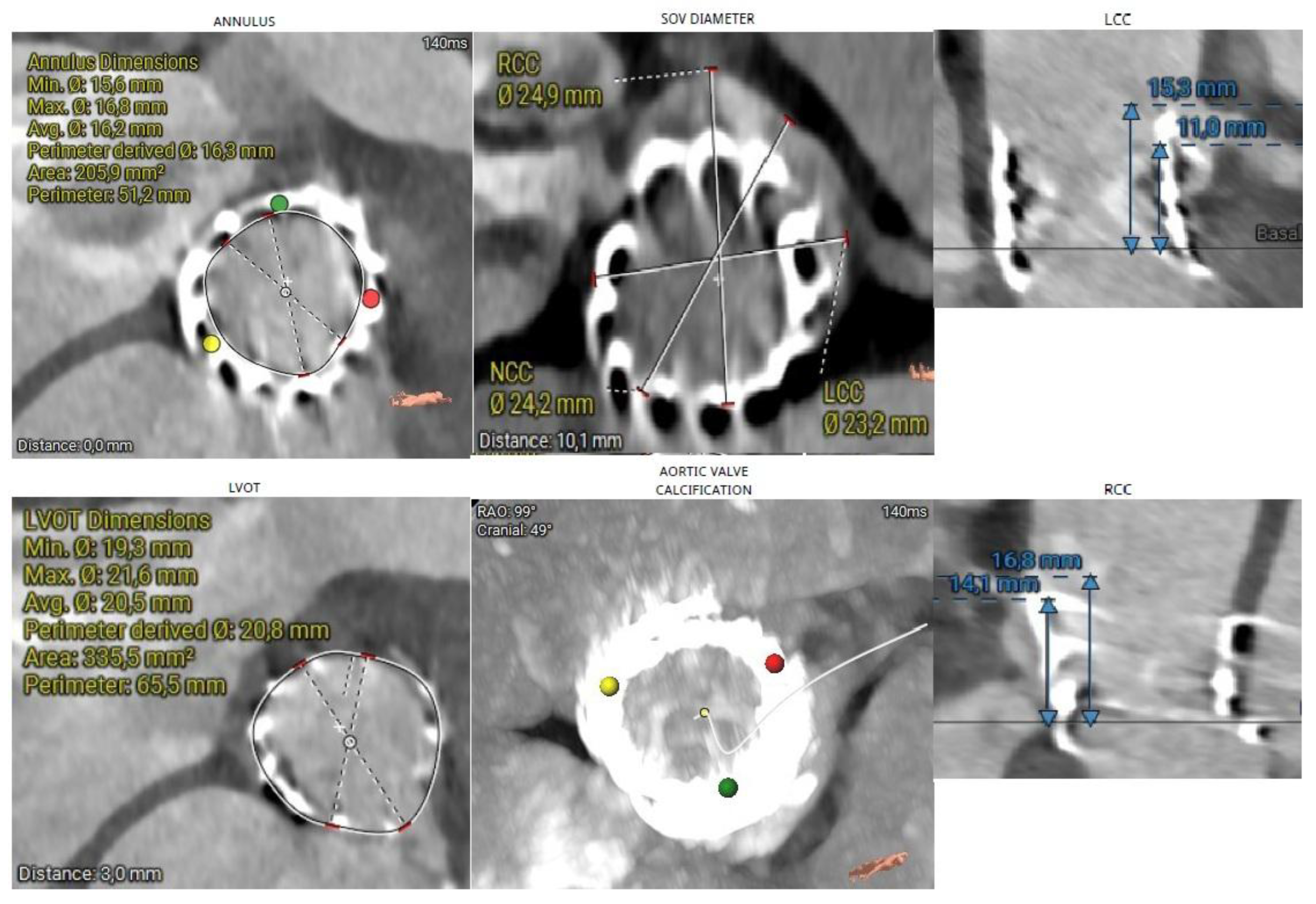
Computed tomography (CT) provided essential anatomical insights. Imaging showed that the outflow edge of the bioprosthetic stent frame extended beyond the sinotubular junction, completely covering the right coronary artery (RCA) ostium, which measured 11 mm in height. The left coronary artery ostium was 14 mm above the aortic annulus, which itself measured 14 mm in height. The valve-to-coronary (VTA) distance was 4.6 mm to the left coronary artery (LCA) and 0.5–1 mm to the right coronary artery (RCA). The valve-to-sinotubular junction (VTSTJ) and the sinus of Valsalva heights measured 15.3 mm and 16.8 mm, respectively. These features conferred a high risk of coronary obstruction during valve-in-valve (ViV) transcatheter aortic valve replacement (TAVR) (Figure 1A, Figure 1B and Figure 1C).
Figure 2. Multi-slice CT (MSCT) Assessment of Valve Anatomy Using the 3mensio Program: (A)Measurement of the inflow frame area of the 20 mm Sapien 3 transcatheter aortic valve replacement (TAVR) prosthesis. (B, C) Three-dimensional visualization of the virtual valve in a valve-in-valve configuration, with assessment of the right coronary artery (RCA) ostial height.
Preprints 197358 g002
The left common femoral artery measured 6.1 × 6.9 mm, suggesting potential suitability for transfemoral access. In contrast, the right common femoral artery measured 4.2 × 4.9 mm, and the right common iliac artery had a diameter of 4.9 mm. Notably, significant circumferential calcification in the right iliac artery compromises its suitability for vascular access (Figures 3A–B).
After a comprehensive multidisciplinary evaluation, the patient—taking into account advanced age, frailty, EuroSCORE, and prior transapical TAVI—was deemed a candidate for redo TAVI. Extensive LVOT calcification and a small LVOT diameter precluded balloon-expandable valve use. A self-expanding intra-annular prosthesis was avoided due to limited institutional experience, whereas a self-expanding supra-annular valve posed a high risk of left coronary artery obstruction. Weighing these anatomical and procedural considerations (Figure 4), a transfemoral TAVI was performed using a 23-mm Medtronic Evolut FX+ self-expanding supra-annular prosthesis with a chimney technique to safeguard coronary flow.
Vascular access was obtained under ultrasound guidance with bilateral common femoral artery punctures. Additional radial artery access facilitated placement of a pigtail catheter. A 14F Medtronic Sentrant introducer sheath was advanced into the left femoral artery without complications, and an 18F Manta vascular closure device was pre-deployed in anticipation of large-bore access closure.
For the initially implanted Sapien prosthesis, commissural alignment was not assessed, and CT verification was deemed unnecessary given the absence of coronary artery disease. In contrast, commissural alignment for the subsequent Evolut prosthesis was achieved using the “hat marker” and shaft rotation (HASH) technique combined with the cusp-overlap method. The hat marker was oriented toward the greater curvature of the descending aorta in the left anterior oblique (LAO) view, with additional shaft rotation applied as required to minimize coronary overlap.
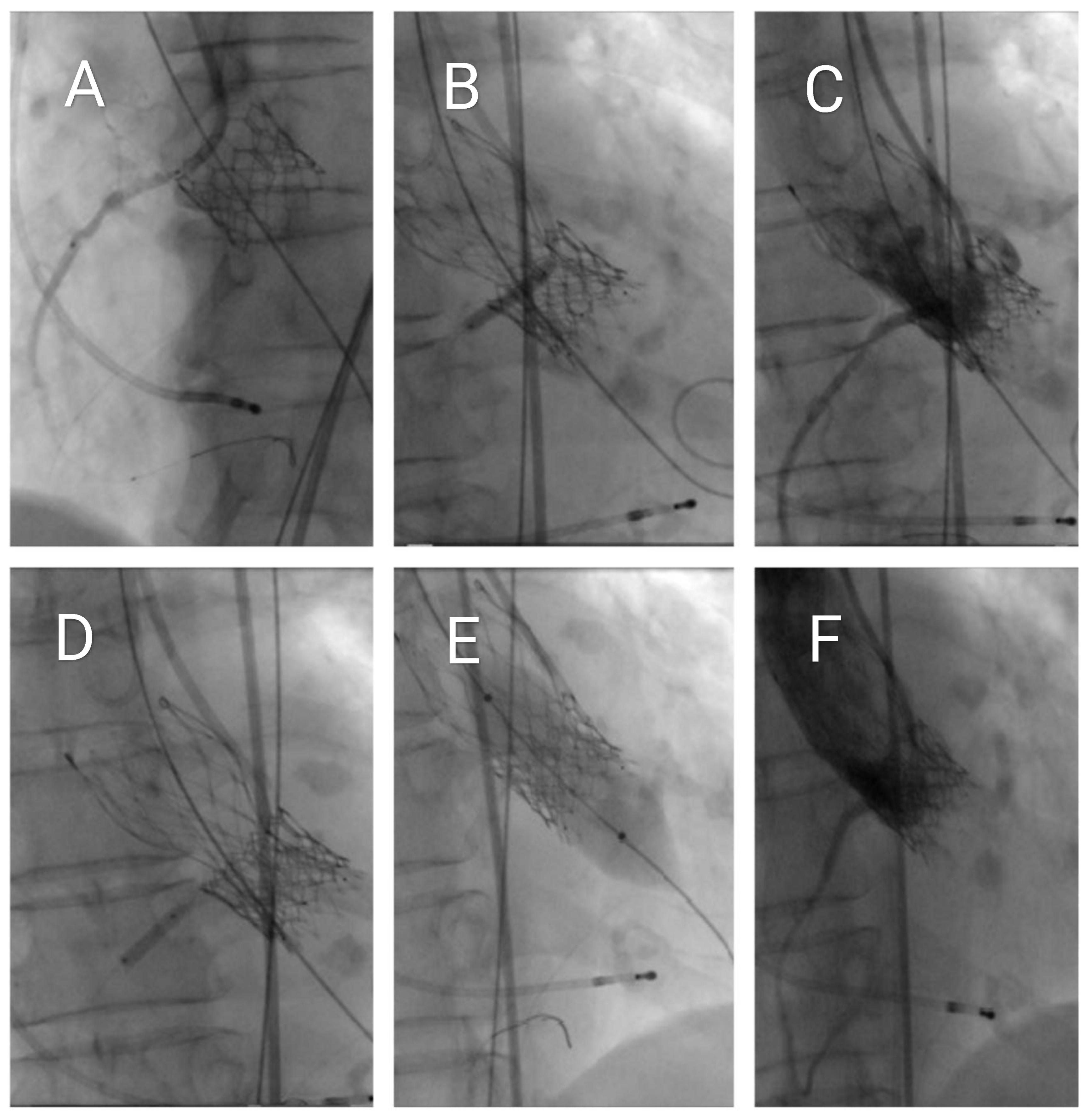
In this high-risk scenario, the strategy was to deploy a coronary stent preemptively as a preventive measure. A multipurpose guiding catheter was positioned at the right coronary artery (RCA) ostium, and a Hi-Torque BMW Universal II guidewire was advanced distally. A 2.75 × 23 mm drug-eluting stent was pre-positioned, with approximately 1 cm protruding into the aorta, providing prophylactic bailout protection using the chimney technique. A shorter stent was selected due to limited backup support (Figures 3A, Video 1). The degenerated bioprosthesis was crossed using a straight Terumo wire, followed by advancement of an Innowi wire over the pigtail catheter. A 23-mm Evolut FX+ valve was successfully implanted without pre-dilatation. Post-deployment imaging revealed incomplete valve expansion and lateral ST-segment elevation, indicative of impaired coronary perfusion.
Simultaneous percutaneous transluminal coronary angioplasty (PTCA) of the RCA was performed with deployment of the pre-positioned stent using the chimney technique (Figures 4B, Video 2), resulting in resolution of ST-segment changes and hemodynamic stabilization. Angiography revealed a distal RCA stenosis beyond the initial stent, successfully treated with a second 2.5 × 12 mm drug-eluting stent (Figure 4C–Figure 4D, Video 3).
Post-TAVI hemodynamics demonstrated a peak-to-peak transvalvular gradient of 30 mmHg, warranting further optimization. The stent balloon from the prior PCI was retrieved and positioned at the coronary ostium, and post-dilatation of the valve was performed using a 20-mm SIMVALVE balloon (Figure 4E, Video 4). No ECG changes or compromise of the prior stent were observed during the procedure, negating the need for a simultaneous kissing balloon maneuver. Final angiography confirmed TIMI grade III flow, preserved RCA perfusion, and no evidence of paravalvular or transvalvular regurgitation (Figures 4F, Video 5).
Figure 5. Fluoroscopic Visualization of Interventional Procedures. (A) Advancement of the Inowi 35SX guidewire and deployment of a drug-eluting stent at the RCA ostium with minimal aortic protrusion. (B) Partial expansion of the Evolut FX+ valve during implantation, performed concurrently with PTCA of the RCA for an inferior ST-elevation myocardial infarction. (C) Coronary angiography showing stenosis distal to the initial stent. (D) PTCA of the distal RCA lesion. (E) Post-dilation of the valve using a 20 mm Simvalve balloon. (F) Aortography via pigtail catheter confirming patent RCA flow with no valve regurgitation or paravalvular leakage.
Preprints 197358 g005
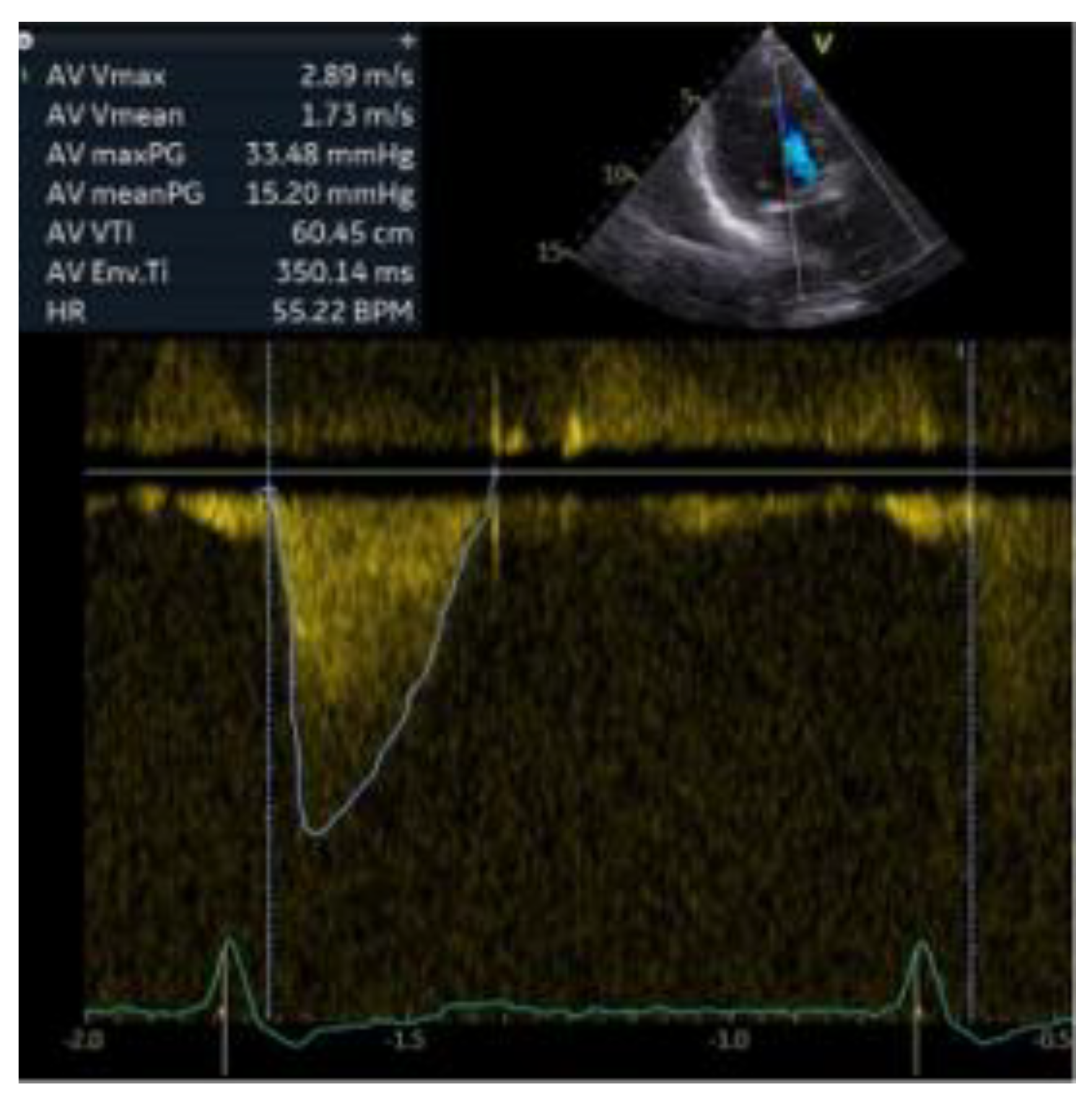
The patient experienced no neurological or vascular complications. Postprocedural echocardiography demonstrated a left ventricular ejection fraction greater than 60%, a mean gradient of approximately 15.2 mmHg, and no evidence of perivalvular leak. She was discharged to a rehabilitation facility on postoperative day five. (Figure 6)
This case report was prepared in accordance with the CARE (CAse REport) Guidelines to ensure transparency, completeness, and high-quality reporting. All relevant components—including clinical history, diagnostic assessment, therapeutic intervention, follow-up, and patient perspective—were systematically documented following these standards. A completed CARE checklist has been included as supplementary material

3. Discussion

In line with the 2025 ESC/EACTS Guidelines for the Management of Valvular Heart Disease, it is well recognized that the risk of coronary obstruction after valve-in-valve (ViV) or redo-TAVI procedures depends strongly on the type of the index valve. In particular, the risk is markedly higher when the original prosthesis is a stentless surgical aortic valve (SAV) or a SAV with externally mounted leaflets. Additionally, during TAV-in-TAV procedures, supra-annular valves with a high neo-skirt are especially prone to sinus sequestration, which further increases coronary risk. Even when immediate coronary flow is maintained, the guidelines warn that future coronary access may be challenging or impossible in a significant proportion of patients.
These observations underscore the importance of meticulous pre-procedural planning — particularly CT-based assessment — in redo TAVI cases with prior bioprostheses. In our case, the decision to pre-position a chimney stent was strongly guided by these risks, especially given the complete ostial coverage by the prior valve frame and the potential for future coronary inaccessibility. [2]
Coronary artery obstruction (CAO) remains one of the most serious complications of transcatheter aortic valve replacement (TAVR), particularly in valve-in-valve (ViV) procedures involving small bioprosthetic surgical valves. Although its incidence is low—requiring chimney stenting in only ~0.5% of contemporary TAVR cases—emergent CAO (eCAO) carries substantial morbidity and mortality, highlighting the necessity of careful pre-procedural planning and the consideration of coronary protection strategies in high-risk patients.
In this case, a cross-platform ViV approach was performed, transitioning from a 20 mm balloon-expandable SAPIEN 3 to a 23 mm self-expanding Evolut FX+. This shift from balloon-expandable to self-expanding valve technology in a ViV setting represents a unique challenge, particularly with respect to coronary obstruction risk, and underscores the importance of tailored device selection for small annuli.
Chimney stenting was successfully deployed as a bailout strategy for acute CAO. The BASILICA technique was not chosen due to its technical complexity, limited availability, and the need for highly specialized expertise not widely accessible outside experienced centers. Registry data indicate that outcomes are significantly worse when preemptive coronary protection is not used, reinforcing the value of risk anticipation and structured procedural planning. [3]
Redo TAVI from a balloon-expandable valve (BEV) to a self-expanding valve (SEV) is a high-risk, less frequently reported procedure, particularly due to the potential for coronary obstruction and limited future coronary access. Imaging and simulation studies have shown that neoskirt height and valve-to-aorta distance can limit coronary access, and chimney stents may be prone to distortion within the self-expanding frame. In contrast, our case demonstrates a successful BEV → SEV cross-platform redo-TAVI with pre-emptive chimney stenting, where transient ECG changes were rapidly resolved, highlighting the importance of proactive coronary protection in high-risk anatomies. [4,5]
The procedural strategy included post-dilatation of the TAVI prosthesis. In such scenarios, previously implanted coronary stents may be vulnerable to compression. A simultaneous dilatation of both the TAVI prosthesis and the coronary stent using a kissing balloon technique can mitigate this risk. In the present case, a second stent was required to address residual stenosis, reflecting the technical demands of chimney stenting. [6,7]
Advanced imaging and planning tools played a pivotal role in risk assessment. Multislice computed tomography (MSCT), alongside the Redo-TAVI/ViV Aortic application and 3mensio software, allowed precise evaluation of coronary anatomy, annular dimensions, and virtual valve deployment, facilitating anticipation of potential obstruction. This case demonstrates the practical utility of dedicated planning platforms for predicting coronary complications in real-world high-risk ViV procedures—a dimension often underreported in prior literature.[8,9]
Despite its efficacy, chimney stenting is associated with limitations, including potential challenges in future coronary access, higher risk of restenosis, and stent thrombosis. In younger patients, these considerations may be critical, although in older populations, the long-term implications may be less relevant. Therefore, chimney stenting should remain a bailout or carefully selected high-risk strategy, guided by meticulous pre-procedural planning.
It is unclear why the initial center opted for a transapical approach rather than the currently preferred and safest transfemoral route, which is less invasive and associated with lower complication rates. In patients with challenging iliofemoral anatomy due to calcification, transfemoral access can often still be achieved through adjunctive strategies such as balloon angioplasty, intravascular lithotripsy (IVL), and vessel preparation. This case highlights the evolution of access strategies: whereas the patient’s initial TAVR in 2017 required transapical access, contemporary practice favors transfemoral approaches, supported by these techniques to enable safe treatment even in the setting of complex peripheral vascular disease. [9,10,11,12]
In summary, this case highlights the value of cross-platform ViV strategies, pre-emptive coronary protection, and advanced planning tools in mitigating the risk of coronary artery obstruction. The recent FDA approval of the Medtronic Evolut FX self-expanding valve for redo TAVR underscores the practical relevance of transitioning from balloon-expandable to self-expanding devices in high-risk ViV scenarios. Chimney stenting remains an effective bailout strategy in carefully selected patients, while modern transfemoral access and adjunctive techniques continue to reduce procedural invasiveness and enhance safety. [13]

4. Patient Perspective

The patient traveled more than 100 km to seek care and placed her trust in our team. Following the procedure, she expressed deep gratitude and reported feeling very satisfied and happy with the outcome.

5. Conclusions

This case illustrates the successful application of the chimney technique as a feasible and effective bailout strategy during redo transfemoral TAVI in a patient with complex coronary anatomy following prior transapical valve implantation. The outcome highlights the critical importance of comprehensive preprocedural planning, advanced imaging evaluation, and meticulous coronary protection to minimize procedural risk and ensure optimal patient outcomes.

Supplementary Materials

The following supporting information can be downloaded at the website of this paper posted on Preprints.org; Video S1: Video 1, Video 2. Video 3, Video 4, Video 5.

Author Contributions

SS: Conceptualization, Investigation, Writing – original draft; review & editing. AS: Conceptualization, Supervision; JP: Investigation, Supervision; CJ: Conceptualization; AAR: Conceptualization; HA: Conceptualization; VK: Conceptualization, Investigation; MS: Conceptualization; IB: Conceptualization, review & editing; M-AD: Conceptualization, review & editing; CFK: Conceptualization, Investigation, Writing – original draft; review & editing.

Funding

The author(s) declare that no financial support was received for the research and/or publication of this article.

Institutional Review Board Statement

Ethical approval was not required for this study as it is a single-patient case report and does not constitute human subjects research according to institutional guidelines.

Data Availability Statement

The original contributions presented in this study are included in the article/supplementary material. Further inquiries can be directed to the corresponding author(s).

Acknowledgments

This case report was previously presented as an abstract at the CSI Frankfurt Congress in June 2025, where it was selected among the best 50 abstracts. The case was also published online in the “Read & Share Cases” section by PCROnline platform.

Conflicts of Interest

The authors declare no conflicts of interest.

Abbreviations

The following abbreviations are used in this manuscript:
MDPI Multidisciplinary Digital Publishing Institute
DOAJ Directory of open access journals
TLA Three letter acronym
LD Linear dichroism

References

  1. Ibrahim, H., Chaus, A., Alkhalil, A., Prescher, L., Kleiman, N. (2024). Coronary artery obstruction after transcatheter aortic valve implantation: past, present, and future. Circulation: Cardiovascular Interventions, 17(6), e012827. [CrossRef]
  2. Praz, F., Borger, M. A., et al. (2025). 2025 ESC/EACTS Guidelines for the Management of Valvular Heart Disease. European Heart Journal, 46(44), 4635–4736. [CrossRef]
  3. Mercanti, F., Rosseel, L., Neylon, A., Bagur, R., Sinning, J.M., Nickenig, G., et al. (2020). Chimney stenting for coronary occlusion during TAVR: insights from the Chimney Registry. JACC: Cardiovascular Interventions, 13(6), 751–761. [CrossRef]
  4. Barbanti, M., Tamburino, C., et al. (2023). Feasibility of Redo-Transcatheter Aortic Valve Replacement in Sapien Valves Based on In Vivo Computed Tomography Assessment. Journal of the American College of Cardiology: Cardiovascular Interventions, 16(5), 501–512. https://pubmed.ncbi.nlm.nih.gov/37988440/.
  5. Beneduce, A., Khokhar, A.A., Curio, J., et al. (2025). Chimney stenting for preventing coronary obstruction in redo-TAVI with BEV within SEV (bench-model). EuroIntervention, 21(12), e692–e703. https://research.regionh.dk/en/publications/chimney-stenting-for-preventing-coronary-obstruction-in-redo-tavi.
  6. Basman, C., Mustafa, A., Pirelli, L., Thampi, S., Kodra, A., Scheinerman, S.J., Kliger, C. (2023). Kissing balloon inflation for transcatheter aortic valve replacement and abutting ostial coronary artery stent. Journal of Cardiology Cases, 28(4), 141–143. [CrossRef]
  7. Otto, C.M., Nishimura, R.A., Bonow, R.O., et al. (2021). 2020 ACC/AHA guideline for the management of patients with valvular heart disease. Journal of the American College of Cardiology, 77(4), e25–e197. [CrossRef]
  8. Bapat, V.N., Fukui, M., Zaid, S., et al. (2024). A guide to transcatheter aortic valve design and systematic planning for a Redo-TAV (TAV-in-TAV) procedure. JACC: Cardiovascular Interventions, 17, 1631–1651. [CrossRef]
  9. Ratanapo, S. (2024). CT planning with Redo TAV app guiding strategy to prevent coronary obstruction for TAV-in-TAV procedure. Presented at: NY Valves 2024; 6 June 2024; New York, NY. Available from: https://www.tctmd.com/slide/ct-planning-redo-tav-app-guiding-strategy-prevent-coronary-obstruction-tav-tav-procedure.
  10. Baumgartner, H., Falk, V., Bax, J.J., et al. (2022). 2021 ESC/EACTS guidelines for the management of valvular heart disease. European Heart Journal, 43(7), 561–632. [CrossRef]
  11. Blanke, P., Weir-McCall, J., Achenbach, S., et al. (2019). Computed tomography imaging in the context of transcatheter aortic valve implantation (TAVI)/transcatheter aortic valve replacement (TAVR): An expert consensus document. JACC: Cardiovascular Imaging, 12(1), 1–24. [CrossRef]
  12. Di Mario, C., Goodwin, M., Ristalli, F., et al. (2021). A prospective registry of intravascular lithotripsy-enabled vascular access for transfemoral transcatheter aortic valve implantation. EuroIntervention, 16(14), e1125–e1132. [CrossRef]
  13. Barbash, I.M., Barbanti, M., Webb, J.G., et al. (2019). Transcatheter aortic valve implantation in calcified iliofemoral arteries: feasibility and outcome of endovascular lithotripsy. EuroIntervention, 15(7), e1006–e1011. [CrossRef]
  14. Medtronic. (2025). Medtronic Evolut TAVR systems receive FDA approval for expanded Redo-TAVR indication [online]. 28 Aug 2025 [cited 15 Oct 2025]. Available from: https://news.medtronic.com/2025-08-28-Medtronic-Evolut-TAVR-systems-receive-FDA-approval-for-expanded-Redo-TAVR-indication.
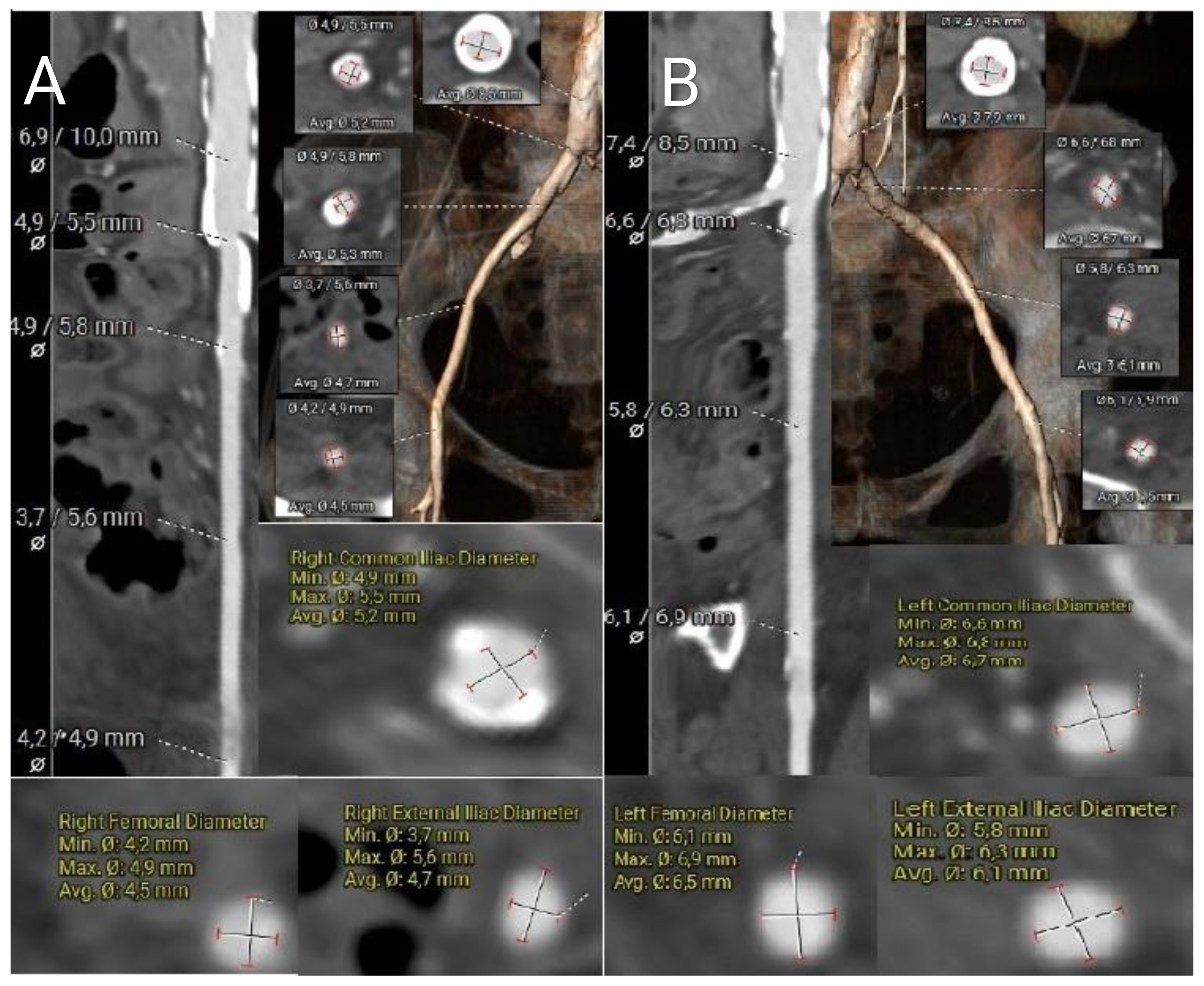
Figure 3. MSCT Vascular Access Assessment Using the 3mensio Program: (A) Measurement and three-dimensional visualization of the right common femoral artery, right external iliac artery, and right common iliac artery, including a segment of the descending aorta. (B) Measurement and three-dimensional visualization of the left common femoral artery, left external iliac artery, and left common iliac artery, including a segment of the descending aorta.
Preprints 197358 g003
Figure 4. MSCT Analysis and Quantitative Assessment via the 3Mensio Platform.
Preprints 197358 g004
Figure 6. Follow-up assessment using continuous-wave Doppler after implantation of a 23 mm Evolut valve.
Preprints 197358 g006
Disclaimer/Publisher’s Note: The statements, opinions and data contained in all publications are solely those of the individual author(s) and contributor(s) and not of MDPI and/or the editor(s). MDPI and/or the editor(s) disclaim responsibility for any injury to people or property resulting from any ideas, methods, instructions or products referred to in the content.
Copyright: This open access article is published under a Creative Commons CC BY 4.0 license, which permit the free download, distribution, and reuse, provided that the author and preprint are cited in any reuse.
Prerpints.org logo

Preprints.org is a free preprint server supported by MDPI in Basel, Switzerland.

Subscribe

Disclaimer

Terms of Use

Privacy Policy

Privacy Settings

© 2026 MDPI (Basel, Switzerland) unless otherwise stated