
Preprint
Article

This version is not peer-reviewed.

Impact of Procalcitonin Kinetics on Mortality in Intensive Care Patients with Sepsis

A peer-reviewed version of this preprint was published in:
Medicina 2026, 62(3), 487. https://doi.org/10.3390/medicina62030487

Submitted:

19 February 2026

Posted:

27 February 2026

You are already at the latest version

Abstract

Background and Objectives: Procalcitonin (PCT) kinetics are increasingly used as prognostic markers in sepsis, but their interpretation is confounded by dynamic changes in renal function during acute illness. This study evaluated the prognostic value of ΔPCT for 30-day mortality in critically ill patients with sepsis or septic shock by incorporating serial kinetic eGFR measurements and renal function–adjusted ΔPCT cut-off values based on the mean kinetic eGFR during the first 48-72 hours of ICU admission. Materials and Methods: This retrospective cohort study included 106 adult ICU patients with sepsis or septic shock. Serial procalcitonin measurements were used to calculate ΔPCT as ratio of follow-up to baseline values, while renal function was assessed using mean kinetic eGFR over the first 72 hours of ICU admission. Results: Thirty-day mortality was 43.4%. ΔPCT was a strong independent predictor of mortality across all models. At 48 hours, ΔPCT2 was independently associated with 30-day mortality in the overall cohort (AUC 0.793) and retained independent prognostic significance only in patients with preserved renal function (GFR ≥30 mL/min/1.73 m²). The optimal ΔPCT2 cut-off corresponded to a 56% reduction in procalcitonin levels. At 72 hours, ΔPCT3 emerged as an independent predictor of mortality regardless of renal function. ROC analysis identified an optimal ΔPCT3 cut-off corresponding to 62% procalcitonin reduction in the overall cohort, with renal function–specific thresholds of ~50% for patients with GFR <30 mL/min/1.73 m² and ~73% for those with preserved renal function. The combination of APACHE II score and ΔPCT3 demonstrated the highest discriminative performance for mortality prediction (AUC 0.948). Conclusions: Procalcitonin kinetics provide clinically meaningful prognostic information in sepsis when interpreted alongside dynamic renal function. While 48-hour procalcitonin kinetics offer prognostic value primarily in patients with preserved renal function, 72-hour ΔPCT provides renal function–independent and superior mortality discrimination. Integrating serial kinetic eGFR measurements enables renal function–adapted ΔPCT threshold determination and may improve risk stratification in critically ill septic patients.

Keywords: 
;  ;  ;  ;  ;  

1. Introduction

Procalcitonin (PCT) is a 116–amino acid precursor of the hormone calcitonin encoded by the CALC-1 gene. Under physiological conditions, PCT is primarily synthesized by the C cells of the thyroid gland and, to a lesser extent, by neuroendocrine cells, and is virtually undetectable in the systemic circulation. [1] However, in response to systemic bacterial infections, transcription of the CALC-1 gene is upregulated in multiple extra-thyroidal tissues, including adipocytes and fibroblasts, under the influence of pro-inflammatory cytokines and bacterial endotoxins such as lipopolysaccharides. This leads to widespread PCT production and release into the bloodstream, resulting in markedly elevated plasma concentrations. Elevated PCT levels correlate with the severity of bacterial infection, while declining concentrations are generally associated with clinical improvement and effective antimicrobial therapy. [2] In clinical practice, plasma PCT levels below 0.2 ng/mL are considered to make bacterial sepsis unlikely, whereas values exceeding 0.5 ng/mL warrant further evaluation for possible sepsis. [3] Markedly elevated PCT levels are predominantly associated with bacterial infections and are less commonly observed in viral or fungal infections.
Sepsis is a life-threatening organ dysfunction caused by a dysregulated host response to infection and represents a major cause of morbidity and mortality worldwide. If not recognized and treated promptly, sepsis may progress to septic shock, multiple organ dysfunction syndrome, and death. Although a wide spectrum of pathogens can trigger sepsis, bacterial infections remain the most common etiology compared with viral or fungal causes.[4]
In this context, PCT has emerged as a valuable biomarker for the assessment and monitoring of critically ill patients with sepsis in the intensive care unit (ICU). Plasma PCT concentrations typically begin to rise within 2–6 hours following exposure to an inflammatory stimulus, peak at approximately 12–24 hours, and exhibit a biological half-life of about 24 hours, although reported ranges vary between 22 and 35 hours. [5] Importantly, renal function plays a critical role in determining circulating PCT levels. Given its relatively small molecular weight (approximately 14.5 kDa), PCT is at least partially cleared by the kidneys, and impaired renal function may lead to delayed clearance and persistently elevated plasma levels. [6] Both acute kidney injury (AKI) and chronic kidney disease (CKD) have been shown to influence baseline PCT concentrations and alter its kinetic profile, thereby complicating interpretation based on single measurements.[7]
In critically ill patients, particularly those with sepsis or septic shock, renal function often changes rapidly during the early phase of hospitalization, rendering a single baseline estimated glomerular filtration rate (eGFR) insufficient to accurately reflect true renal clearance capacity. To address this limitation, the concept of kinetic estimated glomerular filtration rate (kinetic eGFR) has been proposed, which incorporates the rate of change in serum creatinine over time and provides a dynamic assessment of renal function during non–steady-state conditions. [8] In the context of sepsis, where both inflammatory burden and renal clearance directly influence circulating biomarker levels, the use of kinetic eGFR may allow a more physiologically appropriate interpretation of procalcitonin kinetics. Accordingly, integrating serial kinetic eGFR measurements into the evaluation of procalcitonin dynamics may reduce misclassification related to fluctuating renal function and improve prognostic stratification in septic patients.
Therefore, this study aimed to investigate procalcitonin kinetics in critically ill patients with sepsis or septic shock and to evaluate the association between ΔPCT and mortality by incorporating serial kinetic eGFR measurements to account for dynamic changes in renal function.

2. Materials and Methods

This retrospective observational study was conducted in the 120-bed General Intensive Care Unit (ICU) of İzmir City Hospital, a tertiary-care center admitting both medical and surgical critically ill patients. The study population consisted of all consecutive patients hospitalized between January 1 and March 31, 2025, with a diagnosis of sepsis or septic shock according to contemporary Sepsis-3 definitions. Patients aged ≥18 years with an ICU length of stay of at least 72 hours, availability of serial biochemical analyses at 24-hour intervals including procalcitonin (PCT), and documented APACHE II and SOFA scores at ICU admission were eligible for inclusion. Patients with cardiopulmonary arrest on admission, major trauma, recent surgery, or malignancy-associated PCT elevation were excluded.
The adequacy of empiric antibiotic therapy was evaluated based on microbiological culture results. Patients diagnosed with sepsis but without microbial growth in culture were classified as “unknown.” Patients who received empiric antibiotic therapy that was active against the isolated pathogen according to culture susceptibility results were classified as “adequate,” whereas those in whom the empirically selected antibiotic was resistant to the cultured pathogen were classified as “inadequate.”
The investigation was conducted in two sequential phases. In the first phase, the association between serial procalcitonin changes at 24, 48, and 72 hours relative to baseline values at ICU admission and 30-day mortality was evaluated, and the incremental prognostic value of ΔPCT beyond established severity scores (APACHE II and SOFA) was assessed. ΔPCT was initially calculated as the logarithmic ratio of follow-up PCT values to baseline values to standardize the distribution and minimize the influence of extreme values; subsequently, percentage changes in PCT were derived to facilitate clinically intuitive interpretation in routine practice. ΔPCT1, ΔPCT2, and ΔPCT3 were defined as the logarithmic ratios of serum procalcitonin concentrations measured at 24, 48, and 72 hours, respectively, to baseline values obtained at ICU admission (ΔPCT = log₁₀[PCT_follow-up / PCT_baseline]). Daily GFR values were calculated by the hospital laboratory using the 2021 CKD-EPI equation, and these data were extracted from the electronic medical record. Subsequently, to capture dynamic changes in renal function, the kinetic estimated glomerular filtration rate (kinetic GFR) was calculated using the validated kinetic GFR formula based on serial serum creatinine measurements obtained during the first 72 hours of ICU admission. Kinetic GFR was calculated according to the validated kinetic GFR formula: [8]
kGFR = SCr baseline × SCr 0 SCr 72 h + SCr 0 2 × 1 24 × SCr 72 h SCr 0 72 × 1.5
where SCr₀ represents the serum creatinine concentration at ICU admission, SCr₇₂h the creatinine concentration at 72 hours, and 1.5 mg/dL/day denotes the maximal theoretical rate of creatinine increase. This formula estimates real-time glomerular filtration by incorporating both baseline creatinine concentration and its rate of change over time, thereby providing a dynamic assessment of renal function that is more responsive to acute fluctuations than conventional static creatinine-based equations.
Patients were subsequently stratified into renal function groups according to kinetic GFR values, and renal function–specific ΔPCT thresholds for discriminating survivors from non-survivors were determined using receiver operating characteristic (ROC) curve analysis with the Youden index.
All statistical analyses were performed using SPSS version 26.0 for Windows (IBM Corp., Armonk, NY, USA). Continuous variables were summarized as mean ± standard deviation, and categorical variables as counts and percentages. Between-group comparisons were conducted using the Student’s t-test or Mann–Whitney U test for continuous variables and the χ² test or Fisher’s exact test for categorical variables, as appropriate. Variables associated with 30-day mortality at a significance level of p < 0.05 in univariate analyses were entered into a binary logistic regression model. Predictive performance was evaluated using ROC curve analysis.
The study protocol was approved by the İzmir City Hospital Non-Interventional Clinical Research Ethics Committee (approval number: 2025/1847). Due to the retrospective design of the study, the requirement for informed consent was waived.
Generative artificial intelligence tools were used solely for language editing and improvement of manuscript clarity. No AI tools were used for study design, data collection, data analysis, interpretation of results, or figure generation. All scientific content was reviewed and approved by the authors.

3. Results

A total of 106 patients were included in the study. Of these, 64.2% were male; 71.7% were admitted with sepsis and 28.3% with septic shock. The prevalence of diabetes mellitus was 49.1%, hypertension 61.3%, chronic kidney disease 38.7%, and chronic obstructive pulmonary disease 31.1%. Infections were hospital-acquired in 60.4% of cases, and blood cultures were positive in 39.6%, with gram-negative bacteria accounting for 21.7% of isolates. Acute kidney injury occurred in 72.6% of patients, and 39.6% were classified as AKI stage 3. The 30-day mortality rate was 43.4%. Baseline demographic and clinical characteristics of the study cohort are summarized in Table 1.
When continuous variables were compared according to mortality status, APACHE II scores were higher in non-survivors than in survivors (37.54 ± 11.58 vs. 21.15 ± 7.22; p < 0.001). SOFA scores were also higher in the non-survivor group (8.71 ± 3.50 vs. 6.60 ± 2.94; p = 0.001). Baseline procalcitonin values differed significantly between groups (p = 0.027). Baseline creatinine (p = 0.086) and baseline estimated GFR (p = 0.086) did not differ significantly; however, mean kinetic GFR was lower in non-survivors (38.30 ± 27.04 vs. 56.71 ± 32.43; p = 0.007). Survivors exhibited a greater proportional decrease in procalcitonin levels over 72 hours (p < 0.001). Descriptive statistics and group comparisons for continuous variables are presented in Table 2.
Multivariable logistic regression analyses were performed to evaluate the prognostic performance of procalcitonin kinetics at 24, 48, and 72 hours. At 24 hours, adjustment for APACHE II showed that APACHE II remained an independent predictor of 30-day mortality, whereas ΔPCT1 did not retain statistical significance despite a large effect size (OR = 15.58, p = 0.067). In contrast, when adjusted for SOFA score, both SOFA and ΔPCT1 were independently associated with mortality (ΔPCT1: OR = 32.43, p = 0.003; SOFA: OR = 1.24, p = 0.003).
At 48 hours, models incorporating ΔPCT2 demonstrated statistical significance. The combination of APACHE II and ΔPCT2 showed a strong association with mortality (p < 0.001; Nagelkerke R² = 0.628; overall accuracy = 82.1%), with both APACHE II (OR = 1.179, p < 0.001) and ΔPCT2 (OR = 20.48, p = 0.003) remaining independently associated with 30-day mortality. Calibration was adequate (Hosmer–Lemeshow p = 0.797), and bootstrap validation confirmed the stability of both predictors. Similarly, the model including SOFA score and ΔPCT2 was statistically significant (p < 0.001; Nagelkerke R² = 0.378; accuracy = 78.3%), with independent associations observed for ΔPCT2 (OR = 22.72, p < 0.001) and SOFA score (OR = 1.19, p = 0.020), both of which were confirmed by bootstrap analysis.
At 72 hours, ΔPCT3 showed associations with 30-day mortality across all models. When combined with APACHE II, the model demonstrated strong explanatory power (p < 0.001; Nagelkerke R² = 0.743; accuracy = 84.0%), with both ΔPCT3 (OR = 72.77, p < 0.001) and APACHE II (OR = 1.21, p < 0.001) remaining independently associated with mortality; these findings were confirmed by bootstrap validation. In the model adjusted for SOFA score, ΔPCT3 remained statistically significant (OR = 45.21, p < 0.001), whereas SOFA score did not retain significance after adjustment (p = 0.099), a result also reflected in bootstrap analysis. Multivariable regression results are summarized in Table 3.
Receiver operating characteristic (ROC) analysis was performed to determine the optimal cut-off values for procalcitonin kinetics at 48 and 72 hours using the Youden index. For ΔPCT2 (48 hours), the optimal cut-off value was −0.36, corresponding to an approximate 56% reduction in serum procalcitonin levels relative to baseline (10^−0.36 ≈ 0.44), with a sensitivity of 63.3% and a specificity of 80.4%. For ΔPCT3 (72 hours), the optimal cut-off was −0.42, corresponding to an approximate 62% reduction in procalcitonin levels from baseline (10^−0.42 ≈ 0.38), yielding a sensitivity of 80.0% and a specificity of 80.4%.ROC analysis results are shown in Table 4 and Figure 1
In multivariable logistic regression analyses adjusted for renal funciton, procalcitonin kinetics at 48 hours demonstrated a differential prognostic impact according to renal function. While the APACHE score remained an independent predictor of 30-day mortality in both renal subgroups (GFR <30: p = 0.010; GFR ≥30: p < 0.001), ΔPCT2 was independently associated with mortality only among patients with preserved renal function (GFR ≥30 mL/min/1.73 m²; p = 0.034), an association that remained robust after bootstrap resampling (p = 0.017). In contrast, in patients with impaired renal function (GFR <30 mL/min/1.73 m²), ΔPCT2 failed to retain independent prognostic significance (p = 0.114; bootstrap p = 0.113), indicating limited clinical utility of early procalcitonin kinetics in this subgroup.
In contrast to 48-hour procalcitonin kinetics, ΔPCT3 at 72 hours remained an independent predictor of 30-day mortality in both renal subgroups after adjustment for disease severity. In multivariable models incorporating the APACHE score, ΔPCT3 demonstrated robust and consistent prognostic significance in patients with lower renal function (GFR <30 mL/min/1.73 m²; p = 0.018; bootstrap p = 0.003) as well as in those with preserved renal function (GFR ≥30 mL/min/1.73 m²; p = 0.003; bootstrap p = 0.001). The inclusion of ΔPCT3 substantially improved model performance and discrimination across both groups.
Receiver operating characteristic (ROC) analysis stratified by renal function was performed to determine optimal cut-off values for procalcitonin kinetics at 48 and 72 hours using the Youden index. In patients with impaired renal function (GFR <30 mL/min/1.73 m²), ROC discrimination for ΔPCT2 at 48 hours was insufficient (AUC = 0.724, p = 0.018), and therefore this parameter was not considered clinically meaningful and was excluded from further cut-off interpretation.
Conversely, among patients with preserved renal function (GFR ≥30 mL/min/1.73 m²), the optimal Youden-based cut-off for ΔPCT2 at 48 hours was −0.35, corresponding to an approximate 55% reduction in procalcitonin levels (10^−0.35 ≈ 0.45), with a sensitivity of 77.3% and a specificity of 65.2%, whereas the optimal ΔPCT3 cut-off at 72 hours was −0.57, corresponding to an approximate 73% reduction from baseline (10^−0.57 ≈ 0.27), yielding a sensitivity of 84.1% and a specificity of 78.3%.
Table 5. Optimal ΔPCT thresholds expressed as logarithmic ratios and absolute percentage decline in procalcitonin.
Group Time point ΔPCT cut-off (log10) Ratio (10^ΔPCT) Required PCT decline (%)
All patients 48 h (ΔPCT2) −0.36 0.44 56.0% decrease
All patients 72 h (ΔPCT3) −0.42 0.38 62.0% decrease
GFR <30 mL/min/1.73 m² 72 h (ΔPCT3) −0.30 0.50 50.0% decrease
GFR ≥30 mL/min/1.73 m² 48 h (ΔPCT2) −0.35 0.45 55.0% decrease
GFR ≥30 mL/min/1.73 m² 72 h (ΔPCT3) −0.57 0.27 73.0% decrease

4. Discussion

As expected in the first phase of the study, a decline in procalcitonin levels following treatment was predictive of 30-day mortality. A recent similar study also suggested that decreases in procalcitonin can be used to guide therapy and to determine antibiotic duration through daily procalcitonin monitoring in conjunction with standard antimicrobial regimens.[9] In this regard, the observed association between procalcitonin reduction and mortality is consistent with and meaningful within the existing literature.
Patients admitted to the intensive care unit with sepsis or septic shock are frequently accompanied by acute kidney injury, chronic kidney disease, or acute-on-chronic renal dysfunction. In the present study, 72.6% of patients exhibited some degree of renal impairment. Conventional GFR estimation methods, including the widely used CKD-EPI 2021 equation, are based on single serum creatinine measurements and assume a steady-state creatinine level. However, in conditions such as sepsis, renal function may change rapidly over short time intervals. For this reason, approaches incorporating both baseline and serial creatinine measurements have been recommended instead of relying on a single cross-sectional GFR estimate. [8] Accordingly, our study demonstrates that the rate of procalcitonin decline varies in parallel with dynamic changes in renal function during treatment The threshold of GFR <30 mL/min/1.73 m² was adopted based on prior studies investigating renal function and procalcitonin clearance [10,11] From this perspective, our study yields two clinically important findings. First, in patients with GFR <30 mL/min/1.73 m², an adequate procalcitonin response tends to occur only after 48 hours. Second, even at 72 hours, the decline in procalcitonin remains more gradual in patients with impaired renal function. Consequently, procalcitonin-based antibiotic modifications during the first 48 hours may be misleading in patients with GFR <30 mL/min/1.73 m².
The main strengths of this study include the use of procalcitonin kinetics rather than static measurements, the integration of ΔPCT with established severity scores, and the novel application of serial kinetic eGFR to contextualize biomarker interpretation under dynamically changing renal function.
Several limitations should be acknowledged. First, the single-center, retrospective design limits causal inference and may introduce center-specific bias related to local microbiological epidemiology, antimicrobial resistance patterns, and institutional treatment strategies, thereby restricting generalizability to other ICU settings. The high prevalence of acute kidney injury in the present cohort (72.6%) reflects the severity profile of this tertiary-care population and may not represent less severely ill or mixed ICU populations. Procalcitonin measurement timing was determined by routine clinical practice rather than a fully standardized sampling protocol, which may have introduced variability in ΔPCT calculation despite the use of predefined time windows. Furthermore, subgroup analyses stratified by renal function—particularly within intermediate kinetic eGFR ranges—were limited by sample size and event distribution. This constraint may have contributed to coefficient instability and wider confidence intervals in regression models; therefore, the proposed renal function–adjusted ΔPCT thresholds should be interpreted as exploratory and hypothesis-generating rather than definitive clinical cut-off values. Importantly, although 72-hour ΔPCT kinetics demonstrated strong discriminative performance in this cohort, their role should be considered prognostic rather than decision-guiding at this stage, as early mortality assessment remains critical in sepsis management. While internal validation using bootstrapping techniques was performed to assess model stability and reduce optimism bias, external validation was not feasible. Accordingly, prospective multicenter studies are required to confirm the stability, reproducibility, and clinical applicability of the proposed renal function–adjusted ΔPCT approach before integration into routine bedside decision-making. Finally, not all potential confounders—such as timing of source control, antimicrobial appropriateness, and infection focus—could be fully accounted for, leaving the possibility of residual confounding.

5. Conclusions

ΔPCT provides significant prognostic information for 30-day mortality in critically ill patients with sepsis or septic shock, and its predictive performance is enhanced when interpreted in conjunction with clinical severity scores and renal function assessed by kinetic eGFR.

Author Contributions

Conceptualization, Y.Ö.; methodology, Y.Ö. and B.E.G.; software, Y.Ö.; validation, Y.Ö., E.K., and H.Y.; formal analysis, Y.Ö.; investigation, Y.Ö., B.E.G., and E.K.; resources, M.Ç. and İ.B.; data curation, Y.Ö. and S.S.; writing—original draft preparation, Y.Ö.; writing—review and editing, Y.Ö., Ö.M.K.Ö., and S.S.; visualization, Y.Ö.; supervision, M.Ç.

Funding

This research received no external funding.

Institutional Review Board Statement

The study protocol was approved by the İzmir City Hospital Non-Interventional Clinical Research Ethics Committee (approval number: 2025/1847).

Data Availability Statement

The data supporting the findings of this study are available from the corresponding author upon reasonable request. Due to ethical and institutional restrictions related to patient privacy and data protection regulations, the data are not publicly available.

Acknowledgments

The authors would like to thank Bahar Gökçen Solmaz for her valuable academic feedback and constructive comments during the preparation of the manuscript.

Conflicts of Interest

The authors declare no conflicts of interest.

Abbreviations

The following abbreviations are used in this manuscript:
Abbreviation Definition
AKI Acute kidney injury
APACHE II Acute Physiology and Chronic Health Evaluation II
AUC Area under the curve
CI Confidence interval
CKD Chronic kidney disease
COPD Chronic obstructive pulmonary disease
CRRT Continuous renal replacement therapy
ΔPCT Delta procalcitonin ((log₁₀[PCT_follow-up / PCT_baseline])
eGFR Estimated glomerular filtration rate
ESRD End-stage renal disease
GFR Glomerular filtration rate
ICU Intensive care unit
IHD Intermittent hemodialysis
kGFR Kinetic estimated glomerular filtration rate
OR Odds ratio
PCT Procalcitonin
ROC Receiver operating characteristic
SD Standard deviation
SOFA Sequential Organ Failure Assessment

References

  1. Becker, KL; Nylén, ES; White, JC; Müller, B; Snider, RH. Procalcitonin and the Calcitonin Gene Family of Peptides in Inflammation, Infection, and Sepsis: A Journey from Calcitonin Back to Its Precursors. The Journal of Clinical Endocrinology & Metabolism 2004, 89(4), 1512–1525. [Google Scholar] [CrossRef] [PubMed]
  2. Assicot, M; Bohuon, C; Gendrel, D; Raymond, J; Carsin, H; Guilbaud, J. High serum procalcitonin concentrations in patients with sepsis and infection. The Lancet 1993, 341(8844), 515–518. [Google Scholar] [CrossRef] [PubMed]
  3. Gregoriano, C; Heilmann, E; Molitor, A; Schuetz, P. Role of procalcitonin use in the management of sepsis. J Thorac Dis. 2020, 12(S1), S5–S15. [Google Scholar] [CrossRef]
  4. Singer, M; Deutschman, CS; Seymour, CW; et al. The Third International Consensus Definitions for Sepsis and Septic Shock (Sepsis-3). JAMA 2016, 315(8), 801. [Google Scholar] [CrossRef]
  5. Samsudin, I; Vasikaran, SD. Clinical Utility and Measurement of Procalcitonin. Clin Biochem Rev. 2017, 38(2), 59–68. [Google Scholar] [PubMed]
  6. Wu, SC; Liang, CX; Zhang, YL; Hu, WP. Elevated serum procalcitonin level in patients with chronic kidney disease without infection: A case-control study. J Clin Lab Anal. 2020, 34(2), e23065. [Google Scholar] [CrossRef] [PubMed]
  7. Foulon, N; Haeger, SM; Okamura, K; et al. Procalcitonin levels in septic and nonseptic subjects with AKI and ESKD prior to and during continuous kidney replacement therapy (CKRT). Crit Care 2025, 29(1), 171. [Google Scholar] [CrossRef] [PubMed]
  8. Chen, S. Kinetic Glomerular Filtration Rate in Routine Clinical Practice—Applications and Possibilities. Advances in Chronic Kidney Disease 2018, 25(1), 105–114. [Google Scholar] [CrossRef] [PubMed]
  9. Dark, P; Hossain, A; McAuley, DF; et al. Biomarker-Guided Antibiotic Duration for Hospitalized Patients With Suspected Sepsis: The ADAPT-Sepsis Randomized Clinical Trial. JAMA 2025, 333(8), 682. [Google Scholar] [CrossRef] [PubMed]
  10. Inker, LA; Eneanya, ND; Coresh, J; et al. New Creatinine- and Cystatin C–Based Equations to Estimate GFR without Race. N Engl J Med. 2021, 385(19), 1737–1749. [Google Scholar] [CrossRef] [PubMed]
  11. Park, AK; Nakasone, TS; Kaushal, A; Renault, C. Quantifying the Relationship Between Renal Function and Procalcitonin: A Study of 14 431 Blood Cultures. Open Forum Infectious Diseases 2025, 12(11), ofaf654. [Google Scholar] [CrossRef] [PubMed]
  12. Özger, HS; Çorbacıoglu, SK; Boyacı-Dündar, N; et al. Changes of Procalcitonin Kinetics According to Renal Clearance in Critically Ill Patients with Primary Gram-Negative Bloodstream Infections. Infect Dis Clin Microbiol. 2024, 6(3), 206–215. [Google Scholar] [CrossRef] [PubMed]
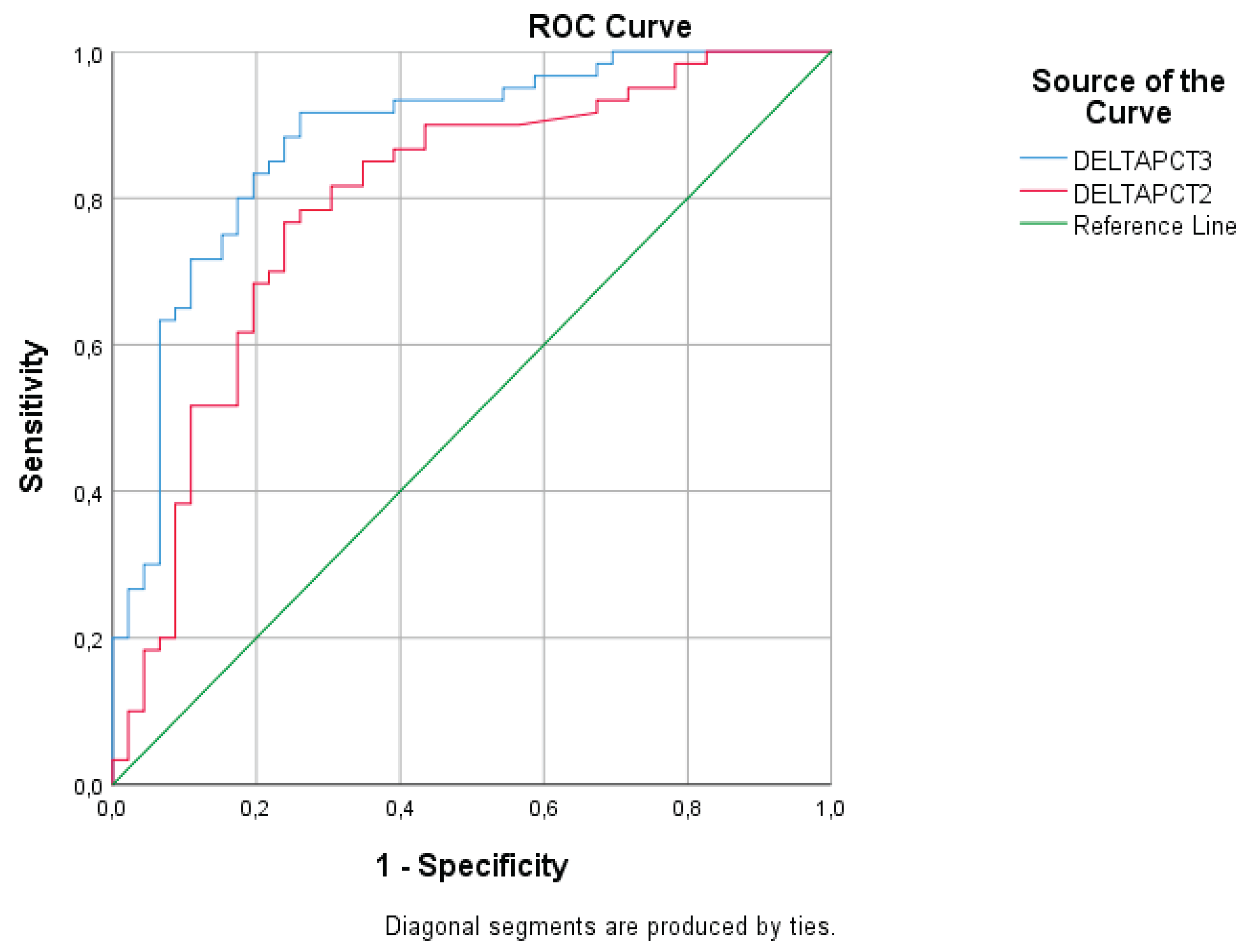
Figure 1. ROC Curve for 48 and 72-hour Procalcitonin decrease.
Preprints 199632 g001
Table 1. Distribution of categorical variables in the study cohort (n = 106).
Variable Categories n (%)
Sex Female 38 (35.8)
Male 68 (64.2)
Sepsis category Sepsis 76 (71.7)
Septic shock 30 (28.3)
Diabetes mellitus Present 52 (49.1)
Absent 54 (50.9)
Hypertension Present 65 (61.3)
Absent 41 (38.7)
COPD Present 33 (31.1)
Absent 73 (68.9)
Chronic kidney disease Present 41 (38.7)
Absent 65 (61.3)
Coronary artery disease Present 34 (32.1)
Absent 72 (67.9)
Source of infection Community-acquired 42 (39.6)
Hospital-acquired 64 (60.4)
Blood culture result No growth 57 (53.8)
Growth present 42 (39.6)
Culture not obtained 7 (6.6)
Pathogen type No pathogen detected 62 (58.5)
Gram-negative 23 (21.7)
Gram-positive 12 (11.3)
Fungal 8 (7.5)
Viral 1 (0.9)
Empiric antibiotic adequacy Adequate 34 (32.1)
Inadequate 9 (8.5)
Unknown 62 (58.5)
RRT modality None 75 (70.8)
IHD 13 (12.3)
CRRT 7 (6.6)
Chronic HD patient 11 (10.4)
AKI stage No AKI 29 (27.4)
Stage 1 13 (12.3)
Stage 2 10 (9.4)
Stage 3 42 (39.6)
Chronic HD 12 (11.3)
AKI outcome No AKI 31 (29.2)
Complete recovery 27 (25.5)
Partial recovery 7 (6.6)
ESRD 9 (8.5)
AKI-related death 32 (30.2)
30-day mortality Survived 60 (56.6)
Died 46 (43.4)
Data are presented as number (%). AKI: acute kidney injury; CKD: chronic kidney disease; COPD: chronic obstructive pulmonary disease, RRT: Renal Replacement Therapy, HD: Hemodialysis.
Table 2. Continuous variables compared between survivors and non-survivors.
Variable Survivors Mean ± SD Non-survivors Mean ± SD p-value
Age (years) 68.92 ± 16.82 73.17 ± 12.87 0.431
APACHE II 21.15 ± 7.22 37.54 ± 11.58 <0.001
SOFA 6.60 ± 2.94 8.71 ± 3.50 0.001
Procalcitonin (baseline) 24.00 ± 32.24 18.56 ± 32.83 0.027
Creatinine (baseline) 2.18 ± 1.86 2.61 ± 1.89 0.086
Estimated GFR (baseline) 52.33 ± 33.79 37.33 ± 29.66 0.086
MeanGFR (kinetic) 56.71 ± 32.43 38.30 ± 27.04 0.007
DeltaPCT1 (log10) −0.1668 ± 0.1948 −0.0103 ± 0.2636 0.002
DeltaPCT2 (log10) −0.4157 ± 0.2868 0.0080 ± 0.5158 <0.001
DeltaPCT3 (log10) –0.7684 ± 0.4349 0.0943 ± 0.7413 <0.001
Albumin (baseline) 30.38 ± 6.21 28.36 ± 5.54 0.092
Days until death 2.37 ± 10.33 9.41 ± 6.58 0.608
Values are expressed as mean ± standard deviation. Group comparisons were performed using Student’s t-test or the Mann–Whitney U test, as appropriate based on data distribution. ΔPCT values were calculated as the logarithmic ratios of procalcitonin concentrations measured at 24, 48, and 72 hours to baseline values obtained at ICU admission (ΔPCT = log₁₀[PCT_follow-up / PCT_baseline]).
Table 3. Multivariable logistic regression models predicting 30-day mortality.
Model p-value OR (Exp B) 95% CI Accuracy (%)
Model 1 (APACHE II + ΔPCT2) <0.001 20.48 2.92–143.70 82.1
Model 2 (SOFA + ΔPCT2) <0.001 22.72 4.18–123.59 78.3
Model 1 (APACHE II + ΔPCT3) <0.001 1.202 1.10–1.32 84
Model 2 (SOFA + ΔPCT3) <0.001 42.718 9.04–201.89 84
OR, odds ratio; CI, confidence interval. ΔPCT2 and ΔPCT3 were calculated as the logarithmic ratios of serum procalcitonin concentrations at 48 and 72 hours, respectively, to baseline values obtained at ICU admission (ΔPCT2 = log₁₀[PCT₄₈h / PCT₀h]; ΔPCT3 = log₁₀[PCT₇₂h / PCT₀h]). Multivariable logistic regression models were constructed using APACHE II or SOFA scores in combination with ΔPCT, as well as ΔPCT alone. Model accuracy represents the overall correct classification rate.
Table 4. Area under the ROC curve for mortality prediction.
Predictor AUC Std Error p-value 95% CI
APACHE II + ΔPCT2 0.904 0.029 <0.001 0.846–0.961
SOFA + ΔPCT2 0.814 0.044 <0.001 0.728–0.900
ΔPCT2 0.793 0.046 <0.001 0.703–0.883
APACHE II 0.877 0.037 <0.001 0.804–0.950
SOFA 0.676 0.054 0.002 0.569–0.782
APACHE II + ΔPCT3 0.948 0.018 <0.001 0.912–0.984
SOFA + ΔPCT3 0.885 0.032 <0.001 0.821–0.948
ΔPCT3 0.878 0.035 <0.001 0.810–0.946
AUC, area under the curve; CI, confidence interval. ROC p-values test the null hypothesis that the true AUC equals 0.5. ΔPCT2 and ΔPCT3 were calculated as log₁₀ ratios of serum procalcitonin levels at 48 and 72 hours, respectively, to baseline values obtained at ICU admission.
Disclaimer/Publisher’s Note: The statements, opinions and data contained in all publications are solely those of the individual author(s) and contributor(s) and not of MDPI and/or the editor(s). MDPI and/or the editor(s) disclaim responsibility for any injury to people or property resulting from any ideas, methods, instructions or products referred to in the content.
Copyright: This open access article is published under a Creative Commons CC BY 4.0 license, which permit the free download, distribution, and reuse, provided that the author and preprint are cited in any reuse.
Prerpints.org logo

Preprints.org is a free preprint server supported by MDPI in Basel, Switzerland.

Subscribe

Disclaimer

Terms of Use

Privacy Policy

Privacy Settings

© 2026 MDPI (Basel, Switzerland) unless otherwise stated
