
Submitted:
08 January 2026
Posted:
09 January 2026
You are already at the latest version
Abstract
The use of various traditional medicines like Unani, Siddha and Ayurveda has been practiced by indigenous cultures over time to treat health concerns. Traditional knowledge of using plants to heal is well-documented throughout India through numerous texts of Indian Medicinal Plants, providing valuable information about the use of plants for medicinal purposes. The traditional knowledge of the medicinal properties of Indian medicinal plants can also be applied utilizing phytoplasmic groups to help facilitate the healing process or promote the health of the patient being treated. The Phytoplasm Groups of Indian Medicinal Plants were classified into six distinct categories; alkaloids, flavonoids, terpenes, saponins, glycosides and phenolic compounds. The separate pharmacological properties of each phytoplasmic group used in traditional medicine are beneficial in their own right and provide numerous health benefits. This review's objective is to list and describe the different Phytoplasm Groups found in Indian medicinal plants along with their pharmacological properties. Additionally, the pharmacological applications of phytoplasm from Indian medicinal plants include Antioxidant activity, Anti-inflammatory properties, Antimicrobial activity, Anti-diabetic properties, Anti-cancer activities, Hepatoprotective activity and Neuroprotective activity. Furthermore, the potential therapeutic uses of phytoplasm are based on the scientific validation of phytoplasm from Indian medicinal plants and therefore the development of new phytoplasm derived medicines should be based on the scientific validation of Indian medicinal plants to provide users with the maximum therapeutic benefits possible and utilize high-quality phytoplasm. The methodology was the main reason for the content of this review.

Keywords:
Indian medicinal plants
; phytochemical groups
; traditional medicine systems
; pharmacological activities
; herbal therapeutics
; bioactive phytoconstituents
1. Introduction
The healing practices developed by Indigenous peoples stemmed from thousands of years of experimental treatment of sickness and continue to have an influence on the use of plant-based medicine today [4]. Before the development of contemporary medicine, plants were the source of plant-based medicine around the world, and through experimentation and observation by the various cultures, people began to develop a large amount of knowledge regarding the medicinal properties of plants. Over time, various cultures have identified hundreds of various species of plants that can provide healing effects. Today, many cultures around the world continue to rely on traditional plant-based medicine as their preferred form of healthcare. India possesses a very large collection of different varieties of medicinal plant species, making it one of the largest countries with the largest array of varieties [5,6]. This is due to India’s diverse and vast geography and climate, with thousands of species of plants having traditional use in various communities (and in many cases documented in ancient texts). The large diversity of plant species allows for the treatment of a very broad variety of diseases and health conditions, both acute and long-term. Because of this large diversity of plant species, Indian scientists are producing a great deal of new scientific evidence supporting the use of traditional plant-based medicinal systems.
1.1. Traditional Knowledge and the Global Relevance of Medicinal Plants
A significant number of native medicinal plants are found in India because of the country’s vast range of geographic and climatological environments. India has documented thousands of species of plants through both traditional texts as well as through extensive ethnomedical records that are utilized in multiple systems of traditional medicine for therapeutic use; consequently, many plant species from India are being studied internationally for their ability to treat virtually all types of illnesses and health conditions. The long history associated with Traditional systems of medicine (Ayurveda, Siddha, Unani) can be traced back to antiquity and is, therefore, an integral part of the indigenous systems of healthcare [7].
1.2. India as a Repository of Medicinal Plant Diversity and Traditional Medical Systems
Traditional systems of medicine include an overall philosophy of health and wellness (Ayurvedic, Siddha and Unani) based on a holistic approach to wellness that addresses health promotion and disease prevention in conjunction with the treatment of disease. Plant material is the primary source of treatment in traditional medicine; that is, multiple plant organs (roots, leaves, bark, seeds, fruit), either alone or in combination, are used to treat illness in the traditional systems of medicine. Medicinal plant material has been historically safe and effective for the promotion of health and for their use in treatment of disease in the traditional systems of medicine [4,7].
It has been demonstrated through multiple peer-reviewed scientific studies over the last several decades that there are many herbal sources with novel chemical profiles of bioactive compounds (commonly known as "phytochemicals"). Through extensive research and investigation into these natural products, researchers have discovered an increasing number of phyto-chemical classes, including many various types of phytochemicals within several different types of phyto-chemical classes. Most of the time they are classified into six primary classes; that includes alkaloid, flavonoid, terpenoid, saponin, glycoside, and phenolic compound, etc [8].
1.3. Phytochemicals: Chemical Diversity and Pharmacological Significance
As time passes and continues, researchers are able to identify new types and types of phytochemicals, and classify them based on both their chemical structure and known pharmacological mechanisms on a hyper daily basis. The pharmacological actions and effects of these chemical compounds are; they possess antioxidant, anti-inflammatory, antimicrobial, antidiabetic, anti-tumor/anti-cancer properties, as well as neuroprotective properties (to help prevent or lessen the risk of developing a neurological disorder). This growing interest in using phytochemicals as a means to create and produce medicine is because there is scientific evidence supporting that phytochemicals could be used to make medications following the evidenced-based medicine principle/practice(s) and create an evidence-based medicine. The scientific evidence supporting these claims regarding herbal medicine and phytochemical usage has served as a foundation of faith and reliability for pharmacognosy (the study of herbal/natural products) in the plant medicine community [8,9]. In addition to the studies demonstrating evidence for the claims made regarding the use of herbal/natural products, the majority of the currently utilized pharmaceutical medications are linked back (originally) to plant sources, hence the topic of phytochemicals as a possible candidate for creating pharmaceutical products. Although there is a wealth of knowledge from traditional Indian Medicine systems as well as growing scientific interest and knowledge of phytochemicals found in hundreds of Indian Medicines, the majority of these plants and their constituents are still "underutilized" [10].
1.4. Challenges, Underutilization, and Scope of the Present Review
The absence of international standards for Indian Medicines as well as challenges related to quality assurance, product standardization and lack of comprehensive pharmacological evaluation have severely restricted their ability to become fully incorporated into modern healthcare systems. To ensure that phytochemicals are used safely and effectively, we believe it is critical to consistently and systematically document their presence in all of these hundreds of Indian Medicines and perform a critical review of that information. The current review will provide a comprehensive summary of all of the main categories of phytochemicals found in Indian Medicines and will focus on the historical and traditional uses/manufacturing processes for these phytochemicals as well as those which have been validated by scientific study as to their therapeutic value. By integrating traditional knowledge with current research into Phytochemical profiles, this article aims to underscore the value of the use of Phytochemicals in developing safe, effective and high-quality Phytomedicines [9,11].
2. Overview of Indian Medicinal Plants
2.1. India as the “Botanical Garden of the World”
Due to its historical use of medicines from plants and the large amount of plant diversity found in this country, India is sometimes called "the global botanical garden" [12]. India has habitats for all four major classifications of ecological and climatic diversity of the world: tropical habitats, subtropical habitats, temperate habitats and alpine/arid habitats. All of these ecological habitats total approximately 8% to 9% of the total plant diversity of the world. Therefore, the continued development and survival of many species of medicinal plants that have been used for centuries to treat different ailments have evolved in these four major ecological habitats. The ancient texts that discuss Ayurveda, Siddha and Unani medical systems, in addition to many ethnomedicinal records found throughout India, comprise a complete historical record for all plants that are part of India’s contribution to the global repository of plant medicines [7].
2.2. Commonly Used Indian Medicinal Plants and Their Therapeutic Relevance
International acknowledgement of certain Medicinal Plant Species in India resulted from Scientific Validity evidenced by Effectiveness for Several Conditions Medically. By way of example, Azadirachta indica (known commonly as Neem) has historically been used in Traditional Indian Medicine Historically for its Antiviral, Antibacterial, Antifungal, and Immune Stimulating Properties. Similarly, Ocimum sanctum (also known as Tulsi) may promote better Health by decreasing Chronic Stress and increasing Energy, through Adaptogenic Mechanisms (the ability to adapt). Avoiding Stress, improving Vitality, and using Withania somnifera (common name Ashwagandha) to relieve Stress and increase Vitality, the Adaptogen is already well known. Another example is Curcuma longa (most often referred to as Turmeric), which has certainly generated interest due to Curcumin’s potential Anti-Inflammatory, Antioxidative and Anti-Cancer effects. Thus, these represent how Traditional Indian Medicine has developed into Evidence-Based Medicine based on Pharmacology [12].
2.3. Traditional Versus Modern Utilization of Indian Medicinal Plants
The Indian medicinal plants have typically been in the form of using raw plant as drugs, decoction procedures (boiling), powder from plant materials used for remedy; or a combination of many plant types which function together in helping a person who suffers from sickness or an injury, based on holistic principles. Traditional systems of medicine have placed more emphasis on restoring the body back to a state of balanced metabolism and on supporting a person’s overall health than on treating just isolated symptoms [13]. In contrast, the focus of products that use these plants today is on separating the individual chemical components that have specific pharmacological actions and understanding how they are interrelated to produce their overall effectiveness. The advancements in the areas of phytochemistry, pharmacology and analytical techniques to create a means of developing evidence-based nutraceuticals or phytomedicinals utilizing information-taken from the historical tradition of the Indian medicinal plant are also contributing to greater worldwide acceptance of Indian medicinal plants into the other drug discovery and development pipelines operating today [11].
2.4. Relevance to Contemporary Research and Healthcare
Due to an increasing interest in natural/plant-based therapies across the globe, Indian medicinal plants represent a resource that is increasingly viewed as useful in helping alleviate chronic disease and/or disease caused by lifestyle choices. Indian medicinal plants have shown strong historical data regarding their use, extensive safety profiles when appropriately prepared and administered, and the ability to affect multiple body systems [14]. Therefore, it is important to continue researching and developing Indian medicinal plants in a manner that can eventually lead to their acceptance and/or approval by clinical professionals through the regulatory framework that has been established. As a result, Indian medicinal plants serve as a bridge between traditional medicine and modern pharmaceutical research and provide an opportunity for publication in Scopus-indexed journals that operate under such themes and expectations [15].
Major Indian Medicinal Plants and Their Phytochemical Constituents

Table 1.
Major Indian Medicinal Plants and Their Phytochemical Constituents.
| Sr. No. | Botanical name | Common Name | Plant part Used | Major Phytochemical Constituents | Primary Therapeutic Uses |
| 1. | Azadirachta Indica | Neem | Leaves, Bark, Seeds | Limonoids (Azadirachtin), flavonoids, tannins | Antimicrobial, antiviral, immunomodulatory |
| 2. | Ocimum sanctum (O. tenuiflorum) | Tulsi | Leaves, aerial parts | Eugenol, ursolic acid, flavonoids, terpenoids | Adaptogenic, anti-stress, antioxidant |
| 3. | Withania somnifera | Ashwagandha | Roots | Withanolides, alkaloids, steroidal lactones | Anti-stress, neuroprotective, vitality enhancer |
| 4. | Curcuma longa | Turmeric | Rhizome | Curcuminoids (curcumin), volatile oils | Anti-inflammatory, antioxidant, anticancer |
| 5. | Rauwolfia serpentina | Sarpagandha | Roots | Indole alkaloids (Reserpine) | Antihypertensive, sedative |
| 6. | Catharanthus roseus | Sadabahar | Leaves | Vincristine, vinblastine (alkaloids) | Anticancer, antidiabetic |
| 7. | Tinospora cordifolia | Giloy | Stem | Diterpenoid lactones, glycosides | Immunomodulatory, antipyretic |
| 8. | Emblica officinalis (Phyllanthus emblica) | Amla | Fruits | Phenolics, flavonoids, vitamin C | Antioxidant, hepatoprotective |
| 9. | Terminalia chebula | Haritaki | Fruits | Tannins, phenolic acids | Digestive, antimicrobial |
| 10. | Glycyrrhiza glabra | Mulethi | Roots | Glycyrrhizin, flavonoids, saponins | Anti-inflammatory, hepatoprotective |
3. Phytochemical Constituents of Medicinal Plants
In terms of treating conditions and areas, almost all types of plants contain a number of different phytochemicals with therapeutic properties. In addition to the advantages of producing phytochemicals, many plants also provide secondary metabolites, which are produced naturally by the plant in response to both biotic and abiotic imbalances. Each of the above-mentioned types of phytochemicals can have a plethora of benefits when utilised in human medicine for a variety of physiologic systems [15,16].
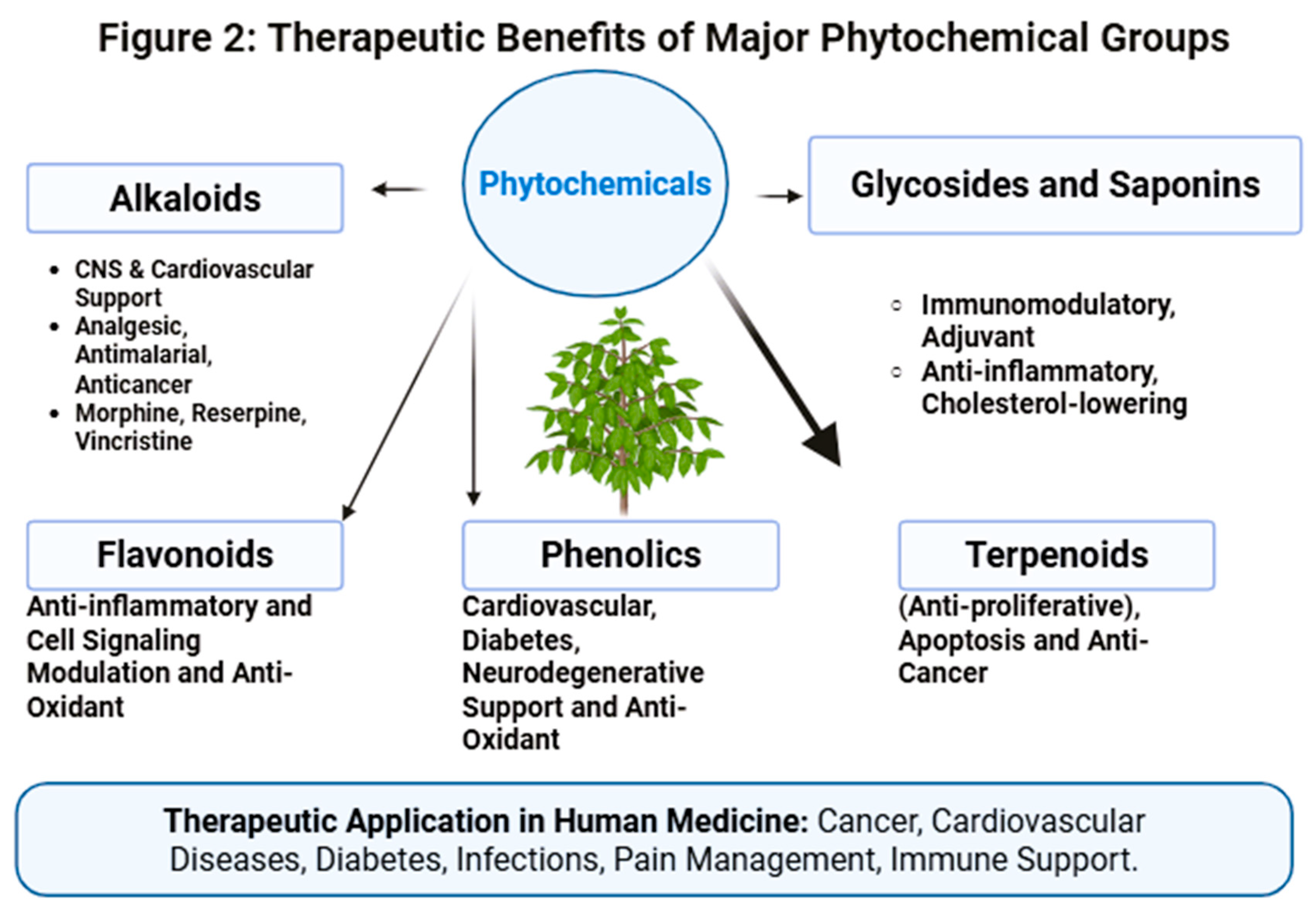
Alkaloids, flavonoids, phenolics, terpenoids (essential oils), and glycosides are the five main phytochemical groups listed above; each of these groups has unique characteristics (chemical structure) that yield a distinct biological activity. As evidenced through research studies comparing these chemical compounds, alkaloids (nitrogen-containing phytochemicals) have a variety of physiological effects on the CNS and cardiovascular systems. Prescription medications derived from plants that belong to the alkaloid family include morphine, reserpine and vincristine, this supports the necessity for alkaloids in modern medicine. On the other hand, flavonoids have been studied extensively for their antioxidant properties and ability to neutralise reactive oxygen species and modulate cell signalling, making them the most prevalent phytochemical class [16,17].
Plants generate many so-called phytochemicals. Chemical composition can be used to organize these compounds into several groups. One such family of phytochemical and the most often seen phenolic component gotten from plants is phenols. Among the plant phytochemicals with remarkable antioxidant characteristics are phenolic compounds. They therefore offer a strong way of treating oxidative stress induced free-radical illness. Heart disease, type 2 diabetes, and specific kinds of degenerative dementia are among the examples of these illnesses. But they are not restricted to just these. The chemical composition of phenolic compounds is classified as terpenoid, a sub-class of secondary metabolites. Shortly after the discovery of terpenoids, phenolic compounds were also found to exhibit secondary metabolic activity [18]. Phenolic and terpenoid based compounds have demonstrated potential in the cure of numerous kinds of disorders including cancer, acute inflammation, and certain bacterial infections since that moment. Still other phytochemicals that include sugar, the glycoside moiety connected to the aglycone the active component are classified as glycosides. Though saponins can also be used for their anti-inflammatory, cholesterol-lowering, immunomodulatory, and cardiac glycoside effects that help to improve the contractile ability of the heart, glycosides and saponins both share a common feature of several therapeutic advantages. Multiple applications for phytochemicals made by medical plants exist across several civilizations; therefore, ongoing study and isolation of these chemicals will probably produce fresh sources [19].
3.1. Alkaloids
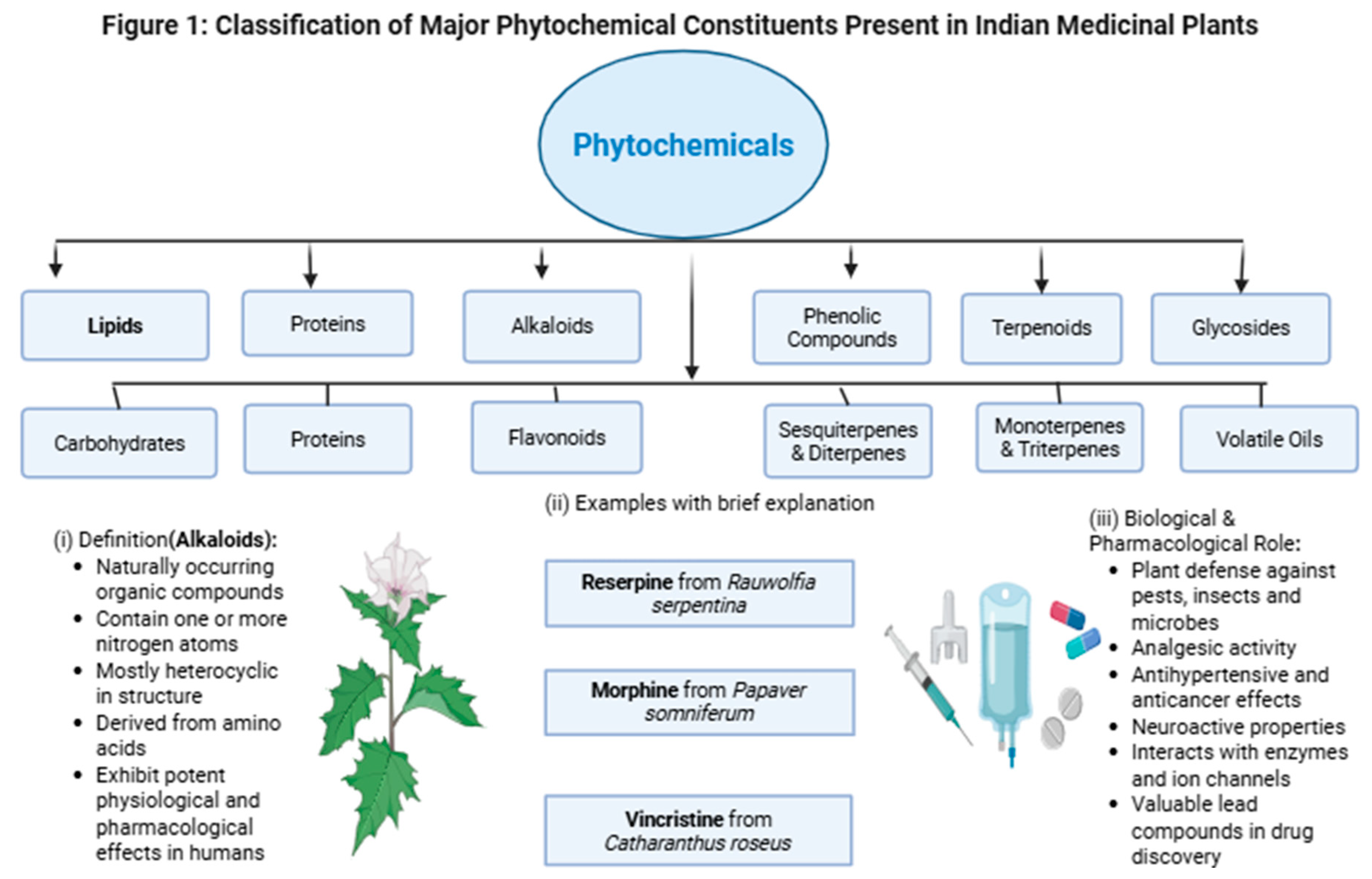
(i) Definition- Alkaloids are naturally occurring organic compounds that are produced from the plants that they are found in, and have been characterised by having one or more nitrogen atoms in a molecular structure [20]. Alkaloids have a typical structure consisting of a heterocyclic ring containing most of the carbons present within it. Most alkaloids produced by plants are secondary metabolic products, i.e. they are not produced during the life cycle of the plant. Their physiological and/or pharmacological activity has a powerful impact on humans [21]. Alkaloids include an acid that originated from an amino acid. There are four main plant families that produce the greatest number of alkaloids: the asparagus, poppy, nightshade and guava families. Because of their unique biological actions, alkaloids have become a major focus of the study of medicinal plants as well as the development of new medicines [20,21].
(ii) Examples with brief explanation- Alkaloids from the factory area are the source of numerous essential medicinal composites. Two well- known exemplifications of this type of alkaloid are reserpine for the treatment of hypertension, deduced from Rauwolfia Serpentina, and morphine for the relief of pain, deduced from Papaver Somniferum. Both of these specifics have been used for numerous times and act on the central nervous system [15]. Another illustration is vincristine, which is deduced from Catharanthus Roseus and inhibits the conformation of new cancer cells; vincristine is extensively used to treat leukemia and other forms of cancer. These three exemplifications demonstrate how alkaloids can be employed to produce new medicinal products for the treatment of complaint [18].
(iii) Biological & pharmacological role- Biologically, alkaloids play a pivotal part in factory defense mechanisms by guarding shops against beasties, insects, and microbial pathogens. In humans, alkaloids parade a wide range of pharmacological conditioning, including analgesic, antihypertensive, antimalarial, anticancer, and neuroactive goods. Their capability to interact with enzymes, receptors, and ion channels makes them precious lead composites in medicine discovery. Due to their high energy and particularity, alkaloids continue to be considerably studied for the development of new remedial agents [22].
3.2. Flavonoids
Flavonoids are an example of several active compounds within healing plants that provide varying types of benefits. As polyphenolic compounds, flavonoids have strong antioxidant properties, and could possibly prevent damage from oxidative stress, plus they have anti-inflammatory effects [16]. The use of flavonoids may help lower your risks for a variety of health-related problems including cancer, heart disease, and diseases of the brain. Additionally, flavonoids influence inflammation’s production of some chemical messengers (for example, NF-kB and lipoxygenase) [21,23].
3.3. Phenolic Compounds
The phenolic compound class, which comprises an array of synthetic molecules, is found in countless programs of pharmaceutical plant sources as part of their secondary metabolism and features one or multiple hydroxyl (-OH) functional groups that are part of a phenol system [24]. Phenolics are important to the immunity of plants and provide valuable benefits to human well-being. Among phenolic compounds, the most common groupings on dollar amounts are phenolic acids, tannins and related polyphenolic compound structures [7]. There is considerable documentation and well-established knowledge of these groups on their properties as powerful antioxidants that exhibit their effects primarily because of their ability to donate or pass hydrogen and/or electrons to reactive oxygen species (ROS) and chelate various metals in the body to neutralize them. In addition to their antioxidant features, phenolics are also involved in protecting certain components (lipids, proteins, and nucleic acids) from being oxidatively damaged by ROS, therefore keeping cells and organisms in redox equilibrium [12]. Oxidative stress is closely associated with the pathogenesis of several chronic diseases, including cardiovascular disorders, diabetes, neurodegenerative diseases, and certain cancers. Dietary and plant-derived phenolic compounds have been shown to modulate key molecular pathways involved in inflammation, apoptosis, and cellular signaling. Their regular intake may reduce low-grade chronic inflammation and improve antioxidant defense mechanisms, thus lowering disease risk. Owing to these protective effects, phenolic compounds are increasingly explored as natural therapeutic agents and functional food components for the prevention and management of chronic diseases [25].
3.4. Terpenoids
The largest family of phytochemicals (terpenoids (aka terpenes) have the most structurally diverse types, but all terpenoids are based on isoprene units that create the basis for categorising terpenoids into the following groups: monoterpenes, sesquiterpenes, diterpenes, and triterpenes. Each class has distinct biological [medicinal] properties [26]. While terpenoids possess antimicrobial and anticancer properties, they also represent an integral part of the plant’s defence mechanism and contribute to the pharmacological activities of herbal medicines [19]. Certain Terpenes have been shown to act on a wide range of bacteria, fungi and viruses via their ability to disrupt cellular membranes of invading microorganisms, to repress the enzymatic systems of those cells, and to obstruct the metabolism of those cells. While terpenoid compounds possibly provide future therapeutic options for treating infections, the worldwide scientific community is presently researching the anticancer potential of terpenoids [27]. Numerous documented studies have reported the anticancer properties of terpenoid compounds showing the ability to inhibit proliferation of certain types of cancer cell growth and induce apoptosis and inhibit angiogenesis and metastasis and alter key cellular signalling pathway mechanistic systems [17].
3.5. Glycosides and Saponins
Glycosides and saponins are two large groups of chemical compounds that are produced by plants and have been historically recognized for their health (therapeutic) qualities [28]. Researchers have been documenting the therapeutic properties of medicinal plants throughout history. Glycosides are a type of chemical compound containing one or more monosaccharides linked to a glycosylated group (aglycone). The aglycone may be from any of the following compound classes: phenolics, flavonoids, triterpenes/steroids and/or a variety of other chemically diverse organic compounds [11]. In many ways, cardiac glycosides are perhaps of the most interest within this group of compounds due to their impact on the cardiovascular system (heart) and particularly in regard to the development of congestive heart failure from the use of cardiac glycosides. By inhibiting sodium/potassium ATPase in the myocardial cells, cardiac glycosides greatly increase the pumping (contractility) of the heart and greatly increase the overall pumping ability of the heart (cardiac output) leading to the subsequent development of congestive heart failure in the CHF patient population [29]. Cardiac glycosides also have other therapeutic benefits which are of interest to researchers who want to better understand the implications for other therapeutic applications in patients. Saponins are also classified as glycosides, however saponins are a subgroup of glycosides and have surfactant properties [30]. Saponins are known to have a multitude of potential biological activities associated with their action in the body usually associated with their ability to modulate immune functions. Research has shown that saponins appear to enhance macrophage (white blood cell type) function such that there is an increase in the production of pro-inflammatory cytokines and antibodies, which translates into an increase in both the innate and adaptive immune responses. Thus, there is a growing body of literature assessing the use of saponins as adjuvants to vaccines, and other medical applications [21].
Figure 1.
Classification of major phytochemical constituents present in Indian medicinal plants.
4. Therapeutic Potential of Indian Medicinal Plants
The many positive effects of Indian traditional herbal medicine over an extended timeline and the multitude of bioactive phytochemicals present in these medicinal herbs is due to their wide variety of therapeutic functions. Aside from providing an abundance of antioxidant activity which prevents damage from free-radicals and decreases the oxidative stress experienced by an individual, these same herbals also provide a significant means of protecting an individual against multiple metabolic-like chronic diseases. Similarly, the anti-inflammatory benefits of these medicinal herbs are largely due to their ability to modulate the major inflammatory mediators [31]. Furthermore, several of the medicinal herbs have proven to exhibit very strong broad-spectrum antimicrobial activity as a protective agent against viral, bacterial and fungal infection. And finally, many of the plant-derived compounds are shown to regulate glucose and increase insulin sensitivity in diabetic patients. In addition to anticancer activity through tumor inhibition, inducing apoptosis, and decreasing metastasis, several Indian medicinal plants have demonstrated neuroprotective effects, including protection of neuronal cells and enhancement of cognitive function through constituents found in these herbs. All of these therapeutic activities illustrate the value of Indian Medicinal Plants in the development of safe and effective natural therapies [32].
Figure 2.
Therapeutic activities of phytochemicals derived from medicinal plants.
4.1. Antioxidant Activity
In India, traditional medicine has used many different types of medicinal plants that contain rich sources of phenolic and flavonoids as well as tannins and terpenoids, most of which offer natural ways to protect against the harmful effects of oxidative stress on human health. It has been shown that these compounds can help eliminate free radicals that are a by-product of normal metabolism. North America and Europe both have a large amount of exposure to free radicals through their diet, leading to an increase in oxidative damage and related diseases such as diabetes, neurological disorders and cardiovascular disease, and traditional solutions for antioxidant therapy have been a cornerstone of the healthcare systems of many cultures, including many indigenous peoples who utilize them as a primary approach for maintaining health [33].
4.2. Anti-Inflammatory Activity
Chronic Inflammation is the primary cause of many metabolic and degenerative diseases. Using Indian herbal medicine to alter various mediators of inflammation, including cytokines, prostaglandins and nitric oxide, along with other products, results in Strong Anti-Inflammatory Activities [34]. Examples of such bioactive substances include Flavonoids, Alkaloids and Terpenoids that interfere with key inflammation-related Signalling Pathways, thus helping to minimise Tissue Damage / Pain caused by chronic inflammation-related disorders. These Properties support the use of Herbal Medicines historically for a range of Inflammatory Disorders [31].
4.3. Antimicrobial Activity
A number of scientific investigations have been performed examining the effects of traditional Indian Herbal Medicine against different types of disease-causing (pathogenic) microorganisms [25]. The active components found in herbal products (including oils made from plants, phenolic compounds, and saponins) affect the structure of the bacterial cell wall, hinder the work of several types of bacteria-generating enzymes, and prevent the development of ribonucleic acid (RNA) and deoxyribonucleic acid (DNA). Additionally, these active ingredients produce antibacterial, antifungal, and antiviral effects that can help both patients using traditional Indian Herbal Medicine and healthcare practitioners in their fight against antibiotic resistance that is becoming more widespread throughout the world [35].
4.4. Antidiabetic Activity
Among the Indian plants used for medicinal purposes, the most potent ones antidiabetic effects are those that not only maintain the blood sugar levels but also facilitate the insulin function in the organism [31]. The primary substances like flavonoids, alkaloids, and glycosides are chiefly the ones having various ways of action; they not only allow the glucose level in the cells to be higher but also stop the action of the enzyme which breaks carbohydrates down and at the same time, they hinder the pancreatic β-cells from being damaged by oxidative stress [34]. Consequently, all these processes culminate in improved blood sugar control and reduced suffering from diabetes-related problems; hence, the medicinal plants are deemed as one of the supporting measures in the treatment of diabetes mellitus [21].
4.5. Anticancer Activity
Where cancer is a multi, stage problem, Indian herbal medicines have shown the capability of influencing various stages. Consequently, their anticancer potential has become a major area of scientific research [31]. Phytochemical agents have the power to make cancer cells growth arrest, induction of apoptosis, inhibition of angiogenesis, and metastasis. Further, their antioxidant and anti, inflammatory properties that come from less DNA damage and less chronic inflammation also help in cancer prevention [36]. Because of their different effects, medicinal plants are becoming fascinating candidates for the development of new anticancer drugs [5].
4.6. Neuroprotective Effects
Neurodegenerative diseases are linked to oxidative stress, inflammation, and neurotransmitter imbalance to a high extent [37]. Nevertheless, the Indian herbal medicine is being referred to the nature’s best neuroprotective agents, the means being various like amplifying the body’s antioxidant defense, controlling the inflammation in the nervous system, and saving the neurons from dying [14]. Besides, several plant-based compounds along with nootropic effects are also affecting the neurotransmitters as they have a role in the cognitive process. The properties of the mentioned plants open the door for the use of herbal medicine in treating old disorders such as Alzheimer’s, Parkinson’s, and Anxiety that were the main references of herbal medicine in the past, as they are still in use.
Pharmacological Activities of Important Phytochemicals
Table 2.
Pharmacological Activities of Important Phytochemicals.
| Sr. No. | Phytochemical Group | Representative Compounds | Pharmacological Activities | Mechanism of Action |
| 1. | Alkaloids | Morphine, reserpine, Vincristine | Analgesic, antihypertensive, anticancer, neuroactive | Interaction with receptors, ion channels and enzymes |
| 2. | Flavonoids | Quercetin, Kaempferol | Antioxidant,anti-inflammatory, cardioprotective | Free-radical scavenging, modulation of signaling pathways |
| 3. | Phenolic compounds | Gallic acid, Tannins | Antioxidant, anti-inflammatory, antimicrobial | Hydrogen donation, metal chelation, ROS inhibition |
| 4. | Terpenoids | Limonene, Withanolides | Antimicrobial, anticancer, anti-inflammatory | Membrane disruption, apoptosis induction |
| 5. | Glycosides | Digoxin, Sennosides | Cardiotonic, laxative | Inhibition of Na⁺/K⁺-ATPase, smooth muscle stimulation |
| 6. | Saponins | Ginsenosides, Diosgenin | Immunomodulatory, cholesterol-lowering | Immune cell activation, membrane permeability alteration |
5. Role of Phytochemicals in Drug Discovery
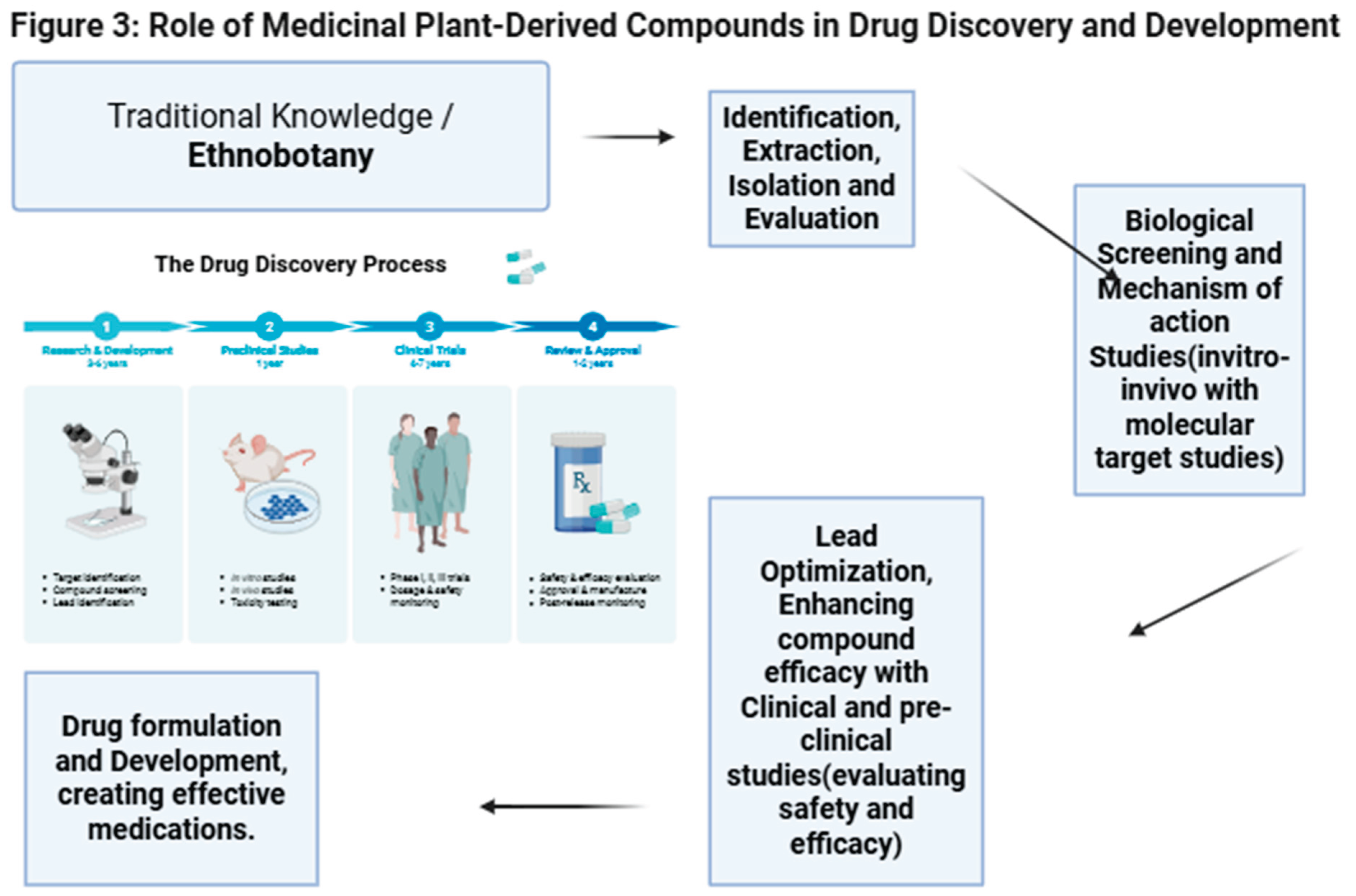
Phytochemicals have been crucial to drug discovery in modern times, as they have been very helpful in coming up with new drug molecules. Chemistry of nature has bestowed us with medicinal plants that are very diverse and very complex; very often, these properties result in high biological specificity and hence, high potency [38]. A large number of contemporary drugs have been either directly or indirectly derived from phytochemicals coming from plants; this emphasizes the importance of plant materials in research and development of pharmaceuticals. Examples include paclitaxel, derived from the Taxus plant, that is used in cancer treatment, artemisinin, extracted from a shrub called Artemisia annua, for the treatment of malaria, and, digoxin, procured from plant Digitalis species, for heart issues [39]. The simultaneous advancement of the mentioned above technologies and methods has contributed greatly to the discovery of plant-derived active ingredients for possible drug development. Besides, plant-derived compounds also offer a good basis for semi-synthetic modifications with the purpose of enhancing the efficacy, safety, and bioavailability [35]. Notwithstanding the great strides that have been made in the field, still, a considerable number of plants with medicinal properties have not been thoroughly studied scientifically. One of the categories untouched by science are the plants categorized as "medicinal" in the traditional systems of medicine and the respective knowledge is not in the form of scientific literature [31]. Thus, the future research that combines ethnopharmacology with modern computer and laboratory approaches has the potential to discover plant-based drugs that are, besides being effective, safer too [38].
Examples of Plant-Derived Drugs Used in Modern Medicine
Table 3.
Examples of Plant-Derived Drugs Used in Modern Medicine.
| Sr. No. | Drug Name | Plant Source | Phytochemical Class | Therapeutic Application |
| 1. | Morphine | Papaver somniferum | Alkaloid | Pain management(analgesic) |
| 2. | Reserpine | Rauwolfia serpentina | Alkaloid | Hypertension, psychiatric disorders |
| 3. | Vincristine | Catharanthus roseus | Alkaloid | Leukemia, lymphoma |
| 4. | Digoxin | Digitalis species | Cardiac glycoside | Congestive heart failure |
| 5. | Paclitaxel | Taxus brevifolia | Diterpenoid | Breast and ovarian cancer |
| 6. | Artemisinin | Artemisia annua | Sesquiterpene lactone | Antimalarial therapy |
| 7. | Atropine | Atropa belladonna | Alkaloid | Antispasmodic, ophthalmic use |
Figure 3.
Role of medicinal plant–derived compounds in drug discovery and development.
6. Challenges and Future Perspectives
Phytochemicals, although they possess enormous therapeutic potential, still face numerous challenges that hinder their successful conversion into drugs. The foremost of these is the lack of standardization, which is mainly due to the fact that the phytochemical content of the same species of plants used for medicinal purposes can be very different because of the variations in geographical location, the manner of growing plants, the time of harvesting and methods of extracting the active ingredient [40]. Such differences in the quality of the crop are a major reason why researchers face problems in the reproducibility, performance, and safety of plant-derived formulations. Achieving quality control is still one of the most important difficulties, as it is an issue that is going to require the use of very advanced methods of analysis to be able to maintain the same quality of a cured batch in its successive ones, to know the quality of the plant and to be sure that there are no harmful substances or mixing with other plants [41]. Moreover, the problem of sustainability linked to the plants’ overharvesting and consequent extinction becomes an even bigger problem when one considers the need of the pharmaceutical companies for a large, steady supply of those plants for their long-term use, thus making the case for developing both conservation and cultivation methods even stronger. In addition, there is a huge clinical validation gap as a lot of phytochemicals are active in preclinical models but there are no properly designed clinical trials that would verify their efficacy and safety in humans [5,11,31,38]. Hence, the blending of this gap through the use of standard protocols, interdisciplinary cooperation, and the alignment of regulations will bolster the credibility of herbal medicine. In conclusion, the overcoming of these obstacles remains a prerequisite for the future switching of phytochemicals into the drug development process of evidence-based medicine [40].
7. Conclusion
The phytochemicals obtained from the medicinal plants are the substances that basically represent and at the same time greatly contribute to the modern pharmaceutical field of various traditional medical practices. The research conducted on these plant secondary metabolites, for instance, alkaloids, flavonoids, phenolics, terpenoids, and glycosides, among others, has shown their potential in antioxidant, anti-inflammatory, antimicrobial, antidiabetic, anticancer, and neuroprotective activities as well. Hence, through scientific means, the practitioners’ long-standing reliance on the herbs is justified and the resource is marked as an alternative source for new drug discovery, too. The merging of phytochemical research with modern analytic, computational, and biotechnological approaches has been a significant factor in their role in discovering novel lead molecules coming out. The high-throughput screening, molecular docking, metabolomics, and structure–activity relationship studies which are among the advanced methods being applied have all contributed to the better understanding of the phytochemicals’ action mechanisms and to the great potential of transforming them into promising drug candidates. It is clear that the plant-derived drugs that have already been approved for clinical use are successful examples of how natural products are still the main source of pharmaceutical innovation. Phytochemicals, however, the obstacles outlined above which are very important still remain: standardization, quality control, sustainability, and clinical validation. Thus, the establishment of uniform extraction protocols, batch-to-batch consistency, and stringent quality assurance measures should be the first steps taken to make phytochemical-based products more reproducible.
References
- Jumper, J.; et al. Highly accurate protein structure prediction with AlphaFold. Nature 2021, 596, 583–589. [Google Scholar] [CrossRef]
- Trott, O.; Olson, A.J. AutoDock Vina: Improving the speed and accuracy of docking. J. Comput. Chem. 2010, 31(2), 455–461. [Google Scholar] [CrossRef]
- Pires, D.E.V.; Blundell, T.L.; Ascher, D.B. pkCSM: Predicting small-molecule pharmacokinetic and toxicity properties. J. Med. Chem. 2015, 58(9), 4066–4072. [Google Scholar] [CrossRef] [PubMed]
- Garcia, S. Pandemics and traditional plant-based remedies. A historical-botanical review in the era of COVID19. Frontiers in plant science 2020, 11, 571042. [Google Scholar] [CrossRef]
- Kala, CP; Dhyani, PP; Sajwan, BS. Developing the medicinal plants sector in northern India: challenges and opportunities. Journal of Ethnobiology and Ethnomedicine 2006, 2(1), 32. [Google Scholar] [CrossRef]
- Ramawat, KG; Goyal, S. The Indian herbal drugs scenario in global perspectives. Bioactive molecules and medicinal plants 2008, 325–47. [Google Scholar]
- Jaiswal, YS; Williams, LL. A glimpse of Ayurveda–The forgotten history and principles of Indian traditional medicine. Journal of traditional and complementary medicine 2017, 7(1), 50–3. [Google Scholar] [CrossRef] [PubMed]
- Naji, EF; Abdulfatah, HF; Hashim, KS. Plant Secondary Metabolites, Their Classification and Biological Roles: A Review. Journal of University of Anbar for Pure Science 2024, 18(1). [Google Scholar] [CrossRef]
- Verma, N. Current regulatory challenges and approaches in the registration of herbal drugs in Europe. Clinical Research and Regulatory Affairs 2016, 33(1), 9–24. [Google Scholar] [CrossRef]
- Pandey, M; Debnath, M; Gupta, S; Chikara, SK. Phytomedicine: An ancient approach turning into future potential source of therapeutics. Journal of Pharmacognosy and phytotherapy 2011, 3(3), 27–37. [Google Scholar]
- Parvin, N; Aslam, M; Joo, SW; Mandal, TK. Nano-phytomedicine: harnessing plant-derived phytochemicals in nanocarriers for targeted human health applications. Molecules 2025, 30(15), 3177. [Google Scholar] [CrossRef]
- Fuloria, S; Mehta, J; Chandel, A; Sekar, M; Rani, NN; Begum, MY; Subramaniyan, V; Chidambaram, K; Thangavelu, L; Nordin, R; Wu, YS. A comprehensive review on the therapeutic potential of Curcuma longa Linn. in relation to its major active constituent curcumin. Frontiers in Pharmacology 2022, 13, 820806. [Google Scholar] [CrossRef] [PubMed]
- Rizvi, SA; Einstein, GP; Tulp, OL; Sainvil, F; Branly, R. Introduction to traditional medicine and their role in prevention and treatment of emerging and re-emerging diseases. Biomolecules 2022, 12(10), 1442. [Google Scholar] [CrossRef]
- Ahmad, S; Zahiruddin, S; Parveen, B; Basist, P; Parveen, A; Gaurav, N; Parveen, R; Ahmad, M. Indian medicinal plants and formulations and their potential against COVID-19–preclinical and clinical research. Frontiers in pharmacology 2021, 11, 578970. [Google Scholar] [CrossRef] [PubMed]
- Digital Transformation and Artificial Intelligence for Operational Excellence in Healthcare; Jaiswal, A, Mishra, V, Singh, N, Eds.; Emerald Group Publishing, 17 Nov 2025. [Google Scholar]
- Pham, DC; Shibu, MA; Mahalakshmi, B; Velmurugan, BK. Effects of phytochemicals on cellular signaling: reviewing their recent usage approaches. Critical reviews in food science and nutrition 2020, 60(20), 3522–46. [Google Scholar] [CrossRef]
- Williams, RJ; Spencer, JP; Rice-Evans, C. Flavonoids: antioxidants or signalling molecules? Free radical biology and medicine 2004, 36(7), 838–49. [Google Scholar] [CrossRef] [PubMed]
- Radulovic, NS; Blagojevic, PD; Stojanovic-Radic, ZZ; Stojanovic, NM. Antimicrobial plant metabolites: structural diversity and mechanism of action. Current medicinal chemistry 2013, 20(7), 932–52. [Google Scholar]
- Ogbuagu, OO; Mbata, AO; Balogun, OD; Oladapo, O; Ojo, OO; Muonde, M. Novel phytochemicals in traditional medicine: Isolation and pharmacological profiling of bioactive compounds. International Journal of Medical and All Body Health Research 2022, 3(1), 63–71. [Google Scholar] [CrossRef]
- Bhambhani, S; Kondhare, KR; Giri, AP. Diversity in chemical structures and biological properties of plant alkaloids. Molecules 2021, 26(11), 3374. [Google Scholar] [CrossRef]
- Wink, M. Modes of action of herbal medicines and plant secondary metabolites. Medicines 2015, 2(3), 251–86. [Google Scholar] [CrossRef]
- Egbuna C, Kumar S, Ifemeje JC, Ezzat SM, Kaliyaperumal S, editors. Phytochemicals as lead compounds for new drug discovery. Elsevier; 2019 Sep 7.
- Al-Khayri, JM; Sahana, GR; Nagella, P; Joseph, BV; Alessa, FM; Al-Mssallem, MQ. Flavonoids as potential anti-inflammatory molecules: A review. Molecules 2022, 27(9), 2901. [Google Scholar] [CrossRef]
- Elshafie, HS; Camele, I; Mohamed, AA. A comprehensive review on the biological, agricultural and pharmaceutical properties of secondary metabolites based-plant origin. International journal of molecular sciences 2023, 24(4), 3266. [Google Scholar] [CrossRef]
- Rahman, MM; Rahaman, MS; Islam, MR; Rahman, F; Mithi, FM; Alqahtani, T; Almikhlafi, MA; Alghamdi, SQ; Alruwaili, AS; Hossain, MS; Ahmed, M. Role of phenolic compounds in human disease: current knowledge and future prospects. Molecules 2021, 27(1), 233. [Google Scholar] [CrossRef]
- Mabou, FD; Yossa, IB. TERPENES: Structural classification and biological activities. IOSR J Pharm Biol Sci. 2021, 16(3), 25–40. [Google Scholar]
- Yang, W; Chen, X; Li, Y; Guo, S; Wang, Z; Yu, X. Advances in pharmacological activities of terpenoids. Natural Product Communications 2020, 15(3), 1934578X20903555. [Google Scholar] [CrossRef]
- El Aziz, MM; Ashour, AS; Melad, AS. A review on saponins from medicinal plants: chemistry, isolation, and determination. J. Nanomed. Res. 2019, 8(1), 282–8. [Google Scholar] [CrossRef]
- Williams, SG; Jackson, M; Cooke, GA; Barker, D; Patwala, A; Wright, DJ; Albuoaini, K; Tan, LB. How do different indicators of cardiac pump function impact upon the long-term prognosis of patients with chronic heart failure? American heart journal 2005, 150(5), 983–e1. [Google Scholar] [CrossRef] [PubMed]
- Rai, S; Acharya-Siwakoti, E; Kafle, A; Devkota, HP; Bhattarai, A. Plant-derived saponins: a review of their surfactant properties and applications. Sci. 2021, 3(4), 44. [Google Scholar] [CrossRef]
- Yatoo, MI; Gopalakrishnan, A; Saxena, A; Parray, OR; Tufani, NA; Chakraborty, S; Tiwari, R; Dhama, K; Iqbal, HM. Anti-inflammatory drugs and herbs with special emphasis on herbal medicines for countering inflammatory diseases and disorders-a review. Recent patents on inflammation & allergy drug discovery 2018, 12(1), 39–58. [Google Scholar]
- Balkrishna, A; Sharma, N; Srivastava, D; Kukreti, A; Srivastava, S; Arya, V. Exploring the safety, efficacy, and bioactivity of herbal medicines: bridging traditional wisdom and modern science in healthcare. Future Integrative Medicine 2024, 3(1), 35–49. [Google Scholar] [CrossRef]
- Goyal, MR; Chauhan, A. Holistic Approach of Nutrients and Traditional Natural Medicines for Human Health: A Review. Future Integrative Medicine 2024, 3(3), 197–208. [Google Scholar] [CrossRef]
- Kumar, S; Bajwa, BS; Kuldeep, S; Kalia, AN. Anti-inflammatory activity of herbal plants: a review. Int J Adv Pharm Biol Chem 2013, 2(2), 272–81. [Google Scholar]
- Sharma, C; Singh, C; Sharma, LN; Purvia, R; Adlakha, M. Antibiotic resistant organism: An emerging public health problem and role of ayurveda (an overview). Int J Ayurveda Pharm Res. 2014, 2, 17–29. [Google Scholar]
- Bartsch, H; Nair, J. Chronic inflammation and oxidative stress in the genesis and perpetuation of cancer: role of lipid peroxidation, DNA damage, and repair. Langenbeck’s Archives of Surgery 2006, 391(5), 499–510. [Google Scholar] [CrossRef] [PubMed]
- Singh, A; Kukreti, R; Saso, L; Kukreti, S. Oxidative stress: a key modulator in neurodegenerative diseases. Molecules 2019, 24(8), 1583. [Google Scholar] [CrossRef] [PubMed]
- Ramawat KG, Dass S, Mathur M. The chemical diversity of bioactive molecules and therapeutic potential of medicinal plants. Herbal drugs: ethnomedicine to modern medicine. 2009:7-32.
- Alamgir AN. Drugs: their natural, synthetic, and biosynthetic sources. In Therapeutic Use of Medicinal Plants and Their Extracts: Volume 1: Pharmacognosy 2017 Sep 8 (pp. 105-123). Cham: Springer International Publishing.
- Singh, VK; Arora, D; Ansari, MI; Sharma, PK. Phytochemicals based chemopreventive and chemotherapeutic strategies and modern technologies to overcome limitations for better clinical applications. Phytotherapy Research 2019, 33(12), 3064–89. [Google Scholar] [CrossRef]
- Motsara MR, Roy RN. Guide to laboratory establishment for plant nutrient analysis. Rome: Food and Agriculture Organization of the United Nations; 2008 May 14.
Disclaimer/Publisher’s Note: The statements, opinions and data contained in all publications are solely those of the individual author(s) and contributor(s) and not of MDPI and/or the editor(s). MDPI and/or the editor(s) disclaim responsibility for any injury to people or property resulting from any ideas, methods, instructions or products referred to in the content. |
© 2026 by the authors. Licensee MDPI, Basel, Switzerland. This article is an open access article distributed under the terms and conditions of the Creative Commons Attribution (CC BY) license (http://creativecommons.org/licenses/by/4.0/).
Copyright: This open access article is published under a Creative Commons CC BY 4.0 license, which permit the free download, distribution, and reuse, provided that the author and preprint are cited in any reuse.


