
Submitted:
07 January 2026
Posted:
08 January 2026
You are already at the latest version
Abstract
MPA occurs in very young children and is prevalent throughout the lifespan of musicians. Childhood presentations are phenotypically similar to adult musicians which raises the question as to whether MPA is innate or acquired and if identified in childhood, the most appropriate way to manage it to forestall MPA as a lifelong problem. An understanding of developmental and psychodynamic psychology and the multifactorial causation of MPA is necessary to develop effective interventions.
Keywords:
music performance anxiety
; children and adolescents
; etiology
; lifespan
; developmental
1. Introduction
MPA has been documented in very young children, including 3–4-year-old preschoolers (Boucher & Ryan, 2011), 8–12-year-olds (Ryan, 2005; Tardif et al., 2024; Urruzola et al., 2020), and adolescents (Fehm et al., 2006; Osborne et al., 2008; Patson et al., 2016). These and many other studies (e.g., (e.g., Dias et al., 2025; Kenny et al., 2006; Osborne et al., 2005; Ryan et al., 2021a; Ryan et al., 2021b, 2023; Sims et al., 2024) similar symptom complex in young musicians compared with adult and professional musicians in the following domains:
i. Individual/psychological (e.g., trait anxiety, self-efficacy, perfectionism, negative affect, psychological vulnerability, attachment)(Chapman, 2025; Juan, 2025).
ii. Somatic (e.g., excessive autonomic arousal affecting motor control).
iii. Cognitive (e.g., self-focused attention, fear of negative evaluation, negative self-talk, catastrophizing).
iv. Skill deficits (e.g., technique and task mastery, repertoire choice, practice quality, performance preparation) (Ryan et al., 2023).
v. Situational (e.g., type of performance, performance setting, audience, stakes) (Miles, 2020).
vi. Family/social (e.g., attachment quality, early interactions and relationships, parental musical experience, support and expectations, teacher-student relationship, and pedagogical practices) (Kirsner et al., 2023; Ryan et al., 2021b).
vii. Developmental (e.g., age related maturational changes, performance experience, cognitive and motor skill acquisition, musicality, motivation) (De Lima et al., 2024; Dempsey et al., 2019).
In this paper, I explore the theoretical implications of the early appearance and comparable phenotype of the MPA complex in very young musicians.
2. Is MPA Innate or Acquired?
These commonalities suggest that we need to take an evolutionary/developmental/lifespan perspective to aid our understanding of the etiology and manifestations of MPA. Boucher & Ryan (2011) explored anxiety responses in 63 3-4-year-old children who had undertaken group music lessons and then performed in two concerts. Self-report of anticipatory anxiety, cortisol secretion, and observation of anxious behaviors were assessed. Children with prior performing experience reported less anticipatory anxiety but had higher cortisol levels compared with those without prior experience. Mitigating factors included familiarity with the performance venue and second performances of the same concert. The authors argued that if MPA were innate, in the sense that humans have a biological disposition to feel anxious under conditions of exposure/evaluation, they should experience MPA from the very first performance. If acquired through performance experiences, we would see a difference in the severity of MPA between children who have had previous performance experience and those who have not. Results indicated that the first musical performance was more anxiety provoking than a subsequent occurrence within a short period suggesting that performance anxiety may have both innate and acquired components. Similarly, children aged 8-12 had significantly higher state anxiety on music performance days compared with non-performance days (Ryan, 2005). The extent of the anxiety increase correlated with children’s baseline trait anxiety scores, indicating that children with higher general anxiety had stronger performance-day anxiety responses.
The seeds of MPA may be sown even before children commence their formal musical training, especially for children with stable temperamental and personality traits such as a biological predisposition or vulnerability to high trait or generalized anxiety, negative affect, behavioral inhibition, and harm/threat avoidance. These traits are heritable [e.g., there is a shared genetic risk for social anxiety disorder (Scaini et al., 2014) and hyper-reactivity of threat-detection systems such as amygdala and autonomic nervous system sensitivity (Pereira et al., 2017)] and observable early in development, although a family history of anxiety disorders exposes the child to familial modelling of anxiety behaviors. Thus, physiological markers commonly observed in MPA—such as heightened sympathetic arousal, cortisol reactivity, and attentional threat bias—are consistent with innate differences in stress responsivity.
To date, there have been no prospective, longitudinal studies of the development of MPA although cross-sectional studies point to the importance of developmental musical experiences from early to late childhood and adolescence. One study (Osborne et al., 2008) reported that MPA in adolescent musicians was best predicted by trait anxiety and gender, but the presence of negative cognitions in their descriptions of their worst musical experience improved the prediction of MPA over trait anxiety and gender alone, highlighting cognitions as an important (acquired) element to address in the treatment of MPA in young musicians. Patson et al. (2016) administered measures of MPA—Music Performance Anxiety Inventory for Adolescents (MPAI-A; Osborne et al., 2005)—and perfectionism—Child Multidimensional Perfectionism Scale (C-MPS; DeKryger, 2005) that assesses concern over mistakes, organization, parental expectations, and doubts about actions—to 526 students (female n = 235) aged 10-17. The authors reported strong positive associations between MPA, perfectionism, in particular concern over mistakes, that increased with age and years of experience. Interestingly, the associations were stronger for children with greater musical experience, perhaps reflecting higher discernment or investment, and females.
Like perfectionism, self-efficacy is acquired, the direction of and degree to which is underpinned by the presence of temperamental personality traits. Bersh (2022) reported an inverse relationship between MPA and music self-efficacy in late childhood i.e., the lower one’s confidence in oneself as a musician, the higher one’s MPA. Consistent with social cognitive theory (Bandura, 2001), mastery experiences and supportive pedagogy predicted lower MPA.
Thus, we may conclude that biological and psychological vulnerabilities create a latent risk for MPA, which is activated, amplified, or attenuated by learning and situational contingencies. The moderate stability of MPA across the lifespan points to its trait-like quality and cautions us to act early in its mitigation.
1.2. Situational Determinants
Research into MPA in young children opens a broader discussion of the meaning of maladaptive responding under conditions of stress. Two very different models occur in the literature—maladaptation as “disease” or psychopathology and maladaptation as an outcome of aversive developmental experiences, that is, as an interplay of risk and protective factors occurring over time. Patterns of maladaptation may be adaptive responses to maladaptive environments. Managing environments and reducing dynamic risks are important for young performers whose enjoyment and aspirations regarding their art may be derailed early through failure to address key issues such as the role of parents and teachers in precipitating and maintaining anxious responding, and pedagogical methods and institutional teaching contexts such as pacing of instruction, selection of appropriate repertoire, establishing effective practice routines, provision of minimally stressful early performance experiences, reduction of the emphasis on competitions, and encouraging a balanced lifestyle (Barros et al., 2022; Jeong et al., 2022).
Clinical history taking of anxious musicians highlights a common cascade of early negative performance experiences like exposure to critical or punitive parenting/teaching style resulting in maladaptive cognitive schemas (i.e. catastrophizing and fear of negative evaluation), performance errors followed by shaming and humiliation, loss of self-efficacy, and the internalization of perfectionistic standards. Through these conditioning experiences, performance contexts become conditioned stimuli for MPA, independently of innate temperament, although more vulnerable individuals are more likely to develop MPA even under low stress.
From the foregone discussion, MPA may be conceptualized within a diathesis-stress framework in which innate vulnerable predispositions interact with situational variables in mutually amplifying feedback loops that in an extreme form leads to repeated performance breakdown and eventually leaving the field.
In addition, we must not ignore context-dependent variability such as music genre. For example, classically trained musicians tend to be more self-oriented during performance and report fewer positive performance experiences compared with non-classical musicians (Perdomo-Guevara, 2014). Consider the following case example of a young musician I consulted for severe MPA.
Amelie, a 16-year-old student in senior high school had chosen an advanced music course as part of her study program for her high school diploma. There were two streams – classical and contemporary. Amelie’s singing teacher placed her in the classical stream because she had studied classical singing from a young age and had a “beautiful voice.” Amelie subsequently developed increasing MPA that significantly impaired her performances. She reported loss of volume, voice projection, and breath control, and tension in her oral motor musculature. She also complained about insecurity in her voice when changing registers and difficulty in hitting the higher notes in her repertoire. She had received 10 sessions of CBT and several sessions with a physiotherapist to reduce vocal tension with no effect. She was then referred to me. It was immediately apparent that her parents were far too invested in Amelie’s performances. They attended every recital and would not speak to her for several days after a sub-standard performance. Amelie told me that she had wanted to join the contemporary singing stream but had not been asked for her preference. We discussed the concept of voice change, and I explained that teenage girls aged 10 and 16 undergo adolescent voice change during which the larynx enlarges, and the vocal cords thicken. Singing through voice change can make the voice feel unstable. This was one of the main causes of Amelie’s MPA compounded by her parents’ overinvolvement and high expectations and her singing teacher not allowing her to choose her preferred stream. Discussions with the parents to reduce their attendance and involvement in Amelie’s singing and discussions with the singing teacher to allow her to change to the contemporary stream led to a rapid resolution of Amelie’s MPA.
3. Developmental Origins of MPA
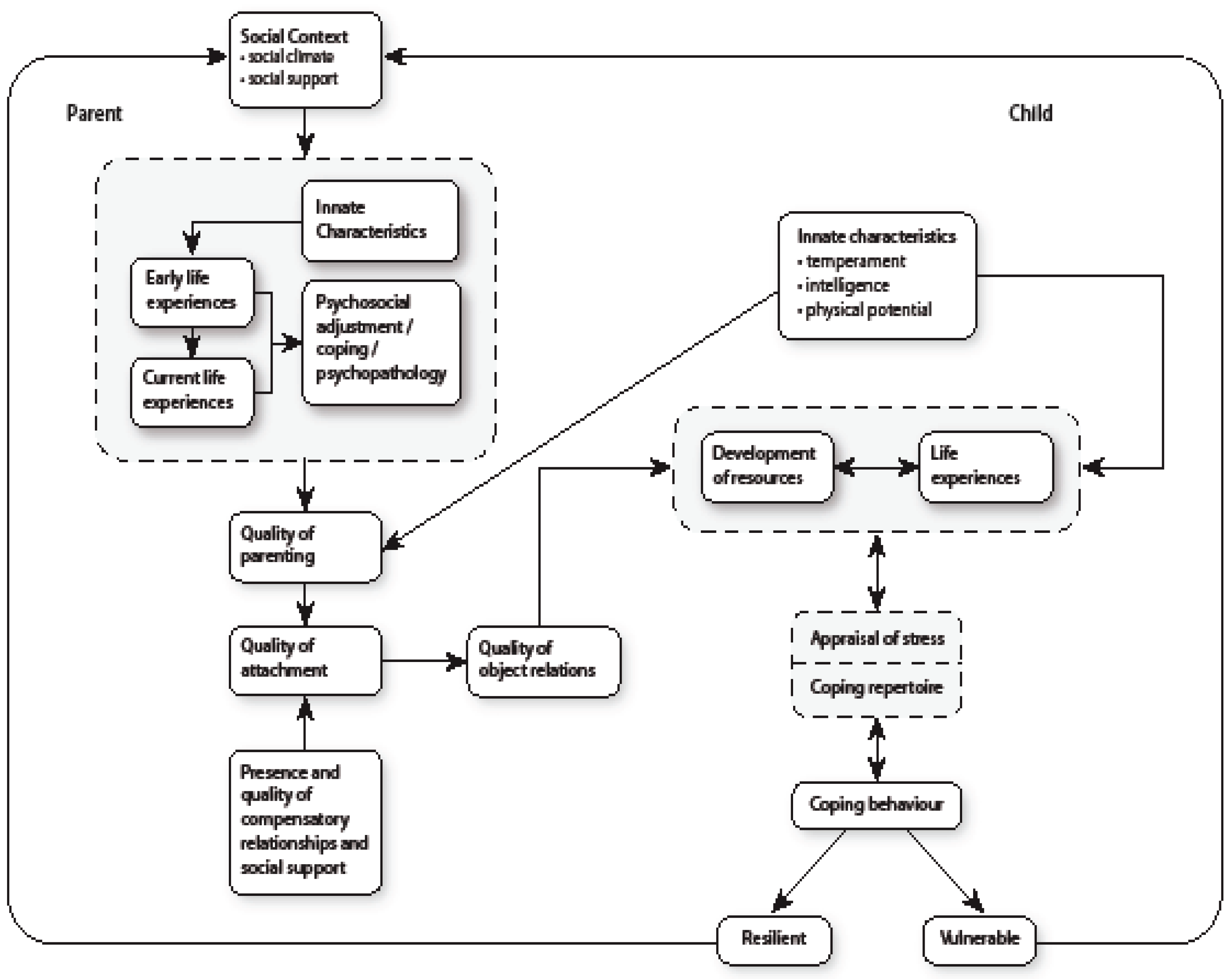
Developmental psychology has a great deal to offer our understanding of MPA that occurs to a level of severity beyond the evolutionary mechanisms that had survival value in our primitive past. Experience leads us to adopt different social motivational systems such as caring and cooperative or competitive, combative, and individualistic. We can see how such systems may affect performers’ perceptions of a musical performance, either as a caring interchange between performer and audience or as a competitive, combative interchange where the audience is perceived as a threat that must be withstood. Our habitual “social mentality” directs our perceptions of and behaviors towards our social world. I have explained the development of this social mentality in the context of understanding how children learn to cope with challenges (Kenny, 2000) (see Figure 1).
The developmental theory of coping includes an assessment of the quality of attachment that is determined by the quality of parenting and by the presence and quality of compensatory relationships and/or experiences that were available to the child at critical periods in development. Object relations (i.e., internal working models of relationships) and available resources, both material and personal, determine the way in which life experiences are appraised, and these factors underpin the coping repertoire the child develops. From this repertoire, emotional and behavioral attempts to cope with challenges emerge, and the outcome of this coping behavior is either resilience (positive coping under conditions of risk) or vulnerability (maladaptive coping, including the development of psychopathology). A family or teaching environment characterized by limited opportunity for personal control is associated with the development of anxiety. Building a positive learning history in childhood by providing opportunities to cope adaptively with appropriately calibrated challenges should immunize children against the development of excessive anxiety in response to subsequent challenges. The history of conditioning experiences and their outcomes are a necessary component to consider in the etiology of anxiety disorders. A third stage, in which specific environmental experiences become conditioned in specific situations is necessary for the development of non-generalized and specific (social) anxiety and, by extension, MPA (Barlow, 2002; Field, 2006).
3.1. Self-Efficacy and Perfectionism
Just as for adult musicians, there are strong associations between MPA in adolescent musicians and personality traits such as optimism, stress propensity (trait anxiety), achievement motivation (Stoeber et al., 2007), sensitivity to reward and punishment (Alzugaray et al., 2016; Dempsey et al., 2019; Taft, 2019), self-esteem and self-efficacy, and perfectionism (Dobos et al., 2019) that may be understood as outcomes of developmental experiences (Kenny, 2011; Kenny et al., 2006b). Many papers on MPA in young people include measures of self-efficacy and perfectionism, mostly without a dynamic description of their development. Few recognize the overlap in etiology and manifestation outside of reporting strong correlations between them and their inverse relationships with MPA (Egilmez, 2015).
Self-efficacy refers to one’s belief in one’s capacity to organize and execute actions required to achieve desired outcomes. Although it involves cognitive appraisal, at its core, it is a developmentally constructed sense of agency, forged in early relational experience (Bandura, 2013). People with high self-efficacy have high ego strength (i.e., confidence in one’s capacity), ability to reality test, plan, take initiative and persist, even in the face of failure, and effectively control impulses. Low self-efficacy reflects an internal world in which initiative and performance (i.e., exposure to scrutiny) are linked to danger—loss of love or approval, criticism, and shaming (Passanisi et al., 2015). Low self-efficacy may mask fear of relational consequences rather than incapacity (Bandura, 2013)1.
Both self-efficacy and perfectionism are shaped by superego2 functions, which can be either benign and supportive or harsh and punitive. Low self-efficacy sometimes realistically reflects a lack of skill, at others a fear of self- or other- attack following failure to meet perceived required standards. Those with low self-efficacy engage in defensive behaviours like avoidance to forestall anticipated failure, criticism, and humiliation, and procrastination to manage their ambivalence about performing and their uncertainty of success (Klassen et al., 2008).
Perfectionistic young people who exhibit unrealistically high demands and expectations of themselves, severe self-criticism, and over concern or intolerance for mistakes often have parents and/or teachers who have been overly invested in the child’s performances and achievements and high, often unrealistic expectations of outcome but with insufficient support or empathy for the child’s “failures.” This creates a generalized psychological vulnerability in the child who internalizes the unacceptability of any sub optimal performance, leading to the development of maladaptive perfectionism that includes low self-esteem, low self-efficacy, and loss of spontaneity and enjoyment in performance due to excessive self-focused attention, excess muscle tension, and fear of negative evaluation. This imbues the performance environment with pervasive negativity. Consider this comment by American singer-songwriter, Walker Hayes:
My dad was listening to me noodle around on the guitar in the house and sing, and he was like, 'Man, you're funny, and you sound good when you do that. You should do that at a bar.' I had stage fright, so I was like, 'No, Dad. Leave me alone.'
As a young performer, Hayes showed good self-awareness—that he was not ready for public performances—and embarking on such before he felt psychologically (and musically) ready would have ruined his enjoyment of his art and perhaps forestalled his musical career. When he did start performing, he said,
For me, a good show is not a perfect show; it's just one where you connected.
Notwithstanding his wisdom and self-awareness, Hayes started drinking alcohol at the age of 13 to manage his anxiety and descended into alcoholism, becoming sober 23 years later at age 36.
Some researchers distinguish adaptive from maladaptive perfectionism. From a psychodynamic perspective, maladaptive perfectionism is understood as a defensive personality organization rather than a healthy striving for an attainable high standard (adaptive perfectionism) (Cohen, 2020). The central dynamic conflict in maladaptive perfectionism is shame avoidance, expressed as harsh self-criticism following perceived failure to attain unrealistic goals in a pre-emptive strike to forestall the same criticism from others. When goals are not attained, maladaptive perfectionists are left feeling inherently flawed rather than forgivably human. Perfectionistic strivings constitute attempts to compensate for the perceived defects in the self (McWilliams, 2011). This striving for the unattainable represents an attempt to regulate unconscious anxiety, shame, and fear of loss of love and respect through excessive control and achievement. At its core is a fragile and conditional self-concept that has been internalized from unsatisfactory early relational experiences in which parental love was contingent on a specific standard of performance.
Musically, maladaptive perfectionism leads to over-practising, intense fear of the performance context, and severe MPA. This contrasts with “high achievers” whose standards are flexible and attainable, who can learn from mistakes without collapsing in shame, and whose self-worth is stable in the face of setbacks. In maladaptive perfectionism, standards are rigid and absolute, failure threatens the sense of self, pride is fleeting, and self-worth is conditional upon reaching the imagined required standard. Exaggerated perfectionism is linked to feelings of being a sham or impostor. As one musician told me,
For me as a professional musician, a wrong note is a catastrophe, a wrong note is an indicator that I’m not as good as I say I am.
Hence, self-efficacy and perfectionism are intricately dynamically connected in their aetiology and manifestations (Arbinaga, 2023). At the core of each construct is shame or the fear of being shamed by one’s inadequacy. Both low self-efficacy and maladaptive perfectionism reactivate early object relations that trigger appraisals about the nature of the audience as supportive or hostile, the expected judgement as kind or critical, and the experience of fraudulence and shame that evokes catastrophic anticipation of mistakes, somatic anxiety and motor disruption, and excessive self-monitoring that disrupts automaticity (Anton et al., 2019).
Any young person presenting for therapy with low self-efficacy/maladaptive perfectionism requires an intervention that focuses on the precise psychopathology that must include parents and teachers to modify parenting and pedagogy where required, and an assessment of musical goals to ascertain their appropriateness for the level of aptitude, skill, technical mastery, and motivation in the young musician. Stage two of therapy, if the young person wishes to continue their musical education, firstly exposes the developmental-relational substrate (early attachments, conditional approval in caregiving and pedagogy, and temperamental sensitivity; secondly, works with structural factors (self-efficacy and perfectionism etc); and thirdly, performance-activated cognitive-affective processes (negative self-schemas, self-focused attention, hypervigilance, and catastrophizing). The therapy must work through feelings of shame and fear of exposure as an imposter, as someone not deserving to be on stage, playing with truly talented musicians, to support the emergence of a more compassionate, internalized sense of self from whom a perfect performance ceases to be the only source of self-worth or self-esteem.
4. Discussion
MPA arises when performance activates internalized threatening evaluative relationships that transform musical action into a relational threat. This activation precipitates a collapse of self-efficacy and a triggering of maladaptive perfectionism, expressed phenomenologically as anxiety, cognitively as self-focused attention, somatically as performance disruption, and behaviourally as defensive control. This formulation accounts for the emergence of MPA in adolescence or early adulthood after years of training and successful performances, persistence of MPA throughout the lifespan, the occurrence of severe MPA even in highly skilled musicians who rarely if ever experience performance breakdowns, and the partial or lack of success of CBT and positive psychology interventions when shame-based superego dynamics remain unaddressed.
Author Contributions
DK was the sole author of this article and is accountable for the content of the work.
Funding
This article received no funding.
Conflict of Interest
The author declares that the research was conducted in the absence of any commercial or financial relationships that could be construed as a potential conflict of interest.
| 1 | Self-efficacy is best understood as a relationally constructed sense of agency rather than a belief that one can or cannot succeed. Self-efficacy is context specific. One can have high self-efficacy in music and low self-efficacy in math that are realistically based on aptitude and past performance. The current discussion refers to overall self-efficacy. |
| 2 | The superego is a structural component of the psyche that represents the internalized moral, evaluative, and prohibitive functions of early authority figures (parents, teachers, significant others). It develops through identification and internalization of values and beliefs and then functions to regulate behavior, affect, and self-evaluation in accordance with internal standards rather than external enforcement. |
References
- Alzugaray, F. J. Z., López, Ó. C., & Hernández, S. O. (2016). Music performance anxiety and related psychological constructs. Students of five spanish music conservatories. Revista Internacional De Educación Musical, 4(1), 13–24. [CrossRef]
- Anton, N. E., Mizota, T., Timsina, L. R., Whiteside, J. A., Myers, E. M., & Stefanidis, D. (2019). Attentional selectivity, automaticity, and self-efficacy predict simulator-acquired skill transfer to the clinical environment. The American Journal of Surgery, 217(2), 266–271. [CrossRef]
- Arbinaga, F. (2023). Resilient behaviors in music students: relationship with perfectionism and self-efficacy. Behavioral sciences, 13(9), 722. [CrossRef]
- Bandura, A. (2001). Social cognitive theory: An agentic perspective. Annual Review of Psychology, 52(1), 1–26.
- Bandura, A. (2013). Self-Efficacy: The foundation of agency. In Control of human behavior, mental processes, and consciousness (pp. 16–30). Psychology Press.
- Barlow, D. H. (2002). Psychosocial treatments for panic disorders, phobias, and generalized anxiety disorder. In S. D. Raffa & E. M. Cohen (Eds.), A guide to treatments that work (Vol. 2, pp. 301–336). Oxford University Press.
- Barros, S., Marinho, H., Borges, N., & Pereira, A. (2022). Characteristics of music performance anxiety among undergraduate music students: A systematic review. Psychology of music, 50(6), 2021–2043. [CrossRef]
- Bersh, B. (2022). The relationship between music performance anxiety and self-efficacy in sixth-to eighth-grade instrumental students. Psychology of music, 50(5), 1477–1493. [CrossRef]
- Boucher, H., & Ryan, C. A. (2011). Performance stress and the very young musician. Journal of Research in Music Education, 58(4), 329–345. [CrossRef]
- Chapman, K. S. (2025). Music performance, self-efficacy, and social anxiety: Does childhood music performance predict self-efficacy and social anxiety levels in young adulthood? Fielding Graduate University].
- Cohen, E. D. (2020). The psychoanalysis of perfectionism: Integrating Freud’s psychodynamic theory into logic-based therapy. International Journal of Philosophical Practice, 6(1), 15–27.
- de Lima, A. A., Ximenes, R. C. C., & de Souza, S. L. (2024). Factors associated with music performance anxiety in adolescents: a systematic review. Children and Youth Services Review, 164, 107860.
- Dempsey, E., & Comeau, G. (2019). Music performance anxiety and self-efficacy in young musicians: Effects of gender and age. Music Performance Research, 9, 60–79.
- Dias, P., Veríssimo, L., & Silva, I. (2025). Predicting different dimensions of music performance anxiety in young adolescents: the role of gender, psychological vulnerability, and music self-efficacy. Música Hodie, 25.
- Dobos, B., Piko, B. F., & Kenny, D. T. (2019). Music performance anxiety and its relationship with social phobia and dimensions of perfectionism. Research studies in music education, 41(3), 310–326. [CrossRef]
- Egilmez, H. O. (2015). Pre-service music teachers' piano performance self-efficacy belief inversely related to musical performance anxiety levels. Educational Research and Reviews, 10(18), 2558–2567.
- Fehm, L., & Schmidt, K. (2006). Performance anxiety in gifted adolescent musicians. Journal of anxiety disorders, 20(1), 98–109. [CrossRef]
- Field, A. P. (2006). Is conditioning a useful framework for understanding the development and treatment of phobias? Clinical psychology review, 26(7), 857– 875. [CrossRef]
- Jeong, S. S. Y., & Ryan, C. (2022). A critical review of child perfectionism as it relates to music pedagogy. Psychology of music, 50(4), 1312–1327. [CrossRef]
- Juan, H.-W. S. (2025). The relationships among music performance anxiety, personality traits, and self-regulated learning in music practice of adolescent performers in Taiwan Indiana University].
- Kenny, D. T. (2000). Psychological foundations of stress and coping: A developmental perspective. In D. T. Kenny, J. G. Carlson, F. J. McGuigan, & J. L. Sheppard (Eds.), Stress and health: Research and clinical applications (pp. 73–104). Gordon Breach Science/Harwood Academic Publishers.
- Kenny, D. T. (2011). The psychology of music performance anxiety. Oxford University Press.
- Kenny, D. T., & Osborne, M. S. (2006). Music performance anxiety: New insights from young musicians. Advances in cognitive psychology, 2(2), 103–112. [CrossRef]
- Kirsner, J., Wilson, S. J., & Osborne, M. S. (2023). Music performance anxiety: the role of early parenting experiences and cognitive schemas. Frontiers in psychology, 14, 1185296. [CrossRef]
- Klassen, R. M., Krawchuk, L. L., & Rajani, S. (2008). Academic procrastination of undergraduates: Low self-efficacy to self-regulate predicts higher levels of procrastination. Contemporary educational psychology, 33(4), 915–931. [CrossRef]
- McWilliams, N. (2011). Psychoanalytic diagnosis: Understanding personality structure in the clinical process. Guilford Press.
- Miles, M. (2020). Knowing the audience: Music performance anxiety and other performance experiences of a primary school choir. Australian Journal of Music Education, 53(2), 44–49.
- Osborne, M. S., & Kenny, D. T. (2008). The role of sensitizing experiences in music performance anxiety in adolescent musicians. Psychology of music, 36(4), 447–462. [CrossRef]
- Osborne, M. S., Kenny, D. T., & Holsomback, R. (2005). Assessment of music performance anxiety in late childhood: A validation study of the Music Performance Anxiety Inventory for Adolescents (MPAI-A). International journal of stress management, 12(4), 312. [CrossRef]
- Passanisi, A., Sapienza, I., Budello, S., & Giaimo, F. (2015). The relationship between guilt, shame and self-efficacy beliefs in middle school students. Procedia-Social and Behavioral Sciences, 197, 1013–1017. [CrossRef]
- Patston, T., & Osborne, M. S. (2016). The developmental features of music performance anxiety and perfectionism in school age music students. Performance Enhancement & Health, 4(1), 42–49. [CrossRef]
- Perdomo-Guevara, E. (2014). Is music performance anxiety just an individual problem? Exploring the impact of musical environments on performers’ approaches to performance and emotions. Psychomusicology: Music, mind, and brain, 24(1), 66. [CrossRef]
- Pereira, V. H., Campos, I., & Sousa, N. (2017). The role of autonomic nervous system in susceptibility and resilience to stress. Current Opinion in Behavioral Sciences, 14, 102–107. [CrossRef]
- Ryan, C. (2005). Experience of musical performance anxiety in elementary school children. International journal of stress management, 12(4), 331. [CrossRef]
- Ryan, C., & Andrews, N. (2021a). High school muslclans: Performance anxiety and post-secondary plans. Journal of Band Research, 57(1), 54–73.
- Ryan, C., Boucher, H., & Ryan, G. (2021b). Performance preparation, anxiety, and the teacher. Experiences of adolescent pianists. Revue musicale OICRM, 8(1), 38–62. [CrossRef]
- Ryan, C., Boucher, H., & Ryan, G. (2023). Practice, performance, and anxiety: A pilot study on student perception of parental involvement and formal music lessons. Music & Science, 6. [CrossRef]
- Scaini, S., Belotti, R., & Ogliari, A. (2014). Genetic and environmental contributions to social anxiety across different ages: A meta-analytic approach to twin data. Journal of anxiety disorders, 28(7), 650–656. [CrossRef]
- Sims, W. L., & Ryan, C. (2024). Relationships between music performance anxiety and impostor phenomenon responses of graduate music performance students. Psychology of music, 52(4), 402–418. [CrossRef]
- Stoeber, J., & Eismann, U. (2007). Perfectionism in young musicians: Relations with motivation, effort, achievement, and distress. Personality and Individual Differences, 43(8), 2182–2192. [CrossRef]
- Taft, S. A. (2019). Harnessing optimism in response to musical challenges. Music Educators Journal, 106(2), 22–27. [CrossRef]
- Tardif, C., Boucher, H., Lane, J., & Barbeau, A. K. (2024). Music performance anxiety in children 9-12 years old in a music program. Psychology in the Schools, 61(2), 671–685. [CrossRef]
- Urruzola, M.-V., & Bernaras, E. (2020). Music performance anxiety in 8-to 12-year-old children. Revista de Psicodidáctica (English ed.), 25(1), 76–83. [CrossRef]
Figure 1.
Developmental model of resilience and vulnerability (Kenny, 2000).
Disclaimer/Publisher’s Note: The statements, opinions and data contained in all publications are solely those of the individual author(s) and contributor(s) and not of MDPI and/or the editor(s). MDPI and/or the editor(s) disclaim responsibility for any injury to people or property resulting from any ideas, methods, instructions or products referred to in the content. |
© 2026 by the authors. Licensee MDPI, Basel, Switzerland. This article is an open access article distributed under the terms and conditions of the Creative Commons Attribution (CC BY) license (http://creativecommons.org/licenses/by/4.0/).
Copyright: This open access article is published under a Creative Commons CC BY 4.0 license, which permit the free download, distribution, and reuse, provided that the author and preprint are cited in any reuse.