

Submitted:
31 December 2025
Posted:
02 January 2026
You are already at the latest version
Abstract
Artificial Intelligence (AI) has been widely successful and effective in optimizing tasks across various fields such as smart agriculture, healthcare, and education, positioning it as a key enabler in advancing the Sustainable Development Goals (SDGs) set forth by the United Nations. Understanding the perspectives of industry and academic experts in domains such as AI, data science, biotechnology, natural and physical sciences, can provide valuable multidisciplinary insights into the responsible usage of AI. This study analyses 12 opinion essays written by 13 experts from academia and industry, focusing on the opportunities and challenges provided by AI in the advancement of SDGs. These experts provide their unique perspectives shaped by their nationality, professional role, gender, and domain of expertise. The analysis highlights several strong application areas of AI, including enhancing diagnostic accuracy, monitoring cattle and crops to reduce wastage, ensuring accessibility of education, and enhancing gender equality. However, the experts also caution against potential risks and ethical implications associated with AI, such as the risk of algorithmic bias, concerns with over reliance, and inequitable access to AI enabled tools.
Keywords:
sustainable development goals
; artificial intelligence
; large language models
; machine learning
; deep learning
; united nations
1. Introduction
Artificial Intelligence (AI) has evolved significantly in recent years progressing from simple rule-based systems to complex and opaque Large Languages Models (LLMs) that can be promoted to perform a wide range of tasks (Devlin et al., 2019) (Li et al., 2021). AI has infiltrated nearly every field from healthcare (Panch et al., 2019), education (Zhai et al., 2021), business (Tarafdar et al. 2019), to environmental and energy management (Wu et al., 2022). This rapid advancement has made AI a revolutionary tool of the digital age, offering both opportunities and solutions for global development (Vinuesa et al., 2020). The United Nations (UN) has led a global effort to discuss and address humanity’s most pressing challenges through the 2030 Agenda, which introduced the 17 Sustainable Development Goals (SDGs), a global call to action to end poverty, protect the planet, and ensure peace and prosperity for all (Allen et al., 2018). These goals acknowledge that economic growth, social inclusion, equitable access, and environmental protection are deeply interconnected, requiring multidisciplinary collaboration and innovative approaches (Cachero et al., 2023). The 17 SDGs are presented in Table 1 is follows:
AI has become deeply embedded across nearly all domains, spanning from health, education, agriculture, energy, the environment, and even government (Dwivedi et al., 2021). This pervasiveness can be particularly advantageous in addressing the broad and interlinked scope of the Sustainable Development Goals (SDGs), where complex challenges are inherently interdependent and demand coordinated, systemic solutions (Truby, 2020). Rapidly advancing technological developments such as AI can play an important role in achieving the SDGs by enabling effective real-world solutions and supporting the implementation of effective policies (Visvizi, 2022). AI systems are highly effective in handling large volumes of data, identifying patterns, and performing predictive analysis (Bishop & Nasrabadi, 2006). AI applications already contribute to areas such as precision agriculture (SDG 2: Zero Hunger) (Akkem et al., 2023), disease detection and healthcare innovation (SDG 3: Good Health and Well-being) (Panch et al., 2019), smart energy and water systems (SDG 7: Affordable and Clean Energy) (Awogbemi et al., 2024) (Cheng & Yu., 2019), and predictive climate modeling (SDG 13: Climate Action) (Cowls et al., 2023). However, AI also presents significant challenges, such as ethical concerns, algorithmic bias (Roselli et al., 2019), and data privacy risks (Elliott & Soifer, 2022), that could be detrimental towards sustainable development. Therefore, effective and inclusive AI systems can be a powerful force in shaping policies, enhancing healthcare, and promoting gender equality (Zowghi & Bano, 2024). By prioritizing ethical AI development and ensuring diverse representation in data and algorithms, we can create technology that serves all of humanity equitably.
This opinion paper aggregates and analyses insights from 13 industry and academia experts on the role of AI in the advancement of the 17 SDGs set forth by the UN as part of the 2030 agenda. The opinions have been organized according to their corresponding SDGs, with the respective applications and challenges highlighted. The reminder of this paper is structured as follows: Section 2 discusses the motivation behind conducting this study along with the research questions explored. Section 3 provides an overview of the opinion essays and aggregates them according to the 17 SDGs. Section 4 analyses and summarizes the opinion essays to address the research questions, and Section 5 concludes the study.
2. Motivation
The 17 SDGs set forth by the United Nations, comprising a total of 169 targets as part of the 2030 agenda, present a comprehensive framework for addressing global challenges (Vinuesa et al., 2020). Adopted in 2015, these goals range from reducing hunger, poverty, and mitigating inequality to ensuring sustainable living, promoting collaboration and partnerships, and fostering climate action (Visvizi, 2022). Given the global reach of these goals, a multidisciplinary approach that transcends geographical and institutional boundaries is necessary to achieving them (Truby, 2020). The responsibility for promoting sustainable development does not fall to a single community, government, or domain; rather represents a shared global commitment that necessitates cross-departmental collaboration and informed policy development (Cachero et al., 2023). Over the past decade, AI has emerged as both an enabler and a source of concern for sustainable development. It is increasingly being integrated across diverse domains, ranging from health, education, agriculture, to business, finance, and infrastructure, highlighting its ubiquitous influence.
The strength of AI lies in its ability to effectively analyze and uncover insights from complex, unstructured data, enhance productivity and resource management, and assist in evidence-based decision making. However, AI also presents several ethical, economic, social, and environmental concerns that could be detrimental towards sustainable development. Unintended biases may exacerbate gender and social discrimination (Gichoya et al., 2023), training AI models is detrimental to the environment (Wu et al., 2022), and a lack of transparency in AI models raises concerns about accountability (Von Eschenbach, 2021). Due to the multidisciplinary nature of sustainable development, analysis of opinions from domain experts can provide valuable, actionable insights for future policymaking. An opinion paper can be used to gather insights from experts across diverse backgrounds and reveal the long-term implications of adopting AI in social, environmental, and economic systems. Through this exploration, this study aims to identify AI applications that align with the principles of sustainable development, while critically examining the systemic challenges that may exacerbate inequitable access, deepen digital divides, and reinforce existing social barriers.
The research questions explored in this opinion study are as follows:
- RQ-1: How do domain experts perceive the role of AI in advancing the achievement of UN SDGs?
- RQ-2: How do domain experts perceive the role of AI in hindering the achievement of the UN SDGs?
3. Methodology
In this opinion study, unstructured essays were collected from experts about the potential impact that AI can have towards the SDGs, as well as the various risks and challenges it presents. Several experts from industry and academia were contacted to contribute, and a total of 13 participants responded. Since only unstructured opinions were obtained from the participants, ethical approval was not required from the host institution. Some opinion essays were primarily focused on particular SDGs, whereas others were broader in scope. For example, author 1 has specifically discussed SDG-3 (Good Health and Well- being), author 2 has specifically discussed SDG - 4 (Quality Education), author 3 has specifically discussed SDG - 5 (Gender Equality), and authors 4 and 5 have discussed SDG 7 (Affordable and Clean Energy) and 15 (Life on Land). Essay 7 titled ‘The role of Generative AI in providing mental health care in Kenya’ examines the current challenges in accessible and inclusive mental health care in Kenya, as the potential of AI in addressing these challenges. Author 10 contributed an essay titled ‘Impact of Artificial Intelligence on Sustainability in Society’, author 12 titled their essay ‘Sustainable Water Future Using AI’, and author 13 presented ‘AI-Driven Analytics for Sustainable Manufacturing and
Agriculture: From Emission Reduction to Livestock Health.’ Some essays were co-authored, but group bias was avoided as most of the authors are not familiar with each other. All essays were anonymized, and permission was obtained to share their gender, role, domain, and country, as seen in Table 2, and analysis and summarize their opinion essays. The selected domains combine several closely related domain names. From the table, we can see that there were 4 female and 9 male participants, consisting of researchers, lecturers, industry practitioners (intern, project manager), and medical practitioners (psychiatrist). The experts represented a wide range of domains such as AI and data science, biotechnology and data science, and natural and physical science, and were drawn from both developing (India, Kenya) and developed (Ireland, UK) countries.
Figure 1 displays the gender and country-wise distribution of the participants. There were only 4 female participants, compared to 9 male participants. The highest number of participants are from India (6), followed by 5 participants from Ireland, and 1 each from Kenya and the UK. The author pool is international, representing both developing and developed countries that contributed to the discussion on sustainability, with moderate gender imbalance.
Figure 2 displays the distribution of experts according to their professional roles. Academics were the highest contributors to the participant pool, with 7 researchers and 2 lecturers. There was a single participant from all other professional roles, namely: Academic director, Psychiatrist, Project manager, and Intern.
Figure 3 displays the distribution of experts by their professional roles. Most experts belonged to ‘Artificial Intelligence & Data Science’ (6), followed by ‘Biotechnology & Agricultural Science’ (4 experts), and ‘Natural & Physical Science’ (2). Health & Human Science’ and ‘Sustainability, Environment & Governance’ each have 1 expert.
4. Overview and Analysis
In this section, the opinion essays have been aggregated and analysed according to the 17 SDGs.
SDG –1: No Poverty
The aim of this SDG is to eradicate extreme poverty and ensure equal access to economic resources and opportunities. However, none of the experts explicitly discussed the role of AI in reducing global poverty.
SDG –2: Zero Hunger
The aim of this SDG is to ensure everyone has enough safe, nutritious food all year round. It has been discussed in two essays:
Essay 10: Global environmental decline has been driven by world population growth over the last century. Rapidly advancing technological developments, such as Artificial Intelligence (AI), will play an important role in meeting the UN Sustainable Development Goals (SDGs) by creating successful real-world solutions and enabling the implementation of effective policy. The agricultural sector faces the particularly daunting and complex task of meeting the demands of growing food production for a growing global population, whilst reducing the impacts of agricultural activities on the environment. Tools, such as generative AI, IoT, Big Data, and Machine Learning provide the potential for improving efficiency and environmentally sustainable technologies in agriculture (Pallottino et al. 2025). Many of these AI tools have already been utilised successfully in the sector, helping to reduce Greenhouse Gas (GHG) emissions and nutrient loading to waterbodies (Ahmed and Shakoor, 2025). Machine learning can be used to provide high frequency environmental monitoring data and detailed datasets for inference, analysis and forecasting. The potential environmental impacts of imposing new policy measures or actions can be tested using AI tools prior to implementing them. AI can also help further our understanding of complexities in environmental systems, contributing to our theoretical understanding of how they work in a short timeframe.
Essay 12: Artificial intelligence (AI) impacts the sustainability of production and agriculture by improving efficiency of resource use, eradicating the negative effects of a process, and optimizing the process itself (Kale et al., 2024). For instance, in the welding section of a manufacturing system, the use of AI applications permits real-time monitoring, and the use of predictive analytics, emission of harmful substances such as hexavalent chromium during energy use of arc welding is minimised alongside better management of waste and other forms of energy. The dominance of AI and ML is booming in such a way that it exploited all sectors in the globe. Agriculture is one such sector where the sustainability challenges in the area of livestock farming, crop yield, and weather predictions are progressively addressed. Furthermore, the disease prediction in livestock farming is the major breakthrough which gained attraction, which not only addressed economic developments contributed by agriculture but also favour animal welfare (Papadopoulos et al., 2025). The most commonly found diseases such as lameness, mastitis, calving, and oestrus found in cattle which are undiagnosed can result in significant environmental loss. The development of AI and ML in disease prediction changed the conventional disease prediction from visual inspection of farmers to automated prediction from sensor-based behavioural characteristics (Lardy et al., 2023). This enables earlier intervention which helps the farmers prevent the disease progressing to further complexities. Even though the prediction platforms are effective, there are few factors which drives the discrepancy in these types of predictions such as the imbalance associated with the data, the ethical consideration which restricts the usage of in-depth details of the farm and cattle. However, the power of AI was proved in these situations by predictions with limited time-based behavioural data and their underlying patterns which drive the progression of disease which can’t be captured with the naked eye. The predictions, with the help of time spent by the cattle grazing, resting and eating, were one such example. In addition to the traditional models such as random forest, gradient boosting models, the complex pattern understanding capability of deep learning models, the time-dependent underlying pattern understanding by advanced time-dependent models and their associated hybrid models which integrates and captures all possible complexities in the pattern adds to the highlight of these predictions. In addition to the above, the thresholding and calibration approaches with oversampling techniques can effectively handle imbalances in these types of predictions. Real-time monitoring and subsequent predictions to farmers can bring up earlier interventions resulting in prevention of diseases contributing to sustainable agriculture practices.
SDG –3: Good Health and Well-Being
This SDG targets reducing maternal and child mortality, combating diseases, and promoting mental health and healthcare access. It has been discussed in the following essays:
Essay 1: AI has transformative potential to advance global health in line with SDG 3. The World Health Organization (WHO) highlights that AI is already aiding diagnosis, outbreak response, and health-system management, and stresses that the “future of healthcare is digital” – if innovations are shared widely to ensure no one is left behind (The World Health Organization, 2025). Industry reports echo this promise: AI can improve immunization programs, supply chains, diagnoses, and overall health-system efficiency (SDG-3). In fact, a recent study notes that one in four social innovators worldwide is deploying AI to advance SDG 3 (Good Health and Well-being). Academics likewise describe AI as a “pivotal force” that can “expedite progress in addressing health-related challenges and fostering advancements aligned with SDG3” (Upreti et al., 2023). By enabling precision diagnostics, disease forecasting, and personalized care, AI promises better health outcomes for all ages and regions, as envisioned by the SDGs. In summary, a balanced approach is needed to embed AI in health sustainably.
Essay 3: Healthcare has long been plagued by disparities in the access to treatment, particularly for women and marginalized communities. Historically various aspects of female health -including but not limited to pain perception and ability to bear it have been misinterpreted in case of females, further for those from selective races. Such biases vastly plague the medical fraternity even today, and an AI assisted revamp of healthcare systems could help humanize medical care for the benefit of all.
AI has the potential to bridge the above listed gaps by:
- Enhancing Female-Centric Research: Historically, medical research has been Male-centric, owing to lack of resources, scarce resource allocation towards female centric research, various biases and lack of opportunities; all leading to gaps in understanding women’s health conditions. AI-driven analytics can help in redesigning research experiments and aid in the analysis of large data outcomes, thus making gender-inclusive clinical trials possible and helping identify treatment responses specific to female physiology.
- Reducing Bias in Healthcare AI Models: Many healthcare AI models have been trained on datasets lacking diversity in gender, race, and socioeconomic background. This may be attributed to lack of data around those races, due to various socio-economic reasons. The lack of data, coupled with data set standardization using incomplete datasets creates further imbalance in the analysis of symptoms and outcomes amongst marginalized communities and races. All of these play a major role in disease manifestation and taboo around timely treatment. This has led to misdiagnoses and inadequate treatment recommendations for women and marginalized communities. Ensuring AI models are trained on larger and more diverse datasets can lead to improved diagnosis and higher accuracy for more personalized treatment plans aligned with patient recovery and treatment outcome.
- Improving Access to Healthcare: AI-powered telemedicine, chatbots, and predictive analytics can provide accessible health consultation and possible solutions for medical concern to individuals in remote and underserved areas, ensuring that gender and economic status do not hinder access to essential primary medical care. Primary consultations made accessible can help patient identification and start of treatment at the manageable stage before a condition spiral onto the chronic stage.
Essay 6: AI holds significant promise in advancing the United Nations SDGs in health (SDG 3) and climate action (SDG 13). In healthcare, AI enhances diagnostic accuracy, accelerates drug discovery, and personalized treatment plans (Topol, 2019). Machine learning algorithms can analyze vast datasets to detect diseases like cancer earlier than traditional methods, improving patient outcomes. Similarly, AI helps optimize energy consumption, predict extreme weather events with increased precision, and support sustainable agriculture. For instance, smart grids powered by AI reduce carbon emissions by balancing renewable energy supply and demand (Alhasnawi et al., 2024). AI’s rapid integration into society raises serious concerns—especially in education, mental health, and economic equity. Despite its benefits, AI could deepen existing disparities, undermining SDG 4 (Quality Education), SDG 8 (Decent Work), and SDG 10 (Reduced Inequalities). In education, over-reliance on AI learning tools may reduce critical thinking and creativity, as students depend on automated solutions rather than developing independent problem-solving skills (Selwyn, 2019). Mental health is another concern. Algorithmic content recommendations on social media can expose children to harmful material. Excessive use of smartphones and technology could be exacerbated by AI. Furthermore, AI-driven job automation disproportionately affects low-skilled workers, widening economic inequality (Acemoglu & Restrepo, 2020). Regulation is needed in these areas to ensure that technological progress aligns with sustainable and inclusive development.
Essay 7: There are less than 100 trained psychiatrists and fewer than 500 trained psychiatric nurses in Kenya for a population of over 50 million people (Kwobah et al., 2023). Recent studies indicate that youths in urban and peri-urban areas are the most predisposed to mental health issues, including depression, anxiety, substance use disorders, and psychotic disorders such as schizophrenia. Additionally, the elderly within rural communities struggle with loneliness, feelings of low-self-worth and depression (Nagarajan, et al., 2024). The majority of professional mental health services are extremely few and based in urban centers leaving rural residents, unable to access care. In spite of the central government initiating a mental health taskforce in 2020, the investment in mental health is still less than 1% of the national health budget. For instance, the use of trained Generative AI models can provide accessible and personalised mental health diagnostic assessment. Also, the potential for AI-Powered Mentoring that provides evidence-based therapeutic conversations, emotional support, and personalised coping strategies. The tool also would provide a professional referral network that enables seamless connections to qualified mental health professionals and crisis intervention services when needed. The key is to work with professionals and communities to co-create a mobile application that provides access to high-quality mental health support, reduces barriers to early intervention, and serves as a bridge to professional care. The key to success of such an intervention is the training of AI models with suitable datasets, and the use of standardised screening guidelines that help early identification of cognitive impairment. It is vital for instance to embed speech analysis to assess patterns as a means of detecting clinically relevant changes in speech that might indicate the onset of schizophrenia. Given the extent of understaffing in mental health, a central component of the solution should be AI-Powered Call Center for Mental Health Crisis Support to provide a 24/7 AI-assisted helpline where people in distress may call, chat, or text for immediate support and referrals. The call center will have the capability of performing speech-to-text conversion, sentiment analysis and crisis risk prediction with a feature for immediate referrals in cases assessed as severe.
SDG –4: Quality Education
This SDG aims to provide free primary and secondary education and eliminate gender disparities in education. It has been discussed in the following essays:
Essay 2: The UN Sustainable Development Goal 4 (SDG 4) aims to promote lifelong learning and, to ensure that everybody has chances to learn, provides inclusive, egalitarian, and high-quality education. Artificial Intelligence (AI) can also be used as a way to realize this, revolutionizing the learning experience and streamlining resources. AI plays a major role in inclusive and equitable education (Targets 4.1 and 4.5) in that personalized learning platforms adjust content to the needs of the individual student, and learning styles add to learning gaps and enhance academic performance. This approach to learning is more equitable than traditional ones and helps create an inclusive and equitable educational environment. AI is also conducive to lifelong learning (Targets 4.3, 4.4, and 4.6) because they offer more affordable and quality technical, vocational, and higher education opportunities to adult learners in non-traditional environments. Moreover, AI can improve online literacy and access to learning materials and contribute to universal literacy and numeracy. AI automates the administrative work of the educators (Target 4.C) and leaves them with time to interact with students. AI tools assist with grading, scheduling, and managing student records (UNICEF, 2025). In special education, AI can help generate IEP goals (SDG-4, UNESCO). By optimizing educators’ time, AI contributes to a more efficient and effective education system.
Essay 6: In education, over-reliance on AI learning tools may reduce critical thinking and creativity, as students depend on automated solutions rather than developing independent problem-solving skills (Selwyn, 2019).
Essay 10: Future prospectives for the contribution of AI to helping achieve SDGs are great. However, there are shortcomings and knowledge gaps that need to be addressed in order to facilitate this continued contribution. Many experts in the agricultural and environmental science fields lack up-to-date training and knowledge of AI, which prevents tools from being utilised to their full potential. There can be a tendency to over rely on the AI-based tools that are more well-known or familiar. There is also a lack of understanding around the inherent biases in AI, that need to be considered in their application (Vinuesa et al. 2020). Furthermore, the education sector faces challenges such as resistance to changes that incorporate AI and a lack of access to AI-based tools due to high costs or infrastructural needs. The knowledge gaps provide opportunities for new developments for exploration and progress in the field of AI and sustainability, including:
- More targeted training and education for researchers and academics in AI technologies.
- Research into communicating AI output and policy making.
- Research and education on bias in AI.
- Investment in AI in the education sector for training, research, and infrastructure.
SDG-5: Gender Equality
This SDG focuses on ending discrimination, violence, and harmful practices while promoting equal rights and participation. It has been discussed in the following essays:
Essay 3: The Role of AI in Advancing Sustainable Gender Inclusion and Equality
AI is emerging as a transformative tool in fostering sustainable gender diversity and combating discrimination in various sectors. From workplace inclusion to healthcare advancements and policy-making, AI has the potential to dismantle systemic biases, promote fairness, and drive equality by taking data sets for face value unlike human. AI is like a fast growing infant, learning and taking in the vast dataset of information and imbibe vast amounts of datasets provided to it for further analysis. Much like a developing brain, AI will also accept all information fed to it, hence, it is important to regulate and restrain any pre-existing bias from being fed to AI. If not properly designed and regulated, AI can perpetuate gender discrimination and reinforce societal inequalities that have existed for decades. This article explores how AI can be leveraged to combat gender bias, improve healthcare outcomes for all genders, ensure equitable resource distribution, and create fair policies while mitigating its misuse.
AI in Workplace Gender Inclusion
Workplaces across the globe still grapple with gender-based discrimination, from hiring biases to unequal pay and promotional barriers. Many of these biases may be invisible and attributed to traditional roles and gender norms followed by the society. A study done on AI and it’s understanding of the human world showed a staggering bias and gender specificity of profession re-enforcing age old bias.
Building Unbiased AI for a Fairer Future
One of the most pressing challenges in AI development is the presence of inherent biases in training data, leading to skewed and unfair outcomes. To ensure AI contributes to gender equality, the following steps must be taken:
- Curating Diverse and Inclusive Data: AI models should be trained on datasets that accurately represent all genders, races, and socio-economic backgrounds to avoid reinforcing historical biases.
- Ethical AI Design and Auditing: Regular audits of AI systems should be conducted to detect and correct any biased patterns.
- Human Oversight and Ethical AI Governance: AI should complement human judgment rather than replace it, ensuring fairness and accountability in decision-making processes.
Conclusion: AI as a Catalyst for Gender Equality
A well-regulated and inclusive AI can be a powerful force in shaping policies, enhancing healthcare, and promoting gender equality. By prioritizing ethical AI development and ensuring diverse representation in data and algorithms, we can create technology that serves all of humanity equitably.
SDG-6: Clean Water and Sanitation
This SDG aims to provide safe drinking water, adequate sanitation, and promote water conservation. It has been discussed in the following essays:
Essay 8: The rapid expansion of AI is driving a significant surge in the resource demands of data centers, particularly concerning water consumption. Less than 1%, that’s how much of the world’s total water that is fresh water readily accessible for human use. So, what is the real cost of this advancing technology. While data center power usage remained relatively stable between 2010 and 2018 despite cloud and mobile growth, recent years have seen a sharp increase, with AI identified as the fastest-expanding workload and a primary catalyst. This escalating water footprint presents considerable environmental sustainability challenges, especially as global freshwater scarcity affects billions. Data centers, the backbone of AI, are inherently water intensive. Even a small 1-megawatt facility can consume millions of liters annually, equivalent to dozens of households. Hyperscale facilities operated by major technology companies consume vastly more; Google’s global data centers withdrew over 6 billion gallons (approx. 22.7 million cubic meters) in 2023, while Microsoft reported a 34% increase in water consumption between 2021 and 2022, reaching nearly 1.7 billion gallons (6.4 million cubic meters) (Garcia, 2024). AI workloads exacerbate this demand. Training large language models like GPT-3 required an estimated 700,000 liters of direct water evaporation in Microsoft’s US data centers, part of a larger 5.4 million liter total footprint for that training instance. Even routine AI interactions contribute like generating responses via models like Chat GPT can consume measurable amounts of water per query session. Most large facilities utilise water-based cooling systems, often relying on evaporative cooling to dissipate heat generated by servers. While often more energy-efficient (leading to better Power Usage Effectiveness, PUE) than air cooling, this method directly consumes water through evaporation. Furthermore, the significant electricity required to power data centers carries an indirect water footprint, as generating electricity via thermoelectric or hydroelectric plants consumes substantial water volumes (Alkrush et al., 2024). This hidden consumption means data center water sustainability is linked to grid decarbonization and water efficiency. Water Usage Effectiveness (WUE), measured in liters per kilowatt-hour (L/kWh), is the standard metric for on-site water efficiency, with lower values being better. While the industry average is cited at around 1.8 L/kWh, major operators report improvements (e.g., Microsoft at 0.30 L/kWh in FY23, Meta at 0.18-0.20 L/kWh in 2023). However, the PUE/WUE trade-off is critical, optimizing for energy efficiency often increases water use, and vice-versa, demanding location-specific strategies. Current WUE metrics also face limitations, typically excluding indirect water use and not fully accounting for water source or whether water is consumed versus discharged. The concentration of data centers in specific regions can intensify local water stress, particularly when facilities are sited in already water-scarce areas like the Western US or parts of India. This can strain resources needed by communities and ecosystems, leading to a need for greater oversight. The pursuit of economic benefits from attracting data centers sometimes conflicts with local water security, raising resource allocation questions. Climate change, exacerbating droughts, further amplifies these risks.
Essay 11: Efficient water resource management is essential amid increasing global water demand, population growth, and the intensifying impacts of climate change on freshwater systems around the world. These pressures highlight the need to manage water resources effectively for the present and the future (Sarpong et al., 2024). Addressing this complexity requires innovative tools that support adaptive decision-making, improve implementation acts, and enhance the long-term sustainability of water systems. AI offers promising capabilities in this domain. A recent study by (Kundu et al., 2025) employed AI to analyse water quality data from nine major rivers, identifying key relationships among critical indicators and determining the most reliable predictors for effectively monitoring and managing water resources. Such approaches demonstrate how AI can uncover meaningful patterns in complex datasets, improving the accuracy and responsiveness of water quality assessment.
Over time, AI has gained traction across various domains within the water sector, including hydrological modelling, pollution detection, and flood prediction (Haider et al., 2024). These applications enable institutions to move from reactive to predictive management and the ability of AI to synthesize diverse datasets and model interactions at multiple scales makes it particularly valuable in countries where monitoring infrastructure is limited or unevenly distributed.
SDG – 7: Affordable and Clean Energy
This SDG promotes renewable energy, energy efficiency, and infrastructure development and has been discussed in the following essays:
Essay 4: Sustainable Development Goals, SDG 7, affordable and clean energy, aims at ensuring access to affordable, reliable, sustainable, and modern energy for all. Electricity consumption has almost doubled over the past 23 years (World Bank). By adopting AI, digitization, and other digital approaches, it assists in data analysis, sustainable transition to cleaner power production, renewable energy systems optimization, grid management, maintenance prediction, and overall efficiency, which ultimately influences decision-making with more accurate, timely, and reliable. They are very useful and help in data-driven decision-making, process integration, and energy planning (Yu and Zhou, 2024). Energy production, consumption, maintenance timelines, consumer behaviors, energy cost, weather patterns, stock turnover, technology innovation, system operations, etc., are predicted to ensure effective management and sustainable energy systems (Al Smadi et al., 2024). The use of AI and ML, numerical models, and technologies in predictive modeling ensures the realization of timely, accurate, and reliable data for planning and forecasting (Dreher et al., 2022). Energy automation means the convergence of intelligent systems in energy production, distribution, consumption, storage, etc., to secure strategic and proper management of energy systems. AI contributes to achieving modern, clean, efficient, and affordable energy through sustained and effective energy storage and grid integration by effective grid management, minimizing waste, eradicating reliance on polluting energy sources, and ensuring energy security (Awogbemi et al., 2024). Clean cooking is also the indicator of clean, modern, and affordable energy. AI and other digital technologies to the attainment of SDG 7, including better asset management, improved energy production, predictive maintenance, energy forecasting and effective grid management, optimization tools and deployment of automation, data-driven decision-making, and mitigation of environmental impacts.
SDG 8: Decent Work and Economic Growth
This SDG encourages job creation, innovation, and equal economic opportunities and has been discussed in the following essays:
Essay 2: AI gives analytical opportunities to reveal patterns in the job market and offer specific vocational education programs.
Essay 6: Furthermore, AI-driven job automation disproportionately affects low-skilled workers, widening economic inequality (Acemoglu & Restrepo, 2020).
SDG 9: Industry, Innovation, and Infrastructure
This SDG supports technological development, infrastructure investment, and sustainable industry, and has been discussed by the following essays:
Essay 3: AI-driven recruitment tools, when designed with diverse and unbiased datasets, can help remove gender identifiers from applications, ensuring a fair evaluation based on skills and experience rather than gender. AI can also be used to analyze pay disparities and propose corrective measures to eliminate wage gaps. Furthermore, AI-powered workplace monitoring systems can help detect and address harassment and discriminatory practices, fostering a safer and more inclusive work environment.
Essay 11: AI is also increasingly being integrated into the operational management of water utilities, particularly in demand forecasting, leak detection, and infrastructure maintenance (Jayakumar et al., 2024).
SDG 10: Reduced Inequalities
This SDG focuses on income equality, social inclusion, and equal opportunity regardless of age, gender, or background. It has been discussed in the following opinion essays:
Essay 1: However, realizing these benefits demands a holistic and inclusive approach. Experts warn that AI could exacerbate disparities if not managed ethically. The WHO Director-General and others emphasize we must promote universal access and prevent AI from becoming “another driver for inequity” (World Health Organisation, 2025). A U.S. public-health commentary similarly stresses that AI must “bridge existing health disparities rather than widening them,” noting that algorithmic bias and data gaps can unfairly disadvantage underserved groups (Dankwa-Mullan, 2024). For example, machine-learning models trained on non-representative data may under-diagnose minority populations or rural communities, unless developers include diverse data and community input. A truly holistic strategy thus pairs technological innovation with strong equity safeguards: inclusive data practices, patient privacy protections, and outreach to low-resource settings.
- AI-driven tools must be validated across populations and health systems to ensure all users benefit.
- Community engagement, transparent algorithms, and ethics guidelines help prevent biases and build trust (Dankwa-Mullan, 2024).
- Initiatives like WHO’s Global AI for Health prioritize robust governance and equitable roll-out of AI in every country.
Essay 2: Another important area is improving access to the disadvantaged groups (Target 4.5 and 4.A). AI-assisted assistive technologies, including text readers and sign language recognition, will level the playing field to students with disabilities. AI can also enhance multilingual education by offering translation tools. This democratization of education will help give students with disabilities targeted assistance, creating a more inclusive learning environment.
Essay 3: Policymakers can utilize AI to analyze large-scale data on gender disparities and tailor policies that cater to the specific needs of underrepresented communities and women at large. AI-driven insights can help governments and organizations identify gaps in resource distribution, aid provision, and ensure equitable access to education, financial aid, and employment opportunities based on individual need and skill. Additionally, AI can be used to simulate the impact of policy changes, allowing decision-makers to predict and mitigate potential biases before implementation.
Essay 6: AI’s rapid integration into society raises serious concerns—especially in education, mental health, and economic equity. Despite its benefits, AI could deepen existing disparities, undermining SDG 4 (Quality Education), SDG 8 (Decent Work), and SDG 10 (Reduced Inequalities). Mental health is another concern - algorithmic content recommendations on social media can expose children to harmful material. Excessive use of smartphones and technology could be exacerbated by AI.
Essay 7: The current advances in AI, especially Generative AI, coupled with the uptake of mobile phones and internet penetration Kenya does present an opportunity to address these mental health care challenges. There is a significant demographic in Kenya and other LMICs that speak native languages. In Kenya, Swahili is the dominant language. A key aspect of using AI to provide mental health support is using the recovery stories of others to provide mentorship. Hence an AI-Powered Mental Health Chatbot can be trained to help in stigma reduction through stories, advice, and anonymous question and answer sessions in Swahili or English.
SDG 11: Sustainable Cities and Communities
This SDG promotes affordable housing, sustainable transport, and urban planning, and has been discussed in the following essays:
Essay 9: As cities grow rapidly, industries expand, and modern lifestyles produce more waste leading to greenhouse gas emissions from landfills. In this context, AI has become a powerful tool that can support more sustainable waste management and promote overall sustainability in society. AI can be especially effective in waste separation, recycling, and management. AI-powered models can not only identify, sort, and separate the waste, but also propose sustainable management strategies that are less harmful to the environment. The release of toxic dyes and chemicals into water bodies not only contaminates natural water sources but also threatens aquatic life.
SDG 12: Responsible Consumption and Production
This SDG encourages resource efficiency, waste reduction, and sustainable business practices, and has been discussed in the following essays:
Essay 1: Beyond innovation, stakeholders must consider environmental and social costs. For instance, data centers and devices consume energy and materials, so “green” AI practices are part of long-term health equity.
Essay 4: When management uses data-driven AI and digitization, save time and money, allocate resources more judiciously, protect the environment, bolster energy security, reduce unintended consequences, and make clean energy more accessible and affordable.
Essay 9: A major contribution of AI lies in resource recovery and energy generation. In waste-to-energy plants, AI is used to monitor and control combustion conditions, ensuring maximum energy output while minimizing harmful emissions. AI algorithms also help industries recover valuable resources from complex waste streams, such as rare metals from electronic waste. In tackling dye-polluted wastewater, datasets combining degradation efficiency, UV–Vis absorption spectra, kinetic orders, and reaction constants under varied conditions (catalyst type, pH, concentration, light source, loading) are highly valuable. AI models can learn patterns from such data to predict degradation performance for new catalyst–dye systems, optimize reaction conditions for maximum efficiency with minimum energy input, and reduce costly trial-and-error experiments. Machine learning models optimize waste collection routes, fuel use, and carbon emissions, and predictive algorithms estimate degradation efficiency and reaction kinetics for wastewater treatment catalysts. Overall, the integration of AI and LLMs in waste management supports global sustainability by lowering pollution, conserving resources, and advancing the UN Sustainable Development Goals.
Essay 12: In addition to the above, the optimal use of water, energy, appropriate chemical run off and regenerative agricultural support are also integral factors of sustainable agriculture which were effectively addressed by AI (Muhie et al., 2022). However, the energy consumption, scope 3 emissions, lack of unbiased access in developing regions needs to be addressed in order to evade the deteriorating global divisions. Interpretable AI models are helping the societies to chieve strength by integrating productivity and environmental superintendence. This paves the way for a successful sustainable future.
SDG 13: Climate Action
This SDG calls for integrating climate measures into policies and increasing resilience to climate-related hazards, and has been discussed as follows:
Essay 4: The deployment of AI, digitization, the Internet of Things, deep learning, big data, blockchain, and other digital technologies eliminates waste, reduces costs, reduces health and environmental impacts, and ensures seamless implementation of changes (Li et al., 2023).
AI contributes to achieving modern, clean, efficient, and affordable energy through sustained and effective energy storage and grid integration by effective grid management, minimizing waste, eradicating reliance on polluting energy sources, and ensuring energy security (Awogbemi et al., 2024).
Essay 5: By using high spatial and temporal resolution satellite imagery from Norway’s International Climate and Forests Initiative and algorithms that can interpret images within hours, thereby forestry officials can receive an alert through the United Nations Food and Agriculture Organization (FAO) System for Earth Observation Data Access, Processing and Analysis for Land Monitoring (SEPAL) cloud computing programme within two days of something unusual happening in their forests.
Gain Forest uses large amounts of unlabeled satellite imagery, a video prediction model, game theory, and machine-learning-based Measurement, Reporting, and Verification (MRV) processes to monitor and forecast deforestation and design carbon payment schemes.
Essay 6: Similarly, AI helps optimise energy consumption, predict extreme weather events with increased precision, and support sustainable agriculture. For instance, smart grids powered by AI reduce carbon emissions by balancing renewable energy supply and demand (Alhasnawi et al., 2024).
Essay 8: In response, the industry is pursuing mitigation strategies. Companies are improving operational efficiency, using alternative water sources like reclaimed wastewater (used at roughly one-third of Google’s campuses and several Microsoft sites), and setting ambitious "water positive" goals. Google, Meta, Microsoft, and AWS aim to replenish more freshwater than they consume by 2030, primarily through funding off-site water restoration projects (Sojamo & Rudebeck, 2024). While beneficial, the localized impact of these offset-like programs compared to direct operational withdrawals requires careful assessment. Technological innovation is key, with advancements in direct liquid cooling (DLC) reducing the need for facility-level evaporative cooling. Microsoft is deploying new AI-optimized data center designs consuming zero water for cooling, utilizing closed-loop liquid systems, set to become operational starting in late 2027. However, a large existing fleet still relies on water-based cooling, necessitating a dual strategy of innovation for new builds and efficiency for existing ones. Transparency is also increasing, though standardized reporting remains a challenge. Addressing AI’s water footprint requires a holistic approach. Balancing rapid AI growth with finite water resources necessitates continued technological innovation, responsible site selection prioritizing water availability, maximizing use of non-potable water, and investing meaningfully in local watershed health. Crucially, greater transparency and standardized reporting are needed for effective management and accountability. The sheer pace of AI deployment, however, may challenge the speed at which these solutions can be effectively implemented globally.
Essay 11: Efficient water resource management is essential amid increasing global water demand, population growth, and the intensifying impacts of climate change on freshwater systems around the world.
Essay 12:Traditionally, the use of control emulates, in the model lacked elements of precision when used in varying, dynamic settings, thus, resulting to a greater use of energy and a larger environmental footprint (Vishnu et al., 2018). Currently, A.I. and machine learning (M.L.) techniques that dominate the field like neural networks, and other optimization techniques base their predictions on huge data sets to minimise challenges in real-time, thus enabling those industries to adopt practices such as decarbonization and sustain a strong circular economy as proactive environmental responsibility (Balan et al., 2025). Interpretable AI models are helping the societies to achieve strength by integrating productivity and environmental superintendence. This paves the way for a successful sustainable future.
SDG 14: Life Below Water
This SDG focuses on reducing pollution, protecting marine ecosystems, and managing fisheries responsibly, and has been discussed as follows:
Essay 8: Addressing AI’s water footprint requires a holistic approach. Balancing rapid AI growth with finite water resources necessitates continued technological innovation, responsible site selection prioritizing water availability, maximizing use of non-potable water, and investing meaningfully in local watershed health. Crucially, greater transparency and standardized reporting are needed for effective management and accountability. The sheer pace of AI deployment, however, may challenge the speed at which these solutions can be effectively implemented globally.
Essay 9: The release of toxic dyes and chemicals into water bodies not only contaminates natural water sources but also threatens aquatic life. A major contribution of AI lies in resource recovery and energy generation.
SDG 15: Life on Land
This study addresses deforestation, desertification, biodiversity loss, and habitat degradation, and has been discussed as follows:
Essay 5: Sustainable Development Goals, SDG 15, is focused on environmental issues, i.e., the goal of protecting and restoring life on land. It aims to protect, restore, and promote sustainable use of terrestrial ecosystems, sustainably manage forests, combat desertification, halt and reverse land degradation and halt biodiversity loss. The complex sustainability challenges that are facing today are insufficient to address them by traditional methods alone so there is a requirement for the innovative approaches and solutions. Artificial intelligence has emerged as a transformative tool that can analyze vast amounts of data, identify patterns, and make predictions, enabling more effective decision making and resource allocation (Rayhan, 2023). AI technologies can enable real-time monitoring of environmental parameters, which enhances resource management. Additionally, its predictive models can assist in identifying and addressing sustainability risks and challenges proactively. Satellite image technology and the use of AI and machine learning enable prolonged and active monitoring of remote and inaccessible forest areas, which were difficult to access and provide opportunities for illegal activities resulting in deforestation and degradation.
By using high spatial and temporal resolution satellite imagery from Norway’s International Climate and Forests Initiative and algorithms that can interpret images within hours, thereby forestry officials can receive an alert through the United Nations (FAO) SEPAL cloud computing programme within two days of something unusual happening in their forests. Previously it took two or three months (https://www.fao.org). Timbeter (a start-up in Estonia) uses the world’s largest database of photometric measurements of roundwood and AI for online tracking of roundwood in individual shipments and piles to fight illegal logging and timber trafficking (Shivaprakash et al., 2022). Drone seed Company deploys drones to identify suitable areas for planting and dropping seed vessels. It has numerous advantages over manual reforestation methods, like faster dispersal of seeds, covering larger areas, and most importantly, quickly monitoring and measuring the status of reforestation using drones (https://www.droneseed.com).
Land Life (start-up in Amsterdam) performs mass-scale reforestation and monitors reforestation success by using multiple technologies such as GPS, satellite imagery, an automated driller, Cocoon (a seedling support technology), and AI technology (https://landlifecompany.com).
GainForest uses large amounts of unlabeled satellite imagery, a video prediction model, game theory, and machine-learning-based Measurement, Reporting, and Verification (MRV) processes to monitor and forecast deforestation and design carbon payment schemes.
AI-based technology such as automated camera traps, IoTs, satellite images, etc. helps in wildlife monitoring, identification of species, population census, warning signals, poaching, illegal trafficking, etc. (Shivaprakash et al., 2022). The opportunities provided by AI in sustainable development are vast, with the potential to unlock innovative solutions and drive progress towards a more sustainable future.
SDG 16: Peace, Justice and Strong Institutions
This SDG aims to reduce violence, fight corruption, and strengthen governance, and has been discussed in essays 3 and 6, which explore how AI can be leveraged to combat gender bias, improve healthcare outcomes for all genders, ensure equitable resource distribution, and create fair policies while mitigating its misuse.
Essay 3: While AI presents numerous opportunities for gender equity, it also poses risks if misused. AI-driven deep face technology, gender-targeted misinformation campaigns, and bias in automated decision-making can exacerbate gender discrimination and violence. Strict regulatory frameworks are essential to prevent AI from being weaponized against vulnerable populations.
ARE U in?
- Accountability - Developing transparent and explainable AI models that ensure accountability at every stage.
- Regulation - Making and Implementing stringent policies against AI-generated gender-based violence and misinformation.
- Ethics - Encouraging ethical AI practices in organizations and governments through regulatory oversight and sensitization programs.
- Universal approach - Each one of us as an individual should take responsibility for our actions and help train the AI models available to us with the data content we consume using unbiased opinions devoid of harshness, wherever possible.
Essay 6: Regulation is needed in these areas to ensure that technological progress aligns with sustainable and inclusive development.
SDG 17: Partnerships for the Goals
This SDG emphasizes international cooperation, financing, technology, and trade partnerships, and has been explored in the following essays:
Essay 1: Experts call for governance frameworks, cross-sector partnerships, and capacity-building to guide AI’s use in healthcare. By aligning technical progress with the SDG ethos of “leaving no one behind,” AI can be steered to improve well-being globally. With careful oversight and collaboration, AI-driven health solutions can complement traditional care and make quality health services more accessible, truly advancing good health and well-being for all.
Essay 2: International organizations like UNESCO and UNICEF recognize AI’s impact on SDG 4. UNESCO is developing AI competency frameworks for teachers and learners, emphasizing ethical and effective AI use. UNICEF advocates for AI integration while safeguarding human agency and ethical practices (UNESCO, 2025). In conclusion, AI holds significant promise for advancing SDG 4 by supporting personalized learning, accessibility, lifelong learning, and administrative efficiency. Ethical implementation and continued research are crucial to fully harness AI’s transformative power for a brighter educational future.
Essay 7: The key is to work with professionals and communities to co-create a mobile application that provides access to high-quality mental health support, reduces barriers to early intervention, and serves as a bridge to professional care.
Essay 10: Environmental policies need to reflect the multidisciplinary nature of the UN SDGs and AI tools can only help the policy-making process. Careful consideration of education, guidance and regulation is necessary in order to avoid issues with ethics, bias and transparency and safety in the application of AI technologies.
5. Discussion
In this section, we will discuss the findings of the research questions.
RQ-1: How do domain experts perceive the role of AI in advancing the achievement of UN SDGs?
Domain experts have mostly identified AI as an enabler of SDGs due to quantitative assessment that positively influence approximated 79% of all SDGs targets across multiple domains through efficiency and data driven insights (Vinuesa et al., 2020; Dwivedi et al., 2021; Visvizi, 2022). AI has demonstrated unparalleled effectiveness in real-time monitoring, automation, resource optimization, and waste reduction, positioning it to positively impact sustainable agricultural development (SDG-2), inequitable access to healthcare (SDG-3), and energy management (SDG-12) (Ahmed & Shakoor, 2025; Topol, 2019; Awogbemi et al., 2024; Wu et al., 2022). Essay 1 specifically addressed SDG-3 (Good Health and Well-being) and discusses the pivotal role of AI in addressing the challenges in healthcare, and enhance diagnostic accuracy, personalized care, and ensure inclusive practices (Upreti et al., 2023; WHO 2025; Dankwa-Mullan, 2024). Essay 5 highlights how AI can promote gender equality (SDG-5) in education and the workplace, and improve administrative efficiency (Zowghi & Bano, 2024; Selwyn, 2019; UNESCO, 2025). Essay 7 discusses how AI can be used to bridge the accessibility gap in mental health care in Kenya, contributing to SDG-3 (Kwobah et al., 2023; Nagarajan et al., 2024). SDG-4 (Quality Education) is specifically discussed in essay 2, which emphasizes the potential of AI to enhance equitable access to education, lifelong learning, and access to learning materials, particularly for disadvantaged groups (Zhai et al., 2021; Druga et al., 2019; UNESCO, 2025). AI can support environmental protection as it can be used to reduce energy loss, monitor deforestation, track ocean and air pollution, and enhance agricultural precision through IoT devices and predictive analysis (Rayhan, 2023; Liu et al., 2019; Shivaprakash et al., 2022; Pallottino et al., 2025; Alhasnawi et al., 2024). It can also help in ensuring sustainable water usage, and biodiversity and wildlife protection (Jayakumar et al., 2024; Haider et al., 2024; Mathaba & Banza, 2023; Shivaprakash et al., 2022). Experts have also emphasized the significance of governance frameworks and cross-sector partnerships, and the importance of organizations such as UNESCO and UNICEF in promoting the responsible and ethical use of AI (SDG-17) (Truby, 2020; UNESCO, 2025; Vinuesa et al., 2020). Most of the SDGs are discussed to some extent across the essays, except SDG-1 (No Poverty), which is not explicitly discussed in any essay. This gap points to an opportunity for future research to explore how AI can more directly support poverty reduction, particularly by promoting inclusive digital economies and ensuring fair access to technology. Overall, experts emphasize that the integrative capacity of AI across all sectors makes it a suitable catalyst for sustainable development, highlighting the significance of collaborative frameworks and oversight in achieving its full potential (Sachs et al., 2019; United Nations, 2025; Dwivedi et al., 2021).
RQ-2: How do domain experts perceive the role of AI in hindering the achievement of UN SDGs?
Domain experts have recognised that AI possesses great potential, it also poses several ethical and social challenges which can be detrimental to sustainable development (Truby, 2020; Vinuesa et al., 2020; Visvizi, 2022). Fairness and unintended bias in AI models are a serious concern that can further reinforce existing gender and socioeconomic disparities (SDG-10) (Gichoya et al., 2023; Roselli et al., 2019; Zowghi & Bano, 2024). Access to AI systems, training, and resources may not be readily available in developing regions, which can further widen the digital divide and enhance social inequalities (Dwivedi et al., 2021; UNESCO, 2025). AI also poses a risk to user privacy and well-being through the misuse of personal data, and AI generated misinformation. There is concern about over-reliance on these systems, which could impact the development of creative thinking in students, hindering the advancement of SDG-4. Furthermore, the lack of transparency in black-box AI models can erode trust, which can be exacerbated by the lack of regulatory oversight. Additionally, the water and energy consumption required to train large AI models is a significant concern and may conflict with other benefits of AI in resource optimization and the advancement of SDG-13 (Climate Action) (Wu et al., 2022; Garcia, 2024; Alkrush et al., 2024). The economic disruption caused by the potential displacement of low-skilled workers could worsen unemployment rates without adequate training for skill acquirement (Acemoglu & Restrepo, 2020; Dwivedi et al., 2021). Overall, experts have emphasized the double-edged nature of AI, which can be both beneficial and detrimental towards sustainable progress, and highlighted the significance of transparency and responsibility in the inclusion of AI systems and the relevant policymaking.
6. Conclusion
AI has been the most transformative and disruptive technology of this century. The analysis of expert opinions has identified several specific applications and advantages of AI towards the advancement of SDGs. Its monitoring and predictive capabilities have proven highly valuable in supporting sustainable practices by reducing wastage in agriculture, enhancing access to healthcare and education, and ensuring effective climate action through preservation of energy, water, and the environment. However, several risks and challenges have also been highlighted by the experts, such as the risk of unintended biases in the models, unequal access to AI tools, and concerns of overreliance. Overall, the experts recommend a multidisciplinary approach to advancing the SDGs, emphasizing collaboration between researchers, policymakers, and regulatory bodies to develop transparent systems that support sustainability. The future scope of this study involves extracting thematic codes and performing analysis on opinion essays. Furthermore, Exploratory Data Analysis (EDA) and NLP techniques will be applied to the essays to extract deeper insights.
References
- Acemoglu, D.; Restrepo, P. Robots and jobs: Evidence from US labor markets. Journal of Political Economy 2020, 128(6), 2188–2244. [Google Scholar] [CrossRef]
- African Business. Leveraging Artificial Intelligence (AI) for Good Health: The New Frontier in Social Innovation to accelerate progress toward Sustainable Development Goal 3 (SDG 3); African Business, 2024. [Google Scholar]
- Ahmed, N.; Shakoor, N. Advancing agriculture through IoT, Big Data, and AI: a review of smart technologies enabling sustainability. Smart Agricultural Technology 2025, 100848. [Google Scholar] [CrossRef]
- Al Smadi, T.; Handam, A.; Gaeid, K. S.; Al-Smadi, A.; Al-Husban, Y.; & smadi Khalid, A. Artificial intelligent control of energy management PV system. Results in Control and Optimization 2024, 14, 100343. [Google Scholar] [CrossRef]
- Alhasnawi, B. N.; Almutoki, S. M. M.; Hussain, F. F. K.; Harrison, A.; Bazooyar, B.; Zanker, M.; Bureš, V. A new methodology for reducing carbon emissions using multi-renewable energy systems and artificial intelligence. Sustainable Cities and Society 2024, 114, 105721. [Google Scholar] [CrossRef]
- Alkrush, A. A.; Salem, M. S.; Abdelrehim, O.; Hegazi, A. A. Data centers cooling: A critical review of techniques, challenges, and energy saving solutions. International Journal of Refrigeration 2024, 160, 246–262. [Google Scholar] [CrossRef]
- Allen, C.; Metternicht, G.; Wiedmann, T. Initial progress in implementing the Sustainable Development Goals (SDGs): A review of evidence from countries. Sustainability science 2018, 13(5), 1453–1467. [Google Scholar] [CrossRef]
- Akkem, Y.; Biswas, S. K.; Varanasi, A. Smart farming using artificial intelligence: A review. Engineering Applications of Artificial Intelligence 2023, 120, 105899. [Google Scholar] [CrossRef]
- Awogbemi, O.; Von Kallon, D. V.; Kumar, K. S. Contributions of artificial intelligence and digitization in achieving clean and affordable energy. Intelligent Systems with Applications 2024, 22, 200389. [Google Scholar] [CrossRef]
- Balan, G.S.; Kumar, V.S.; Raj, S.A. Machine Learning and Artificial Intelligence Methods and Applications for Post-Crisis Supply Chain Resiliency and Recovery; Supply Chain Analytics, 2025; p. 100121. [Google Scholar]
- Bishop, C. M.; Nasrabadi, N. M. Pattern recognition and machine learning; New York; springer, 2006; Vol. 4, No. 4, p. 738. [Google Scholar]
- Cachero, C.; Grao-Gil, O.; Pérez-delHoyo, R.; Ordóñez-García, M. C.; Andújar-Montoya, M. D.; Lillo-Ródenas, M. Á.; Torres, R. Perception of the Sustainable Development Goals among university students: A multidisciplinary perspective. Journal of Cleaner Production 2023, 429, 139682. [Google Scholar] [CrossRef]
- Cheng, L.; Yu, T. A new generation of AI: A review and perspective on machine learning technologies applied to smart energy and electric power systems. International Journal of Energy Research 2019, 43(6), 1928–1973. [Google Scholar] [CrossRef]
- Cowls, J.; Tsamados, A.; Taddeo, M.; Floridi, L. The AI gambit: leveraging artificial intelligence to combat climate change—opportunities, challenges, and recommendations. Ai & Society 2023, 38(1), 283–307. [Google Scholar]
- Dankwa-Mullan, I. Health equity and ethical considerations in using artificial intelligence in public health and medicine. Preventing Chronic Disease 2024, 21, E64. [Google Scholar] [CrossRef]
- Devlin, J.; Chang, M. W.; Lee, K.; Toutanova, K. Bert: Pre-training of deep bidirectional transformers for language understanding. In Proceedings of the 2019 conference of the North American chapter of the association for computational linguistics: human language technologies; 2019; volume 1 (long and short papers), pp. 4171–4186. [Google Scholar]
- Dwivedi, Y. K.; Hughes, L.; Ismagilova, E.; Aarts, G.; Coombs, C.; Crick, T.; Duan, Y.; Dwivedi, R.; Edwards, J.; Eirug, A.; Galanos, V.; Ilavarasan, P. V.; Janssen, M.; Jones, P.; Kar, A. K.; Kizgin, H.; Kronemann, B.; Lal, B.; Lucini, B.; Williams, M. D. Artificial Intelligence (AI): Multidisciplinary perspectives on emerging challenges, opportunities, and agenda for research, practice and policy. International Journal of Information Management 2021, 57. [Google Scholar] [CrossRef]
- Dreher, A.; Bexten, T.; Sieker, T.; Lehna, M.; Schütt, J.; Scholz, C.; Wirsum, M. AI agents envisioning the future: Forecast-based operation of renewable energy storage systems using hydrogen with Deep Reinforcement Learning. Energy Conversion and Management 2022, 258, 115401. [Google Scholar] [CrossRef]
- Druga, S.; Vu, S. T.; Likhith, E.; Qiu, T. Inclusive AI literacy for kids around the world. In Proceedings of FabLearn; 2019; pp. 104–111. [Google Scholar]
- Elliott, D.; Soifer, E. AI technologies, privacy, and security. Frontiers in Artificial Intelligence 2022, 5, 826737. [Google Scholar] [CrossRef]
- Garcia, M. AI Uses How Much Water? Navigating Regulation Of AI Data Centers’ Water Footprint Post-Watershed Loper Bright Decision. Navigating Regulation Of AI Data Centers’ Water Footprint Post-Watershed Loper Bright Decision (December 13, 2024), 2024. [Google Scholar]
- Gichoya, J. W.; Thomas, K.; Celi, L. A.; Safdar, N.; Banerjee, I.; Banja, J. D.; Purkayastha, S. AI pitfalls and what not to do: mitigating bias in AI. The British Journal of Radiology 2023, 96(1150), 20230023. [Google Scholar] [CrossRef]
- Haider, S.; Rashid, M.; Tariq, M. A. U. R.; Nadeem, A. The role of artificial intelligence (AI) and Chatgpt in water resources, including its potential benefits and associated challenges. Discover Water 2024, 4(1), 113. [Google Scholar] [CrossRef]
- Jayakumar, D.; Bouhoula, A.; Al-Zubari, W. K. Unlocking the Potential of Artificial Intelligence for Sustainable Water Management Focusing Operational Applications. Water (20734441) 2024, 16(22). [Google Scholar] [CrossRef]
- JetLearn. How AI Can Help Identify and Support Learning Disabilities; 2024. [Google Scholar]
- Kale, D. R.; Nalvade, J.; Randive, P. S.; Hirve, S. Artificial intelligence in sustainable agriculture: Enhancing efficiency and reducing environmental impact. Industrial Engineering Journal 2024, 53(9). [Google Scholar]
- Kundu, S.; Datta, P.; Pal, P.; Ghosh, K.; Das, A.; Das, B. K. Unveiling the hidden connections: Using explainable artificial intelligence to assess water quality criteria in nine giant rivers. Journal of Cleaner Production 2025, 492, 144861. [Google Scholar] [CrossRef]
- Kwobah, E. K.; Turissini, M.; Barasa, J.; Kimaiyo, M.; Okeyo, L.; Araka, J.; Njiriri, F.; Matundura, R.; Jaguga, F. Mental healthcare services in Kenyan counties: a descriptive survey of four counties in Western Kenya. BMC Health Services Research 2023, 23(1), 543. [Google Scholar] [CrossRef] [PubMed]
- Lardy, R.; Ruin, Q.; Veissier, I. Discriminating pathological, reproductive or stress conditions in cows using machine learning on sensor-based activity data. Computers and Electronics in Agriculture 2023, 204, 107556. [Google Scholar] [CrossRef]
- Li, J.; Herdem, M. S.; Nathwani, J.; Wen, J. Z. Methods and applications for Artificial Intelligence, Big Data, Internet of Things, and Blockchain in smart energy management. Energy and AI 2023, 11, 100208. [Google Scholar] [CrossRef]
- Li, B.; He, Y.; Xu, W. Cross-lingual named entity recognition using parallel corpus: A new approach using xlm-roberta alignment. arXiv 2021, arXiv:2101.11112. [Google Scholar]
- Liu, Y.; Cheng, Z.; Liu, J.; Yassin, B.; Nan, Z.; Luo, J. AI for earth: rainforest conservation by acoustic surveillance. ArXiv Preprint 2019, 1908.07517. [Google Scholar]
- Mathaba, M.; Banza, J. A comprehensive review on artificial intelligence in water treatment for optimization. Clean water now and the future. Journal of Environmental Science and Health, Part A 2023, 58(14), 1047–1060. [Google Scholar] [CrossRef]
- Muhie, S.H. Novel approaches and practices to sustainable agriculture. Journal of Agriculture and Food Research 2022, 10, 100446. [Google Scholar] [CrossRef]
- Nagarajan, N.; Burns, S. D.; Riang’a, R. M.; Mwangi, E. M.; Sayed, S.; Gichu, M.; Langa, K. M.; Miguel, E.; Ngugi, A. K.; Ehrlich, J. R. Development of the Longitudinal Study of Health and Ageing in Kenya (LOSHAK). Innovation in Aging 2024, 8(4). [Google Scholar] [CrossRef]
- Pallottino, F.; Violino, S.; Figorilli, S.; Pane, C.; Aguzzi, J.; Colle, G.; Nemmi, E. N.; Montaghi, A.; Chatzievangelou, D.; Antonucci, F.; others. Applications and perspectives of Generative Artificial Intelligence in agriculture. Computers and Electronics in Agriculture 2025, 230, 109919. [Google Scholar] [CrossRef]
- Panch, T.; Mattie, H.; Celi, L. A. The “inconvenient truth” about AI in healthcare. NPJ digital medicine 2019, 2(1), 77. [Google Scholar] [CrossRef] [PubMed]
- Papadopoulos, G.; Papantonatou, M.Z.; Uyar, H.; Kriezi, O.; Mavrommatis, A.; Psiroukis, V.; Kasimati, A.; Tsiplakou, E.; Fountas, S. Economic and Environmental Benefits of Digital Agricultural Technological Solutions in Livestock Farming: A Review. Smart Agricultural Technology 2025, 100783. [Google Scholar] [CrossRef]
- Rani, P.; Parkash, V.; Sharma, N. K. Technological aspects, utilization and impact on power system for distributed generation: A comprehensive survey. Renewable and Sustainable Energy Reviews 2024, 192, 114257. [Google Scholar] [CrossRef]
- Rayhan, A. The role of AI in sustainable development: Opportunities and challenges; DOI, 2023. [Google Scholar]
- Roselli, D.; Matthews, J.; Talagala, N. Managing bias in AI. In Companion proceedings of the 2019 world wide web conference; May 2019; pp. 539–544. [Google Scholar]
- Sarpong, H. A.; Getty, D.; Rolston, A.; Linnane, S.; Dowd Smith, R. Water demand and usage trends among group water schemes: Implication for water conservation in Ireland. Water International 2024, 49(7), 908–925. [Google Scholar] [CrossRef]
- Selwyn, N. Should robots replace teachers? AI and the future of education; John Wiley & Sons, 2019. [Google Scholar]
- Shivaprakash, K. N.; Swami, N.; Mysorekar, S.; Arora, R.; Gangadharan, A.; Vohra, K.; Jadeyegowda, M.; Kiesecker, J. M. Potential for artificial intelligence (AI) and machine learning (ML) applications in biodiversity conservation, managing forests, and related services in India. Sustainability 2022, 14(12), 7154. [Google Scholar] [CrossRef]
- Sojamo, S.; Rudebeck, T.; others. Corporate Engagement in Water Policy and Governance: A Literature Review on Water Stewardship and Water Security. Water Alternatives 2024, 17(2), 292–324. [Google Scholar]
- Topol, E. Deep medicine: how artificial intelligence can make healthcare human again; Hachette UK, 2019. [Google Scholar]
- Tarafdar, M.; Beath, C. M.; Ross, J. W. Using AI to enhance business operations. MIT Sloan Management Review 2019, 60(4). [Google Scholar]
- Truby, J. Governing artificial intelligence to benefit the UN sustainable development goals. Sustainable Development 2020, 28(4), 946–959. [Google Scholar] [CrossRef]
- UNESCO. Story Artificial intelligence in education: UNESCO advances key competencies for teachers and learners. 20 January 2025. Available online: https://www.unesco.org/en/articles/artificial-intelligence-education-unesco-advances-key-competencies-teachers-and-learners.
- UNSECO. SDG 4 - Education 2030. 2030. Available online: https://www.unesco.org/sdg4education2030/en, 0.13140/RG.2.2.20993.02407.
- United Nations. Goal 1: End poverty in all its forms everywhere. United Nations Sustainable Development. 2025. Available online: https://sdgs.un.org/goals/goal1.
- United Nations. Goal 2: End hunger, achieve food security and improved nutrition and promote sustainable agriculture. United Nations Sustainable Development. 2025. Available online: https://sdgs.un.org/goals/goal2.
- United Nations. Goal 3: Ensure healthy lives and promote well-being for all at all ages. United Nations Sustainable Development. 2025. Available online: https://sdgs.un.org/goals/goal3.
- United Nations. Goal 4: Ensure inclusive and equitable quality education and promote lifelong learning opportunities for all. United Nations Sustainable Development. 2025. Available online: https://sdgs.un.org/goals/goal4.
- United Nations. Goal 5: Achieve gender equality and empower all women and girls. United Nations Sustainable Development. 2025. Available online: https://sdgs.un.org/goals/goal5.
- United Nations. Goal 6: Ensure availability and sustainable management of water and sanitation for all. United Nations Sustainable Development. 2025. Available online: https://sdgs.un.org/goals/goal6.
- United Nations. Goal 7: Ensure access to affordable, reliable, sustainable and modern energy for all. United Nations Sustainable Development. 2025. Available online: https://sdgs.un.org/goals/goal7.
- United Nations. Goal 8: Promote sustained, inclusive and sustainable economic growth, full and productive employment and decent work for all. United Nations Sustainable Development. 2025. Available online: https://sdgs.un.org/goals/goal8.
- United Nations. Goal 9: Build resilient infrastructure, promote inclusive and sustainable industrialization and foster innovation. United Nations Sustainable Development. 2025. Available online: https://sdgs.un.org/goals/goal9.
- United Nations. Goal 10: Reduce inequality within and among countries. United Nations Sustainable Development. 2025. Available online: https://sdgs.un.org/goals/goal10.
- United Nations. Goal 11: Make cities and human settlements inclusive, safe, resilient and sustainable. United Nations Sustainable Development. 2025. Available online: https://sdgs.un.org/goals/goal11.
- United Nations. Goal 12: Ensure sustainable consumption and production patterns. United Nations Sustainable Development. 2025. Available online: https://sdgs.un.org/goals/goal12.
- United Nations. Goal 13: Take urgent action to combat climate change and its impacts. United Nations Sustainable Development. 2025. Available online: https://sdgs.un.org/goals/goal13.
- United Nations. Goal 14: Conserve and sustainably use the oceans, seas and marine resources for sustainable development. United Nations Sustainable Development. 2025. Available online: https://sdgs.un.org/goals/goal14.
- United Nations. Goal 15: Protect, restore and promote sustainable use of terrestrial ecosystems, sustainably manage forests, combat desertification, and halt and reverse land degradation and halt biodiversity loss. United Nations Sustainable Development. 2025. Available online: https://sdgs.un.org/goals/goal15.
- United Nations. Goal 16: Promote peaceful and inclusive societies for sustainable development, provide access to justice for all and build effective, accountable and inclusive institutions at all levels. United Nations Sustainable Development. 2025. Available online: https://sdgs.un.org/goals/goal16.
- United Nations. Goal 17: Strengthen the means of implementation and revitalize the global partnership for sustainable development. United Nations Sustainable Development. 2025. Available online: https://sdgs.un.org/goals/goal17.
- UN Department of Economic and Social Affairs. Global Sustainable Development Report, 2015 edition; United Nations, 2015; Available online: https://sdgs.un.org/gsdr.
- United Nations. Transforming our world: The 2030 Agenda for Sustainable Development. 2015. Available online: https://sdgs.un.org/2030agenda.
- Upreti, N. C.; Singh, V.; Nagpal, N. R. Towards a Healthier Future: The Transformative Role of AI in Promoting Good Health & Well-being (SDG-3). AISD 2023, 57–64. [Google Scholar]
- Vinuesa, R.; Azizpour, H.; Leite, I.; Balaam, M.; Dignum, V.; Domisch, S.; Felländer, A.; Langhans, S. D.; Tegmark, M.; Fuso Nerini, F. The role of artificial intelligence in achieving the Sustainable Development Goals. Nature Communications 2020, 11(1), 233. [Google Scholar] [CrossRef] [PubMed]
- Vishnu, B.R.; Sivapirakasam, S.P.; Satpathy, K.K.; Shaju, K.A. Cr6+ reduction in welding fumes by nano composite coatings on stainless steel manual metal arc welding electrodes. Process Safety and Environmental Protection 2018, 114, 334–346. [Google Scholar]
- Visvizi, A. Artificial intelligence (AI) and sustainable development goals (SDGs): exploring the impact of AI on politics and society. Sustainability 2022, 14(3), 1730. [Google Scholar] [CrossRef]
- Von Eschenbach, W. J. Transparency and the black box problem: Why we do not trust AI. Philosophy & technology 2021, 34(4), 1607–1622. [Google Scholar]
- Wikipedia. Sustainable Development Goal 4; Wikipedia, 7 April 2025. [Google Scholar]
- World Bank Group. Tracking SDG 7 – The Energy Progress Report 2022. June 1; 2022. [Google Scholar]
- World Health Organization. Harnessing Artificial Intelligence for Health; 15 September 2025. [Google Scholar]
- Wu, C. J.; Raghavendra, R.; Gupta, U.; Acun, B.; Ardalani, N.; Maeng, K.; Hazelwood, K. Sustainable ai: Environmental implications, challenges and opportunities. Proceedings of machine learning and systems 2022, 4, 795–813. [Google Scholar]
- Yu, X.; Zhou, Y. Machine learning and artificial intelligence-distributed renewable energy sources: technologies, perspectives, and challenges. Advances in Digitalization and Machine Learning for Integrated Building-Transportation Energy Systems 2024, 17–30. [Google Scholar]
- Zhai, X.; Chu, X.; Chai, C. S.; Jong, M. S. Y.; Istenic, A.; Spector, M.; Li, Y. A Review of Artificial Intelligence (AI) in Education from 2010 to 2020. Complexity 2021, 2021(1), 8812542. [Google Scholar] [CrossRef]
- Zowghi, D.; Bano, M. AI for all: Diversity and Inclusion in AI. AI and Ethics 2024, 4(4), 873–876. [Google Scholar] [CrossRef]
Figure 1.
Pie Chart for Gender and Country wise Distribution of Authors.
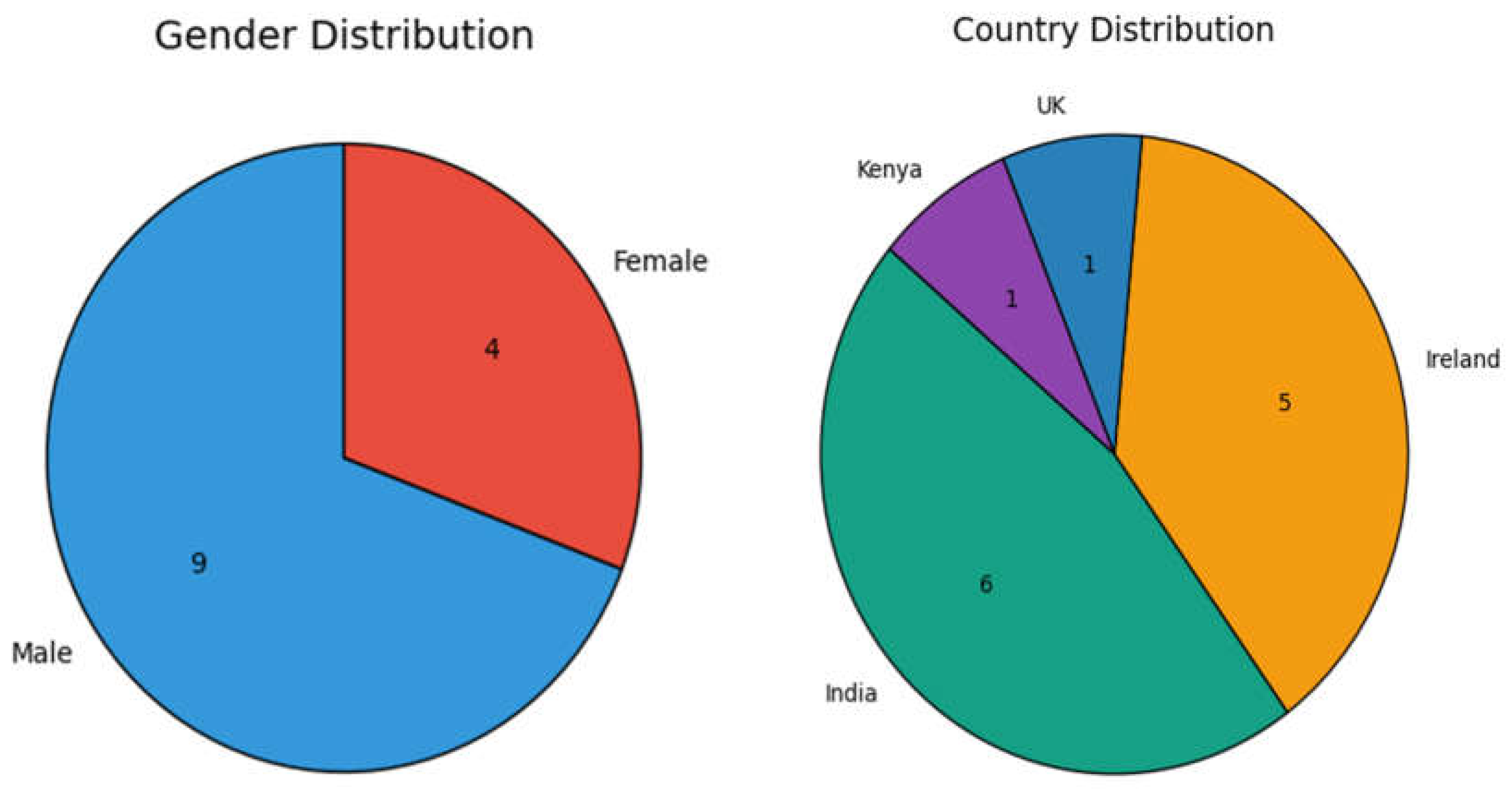
Figure 2.
No. Of Experts by Role.
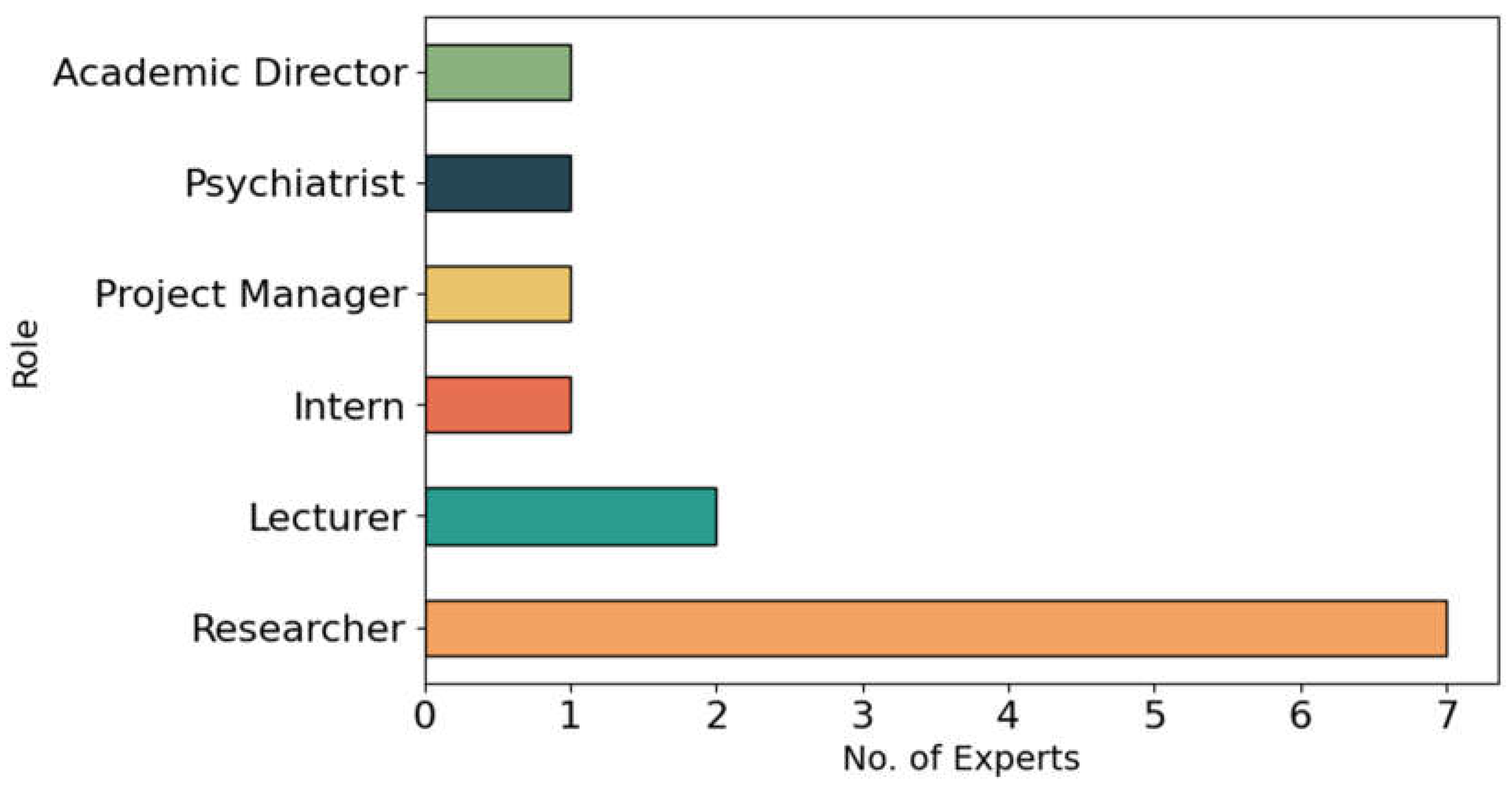
Figure 3.
No. Of Experts by Domain.
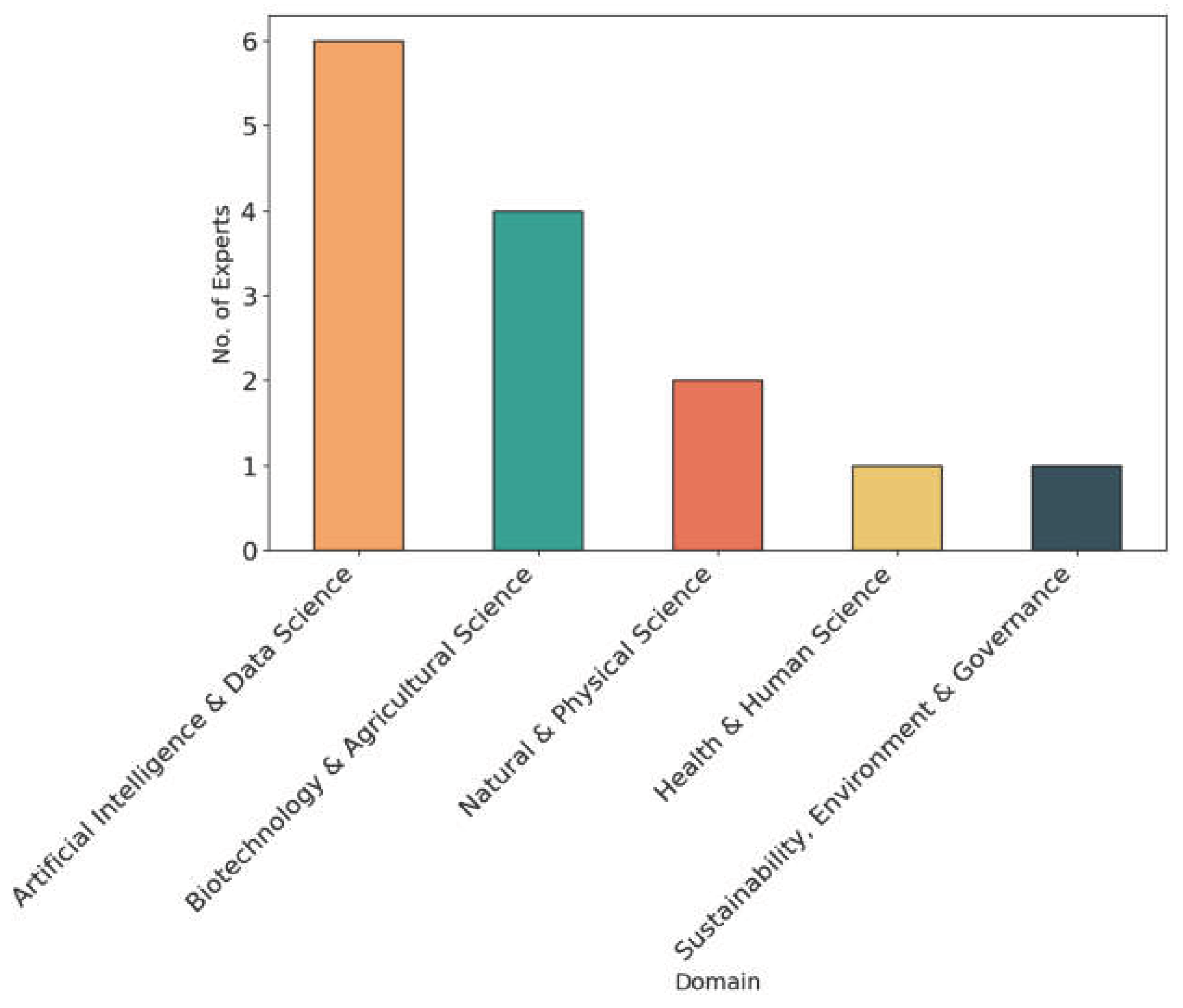

Table 1.
17 SDGs set forth by the United Nations (United Nations, 2015).
| SDG | Title | Description |
|---|---|---|
| 1 | No Poverty (United Nations, 2025, Goal 1) | End poverty in all its forms everywhere. |
| 2 | Zero Hunger (United Nations, 2025, Goal 2) | End hunger, achieve food security and improve nutrition, and promote sustainable agriculture. |
| 3 | Good Health and Well-being (United Nations, 2025, Goal 3) | Ensure healthy lives and promote well-being for all ages. |
| 4 | Quality Education (United Nations, 2025, Goal 4) | Ensure inclusive and equitable quality education and promote lifelong learning opportunities for all. |
| 5 | Gender Equality (United Nations, 2025, Goal 5) | Achieve gender equality and empower all women and girls. |
| 6 | Clean Water and Sanitation (United Nations, 2025, Goal 6) | Ensure availability and sustainable management of water and sanitation for all. |
| 7 | Affordable and Clean Energy (United Nations, 2025, Goal 7) | Ensure access to affordable, reliable, sustainable, and modern energy for all. |
| 8 | Decent Work and Economic Growth (United Nations, 2025, Goal 8) | Promote sustained, inclusive and sustainable economic growth, full and productive employment, and decent work for all. |
| 9 | Industry, Innovation and Infrastructure (United Nations, 2025, Goal 9) | Build resilient infrastructure, promote inclusive and sustainable industrialisation, and foster innovation. |
| 10 | Reduced Inequalities (United Nations, 2025, Goal 10) | Reduce inequality within and among countries. |
| 11 | Sustainable Cities and Communities (United Nations, 2025, Goal 11) | Make cities and human settlements inclusive, safe, resilient, and sustainable. |
| 12 | Responsible Consumption and Production (United Nations, 2025, Goal 12) | Ensure sustainable consumption and production patterns. |
| 13 | Climate Action (United Nations, 2025, Goal 13) | Take urgent action to combat climate change and its impacts. |
| 14 | Life Below Water (United Nations, 2025, Goal 14) | Focuses on reducing pollution, protecting marine ecosystems, and managing fisheries responsibly. |
| 15 | Life on Land (United Nations, 2025, Goal 15) | Protect, restore, and promote sustainable use of terrestrial ecosystems. |
| 16 | Peace, Justice and Strong Institutions (United Nations, 2025, Goal 16) | Promote peaceful and inclusive societies, provide access to justice for all, and build effective, accountable institutions. |
| 17 | Partnerships for the Goals (United Nations, 2025, Goal 17) | Strengthen the means of implementation and revitalise the global partnership for sustainable development. |
Table 2.
Participant Details.
| Essay | Author | Gender | Role | Country | Domain |
|---|---|---|---|---|---|
| 1 | 1 | M | Researcher | India | Artificial Intelligence & Data Science, Biotechnology & Agricultural Science |
| 2 | 2 | M | Intern | India | Artificial Intelligence & Data Science |
| 3 | 3 | F | Project Manager | India | Biotechnology & Agricultural Science |
| 4 & 5 | 4 | M | Researcher | India | Biotechnology & Agricultural Science |
| 4 & 5 | 5 | M | Researcher | India | Biotechnology & Agricultural Science |
| 6 | 6 | M | Researcher | Ireland | Artificial Intelligence & Data Science |
| 7 | 7 | M | Researcher | UK | Artificial Intelligence & Data Science |
| 7 | 8 | F | Psychiatrist | Kenya | Health & Human Science |
| 8 | 9 | M | Academic Director | Ireland | Artificial Intelligence & Data Science |
| 9 | 10 | F | Lecturer | India | Natural & Physical Science |
| 10 | 11 | F | Lecturer | Ireland | Natural & Physical Science |
| 11 | 12 | M | Researcher | Ireland | Sustainability, Environment & Governance |
| 12 | 13 | M | Researcher | Ireland | Artificial Intelligence & Data Science |
Disclaimer/Publisher’s Note: The statements, opinions and data contained in all publications are solely those of the individual author(s) and contributor(s) and not of MDPI and/or the editor(s). MDPI and/or the editor(s) disclaim responsibility for any injury to people or property resulting from any ideas, methods, instructions or products referred to in the content. |
© 2026 by the authors. Licensee MDPI, Basel, Switzerland. This article is an open access article distributed under the terms and conditions of the Creative Commons Attribution (CC BY) license (http://creativecommons.org/licenses/by/4.0/).
Copyright: This open access article is published under a Creative Commons CC BY 4.0 license, which permit the free download, distribution, and reuse, provided that the author and preprint are cited in any reuse.


