Preprint
Article

This version is not peer-reviewed.

Development and Validation of Gene-Based InDel Markers Specific to Indica-Japonica Subspecies for Matured Rice Seed Culturability

Submitted:

20 December 2025

Posted:

23 December 2025

You are already at the latest version

Abstract

Callus induction is frequently employed in rice breeding to either regenerate entire plants from callus cultures or incorporate desired features through genetic alteration. Plant growth regulators, especially auxin, are known for its role in the embryogenic callus proliferation and plant growth. In the present study, the effect of 2, 4-D in callus induction and plant regeneration in 11 rice varieties of Manipur was evaluated. Experimental results revealed that the optimum level of 2,4-D for callus induction varies for different rice varieties. In most of the rice varieties, the optimum dose of callus induction was found to be 2 mg/L. However, 3mg/L concentration of 2,4-D was found to be the most efficient dose in Mani-10, Mani-12, and Mani-13, while a 4 mg/L concentration of 2,4-D was most efficient for callus induction in Mani-14. Using 23 indel markers and 13 SSR markers, genetic diversity and marker trait association were also examined in the 11 rice genotypes. The SSR profile clearly indicates significant heterogeneity among rice accessions and also revealed four sub-populations or groups. Among all the rice genotypes examined, Mani-4 and Ma-ni-5 exhibited the greatest similarity, potentially attributable to their shared lineage. Marker trait association study reveals that the markers RM21, RM411, RM569, RCu4, and RCu5, with R2 values of 0.517, 0.451, 0.451, 0.604, and 0.604, respectively, were found to have genetic correlations with 2,4-D growth hormone concentrations of 0.5 mg/L. This study’s findings will help to conserve rice germplasm and build high-yielding, sustainable rice breeding programs to assure global food security.

Keywords: 
;  ;  ;  ;  ;  

1. Introduction

Rice (Oryza sativa L.) is an important food crop of the world and provides food for more than fifty percent of the world population [1]. It supplies 27% of the dietary energy for the population in developing countries [2]. China and India are the top leading countries that contribute 50% of global rice production [3]. It is also a model organism for monocotyledons and the grass family. Therefore, great efforts have been made to increase the yield over the last many decades with limited success. The attempts for enhancement of rice production and productivity through conventional approaches involving the indirect selection of genotypes through phenotypes have not been successful till now due to global climate change, human population growth, and diminishing cultivable area manifested by the frequent occurrence of biotic and abiotic stresses. Application of innovative breeding strategies coupled with biotechnological tools can pave the way to develop new rice varieties with high-yielding potential and tolerance to abiotic and biotic stresses. Such strategies should have definite targets, precise, accurate, efficient, and a short period, as these factors are crucial for the improvement of yield and development of climate-resilient cultivars of rice. However, adoption of transgenic, microspore or anther culture, micropropagation, embryo rescue, doubled haploids, and functional genomics in rice involves tissue culture techniques and genetic transformation systems [4]. The success of tissue culture and plant regeneration in rice commonly depends on plant genotypes, the developmental stage of explants, media composition, and culture conditions [5]. The highly efficient and well-established tissue culture system for japonica subspecies of rice has been well-established [6,7,8]. As compared to japonica subspecies, indica-type rice genotypes commonly grown in tropical and subtropical regions are known for a low rate of callus induction and regeneration. They are generally sensitive to tissue culture with low transformation frequency due to poor callus production, low rate of somatic embryogenesis, and low frequency of whole plant regeneration [9]. The recalcitrant nature of the indica subspecies has been a major limiting factor in developing improved cultivars through tissue culture and genetic transformation.
Callus cells in vitro are subjected to complex growth conditions, leading to oxidative stress and hence causing cell death, resulting in the browning of tissues. Callus browning is one of the most bottleneck and challenges to the indica rice cultivars in transformation regeneration due to decreased regenerative ability, poor growth, and even death [10]. It has been reported that the callus browning could be reduced by upregulation of the BOC1 gene due to the presence of a tourist-like miniature inverted-repeat transposable element in the promoter of the BOC1 gene [10]. Recently, several quantitative trait loci (QTLs) or genes for tissue culturability traits in rice have been mapped and characterized [11,12,13,14,15,16,17]. However, the molecular mechanisms underlying the callus browning in rice is still remain unclear in detail.
The identification and selection of high-frequency callus induction and plant regeneration are the most prerequisite for the success of tissue culture and genetic transformation in rice. Identification of local cultivars to be used as a candidate genotype is required to develop climate-resilient resilient high-yielding cultivars by exploring the genetic variation through somaclonal variation, genetic manipulation using genome editing, and genetic transformation for abiotic and biotic stresses. Till now, there is no protocol for high-frequency plant regeneration in the Manipur rice cultivars belonging to the indica subspecies using embryonic callus. The study aimed to establish high-quality embryonic callus from mature rice seeds using optimal concentrations of auxin (2,4-dichlorophenoxyacetic acid; 2,4-D) and cytokinin, along with essential amino acids.

2. Materials and Methods

2.1. Plant Materials

A total of 11 rice varieties released by the ICAR Research Complex for NEH Region Manipur Centre for different agro-ecological conditions from 1993 to 2022 were used in the present investigation. They are RC Maniphou 4 (Mani-4), RC Maniphou 5 (Mani-5), RC Maniphou 6 (Mani-6), RC Maniphou 7 (Mani-7), RC Maniphou 10 (Mani-10), RC Maniphou 11 (Mani-11), RC Maniphou 12 (Mani-12), RC Maniphou 13 (Mani-13), RC Maniphou 14 (Mani-14), RC Maniphou 15 (Mani-15), and RC Maniphou 16 (Mani-16). Nipponbare and Swarna were used as representatives of the japonica and indica subspecies of rice genome references.

2.2. Surface Sterilization of Seeds

The mature and healthy seeds of eleven rice varieties were collected from the field, which were grown in the rice field during kharif, 2023, following standard agronomic practices. The seeds were dried in open-air conditions in order to attain the seed moisture of 13%. The seeds were dehusked manually with caution not to damage the embryo of the seeds. The dehusked seeds were surface sterilized with Bavistin 1% and 2-3 drops of Tween-20 for 10 minutes, followed by washing with distilled water. Then, the seeds were again sterilized with 70% ethanol for 1 minute, followed by washing with distilled water. Surface sterilization with 4% NaOCl solution for 20 minutes followed by rinsing with distilled water. The seeds were then transferred inside the laminar air flow and sterilized with 0.1% HgCl2 for 7 minutes, followed by rinsing 3 times with sterile distilled water. The seeds were then air-dried on filter paper before inoculation in the laminar flow.

2.3. Callus Induction in Media

The seeds of the eleven rice varieties were cultured on MS media (with CaCl2, Vitamins, Sucrose, and Agar) fortified with different concentrations of 2,4-D (0, 0.5, 1, 2, 3 & 4 mg/l). The pH of the medium was adjusted to 5.7 before autoclaving. The culture medium was autoclaved at 121 °C for 15 minutes at 15 psi. Further, 20-25 ml medium was poured into sterile petri dishes under laminar air flow. A total of 30 sterilized seeds were placed in each petri dish horizontally on the media with different hormone treatments under aseptic conditions. The experiment is conducted with three replications. The samples were incubated at 25±2 °C in dark conditions. The callus induction frequency was recorded after 15 days and 30 days, respectively. The formula listed below was used for determining the callus induction frequency:
Callus induction frequency = (Number of seed with calli)/(Number of incubated seeds) × 100%

2.4. Identification of Indica-Japonica Specific InDel Markers of Candidate Genes

A survey for references has been carried out to collect QTL/genes related to callus induction or tissue culture-related traits during 2024. The full-length gene sequence, including 2kb upstream and 1 kb downstream of the genes, was used for the identification of insertions/deletions between the indica and japonica rice. Those insertions/deletions with 10 or more nucleotides were considered for the development of InDel markers in the present investigation. The Nipponbare (Acc. No. C146) and Swarna (Acc. No. C008) were used to represent the japonica and indica genome references in the online tool, RiceVarMap v2.0 (https://ricevarmap.ncpgr.cn/two_cultivars_compare/; accessed on 24 Nov, 2023). The primers for the selected InDel markers were also designed using the primer designing tool of RiceVarMap v2.0 (https://ricevarmap.ncpgr.cn/primer_by_id/) with default parameters and only a few parameter modifications. The modified parameters are, 1. upstream and downstream nucleotides were kept at 300 each, 2. Max primer size was 22, and product size range was 300-600. If there are any failures to generate primers, the parameters are further modified by increasing the upstream and downstream to 500 bp. The best primer pairs among the results of designed primers shown by the RiceVarMap v2.0 (https://ricevarmap.ncpgr.cn/primer_by_id/) were selected for use for genotyping in the present investigation.
Additionally, 13 SSR markers for QTL related to the rice mature seed cultureability were also included in the present investigation for the identification of culture induction in 11 rice genotypes [15]. The detailed primer sequences of the 13 SSR markers, along with the percentage of variance explained by the corresponding QTL (PVE), are mentioned in Table 1.

2.5. Genomic DNA Isolation

The healthy seeds of the 11 rice genotypes, along with Nipponbare and Swarna genotypes, were sown in the pots to collect young leaves for genomic DNA isolation. Young leaf tissue at the three-leaf stage was collected, frozen in liquid nitrogen, and then stored in a deep freezer at -80 °C. The genomic DNA for each of the rice genotypes was isolated using the cetyltrimethyl ammonium bromide (CTAB) technique with minor modification [18,19]. The quantity and quality of isolated genomic DNA were determined using 0.8% agarose gel electrophoresis and NanoDrop ND-1000 Spectrophotometer, Thermofisher Scientific (USA). The DNA samples were later diluted to a concentration of 20 ng/ul for PCR amplification using nuclease-free water.

2.6. PCR Amplification and Gel Electrophoresis

Polymerase chain reaction (PCR) amplification was carried out in a 10 μL volume as described [20]. Then, a PCR programme was set up with an initial denaturation step for 4 minutes at 94 °C, followed by 35 cycles of 94 °C for 45 seconds, primer annealing for 45 seconds at 55 °C, and elongation for 1 minute at 72 °C, with a final elongation step for 10 minutes at 72 °C. The PCR products were separated by gel electrophoresis in 3.5% Metaphor agarose gel (Lonza, USA) with a 100-bp DNA ladder (DreamTaq, Thermo Scientific, USA) stained with ethidium bromide. The Vilber E-box gel documentation system (Collégien, France) was used to visualize the image and score the amplified bands.

2.7. Allele Scoring and Diversity Analysis

The genotyping data of 36 markers, including 23 InDel markers and 13 SSR markers, were subjected to genetic diversity analysis and phylogenetic analysis in order to assess the genetic relatedness of these 11 rice cultivars. Genetic diversity parameters, including mean allele number per locus, major allele frequency per locus, observed (Hobs) and expected frequency (HExp), mean polymorphic information content (PIC), and estimated null allele F(Null) were assessed by using Cervus 3.0.7 [21]. The genetic relationship among the rice genotypes was determined by estimating genetic distance and similarity coefficients. The estimated NEI coefficient of dissimilarity index [22], with a bootstrap value of 1000, was used to construct an unweighted neighbour-joining un-rooted tree using DARwin6 software. [23].

2.8. Candidate-Based Association Analysis

Genotypic data of 36 markers and callus induction frequency of 11 rice cultivars were used for marker-trait association analysis with the GLM algorithm in TASSEL 5.2.27 version software [24].

2.9. Statistical Analysis

The callus induction frequency data were statistically analysed using GraphPad Prism 9 software. Cervus 3.0.7 were used to analysed the genetic diversity of the rice varieties considering the parameters; mean allele number per locus, major allele frequency per locus, observed (Hobs) and expected frequency (HExp), mean polymorphic information content (PIC), and estimated null allele F(Null). While the genetic relationship study was performed using DARwin6 software. To study the marker-trait association of the 11 rice varieties, the callus induction data and the genotyping data of 36 markers, including 23 InDel markers and 13 SSR markers were subjected to TASSEL 5.2.27 version software.

3. Results and Discussion

In the present study, 11 indica rice cultivars were used for callus induction and plant regeneration through de-husked seeds. Callus induction from the mature seed scutellum of rice on a modified media composition could be either organogenic or somatic embryogenic plant regeneration. It has been reported that individual rice genotypes play a significant role in the induction frequency of callus and plant regeneration [25]. Therefore, optimization of media composition and growth conditions for different popular rice genotypes is required to improve the plant regeneration frequency from embryogenic calli. In vitro regeneration capacity of the rice depends on genetic background and its interaction with the culture media or media composition [26]. The callus induction rate was estimated with different concentrations of 2,4 D, and a significant enhancement of callus induction and callus growth was observed with varied concentrations of 2,4 D. In tissue culture of rice, the type of growth hormones directly affects the success of callus induction, proliferation, and plant regeneration [27,28].

3.1. Callus Induction Frequency Analysis in 11 High-Yielding Indica Rice Varieties

The identification and selection of high-frequency callus induction and plant regeneration are the most important prerequisites for the success of tissue culture and genetic transformation in rice. Till now, there is no protocol for high-frequency plant regeneration in the Manipur rice cultivars belonging to the indica subspecies using embryonic callus. In the present investigation, an attempt, which will be novel to Manipur rice cultivars, has been made to evaluate callusing capacity and to develop a reproducible callus induction system in vitro from the matured seed of selected eleven belonging to indica subspecies for further genetic improvement through biotechnological approaches such as haploid, double haploid, genetic transformation for transgenic and genome editing technologies in rice. The study aimed to establish high-quality embryonic callus from mature rice seeds using optimal concentrations of auxin (2,4-dichlorophenoxyacetic acid; 2,4-D) and cytokinin, along with essential amino acids. In vitro callus cells are exposed to complicated growth circumstances that result in oxidative stress, which ultimately causes cell death and browning tissues. Due to reduced regenerative capacity, stunted growth, and even death, callus browning is one of the most common and limiting issues facing indica rice cultivars during transformation and regeneration (Zhang et al., 2020). Due to the presence of a tourist-like miniature inverted-repeat transposable element in the BOC1 gene promoter, it has been shown that overexpression of the BOC1 gene may minimize callus browning [10]. Many genes or quantitative trait loci (QTLs) for rice tissue culturability traits have recently been identified and mapped [11,12,13,14,15]. However, it is still unknown exactly what molecular processes underlie rice callus browning. A total of 11 rice varieties released by the ICAR Research Complex for the NEH Region Manipur Centre for different agro-ecological conditions from 1993 to 2022 were selected for validation. They are RC Maniphou 4 (Mani-4), RC Maniphou 5 (Mani-5), RC Maniphou 6 (Mani-6), RC Maniphou 7 (Mani-7), RC Maniphou 10 (Mani-10), RC Maniphou 11 (Mani-11), RC Maniphou 12 (Mani-12), RC Maniphou 13 (Mani-13), RC Maniphou 14 (Mani-14), RC Maniphou 15 (Mani-15), and RC Maniphou 16 (Mani-16).
Plant growth regulators, such as 2,4-D (Dichlorophenoxyacetic acid), are recognized for their ability to enhance optimal embryogenic callus proliferation and growth, although efficacy varies based on the type of explants, media combinations, and concentrations of growth hormones, particularly auxins [29]. Similarly, rice plant genotypes also significantly influence callus induction and plant regeneration. In our study, the callus induction frequencies of 11 rice genotypes were compared when supplemented with different concentrations of 2,4-D growth hormones (0.5 mg/L, 1 mg/L, 2 mg/L, 3 mg/L, and 4 mg/L) (Figure 1).
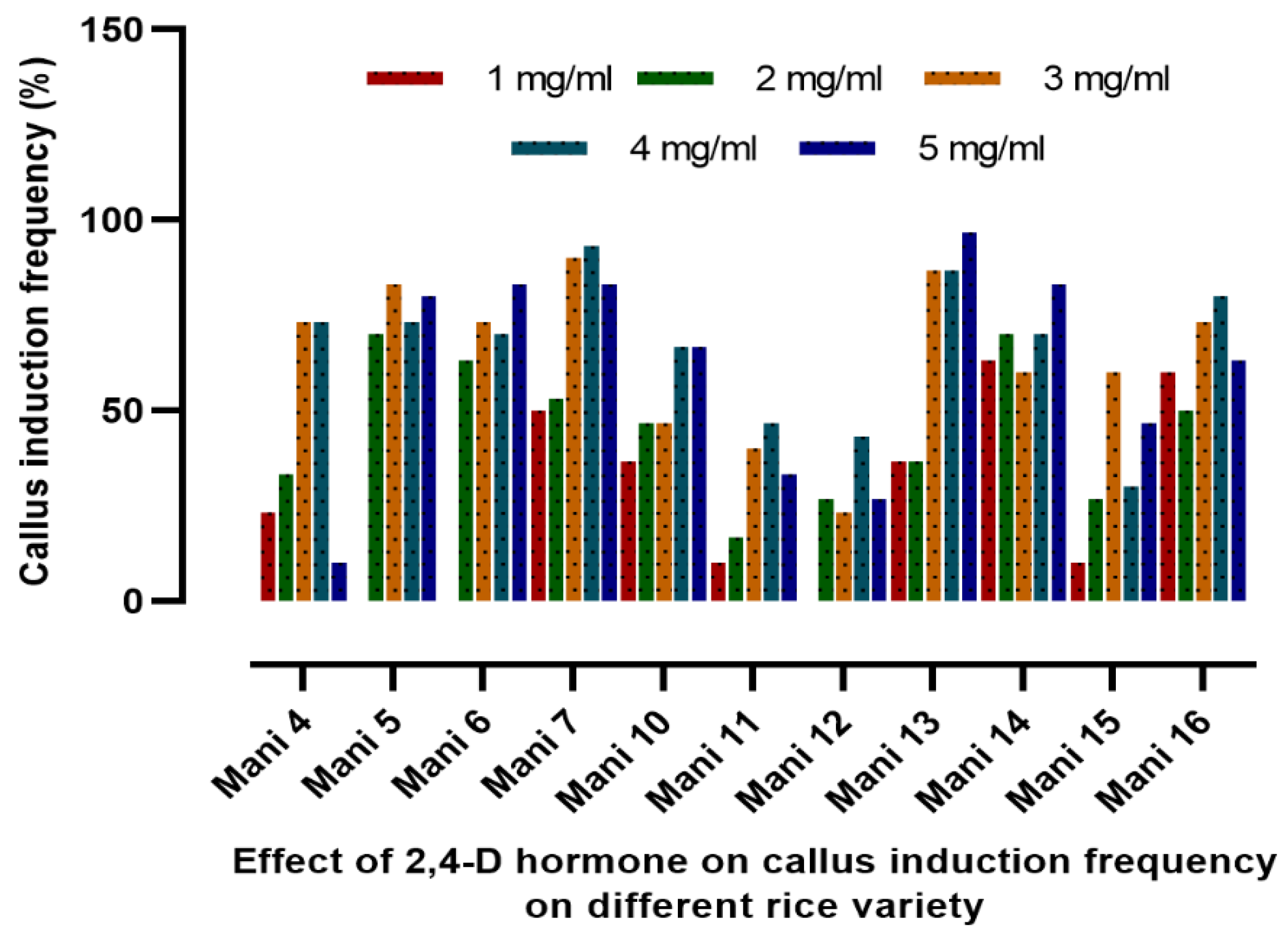
The callus induction rate was estimated with different concentrations of 2,4-D, and a significant enhancement of callus induction and callus growth was observed with varied concentrations of 2,4-D (Figure 2, Table 2). Notably, the efficiency of 2,4-D on callus induction varies for different genotypes. The highest callus induction frequencies were observed in Mani-4 (73.33%), Mani-7 (93.33%), Mani-10 (66.67%), Mani-11 (46.67%), Mani-12 (43.33%), and Mani-16 (80%) with 3 mg/L 2,4-D after 30 days of incubation. However, the highest callus induction frequencies were observed at 4 mg/L 2,4-D after 30 days of incubation in the case of Mani-6 (83.33%), Mani-13 (96.67%), and Mani-14 (83.33%). However, Mani-5 (83.33%) and Mani-15 (60%) showed the highest callus induction frequencies at 2 mg/L 2,4-D. No callus induction was observed in all the rice genotypes where 2,4-D is absent. These revealed the important role of 2,4-D hormone for callus formation in rice genotypes. The present study showed that the concentration of 2,4-D greatly influences the callus induction frequencies of the 11 rice genotypes, 2 mg/L 2,4-D being the most efficient and optimum concentration.
Intriguingly, a higher dose of 2,4-D (4 mg/L) was also found to inhibit the callus induction in rice genotypes such as Mani-4, Mani-11, and Mani-12. Khan (2019) [30] evaluated the effect of 2,4-D on callus induction of aromatic rice of Bangladesh and reported similar results Many reports also suggested that a combination of 2,4-D along with other auxins such as NAA yields better callus induction [31]. The 2,4-D hormone with 2 mg/L concentration was found to be the optimum concentration for callus induction in the present studies, excluding Mani-10, Mani-12, and Mani-14. In the case of Mani-10 and Mani-12, a 2,4-D concentration of 3 mg/L was found to be the most efficient for callus induction, while a 4 mg/L concentration of 2,4-D was most efficient for callus induction in Mani-14.

3.2. Identification of Indica-Japonica Specific InDel Markers of Candidate Genes

Callus induction is frequently employed in rice breeding to either regenerate entire plants from callus cultures or incorporate desired features through genetic alteration [32]. In the context of plant tissue culture, callus induction is the act of stimulating plant cells from explants, such as shoots, leaves, and roots, to generate a mass of undifferentiated cells known as calli [32]. Callus induction from the mature seed scutellum of rice on a modified media composition could be either organogenic or somatic embryogenic plant regeneration. A survey for references has been carried out to collect the genes related to callus induction or tissue culture-related traits in rice. A total of 25 known or candidate genes related to tissue culture-related traits have been collected from different published articles (Table 3). The full-length gene sequence including 2kb upstream and 1 kb downstream to the 25 genes were mined for insertion/deletion between the indica and japonica rice with minimum of 10 nucleotides. Out of the 25 genes, only 14 genes were identified with insertion/deletion of 10 nucleotides or more between the Nipponbare and Swarna genotypes. These 14 genes included LOC_Os01g19480 (kelch motif family protein, putative, expressed), LOC_Os02g30900 (protein kinase domain containing protein, expressed), LOC_Os02g57250 (OsIAA10-Auxin-responsive Aux/IAA gene family member, expressed), LOC_Os02g57380 (thioredoxin, putative, expressed), LOC_Os05g33890 (microtubule associated protein, putative, expressed), LOC_Os06g09290 (26S protease regulatory subunit 7, putative, expressed) LOC_Os06g09320 (expressed protein), LOC_Os06g09390 (AP2 domain containing protein, expressed), LOC_Os06g09450 (sucrose synthase, putative, expressed), LOC_Os03g05550 (expressed protein), LOC_Os03g05570 (RING-H2 finger protein ATL3F, putative, expressed), LOC_Os03g05680 (histone demethylase JARID1C, putative, expressed), LOC_Os03g12820 (ATP8, putative, expressed) and LOC_Os02g49370 (histone-like transcription factor and archaeal histone, putative, expressed).
The highest number of InDel was five in LOC_Os03g05680, followed by three in LOC_Os03g05550, two each in LOC_Os01g19480, LOC_Os02g30900 and LOC_Os03g12820, and one each in LOC_Os02g57250, LOC_Os02g57380, LOC_Os05g33890, LOC_Os06g09290, LOC_Os06g09320, LOC_Os06g09390, LOC_Os06g09450, LOC_Os03g05570 and LOC_Os02g49370 (Table 3).
Out of the 25 genes, only 14 genes, viz. LOC_Os01g19480 (kelch motif family protein, putative, expressed), LOC_Os02g30900 (protein kinase domain containing protein, expressed), LOC_Os02g57250 (OsIAA10-Auxin-responsive Aux/IAA gene family member, expressed), LOC_Os02g57380 (thioredoxin, putative, expressed), LOC_Os05g33890 (microtubule associated protein, putative, expressed), LOC_Os06g09290 (26S protease regulatory subunit 7, putative, expressed) LOC_Os06g09320 (expressed protein), LOC_Os06g09390 (AP2 domain containing protein, expressed), LOC_Os06g09450 (sucrose synthase, putative, expressed), LOC_Os03g05550 (expressed protein), LOC_Os03g05570 (RING-H2 finger protein ATL3F, putative, expressed), LOC_Os03g05680 (histone demethylase JARID1C, putative, expressed), LOC_Os03g12820 (ATP8, putative, expressed) and LOC_Os02g49370 (histone-like transcription factor and archaeal histone, putative, expressed) were identified with insertion/deletion of 10 nucleotides or more. The highest number of InDel was observed in LOC_Os03g05680 (5), followed by LOC_Os03g05550 (3), LOC_Os01g19480 (2), LOC_Os02g30900 (2) and LOC_Os03g12820 (2), and LOC_Os02g57250 (1), LOC_Os02g57380 (1), LOC_Os05g33890 (1), LOC_Os06g09290 (1), LOC_Os06g09320 (1), LOC_Os06g09390 (1), LOC_Os06g09450 (1), LOC_Os03g05570 (1) and LOC_Os02g49370 (1) (Table 4).
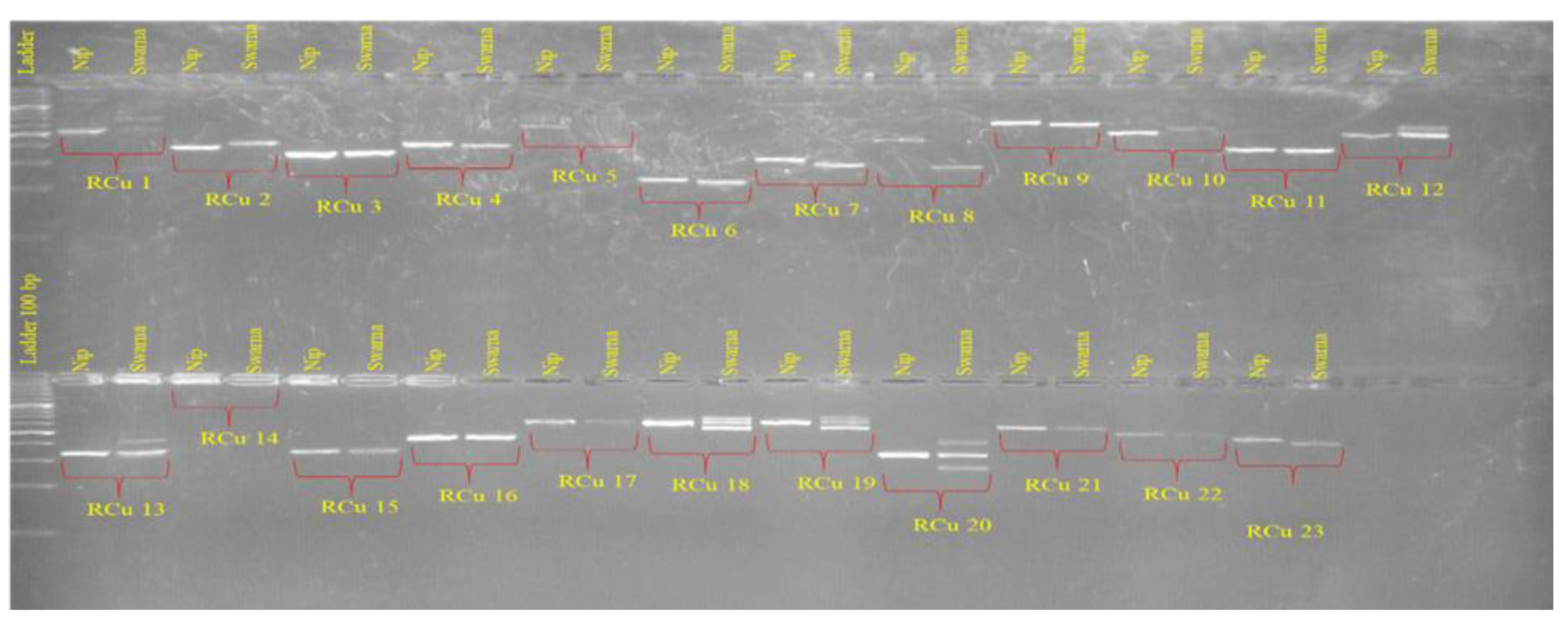
A total of 23 InDel markers were developed from 14 callus inducing related genes. These InDel markers were used for amplification and compared the amplicon fragment size between the Nipponbare and IR64 rice genotypes (Figure 3). All the 23 InDel primers were successfully amplified using Nipponbare and Swarna at an annealing temperature of 55oC. Out of 23 InDel markers, only 14 (60.87%) were found to be polymorphic between the Nipponbare and IR64. The polymorphic InDel markers are RCu1 (LOC_Os01g19480), RCu2 (LOC_Os01g19480), RCu4 (LOC_Os02g30900), RCu5 (LOC_Os02g57250), RCu6 (LOC_Os02g57380), RCu7 (LOC_Os05g33890), RCu8 (LOC_Os06g09290), RCu10 (LOC_Os06g09390), RCu12 (LOC_Os03g05550), RCu13 (LOC_Os03g05550), RCu18 (LOC_Os03g05680), RCu19 (LOC_Os03g05680), RCu20 (LOC_Os03g05680), and RCu23 (LOC_Os02g49370). The remaining four genes, such as LOC_Os03g12820, LOC_Os06g09320, LOC_Os06g09450, and LOC_Os03g05570, did not show any polymorphism between the Nipponbare and Swarna genotypes. These 10 genes showing the polymorphic bands between the indica and japonica subspecies might be useful for molecular characterization of the differential performance of the indica and japonica subspecies for the callus induction rate of rice.

3.3. Genetic Diversity and Relationship Analysis

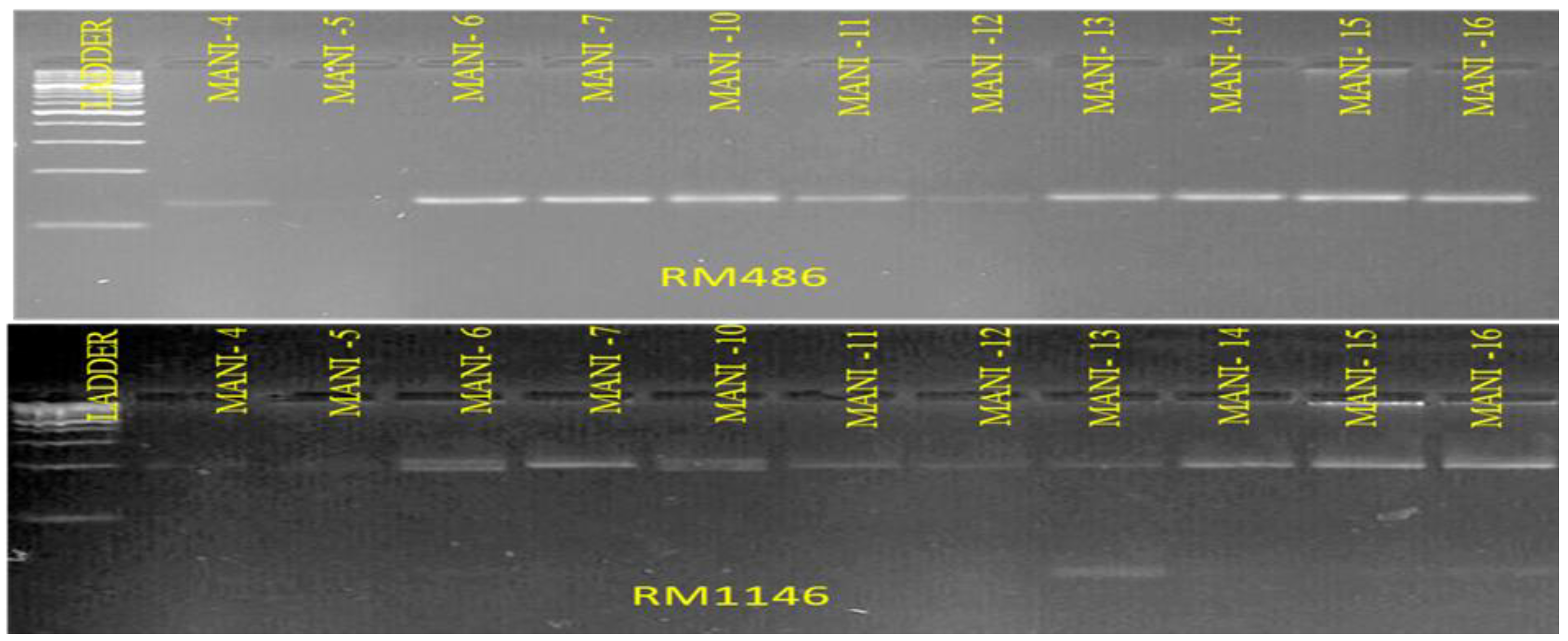
The genotyping data of 36 markers, including 23 InDel markers and 13 SSR markers (Figure 4), were subjected to genetic diversity analysis and phylogenetic analysis in order to assess the genetic relatedness of these 11 rice cultivars. The genetic variation metrics for each of these markers, such as polymorphism information content (PIC) and observed and expected heterozygosity, were calculated. A total of 93 alleles were detected across 36 markers, with the number of alleles per locus (K) ranging from 1 to 6, and an average of 2.583 per locus. With an observed heterozygosity (HOB) of 0.455, marker RM1146 had the highest value, followed by RCu16 and RCu17 with 0.364. Only the RCu14, RCu16, RCu17, RCu22, and RCu23 loci out of the 36 have greater HOBs values than the expected heterozygosity (HExp). It can be inferred that the rice varieties studied are self-pollinated. The population had varying values of expected heterozygosity (HExp) (ranging from 0 to 0.797) that showed its heterogeneity. The polymorphic information content (PIC) assesses a marker’s capability to identify polymorphisms, making it highly significant for choosing markers in genetic research. PIC values above 0.5 are regarded as highly informative for co-dominant markers like indels and SSR, values of 0.25 to 0.50 as slightly informative, and values below 0.25 as not very informative [33]. In our study, the PIC values ranged from 0 (RM348, RM5746, RCu1, RCu6 and RCu12) to 0.720 for RCu3 with a mean value of 0.3358 per marker (Table 5).
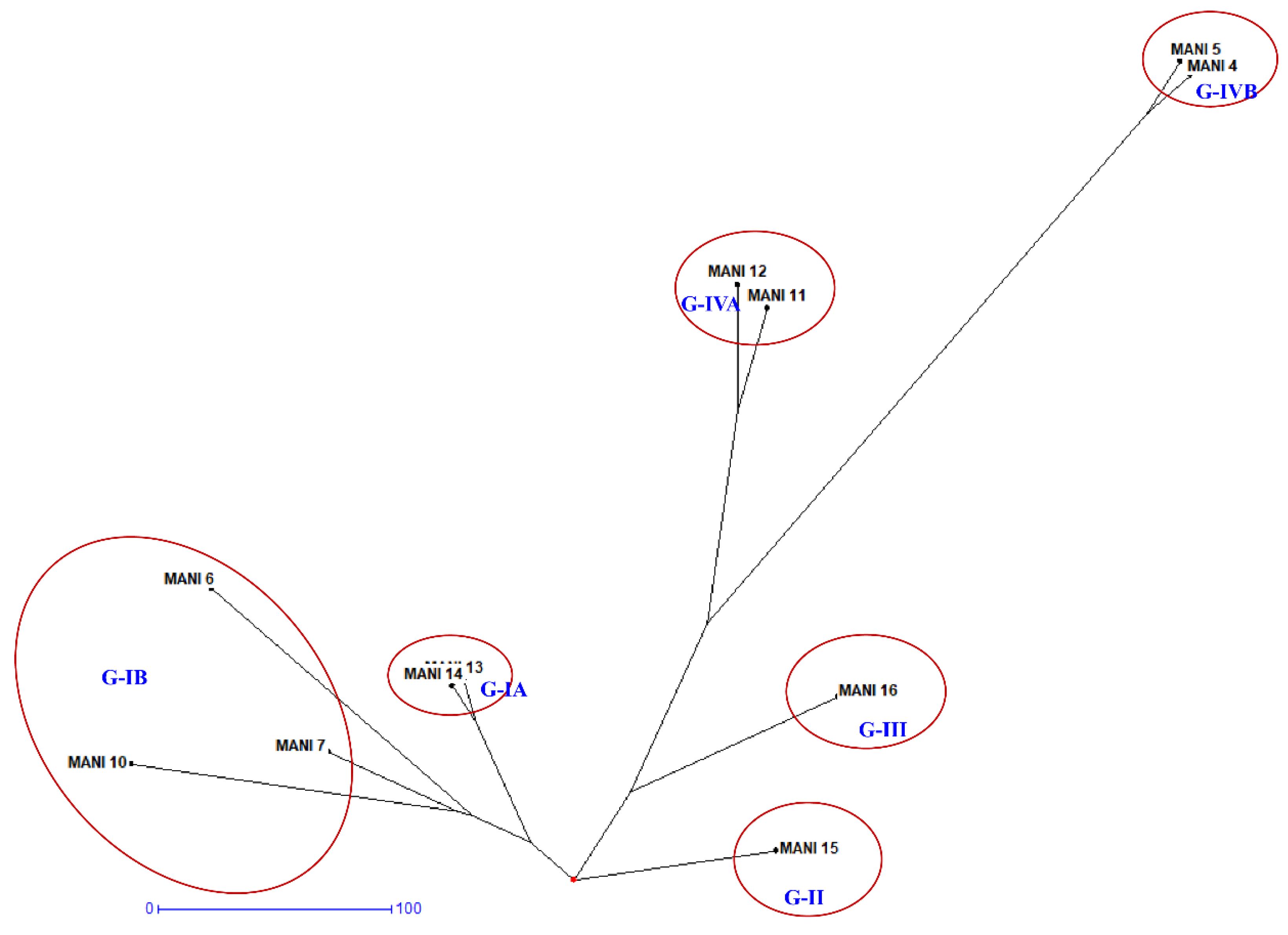
The genetic relationship between the 11 rice genotypes was investigated using genotypic data from 23 indels and 13 SSR markers. DARwin 6 software was used to do clustering based on the Neighbour Joining dendrogram. The 11 rice accessions might be divided into four primary clusters (G-I through G-IV). Group I (G-I) has two sub-group G-IA clustering Mani-13 and Mani-14 and G-IB comprising of Mani-6, Mani-& and Mani-10. G-II and G-III has single rice varity that is Mani- 15 and Mani-16 respectively. G-IV again is divided into two sub group G-IVA comprising of Mani-11 and Mani-12, while G-IVB has Mani-4 and Mani-5. Among all the rice genotypes studied Mani-4 and Mani-5 showed closest similarity which may be due to their common lineage. Mani-13 and Mani-14 also showed similar closed proximity as that of Mani-4 and Mani-5. The NJ dendrogram is presented in Figure 5.

3.4. Candidate-Based Association Analysis for Mature Rice Seed Culturability

The relationship between phenotypic data and the genomic region of the corresponding markers is highlighted by the marker-trait association analysis approach [34,35]. A total of 23 InDel markers linked to 14 callus-inducing related genes were used for marker-trait association analysis for callus induction. Additionally, 13 SSR markers linked or associated with the QTL related to the rice mature seed culturability were also included [15]. For genetic association analysis of 2,4-D growth hormones concentration of 0.5 mg/L showed genetic associations with the markers RM21, RM411, RM569, RCu4 and RCu5 with R2 values of 0.517, 0.451, 0.451, 0.604, 0.604, respectively (Table 6). This suggests that genetic variation at these markers contributes significantly to the observed variations in the dose of 2,4-D concentration (0.5 mg/L) in callus induction. Similarly, 2,4-D concentration of 2mg/mL under callus induction showed a significant association with marker RCu17 with an R2 value of 0.426. Moreover, the callus induction of 2,4-D concentration of 4mg/L showed genetic association with marker RM414, RCu2, RCu7, RCu10, RCu13, RCu15, RCu18, RCu19, and RCu20 with R2 values of 0.447, 0.533, 0.447, 0.447, 0.401, 0.447, 0.447, 0.447, 0.447, respectively. These results suggest specific genetic markers that may be involved in the induction frequency of callus and plant regeneration with different concentrations of 2,4-D growth hormones.
The genetic association of the 2,4-D concentration of 0.5mg/L indicates RM21 (R2= 0.5167*), RM411 (R2= 0.4509*), and RM569 (R2= 0.4509*), a significant but weaker association, RCu4 (R2= 0.6043**), and RCu5 (R2= 0.6043**), the strongest association, suggesting these could be key markers for callus induction and regeneration. For 2,4-D concentration of 2mg/L, RCu17 (R2= 0.4257*) weaker associated. Similarly, for 2,4-D concentration of 4mg/L, RM414 (R2= 0.4470*) is significant but weakly associated. RCu2 (R2= 0.5333*) is significant but moderately associated. RCu7 (R2= 0.4470*) and RCu10 (R2= 0.4470*) are significant but weakly associated. RCu13 (R2= 0.4014*) is significant but weakly associated. Similarly, RCu15 (R2= 0.4470*), RCu18 (R2= 0.4470*), RCu19 (R2= 0.4470*), and RCu20 (R2= 0.4470*), are significant but moderately associated (Table 6).

4. Conclusions

2,4-D (Dichlorophenoxyacetic acid) is known for its ability to promote optimal embryogenic callus proliferation and growth; However, its efficacy depends upon the type of explants, medium combinations, and concentrations. The present study aims to evaluate the effect of different doses of 2, 4-D in callus induction and plant regeneration in 11 rice varieties of Manipur. Our studies have revealed that the optimum level of 2,4-D for callus induction varies for different rice varieties. However, in most cases, a 2 mg/L concentration was found to be the optimum concentration, while in Mani-10, Mani-12, and Mani-14, a 2,4-D concentration of 3 mg/L was found to be the most efficient for callus induction, while a 4 mg/L concentration of 2,4-D was most efficient for callus induction in Mani-14. Application of a higher dose than the optimum dose also found to inhibit callus induction frequency. Genetic diversity and marker trait association were also studied in the 11 rice genotypes using 23 indel markers and 13 SSR markers. The SSR profile clearly indicates significant heterogeneity among rice accessions. The results of this study will facilitate rice germplasm conservation and will be helpful in the development of high-yielding, sustainable rice breeding programs to ensure global food security.

Author Contributions

Conceptualization, U.N. and C.B.; methodology, U.N., K.B.S, A.G.D. and J.H.; software, K.B.S., A.G.D., S.K., E.L.D., T.B.S; validation, P.W.S., A.K. and S.R.; formal analysis, K.R.S, A.R.S., C.S., C. T., H.L.D., P.W.S. and K.S.; investigation, K.BS., S.I.D., A.G.D., C.P.D., J.H. and U.N.; resources, U.N. and C.B.; data curation, K.D.S., E.L.D., K.R.S., A.K., C.S., T.B.S. and Y.B.K.S.; writing—original draft preparation, U.N. S.R. P.C.S. and K.B.S.; writing—review and editing, H.L.D., C.T. and C.P.D.; visualization, A.R.S. and U.N.; supervision, U.N. and C.B.; project administration, U.N.; funding acquisition, U.N. All authors have read and agreed to the published version of the manuscript.

Funding

This study was funded and supported by the Indian Council of Agricultural Research Regional Centre, Imphal, and was also funded to K.D.S through DBT-RA program (DBT-RA/2024-2025/Call-I/RA/12).

Data Availability Statement

Data generated and analyzed are available in this article.

Acknowledgments

We sincerely acknowledge the Director of ICAR Research Complex for NEH Region, Umiam, for supporting the research and providing all facilities for conducting the study. Also acknowledge Department of Biotechnology, Govt. of India for funding KDS through DBTA RA Program (DBT-RA/2024-2025/Call-I/RA/12).

Conflicts of Interest

The authors declared no conflict of interest.

Abbreviations

The following abbreviations are used in this manuscript:
QTL quantitative trait loci
2,4-D 2,4-dichlorophenoxyacetic acid
PVE Percentage Variance Explained
SSR Simple sequence repeats
CTAB Cetyltrimethyl ammonium bromide
Hobs Observed frequency
(HExp) Expected frequency
PIC Polymorphic information content
SEM Standard error of the mean
MS Media Murashige and Skoog media

References

  1. Ngangkham, U.; Nath, M.; Dokku, P.; AmithaMithra, S.V.; Ramamurthy, S.; Singh, N.K.; Sharma, R.P.; Mohapatra, T. An EMS induced new sequence variant, TEMS5032 in the coding region of SRS3 gene leads to shorter grain length in rice (Oryza sativa L.). J. Appl. Genet. 2018, 59(4):377-389. [CrossRef]
  2. Redoña, E.D.; Mula, F.L. Some imperatives and challenges for rice biotechnology in Asian national agricultural research and extension systems. Asian Biotechnol. Dev. Rev. http://www. ris. org. in/abdr_ nov2005. htm. 2004.
  3. Tripathy, S.K. Optimization of culture variables for efficient callus induction and rapid plant regeneration in zinc rich rice (Oryza sativa L.) cv. “Chittimuthyalu”. J. Appl. Biol. Biotechnol. 2021, 9, 1-9.
  4. Wu, J.; Chang, X.; Li, C.; Zhang, Z.; Zhang, J.; Yin, C.; Ma, W.; Chen, H.; Zhou, F.; Lin, Y. QTLs related to rice callus regeneration ability: localization and effect verification of qPRR3. Cells 2022, 11, 4125. [CrossRef]
  5. Ali, J.; Nicolas, K.L.C.; Akther, S.; Torabi, A.; Ebadi, A.A.; Marfori-Nazarea, C.M.; Mahender, A. Improved anther culture media for enhanced callus formation and plant regeneration in rice (Oryza sativa L.). Plants 2021, 10, 839. [CrossRef]
  6. Yang, Y.S.; Zheng, Y.D.; Chen, Y.L.; Jian, Y.Y.; Improvement of plant regeneration from long-term cultured calluses of Taipei 309, a model rice variety in in vitro studies. Plant Cell Tissue Organ Cult. 1999, 57,199-206. [CrossRef]
  7. Lee, K.; Jeon, H.; Kim, M. Optimization of a mature embryo-based in vitro culture system for high-frequency somatic embryogenic callus induction and plant regeneration from japonica rice cultivars. Plant Cell Tissue Organ Cult. 2002, 71, 237-244. [CrossRef]
  8. Dabul, A.N.G.; Belefant-Miller, H.; RoyChowdhury, M.; Hubstenberger, J.F.; Lorence, A.; Phillips, G.C. Screening of a broad range of rice (Oryza sativa L.) germplasm for in vitro rapid plant regeneration and development of an early prediction system. In Vitro Cell. Dev. Biol.-Plant 2009, 45, 414-420. [CrossRef]
  9. Zaidi, M.A.; Narayanan, M.; Sardana, R.; Taga, I.; Postel, S.; Johns, R.; McNulty, M.; Mottiar, Y.; Mao, J.; Loit, E.; Altosaar, I. Optimizing tissue culture media for efficient transformation of different indica rice genotypes. Agron. Res. 2006, 4, 563-575.
  10. Zhang, K.; Su, J.; Xu, M.; Zhou, Z.; Zhu, X.; Ma, X.; Hou, J.; Tan, L.; Zhu, Z.; Cai, H.; Liu, F. A common wild rice-derived BOC1 allele reduces callus browning in indica rice transformation. Nat. Commun. 2020, 11, p.443.
  11. Taguchi-Shiobara, F.; Lin, S.Y.; Tanno, K.; Komatsuda, T.; Yano, M.; Sasaki, T.; Oka, S. Mapping quantitative trait loci associated with regeneration ability of seed callus in rice, Oryza sativa L. Theor. Appl. Genet. 1997, 95, 828-833. [CrossRef]
  12. Taguchi-Shiobara, F.; Yamamoto, T.; Yano, M.; Oka, S. Mapping QTLs that control the performance of rice tissue culture and evaluation of derived near-isogenic lines. Theor. Appl. Genet. 2006, 112, 968-976. [CrossRef]
  13. Nishimura, A.; Ashikari, M.; Lin, S.; Takashi, T.; Angeles, E.R.; Yamamoto, T.; Matsuoka, M. Isolation of a rice regeneration quantitative trait loci gene and its application to transformation systems. Proc. Natl. Acad. Sci. 2005, 102, 11940-11944. [CrossRef]
  14. Ozawa, K.; Kawahigashi, H. Positional cloning of the nitrite reductase gene associated with good growth and regeneration ability of calli and establishment of a new selection system for Agrobacterium-mediated transformation in rice (Oryza sativa L.). Plant Sci. 2006, 170, 384-393. [CrossRef]
  15. Zhao, L.; Zhou, H.; Lu, L.; Liu, L.; Li, X.; Lin, Y.; Yu, S.; Identification of quantitative trait loci controlling rice mature seed culturability using chromosomal segment substitution lines. Plant Cell Rep. 2009, 28, 247-256. [CrossRef]
  16. Li, S.; Yan, S.; Wang, A.H.; Zou, G.; Huang, X.; Han, B.; Qian, Q.; Tao, Y. Identification of QTLs associated with tissue culture response through sequencing-based genotyping of RILs derived from 93-11× Nipponbare in rice (Oryza sativa). Plant Cell Rep. 2013, 32, 103-116. [CrossRef]
  17. Zhang, K.; Yin, Z.; Xu, X.; Pu, C.; Li, Q.; Wu, D.; Sun, C.; Fu, Y. Quantitative trait loci for mature embryo culturability traits from Yuanjiang common wild rice (Oryza rufipogon Griff.). Indian J. Genet. Plant Breed. 2016, 76,167-172. [CrossRef]
  18. Doyle, J.; Doyle, J. Isolation of plant DNA from fresh tissue. Focus 1990,12, 13–15.
  19. Ngangkham, U.; Dash, S.; Parida, M.; Samantaray, S.; Nongthombam, D.; Yadav, M.K.; Kumar, A.; Chidambaranathan, P.; Katara, J.L.; Patra, B.C.; Bose, L.K. The potentiality of rice microsatellite markers in assessment of cross species transferability and genetic diversity of rice and its wild relatives. 3 Biotech. 2019. [CrossRef]
  20. Ngangkham, U.; Katara, J.L.; Shanmugavadivel, P.S.; Yadav, M.K.; Yadav, S.; Devachandra, N.; Samantaray, S.; Bose, L.K. Identification and characterization of polymorphic genic SSR markers between cultivated (Oryza sativa) and Indian wild rice (Oryza nivara). Indian J. Biotechnol. 2020, 19, 299–310.
  21. Stipoljev, S.; Safner, T.; Gančević, P.; Galov, A.; Stuhne, T.; Svetličić, I.; Grignolio, S.; Cassinello, J.; Šprem, N. Population structure and genetic diversity of non-native aoudad populations. Sci. Rep. 2021, 11, 12300. [CrossRef]
  22. Nei, M. Genetic distance between populations. Am. Nat. 1972, 106, 283–292.
  23. Perrier, X.; Jacquemoud-Collet, J.P. DARwin software. https:// darwin. cirad. fr/ darwin. 2006.
  24. Bradbury, P.J.; Zhang, Z.; Kroon, D.E.; Casstevens, T.M.; Ramdoss, Y.; Buckler, E.S. TASSEL: software for association mapping of complex traits in diverse samples. Bioinformatics 2007, 23, 2633-2635. [CrossRef]
  25. Hoque, M.E; Mansfield, J.W. Effect of genotype and explant age on callus induction and subsequent plant regeneration from root-derived callus of Indica rice genotypes. Plant Cell Tissue Organ Cult. 2004, 78, 217-223.
  26. Upadhyaya, G.; Sen, M.; Roy, A. In vitro callus induction and plant regeneration of rice (Oryza sativa L.) var. Sita, Rupali and Swarna Masuri. Asian J. Plant Sci. Res. 2015, 5, 24-27.
  27. Din, A.R.J.M.; Fauziah, I.A.; Sarmidi, M.R. Improvement of efficient in vitro regeneration potential of mature callus induced from Malayasian upland rice seed (Oryza sativa L. cv. Panderas). Saudi J. Biol. Sci. 2016, 23, S69-S77. [CrossRef]
  28. Mostafiz, S.B.; Wagiran, A. Efficient callus induction and regeneration in selected indica rice. Agronomy 2018, 8, 1-18. [CrossRef]
  29. Carsono, N.; Juwendah, E.; Sari, S.; Damayanti, F.; Rachmadi, M. Optimize 2,4-D concentration and callus induction time enhance callus proliferation and plant regeneration of three rice genotypes. Biodiversitas 2021, 22, 2555-2560. [CrossRef]
  30. Khan, M.N.M. In vitro callus induction of aromatic rice depends on the concentration of 2, 4-D. Malays. J. Halal Res. 2019, 2, 9-13.
  31. Abd Rahman, Z.; Seman, Z.A.; Othman, A.N.; Ab Ghaffar, M.B.; Ab Razak, S.; Yusof, M.F.M.; Nasir K.H.; Ahmad, K.; Chow, Y.L.; Subramaniam, S. Efficient callus induction and plant regeneration of Malaysian indica rice MR219 using anther culture. Biocatal. Agric. Biotechnol 2021, 31, 101865. [CrossRef]
  32. Kamolsukyeunyong, W.; Dabbhadatta, Y.; Jaiprasert, A.; Thunnom, B.; Poncheewin, W.; Wanchana, S.; Ruanjaichon, V.; Toojinda, T.; Burns P. Genome-wide association analysis identifies candidate loci for callus induction in rice (Oryza sativa L.). Plants 2024, 13, 2112. [CrossRef]
  33. Serrote, C.M.L.; Reiniger, L.R.S.; Silva, K.B.; dos Santos Rabaiolli, S.M.; Stefanel, C.M. Determining the polymorphism information content of a molecular marker. Gene 2020, 726, 144175. [CrossRef]
  34. Singh, I.M.; Ngangkham, U.; Sarika, K.; Devi, Y.S.; Singh, T.S.; Singh, T.B.; Singh, K.R.; Devi, E.L.; Kumar, M.; Nameirakpam, M.; Arambam, U.; Diviya, T.; Laha, R. Genetic diversity and DNA fingerprinting of rice varieties of Manipur using microsatellite markers. Electron. J. Plant Breed. 2024, 15, 504-514. [CrossRef]
  35. Devi, Y.S.; Ngangkham, U.; Singh, T.S.; Singh, T.B.; Singh, K.R.; Devi, E.L.; Roy, S.; Devanna, P.; Konsam, S.; Yengkhom, B.K.; Kumar, A.; Philanim W.S.; Laha, R. Genetic diversity and marker-trait association analysis in Manipur rice germplasm using microsatellite markers. Genet. Resour. Crop Evol. 2025, 72, 5311-5327. [CrossRef]
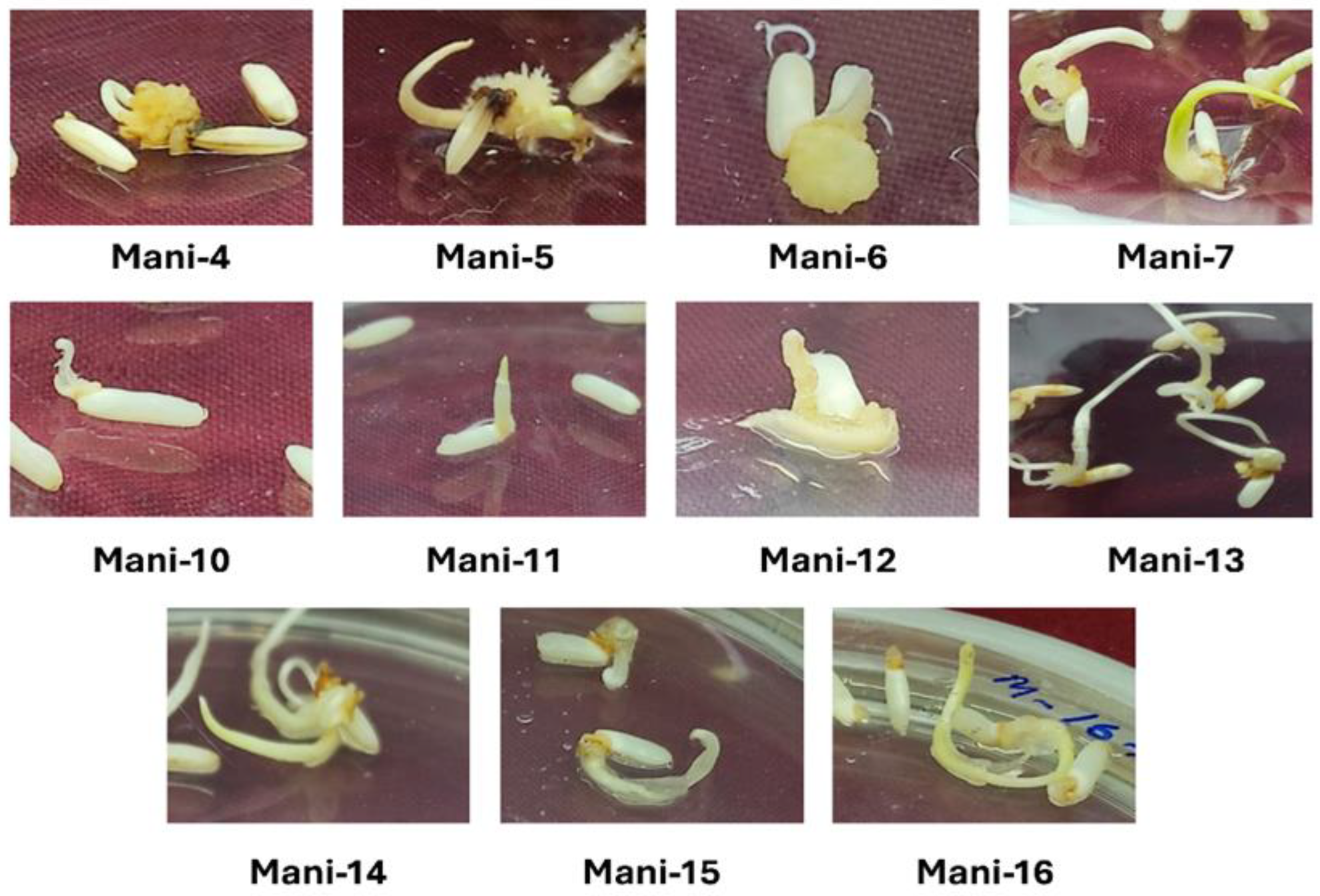
Figure 1. Pictorial representation of callus formation in 11 high-yielding rice varieties.
Preprints 190691 g001
Figure 2. Graphical representation of the effect of 2,4-D hormone on the callus induction frequency in 11 high-yielding rice varieties.
Preprints 190691 g002
Figure 3. PCR amplification of 23 InDel markers based on callus inducing related genes using Nipponbare and Swarna genotypes. Nip denotes Nipponbare DNA.
Preprints 190691 g003
Figure 4. PCR amplification of 11 high-yielding rice varieties of Manipur using 13 SSR markers related to linked or associated with the QTL related to the rice mature seed culturability. The ladder denotes a 100 Bp DNA ladder.
Preprints 190691 g004
Figure 5. Cluster analysis of 11 rice varieties based 23 indels and 13 SSR markers.
Preprints 190691 g005
Table 1. Table 1. List of 13 SSR markers associated with callus induction and regeneration used.
Sl No. Markers Primer Sequences PVE (%)
1 RM1146 Forward-5′-TCTCCCTATTCCCGTGTAAATCG-3′
Reverse-5′-CCCGATGATCGATTGTACCTAGC-3′
33.93
2 RM21 Forward-5′-ACAGTATTCCGTAGGCACGG-3′
Reverse-5′-GCTCCATGAGGGTGGTAGAG-3′
4.18
3 RM224 Forward-5′-ATCGATCGATCTTCACGAGG-3′
Reverse-5′-TGCTATAAAAGGCATTCGGG-3′
4.64
4 RM322 Forward-5′-CAAGCGAAAATCCCAGCAG-3′
Reverse-5′-GATGAAACTGGCATTGCCTG-3′
9.02
5 RM348 Forward-5′-CATGAAGCTGTGTTGCTGTTGC-3′
Reverse-5′-CGCTACTAATAGCAGAGAGACCATCG-3′
15.17
6 RM411 Forward-5′-GTAGGAAATTCTTCGCCAGATGC-3′
Reverse-5′-CCGAGACTTGGAACAATCTTAGGC-3′
9.35
7 RM414 Forward-5′-CAAGGAAGATCTTGTGGACCATGC-3′
Reverse-5′-CTGCAGATGCAGAGGCAGAGG-3′
10.23
8 RM42 Forward-5′-ATCCTACCGCTGACCATGAG-3′
Reverse-5′-TTTGGTCTACGTGGCGTACA-3′
5.04
9 RM467 Forward-5′-TGTTGTCACATGAGATGGCTATGC-3′
Reverse-5′-GCTGACCTTGTGAGACGTTTAGACC-3′
19.20
10 RM486 Forward-5′-GCTTGCATTATGCGATTGTACTCC-3′
Reverse-5′-TGAGCTTTCTCAACAACGACTGC-3′
7.46
11 RM569 Forward-5′-CTGCGTCAGATTTCTCCTCTTCG-3′
Reverse-5′-ACATTCTCGCTTGCTCCTCTCG-3′
4.73
12 RM570 Forward-5′-AGAAATGGTGAAAGATGGTGCTACCG-3′
Reverse-5′-CTGAATGTTCTTCAACTCCCAGTGC-3′
10.35
13 RM5746 Forward-5′-CAGCTTCGGCAAAGCAAAGC-3′
Reverse-5′-CTCGCTACGTCGACTGATTTGG-3′
12.12
Table 2. Callus induction frequency of 11 rice genotypes on MS media with different concentrations of 2,4-D (mg/L) growth hormones.
Genotypes 2,4-D (mg/L) No. of seeds inoculated
(A)
No. of callus-induced seeds
(B)
Callus induction frequency (%)
(C)
15 Days 30 Days C= B/A*100 (15 Days) C= B/A*100 (30 Days)
Mani-4 0 30 - - - -
0.5 30 6 7 20.0 23.33
1 30 6 10 20.0 33.33
2 30 22 22 73.33 73.33
3 30 15 22 50.0 73.33
4 30 2 3 6.67 10.0
Mani-5 0 30 - - - -
0.5 30 - - - -
1 30 19 21 63.33 70.0
2 30 24 25 80.0 83.33
3 30 21 22 70.0 73.33
4 30 23 24 76.67 80.0
Mani-6 0 30 - - - -
0.5 30 - - - -
1 30 11 19 36.67 63.33
2 30 17 22 56.67 73.33
3 30 15 21 50.0 70.0
4 30 12 25 40.0 83.33
Mani-7 0 30 - - - -
0.5 30 7 15 23.33 50.0
1 30 9 16 30.0 53.33
2 30 24 27 80.0 90.0
3 30 15 28 50.0 93.33
4 30 15 25 50.0 83.33
Mani-10 0 30 - - - -
0.5 30 3 11 10.0 36.67
1 30 5 14 16.67 46.67
2 30 5 14 16.67 46.67
3 30 11 20 36.67 66.67
4 30 8 20 26.67 66.67
Mani-11 0 30 - - - -
0.5 30 1 3 3.33 10.0
1 30 3 5 10.0 16.67
2 30 8 12 26.67 40.0
3 30 13 14 43.33 46.67
4 30 6 10 20.0 33.33
Mani-12 0 30 - - - -
0.5 30 - - - -
1 30 3 8 10.0 26.67
2 30 5 7 16.67 23.33
3 30 9 13 30.0 43.33
4 30 6 8 20.0 26.67
Mani-13 0 30 - - - -
0.5 30 3 11 10.0 36.67
1 30 5 11 16.67 36.67
2 30 13 26 46.67 86.67
3 30 17 26 56.67 86.67
4 30 11 29 36.67 96.67
Mani-14 0 30 - - - -
0.5 30 15 19 50.0 63.33
1 30 18 21 60.0 70.0
2 30 14 18 46.67 60.0
3 30 18 21 60.0 70.0
4 30 15 25 50.0 83.33
Mani-15 0 30 - - - -
0.5 30 - 3 - 10.0
1 30 3 8 10.0 26.67
2 30 13 18 43.33 60.0
3 30 9 9 30.0 30.0
4 30 8 14 26.67 46.67
Mani-16 0 30 - - - -
0.5 30 17 18 56.67 60.0
1 30 13 15 43.33 50.0
2 30 19 22 63.33 73.33
3 30 17 24 56.67 80.0
4 30 15 19 50.0 63.33
Table 3. List of 25 candidate gene used for development of Indica-japonica specific gene-based InDel markers in the present study.
Sl No. Gene ID Gene product References
1 LOC_Os01g19470 nodal modulator 1 precursor, putative, expressed Zhang et al., 2019
2 LOC_Os01g19480 kelch motif family protein, putative, expressed Zhang et al., 2019
3 LOC_Os02g30900 protein kinase domain containing protein, expressed Zhang et al., 2019
4 LOC_Os02g57240 oxidoreductase, aldo/keto reductase family protein, putative, expressed Zhang et al., 2019
5 LOC_Os02g57250 OsIAA10—Auxin-responsive Aux/IAA gene family member, expressed Zhang et al., 2019
6 LOC_Os02g57380 thioredoxin, putative, expressed Zhang et al., 2019
7 LOC_Os03g60120 AP2 domain containing protein, expressed Zhang et al., 2019
8 LOC_Os03g60130 transcription elongation factor protein, putative, expressed Zhang et al., 2019
9 LOC_Os05g33890 microtubule associated protein, putative, expressed Zhang et al., 2019
10 LOC_Os06g09290 26S protease regulatory subunit 7, putative, expressed Zhang et al., 2019
11 LOC_Os06g09320 expressed protein Zhang et al., 2019
12 LOC_Os06g09330 ubiquitin-conjugating enzyme, putative, expressed Zhang et al., 2019
13 LOC_Os06g09390 AP2 domain containing protein, expressed Zhang et al., 2019
14 LOC_Os06g09450 sucrose synthase, putative, expressed Zhang et al., 2019
15 LOC_Os03g05550 expressed protein Jiemin et al., 2022
16 LOC_Os03g05570 RING-H2 finger protein ATL3F, putative, expressed Wu Jiemin et al., 2022
17 LOC_Os03g05680 histone demethylase JARID1C, putative, expressed Wu Jiemin et al., 2022
18 LOC_Os03g05690 ZOS3-03—C2H2 zinc finger protein, expressed Wu Jiemin et al., 2022
19 LOC_Os03g05700 expressed protein Wu Jiemin et al., 2022
20 LOC_Os03g05710 acetyltransferase, GNAT family, putative, expressed Wu Jiemin et al., 2022
21 LOC_Os03g05750 heavy-metal-associated domain-containing protein, putative, expressed Wu Jiemin et al., 2022
22 LOC_Os03g05760 transcription factor Dp, putative, expressed Wu Jiemin et al., 2022
23 LOC_Os03g05780 4-coumarate--CoA ligase-like 7, putative, expressed Wu Jiemin et al., 2022
24 LOC_Os03g12820 ATP8, putative, expressed Zhang et al., 2020
25 LOC_Os02g49370 histone-like transcription factor and archaeal histone, putative, expressed Guo Fu et al., 2023
Table 4. List of Indica-japonica specific gene-based InDel markers.
Sl No. Gene Locus ID InDels InDel ID Primer name Primer Sequence (5′ to 3′) amplicon (bp)
1 LOC_Os01g19480 1 vg0111057118 RCu1 F-AGCAATCCCATCCACCTTGA
R-GCGAGACGAATCTTTTAAGCCT
350
2 vg0111057704 RCu2 F-ACCCAACTTAGCCCTAGTGG
R-CGTATTATCGGATGGAGAGGGT
372
2 LOC_Os02g30900 1 vg0218445904 RCu3 F-AAGGAAAGACCAGGACGGAC
R-TGCTCGGGATCGGATCTTC
317
2 vg0218446199 RCu4 F-AAGACGCGTATTAGTTGGGC
R-AAGCAGCCCATCTCTCTCTC
366
3 LOC_Os02g57250 1 vg0235077064 RCu5 F-GGCTGTATGATTGACGTGTTCA
R-TTTCCAAACCATCCCACACG
599
4 LOC_Os02g57380 1 vg0235157418 RCu6 F-ACCAGGTGGCCTCCTTAATC
R-ACGAAAAGCGGCAAAAGACT
212
5 LOC_Os05g33890 1 vg0519994856 RCu7 F-CTCATTTGTGCCGTGCTGTA
R-ACCCTCATCATTTAGCTCGGT
295
6 LOC_Os06g09290 1 vg0604671911 RCu8 F-CTGACCCACATGTCATTGACTC
R-TAGTAGCAGATGTGGCACCC
417
7 LOC_Os06g09320 1 vg0604685498 RCu9 F-TATATTCGCTGGGTTCGGCA
R-GAGCACACAATGGCTACCTT
600
8 LOC_Os06g09390 1 vg0604730040 RCu10 F-CCGGTCAAAAGCTGAGACAG
R-TGTCCTGACGACACTTCTTTAC
476
9 LOC_Os06g09450 1 vg0604802924 RCu11 F-TCCCCCCAAATTCCCCATTT
R-TCCAAAGCTGACAATGGTGC
352
10 LOC_Os03g05550 1 vg0302762832 RCu12 F-AGGTGGGACCATCGACAATT
R-TACCTTCTGTCTGCCAGCAA
466
2 vg0302765163 RCu13 F-TCTAGTGCCCTTGTTCTGCA
R-CTTCGTTGGTGTTGTTGGGT
344
3 vg0302765827 RCu14 F-CTGTTCTCACAGGCCAACAC
R-AGCATGCTTAACCCTGGAGT
339
11 LOC_Os03g05570 1 vg0302776484 RCu15 F-GCTCCACCCTCTATCTCGTC
R-TTGTGTGCGTGCAATGTGTA
335
12 LOC_Os03g05680 1 vg0302831140 RCu16 F-AGCGGATTTATGGCGTGTTG
R-CAACGGGATTTTCAACGGGA
418
2 vg0302831393 RCu17 F-CCCGTTGAAAATCCCGTTGA
R-TCACATACCGCGACTGGTC
569
3 vg0302832709 RCu18 F-TACAAAAGGAGGTGCGAGGT
R-AGAGGAAGGGAAGGGAGGAT
590
4 vg0302832713 RCu19 F-TACAAAAGGAGGTGCGAGGT
R-AGAGGAAGGGAAGGGAGGAT
590
5 vg0302832755 RCu20 F-TACAAAAGGAGGTGCGAGGT
R-GCAAAACTAACCGCCCTTCT
331
13 LOC_Os03g12820 1 vg0306898719 RCu21 F-TCGGGAGTTTACGGAGCTTT
R-TATCATTGATTCACGCGGCC
534
2 vg0306899285 RCu22 F-GGCCGCGTGAATCAATGATA
R-AAATTGAGCGTGGGCACTAC
487
14 LOC_Os02g49370 1 vg0230166558 RCu23 F-TGCGAAGAAACGGATGGAAC
R-TCATGCAGGCACAACGAAAA
455
Table 5. Allele frequency analysis for 23 indels and 13 simple sequence repeat (SSR) markers in rice genotypes.
Locus k HObs HExp PIC F(Null)
RM1146 6 0.455 0.537 0.491 0.1121
RM21 2 0.000 0.312 0.253 0.9818
RM224 4 0.000 0.675 0.579 1.0000
RM322 2 0.182 0.312 0.253 0.2414
RM348 1 0.000 0.000 0.000 ND
RM411 4 0.000 0.745 0.656 1.0000
RM414 2 0.000 0.485 0.356 0.9989
RM42 2 0.000 0.485 0.356 0.9989
RM467 3 0.000 0.537 0.444 0.9996
RM486 4 0.182 0.398 0.353 0.4071
RM569 4 0.000 0.710 0.623 1.0000
RM570 3 0.182 0.255 0.228 0.2547
RM5746 1 0.000 0.000 0.000 ND
RCu1 1 0.000 0.000 0.000 ND
RCu2 3 0.000 0.658 0.551 1.0000
RCu3 5 0.000 0.797 0.720 1.0000
RCu4 2 0.000 0.519 0.373 0.9995
RCu5 2 0.000 0.519 0.373 0.9995
RCu6 1 0.000 0.000 0.000 ND
RCu7 4 0.000 0.762 0.678 1.0000
RCu8 3 0.000 0.554 0.473 0.9997
RCu9 2 0.000 0.485 0.356 0.9989
RCu10 2 0.000 0.485 0.356 0.9989
RCu11 3 0.000 0.606 0.486 0.9999
RCu12 1 0.000 0.000 0.000 ND
RCu13 3 0.000 0.589 0.476 0.9999
RCu14 2 0.273 0.247 0.208 -0.0692
RCu15 2 0.000 0.485 0.356 0.9989
RCu16 2 0.364 0.312 0.253 -0.0981
RCu17 4 0.364 0.333 0.302 -0.0912
RCu18 2 0.000 0.485 0.356 0.9989
RCu19 2 0.000 0.485 0.356 0.9989
RCu20 2 0.000 0.485 0.356 0.9989
RCu21 3 0.182 0.177 0.163 -0.0392
RCu22 2 0.182 0.173 0.152 -0.0405
RCu23 2 0.182 0.173 0.152 -0.0405
Mean ± SEM 2.33 ± 1.18 0.07 ± 0.13 0.41 ± 0.23 0.34 ± 0.20 0.60 ± 0.49
K=Number of alleles; Ho=Observed heterozygosity; He=Expected heterozygosity; PIC = Polymorphic information content; F(Null) = Estimated null allele.
Table 6. Marker-trait association analysis of 36 markers and callus induction frequency of 11 rice cultivars.
2,4-D Marker p-value Marker R2
0.5 mg/L RM21 0.012676 0.516757*
RM411 0.023644 0.450997*
RM569 0.023644 0.450997*
RCu4 0.004862 0.604351**
RCu5 0.004862 0.604351**
2.0 mg/L RCu17 0.029544 0.42575*
4.0 mg/L RM414 0.024497 0.447042*
RCu2 0.010716 0.533261*
RCu7 0.024497 0.447042*
RCu10 0.024497 0.447042*
RCu13 0.036366 0.401376*
RCu15 0.024497 0.447042*
RCu18 0.024497 0.447042*
RCu19 0.024497 0.447042*
RCu20 0.024497 0.447042*
* & ** significance at P value <0.05 and 0.01 respectively.
Disclaimer/Publisher’s Note: The statements, opinions and data contained in all publications are solely those of the individual author(s) and contributor(s) and not of MDPI and/or the editor(s). MDPI and/or the editor(s) disclaim responsibility for any injury to people or property resulting from any ideas, methods, instructions or products referred to in the content.
Copyright: This open access article is published under a Creative Commons CC BY 4.0 license, which permit the free download, distribution, and reuse, provided that the author and preprint are cited in any reuse.
Prerpints.org logo

Preprints.org is a free preprint server supported by MDPI in Basel, Switzerland.

Subscribe

Disclaimer

Terms of Use

Privacy Policy

Privacy Settings

© 2026 MDPI (Basel, Switzerland) unless otherwise stated