Preprint
Article

This version is not peer-reviewed.

Recycling of Medical Waste in the Circular Economy: LCA Analysis of the Production of Bone Allografts from Femoral Heads Used in Dental Implantology

A peer-reviewed article of this preprint also exists.

Submitted:

19 December 2025

Posted:

22 December 2025

You are already at the latest version

Abstract

Background/Objectives: Bone grafting is fundamental in oral implantology in order to achieve appropriate aesthetic and functional results. One of the options for bone grafting is the use of allografts, which can be produced using femoral heads removed during orthopedic surgeries in accordance with the principles of the circular economy. The aim of this study was to examine the environmental impacts of the production of cancellous block and granulates bone graft materials produced in this way. Methods: The cradle-to-gate life cycle assessment was performed at the Petz Aladár University Teaching Hospital Tissue Bank Department, Győr, Hungary, with the system boundaries defined and the bone graft material produced during a production process defined as a functional unit. The environmental impacts were determined with the OpenLCA software, using the ReCiPe v1.03 2016 midpoint (H) and endpoint (H) assessment methods. Results: During the production process, 500g of bone graft material is produced in both forms, packaged as 1g. The carbon footprint of the production of the cancellous bone block was 75.754 kgCO2-Eq, while that of the bone granulates was 90.363 kgCO2-Eq, to which the chemicals used for degreasing and deantigenization of the bone tissue contributed the most. Within the impact categories, the material resource of metals-minerals, terrestrial ecotoxicity and climate change contributed the most to the environmental impacts. Within most impact categories, electricity was the most significant influencing factor. Conclusions: The environmental impact of the production of bone substitute granulates is greater than that of the bone block, to which the packaging of the products contributes primarily.

Keywords: 
;  ;  ;  ;  ;  ;  ;  

1. Introduction

Environmental sustainability is of paramount importance for the future of humanity, as increasing industrialization and human activities are causing significant damage to the planet, including human health [1,2]. Healthcare also contributes to greenhouse gas emissions [3,4]. Sustainable solutions are essential to ensure that future generations can meet their needs [5].
Generating significant amounts of waste in healthcare, including infectious and hazardous waste, increases environmental pollution and public health risks, and therefore the application of sustainable and regulated waste management is of outstanding importance [6,7,8]. Medical waste must be managed according to strict regulations to avoid health risks and environmental pollution [1,7]. The environmental and health risks of waste and the shortcomings of current disposal methods increase the need for recycling and reuse in healthcare. This helps to reduce the use of natural resources [9].
The circular economy is an economic model in which waste is treated as a valuable raw material, material and energy consumption is minimized, and products are recycled whenever possible, thus facilitating the implementation of the “zero waste” principle [1,7,10,11].
Recycling of medical waste can be an environmentally friendly solution, for example by autoclaving infectious materials and then safely recycling them [9,11]. In addition, processing and recycling of used medical devices and materials can also contribute to reducing waste and reducing environmental burdens [9,12].
The femoral head removed during orthopedic surgery, which contains high quality and quantity of trabecular tissue, has the potential to be recycled for the production of bone substitutes, transforming this tissue, previously treated as medical waste, into a valuable raw material [13,14].
In dentistry and oral surgery, bone grafting is of paramount importance for the optimal rehabilitation of edentulous patients, as an adequate quantity and quality of alveolar bone is essential for the placement of stable implants. Bone loss can occur for various reasons, such as tooth extraction, trauma, infection or congenital anomalies, and therefore bone grafting procedures are often necessary [15,16,17,18,19,20,21]. During these procedures, bone is replaced with natural or synthetic graft materials and various regeneration techniques to ensure the long-term stability of implants [10,22]. In modern oral surgery and dentistry, bone grafting offers significant advantages not only from a functional but also from an aesthetic point of view [23,24,25].
Allografts are excellent bone substitutes in dentistry and orthopedics, as their natural structure promotes bone formation and provides a secure base for implantation, thereby contributing to stability and aesthetic restoration [13,17,19,22]. They are also suitable for personalized bone replacement, as they are available in different sizes and shapes and can be customized to the needs of the given patient through their processing [13,14].
The role of tissue banks, among others, is to produce bone allografts, for which incoming tissues are collected, processed, tested, stored and safely transported to the site of use [13,14,26]. Their presence facilitates the development of modern reconstructive surgery, as they provide a quick and safe solution for complex orthopedic and dental procedures [14].
Tissue banks in the European Union must comply with strict legal and quality requirements covering the collection, processing, storage and use of tissues. The aim of this regulation is to preserve the biological properties of the grafts, guarantee their microbiological safety, and thus ensure the effective and safe use of transplants for patients [14,17,26,27,28].
In order to comprehensively assess the environmental impacts of a product or process, life cycle assessment (LCA) is necessary, which provides an opportunity to compare different solutions from a sustainability perspective [8].
Life cycle assessment is an internationally recognized method that aims to assess the full environmental impact of a product or process from production, use, and disposal. The ISO 14040 and 14044 standards define the main steps of the process, including goal and scope definition, inventory analysis, impact category analysis, and interpretation of the results [7,8,11,29]. Impact categories may include global warming potential, human toxicity, impacts on aquatic ecosystems, and soil, which can be used to more accurately assess environmental burdens [3,30].
The femoral head removed during orthopedic surgeries is medical waste, but it is also a valuable raw material, from which the production of bone graft material fits into the principles of the circular economy, and its processing can help make healthcare and dentistry more environmentally conscious. The aim of this study was to perform a life cycle assessment of allografts produced by processing femoral heads removed during orthopedic surgeries at the West Hungarian Regional Tissue Bank within the Petz Aladár University Teaching Hospital, Győr, Hungary.

2. Materials and Methods

The present study was approved by the Legal and Ethics Comitee of Petz Aladár University Teaching Hospital (Approval no. 9/485-1/2025)
Life cycle assessment is the gold standard for examining and understanding the environmental impacts of a product or process [29]. The method is also used to measure the environmental impacts of healthcare activities [8]. According to the International Standards Organization (ISO) series 14040:2006 protocol and its 2020 amendment, there are 4 phases to performing an LCA analysis: 1.) Definition of the scope, functional unit and system boundaries, 2.) Analysis of the Life Cycle Inventory via databases, like Ecoinvent, 3.) Impact assessment using 18 impact categories, 4.) Interpretation of results [8,31,32]. LCA modeling can be done from cradle to gate, i.e., from raw materials to the pre-use stage, or from cradle to grave, which covers the entire life cycle of the product [29,33].

2.1. Objective and Scope

Goal, Scope

The aim of the study was to asess the environmental impact of the manufacturing process of allografts produced from femoral heads removed during orthopedic surgeries. Since the analysis was limited to the manufacturing phase only, the applied LCA approach followed the cradle-to-gate model. In order to better understand the environmental impacts, we compared the amount of CO2 emitted during manufacturing with the potential CO2 emissions that would be generated when the femoral head is disposed of as infectious medical waste, primarily by incineration, given that this is the most commonly used disposal method, in accordance with the principles of the circular economy.

Functional Unit

The functional unit defines the specific product or service whose life cycle assessment is being examined. Several type of bone substitutes can be produced from the processing of femoral heads, which have different indications and areas of use. Since cancellous or cortico-cancellous blocks or bone granules are most often used in dental implantology, a production process of each of them was the functional unit.

System Boundaries

The definition of system boundaries is a key element in the life cycle assessment, as it identifies the raw materials, inputs, processes, outputs and waste streams that belong to the functional unit under study. An accurate and transparent definition of system boundaries is essential, as it ensures the comparability of the results of different life cycle assessments. In this study, a cradle to gate approach was used, the system boundaries cover only the production processes and do not include the transport, clinical use or waste management of the finished bone substitute materials. Since the removal of femoral heads during orthopedic surgeries takes place in the same institution where they are processed, the transport of raw materials is also not part of the model. However, the system includes the chemical substances, disposable materials, energy consumption necessary for processing and waste management, but does not include the travel of personnel or the maintenance of the equipment used in processing. The system boundaries of the LCA analysis do not extend to the processes of screening donor samples, hematological and microbiological tests, as these are only indirectly related to the allograft production process. The system boundaries are shown in Figure 1.

2.2. Analysis of the Life Cycle Inventory

Data Collection

The primary data collection was carried out at the West Hungarian Regional Tissue Bank within the framework of the Petz Aladár University Teaching Hospital. The determination of the amount of materials and tools is based on observations and measurements.
The assumptions were based on empirical observations and years of professional experience of the Tissue Bank.
The following assumptions were made for the calculations:

List of Assumptions

  • During a processing cycle, an average of 24 femoral heads are processed, with a total weight of approximately 2720 g.
  • Each work process is performed by one person wearing full protective equipment, including a sterile surgical gown, surgical mask, hair net and foot bag.
  • Allografts are manipulated under sterile conditions in sterile fields.
  • Bone waste generated during bone cutting and grinding cannot be reused due to metallic contamination and is therefore disposed of as infectious waste.
  • The femoral heads received after surgeries are stored in a freezer for an average of 21 days until the 24 pieces are collected to start the processing process.
  • The degreasing process takes an average of 28 days, during which the solution is changed initially every two days and then every three days; 2 liters of methanol-chloroform solution is used at one time.
  • Deantigenization lasts two days, during which the container containing the allografts is placed in a thermostat, and the process is carried out with 2 liters of sodium azide-iodoacetic acid solution.
  • Bleaching lasts one day, for which 2 liters of hydrogen peroxide solution is used.
  • During the transitions between the different chemical solutions, the bones are rinsed with distilled water.
  • In the case of bone granules, the different size fractions are separated by sieving and then packaged according to size categories.
  • The instruments used during production was not part of the system boundaries because it was few and are re-sterilized several times for different production processes, so their environmental impact is not significant.
  • To ensure the sterility of the allografts, the entire batch is first sterilized in an ethylene oxide sterilizer, then lyophilization and individual packaging are carried out in a separate, sterile room under sterile conditions.
  • The lyophilization process takes one day.
  • The packaging materials used for the final packaging of the allografts are sterilized in an autoclave, ensuring sterility for all the completed allografts at the same time.
  • An average of 500 units of 1 g bone substitute preparation can be produced as a result of one processing cycle.

Life Cycle Inventory

During the Life Cycle Inventory (LCI), we mapped out in detail each step of the allograft production process in order to determine the carbon emissions of the production and the environmental impact of each process. The production processes of cancellous or corticocancellous blocks and bone granule allografts were included in the study, which consisted of the following main steps: receiving and freezing the bone, cutting, degreasing, deantigenization, bleaching of the bone, and grinding and sieving in the case of bone granule production. Additional processing phases included sterilization, lyophilization and packaging of the allografts.
The necessary materials and instruments were assigned to each step, but only the most necessary ones were taken into account. The materials used were broken down into their components and their exact mass was determined on an analytical balance, and information on the composition and packaging materials was recorded based on the manufacturer’s data. Ten pieces of materials and instruments were examined and the weight taken into account was determined from the average weight values. In addition, the environmental impact of transporting the materials was taken into account for each processing step.
The energy consumption of the devices was estimated based on their performance and operating time (Table 1).
The waste generated during processing was classified into separate categories: bone residues generated during bone cutting and grinding were classified as medical waste, the chemicals used were classified as hazardous waste, while the remaining, non-hazardous waste was classified as municipal solid waste. The hospital took care of their collection, transportation and disposal.
The femoral heads were processed only after the patient’s written informed consent was obtained, which allowed the bone removed during surgeries to be used for the production of allografts.
To ensure the quality and safety of allografts, donors undergo a rigorous selection and screening process, which includes serological testing. Negative results for HIV-1/2, HBsAg, HBcoreAg, HCV and Treponema pallidum (lues) are essential during testing. In order to control the manufacturing process, bone samples are microbiologically tested after lyophilization but before packaging to ensure that no contamination has occurred during processing. When selecting donors, the medical history questionnaire includes, among other things, medical history, presence of infectious diseases and other health risk factors. The donor selection criteria were in accordance with EACTB principles (Guide to the safety and quality of tissues and cells for human application 5th edition).

2.3. Assessing the Life Cycle Impact

In order to determine the environmental impacts of the allograft manufacturing process, a life cycle analysis (LCA) was performed using the openLCA software, based on the merged bioenergiedat_18; elcd_3_2_greendelta_v2_18_correction; needs_18; OzLCI2019, worldsteel_2020, exiobase 3.9.4. and USDA_1901009 databases. To quantify the impacts of the process, we used the ReCiPe v1.03 2016 midpoint(H) method, which evaluates life cycle impacts in 18 environmental impact categories, including greenhouse gas emissions (kg CO2-eq), ozone depletion (kg CFC-11-eq), acidification (mol H+-eq) and eutrophication (kg N-eq, kg P-eq) and ReCiPe v1.03 2016 endpoint(H) method to calculate Disability Adjusted Life Years (DALYs). The LCIA analysis allows for a comparison of the environmental impacts of different processes and identifies the points where the greatest efficiency gains or emission reductions can be achieved, thus providing a basis for developing more sustainable manufacturing strategies.
In order to more accurately assess the environmental impacts of the manufacturing process and the benefits of applying the circular economy, we calculated the carbon dioxide emissions from the production of allografts and compared them with the environmental burden that would have arisen if the unprocessed femural heads had been incinerated as infectious medical waste.

3. Results

This section presents the results of the process-based life cycle assessments (LCA) performed for the two systems analyzed in the study. The process results in 500 g of bone graft material, which can be bone granulates or bone blocks depending on the processing process.
Table 2 contains the results of the LCIA analysis in the ReCiPe v1.03 Midpoint(H) impact categories.
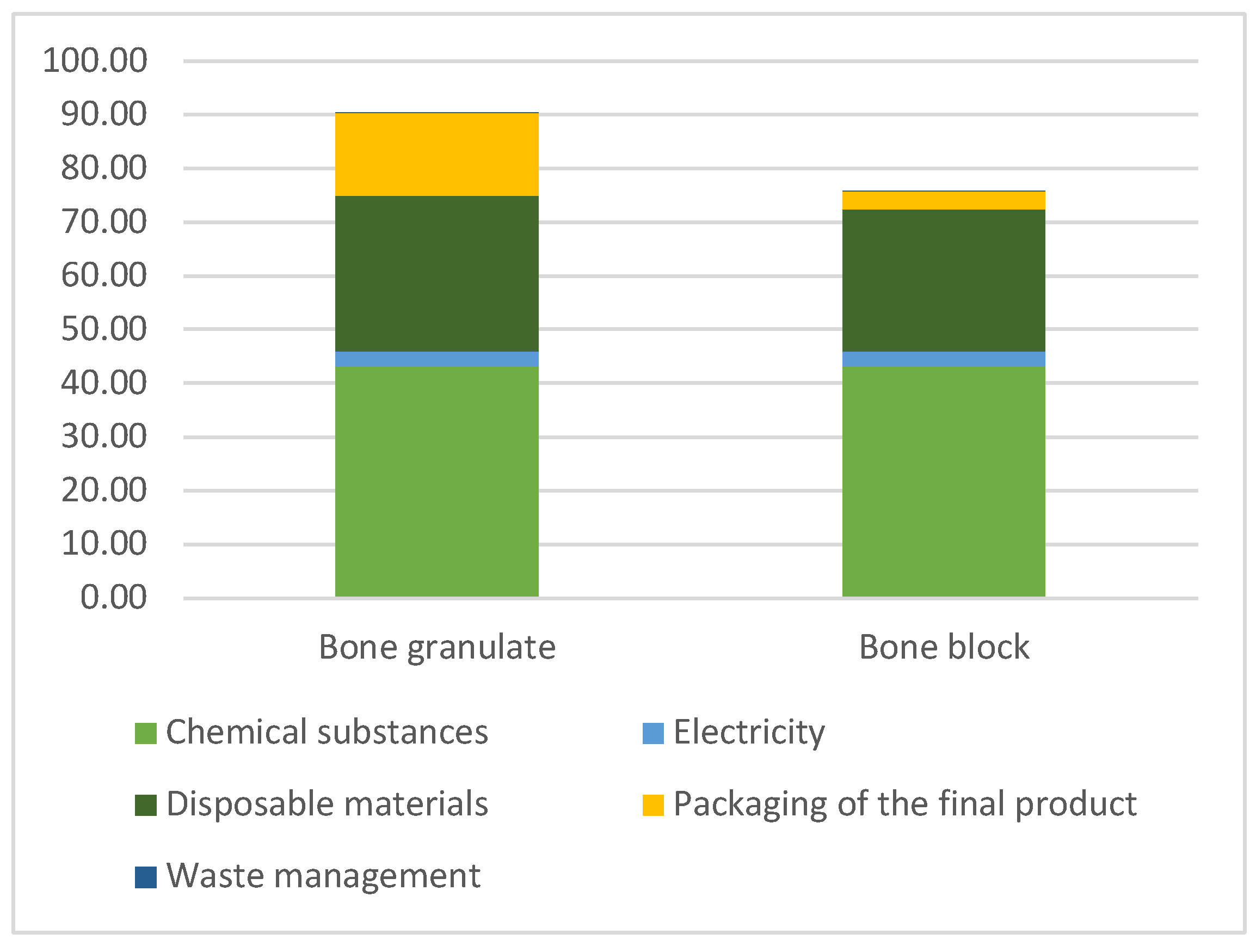
Bar charts showing the contribution of major contributors to the total carbon footprints values of Cortico-cancellous or cancellous bone blocks and Bone granulates (expressed in kg CO2-eq) are presented in Figure 2 side-by-side for direct comparison.
The results apply to an allograft manufacturing process, during which 500g of bone augmentation material is produced. These are individually packaged in 1g packages. In oral implantology, 1g of bone substitute material is usually enough for one augmentation site, so the carbon footprint of a single product is 151,509 g CO2-Eq for the bone blocks and 180,726 g CO2-Eq for the bone granulates.
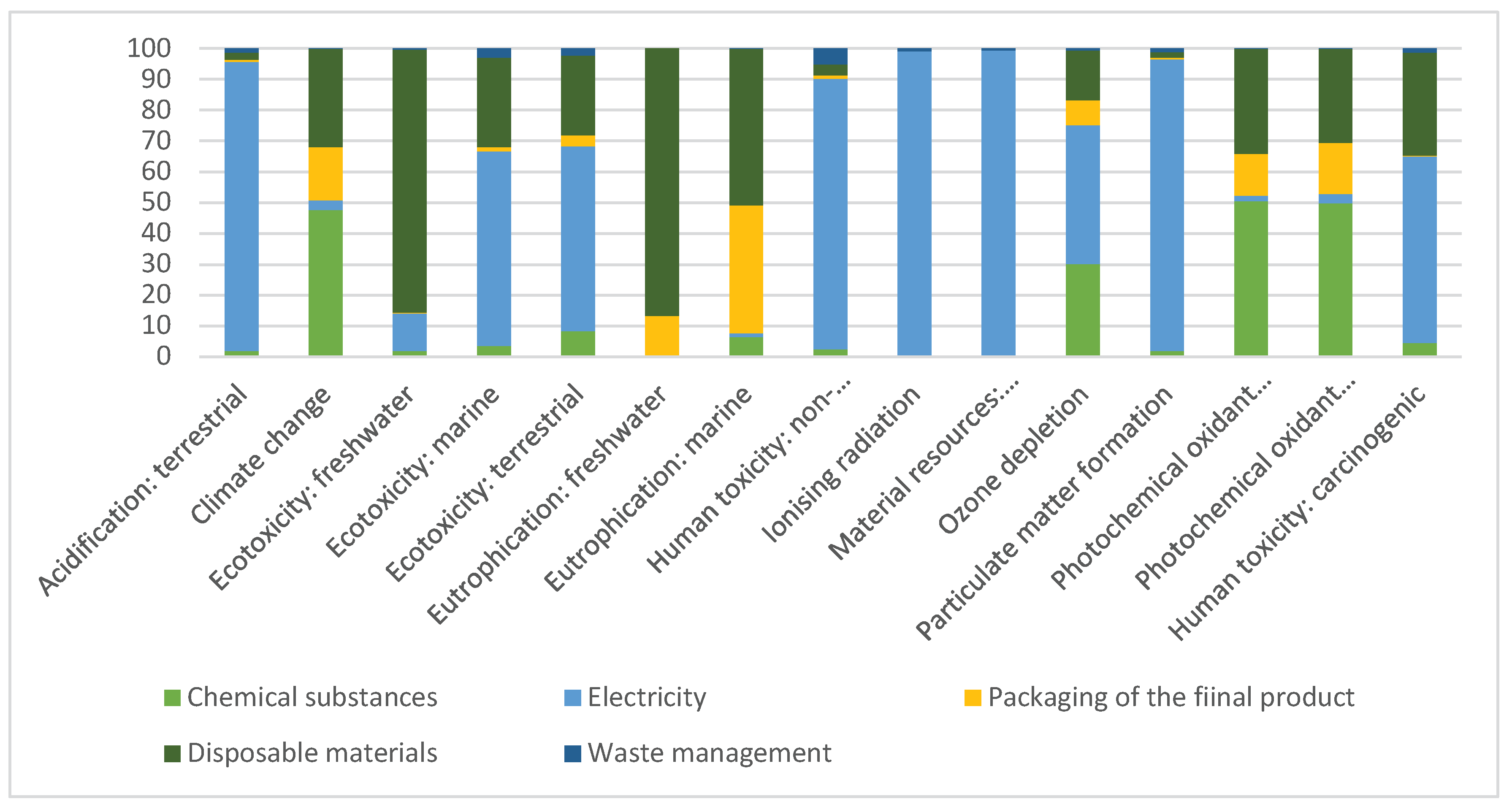
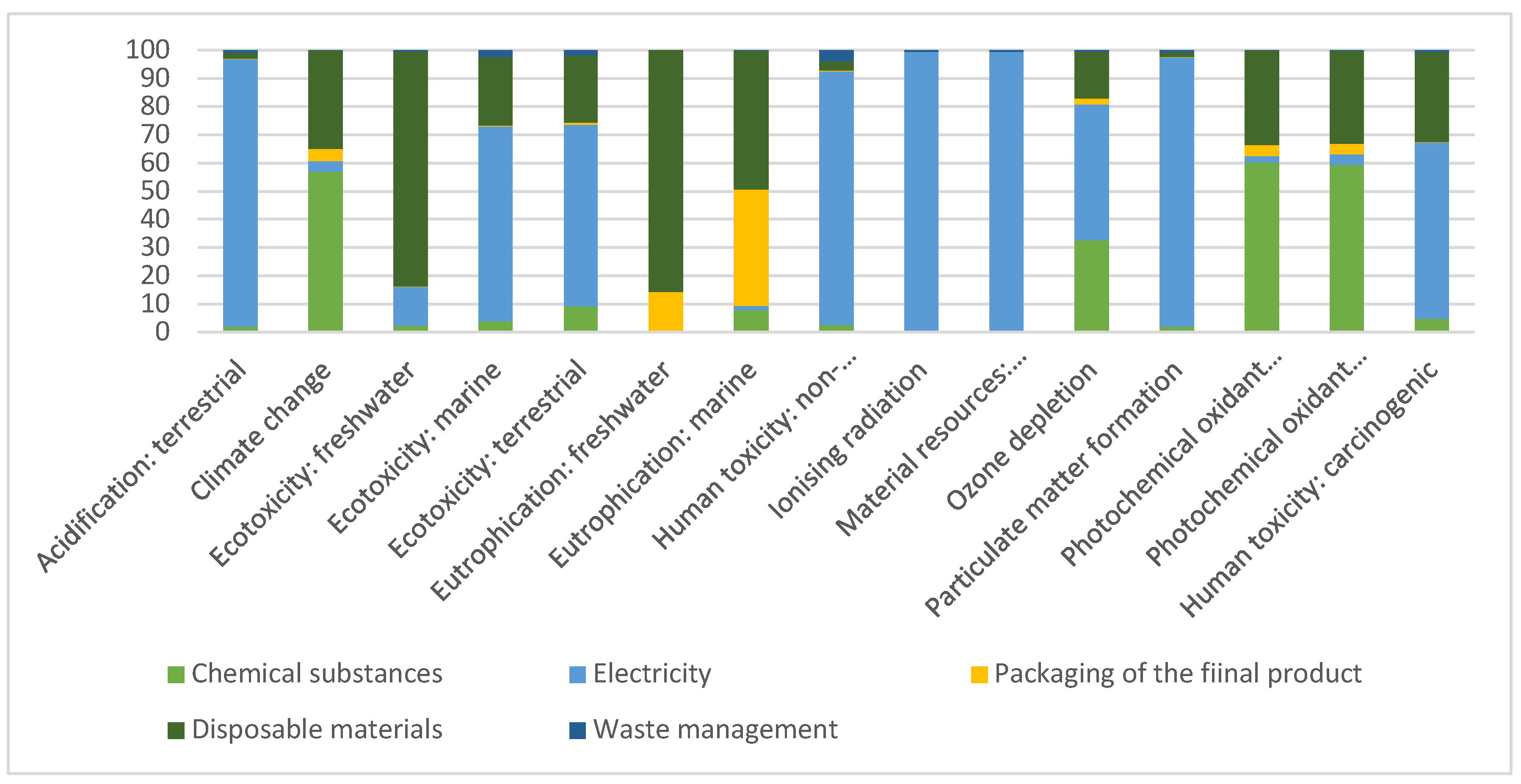
Figure 3 and Figure 4 show the environmental impacts of bone granulates and bone block in the ReCiPe v1.03 2016 midpoint(H) impact categories broken down into contributing elements. In the case of single-use devices, the impact includes the transport of materials from the country of origin to the area of use.
The carbon footprint of incinerating 2720 g of femoral head as medical waste would have been approximately 8.16 kg CO2 Eq.
Table 3 contains the DALY values determined by the ReCiPe v1.03 2016 endpoint(H) method for the environmental impacts of the manufacturing processes.

4. Discussion

Implantation is the optimal solution for solving the functional and aesthetic problems caused by tooth loss [15,23]. Bone grafting may often be necessary to perform the procedure, fill the gaps or promote osseointegration [14,17,34]. To optimize the regenerative process, it is necessary a bone graft material as similar as possible to bone tissue in composition, morphology, structure, crystallinity and biological properties [35]. To achieve successful bone grafting, it is necessary to understand the biological function (osteogenesis, osteoinduction, osteoconduction) [22].
A variety of materials and surgical techniques, such as onlay/inlay graft, guided bone regeneration, distraction osteogenesis, exist to enable implantation in atrophied bone [20,21,23,36]. The choice of material depends on many factors: the size, extent and shape of the defect, the patient’s condition, the availability, handling, biological properties and biomechanics of the material [22].
The ideal bone substitute material promotes osteogenesis, is osteoinductive and osteoconductive, does not induce an immune response, is easily accessible, and does not compromise the donor site [22,35]. Several types of bone substitute materials are available: autologous bone (harvested from a donor site), allografts (derived from individuals within the same species), xenografts (animal-derived, with a composition similar to human bone), or synthetic materials [21,22].
Autologous bone is considered the gold standard in implantology [10,14,16,24,37,38], due to its osteoinductive, osteoconductive and osteogenetic effects [37,38,39,40]. It has the additional advantage of being structurally stable and having a low immunological response [38]. Autologous bone can be harvested from a variety of sources [10,37,41], and the donor sites can be either endochondral (iliac crest, tibia, ribs) or intramembranous (maxilla, mandible, calvaria) [23,39]. Intramembranous is preferred because it is less resorbable [34,39,41]. Its disadvantages are its limited availability, inevitable resorption and the possibility of donor site defects [24,42]. Bone harvesting is an invasive procedure, preoperative screening is necessary [16], and the surgery can lead to several complications: postoperative pain [10,21,37,38], nerve injury (e.g., lateral femoral cutaneous nerve in the case of the iliac crest) [10,17,37], hematoma, seroma formation [16,17,35], gait disturbances [16,35,37], donor site deformity (especially in the case of the calvaria) [35,37], wound superinfection [17,35], donor bone fracture [16,35], soft tissue injury [35], development of keloid scar [16,37], wound dehiscence [17], or hemorrhage [10].
An alternative is the use of allografts, which overcomes the complications caused by surgical intervention [13,17,26,42] and even allows the production of bone blocks with a predetermined shape and composition [13,17]. Allografts can be derived from living donors or cadavers [21,22,35]. They stimulate bone formation, are osteoconducive and may contain bone morphogenic proteins, which make them osteoinductive [13,19,22]. Their disadvantages include limited availability, high production costs, and religious issues regarding their acceptance [22,35]. The risk of immunorejection is low and, unlike other transplants, immunosuppressive treatment is not required [22,26,35]. The risk of spreading infections is also low, as tissue banks follow strict international standards, thus guaranteeing the safety of the bone substitutes produced [17,24].
Xenografts are often used in dentistry and can have bovine, porcine, equine origine, or derived from coral exoskeleton, or eggshell [21,22]. Their structure resembles human bone, with a Ca/P ratio approaching 1.67. They are osteoconductive, but may contain bone morphogenic protein, making them osteoinductive. Their advantages include low cost and wide availability, but they also pose a risk of infection and may raise ethical and religious concerns [22].
Xenografts are widely used materials, one of the application areas is bone augmentation [35,43]. They can be ceramics, synthetic hydroxyapatites, bioactive glasses, polymers, and are available in granulates, block and injectable forms [21,22,35,44]. Their composition is similar to the bone, they are biocompatible, easy to handle and osteoconductive (they release substances that contribute to bone formation), but they do not have an osteoinductive effect [22,43]. To improve their osteogenic properties, growth factors, for example, can be added to their composition [22].
Bone substitutes can be in the form of bone granulates or bone blocks [24]. The advantage of bone blocks over particulate containing materials is that they can be cut to size and can be easily and stably fixed using osteosynthesis screws [16,21]. In addition, according to the present study, the production of cancellous and cortico-cancellous bone blocks from the femoral head has a lower environmental impact than that of bone granulates.
Organ and tissue transplantations cover a wide spectrum of medical interventions, from life-saving interventions to those aimed at improving the quality of life [10]. The aim of tissue donation is to provide high-quality, safe transplants [27]. Tissue banks are responsible for the collection, testing, preparation, packaging, storage and distribution of bone grafts [14,26,28]. Tissue transplantation is a highly regulated procedure due to ethical considerations and the risk of spreading infections and malignancies. There are standards for human allografts in the European Union set out in national legislation [28].
In the case of transplants produced in the West Hungarian Regional Tissue Bank, living donors are pre-screened in accordance with EACTB principles_and also undergo serological tests against HIV-1/2, HBsAg, HBcoreAg, HCV and Treponema pallidum (lues). The production process is strictly controlled, and aseptic and bone grafts also undergo ethylene oxide sterilization. The prepared bone graft materials are also subjected to microbiological tests after lyophilization but also before packaging, thus ensuring that they have not been contaminated during the processing process. The packaging of the produced bone substitute materials is marked with a barcode, which ensures the traceability of the grafts. Every origin and step during the production process is documented in detail and accurately. The label also contains the production and expiration dates.
Ethylene oxide sterilization has been used since the 1950s to sterilize heat- and moisture-sensitive medical devices [45,46]. Ethylene oxide sterilization of bone grafts ensures the safe use of bone grafts without destroying their composition and thus their osteoinductive properties.
The femoral head is a high-quality trabecular bone that is often removed during orthopedic procedures [13]. Patients undergoing surgery for degenerative diseases can donate the removed bone for the production of allografts, thereby making medical waste useful [14]. Recycling is a process in which waste is converted into another valuable material, thereby reducing the carbon footprint that would be caused by incineration of waste [47]. The aim of the “circular economy” is to significantly reduce waste, thereby reducing environmental damage, and to create sustainable, low-carbon technologies [10,11].
Medical waste is either landfilled or incinerated [1]. Incineration is an engineering process that destroys the organic components of waste through thermal oxidation at very high temperatures (800-1200 oC) [7,11]. Landfills pollute groundwater, while incineration releases hazardous gases [1]. Thus, waste incineration is a better method of waste management than landfills, however, results in high carbon emissions [5]. Medical waste can be hazardous if not properly managed, can be harmful to health, and pollutes the environment, so an environmentally conscious approach to waste management is important [6,7,9]. The success of medical waste management is to achieve a circular economy [7]. The potential impact of waste incineration can be reduced by recycling, composting and preventing waste (avoided production) [5].
The carbon footprint of incineration as medical waste of the average 2720g femoral head used in the production process would be approximately 8.16 kg CO2 Eq. After deducting the avoided environmental impact, the offset carbon footprint of the bone block made from this recycled bone is 67.594 kg CO2 Eq, while the bone granulates is 82.203 kg CO2 Eq. The carbon footprint reduction is 10.77% for bone blocks and 9.03% for bone granulates.
An important step in the production process of bone substitutes is the defatting and deantigenization of bone tissue. Its aim is to remove cellular elements and reduce antigenicity without changing the mechanical and biological properties of the bone [13]. Different processes exist for deantigenization, such as mechanical (lyophilization), chemical (oxidizing agents such as hydrogen peroxide) or enzymatic (e.g., trypsin) methods [13,14]. The use of protective equipment (surgical gown, hairnet, mask, shoe covers) is essential during the production processes [28]. From the perspective of environmental awareness, the most significant problem is not waste management, but the use of disposable medical equipment and energy consumption [8]. The use of plastics significantly increases the amount of environmentally harmful waste [1,48], therefore, more environmentally friendly solutions should be adopted in the field of protective equipment [48].
Within the ReCiPe v1.03 2016 midpoint(H) impact categories of the life cycle assessment of the manufacturing process applied in the West-Hungarian Regional Tissue Bank, electricity contributed most to the environmental impacts. Chemical substances contributed most to climate change (56.96% for bone block and 47.75% for bone granulates), photochemical oxidant formation-human health (60.29% for bone block and 50.53% for bone granulates) and photochemical oxidant formation-terrestrial ecosystems (59.44% for bone block and 49.92% for bone granulates). The use of single-use materials contributed to ecotoxicity: freshwater (83.40% for bone block and 85.16% for bone granulates), freshwater eutrophication (85.70% for bone block and 86.69% for bone granulates), and marine eutrophication (49.33% for bone block and 50.74% for bone granulates).
To make the production of allografts more environmentally friendly, it would be necessary to optimize the production processes. To achieve a reduction in energy use, energy-saving devices could be used during the production process and the use of energy from renewable energy sources should be preferred. Could be found alternatives to chemical substances that successfully perform bone defatting and deantigenization and are less harmful to the environment. It is also necessary to reduce the use of single-use materials. A solution could be, for example, the reuse of surgical gowns used during the packaging of bone substitute materials when cutting and grinding the bones, when they would primarily protect the worker from contamination from the bones, not the bone substitutes from contamination. Furthermore, it would be useful to selectively collect the waste generated and apply the principles of the circular economy here as well, by recycling as much as possible. When purchasing materials, attention should also be paid to the environmental awareness of the materials also.
It would be useful to compare the results with the results of life cycle assessments of other bone substitute materials. However, to the best of the authors’ knowledge, no other studies on this topic were published. A search was performed in the HealthcareLCA database using the bone augmentation, bone substitution, bone surgery, implantology, dental implant and bone graft keywords, but none yielded any results [49].
Sustainability is a critical responsibility for the future of humanity, and all areas of healthcare therefore need to be environmentally conscious [1,10]. In implantology, there is ongoing research and development of new materials [42]. The challenge for bioeconomy is to produce materials that can sustainably and economically meet the needs of a growing population. The development of new solutions based on biomaterials and biopolymers can bring benefits in the field of environmental protection [1]. Scaffolds based on natural polymers can be produced from proteins such as silk, collagen, gelatin, fibrin, soy, or polysaccharides such as cellulose, chitosan, or alginate [35]. Another solution for the production of bone tissue is to grow bone in cell cultures or, for example, from dental tissue or periodontal ligaments [25,38].

Limitations of the Study

There are a few limitations that may affect the validity of the results of the life cycle assessment. The values may vary depending on the manufacturing processes and location of the materials used. It is not necessarily possible to find conversion factors specific to Hungary in the databases, in which case global averages were used. The data in the databases are based on older data collections, and these values may have changed since then, for example if during the manufacturing processes they switched to more sustainable technologies.

5. Conclusions

Within healthcare, an environmentally conscious approach in implantology is essential towards a more sustainable dental practice. Recycling the femoral head removed during orthopedic surgeries to produce allografts, which can be used in both oral surgery and orthopedics, can contribute to this. Allografts, which can even have an osteoinductive effect, are a suitable material for the bone augmentation procedures. The production of bone blocks has a smaller environmental impact and carbon footprint than bone granulates, and this is primarily due to individual packaging. To make allograft production more environmentally conscious, it would be necessary to optimize energy use, reduce the use of single-use materials and packaging, and find more environmentally conscious alternatives for the deantigenization of bone tissue. It would be useful to also perform a life cycle assessment of other bone augmentation materials and compare the results.

Author Contributions

Conceptualization, S.K.V. and B.K.-M.; methodology: S.K.V. and L.C.; software: S.K.V.; validation: B.K.-M; writing-original draft preparation: S.K.V.; writing—review and editing: B.B.B., M.S. and L.C. All authors have read and agreed to the published version of the manuscript.

Funding

This research received no external funding.

Institutional Review Board Statement

The present study was approved by the Legal and Ethics Comitee of Petz Aladár County University Hospital (Approval no. 9/485-1/2025).

Informed Consent Statement

Not applicable.

Data Availability Statement

Data presented are available upon request from the corresponding author.

Acknowledgments

Erasmus mobility grant for PhD students provided to S.K.V. by George Emil Palade University of Medicine, Pharmacy, Science, and Technology of Targu Mures, Romania is highly acknowledged.

Conflicts of Interest

The authors declare no conflicts of interest.

Abbreviations

The following abbreviations are used in this manuscript:
LCA Life Cycle Assessment
ISO International Organization for Standardization
CO2 carbon dioxide
LCI Life Cycle Inventory
LCIA Life Cycle Impact Assessment
HIV Human Immunodeficiency Virus
AIDS Acquired immunodeficiency syndrome
HBsAg Hepatitis B surface Antigen
HBcoreAg Hepatitis B core Antigen
HCV Hepatitis C Virus
GHG greenhouse gases

References

  1. Dziuba R, Kucharska M, Madej-Kiełbik L, Sulak K, Wiśniewska-Wrona M. Biopolymers and Biomaterials for Special Applications within the Context of the Circular Economy. Materials (Basel). 2021 Dec 13;14(24):7704. [CrossRef] [PubMed] [PubMed Central]
  2. Abed R, Ashley P, Duane B, Crotty J, Lyne A. An environmental impact study of inter-dental cleaning aids. J Clin Periodontol. 2023 Jan;50(1):2-10. Epub 2022 Oct 6. [CrossRef] [PubMed] [PubMed Central]
  3. Almutairi W, Saget S, Mc Donnell J, Tarnowski A, Johnstone M, Duane B. The planetary health effects of COVID-19 in dental care: a life cycle assessment approach. Br Dent J. 2022 Aug;233(4):309-316. Epub 2022 Aug 26. [CrossRef] [PubMed] [PubMed Central]
  4. Suresh P, Crotty J, Tesanovic S, Alaweed O, Doyle S, Kiandee M, Hayes E, Umeh V, Khalilinejad B, Duane B. A life cycle analysis of the environmental impact of procurement, waste and water in the dental practice. Br Dent J. 2024 Apr;236(7):545-551. Epub 2024 Apr 12. 7. [CrossRef] [PubMed] [PubMed Central]
  5. Borglin L, Pekarski S, Saget S, Duane B. The life cycle analysis of a dental examination: Quantifying the environmental burden of an examination in a hypothetical dental practice. Community Dent Oral Epidemiol. 2021 Dec;49(6):581-593. Epub 2021 Mar 8. Erratum in: Community Dent Oral Epidemiol. 2024 Aug;52(4):613-617. doi: 10.1111/cdoe.12952. 10.1111/cdoe.12630.
  6. Ferawati U, Nuraini N,Fitria A Analysis of Medical Waste Management at UPTD Datu Beru Takengon Hospital. PROMOTOR. 2025 8. 586-591. [CrossRef]
  7. Attrah, M.; Elmanadely, A.; Akter, D.; Rene, E.R. A Review on Medical Waste Management: Treatment, Recycling, and Disposal Options. Environments 2022, 9, 146. [CrossRef]
  8. Pollice B, Thiel CL, Baratz ME. Life Cycle Assessment in Orthopedics. Oper Tech Orthop. 2022 Dec;32(4):100998. Epub 2022 Sep 22. [CrossRef] [PubMed] [PubMed Central]
  9. Kheirabadi S, Sheikhi A. Recent advances and challenges in recycling and reusing biomedical materials. Curr Opin Green Sustain Chem. 2022 Dec;38:100695. Epub 2022 Sep 6. [CrossRef] [PubMed] [PubMed Central]
  10. Gallego L, Harvey K, Pevida M, García-Consuegra L, García-Suárez O, Meana Á, Alvarez-Viejo M, Junquera L. From Waste to Innovation: A Circular Economy Approach for Tissue Engineering by Transforming Human Bone Waste into Novel Collagen Membranes. Biomolecules. 2025 Jan 15;15(1):132. 1, 132. [CrossRef] [PubMed] [PubMed Central]
  11. Kumar V, KhanV, Gaurav G. Environmental And Healthcare Issues Of Medical Waste. International Journal of Environmental Sciences. 2025 11. 1093-1101. [CrossRef]
  12. Smith L, Ali M, Agrissais M, Mulligan S, Koh L, Martin N. A comparative life cycle assessment of dental restorative materials. Dent Mater. 2023 Jan;39(1):13-24. Epub 2022 Nov 23. Jan. [CrossRef] [PubMed]
  13. Prinz RAD, da Rocha LR, Eirado TP, da Silva Pinto J, Guimarães JAM, Fogagnolo F, Dias RB. Biological parameters for quality evaluation of allografts from the Brazilian National Institute of Traumatology and Orthopedics tissue bank. Cell Tissue Bank. 2024 Jun;25(2):625-632. Epub 2024 Feb 17. Jun; 2. [CrossRef] [PubMed]
  14. Ostojić M, Bulj Z, Kordić D, Šunjić D, Buntić A, Juka K, Bliznac I, Topić A, Ostojić Z, Rotim K, Bekić M. ESTABLISHMENT OF THE BONE TISSUE BANK AT MOSTAR UNIVERSITY CLINICAL HOSPITAL. Acta Clin Croat. 2019 Dec;58(4):571-575. 4. [CrossRef] [PubMed] [PubMed Central]
  15. Jack GZ. Use of Autogenous Bone Graft from the Iliac Crest to Restore an Atrophic Maxilla with Implant-Retained Prosthesis. Clinical showcase. JCDA 2006 July-August 2006, Vol. 72, No. 6.
  16. Freilich MM, Sándor GK. In-office iliac crest bone harvesting for peri-implant jaw reconstruction. J Can Dent Assoc. 2006 Jul-Aug;72(6):543-7. [PubMed]
  17. Pereira E, Messias A, Dias R, Judas F, Salvoni A, Guerra F. Horizontal Resorption of Fresh-Frozen Corticocancellous Bone Blocks in the Reconstruction of the Atrophic Maxilla at 5 Months. Clin Implant Dent Relat Res. 2015 Oct;17 Suppl 2(Suppl 2):e444-58. Epub 2014 Oct 27. [CrossRef] [PubMed] [PubMed Central]
  18. Sethi A, Kaus T, Cawood JI, Plaha H, Boscoe M, Sochor P. Onlay bone grafts from iliac crest: a retrospective analysis. Int J Oral Maxillofac Surg. 2020 Feb;49(2):264-271. Epub 2019 Jul 24. [CrossRef] [PubMed]
  19. Csönge L, Bozsik Á, Tóth-Bagi Z, Gyuris R, Kónya J. Regenerative medicine: characterization of human bone matrix gelatin (BMG) and folded platelet-rich fibrin (F-PRF) membranes alone and in combination (sticky bone). Cell Tissue Bank. 2021 Dec;22(4):711-717. Epub 2021 Jun 1. 4. [CrossRef] [PubMed] [PubMed Central]
  20. Sheikh Z, Sima C, Glogauer M. Bone Replacement Materials and Techniques Used for Achieving Vertical Alveolar Bone Augmentation. Materials (Basel). 2015 May 27;8(6):2953–93. 6. [CrossRef] [PubMed Central]
  21. Kim NH, Yang BE, On SW, Kwon IJ, Ahn KM, Lee JH, Byun SH. Customized three-dimensional printed ceramic bone grafts for osseous defects: a prospective randomized study. Sci Rep. 2024 Feb 10;14(1):3397. 1. [CrossRef] [PubMed] [PubMed Central]
  22. Ferraz MP. Bone Grafts in Dental Medicine: An Overview of Autografts, Allografts and Synthetic Materials. Materials (Basel). 2023 May 31;16(11):4117. [CrossRef] [PubMed] [PubMed Central]
  23. Ma G, Wu C, Shao M. Simultaneous implant placement with autogenous onlay bone grafts: a systematic review and meta-analysis. Int J Implant Dent. 2021 Apr 30;7(1):61. [CrossRef] [PubMed] [PubMed Central]
  24. Lehmijoki M, Holming H, Thorén H, Stoor P. Rehabilitation of the severely atrophied dentoalveolar ridge in the aesthetic region with corticocancellous grafts from the iliac crest and dental implants. Med Oral Patol Oral Cir Bucal. 2016 Sep 1;21(5):e614-20. 5. [CrossRef] [PubMed] [PubMed Central]
  25. Matichescu A, Ardelean LC, Rusu LC, Craciun D, Bratu EA, Babucea M, Leretter M. Advanced Biomaterials and Techniques for Oral Tissue Engineering and Regeneration-A Review. Materials (Basel). 2020 Nov 23;13(22):5303. 22. [CrossRef] [PubMed] [PubMed Central]
  26. Dutra Roos B, Valdomiro Roos M, Camisa Júnior A, Moreno Ungaretti Lima E, Noshang Pereira R, Luciano Zangirolami M, Machado de Albuquerque G. Prevalence of microbiological markers in bone tissue from live and cadaver donors in the musculoskeletal tissue bank of Passo Fundo. Rev Bras Ortop. 2014 Mar 20;49(4):386-90. 4. [CrossRef] [PubMed] [PubMed Central]
  27. Braun C, Löwel M, Heuer M, Pruß A, Schulz T. Bioburden of postmortem bone tissues with a procurement time exceeding 36 h. Cell Tissue Bank. 2025 May 26;26(3):27. 3. [CrossRef] [PubMed] [PubMed Central]
  28. Van Rompaey V, Vandamme W, Muylle L, Van de Heyning PH. Temporal bone bank: complying with European Union directives on human tissue and cells. Cell Tissue Bank. 2012 Jun;13(2):231-40. 2. [CrossRef] [PubMed]
  29. Ip VHY, Sherman J, Eckelman MJ. Building a sustainable future in health care: collaboration and framework for meaningful life cycle assessment. Can J Anaesth. 2024 Nov;71(11):1441-1446. English. Nov; 11. [CrossRef] [PubMed]
  30. Wood N. Environmental sustainability in dentistry: A call for ethical and eco-conscious practices. South African Dental Journal. 2023 78. 287-289. [CrossRef]
  31. Winter S, McDonagh G, Lappin D, Smith AJ. Assessing the efficacy and cost of detergents used in a primary care automated washer disinfector. Br Dent J. 2018 Aug 24;225(4):315-319. 4. [CrossRef] [PubMed]
  32. Brett D. Sustainable Dentistry Making a Difference. Book. Springer 2022. [CrossRef]
  33. Künzle P, Frank AC, Paris S. Environmental Impact of a Tooth Extraction: Life Cycle Analysis in a University Hospital Setting. Community Dent Oral Epidemiol. 2025 Jun 27. Epub ahead of print. [CrossRef] [PubMed]
  34. Akintoye SO, Giavis P, Stefanik D, Levin L, Mante FK. Comparative osteogenesis of maxilla and iliac crest human bone marrow stromal cells attached to oxidized titanium: a pilot study. Clin Oral Implants Res. 2008 Nov;19(11):1197-201. 11. [CrossRef] [PubMed] [PubMed Central]
  35. Mishchenko O, Yanovska A, Kosinov O, Maksymov D, Moskalenko R, Ramanavicius A, Pogorielov M. Synthetic Calcium-Phosphate Materials for Bone Grafting. Polymers (Basel). 2023 Sep 19;15(18):3822. [CrossRef] [PubMed] [PubMed Central]
  36. Naujokat H, Loger K, Gülses A, Flörke C, Acil Y, Wiltfang J. Effect of enriched bone-marrow aspirates on the dimensional stability of cortico-cancellous iliac bone grafts in alveolar ridge augmentation. Int J Implant Dent. 2022 Sep 5;8(1):34. 1. [CrossRef] [PubMed] [PubMed Central]
  37. Wortmann DE, van Minnen B, Delli K, Schortinghuis J, Raghoebar GM, Vissink A. Harvesting anterior iliac crest or calvarial bone grafts to augment severely resorbed edentulous jaws: a systematic review and meta-analysis of patient-reported outcomes. Int J Oral Maxillofac Surg. 2023 Apr;52(4):481-494. Epub 2022 Oct 13. 4. [CrossRef] [PubMed]
  38. Bhumiratana S, Bernhard JC, Alfi DM, Yeager K, Eton RE, Bova J, Shah F, Gimble JM, Lopez MJ, Eisig SB, Vunjak-Novakovic G. Tissue-engineered autologous grafts for facial bone reconstruction. Sci Transl Med. 2016 Jun 15;8(343):343ra83. 343. [CrossRef] [PubMed] [PubMed Central]
  39. Wortmann DE, Klein-Nulend J, van Ruijven LJ, Schortinghuis J, Vissink A, Raghoebar GM. Incorporation of anterior iliac crest or calvarial bone grafts in reconstructed atrophied maxillae: A randomized clinical trial with histomorphometric and micro-CT analyses. Clin Implant Dent Relat Res. 2021 Jun;23(3):492-502. Epub 2021 May 30. 3. [CrossRef] [PubMed] [PubMed Central]
  40. Peeva-Petreska M, Veleska-Stevkovska D, Cucchi A, Perale G, Viktor S. Jaw’s Bone Augmentation with New Generation of Bone Composite Substitute Materials. Ecronicon, 2019.
  41. Monje A, Monje F, Galindo-Moreno P, Montanero-Fernandez J, Suarez F, Wang HL. Microstructural and densiometric analysis of extra oral bone block grafts for maxillary horizontal bone augmentation: a comparison between calvarial bone and iliac crest. Clin Oral Implants Res. 2014 Jun;25(6):659-64. Epub 2013 Apr 28. 6. [CrossRef] [PubMed]
  42. C, *!!! REPLACE !!!*; Kim, SY. Kim YK, Kim SG, Byeon JH, Lee HJ, Um IU, Lim SC, Kim SY. Development of a novel bone grafting material using autogenous teeth. Oral Surg Oral Med Oral Pathol Oral Radiol Endod. 2010 Apr;109(4):496-503. Epub 2010 Jan 8. 4. [CrossRef] [PubMed]
  43. Chaair H, Labjar H, Britel O. Synthesis of β-tricalcium phosphate. Morphologie. 2017 Sep;101(334):120-124. Epub 2017 Sep 21. [CrossRef] [PubMed]
  44. Patiño-Marín N, Villa García LD, Aguirre López EC, Medina-Solís CE, Martínez Zumarán A, Martínez Rider R, Márquez Preciado R, Rosales García P, Salas Orozco MF. Sterilization and Disinfection: Ensuring Infection Control in Dental Practices. Cureus. 2025 Feb 15;17(2):e79041. 2. [CrossRef] [PubMed] [PubMed Central]
  45. Ionut-Daniel GG, Maria-Alexandra M, Oana B, Iris.Malina M, Ana-Emanuela B, Doinita TO, Ionut-Catalin B, Carmen Elena C, Efficiency of disinfection and sterilization in dental medicine practice. Review. Romanian J of Medical and Dental Education. 2023;12(3), 45-50.
  46. Ma Y, Han S. Carbon Neutral Hand Surgery: Simple Changes to Reduce Carbon Footprint. Plast Surg (Oakv). 2024 Feb;32(1):108-112. Epub 2022 Mar 24. [CrossRef] [PubMed] [PubMed Central]
  47. Snigdha, Hiloidhari M, Bandyopadhyay S. Environmental footprints of disposable and reusable personal protective equipment ‒ a product life cycle approach for body coveralls. J Clean Prod. 2023 Mar 25;394:136166. Epub 2023 Jan 27. [CrossRef] [PubMed] [PubMed Central]
  48. https://healthcarelca.com (accessed on 09.11.2025). (accessed on 09.11.2025).
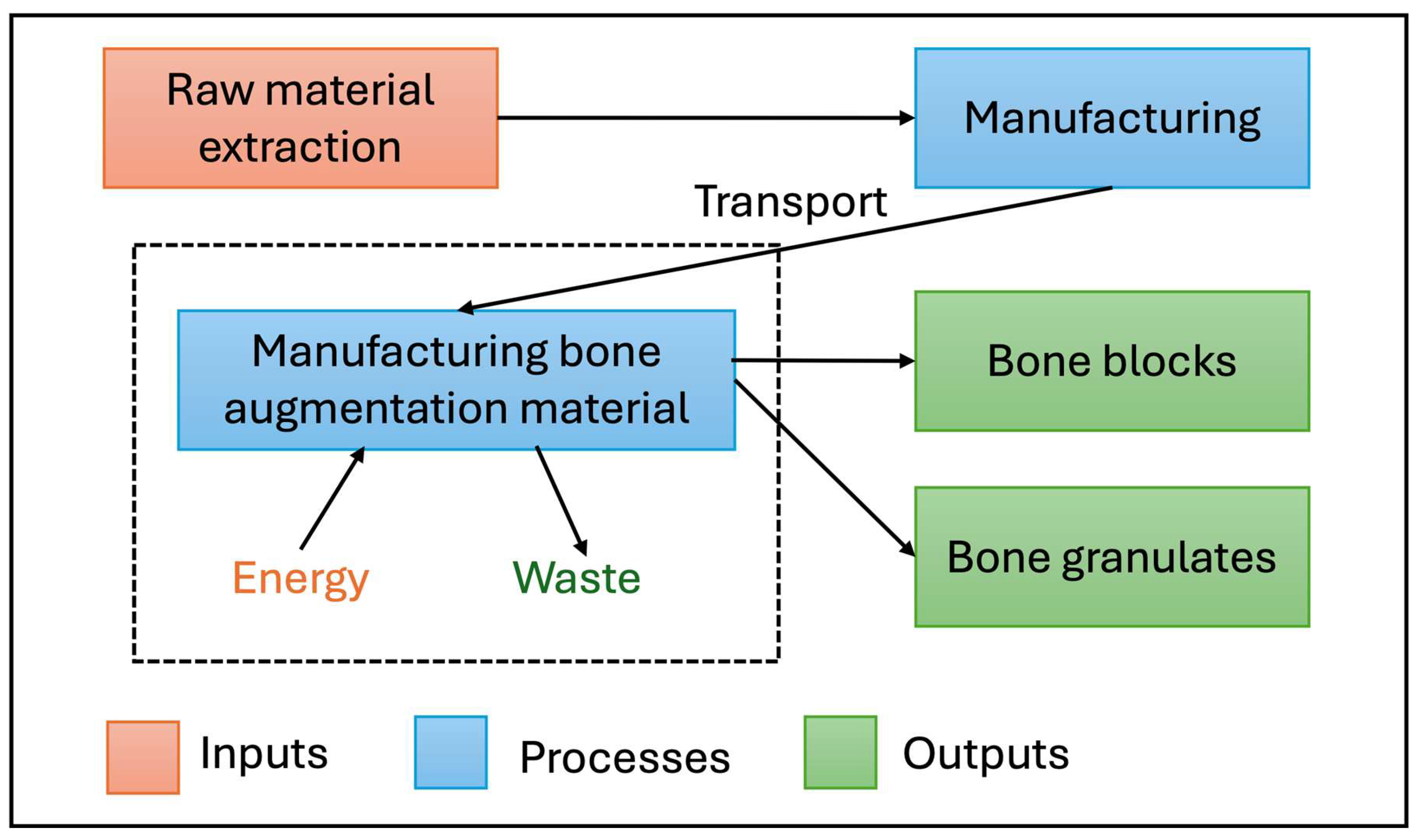
Figure 1. System boundaries.
Preprints 190613 g001
Figure 2. Component-wise Comparison of greenhouse gas (GHG) emissions for the two Products (kg CO2-eq).
Preprints 190613 g002
Figure 3. Breakdown of contribution to environmental impacts in 15 impact categories – relative role of individual factors (chemical substances, electricity, packaging of the final product, disposable materials and waste management) of Bone granulates.
Preprints 190613 g003
Figure 4. Breakdown of contribution to environmental impacts in 15 impact categories – relative role of individual factors (chemical substances, electricity, packaging of the final product, disposable materials and waste management) of Bone blocks.
Preprints 190613 g004
Table 1. Devices used in the process.
Nr Device Model Performance
1 Fridge/Freezer Midea Chest Freezer HS-543CN 333 W
2 Bone cutting machine N/A 1500 W
3 Thermostat L MIM 5500 W
4 Bone grinding machine Ikawerke 1000 W
5 Sieve machine Retsch AS 200 315 W
6 Ethylen oxide steriliser Steri-Vac 5XL Gas Sterilizer 2300 W
7 Sealer machine Steriking RS 3200 240 W
8 Lyophilizer Scanvac Coolsafe 90-80 Superior 2100 W
9 Air conditioner AUX 5400 W
10 Laptop Lenovo E1 Vision 15 W
11 Laminar box Laminar Box Airflow BPV-1200 FRM 750 W
12 Autoclave N/A 1000 W
Table 2. Life cycle impact results: The total burden on environment caused by production of bone substitutes.
Impact category Reference unit Results
Cortico-cancellous or cancellous bone blocks Bone granulates
Acidification: terrestrial kg SO2-Eq 3.55182E+00 3.60037E+00
Climate change kg CO2-Eq 7.57547E+01 9.03633E+01
Ecotoxicity: freshwater kg 1,4-DCB-Eq 1.23332E-02 1.41085E-02
Ecotoxicity: marine kg 1,4-DCB-Eq 1.18627E-01 1.28481E-01
Ecotoxicity: terrestrial kg 1,4-DCB-Eq 2.30777E+02 2.49541E+02
Energy resources: non-renewable, fossil kg oil-Eq 0.00000E+00 0.00000E+00
Eutrophication: freshwater kg P-Eq 4.61170E-05 5.24151E-05
Eutrophication: marine kg N-Eq 1.32341E-04 1.60673E-04
Human toxicity: carcinogenic kg 1,4-DCB-Eq 2.68543E-01 2.58623E-01
Human toxicity: non-carcinogenic kg 1,4-DCB-Eq 1.49157E+01 1.53398E+01
Ionising radiation kBq Co-60-Eq 1.60606E+01 1.61292E+01
Land use m2*a crop-Eq 1.34146E-05 1.34146E-05
Material resources: metals/minerals kg Cu-Eq 4.60250E+02 4.61993E+02
Ozone depletion kg CFC-11-Eq 2.70411E-04 2.91374E-04
Particulate matter formation kg PM2.5-Eq 1.07648E+00 1.08982E+00
Photochemical oxidant formation: human health kg NOx-Eq 3.28775E-01 3.92283E-01
Photochemical oxidant formation: terrestrial ecosystems kg NOx-Eq 3.33479E-01 3.97041E-01
Water use m3 4.00000E-03 4.00000E-03
Table 3. Summary of DALY values.
Impact category Cortico-cancellous or cancellous bone blocks Bone granulates
Climate change: human health 7,03042E-05 8,38616E-05
Human toxicity: carcinogenic 5,34478E-06 5,28305E-06
Human toxicity: non-carcinogenic 3,398E-06 3,49463E-06
Ionising radiation 1,36462E-07 1,37044E-07
Ozone depletion 1,43562E-07 1,54691E-07
Particulate matter formation 0,000675749 0,000684133
Photochemical oxidant formation: human health 2,99189E-07 3,56981E-07
Total 0,000744685 0,000766855
Total in days: 0,271990604 0,280087806
Total in hours 6,5277745 6,72210735
Total in minutes /1g of product 0,78333 0,806652
Disclaimer/Publisher’s Note: The statements, opinions and data contained in all publications are solely those of the individual author(s) and contributor(s) and not of MDPI and/or the editor(s). MDPI and/or the editor(s) disclaim responsibility for any injury to people or property resulting from any ideas, methods, instructions or products referred to in the content.
Copyright: This open access article is published under a Creative Commons CC BY 4.0 license, which permit the free download, distribution, and reuse, provided that the author and preprint are cited in any reuse.
Prerpints.org logo

Preprints.org is a free preprint server supported by MDPI in Basel, Switzerland.

Subscribe

Disclaimer

Terms of Use

Privacy Policy

Privacy Settings

© 2026 MDPI (Basel, Switzerland) unless otherwise stated