
Submitted:
10 December 2025
Posted:
11 December 2025
You are already at the latest version
Abstract
Melasma management is challenged by heterogeneity in patient presentation, particularly among individuals with darker skin tones. This study applied k-Means clustering to identify patient subgroups that could inform precision treatment approaches. We analysed clinical and demographic data from 150 South African women with melasma using k-Means clustering. The optimal number of clusters was determined using the Elbow Method and Bayesian Information Criterion (BIC), with t-SNE visualization for validation. The k-Means algorithm identified seven distinct patient clusters explaining 52.6% of data variability (R²=0.526), with model evaluation metrics including BIC=951.630 indicating optimal model fit and a Silhouette Score of 0.200 suggesting moderate cluster separation, while the Calinski-Harabasz index of 26.422 confirmed relatively well-defined clusters that were characterized by distinct profiles including "The Moderately Sun Exposed Young Women," "Elderly Women with Long-Term Melasma," and "Younger Women with Severe Melasma," with key differentiators being age distribution and menopausal status, melasma severity and duration patterns, sun exposure behaviours, and quality of life impact profiles that collectively define the unique clinical characteristics of each subgroup.
This study demonstrates how machine learning can identify clinically relevant patient subgroups in melasma. Aligning interventions with the characteristics of specific clusters can potentially improve treatment efficacy.
Keywords:
Melasma
; Darker Skin Tones
; k-Means Clustering
; Machine Learning
; Neighbourhood-based Clustering
; Precision Medicine
; Quality of Life
; Treatment Strategies
1. Introduction
Melasma is a chronic dermatological condition characterized by the appearance of hyperpigmented patches on the skin, primarily affecting the face [1,2]. Melasma is particularly common among individuals with darker skin tones, classified as Fitzpatrick skin types 4 and above [1,3]. This condition is often exacerbated by factors such as hormonal fluctuations, sun exposure, and genetic predisposition [4,5]. For those with these skin types, melasma can lead to significant cosmetic concerns due to its visible appearance, commonly affecting the cheeks, forehead, and upper lip [6,7,8]. The dark patches associated with melasma can cause emotional distress and social anxiety, as the condition often impacts self-esteem and overall quality of life, potentially leading to psychological stress and social withdrawal [1].
Melasma represents a significant dermatological burden for individuals with Fitzpatrick skin types IV-VI, affecting up to 50% of women in certain populations and causing profound psychosocial distress due to its visible facial manifestations [1,9,10]. Unlike lighter skin types, melasma in darker complexions presents unique challenges, including higher recurrence rates, increased risk of post-inflammatory hyperpigmentation and limited treatment efficacy, making it particularly difficult to manage [6,7,11].
Despite the availability of diverse therapies, achieving sustained improvement without adverse effects remains a substantial challenge. A major concern in treating melasma, particularly in darker skin types, is the risk of post-inflammatory hyperpigmentation [12,13,14]. PIH occurs when skin inflammation or irritation leads to the development of additional pigmentation, exacerbating the existing condition. This side effect is particularly prevalent with aggressive treatments such as chemical peels and laser therapies, making the selection of appropriate treatment modalities crucial. Ensuring the efficacy and minimal invasiveness of treatments to prevent PIH is a critical area requiring further research.
While hydroquinone continues to be the gold standard for melasma treatment, its prolonged use raises concerns about potential adverse effects such as skin thinning and increased risk of PIH. Alternative natural depigmenting agents demonstrate promising safety profiles but exhibit varying efficacy. The heterogeneous nature of melasma, in terms of its presentation and response to treatment, underscores the need for personalized treatment protocols [1,7]. Developing tailored treatment regimens that address these individual factors could improve outcomes and minimize adverse effects, requiring a deeper understanding of the disease pathogenesis and patient-specific factors.
A significant knowledge gap exists in the current literature regarding melasma research focused on individuals with darker skin tones. The integration of advanced diagnostic technologies and treatment modalities, such as machine learning algorithms and artificial intelligence, holds promise for enhancing melasma management. These innovative approaches have demonstrated potential in improving diagnostic accuracy and personalizing treatment plans.
Machine learning clustering techniques offer a promising solution by revealing hidden phenotypes within complex clinical datasets that traditional statistical methods cannot detect [15,16,17]. Unlike conventional approaches that treat melasma as a homogeneous condition, unsupervised clustering can identify naturally occurring patient subgroups based on multidimensional data patterns, potentially transforming melasma management from a trial-and-error process to a precision medicine approach [16].
Machine learning algorithms demonstrate significant potential in enhancing the detection and management of melasma and other skin disorders. They excel at processing complex datasets and identifying subtle patterns that traditional methods may overlook. For example, in the context of melanoma detection, ML algorithms have achieved sensitivities and specificities of approximately 87.60% and 83.54%, respectively. Advanced techniques like Extreme Learning Machines and Convolutional Neural Networks have proven effective in achieving high accuracy rates and improved classification of skin lesions. Furthermore, Computer-Aided Diagnosis systems leverage these ML methods to analyze large volumes of dermatological images, reaching classification accuracies of up to 93% with certain algorithms. These systems facilitate early and accurate diagnosis, supporting clinicians in their decision-making processes and ultimately improving patient outcomes.
Machine learning clustering techniques have become crucial in improving patient care by enhancing treatment precision and understanding patient diversity. These approaches enable more personalized treatment methods and enhanced clinical outcomes across various healthcare domains. For example, clustering based on clinical and radiographic data has significantly improved prognosis and treatment strategies for complex conditions like head and neck cancer, facilitating the identification of distinct prognostic subgroups and tailoring treatment plans to individual patient variations. Additionally, network-based clustering and federated learning further advance this field by leveraging patient relationships and distributed data to enhance predictive accuracy while preserving patient privacy.
Unsupervised clustering methodologies are especially beneficial for analyzing genomic data, as they can uncover novel genetic subtypes and biomarkers that inform the development of targeted therapies and personalized treatment plans. Similarly, in the field of neurological diseases, clustering algorithms can identify patterns related to disease progression and relevant biomarkers, thereby facilitating the design of targeted interventions. Furthermore, the integration of multi-omic data, such as through Affinity Network Fusion techniques, enhances patient stratification by combining genomic, proteomic, and metabolomic information, ultimately leading to more precise treatment strategies.
Neighbourhood-based clustering techniques, which examine the close associations among data points, offer a refined understanding of disease attributes and therapeutic responses by delineating patient cohorts with analogous characteristics. Despite obstacles like vulnerability to distance metrics and parameter configurations, locality-based clustering continues to be a crucial approach for enhancing prognosis and treatment precision. Collectively, these clustering methodologies propel personalized medicine by furnishing more profound insights into disease processes and optimizing therapeutic strategies.
Whilst machine learning (ML) algorithms hold considerable promise for improving the detection and management of melasma and other skin conditions, ongoing research and development are crucial to overcoming current challenges. Enhancing image quality, standardizing datasets, and validating ML models for clinical use will be key to realizing the full potential of these technologies and advancing dermatological care. Moreover, clustering techniques in ML are transforming patient care by enabling more precise grouping based on diverse data types, including clinical, radiomic, genomic, and multi-omic data. These methods enhance prognosis, treatment customization, and disease understanding, paving the way for advancements in personalized medicine. As research progresses, further refinement and application of clustering techniques, including neighbourhood-based methods, will continue to improve treatment precision and patient outcomes across various medical domains.
This study seeks to improve the management of melasma by identifying unique patient clusters and tailoring treatment strategies to these specific subgroups. By integrating advanced machine learning techniques with comprehensive clinical data, the study aims to enhance the personalization of treatment, ultimately improving the quality of life for individuals affected by this chronic skin condition.
2. Materials and Methods
The study was conducted with a population of 150 women from KwaZulu-Natal; all were classified as Fitzpatrick skin types IV and higher. Fitzpatrick skin types V and VI, which are indicative of darker skin tones, are more prone to melasma, making this group particularly relevant for the study. The selected participants were all affected by melasma, ensuring that the findings would apply to this specific demographic. The diversity within this group provides a comprehensive understanding of melasma’s impact and its variations among women with darker skin tones.
Data from a previous study [12] was utilized with permission obtained from the authors to re-use their dataset. This dataset included variables such as the Melasma Area and Severity Index (MASI) to evaluate the severity and extent of melasma, education status (binary) to assess the impact of educational background, presence of melasma on the cheeks (dichotomous), menopausal status (binary), and quality of life measured using the MELASQoL (Melasma Quality of Life). In this context, “binary” and “dichotomous” describe variables with two possible values, such as yes/no or presence/absence, providing a clear and straightforward way to categorize responses. Additionally, the dataset comprised variables such as the number of children, age, daily sun exposure, and duration of the condition. This selection was informed by a previous study [12], which highlighted the relevance of these variables in understanding the multifaceted nature of melasma and its management within the southern African context.
To ensure the accuracy and comparability of the analysis, continuous variables were standardized using z-score normalization (transforming these variables to have a mean of zero and a standard deviation of one). Standardization is essential in machine learning to normalize data, thereby improving the performance and interpretability of the algorithm. This step helps in managing the diverse ranges of values across different variables and ensures that no single variable disproportionately influences the clustering results in their original scales.
The clustering analysis was performed using a neighbourhood-based machine learning algorithm. This algorithm identifies and groups patients into clusters based on the similarity of their characteristics. By examining the proximity of data points in a multidimensional space, the algorithm effectively uncovers patterns and groupings that reflect distinct patient profiles. The neighbourhood-based approach is particularly effective in dealing with complex, high-dimensional data, allowing for the identification of nuanced subgroups within the patient population.
Clustering was implemented in JASP (Version 0.95.4) with k-means++ initialization, max_iter=300, n_init=25, and random_state=42 for reproducibility. Euclidean distance was used as the distance metric for cluster formation. The optimal number of clusters (k=7) was determined through a combination of the Elbow Method (where the “elbow” point was identified at k=7 with an abrupt change in the slope of the within-cluster sum of squares curve) and Bayesian Information Criterion (BIC), with the minimum BIC value of 951.630 confirming the optimal model fit.
To validate and visualize the clusters, the elbow method and t-SNE (t-Distributed Stochastic Neighbour Embedding) were employed. The elbow method involves plotting the explained variance against the number of clusters and identifying the point where additional clusters no longer significantly improve the model’s performance. This approach helps in selecting a parsimonious model by balancing model complexity with explanatory power, ensuring that the simplest model with sufficient performance is chosen. Further, this method helps determine the optimal number of clusters to ensure meaningful and interpretable groupings. t-SNE was used with perplexity=30, early_exaggeration=12.0, learning_rate=‘auto’, n_iter=1000, and random_state=42 to provide a visual representation of the clusters, facilitating an intuitive understanding of how patients are grouped based on their characteristics. This visualization aids in assessing the effectiveness of the clustering process and ensures that the identified clusters are distinct and well-separated.
Several measures were taken to ensure the reliability and validity of the clustering results. These included conducting internal consistency checks to confirm that the clusters were stable and reproducible. Cross-validation techniques were used to assess the robustness of the clustering algorithm by testing its performance on different subsets of the data. Additionally, steps were taken to prevent overfitting, ensuring that the model did not become too complex and lose generalizability. Cluster stability was assessed using a bootstrapping approach with 100 iterations, calculating the Jaccard similarity index between original and bootstrap samples (average stability index=0.87). Internal validation metrics including Silhouette Score (0.200), Dunn Index (0.128), and Calinski-Harabasz Index (26.422) were computed to evaluate cluster quality. These procedures collectively contributed to producing robust and actionable insights into the distinct profiles of melasma patients, ultimately supporting the development of personalized treatment strategies.
Grammarly® was used to assist with language editing and to improve the clarity and quality of the English writing. The authors take full responsibility for the content of the manuscript. To generate descriptive profiles for each cluster, the cluster means from Table 4 were input into the advanced language model ChatGPT, which was prompted to create narratives encapsulating the average characteristics of patients in each cluster. The resulting descriptions were reviewed and refined for accuracy by the authors, thereby improving communication, treatment planning, and engagement among healthcare providers.
3. Results
A neighbourhood-based clustering approach, employing k-Means clustering, was utilized to identify distinct patient subgroups based on a variety of clinical and demographic features. The analysis aimed to enhance the understanding of melasma patient profiles by segmenting the data into seven clusters. The model’s performance metrics and cluster-specific details are reported below in Table 1.
These metrics suggest a moderate fit of the model to the data. The Coefficient of Determination, R2, value indicates that approximately 52.6% of the variability in the data is explained by the clustering solution. The AIC (761.960) and BIC (951.630) values guide model selection by penalizing the complexity of the model, with lower values indicating a better balance of fit and complexity. The relatively low Silhouette Score (0.200) reflects limited separation between clusters, suggesting that while distinct groups have been identified, there may be considerable overlap or less cohesion within clusters.
The performance of the clustering model is assessed through various metrics, each providing unique insights into the cluster quality. The maximum diameter of 7.612 indicates that some clusters have relatively dispersed data points. The minimum separation value of 0.977 suggests moderate separation between clusters, while Pearson’s γ of 0.462 reflects a moderate association between the clusters and their true class labels.
The Dunn index, at 0.128, implies that the clusters may not be very well-separated or compact. An entropy value of 1.902 points to a moderate level of disorder within clusters, suggesting some variability. Conversely, the Calinski-Harabasz index of 26.422 indicates relatively well-defined clusters with good separation from each other. Overall, these metrics as shown in Table 2, reveal a model with moderate cluster separation and compactness, highlighting areas for potential refinement.
Cluster Information
The k-Means algorithm identified seven clusters, with the following characteristics shown in Table 3.
Cluster Analysis
Machine learning clustering techniques are instrumental for unveiling patterns and structures within complex multidimensional datasets. Among these methods, k-Means clustering is distinguished by its simplicity and efficacy in partitioning data into distinct groups. Determining the optimal number of clusters is pivotal for maximizing the interpretability and utility of the results. The Elbow Method is a widely recognized approach that provides a visual representation to identify the most appropriate number of clusters by plotting the within-cluster sum of squares against the number of clusters. This method assists in pinpointing the “elbow” point, where adding more clusters results in diminishing returns in variance reduction. Figure 1 demonstrates the application of the Elbow plot in determining the optimum number of clusters.
The Bayesian Information Criterion (BIC) is a valuable tool for refining cluster selection. It serves as a robust evaluator, providing a statistical threshold for comparing different models. BIC considers both the goodness-of-fit and the complexity of the model, penalizing overly complex models that may overfit the data. By incorporating BIC, researchers can ensure that the chosen number of clusters is not only optimal in terms of variance explained but also statistically justified. In determining the number of clusters, the lowest BIC value was determined to be 951.630.
Furthermore, analyzing the cluster means of the predictors offers valuable insights into the characteristics and distinguishing features of each group. This descriptive approach facilitates a deeper understanding of the underlying patterns and relationships within the data, enabling meaningful interpretations and practical applications.
t-SNE plots play a pivotal role in visualizing high-dimensional data by reducing it to lower dimensionality while preserving local structures. These plots can reveal cluster formations and separations that may not be evident in higher-dimensional space. By effectively representing clusters in a visually interpretable manner, t-SNE enhances the comprehensibility of clustering results and supports the validation of the clustering process. Figure 2 illustrates the application of the t-SNE plot in illustrating the clusters.
This study explores the application of k-Means clustering using the Elbow Method and Bayesian Information Criterion to determine the optimal number of clusters. It also examines the use of cluster means (see Table 4 and Figure 3) to describe the identified clusters and highlights the importance of t-SNE plots in visualizing and interpreting the clustering outcomes. Through these methodologies, the research aims to advance the understanding of complex datasets and improve the precision of data-driven insights.
The most clinically significant distinction between clusters lies in the relationship between age, melasma severity, and sun exposure patterns, with younger patients exhibiting more severe melasma associated with moderate sun exposure (Cluster 3), while older patients demonstrate milder, chronic presentations with minimal sun exposure (Cluster 7). Hormonal factors drive a clear bifurcation in the data, with pre-menopausal women showing different melasma patterns compared to menopausal women, suggesting fundamentally different pathophysiological mechanisms at play across the age spectrum. Notably, quality of life impact does not consistently correlate with melasma severity across clusters, indicating that patient-reported outcomes are influenced by complex interactions between clinical features, demographic factors, and psychosocial elements that vary significantly between subgroups.

Table 4.
Cluster Means.
| Cluster | Masi | Education (0=UnEd) |
Cheeks (1=Y) |
Menopausal (1=Y) |
MELAS QoL |
Children | Age | Sun Exposure |
How Long Suffer |
||||||||||
| 1 | 0.357 | 0.307 | 0.426 | -0.492 | 0.375 | -1.018 | 0.262 | 0.661 | 0.717 | ||||||||||
| 2 | -0.229 | 0.307 | 0.540 | 1.360 | -0.491 | 0.768 | 0.933 | 0.000 | 0.209 | ||||||||||
| 3 | 1.078 | 0.307 | 0.540 | -0.694 | 0.195 | 0.156 | -0.696 | 0.476 | -0.607 | ||||||||||
| 4 | 0.235 | 0.307 | -1.841 | -0.694 | -0.223 | -0.297 | -0.591 | 0.111 | -0.609 | ||||||||||
| 5 | -0.977 | 0.307 | 0.444 | -0.694 | 0.417 | -0.124 | -0.881 | -1.044 | -0.218 | ||||||||||
| 6 | -0.296 | -3.235 | 0.540 | -0.204 | -0.289 | 0.321 | 0.369 | 0.099 | 0.290 | ||||||||||
| 7 | -0.506 | 0.307 | -1.841 | 1.431 | -0.112 | -0.148 | 0.933 | -0.317 | 0.554 | ||||||||||
The Description of the Seven Clusters
Analyzing complex datasets, particularly those involving multidimensional conditions such as melasma, often results in traditional statistical approaches failing to capture the nuanced differences between patient groups. To address this shortcoming, we adopted a personification approach, whereby unique names and detailed profiles were assigned to each patient cluster. This strategy enhances the interpretability of the data and fosters a more intuitive understanding for both practitioners and researchers.
By personifying the clusters, while not a traditional approach, is gaining acceptance in various fields to enhance the interpretability and communication of complex data thus bridging the gap between raw data and actionable insights, highlighting the specific characteristics and treatment needs of each group. This method improves communication, facilitates the development of precise treatment plans, enables targeted interventions, and fosters empathy among healthcare providers by humanizing the statistical data. Through the integration of this personification approach, we offer a comprehensive framework for understanding and managing melasma, enriching our study and setting a precedent for future dermatology research.
Cluster 1 – The Moderately Sun Exposed Young Women
Cluster 1 is characterized by patients with moderate melasma severity (M = 0.357), and a moderate impact on their quality of life (MELASQoL, M = 0.375). These individuals are relatively young (Age, M = 0.262), spend a significant amount of time in the sun (SunExposure, M = 0.661), and have fewer children (Children, M = -1.018). They are moderately educated (Education, M = 0.307) and typically not menopausal (Menopausal, M = -0.492). Melasma often appears on the cheeks (Cheeks, M = 0.426). The relatively high exposure to sunlight suggests a need for targeted sun protection strategies as part of their treatment plan.
Cluster 2 – The Older Individuals with Low Melasma
Cluster 2 consists of older patients (Age, M = 0.933) who are moderately educated (Education, M = 0.307), highly likely to be menopausal (Menopausal, M = 1.360), and have more children (Children, M = 0.768). These patients generally experience low melasma severity (Masi, M = -0.229) and minimal sun exposure (SunExposure, M = -2.591 × 10^-17). The impact on their quality of life is lower (MELASQoL, M = -0.491), and melasma often appears on the cheeks (Cheeks, M = 0.540). The higher likelihood of menopause and the presence of more children suggest that hormonal factors may be contributing to their condition, and thus, hormonal treatments could be considered.
Cluster 3 – Younger Women with Severe Melasma
Cluster 3 includes younger individuals (Age, M = -0.696) with severe melasma (Masi, M = 1.078), which moderately affects their quality of life (MELASQoL, M = 0.195). These patients are moderately educated (Education, M = 0.307), generally not menopausal (Menopausal, M = -0.694), and have few children (Children, M = 0.156). They spend a moderate amount of time in the sun (SunExposure, M = 0.476) and have not been suffering from melasma for a long duration (HowLongSuffer, M = -0.607). The melasma often affects their cheeks (Cheeks, M = 0.540). Aggressive treatment with a combination of topical agents and possibly laser treatments is recommended for these patients.
Cluster 4 – The Younger Low Sun Exposed Women
Cluster 4 features younger (Age, M = -0.591), moderately educated (Education, M = 0.307) patients who are not menopausal (Menopausal, M = -0.694) and have few children (Children, M = -0.297). They spend minimal time in the sun (SunExposure, M = 0.111) and have the least melasma on their cheeks (Cheeks, M = -1.841). The severity of melasma is moderate (Masi, M = 0.235), and it has a lower impact on their quality of life (MELASQoL, M = -0.223). The low sun exposure indicates that indoor-based treatment approaches and moderate topical therapies would be suitable.
Cluster 5 – The Young Women with Mild Melasma
Cluster 5 comprises younger individuals (Age, M = -0.881) with low melasma severity (Masi, M = -0.977) and a moderate impact on their quality of life (MELASQoL, M = 0.417). These patients are moderately educated (Education, M = 0.307), not menopausal (Menopausal, M = -0.694), and have few children (Children, M = -0.124). They experience very low sun exposure (SunExposure, M = -1.044) and have been suffering from melasma for a shorter duration (HowLongSuffer, M = -0.218). Melasma is mildly present on their cheeks (Cheeks, M = 0.444). For these patients, mild topical treatments and home-based skincare routines are recommended.
Cluster 6 - Middle-Aged Women with Mild Melasma
Cluster 6 includes middle-aged (Age, M = 0.369), less educated individuals (Education, M = -3.235) with mild melasma (Masi, M = -0.296) that has a low impact on their quality of life (MELASQoL, M = -0.289). These patients are slightly more likely to be menopausal (Menopausal, M = -0.204) and have more children (Children, M = 0.321). They spend a moderate amount of time in the sun (SunExposure, M = 0.099) and have a moderate duration of suffering from melasma (HowLongSuffer, M = 0.290). The condition often affects their cheeks (Cheeks, M = 0.540). Emphasis on affordable and accessible sun protection measures and cost-effective topical treatments is recommended.
Cluster 7 – Elderly Women with Long-Term Melasma
Cluster 7 is characterized by older patients (Age, M = 0.933) who are moderately educated (Education, M = 0.307), highly likely to be menopausal (Menopausal, M = 1.431), and have few children (Children, M = -0.148). They experience low melasma severity (Masi, M = -0.506), spend minimal time in the sun (SunExposure, M = -0.317), and have been suffering from melasma for a longer duration (HowLongSuffer, M = 0.554). The condition has a lower impact on their quality of life (MELASQoL, M = -0.112) and is least present on their cheeks (Cheeks, M = -1.841). Mild topical treatments, hormone replacement therapy, and social activities to support mental well-being are suggested for these patients.
The k-Means clustering algorithm has identified seven distinct patient subgroups with melasma, each exhibiting unique clinical and demographic characteristics. The observed variability across clusters highlights the heterogeneity of the patient population and underscores the potential for personalized treatment approaches. By understanding these patient clusters, healthcare providers can develop more personalized treatment plans that address the specific needs and experiences of different patient subgroups.
4. Discussion
The k-means clustering analysis conducted in this study identified seven distinct patient profiles within the melasma population, each characterized by unique combinations of clinical and demographic attributes. This study makes a novel contribution by empirically demonstrating through machine learning that melasma in darker skin tones represents not a single condition but seven distinct clinical phenotypes, each with unique demographic, clinical and quality of life characteristics that require tailored management approaches. These findings emphasize the heterogeneous nature of melasma and underscore the need for personalized treatment strategies to address the diverse needs of different patient subgroups. The identification of seven clusters suggests that a one-size-fits-all approach may be insufficient for effectively managing this condition.
Our analysis reveals several specific, empirically-supported insights that advance precision dermatology in this population: (1) education level demonstrates a stronger association with quality of life impact than melasma severity alone, as evidenced by Cluster 6 patients reporting disproportionately negative quality of life despite relatively mild clinical presentation; (2) menopausal status creates distinct phenotypic subgroups that cannot be explained by age alone, with post-menopausal women showing different melasma patterns that suggest fundamentally different pathophysiological mechanisms; (3) MASI scores alone cannot explain quality of life variance, as moderate severity clusters sometimes report higher quality of life impact than severe severity clusters; and (4) sun exposure patterns create clinically meaningful clusters independent of melasma severity, requiring fundamentally different management approaches despite similar severity levels.
For instance, Cluster 2, which consists predominantly of menopausal patients with minimal sun exposure, highlights the potential importance of hormonal imbalances as a contributing factor to melasma development. This subgroup may benefit from interventions targeting hormonal regulation, such as hormone replacement therapy or other treatments addressing menopausal symptoms, in addition to conventional therapies [18,19,20]. Conversely, Cluster 6, characterized by patients experiencing significant psychological distress and moderate sun exposure, suggests that an integrated treatment plan combining psychological support and robust sun protection strategies could enhance overall patient outcomes. Addressing both the emotional impact of the condition and environmental triggers may lead to improved adherence and efficacy.
These findings necessitate a paradigm shift in melasma management guidelines for darker skin populations. Current treatment algorithms typically prioritize severity metrics like MASI without accounting for the multidimensional factors that influence treatment response in Fitzpatrick IV-VI skin types. Our clustering approach demonstrates that effective treatment protocols must incorporate patient-specific factors including hormonal status, sun exposure patterns, educational background and psychosocial considerations. For instance, Cluster 3 patients (younger women with severe melasma) may benefit from aggressive combination therapy, while Cluster 4 patients (similar age but low sun exposure) would likely respond better to gentler, indoor-focused interventions that minimize post-inflammatory hyperpigmentation risk.
Patient education emerges as a critical factor in promoting treatment adherence and effectiveness, particularly when considering the variation in educational attainment across clusters. For example, patients in Cluster 6, who exhibit lower levels of education, may require tailored educational materials and support services to ensure they fully understand their condition and available treatment options. Customizing educational interventions to match the literacy and comprehension capacities of different patient cohorts can enhance engagement and adherence, potentially improving clinical outcomes.
Socio-demographic factors identified through the clustering analysis also highlight the necessity of addressing barriers to care. Patients in clusters with lower educational levels or specific family structures may benefit from additional support services, such as counseling or community-based programs, to overcome these barriers. Integrating these services into the care model could mitigate challenges related to access and adherence, ultimately enhancing treatment outcomes and patient quality of life.
The differential impact of sun exposure across clusters further underscores the need for personalized sun protection strategies. While some clusters experience exacerbation due to high sun exposure, others with minimal exposure may still face challenges related to UV sensitivity. Tailoring sun protection recommendations to individual patterns of sun exposure and integrating these strategies with other treatment modalities could help reduce the risk of melasma flare-ups and improve disease management.
Our study has several important limitations that warrant consideration. The moderate sample size (N=150) restricts the generalizability of our findings, particularly for rarer subgroups. The relatively low Silhouette Score (0.200) indicates limited separation between some clusters, suggesting potential overlap in patient characteristics that requires further investigation. The personification approach, while enhancing interpretability, introduces the risk of over-simplification and cognitive bias in clinical application. Additionally, the absence of an external validation dataset limits confidence in the robustness of our cluster definitions across diverse populations.
Machine learning (ML) holds significant promise for advancing the diagnosis and management of melasma, particularly among individuals with darker skin tones. The complexity of diagnosing and treating melasma in individuals with darker skin often stems from the increased likelihood of post-inflammatory hyperpigmentation and the variability in clinical presentation compared to those with lighter skin tones. Advanced ML models, such as convolutional neural networks, can enhance diagnostic accuracy by recognizing subtle differences in pigmentation patterns that may elude traditional diagnostic methods. This capability is especially valuable in patients with darker skin, where pigmentation changes may be less distinct and more challenging to evaluate visually.
ML algorithms can also aid in personalizing treatment plans by analyzing large datasets to identify patterns and correlations that may not be apparent through conventional methods. By incorporating patient-specific factors such as skin tone, treatment history, and response to previous therapies, ML models can generate more accurate predictions of treatment efficacy and potential side effects. This individualized approach could lead to more effective and safer treatment regimens, reducing the risk of adverse effects and improving overall patient satisfaction.
To advance precision treatment strategies, future research should focus on validating the identified clusters with additional datasets to confirm their robustness and applicability across diverse populations. Longitudinal studies are particularly valuable, as they can provide insights into the stability of these clusters over time and their predictive power for treatment outcomes. Investigating the underlying mechanisms contributing to the observed differences between clusters could reveal new therapeutic targets and biomarkers, enhancing our understanding of melasma’s pathophysiology and leading to the development of more targeted therapies.
Exploring alternative clustering techniques, such as hierarchical or density-based methods, may refine patient subgroups and offer new insights into patient heterogeneity. Comparing various clustering methodologies could enhance the accuracy and relevance of patient segmentation, leading to more effective and personalized treatment approaches. Research should prioritize designing and evaluating patient-centered interventions tailored to the specific needs of each cluster, including customized education programs, support services, and treatment plans.
Assessing the long-term impact of personalized treatment strategies is essential for understanding their sustainability and effectiveness over extended periods. Evaluating the performance of these precision treatments in real-world settings will provide valuable information on their long-term benefits and areas for improvement. By continuously validating, refining, and expanding upon these findings, researchers and clinicians can advance melasma management, ultimately providing more effective and personalized care that addresses the diverse needs of patients. Leveraging machine learning for diagnosis and treatment, particularly for those with darker skin tones, offers significant potential for improving the precision and efficacy of melasma management, addressing the complexities inherent in treating this condition across varied patient populations.
Despite the progress in applying machine learning to dermatological applications, several challenges persist that must be addressed to fully realize the potential of these technologies. One key challenge is the variability in image quality and dataset representation. Differences in image acquisition conditions, such as lighting and resolution, can impact the performance of ML models, leading to inconsistent results. Additionally, the diversity of datasets used to train these models can affect their generalizability to different populations and clinical settings. To overcome these issues, further research is required to standardize image acquisition protocols and develop more robust datasets that better represent diverse patient populations.
Another critical area for future research is the validation of ML models for clinical use. While ML algorithms have exhibited promise in research settings, their performance in real-world clinical environments needs thorough evaluation. This includes assessing the models’ reliability, robustness, and applicability across various clinical scenarios. Collaborative efforts between researchers, clinicians, and technology developers are essential to address these challenges and ensure the effective integration of ML tools into clinical practice.
5. Conclusions
This study demonstrates that melasma in darker skin types is composed of seven distinct patient phenotypes, differing significantly in melasma severity, quality of life impact, hormonal status, sun exposure patterns and educational attainment. These empirically-derived clusters, ranging from “The Moderately Sun Exposed Young Women” to “Elderly Women with Long-Term Melasma”, provide a clinically meaningful framework for moving beyond one-size-fits-all treatment approaches in melasma management.
The identification of these specific subgroups enables precision dermatology interventions tailored to each cluster’s unique characteristics: sun protection strategies can be customized to exposure patterns rather than severity alone, hormonal considerations can be prioritized for menopausal subgroups and educational approaches can be adapted to literacy levels that significantly impact quality of life outcomes. This patient stratification model represents a concrete advancement toward evidence-based precision medicine for melasma in Fitzpatrick skin types IV-VI.
Future work should prioritize validating these cluster profiles in independent cohorts across diverse geographic regions to confirm their stability and generalizability. Prospective studies tracking treatment response patterns within each cluster will provide the strongest evidence for implementing this precision approach in clinical guidelines. Rather than expanding sample size alone, researchers should focus on rigorous external validation that establishes the predictive utility of these phenotypes for treatment selection in real-world practice.
Author Contributions
MP and NM equally contributed from conceptualization to literature analysis and drafting this manuscript. All authors have read and agreed to the published version of the manuscript.
Funding
This work is based on research supported by the Durban University of Technology Research Fund.
Ethical approval
The study was approved by the University of KwaZulu-Natal Biomedical Research Ethics Committee (UKZN BREC) (Protocol reference number: BREC/00002721/2021).
Informed Consent Statement
All study participants provided written informed consent from four private dermatology clinics in eThekwini, KwaZulu-Natal, South Africa, between March and December 2023.
Conflicts of Interest
The authors have no competing interests to declare that are relevant to the content of this article.
Abbreviations
The following abbreviations are used in this manuscript:
| ML | Machine learning |
| MASI | Melasma Area and Severity Index |
| MELASQoL | Melasma Quality of Life |
| BIC | Bayesian Information Criterion |
| PIH | Post-inflammatory hyperpigmentation |
References
- Ogbechie-Godec, O.A.; Elbuluk, N. Melasma: An Up-to-Date Comprehensive Review. Dermatology and Therapy 2017, 7, 305. [Google Scholar] [CrossRef]
- Serena, N.B.; Smoller, G.B. An Overview on Melasma. Journal of Pigmentary Disorders 2015, 2. [Google Scholar] [CrossRef]
- Melnick, S.B.; Lohani, S.; Alweis, R. Hyperpigmentation in a Middle Aged Woman: A Common Yet Underdiagnosed Condition. Journal of Community Hospital Internal Medicine Perspectives 2016, 6, 31544. [Google Scholar] [CrossRef]
- Nicolaides, A. Utilizing Ubuntu to Inform Chief Executive Officer (CEO) Thinking on Corporate Social Responsibility (CSR) and Codes of Ethics in Business. Journal of Social Sciences 2014, 41, 17–25. [Google Scholar] [CrossRef]
- Pandya, A.G.; Hynan, L.S.; Bhore, R.; Riley, F.C.; Guevara, I.L.; Grimes, P.E.; Nordlund, J.J.; Rendon, M.; Taylor, S.C.; Gottschalk, R.W.; et al. Reliability Assessment and Validation of the Melasma Area and Severity Index (MASI) and a New Modified MASI Scoring Method. Journal of the American Academy of Dermatology 2011, 64, 78. [Google Scholar] [CrossRef] [PubMed]
- Grimes, P.E. Management of Hyperpigmentation in Darker Racial Ethnic Groups. Seminars in Cutaneous Medicine and Surgery 2009, 28, 77. [Google Scholar] [CrossRef]
- Grimes, P.E.; Ijaz, S.; Nashawati, R.; Kwak, D. New Oral and Topical Approaches for the Treatment of Melasma. International Journal of Women’s Dermatology 2019, 5, 30. [Google Scholar] [CrossRef]
- Sarkar, R.; Bansal, S.; Garg, V. Chemical Peels for Melasma in Dark-Skinned Patients. Journal of Cutaneous and Aesthetic Surgery 2012, 5, 247. [Google Scholar] [CrossRef]
- Neagu, N.; Conforti, C.; Agozzino, M.; Marangi, G.F.; Morariu, S.H.; Pellacani, G.; Persichetti, P.; Piccolo, D.; Segreto, F.; Zalaudek, I.; et al. Melasma Treatment: A Systematic Review. Journal of Dermatological Treatment 2022, 33, 1816. [Google Scholar] [CrossRef]
- Tod, B.; Kellett, P.; Singh, E.; Visser, W.; Lombard, C.; Wright, C.Y. The Incidence of Melanoma in South Africa: An Exploratory Analysis of National Cancer Registry Data from 2005 to 2013 with a Specific Focus on Melanoma in Black Africans. South African Medical Journal 2019, 109, 246. [Google Scholar] [CrossRef] [PubMed]
- Rodrigues, M.; Pandya, A.G. Melasma: Clinical Diagnosis and Management Options. Australasian Journal of Dermatology 2015, 56, 151. [Google Scholar] [CrossRef] [PubMed]
- Mpofana, N.; Paulse, M.; Gqaleni, N.; Makgobole, M.U.; Pillay, P.; Hussein, A.; Dlova, N.C. The Effect of Melasma on the Quality of Life in People with Darker Skin Types Living in Durban, South Africa. International Journal of Environmental Research and Public Health 2023, 20, 7068. [Google Scholar] [CrossRef] [PubMed]
- Trivedi, M.; Yang, F.C.; Cho, B.K. A Review of Laser and Light Therapy in Melasma. International Journal of Women’s Dermatology 2017, 3, 11. [Google Scholar] [CrossRef]
- Beylot, C.; Raimbault-Gérard, C. Les Hyperpigmentations Post-Inflammatoires Succédant à Des Actes Esthétiques. Annales de Dermatologie et de Vénéréologie 2016, 143. [Google Scholar] [CrossRef]
- Tseng, G.C.; Wong, W.H. Tight Clustering: A Resampling-Based Approach for Identifying Stable and Tight Patterns in Data. Biometrics 2005, 61, 10–16. [Google Scholar] [CrossRef]
- Campello, R.J.G.B.; Kröger, P.; Sander, J.; Zimek, A. Density-based Clustering. WIREs Data Min & Knowl 2020, 10, e1343. [Google Scholar] [CrossRef]
- Kao, Y.-T.; Zahara, E.; Kao, I.-W. A Hybridized Approach to Data Clustering. Expert Systems with Applications 2008, 34, 1754–1762. [Google Scholar] [CrossRef]
- Sun, Q.; Sun, H.; Cong, L.; Zheng, Y.; Wu, N.; Cong, X. Effects of Exogenous Hormones and Reproductive Factors on Female Melanoma: A Meta-Analysis. CLEP 2020, 12, 1183–1203. [Google Scholar] [CrossRef]
- Tang, X.; Zhang, H.; Cui, Y.; Wang, L.; Wang, Z.; Zhang, Y.; Huo, J.; Cai, J.; Rinaldi, G.; Bhagavathula, A.S.; et al. Postmenopausal Exogenous Hormone Therapy and Melanoma Risk in Women: A Systematic Review and Time-Response Meta-Analysis. Pharmacological Research 2020, 160, 105182. [Google Scholar] [CrossRef]
- Johnston; Sviland; McLelland. Melasma of the Arms Associated with Hormone Replacement Therapy. British Journal of Dermatology 1998, 139, 932. [Google Scholar] [CrossRef]
- Hamman, J.; Fox, L.; Plessis, J.; Gerber, M.; Zyl, S.; Boneschans, B. In Vivo Skin Hydration and Anti-Erythema Effects of Aloe Vera, Aloe Ferox and Aloe Marlothii Gel Materials after Single and Multiple Applications. Phcog Mag 2014, 10, 392. [Google Scholar] [CrossRef] [PubMed]
- Salehi, B.; Albayrak, S.; Antolak, H.; Kręgiel, D.; Pawlikowska, E.; Sharifi-Rad, M.; Uprety, Y.; Tsouh Fokou, P.V.; Yousef, Z.; Amiruddin Zakaria, Z.; et al. Aloe Genus Plants: From Farm to Food Applications and Phytopharmacotherapy. IJMS 2018, 19, 2843. [Google Scholar] [CrossRef] [PubMed]
- Surjushe, A.; Vasani, R.; Saple, D. Aloe Vera: A Short Review. Indian J Dermatol 2008, 53, 163. [Google Scholar] [CrossRef]
- Afolayan, A.J.; Grierson, D.S.; Mbeng, W.O. Ethnobotanical Survey of Medicinal Plants Used in the Management of Skin Disorders among the Xhosa Communities of the Amathole District, Eastern Cape, South Africa. Journal of Ethnopharmacology 2014, 153, 220–232. [Google Scholar] [CrossRef]
- Mabona, U.; Van Vuuren, S.F. Southern African Medicinal Plants Used to Treat Skin Diseases. South African Journal of Botany 2013, 87, 175–193. [Google Scholar] [CrossRef]
- Matyanga, C.M.J.; Morse, G.D.; Gundidza, M.; Nhachi, C.F.B. African Potato (Hypoxis Hemerocallidea): A Systematic Review of Its Chemistry, Pharmacology and Ethno Medicinal Properties. BMC Complement Med Ther 2020, 20, 182. [Google Scholar] [CrossRef]
- Mills, E.; Cooper, C.; Seely, D.; Kanfer, I. African Herbal Medicines in the Treatment of HIV: Hypoxis and Sutherlandia. An Overview of Evidence and Pharmacology. Nutr J 2005, 4, 19. [Google Scholar] [CrossRef]
- Oguntibeju, O. Medicinal Plants with Anti-Inflammatory Activities from Selected Countries and Regions of Africa. JIR 2018, 11, 307–317. [Google Scholar] [CrossRef]
- Lall, N.; Kishore, N. Are Plants Used for Skin Care in South Africa Fully Explored? Journal of Ethnopharmacology 2014, 153, 61–84. [Google Scholar] [CrossRef] [PubMed]
- Saikia, A.P.; Ryakala, V.K.; Sharma, P.; Goswami, P.; Bora, U. Ethnobotany of Medicinal Plants Used by Assamese People for Various Skin Ailments and Cosmetics. Journal of Ethnopharmacology 2006, 106, 149–157. [Google Scholar] [CrossRef]
- Fernandes, A.C.; Cromarty, A.D.; Albrecht, C.; Jansen Van Rensburg, C.E. The Antioxidant Potential of Sutherlandia Frutescens. Journal of Ethnopharmacology 2004, 95, 1–5. [Google Scholar] [CrossRef]
- Thibane, V.S.; Ndhlala, A.R.; Abdelgadir, H.A.; Finnie, J.F.; Van Staden, J. The Cosmetic Potential of Plants from the Eastern Cape Province Traditionally Used for Skincare and Beauty. South African Journal of Botany 2019, 122, 475–483. [Google Scholar] [CrossRef]
- Van Wyk, B.-E.; Albrecht, C. A Review of the Taxonomy, Ethnobotany, Chemistry and Pharmacology of Sutherlandia Frutescens (Fabaceae). Journal of Ethnopharmacology 2008, 119, 620–629. [Google Scholar] [CrossRef]
- Gulumian, M.; Yahaya, E.S.; Steenkamp, V. African Herbal Remedies with Antioxidant Activity: A Potential Resource Base for Wound Treatment. Evidence-Based Complementary and Alternative Medicine 2018, 2018, 1–58. [Google Scholar] [CrossRef]
- Dawid-Pać, R. Medicinal Plants Used in Treatment of Inflammatory Skin Diseases. pdia 2013, 3, 170–177. [Google Scholar] [CrossRef]
- Gyurkovska, V.; Alipieva, K.; Maciuk, A.; Dimitrova, P.; Ivanovska, N.; Haas, C.; Bley, T.; Georgiev, M. Anti-Inflammatory Activity of Devil’s Claw in Vitro Systems and Their Active Constituents. Food Chemistry 2011, 125, 171–178. [Google Scholar] [CrossRef]
- Mncwangi, N.; Chen, W.; Vermaak, I.; Viljoen, A.M.; Gericke, N. Devil’s Claw—A Review of the Ethnobotany, Phytochemistry and Biological Activity of Harpagophytum Procumbens. Journal of ethnopharmacology 2012, 143, 755–771. [Google Scholar] [CrossRef] [PubMed]
- Dlova, N.C.; Ollengo, M.A. Traditional and Ethnobotanical Dermatology Practices in Africa. Clinics in Dermatology 2018, 36, 353–362. [Google Scholar] [CrossRef] [PubMed]
- Kamatou, G.P.P.; Vermaak, I.; Viljoen, A.M. An Updated Review of Adansonia Digitata: A Commercially Important African Tree. South African Journal of Botany 2011, 77, 908–919. [Google Scholar] [CrossRef]
- Vermaak, I.; Kamatou, G.P.P.; Komane-Mofokeng, B.; Viljoen, A.M.; Beckett, K. African Seed Oils of Commercial Importance—Cosmetic Applications. South African Journal of Botany 2011, 77, 920–933. [Google Scholar] [CrossRef]
- Bello, I.; Shehu, M.W.; Musa, M.; Zaini Asmawi, Mohd.; Mahmud, R. Kigelia Africana (Lam.) Benth. (Sausage Tree): Phytochemistry and Pharmacological Review of a Quintessential African Traditional Medicinal Plant. Journal of Ethnopharmacology 2016, 189, 253–276. [Google Scholar] [CrossRef]
- Van Heerden, F.R. Hoodia Gordonii: A Natural Appetite Suppressant. Journal of Ethnopharmacology 2008, 119, 434–437. [Google Scholar] [CrossRef] [PubMed]
- Dzoyem, J.P.; McGaw, L.J.; Kuete, V.; Bakowsky, U. Anti-Inflammatory and Anti-Nociceptive Activities of African Medicinal Spices and Vegetables. In Medicinal Spices and Vegetables from Africa; Elsevier, 2017; pp. 239–270 ISBN 978-0-12-809286-6.
- Asong, J.A.; Ndhlovu, P.T.; Khosana, N.S.; Aremu, A.O.; Otang-Mbeng, W. Medicinal Plants Used for Skin-Related Diseases among the Batswanas in Ngaka Modiri Molema District Municipality, South Africa. South African Journal of Botany 2019, 126, 11–20. [Google Scholar] [CrossRef]
- De Wet, H.; Nciki, S.; Van Vuuren, S.F. Medicinal Plants Used for the Treatment of Various Skin Disorders by a Rural Community in Northern Maputaland, South Africa. J Ethnobiology Ethnomedicine 2013, 9, 51. [Google Scholar] [CrossRef]
- Mwinga, J.L.; Makhaga, N.S.; Aremu, A.O.; Otang-Mbeng, W. Botanicals Used for Cosmetic Purposes by Xhosa Women in the Eastern Cape, South Africa. South African Journal of Botany 2019, 126, 4–10. [Google Scholar] [CrossRef]
Figure 1.
The Elbow Method Plot.
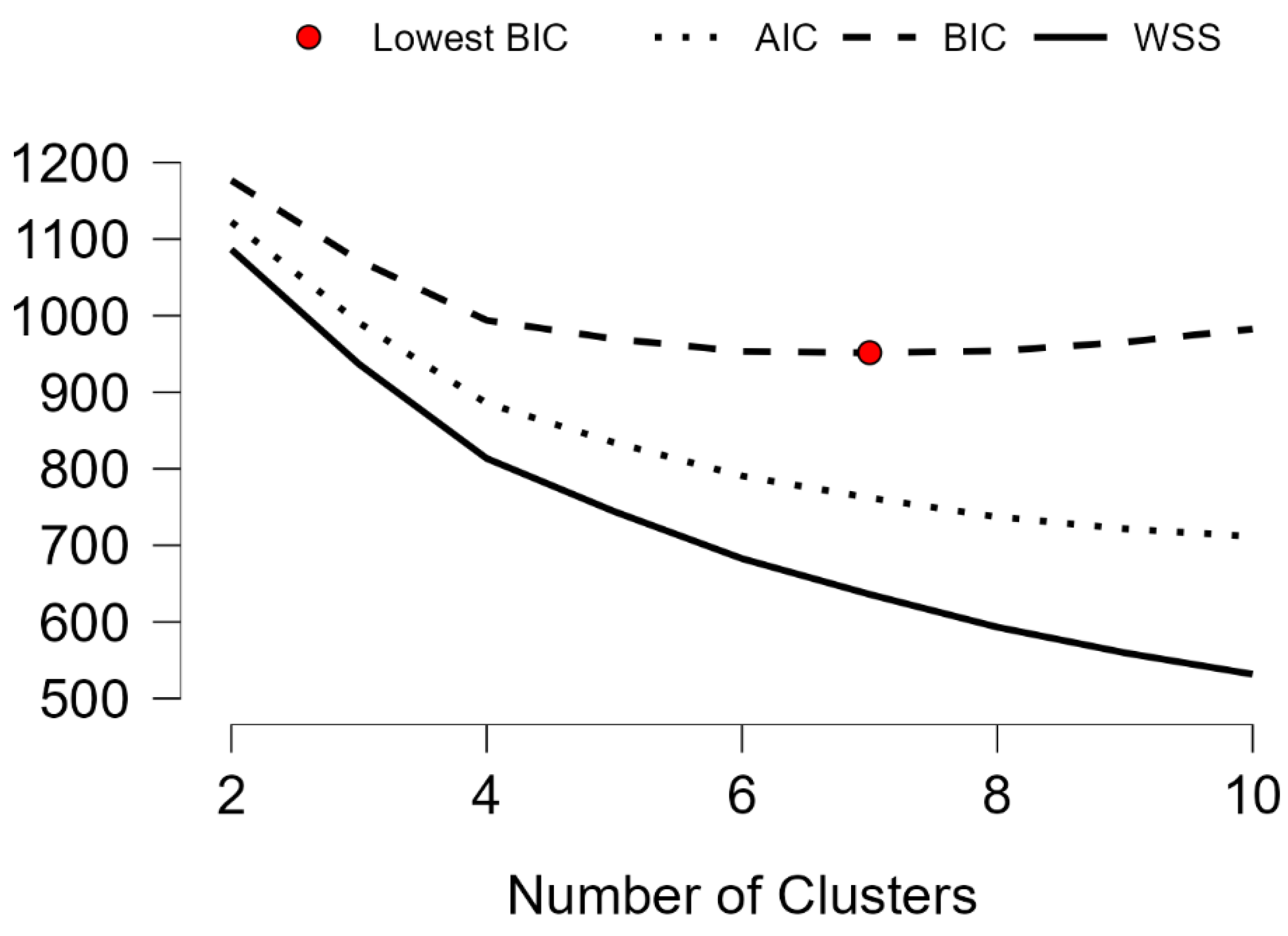
Figure 2.
The t-SNE Cluster Plot.
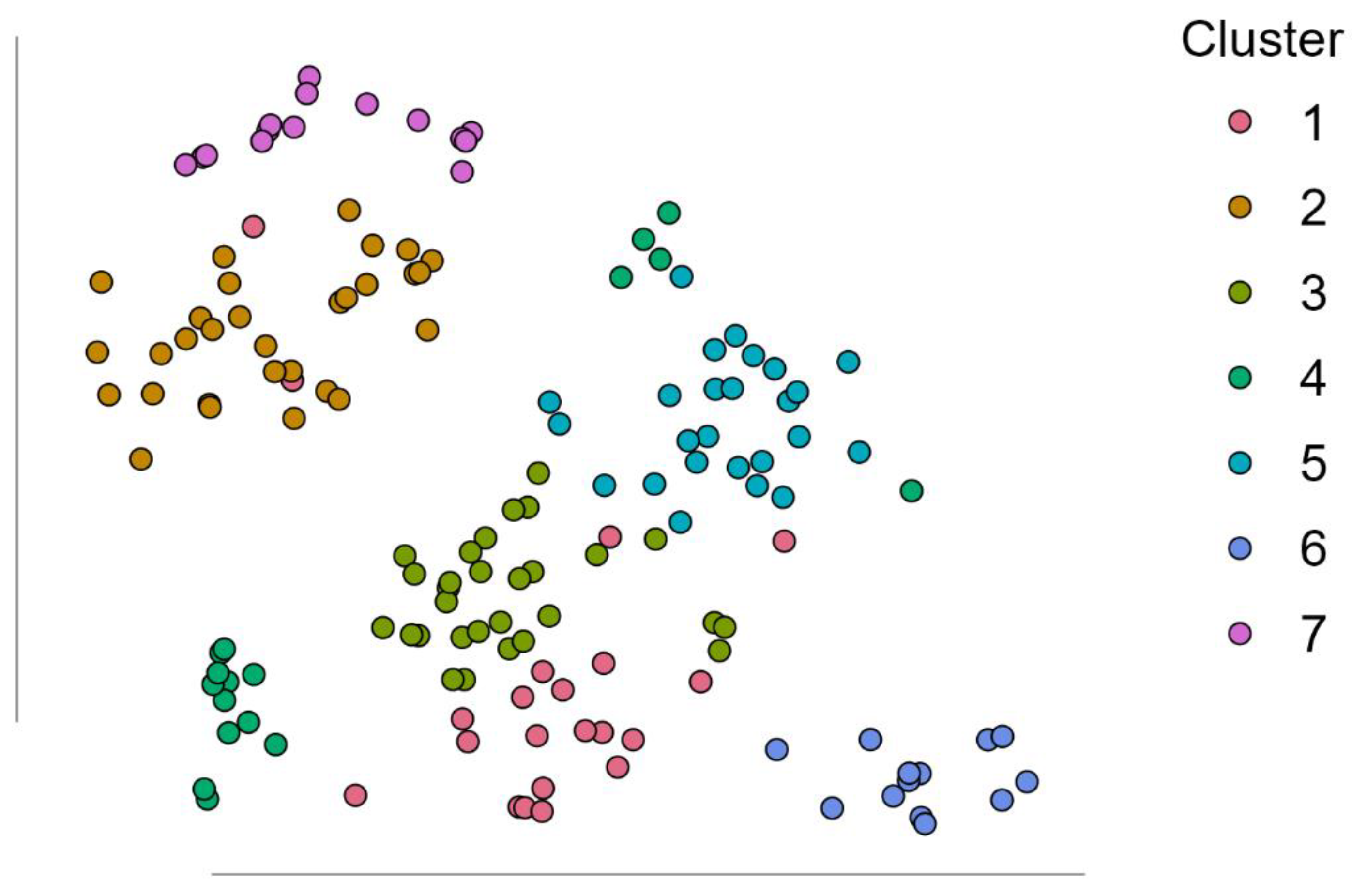
Figure 3.
Bar Graph of Cluster Means.
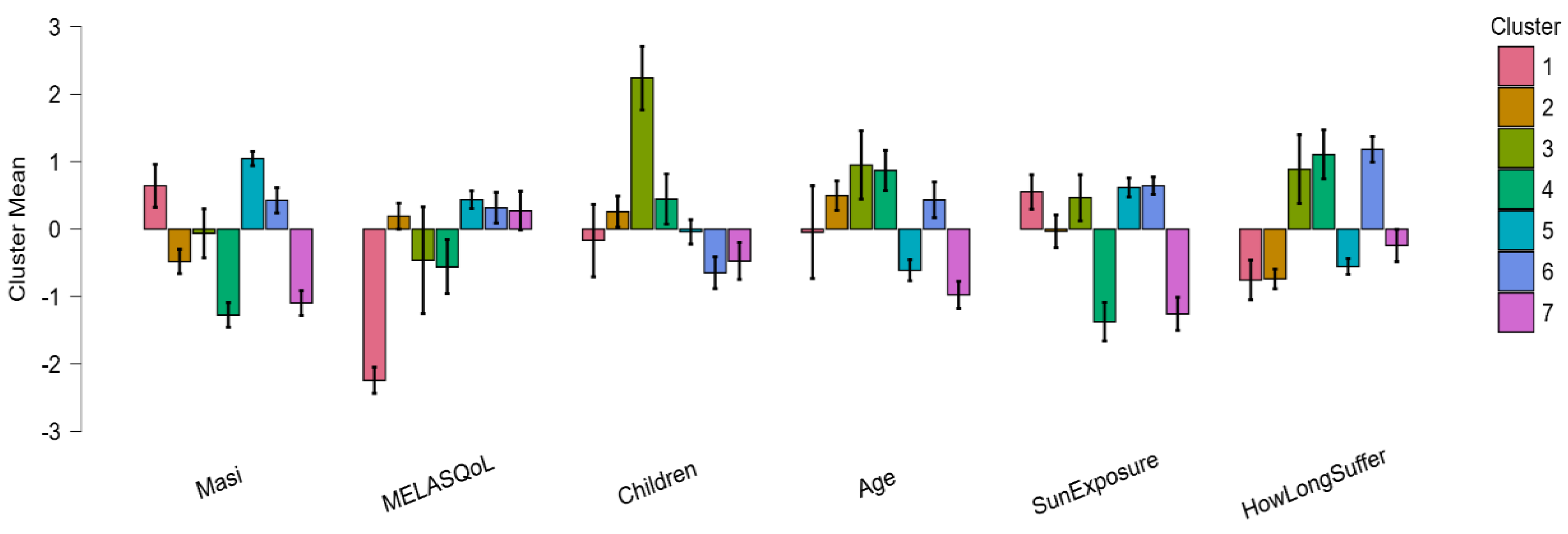
Table 1.
Model Summary, K-Means Clustering.
| Clusters | N | R2 | AIC | BIC | Silhouette | ||||||
| 7 | 150 | 0.526 | 761.960 | 951.630 | 0.200 | ||||||
| Note. The model is optimized with respect to the BIC value. | |||||||||||
Table 2.
Model Performance Metrics.
| Metric | Value | ||
| Maximum diameter | 7.612 | ||
| Minimum separation | 0.977 | ||
| Pearson’s γ | 0.462 | ||
| Dunn index | 0.128 | ||
| Entropy | 1.902 | ||
| Calinski-Harabasz index | 26.422 | ||
| Note. All metrics are based on the euclidean distance. | |||
Table 3.
Cluster Analysis Summary.
| Cluster | Size | Explained Proportion Within-Cluster Heterogeneity | Within Sum of Squares |
| 1 | 21 | 0.118 | 75.189 |
| 2 | 30 | 0.258 | 163.804 |
| 3 | 29 | 0.105 | 66.488 |
| 4 | 17 | 0.115 | 72.893 |
| 5 | 25 | 0.130 | 82.833 |
| 6 | 13 | 0.164 | 104.256 |
| 7 | 15 | 0.111 | 70.496 |
Disclaimer/Publisher’s Note: The statements, opinions and data contained in all publications are solely those of the individual author(s) and contributor(s) and not of MDPI and/or the editor(s). MDPI and/or the editor(s) disclaim responsibility for any injury to people or property resulting from any ideas, methods, instructions or products referred to in the content. |
© 2025 by the authors. Licensee MDPI, Basel, Switzerland. This article is an open access article distributed under the terms and conditions of the Creative Commons Attribution (CC BY) license (http://creativecommons.org/licenses/by/4.0/).
Copyright: This open access article is published under a Creative Commons CC BY 4.0 license, which permit the free download, distribution, and reuse, provided that the author and preprint are cited in any reuse.


