

Submitted:
25 November 2025
Posted:
26 November 2025
You are already at the latest version
Abstract
The global seafood industry generates millions of tons of by-products each year, creat-ing environmental and economic challenges but also presenting a valuable opportunity for resource recovery. These by-products, rich in bioactive compounds such as proteins, omega-3 fatty acids, collagen, chitin, and antioxidants, have traditionally been un-derutilized due to inefficient and energy-intensive conventional extraction processes. Pulsed electric field (PEF) technology has emerged as a promising, non-thermal, and environmentally friendly method for valorizing seafood by-products by enhancing the permeability of biological membranes through electroporation, thereby facilitating the efficient extraction of high-value compounds. This manuscript critically reviews the scientific principles underpinning PEF, including dielectric breakdown and trans-membrane potential generation, and explores its mechanisms for improving mass transfer during extraction and dehydration. Applications of PEF for recovering proteins, lipids, and antioxidants from diverse seafood side streams are comprehensively dis-cussed, with emphasis on its advantages—such as reduced energy consumption, preservation of thermolabile compounds, and improved product quality—compared to conventional methods. Despite demonstrated laboratory-scale successes, industrial adoption of PEF remains limited due to challenges in process optimization, economic feasibility, and regulatory frameworks. This review synthesizes current knowledge and provides guidance for future research to advance the industrial implementation of PEF as a sustainable and efficient tool for seafood by-product valorization.
Keywords:
pulsed electric fields
; extraction
; electroporation
; seafood
; protein
; bioactive compounds
1. Introduction
The global seafood industry processes over 200 million tons of fish and shellfish annually, generating vast quantities of by-products—estimated to be up to 50% of the total catch weight [1,2]. These by-products, including fish heads, skins, bones, viscera, and crustacean shells, are largely discarded or underutilized. This often leads to significant environmental burdens and economic inefficiencies within the sector [3,4]. However, these side streams represent a rich source of high-value bioactive compounds such as collagen, gelatin, peptides, omega-3 polyunsaturated fatty acids (PUFAs), chitin, chitosan, minerals, and antioxidants [4,5,6]. Recent trends in circular bioeconomy and sustainable food systems have, therefore, emphasized the critical importance of valorizing marine by-products to improve the resource efficiency of the seafood sector [3,7]. Traditional extraction technologies, such as thermal rendering, acid/base hydrolysis, and enzymatic hydrolysis, are frequently energy-intensive. Furthermore, they can result in the degradation of thermolabile compounds, low yields, and considerable environmental impact [8,9]. Consequently, there is a growing demand for innovative and sustainable processing methods capable of improving extraction efficiency while preserving the functional and nutritional integrity of target compounds.
Pulsed electric fields (PEF) is an emerging non-thermal processing technology that involves applying short bursts of high-voltage electric pulses (typically 1–50 kV/cm) to biological tissues or fluids. This process induces electroporation, a phenomenon where cell membranes temporarily become permeable due to dielectric breakdown [10,11,12]. The resulting enhanced permeability improves mass transfer, thereby facilitating the release of intracellular materials like lipids, proteins, and secondary metabolites [13]. PEF is already well-established in various sectors of the food industry, with applications including juice extraction, microbial inactivation, drying pre-treatment, seed treatment, mycotoxin mitigation and starch modification [14,15,16,17,18,19,20,21].
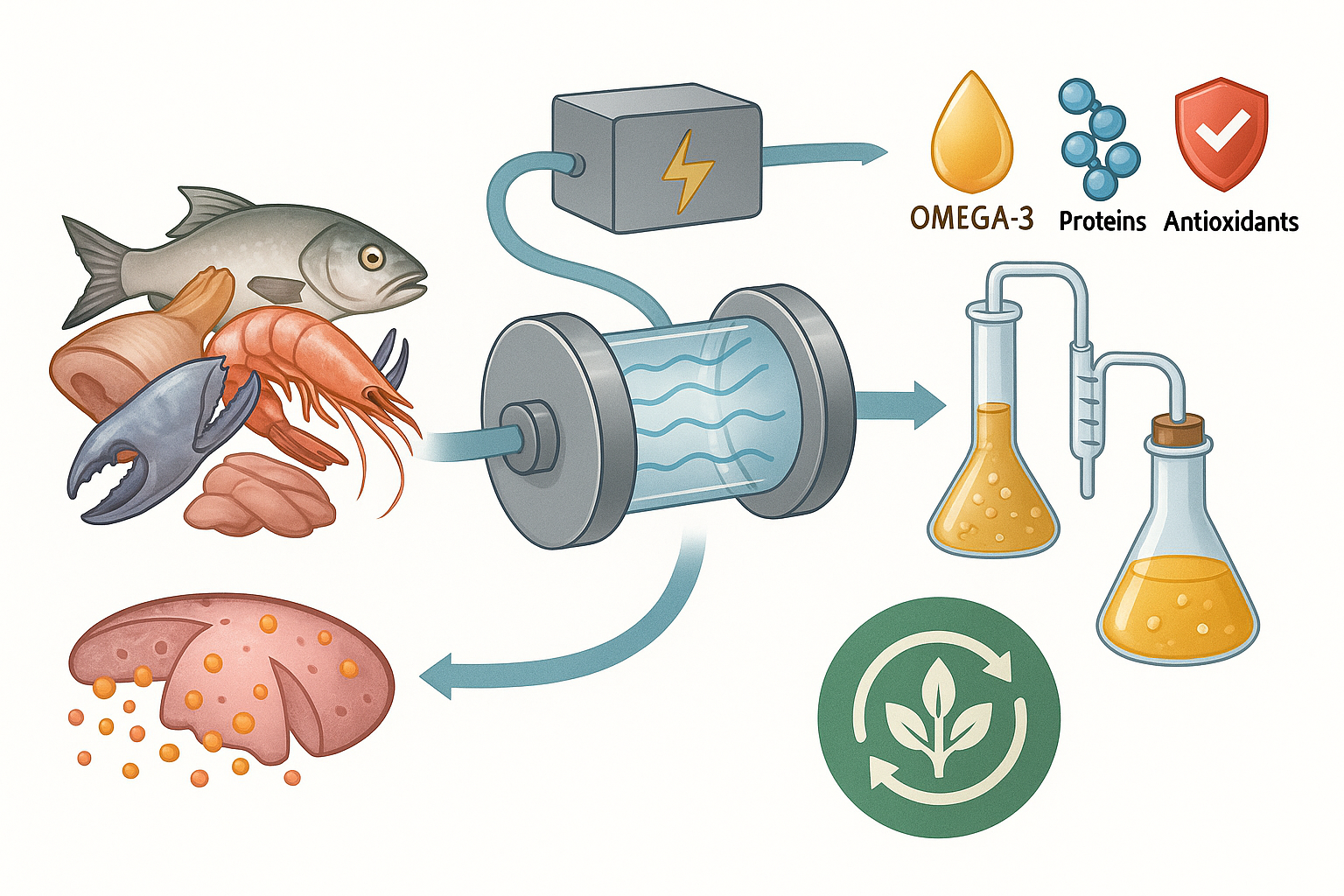
The application of PEF in seafood by-product valorization is garnering increasing attention. Studies have demonstrated that PEF can significantly enhance the extraction of collagen from fish skins [22,23], omega-3-rich oils from fish heads [24], and chitin from crustacean shells [23,25]. Importantly, these improvements are often accompanied by substantial reductions in processing time and energy requirements [20]. Compared to conventional thermal processes, PEF facilitates improved retention of compound bioactivity and functionality due to its minimal thermal footprint [26,27] (Figure 1). Moreover, PEF can be synergistically combined with other green extraction methods, such as enzymatic hydrolysis, ultrasound-assisted extraction (UAE), and supercritical fluid extraction, to further boost process efficiency and selectivity [10,18,28,29,30].
Despite these promising laboratory-scale results, the industrial-scale adoption of PEF technology in seafood processing remains limited. Challenges such as process optimization, economic feasibility, and regulatory acceptance must be thoroughly addressed to enable widespread commercial implementation [11,20,31,32]. A critical evaluation is presented concerning the scientific principles, technological developments, and application potential of PEF for extracting value-added compounds from seafood side streams. This includes an examination of PEF's influence on cell structure and compound release, a comparison of its performance with conventional methods, an assessment of its energy and cost efficiency, and an exploration of prospects for industrial scaling.
By synthesizing current literature comprehensively, a deeper understanding of PEF's role as a green and sustainable tool for seafood by-product valorization is achieved, and future directions for research, innovation, and commercialization in this domain are concurrently outlined.
2. Mechanism of Pulsed Electric Fields: Electroporation, Dielectric Breakdown, and Detailed Cellular Effects
At its core, PEF technology operates by initiating electroporation, or electropermeabilization, within biological cell membranes [12,33]. This critical phenomenon involves the application of short, high-intensity electrical pulses that induce temporary or permanent structural alterations. Such changes constitute the principal mechanism through which PEF enhances mass transfer, ultimately facilitating the release and extraction of intracellular compounds from diverse biological tissues [34].
2.1. The Biophysical Interaction: Cell Membrane as a Capacitor and Dielectric Breakdown
The effectiveness of PEF is intrinsically linked to the unique electrical properties inherent in the cell membrane. Primarily composed of a lipid bilayer, this membrane functions as an electrical insulator, efficiently segregating the conductive aqueous environments found both inside (cytosol) and outside the cell. Consequently, a cell immersed in a conductive medium can be conceptually understood as a micro-capacitor [35].
The system typically includes a pulse generator capable of delivering controlled high-voltage pulses (commonly 10–80 kV/cm), a treatment chamber with well-insulated electrodes, and a flow-through system that ensures uniform exposure of the food matrix. A cooling unit is often integrated to mitigate temperature rise and maintain product quality during processing (Figure 2). Critical design parameters such as pulse width, frequency, energy input, electrode geometry, and treatment time are carefully optimized to achieve targeted microbial inactivation or compound extraction while preserving nutritional and sensory attributes. Electric pulses in a PEF system can be applied in either exponential decay, sinusoidal, monopolar or bipolar modes (Figure 3), depending on the intended application and the electrical characteristics of the target material. In monopolar mode, the polarity of the pulses remains constant, while bipolar mode alternates the polarity, which can reduce electrode polarization and improve treatment uniformity. The pulse waveforms themselves may take various forms, including square waves, exponential decay, logarithmic decay, or oscillatory patterns, each influencing the electroporation effect differently. Square waves, for instance, deliver a constant electric field over the pulse duration, providing consistent membrane permeabilization, whereas exponentially decaying or logarithmically decaying pulses can reduce energy consumption and thermal load on the treated material. Oscillatory waveforms may be useful for enhancing diffusion processes following electroporation. Selection of the pulse type, duration, and frequency is critical to achieving optimal microbial inactivation, extraction efficiency, or structural modification, while maintaining product quality and minimizing adverse thermal effects. Safety features and robust control systems are incorporated to ensure reliable, continuous, and hygienic operation of the PEF treatment line [11,18].
When an external electric field is applied, the cell, acting as a non-conducting entity within the surrounding conductive medium, induces a localized perturbation of the electric field lines. This phenomenon leads to a significant enhancement of the local electric field intensity across the cell membrane, most notably at its poles—the regions oriented parallel to the applied field [12]. The magnitude of this localized field can considerably exceed the average field applied to the bulk suspension or tissue.
Several studies have demonstrated the feasibility of PEF for different applications in food industry. PEF technology is therefore a valuable tool that can improve functionality, extractability, and recovery of nutritionally valuable compounds as well as the bioavailability of micronutrients and components in a diverse variety of foods. This opens the doors to new PEF applications in the food industry. This review focused on some of the most renowned traditional and emerging PEF applications for improvement of osmotic dehydration, extraction by solvent diffusion, or by pressing, as well as drying and freezing processes [11,34].
Processing of foods by thermal processing with the main objective of shelf life extension and safety may bring some disadvantages on physical or sensory properties as well as compounds classified as functional. Alternatives such as PEF with minimization of undesirable changes for food processing to produce foods with better quality are on demand. The main advantage of PEF technology comes with its mode of application that it is practiced at ambient, above, or below ambient temperature which minimize changes in physical properties of foods. When electric field current is applied to food samples, it is transmitted through the food by the presence of ions; thus, food should have certain amount of ions for PEF processing. In this respect-due to the presence of the hydrogen ions-fruit juices are one of the most suitable food products to be processed by PEF. Different juices have successfully processed by PEF for the safety and shelf life extension, but more studies are needed to prove that PEF is equivalent or superior to heat treatment for fruit processing. Therefore, there is a need to have a comprehensive review for the PEF applications on beverage processing to determine the potential of the technology for beverage production and preservation [11,18].
This enhanced local field drives the swift accumulation of electrical charges on opposing sides of the membrane, resulting in a rapidly developing induced transmembrane potential (TMP). The TMP represents the voltage difference generated across the cell membrane by the external field. Its magnitude peaks at the cell poles, gradually diminishing towards the cell equator, where it is theoretically zero [36,37,38,39,40].
The pivotal event culminating in electroporation is the dielectric breakdown of the cell membrane. As the induced TMP across the membrane intensifies, the electrostatic forces acting upon the lipid bilayer correspondingly increase. Once this induced TMP surpasses a critical threshold (typically ranging from 0.5 to 1.0 V for most biological membranes, though it varies with cell type and membrane composition), the localized electrical stress overwhelms the membrane's inherent structural integrity [41]. This ultimately prompts a swift, localized rearrangement of lipid molecules within the bilayer, leading to the transient formation of nanoscale hydrophilic pores [42,43,44].
2.2. Detailed Cellular Effects: A Sequential Process of Permeabilization
The intricate interaction between an applied electric field and the cell membrane unfolds as a dynamic, sequential process:
2.2.1. Rapid Membrane Charging and Transmembrane Potential Generation
Immediately following the application of a high-voltage electric pulse, the cell membrane behaves much like an electrical capacitor, undergoing rapid charging. This swift charging process establishes a pronounced induced TMP across the lipid bilayer. It's important to note that the polarity of this induced TMP will oppose itself at the cell's two poles relative to the external field, leading to both depolarization and hyperpolarization in different membrane regions [12].
2.2.2. Electrostatic Stress and Mechanical Compression
The elevated TMP at the cell poles generates substantial electrostatic pressure, also known as electromechanical compression, on the cell membrane. This pressure causes localized thinning of the membrane, leading to its mechanical instability in these highly stressed polar regions [39]. As this localized stress intensifies and ultimately surpasses the membrane's inherent elastic limit and mechanical stability, it triggers a cascade of structural destabilization [45].
2.2.3. Nucleation and Formation of Hydrophilic Pores
Once the critical TMP is reached, it's theorized that infinitesimally small, unstable, hydrophobic defects may spontaneously nucleate within the lipid bilayer. These are regions where water molecules are initially repelled by the lipid tails. Crucially, these unstable structures swiftly transition into more stable, hydrophilic pores (aqueous channels) through a dynamic process involving the influx of water molecules and the reorientation of lipid headgroups to line the pore [46,47]. These newly formed pores establish pathways that bypass the membrane's normally selective permeability.
2.2.4. Enhanced Molecular Transport
The creation of these hydrophilic pores permits the facilitated passage of various substances across the membrane. Initially, smaller ions and water rapidly traverse these channels. Subsequently, larger intracellular molecules—such as proteins, lipids, nucleic acids, and various secondary metabolites—can be released into the surrounding solvent. This process would otherwise be severely restricted by an intact, impermeable membrane or would occur at a significantly slower rate through passive diffusion [20,34].
The degree and duration of electroporation, along with the subsequent efficiency of target compound release, are precisely modulated by several key PEF parameters. These include the applied electric field strength (typically expressed in kV/cm), the duration of individual pulses (microseconds to milliseconds), the number of pulses applied, the pulse repetition frequency, and inherent biological factors like the specific cell type, tissue architecture, and membrane composition [11,21].
Crucially, depending on the specific combination of pulse parameters and cellular susceptibility, electroporation can be classified as either reversible or irreversible. In reversible electroporation, the pores reseal over time, allowing the cell to regain its viability and physiological function. Conversely, irreversible electroporation (often achieved with higher field strengths, longer pulse durations, or more pulses) leads to the permanent opening of pores, causing sustained membrane damage, cellular lysis, and ultimately cell death. For the purpose of extracting high-value compounds from seafood by-products, irreversible electroporation is frequently the desired outcome to maximize the recovery of intracellular contents [18,21].
3. How PEF-Induced Electroporation Enhances Extraction
For extraction processes, the goal is to efficiently recover valuable intracellular compounds (e.g., proteins, lipids, pigments, antioxidants) that are otherwise trapped within the cell. PEF facilitates this by making the cell membrane more permeable to these compounds.
3.1. Increased Mass Transfer Rate
The formation of transient or permanent pores in the cell membrane (electroporation) significantly reduces the barrier properties of the membrane. This directly leads to an enhanced mass transfer rate of intracellular components into the surrounding solvent or extraction medium [33,48]. Without PEF, the diffusion of these compounds across an intact, selectively permeable membrane would be slow and inefficient, often requiring harsh conditions (e.g., high temperatures, strong solvents) or extensive mechanical disruption.
3.2. Improved Solvent Penetration
The electroporated membrane allows for better penetration of the extraction solvent (e.g., water, ethanol, mild acid/base solutions) into the cell's interior. This improved access to the intracellular matrix facilitates the solubilization and release of target compounds that might otherwise be poorly accessible [31,34].
3.3. Reduced Processing Time and Energy Consumption
3.4. Preservation of Thermolabile Compounds
A major advantage of PEF is its non-thermal nature. Since the electroporation process itself causes minimal bulk temperature increase, heat-sensitive bioactive compounds (such as certain vitamins, enzymes, polyunsaturated fatty acids, and delicate peptides) are largely preserved from thermal degradation that occurs in conventional hot extraction methods [22,23,33]. This helps maintain the functional quality and nutritional value of the extracts.
3.5. Higher Yields and Purity
The more efficient release of intracellular components due to electroporation often results in higher extraction yields [50]. Moreover, by avoiding harsh thermal or chemical treatments that can lead to degradation or undesirable side reactions, PEF can contribute to extracts with higher purity and better functional characteristics [51,52].
4. How PEF Effects on Cell Membrane Aid Drying and Dehydration
Drying and dehydration processes aim to remove water from biological materials to extend shelf life and reduce weight/volume. Water is primarily located within cells and in the extracellular space. PEF's impact on cell membranes directly facilitates water removal:
Increased Cell Permeability to Water: The electroporation effect, by creating pores in the cell membranes, significantly increases the permeability of cells to water [54,55]. This means water can more easily move from the intracellular space, where it is tightly held, to the extracellular space and then to the surface of the material, from where it can evaporate during drying.
Enhanced Water Diffusivity: By compromising the cell membrane's barrier function, PEF pretreatment effectively increases the effective water diffusivity within the tissue. This means water molecules can migrate faster through the porous cellular structure towards the product surface for evaporation. This internal mass transfer is often the rate-limiting step in drying [56,57].
Reduced Drying Time: The improved water mobility directly translates to a significant reduction in drying time. For example, studies have shown PEF can reduce the drying time for carrots by up to 45%. Shorter drying times are advantageous for energy savings and increased throughput in industrial operations [58,59].
Lower Energy Consumption: Shorter drying times inherently lead to reduced energy consumption in energy-intensive drying processes like hot-air drying or freeze-drying. By replacing or reducing the need for prolonged thermal input, PEF contributes to more energy-efficient and sustainable dehydration [60,61].
Improved Product Quality
Preservation of Thermolabile Components: Similar to extraction, the non-thermal nature of PEF means that heat-sensitive nutrients, pigments (e.g., carotenoids), and volatile aroma compounds are better preserved compared to conventional high-temperature drying methods. This results in dried products with better nutritional value, color, and flavor [33].
Reduced Shrinkage and Enhanced Rehydration: By creating controlled pores rather than causing complete structural collapse, PEF can help maintain the cellular integrity and porosity of the material. This often leads to less structural shrinkage during drying and improved rehydration capacity of the dried product, as water can more easily re-enter the porous structure during rehydration [48,62].
Improved Texture: In some cases, PEF pretreatment can also lead to desirable textural changes, such as softening of plant tissues, which can be beneficial for subsequent cutting or further processing [63,64].
Facilitating Combination Technologies: PEF can be effectively combined with other drying methods, such as osmotic dehydration or freeze-drying, to enhance their efficiency. For instance, PEF can increase mass transfer during osmotic dehydration, accelerating water removal into a hypertonic solution. For freeze-drying, PEF can improve water removal by sublimation and reduce drying time [57,58,65]
In essence, by strategically weakening the cellular barrier through electroporation, PEF makes cells more "leaky" to water and target compounds, fundamentally altering the kinetics of mass transfer processes in both extraction and dehydration, leading to more efficient, higher-quality, and often more sustainable outcomes [45,59].
5. Fish By-Products: From Waste to High-Value Resources
Global population growth and the associated demand for food, particularly high-quality protein, have brought significant attention to marine food sources over the last two decades. In developed nations, fish and seafood are primary dietary components. In 2017, combined wild catch and aquaculture fish production was approximately 175 million tons, with projections indicating an increase to 194 million tons by 2026. This figure excludes the capture of other marine organisms, such as mollusks and crustaceans [66,67].
According to FAO statistics, over 70% of all fish caught undergoes processing methods like canning, smoking, filleting, curing, and salting [68]. These processes generate substantial quantities of solid waste and by-products, often constituting 30% to 70% of a fish's total weight, depending on the species. Annually, more than 28 million tons of by-products, including heads, viscera, blood, and skin, are produced. Harnessing fish proteins from these by-products presents a significant opportunity to enhance their value and improve the efficiency of the fishing industry, while also mitigating environmental and sustainability concerns. Although fish and seafood processing by-products (e.g., skin, fins, viscera, backbone, and head) have potential uses in animal feed, human food, and other industries, they are frequently discarded into the environment, leading to organic pollution [69,70]. Given the environmental harm caused by such waste disposal, current research is focused on developing strategies to extract valuable compounds from these by-products for use in the food and pharmaceutical sectors, owing to their antimicrobial, antioxidant, and anti-inflammatory properties. While significant amounts of compounds like proteins, bioactive peptides, essential fatty acids, and pigments have been isolated from fish and seafood by-products, there remains a need for environmentally friendly and cost-effective extraction techniques [71,72,73].
Fish by-products typically contain 8% to 35% crude protein, and extracting these proteins can help alleviate environmental concerns associated with their disposal [74]. However, producing high-quality fish protein necessitates the development of appropriate extraction methods and the use of raw materials with high protein quality and content [74,75,76]. Due to fish protein's susceptibility to degradation from factors such as oxidation, denaturation, and excessive heat during traditional extraction methods, emerging extraction technologies have gained considerable attention in recent years. Furthermore, environmental considerations have spurred researchers to explore and optimize greener extraction approaches. Conventional chemical extraction methods are resource-intensive, contributing to ecological issues, while heat-based methods are often time-consuming and can compromise beneficial compounds. Consequently, novel techniques such as ultrasound (US), microwave assisted extraction (MAE), supercritical fluid extraction (SFE), PEF, and pressurized-liquid extraction (PLE) are being investigated for biomolecule recovery from various sources. These contemporary methods are generally more environmentally conscious and have demonstrated effectiveness in protein recovery [76,77,78,79].
PEF extraction from seafood by-products is influenced by multiple operational parameters. Key factors include the material-to-liquid ratio, electric field strength, pulse number, and pH conditions, all of which must be optimized for maximum recovery of target compounds [80]. For example, He et al. [23] investigated the extraction of chondroitin sulfate from fish bones using PEF and found that the extraction yield was significantly affected by all tested parameters. Under optimized conditions—material-to-liquid ratio of 1:15 g/mL, electric field intensity of 16.88 kV/cm, pulse number of 9, and NaOH concentration of 3.24%—a maximum yield of 6.92 g/L was obtained. Additionally, a short PEF treatment (5 minutes, 9 pulses) produced a substantially higher yield of chondroitin sulfate compared to conventional methods: 2.02 times greater than enzymatic extraction (4 hours), 1.84 times more than alkaline extraction (2 hours), and 1.42 times higher than ultrasonic extraction (23 minutes). Similarly, [81] optimized the PEF-assisted protein extraction from the viscera of fresh abalone (Haliotis discus hannai Ino). Key variables included electric field intensity (5–20 kV/cm), material-to-solvent ratio (3:1–10:1 W/V), and treatment duration (100–800 μs). The optimal yield of 39.99% was achieved at 20 kV/cm, 600 μs, and a 4:1 solvent ratio—outperforming enzymatic extraction (35.14%). Furthermore, the protein hydrolysates obtained via PEF demonstrated superior functional properties, including higher solubility (91.54%), greater degree of hydrolysis, and improved emulsifying capacity.
6. Protein Recovery and Functionality by Pulsed Electric Fields
In recent decades, PEF technology has gained considerable interest as a non-thermal method for food processing and preservation [22]. Firstly, PEF can effectively destroy living cells, including microorganisms, by facilitating the outflow of their contents and the influx of surrounding materials, leading to cell demise. Secondly, the increased permeability of plant and animal cells through PEF allows for more efficient and rapid extraction of intracellular components. This latter effect is valuable as a pre-processing step for recovering important cellular substances such as enzymes, sugars, and secondary metabolites [82,83,84].
PEF has demonstrated its utility in enhancing both the rate and yield of protein extraction, while also preserving the quality of the extracted proteins. Numerous recent studies have explored the use of PEF as a pre-treatment to improve protein recovery from a variety of plant sources, including soybean [85], beer waste [86], rapeseed stems and leaves [87], sesame cake [88], and macroalgae [89]. Additionally, PEF's application has been investigated for extracting proteins from animal-derived sources such as eggs [90], milk, chicken meat waste [91], beef [92], and seafood [22,23]. Compared to conventional methods, PEF significantly boosted protein extraction yields, ranging from 3.34% to an impressive 105%. These findings underscore PEF's potential as an effective method for protein extraction [22].
A study investigating the combined impact of PEF and enzymatic extraction on protein recovery from abalone waste (Haliotis discus hannai Ino) evaluated various processing parameters, including treatment duration, electric field intensity, and the solvent-to-material ratio. The optimal conditions—a solvent-to-material ratio of 4:1, an electric field strength of 20 kV/cm, and a treatment time of 600 µs—resulted in the highest protein extraction efficiency. Additionally, the combined treatment significantly enhanced the emulsifying properties of the extracted protein compared to enzymatic extraction alone. However, the application of PEF was associated with a reduction in the foaming capacity and viscosity of the recovered proteins [81].
Different conditions of PEF intensity strength, treatment time and the ratio of material to solvent of PEF-assisted enzymatic extraction of the abalone viscera protein (AVP) were studied in the article. Optimal PEF extraction conditions were achieved (PEF intensity strength of 20 kV/cm, treatment time of 600 μs and the ratio of material to solvent of 4:1). Detailed comparison of various properties (degree of hydrolysis, nitrogen yield, hydrolysis rate, function properties) of two AVPs was investigated. Application of PEF-assisted enzymatic extraction resulted in fully hydrolyzed, high AVP product yield and good emulsifying properties of AVP when compared to purely enzymatic extraction; however, the foaming properties and viscosity were reduced. In particular, the increase of solubility (91.54%) and the reduction of viscosity of AVP had a good effect on the improvement of solubility of spices, providing a theoretical basis for the development of abalone condiments. The AVP obtained by pulsed electric field-assisted enzymatic extraction had good hydrolysis (high solubility) and good properties (low foaming properties, viscosity and high emulsify properties [81].
PEF was also used to extract protein from mussel. Results show that PEF extraction speed is much faster, and the extraction yield of protein is higher compared with traditional methods. Variation of PEF parameters and the extraction yield of protein were determined by single-factor experiments. The processing conditions were optimized by response surface methodology. The maximum extraction yield of protein of 77.08% was achieved under the following conditions: electric field intensity of 20 kV/cm, pulse number of 8 and enzymolysis time of 2 h. PEF can be widely used to extract protein with high speed and low pollution [93].
Taurine is an amino acid, and product rich in taurine is widely used in the field of functional foods and medicines. There are many wild mussel resources which is inexpensive in the Songhua River Basin of Jilin Province. The wild mussel contains abundant taurine, but its processing utilization rate is low. In this paper, taurine was extracted by using a pulsed electric field (PEF) assisted enzymatic from mussel meat, and the single-factor test and response surface methodology were used to optimize the extraction process by using a central composite design (CCD). When a PEF assisted enzymatic was applied to the mussel meat, the cells ruptured, and substances such as taurine flowed out. A three-dimensional graphical surface and a two-dimensional contour map were constructed based on the RSM test results, which could intuitively reflect the influence of various factors and their interaction on the extraction of taurine. We could see that the results were consistent with the initial single-factor experiment. The optimal extraction conditions were the electric field strength of 25 kV/cm, the number of pulses of 10, and the enzymolysis time of 2.95 hr. The maximum taurine yield was achieved of 13.77 mg/g. Compared with enzymatic method; the taurine yield was significantly increased by 28.21% with the PEF-assisted enzymatic extraction process. Taurine could be effectively separated and purified by cation exchange and crystallization and recrystallization. Novelty impact statement PEF-assisted enzymatic method was used to extract taurine from mussel meat, and the taurine yield was 13.77 mg/g under the best conditions. The single-factor test and response surface methodology were used to optimize the extraction process by using a central composite design. Taurine could be effectively separated and purified by cation exchange chromatography and crystallization and recrystallization to obtain better purity and yield [93].
Application of 20 kV/cm electric field strength, 40–3000 Hz pulse frequency, of 2 µs pulse duration, with eight pulses, and a 2-hour enzyme reaction time, provided approximately 77% protein extraction from mussels. This performance was notably faster than traditional techniques involving NaCl, alkaline solutions, or enzymatic procedures. Furthermore, this method considerably reduced the processing time and labor required for protein extraction, establishing it as a more efficient and cost-effective option [93].
The influence of combining enzymatic and PEF extraction on taurine quality was investigated, and optimal processing parameters—an electric field intensity of 25 kV/cm, 10 pulses, and an enzymolysis duration of 2.95 hours—were identified. These conditions yielded the highest taurine concentration (13.77 mg/g), representing a 28.21% increase compared to the control. The authors concluded that the combined enzymatic–PEF extraction approach offers a promising strategy for producing high-quality taurine with enhanced yield and improved functional properties [94].
A recent study applied PEF technology to sea bass (Dicentrarchus labrax) side streams—specifically heads, skin, viscera, and muscle—using optimized treatment conditions tailored to each tissue type. Following PEF pre-treatment, extractions were performed using either 100% water or 50% ethanol. The results showed that both the solvent type and PEF treatment significantly influenced protein recovery in the liquid extracts, although a notable amount of protein remained in the solid residues. ICP-MS analysis revealed enhanced mineral recovery in head and muscle extracts following PEF treatment, while lower levels of heavy metals were detected in the liquid extracts, all within safe consumption limits [84].
Another study compared PEF and accelerated solvent extraction (ASE) methods for protein recovery from rainbow trout (Oncorhynchus mykiss) waste (head, skin, and viscera). ASE conditions involved a temperature of 45–55 °C for 15 minutes, a pH of 5.2–6.8, and a pressure of 103.4 bar. PEF extraction conditions included an intensity of 1–3 kV/cm, 123–300 kJ/kg, and a duration of 15–24 hours. Both ASE and PEF methods increased protein extraction efficiency from rainbow trout by 80%, with the highest yields observed from the head, skin, and viscera, relative to a control. For Dover sole samples, PEF significantly improved protein extraction from the skin and head compared to the control, although no significant increase was noted for rainbow trout in this specific comparison. Interestingly, the results also suggested that PEF facilitates the extraction of smaller protein molecules from fish skin but not the dissolution of larger protein molecules from sole skin [95].
The exact mechanism behind PEF-induced changes in protein distribution remains unclear. However, related research indicates that at low PEF intensities, protein molecules exhibit polarization. As the electric field intensity increases, their hydrophobic amino acids progressively become more exposed to the solvent. At moderately high electric field intensities, the final folded protein might transform into a complex held by weak covalent and non-covalent bonds. Studies have also revealed that PEF can modify the secondary structures of proteins, leading to a shift towards more β-sheets and away from α-helices. The alterations in protein bond distribution due to PEF are primarily linked to two aspects: One is that PEF accelerates protein breakdown by disrupting fish by-product cell walls; another hypothesis suggests that PEF makes the protein's hydrophobic amino acids more accessible, promoting further protein aggregation. These extraction procedures ultimately result in changes to the protein's molecular weight [81,94,96].
Protein extracts are frequently utilized in various industries for their antibacterial and anti-inflammatory properties. In line with this, the effects of proteins extracted by ASE and PEF methods on bacterial growth and anti-inflammatory activity was investigated. Their findings demonstrated that extracts from ASE-treated rainbow trout skin and PEF-treated sole viscera could function as natural antibacterial agents, effectively inhibiting the growth of pathogenic bacteria like Staphylococcus aureus and Salmonella. Moreover, the results indicated that both PEF and ASE extracts possess antimicrobial and probiotic characteristics, making them potentially useful for protecting food from spoilage and pathogenic bacteria, and for promoting the growth of beneficial probiotic bacteria (e.g., Lactobacillus casei growth with PEF and Bifidobacterium lactis growth with ASE). These insights suggest that fish extracts hold promise for applications in food preservation, probiotic supplements, and pharmaceutical development [95].
Pulse duration has been identified as a critical parameter for effective protein extraction from microalgae with intact cell walls [97,98]. A single pulse lasting 2 × 10³ µs was found to be sufficient for efficient extraction, whereas shorter microsecond-range pulses failed to induce protein release, even when the total exposure time extended over several milliseconds. The efficiency of protein extraction improved with the number of applied pulses, with one cycle of 15 bipolar pulses resulting in a significant yield [83].
Protein release from microalgae occurred gradually. A substantial portion of the proteins was released within the first 30 minutes following PEF treatment, while more complete extraction was achieved after allowing the cells to incubate overnight at ambient temperature. Interestingly, despite the observed protein leakage, ultrastructural analysis did not reveal any visible damage to the cells, leaving the exact mechanisms of protein transport unclear. Beyond pulse characteristics, other factors such as the composition and concentration of the lysing buffer, the pH of the medium, and the temperature during PEF processing have also been shown to influence protein extraction efficiency from microalgal biomass [99,100].
Microalgae are recognized as a promising source of a wide array of functional compounds, including proteins, lipids, and pigments [101]. PEF has proven particularly effective in facilitating the release of ionic solutes, carbohydrates, and low-molecular-weight, water-soluble proteins [83,97,98]. However, the presence of a rigid and complex cell wall in many microalgae species presents a significant barrier to the recovery of larger intracellular compounds, such as high-molecular-weight proteins. Enhanced extraction of large water-soluble proteins has been reported in microalgal strains with weakened or absent cell walls [102,103]. The efficiency of protein recovery also depends heavily on process parameters, such as pH and extraction sequence. For example, the synergistic effect of PEF pre-treatment followed by alkaline extraction at various pH levels (8.5, 11, and 12) demonstrated that the highest protein yield, approximately 10%, was achieved at pH 12, highlighting the importance of optimizing extraction conditions when using PEF for microalgae biomass valorization [99,103].
7. Antioxidant Recovery Using Pulsed Electric Field Technology
Antioxidants are crucial bioactive compounds that mitigate oxidative stress by neutralizing free radicals, thereby playing a vital role in food preservation, human health, and disease prevention. In the context of sustainable food systems, the recovery of natural antioxidants from food industry by-products has become a focal area of research [74,105]. Fish processing residues, such as gills, heads, and bones, are often discarded despite being rich sources of proteins, peptides, and antioxidant compounds. Leveraging innovative, green extraction methods to valorize these low-value by-products can offer both economic and environmental benefits [49,106]. In this regard, a recent study explored the potential of PEF-assisted water extraction for enhancing antioxidant recovery from Sparus aurata (sea bream) and Dicentrarchus labrax (sea bass) residues. The results demonstrated that PEF treatment significantly improved the antioxidant capacity of water-based extracts compared to conventional water or methanol extraction. Antioxidant activity, evaluated through DPPH, ABTS, and FRAP assays, was markedly higher in sea bream residues than in sea bass, with DPPH values showing substantial increases in extracts from heads, bones, and gills—by 35.8%, 68.6%, and 33.8%, respectively, for sea bream, and 60.7%, 71.8%, and 22.1% for sea bass. Although methanolic extracts exhibited higher ORAC values, the overall antioxidant performance was superior in PEF-assisted aqueous extracts [49].
PEF was applied to various D. labrax processing by-products—specifically heads, skin, viscera, and muscle—using tissue-specific parameters: 1.0 kV/cm and 220.5 kJ/kg for heads; 3.0 kV/cm and 299.4 kJ/kg for skin; and 3.0 kV/cm and 123.7 kJ/kg for both viscera and muscle. This treatment was followed by extraction using either pure water or a 50% ethanol solution. The results showed that PEF significantly enhanced the total antioxidant capacity (TAC) of extracts from viscera, indicating a more efficient release of antioxidant compounds from this tissue. Both solvents proved effective in recovering valuable bioactive compounds from both the liquid extracts and solid residues. Overall, the findings highlight PEF as a sustainable and efficient technique for improving the recovery and valorization of nutritional and functional components from sea bass side streams [84].
Shrimp processing side streams represent an important natural reservoir of antioxidant carotenoids, with astaxanthin (ASX) being one of the most valuable due to its potent biological activity and its widespread use in aquaculture feed formulations [107,108]. While conventional extraction methods rely heavily on organic solvents, there is a growing interest in eco-friendly and innovative technologies such as PEF treatment to improve both yield and sustainability. In a recent study, PEF was applied using two parallel plate electrodes set 10 cm apart, with an electric field strength of 3 kV/cm, a specific energy input of 100 kJ/kg, and 74 pulses. The effects of PEF and ASE—both separately and in combination—were evaluated for their efficiency in extracting astaxanthin from shrimp by-products using two different solvent systems. The astaxanthin concentration in the resulting extracts was quantified using spectrophotometric and high-performance liquid chromatography (HPLC) analyses, with HPLC also used to characterize the carotenoid profile.
Results showed that both PEF and ASE significantly enhanced astaxanthin recovery compared to conventional solvent extraction, regardless of the solvent used. The highest yield, 585.90 µg/g, was obtained from Aristeus antennatus when dimethyl sulfoxide (DMSO) was used as the solvent in a sequential PEF-ASE process. Additionally, the antioxidant activity of the extracts improved, although the degree of enhancement varied depending on the solvent applied. HPLC profiling revealed a complex composition, including free (all-E) astaxanthin, four Z-isomers of unesterified astaxanthin, and a mixture of unresolved esterified forms. These outcomes confirm the potential of combining PEF and ASE as effective methods for maximizing the recovery of high-value carotenoids like astaxanthin from shrimp side streams, supporting the development of sustainable and value-added strategies in seafood processing [109].
8. Lipid Extraction Using Pulsed Electric Field Technology
Omega-3 fatty acids and carotenoids are among the most extensively studied bioactive compounds due to their substantial health-promoting properties. Omega-3 polyunsaturated fatty acids (PUFAs), particularly eicosapentaenoic acid (EPA) and docosahexaenoic acid (DHA), have been associated with numerous physiological benefits, including cardiovascular protection, anti-inflammatory effects, cognitive support, and a reduced risk of chronic diseases such as diabetes, cancer, and neurodegenerative disorders. Similarly, carotenoids like β-carotene, astaxanthin, lutein, and zeaxanthin function as powerful antioxidants, protecting cells from oxidative stress and contributing to immune regulation, skin health, and eye function.
Seafood, especially marine organisms, serves as a rich and natural source of these essential bioactive compounds. In particular, underutilized seafood by-products such as heads, shells, and viscera contain significant quantities of high-value lipids and pigments. Valorizing these side streams not only supports sustainable processing practices but also enhances the economic value of seafood resources [110]. For instance, lipids extracted from the cephalothorax of Pacific white shrimp (Litopenaeus vannamei) have been shown to contain considerable amounts of omega-3 fatty acids, especially EPA and DHA, as well as carotenoids including β-carotene and astaxanthin [111]. Astaxanthin, a prominent carotenoid found in crustaceans, is recognized for its potent antioxidant activity—reported to surpass that of canthaxanthin, zeaxanthin, and lutein [112]. Due to its established antioxidative and anti-inflammatory properties, astaxanthin is commercially available in supplement form, particularly in capsule formulations [113].
Recent advances in extraction technologies have further enhanced the recovery efficiency of these compounds. In one study, shrimp cephalothorax was subjected to PEF pre-treatment at varying electric field strengths (4, 8, 12, and 16 kV/cm) and pulse numbers (120, 160, 200, and 240) to improve lipid extraction. Following PEF treatment, lipids were extracted using ultrasound-assisted extraction (UAE) at 80% amplitude for 25 minutes in continuous mode. The combination of PEF and UAE significantly improved lipid yield, reaching up to 30.34 g per 100 g of dry solids. Moreover, PEF pre-treatment contributed to reduced lipid oxidation, as evidenced by lower peroxide values (PV) and thiobarbituric acid reactive substances (TBARS). Lipids extracted under these conditions also showed increased concentrations of polyunsaturated fatty acids and carotenoids—including astaxanthin, astaxanthin mono- and diesters, canthaxanthin, and β-carotene—demonstrating the effectiveness of PEF-UAE synergy in enhancing both yield and quality of bioactive compounds from crustacean by-products [110].
PEF has been recognized as a highly effective technique for extracting intracellular compounds from microalgae. Application of extended-duration pulses (approximately 103 µs) was shown to permeabilize the plasma membrane and induce modifications in the cell wall structure. This treatment resulted in the gradual release of soluble cytoplasmic proteins while minimizing the formation of cellular debris, which often complicates downstream purification steps. By carefully tuning the PEF parameters, it is possible to preserve the integrity of internal organelles such as vacuoles, thereby reducing the release of proteolytic enzymes that could degrade target proteins [114].
A flow-based process designed to handle industrial-scale microalgal suspensions demonstrated the feasibility of this approach [80]. During passage through the pulsing chambers, each algal cell received an optimized number of electric pulses to maximize extraction efficiency. However, a key technical challenge was heat accumulation due to the Joule effect, necessitating the use of multiple pulsing chambers to maintain thermal control. Experimental findings confirmed that effective extraction of soluble cytoplasmic proteins required the application of long-duration square-wave pulses, rather than the summation of short ones [80,83]. One limitation of using long pulses is the occurrence of electrochemical reactions at the electrode surfaces. This issue was mitigated by employing pulse trains with alternating polarity and incorporating brief pauses (less than ~104 µs) between pulses [114].
Before PEF treatment to enhance lipid extraction from Auxenochlorella protothecoides microalgae water-soluble compounds were first removed from the PEF-treated biomass, after which 70% ethanol was employed to extract lipids from the residual material [115]. Similarly, it was demonstrated that PEF pretreatment significantly improved both crude lipid and fatty acid methyl ester yields from Scenedesmus species [116]. Additional research involving various microalgae has confirmed that PEF facilitates the enhanced recovery of a wide range of intracellular compounds, including proteins, carbohydrates, polyphenols, and carotenoids [89,117,118,119,120,121]. Collectively, these findings highlight PEF as a promising strategy—either as a standalone treatment or in combination with other techniques—for the efficient extraction of valuable bioactive compounds from microalgal biomass.
In A. protothecoides suspensions concentrated to 100 g dry weight per liter, rectangular pulses of 1 µs at 34 kV/cm enabled the immediate release of approximately 15% of the biomass into the extracellular medium. This water-soluble fraction included salts, sugars, amino acids, and soluble proteins. Intracellular lipid droplets, typically larger than 1 µm, remained within the cells due to their inability to traverse the permeabilized membranes and cell walls [122].
Following separation of the soluble fraction, lipids were extracted from the residual biomass using ethanol. This approach yielded a three- to fourfold increase in lipid recovery compared to untreated samples, achieving over 80% extraction of intracellular lipids on average [115]. The PEF treatment was conducted without prior washing, at a conductivity of 1 mS/cm, corresponding to that of the cultivation medium at harvest. The energy input required was 150 kJ per liter of suspension or 1.5 MJ per kilogram of dry biomass. Notably, increasing biomass concentration did not compromise extraction efficiency [122]; at 200 g/L, energy demand dropped to 0.75 MJ/kg, significantly lower than that of conventional methods. Moreover, PEF treatment did not generate cell debris, simplifying subsequent separation steps.
This energy-efficient fractionation approach enables the simultaneous recovery of both lipid-rich residues and high-value water-soluble products, contributing to the economic viability of microalgal biorefineries. By offsetting the energy costs of cultivation, PEF may also support the development of processing pathways with a favorable net energy balance for bioenergy applications [123].
Green microalgae (Ankistrodesmus falcatus) were subjected to PEF treatment using exponentially decaying high-voltage pulses characterized by a decay time of 360 nanoseconds. These pulses generated a uniform electric field with a peak intensity of 45 kV/cm within a treatment chamber composed of parallel stainless-steel electrodes. The effectiveness of the PEF treatment was evaluated through both lipid extraction efficiency and microscopic analysis of cells stained with propidium iodide. At a specific energy input of 26 MJ per kilogram of dry biomass, approximately 90% of the algal cells were lysed, resulting in a 130% increase in lipid yield compared to untreated controls [124]
In a separate investigation, A. protothecoides was treated using 1 μs square-wave pulses at an electric field strength of 35 kV/cm, also applied between parallel stainless-steel electrodes. This study utilized a maximum specific energy input of 2 MJ/kg (dry weight). The outcome was assessed by comparing lipid recovery from treated versus untreated samples. The results demonstrated that PEF application at this energy level led to a fivefold (500%) increase in lipid extraction efficiency [125].
9. Comparison of PEF with Alternative Extraction Technologies
A range of innovative technologies—such as US, MAE, enzymatic-assisted extraction (EAE), high-voltage electrical discharge (HVED), and PEF—have been extensively explored to enhance mass transfer and improve extraction efficiency. Among these, US technology utilizes ultrasonic waves to induce mechanical disruption via acoustic cavitation, where the rapid formation and collapse of microbubbles cause turbulence and shear forces that disrupt cell walls, thereby increasing the yield of intracellular compounds [126,127]. MAE operates by delivering electromagnetic radiation within the 300 MHz to 300 GHz frequency range. The interaction of microwaves with intracellular moisture results in rapid evaporation and subsequent internal pressure buildup, leading to cell wall rupture and the release of cellular contents [128,129]. In EAE, specific enzymes such as cellulase, pectinase, and hemicellulase enzymatically degrade the structural components of the cell wall, enhancing membrane permeability and facilitating the diffusion of target molecules [130]. HVED involves the application of high-energy electrical discharges through electrodes submerged in a liquid medium. These discharges create localized plasma, hot spots, and shock waves that mechanically disrupt cell structures, enhancing extraction efficacy [131].
Extraction yield is a critical economic metric for evaluating the industrial scalability of these pretreatment techniques. PEF, in particular, has demonstrated superior extraction yields compared to US, MAE, and EAE under equivalent energy input conditions [132,133,134]. For instance, it was reported that PEF outperformed both US and MAE in extracting ginsenosides from ginseng, offering higher yields with lower processing costs [135]. Similarly, PEF application at relatively low electric field strengths (0.2–1 kV/cm) significantly enhanced astaxanthin extraction from microalgae cultures, outperforming conventional mechanical (bead beating), ultrasound, and thermal methods [136]. In the case of turmeric (Curcuma longa), which is rich in bioactive curcuminoids [137,138,139]. EAE yielded the highest curcuminoid concentration (83.6 mg/g). However, PEF achieved a comparable yield (80.9 mg/g) with reduced energy consumption and shorter processing time [140].
Nonetheless, other investigations highlight the effectiveness of PEF in specific matrices. For example, PEF facilitated higher anthocyanin and total phenolic content (TPC) extraction from blueberry pomace compared to US and HVED [132]. These contrasting results suggest that extraction efficiency is highly dependent on the cellular architecture of the biological matrix. Overall, comparative assessments of these advanced pretreatment methods emphasize that extraction outcomes—such as yield, processing time, and energy efficiency—are highly product-specific. For example, ultrasound demonstrated the highest yields in microalgal matrices, whereas PEF showed greater efficacy in fruit-based extractions. Therefore, selecting an appropriate pretreatment method should be based on the specific characteristics of the target material and the quality attributes desired in the final product [31].
10. Conclusions
PEF technology represents a transformative, sustainable solution for enhancing the valorization of seafood processing by-products. By inducing electroporation, PEF significantly improves the permeability of cellular membranes, enabling higher yields and better preservation of valuable compounds such as proteins, omega-3 fatty acids, and antioxidants, while minimizing energy consumption and environmental impact. Evidence from recent studies highlights its potential to outperform traditional extraction methods in efficiency, selectivity, and product quality. Nevertheless, scaling up PEF for industrial applications faces critical challenges related to equipment design, process standardization, economic viability, and regulatory approval. To fully realize the benefits of PEF in seafood by-product valorization, future research should focus on optimizing process parameters, integrating PEF with other green extraction techniques, and developing comprehensive life-cycle assessments to support commercial adoption. Harnessing PEF’s potential will not only advance circular bioeconomy objectives but also contribute to a more sustainable, resilient, and resource-efficient seafood sector.
Conflicts of Interest
The author declares no conflict of interest.
References
- The State of World Fisheries and Aquaculture 2024 | FAO n.d. https://www.fao.org/family-farming/detail/en/c/1696402/ (accessed June 26, 2025). 26 June.
- Venugopal V. Green processing of seafood waste biomass towards blue economy. Current Research in Environmental Sustainability 2022;4:100164. [CrossRef]
- Arvanitoyannis IS, Kassaveti A. Fish industry waste: treatments, environmental impacts, current and potential uses. International Journal of Food Science and Technology 2008;43:726–45. [CrossRef]
- Brooks MS RV. Fish Processing Wastes as a Potential Source of Proteins, Amino Acids and Oils: A Critical Review. Microb Biochem Technol 2013;05. [CrossRef]
- Ferraro V, Cruz IB, Jorge RF, Malcata FX, Pintado ME, Castro PML. Valorisation of natural extracts from marine source focused on marine by-products: A review. Food Research International 2010;43:2221–33. [CrossRef]
- Rustad T, Storrø I, Slizyte R. Possibilities for the utilisation of marine by-products. International Journal of Food Science and Technology 2011;46:2001–14. [CrossRef]
- Dewapriya P, Kim S. Marine microorganisms: An emerging avenue in modern nutraceuticals and functional foods. Food Research International 2014;56:115–25. [CrossRef]
- Kristinsson HG, and Rasco BA. Fish Protein Hydrolysates: Production, Biochemical, and Functional Properties. Critical Reviews in Food Science and Nutrition 2000;40:43–81. [CrossRef]
- Nghia ND. Seafood By-Products in Applications of Biomedicine and Cosmeticuals. Food Processing By-Products and their Utilization, John Wiley & Sons, Ltd; 2017, p. 437–70. [CrossRef]
- Akdemir Evrendilek G. Chapter 14 - Pulsed electric field processing: food pasteurization, tissue treatment, and seed disinfection. In: Jaiswal AK, Shankar S, editors. Food Packaging and Preservation, Academic Press; 2024, p. 259–73. [CrossRef]
- Barba FJ, Parniakov O, Pereira SA, Wiktor A, Grimi N, Boussetta N, et al. Current applications and new opportunities for the use of pulsed electric fields in food science and industry. Food Research International 2015;77:773–98. [CrossRef]
- Yarmush ML, Golberg A, Serša G, Kotnik T, Miklavčič D. Electroporation-Based Technologies for Medicine: Principles, Applications, and Challenges. Annual Review of Biomedical Engineering 2014;16:295–320. [CrossRef]
- Chatzimitakos T, Athanasiadis V, Kalompatsios D, Mantiniotou M, Bozinou E, Lalas SI. Pulsed Electric Field Applications for the Extraction of Bioactive Compounds from Food Waste and By-Products: A Critical Review. Biomass 2023;3:367–401. [CrossRef]
- Akdemir Evrendilek G. Pulsed Electric Field Processing of Red Wine: Effect on Wine Quality and Microbial Inactivation. Beverages 2022;8:78. [CrossRef]
- Akdemir Evrendilek G, Atmaca B, Bulut N, Uzuner S. Development of pulsed electric fields treatment unit to treat wheat grains: Improvement of seed vigour and stress tolerance. Computers and Electronics in Agriculture 2021;185:106129. [CrossRef]
- Akdemir Evrendilek G, Atmaca B, Bulut N, Uzuner S. Development of pulsed electric fields treatment unit to treat wheat grains: Improvement of seed vigour and stress tolerance. Computers and Electronics in Agriculture 2021;185:106129. [CrossRef]
- Akdemir Evrendilek G, Hitit Özkan B. Pulsed electric field processing of fruit juices with inactivation of enzymes with new inactivation kinetic model and determination of changes in quality parameters. Innovative Food Science & Emerging Technologies 2024;94:103678. [CrossRef]
- Akdemir Evrendilek G. Pulsed electric field treatment for beverage production and preservation. Springer International Publishing; 2017. [CrossRef]
- Akdemir Evrendilek G, Tanasov I. Configuring pulsed electric fields to treat seeds: an innovative method of seed disinfection. Seed Science and Technology 2017;45:72–80. [CrossRef]
- Lebovka N, Vorobiev E, Chemat F. Enhancing Extraction Processes in the Food Industry. CRC Press; 2016.
- Toepfl S, Heinz V, Knorr D. Applications of Pulsed Electric Fields Technology for the Food Industry. In: Raso J, Heinz V, editors. Pulsed Electric Fields Technology for the Food Industry: Fundamentals and Applications, Boston, MA: Springer US; 2006, p. 197–221. [CrossRef]
- Ganjeh AM, Saraiva JA, Pinto CA, Casal S, Silva AMS. Emergent technologies to improve protein extraction from fish and seafood by-products: An overview. Applied Food Research 2023;3:100339. [CrossRef]
- He G, Yan X, Wang X, Wang Y. Extraction and structural characterization of collagen from fishbone by high intensity pulsed electric fields. Journal of Food Process Engineering 2019;42:e13214. [CrossRef]
- Sarangapani C, Patange A, Bourke P, Keener K, Cullen PJ. Recent Advances in the Application of Cold Plasma Technology in Foods. Annual Review of Food Science and Technology 2018;9:609–29. [CrossRef]
- Azelee NIW, Dahiya D, Ayothiraman S, Noor NM, Rasid ZIA, Ramli ANM, et al. Sustainable valorization approaches on crustacean wastes for the extraction of chitin, bioactive compounds and their applications - A review. International Journal of Biological Macromolecules 2023;253:126492. [CrossRef]
- López N, Puértolas E, Condón S, Raso J, Alvarez I. Enhancement of the extraction of betanine from red beetroot by pulsed electric fields. Journal of Food Engineering 2009;90:60–6. [CrossRef]
- López N, Puértolas E, Condón S, Álvarez I, Raso J. Effects of pulsed electric fields on the extraction of phenolic compounds during the fermentation of must of Tempranillo grapes. Innovative Food Science & Emerging Technologies 2008;9:477–82. [CrossRef]
- Choton S, Bandral JD, Sood M, Gupta N, Singh J, Langeh A, et al. Green Extraction Technology and Its Application in Food Industry 2023.
- Matos GS, Pereira SG, Genisheva ZA, Gomes AM, Teixeira JA, Rocha CMR. Advances in Extraction Methods to Recover Added-Value Compounds from Seaweeds: Sustainability and Functionality. Foods 2021;10:516. [CrossRef]
- Wen L, Zhang ,Zhihang, Sun ,Da-Wen, Sivagnanam ,Saravana Periaswamy, and Tiwari BK. Combination of emerging technologies for the extraction of bioactive compounds. Critical Reviews in Food Science and Nutrition 2020;60:1826–41. [CrossRef]
- Naliyadhara N, Kumar A, Girisa S, Daimary UD, Hegde M, Kunnumakkara AB. Pulsed electric field (PEF): Avant-garde extraction escalation technology in food industry. Trends in Food Science & Technology 2022;122:238–55. [CrossRef]
- Yan B, Li ,Jian, Liang ,Qi-Chun, Huang ,Yanyan, Cao ,Shi-Lin, Wang ,Lang-Hong, et al. From Laboratory to Industry: The Evolution and Impact of Pulsed Electric Field Technology in Food Processing. Food Reviews International 2025;41:373–98. [CrossRef]
- Barba FJ, Saraiva JMA, Cravotto G, Lorenzo JM. Innovative Thermal and Non-Thermal Processing, Bioaccessibility and Bioavailability of Nutrients and Bioactive Compounds. Woodhead Publishing; 2019.
- Vorobiev E, Lebovka N. Processing of Foods and Biomass Feedstocks by Pulsed Electric Energy. Cham: Springer International Publishing; 2020. [CrossRef]
- Seyedi M. Biological cell response to electric field: a review of equivalent circuit models and future challenges. Biomed Phys Eng Express 2025;11:022001. [CrossRef]
- Bidirectional Modulation on Electroporation Induced by Membrane Tension Under the Electric Field | ACS Omega n.d. https://pubs.acs.org/doi/full/10.1021/acsomega.4c07396 (accessed June 26, 2025). 26 June.
- Ellappan P, Sundararajan R. A simulation study of the electrical model of a biological cell. Journal of Electrostatics 2005;63:297–307. [CrossRef]
- Weaver JC. Electroporation of biological membranes from multicellular to nano scales. IEEE Transactions on Dielectrics and Electrical Insulation 2003;10:754–68. [CrossRef]
- Weaver JC, Chizmadzhev YuA. Theory of electroporation: A review. Bioelectrochemistry and Bioenergetics 1996;41:135–60. [CrossRef]
- Ye P, Huang L, Zhao K. Bidirectional Modulation on Electroporation Induced by Membrane Tension Under the Electric Field. ACS Omega 2024;9:50458–6. [CrossRef]
- Marín-Sánchez J, Berzosa A, Álvarez I, Raso J, Sánchez-Gimeno C. Yeast protein extraction assisted by Pulsed Electric Fields: Balancing electroporation and recovery. Food Hydrocolloids 2025;168:111527. [CrossRef]
- Chang D. Guide to Electroporation and Electrofusion. Academic Press; 1991.
- Chang L, Li L, Shi J, Sheng Y, Lu W, Gallego-Perez D, et al. Micro-/nanoscale electroporation. Lab Chip 2016;16:4047–62. [CrossRef]
- Saulis, G. Electroporation of Cell Membranes: The Fundamental Effects of Pulsed Electric Fields in Food Processing. Food Eng Rev 2010;2:52–73. [CrossRef]
- Kotnik T, Rems L, Tarek M, Miklavčič D. Membrane Electroporation and Electropermeabilization: Mechanisms and Models. Annual Review of Biophysics 2019;48:63–91. [CrossRef]
- Esser AT, Smith KC, Gowrishankar TR, Vasilkoski Z, Weaver JC. Mechanisms for the Intracellular Manipulation of Organelles by Conventional Electroporation. Biophysical Journal 2010;98:2506–14. [CrossRef]
- Son RS, Smith KC, Gowrishankar TR, Vernier PT, Weaver JC. Basic Features of a Cell Electroporation Model: Illustrative Behavior for Two Very Different Pulses. J Membrane Biol 2014;247:1209–28. [CrossRef]
- Ranjha MMAN, Kanwal R, Shafique B, Arshad RN, Irfan S, Kieliszek M, et al. A Critical Review on Pulsed Electric Field: A Novel Technology for the Extraction of Phytoconstituents. Molecules 2021;26:4893. [CrossRef]
- Franco D, Munekata PES, Agregán R, Bermúdez R, López-Pedrouso M, Pateiro M, et al. Application of Pulsed Electric Fields for Obtaining Antioxidant Extracts from Fish Residues. Antioxidants 2020;9:90. [CrossRef]
- Zhang R, Gu X, Xu G, Fu X. Improving the lipid extraction yield from Chlorella based on the controllable electroporation of cell membrane by pulsed electric field. Bioresource Technology 2021;330:124933. [CrossRef]
- Hai A, AlYammahi J, Bharath G, Rambabu K, Hasan SW, Banat F. Extraction of nutritious sugar by cell membrane permeabilization and electroporation of biomass using a moderate electric field: parametric optimization and kinetic modeling. Biomass Conv Bioref 2024;14:19187–202. [CrossRef]
- Zhao F, Wang Z, Huang H. Physical Cell Disruption Technologies for Intracellular Compound Extraction from Microorganisms. Processes 2024;12:2059. [CrossRef]
- Yudhister, Shams R, Dash KK. Valorization of Food Waste Using Pulsed Electric Fields: Applications in Diverse Food Categories. Food Bioprocess Technol 2025;18:2218–35. [CrossRef]
- Bao G, Tian Y, Wang K, Chang Z, Jiang Y, Wang J. Mechanistic understanding of the improved drying characteristics and quality attributes of lily (Lilium lancifolium Thunb.) by modified microstructure after pulsed electric field (PEF) pretreatment. Food Research International 2024;190:114660. [CrossRef]
- Rahaman A, Mishra AK, Kumari A, Farooq MA, Alee M, Khalifa I, et al. Impact of pulsed electric fields on membrane disintegration, drying, and osmotic dehydration of foods. Journal of Food Process Engineering 2024;47:e14552. [CrossRef]
- Jeong S-H, Lee H-B, Park G-S, Shahbaz HM, Lee D-U. Effects of pulsed electric field (PEF) treatment on the mass transfer of NaCl and moisture in radish tissues (Raphanus sativus L.): Accelerating diffusion rates while maintaining intact microstructure 2024. [CrossRef]
- Llavata B, Collazos-Escobar GA, García-Pérez JV, Cárcel JA. PEF pre-treatment and ultrasound-assisted drying at different temperatures as a stabilizing method for the up-cycling of kiwifruit: Effect on drying kinetics and final quality. Innovative Food Science & Emerging Technologies 2024;92:103591. [CrossRef]
- Giancaterino M, Werl C, Jaeger H. Evaluation of the quality and stability of freeze-dried fruits and vegetables pre-treated by pulsed electric fields (PEF). LWT 2024;191:11565. [CrossRef]
- Nowacka M, Tappi S, Wiktor A, Rybak K, Miszczykowska A, Czyzewski J, et al. The Impact of Pulsed Electric Field on the Extraction of Bioactive Compounds from Beetroot. Foods 2019;8:244. [CrossRef]
- Gao X, Wang,Zichen, Sun,Guoxiu, Zhao,Yuting, Tang,Shuwei, Zhu,Hongguang, et al. Pulsed Electric Field (PEF) Technology for Preserving Fruits and Vegetables: Applications, Benefits, and Comparisons. Food Reviews International n.d.:1–26. [CrossRef]
- Masztalerz K, Lech K, Dróżdż T, Figiel A, Pratap-Singh A. Effect of electric and electromagnetic fields on energy consumption, texture, and microstructure of dried black garlic. Journal of Food Engineering 2024;375:112056. [CrossRef]
- Papachristou I, Nazarova N, Wüstner R, Lina R, Frey W, Silve A. Biphasic lipid extraction from microalgae after PEF-treatment reduces the energy demand of the downstream process. Biotechnol Biofuels Bioprod 2025;18:12. [CrossRef]
- Drudi F, Oey I, Leong SY, King J, Sutton K, Tylewicz U. New opportunity of using pulsed electric field (PEF) technology to produce texture-modified chickpea flour-based gels for people with dysphagia. Food Hydrocolloids 2025;168:111575. [CrossRef]
- Genovese J, Rocculi P, Miklavčič D, Mahnič-Kalamiza S. The forgotten method? Pulsed electric field thresholds from the perspective of texture analysis. Food Research International 2024;176:113869. [CrossRef]
- Gao X, Wang, Z, Sun G, Zhao Y, Tang S, Zhu H, Li Z. Pulsed Electric Field (PEF) Technology for Preserving Fruits and Vegetables: Applications, Benefits, and Comparisons. Food Reviews International n.d.;0:1–26. [CrossRef]
- Aspevik T, Oterhals Å, Rønning SB, Altintzoglou T, Wubshet SG, Gildberg A, et al. Valorization of Proteins from Co- and By-Products from the Fish and Meat Industry. In: Lin CSK, editor. Chemistry and Chemical Technologies in Waste Valorization, Cham: Springer International Publishing; 2018, p. 123–50. [CrossRef]
- Ramakrishnan SR, Jeong C-R, Park J-W, Cho S-S, Kim S-J. A review on the processing of functional proteins or peptides derived from fish by-products and their industrial applications. Heliyon 2023;9. [CrossRef]
- Action, SI. World fisheries and aquaculture. Food and Agriculture Organization 2020;2020:1–244.
- Karayannakidis PD, Zotos A. Fish Processing By-Products as a Potential Source of Gelatin: A Review. Journal of Aquatic Food Product Technology 2016;25:65–92. [CrossRef]
- Sampantamit T, Ho L, Lachat C, Hanley-Cook G, Goethals P. The Contribution of Thai Fisheries to Sustainable Seafood Consumption: National Trends and Future Projections. Foods 2021;10:880. [CrossRef]
- Benjakul S, Yarnpakdee S, Senphan T, Halldorsdottir SM, Kristinsson HG. Fish protein hydrolysates. Antioxidants and Functional Components in Aquatic Foods, John Wiley & Sons, Ltd; 2014, p. 237–81. [CrossRef]
- Navarro-Peraza RS, Osuna-Ruiz I, Lugo-Sánchez ME, Pacheco-Aguilar R, Ramírez-Suárez JC, Burgos-Hernández A, et al. Structural and biological properties of protein hydrolysates from seafood by-products: a review focused on fishery effluents. Food Sci Technol 2020;40:1–5. [CrossRef]
- Nikoo M, Regenstein JM, Yasemi M. Protein Hydrolysates from Fishery Processing By-Products: Production, Characteristics, Food Applications, and Challenges. Foods 2023;12:4470. [CrossRef]
- Sila A, Bougatef A. Antioxidant peptides from marine by-products: Isolation, identification and application in food systems. A review. Journal of Functional Foods 2016;21:10–26. [CrossRef]
- Al Khawli F, Pateiro M, Domínguez R, Lorenzo JM, Gullón P, Kousoulaki K, et al. Innovative Green Technologies of Intensification for Valorization of Seafood and Their By-Products. Marine Drugs 2019;17:689. [CrossRef]
- Ghalamara S, Silva S, Brazinha C, Pintado M. Valorization of Fish by-Products: Purification of Bioactive Peptides from Codfish Blood and Sardine Cooking Wastewaters by Membrane Processing. Membranes 2020;10:44. [CrossRef]
- de la Fuente B, Pallarés N, Berrada H, Barba FJ. Salmon (Salmo salar) Side Streams as a Bioresource to Obtain Potential Antioxidant Peptides after Applying Pressurized Liquid Extraction (PLE). Marine Drugs 2021;19:323. [CrossRef]
- de la Fuente B, Pallarés N, Berrada H, Barba FJ. Development of Antioxidant Protein Extracts from Gilthead Sea Bream (Sparus aurata) Side Streams Assisted by Pressurized Liquid Extraction (PLE). Marine Drugs 2021;19:199. [CrossRef]
- Ghaly AE, Ramakrishnan VV, Brooks MS, Budge SM, Dave D. Fish Processing Wastes as a Potential Source of Proteins, Amino Acids and Oils: A Critical Review. Journal of Microbial & Biochemical Technology 2013;5:107–29. [CrossRef]
- Ganeva V, Galutzov B, Teissié J. High yield electroextraction of proteins from yeast by a flow process. Analytical Biochemistry 2003;315:77–84. [CrossRef]
- Li M, Lin J, Chen J, Fang T. Pulsed Electric Field-Assisted Enzymatic Extraction of Protein from Abalone (Haliotis Discus Hannai Ino) Viscera. Journal of Food Process Engineering 2016;39:702–10. [CrossRef]
- Barbosa-Canovas GV, Pierson MD, Zhang QH, Schaffner DW. Pulsed Electric Fields. Journal of Food Science 2000;65:65–79. [CrossRef]
- Grimi N, Dubois A, Marchal L, Jubeau S, Lebovka NI, Vorobiev E. Selective extraction from microalgae Nannochloropsis sp. using different methods of cell disruption. Bioresource Technology 2014;153:254–9. [CrossRef]
- Liu Y, Berrada H, Wang M, Zhou J, Kousoulaki K, Barba FJ, et al. Is Pulsed Electric Field (PEF) a Useful Tool for the Valorization of Solid and Liquid Sea Bass Side Streams?: Evaluation of Nutrients and Contaminants. Food Bioprocess Technol 2025;18:1873–92. [CrossRef]
- Li Y, Chen Z, Mo H. Effects of pulsed electric fields on physicochemical properties of soybean protein isolates. LWT - Food Science and Technology 2007;40:1167–75. [CrossRef]
- Mingyuan, L. Optimization of extraction parameters for protein from beer waste brewing yeast treated by pulsed electric fields (PEF). Afr J Microbiol Res 2012;6. [CrossRef]
- Yu X, Gouyo T, Grimi N, Bals O, Vorobiev E. Pulsed electric field pretreatment of rapeseed green biomass (stems) to enhance pressing and extractives recovery. Bioresource Technology 2016;199:194–201. [CrossRef]
- Sarkis JR, Boussetta N, Blouet C, Tessaro IC, Marczak LDF, Vorobiev E. Effect of pulsed electric fields and high voltage electrical discharges on polyphenol and protein extraction from sesame cake. Innovative Food Science & Emerging Technologies 2015;29:170–7. [CrossRef]
- Jaeschke DP, Mercali GD, Marczak LDF, Müller G, Frey W, Gusbeth C. Extraction of valuable compounds from Arthrospira platensis using pulsed electric field treatment. Bioresource Technology 2019;283:207–12. [CrossRef]
- Sampedro F, Rodrigo D, Martínez A, Barbosa-Cánovas GV, Rodrigo M. Review: Application of Pulsed Electric Fields in Egg and Egg Derivatives. Food Sci Technol Int 2006;12:397–405. [CrossRef]
- Ghosh S, Gillis A, Sheviryov J, Levkov K, Golberg A. Towards waste meat biorefinery: Extraction of proteins from waste chicken meat with non-thermal pulsed electric fields and mechanical pressing. Journal of Cleaner Production 2019;208:220–31. [CrossRef]
- Bhat ZF, Morton JD, Mason SL, Bekhit AE-DA. Pulsed electric field operates enzymatically by causing early activation of calpains in beef during ageing. Meat Science 2019;153:144–51. [CrossRef]
- Zhou Y, He Q, Zhou D. Optimization Extraction of Protein from Mussel by High-Intensity Pulsed Electric Fields. Journal of Food Processing and Preservation 2017;41:e12962. [CrossRef]
- Zhou Y, Zhan N, Zhang M, Wang S. Optimization of extraction process of taurine from mussel meat with pulsed electric field assisted enzymatic hydrolysis. Journal of Food Processing and Preservation 2021;45:e15715. [CrossRef]
- Wang M, Zhou J, Collado MC, Barba FJ. Accelerated Solvent Extraction and Pulsed Electric Fields for Valorization of Rainbow Trout (Oncorhynchus mykiss) and Sole (Dover sole) By-Products: Protein Content, Molecular Weight Distribution and Antioxidant Potential of the Extracts. Marine Drugs 2021;19:207. [CrossRef]
- Hermawan N, Akdemir Evrendilek G, Dantzer W r., Zhang Q h., Richter E r. Pulsed Electric Field Treatment of Liquid Whole Egg Inoculated with Salmonella Enteritidis. Journal of Food Safety 2004;24:71–85. [CrossRef]
- Coustets M, Joubert-Durigneux V, Hérault J, Schoefs B, Blanckaert V, Garnier J-P, et al. Optimization of protein electroextraction from microalgae by a flow process. Bioelectrochemistry 2015;103:74–81. [CrossRef]
- Coustets M, Al-Karablieh N, Thomsen C, Teissié J. Flow Process for Electroextraction of Total Proteins from Microalgae. J Membrane Biol 2013;246:751–60. [CrossRef]
- Luengo E, Martínez JM, Álvarez I, Raso J. Effects of millisecond and microsecond pulsed electric fields on red beet cell disintegration and extraction of betanines. Industrial Crops and Products 2016;84:28–33. [CrossRef]
- Parniakov O, Barba FJ, Grimi N, Marchal L, Jubeau S, Lebovka N, et al. Pulsed electric field and pH assisted selective extraction of intracellular components from microalgae Nannochloropsis. Algal Research 2015;8:128–34. [CrossRef]
- Batista AP, Gouveia L, Bandarra NM, Franco JM, Raymundo A. Comparison of microalgal biomass profiles as novel functional ingredient for food products. Algal Research 2013;2:164–73. [CrossRef]
- Postma PR, Pataro G, Capitoli M, Barbosa MJ, Wijffels RH, Eppink MHM, et al. Selective extraction of intracellular components from the microalga Chlorella vulgaris by combined pulsed electric field–temperature treatment. Bioresource Technology 2016;203:80–8. [CrossRef]
- Lam GP‘t, van der Kolk JA, Chordia A, Vermuë MH, Olivieri G, Eppink MHM, et al. Mild and Selective Protein Release of Cell Wall Deficient Microalgae with Pulsed Electric Field. ACS Sustainable Chem Eng 2017;5:6046–53. [CrossRef]
- Parniakov O, Barba FJ, Grimi N, Lebovka N, Vorobiev E. Impact of pulsed electric fields and high voltage electrical discharges on extraction of high-added value compounds from papaya peels. Food Research International 2014;65:337–43. [CrossRef]
- Selvamuthukumaran M, Shi J. Recent advances in extraction of antioxidants from plant by-products processing industries. Food Quality and Safety 2017;1:61–81. [CrossRef]
- Grigorakis, K. Compositional and organoleptic quality of farmed and wild gilthead sea bream (Sparus aurata) and sea bass (Dicentrarchus labrax) and factors affecting it: A review. Aquaculture 2007;272:55–75. [CrossRef]
- Meléndez-Martínez AJ, Mandić AI, Bantis F, Böhm V, Borge GIA., Brnčić M, et al. A comprehensive review on carotenoids in foods and feeds: status quo, applications, patents, and research needs. Critical Reviews in Food Science and Nutrition 2022;62:1999–2049. [CrossRef]
- Meléndez-Martínez AJ, Böhm V, Borge GIA, Cano MP, Fikselová M, Gruskiene R, et al. Carotenoids: Considerations for Their Use in Functional Foods, Nutraceuticals, Nutricosmetics, Supplements, Botanicals, and Novel Foods in the Context of Sustainability, Circular Economy, and Climate Change. Annual Review of Food Science and Technology 2021;12:433–60. [CrossRef]
- De Aguiar Saldanha Pinheiro AC, Martí-Quijal FJ, Barba FJ, Benítez-González AM, Meléndez-Martínez AJ, Castagnini JM, et al. Pulsed Electric Fields (PEF) and Accelerated Solvent Extraction (ASE) for Valorization of Red (Aristeus antennatus) and Camarote (Melicertus kerathurus) Shrimp Side Streams: Antioxidant and HPLC Evaluation of the Carotenoid Astaxanthin Recovery. Antioxidants 2023;12:406. [CrossRef]
- Gulzar S, Raju N, Chandragiri Nagarajarao R, Benjakul S. Oil and pigments from shrimp processing by-products: Extraction, composition, bioactivities and its application- A review. Trends in Food Science & Technology 2020;100:307–19. [CrossRef]
- Treyvaud Amiguet V, Kramp KL, Mao J, McRae C, Goulah A, Kimpe LE, et al. Supercritical carbon dioxide extraction of polyunsaturated fatty acids from Northern shrimp (Pandalus borealis Kreyer) processing by-products. Food Chemistry 2012;130:853–8. [CrossRef]
- Naguib YMA. Antioxidant Activities of Astaxanthin and Related Carotenoids. J Agric Food Chem 2000;48:1150–4. [CrossRef]
- Gómez-Estaca J, Calvo MM, Álvarez-Acero I, Montero P, Gómez-Guillén MC. Characterization and storage stability of astaxanthin esters, fatty acid profile and α-tocopherol of lipid extract from shrimp (L. vannamei) waste with potential applications as food ingredient. Food Chemistry 2017;216:37–44. [CrossRef]
- Golberg A, Sack M, Teissie J, Pataro G, Pliquett U, Saulis G, et al. Energy-efficient biomass processing with pulsed electric fields for bioeconomy and sustainable development. Biotechnol Biofuels 2016;9:94. [CrossRef]
- Eing C, Goettel M, Straessner R, Gusbeth C, Frey W. Pulsed Electric Field Treatment of Microalgae—Benefits for Microalgae Biomass Processing. IEEE Transactions on Plasma Science 2013;41:2901–7. [CrossRef]
- Lai YS, Parameswaran P, Li A, Baez M, Rittmann BE. Effects of pulsed electric field treatment on enhancing lipid recovery from the microalga, Scenedesmus. Bioresource Technology 2014;173:457–61. [CrossRef]
- Carullo D, Abera BD, Scognamiglio M, Donsì F, Ferrari G, Pataro G. Application of Pulsed Electric Fields and High-Pressure Homogenization in Biorefinery Cascade of C. vulgaris Microalgae. Foods 2022;11:471. [CrossRef]
- Einarsdóttir R, Þórarinsdóttir KA, Aðalbjörnsson BV, Guðmundsson M, Marteinsdóttir G, Kristbergsson K. Extraction of bioactive compounds from Alaria esculenta with pulsed electric field. J Appl Phycol 2022;34:597–608. [CrossRef]
- Einarsdóttir R, Þórarinsdóttir KA, Aðalbjörnsson BV, Guðmundsson M, Marteinsdóttir G, Kristbergsson K. The effect of pulsed electric field-assisted treatment parameters on crude aqueous extraction of Laminaria digitata. J Appl Phycol 2021;33:3287–96. [CrossRef]
- Käferböck A, Smetana S, de Vos R, Schwarz C, Toepfl S, Parniakov O. Sustainable extraction of valuable components from Spirulina assisted by pulsed electric fields technology. Algal Research 2020;48:101914. [CrossRef]
- Kokkali M, Martí-Quijal FJ, Taroncher M, Ruiz M-J, Kousoulaki K, Barba FJ. Improved Extraction Efficiency of Antioxidant Bioactive Compounds from Tetraselmis chuii and Phaedoactylum tricornutum Using Pulsed Electric Fields. Molecules 2020;25:3921. [CrossRef]
- Goettel M, Eing C, Gusbeth C, Straessner R, Frey W. Pulsed electric field assisted extraction of intracellular valuables from microalgae. Algal Research 2013;2:401–8. [CrossRef]
- Kotnik T, Frey W, Sack M, Meglič SH, Peterka M, Miklavčič D. Electroporation-based applications in biotechnology. Trends in Biotechnology 2015;33:480–8. [CrossRef]
- Zbinden MDA, Sturm BSM, Nord RD, Carey WJ, Moore D, Shinogle H, et al. Pulsed electric field (PEF) as an intensification pretreatment for greener solvent lipid extraction from microalgae. Biotechnology and Bioengineering 2013;110:1605–15. [CrossRef]
- Perez B, Weber N, Haberkorn I, Mathys A. Reversible electropermeabilization of Auxenochlorella protothecoides microalgae: tracking mass transfer and membrane resealing dynamics induced by pulsed electric fields. Algal Research 2025;90:104125. [CrossRef]
- Majid I, Nayik GA, Nanda V. Ultrasonication and food technology: A review. Cogent Food & Agriculture 2015;1:1071022. [CrossRef]
- Yusaf T, Al-Juboori RA. Alternative methods of microorganism disruption for agricultural applications. Applied Energy 2014;114:909–23. [CrossRef]
- Reddy AVB, Moniruzzaman M, Madhavi V, Jaafar J. Chapter 8 - Recent improvements in the extraction, cleanup and quantification of bioactive flavonoids. In: Atta-ur-Rahman, editor. Studies in Natural Products Chemistry, vol. 66, Elsevier; 2020, p. 197–223. [CrossRef]
- Wang L, Weller CL. Recent advances in extraction of nutraceuticals from plants. Trends in Food Science & Technology 2006;17:300–12. [CrossRef]
- Puri M, Sharma D, Barrow CJ. Enzyme-assisted extraction of bioactives from plants. Trends in Biotechnology 2012;30:37–44. [CrossRef]
- Boussetta N, Soichi E, Lanoisellé J-L, Vorobiev E. Valorization of oilseed residues: Extraction of polyphenols from flaxseed hulls by pulsed electric fields. Industrial Crops and Products 2014;52:347–53. [CrossRef]
- Lončarić A, Celeiro M, Jozinović A, Jelinić J, Kovač T, Jokić S, et al. Green Extraction Methods for Extraction of Polyphenolic Compounds from Blueberry Pomace. Foods 2020;9:1521. [CrossRef]
- Schilling S, Alber T, Toepfl S, Neidhart S, Knorr D, Schieber A, et al. Effects of pulsed electric field treatment of apple mash on juice yield and quality attributes of apple juices. Innovative Food Science & Emerging Technologies 2007;8:127–34. [CrossRef]
- Teh S-S, Niven BE, Bekhit AE-DA, Carne A, Birch J. Optimization of polyphenol extraction and antioxidant activities of extracts from defatted flax seed cake (Linum usitatissimum L.) using microwave-assisted and pulsed electric field (PEF) technologies with response surface methodology. Food Sci Biotechnol 2015;24:1649–59. [CrossRef]
- Hou J, He S, Ling M, Li W, Dong R, Pan Y, et al. A method of extracting ginsenosides from Panax ginseng by pulsed electric field. Journal of Separation Science 2010;33:2707–13. [CrossRef]
- Martínez JM, Gojkovic Z, Ferro L, Maza M, Álvarez I, Raso J, et al. Use of pulsed electric field permeabilization to extract astaxanthin from the Nordic microalga Haematococcus pluvialis. Bioresour Technol 2019;289:121694. [CrossRef]
- Girisa S, Kumar A, Rana V, Parama D, Daimary UD, Warnakulasuriya S, et al. From Simple Mouth Cavities to Complex Oral Mucosal Disorders—Curcuminoids as a Promising Therapeutic Approach. ACS Pharmacol Transl Sci 2021;4:647–65. [CrossRef]
- Kumar M, Tomar M, Punia S, Amarowicz R, Kaur C. Evaluation of Cellulolytic Enzyme-Assisted Microwave Extraction of Punica granatum Peel Phenolics and Antioxidant Activity. Plant Foods Hum Nutr 2020;75:614–20. [CrossRef]
- Kumar S, Rawson A, Kumar A, Ck S, Vignesh S, Venkatachalapathy N. Lycopene extraction from industrial tomato processing waste using emerging technologies, and its application in enriched beverage development. International Journal of Food Science & Technology 2023;58:2141–50. [CrossRef]
- Le-Tan H, Fauster T, Vladic J, Gerhardt T, Haas K, Jaeger H. Application of Emerging Cell Disintegration Techniques for the Accelerated Recovery of Curcuminoids from Curcuma longa. Applied Sciences 2021;11:8238. [CrossRef]
Figure 1.
PEF extraction of bioactive materials from seafood waste.
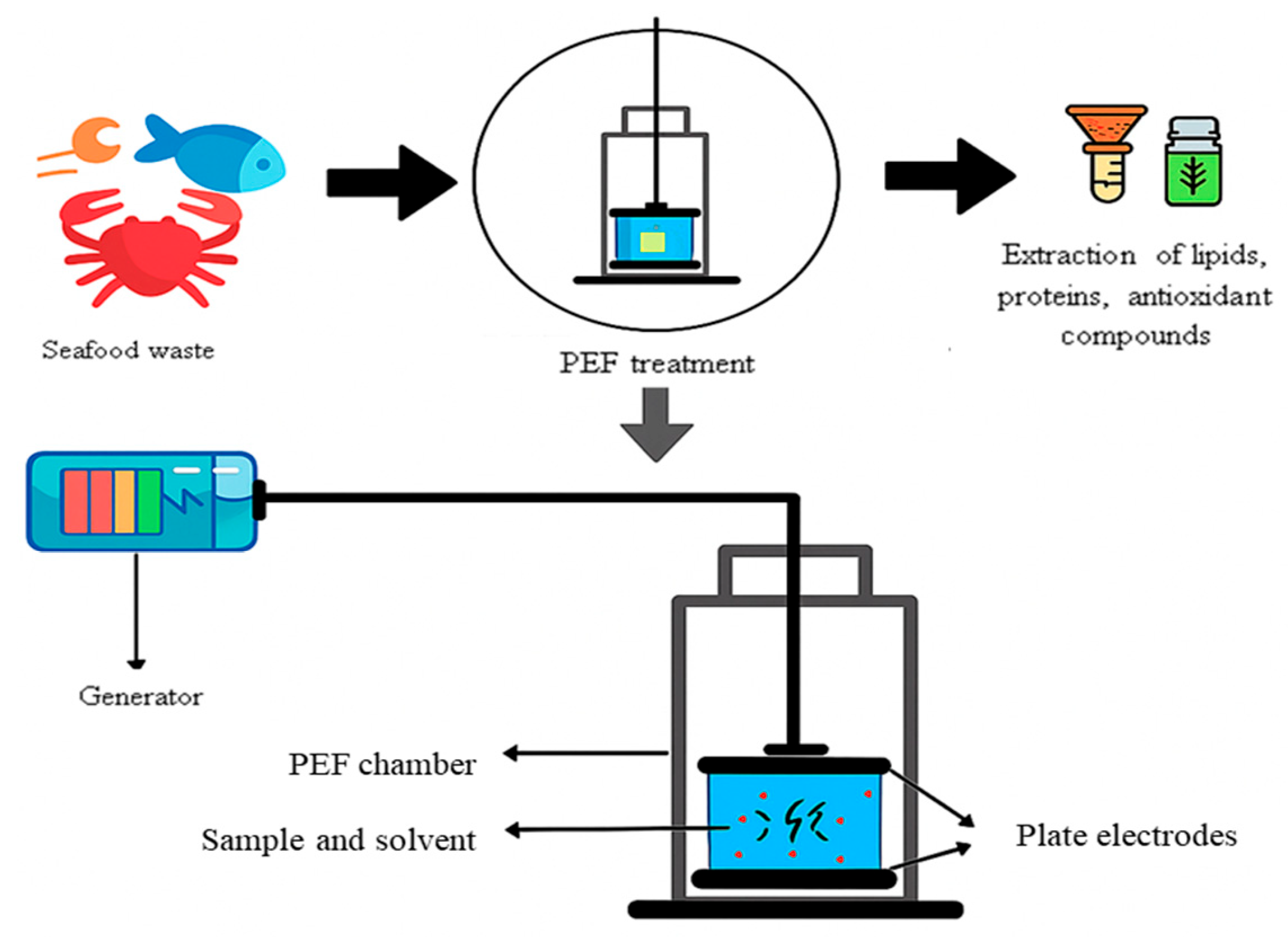
Figure 2.
PEF treatment system.
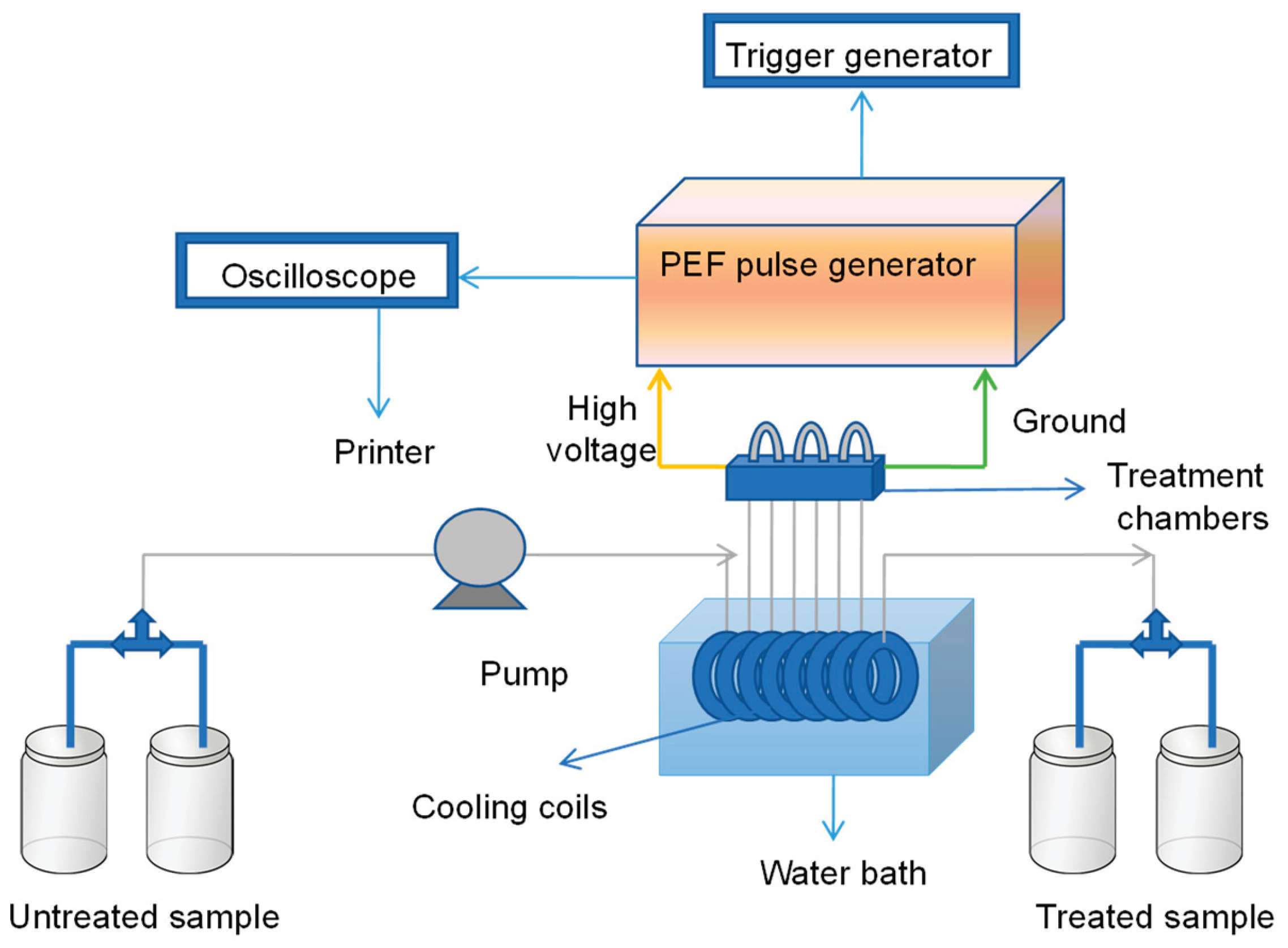
Figure 3.
Different types of PEF electric field pulses.
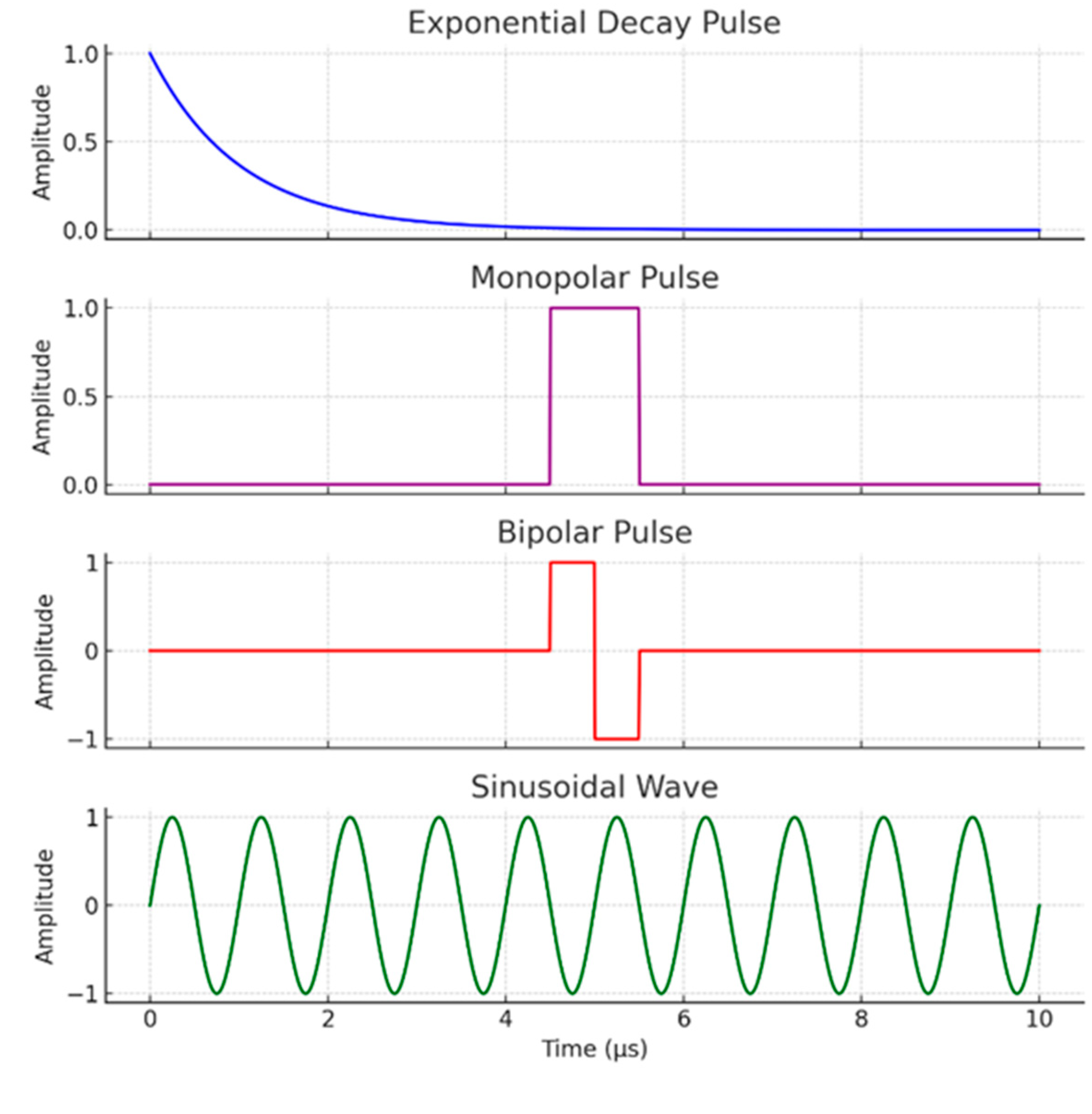
Disclaimer/Publisher’s Note: The statements, opinions and data contained in all publications are solely those of the individual author(s) and contributor(s) and not of MDPI and/or the editor(s). MDPI and/or the editor(s) disclaim responsibility for any injury to people or property resulting from any ideas, methods, instructions or products referred to in the content. |
© 2025 by the authors. Licensee MDPI, Basel, Switzerland. This article is an open access article distributed under the terms and conditions of the Creative Commons Attribution (CC BY) license (http://creativecommons.org/licenses/by/4.0/).
Copyright: This open access article is published under a Creative Commons CC BY 4.0 license, which permit the free download, distribution, and reuse, provided that the author and preprint are cited in any reuse.


