

Submitted:
19 November 2025
Posted:
24 November 2025
You are already at the latest version
Abstract
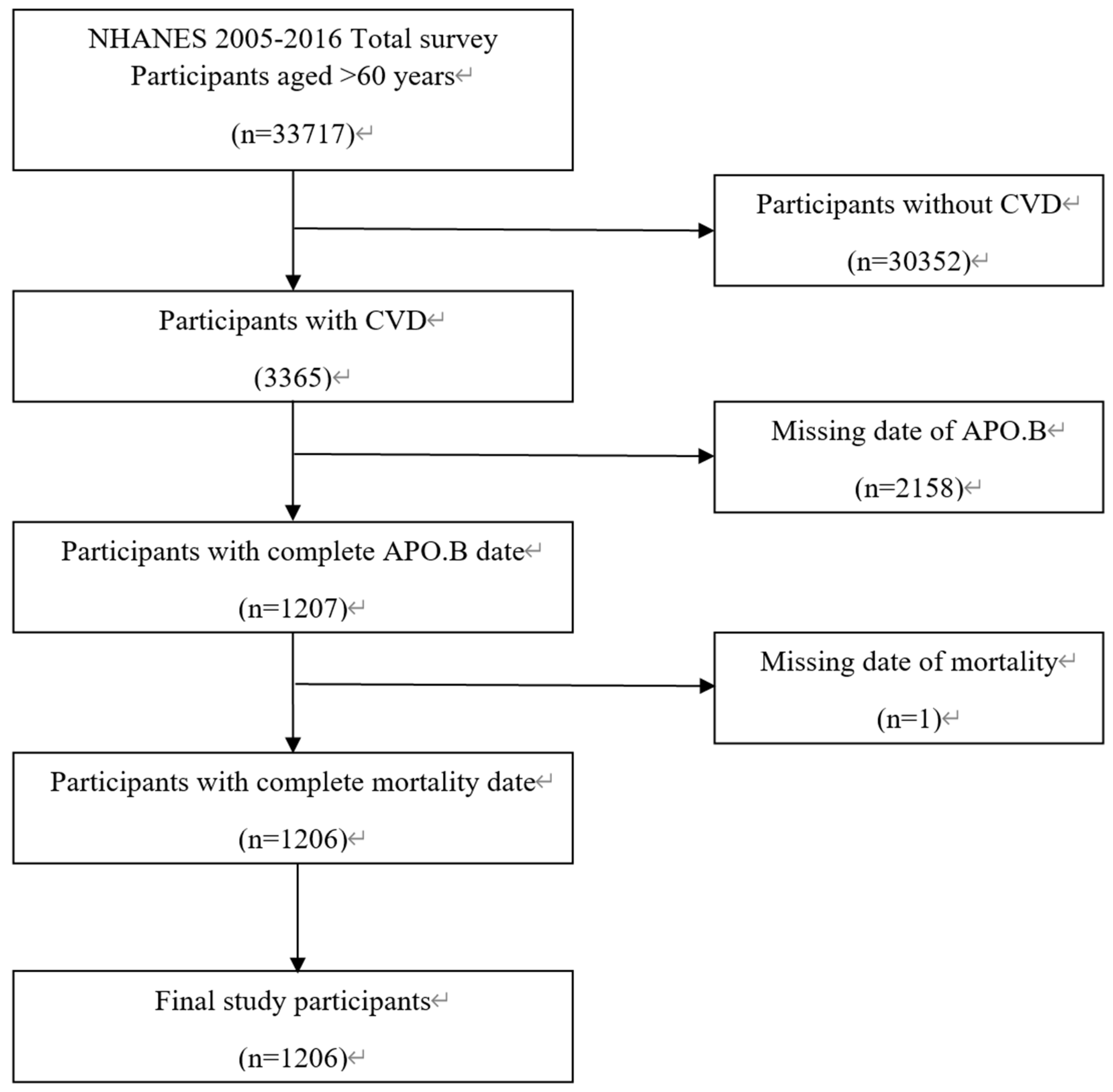
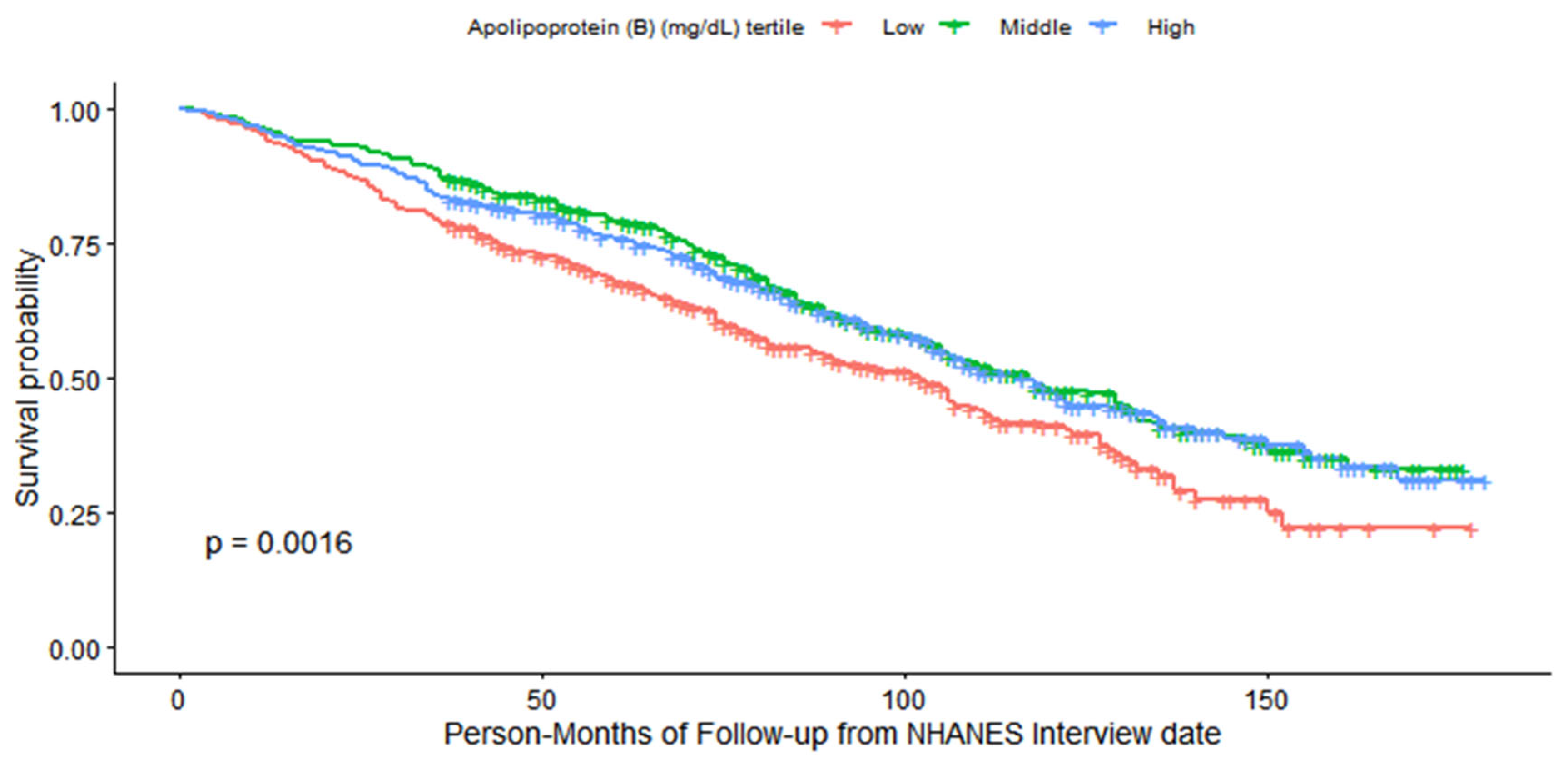
Background: Cardiovascular disease (CVD) is a leading cause of death in people over 60 years old. Reliable prognostic markers for risk stratification in these elderly patients are urgently needed. Apolipoprotein B (APO.B) reflects atherogenic lipoprotein particle number, but its association with all-cause mortality in elderly CVD patients, especially nonlinear patterns and threshold effects, is unclear. Methods: This cohort study used data from the National Health and Nutrition Examination Survey (NHANES) 2005–2016, including 1206 elderly patients with established CVD aged over 60 years. APO.B was the exposure, stratified into three tertiles, and all-cause mortality was the primary outcome. Multivariate Cox regression, piece-wise linear regression, and subgroup analyses were conducted. Results: During follow-up, the middle APO.B tertile (75.00–97.00 mg/dL) was associated with lower all-cause mortality compared to the low tertile (adjusted hazard ratio [HR]=0.75, 95% confidence interval [CI]: 0.61–0.92, P=0.0068). A nonlinear relationship with a threshold at 83 mg/dL was found: below it, each 1 mg/dL increase in APO.B reduced mortality (odds ratio [OR]=0.98, 95% CI: 0.97–0.99, P<0.0001); above it, no association (OR=1.00, 95% CI: 1.00–1.01, P=0.1877). Protective effects were more pronounced in males, non-Hispanic Whites, former/current smokers, and those with physical activity <600 MET/week. Conclusions: APO.B was nonlinearly associated with all-cause mortality in elderly patients with cardiovascular disease. This finding adds to current knowledge on lipid-related risk assessment and offers a direction for subsequent research on cardiovascular outcomes in the elderly.
Keywords:
Introduction
Materials and Methods
Study Population
Data Acquisition and Variable Definitions
Statistical Analysis
Results
Baseline Characteristics of the Study Cohort

| Characteristic | Platelet Count Quartiles (×109/L) | P-value | ||
| T1 (n=418) |
T2 (n=419) |
T3 (n=369) |
||
| No. of participants | 418 | 419 | 369 | |
| Age, (years) | 73.94 ± 6.20 | 72.45 ± 6.69 | 72.07 ± 7.02 | <0.001 |
| Body Mass Index (kg/m2) | 28.89 ± 6.26 | 30.45 ± 5.99 | 29.50 ± 6.42 | 0.002 |
| Height (cm) | 166.62 ± 9.25 | 166.54 ± 10.07 | 164.97 ± 10.33 | 0.036 |
| Weight (kg) | 80.22 ± 18.82 | 84.78 ± 19.71 | 80.78 ± 20.33 | 0.002 |
| Waist (cm) | 103.89 ± 14.08 | 107.20 ± 14.97 | 104.87 ± 14.62 | 0.006 |
| LYMPHOCYTE (×10⁹/L) | 1.81 ± 1.77 | 1.88 ± 0.71 | 2.29 ± 6.00 | <0.001 |
| MONOCYTE(×10⁹/L) | 0.63 ± 0.24 | 0.58 ± 0.20 | 0.59 ± 0.26 | 0.013 |
| WBC (×10⁹/L) | 7.06 ± 2.67 | 7.23 ± 2.17 | 7.52 ± 6.36 | 0.236 |
| Apolipoprotein (B) (mg/dL) | 62.17 ± 8.92 | 85.45 ± 6.55 | 118.19 ± 18.48 | <0.001 |
| Person-Months of Follow-up from NHANES Interview date (Months) | 71.10 ± 39.70 | 84.45 ± 42.42 | 82.97 ± 44.95 | <0.001 |
| Sex, n (%) | <0.001 | |||
| Male | 271 (64.83) | 253 (60.38) | 185 (50.14) | - |
| Female | 147 (35.17) | 166 (39.62) | 184 (49.86) | |
| Ethnicity, n (%) | ||||
| Non-Hispanic White | 255 (61.00) | 257 (61.34) | 222 (60.16) | |
| Non-Hispanic Black | 71 (16.99) | 80 (19.09) | 69 (18.70) | |
| Mexican American | 28 (6.70) | 38 (9.07) | 31 (8.40) | |
| Other Hispanic | 34 (8.13) | 27 (6.44) | 31 (8.40) | |
| Other Race | 30 (7.18) | 17 (4.06) | 16 (4.34) | |
| MARITAL recoded, n (%) | 0.011 | |||
| Married/Living with Partner | 255 (61.00) | 239 (57.04) | 185 (50.14) | |
| Widowed/Divorced/Separated | 147 (35.17) | 160 (38.19) | 173 (46.88) | |
| Never married | 16 (3.83) | 20 (4.77) | 11 (2.98) | |
| Poverty income ratio, n (%) | <0.001 | |||
| Poor | 65 (15.55) | 62 (14.80) | 87 (23.58) | |
| Nearly poor | 129 (30.86) | 139 (33.17) | 114 (30.89) | |
| Middle income | 119 (28.47) | 95 (22.67) | 89 (24.12) | |
| High income | 78 (18.66) | 70 (16.71) | 47 (12.74) | |
| Missing | 27 (6.46) | 53 (12.65) | 32 (8.67) | |
| EDU recoded, n (%) | 0.024 | |||
| Below high school | 75 (17.94) | 84 (20.05) | 61 (16.53) | |
| High school | 162 (38.76) | 168 (40.10) | 185 (50.14) | |
| Above high school | 180 (43.06) | 166 (39.62) | 121 (32.79) | |
| Missing | 1 (0.24) | 1 (0.24) | 2 (0.54) | |
| SMOKE recoded, n (%) | - | |||
| Never | 172 (41.15) | 169 (40.33) | 173 (46.88) | |
| Former | 193 (46.17) | 179 (42.72) | 140 (37.94) | |
| Now | 53 (12.68) | 71 (16.95) | 56 (15.18) | |
| Alcohol use recoded, n (%) | - | |||
| Never | 68 (16.27) | 56 (13.37) | 67 (18.16) | |
| Former | 149 (35.65) | 149 (35.56) | 107 (29.00) | |
| Mild | 129 (30.86) | 121 (28.88) | 116 (31.44) | |
| Moderate | 21 (5.02) | 28 (6.68) | 25 (6.78) | |
| Heavy | 16 (3.83) | 29 (6.92) | 30 (8.13) | |
| Missing | 35 (8.37) | 36 (8.59) | 24 (6.50) | |
| Total physical activity (MET/week), n (%) | - | |||
| <600 | 64 (15.31) | 71 (16.95) | 67 (18.16) | |
| >=600 | 153 (36.60) | 155 (36.99) | 125 (33.88) | |
| Missing | 201 (48.09) | 193 (46.06) | 177 (47.97) | |
| Hypertension, n (%) | - | |||
| No | 84 (20.10) | 70 (16.71) | 62 (16.80) | |
| Yes | 334 (79.90) | 349 (83.29) | 307 (83.20) | |
| Final Mortality Status, n (%) | - | |||
| Assumed alive | 204 (48.80) | 227 (54.18) | 194 (52.57) | |
| Assumed deceased | 214 (51.20) | 192 (45.82) | 175 (47.43) | |
| Exposure | Model 1 | Model 2 | Model 3 | |||
| Apo B (Tertile) | HR(95% CI) | P-value | HR(95% CI) | P-value | HR(95% CI) | P-value |
| Low | ref | ref | ref | |||
| Middle | 0.72 (0.59, 0.88) | 0.0010 | 0.75 (0.61, 0.92) | 0.0049 | 0.75 (0.61, 0.92) | 0.0068 |
| High | 0.75 (0.62, 0.92) | 0.0060 | 0.84 (0.68, 1.04) | 0.1093 | 0.86 (0.69, 1.07) | 0.1741 |
| P for trend | 0.0054 | 0.0894 | 0.1431 | |||
Threshold Effect of APO.B on All-Cause Mortality
| ApoB | HR (95% CI) | P-value |
| Fitting by the standard linear mode | 1.00 (0.99, 1.00) | 0.0461 |
| Fitting by the two-piecewise linear model |
||
| Inflection point | 83.0 | |
| ApoB < 83(mg/dL) | 0.63 (0.51, 0.79) | < 0.0001 |
| ApoB ≥ 83(mg/dL) | 1.10 (0.96, 1.26) | 0.1881 |
| Log likelihood ration | <0.0001 | |
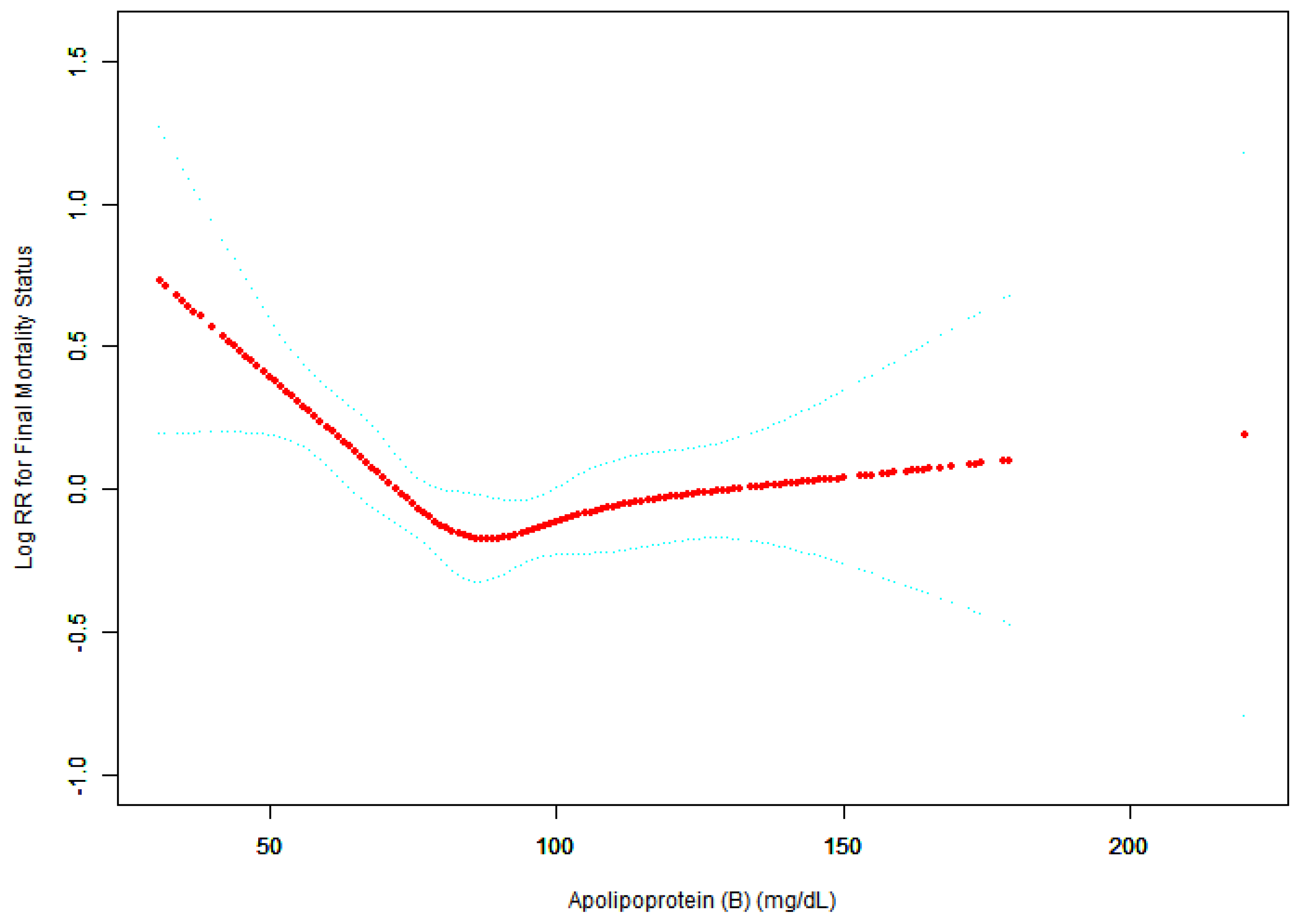
Subgroup Analysis of APO.B on All-Cause Mortality
| Characteristic | No. of participants | Final Mortality Status,HR (95%CI) | P -value |
| Sex | |||
| Male | 709 | 0.85 (0.75, 0.97) | 0.0145 |
| Female | 497 | 0.88 (0.77, 1.00) | 0.0523 |
| Ethnicity | |||
| Non-Hispanic White | 734 | 0.88 (0.79, 0.98) | 0.0200 |
| Non-Hispanic Black | 220 | 0.87 (0.70, 1.08) | 0.2032 |
| Mexican American | 97 | 0.88 (0.64, 1.21) | 0.4196 |
| Other Hispanic | 92 | 0.60 (0.37, 1.00) | 0.0494 |
| Other Race | 63 | 0.80 (0.44, 1.47) | 0.4719 |
| MARITAL recoded | |||
| Married/Living with Partner | 679 | 0.84 (0.73, 0.97) | 0.0191 |
| Widowed/Divorced/Separated | 480 | 0.81 (0.71, 0.91) | 0.0005 |
| Never married | 47 | 0.95 (0.58, 1.55) | 0.8226 |
| Poverty income ratio | |||
| Poor | 214 | 0.81 (0.65, 1.00) | 0.0498 |
| Nearly poor | 382 | 0.85 (0.73, 0.98) | 0.0239 |
| Middle income | 303 | 0.89 (0.74, 1.06) | 0.1962 |
| High income | 195 | 0.89 (0.67, 1.18) | 0.4297 |
| Missing | 112 | 0.82 (0.58, 1.16) | 0.2595 |
| EDU recoded | |||
| Below high school | 220 | 0.84 (0.69, 1.01) | 0.0612 |
| High school | 515 | 0.84 (0.74, 0.96) | 0.0120 |
| Above high school | 467 | 0.84 (0.71, 1.00) | 0.0482 |
| Missing | 4 | 1.70 (0.47, 6.18) | 0.4230 |
| SMOKE recoded | |||
| Never | 514 | 0.90 (0.78, 1.03) | 0.1316 |
| Former | 512 | 0.87 (0.76, 1.00) | 0.0468 |
| Now | 180 | 0.75 (0.59, 0.96) | 0.0234 |
| Alcohol use recoded | |||
| Never | 191 | 1.03 (0.85, 1.25) | 0.7790 |
| Former | 405 | 0.88 (0.76, 1.02) | 0.0800 |
| Mild | 366 | 0.81 (0.67, 0.98) | 0.0322 |
| Moderate | 74 | 0.98 (0.63, 1.52) | 0.9283 |
| Heavy | 75 | 1.05 (0.76, 1.46) | 0.7627 |
| Missing | 95 | 0.63 (0.47, 0.85) | 0.0023 |
| Total physical activity (MET/week) | |||
| <600 | 202 | 0.76 (0.61, 0.96) | 0.0210 |
| >=600 | 433 | 0.95 (0.80, 1.12) | 0.5403 |
| Missing | 571 | 0.83 (0.74, 0.94) | 0.0031 |
| Hypertension | |||
| No | 216 | 0.84 (0.68, 1.02) | 0.0830 |
| Yes | 990 | 0.86 (0.78, 0.95) | 0.0043 |
Discussion
Core Findings in Context of Existing Evidence
Potential Mechanisms Underlying the Nonlinear Association
Interpretation of Subgroup Differences
Study Limitations
Application of APO.B Threshold in Lipid Management and Prospective Research Priorities for Elderly CVD Patients
Conclusions
Author Contributions
Funding
Institutional Review Board Statement
Informed Consent Statement
Data Availability Statement
Acknowledgments
Conflicts of Interest
References
- Cui Y, Lei S, Xia Y, Yang F (2025) The trajectory of intrinsic capacity and its related factors among elderly Chinese patients with cardiovascular disease: a prospective cohort study. Front Endocrinol (Lausanne), 16:1539982. [CrossRef]
- Zhu W, Tan S, Zhou Z, Zhao M, Wang Y, Li Q, Zheng Y, Shi J (2025) Predicting Short-Term Risk of Cardiovascular Events in the Elderly Population: A Retrospective Study in Shanghai, China. Clin Interv Aging, 20:825-836. [CrossRef]
- Qu C, Liao S, Zhang J, Cao H, Zhang H, Zhang N, Yan L, Cui G, Luo P, Zhang Q, Cheng Q (2024) Burden of cardiovascular disease among elderly: based on the Global Burden of Disease Study 2019. Eur Heart J Qual Care Clin Outcomes, 10:143-153. [CrossRef]
- Yan L, Ren E, Guo C, Peng Y, Chen H, Li W (2025) Development and validation of a predictive model for frailty risk in older adults with cardiovascular-metabolic comorbidities. Front Public Health, 13:1561845. [CrossRef]
- Li S, Liu Y, Sun G, Zhou J, Luo D, Mao G, Xu W (2025) The predictive value of hsCRP/HDL-C ratio for cardiometabolic multimorbidity in middle-aged and elderly people: evidence from a large national cohort study. Front Nutr, 12:1580904. [CrossRef]
- Wong ND, Budoff MJ, Ferdinand K, Graham IM, Michos ED, Reddy T, Shapiro MD, Toth PP (2022) Atherosclerotic cardiovascular disease risk assessment: An American Society for Preventive Cardiology clinical practice statement. Am J Prev Cardiol, 10:100335. [CrossRef]
- Fischer K, Kassem L (2023) Apolipoprotein B: An essential cholesterol metric for atherosclerotic cardiovascular disease. Am J Health Syst Pharm, 80:83-86. [CrossRef]
- Wu H, Pang M, Chen H, Zhuang K, Zhang H, Zhao Y, Ding X (2025) Serum proteomic profiling reveals potential predictive indicators for coronary artery calcification in stable ischemic heart disease. J Mol Histol, 56:110. [CrossRef]
- Hagström E, Steg PG, Szarek M, Bhatt DL, Bittner VA, Danchin N, Diaz R, Goodman SG, Harrington RA, Jukema JW, Liberopoulos E, Marx N, Mcginniss J, Manvelian G, Pordy R, Scemama M, White HD, Zeiher AM, Schwartz GG (2022) Apolipoprotein B, Residual Cardiovascular Risk After Acute Coronary Syndrome, and Effects of Alirocumab. Circulation, 146:657-672. [CrossRef]
- Zhang C, Ni J, Chen Z (2022) Apolipoprotein B Displays Superior Predictive Value Than Other Lipids for Long-Term Prognosis in Coronary Atherosclerosis Patients and Particular Subpopulations: A Retrospective Study. Clin Ther, 44:1071-1092. [CrossRef]
- Li H, Wang B, Mai Z, Yu S, Zhou Z, Lu H, Lai W, Li Q, Yang Y, Deng J, Tan N, Chen J, Liu J, Liu Y, Chen S (2022) Paradoxical Association Between Baseline Apolipoprotein B and Prognosis in Coronary Artery Disease: A 36,460 Chinese Cohort Study. Front Cardiovasc Med, 9:822626. [CrossRef]
- Su D, An Z, Chen L, Chen X, Wu W, Cui Y, Cheng Y, Shi S (2024) Association of triglyceride-glucose index, low and high-density lipoprotein cholesterol with all-cause and cardiovascular disease mortality in generally Chinese elderly: a retrospective cohort study. Front Endocrinol (Lausanne), 15:1422086. [CrossRef]
- Sarma V, Jin Y, Bandinelli S, Talegawkar SA, Ferrucci L, Tanaka T (2025) Cardiovascular health assessed using Life's Essential 8 is associated with all-cause and cardiovascular disease mortality among community-dwelling older men and women in the InCHIANTI study. Front Public Health, 13:1570463. [CrossRef]
- Wang Y, Peng K, Xu W, Huang X, Liu X, Li Y, Lu J, Yang Y, Chen B, Shi Y, Han G, Zhang X, Cui J, Song L, Tian A, Runsi W, Wang C, Tian Y, Wu Y, Lin C, Peng W, Li X, Hu S (2025) Cardiovascular disease-specific and all-cause mortality across socioeconomic status and lifestyles among patients with established cardiovascular disease in communities of China: data from a national population-based cohort. Heart, 111:1092-1100. [CrossRef]
- Yang M, Miao S, Hu W, Yan J (2024) Association between the dietary inflammatory index and all-cause and cardiovascular mortality in patients with atherosclerotic cardiovascular disease. Nutr Metab Cardiovasc Dis, 34:1046-1053. [CrossRef]
- Engell AE, Bathum L, Siersma V, Andersen CL, Lind BS, Jørgensen HL (2025) Elevated remnant cholesterol and triglycerides are predictors of increased total mortality in a primary health care population of 327,347 patients. Lipids Health Dis, 24:189. [CrossRef]
- Zhang K, Wei C, Shao Y, Wang L, Zhao Z, Yin S, Tang X, Li Y, Gou Z (2024) Association of non-HDL-C/APO.B ratio with long-term mortality in the general population: A cohort study. Heliyon, 10:e28155. [CrossRef]
- Yu X, Yuan Y, Dong X, Xier Z, Ma L, Peng H, Li G, Yang Y (2025) Low apolipoprotein B and LDL-cholesterol are associated with the risk of cardiovascular and all-cause mortality: a prospective cohort. Ann Med, 57:2529565. [CrossRef]
- Suchak T, Aliu AE, Harrison C, Zwiggelaar R, Geifman N, Spick M (2025) Explosion of formulaic research articles, including inappropriate study designs and false discoveries, based on the NHANES US national health database. PLoS Biol, 23:e3003152. [CrossRef]
- Zheng M, Li J, Cao Y, Bao Z, Dong X, Zhang P, Yan J, Liu Y, Guo Y, Zeng X (2024) Association of different inflammatory indices with risk of early natural menopause: a cross-sectional analysis of the NHANES 2013-2018. Front Med (Lausanne), 11:1490194. [CrossRef]
- Li D, Li J, Li Y, Guan Y (2025) Dietary sodium intake and all-cause mortality in rheumatoid arthritis: an NHANES analysis (2003-2018). Front Nutr, 12:1518697. [CrossRef]
- Zhang Y, Liu Y, Qiao H, Ma Q, Zhao B, Wu Q, Li H (2025) Mediating role of triglyceride glucose-related index in the associations of composite dietary antioxidant index with cardiovascular disease and mortality in older adults with hypertension: a national cohort study. Front Nutr, 12:1574876. [CrossRef]
- Su X, Rao H, Zhao C, Zhang X, Li D (2024) The association between the metabolic score for insulin resistance and mortality in patients with cardiovascular disease: a national cohort study. Front Endocrinol (Lausanne), 15:1479980. [CrossRef]
- Cheng H, Huang W, Huang X, Miao W, Huang Y, Hu Y (2024) The triglyceride glucose index predicts short-term mortality in non-diabetic patients with acute heart failure. Adv Clin Exp Med, 33:103-110. [CrossRef]
- Meng J, Yang W, Chen Z, Pei C, Peng X, Li C, Li F (2024) ApoA1, APO.B, ApoA1/B for Pathogenic Prediction of Chronic Obstructive Pulmonary Disease Complicated by Acute Lower Respiratory Tract Infection: A Cross-Sectional Study. Int J Chron Obstruct Pulmon Dis, 19:309-317. [CrossRef]
- Ruiz-Limón P, Muralidharan J, Gomez-Perez AM, Murri M, Vioque J, Corella D, Fitó M, Vidal J, Salas-Salvadó J, Torres-Collado L, Coltell O, Atzeni A, Castañer O, Bulló M, Bernal-López MR, Moreno-Indias I, Tinahones FJ (2024) Physical activity shifts gut microbiota structure in aged subjects with overweight/obesity and metabolic syndrome. Biol Sport, 41:47-60. [CrossRef]
- Sniderman AD, Dufresne L, Pencina KM, Bilgic S, Thanassoulis G, Pencina MJ (2024) Discordance among APO.B, non-high-density lipoprotein cholesterol, and triglycerides: implications for cardiovascular prevention. Eur Heart J, 45:2410-2418. [CrossRef]
- Katsi V, Argyriou N, Fragoulis C, Tsioufis K (2025) The Role of Non-HDL Cholesterol and Apolipoprotein B in Cardiovascular Disease: A Comprehensive Review. J Cardiovasc Dev Dis, 12. [CrossRef]
- Liu YX, Chen J, Liu C, Maitiyasen M, Hou X, Li J, Yi J (2025) Preoperative lipid levels and prognosis in non-small cell lung cancer: A retrospective age-stratified study. Sci Prog, 108:368504251352375. [CrossRef]
- Snyder C, Beitelshees AL, Chowdhury D (2023) Familial Hyperlipidemia Caused by Apolipoprotein B Mutation in the Pediatric Amish Population: A Mini Review. Interv Cardiol (Lond), 15:433-437.
- Li S, Xie X, Zeng X, Wang S, Lan J (2024) Serum apolipoprotein B to apolipoprotein A-I ratio predicts mortality in patients with heart failure. ESC Heart Fail, 11:99-111. [CrossRef]
- Agoons DD, Agoons BB (2025) Apolipoprotein B and Glycemic Indices in Normoglycemic Adults: Analysis of the National Health and Nutrition Examination Survey, 2007-2016. Cureus, 17:e85656. [CrossRef]
- Glavinovic T, Thanassoulis G, De Graaf J, Couture P, Hegele RA, Sniderman AD (2022) Physiological Bases for the Superiority of Apolipoprotein B Over Low-Density Lipoprotein Cholesterol and Non-High-Density Lipoprotein Cholesterol as a Marker of Cardiovascular Risk. J Am Heart Assoc, 11:e025858. [CrossRef]
- Sarraju A, Brennan D, Hayden K, Stronczek A, Goldberg AC, Michos ED, Mcguire DK, Mason D, Tercek G, Nicholls SJ, Kling D, Neild AL, Kastelein J, Davidson M, Ditmarsch M, Nissen SE (2025) Fixed-dose combination of obicetrapib and ezetimibe for LDL cholesterol reduction (TANDEM): a phase 3, randomised, double-blind, placebo-controlled trial. Lancet, 405:1757-1768. [CrossRef]
- Tan LF, Sia CH, Merchant RA (2025) Sarcopenia and sarcopenic obesity in cardiovascular disease: a comprehensive review. Singapore Med J. [CrossRef]
- Thomas PE, Vedel-Krogh S, Kamstrup PR, Nordestgaard BG (2025) Lipoprotein(a) Cardiovascular Risk Explained by LDL Cholesterol, Non-HDL Cholesterol, APO.B, or hsCRP Is Minimal. J Am Coll Cardiol, 85:2046-2051. [CrossRef]
- Wang C, Fu H, Xu H, Yang H, Min X, Wu W, Liu Z, Li D, Dong Y, Chen J (2025) Non-traditional lipid biomarkers in atherosclerotic cardiovascular disease: pathophysiological mechanisms and strategies to address residual risk. Front Endocrinol (Lausanne), 16:1576602. [CrossRef]
- Marston NA, Giugliano RP, Melloni GEM, Park JG, Morrill V, Blazing MA, Ference B, Stein E, Stroes ES, Braunwald E, Ellinor PT, Lubitz SA, Ruff CT, Sabatine MS (2022) Association of Apolipoprotein B-Containing Lipoproteins and Risk of Myocardial Infarction in Individuals With and Without Atherosclerosis: Distinguishing Between Particle Concentration, Type, and Content. JAMA Cardiol, 7:250-256. [CrossRef]
- Elshazly MB, Quispe R (2022) The Lower the APO.B, the Better: Now, How Does APO.B Fit in the Upcoming Era of Targeted Therapeutics? Circulation, 146:673-675. [CrossRef]
- Toth PP, Banach M (2024) It is time to address the contribution of cholesterol in all APO.B-containing lipoproteins to atherosclerotic cardiovascular disease. Eur Heart J Open, 4:oeae057. [CrossRef]
- Yu M, Yang Y, Dong SL, Zhao C, Yang F, Yuan YF, Liao YH, He SL, Liu K, Wei F, Jia HB, Yu B, Cheng X (2024) Effect of Colchicine on Coronary Plaque Stability in Acute Coronary Syndrome as Assessed by Optical Coherence Tomography: The COLOCT Randomized Clinical Trial. Circulation, 150:981-993. [CrossRef]
- Li Y, Wu Q, Li Z, Xiao Y, Wei L (2025) Prognostic Value of Apolipoprotein E in Predicting One-year Mortality in Patients with Acute Exacerbation of Chronic Obstructive Pulmonary Disease. Int J Chron Obstruct Pulmon Dis, 20:1639-1650. [CrossRef]
Disclaimer/Publisher’s Note: The statements, opinions and data contained in all publications are solely those of the individual author(s) and contributor(s) and not of MDPI and/or the editor(s). MDPI and/or the editor(s) disclaim responsibility for any injury to people or property resulting from any ideas, methods, instructions or products referred to in the content. |
© 2025 by the authors. Licensee MDPI, Basel, Switzerland. This article is an open access article distributed under the terms and conditions of the Creative Commons Attribution (CC BY) license (http://creativecommons.org/licenses/by/4.0/).