

Submitted:
18 November 2025
Posted:
19 November 2025
You are already at the latest version
Abstract
This study examines significant research deficiencies in the procurement management difficulties encountered by Chinese contractors in international EPC projects within the Belt and Road Initiative (BRI). This research addresses: 1) the distinct procurement inefficiencies (e.g., communication delays, material shortages) faced by Chinese contractors in global projects; 2) the impact of supply chain integration on improving procurement performance in international EPC projects; 3) the application of social network analysis (SNA) to investigate inter-organizational relationships in procurement management; and 4) the influence of stakeholder collaboration on optimizing procurement processes. The results indicate that efficient supply chain integration markedly enhances procurement efficiency, minimizes delays, and decreases costs. The study indicates that robust collaboration and communication across stakeholders, namely contractors, suppliers, subcontractors, and designers—are essential for lowering procurement risks and facilitating seamless project execution. Social network analysis underscores the significance of principal stakeholders and their interrelations in enhancing procurement results, asserting that effectively coordinated networks facilitate superior resource allocation and risk management. Moreover, case studies indicate that Chinese contractors utilize tactics such just-in-time inventory management, supplier relationship management, and digital procurement platforms to mitigate supply chain risks and improve procurement performance. The study highlights that supply chain integration, along with robust stakeholder collaboration, reduces inefficiencies and offers a competitive edge for Chinese contractors in the global EPC industry.
Keywords:
procurement management
; supply chain integration
; Social Network Analysis (SNA)
; stakeholder collaboration
; Belt and Road Initiative (BRI)
1. Introduction
With the implementation of the "Go Global" strategy and the "Belt and Road Initiative" (BRI), China's overseas contracting business has rapidly developed. Since 2009, Chinese contractors have continuously expanded into international markets, with their business scope gradually covering regions such as the Middle East, Asia, Africa, Europe, the United States, Canada, and Latin America. The total volume of business has continued to grow. The "Belt and Road Initiative," launched in 2013, has further accelerated China's engagement in global infrastructure development, promoting trade, investment, and cooperation across these regions [1]. This initiative has been a key driver for the internationalization of Chinese contractors, particularly in the development of large-scale infrastructure projects such as roads, railways, energy, and utilities. Over the past decade, Chinese contractors have increasingly participated in high-value EPC (Engineering-Procurement-Construction) projects, leveraging their expertise to secure key contracts in emerging markets. As of 2023, China's ENR Top 225 contractors continue to play a significant role in these regions, as shown in Figure 1, with international revenues reflecting their growing presence.
This trend aligns closely with the objectives of the Belt and Road Initiative, which aims to foster closer economic and infrastructural ties between China and the rest of the world. In this context, the international operations of Chinese contractors are primarily concentrated in regions such as Africa, Asia, and the Middle East, with growing inroads into developed markets such as Europe, the United States, and Canada. The regional distribution of the international revenues for China's ENR Top 225 contractors in 2023 is illustrated in Figure 2, further highlighting the expanding footprint of Chinese construction enterprises in global markets.
As the market share of Chinese contractors in the international contracting industry continues to grow, the EPC (Engineering-Procurement-Construction) integrated contracting model, known for its efficient integration and resource allocation advantages, is increasingly favored by both clients and contractors in international projects. Under the EPC model, the client requires the contractor not only to carry out construction but also to undertake design, procurement, commissioning, and other tasks. This model is suitable for projects with high technical requirements, strong professionalism, complex processes, and a large number of non-standard equipment [2,3]. In recent years, with the increase in high-tech projects in fields such as power generation, chemicals, and mining, clients increasingly prefer a single general contractor to complete the design, procurement, construction, and commissioning processes.
The EPC model requires contractors to possess high management capabilities to coordinate a series of activities in design, procurement, and construction. If a contractor lacks sufficient management ability, not only will they fail to fully leverage the EPC model's advantages in resource integration, but they may also cause significant project losses. Due to the complexities involved in international EPC project procurement, various issues often arise, such as delayed communication affecting procurement schedules, delayed design document delivery causing procurement plan setbacks, incomplete or inflexible procurement plans, lack of shortage warning mechanisms leading to work stoppages due to material shortages, and poor communication between design and construction teams resulting in unsuitable materials or equipment [4]. Therefore, strengthening procurement management is crucial for ensuring the successful implementation of the entire project.
Given the critical position and management challenges of procurement in international EPC projects, general contractors need to adopt new approaches to enhance procurement management. In traditional procurement management, the relationships among stakeholders such as contractors, suppliers, clients, and consulting engineers are typically seen as temporary contractual relationships. Under different goals and interests, each party engages in competition to secure a larger share of the benefits, often leading to procurement issues such as a lack of collaboration, inefficient interface management, fragmented processes reducing procurement efficiency, and information asymmetry increasing transaction costs, ultimately driving up construction costs or compromising quality [5,6,7].
Many scholars suggest introducing the concept of supply chain integration in construction project management to streamline fragmented processes and reduce costs and time [8.-10]. Supply chain integration emphasizes long-term cooperation among stakeholders to coordinate complex and diverse procurement processes [11.12]. Its essence lies in breaking down internal and external organizational barriers, enabling the efficient flow of necessary information and resources across participant boundaries, reducing management and technical redundancies, and enhancing supply chain efficiency [13,14,15]. Current research suggests that contractors should integrate the entire procurement process from the perspective of supply chain value creation, maximizing the contribution of each participant in international EPC project procurement [16,17,18]. This is crucial for achieving good procurement performance and gaining a competitive advantage [19,20,21]. Therefore, studying procurement management based on supply chain integration in international EPC projects holds significant theoretical and practical importance for improving the management level of contractors in international EPC projects.
This paper is structured to explore key issues in procurement management for international EPC projects, with a focus on the role of Chinese contractors under the Belt and Road Initiative. The first section provides an overview of the international expansion of Chinese contractors and the impact of the Belt and Road Initiative on global infrastructure. The second section presents a literature review, discussing relevant research on procurement management in EPC projects. The third section uses social network analysis and cases studies to draw conclusions about stakeholder interactions and procurement processes. The fourth section introduces supply chain integration, examining its potential to improve procurement efficiency and reduce costs. Finally, the paper discusses the theoretical and practical implications of integrating supply chain management into procurement strategies and concludes with recommendations for optimizing procurement and project outcomes.
2. Literature Review
2.1. Procurement Management in International Engineering EPC Projects
In international engineering EPC projects, the materials and equipment required are typically categorized into engineering materials, temporary construction materials, construction tools and equipment, spare parts, construction materials, electromechanical equipment necessary for the project, permanent electromechanical equipment for the completed project, auxiliary life and office facilities, and testing equipment [22,23]. Current research has identified the critical role of procurement management in the implementation of international engineering EPC projects, mainly reflected in the following aspects: procurement serves as a bridge between design and construction, and materials and equipment form the foundation for both construction and operation [24.25]; equipment and material costs account for a high proportion of the total contract value in EPC projects [26,27,28]; there is a high level of dependency on external organizations such as suppliers and logistics service providers [29,30,31]; procurement requires more communication and negotiation with external organizations [32,33]; compared to design and construction, the general contractor has less control over procurement, particularly for equipment with long lead times [34]; unlike traditional manufacturing, EPC projects often involve non-standard parts, and suppliers do not maintain buffer stocks for such projects [35]; large electromechanical equipment is costly and has long production cycles [36]; successful procurement management can significantly enhance the overall project performance [37].
However, due to the complexity of procurement activities in international engineering EPC projects, several key issues currently exist: procurement activities in these projects consist of thousands of interdependent tasks, making the flow of information crucial [38]; De la Garza (1994) argues that procurement involves multiple stakeholders, including the owner, design team, construction team, equipment and material suppliers, government agencies, equipment operators, and maintenance teams, creating fragmentation in procurement activities due to the large number of participants; continuous and repetitive exchange of information is required among project participants, and fragmented work may lead to adversarial relationships between organizations [39.40]; Baily (1990) suggests that in global procurement, the timing of procurement activities is difficult to predict, especially regarding negotiations, approvals, and transportation, with long procurement cycles for electromechanical equipment. This leads to significant uncertainties in delivery times, and communication and approval of drawings and data between suppliers, designers, and owners may further delay procurement progress. The technical specifications of major electromechanical equipment may also be interrelated with equipment and components from other suppliers; overlapping between procurement, design, and construction processes increases the risk of cost overruns and schedule delays due to insufficient information and frequent changes [41].
Many scholars have proposed methods to improve procurement performance in projects, including concurrent engineering [42,43], lean construction [44], partnerships [45,46], and logistics and supply chain management [47,48,49]. Williams (1995) suggests selecting familiar and reliable suppliers to simplify procurement processes and shorten procurement cycles; Love et al. (1998) argue that downstream participants in procurement should be involved in upstream procurement activities to play a more active role in reducing issues such as rework and repetitive design. They encourage collaboration from the early stages of the project to avoid and reduce conflicts later on; Mohamed (1996) recommends re-planning procurement processes and project information flows, eliminating or reducing redundant processes, and using information technology to improve the storage, retrieval, and processing of information; Bresnen (2000) proposes breaking down boundaries between organizations and project functions to facilitate communication, coordination, and cooperation; An Zhiyu et al. (2014) designed incentive contracts based on transfer payments and production costs for strategic procurement of materials in large engineering projects, aiming to reflect suppliers' true cost information and encourage greater effort in production and manufacturing; Biet al. (2011) proposed a procurement risk assessment model, which through empirical research, demonstrated that this method can achieve a more efficient and precise assessment of procurement risks in EPC projects and provide a basis for implementing procurement risk management methods; Yeo et al. (2002) believe that partnerships can help address issues such as fragmented processes, lack of integration, and adversarial relationships, and they propose managing uncertainties in procurement through supply chain integration[50].
2.2. Supply Chain Integration Theory
The early research on supply chain management (SCM) can be traced to Kraljic (1983) and Shapiro (1984), who published influential papers on SCM and logistics in the Harvard Business Review. Since then, the concept of SCM has rapidly evolved, with numerous definitions emerging in the literature [51.52].
Copacino et al. (1997) define SCM as the management of the flow of materials and products from suppliers to consumers, emphasizing the connection of business processes. The Supply Chain Council (1997) describes SCM as the activities involved in producing and delivering the final product, spanning from the initial supplier to the end customer, highlighting its cross-functional and cross-enterprise scope [53].
Cooper et al. (1997) define SCM as the integration of business processes from the final user to the initial suppliers, focusing on managing upstream and downstream relationships to deliver value at lower costs. Handfield et al. (2002) view SCM as the integration of activities and information flows from raw materials to the final user, with an emphasis on relationship management to achieve competitive advantage [54].
Mentzer et al. (2001) define the supply chain as a series of entities involved in the flow of products, services, funds, and information, distinguishing between direct, extended, and ultimate supply chains. The Japanese Journal of Business Administration emphasizes SCM as an integrated process that spans organizational boundaries to optimize resources and eliminate waste [55].
These definitions collectively highlight three key points: 1) the need for overall integration of supply chain processes; 2) the importance of managing product, service, and information flows across organizations; and 3) integration as the optimal approach for achieving supply chain efficiency.
Since the 1980s, supply chain integration has been recognized as central to SCM and a key driver of performance and competitive advantage [56]. Commonly accepted definitions of supply chain integration focus on both internal and external cooperation [57.58]. Internal integration refers to coordination within departments, while external integration involves the flow of information between organizations.
Supply chain integration is defined as the degree to which an organization collaborates with stakeholders and manages processes internally and externally to enable the efficient flow of products, services, information, and decisions, ultimately delivering value to customers at lower cost and higher speed [59.60].
In summary, supply chain integration involves fostering cooperation and trust, improving communication, and leveraging technology to accelerate information flow, ultimately enhancing supply chain efficiency.
2.3. The Advantages of Supply Chain Integration
The benefits of supply chain integration are often regarded as a collaborative competitive advantage [61], reflecting the strategic edge gained through supply chain cooperation that exceeds that of market competitors. These advantages are tied to synergies from cooperative behaviors, which cannot be achieved by individual organizations alone [62]. Jap (1999) suggests that integration can enhance these advantages, providing greater returns for all parties involved. The value added by integration includes cost savings from best practice sharing, improved joint action capabilities, better decision-making and higher profits through resource synergies, and innovation driven by idea exchange. Although business synergies may not show immediate benefits, they can provide long-term strategic advantages [63]. Cao et al. (2011) identify five key benefits of supply chain integration: process efficiency, flexibility, synergy, quality, and innovation [64].
Supply chain integration helps firms achieve performance gains that exceed the total investment, which is why many prominent models in supply chain management emphasize it. However, recent studies on the integration-performance relationship have yielded inconsistent conclusions due to differing assumptions about the components of integration [65,66]. One study found limited benefits by focusing on the content of integration, while another found greater benefits by emphasizing stakeholders involved in integration [67]. Most research tends to focus on specific components of integration, such as customer or supplier integration, rather than the overall concept, leading to inconsistent findings [67,68,69]. Therefore, a more comprehensive concept of supply chain integration is needed to explore its advantages in a more robust and reliable way.
2.4. The Necessity of Supply Chain Integration in Procurement Management for International EPC Projects
Supply chain integration in construction is still largely academic, with general contractors lacking practical experience. He Bosen (2007) identifies methods for effective supply chain management, such as long-term partnerships [70], reducing suppliers [71], information sharing [72], and trust-based collaboration [73], all emphasizing cooperation and communication [74].
Manufacturing tools for supply chain management are complex and suited to stable supply chains, but their application in construction, which relies on temporary, project-based supply chains, remains unclear [75]. Construction supply chain management must be flexible to adapt to changing project needs.
2.5. Stakeholder Management Theory
The Project Management Institute (PMI, 2004) defines stakeholder management as the systematic identification, analysis, and planning of activities to engage with and influence stakeholders. Current research in the construction industry mainly focuses on three areas: key elements of stakeholder management, stakeholder management processes and methods, and stakeholder relationship management.
(1) Key Elements of Stakeholder Management
Jergeas et al. (2000) identified that "communication, shared goals, and project priorities" are key to improving stakeholder management [82]. Olander et al. (2005) proposed five key elements: stakeholder needs analysis, open communication, solution evaluation, project organization, and media relationships [83]. Yang et al. (2009) emphasized social responsibility, timely communication, and information input. In 2011, Yang et al. identified 15 key elements from a construction practitioner’s perspective, including frequent communication with stakeholders [84].
(2) Stakeholder Management Processes and Methods
Karlsen (2002) outlined the stakeholder management process: identifying stakeholders, analyzing their characteristics, facilitating communication, and developing strategies [85]. Walker et al. (2008) divided the process into stages: identification, prioritization, visualization, participation, and monitoring communication [86]. Young (2013) identified three steps: stakeholder identification, information collection, and impact analysis. Despite this, no unified process model exists. Chinyio et al. (2008) analyzed stakeholder engagement methods in UK construction, while Reed (2009) discussed stakeholder analysis in natural resource management. Stakeholder management methods remain diverse and incomplete [87.88].
3. Methods
3.1. Inter-Organizational Stakeholder Relationships Analyzed Using Social Network Analysis
To investigate the social network relationships of collaboration between the general contractor and stakeholders, the survey data on stakeholder cooperation was subjected to social network analysis. In this analysis, the nodes numbered 1-117 represent the 117 survey participants in the study. The red nodes correspond to the various stakeholders, with the size of each node (i.e., the value of betweenness centrality) indicating its degree of influence, the spatial positioning of the nodes reflecting their relative importance, and the distance between the nodes representing the degree of similarity. In order to explore the network relationships between the general contractor and stakeholder organizations, the survey data on inter-organizational linkages was analyzed using social network analysis, yielding the stakeholder inter-organizational relationship network depicted in Figure 3.
To enhance clarity, the network diagram has been simplified. The distribution of inter-organizational links among the stakeholders in the simplified version is shown in Figure 4.
The ranking of intermediary centrality among the inter-organizational links of the stakeholders is shown in Table 1.
The aforementioned data demonstrate that the general contractor maintains robust inter-organizational connections with all stakeholders. The stakeholder inter-organizational link intermediary centrality scores (Table 1) indicate that the construction party possesses the highest intermediary centrality score, denoted by the largest node, suggesting that its inter-organizational links exert the most significant influence on the overall procurement process. The primary framework of the building project must conform to the specifications and designs of the mechanical and electrical systems, and the construction procedure necessitates that the general contractor provide diverse materials and resources that fulfill the construction criteria. Consequently, coordination and communication with the construction team across all facets of the procurement process are vital to guarantee the seamless execution of interrelated procurement and construction operations.
The distribution of inter-organizational links among stakeholders (Figure 4) reveals that both domestic and international equipment suppliers, along with the design party, hold relatively central positions, signifying that their inter-organizational links are pivotal in the procurement process. The quality and manufacturing timeline of substantial mechanical and electrical apparatus are critical determinants influencing the project's timely and planned operation. Establishing robust inter-organizational connections with domestic and foreign equipment suppliers facilitates real-time awareness of production status, hence preserving the quality and advancement of essential mechanical and electrical equipment. Moreover, procurement entails the execution of the design intent, necessitating effective communication with the design team to ensure precise implementation of the design. Moreover, the general contractor is responsible for relaying the owner's procurement requirements and perspectives to the design team, therefore building an effective communication channel between the owner and the design team is essential for the seamless execution of the project.
Moreover, as seen in Figures 4, the inter-organizational connections between the general contractor and the group headquarters/domestic equipment suppliers, together with the construction party/domestic main material suppliers, demonstrate significant resemblance. This indicates that persons responsible for maintaining contact and connections with various stakeholders have a significant degree of similarity. This discovery may aid the general contractor in optimizing the internal organizational framework and staff allocations to enhance the efficiency of organizational structures and business operations.
The network established via cooperation and inter-organizational connections with procurement stakeholders represents the general contractor's social capital. This social capital, underpinned by partnership trust and communication, enables the general contractor to optimize resources derived from the social network, thereby diminishing formal transaction costs associated with contractual relationships and informal transaction costs stemming from trust-based interactions in intricate procurement processes. The findings of the social network analysis demonstrate the significance of social capital among diverse stakeholders in the international EPC project procurement process. Utilizing these insights, the general contractor may efficiently use the social capital established via network interactions, therefore enhancing procurement efforts and optimizing overall project execution.
3.2. Case Studies
Three representative case studies of multinational EPC projects have been chosen for further research based on the aforementioned data investigation. The investigation seeks to identify the primary issues faced in procurement and to delineate the procurement management solutions used by general contractors.
3.2.1. The EPC project for the Thái Bình Phase II boiler island in Vietnam
1) An overview of the project
Two 600MW subcritical coal-fired power plants spread around 20 kilometers southeast of Thái Bình city in Thái Bình province form the Vietnam Thái Bình Phase II project. The Vietnam Oil and Gas Group (PVN) sponsors the initiative. After the contract takes effect, Unit 1's projected commissioning dates are 39 months and Unit 2's are 45 months. The general contractor of the project is working on a first significant EPC (Engineering, Procurement, and Construction) project. When finished, it will greatly help to alleviate the local Thái Bình area of Vietnam's power shortfall.
2) The principal challenges in procurement management
In Vietnam, the types of projects encounter the following principal procurement challenges:
Procurement management is crucial in EPC projects. In contrast to conventional construction projects, EPC projects necessitate that the general contractor procure mechanical and electrical equipment and supplies, in addition to coordinating all facets of the building process. Experience in managing EPC projects is crucial for the successful implementation of the project. Nonetheless, Project A represents the first large-scale EPC endeavor conducted by the general contractor, which lacks pertinent experience in project management.
When purchasing permanent electromechanical equipment, design management is crucial. Designers must engage in the comprehensive procurement process for permanent electrical and mechanical equipment in EPC projects, encompassing the preparation of the procurement schedule in accordance with the owner's contract stipulations, the formulation of bidding documents, supplier prequalification, procurement bidding, supplier selection, contract execution, production oversight, equipment inspection, installation and delivery, as well as the acceptance of completion and formal operation. To secure the project, the general contractor must enhance the designer's management.
Approval of supplier data is necessary. Some vendors supply inadequate information, and the submission procedure is protracted. Due to linguistic and professional constraints, the general contractor only conveys the suppliers' technical documentation to the owners. The technical specifications of mechanical and electrical equipment are often evaluated by the owners and consulting engineers, resulting in wasteful document approval.
Domestic and international norms differ from one another. International projects tend to use European or American standards, and the general contractor often choose domestic large-scale suppliers with established cooperation relationships when choosing vendors. If domestic suppliers fail to fulfill the contract criteria and the owner rejects the delivered items, it will substantially impact the contractor's progress and expenses.
Acquisition of primary resources from foreign nations. The general contractor can procure cement, timber, reinforcement, admixtures, fly ash, and other primary materials from the local market. When procuring materials from a foreign nation, the general contractor must effectively manage the procurement process, with particular focus on discrepancies in material standards and related concerns.
3) A plan for procurement administration
The particular procurement management techniques for the various types of projects are as follows:
Establish a thorough procurement process management system and guarantee its rigorous implementation. The acquisition of permanent mechanical and electrical equipment for the project is managed by the foreign business division of the general contractor, overseen by the group headquarters. Strictly implement the procurement management process and system, ensuring comprehensive dynamic management of the EPC general contract, procurement schedule planning, preparation of technical documents, bidding, supplier selection, contract execution, production oversight, logistics and transportation, warehouse management, acceptance, installation, delivery, and operation.
Emphasis should be placed on stakeholder management. The designer is responsible for specifying the technical standards in the contract, ensuring that the technical requirements for equipment procurement adhere to the primary contract's provisions. The oversight and regulation of design drawings must be prioritized to prevent delays in the submission and approval of mechanical and electrical equipment design drawings, which may impact the procurement process. To facilitate equipment acceptance, the primary contract for permanent equipment technology and standards should mandate that mechanical and electrical equipment suppliers thoroughly understand and adhere to the stipulations of the main contract regarding equipment standards.
A successful system for managing interfaces A robust interface management process and system is built based on communication channels and information dissemination techniques with stakeholders, including owners, designers, and suppliers. This system delineates the obligations of each party and streamlines the effective integration between the owner and provider. By implementing an effective interface management system with the owner's staff, the owner will be able to engage in factory acceptance testing (FAT) and pre-approve technical documentation. The compilation of mutually accepted technical documentation would enhance the approval and acceptance process, hence reducing disagreements during implementation and positively affecting the equipment manufacturing schedule.
Efficient management of information flow. To achieve real-time oversight of the entire procurement process, the general contractor has formed a dedicated working group tasked with tracking the comprehensive design and procurement of mechanical and electrical equipment, as well as monitoring the procurement process promptly. Submit weekly procurement reports to business headquarters concerning the progress of equipment bids and data approvals. Timely communication among stakeholders and the ease of information flow across the procurement supply chain enhance information flow management, enabling the general contractor to make precise and efficient decisions.
Formulating a judicious purchasing strategy necessitates comprehensive evaluation of several elements. Develop a procurement strategy for primary construction materials in advance, perform an economic analysis of material acquisition costs, price volatility, supply dynamics, and price determinants, as well as execute a technical evaluation of the performance and standards of materials sourced from foreign suppliers to establish a rational purchasing plan and continuously refine it based on actual conditions. To minimize procurement costs, it is essential to guarantee the quality and quantity of materials to satisfy building specifications.
To get success in the same international market, forge a collaboration with Chinese contractors. Collaboration with Chinese contractors in the same international market enhances knowledge exchange and reciprocal support. It may be essential to procure help from a Chinese contractor within the same market if there is a deficiency of steel bars during concrete pouring. To adhere to the building timeline, the contractor offers robust assistance and supplies steel bars at domestic costs for this project.
Augment the proficiency in warehouse management and the distribution of mechanical and electrical apparatus. The presence of equipment problems and the absence of accessories are the primary challenges impacting the installation and commissioning process; hence, the identification of missing non-standard components will substantially effect the construction timeline. An exemplary emergency response has been established by the general contractor for instances of missing components, with the supplier's customer care personnel scheduled to conduct on-site inspections prior to delivery, and the manufacturer notified immediately to address the issue.
3.2.2. A Fijian renewable energy project
1) An overview of the project
The Fiji Renewable Energy project is situated northwest of the main island of Fiji and includes a high voltage transmission line, a power plant building, a switching station, a barrage, and a water transport system. The Fiji National Electricity Authority has a general EPC contract for this project. With a construction span of 1,072 days, the total contract price is around 125 million US dollars. There are several challenges in carrying out the project, including the South Pacific location of Fiji, high rainfall, and unfavorable building conditions. Fiji is regarded by the industry as a high-risk market; the local legislation and technical specifications are comparable to those in Australia and New Zealand, and the contract terms are severe and the implementation standards are high.
2) Critical challenges in procurement management
The subsequent critical procurement challenges pertain to Fiji B renewable energy initiatives:
There is a scarcity of materials in the local market. Fiji's limited land area and nascent industry result in a constrained local material market, leading to a scarcity of construction materials. Certain materials are unavailable for local purchase, or their prices are three to four times greater than those in the domestic market. Fiji's optimal vacation system results in an increased number of holidays, leading to extended delivery times from local suppliers and insufficient supply quantities to satisfy the demands of the construction project.
There are distinctions in design concepts and standards. Owing to historical factors involving Fiji, Australia, and New Zealand, the project predominantly adheres to the Australian New Zealand standard, with equipment technological needs primarily derived from this standard. Moreover, domestic suppliers lack familiarity with the standard or have never encountered it, resulting in a limited comprehension of its unique requirements.
Electrical and mechanical devices need to adhere to strict quality requirements. The owner asserts that welding and anti-corrosion treatment of pressure equipment are critically necessary, and that the welding must be performed by ASME-certified welders. Fiji, being an island nation, has elevated levels of salt in the air and water, necessitating stringent anti-corrosion processes, which most native manufacturers either lack experience in or do not prioritize adequately.
3)A technique for managing procurement
The procurement management of renewable energy projects in Fiji employs the following strategies:
There needs to be an efficient mechanism for managing quality. To guarantee the proper management of the entire process, encompassing bid invitations, bid evaluation, contract negotiations, equipment manufacturing, inspection, and factory acceptance, it is advisable to engage a professional equipment manufacturing supervision company. Additionally, maintaining consistent communication with the supervision company will facilitate real-time monitoring of production progress and equipment status. Integrate stringent quality standards into communications with designers and suppliers, highlighting material selection, welding procedures, and corrosion protection specifications, while underscoring the project's high quality standards; in accordance with the contract, engage a consultant to perform the factory acceptance, and proceed with packing and shipping post-approval of acceptance.
Acquisition of domestic materials. Formulate a proactive procurement strategy aligned with the timeline of design drawings. The 316L stainless steel pipe utilized in the project's oil, gas, and water pipelines was previously fabricated based on the design specifications. The general contractor promptly developed a procurement strategy, sourcing the materials domestically, resulting in a cost that was fifty percent lower than the local price for this steel component. Furthermore, consumable supplies are acquired domestically whenever feasible, hence advancing building initiatives and minimizing procurement expenses. Owing to the elevated expense of acquiring explosives and related supplies locally, such as those utilized in construction. To rectify this situation, the general contractor, citing the absence of this item in the contract and the fact that products from the third country are also produced in China, consented to procure explosives from China after extensive discussions with the owner and consulting engineers, thereby taking the initiative in the construction process.
Contract risk transfer occurs when home permanent equipment is purchased. The bidding and contract documentation for the permanent equipment incorporates pertinent sections of the EPC contract as appendices to the technical component, aimed at transferring the risks associated with the permanent electromechanical equipment. The objective is to translate the complete set of contracts into Chinese and enumerate the risk factors related to the equipment, thereby enhancing the comprehension of the EPC contract stipulations by procurement personnel and suppliers.
Purchasing materials and equipment locally can have a big influence on the timeline or not be able to satisfy domestic procurement standards. The absence of sporadic materials, including pipe joints, bolts, paint, and other flammable and explosive items that are challenging to transport, as well as fire extinguishers, hydrants, and other domestic products with specific requirements, fails to satisfy the fire standards for goods, fire systems, and water supplies. The domestic acquisition of drainage pipes and related materials fails to satisfy the progress requirements.
Third Country Procurement: The utilization of the third country procurement method is essential to facilitate the effective execution of the project for equipment and materials that are challenging to get in the home or Fijian market. The contract specifies that Belray brand oil shall be utilized for hydraulic hoists, governors, and other hydraulic components, with the general contractor procuring the oil directly from Belray's headquarters in the United States.
3.2.3. Zambian Energy Transmission and Transformation Project
1) An overview of the project
Two switch station upgrades and a 129.2 km single-loop double-split 330KV transmission line are part of Project Zambia C. The project is an EPC general contract controlled by the Zambia National Power Company. The contract stipulates a duration of 18 months. This is the inaugural overseas transmission project executed by the general contractor, encountering multiple hurdles, such as a 65 km mountainous segment, 18 km of swamps, and traversing hills, mountains, rivers, marshes, as well as roads, railways, and high-voltage lines.
2) The principal challenges in procurement management
Several critical procurement challenges are linked to the Zambia transmission and transformation line project:
Geographical restrictions: Because Zambia is a landlocked country in central Africa, a lot of its imports and exports are transshipped through the ports of Beira, Mozambique, Durban, South Africa, and Dar es Salaam, Tanzania.
Transportation of materials for specialized use. The equipment for the C project is procured from China, a considerable distance away, and metal components, such as tower materials, are susceptible to corrosion during maritime shipping.
Building under adverse situations. Due to the terrain constraints of the project, transporting equipment and materials to the construction site is exceedingly challenging.
3) A plan for procurement administration
The procurement management strategies for the Zambia transmission and transformation line project are as follows:
- A flawless logistics management system is essential. To ensure the efficient transfer of equipment and materials to the project site, it is imperative to formulate targeted transportation management plans. In this project, all wires and tower materials are sourced domestically and meticulously packed into containers before export. This is a calculated action to protect the materials from possible damage or corrosion during transportation and to guarantee their arrival at the construction site in prime shape.
Approximately 150 containers are utilized for transporting the tower materials. This type of containerized shipment is favored over bulk bundling employed by certain companies due to its superior protection for the products. Bulk bundling, although occasionally economical, may result in substantial losses owing to environmental exposure, mishandling, or other hazards linked to unsecured transportation.
Moreover, the containers can function as temporary storage facilities at the project site, providing protection from the elements and unwanted access until the supplies are required for development. This dual capability is especially advantageous in isolated or underdeveloped regions where secure storage facilities may be scarce.
The utilization of containerized shipping for the tower materials in this project signifies a planned approach to transportation management. It emphasizes the necessity of safeguarding high-value commodities during transit and corresponds with the objective of guaranteeing prompt and efficient delivery, which is vital for preserving the project timeline and reducing losses.
- Establishing a robust working partnership and managing the interface with foreign customs authorities are crucial.
To cultivate a constructive rapport with the Zambian customs officials, the general contractor of Project C has adopted a strategy of regular interaction and communication. This continuous discourse is essential for remaining apprised of any alterations in customs regulations and for receiving updates on the status of tax exemption procedures. The project enjoys tax-exempt status; nevertheless, this advantage is dependent on the prompt acceptance of tax exemptions, which is intricately tied to the project owner's capacity to furnish upfront funding.
The absence of early-stage financing from the project owner presented a barrier throughout the project's earliest phase. The financial shortfall impeded the timely approval of the tax exemption, leading to a possible tax obligation that could surpass the project's allocated expenses. Notwithstanding this impediment, the general contractor upheld meticulous contact and proficient interface management with the Zambian customs authority.
Because of the general contractor's skillful handling of the situation, proactive stakeholder management is crucial, particularly while navigating bureaucratic procedures in a foreign nation. By sustaining transparent communication and utilizing their knowledge of local customs procedures, the general contractor effectively mitigated risks and ensured a successful outcome for the project.
- Cultivate a collaborative partnership with the logistics service provider.
Under unique exceptional conditions, logistical challenges may arise due to limitations associated with equipment dimensions and the particulars of the construction site. Forming a cooperative partnership with logistics service providers is essential for surmounting these logistical challenges. This project includes a building site where the wide river requires the installation of a tower on a central island in the water. Nonetheless, the difficulty stems from the lack of substantial vessels able to traverse the river for the transportation of necessary equipment and materials, rendering the logistics very intricate.
To resolve this challenge, the general contractor creatively utilized tower poles as improvised lifting and hoisting apparatus, showcasing adaptability and ingenuity. A collaboration with Autoworld UK resulted in a solution to supply appropriate boats capable of traversing the river's conditions and transporting substantial loads. This collaboration was essential for transporting the substantial and weighty tower components to the main island, where the trans-river tower was to be constructed.
Alongside securing the boats, the general contractor orchestrated the erection of temporary piers on either sides of the river. These piers functioned as essential infrastructure, facilitating the secure loading and unloading of materials and provide sturdy platforms for assembly and lifting activities. The construction of these temporary structures necessitated meticulous design and implementation to guarantee their ability to bear the weight and dimensions of the equipment while enduring the river's current and various environmental conditions.
The general contractor's proactive strategy and the successful collaboration with Autoworld UK underscore the significance of strategic problem-solving in project management. The team effectively addressed the logistical issues of the river crossing by employing the knowledge of specialized logistics providers and unorthodox approaches. This guaranteed that the project adhered to the timeline and that the trans-river tower installation was executed without jeopardizing safety or quality.
4. Discussion
This study provides valuable insights into the procurement management challenges faced by Chinese contractors in international EPC projects, particularly within the context of the Belt and Road Initiative (BRI). The research highlights several critical areas where procurement inefficiencies, such as communication delays, material shortages, and logistical bottlenecks, can significantly hinder project success. However, it also demonstrates how strategies like supply chain integration and stakeholder collaboration can mitigate these issues and improve procurement performance [89].
One of the key findings of this study is the importance of supply chain integration in enhancing procurement efficiency. By integrating procurement activities across the entire project lifecycle, Chinese contractors can minimize delays, ensure material availability, and reduce the likelihood of cost overruns. This aligns with previous research that underscores the role of supply chain integration in construction projects. However, the findings of this study go further by illustrating that in the context of international EPC projects, where stakeholders often span multiple countries and cultures, supply chain integration is not just a matter of logistics but also involves aligning communication, decision-making, and resource allocation processes. The successful integration of these processes was shown to be crucial in optimizing procurement outcomes and reducing inefficiencies [1].
Stakeholder collaboration emerges as another central theme in the study. Effective collaboration and communication between contractors, suppliers, subcontractors, and designers were found to be critical in ensuring smooth procurement and project execution. This reinforces the idea that procurement is not an isolated activity but a collaborative process involving multiple stakeholders whose actions are interdependent. Social network analysis (SNA) revealed that strong, coordinated networks among stakeholders lead to better resource allocation, quicker problem-solving, and reduced procurement risks. This finding highlights the need for Chinese contractors to foster strong, long-term relationships with international suppliers and subcontractors, a practice that can be particularly beneficial in projects with complex supply chains and diverse stakeholders.
The use of social network analysis (SNA) in this study offers a novel contribution to procurement research. SNA provided a unique perspective on how inter-organizational relationships impact procurement management in EPC projects. The findings suggest that the centrality and strength of relationships within the project network directly influence procurement efficiency. Stakeholders with central roles in the network, such as key suppliers or subcontractors, can facilitate better coordination and faster decision-making, thus reducing delays and costs. This highlights the importance of carefully managing stakeholder networks to ensure that information flows smoothly and that decisions are made quickly and accurately. The role of SNA in identifying key players and optimizing relationships between stakeholders could be an area for further research, especially in multinational and cross-cultural contexts [2].
Moreover, the study reveals that procurement strategies such as just-in-time (JIT) inventory management, supplier relationship management, and the use of digital procurement platforms are increasingly being adopted by Chinese contractors to enhance procurement performance. These strategies, though widely recognized in supply chain management, are shown to be particularly effective in the context of international EPC projects, where managing supply chain risks is paramount. The use of digital platforms, for instance, enables real-time communication, enhances transparency, and streamlines procurement processes, thus minimizing errors and delays [90].
The research also underscores the competitive advantage that supply chain integration and effective stakeholder collaboration provide Chinese contractors in the global EPC market. By optimizing procurement processes and reducing inefficiencies, Chinese contractors are better positioned to compete with international firms. This is particularly important in the context of the Belt and Road Initiative, where the increasing number of international projects presents both opportunities and challenges. The ability to manage complex supply chains, mitigate procurement risks, and foster strong stakeholder relationships gives Chinese contractors a distinct edge in securing and executing international projects successfully.
In conclusion, this study emphasizes the critical role of supply chain integration, stakeholder collaboration, and social network analysis in overcoming procurement challenges and optimizing project outcomes in international EPC projects. The findings contribute to a deeper understanding of how Chinese contractors can navigate the complexities of global procurement and enhance their competitive position in the international EPC market. Future research could further explore the impact of cultural differences on procurement practices, the role of technology in enhancing stakeholder collaboration, and the long-term benefits of strategic supplier relationships in multinational projects [3].
5. Conclusions
This study provides valuable insights into the procurement management challenges faced by Chinese contractors in international EPC projects under the Belt and Road Initiative (BRI), with a particular focus on the role of supply chain integration and stakeholder collaboration. The findings demonstrate that effective supply chain integration significantly improves procurement efficiency, reduces delays, and lowers costs. Strong collaboration among stakeholders—contractors, suppliers, subcontractors, and designers—is crucial for mitigating procurement risks and ensuring successful project execution. Additionally, social network analysis (SNA) offers a unique perspective, highlighting the importance of inter-organizational relationships and the centrality of key stakeholders in optimizing procurement outcomes. Case studies illustrate how strategies such as just-in-time inventory management, supplier relationship management, and the use of digital procurement platforms effectively address supply chain risks and enhance procurement performance in international EPC projects [91].
However, this study has several limitations. First, the research is based on a limited number of case studies from multinational EPC projects, which may not fully represent the diversity of procurement management practices across all international EPC projects. Second, while social network analysis provides valuable insights into stakeholder relationships, the impact of cultural differences on procurement practices and stakeholder collaboration has not been thoroughly explored. Cultural variations can play a significant role in cross-border projects and may affect the effectiveness of supply chain integration. Lastly, while the study highlights the use of digital procurement platforms and supply chain integration strategies, their practical effectiveness across different project types and scales requires further validation.
Future research could explore several key areas: 1) Expanding the sample size to include a broader range of international EPC projects across different regions and project types, to enhance the generalizability of the findings; 2) Investigating the role of cultural differences in procurement practices, particularly in cross-cultural contexts, to better understand how culture impacts stakeholder collaboration and supply chain integration; 3) Evaluating the effectiveness of digital procurement technologies across various project scales and complexities, to better assess their practical applications and challenges; and 4) Exploring the long-term sustainability of supplier relationships in international projects, examining how strategic supplier partnerships influence long-term procurement performance and risk management [92].
In conclusion, this study contributes to the understanding of procurement management in international EPC projects, emphasizing the critical role of supply chain integration and stakeholder collaboration. The findings provide both theoretical and practical implications for Chinese contractors seeking to optimize procurement strategies and improve project outcomes in the increasingly globalized EPC market. Future research will further deepen these insights and provide more comprehensive strategies for managing procurement in complex international projects.
Author Contributions
Conceptualization, J.H.; J.H, software, J.H.; validation, J.H.; formal analysis, J.H.; data curation, J.H..; writing—original draft preparation, J.H.; writing—review and editing, J.H.; supervision, K.K.O.; project administration, J.H. Both authors have read and agreed to the published version of the manuscript.
Funding
This research received no external funding.
Data Availability Statement
The data presented in this article are available on request from the corresponding author.
Acknowledgments
The authors would like to express their gratitude to the Faculty of Engineering at The Hong Kong Polytechnic University and Guangdong Electric Power Design Institute Co., Ltd. Special thanks are extended to Kelvin K. Orisaremi for his invaluable support of this research.
Conflicts of Interest
The authors declare no conflict of interest.
Abbreviations
The following abbreviations are used in this manuscript:
| BRI | Belt and Road Initiative |
| EPC | Engineering, Procurement, and Construction |
| SNA | Social Network Analysis |
| ENR | Engineering News Record |
| JIT | Just In Time |
References
- Huang, J.; Li, S.M. Adaptive strategies and sustainable innovations of Chinese contractors in the Belt and Road Initiative: A social network and supply chain integration perspective. Sustainability 2024, 16, 8927. [Google Scholar] [CrossRef]
- Huang, J.; Fu, X.; Chen, X.; Wen, X. Supply Chain Management for the Engineering Procurement and Construction (EPC) Model: A Review and Bibliometric Analysis. Sustainability 2024, 16(22), 9748. [Google Scholar] [CrossRef]
- Huang, J.; Li, S.M. Data-Driven Analysis of Supply Chain Integration’s Impact on Procurement Performance in International EPC Projects. Sustainability 2024, 16, 10729. [Google Scholar] [CrossRef]
- Schoenherr T, Swink M. Revisiting the arcs of integration: Cross-validations and extensions. Journal of Operations Management, 2012, 30(1): 99-115.
- Sahin F, Robinson E P. Flow coordination and information sharing in supply chains: review, implications, and directions for future research. Decision sciences, 2002, 33(4): 505-536.
- Lau H S, Lau A H L. The newsstand problem: A capacitated multiple-product single-period inventory problem. European Journal of Operational Research, 1996, 94(1): 29-42.
- Lv Y, Shang Y. Investigation of industry 4.0 technologies mediating effect on the supply chain performance and supply chain management practices. Environmental Science & Pollution Research, 2023.
- Shin H, Collier D A, Wilson D D. Partnership-based supply chain collaboration: Impact on commitment, innovation, and firm performance. Journal of Business Logistics, 2019, 40(2): 137-152.
- Goldratt EM. Theory of Constraints. NewYork: North River Press, 1990.
- Dyer J H, Sing H. The relational view: Cooperative strategy and sources of interorganizational competitive advantage. Academy of management review, 1998, 23(4):660-679.
- Kaufmann L, Carter C R. International supply relationships and non-financial performance-a comparison of US and German practices. Journal of Operations Management, 2006, 24(5): 653-675.
- Tait, D. Make strong relationships a priority. Canadian Manager,1998, 23(1), 21-28.
- Blanchard D. Supply chain management best practices. New Jersey: John Wiley & Sons, 2021.
- Mattessich PW, Johnson KM. Collaboration: What makes it work. St. Paul, MN: Fieldstone Alliance, 2018.
- Autry CW, Moon MA. Achieving supply chain integration: Connecting the supply chain inside and out for competitive advantage. Upper Saddle River, NJ: FT Press, 2016.
- Brinkhoff A, Özer Ö, Sargut G. All you need is trust? An examination of inter-organizational supply chain projects. Production and Operations Management, 2015, 24(2):181-200.
- Tong W, Jiang H, Hong W. Mode selection of the implementation and construction of projects on the comprehensive utilization of mineral resources: A feasibility study for higher education. Higher Education and Oriental Studies, 2021, 1(4).
- Stock G N, Greis N P, Kasarda J D. Logistics, strategy and structure: a conceptual framework. International Journal of Operations & Production Management, 1998, 18(1): 37-52.
- Frohlich M T, Westbrook R. Arcs of integration: an international study of supply chain strategies. Journal of operations man-agement, 2001, 19(2):185-200.
- Leuschner R, Rogers D S, Charvet F F. A Meta-Analysis of Supply Chain Integration and Firm Performance. Journal of Supply Chain Management, 2013, 29(2): 32-56.
- Mackelprang A W, Robinson J L, Bernardes E, et al.The Relationship Between Strategic Supply Chain Integration and Performance: A Meta-Analytic Evaluation and Implications for Supply Chain Management Research. Journal of Business Logistics, 2014, 35(1):71-96.
- Titus S, Brochner J. Managing information flow in construction supply chains. Construction Innovation Information Process Management, 2005, 5(2):71-82.
- Gustin C M, Stank T P, Daugherty P J. Computerization: supporting integration. International Journal of Physical Distribution & Logistics Management, 1994, 24(1): 11-16.
- Ellram L M, Cooper M C. The relationship between supply chain management and Keiretsu. The International Journal of Logistics Management, 1993, 4(1): 1-12.
- Byrne SM, Javad S. Integrated logistics information systems (ILIS): Competitive advantage or increased cost? //Annual Conference, Council of Logistics Management, 1992.
- Scott, B. Partnering in Europe: Incentive based alliancing for projects. London:Thomas Telford, 2001.
- Wood, A. Extending the supply chain: strengthening links with IT. Chemical Week, 1997, 159(25): 25-26.
- Olhager J, Selldin E. Enterprise resource planning survey of Swedish manufacturing firms. European Journal of Operational Re-search, 2003, 146(2):365-373.
- Bagchi P K, Chun Ha B, Skjoett-Larsen T, et al. Supply chain integration: a European survey. The International Journal of Logistics Management, 2005, 16(2): 275-294.
- Jap, S.D. Perspectives on joint competitive advantages in buyer-supplier relationships. International Journal of Research in Mar-keting, 2001, 18(1): 19-35.
- Vangen S, Huxham C. Enacting Leadership for Collaborative Advantage: Dilemmas of Ideology and Pragmatism in the Activities of Partnership Managers. British Journal of Management, 2003, 14(s1):S61-S76.
- Ralston PM, Blackhurst J, Cantor DE, Crum MR. A structure–conduct–performance perspective of how strategic supply chain integration affects firm performance. Journal of Supply Chain Management, 2015, 51(2):47-64.
- Min S, Roath A S, Daugherty P J, et al. Supply chain collaboration: what's happening?. The international journal of logistics management, 2005, 16(2): 237-256.
- Cao M, Zhang Q. Supply chain collaboration: Impact on collaborative advantage and firm performance. Journal of Operations Management, 2011, 29(3):163-180.
- Quinn Francis J. Reengineering the supply chain: An interview with Michael Hammer. Supply Chain Management Review, 1999, (1): 20-26.
- Whyte J, Stasis A, Lindkvist C. Managing change in the delivery of complex projects: Configuration management, asset information and ‘big data’. International Journal of Project Management, 2016, 34(2):339-351.
- Briscoe G, Dainty A. Construction supply chain integration: an elusive goal? Supply chain Management, 2005, 10(4):319-326.
- Tookey J E, Murray M, Hardcastle C, et al. Construction procurement routes: re-defining the contours of construction procurement. Engineering Construction & Architectural Management in Engineering, 1998, 14(5):73-78.
- De la Garza JM, Alcantara Jr P, Kapoor M, et al. Value of concurrent engineering for A/E/C industry. Journal of Management in Engineering, 1994, 10(3): 46-55.
- Demirkesen S, Ozorhon B. Measuring project management performance: Case of construction industry. Engineering Management Journal, 2017, 29(4): 258-277.
- Barlow, J. Innovation and learning in complex offshore construction projects. Research Policy, 2000, 29(7): 973-989.
- VrijhoefR, KoskelaL. Roles of supply chain management in construction. 7th Annual Conference of the International Group for Lean Construction (IGLC-7), Berkeley, USA, 1999.
- Hugos, MH. Essentials of supply chain management. New Jersey: John Wiley & Sons, 2024.
- Love P E D, Davis P R, Chevis R, et al. Risk/reward compensation model for civil engineering infrastructure alliance projects. Journal of Construction Engineering and Management, 2011, 137(2): 127-136.
- Shokri S, Ahn S, Lee S, et al. Current Status of Interface Management in Construction: Drivers and Effects of Systematic Interface Management. Journal of Construction Engineering and Management, 2015: 04015070.
- Du L, Tang W, Liu C, Wang S, Wang T, Shen W, et al. Enhancing engineer–procure–construct project performance by partnering in international markets: Perspective from Chinese construction companies. International Journal of Project Management, 2016, 34(1):30-43.
- Amirtash P, Parchami Jalal M, Jelodar MB. Integration of project management services for International Engineering, Procurement and Construction projects. Built Environment Project and Asset Management, 2021, 11(2):330-349.
- Jaccard J, BeckerM A. Statistics for the behavioral sciences.Melbourne:International Thomson Publishing Incorporated, 1997.
- Wang S, Tang W, Li Y. Relationship between owners' capabilities and project performance on development of hydropower projects in China. Journal of Construction Engineering and Management, 2013, 139(9): 1168-1178.
- Yeo K T, Ning J H. Managing uncertainty in major equipment procurement in engineering projects. European Journal of Operational Research, 2006, 171(1): 123-134.
- Kraljic, P. Purchasing Must Become Supply Management. Harvard Business Review, 1983, 61(5): 109-117.
- Shapiro R D. Get leverage from logistics. Harvard Business Review, 1984, 62(3): 118-126.
- Chopra S, Meindl P. Supply chain management: strategy, planning, and operation. Pearson, Prentice Hall, 2007. 3rd edition.
- Cooper MC, Lambert DM, Pagh JD. Supply chain management: more than a new name for logistics. The International Journal of Logistics Management, 1997, 8(1): 1-14.
- Mentzer J, DeWitt W, Keebler J, Soonhoong M, Nix N, Smith C, Zacharia Z. Defining supply chain management. Journal of Business Logistics, 2001, 22(1): 1-25.
- Chan A P C, Scott D, Lam E W M. Framework of success criteria for design/build projects. Journal of Management in Engineering, 2002, 18(3): 120-128.
- Chan A P C. Evaluation of enhanced design and build system-a case study of a hospital project. Construction Management & Economics, 2000, 18(7): 863-871.
- Come Zebra, E. I., van der Windt, H. J., Nhambiu, J. O. P., Golinucci, N., Gandiglio, M., Bianco, I., & Faaij, A. P. C. The integration of economic, environmental, and social aspects by developing and demonstrating an analytical framework that combines methods and indicators using Mavumira Village as a case study. Sustainability, 16(22). [CrossRef]
- Kim, Y. , & Lee, D. A study on the rational decision-making process of vessel organization—Focusing on cases of vessel accidents. Sustainability, 16(22), 9820, 2024. [CrossRef]
- Petridi, A. , Fragkouli, D.-N., Mejias, L., Paredes, L., Bistue, M., Boukouvalas, C., Kekes, T., Krokida, M., & Papadaki, S. Assessing the overall sustainability performance of the meat processing industry before and after wastewater valorization interventions: A comparative analysis. Sustainability, 16(22), 9811, 2024. [CrossRef]
- Safaei, M. , Al Dawsari, S., & Yahya, K. Optimizing multi-channel green supply chain dynamics with renewable energy integration and emissions reduction. Sustainability, 16(22), 9710, 2024. [CrossRef]
- Hao, F.F. Research on E-Procurement System Based on Supply Chain Management. Manag. Technol. SME 2019, 10, 31–32. [Google Scholar]
- Zhang, B.; Wu, D.; Liang, L.; Olson, D.L. Supply chain loss averse newsboy model with capital constraint. IEEE Trans. Syst. Man Cybern. Syst. 2015, 46, 646–658. [Google Scholar] [CrossRef]
- Manik, D. Impact of supply chain integration on business performance: A review. J. Sist. Tek. Ind. 2022, 24, 85–106. [Google Scholar] [CrossRef]
- Harju, A.; Hallikas, J.; Immonen, M.; Lintukangas, K. The impact of procurement digitalization on supply chain resilience: Empirical evidence from Finland. Supply Chain Manag. Int. J. 2023, 28, 62–76. [Google Scholar] [CrossRef]
- O’brien, W.J. Construction Supply-Chain Management: A Vision for Advanced Coordination, Costing, and Control; NSF Berkeley-Stanford Construction Research Workshop: Stanford, CA, USA, 1999. [Google Scholar]
- Zhang, X.; Van Donk, D.P.; Van der Vaart, T. The different impact of inter-organizational and intra-organizational ICT on supply chain performance. Int. J. Oper. Prod. Manag. 2016, 36, 803–824. [Google Scholar] [CrossRef]
- Songer, A.D.; Molenaar, K.R. Project characteristics for successful public-sector design-build. J. Constr. Eng. Manag. 1997, 123, 34–40. [Google Scholar] [CrossRef]
- Perkins, R.A. Sources of changes in design-build contracts for a governmental owner. J. Constr. Eng. Manag. 2009, 135, 588–593. [Google Scholar] [CrossRef]
- He Bosen. International Engineering Contracting (2nd Edition). China Construction Industry Press, 2007.
- Liu, Y. The impact of socio-cultural differences on the performance of overseas EPC project supply chain management. J. Chin. J. 2022.
- Lv, Y.; Shang, Y. Investigation of industry 4.0 technologies mediating effect on the supply chain performance and supply chain management practices. Environ. Sci. Pollut. Res. 2023, 30, 106129–106144. [Google Scholar] [CrossRef]
- Ota, M.; Srinivasan, S.; Nandakumar, C.D. Optimal order quantity by maximizing expected utility for the newsboy model. Int. J. Procure. Manag. 2019, 12, 410–424. [Google Scholar]
- Kaiser, H.F. Little Jiffy, Mark IV. Educ. Psychol. Meas. 1974, 34, 111–117. [Google Scholar] [CrossRef]
- Sobotka, A.; Czarnigowska, A. Analysis of supply system models for planning construction project logistics. J. Civ. Eng. Manag. 2005, 11, 73–82. [Google Scholar] [CrossRef]
- Spicer, J. Making Sense of Multivariate Data Analysis: An Intuitive Approach; Sage: London, UK, 2005.
- Chen, J.Y. Discussion on the measures for reducing “two financials” in EPC general contracting projects. Hydropower Stn. Des. 2024.
- Young, T.L. Successful Project Management; Kogan Page Publishers: London, UK, 2013. [Google Scholar]
- Wondirad, A.; Tolkach, D.; King, B. Stakeholder collaboration as a major factor for sustainable ecotourism development in developing countries. Tour. Manag. 2020, 78, 104024. [Google Scholar] [CrossRef]
- Nikjow, M.A.; Liang, L.; Sepasgozar, S. Engineering procurement construction in the context of Belt and Road infrastructure projects in West Asia: A SWOT analysis. J. Infrastruct. Syst. 2021, 27, 04521001. [Google Scholar] [CrossRef]
- Crespin-Mazet, F.; Ghauri, P. Co-development as a marketing strategy in the construction industry. Ind. Mark. Manag. 2007, 36, 158–172. [Google Scholar] [CrossRef]
- Jergeas GF, Ruwanpura J. Why cost and schedule overruns on mega oil sands projects. Practice Periodical on Structural Design and Construction, 2009, 15(1): 40-43.
- Olander S, Landin A. Evaluation of stakeholder influence in the implementation of construction projects. International Journal of Project Management, 2005, 23(4): 320-340.
- Yang J, Shen G Q, Ho M, et al. Stakeholder management in construction: An empirical study to address research gaps in previous studies. International Journal of Project Management, 2011, 29(7): 900-910.
- Kerzner, H. Project management best practices: Achieving global excellence. New Jersey: John Wiley & Sons, 2018.
- Walker D H T, Bourne L M, Rowlinson S. Stakeholders and the supply chain. In: Walker D H T, Rowlinson S, eds. Procurement Systems: A Cross-industry Project Management Perspective. Abingdon, UK: Taylor & Francis, pp. 70-100, 2008.
- Chinowsky PS, Diekmann J, O'Brien J. Project organizations as social networks. Journal of Construction Engineering and Management, 2009, 136(4): 452-458.
- Reed M S, Graves A, Dandy N, et al. Who's in and why? A typology of stakeholder analysis methods for natural resource management. Journal of Environmental Management, 2009, 90(5): 1933-1949.
- Huang, J.; Fu, X. Proceedings of the 2024 International Conference on Artificial Intelligence and Digital Management (ICAIDM 2024). Advances in Intelligent Systems Research. ISBN 978-94-6463-578-2, ISSN 1951-6851. [CrossRef]
- Huang, J. Strategic Evolution and Adaptive Responses of Chinese International General Contractors under the Belt and Road Initiative: Insights from Social Network Analysis. In Proceedings of the 2024 International Conference on Digital Economy and Computer Science (DECS 2024), September 20–22, 2024, Xiamen, China. ACM, New York, NY, USA, 6 pages. [CrossRef]
- Huang, J.; Fu, X., "Advanced Procurement Management Strategies for International Energy and Power Engineering Projects: A Supply Chain Integration Perspective," 2024 4th International Conference on Energy, Power and Electrical Engineering (EPEE), Wuhan, China, 2024, pp. 1075-1081. [CrossRef]
- Huang, J., & Fu, X. "Advanced Procurement Management Strategies for International Energy and Power Engineering Projects: A Supply Chain Integration Perspective," Proceedings of the 2024 6th Management Science Informatization and Economic Innovation Development Conference (MSIEID 2024), Guangzhou, China, 2024. [CrossRef]
Figure 1.
Regional Distribution of International Business Revenue for Chinese ENR Top 225 Contractors from 2009 to 2023.
Figure 1.
Regional Distribution of International Business Revenue for Chinese ENR Top 225 Contractors from 2009 to 2023.
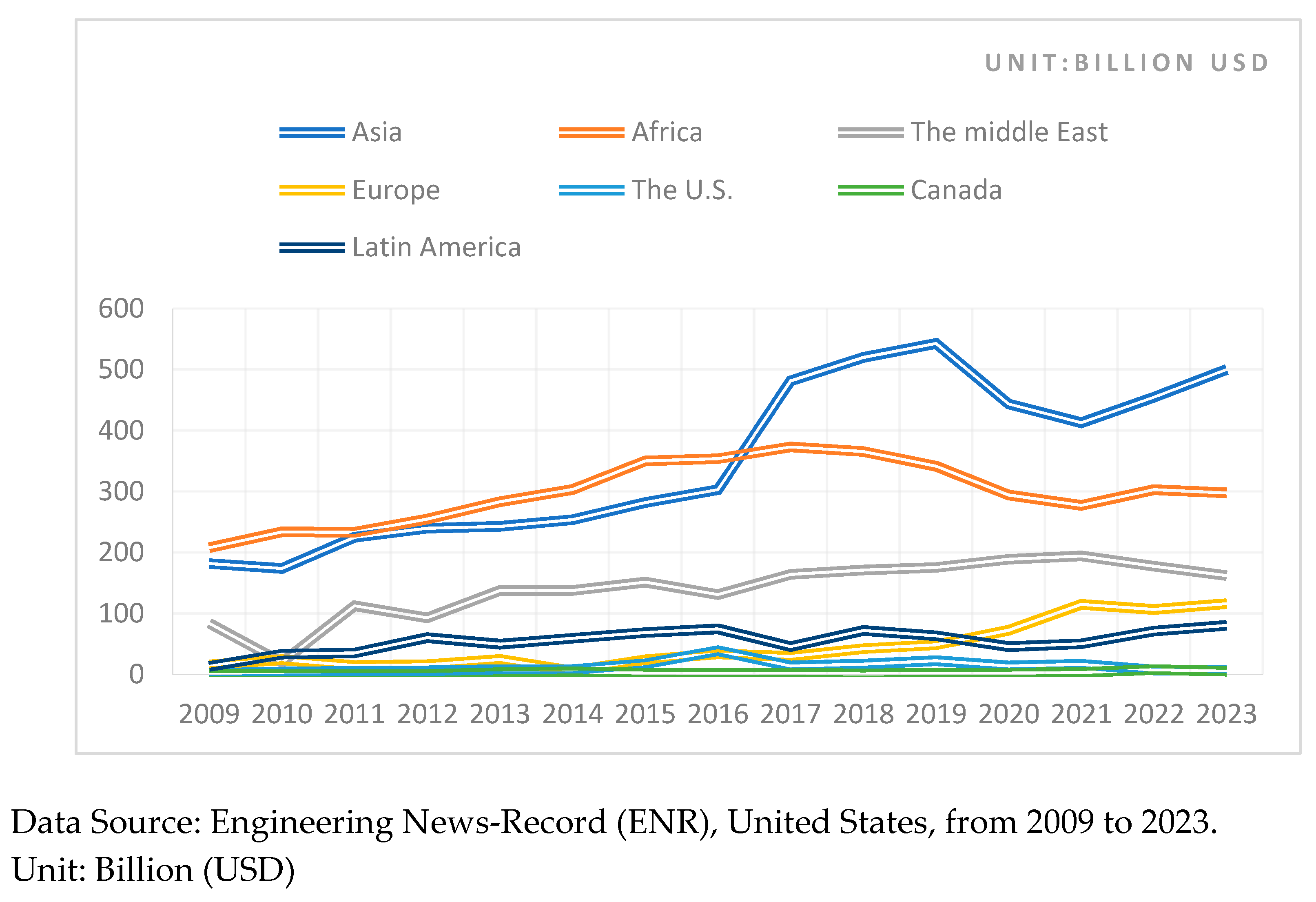
Figure 2.
Regional Distribution of International Business Revenue for Chinese ENR Top 225 Contractors in 2023.
Figure 2.
Regional Distribution of International Business Revenue for Chinese ENR Top 225 Contractors in 2023.
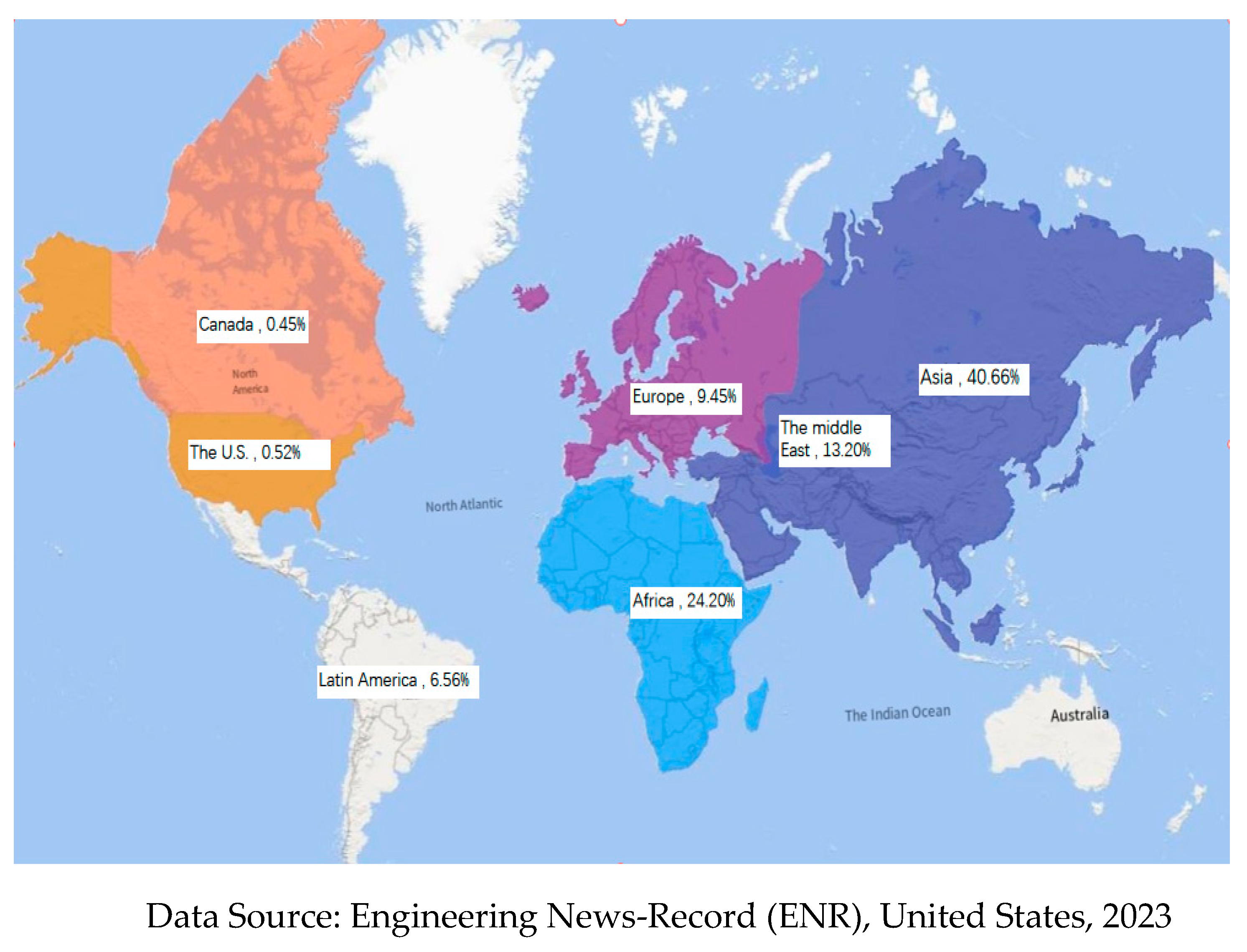
Figure 3.
An illustration of the connections between different organizations inside a social network.
Figure 3.
An illustration of the connections between different organizations inside a social network.
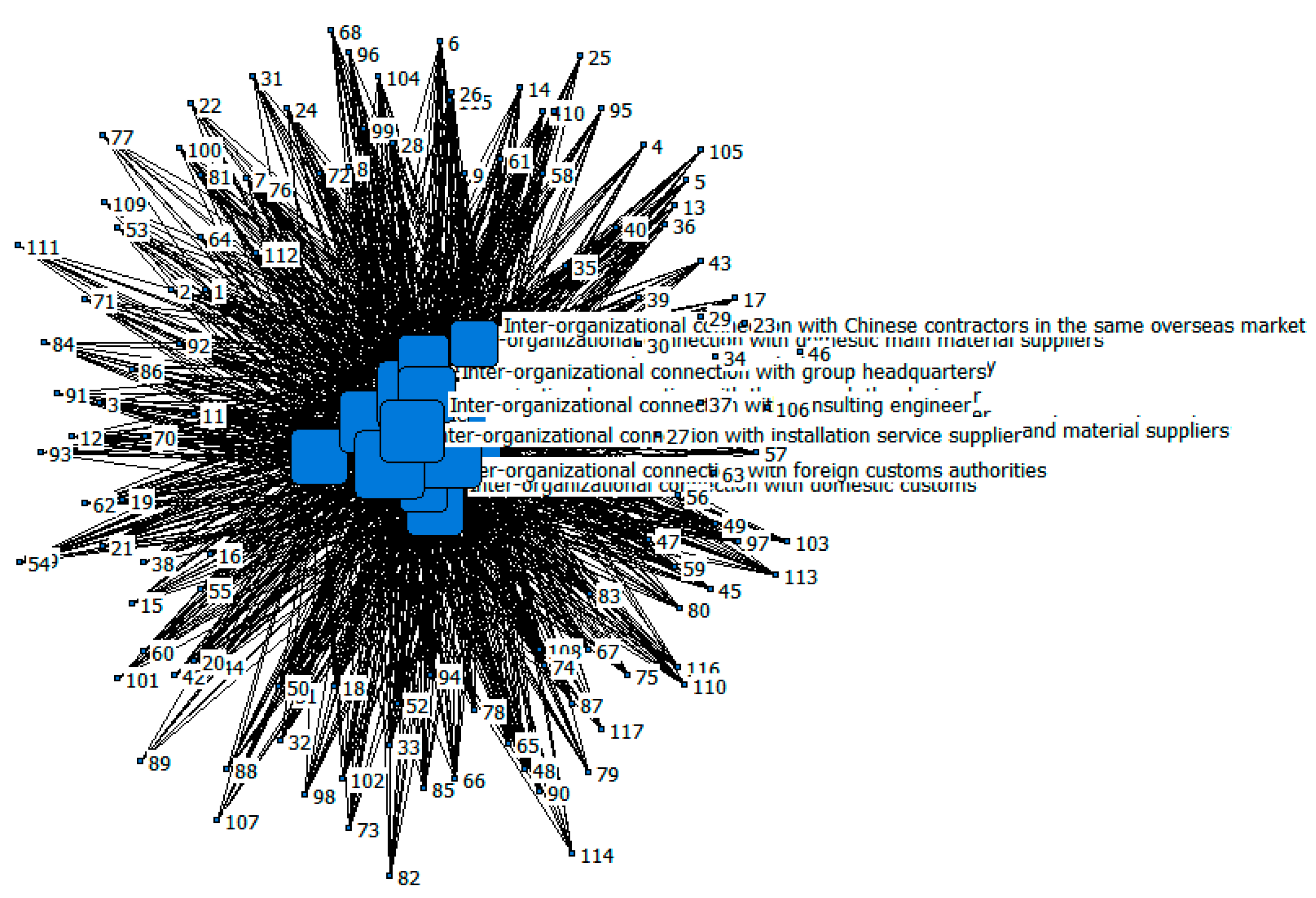
Figure 4.
An extended social network diagram showing the inter-organizational connections between stakeholders.
Figure 4.
An extended social network diagram showing the inter-organizational connections between stakeholders.


Table 1.
Stakeholders' intermediate centrality score for inter-organizational relationships.
| Stakeholder | Intermediate centrality | Ranking |
| Inter-organizational connection with the construction party | 623.777 | 1 |
| Inter-organizational connection with installation service supplier | 616.684 | 2 |
| Inter-organizational connection with logistic service provider | 579.404 | 3 |
| Inter-organizational connection with the owner | 565.026 | 4 |
| Inter-organizational connection with domestic equipment and material suppliers | 553.198 | 5 |
| Inter-organizational connection with consulting engineer | 551.606 | 6 |
| Inter-organizational connection with group headquarters | 512.523 | 7 |
| Inter-organizational connection with domestic customs | 502.360 | 8 |
| Inter-organizational connection with foreign main material suppliers | 487.756 | 9 |
| Inter-organizational connection with domestic main material suppliers | 449.98 | 10 |
| Inter-organizational connection with the designer | 421.677 | 11 |
| Inter-organizational connection with foreign equipment and material suppliers | 411.496 | 12 |
| Inter-organizational connection with Chinese contractors in the same overseas market | 396.808 | 13 |
| Inter-organizational connection with foreign customs authorities | 393.705 | 14 |
Disclaimer/Publisher’s Note: The statements, opinions and data contained in all publications are solely those of the individual author(s) and contributor(s) and not of MDPI and/or the editor(s). MDPI and/or the editor(s) disclaim responsibility for any injury to people or property resulting from any ideas, methods, instructions or products referred to in the content. |
© 2025 by the authors. Licensee MDPI, Basel, Switzerland. This article is an open access article distributed under the terms and conditions of the Creative Commons Attribution (CC BY) license (http://creativecommons.org/licenses/by/4.0/).
Copyright: This open access article is published under a Creative Commons CC BY 4.0 license, which permit the free download, distribution, and reuse, provided that the author and preprint are cited in any reuse.