

Submitted:
31 October 2025
Posted:
04 November 2025
You are already at the latest version
Abstract
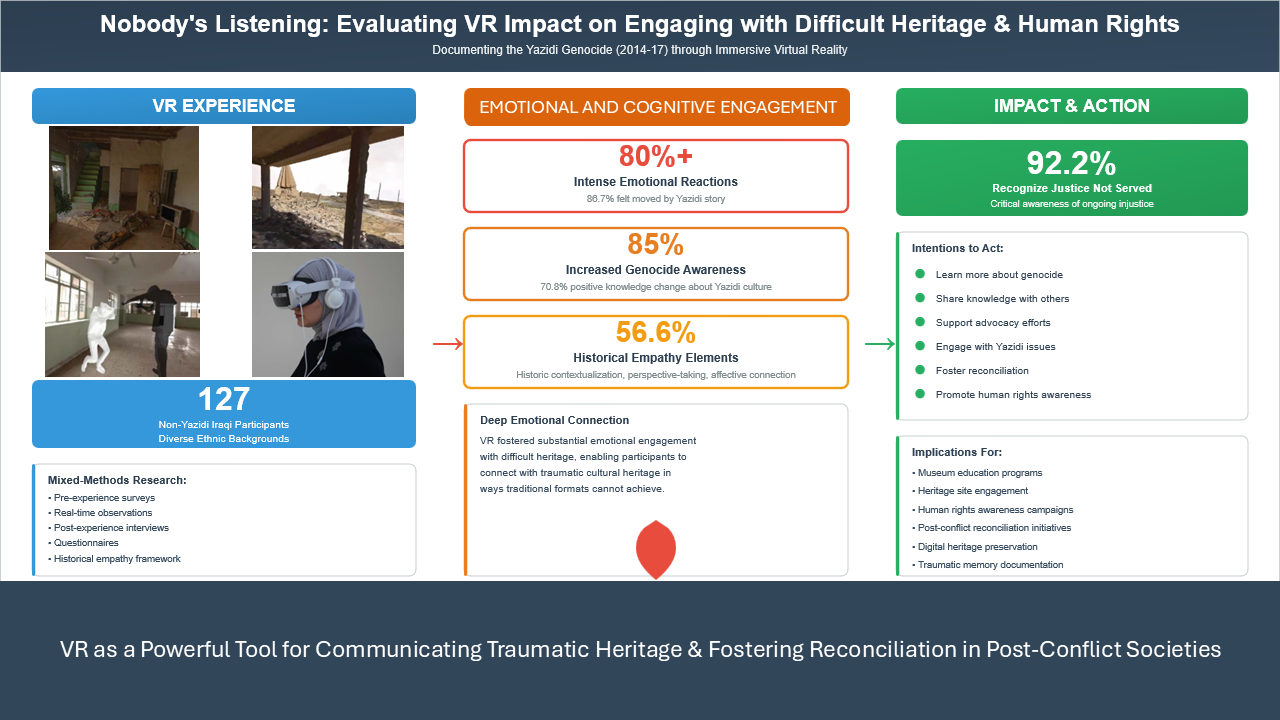
Immersive virtual reality (VR) offers promising approaches for engaging with difficult heritage and human rights issues, potentially fostering deeper emotional connections than traditional educational formats. This paper evaluates the impact of ‘Nobody's Listening’ (NL), an immersive VR experience documenting the Yazidi genocide in Iraq (2014-17). Through assessment of 127 non-Yazidi participants from diverse Iraqi ethnic backgrounds, we examined VR's effectiveness for emotionally engaging with difficult heritage, raising awareness of sensitive human rights issues, and inspiring positive action. Our mixed-methods approach combined pre-experience surveys, observations, and post-experience interviews and questionnaires, employing historical empathy theory framework to assess cognitive and emotional engagement. Results demonstrate significant impact across multiple dimensions: 85% of participants reported increased awareness of the genocide, with 70.8% describing positive knowledge change about Yazidi culture. Emotional engagement was substantial—over 80% experienced intense reactions to the VR experience, with 86.7% reporting feeling moved by the Yazidi’s story. Notably, 56.6% of significant impressions included elements of historical empathy (historic contextualization, perspective-taking, and affective connection). Furthermore, 92.2% of respondents believed justice had not been served in the Yazidi genocide, with many expressing intentions to learn more and support advocacy efforts. This research contributes empirical evidence for how immersive technologies can effectively communicate traumatic cultural heritage while fostering reconciliation in post-conflict societies, with implications for museums, heritage sites, and human rights education.
Keywords:
empathy
; cultural memory
; digital storytelling
; museum technology
1. Introduction
Education and awareness are crucial for preventing genocide and fostering peace and reconciliation [1,4,17,27]. These educational goals can be more effectively achieved through emotional engagement and experiential learning, which help increase attention and memory retention [19,22]. Neurobiology research correlates strong emotional reactions with the formation of long-term memories [32], and museum and visitor studies demonstrate that “emotions serve as a 'fixative' for memories” [11].
The emotional dimension of learning is particularly important when engaging with difficult heritage and human rights issues, where intellectual understanding alone may be insufficient to generate meaningful engagement. Immersive VR offers unique potential to promote a strong sense of presence and embodiment that enables users to ‘step into the shoes’ of others “who are culturally, temporally and/or geospatially distant” [5]. This cultural embodiment allows users to experience others’ realities through multiple senses, activating embodied cognition processes that are essential for inducing empathy, particularly in human rights contexts. Research in perspective-taking suggests that such embodied experiences can reduce psychological distance and increase compassionate response [18], particularly when enhanced with narratives [12]. Empathy has been recognized as an imperative component of successful social interactions [20] and a motivator of helping behaviors [2] toward disadvantaged groups [50]. In post-conflict societies where communities remain divided by trauma and competing narratives, such empathy-building technologies may offer valuable pathways for fostering cross-community understanding and reconciliation.
The immersive nature of VR technology and its facilitation of a sense of presence in simulated environments makes it particularly effective for storytelling and advocacy [38]. A 2020 study indicated that VR storytelling can bring about a positive shift in users’ human rights attitudes more effectively than 2D or traditional formats [5]. Despite the slow increase in VR-based experiences engaging with dark or difficult heritage and human rights discourses in recent years, systematic evaluations measuring the impact of these resource-intensive virtual experiences remain critically limited. Specifically, there is a lack of large-scale studies examining VR's effectiveness in post-conflict societies where difficult heritage remains contested. Despite growing interest in VR for difficult heritage interpretation, three critical gaps remain in current research: (1) a lack of large-scale empirical studies with diverse participant groups; (2) limited investigation of VR's effectiveness in post-conflict societies where difficult heritage remains contested; and (3) insufficient understanding of how specific VR design elements contribute to empathy and action. This study addresses these gaps through systematic evaluation of the ‘Nobody’s Listening’ (NL) VR experience with 127 participants from diverse backgrounds across Iraq.
NL is an immersive VR experience that formed the centerpiece of a mobile exhibition organized by human rights advocates and partner organizations across multiple Iraqi cities and other parts of the world. The exhibition aimed to raise awareness about the Yazidi genocide perpetrated by ISIS in Iraq (2014-2017) and to advocate for support and solidarity from national and international communities. The Yazidi genocide represents one of the most severe human rights violations of the 21st century, with thousands killed and thousands more displaced, kidnapped, or forced into sexual slavery by ISIS.
We conducted a systematic evaluation of the NL VR experience [31] with 127 users from diverse ethnic backgrounds across five cities in Iraq and its Kurdistan Region. In this paper we focus primarily on the effectiveness of immersive VR storytelling for: 1) emotionally engaging with difficult heritage, (2) raising awareness for sensitive human rights issues, and 3) inspiring positive action. Drawing on theories of historical empathy [10], embodied cognition [43], and perspective-taking [18], our study addresses the following research questions:
1. How effective is immersive VR storytelling in creating emotional engagement with difficult heritage among non-Yazidi Iraqi participants?
2. To what extent does the NL VR experience increase awareness and understanding of the Yazidi genocide?
3. How does the VR experience influence positive action?
4. What elements of the VR experience most effectively facilitate engagement with difficult heritage?
This systematic evaluation addresses a critical gap in empirical research on VR for difficult heritage, providing evidence-based insights for museums, memorial sites, and human rights organizations seeking to leverage immersive technologies for education and advocacy.
Our findings indicate that the NL VR experience had a high cognitive and emotional impact on the large majority of participants and inspired positive changes in attitudes and behavioral intentions regarding the Yazidi genocide. These outcomes confirm the strong potential of immersive VR, when coupled with an affective storytelling design, to promote human rights through difficult heritage experiences.
The remainder of this paper is structured as follows: Section 1 positions our work within the landscape of VR applications for difficult heritage. Section 2 presents an overview of the NL VR experience design and content. Section 3 presents our mixed-methods evaluation methodology, while Section 4 reports findings across four dimensions: learning, engagement, emotional connection, and attitude change. Section 5 discusses theoretical and practical implications, acknowledging limitations, and Section 6 presents conclusions and future directions.
2. Related Work
The expansion of XR technologies over the last decade has seen their increasing application for engaging users with heritage (including difficult heritage) and human rights issues. However, the effectiveness and ethical considerations surrounding these technologies for engaging with traumatic and dark historical events remain debatable and largely theoretical.
The ‘Last Goodbye’ VR experience from the University of South California Shoah Foundation virtually engages users with Holocaust survivors to educate them about Holocaust atrocities and human rights abuses. The experience immerses users into a 3D reconstruction of the Majdanek Nazi concentration camp in Poland, guided by the photorealistic avatar of an 87-year-old Holocaust survivor and eyewitness, Pinchas Gutter, who recounts his personal memories of the place where his family was murdered [13]. While online reporting and most user feedback suggests the application’s effectiveness in creating emotional connection and evoking empathy, scholars like Zalewska [52] question the epistemological and ethical implications of virtualizing Holocaust witness testimonies and site tours.
The United Nations’ (UN) ‘Clouds Over Sidra’ application represents another significant use of VR for engaging with human rights and humanitarian crises. This experience follows the daily struggles of a Syrian teenage girl living in the Za’atari Refugee Camp in Jordan. Originally developed to support the Millennium Development Goals (MDG) Advocacy Group’s effort to build resilience in vulnerable communities, it has since been used in various advocacy campaigns, including support for children’s education in crisis situations [49]. At its initial launch at a high-level donor meeting, the event raised US$3.8 billion— over 70 percent more than projected [40]. While media reports [3] and industry blogs [23] attribute the increased donation level to the empathy-eliciting power of the VR experience in a humanitarian context [18], no systematic evaluation or empirical evidence supports or refutes these claims.
The Global Nomads Group’s (GNG) ‘Siroun’ experience employs VR to teach high-school students about the Armenian Genocide. This experience transports users to a rural Ottoman village in 1915, exposing them to the “choices and experiences of everyday people caught at the crossroads of civil war and genocide” [15]. The experience is accompanied by educational resources for high-school teachers to develop learning activities and discussions around human rights topics [14]. However, beyond online coverage and anecdotal evidence from student users, systematic evaluations of this project’s impact, lessons learned, and ethical considerations remain scarce in scholarly literature. This highlights the need for more rigorous experimental and mixed-methods evaluation approaches.
Recent systematic reviews have strengthened the empirical foundation for VR's impact on empathy and prosocial responses. Lee et al.'s systematic review of empathy measurement in head-mounted display VR experiences identified consistent emotional responses across diverse contexts, though highlighting methodological inconsistencies in assessment approaches [25]. Their analysis suggests that embodied first-person experiences produce stronger empathic responses than observational formats, particularly when measuring immediate emotional reactions. These findings align with Canet and Sánchez-Castillo's meta-analysis, which found moderate to strong effects (d = 0.51-0.73) of immersive experiences on prosocial attitudes compared to traditional media formats [6]. However, both reviews note significant variation in effect durability, with limited longitudinal evidence beyond immediate post-experience assessments. Our study addresses these methodological gaps by employing mixed-methods evaluation that captures both immediate responses and behavioral intentions, while situating the research in a post-conflict context where personal histories may mediate empathic engagement. Unlike previous research that has often relied on convenience samples of university students or Western audiences, our study engages participants from various ethnic backgrounds in Iraq, including communities with their own histories of persecution and conflict. This approach allows us to examine how personal histories, and cultural contexts mediate the experience of difficult heritage through VR.
Experimental research comparing immersive experiences (VR-based and 2D-screen) and written journalism on human rights attitudes found that VR can elicit positive shifts in users’ human rights attitudes more effectively than other formats [5]. It concluded that VR was statistically more efficient at this than 2D and, in contrast, comparable written content elicited no attitudinal change in participants [5]. As research increasingly suggests VR’s power to elicit empathy [42], debates about ethical implications continue to unfold. This highlights the need for more empirical data and systematic evaluations when using VR in sensitive contexts of difficult heritage and human rights abuses [50]—precisely the gap our study of the 'Nobody's Listening' experience aims to address.
3. The Nobody’s Listening VR Experience
The Nobody’s Listening (NL) VR experience combines art, technology, and advocacy to memorialize and educate about the Yazidi genocide by ISIS, with the ultimate aim of raising awareness and encouraging recognition, justice, and action for the Yazidi community and other minorities in Iraq. Almost a decade after the ISIS genocide began in 2014, many members of the Yazidi ethnoreligious minority in Iraq remain displaced and living in dire circumstances in camps [34].
The NL experience aims to (re)connect non-Yazidis with the past and continuing struggles of the Yazidis. Using Oculus Quest VR headsets, the experience immerses users in the sights, sounds, and stories of the 2014 attacks against the Yazidi community through a combination of technical elements: 6DoF (Degree of Freedom) scenes from photogrammetry of actual sites shot in Iraq, 360° footage of destruction caused by ISIS, 3D animations, soundscapes, sound effects, and first-person storytelling.
Several techniques enhance the sense of realism and immersion in the virtual environment: Static 360° videos and photos of real scenes are enlivened with virtual elements: trees swaying in the wind, ceiling fans swaying, clouds drifting, and time-lapse animations of nightfall with flying fireflies. The soundscapes create acoustics similar to those of physical environments, while animated silhouettes of Yazidis and ISIS fighters sensitively recreate scenes of atrocities complementing the audio narration by the main characters [30] (Figure 1). A video excerpt from the VR experience illustrating these immersive elements is provided as supplementary material.
The experience begins with a Yazidi woman’s voice introducing users to the history, culture, and religion of the Yazidi community and their geographic and historic ties to Sinjar Mountain, their sanctuary throughout their difficult history. The female narrator then guides users through the ruins of Kocho village, one of the hardest-hit Yazidi communities during the genocide. Users navigate between virtual scenes by physical movement, which is paralleled in the virtual world as moving through images of Yazidi survivors.
After the introduction, users can choose to listen to the story of one of three characters, each created based on a composite of real experiences:
1. Shereen, a Yazidi woman who was abducted and sexually enslaved (see supplementary video)
2. Ahmed, the brother of the Yazidi woman, who survived an ISIS massacre, or
3. a local ISIS fighter who attacked the village.
Each character recounts events, emotions, and crimes they experienced, witnessed, or (in the case of the ISIS fighter) committed. The 3D reconstructions enable users to explore each location as if experiencing it firsthand. The experience concludes by immersing users in the dire living conditions that many Yazidis face today, ending with the female narrator’s call for justice and action to help the Yazidi community. While designed to last approximately 12 minutes, users can choose to remain longer and further explore the virtual scenes [31].
The experience storyline blends factual information about Yazidi culture and tradition with real stories from publicly accessible testimonies of Yazidi survivors and interviews with imprisoned ISIS fighters. Given VR’s potential to induce strong emotional reactions and the violent nature of the genocide events, the development team carefully planned the content selection and presentation.
Ethical considerations were central to the development process. The project team consulted a clinical psychologist and a Yazidi community-informed legal analyst and had the storyline script also reviewed by several prominent human rights organizations based in the Middle East, the USA, and the UK. To avoid emotional distress and comply with the ‘Do No Harm principle,’ the VR experience excludes overly graphic content (such as blood or dead bodies), and the narration avoids direct mention of sexual violence, instead implying it through the characters’ stories.
This carefully designed experience formed the basis of our systematic evaluation study, which examined its effectiveness for engaging users with difficult heritage and inspiring action, as described in the following section.
4. Evaluation Methodology
To systematically assess the impact of the NL experience, we carried out an assessment with NL users from different socio-economic and ethnosectarian backgrounds across Iraq. The assessment aimed to empirically investigate if and how the NL VR experience achieved the exhibition’s aim of raising awareness about the Yazidi genocide. Our research design followed a mixed-methods design involving both quantitative and qualitative data, collected through a) a pre-experience survey, b) NL VR experience, c) a post-experience quantitative and qualitative assessment (through an interview and questionnaire). Detailed instruments are provided in Appendix A. This mixed-methods approach was based on the EMOTIVE research project’s methodology [9,36]. This design allowed us to triangulate findings across multiple data points while mitigating potential biases inherent to sensitive subject matter research.
4.1. Participant Recruitment and Sample
The study was conducted across five Iraqi cities: Sulaimani, Baghdad, Erbil, Duhok, and Kirkuk. Three research teams carried out data collection following standardized protocols provided in both English and Arabic.
The final sample consisted of 127 participants distributed as follows:
- Sulaimani: 48% (n=61)
- Baghdad: 16.5% (n=21) - data from six additional participants were excluded due to incomplete responses
- Erbil: 11.8% (n=15)
- Duhok: 11.8% (n=15)
- Kirkuk 11.8% (n=15)
Each data collection session lasted an average of 45 minutes per participant, including VR setup, experience, and assessment activities.
4.2. Participants’ Profile
4.2.1. Demographic Characteristics
The sample had a relatively balanced gender distribution (54.3% male, 45.7% female) and primarily consisted of young adults (42.5% aged 25-34 and 29.9% aged 18-24), broadly aligning with Iraq’s predominantly young population [46]. Only 4.8% of participants were 55 years or older.
Participants were generally well-educated (68.5% with bachelor’s degrees or higher) and predominantly urban (91.1% residing in cities). The sample reflected Iraq’s diversity with some limitations in representation:
- Ethnicity: 67% Kurdish, 22% Arab, and smaller percentages of other ethnic groups (e.g. 1 Kakai participant)
- Language: 70.8% reported Kurdish as their native language, 26.2% Arabic, 1.5% Turkmen and 1.5% English
- Religion: 30% identified as Muslim without sectarian specification, 34% as Sunni Muslim, 4% as Shia Muslim, and over 30% did not select any religious association
4.2.2. Prior Knowledge and Attitudes
While 92% of participants reported some knowledge about the ISIS genocide of Yazidis, only 22% expressed confidence in their understanding of the 2014 events. This knowledge gap was evident in that:
- -
- 54.3% reported knowing or having met Yazidis
- -
- Only 39.4% indicated familiarity with Yazidi culture
- -
- 22.8% had visited Yazidi towns or villages (Lalish, Sharya, Shingal, etc.)
- -
- 65% expressed empathy toward Yazidis, though only 25% could articulate specific details
Interestingly, participants generally rated their own knowledge of the Yazidi genocide higher than that of the general Iraqi population.
4.2.3. Personal Experiences with Conflict
Most participants (89%) had not experienced displacement in the previous seven years. However, 22% self-identified as victims of ISIS, with impacts including:
- -
- Death of immediate family members due to ISIS (13.4%)
- -
- Death of family members from security forces retaking areas from ISIS
- -
- Displacement due to ISIS campaigns (3.9%)
- -
- Property destruction (3.9%)
- -
- Serious harm from ISIS such as kidnapping or imprisonment (3.1%)
4.2.4. Technology Familiarity
While over 60% of participants had heard about VR technology, only 26.8% had previous experience using it. Among those who expressed feelings about VR (n=45), over 90% reported positive attitudes toward the technology. Approximately one-third (33.9%) considered themselves tech-savvy to some degree.
4.3. Data Collection Instruments
4.3.1. Pre-Experience Survey
The pre-experience self-completion survey (Appendix A.1) collected data about:
1. Demographic profile: Age, gender, educational level, occupation, religious/ethnic affiliation, and place of residence.
2. Prior knowledge and attitudes: Awareness of Yazidi culture and the genocide, relationship with Yazidi people, and visitation to Yazidi communities.
3. Personal experiences: Any personal or family experience with displacement (in general) and/or experiences related to ISIS.
4. Technology familiarity: Previous exposure to and comfort with VR technology.
The survey utilized a combination of multiple-choice questions, Likert scales, and targeted open-ended questions to establish baseline measurements.
4.3.2. VR Experience Setup and Technical Considerations
Participants experienced the NL VR exhibition using Oculus Quest VR headsets in controlled environments. Each session lasted approximately 75 minutes and included:
- Completing pre-experience survey.
- VR equipment sanitization as part of a safety measure.
- VR boundary set up.
- Brief orientation to the VR equipment and basic navigation instructions.
- VR experience time with data collectors’ presence to address any technical issues and observe reactions.
- Post-experience interview (Appendix A2), followed by a self-completion questionnaire (Appendix A.3).
Throughout the data collection sessions, we monitored technical issues that might influence participants' experiences:
- Only 20% of participants self-reported issues with the VR headset.
- A similar percentage (20%) reported difficulties with navigation in the virtual world—primarily related to walking through virtual 'paintings' to progress between scenes or concerns about physical movement while immersed.
- Approximately 25% of participants experienced one or more symptoms of VR-induced discomfort, with the most common being blurred vision, general discomfort, and dizziness with eyes open, followed by sensations of head fullness, nausea, difficulty focusing, and vertigo.
Despite these challenges and participants being reminded of their option to withdraw, no dropouts due to VR sickness occurred. Notably, even participants who experienced physical discomfort generally expressed enthusiasm and interest in both the technology and the overall VR experience.
4.3.3. Post-Experience Quantitative Assessment
The post-experience questionnaire (Appendix A.3) included 18 statements rated on 5-point Likert-scales (ranging from “strongly disagree” to “strongly agree”) and one multiple-choice question. These instruments adapted from the EMOTIVE research project [9,36] and other validated measures [45,47,51], assessed:
1. Awareness and cognitive learning: Knowledge acquisition and understanding of the Yazidi genocide and cultural context
2. Affective learning: Overall engagement and emotional connection with the narrative and characters.
3. Perception and attitudes: Changes in perspectives regarding the Yazidi community and their experiences
Additionally, we included a multi-select question to assess potential VR motion sickness symptoms experienced during the NL VR exhibition.
4.3.4. Post-Experience Qualitative Assessment
Semi-structured interviews (Appendix A.2) and self-completion questionnaire conducted after the VR experience (Appendix A.3) collected richer data about participants’ reactions, including emotional engagement and empathy. Open-ended interview questions were primarily based on Endacott and Brooks’ ‘historical empathy model’ [10] which facilitates “a cognitive process that leads to an affective engagement with historical facts and figures in order to better understand and contextualize past events, social issues, experiences, and actions” [37]. Historical empathy goes beyond understanding the past by promoting a more personal and rich engagement with heritage.
The interviews explored three dimensions of historical empathy:
1. Historical contextualization (critical reflection on historical facts
2. Perspective taking) deeper understanding of different perspectives of people in the past)
3. Affective connection (establishing emotional connections with these people), “prompting users to understand them as individuals with their own emotions, values and worldview” [37].
Additional questions addressed participants’ navigation and interactions in the virtual world and any technical difficulties encountered while using the VR headset.
4.4. Data Analysis Methods
4.4.1. Quantitative Analysis
Quantitative data from the pre- and post-experience surveys were entered and analyzed using Microsoft Excel and IBM SPSS, with simple descriptive statistics calculated to summarize the findings.
4.4.2. Qualitative Analysis
Qualitative data from the interviews were audio-recorded, transcribed, and translated when necessary. We used thematic analysis to identify recurring themes and patterns in participants' responses. Interview data were coded manually with an initial coding framework based on the historical empathy model, expanded iteratively as new themes emerged from the data.
4.5. Quality Assurance and Ethical Considerations
4.5.1. Data Quality Measures
To address potential response bias, particularly social desirability in research on sensitive topics like genocide and other research-recognized biases [35], we implemented several quality assurance measures:
1. Triangulation: We used multiple data sources (quantitative and qualitative) to verify responses and detect inconsistencies.
2. Observational data: We documented participants’ non-verbal reactions and behaviors during the VR experience and speaking tone during the interviews (with consent).
3. Quality control: Applied rigorous quality checking throughout data collection, transcription, and coding processes.
4. Standardization: Trained researchers through online and in-person training workshops and provided detailed written protocols.
4.5.2. Ethical Protocols
The study was conducted in accordance with international ethical standards for research involving human participants, including guidelines for sensitive research on genocide and human rights:
- Voluntary participation: All recruitment was voluntary
- Informed consent: Participants received full briefings in their preferred language about the study objectives, VR content, potential risks including motion sickness and emotional distress, before providing written consent in one of the three languages (Kurdish, Arabic, or English) based on a participant’s preference. Special attention was given to the sensitive nature of the genocide content, with clinical psychology consultation informing the research design and participant support protocols.
- Right to withdraw: Participants were reminded of their right to withdraw at any time without penalty from VR immersion or any part of the data collection process.
- Consent for recording: No audio recordings, photographs, or observations were conducted without explicit written consent.
- Data protection: All collected data were anonymized.
4.6. Limitations
Several limitations should be considered when interpreting the results:
- 1)
- Geographical constraints: Data collection was limited to five Iraqi cities, with nearly half (48%) from Sulaimani, limiting generalizability across Iraqi’s diverse regions.
- 2)
- Sample representativeness: The predominance of Kurdish (67%) and well-educated (68.5% holding a BSc or higher) participants may not fully represent all Iraqi populations, particularly those in remote or conflict-affected areas.
- 3)
- Technical barriers: Varying levels of familiarity with VR technology among participants (only 26.8% had prior experience) may have influenced their experience and engagement with the content.
- 4)
- Translation challenges: Working across multiple languages required translation of instruments and responses, potentially introducing subtle shifts in meaning.
- 5)
- Social desirability bias: Despite our efforts to minimize bias, participants may have provided responses they perceived as socially acceptable given the sensitive nature of the topic.
- 6)
- Short-term assessment: The study captured immediate reactions to the VR experience but could not evaluate long-term attitudinal or behavioral changes.
Future research would benefit from including larger samples from diverse ethnic and cultural backgrounds as well as undertaking longitudinal follow-up studies to investigate the long-term impact of the experience on participants.
5. Results
Building on the methodology described above, this section presents our findings from both quantitative and qualitative data analysis. Our analysis revealed substantial impact of the NL experience across four key dimensions: (1) learning and understanding about the Yazidi genocide, (2) engagement with the VR experience and content, (3) emotional connection, and (4) attitudinal and behavioral intentions. Below, we present quantitative findings complemented by qualitative insights that illuminate how participants experienced and processed the VR content.
5.1. Learning and Understanding
The first dimension of our analysis focused on changes in participants’ knowledge and understanding of the Yazidi genocide following their VR experience. We collected data through both Likert-scale questions (n=106) and follow-up structured interviews (n=127).
Responses to the Likert-scale statements were measured on a 5-point scale ranging from 1 (Strongly disagree) to 5 (Strongly agree). As shown in Figure 2, participants reported substantial cognitive benefits from the NL VR experience. Four out of five statements related to learning and understanding received high average scores (over 4.0), with over 70% of respondents either agreeing or strongly agreeing that the VR experience enhanced their knowledge about the Yazidis genocide.
5.1.1. Qualitative Insights on Knowledge Change
Qualitative data strongly corroborated the quantitative findings, with 70.8% of interview respondents (n=120) confirming positive knowledge change regarding Yazidi culture. The highest rated statement (mean=4.37, SD = 0.708) addressed enhanced awareness of the Yazidi genocide with over 85% participants agreeing or strongly agreeing that the VR experience effectively communicated the historical context and significance of these events.
Comparatively, cultural understanding showed greater response variability (mean=4.08, SD=1.039)), suggesting that the experience was more effective at conveying factual information about the genocide than deeper cultural insights.
Participants attributed this change primarily to gaining new previously unheard information or details and to becoming more aware of the Yazidi genocide events by ISIS, their ongoing struggles, culture, and way of living. Elements of historical empathy (historical contextualization (58.3%), perspective taking (11.8%), and affective connection (8.7%) with the stories and characters were evident in the large majority of the answers. Additionally, 40.5% of 116 interview respondents (n=47) said that the experience changed their previous knowledge and impressions about ISIS. Previously unheard details, media coverage limitations, and the intensity of the ISIS crimes and cruelty they learned through the VR experience were the main items reported in what changed in participants’ previous knowledge and impressions about ISIS. As participant P88 said:
“They [ISIS] further intensified their crimes. I am not saying that through media I did not know what ISIS did, but I had seen things in fragmentation. But now, I can say that ISIS destroyed a region and the life of a group of people.”
Less than 15% of these responses demonstrated historical empathy elements (specifically, perspective taking and affective connection), significantly lower than the responses about Yazidi knowledge change. With an average scoring of 3.64, participants were less positive and more divided (std. deviation of 1.236) in their scorings for feeling challenged and provoked during the VR experience. It is likely that the meaning of this statement was not clear to many since answers to other questions in the questionnaire and structured interview suggest strong cognitive and emotional reactions to the VR experience that we discuss later.
5.1.2. Role of Surprise in Learning
Of the 100 participants who addressed this question during interviews, more than 85% indicated being surprised by some aspects of the VR experience or its stories. Surprise has an important role in explicit and incidental learning as well as the process of knowledge updating [26]. When asked to specify the source of their surprise, four themes emerged from participants’ open responses:
- Only 13.5% of respondents directly identified the VR technology itself as the source of the surprise. Of those, most referred to the immersive nature of the experience and its contribution to making the experience realistic: “I felt I was right there inside the events because of the VR.”
- Half of the respondents attributed their surprise to newly discovered historical, cultural, and genocide-related information presented in the stories, as well as how these narratives were communicated both verbally and visually.
- Another 20.2% of participants specifically attributed their surprise to the characters’ testimonies, actions, or experiences portrayed in the VR environment. Examples include: “It was that particular information, that nobody has been prosecuted, and those who have been prosecuted are for other crimes” and “How the women covered their face with dirt and wounded themselves to be less attractive.”
- Generic responses constituted 16.3% of answers, with participants referring to overall impressions rather than specific sources of surprise, such as: “How despite all their bitter experience, they are still continuing and wanting to pass their message to others. Their resilience is a really nice thing.”
Among participants who did not report being surprised, many appeared to misinterpret the question, associating surprise only with positive feelings rather than general unexpectedness, as illustrated by: “I would not call it a surprise because it is such a sad experience that does not make me surprised but very sad.”
5.1.3. Character Selection and Perspective-Taking
Among the 119 participants who responded to this question, the majority (60.5%) chose to follow Shereen, the Yazidi woman’s character. Ahmed, the Yazidi man (Shereen’s brother) was selected by 26.1% participants, while only 13.4% chose to follow the ISIS fighter’s storyline. When asked why they made their selection, participants cited various motivations:
- Gender identification of curiosity (“wanting to see the experience from the same (or different) gender perspective”)
- Information-seeking (“learning new information that I did not know about from the news”)
- Emotional engagement with a particular character. One notable response came from a male participant who selected the ISIS fighter character, explaining: “We share similar religious exposure that sometimes blinds us towards the truths.”
- Accidental selection
We also investigated how participants cognitively processed their selected character’s experiences and motivations. The responses revealed distinct patterns based on character selection:
Participants who selected Yazidi characters (woman or man) identified a range of emotions that were either explicitly stated or implicitly in the narrative:
- Lost dreams and opportunities
- Feelings of betrayal
- Helplessness
- Fear of history repeating itself
- Defiance and resilience
Participants who selected the ISIS fighter approached the character predominantly from an outsider’s perspective, attributing his actions and feelings to:
- Emotional detachment
- Indoctrination
- Misguided sense of righteousness
- Unresolved hatred
- Financial motivation (love for money)
5.2. Engagement
The experience elicited a high level of engagement across intellectual, spatial, and temporal dimensions, with an average score exceeding 4 (out of 5) for related statements (Figure 3). Specifically, over 80% of participants either “agreed” or “completely agreed” that The VR experience stimulated their thinking (intellectual engagement), transported them to another world (spatial engagement), and caused them to lose track of time (temporal engagement).
5.2.1. Bodily and Emotional Responses
To assess embodied engagement, participants were asked immediately after finishing the VR experience to identify where in their bodies they primarily felt this. Among the 118 respondents, the most common responses were mind/brain (29.7%) and heart (28.0%), followed by eyes (17.8%), feet (8.5%), legs (7.6%), chest (5.1%), stomach (1.7%), arms (0.8%), and toes (0.8%). One participant reported feeling “out of body”, suggesting complete immersion in the virtual environment. Among those who identified mind/brain, the majority demonstrated a high level of reflection and empathy towards what the Yazidi community had endured.
We observed that participants’ verbal descriptions sometimes revealed emotional responses that transcended their selected body part. For instance, many who chose “mind/brain” described intense emotional reactions rather than purely cognitive engagement. These emotional responses manifested physically through crying, shivering legs, kneeling, rapid heartbeat, hand and head gestures, muttering, stomach pain, and breathing difficulties. Despite these intense reactions, only one participant chose to discontinue the VR experience, suggesting that while emotionally challenging, the experience remained within most participants’ tolerance thresholds.
Technical aspects of VR also affected physical engagement, with some participants reporting disorientation and difficulty moving. Several requested physical assistances from researchers while choosing to continue the experience.
5.2.2. Identification with Characters
Of the 127 participants, 31.5% (n=40) reported relating to characters in the experience, with 26 identifying with the Yazidi woman and 11 with the Yazidi man. Notably, Kurdish participants frequently drew connections between the Yazidi experiences and events from Kurdish history, including the Anfal campaigns, Halabja genocide, the 1991 displacement, and persecution under Saddam’s regime. These connections demonstrate how personal or cultural history can mediate engagement with difficult heritage narratives.
5.2.3. Detail Recall and Reflection
Participants demonstrated high attentiveness through their recall of vivid details, visual information, and spoken words and narratives from the VR experience. This engagement extended beyond the immediate experience, with many participants becoming notably reflective and talkative afterwards. This observation during pilot testing informed our protocol design, leading us to conduct interviews immediately after the VR experience, before administering questionnaires, to capture these fresh reflections.
5.3. Emotional Connection
Participants demonstrated strong emotional connections to the VR experience, with over 70% indicating emotional engagement with the stories and characters. The highest average score (4.43 out of 5, SD=0.743) was for the statement “I felt moved by the story of the Yazidis’ experience and their genocide” (statement 3.6) (Table 3) with 86.7% of participants strongly agreeing or agreeing, 12.3 neutral, and no participants disagreeing (Figure 4).
5.3.1. Types and Intensity of Emotional Responses
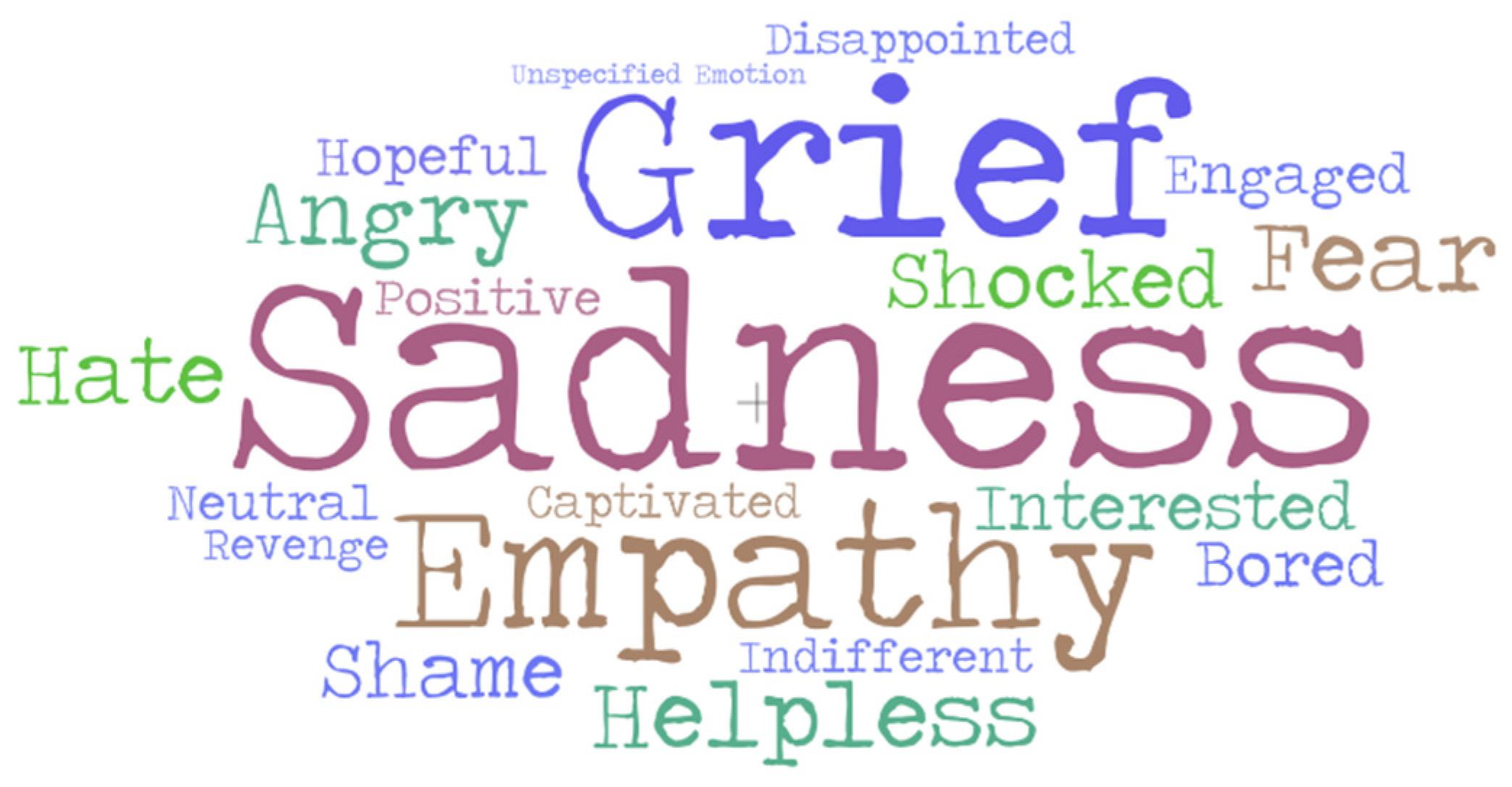
Interview data revealed intense emotional responses among over 80% of participants, with predominant emotions that included empathy, sadness, grief, despair, fear, anger, helplessness, pain, interest, and shock often reported in combination. One participant captured this visceral impact: “My hands were shivering, and my feet felt as if they were not standing on the ground. I felt I was a soul without a body”. Another noted: “Certainly it [the VR experience] will stay with me for a long time. The fear, stress, and worries that I went through were very strange. I don't think I was as scared in my whole life.” The word frequency visualization in Figure 5 illustrates this emotional landscape.
5.3.2. Emotionally Resonant Scenes
When asked to identify the most emotionally engaging parts of the experience, participants highlighted various scenes, suggesting different elements resonated with different users. Among the 120 respondents to this question:
- 20.8% identified the scene depicting the forced separation of a Yazidi mother and daughter by an ISIS fighter
- 13.3% mentioned the destroyed house of the Yazidi woman where she recalls her pre-ISIS family life and expresses her fear about ISIS approaching their village
- 10.8% each cited the school (now a memorial for dead and missing Yazidis) and the tent (showing displaced Yazidis’ living conditions)
- Smaller percentages noted the valley, the bus transporting Yazidi women to abduction sites, and the ISIS house.
- 30.85% did not specify a single part, instead referring to the whole experience as emotionally impactful
5.3.3. Factors Influencing Significant Impressions
Over 85% of participants reported that the VR experience, either in whole or part, made a significant impression on them. Analysis of their descriptions revealed that:
- 56.6% of responses included elements of historical empathy (historical contextualization, perspective taking, and affective connection)
- 44.1% highlighted the effect of different emotions as significant factors.
- Only 27.6% focused on the VR technology itself
These findings suggest that participants connected primarily with the narrative content rather than the technological aspects of the experience, with historical empathy and emotional engagement serving as the primary drivers of impact.
5.4. Attitudes and Values
This section examines how the VR experience influenced participants’ attitudes and values regarding the Yazidis, ISIS, and the genocide.
5.4.1. Quantitative Measures of Attitudinal Change
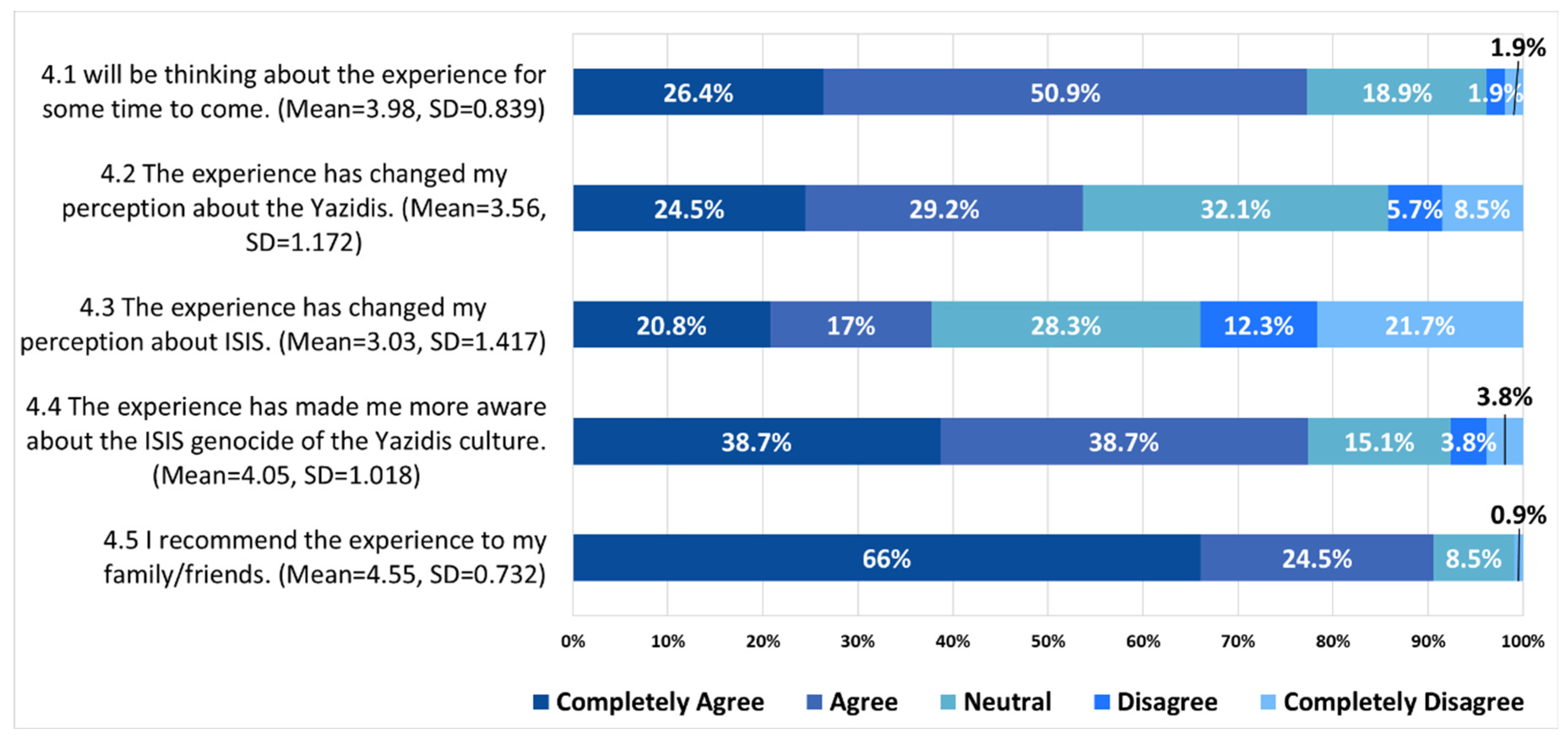
Statements related to changing perceptions of Yazidis and ISIS (statements 4.2 and 4.3) received relatively lower average scores (neutral to slightly above) (Figure 6) compared to statements in previous sections. This may be attributed to two factors: participants’ confusion about what constituted a “change of perception”, pre-existing empathy towards Yazidis (reported by 65% of participants) alongside already negative impressions of ISIS.
Despite these moderate scores on perception change, over 70% of participants agreed or completely agreed that they would continue thinking about the experience (statement 4.1, mean=3.98). Furthermore, over 75% reported increased awareness of the ISIS genocide of Yazidis culture (statement 4.4, mean=4.05).
Notably, the statement “I would recommend the experience to my family/friends” received the highest average score (4.55) and second-lowest standard deviation (0.732) among all questionnaire statements. This strong endorsement suggests high satisfaction and potential for wider impact through social diffusion.
Figure 6.
Distribution and summary statistics of participant Attitudes and values after the VR experience (N=106).
Figure 6.
Distribution and summary statistics of participant Attitudes and values after the VR experience (N=106).
5.4.2. Qualitative Insights on Moral and Ethical Responses
Interview data provided deeper insights into participants’ attitudes towards the various actors in the genocide. When asked what they would say to an ISIS fighter, responses fell into three categories: condemnation of action, questioning motives, and advocating for respect across different backgrounds.
Regarding the families of missing Yazidis, the majority of responses demonstrated high level of sympathy and affective connection. Many participants expressed difficulty imagining the psychological trauma experienced by these families, with one noting: "I think they must be in psychological torture, stress, and worries every day.” Some participants connected from the Yazidi experience to their own past traumas, as exemplified by one Kurdish participant who stated:
“As I told you, in 1991 [referring to the Kurdish mass displacement], I got disconnected from my mother, sister, and brothers. I met them again after a few days on the border. What Mr. Shamo went through, I had gone through it 30 years ago and our politicians are doing it to us.”
Similarly, when asked what they would say to the Yazidi community, participants expressed strong emotional support, condemnation of ISIS, and encouragement for seeking justice. Representative responses included: “I wish they live in peace and security. They deserve compensation for all of this”; “I would tell them you are part of this society with all your traditions, and you deserve a dignified life with all your rights”; and “Don’t stop telling your stories to us and whatever you can just to punish ISIS.”
5.4.3. Perspectives on Justice and Forward Action
An overwhelming majority (92.2%) of 103 respondents believed justice had not been served in the Yazidi genocide. When asked what should be done, participants proposed multiple avenues:
- Legal justice for victims and prosecution of perpetrators
- Financial, psychological, and emotional compensation
- Improvement of quality of life and reconstruction of Sinjar
- International recognition of the genocide and Yazidi culture
- Raising local awareness about Yazidi culture
- Facilitating reconciliation processes
The following are some of the responses: “It is very important to gain international recognition for their cause. We think their cause has been internationalized, but very little has been done for them in comparison to all that they [Yazidis] have endured” and “Recognizing this as a genocide and prosecuting the perpetrators.”
5.4.4. Self-Reported Impact and Long-Term Intentions
Over 80% of respondents reported changes in how they felt about aspects of the Yazidi genocide, clustering into four main categories:
- Enhanced knowledge and awareness (“Whatever knowledge I had before was from news and reading. But from now on if you talk about them [Yazidis], I will remember this experience”
- Nuanced perspectives, including ISIS members’ motivations (“Imagine being a kid and they teach you to carry a rifle to kill people and they say this is the religion and you have to be this way. I have thought about that a lot. Maybe it’s not their (I mean ISIS kids’) fault”)
- Appreciation for their own circumstances (“I became more grateful for the life I have”)
- Action motivation (“I just wish this experience does something real for these people and not just a one-day activity. I hope that one day I hear that what we did today had changed something”; “I will read more about their culture, how they lived”.
These categories align with Mezirow's transformative learning theory [29], which describes how “disorienting dilemmas” can lead to profound shifts in meaning perspectives. The VR experience appears to function as such a disorienting dilemma, prompting participants to reconsider their understanding of the Yazidi genocide through emotional engagement with unfamiliar perspectives. While this study did not capture long-term behavioral changes, responses suggest potential for the VR experience to catalyze both attitudinal and behavioral shifts among participants.
6. Discussion
6.1. Emotional Engagement and Empathy Through VR
Our findings strongly support previous research on VR’s capacity to elicit emotion and stimulate empathy and embodied experience [32,43]. As a technology that immerses users in a simulated environment, VR “strongly relies on the adequate selection of specific perceptual cues to activate emotions” [8]. These emotional experiences relate directly to presence [21], a central concept in VR describing the user’s sense of being within the virtual environment [21].
Our findings demonstrate VR's capacity to facilitate what Landsberg [24] terms “prosthetic memory”—the way mass media technologies enable individuals to “not simply apprehend a historical narrative but takes on a more personal, deeply felt memory of a past through which [they] did not live.” The high levels of engagement (section 4.2) and emotional connection (section 4.3) reported by participants illustrate how VR can create what Endacott and Brooks [10] describe as “affective connection”—a core component of historical empathy. This affective connection goes beyond mere sympathy to include perspective-taking and historical contextualization, all three of which were evident in participants’ responses.
The presence-eliciting properties of VR that we observed support Slater’s [44] conceptualization of place illusion (the sensation of being in a real place) and plausibility illusion (the perception that events in the virtual environment are actually occurring). These psychological mechanisms help explain why 86.7% of participants reported feeling “moved by the story of the Yazidis”—the virtual environment created conditions for emotional proximity that traditional media formats often cannot achieve. Recent systematic reviews further validate our findings, with Lee et al. [25] identifying consistent patterns of empathic response across VR experiences using head-mounted display, and Canet and Sánchez-Castillo [6] documenting moderate to strong effects of immersive media on prosocial attitudes compared to traditional formats.
Our results align with previous assertions that VR enables users to “more deeply understand perspectives other than their own” [5,7]. This is particularly valuable when addressing the human rights of people “whose hurdles are culturally, temporally and/or geospatially distant” [16], as empathy toward such groups “is best achieved by stepping into their shoes” [7,48]. The strong emotional responses and perspective-taking documented in our study parallel findings from Stanford University research suggesting that VR-based perspective-taking about social issues generates more effective and longer-lasting empathy compared to traditional and other tech-based perspective-taking methods [18]. In our case, the VR experience appears to have functioned as what Mezirow [29] describes as a “disorienting dilemma,” challenging participants’ existing frames of reference about the Yazidi genocide through emotional engagement with unfamiliar perspectives.
6.2. Applications for Difficult Heritage in Post-Conflict Contexts
Even accounting for novelty effect, our assessment data confirm and extend research suggesting that carefully designed and implemented VR experiences like NL can powerfully engage users with difficult heritage events such as the Yazidi genocide. Notably, numerous participants specifically recommended developing similar experiences for other local traumatic events including the Halabja genocide and Anfal campaigns. These recommendations, coupled with the strong endorsement rates seen in section 4.4 (mean score of 4.55 for recommending the experience), suggest significant potential for VR technology combined with emotionally engaging narratives) to engage with Iraq’s heritage, including contested and difficult heritage and topics.
Our findings have particular relevance for post-conflict societies like Iraq, where competing historical narratives and unresolved trauma often complicate heritage interpretation. The frequency with which Kurdish participants connected Yazidi experiences to their own historical trauma (Section 4.2.2) suggests that VR may function as a “bridging technology” that helps diverse groups recognize shared experiences of persecution while acknowledging distinct historical contexts. However, the predominance of Kurdish participants (67%) in our sample highlights challenges in engaging across deeper sectarian divides, pointing to the need for more balanced ethnic representation in future implementations.
Our findings contribute to existing work demonstrating how increased heritage awareness and engagement can enhance public awareness, tolerance, reconciliation, peacebuilding, and social cohesion—particularly crucial in post-conflict countries. The attitudinal changes documented in section 4.4, including increased knowledge, nuanced perspective, and intentions to learn more about Yazidi culture, illustrate the potential for such experiences to facilitate deeper engagement with difficult heritage across community boundaries.
The transferability of our findings to other post-conflict contexts appears promising but requires careful cultural adaptation. The documented capacity for VR to facilitate connections between different communities' trauma experiences suggests applications in contexts such as post-conflict Colombia, Myanmar's ongoing transitional justice efforts, or reconciliation processes in countries like Sri Lanka and South Sudan. However, the cultural specificity of historical empathy and the challenges we observed in engaging across ethnic divides indicate that effective implementation requires locally-developed content with deep community consultation rather than direct technological transfer. This points toward developing frameworks for "culturally-responsive immersive heritage" that adapt both technological implementation and narrative approaches to local contexts while maintaining core principles of perspective-taking, historical contextualization, and affective connection.
6.3. Limitations and Ethical Considerations
While our data demonstrate that VR’s advantages outweighed its disadvantages for most participants, important ethical considerations remain. Beyond VR sickness (experienced by 25% of participants), four ethical dimensions warrant attention:
1) Representation ethics: Questions of who has the right to reconstruct and narrate traumatic experiences remain contentious [28,41]. Despite extensive consultation with Yazidi representatives, external development teams face inevitable limitations in representing lived genocide experiences. One stakeholder noted the experience oversimplified Yazidi tragedies.
2) Consent and preparation: While our study provided clear content warnings, public implementations may inadequately prepare users for potentially traumatic content, raising informed consent concerns.
3) Emotional safety: The intense emotional responses documented in Section 4.3 highlight the need for appropriate de-briefing and emotional support, particularly for users with trauma histories.
4) Impact measurement: Evaluating impact primarily through self-reported measures raises questions about what constitutes meaningful engagement with difficult heritage. Future work should incorporate diverse metrics, including observed behavioral changes and longitudinal follow-up.
6.4. Design Implications for Difficult Heritage VR
Our findings offer several design implications for VR experiences addressing difficult heritage. First, the character selection data (Section 4.1.3) suggests that offering multiple narrative perspectives enhances user agency and accommodates different learning preferences. However, the strong preference for victim perspectives (86.6% chose Yazidi characters) indicates that designers should carefully consider how to present perpetrator narratives to avoid inadvertent normalization of harmful viewpoints.
Finally, the findings on surprise as a learning catalyst (Section 4.1.2) demonstrate the value of strategic information revelation within difficult heritage narratives. Participants frequently noted the impact of previously unknown details, suggesting that identifying knowledge gaps through front-end evaluation could help designers target content for maximum impact.
7. Conclusions
This study provides empirical evidence for immersive VR’s effectiveness in engaging diverse audiences with difficult heritage and human rights issues. Our systematic evaluation of the ‘Nobody’s Listening’ VR experience with 127 participants across five Iraqi cities demonstrates that carefully designed VR experiences can significantly enhance knowledge, foster emotional engagement, and potentially motivate action regarding human rights abuses. Three key contributions emerge from our findings:
First, we provide quantitative evidence for VR's impact across cognitive, emotional, and behavioral dimensions in a post-conflict context, adding empirical weight to existing theoretical frameworks on immersive technologies and empathy. The high levels of historical empathy evidenced in participant responses (56.6% of significant impressions) demonstrate VR's capacity to facilitate not just emotional connection but also historical contextualization and perspective-taking.
Second, our methodological approach offers a replicable framework for evaluating difficult heritage experiences that balances quantitative measures with rich qualitative insights. By adapting the historical empathy model to VR evaluation, we contribute a theoretically grounded assessment approach that future researchers can apply across diverse heritage contexts.
Third, our findings from an Iraqi context provide insights into how cultural and historical positioning mediates engagement with difficult heritage. The strong connections Kurdish participants drew between Yazidi experiences, and their own historical trauma suggests that VR experiences may function as powerful tools for building cross-community understanding in divided societies.
Future research should address several limitations of our study. Longitudinal research is needed to assess whether the immediate impacts documented here translate into sustained attitude change or concrete actions. More balanced ethnic representation would provide deeper insights into how VR experiences function across significant social divides. Additionally, comparative studies examining different design approaches could help identify which elements most effectively facilitate empathy and action motivation.
For heritage practitioners and human rights educators, our findings suggest that immersive technologies offer promising pathways for engaging audiences with sensitive historical material, particularly when designed with strong narrative elements, multiple perspective options, and attention to ethical considerations. As VR technology becomes increasingly accessible, its thoughtful application to difficult heritage contexts may contribute meaningfully to reconciliation efforts in post-conflict societies while ensuring that marginalized communities' stories are neither forgotten nor reduced to abstract historical narratives.
Author Contributions (Credit Taxonomy)
Rozhen K. Mohammed-Amin: Conceptualization, Project Administration, Methodology, Investigation, Writing – Original Draft, Visualization, Supervision, Maria Economou: Conceptualization, Methodology, Writing – Original Draft, Writing – Review & Editing, Akrivi Katifori: Conceptualization, Methodology, Writing – Review & Editing, Karo Kameran Rasool: Investigation, Data Curation, Visualization, Tabin L. Raouf: Investigation, Data Curation, Visualization, Niyan H. Ibrahim: Investigation, Data Curation, Roza A. Radha: Investigation, Data Curation, Kavi O. Ali: Data Curation.
Data Availability
The datasets generated and analyzed during this study are not publicly available due to the sensitive nature of participant responses regarding genocide and human rights issues, and to protect participant privacy and confidentiality as guaranteed in the informed consent process. Anonymized summary data supporting the conclusions of this article may be available from the corresponding author upon reasonable request and subject to appropriate ethical review.
Acknowledgements
We thank Ryan Xavier D’Souza, director of the NL VR exhibition, for his support throughout the preparation and implementation of this study and for permission to reproduce scene images and video excerpts from the VR experience. We extend our appreciation to Viyan Khalaf Darwish from Yazda and Adiba Murad from the Yazidi Survivors Network for attending the data collection sessions and answering the participants’ post-experience questions. We acknowledge the efforts of Prof. Salah Al Jabery, UNESCO Chair on Genocide Prevention Studies in the Islamic World at the University of Baghdad, for coordinating data collection in Baghdad. We also recognize the valuable contribution of our research assistants: Huda Bakhtiar Ibrahim, Khanda Sarchil Majid, Khelan Salar Rashid, Shajwan Hama Amin Abdalla, Shagul Abubaker Ali, Abdulrahman Muhammed Amin, Mohammed Rzgar Abdulla, Khazan Faraydoon Salih, Sara Dhiaadin Bahaadin, Maryam Adnan Mohammedghareeb, Balen Salar Rashid, Murooj Imad, Besar Faris, Sanaria Jangiz, Wafa Khalid, and Haryad Hawar during data collection and processing. We thank Cultural Factory in Sulaimani, Erbil Polytechnic University, the University of Duhok, and the IOM office in Kirkuk for hosting our data collection sessions. This work was supported by grants from the U.S. Agency for International Development (USAID) and the United Nations International Organization for Migration (UN IOM). We also acknowledge in-kind support from the Nahrein Network based at University College London (UCL). Professor Economou’s contribution was supported by a British Academy/Wolfson Foundation Fellowship (2022-25) investigating emotional engagement with museum collections (WP22\220011).
Conflict of Interest
The authors declare no competing interests. This research was supported by grants from USAID and UN IOM, with additional in-kind support from the Nahrein Network at University College London (UCL) and a British Academy/Wolfson Foundation Fellowship (2022-25). The funders had no role in study design, data collection, analysis, interpretation of results, or preparation of this manuscript. The VR experience ‘Nobody's Listening’ was developed independently by Ryan Xavier D'Souza and collaborating organizations; the research team had no financial interest in or commercial relationship with the VR development or exhibition. All data collection was conducted independently of the exhibition organizers, and the research findings do not influence any commercial or advocacy outcomes related to the VR experience.
References
- Alice Ackermann. 2003. The idea and practice of conflict prevention. Journal of Peace Research 40, 3 (May 2003), 339–347. [CrossRef]
- Sun Joo Ahn, Amanda Minh Tran Le, and Jeremy Bailenson. 2013. The effect of embodied experiences on self-other merging, attitude, and helping behavior. Media Psychology 16, 1 (January 2013), 7–38. [CrossRef]
- Mark Anderson. 2015. Can tearjerker virtual reality movies tempt donors to give more aid? The Guardian. Retrieved May 11, 2025 from https://www.theguardian.com/global-development/2015/dec/31/virtual-reality-movies-aid-humanitarian-assistance-united-nations.
- Andrea Bartoli, Tetsushi Ogata, and Gregory Stanton. 2010. Emerging paradigms in genocide prevention. In Proceedings of Politorbis 47. https://www.fdfa.admin.ch/eda/en/home/services-and-publications/publications/alle-publikationen.html/content/publikationen/en/eda/schweizer-aussenpolitik/reihe-politorbis/archiv-politorbis/politorbis-47.
- Mila Bujić, Mikko Salminen, Joseph Macey, and Juho Hamari. 2020. “Empathy machine”: How virtual reality affects human rights attitudes. Internet Research 30, 5 (July 2020), 1407–1425. [CrossRef]
- Fernando Canet and Sebastián Sánchez-Castillo. 2024. Understanding How Immersive Media Enhance Prosociality: A Systematic Literature Review and Meta-Analysis. Communication Research. [CrossRef]
- Nonny de la Peña, Peggy Weil, Joan Llobera, Elias Giannopoulos, Ausiàs Pomés, Bernhard Spanlang, Doron Friedman, Maria V. Sanchez-Vives, and Mel Slater. 2010. Immersive journalism: Immersive virtual reality for the first-person experience of news. Presence: Teleoperators and Virtual Environments 19, 4 (August 2010), 291–301. [CrossRef]
- Julia Diemer, Georg W. Alpers, Henrik M. Peperkorn, Youssef Shiban, and Andreas Mühlberger. 2015. The impact of perception and presence on emotional reactions: A review of research in virtual reality. Frontiers in Psychology 6 (January 2015), 26. [CrossRef]
- Maria Economou, Hilary Young, Akrivi Katifori, Sara Perry, Souheir Mili, Rozhen Mohammed, Emilia Sosnowska, Maria Roussou, Metaxia Adami, and Sierra McKinney. 2018. D9.3 - Summative Evaluation of Beta release (platform and experiences). Retrieved June 11, 2025 from https://emotiveproject.eu/wp-content/uploads/2025/EMOTIVE_D9.3_Summative_Evaluation_Beta_Release_Platform_and_Experience.V1.0.pdf.
- Jason Endacott and Sarah Brooks. 2013. An updated theoretical and practical model for promoting historical empathy. Social Studies Research and Practice 8, 1 (March 2013), 41–58. [CrossRef]
- John H. Falk and Lynn D. Dierking. 2013. Museum Experience Revisited. Left Coast Press, Walnut Creek, CA.
- Ingrid Vendrell Ferran. 2024. From Immersive Body Swapping to Apprehending the Other’s Emotions: Perspective-Taking and Levels of Empathy in Embodied Virtual Reality. In Phenomenologies of the digital age: the virtual, the fictional, the magical, Marco Cavallaro and Nicolas de Warren (Eds.). Routledge, London, UK.
- USC Shoah Foundation. 2018. The Last Goodbye. Retrieved June 11, 2025 from https://sfi.usc.edu/lastgoodbye.
- Global Nomads Group. 2017. Siroun: A Virtual Reality Film and Teacher’s Guide. Retrieved June 11, 2025 from https://currikicdn.s3-us-west-2.amazonaws.com/resourcedocs/5bccb01409235.pdf.
- Global Nomads Group. 2025. Siroun: A Virtual Reality Experience. The Promise. Retrieved May 11, 2025 from https://thepromisetoact.org/educator-resources/siroun-a-virtual-reality-experience/.
- Richard Harris and Lorraine Foreman-Peck. 2004. Stepping into other peoples’ shoes’: Teaching and assessing empathy in the secondary history curriculum. International Journal of Historical Learning, Teaching and Research 4, 2 (July 2004), 98–111. [CrossRef]
- Jasmin Hasić, Dženeta Karabegović, and Bisera Turković. 2021. Locally embedded civil society organizations and public diplomacy: The advocacy roles of the ‘Mothers of Srebrenica’ in promoting a culture of remembrance. Studies of Transition States and Societies 13, 1 (June 2021), 21–35. https://doaj.org/article/a198206b2df4490e89d98fe933e56673.
- Fernanda Herrera, Jeremy Bailenson, Erika Weisz, Elise Ogle, and Jamil Zaki. 2018. Building long-term empathy: A large-scale comparison of traditional and virtual reality perspective-taking. PLOS ONE 13, 10 (October 2018), e0204494. [CrossRef]
- Paul Heyward. 2010. Emotional engagement through drama: Strategies to assist learning through role-play. The International Journal of Teaching and Learning in Higher Education 22, 2 (2010), 197–203. https://www.semanticscholar.org/paper/Emotional-Engagement-through-Drama%3A-Strategies-to-Heyward/7ea4ccfa26f98f2c4a21f34398a71157fdbf970c.
- Martin L. Hoffman. 2000. Empathy and Moral Development: Implications for Caring and Justice. Cambridge University Press.
- Milton P. Huang and Norman E. Alessi. 1999. Presence as an emotional experience. In Medicine Meets Virtual Reality (IOS Press, Vol. 62). 148–153. [CrossRef]
- Eric P. Jensen. 2008. Brain-based learning: the new paradigm of teaching. SAGE Publications.
- Judy Jiang. 2022. Augmenting empathy: Can VR enhance social impact? Retrieved June 10, 2025 from https://neondoorlit.com/blog/augmenting-reality-can-vr-enhance-social-impact/.
- Alison Landsberg. 2004. Prosthetic Memory: The Transformation of American Remembrance in the Age of Mass Culture. History: Reviews of New Books 33, 1 (2004), 10–10. [CrossRef]
- Yongho Lee, Heesook Shin, and Youn-Hee Gil. 2024. Measurement of Empathy in Virtual Reality with Head-Mounted Displays: A Systematic Review. IEEE Transactions on Visualization and Computer Graphics 30, 5 (2024), 2485–2495. [CrossRef]
- Luis Macedo, Rainer Reisenzein, and Amílcar Cardoso. 2012. Surprise and anticipation in learning. In Springer eBooks. 3250–3253. [CrossRef]
- Faustin Mafeza. 2013. The role of education in combining genocide ideology in post genocide Rwanda. International Journal of Education and Research 1, 10 (October 2013), 1–10. Retrieved July 7, 2025 from http://www.ijern.com/journal/October-2013/23.pdf.
- Niek Meffert, Camilla Østergaard, Stefan Jänicke, Richard Khulusi, Esther Rachow, and Nicklas Sindlev Andersen. 2024. A Survey on Storytelling Techniques for Heritage on Nazi Persecution. In Proceedings of the 19th International Joint Conference on Computer Vision, Imaging and Computer Graphics Theory and Applications - Volume 1: IVAPP. SciTePress, 603–615. [CrossRef]
- Jack Mezirow. 2018. Transformative learning theory. In Contemporary theories of learning. 114–128. [CrossRef]
- Rozhen Kamal Mohammed-Amin. 2022. New Realities for New Museum Experiences: Virtual and Augmented Realities for Difficult Heritage in Iraq (1 ed.). Berghahn Books, 89–108. http://www.jstor.org/stable/jj.2711509.8.
- Rozhen Kamal Mohammed-Amin, Akrivi Katifori, and Maria Economou. 2021. Nobody’s Listening: Virtual Reality Exhibition – Impact and Analysis. Technical Report. International Organization for Migration (IOM), Baghdad, Iraq. Retrieved July 4, 2025 from https://iraq.iom.int/sites/g/files/tmzbdl1316/files/documents/nobodys-listening-virtual-reality-exhibition.pdf.
- Jacquelyn Ford Morie. 2006. Virtual reality, immersion, and the unforgettable experience. In Stereoscopic Displays and Virtual Reality Systems XIII (International Society for Optics and Photonics, Vol. 6055). 60551X. [CrossRef]
- Kent L. Norman. 2018. Evaluation of virtual reality games: Simulator sickness and human factors. In Proceedings of the 2nd Workshop on Games-Human Interaction (GHItaly 2018), AVI 2018. https://api.semanticscholar.org/CorpusID:53434005 Castiglione della Pescaia, Italy.
- United Nations Human Rights Office of the High Commissioner (OHCHR). 2016. OHCHR Report 2016. Retrieved July 7, 2025 from https://www2.ohchr.org/english/OHCHRreport2016/index.html.
- Delroy L. Paulhus. 1991. Measurement and control of response bias. In Measures of Personality and Social Psychological Attitudes, J. P. Robinson, P. R. Shaver, and L. S. Wrightsman (Eds.). Academic Press, 17–59.
- Sara Perry, Maria Economou, Hilary Young, Akrivi Katifori, and Maria Roussou. 2018. D9.2 – Formative Evaluation Results. EMOTIVE Project Deliverable. Retrieved July 4, 2025 from https://emotiveproject.eu/wp-content/uploads/2018/11/EMOTIVE_D9.2_FormativeEvaluationResults_v1.0.pdf.
- Dimitra Petousi, Akrivi Katifori, Sierra McKinney, Sara Perry, Maria Roussou, and Yannis Ioannidis. 2021. Social bots of conviction as dialogue facilitators for history education: Promoting historical empathy in teens through dialogue. In Proceedings of the 20th Annual ACM Interaction Design and Children Conference (IDC ’21). Association for Computing Machinery, 326–337. [CrossRef]
- Joseph Piccione, James Collett, and Alexander De Foe. 2019. Virtual skills training: The role of presence and agency. Heliyon 5, 11 (2019), e02583. [CrossRef]
- Matthew Reason. 2015. Where in your body? Retrieved July 6, 2025 from https://matthewreason.com/portfolio/where-in-your-body/.
- Adi Robertson. 2016. The UN wants to see how far VR empathy will go. The Verge. Retrieved June 11, 2025 from https://www.theverge.com/2016/9/19/12933874/unvr-clouds-over-sidra-film-app-launch.
- Bijan Rouhani. 2023. Ethically Digital: Contested Cultural Heritage in Digital Context. Studies in Digital Heritage 7, 1 (September 2023), 1–16. [CrossRef]
- Nicola S. Schutte and Emma J. Stilinović. 2017. Facilitating empathy through virtual reality. Motivation and Emotion 41, 6 (2017), 708–712. [CrossRef]
- Donghee Shin. 2018. Empathy and embodied experience in virtual environment: To what extent can virtual reality stimulate empathy and embodied experience? Computers in Human Behavior 78 (2018), 64–73. [CrossRef]
- Mel Slater. 2009. Place Illusion and Plausibility Can Lead to Realistic Behaviour in Immersive Virtual Environments. Philosophical transactions of the Royal Society of London. Series B, Biological sciences 364 (12 2009), 3549–57. [CrossRef]
- Mel Slater and Maria V. Sanchez-Vives. 2016. Enhancing Our Lives with Immersive Virtual Reality. Frontiers in Robotics and AI 3 (2016). [CrossRef]
- Statista. 2021. Iraq - Age structure 2020. Retrieved June 10, 2024 from https://www.statista.com/statistics/327299/age-structure-in-iraq/.
- Katy Tcha-Tokey, Olivier Christmann, Emilie Loup-Escande, and Simon Richir. 2016. Proposition and Validation of a Questionnaire to Measure the User Experience in Immersive Virtual Environments. The International Journal of Virtual Reality 16 (October 2016), 33–48. [CrossRef]
- John Tosh. 2021. The pursuit of history: Aims, methods and new directions in the study of history. Routledge Taylor Francis Group, London, UK. [CrossRef]
- UNVR. 2015. United Nations Virtual Reality: Syrian Refugee Crisis. Retrieved June 11, 2025 from https://unvr.sdgactioncampaign.org/cloudsoversidra/.
- Karolina Urbanska, Shelley McKeown, and Laura K. Taylor. 2019. From injustice to action: The role of empathy and perceived fairness to address inequality via victim compensation. Journal of Experimental Social Psychology 82 (2019), 129–140. [CrossRef]
- Bob G. Witmer and Michael J. Singer. 1998. Measuring presence in virtual environments: A presence questionnaire. Presence: Teleoperators and Virtual Environments 7, 3 (July 1998), 225–240. [CrossRef]
- Maria Zalewska. 2020. The Last Goodbye (2017): Virtualizing Witness Testimonies of the Holocaust. Spectator 40, 2 (2020), 45–52. Retrieved June 11, 2025 from https://cinema.usc.edu/spectator/40.2/06_Zalewska.pdf.
Figure 1.
Scenes from the ‘Nobody’s Listening’ (NL) VR experience: (a) A destroyed and abandoned living room representing the aftermath of the ISIS genocide in Kocho village. (b) A view from beneath a damaged structure, looking out toward a destroyed Yazidi temple, highlighting cultural heritage destruction by ISIS. (c) A sensitive reenactment of violence by ISIS, using ghostly silhouettes to depict a moment of assault within a school corridor, evoking trauma and memory. Images reproduced with permission from the creators of the NL VR experience.
Figure 1.
Scenes from the ‘Nobody’s Listening’ (NL) VR experience: (a) A destroyed and abandoned living room representing the aftermath of the ISIS genocide in Kocho village. (b) A view from beneath a damaged structure, looking out toward a destroyed Yazidi temple, highlighting cultural heritage destruction by ISIS. (c) A sensitive reenactment of violence by ISIS, using ghostly silhouettes to depict a moment of assault within a school corridor, evoking trauma and memory. Images reproduced with permission from the creators of the NL VR experience.
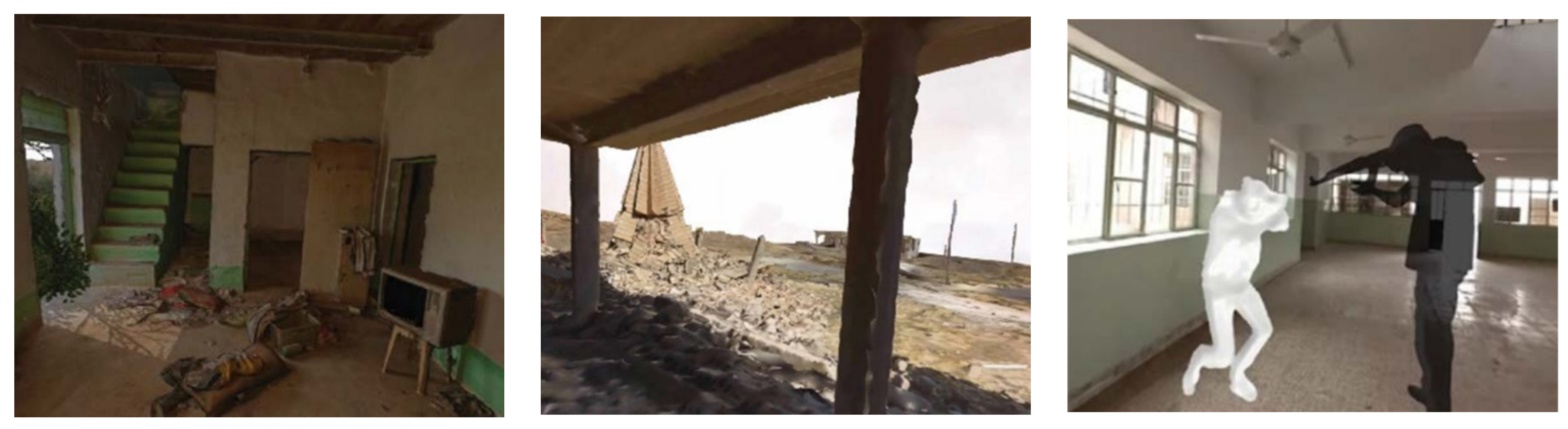
Figure 2.
Distribution and summary statistics of participant learning and understanding outcomes from VR experience (N=106).
Figure 2.
Distribution and summary statistics of participant learning and understanding outcomes from VR experience (N=106).

Figure 3.
Distribution and summary statistics of participant engagement with VR experience (N=106).
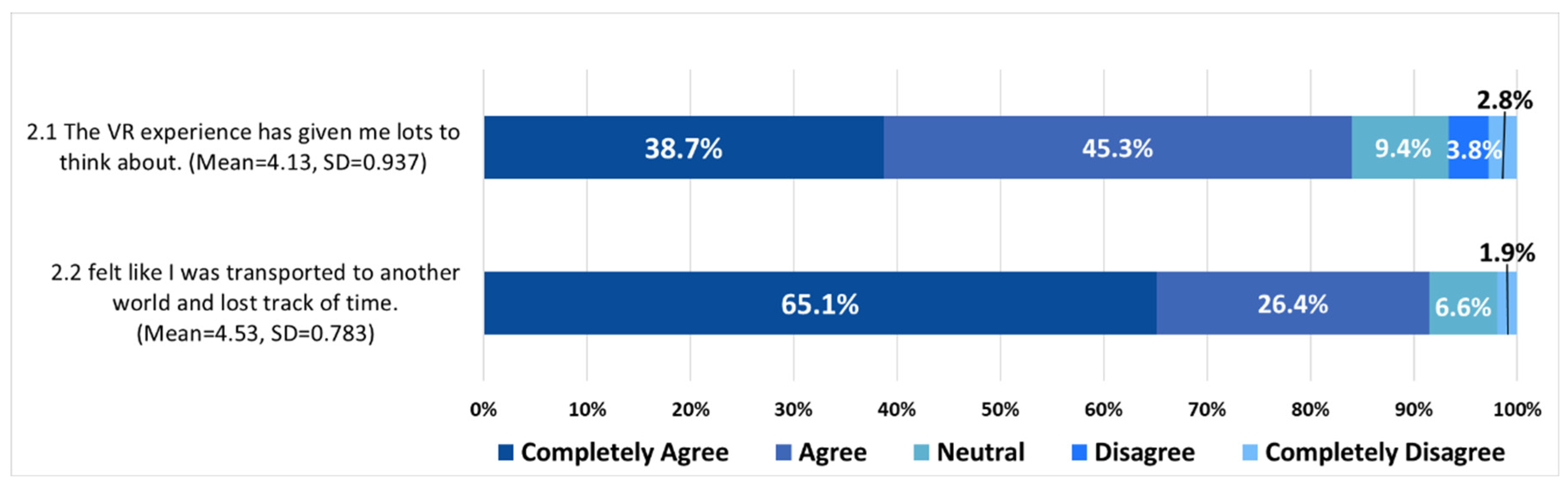
Figure 4.
Distribution and summary statistics of participant emotional connections with VR experience (N=106).
Figure 4.
Distribution and summary statistics of participant emotional connections with VR experience (N=106).
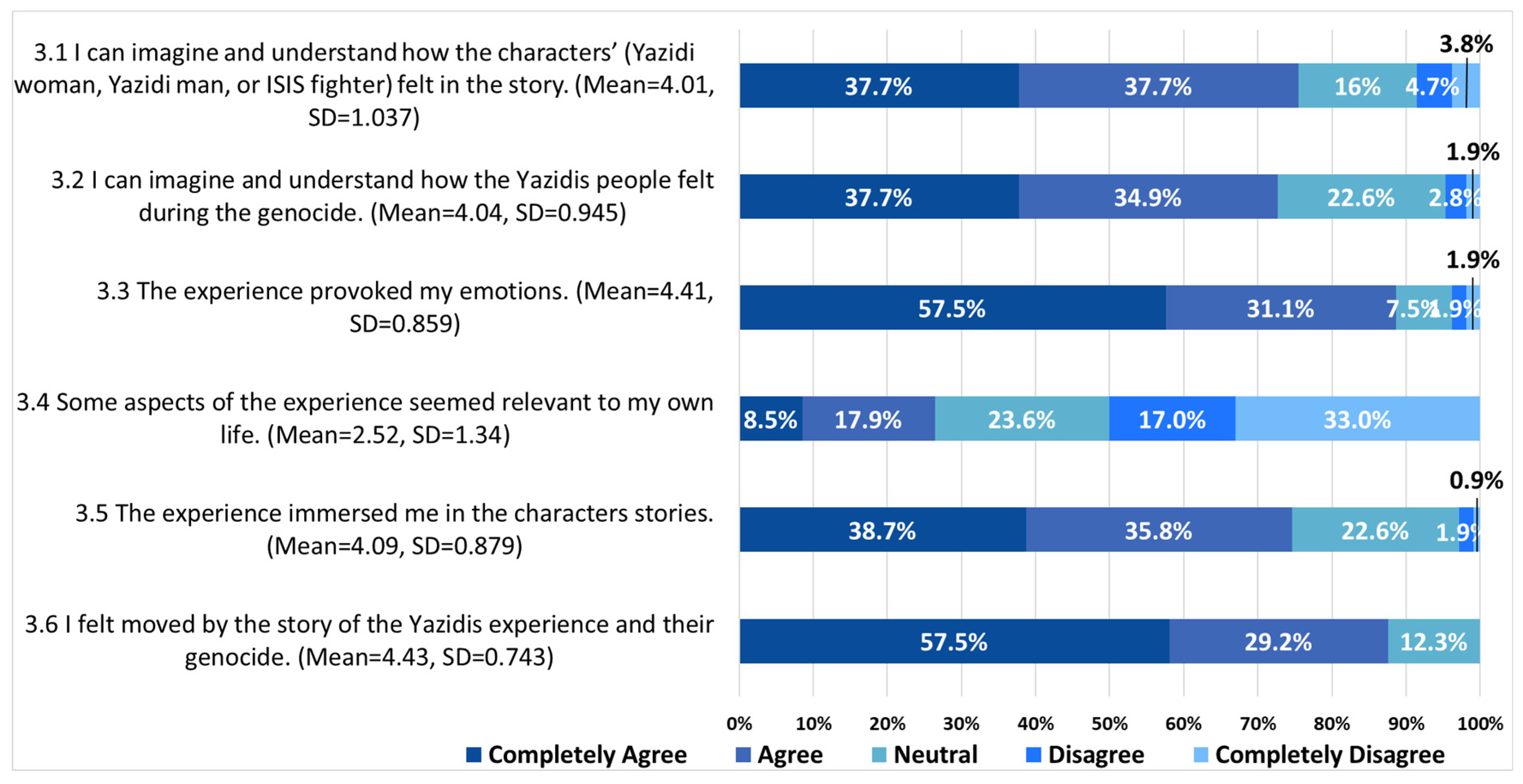
Figure 5.
Emotional word frequency visualization.
Disclaimer/Publisher’s Note: The statements, opinions and data contained in all publications are solely those of the individual author(s) and contributor(s) and not of MDPI and/or the editor(s). MDPI and/or the editor(s) disclaim responsibility for any injury to people or property resulting from any ideas, methods, instructions or products referred to in the content. |
© 2025 by the authors. Licensee MDPI, Basel, Switzerland. This article is an open access article distributed under the terms and conditions of the Creative Commons Attribution (CC BY) license (http://creativecommons.org/licenses/by/4.0/).
Copyright: This open access article is published under a Creative Commons CC BY 4.0 license, which permit the free download, distribution, and reuse, provided that the author and preprint are cited in any reuse.