

Submitted:
22 October 2025
Posted:
23 October 2025
You are already at the latest version
Abstract
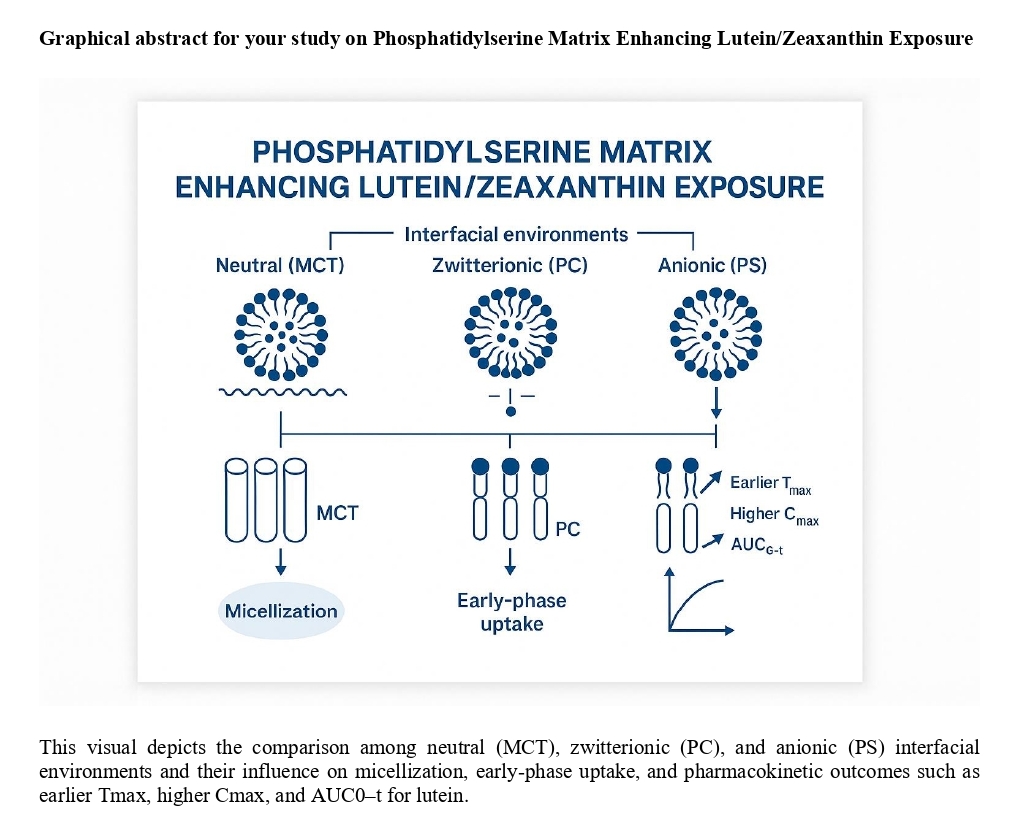
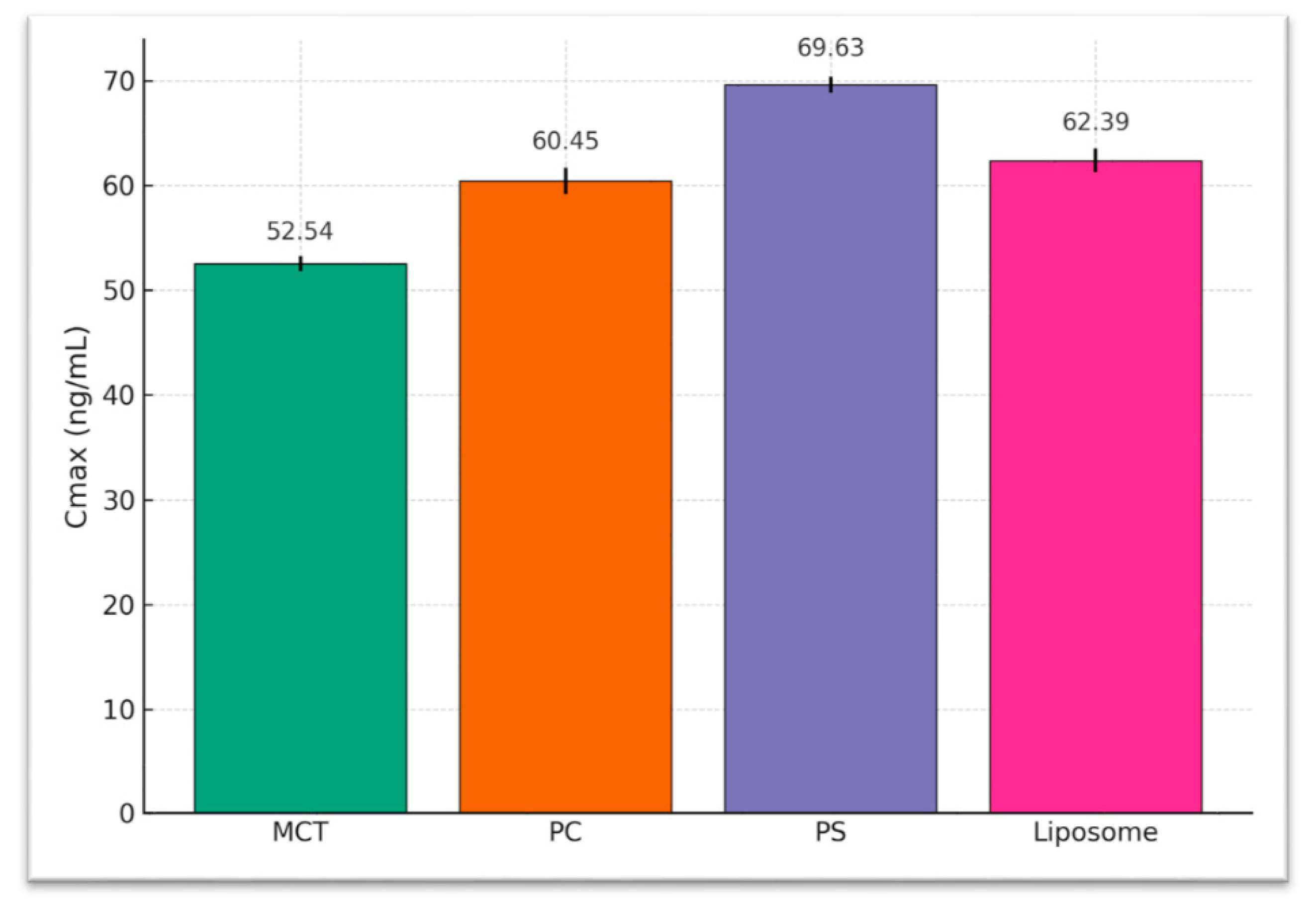
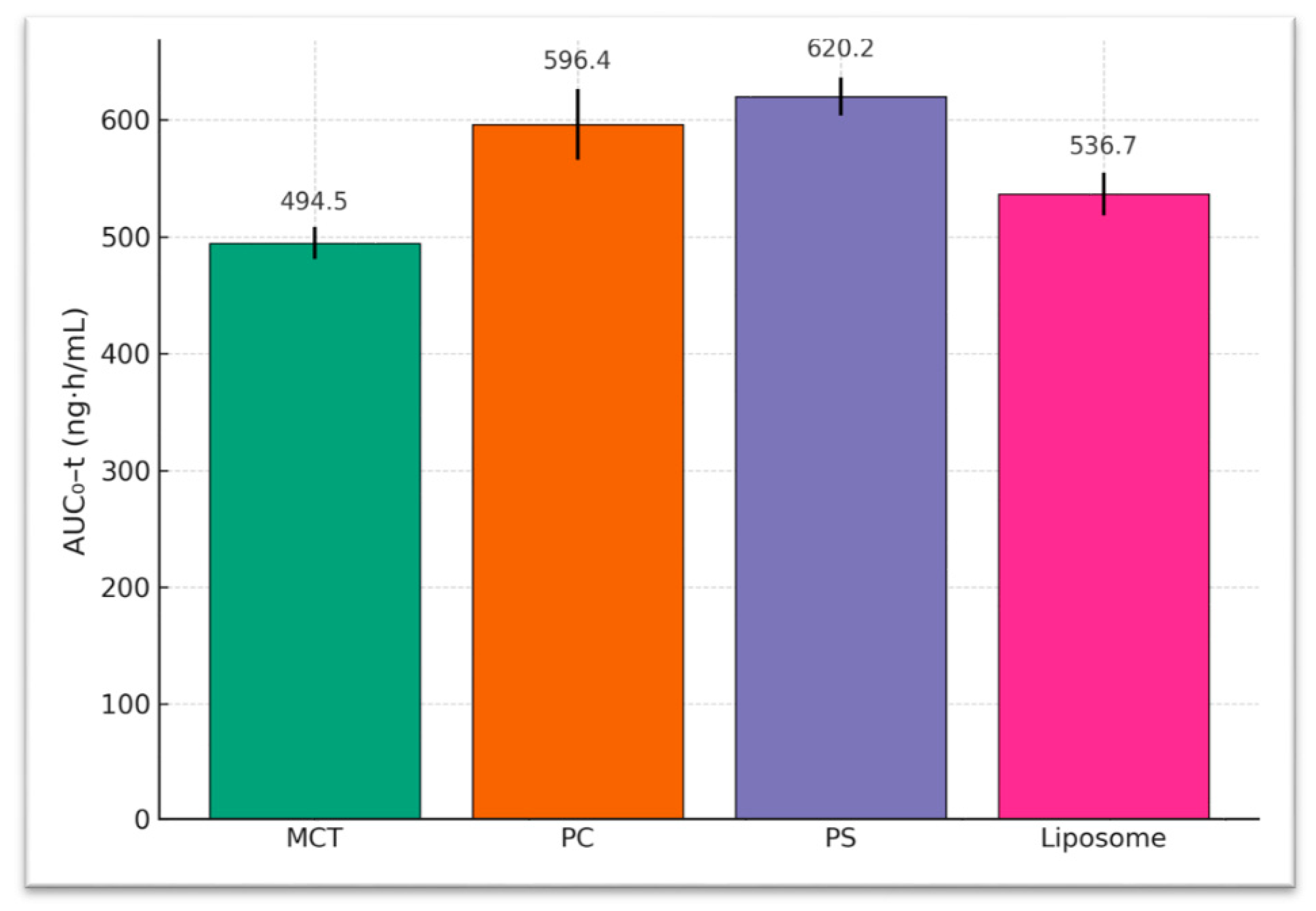
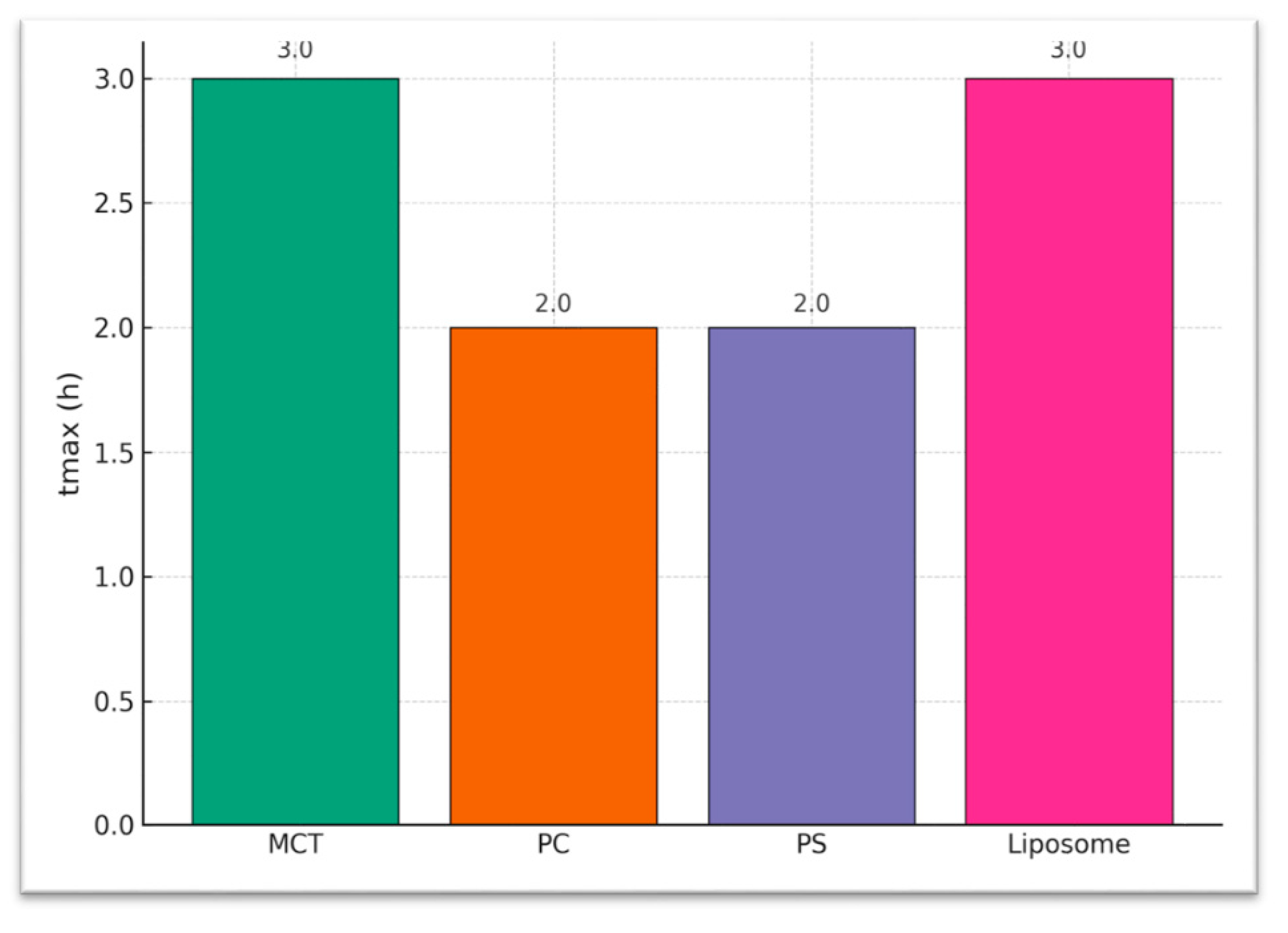
Background: Lutein and zeaxanthin (LZ) support macular function, but oral absorption is limited by intestinal solubilization and uptake; phospholipid environments may improve micellization and enterocyte transport. Objective: To evaluate whether an anionic phosphatidylserine (PS) matrix enhances single-dose LZ exposure compared to phosphatidylcholine (PC), a reconstituted liposomal powder, and medium-chain triglyceride (MCT) oil in rats. Methods: Male Sprague–Dawley rats (n=6 per group) received oral gavage of dose-matched lutein (10 mg/kg) in four matrices (MCT, MCT+PC, MCT+PS, liposome); serial plasma samples (0–24 h) were analysed using validated LC–MS/MS (calibration 5–250 ng/mL). Noncompartmental pharmacokinetics were calculated; group differences in Cmax and AUC₀–t was evaluated via one-way ANOVA with Dunnett contrasts versus MCT. Results: LZ exposure followed the order PS > PC ≈ liposome > MCT. Cmax (ng/mL, mean ± SD): 52.54 ± 0.70 (MCT), 60.45 ± 1.24 (PC), 69.63 ± 0.78 (PS), 62.39 ± 1.12 (liposome). AUC₀–t (ng·h/mL): 494.51 ± 13.70 (MCT), 596.37 ± 30.29 (PC), 620.23 ± 16.41 (PS), 536.70 ± 18.42 (liposome). Dunnett vs MCT: PS p<0.001; PC and liposome p<0.01. T_max was approximately 2 hours for PS/PC versus about 3 hours for MCT/liposome; half-life was similar (~7.7–8.3 hours). Conclusions: Anionic PS oils increase LZ exposure and bioavailability more effectively than PC or liposomal powder at equal doses, without altering elimination.
Keywords:
1. Introduction
2. Materials and Methods
2.1. Study Design and Endpoints
2.2. Animals, Housing, and Ethics
2.3. Randomization and Blinding
2.4. Test Articles and Formulations
2.5. Optional Pre-Dose Colloidal Characterisation
2.6. Dosing and Serial Sampling
2.7. Bioanalysis (LC–MS/MS)
2.8. Pharmacokinetic Analysis
2.9. Statistical Methods
2.10. Quality Assurance and Data Integrity
2.11. Risk Mitigation and Bias Control
2.12. Data Management and Traceability
2.13. Additional Planned Sensitivity Analyses
2.14. Reporting Conventions
3. Results
3.1. Pharmacokinetic Overview
3.2. Primary Exposure Endpoints (Cmax, AUC₀–t)
3.3. Absorption Rate and Early-Phase Exposure (Tmax, pAUC₀–4h)
3.4. Elimination Phase (λz, t½)
3.5. Precision, Robustness, and Sensitivity Checks
3.6. Tables
3.7. Figures
4. Discussion
4.1. Principal Findings in Context
4.2. Mechanistic Interpretation: Why Anionic PS Helps
4.3. Comparison with Prior Literature
4.4. Translational and Formulation Implications
4.5. Practical Formulation Guidance
4.6. Strengths of the Study
4.7. Limitations
4.8. Future Work
4.9. Clinical and Regulatory Considerations
4.10. Broader Implications for Lipid-Based Delivery
5. Conclusion
Author Contributions (CRediT-Style)
Funding
Institutional Review Board (Animal Ethics) Statement
Data Availability Statement
Acknowledgments
Conflicts of Interest
Abbreviations
References
- Bernstein PS, Li B, Vachali PP, et al. Lutein, zeaxanthin, and meso-zeaxanthin: the basic and clinical science underlying carotenoid-based nutritional interventions for age-related macular degeneration. Prog Retin Eye Res. 2016;50:34-66.
- Ma L, Lin XM. Effects of lutein and zeaxanthin on aspects of eye health. J Sci Food Agric. 2010;90(1):2-12.
- Borel P, Desmarchelier C. Bioavailability of fat-soluble vitamins and related compounds: absorption and metabolism. Nutrients. 2017;9(1):E43.
- Johnson, EJ. Role of lutein and zeaxanthin in visual and cognitive function throughout the lifespan. Nutr Rev. 2014;72(9):605-612.
- Reboul, E. Mechanisms of carotenoid intestinal absorption: where do we stand? Nutrients. 2019;11(4):838.
- During A, Dawson HD, Harrison EH. Carotenoid transport is regulated by the scavenger receptor class B, type I (SR-BI) in Caco-2 cells. J Nutr. 2005;135(5):1083-1089.
- van het Hof KH, West CE, Weststrate JA, Hautvast JG. Dietary factors that affect the bioavailability of carotenoids. J Nutr. 2000;130(3):503-506.
- Porter CJH, Trevaskis NL, Charman WN. Lipids and lipid-based formulations: optimizing the oral delivery of lipophilic drugs. Nat Rev Drug Discov. 2007;6(3):231-248.
- McClements, DJ. Food Emulsions: Principles, Practices, and Techniques. 3rd ed. Boca Raton: CRC Press; 2015.
- Sarkar A, Murray BS, Holmes M, Ettelaie R. Colloidal aspects of digestion of Pickering emulsions: role of particle type and interfacial charge. Soft Matter. 2016;12(15):3558-3569.
- Salvia-Trujillo L, Qian C, Martín-Belloso O, McClements DJ. Modulating lipid digestion by structural design of edible emulsion droplets. Annu Rev Food Sci Technol. 2017;8:439-466.
- Armand, M. Lipases and lipolysis in the human digestive tract: where do we stand? Curr Opin Clin Nutr Metab Care. 2007;10(2):156-164.
- Mozafari MR, Johnson C, Hatziantoniou S, Demetzos C. Nano-liposome technologies for the solubilization and delivery of poorly soluble drugs. J Nanosci Nanotechnol. 2008;8(7):3247-3269.
- Nunes R, Silva C, Choudhury H, et al. Lipid-based nanocarriers for the oral delivery of poorly water-soluble drugs. Nanomaterials. 2021;11(4):1084.
- Tan CP, Nakajima M. Influence of surfactant and oil composition on nanoemulsions formation and stability. J Food Eng. 2005;80(2):471-480.
- Minekus M, Alminger M, Alvito P, et al. A standardised static in vitro digestion method suitable for food—an international consensus. Food Funct. 2014;5(6):1113-1124.
- Gabrielsson J, Weiner D. Non-compartmental analysis. In: Pharmacokinetic and Pharmacodynamic Data Analysis: Concepts and Applications. 5th ed. Stockholm: Swedish Pharmaceutical Press; 2016.
- European Medicines Agency. Guideline on bioanalytical method validation. EMA/CHMP/EWP/192217/2009 Rev.1; 2011.

| Matrix | Key features during digestion | Expected impact on LZ absorption |
|---|---|---|
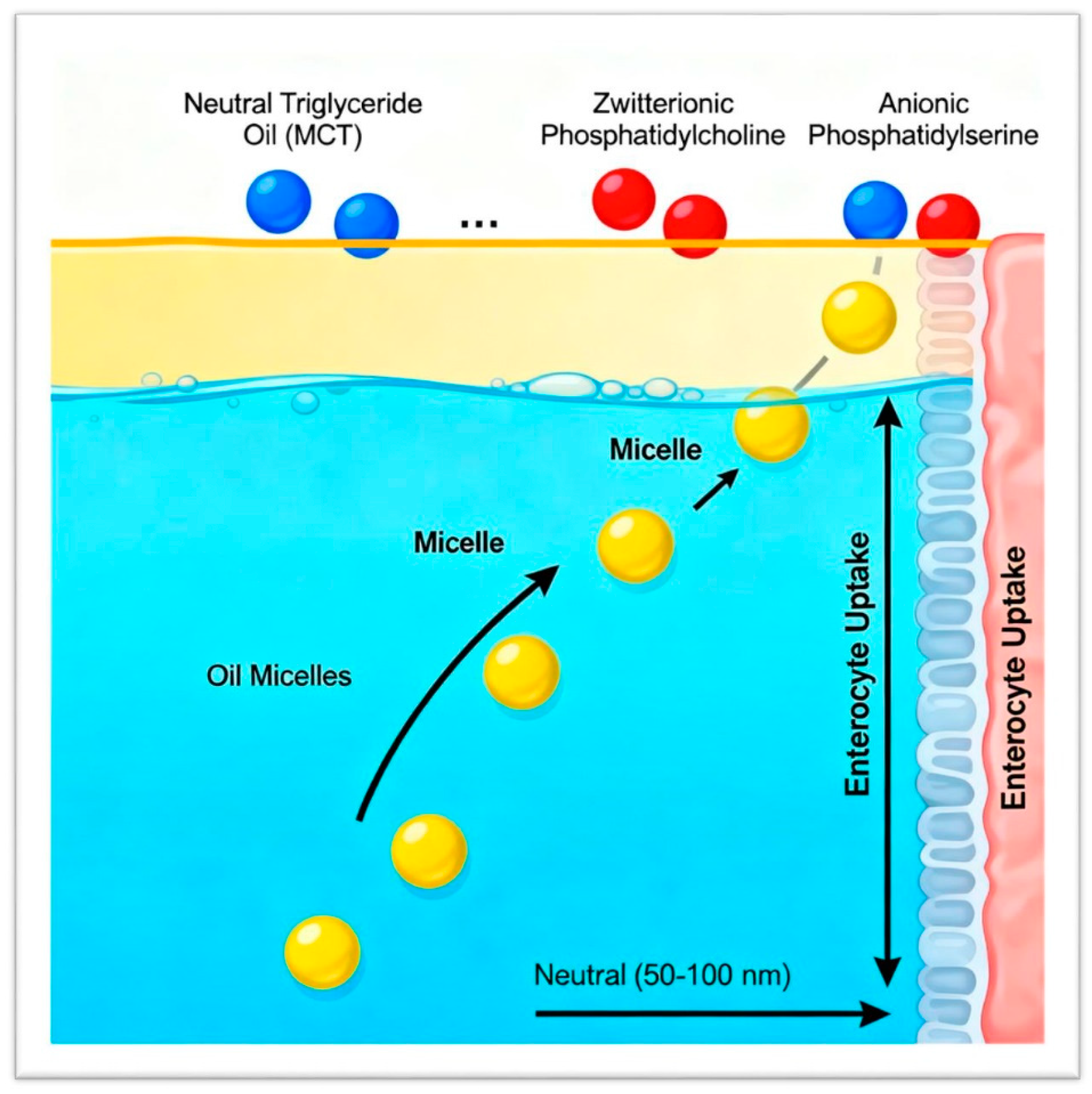
| MCT (neutral TG oil) | Baseline emulsification; relies on bile salt–lecithin mixed micelles for solubilization. | Lowest exposure; reference condition. |
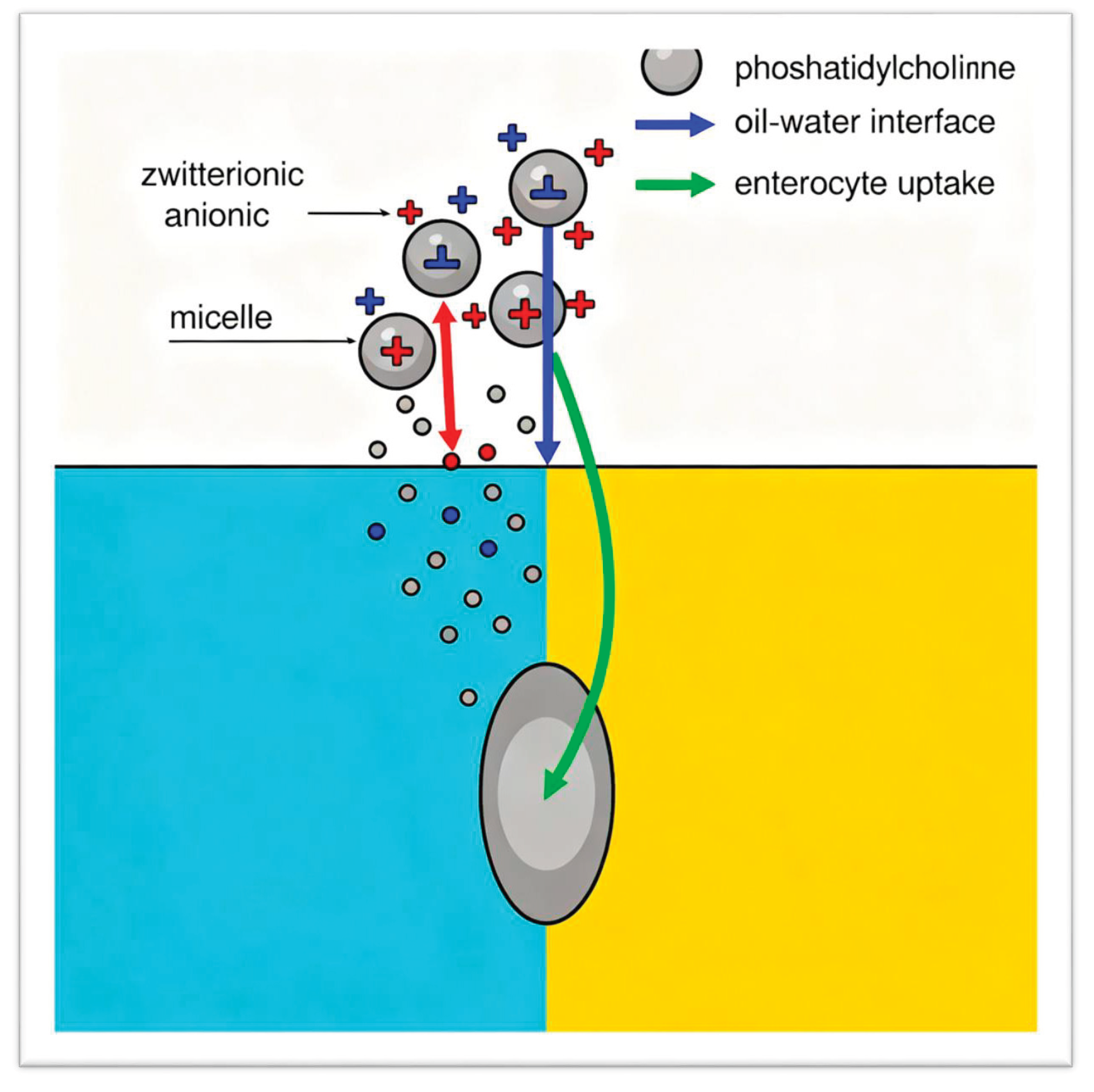
| PC (zwitterionic phospholipid) | Improves interfacial stability; forms mixed micelles with bile salts (neutral headgroup). | Moderate ↑ exposure vs MCT; earlier tmax than MCT. |
| PS (anionic phospholipid) | Adds negative interfacial charge; can increase mixed-micelle capacity and favor earlier uptake. | Greatest ↑ exposure among tested oils; earlier tmax. |
| Reconstituted liposome | Vesicular delivery; may partially disassemble in gastric/intestinal phases and feed into micellar pathways. | Modest ↑ vs MCT; typically < PS, ≈ PC depending on product/reconstitution. |
| Parameter | MCT | PC | PS | Liposome |
|---|---|---|---|---|
| Cmax (ng/mL) | 52.54 ± 0.70 | 60.45 ± 1.24 | 69.63 ± 0.78 | 62.39 ± 1.12 |
| AUC₀–t (ng·h/mL) | 494.51 ± 13.70 | 596.37 ± 30.29 | 620.23 ± 16.41 | 536.70 ± 18.42 |
| tmax (h) | ~3.0 | ~2.0 | ~2.0 | ~3.0 |
| t½ (h) | 7.7–8.3 | 7.7–8.3 | 7.7–8.3 | 7.7–8.3 |
| Endpoint | PC/MCT (GMR; %) | PS/MCT (GMR; %) | Lipo/MCT (GMR; %) |
|---|---|---|---|
| Cmax | 1.151 (+15.1%) | 1.325 (+32.5%) | 1.187 (+18.7%) |
| AUC₀–t | 1.206 (+20.6%) | 1.254 (+25.4%) | 1.085 (+8.5%) |
| Endpoint | MCT | PC | PS | Liposome |
|---|---|---|---|---|
| Cmax CV% | 1.33% | 2.05% | 1.12% | 1.80% |
| AUC₀–t CV% | 2.77% | 5.08% | 2.65% | 3.43% |
Disclaimer/Publisher’s Note: The statements, opinions and data contained in all publications are solely those of the individual author(s) and contributor(s) and not of MDPI and/or the editor(s). MDPI and/or the editor(s) disclaim responsibility for any injury to people or property resulting from any ideas, methods, instructions or products referred to in the content. |
© 2025 by the authors. Licensee MDPI, Basel, Switzerland. This article is an open access article distributed under the terms and conditions of the Creative Commons Attribution (CC BY) license (http://creativecommons.org/licenses/by/4.0/).