
Submitted:
08 October 2025
Posted:
10 October 2025
You are already at the latest version
Abstract
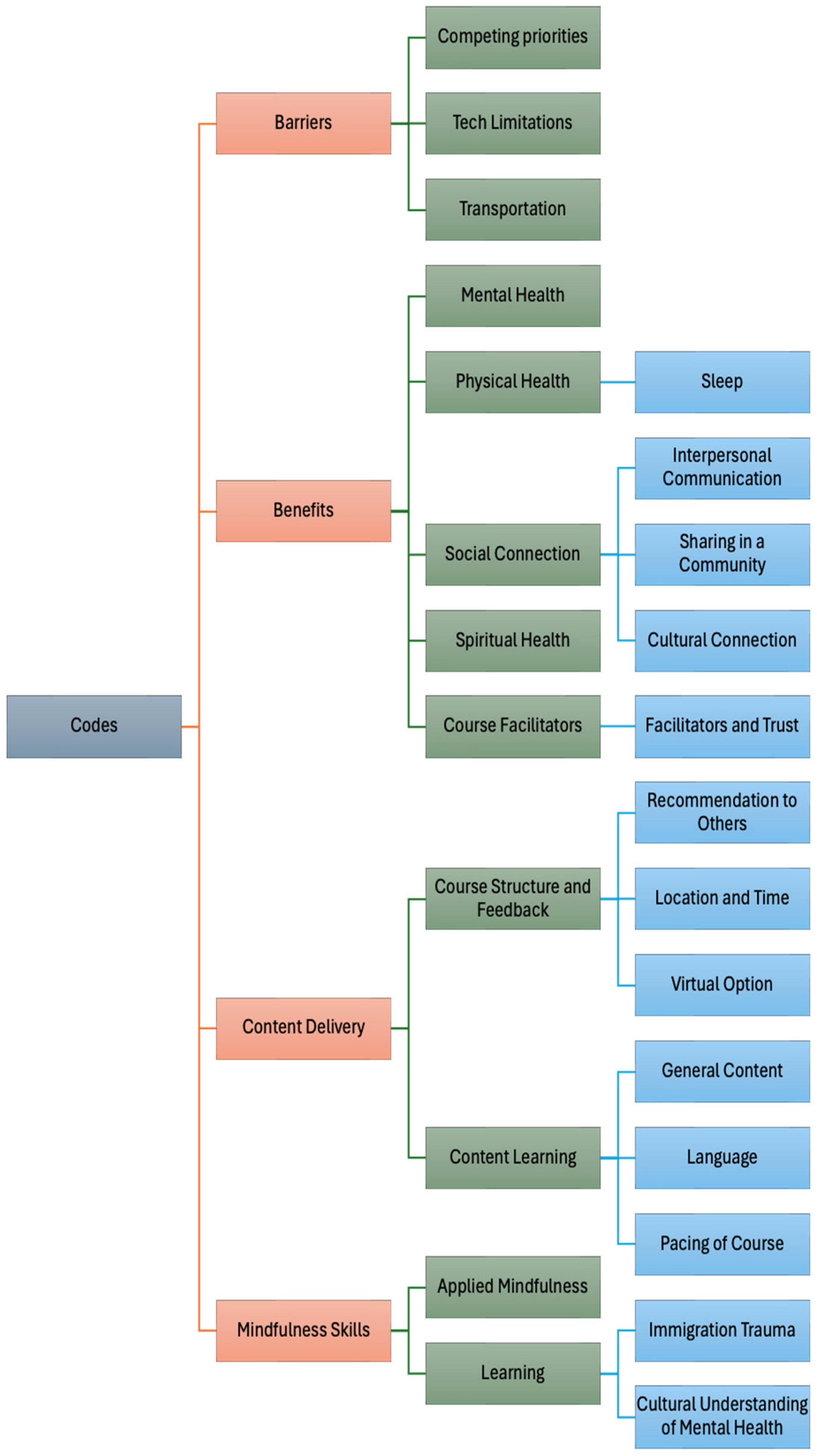
This mixed methods study assessed the benefits, barriers, and facilitators to participation in an 8-week culturally grounded, community-based mindfulness program for the Latino immigrant population in the United States. The program was aimed at reducing levels of stress and improving wellbeing and sleep outcomes. In collaboration with a community-based organization, we conducted six focus groups via Zoom, involving a total of 29 former participants of the mindfulness program. For the qualitative analysis, we performed deductive analysis using Dedoose among 29 participants (17 in the first cohort and 12 in the second one). For the quantitative analysis, surveys assessed baseline and post-intervention measures of resilience (Connor-Davidson Resilience Scale - CD Risk 10 Scale), generalized stress (Perceived Stress Scale), acculturative stress (National Latino Asian American Study), trait mindfulness (Mindful Attention Awareness Scale), and sleep outcomes (Women's Health Initiative Insomnia Rating Scale; Epworth Sleepiness Scale) (n=17). Using a paired two sample t-test for means, we assessed the significance of the quantitative analysis before and after participation in the program. All quantitative outcomes except for acculturative stress and the sleepiness scale showed to be statistically significant. Participants reported higher levels of resiliency, lower perceived stress and higher mindfulness awareness. The number of participants experiencing sound sleep increased by 18%. We identified four major categories, themes and sub-themes: 1. Barriers (Competing Priorities, Technology Limitations, Transportation), 2. Benefits (Mental Health, Physical Health (Sleep), Social Connection (Interpersonal Communication, Sharing in Community, Cultural Connection), Spiritual Health, 3. Content Delivery (Course Facilitators, Course Structure/Feedback (Location and Time, Virtual Option, Recommendation to Others), Content Learning (General Content, Language, Pacing of Course), and 4. Mindfulness Skills (Applied Mindfulness) and Learning/Knowledge (Immigration Trauma and Cultural Understanding of Mental Health). Our findings demonstrate that community-based mindfulness programs present a potential opportunity for reducing stress in general and improving health and resiliency as well as sleep. When developed in a culturally grounded manner and with a trauma sensitive framework, they can be effectively delivered providing the added advantage of being accessible to Spanish-speaking individuals.
Keywords:
Public Policy Relevance Statement
1. Introduction
2. Materials and Methods
3. Results
4. Discussion
Supplementary Materials
Acknowledgments
References
- Abercrombie, P. D., Zamora, A., & Korn, A. P. (2007). Lessons learned: providing a mindfulness-based stress reduction program for low-income multiethnic women with abnormal pap smears. Holist Nurs Pract, 21(1), 26-34. http://www.ncbi.nlm.nih.gov/pubmed/17167329.
- Alcántara, C., Patel, S. R., Carnethon, M., Castañeda, S., Isasi, C. R., Davis, S., Ramos, A., Arredondo, E., Redline, S., Zee, P. C., & Gallo, L. C. (2017). Stress and Sleep: Results from the Hispanic Community Health Study/Study of Latinos Sociocultural Ancillary Study. SSM - population health, 3, 713–721. [CrossRef]
- Alegria, M., Canino, G., Shrout, P. E., Woo, M., Duan, N., Vila, D., Torres, M., Chen, C. N., & Meng, X. L. (2008). Prevalence of mental illness in immigrant and non-immigrant U.S. Latino groups. American Journal of Psychiatry, 165(3), 359-369. [CrossRef]
- Alegria, M., Takeuchi, D., Canino, G., Duan, N., Shrout, P., Meng, X. L., & Gong, F. (2004). Considering context, place and culture: the National Latino and Asian American Study. International journal of methods in psychiatric research, 13(4), 208-220.
- Amaro, H., & Zambrana, R. E. (2000). Criollo, mestizo, mulato, LatiNegro, indígena, white, or black? The US Hispanic/Latino population and multiple responses in the 2000 census. American journal of public health, 90(11), 1724–1727. [CrossRef]
- American Psychological Association. (2019). Stress in America: Stress and Current Events. (Stress in America™ Survey). https://www.apa.org/news/press/releases/stress/2019/stress-america-2019.pdf.
- Assari, S. (2018). Race, Intergenerational Social Mobility and Stressful Life Events. Behav Sci (Basel), 8(10), 86. [CrossRef]
- Austin, B. J. (2001). Cultural bias emerges in reported access to health care: commonly used measure may be inappropriate for non-English-speaking Hispanics. Find Brief, 4(4), 1-2. http://www.ncbi.nlm.nih.gov/pubmed/12138925.
- Averett, S. L., Smith, J. K., & Wang, Y. (2018). Minimum Wages and the Health of Hispanic Women [journal article]. Journal of Economics, Race, and Policy, 1(4), 217-239. [CrossRef]
- Baer, R. A. (2003). Mindfulness training as a clinical intervention: A conceptual and empirical review. Clinical Psychology-Science and Practice, 10(2), 125-143. [CrossRef]
- Berry, J. W. (2006). Stress perspectives on acculturation. In D. L. Sam & J. W. Berry (Eds.), The Cambridge handbook of acculturation psychology (pp. 43–57). Cambridge University Press. [CrossRef]
- Black, D. S., Lam, C. N., Nguyen, N. T., Ihenacho, U., & Figueiredo, J. C. (2016). Complementary and Integrative Health Practices Among Hispanics Diagnosed with Colorectal Cancer: Utilization and Communication with Physicians. Journal of alternative and complementary medicine (New York, N.Y.), 22(6), 473–479. [CrossRef]
- Brown, K. W., West, A. M., Loverich, T. M., & Biegel, G. M. (2011). Assessing adolescent mindfulness: validation of an adapted Mindful Attention Awareness Scale in adolescent normative and psychiatric populations. Psychological assessment, 23(4), 1023–1033. [CrossRef]
- Campbell, L. C. Andrews, N., Scipio, C., Flores, B., Feliu, M. H., & Keefe, F. J. (2009). Pain coping in Latino populations. The journal of pain, 10(10), 1012–1019. [CrossRef]
- Campbell, T. S., Labelle, L. E., Bacon, S. L., Faris, P., & Carlson, L. E. (2012). Impact of Mindfulness-Based Stress Reduction (MBSR) on attention, rumination and resting blood pressure in women with cancer: a waitlist-controlled study. J Behav Med, 35(3), 262-271. [CrossRef]
- Caplan S. (2007). Latinos, acculturation, and acculturative stress: a dimensional concept analysis. Policy, politics & nursing practice, 8(2), 93–106. [CrossRef]
- Cappuccio, F. P., D’Elia, L., Strazzullo, P., & Miller, M. A. (2010). Sleep duration and all-cause mortality: a systematic review and meta-analysis of prospective studies. Sleep, 33(5), 585–592. [CrossRef]
- Castellanos, R., Yildiz Spinel, M., Phan, V., Orengo-Aguayo, R., Humphreys, K. L., & Flory, K. (2019). A Systematic Review and Meta-Analysis of Cultural Adaptations of Mindfulness-Based Interventions for Hispanic Populations. Mindfulness (N Y), 1-16. [CrossRef]
- Cavanagh, K., Strauss, C., Forder, L., & Jones, F. (2014). Can mindfulness and acceptance be learnt by self-help?: a systematic review and meta-analysis of mindfulness and acceptance-based self-help interventions. Clin Psychol Rev, 34(2), 118-129. [CrossRef]
- Cavazos-Rehg, P. A., Zayas, L. H., & Spitznagel, E. L. (2007). Legal status, emotional well-being and subjective health status of Latino immigrants. J Natl Med Assoc, 99(10), 1126-1131. http://www.ncbi.nlm.nih.gov/pubmed/17987916.
- Cervantes, R. C., Fisher, D. G., Padilla, A. M., & Napper, L. E. (2015). The Hispanic Stress Inventory Version 2: Improving the assessment of acculturation stress. Psychological Assessment, 28(5), 509–522. [CrossRef]
- Chanchlani N. (2017). Health consequences of shift work and insufficient sleep. BMJ (Clinical research ed.), 356, i6599. [CrossRef]
- Clarke, T. C., Barnes, P. M., Black, L. I., Stussman, B. J., & Nahin, R. L. (2018). Use of yoga, meditation, and chiropractors among U.S. adults aged 18 and over.
- Clarke, R. D., Morris, S. L., Wagner, E. F., Spadola, C. E., Bursac, Z., Fava, N. M., & Hospital, M. (2022). Feasibility, acceptability and preliminary impact of mindfulness-based yoga among Hispanic/Latinx adolescents. Explore (New York, N.Y.), 18(3), 299–305. [CrossRef]
- Cohen, S., Kamarck, T., & Mermelstein, R. (1983). A Global Measure of Perceived Stress. Journal of Health and Social Behavior, 24(4), 385–396. [CrossRef]
- Connor, K. M., & Davidson, J. R. T. (2025). Connor-Davidson Resilience Scale (CD-RISC). https://www.connordavidson-resiliencescale.com/about.php.
- Cotter, E. W., & Jones, N. (2020). A review of Latino/Latinx participants in mindfulness-based intervention research. Mindfulness (N Y), 11(3), 529-553. [CrossRef]
- Cuervo, C. (2019). PERTENÆCER: Eight-Week Mindfulness and Meditation Training and Practices for Latinx Immigrants in the United States.
- Creswell, J.W., & Creswell, J.D. (2018). Mixed methods procedures. In, Research design: Qualitative, quantitative, and mixed methods approaches (5th ed., pp. 213-246). Los Angeles, CA: SAGE Publications, Inc.
- Duarte, R., Lloyd, A., Kotas, E., Andronis, L., & White, R. (2019). Are acceptance and mindfulness-based interventions ‘value for money’? Evidence from a systematic literature review. Br J Clin Psychol, 58(2), 187-210. [CrossRef]
- Edwards, M., Adams, E. M., Waldo, M., Hadfield, O. D., & Biegel, G. M. (2014). Effects of a mindfulness group on Latino adolescent students: Examining levels of perceived stress, mindfulness, self-compassion, and psychological symptoms. . Journal for Specialists in Group Work, 39(2), 145–163. [CrossRef]
- Evans, S., Ferrando, S., Carr, C., & Haglin, D. (2011). Mindfulness-based stress reduction (MBSR) and distress in a community-based sample. Clin Psychol Psychother, 18(6), 553-558. [CrossRef]
- Falsafi, N., & Leopard, L. (2015). Pilot Study Use of Mindfulness, Self-Compassion, and Yoga Practices With Low-Income and/or Uninsured Patients With Depression and/or Anxiety. Journal of Holistic Nursing, 33(4), 289-297. [CrossRef]
- Ford, M. E., Siminoff, L. A., Pickelsimer, E., Mainous, A. G., Smith, D. W., Diaz, V. A., Soderstrom, L. H., Jefferson, M. S., & Tilley, B. C. (2013). Unequal Burden of Disease, Unequal Participation in Clinical Trials: Solutions from African American and Latino Community Members. Health & Social Work, 38(1), 29-38. [CrossRef]
- Gallegos, A. M., Moynihan, J., & Pigeon, W. R. (2018). A Secondary Analysis of Sleep Quality Changes in Older Adults From a Randomized Trial of an MBSR Program. J Appl Gerontol, 37(11), 1327-1343. [CrossRef]
- Garcia, K. K. S., & Abrahão, A. A. (2021). Research Development Using REDCap Software. Healthcare informatics research, 27(4), 341–349. [CrossRef]
- Garcini, L. M., Pena, J. M., Galvan, T., Fagundes, C. P., Malcarne, V., & Klonoff, E. A. (2017a. Mental disorders among undocumented Mexican immigrants in high-risk neighborhoods: Prevalence, comorbidity, and vulnerabilities. J Consult Clin Psychol, 85(10), 927-936. [CrossRef]
- Garcini, L. M., Pena, J. M., Gutierrez, A. P., Fagundes, C. P., Lemus, H., Lindsay, S., & Klonoff, E. A. (2017b). “One Scar Too Many:” The Associations Between Traumatic Events and Psychological Distress Among Undocumented Mexican Immigrants. J Trauma Stress, 30(5), 453-462. [CrossRef]
- Garcini, L. M., Chirinos, D. A., Murdock, K. W., Seiler, A., LeRoy, A. S., Peek, K., Cutchin, M. P., & Fagundes, C. (2018a). Pathways linking racial/ethnic discrimination and sleep among U.S.-born and foreign-born Latinxs. J Behav Med, 41(3), 364-373. [CrossRef]
- Garcini, L. M., Renzaho, A. M. N., Molina, M., & Ayala, G. X. (2018b). Health-related quality of life among Mexican-origin Latinos: the role of immigration legal status. Ethn Health, 23(5), 566-581. [CrossRef]
- Gawrysiak, M. J., Grassetti, S. N., Greeson, J. M., Shorey, R. C., Pohlig, R., & Baime, M. J. (2018). The many facets of mindfulness and the prediction of change following mindfulness-based stress reduction (MBSR). J Clin Psychol, 74(4), 523-535. [CrossRef]
- Gonzalez-Guarda, R. M., Befus, D., Steigerwald, M., Stafford, A., Nagy, G. A., & Conklin, J. (2021). A systematic review of the physical health consequences of acculturation stress among Hispanics in the US. . Biological Research for Nursing, 23(3), 362-374.
- Goyal, M., Singh, S., Sibinga, E. M., Gould, N. F., Rowland-Seymour, A., Sharma, R., Berger,.
- Z., Sleicher, D., Maron, D. D., Shihab, H. M., Ranasinghe, P. D., Linn, S., Saha, S., Bass, E. B., & Haythornthwaite, J. A. (2014). Meditation programs for psychological stress and well-being: a systematic review and meta-analysis. JAMA internal medicine, 174(3), 357–368. [CrossRef]
- Grandner, M. A., Alfonso-Miller, P., Fernandez-Mendoza, J., Shetty, S., Shenoy, S., & Combs, D. (2016). Sleep: important considerations for the prevention of cardiovascular disease. Current opinion in cardiology, 31(5), 551–565. [CrossRef]
- Greer, S. M., Goldstein, A. N., & Walker, M. P. (2013). The impact of sleep deprivation on food desire in the human brain. Nature communications, 4, 2259. [CrossRef]
- Green, M. A., Perez, G., Ornelas, I. J., Tran, A. N., Blumenthal, C., Lyn, M., & Corbie-Smith, G. (2012). Amigas Latinas Motivando el ALMA (ALMA): Development and Pilot Implementation of a Stress Reduction Promotora Intervention. Calif J Health Promot, 10, 52-64. http://www.ncbi.nlm.nih.gov/pubmed/25364312.
- Guba, E. G., & Lincoln, Y. S. (1985). Naturalistic inquiry. In: Newbury Park. CA: Sage.
- Hinton, D. E., Lewis-Fernandez, R., & Pollack, M. H. (2009). A Model of the Generation of Ataque de Nervios: The Role of Fear of Negative Affect and Fear of Arousal Symptoms. Cns Neuroscience & Therapeutics, 15(3), 264-275. [CrossRef]
- Huang, H. P., He, M., Wang, H. Y., & Zhou, M. (2016). A meta-analysis of the benefits of mindfulness-based stress reduction (MBSR) on psychological function among breast cancer (BC) survivors. Breast Cancer, 23(4), 568-576. [CrossRef]
- Huberty, J. L., Green, J., Puzia, M. E., Larkey, L., Laird, B., Vranceanu, A. M., Vlisides-Henry, R., & Irwin, M. R. (2021). Testing a mindfulness meditation mobile app for the treatment of sleep-related symptoms in adults with sleep disturbance: A randomized controlled trial. PloS one, 16(1), e0244717. [CrossRef]
- Itani, O., Jike, M., Watanabe, N., & Kaneita, Y. (2017). Short sleep duration and health outcomes: a systematic review, meta-analysis, and meta-regression. Sleep medicine, 32, 246–256. [CrossRef]
- Jazaieri, H., Goldin, P. R., Werner, K., Ziv, M., & Gross, J. J. (2012). A randomized trial of MBSR versus aerobic exercise for social anxiety disorder. J Clin Psychol, 68(7), 715-731. [CrossRef]
- Kabat-Zinn, J. (1982). An outpatient program in behavioral medicine for chronic pain patients based on the practice of mindfulness meditation: theoretical considerations and preliminary results. Gen Hosp Psychiatry, 4(1), 33-47. http://www.ncbi.nlm.nih.gov/pubmed/7042457.
- Keyworth, C., Knopp, J., Roughley, K., Dickens, C., Bold, S., & Coventry, P. (2014). A mixed-methods pilot study of the acceptability and effectiveness of a brief meditation and mindfulness intervention for people with diabetes and coronary heart disease. Behavioral medicine, 40(2), 53–64. [CrossRef]
- Lao, S. A., Kissane, D., & Meadows, G. (2016). Cognitive effects of MBSR/MBCT: A systematic review of neuropsychological outcomes. Conscious Cogn, 45, 109-123. [CrossRef]
- Leung, L., Han, H., Martin, M., & Kotecha, J. (2015). Mindfulness-based stress reduction (MBSR) as sole intervention for non-somatisation chronic non-cancer pain (CNCP): protocol for a systematic review and meta-analysis of randomised controlled trials. BMJ Open, 5(5), e007650. [CrossRef]
- Levine, D. W., Kripke, D. F., Kaplan, R. M., Lewis, M. A., Naughton, M. J., Bowen, D. J., & Shumaker, S. A. (2003). Reliability and validity of the Women’s Health Initiative Insomnia Rating Scale. Psychological assessment, 15(2), 137–148. [CrossRef]
- Levine, D. W., Dailey, M. E., Rockhill, B., Tipping, D., Naughton, M. J., & Shumaker, S. A. (2005). Validation of the Women’s Health Initiative Insomnia Rating Scale in a multicenter controlled clinical trial. Psychosomatic medicine, 67(1), 98–104. [CrossRef]
- Lloyd, A., White, R., Eames, C., & Crane, R. (2018). The Utility of Home-Practice in Mindfulness-Based Group Interventions: A Systematic Review. Mindfulness (N Y), 9(3), 673-692. [CrossRef]
- Loredo, J. S., Soler, X., Bardwell, W., Ancoli-Israel, S., Dimsdale, J. E., & Palinkas, L. A. (2010). Sleep health in U.S. Hispanic population. Sleep, 33(7), 962–967. [CrossRef]
- Lu, S., Huang, C. C., Cheung, S. P., Rios, J. A., & Chen, Y. (2021). Mindfulness and social-emotional skills in Latino pre-adolescents in the U.S.: The mediating role of executive function. Health & social care in the community, 29(4), 1010–1018. [CrossRef]
- Maldonado, A., Preciado, A., Buchanan, M., Pulvers, K., Romero, D., & D’Anna-Hernandez, K. (2018). Acculturative stress, mental health symptoms, and the role of salivary inflammatory markers among a Latino sample. Cultural Diversity and Ethnic Minority Psychology, 24(2), 277–283. [CrossRef]
- Mendelson, T., Rehkopf, D. H., & Kubzansky, L. D. (2008). Depression among Latinos in the United States: A meta-analytic review. Journal of Consulting and Clinical Psychology, 76(3), 355-366. [CrossRef]
- Mendoza, S., Armbrister, A. N., & Abraido-Lanza, A. F. (2018). Are you better off? Perceptions of social mobility and satisfaction with care among Latina immigrants in the U.S. Soc Sci Med, 219, 54-60. [CrossRef]
- Minor, H. G., Carlson, L. E., Mackenzie, M. J., Zernicke, K., & Jones, L. (2006). Evaluation of a Mindfulness-Based Stress Reduction (MBSR) program for caregivers of children with chronic conditions. Soc Work Health Care, 43(1), 91-109. [CrossRef]
- Mohammed, W. A., Pappous, A., & Sharma, D. (2018). Effect of Mindfulness Based Stress Reduction (MBSR) in Increasing Pain Tolerance and Improving the Mental Health of Injured Athletes. Front Psychol, 9, 722. [CrossRef]
- Nahin, R. L., Rhee, A., & Stussman, B. (2024). Use of complementary health approaches overall and for pain management by US adults. JAMA, 331(7), 613–615. [CrossRef]
- Nagy, G. A., Cuervo, C., Ramos Rodriguez, E. Y., Plumb Vilardaga, J., Zerubavel, N., West, J. L., Falick, M. C., & Parra, D. C. (2022). Building a More Diverse and Inclusive Science: Mindfulness-Based Approaches for Latinx Individuals. Mindfulness (N Y), 13(4), 942-954. [CrossRef]
- Neece, C. L. (2014). Mindfulness-based stress reduction for parents of young children with developmental delays: implications for parental mental health and child behavior problems. J Appl Res Intellect Disabil, 27(2), 174-186. [CrossRef]
- Oh, V. K. S., Sarwar, A., & Pervez, N. (2022). The study of mindfulness as an intervening factor for enhanced psychological well-being in building the level of resilience. Frontiers in psychology, 13, 1056834. [CrossRef]
- Olano, H. A., Kachan, D., Tannenbaum, S. L., Mehta, A., Annane, D., & Lee, D. J. (2015). Engagement in mindfulness practices by U.S. adults: sociodemographic barriers. J Altern Complement Med, 21(2), 100-102. [CrossRef]
- Onesimo Sandoval, J. S. (2014). The unspoken truth: Evaluating attitudes toward immigration in Missouri. International Journal of Social Science Research, 2(2), 55-71.
- Ornelas, I. J., Nelson, A. K., Price, C., Pérez-Solorio, S. A., Rao, D., & Chan, K. C. G. (2025). Amigas Latinas Motivando el Alma (ALMA): Increasing Mindfulness and Social Support to Reduce Depression and Anxiety in Latina Immigrant Women. Mindfulness, 16(7), 1923–1932. [CrossRef]
- Ortiz, J. A. (2015). Bridging the gap: Adapting mindfulness-based stress reduction for Latino populations. (Doctoral dissertation). Retrieved from http://search.proquest.com/docview/1723912536/.
- Ortiz, J. A., Smith, B. W., Shelley, B. M., & Erickson, K. S. (2019). Adapting Mindfulness to Engage Latinos and Improve Mental Health in Primary Care: a Pilot Study. Mindfulness (N Y), 10(12), 2522-2531. [CrossRef]
- Parker, G. (2020). Restorative Yoga for Ethnic and Race-Based Stress and Trauma. Jessica Kingsley Publishers.
- Raines, E. M., Rogers, A. H., Bakhshaie, J., Viana, A. G., Lemaire, C., Garza, M., Mayorga, N. A., Ochoa-Perez, M., & Zvolensky, M. J. (2018). Mindful attention moderating the effect of experiential avoidance in terms of mental health among Latinos in a federally qualified health center. Psychiatry Research, 270, 574-580. [CrossRef]
- Redline, S., Sotres-Alvarez, D., Loredo, J., Hall, M., Patel, S. R., Ramos, A., Shah, N., Ries, A., Arens, R., Barnhart, J., Youngblood, M., Zee, P., & Daviglus, M. L. (2014). Sleep-disordered Breathing in Hispanic/Latino Individuals of Diverse Backgrounds The Hispanic Community Health Study/Study of Latinos. American Journal of Respiratory and Critical Care Medicine, 189(3), 335-344. [CrossRef]
- Rodriguez-Diaz, C. E., Guilamo-Ramos, V., Mena, L., Hall, E., Honermann, B., Crowley, J. S., Baral, S., Prado, G. J., Marzan-Rodriguez, M., Beyrer, C., Sullivan, P. S., & Millett, G. A. (2020). Risk for COVID-19 infection and death among Latinos in the United States: examining heterogeneity in transmission dynamics. Annals of epidemiology, 52, 46–53.e2. [CrossRef]
- Rosner, B., Glynn, R. J., & Lee, M. L. (2006). The Wilcoxon signed rank test for paired comparisons of clustered data. Biometrics, 62(1), 185–192. [CrossRef]
- Roth, B., & Creaser, T. (1997). Mindfulness meditation-based stress reduction: experience with a bilingual inner-city program. Nurse Pract, 22(3), 150-152, 154, 157 passim. http://www.ncbi.nlm.nih.gov/pubmed/9078521.
- Roth, B., & Stanley, T. W. (2002). Mindfulness-based stress reduction and healthcare utilization in the inner city: preliminary findings. Altern Ther Health Med, 8(1), 60-62, 64-66. http://www.ncbi.nlm.nih.gov/pubmed/11795623.
- Rusch, H. L., Rosario, M., Levison, L. M., Olivera, A., Livingston, W. S., Wu, T., & Gill, J. M. (2019). The effect of mindfulness meditation on sleep quality: a systematic review and meta-analysis of randomized controlled trials. Annals of the New York Academy of Sciences, 1445(1), 5–16. [CrossRef]
- Ryan, D., Maurer, S., Lengua, L., Duran, B., & Ornelas, I. J. (2018). Amigas Latinas Motivando el Alma (ALMA): an Evaluation of a Mindfulness Intervention to Promote Mental Health among Latina Immigrant Mothers. J Behav Health Serv Res, 45(2), 280-291. [CrossRef]
- Salas-Wright, C. P., Clark, T. T., Vaughn, M. G., & Córdova, D. (2015). Profiles of acculturation among Hispanics in the United States: links with discrimination and substance use [journal article]. Social Psychiatry and Psychiatric Epidemiology, 50(1), 39-49. [CrossRef]
- Sarkar, M., Asti, L., Nacion, K. M., & Chisolm, D. J. (2016). The Role of Health Literacy in Predicting Multiple Healthcare Outcomes Among Hispanics in a Nationally Representative Sample: A Comparative Analysis by English Proficiency Levels [journal article]. Journal of Immigrant and Minority Health, 18(3), 608-615. [CrossRef]
- Schmidt, S., Gmeiner, S., Schultz, C., Lower, M., Kuhn, K., Naranjo, J. R., Brenneisen, C., & Hinterberger, T. (2015). Mindfulness-based Stress Reduction (MBSR) as Treatment for Chronic Back Pain - an Observational Study with Assessment of Thalamocortical Dysrhythmia. Forsch Komplementmed, 22(5), 298-303. [CrossRef]
- Serpa, J. G., Taylor, S. L., & Tillisch, K. (2014). Mindfulness-based stress reduction (MBSR) reduces anxiety, depression, and suicidal ideation in veterans. Med Care, 52(12 Suppl 5), S19-24. [CrossRef]
- Sevilla-Llewellyn-Jones, J., Santesteban-Echarri, O., Pryor, I., McGorry, P., & Alvarez-Jimenez, M. (2018). Web-Based Mindfulness Interventions for Mental Health Treatment: Systematic Review and Meta-Analysis. JMIR Ment Health, 5(3), e10278. [CrossRef]
- Simpson, J., & Mapel, T. (2011). An investigation into the health benefits of mindfulness-based stress reduction (MBSR) for people living with a range of chronic physical illnesses in New Zealand. N Z Med J, 124(1338), 68-75. http://www.ncbi.nlm.nih.gov/pubmed/21946964.
- Soler, J., Tejedor, R., Feliu-Soler, A., Pascual, J. C., Cebolla, A., Soriano, J., Alvarez, E., & Perez, V. (2012). Psychometric proprieties of Spanish version of Mindful Attention Awareness Scale (MAAS). Actas espanolas de psiquiatria, 40(1), 19–26.
- Spears, C. A., Houchins, S. C., Stewart, D. W., Chen, M., Correa-Fernandez, V., Cano, M. A., Heppner, W. L., Vidrine, J. I., & Wetter, D. W. (2015). Nonjudging facet of mindfulness predicts enhanced smoking cessation in Hispanics. Psychol Addict Behav, 29(4), 918-923. [CrossRef]
- Spiegel, K., Tasali, E., Leproult, R., & Van Cauter, E. (2009). Effects of poor and short sleep on glucose metabolism and obesity risk. Nature reviews. Endocrinology, 5(5), 253–261. [CrossRef]
- Sung, J. H., Lee, J. E., & Lee, J. Y. (2018). Effects of Social Support on Reducing Acculturative Stress-Related to Discrimination between Latin and Asian Immigrants: Results from National Latino and Asian American Study (NLAAS). Journal of advances in medicine and medical research, 27(4), JAMMR.42728. [CrossRef]
- Tejedor, R., Feliu-Soler, A., Pascual, J. C., Cebolla, A., Portella, M. J., Trujols, J., Soriano, J., Pérez, V., & Soler, J. (2014). Psychometric properties of the Spanish version of the Philadelphia Mindfulness Scale. Revista de psiquiatria y salud mental, 7(4), 157–165. [CrossRef]
- Tobin, J., Hardy, J., Calanche, M. L., Gonzalez, K. D., Baezconde-Garbanati, L., Contreras, R., & Bluthenthal, R. N. (2021). A Community-Based Mindfulness Intervention Among Latino Adolescents and Their Parents: A Qualitative Feasibility and Acceptability Study. Journal of immigrant and minority health, 23(2), 344–352. [CrossRef]
- Toivonen, K. I., Zernicke, K., & Carlson, L. E. (2017). Web-Based Mindfulness Interventions for People With Physical Health Conditions: Systematic Review. J Med Internet Res, 19(8), e303. [CrossRef]
- Torres, L. (2010). Predicting levels of Latino depression: acculturation, acculturative stress, and coping. Cultural Diversity and Ethnic Minority Psychology, 16(2), 256–263. [CrossRef]
- Tran, A. N., Ornelas, I. J., Perez, G., Green, M. A., Lyn, M., & Corbie-Smith, G. (2014). Evaluation of Amigas Latinas Motivando el Alma (ALMA): a pilot promotora intervention focused on stress and coping among immigrant Latinas. J Immigr Minor Health, 16(2), 280-289. [CrossRef]
- Treleaven, D. A. (2018). Trauma-sensitive mindfulness: Practices for safe and transformative healing. W. W. Norton & Company.
- Urzúa, A., Caqueo-Urízar, A., Henríquez, D., & Williams, D. R. (2021). Discrimination and Health: The Mediating Effect of Acculturative Stress. International journal of environmental research and public health, 18(10), 5312. [CrossRef]
- U.S. Census Bureau. (2019). 1968-2019 Annual Social Economic Supplements. https://www.census.gov/library/visualizations/2019/demo/p60-266.html.
- U.S. Census Bureau. (2023). Hispanic Heritage Month: 2023. Facts for Features. U.S. Department of Commerce. https://www.census.gov/newsroom/facts-for-features/2023/hispanic-heritage-month.html.
- Vargas, E. D., Sanchez, G. R., & Juárez, M. (2017). Fear by Association: Perceptions of Anti-Immigrant Policy and Health Outcomes. Journal of health politics, policy and law, 42(3), 459–483. [CrossRef]
- Veqar, Z., & Hussain, M. E. (2018). Psychometric analysis of Epworth Sleepiness Scale and its correlation with Pittsburgh sleep quality index in poor sleepers among Indian university students. International journal of adolescent medicine and health, 31(2), /j/ijamh.2019.31.issue-2/ijamh-2016-0151/ijamh-2016-0151.xml. [CrossRef]
- Viana, A. G., Paulus, D. J., Garza, M., Lemaire, C., Bakhshaie, J., Cardoso, J. B., Ochoa-Perez, M., Valdivieso, J., & Zvolensky, M. J. (2017). Rumination and PTSD symptoms among trauma-exposed Latinos in primary care: Is mindful attention helpful? Psychiatry Res, 258, 244-249. [CrossRef]
- Vos, S. R., Shrader, C. H., Alvarez, V. C., Meca, A., Unger, J. B., Brown, E. C., Zeledon, I., Soto, D., & Schwartz, S. J. (2021). Cultural Stress in the Age of Mass Xenophobia: Perspectives from Latin/o Adolescents. International journal of intercultural relations : IJIR, 80, 217–230. [CrossRef]
- Waheed, W., Hughes-Morley, A., Woodham, A., Allen, G., & Bower, P. (2015). Overcoming barriers to recruiting ethnic minorities to mental health research: a typology of recruitment strategies. BMC Psychiatry, 15(1), 101. [CrossRef]
- Wassertheil-Smoller, S., Arredondo, E. M., Cai, J. W., Castaneda, S. F., Choca, J. P.;, Gallo, L. C., Jung, M., LaVange, L. M., Lee-Rey, E. T., Mosley, T., Penedo, F. J., Santistaban, D. A., & Zee, P. C. (2014). Depression, anxiety, antidepressant use, and cardiovascular disease among Hispanic men and women of different national backgrounds: results from the Hispanic Community Health Study/Study of Latinos. Annals of Epidemiology, 24(11), 822-830. [CrossRef]
- Whinnery, J., Jackson, N., Rattanaumpawan, P., & Grandner, M. A. (2014). Short and long sleep duration associated with race/ethnicity, sociodemographics, and socioeconomic position. Sleep, 37(3), 601–611. [CrossRef]
- Woods-Giscombe, C. L., & Black, A. R. (2010). Mind-Body Interventions to Reduce Risk for Health Disparities Related to Stress and Strength Among African American Women: The Potential of Mindfulness-Based Stress Reduction, Loving-Kindness, and the NTU Therapeutic Framework. Complement Health Pract Rev, 15(3), 115-131. [CrossRef]
- Yin, J., Jin, X., Shan, Z., Li, S., Huang, H., Li, P., Peng, X., Peng, Z., Yu, K., Bao, W., Yang, W., Chen, X., & Liu, L. (2017). Relationship of Sleep Duration With All-Cause Mortality and Cardiovascular Events: A Systematic Review and Dose-Response Meta-Analysis of Prospective Cohort Studies. Journal of the American Heart Association, 6(9), e005947. [CrossRef]
- Zhan, C., Nagy, G. A., Wu, J., Stafford, A. M., McCabe, B., & Gonzalez-Guarda, R. M. (2022). Acculturation stress, age at immigration, and employment status as predictors of sleep among Latinx immigrants. . Journal of Immigrant and Minority Health., 24, 1408-1420. [CrossRef]
- Zhang, Q., Zhao, H., & Zheng, Y. (2018). Effectiveness of mindfulness-based stress reduction (MBSR) on symptom variables and health-related quality of life in breast cancer patients-a systematic review and meta-analysis. Support Care Cancer. [CrossRef]
- Zheng, M. X., Masters-Waage, T. C., Yao, J., Lu, Y., Tan, N., & Narayanan, J. (2020). Stay Mindful and Carry on: Mindfulness Neutralizes COVID-19 Stressors on Work Engagement via Sleep Duration. Frontiers in psychology, 11, 610156. [CrossRef]
- Zvolensky, M. J., Bakhshaie, J., Garza, M., Paulus, D. J., Valdivieso, J., Lam, H., Bogiaizian, D., Robles, Z., Schmidt, N. B., & Vujanovic, A. (2015). Anxiety sensitivity and mindful attention in terms of anxiety and depressive symptoms and disorders among Latinos in primary care. Psychiatry Research, 229(1-2), 245-251. [CrossRef]

| Characteristic | N | Percentage (%) / M |
| Age (years) | 29 | M = 39.7 y (SD=8 y) |
| Gender | ||
| Female | 28 | 96% |
| Male | 1 | 4% |
| Marriage status | ||
| Single | 9 | 31% |
| Married | 12 | 41% |
| Common law | 4 | 14% |
| Divorced | 4 | 14% |
| Country of origin | ||
| U.S. | 1 | 3% |
| Mexico | 21 | 74% |
| Colombia | 2 | 7% |
| Guatemala | 1 | 3% |
| Cuba | 1 | 3% |
| El Salvador | 1 | 3% |
| Honduras | 1 | 3% |
| Lebanon | 1 | 3% |
| Income range | ||
| $20,000 or less | 12 | 42% |
| $21,000 - $30,000 | 10 | 34% |
| $31,000 - $40,000 | 1 | 3% |
| $41,000 - $50,000 | 0 | 0% |
| $51,000 - $60,000 | 1 | 3% |
| $61,000 - $70,000 | 3 | 10% |
| N/A | 2 | 7% |
| Number of children | ||
| 0 | 5 | 17% |
| 1 | 4 | 14% |
| 2 | 8 | 26% |
| 3 | 6 | 21% |
| 4+ | 6 | 21% |
| Time in the U.S. | ||
| U.S. born | 1 | 3% |
| < 5 years | 3 | 10% |
| 6 – 10 years | 3 | 10% |
| 11- 15 years | 8 | 26% |
| 16 - 20 years | 9 | 31% |
| 21+ years | 5 | 17% |
| Topic mentioned | Times mentioned |
| Improved stress management | 14 |
| Improved anger management | 14 |
| Reduced depression | 8 |
| Living the present moment | 8 |
| More calm | 7 |
| Improved anxiety management | 6 |
| Character or personality change | 5 |
| Better sleep | 4 |
| Less guilt | 3 |
| Less preoccupied | 2 |
| Reduced sickness | 1 |
| Reduced nervous breakdowns | 1 |
| Reduced back pain | 1 |
| Reduced headaches | 1 |
| Improved problem management | 1 |
| Increased self-esteem | 1 |
| Increased positivity | 1 |
| Better emotion regulation | 1 |
| Topic mentioned | Times mentioned |
| More Focus and Attention | 19 |
| More Relaxation | 16 |
| Mindful Eating | 14 |
| Better Breathing | 13 |
| Give Myself Time | 9 |
| Exercise such as Walking and Stretching | 9 |
| Practice Gratitude | 3 |
| Writing | 2 |
| Meditation is hard | 2 |
| Comment | Times mentioned |
| “I would repeat the course” | 17 |
| “Nothing to change from the course” | 9 |
| “I loved the course” | 6 |
| “All sessions were interesting/important” | 5 |
| “I would love a class outdoors” | 3 |
| “I enjoyed the walking meditation” | 3 |
| “Focus more on spirituality” | 3 |
| “More time for yoga” | 2 |
| “More chance to speak” | 2 |
| “I would like a more individual experience” | 2 |
| “I enjoyed the audios” | 2 |
| “We should have coffee together at the end of the course” | 1 |
| “More topics on adolescence” | 1 |
| “More time for use of the senses” | 1 |
| “More relaxation techniques” | 1 |
| “More questions” | 1 |
| “I’d rather talk, writing depresses me” | 1 |
| “I would’ve liked more doing nothing meditations” | 1 |
| “I would like to focus more on one specific type of meditation than learning many” | 1 |
| “I liked meditating with a candle” | 1 |
| “I learned lot from the course, especially mindful eating” | 1 |
| “I don’t have to write; everything is on my mind” | 1 |
| “Have more people in the course” | 1 |
| “Have a slower course with more time” | 1 |
| “All topics were really good” | 1 |
| “ I would like more sessions on mind liberation” | 1 |
| Measure | Baseline | End of Intervention | t-Test | ||||||||
| CD-RISC-10 | |||||||||||
| Score |
Quartile |
M / SD | N | % | M / SD | N | % | ||||
| < 29 | 1 (Least Resilient) |
24 / 7 | 13 | 76% | 27 / 7 | 9 | 53% | -2.816** |
|||
| 30 - 32 | 2 |
2 | 12% | 5 | 29% | ||||||
| 33 - 36 | 3 |
2 | 12% | 3 | 18% | ||||||
| 37 - 40 | 4 (Most Resilient) |
0 | 0% | 0 | 0% | ||||||
|
Perceived Stress Scale |
|||||||||||
| 0 - 13 | Low Stress |
19 / 7 | 4 | 24% | 14 / 7 | 9 | 53% | 3.307** |
|||
| 14 - 26 | Moderate Stress |
12 | 71% | 8 | 47% | ||||||
| 27 - 40 | High Stress | 1 | 6% | 0 | 0% |
||||||
| Acculturative Stress | |||||||||||
| 5/ 3.9 | 3 / 3.8 | -0.859 | |||||||||
| MAAS | |||||||||||
| 56 / 15 | 66 / 14 | -4.532** | |||||||||
| WHIIRS | |||||||||||
|
10 / 5 |
7 / 5 |
2.941** |
|||||||||
| ESS | |||||||||||
|
5 / 5 |
4 / 5 |
0.696 |
|||||||||
Disclaimer/Publisher’s Note: The statements, opinions and data contained in all publications are solely those of the individual author(s) and contributor(s) and not of MDPI and/or the editor(s). MDPI and/or the editor(s) disclaim responsibility for any injury to people or property resulting from any ideas, methods, instructions or products referred to in the content. |
© 2025 by the authors. Licensee MDPI, Basel, Switzerland. This article is an open access article distributed under the terms and conditions of the Creative Commons Attribution (CC BY) license (http://creativecommons.org/licenses/by/4.0/).