

Submitted:
05 October 2025
Posted:
06 October 2025
You are already at the latest version
Abstract
Introduction: Tabletop exercises (TTEs) are low-stress, discussion-based simulations designed to enhance decision-making, coordination, and communication in emergency scenarios. While recent articles have explored their use in medical emergencies, the role of TTXs in prehospital settings, specifically their impact on preparedness activities leading up to hospital admission, remains underexplored. This scoping review aims to map how TTXs have been utilized to assess and improve prehospital preparedness, identify outcome measures aligned with the Kirkpatrick Model, and explore the characteristics and contexts of these exercises. Methods: This scoping review is conducted as part of the MCI-PHER project (Mass Casualty Incident – Prehospital Emergency Response), a collaborative initiative to advance disaster medicine education and prehospital preparedness. The review will follow Arksey and O’Malley’s five-stage framework, enhanced by Levac et al., and report according to PRISMA-ScR guidelines. A comprehensive search of databases, including PubMed, Scopus, Embase, PsycINFO, CINAHL, Cochrane, and ClinicalTrials.gov, along with gray literature from Google Scholar, will be conducted. Eligible studies will include TTXs used in prehospital or EMS-related emergency preparedness, across all primary study designs. The outcomes will be mapped to the four levels of the Kirkpatrick Model. Two independent reviewers will conduct study selection, data extraction, and quality checks, with disagreements resolved by a third reviewer. Data will be charted using a customized extraction tool, refined through piloting five relevant studies. Results and Analysis: The scoping review will synthesize and map the evidence on the use of tabletop exercises (TTXs) in prehospital emergency preparedness. Findings will be organized and presented in tables, figures, and other visual formats to provide a structured overview. Studies will be categorized according to their focus and objectives, educational or training context, target populations, TTX characteristics, and reported outcomes. Quantitative data (e.g., frequencies, sample sizes, outcome measures) will be summarized descriptively, while qualitative evidence (e.g., participant experiences, lessons learned) will be analyzed narratively to capture contextual insights. This comprehensive synthesis will highlight current practices, underexplored areas, and evidence gaps to inform future research and guide the development of effective training strategies for prehospital emergency preparedness. Dissemination and Ethics: No ethical approval is required as no human subjects are involved. Findings will be disseminated through peer-reviewed publications, conference presentations, policy briefs, and stakeholder engagement.
Keywords:
tabletop exercises
; prehospital care
; emergency preparedness
; EMS training
; mass casualty incident
; disaster simulation
; Kirkpatrick Model
; scoping review
Introduction
Background
Healthcare simulation is a technique used to provide healthcare workers with the opportunity to experience real-world events in a controlled, simulated environment. This is achieved through the use of mannequins, clinical equipment, or designated physical spaces [1]. Delgado et al. divided the simulation into three phases: A briefing phase to define objectives, assign roles, and provide context; an active phase where participants engage with the scenario; and a debriefing phase for reflection and evaluation of the exercise [2].
Among the various types of simulation, tabletop simulations are unique in that they do not require an existing emergency response plan. These exercises are discussion-based and focus on problem-solving in hypothetical crisis scenarios [3]. Tabletop simulations play a vital role in exposing healthcare professionals to critical situations without putting anyone at risk. They are especially valuable for testing communication, coordination, and decision-making in complex emergencies [4]. A key strength of tabletop exercises is their adaptability. They can be customized to reflect an organization’s specific risks based on its industry, size, and location. By tailoring objectives, scope, and complexity, these exercises provide focused, relevant training and practical learning outcomes [5].
Given their flexibility and ability to simulate complex, high-risk events, tabletop exercises are increasingly used as a tool to enhance disaster and mass casualty incident (MCI) preparedness [6]. Disaster or MCI preparedness involves proactive steps taken by individuals, communities, and organizations to reduce the impact of natural or man-made disasters [7]. This has become an increasingly important focus in recent times due to rising geopolitical tensions, the emergence of global pandemics, and the reality that both man-made and natural disasters can rapidly overwhelm healthcare systems [8].
A 3D-TTX (three-dimensional tabletop exercise) model, utilized by Chou et al., demonstrated that knowledge acquisition was significantly higher in the post-exercise survey compared to the pre-exercise, as indicated by total scores on the knowledge assessment. Scores related to each of the five DMCCs (Disaster Medical Coordination Center) showed a consistent and statistically significant increase. The vast majority of students (96.9%) reported a subjective improvement (score = 4 or 5) in their understanding of disaster medicine after participating in the 3D-TTX [9]. A quasi-experimental study comparing full-scale exercises (FSEs) and tabletop exercises (TTXs) found high learning levels across both. However, TTX participants reported slightly higher scores, likely due to the low-stress, discussion-based format that supports deeper understanding [10].
Objectives
Recent articles have explored the use of tabletop simulations in medical emergencies [11]. However, the role of tabletop exercises (TTXs) in prehospital settings, specifically, their impact on preparedness activities leading up to hospital admission, remains underexplored. This represents a critical gap in the literature, especially as healthcare systems seek cost-effective and scalable strategies to strengthen emergency response.
This scoping review aims to map and analyze how TTXs are employed to assess and enhance prehospital preparedness during mass casualty incidents (MCIs) and other emergency scenarios. By synthesizing existing evidence, the review will identify trends, gaps, and best practices in the design, implementation, and evaluation of TTXs. A scoping review approach is particularly well-suited to this objective, as it enables a broad examination of the scope, context, and applications of TTXs across diverse healthcare and emergency settings.
Given the increasing complexity of disaster response and the growing need for interdisciplinary coordination, this review will also explore the contexts in which TTXs have been used, such as disaster versus non-disaster scenarios, interprofessional education (IPE) versus non-IPE formats, and the presence or absence of game-based elements. In addition, we will attempt to classify reported outcomes and educational impacts, where available.
The findings of this review will not only inform healthcare educators, emergency planners, and institutional decision-makers but also provide a foundational framework upon which future researchers can design and build primary studies. Ultimately, this review seeks to support the development of evidence-based training strategies that enhance prehospital preparedness through effective, adaptable, and low-risk simulation methods like tabletop exercises.
Methods
Protocol Design
This scoping review protocol was created under the MCI-PHER (Mass-Casualty Incident—Prehospital Emergency Response) initiative, which promotes a coordinated research agenda to bolster disaster medicine education, foster training innovation, and improve prehospital readiness. The review will use the Arksey and O’Malley framework, integrate refinements proposed by Levac et al., and follow PRISMA-ScR (Preferred Reporting Items for Systematic Reviews and Meta-Analyses—Scoping Reviews) to ensure methodological rigor [12,13,14]. This review’s methodology was formally registered on Protocols.io to uphold principles of open science and support research reproducibility [15].
Stage 1: Identifying the Research Question
Definitions
- Tabletop exercises: A tabletop exercise (TTX or TTE) is a low-stress, discussion-based session where team members walk through emergency scenarios to explore their roles and responses. Unlike functional or full-scale exercises, TTXs are informal and held in a collegial setting, focusing on dialogue and decision-making rather than real-time action. Participants respond to scenario prompts based on their organization's emergency plans [16].
- Prehospital emergency medicine: Prehospital emergency medicine (PHEM), also known as EMS medicine or prehospital care, is a medical subspecialty focused on treating critically ill or injured patients before they arrive at the hospital or during emergency transfers. It is practiced by doctors from fields like emergency medicine, anesthesiology, intensive care, or acute medicine after completing their core specialty training [17].
- Disaster preparedness: Disaster preparedness involves actions and strategies designed to reduce the impact of events like floods, earthquakes, hurricanes, and other emergencies on individuals, communities, and organizations. It includes developing emergency plans, assembling disaster-specific kits, managing essential supplies, and carrying out regular training and drills [18].
- Mass casualty incident (MCI): A mass casualty incident (MCI) refers to a situation where the number and severity of casualties exceed the capacity of available emergency medical services, including personnel and equipment. For instance, a small rural clinic facing an influx of patients after a nearby factory explosion may be considered an MCI. More widely recognized examples include large-scale emergencies like earthquakes, plane crashes, building collapses, and major transportation accidents [19].
- Kirkpatrick’s model: The Kirkpatrick Model, introduced by Dr. Donald Kirkpatrick in 1959, is one of the most widely used frameworks for evaluating training effectiveness. It breaks down evaluation into four key levels to assess impact and outcomes:
Research Questions
The following are the questions we aim to address in this review:
- In what ways have tabletop exercises (TTXs) been used to assess or enhance prehospital preparedness during emergencies?
- Have these TTXs been implemented in the context of disaster response, routine emergency preparedness, or non-disaster scenarios?
- Were they conducted as interprofessional education (IPE) exercises or within a single-discipline framework?
- Did any of the exercises incorporate game-based or board-game elements?
- What outcomes have been reported from studies using TTXs in prehospital emergency preparedness, based on the Kirkpatrick Model of training evaluation?
- Which levels of the model (Reaction, Learning, Behavior, Results) are most frequently addressed?
- Are certain outcome levels underrepresented in the current literature?
- What are the key characteristics of studies using TTXs in prehospital settings? (This includes the design, setting, participant groups, and interventions used in each study).
Stage 2: Identifying Relevant Studies
Information Sources
A comprehensive range of databases will be searched to ensure thorough coverage of relevant literature across disciplines. These include:
- PubMed – for peer-reviewed research in biomedical and life sciences
- Embase – for extensive biomedical literature, including European and Asian sources
- Scopus – for a wide array of scientific, technical, and medical publications
- PsycINFO (via APA PsycNet) – for literature focused on psychological aspects of training and education
- CINAHL (Cumulative Index to Nursing and Allied Health Literature) – for research in nursing and allied health professions
- Cochrane Library – for systematic reviews and evidence from clinical trials
- Google Scholar – to identify additional academic and non-academic literature.
- ClinicalTrials.gov – to review any registered clinical trials related to tabletop exercises or emergency preparedness.
Search Strategy
A thorough search strategy was developed on June 10, 2025, using a combination of keywords and Medical Subject Headings (MeSH), which were identified via the MeSH database on PubMed (Table 1 and Table 2). To ensure completeness, the search will be rerun before submission. Additionally, Google Scholar and the reference lists of included studies and systematic reviews will be manually searched to identify any potentially missed studies.
Search Strategy Refinement
The search strategy will be peer-reviewed using the PRESS (Peer Review of Electronic Search Strategies) guidelines to ensure accuracy and comprehensiveness [21]. All modifications made throughout the development process will be documented and shared with the research team for full transparency.
Search Management
All search results will be directly imported into Covidence, an online platform used for managing systematic and scoping reviews. Duplicate records will be automatically identified and removed within the platform [22].
Documentation
A comprehensive log of the search strategy, including databases searched, search strings used, any iterative changes, and the number of records retrieved, will be maintained to support transparency, reproducibility, and future updates of the review.
Stage 3: Study Selection
Screening:
The screening process will be conducted using Covidence. Study selection will follow a two-stage process: initial title and abstract screening, followed by full-text screening. Two reviewers will independently assess all studies based on the pre-established inclusion criteria. Any disagreements between reviewers will be resolved by involving a third reviewer to ensure consensus and consistency. The PRISMA flow diagram will be used to visually represent the review process, clearly outlining each stage of study selection (Figure 2).
Inclusion Criteria
- Population: First responders, EMS personnel, paramedics, ambulance teams, disaster response teams, and healthcare trainees (students, interns, residents, physicians) involved in prehospital tabletop exercises.
- Setting: Academic, clinical, field-based, or professional training environments focused on prehospital emergency preparedness.
- Intervention: Use of tabletop exercises (TTXs) either as a stand-alone activity or part of a multicomponent intervention (e.g., combined with simulation, lectures, or workshops).
- Outcomes: Studies may report on TTXs addressing prehospital planning, triage, response coordination, or decision-making in simulated emergencies or disaster scenarios, and at least one learning outcome from the Kirkpatrick Model.
- Study Design: Qualitative, quantitative, mixed-methods studies, commentaries, pedagogical descriptions, and conference proceedings.
- Studies published in English, with a restriction on publication year to the last 10 years.
Exclusion Criteria
- Studies that focus solely on in-hospital preparedness or do not address the prehospital phase of emergency response.
- Articles that do not involve tabletop exercises as a central component of the intervention.
- Systematic reviews, Literature reviews, and other scoping reviews.
- Full text not available
Stage 4: Data Charting
We will use a standardized charting form, adapted from an existing scoping review on a similar topic, to guide systematic data extraction [11]. Two reviewers will initially pilot the form using a sample of five studies to ensure consistency and clarity. The data extraction tool will remain flexible and may be iteratively refined as needed throughout the review process (Table 3).
Stage 5: Collating, Summarizing, and Reporting the Results
Two independent reviewers will carry out data filtering to ensure accuracy and consistency by verifying key study details. Any disagreements will be resolved through discussion or with the help of a third reviewer. Microsoft Excel will be used for data organization.
The data extracted from the included studies will be collated, summarized, and presented using tables, figures, and visual illustrations to enhance clarity and support a comprehensive understanding. This will provide a structured overview of the current evidence related to the use of tabletop exercises (TTXs) in prehospital emergency preparedness.
After charting the data into an Excel spreadsheet, the research team will undertake both a systematic and a narrative approach to categorize the studies based on key domains, including:
- Study focus and objectives
- Educational or training context
- Target populations (e.g., EMS personnel, paramedics, first responders)
- TTX characteristics (e.g., format, setting, disaster type)
- Outcomes reported, categorized using the Kirkpatrick Model
Quantitative data (e.g., frequency, sample sizes, outcome types) will be analyzed descriptively, while qualitative findings (e.g., participant experiences, lessons learned) will be examined through categorization and synthesis across domains to capture nuanced insights. This combined approach will allow us to explore the depth and breadth of how TTXs are utilized for prehospital emergency preparedness.
Additionally, we will highlight under-researched areas and offer evidence-based recommendations to inform future research and practice. The entire synthesis process will be guided by our research questions and adhere to the PRISMA-ScR (Preferred Reporting Items for Systematic Reviews and Meta-Analyses Extension for Scoping Reviews) guidelines [14].
Stage 6: Stakeholder Consultation (Optional Stage)
Stakeholder consultation will serve as an integral part of the final reporting process. This optional stage aims to engage key stakeholders actively involved in prehospital emergency preparedness and training. These may include EMS trainers, emergency physicians, paramedics, disaster response coordinators, policymakers, and simulation experts. By involving these stakeholders, we hope to validate our synthesized results, uncover additional perspectives, and identify practical implications for the use of tabletop exercises in the field.
Limitations
This review has several limitations. Restricting inclusion to English-language studies may introduce language bias and exclude relevant research. Despite a comprehensive search strategy, some studies may be missed due to limited indexing or accessibility.
The inclusion of gray literature reduces publication bias but may result in variability in study quality. Differences in TTX design, context, and outcome measures may limit comparability across studies. Additionally, methodological weaknesses in the included studies, such as small sample sizes or lack of controls, may affect the strength of the conclusions.
Still, this review will offer valuable insights into the use of tabletop exercises for prehospital emergency preparedness and help identify gaps for future research.
Ethics and Dissemination
Ethical Considerations
This scoping review will not involve primary data collection or interaction with human participants, and therefore does not require ethical approval. Nevertheless, the review will be conducted in line with established ethical research standards. This includes transparency in reporting methods and findings, proper citation of all sources, avoidance of plagiarism and duplicate publication, and impartiality in data synthesis and interpretation. Any potential conflicts of interest within the research team will be disclosed and managed appropriately.
Dissemination Strategy
The findings from this review will be shared broadly with relevant stakeholders in emergency medicine and prehospital care to maximize their impact.
1. Peer-Reviewed Publication
The final manuscript will be submitted to a peer-reviewed journal specializing in emergency medicine, disaster preparedness, or simulation-based training.
2. Conference Presentations
Core findings will be presented at major national and international meetings, including:
- World Association for Disaster and Emergency Medicine (WADEM)
- International Conference on Emergency Medicine (ICEM)
- National EMS conferences and simulation-based training events
3. Stakeholder Engagement
A concise summary will be distributed to:
- Emergency medical services (EMS) organizations
- Disaster response agencies
- Simulation centers
- Prehospital training institutions
We may host webinars or roundtable sessions with prehospital stakeholders to discuss implications and applications of the findings.
4. Open Access and Preprint
We aim to publish in an open-access journal and may also post a preprint of the scoping review on platforms such as medRxiv for early access and visibility.
5. Professional Networks and Social Media
Key messages and visual summaries will be shared via LinkedIn, X (formerly Twitter), and ResearchGate to reach EMS professionals, educators, and researchers.
6. Policy Briefs
Brief summaries highlighting the relevance of tabletop exercises for prehospital emergency preparedness will be shared with key health organizations and policy stakeholders.
7. Future Implementation and Collaboration
We will explore partnerships with EMS programs and disaster training institutions to pilot or adopt promising practices identified in this review. A follow-up stakeholder survey may be conducted to assess the practical use of the findings.
8. Research Gaps and Agenda
Identified gaps will inform a forward-looking research agenda to be shared with funders and academic networks to catalyze further studies.
9. Review Updates
The scoping review will be updated every 3–5 years to incorporate new evidence and innovations in tabletop-based prehospital preparedness.
Project Timeline
| Stage | Duration | Weeks |
| Planning & Protocol Development | 4 weeks | Weeks 1–4 |
| - Team meetings & protocol drafting | ||
| - Protocol registration (e.g., OSF) | ||
| Literature Search | 3 weeks | Weeks 5–7 |
| - Finalize and conduct search | ||
| - Gray literature and manual search | ||
| Study Selection | 6 weeks | Weeks 8–13 |
| - Title/abstract screening | ||
| - Full-text screening | ||
| Data Charting | 4 weeks | Weeks 14–17 |
| - Pilot and finalize the charting form | ||
| - Extract data from included studies | ||
| Analysis & Synthesis | 6 weeks | Weeks 18–23 |
| - Thematic and descriptive analysis | ||
| - Identify trends, gaps, and insights | ||
| Report Writing | 4 weeks | Weeks 24–27 |
| - Draft, review, and finalize manuscript | ||
| Dissemination Activities | 5+ weeks | Weeks 28–32+ |
| - Prepare journal submission | ||
| - Presentations, briefs, stakeholder outreach |
Ongoing Coordination:
- Weekly team meetings to monitor progress
- Buffer time built into each phase to accommodate unforeseen delays
- Dissemination activities may continue beyond Week 32 due to conference and stakeholder engagement schedules
Support/Funding
This review is supported by the MCI-PHER project (Mass Casualty Incident – Prehospital Emergency Response), funded through the Dubai Health Collaborative Stimulus Research Grant (CSRG) at Mohammed Bin Rashid University of Medicine and Health Sciences. The funding organization had no influence on the study design, data analysis, or manuscript preparation.
Conflicts of Interest
None to declare.
Acknowledgments
None to declare.
References
- Bissmeyer, H.; Gallegos, C.; Randazzo, S.; Scheffler, C.; Sullivan Lee, L.; Powell, L. Tabletop Simulation as an Innovative Tool for Clinical Workflow Testing. Nursing Administration Quarterly 2025, 49, E1–E7. [Google Scholar] [CrossRef] [PubMed]
- Castro Delgado, R.; Fernández García, L.; Cernuda Martínez, J.A.; Cuartas Álvarez, T.; Arcos González, P. Training of Medical Students for Mass Casualty Incidents Using Table-Top Gamification. Disaster med. public health prep. 2023, 17, e255. [Google Scholar] [CrossRef] [PubMed]
- Guideline-for-Innovative-Tabletop-Simulation.pdf.
- Torpan, S.; Orru, K.; Hansson, S.; Klaos, M. Using a table-top exercise to identify communication-related vulnerability to disasters. International Journal of Disaster Risk Reduction 2025, 119, 105264. [Google Scholar] [CrossRef]
- Emaliyawati, E.; Ibrahim, K.; Trisyani, Y.; Nuraeni, A.; Sugiharto, F.; Miladi, Q.; Abdillah, H.; Christina, M.; Setiawan, D.; Sutini, T. Enhancing Disaster Preparedness Through Tabletop Disaster Exercises: A Scoping Review of Benefits for Health Workers and Students. AMEP 2025, 16, 1–11. [Google Scholar] [CrossRef] [PubMed]
- Mutiarasari, D.; Zulkifli, A.; Rivai, F.; Thamrin, Y.; Mallongi, A.; Miranti, M. The Effectiveness Of Table-Top Exercise Simulation For Hospital Disaster Preparedness Training A Systematic Review. J Neonatal Surg 2025, 14, 102–110. [Google Scholar] [CrossRef]
- Khirekar, J.; Badge, A.; Bandre, G.R.; Shahu, S. Disaster Preparedness in Hospitals. Cureus 2023. [Google Scholar] [CrossRef] [PubMed]
- Sena, A.; Forde, F.; Yu, C.; Sule, H.; Masters, M.M. Disaster Preparedness Training for Emergency Medicine Residents Using a Tabletop Exercise. MedEdPORTAL 2021, 11119. [Google Scholar] [CrossRef] [PubMed]
- Chou, W.-K.; Cheng, M.-T.; Lin, C.-H. Teaching mass casualty incident management to senior medical students by three-dimensional tabletop exercise without lecture. BMC Med Educ 2025, 25, 846. [Google Scholar] [CrossRef] [PubMed]
- Alakrawi, G.A.; Al-Wathinani, A.M.; Gómez-Salgado, J.; Alobaid, A.M.; Abahussian, M.; Alhazmi, R.; Mobrad, A.; Jebreel, A.; Althunayyan, S.; Goniewicz, K. Evaluating the efficacy of full-scale and tabletop exercises in enhancing paramedic preparedness for external disasters: A quasi-experimental study. Medicine 2024, 103, e40777. [Google Scholar] [CrossRef] [PubMed]
- Frégeau, A.; Vinette, B.; Lapierre, A.; Maheu-Cadotte, M.-A.; Fontaine, G.; Castonguay, V.; Flores-Soto, R.; Garceau-Tremblay, Z.; Blais, S.; Vigneault, L.-P.; et al. Tabletop Simulations in Medical Emergencies: A Scoping Review. Sim Healthcare 2024. [Google Scholar] [CrossRef] [PubMed]
- Arksey, H.; O’Malley, L. Scoping studies: Towards a methodological framework. International Journal of Social Research Methodology 2005, 8, 19–32. [Google Scholar] [CrossRef]
- Levac, D.; Colquhoun, H.; O’Brien, K.K. Scoping studies: Advancing the methodology. Implementation Sci 2010, 5, 69. [Google Scholar] [CrossRef] [PubMed]
- Tricco, A.C.; Lillie, E.; Zarin, W.; O’Brien, K.K.; Colquhoun, H.; Levac, D.; Moher, D.; Peters, M.D.J.; Horsley, T.; Weeks, L.; et al. PRISMA Extension for Scoping Reviews (PRISMA-ScR): Checklist and Explanation. Ann Intern Med 2018, 169, 467–473. [Google Scholar] [CrossRef] [PubMed]
- Kazim, M.; Prashanth, P.; Narayanan, D.; Elmisbah, S.A.; Zary, N.; Hubloue, I.; Omayer, A.; Yousif, A.; AlRahma, A. Tabletop Exercises for Prehospital Preparedness During Emergencies: A Scoping review protocol. 2025. [CrossRef]
- Fathoni, M.; Yueniwati Prabowowati Wadjib, Y.; Addiarto, W. The Effect of Learning Tabletop Disaster Exercise (TDE) to Improve Knowledge among Nursing Students for Disaster Emergency Response. RJLS 2019, 6, 29–35. [Google Scholar] [CrossRef]
- Wilson, M.H.; Habig, K.; Wright, C.; Hughes, A.; Davies, G.; Imray, C.H.E. Pre-hospital emergency medicine. The Lancet 2015, 386, 2526–2534. [Google Scholar] [CrossRef] [PubMed]
- Disaster Preparedness: A Guide. Available online: https://safetyculture.com/topics/disaster-preparedness/ (accessed on 25 June 2025).
- World Health Organization Mass casualty management systems : Strategies and guidelines for building health sector capacity. 2007, 34.
- Falletta, S. Evaluating Training Programs: The Four Levels Donald L. Kirkpatrick, Berrett-Koehler Publishers, San Francisco, CA, 1996, 229 pp. The American Journal of Evaluation 1998, 19, 259–261. [Google Scholar] [CrossRef]
- McGowan, J.; Sampson, M.; Salzwedel, D.M.; Cogo, E.; Foerster, V.; Lefebvre, C. PRESS Peer Review of Electronic Search Strategies: 2015 Guideline Statement. Journal of Clinical Epidemiology 2016, 75, 40–46. [Google Scholar] [CrossRef] [PubMed]
- Covidence systematic review software, Veritas Health Innovation, Melbourne, Australia. Available at www.covidence.org.
Figure 1.
Kirkpatrick Model: Four Levels of Training Evaluation.
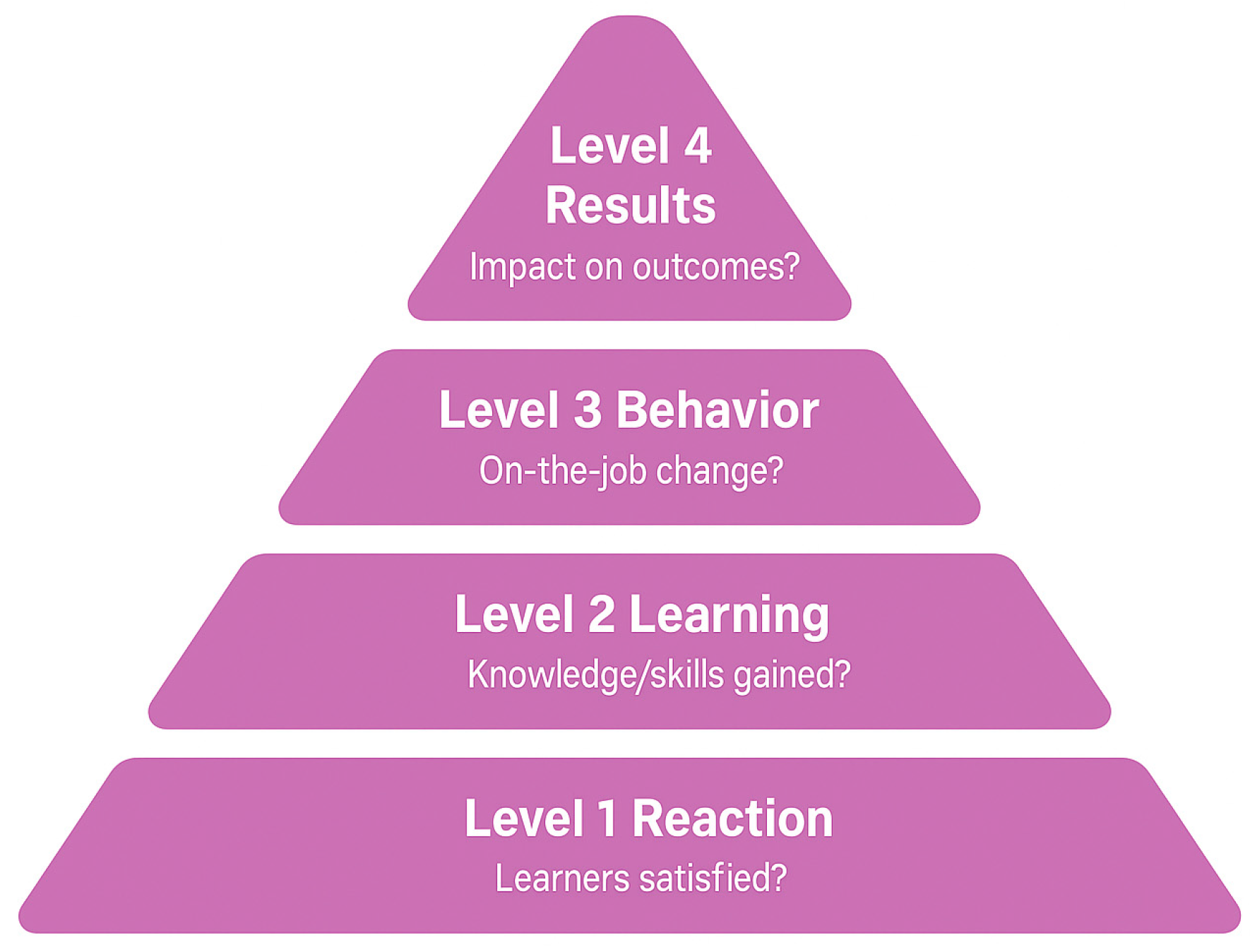
Figure 2.
Prisma flow diagram.
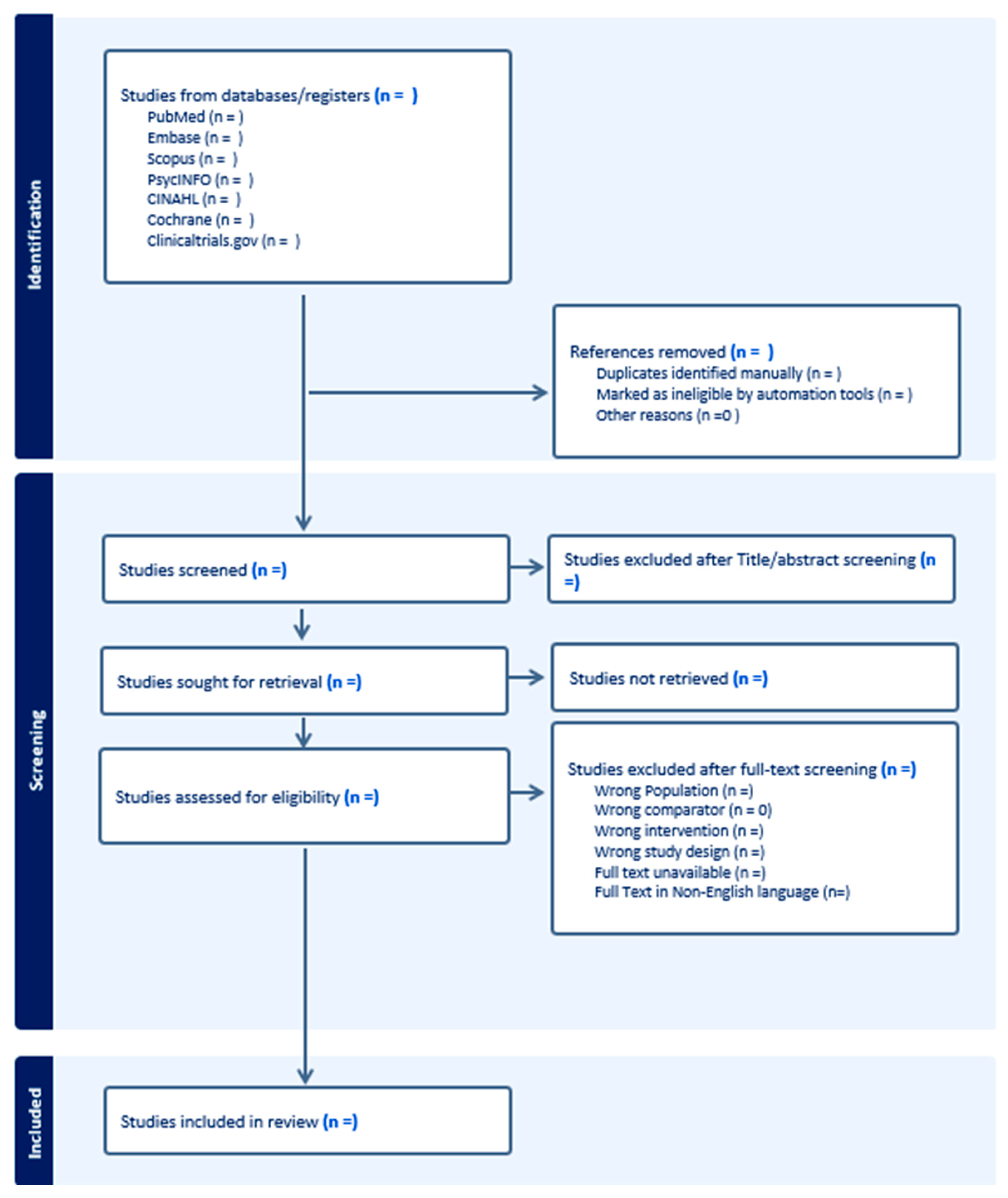

Table 1.
Keywords.
| Population | Concept | Context |
| paramedic* | tabletop exercise* | emergency preparedness |
| first responder* | table-top exercise* | disaster preparedness |
| ambulance* | Table top exercise* | mass casualty incident* |
| emergency medical services | tabletop simulation* | MCI |
| EMS | discussion-based exercise* | field triage |
| prehospital | discussion based simulation* | incident command |
| tabletop | prehospital care | |
| tabletop drill* | disaster simulation | |
| preparedness exercise* | response coordination | |
| board game* | "Mass Casualty Incidents"[Mesh] | |
| simulation game* | ||
| scenario-based simulation* | ||
| "Computer Simulation"[Mesh] | ||
| "Gamified exercise" |
Table 2.
Search Strategy.
| Database | Search strategy | |
| PubMed | ((paramedic* OR "first responder" OR "first responders" OR ambulance* OR "emergency medical services" OR "emergency medical service" OR "EMS" OR "prehospital") AND ("Computer Simulation"[Mesh] OR "gamified exercise" OR "tabletop exercise" OR "tabletop exercises" OR "table-top exercise" OR "table-top exercises" OR "table top exercise" OR "table top exercises" OR "tabletop simulation" OR "tabletop simulations" OR "tabletop" OR "tabletop drills" OR "preparedness exercise" OR "preparedness exercises" OR "board game" OR "board games" OR "simulation game" OR "simulation games" OR "scenario-based simulation" OR "scenario-based simulations")) AND ("emergency preparedness" OR "disaster preparedness" OR "mass casualty incidents" OR "mass casualty incident" OR "MCI" OR "field triage" OR "incident command" OR "prehospital care" OR "disaster simulation" OR "response coordination" OR crisis OR "Mass Casualty Incidents"[Mesh]) AND (y_10[Filter]) | |
| Scopus | ( TITLE-ABS-KEY ( paramedic* OR "first responder*" OR ambulance* OR "emergency medical service*" OR ems OR prehospital ) ) AND ( TITLE-ABS-KEY ( "tabletop exercise*" OR "table top exercise*" OR "tabletop simulation*" OR "discussion based simulation*" OR "gamified exercise" OR tabletop OR "tabletop drill*" OR "preparedness exercise*" OR "board game*" OR "simulation game*" OR "scenario based simulation*" ) ) AND ( TITLE-ABS-KEY ( "emergency preparedness" OR "disaster preparedness" OR "mass casualty incident*" OR mci OR "field triage" OR "incident command" OR "prehospital care" OR "disaster simulation" OR "response coordination" ) ) AND PUBYEAR > 2014 AND PUBYEAR < 2026 | |
| Embase | #23 | #22 AND (2015:py OR 2016:py OR 2017:py OR 2018:py OR 2019:py OR 2020:py OR 2021:py OR 2022:py OR 2023:py OR 2024:py OR 2025:py) |
| #22 | #6 AND #12 AND #21 | |
| #21 | #13 OR #14 OR #15 OR #16 OR #17 OR #18 OR #19 OR #20 | |
| #20 | 'prehospital care' | |
| #19 | 'incident command' | |
| #18 | 'field triage' | |
| #17 | 'mass casualty incident' | |
| #16 | 'mass disaster' | |
| #15 | 'mass disaster' | |
| #14 | 'disaster preparedness' | |
| #13 | 'emergency preparedness' | |
| #12 | #7 OR #8 OR #9 OR #10 OR #11 | |
| #11 | 'tabletop exercise' | |
| #10 | 'tabletop simulation' | |
| #9 | tabletop | |
| #8 | 'simulation based medical education' | |
| #7 | 'simulation training' | |
| #6 | #1 OR #2 OR #3 OR #4 OR #5 | |
| #5 | 'prehospital time' | |
| #4 | 'emergency health service' | |
| #3 | 'ambulance' | |
| #2 | 'first responder (person)' | |
| #1 | 'paramedical personnel'/exp OR 'paramedical personnel' | |
|
PsycNET |
((Any Field: (paramedic*)) OR (Any Field: (first responder*)) OR (Any Field: (ambulance*)) OR (Any Field: (emergency medical services)) OR (Any Field: (EMS)) OR (Any Field: (prehospital))) AND ((Any Field: (tabletop exercise*)) OR (Any Field: (table-top exercise*)) OR (Any Field: (table top exercise*)) OR (Any Field: (tabletop simulation*)) OR (Any Field: (discussion-based exercise*)) OR (Any Field: (discussion based simulation*)) OR (Any Field: (tabletop)) OR (Any Field: (tabletop drill*)) OR (Any Field: (preparedness exercise*)) OR (Any Field: (board game*)) OR (Any Field: (simulation game*)) OR (Any Field: (scenario-based simulation*))) AND ((Any Field: (emergency preparedness)) OR (Any Field: (disaster preparedness)) OR (Any Field: (mass casualty incident*)) OR (Any Field: (MCI)) OR (Any Field: (field triage)) OR (Any Field: (incident command)) OR (Any Field: (prehospital care)) OR (Any Field: (disaster simulation)) OR (Any Field: (response coordination))) AND Year: 2015 To 2025 | |
| CINAHL | (paramedic* OR "first responder*" OR ambulance* OR "emergency medical service*" OR ems OR prehospital ) AND ("tabletop exercise*" OR "table top exercise*" OR "tabletop simulation*" OR "discussion based simulation*" OR tabletop OR "gamified exercise" OR "tabletop drill*" OR "preparedness exercise*" OR "board game*" OR "simulation game*" OR "scenario based simulation*" ) AND ("emergency preparedness" OR "disaster preparedness" OR "mass casualty incident*" OR mci OR "field triage" OR "incident command" OR "prehospital care" OR "disaster simulation" OR "response coordination" ) Filter: Last 10 years |
|
| Cochrane | paramedic* OR "first responder" OR "first responders" OR ambulance* OR "emergency medical service" OR "emergency medical services" OR ems OR prehospital in Title Abstract Keyword AND "tabletop exercise" OR "tabletop exercises" OR "table-top exercise" OR "table-top exercises" OR "table top exercise" OR "table top exercises" OR "tabletop simulation" OR "tabletop simulations" OR "gamified exercise" OR "tabletop" OR "tabletop drills" OR "preparedness exercise" OR "preparedness exercises" OR "board game" OR "board games" OR "simulation game" OR "simulation games" OR "scenario-based simulation" OR "scenario-based simulations" in Title Abstract Keyword AND "emergency preparedness" OR "disaster preparedness" OR "mass casualty incidents" OR "mass casualty incident" OR "MCI" OR "field triage" OR "incident command" OR "prehospital care" OR "disaster simulation" OR "response coordination" in Title Abstract Keyword | |
| Clinicaltrials.gov | (paramedic* OR "first responder" OR "first responders" OR ambulance* OR "emergency medical service" OR "emergency medical services" OR ems OR prehospital) AND ("tabletop exercise" OR "tabletop exercises" OR "table-top exercise" OR "table-top exercises" OR "table top exercise" OR "table top exercises" OR "tabletop simulation" OR "tabletop simulations" OR "gamified exercise" OR "tabletop" OR "tabletop drills" OR "preparedness exercise" OR "preparedness exercises" OR "board game" OR "board games" OR "simulation game" OR "simulation games" OR "scenario-based simulation" OR "scenario-based simulations") AND ("emergency preparedness" OR "disaster preparedness" OR "mass casualty incidents" OR "mass casualty incident" OR "MCI" OR "field triage" OR "incident command" OR "prehospital care" OR "disaster simulation" OR "response coordination") | |
Table 3.
Data Extraction sheet.
| Field | Description |
| Study ID | Last name of author and year of publication. |
| Country | The country where the study was conducted. |
| Study design | Type of study (e.g., qualitative, quantitative, mixed methods, case study, commentary). |
| Population type | Description of participants (e.g., EMS personnel, paramedics, medical students). |
| Sample size | Number of participants included in the study. |
| Training setting | Context of delivery (e.g., university, EMS training center, hospital, field exercise). |
| Interprofessional involvement | Was the exercise interprofessional? (Yes/No/Not specified). |
| Exercise objectives | Specific goals or learning outcomes that the tabletop exercise aimed to achieve. |
| TTX description | Summary of how the tabletop exercise was designed and conducted (duration, modality, number of scenarios, etc.). |
| Number of scenarios | Total number of distinct emergency scenarios used during the exercise. |
| Duration of exercise | Total time (in minutes or hours) allocated for the tabletop exercise. |
| Pre-Exercise Lecture | Indicate whether a formal briefing or instructional session was provided before the TTX. |
| Pre-TTX Evaluation | Whether an assessment was conducted before the tabletop (e.g., baseline knowledge, readiness survey). |
| Supplementary resources | Any materials provided before the exercise (e.g., readings, protocols, guidelines). |
| Subject matter experts' availability | Whether content experts (e.g., EMS leaders, disaster planners) were involved in designing the TTX. |
| Support team availability | Presence of facilitators, coordinators, or technical support teams during the exercise. |
| Disaster type | Type of emergency simulated (e.g., MCI, pandemic, natural disaster, CBRN). |
| Real-world alignment | Whether the scenarios and responses were based on actual or likely local incidents. |
| Debriefing | Indicate if and how a structured debriefing was conducted post-exercise. |
| Post-TTX evaluation | Whether a follow-up assessment was conducted to measure impact (e.g., post-test, survey, reflection). |
| Comparator | If a comparison was made (e.g., FSE, lecture-based training), describe the comparator. |
| Measurement tools | Instruments or methods used to assess outcomes (e.g., surveys, pre/post-tests, observation checklists). |
| Self-reported measures | Subjective feedback from participants (e.g., confidence, satisfaction, perceived preparedness). |
| Outcomes assessed | Learning or performance outcomes were evaluated in the study. |
| Frameworks used during the exercise | Disaster frameworks or operational models guiding the exercise (e.g., ICS, NIMS, START triage, and WHO frameworks). |
| Frameworks used while designing or assessing the training | Instructional/educational design frameworks used (e.g., ADDIE model, Kern’s 6-step approach, Bloom’s taxonomy, Kirkpatrick’s model). |
| Kirkpatrick level | Outcome level according to the Kirkpatrick Model (Reaction, Learning, Behavior, Results). |
| Main findings | Summary of the key results. |
Disclaimer/Publisher’s Note: The statements, opinions and data contained in all publications are solely those of the individual author(s) and contributor(s) and not of MDPI and/or the editor(s). MDPI and/or the editor(s) disclaim responsibility for any injury to people or property resulting from any ideas, methods, instructions or products referred to in the content. |
© 2025 by the authors. Licensee MDPI, Basel, Switzerland. This article is an open access article distributed under the terms and conditions of the Creative Commons Attribution (CC BY) license (http://creativecommons.org/licenses/by/4.0/).
Copyright: This open access article is published under a Creative Commons CC BY 4.0 license, which permit the free download, distribution, and reuse, provided that the author and preprint are cited in any reuse.


