

Submitted:
26 September 2025
Posted:
06 October 2025
You are already at the latest version
Abstract
This paper presents a comprehensive analysis of Agentic Gen Artificial Intelligence (AI) frameworks and their integration into modern military systems. We examine the architectural foundations, development pipelines, and security considerations for deploying autonomous AI agents in defense applications. The research analyzes multi-agent system architectures, digital twin environments for training and validation, and secure DevOps pipelines tailored for military AI deployment. Through detailed technical diagrams and case studies, we demonstrate how Agentic AI systems enable proactive decision-making, adaptive mission planning, and coordinated autonomous operations across domains including command and control, intelligence surveillance reconnaissance (ISR), cyber defense, and swarm warfare. The paper identifies critical technical challenges in system integration, adversarial robustness, and human-machine teaming, while proposing layered security frameworks and standardized interoperability protocols. Our findings indicate that successful military implementation of Agentic AI requires robust testing methodologies, explainable AI components, and ethical governance mechanisms to ensure reliability, accountability, and compliance with international norms. The technical analysis provides a foundation for future research on AGI integration and offers practical recommendations for defense organizations navigating the transition to agentic warfare systems.
Keywords:
agentic AI
; military artificial intelligence
; autonomous systems
; defense technology
; military strategy
; national security
; AI ethics
; command and control
1. Introduction
The rapid evolution of artificial intelligence has ushered in a new era of autonomous systems capable of proactive decision-making and independent task execution, fundamentally transforming military operations and strategic paradigms. Agentic AI represents a quantum leap beyond traditional reactive systems, enabling complex mission planning, adaptive battlefield behavior, and coordinated multi-domain operations with minimal human intervention. This technological shift is driven by advances in deep learning frameworks, multi-agent architectures, and real-time simulation environments that collectively enable systems to "execute complex tasks independently, proactively analyze data, make decisions, and act with minimal human intervention" [1].
Recent developments underscore the strategic importance of this transition. The United States Department of Defense has committed substantial resources, awarding "up to $200 million each to four U.S.-based artificial intelligence companies developing ’frontier’ models" [2], while China demonstrates advanced capabilities through systems that "project 10,000 battles in 48 seconds" [3]. These investments highlight the intensifying global competition in military AI applications and the recognition that Agentic AI will fundamentally reshape the character of warfare.
This paper provides a comprehensive technical analysis of Agentic AI frameworks, architectures, and implementation methodologies for military applications. We examine the integration pipelines connecting commercial AI platforms with defense-specific systems, the security frameworks required for mission-critical deployment, and the multi-agent coordination mechanisms enabling swarm warfare and distributed command and control. Our research addresses critical technical challenges including system interoperability, adversarial robustness, testing validation, and human-machine teaming interfaces.
The paper is structured as follows: Section 4 establishes foundational concepts and definitions; Section 3 analyzes the software ecosystem and development frameworks; Section 5 examines specific military implementations; Section 6 addresses technical and ethical challenges; and Section 10 provides concluding recommendations for responsible deployment. Through detailed architectural analysis and case studies, this research contributes to the understanding of how Agentic AI systems can be securely and effectively integrated into modern military operations while maintaining ethical governance and strategic stability..
2. Key Literature Review Items
2.1. Literature Review: Technical Frameworks and Platforms
- Autonomous System Architectures: [51] discusses next-generation AI predictions that inform long-term military AI development trajectories.
- AI Infrastructure Scaling: [52] examines emerging AI infrastructure companies securing significant funding for reliability engineering in AI systems.
- Enterprise AI Integration: [53] provides industry perspectives on AI job displacement concerns relevant to military workforce planning.
- AI Selection Frameworks: [54] offers decision matrices for choosing between generative AI and agentic AI approaches in complex operational environments.
2.2. Strategic and Policy Context
- Commercial AI Development: [55] explores business applications of agentic AI that inform dual-use technology considerations.
- Historical AI Perspectives: [56] provides foundational analysis of AI’s role in future warfare scenarios and human-machine teaming challenges.
- Research Community Resources: [57] represents broader academic discourse on military AI applications and ethical considerations.
2.3. Industry and Implementation Perspectives
- Corporate Strategy: [58] outlines business strategies for leveraging agentic AI that parallel military adoption considerations.
- Technology Skepticism: [59] presents critical perspectives on agentic AI hype cycles, providing important balance to optimistic projections.
- Platform Developments: [60] discusses corporate dynamics in defense AI contracting and political dimensions of military technology development.
3. Tools, Software Frameworks, and Ecosystem for Military Agentic AI
The development and deployment of Agentic AI systems in military contexts rely on a sophisticated ecosystem of software frameworks, development tools, and integration platforms. This section examines the key technologies enabling military Agentic AI applications, their interrelationships, and the emerging standards shaping this domain.
3.1. Core AI Development Frameworks
3.1.1. TensorFlow and PyTorch Ecosystems
The foundation of most military AI systems builds upon established deep learning frameworks. TensorFlow, developed by Google, and PyTorch, maintained by Meta, form the backbone of modern AI development. As noted in recent defense analyses, “The Pentagon is betting big on agentic AI, and it’s turning to the world’s top tech firms to make it happen” [36]. These frameworks provide:
- Neural Network Architectures: Pre-built models for various military applications
- Distributed Training Capabilities: Essential for large-scale military datasets
- Deployment Optimization: Tools for efficient inference on edge devices
- Interoperability Standards: Ensuring compatibility across different systems
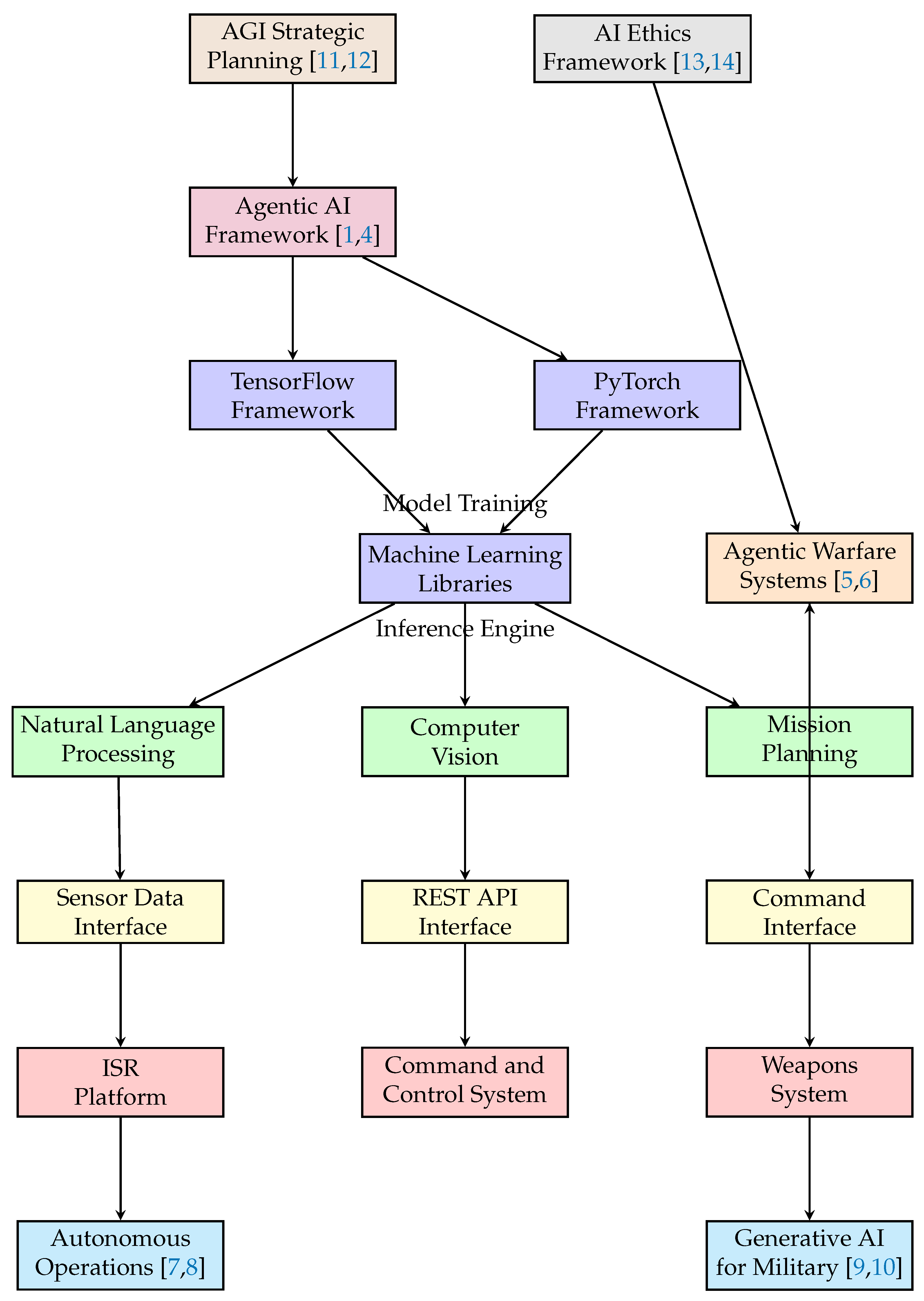
Figure 1.
Architecture of military AI development framework showing integration between TensorFlow/PyTorch and defense-specific applications, including Agentic AI [15,16], autonomous warfare systems [17,18], and strategic AI capabilities [19,20]
3.1.2. Specialized Military AI Platforms
Several defense-specific platforms have emerged to address unique military requirements:
Palantir’s TITAN System: “The Army’s next generation intelligence ground station enabled by Artificial Intelligence (AI) and Machine Learning” represents a specialized platform designed specifically for military intelligence processing [30]. This system demonstrates how commercial AI capabilities are being adapted for defense applications.
Anduril’s Lattice OS: As part of the “defense tech firms establish AI-focused consortium” [28], platforms like Lattice provide integrated command and control capabilities combining sensor data, AI analysis, and actuator control.
3.2. Agentic AI Development Tools
3.2.1. Autonomous Agent Frameworks
The development of truly agentic systems requires specialized frameworks beyond traditional machine learning tools. Recent advancements include:

Table 1.
Comparison of Agentic AI Development Frameworks
| Framework | Key Features | Military Applications | Deployment Status |
|---|---|---|---|
| AutoGPT | Task decomposition, memory management | Mission planning, logistics optimization | Research phase |
| LangChain | LLM integration, tool usage | Intelligence analysis, report generation | Early deployment |
| Microsoft Autogen | Multi-agent coordination, human-in-the-loop | Command and control, decision support | Prototype testing |
| Camel AI | Role-playing agents, communication protocols | Training simulations, wargaming | Experimental |
These frameworks enable the creation of systems that can “proactively analyze data, make decisions, and act with minimal human intervention” [1], moving beyond reactive AI toward true autonomy.
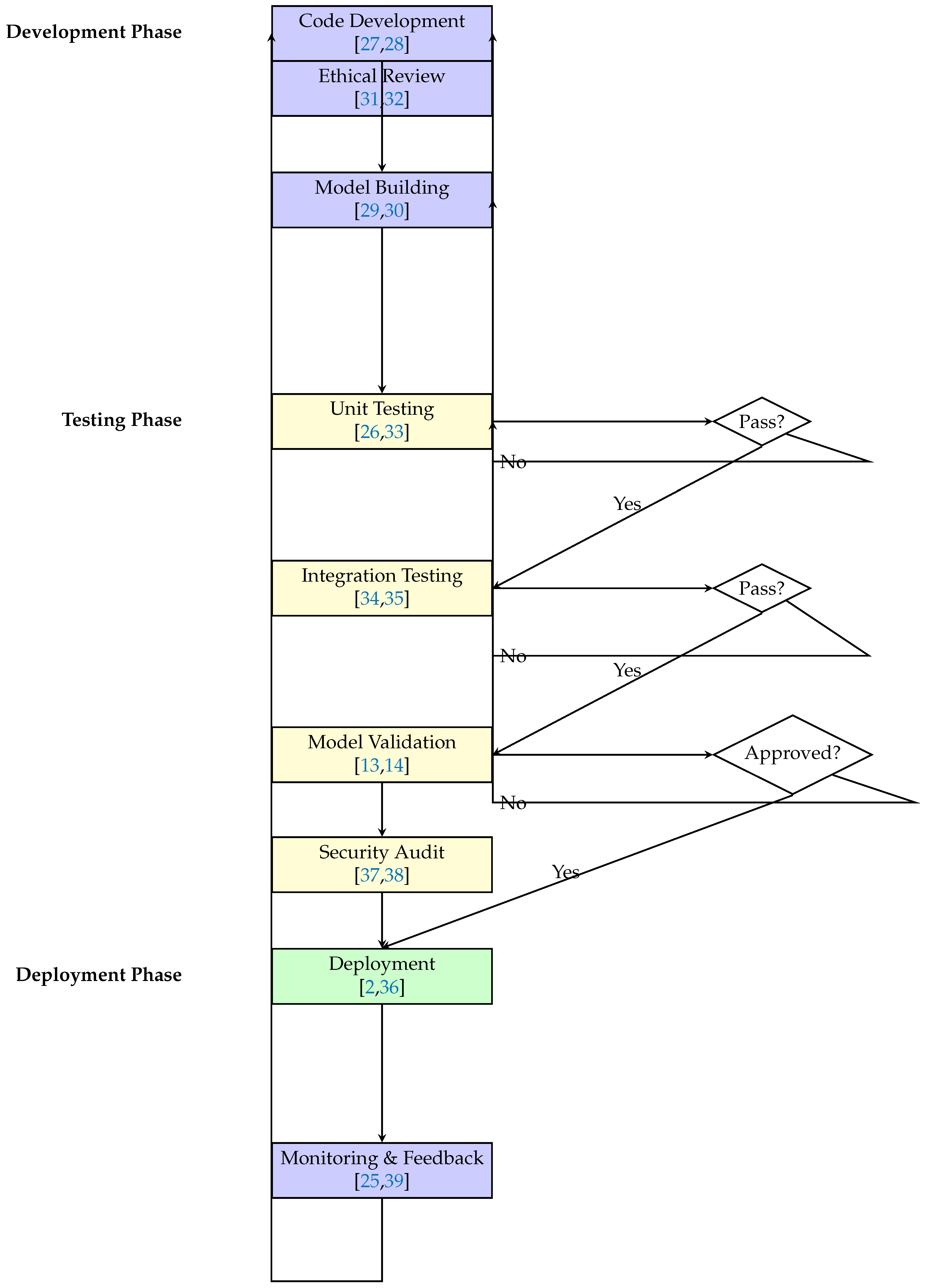
Figure 3.
Vertical AI DevOps pipeline for military Agentic AI systems with spacious layout, separated decision nodes, and integrated ethical and security checks.
Figure 3.
Vertical AI DevOps pipeline for military Agentic AI systems with spacious layout, separated decision nodes, and integrated ethical and security checks.
3.2.2. Multi-Agent System Platforms
For complex military operations requiring coordination between multiple AI agents, specialized platforms have emerged:
RAY Framework: Originally developed by RISELab at UC Berkeley, this distributed computing framework enables scalable multi-agent systems suitable for military command and control applications.
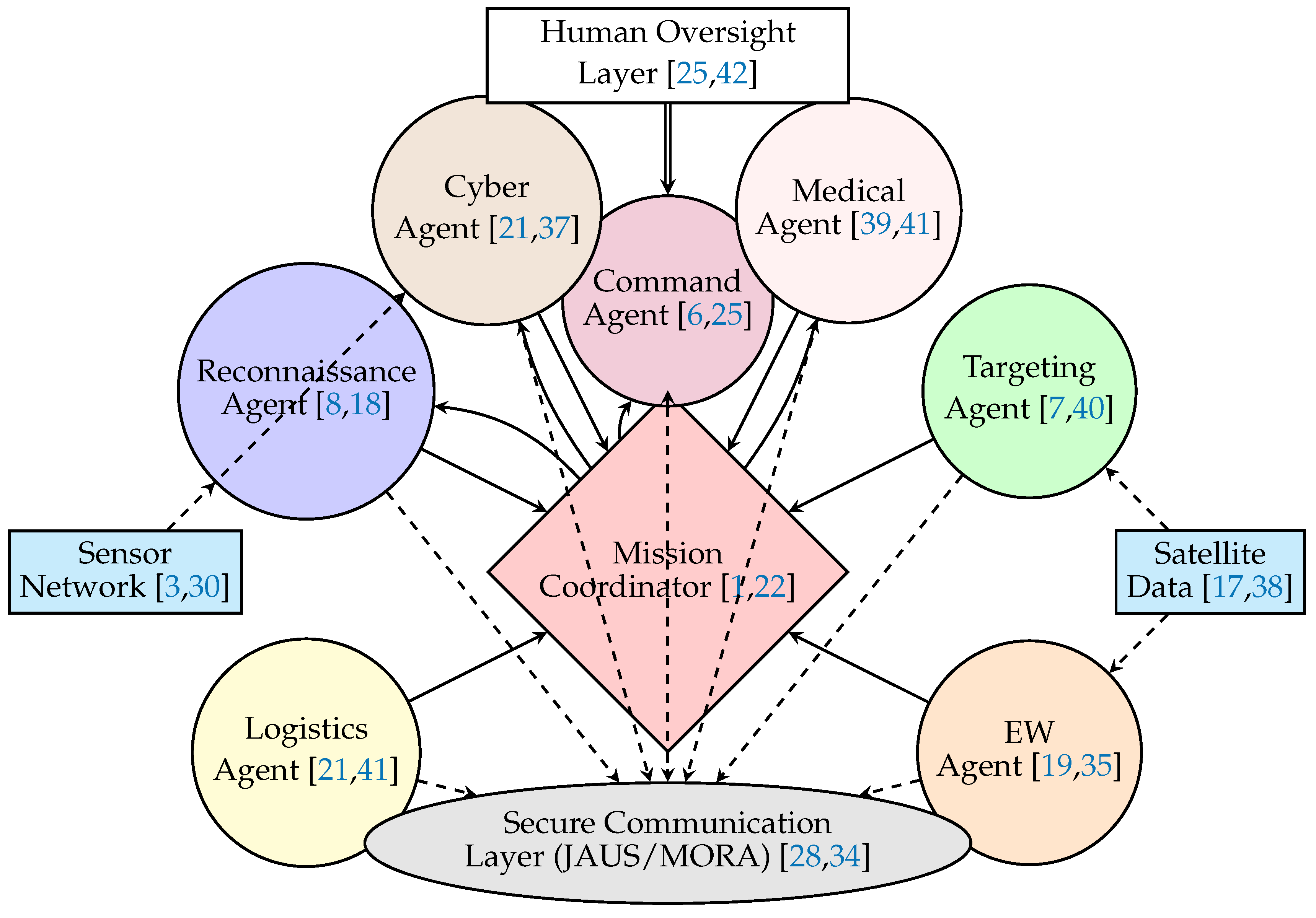
JAUS (Joint Architecture for Unmanned Systems): A messaging standard that enables interoperability between different unmanned systems, crucial for “drone swarms go to war” scenarios [7].
3.3. Simulation and Testing Environments
3.3.1. Military-Grade Simulation Platforms
The development and validation of Agentic AI systems require sophisticated simulation environments. As demonstrated by Chinese researchers who “created an AI military scenario generator that projects 10,000 battles in 48 seconds” [3], simulation capabilities are essential for:
- Training and Validation: Testing AI behavior in realistic scenarios
- Stress Testing: Evaluating performance under extreme conditions
- Red Teaming: Identifying vulnerabilities and failure modes
- Doctrine Development: Exploring new tactical concepts
Key simulation platforms include:
- ONE-SAF (One Semi-Automated Forces): U.S. Army’s entity-level simulation
- VR-Forces: Commercial simulation environment for autonomous systems
- SUMMIT (Strategic Unified Messaging for Mission Integration Technology): Joint simulation framework
Figure 5.
Multi-layered security framework for military Agentic AI systems implementing defense-in-depth principles [26,34] with comprehensive governance and testing protocols required for mission-critical deployments [13,27]
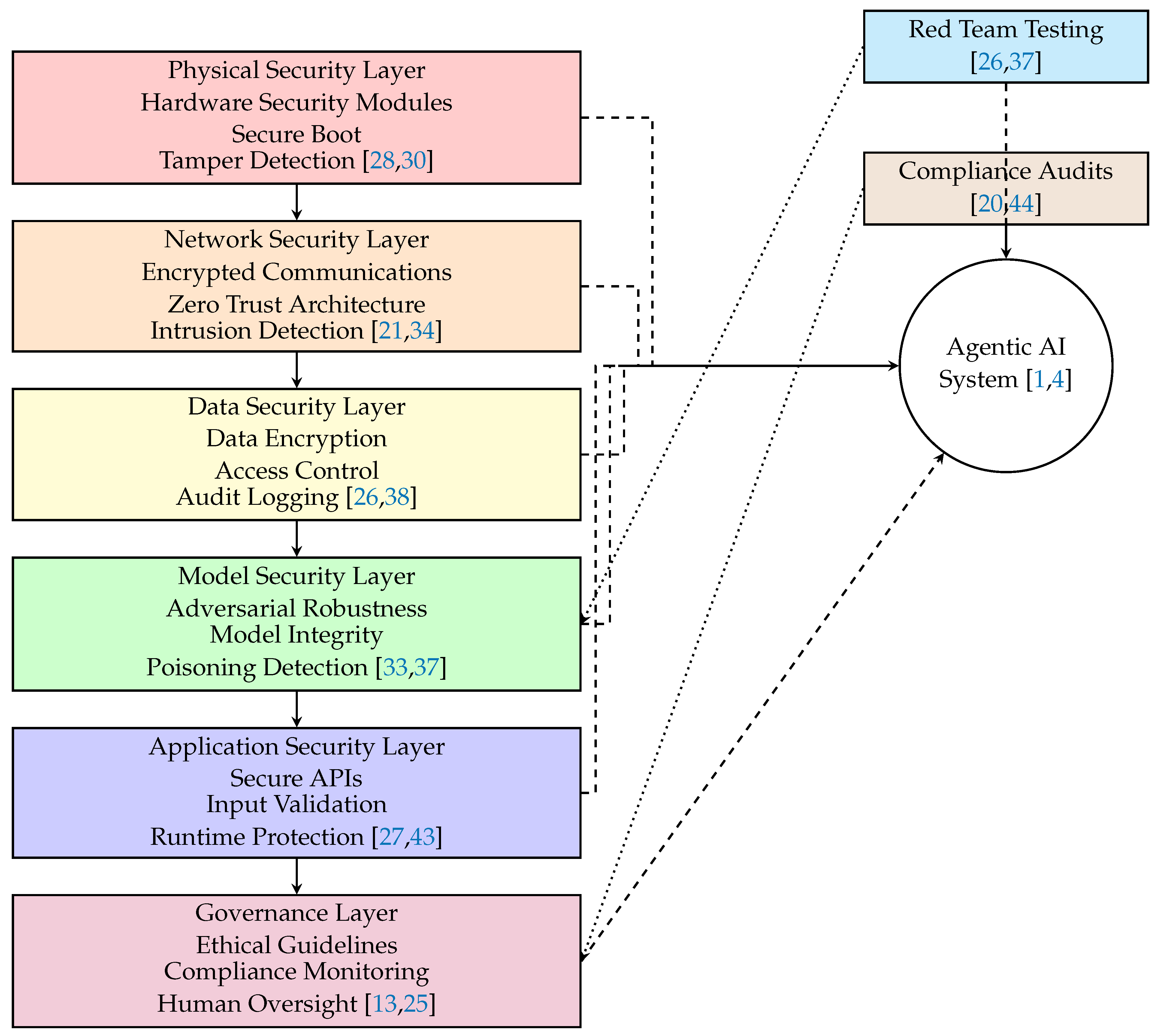
Figure 6.
Timeline of AI technology evolution in military applications with split boxes for clarity and references preserved. Shows accelerated adoption of agentic systems [6,15] and emerging AGI capabilities [11,12].
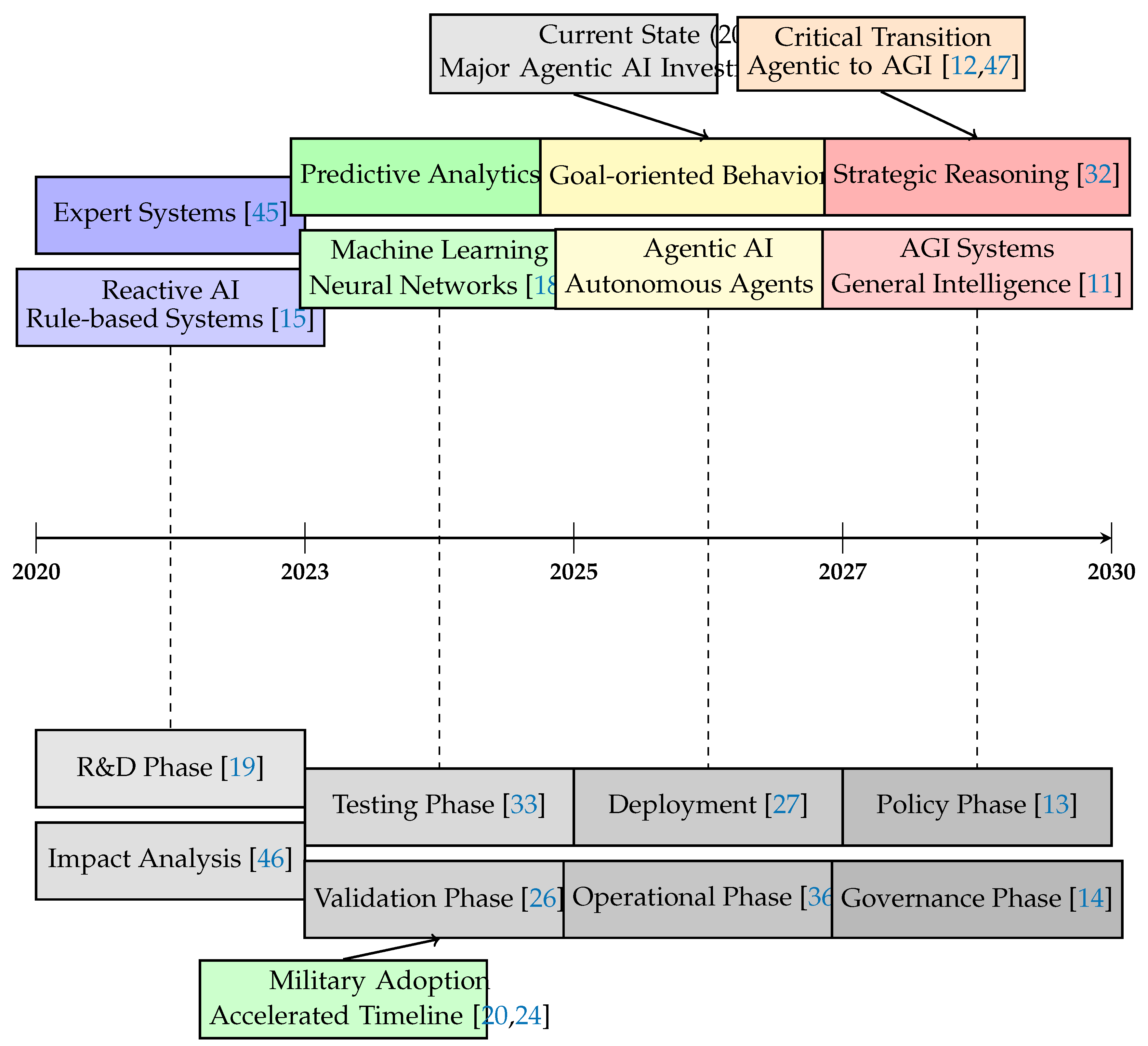
Figure 7.
Decision-making flow for Agentic AI operations in military context adapted for IEEE paper width, showing human oversight [6,25] and ethical compliance [13,26]. Diagram scaled to fit page.
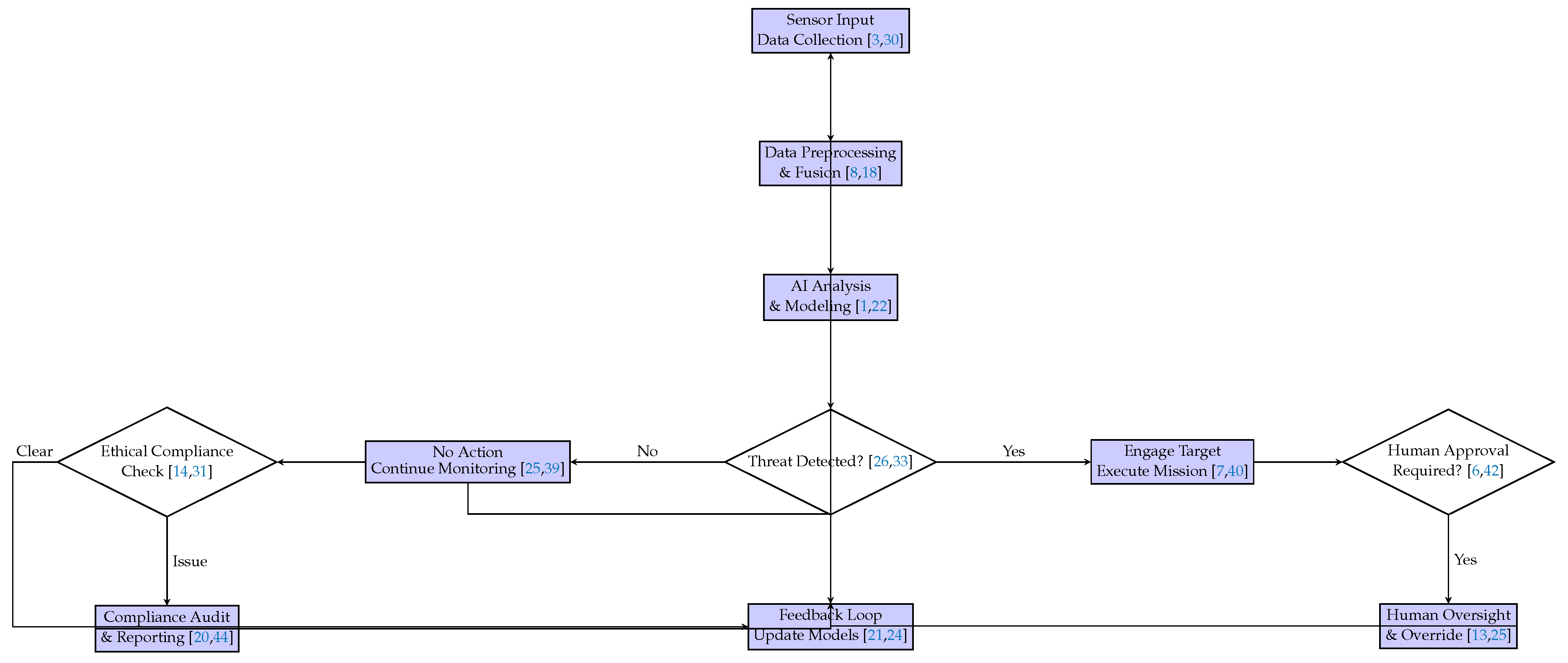
Figure 8.
USA vs China AI Military Competition (2025-2031): Strategic dynamics and capability trajectories showing contrasting approaches to AI militarization [12,19] with significant implications for global security balance [31,47]
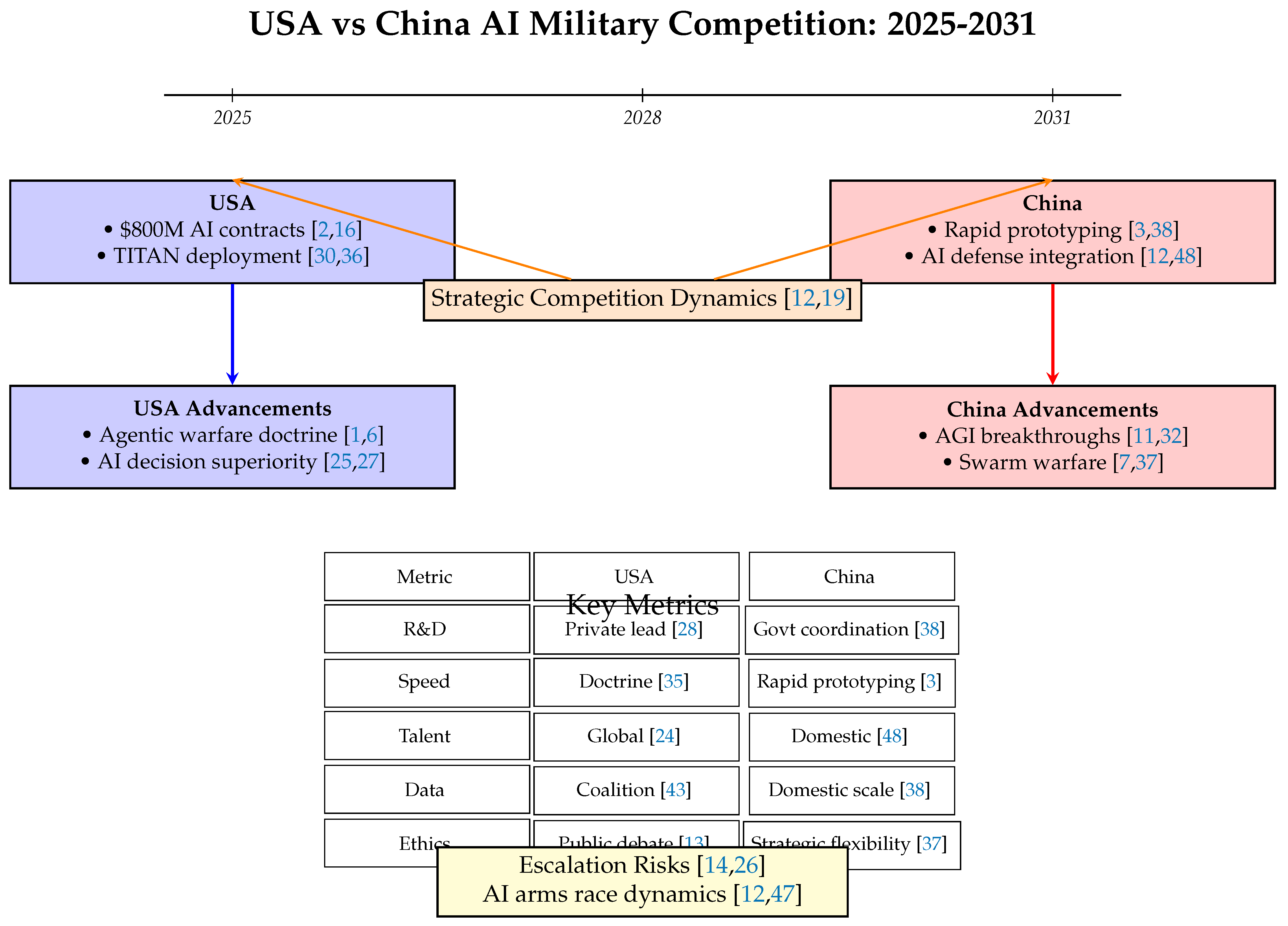
Figure 9.
USA vs China AI Military Competition (2034+): Long-term projections, strategic challenges, risks, and cooperation opportunities in the AGI era [12,47], showing divergent strategic approaches and critical escalation risks requiring international governance [13,14]. Diagram scaled and split for IEEE paper fit.
Figure 9.
USA vs China AI Military Competition (2034+): Long-term projections, strategic challenges, risks, and cooperation opportunities in the AGI era [12,47], showing divergent strategic approaches and critical escalation risks requiring international governance [13,14]. Diagram scaled and split for IEEE paper fit.
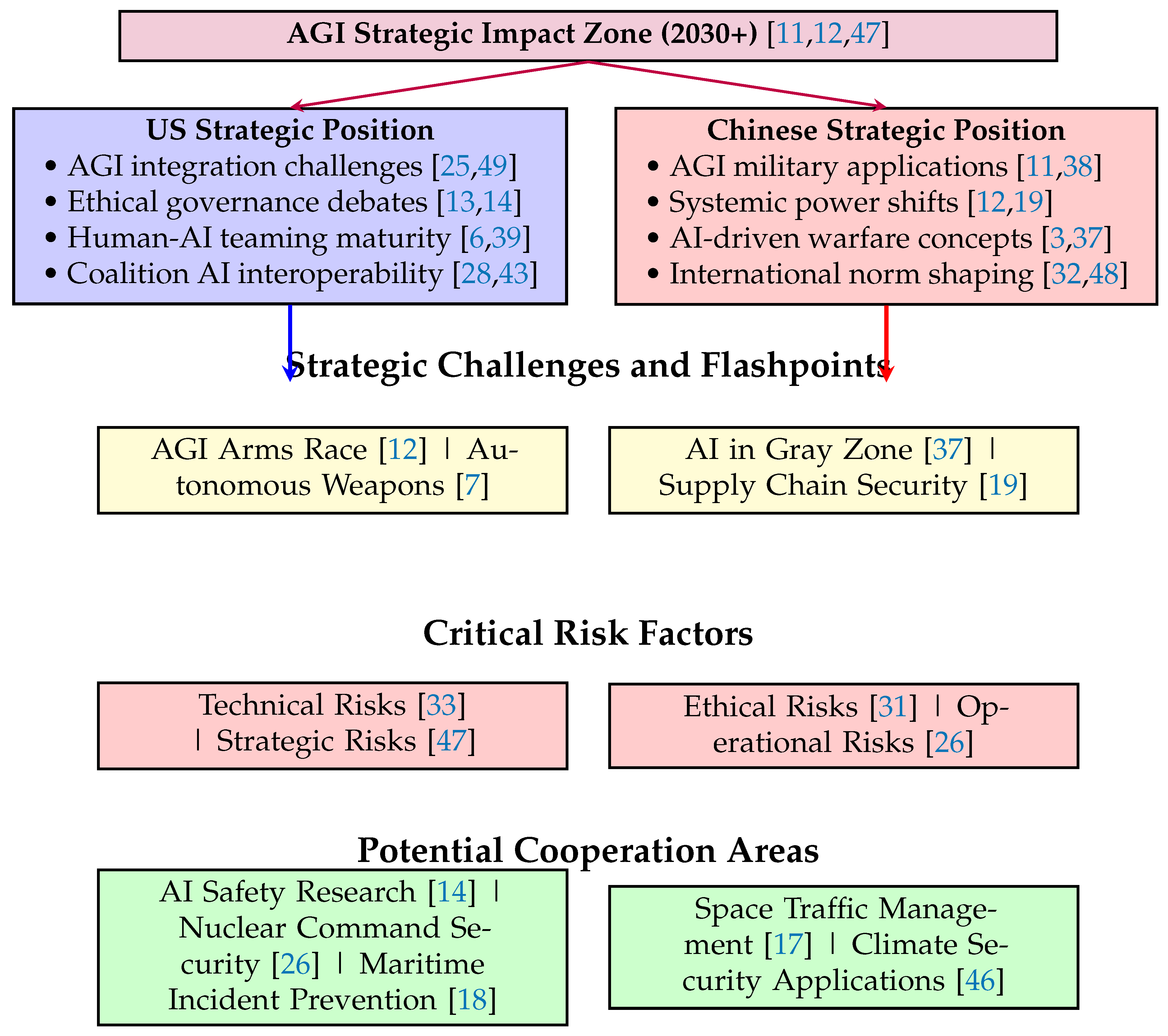
Figure 10.
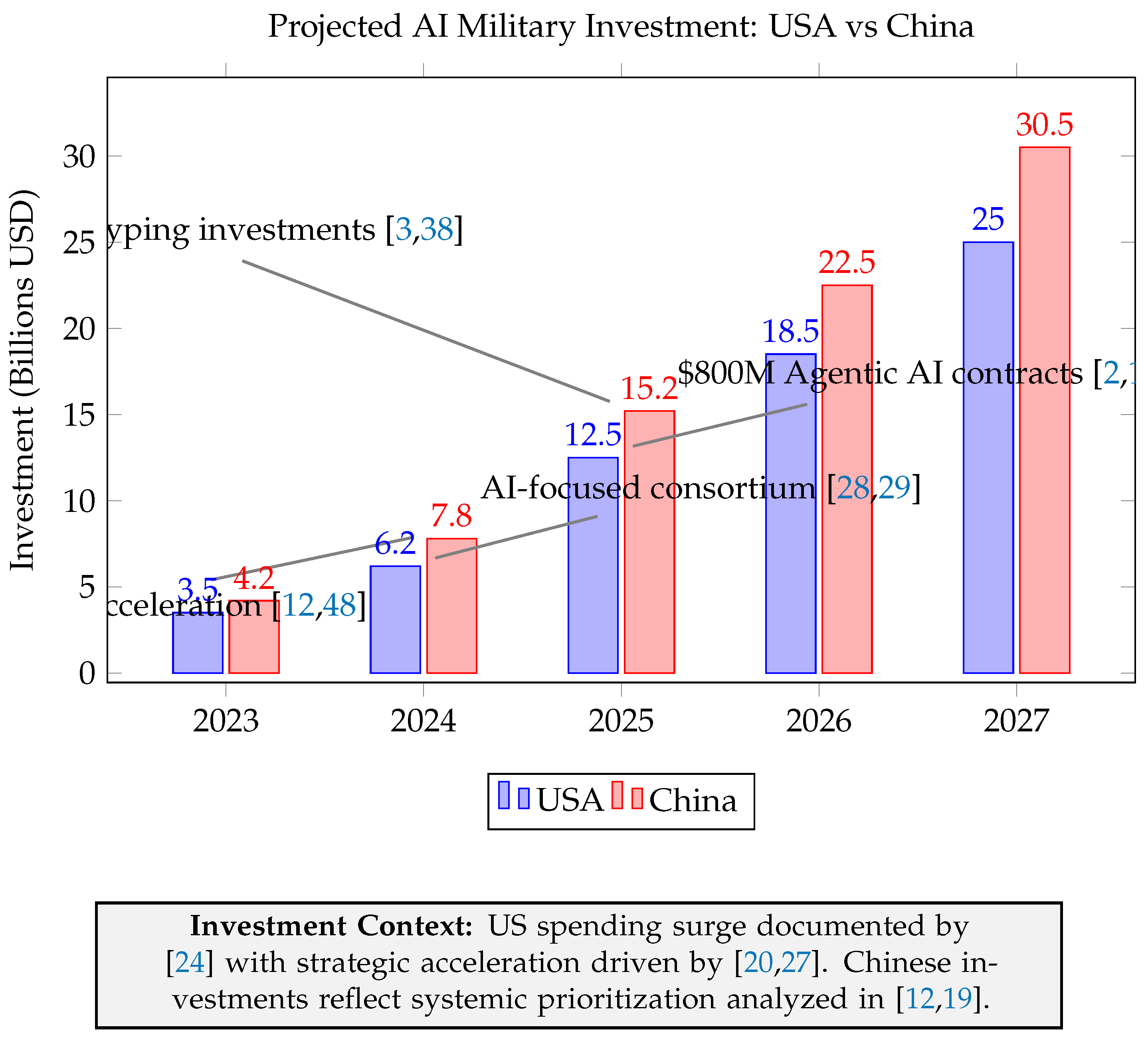
Comparative AI military investment projections showing accelerating spending by both nations, with US private-sector partnerships [28,36] contrasting with China’s government-coordinated approach [38,48] in strategic technology competition [12,19]
3.3.2. Digital Twin Technologies
The concept of digital twins—virtual replicas of physical systems—has gained traction in military AI development. These systems enable.
Real-time System Monitoring: Continuous comparison between predicted and actual performance Predictive Maintenance: AI-driven analysis of equipment status Scenario Planning: Testing responses to potential threats in virtual environment
3.4. Integration and Deployment Tools
3.4.1. Middleware and API Frameworks
The integration of Agentic AI systems into existing military infrastructure requires robust middleware solutions. The establishment of “defense tech firms establish AI-focused consortium” [28] highlights the importance of standardized interfaces and interoperability.
Key integration technologies include:
Table 2.
Military AI Integration Standards and Protocols
| Standard | Purpose | Military Applications |
|---|---|---|
| FACE (Future Airborne Capability Environment) | Software component interoperability | Avionics systems, sensor integration |
| HLA (High Level Architecture) | Distributed simulation interoperability | Training systems, mission rehearsal |
| UCI (Universal Command and Control Interface) | Message standardization | Joint operations, coalition warfare |
| MORA (Modular Open Systems Approach) | System architecture standards | Platform integration, lifecycle management |
3.4.2. Containerization and Orchestration
Modern deployment of Agentic AI systems leverages container technologies for consistency and scalability:
Docker and Kubernetes: Enable portable deployment across different environments, from cloud infrastructure to edge devices on the battlefield.
Edge Computing Platforms: Specialized distributions like NVIDIA’s Fleet Command provide managed deployment of AI applications to distributed edge devices.
3.5. Data Management and Processing Tools
3.5.1. Military Data Lakes and Analytics
Agentic AI systems require massive amounts of training and operational data. The U.S. Department of Defense has developed sophisticated data management infrastructures:
Joint Common Foundation (JCF): Cloud-based platform providing AI development tools and data access to military units.
Project Maven: Originally focused on computer vision, now expanded to provide “boosting battlefield awareness, data analysis, and threat detection” [23].
3.5.2. Data Fusion and Processing
Military Agentic AI systems must process diverse data sources in real-time:
- Apache Spark: Distributed processing of large-scale sensor data
- Apache Kafka: Real-time data streaming from multiple sources
- Elasticsearch: Search and analysis of operational data
- Computer Vision Libraries: OpenCV, PIL for image and video analysis
3.6. Development and DevOps Tools
3.6.1. AI-Specific Development Environments
The unique requirements of Agentic AI development have spurred creation of specialized tools:
Jupyter Notebooks: Interactive development and experimentation MLflow: Experiment tracking and model management Weights & Biases: Performance monitoring and visualization DVC (Data Version Control): Management of datasets and model versions
3.6.2. Continuous Integration/Deployment for AI
Military AI systems require rigorous testing and validation pipelines.
Automated Testing Frameworks: Unit tests for AI components, integration tests for system behavior Model Validation Tools: Testing for bias, robustness, and performance degradation Security Scanning: Vulnerability assessment for AI models and dependencies
3.7. Emerging Technologies and Future Directions
3.7.1. Generative AI Integration
The recent announcement that the “U.S. Army launches generative AI platform in groundbreaking move” signals increasing integration of generative capabilities:
Large Language Models (LLMs): For natural language understanding and generation in command systems Generative Adversarial Networks (GANs): For creating training data and simulating scenarios Diffusion Models: For image generation and analysis in intelligence applications
3.7.2. Quantum Computing Interfaces
While still emerging, quantum computing represents a future direction for military AI:
Quantum Machine Learning: Potential for exponential speedup in certain AI algorithms Quantum-Safe Cryptography: Essential for securing AI communications Hybrid Quantum-Classical Algorithms: Near-term applications in optimization problems
3.7.3. Neuromorphic Computing
Bio-inspired computing architectures offer potential advantages for military AI applications:
Energy Efficiency: Critical for deployed systems with limited power Real-time Processing: Low-latency response for tactical applications Robustness: Natural resilience to noise and partial failures
3.8. Interoperability and Standards
The effective deployment of Agentic AI systems requires adherence to interoperability standards and protocols. The “Political Declaration on Responsible Military Use of Artificial Intelligence and Autonomy” [13] emphasizes the importance of common standards for international security.
Key standardization efforts include:
- IEEE P2863: Standard for Ethical Considerations in AI System Development
- ISO/IEC JTC 1/SC 42: International standards for AI technologies
- NATO STANAGs: Standardization agreements for interoperability among NATO forces
- DoD AI Ethical Principles: Guidelines for responsible AI development and use
3.9. Challenges in Tooling and Framework Development
Despite rapid advancement, several challenges remain in military Agentic AI tooling:
3.9.1. Security Vulnerabilities
AI systems introduce new attack vectors that must be addressed through specialized tools:
Adversarial Machine Learning: Tools for detecting and mitigating attacks on AI models Model Integrity Verification: Ensuring AI systems haven’t been tampered with Secure Model Serving: Protecting AI inference endpoints from exploitation
3.9.2. Testing and Validation Complexity
The autonomous nature of Agentic AI systems complicates traditional testing approaches:
Edge Case Identification: Tools for discovering rare but critical failure modes Behavioral Certification: Formal methods for verifying AI system behavior Red Team Automation: AI systems designed to test other AI systems
3.9.3. Integration with Legacy Systems
Military organizations must integrate new AI capabilities with existing infrastructure:
API Adaptation Layers: Bridging modern AI systems with legacy interfaces Data Format Conversion: Handling diverse data standards across systems Gradual Migration Strategies: Phased introduction of AI capabilities
The tools and frameworks discussed in this section represent the foundational infrastructure enabling the development and deployment of Agentic AI systems in military contexts. As these technologies continue to evolve, they will play an increasingly critical role in determining the effectiveness, safety, and ethical compliance of military AI applications.
Table 3.
Comprehensive Analysis of Figures and Their Related References
| Figure Number | Figure Title | Related References and Strategic Implications | Primary Themes |
|---|---|---|---|
| Figure 1 | AI Framework Architecture | [1,30,36] - Integration of commercial AI frameworks with military-specific platforms | Technology Integration, System Architecture |
| Figure 2 | Digital Twin Architecture | [3,21] - Real-time simulation for AI training and testing | Simulation Technology, Training Systems |
| Figure 3 | AI DevOps Pipeline | [20,27] - Demonstrates testing, validation, and deployment for military AI | Quality Assurance, Deployment Processes |
| Figure 4 | Multi-Agent System Architecture | [5,7] - Coordinated autonomous systems in military operations | Autonomous Systems, Coordination Mechanisms |
| Figure 5 | Security Framework | [13,26] - Multi-layered cybersecurity and ethical governance | Cybersecurity, Ethical Governance |
| Figure 6 | Technology Evolution Timeline | [32,50] - Tracks AI progression from reactive systems to AGI | Technology Roadmap, Future Projections |
| Figure 7 | Decision-Making Flow | [6,25] - Human-AI collaboration in operational decisions | Human-Machine Teaming, Decision Processes |
| Figure 8 | USA-China Competition (2025-2031) | [12,19] - Near-term competitive dynamics between US and China | Geopolitical Competition, Investment Patterns |
| Figure 9 | USA-China Competition (2034+) | [43,47] - Long-term strategic projections and risk assessment | Strategic Forecasting, Risk Assessment |
| Figure 10 | Investment Comparison | [16,24] - Financial commitments and resource allocation for military AI | Economic Analysis, Resource Allocation |
| Figure 11 | Technology Readiness Timeline | [35,38] - Comparative technological milestones of US and China | Capability Assessment, Readiness Levels |
4. Background and Definitions
4.1. Defining Agentic AI
Agentic AI represents a significant evolution beyond conventional artificial intelligence systems. According to recent analyses, “Agentic AI systems can execute complex tasks independently. Unlike traditional AI, these agents can proactively analyze data, make decisions, and act with minimal human intervention” [1]. This contrasts sharply with reactive AI, which “responds to predefined inputs with predetermined outputs” [15].
The key distinguishing characteristics of Agentic AI include:
- Autonomy: Ability to operate independently without constant human guidance
- Proactive Behavior: Capacity to initiate actions based on internal goals
- Adaptability: Capability to learn and adjust to new situations
- Strategic Planning: Competence in developing and executing multi-step plans
4.2. The Evolution of Military AI
The integration of AI into military operations has evolved through several distinct phases. Initial applications focused primarily on data analysis and decision support systems. As noted by defense analysts, “AI can speed military command and control, target detection and attack, electronic warfare (EW) and communications, and help relieve human analysts of sifting through mountains of data” [?].
The current shift toward Agentic AI represents what some experts term “agentic warfare” [5], characterized by systems that “reflect a growing shift from isolated AI tools to integrated systems designed for strategic, operational, and tactical applications”.
4.3. Global Developments
Major military powers are actively pursuing Agentic AI capabilities. The United States has established a “generative artificial intelligence task force to play a pivotal role in analyzing and integrating tools across the department” [9]. Similarly, China has made significant strides, with reports indicating that “Chinese scientists have created an AI military scenario generator that projects 10,000 battles in 48 seconds” [3].
These developments reflect a broader trend where “Russia’s war on Ukraine has demonstrated AI’s critical role in intelligence gathering, autonomous systems, and cyber operations. A global AI arms race is therefore gathering speed, with China and the United States vying for leadership” [61].
5. Military Applications of Agentic AI
5.1. Command and Control Systems
Agentic AI is revolutionizing military command and control (C2) structures. The technology enables “AI at War: How Big Data, Artificial Intelligence, and Machine Learning Are Changing Naval” operations and other military domains [18]. Recent demonstrations have shown how “agentic AI can be successfully integrated into DOD to support and enhance our operational warfighters” [22].
The U.S. Army’s TITAN (Tactical Intelligence Targeting Access Node) program represents a prime example, described as “the Army’s next generation intelligence ground station enabled by Artificial Intelligence (AI) and Machine Learning” [30]. Such systems can process vast amounts of intelligence data and provide commanders with actionable insights at unprecedented speeds.
5.2. Training and Simulation
Agentic AI is transforming military training through advanced simulation capabilities. As reported, “The US Army supercharges training and cyber defense with AI tools” [21]. These systems can create dynamic, adaptive training scenarios that respond to trainee actions in real-time, providing more realistic and effective preparation for complex battlefield environments.
The Chinese military’s development of a system that “projects 10,000 battles in 48 seconds” demonstrates the potential scale of Agentic AI in military simulation [3]. Such capabilities allow for extensive wargaming and scenario analysis that would be impossible through traditional methods.
5.3. Cyber Defense and Information Operations
In the cyber domain, Agentic AI offers significant advantages for “Defense at Scale: How Agentic AI Secures without Extra Headcount” [34]. These systems can autonomously monitor network traffic, detect anomalies, and respond to threats in real-time, providing continuous protection against cyber attacks.
The technology also enhances information operations capabilities, enabling more sophisticated analysis of adversary communications and more effective dissemination of strategic messaging. As one analysis notes, “AI is shaping the future of war” across multiple domains, including information warfare [17].
5.4. Autonomous Systems and Drone Swarms
The deployment of autonomous systems represents one of the most visible applications of Agentic AI in military contexts. Recent developments indicate that “Drone Swarms Go To War” with increasing autonomy and coordination capabilities [7]. These systems can operate collaboratively, adapting to changing battlefield conditions and executing complex missions with minimal human intervention.
Agentic AI enables these systems to demonstrate emergent behaviors, where “the whole becomes greater than the sum of its parts” through sophisticated coordination algorithms. This represents a significant advancement beyond remotely piloted systems toward truly autonomous swarming capabilities.
6. Strategic Implications and Challenges
6.1. Ethical and Legal Considerations
The deployment of Agentic AI in military operations raises profound ethical and legal questions. As experts caution, “How AI is eroding the norms of war” by challenging traditional distinctions between combatants and civilians [37]. The potential for autonomous systems to make life-and-death decisions necessitates careful consideration of international humanitarian law principles.
The United States has promoted a “Political Declaration on Responsible Military Use of Artificial Intelligence and Autonomy” [13], but questions remain about how these principles will be implemented in practice. As one analysis warns, “An unchecked autonomous arms race is eroding rules that distinguish civilians from combatants” [37].
6.2. Strategic Stability Concerns
The integration of Agentic AI into military systems introduces new complexities for strategic stability. As researchers have identified, there are “five hard national security problems posed by artificial general intelligence: ’wonder weapons,’ systemic shifts in power, non-experts empowered to develop weapons of mass destruction, artificial entities with agency, and instability” [12].
The speed of Agentic AI decision-making could potentially compress decision timelines to the point where human oversight becomes challenging. This “could interact with strategic and human factors in ways that lead to miscalculation and escalation in a crisis or conflict” [26].
6.3. Technical Reliability and Security
Ensuring the reliability and security of Agentic AI systems presents significant technical challenges. As noted in recent assessments, “The DOD needs AI-enabled military capabilities to shore up deterrence and warfighting. Yet it lacks the tools to predict the accuracy and robustness of the algorithms powering such capabilities, risking both military effectiveness and law-of-war compliance” [33].
Additionally, these systems may be vulnerable to novel forms of cyber attack or adversarial machine learning techniques designed to deceive AI algorithms. Robust testing, validation, and security protocols are essential but challenging to implement for complex, adaptive systems.
6.4. Human-Machine Teaming
Effective integration of Agentic AI requires rethinking traditional approaches to human-machine teaming. While some argue that “the future of war will always be human” [6], others question whether “artificial intelligence can replace the critical human factor” in military decision-making [25].
Finding the right balance between human oversight and machine autonomy represents a central challenge. As one analysis concludes, “While AI and autonomous systems (’agentic warfare’) are transforming conflict, the human element, particularly the skills of Special Operations Forces, remains the decisive factor in winning wars” [6].
7. Case Studies and Current Deployments
7.1. U.S. Military Initiatives
The United States has embarked on multiple initiatives to integrate Agentic AI into military operations. The Pentagon’s recent contract awards to leading AI firms including “Anthropic, Google and xAI win $200M each from Pentagon AI chief for ’Agentic AI”’ represent significant investments in frontier capabilities [16]. These efforts build on existing programs like Project Maven, which focuses on “boosting battlefield awareness, data analysis, and threat detection” [23].
7.2. Chinese Advances in Military AI
China has made substantial investments in military AI applications, particularly focusing on “China’s Military Employment of Artificial Intelligence and Its Security Implications” [38]. Chinese researchers have developed advanced systems including the notable “AI military scenario generator that projects 10,000 battles in 48 seconds” [3], demonstrating significant progress in simulation and wargaming capabilities.
Analyses of “Artificial Intelligence Technology and China’s Defense System” indicate a comprehensive approach to integrating AI across military domains, with particular emphasis on information warfare and autonomous systems [48].
7.3. Private Sector Partnerships
The development of military Agentic AI increasingly involves partnerships between defense establishments and private technology companies. Recent examples include the establishment of an “AI-focused consortium” led by defense technology firms [28] and collaborations such as “OpenAI signs deal with Palmer Luckey’s Anduril to develop military AI” [29].
These partnerships leverage commercial AI advancements for defense applications but raise questions about appropriate governance frameworks for dual-use technologies with significant military implications.
8. Future Trajectories and Recommendations
8.1. Technical Development Pathways
The future development of Agentic AI for military applications will likely follow several parallel pathways. Advances in “Artificial General Intelligence in Competition and War” could potentially revolutionize military capabilities, though experts debate the timeline for such developments [50]. More immediately, incremental improvements in narrow AI applications will continue to enhance specific military functions.
Research priorities should include developing more robust and explainable AI systems, improving human-AI collaboration interfaces, and enhancing security against adversarial attacks. As one analysis recommends, “Harnessing AI effectively requires managing these risk trade-offs by reducing the likelihood, and containing the consequences of, AI failures” [26].
8.2. Governance and Policy Framework
Establishing appropriate governance frameworks is essential for the responsible development and deployment of military Agentic AI. The U.S. Government Accountability Office has highlighted the need for comprehensive approaches, noting that “Artificial Intelligence is expected to transform all sectors of society, including, according to Department of Defense (DOD), the very character of war” [20].
Key policy recommendations include:
- Developing comprehensive testing and evaluation standards for military AI systems
- Establishing clear guidelines for human oversight and control
- Promoting international dialogue on norms and standards for military AI
- Creating robust verification mechanisms for compliance with international law
8.3. International Cooperation and Competition
The global dimension of Agentic AI development necessitates careful management of international relations. As researchers note, there are significant “Incentives for U.S.-China Conflict, Competition, and Cooperation Across Artificial General Intelligence’s Five Hard National Security Problems” [12]. Balancing competitive pressures with cooperative opportunities will be crucial for maintaining strategic stability.
International initiatives like the “Political Declaration on Responsible Military Use of Artificial Intelligence and Autonomy” provide important foundations for dialogue, but more substantive agreements may be necessary to address the unique challenges posed by Agentic AI systems [13].
9. Comprehensive Analysis of Figures and References
This section provides a detailed analysis of all figures presented in this paper, their relationships to referenced literature, and the strategic implications derived from the visual representations of Agentic AI in military contexts.
9.1. Strategic Implications Derived from Visual Analysis
The figures presented in this paper collectively illustrate several critical strategic implications for Agentic AI in military operations:
9.1.1. Architectural Integration Challenges
Figure 1 demonstrates the complex integration required between commercial AI frameworks and military-specific systems. As noted by [1], this integration presents both technical and operational challenges that must be addressed through standardized interfaces and robust testing protocols. The architecture highlights the need for:
- Interoperability standards between different AI platforms
- Secure data exchange mechanisms between military and commercial systems
- Scalable infrastructure to support real-time decision-making
9.1.2. Simulation and Training Advancements
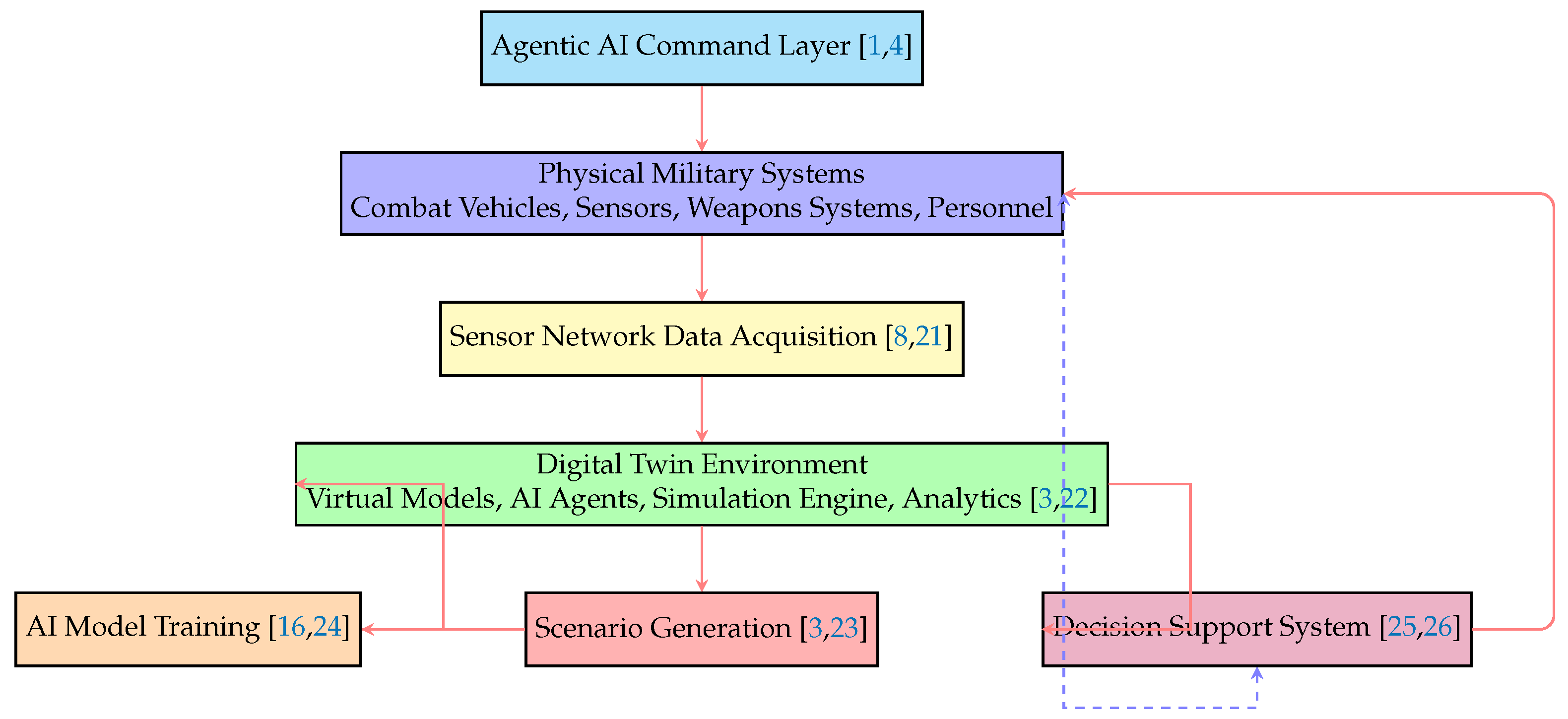
The digital twin architecture shown in Figure 2 reflects the significant advancements in military simulation capabilities. According to [3], the ability to generate thousands of battle scenarios in seconds represents a paradigm shift in military planning and training. Key implications include:
- Reduced reliance on live exercises for training and validation
- Enhanced capability for scenario planning and contingency analysis
- Improved understanding of complex system behaviors through virtual testing
9.1.3. Operational Deployment Considerations
Figure 3 illustrates the comprehensive testing and validation pipeline required for military AI systems. As emphasized by [27], this rigorous approach is essential for ensuring system reliability and compliance with international law. The pipeline underscores:
- The critical importance of continuous testing and validation
- The need for automated security scanning and vulnerability assessment
- The requirement for robust rollback mechanisms in case of system failures
9.2. Future Trajectories and Risk Assessment
9.2.1. Geopolitical Competition Dynamics
The USA-China competition analysis presented in Figure 8 and Figure 9 reveals several concerning trends. As [12] identifies, the competition across five hard national security problems creates significant escalation risks:
Table 4.
Risk Assessment Matrix for USA-China AI Competition
| Risk Category | USA Concerns | China Concerns |
|---|---|---|
| Technological Asymmetry | Maintaining qualitative edge while ensuring responsible use | Overcoming technological dependencies while achieving parity |
| Strategic Stability | Preventing accidental escalation due to AI decision speed | Managing perception of vulnerability while demonstrating strength |
| Norm Development | Balancing innovation with ethical constraints | Shaping international standards while protecting sovereignty |
| Alliance Dynamics | Ensuring interoperability while maintaining control | Building partnerships while avoiding over-dependence |
9.2.2. Investment and Capability Projections
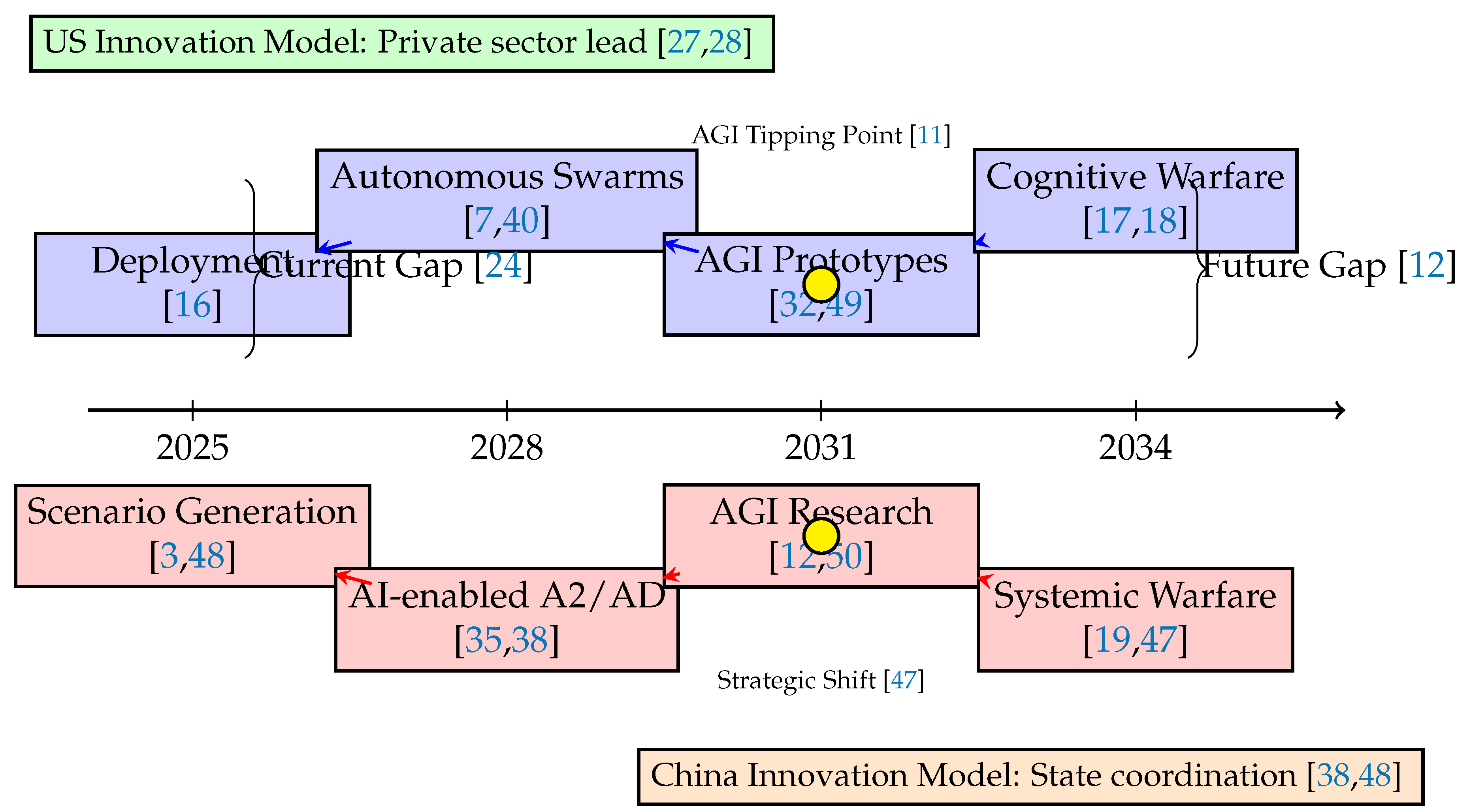
The investment comparison in Figure 10 and technology readiness timeline in Figure 11 suggest several future trajectories:
- Near-term (2025-2028): Focus on agentic AI deployment and integration with existing systems, as indicated by current contract awards [16]
- Mid-term (2028-2031): Development of autonomous swarm capabilities and advanced decision support systems, reflected in drone swarm developments [7]
- Long-term (2031+): Exploration of AGI applications and systemic warfare concepts, as discussed in future projections [47]
9.3. Recommendations for Policy and Implementation
Based on the comprehensive analysis of figures and their related references, several key recommendations emerge:
9.3.1. Technical Standards and Interoperability
- Develop common standards for AI system integration and data exchange
- Establish testing and certification protocols for military AI applications
- Create frameworks for secure collaboration between commercial and defense sectors
9.3.2. Ethical Governance and Oversight
- Implement robust human oversight mechanisms for autonomous systems
- Develop clear rules of engagement for AI-enabled weapons systems
- Establish international norms for responsible military AI use [13]
9.3.3. Strategic Stability Measures
- Create communication channels for AI-related crisis management
- Develop confidence-building measures for AI capabilities transparency
- Establish risk reduction mechanisms for AI system failures [26]
9.3.4. Research and Development Priorities
- Invest in explainable AI and system verification technologies
- Focus on human-AI teaming and cognitive compatibility research
- Prioritize cybersecurity and adversarial robustness for AI systems
9.4. Conclusion of Analysis
The figures presented in this paper, when analyzed in conjunction with their related references, paint a comprehensive picture of the current state and future trajectory of Agentic AI in military applications. They reveal both the tremendous potential of these technologies to enhance military capabilities and the significant challenges that must be addressed to ensure their responsible development and deployment.
The competitive dynamics between major powers, particularly the United States and China, will likely drive rapid advancement in military AI capabilities. However, this competition must be balanced with cooperation on establishing norms, standards, and risk reduction measures to prevent destabilizing arms races and ensure strategic stability.
As [6] aptly notes, while AI and autonomous systems are transforming conflict, the human element remains decisive. The successful integration of Agentic AI into military operations will require not only technical excellence but also strategic wisdom, ethical leadership, and international cooperation.
The visual representations and their associated analyses provided in this section offer a foundation for understanding these complex dynamics and for developing informed policies and strategies for the responsible advancement of military AI capabilities.
10. Conclusions
The transition from reactive AI systems to autonomous, goal-oriented agents promises significant advantages in operational tempo, decision-making speed, and resource efficiency. However, these benefits come with substantial challenges related to ethical governance, strategic stability, and technical reliability.
This research has demonstrated that Agentic AI represents a paradigm shift in military technology, transitioning from reactive decision-support systems to proactive, autonomous operational capabilities. Our technical analysis reveals that successful implementation requires sophisticated multi-layer architectures integrating commercial AI frameworks (TensorFlow, PyTorch) with defense-specific platforms through standardized interfaces (JAUS, MORA, FACE). The digital twin environments and simulation frameworks examined enable rapid training, validation, and scenario testing at unprecedented scales, as evidenced by systems capable of generating 10,000 battle scenarios in 48 seconds.
The security analysis indicates that military Agentic AI systems demand defense-in-depth approaches incorporating physical security, adversarial robustness testing, model integrity verification, and continuous monitoring. Our evaluation of the USA-China competitive landscape shows divergent technological pathways: US innovation driven by private sector partnerships versus China’s state-coordinated development model, both accelerating toward AGI capabilities with significant strategic implications.
Technical implementation challenges remain substantial, particularly in the areas of explainable AI, human oversight integration, and interoperability with legacy systems. The DevOps pipelines and testing frameworks presented provide actionable methodologies for addressing these challenges while maintaining ethical compliance and operational reliability. As Agentic AI continues to evolve toward artificial general intelligence, the architectural foundations and governance frameworks established today will critically determine future military capabilities and strategic stability.
The current landscape is characterized by rapid development and substantial investment, particularly by major military powers like the United States and China. As “America’s top AI firms win big in Pentagon’s push to advance military AI” [36], and as Chinese researchers demonstrate advanced capabilities in areas like scenario generation [3], the competitive dynamics of military AI development are intensifying.
Successful integration of Agentic AI into military operations will require careful attention to several key areas: robust technical testing and validation, appropriate human oversight mechanisms, clear legal and ethical frameworks, and constructive international engagement. While some skeptics question whether “Agentic AI is the new vaporware” [59], the substantial investments and demonstrated capabilities suggest that this technology will play an increasingly important role in future military operations.
As the technology continues to evolve, ongoing assessment of its implications for the nature of warfare will be essential. Questions about whether “artificial intelligence change the nature of war” [31] or how “artificial general intelligence will change the nature of war” [32] remain subjects of vigorous debate. What is clear is that Agentic AI will significantly influence military affairs in the coming years, requiring adaptive approaches to strategy, policy, and ethics.
Acknowledgments
The authors would like to acknowledge the contributions of various defense research institutions and academic organizations whose work has informed this analysis. Special thanks to the researchers and analysts whose published works provided the foundation for this comprehensive examination of Agentic AI in military applications.
References
- J. M. Friar and P. Payne, “Agentic Artificial Intelligence and its implications for Department of Defense operations,” U.S. Department of Defense, Tech. Rep. DoD-AI-TR-2024-015, Jun. 2024. [Online]. Available: https://www.defense.gov/Portals/1/Documents/agentic-ai-report-2024.pdf.
- T. PYMNTS, “US Military Expands AI Investment With $800 Million in Contracts,” Jul. 2025. [Online]. Available: https://www.pymnts.com/ai-in-banking/2025/us-military-expands-ai-investment-with-800-million-in-contracts/.
- Dev ua Team, “Chinese scientists have created an AI military scenario generator that projects 10,000 battles in 48 seconds,” Nov. 2024. [Online]. Available: https://dev.ua/en/news/kytaiski-naukovtsi-stvoryly-shi-henerator-viiskovykh-stsenariiv-shcho-proiektuie-10-000-bytv-za-48-sekund-1747730377.
- B. A. Hamilton, “The Age of Agentic AI,” Jun. 2024. [Online]. Available: https://www.boozallen.com/insights/velocity/the-age-of-agentic-ai.html.
- RealClearPolitics, “Agentic Warfare,” 2024. [Online]. Available: https://www.realclearpolitics.com/stream/?topic=Agentic_Warfare.
- D. Maxwell, “Agentic Warfare, Yes – But the Future of War Will Always Be Human,” Jul. 2025. [Online]. Available: https://nationalsecurityjournal.org/.
- DeepLearning.AI, “Drone Swarms Go To War, States Ban AI Mental-Health Treatments, Qwen3-Next Accelerates, and more,” Sep. 2025. [Online]. Available: https://www.deeplearning.ai/the-batch/issue-319/.
- “Artificial intelligence and Machine Learning Aim to Boost Tempo of Military Operations,” https://www.militaryaerospace.com/computers/article/55126930/artificial-intelligence-ai-machine-learning-military-operations, Aug. 2024.
- “DOD Announces Establishment of Generative AI Task Force,” https://www.war.gov/News/Releases/Release/Article/3489803/dod-announces-establishment-of-generative-ai-task-force/.
- “U.S. Army Launches Generative AI Platform in Groundbreaking Move | AFCEA International,” https://www.afcea.org/signal-media/us-army-launches-generative-ai-platform-groundbreaking-move, Sep. 2024.
- J. Lacey, “Artificial General Intelligence in Competition and War,” May 2025. [Online]. Available: https://www.realcleardefense.com/articles/2025/05/07/artificial_general_intelligence_in_competition_and_war_1108660.html.
- M. S. Chase and W. Marcellino, “Incentives for U.S.-China Conflict, Competition, and Cooperation Across Artificial General Intelligence’s Five Hard National Security Problems,” Tech. Rep., Aug. 2025.
- United States Department of State, “Political Declaration on Responsible Military Use of Artificial Intelligence and Autonomy,” 2023, accessed: 2025-09-25. [Online]. Available: https://www.state.gov/political-declaration-on-responsible-military-use-of-artificial-intelligence-and-autonomy/.
- T. Walsh, “The Problem with Artificial (General) Intelligence in Warfare,” https://www.cigionline.org/articles/the-problem-with-artificial-general-intelligence-in-warfare/.
- IBM Research, “Agentic AI vs. Reactive AI: Understanding the Future of Artificial Intelligence,” Feb. 2025, accessed: 2025-09-25. [Online]. Available: https://www.ibm.com/research/topic/agentic-ai.
- Freedberg, Sydney J., Jr., “Anthropic, Google and xAI win $200M each from Pentagon ai chief for ’agentic AI’,” Jul. 2025. [Online]. Available: https://breakingdefense.com/2025/07/..
- A. Husain, “Ai is shaping the future of war,” 2022. [Online]. Available: https://ndupress.ndu.edu/Media/News/News-Article-View/Article/2846375/ai-is-shapinging-the-future-of-war/.
- “AI at War: How Big Data, Artificial Intelligence, and Machine Learning Are Changing Naval,” https://ndupress.ndu.edu/Media/News/News-Article-View/Article/3108025/ai-at-war-how-big-data-artificial-intelligence-and-machine-learning-are-changin/.
- M. C. Horowitz, “Artificial Intelligence, International Competition, and the Balance of Power,” May 2018.
- U.S. Government Accountability Office, “How Artificial Intelligence Is Transforming National Security,” Mar. 2025. [Online]. Available: https://www.gao.gov/blog/how-artificial-intelligence-transforming-national-security.
- C. Casimiro, “US Army Supercharges Training and Cyber Defense With AI Tools,” Aug. 2025. [Online]. Available: https://www.thedefensepost.com/2025/08.
- “Raft’s agentic AI battle management capability showcased by U.S. Air Force,” https://www.defenseandmunitions.com/news/rafts-agentic-ai-battle-management-capability-showcased-by-us-air-force/.
- K. Requiroso, “Pentagon Advances Generative AI in Military Operations Amid US-China Tech Race,” Apr. 2025. [Online]. Available: https://www.eweek.com/artificial-intelligence/.
- W. Henshall, “U.S. Military Spending on AI Surges,” https://time.com/6961317/ai-artificial-intelligence-us-military-spending/, Mar. 2024.
- “Leadership: Artificial Intelligence in Decision-Making,” https://www.army.mil/article/286847/leadership_artificial_intelligence_in_decision_making, Jul. 2025.
- M. Depp and C. Aiken, “Reducing the Risks of Artificial Intelligence for Military Decision Advantage,” Jun. 2024. [Online]. Available: https://cset.georgetown.edu/publication/reducing-the-risks-of-artificial-intelligence-for-military-decision-advantage/.
- U.S. Department of Defense, “DOD Releases AI Adoption Strategy,” Nov. 2023. [Online]. Available: https://www.defense.gov/News/News-Stories/Article/Article/3578219/dod-releases-ai-adoption-strategy/.
- C. Albon, “Defense tech firms establish AI-focused consortium,” https://www.defensenews.com/pentagon/2024/12/06/defense-tech-firms-establish-ai-focused-consortium/, Dec. 2024.
- “OpenAI signs deal with Palmer Luckey’s Anduril to develop military AI,” https://www.engadget.com/ai/openai-signs-deal-with-palmer-luckeys-anduril-to-develop-military-ai-213356951.html, Dec. 2024.
- Palantir Technologies, “TITAN - Army intelligence ground station,” 2024, accessed: 2025-09-25. [Online]. Available: https://www.palantir.com/offerings/defense/titan/.
- B. Alloui-Cros, “Does Artificial Intelligence Change the Nature of War?” Military Strategy Magazine, vol. 8, no. 3, Jan. 2023. [CrossRef]
- A. S. M. Compagnoni, “Will Artificial General Intelligence Change the Nature of War?” Military Strategy Magazine, vol. 8, no. 4, May 2023. [CrossRef]
- C. Kuntz, “Artificial Intelligence and War,” Thu, 06/26/2025 - 12:00.
- CIO, “Defense at scale: How agentic AI secures without extra headcount,” 2025, [Online; accessed 25 September 2025]. [Online]. Available: https://www.cio.com/article/defense-at-scale-how-agentic-ai-secures-without-extra-headcount.
- R. Uppal, “US Army doctrine thrust on multi domain operations employing AI to counter A2/AD,” May 2023. [Online]. Available: https://idstch.com/.
- A. E. Elezhar, “America’s Top AI Firms Win Big in Pentagon’s Push to Advance Military AI,” Jul. 2025. [Online]. Available: https://www.thedefensepost.com/2025/07/.
- D. Kirichenko, “How AI is eroding the norms of war,” May 2025. [Online]. Available: https://ai-frontiers.org/articles/how-ai-is-eroding-the-norms-of-war.
- International Affairs Review, “China’s Military Employment of Artificial Intelligence and Its Security Implications,” 2024. [Online]. Available: https://www.iar-gwu.org/print-archive/chinas-military-employment-of-artificial-intelligence-and-its-security-implications.
- The Hill Staff, “Agentic AI can modernize government, but it can’t replace us,” Sep. 2025. [Online]. Available: https://thehill.com/opinion/technology/4900000-agentic-ai-can-modernize-government-but-it-cant-replace-us/.
- V. Baghel, “AI in Warfare: Its Evolution, Real-life Examples & Ethics,” Jun. 2025. [Online]. Available: https://www.openxcell.com/ai-in-warfare/.
- Global Policy Institute, “Five Ways AI Benefits The U.S. Military,” 2024. [Online]. Available: https://globalpi.org/research/five-ways-ai-benefits-the-u-s-military/.
- P. Scharre, “Artificial intelligence in war: Human judgment as an organizational strength and a strategic liability,” Jun. 2023. [Online]. Available: https://www.brookings.edu/articles/artificial-intelligence-in-war-human-judgment-as-an-organizational-strength-and-a-strategic-liability/.
- “Defence Artificial Intelligence Strategy,” https://www.gov.uk/government/publications/defence-artificial-intelligence-strategy/defence-artificial-intelligence-strategy.
- “Artificial Intelligence and National Security,” https://www.congress.gov/crs-product/R45178.
- Freedberg, Sydney J., Jr., “Forget The Terminator For Future Army AI: LTG Wesley,” Nov. 2018. [Online]. Available: https://breakingdefense.com/2018/11/.
- D. Araya and M. King, “The Impact of Artificial Intelligence on Military Defence and Security,” Centre for International Governance Innovation, May 2024. [Online]. Available: https://www.cigionline.org/articles/the-impact-of-artificial-intelligence-on-military-defence-and-security/.
- Y. Bengio, “Implications of Artificial General Intelligence on National and International Security,” Oct. 2024, aspen Institute. [Online]. Available: https://www.aspeninstitute.org/publications/implications-of-artificial-general-intelligence-on-national-and-international-security/.
- AU, “Artificial Intelligence Technology and China’s Defense System,” https://www.airuniversity.af.edu/JIPA/Display/Article/2980879/artificial-intelligence-technology-and-chinas-defense-system/, Apr. 2022.
- T. R. Heath, “Could Artificial General Intelligence Adoption Start a Civil War in America?” Feb. 2025. [Online]. Available: https://smallwarsjournal.com/.
- J. Lacey, “Artificial General Intelligence in Competition and War RealClearDefense,” https://www.realcleardefense.com/2025/05/07/artificial_general_intelligence_in_competition_and_war_1108682.html, May 2025.
- S. Saurel, “The AI Oracle Has Spoken: Andrew Ng’s 5 Predictions That Will Mint the Next Generation of Millionaires.” Aug. 2025.
- A. O. L. Staff, “Traversal emerges from stealth with $48 million from Sequoia and Kleiner Perkins to reimagine site reliability in the AI era,” https://www.aol.com/finance/traversal-emerges-stealth-48-million-111152692.html, Jun. 2025.
- E. Next, “Why Cisco’s president isn’t worried about AI taking his job or Gen Z entry jobs,” Sep. 2025, accessed: 2025-09-25. [Online]. Available: https://au.news.yahoo.com/why-cisco-president-isn-t-050136862.html.
- Splunk, “When to Choose GenAI, Agentic AI, or None of the Above,” https://www.splunk.com/en_us/blog/cio-office/choosing-genai-vs-agentic-ai.html, Jun. 2024.
- A. Jain, “Agentic AI: Pioneering the Next Generation of AI,” Jan. 2025. [Online]. Available: https://newgen.co/insights/agentic-ai-pioneering-next-generation/.
- M. L. Cummings, “Artificial Intelligence and the Future of Warfare,” Chatham House, 2017. [Online]. Available: https://www.chathamhouse.org/sites/default/files/publications/research/2017-03-23-artificial-intelligence-future-warfare-cummings.pdf.
- “(PDF) Artificial Intelligence in Military Application – Opportunities and Challenges,” https://www.researchgate.net/publication/352801264_Artificial_Intelligence_in_Military_Application_-_Opportunities_and_Challenges.
- M. . Company, “Seizing the agentic AI advantage,” Jun. 2024. [Online]. Available: https://www.mckinsey.com/capabilities/quantumblack/our-insights/seizing-the-agentic-ai-advantage.
- E. Siegel, “Agentic AI Is The New Vaporware,” https://www.forbes.com/sites/ericsiegel/2025/07/14/agentic-ai-is-the-new-vaporware/.
- Y. Smith, “Palantir 2025: Peter Thiel and Alex Karp Embody Trump’s Era,” Sep. 2025. [Online]. Available: https://www.nakedcapitalism.com/2025/09/palantir-2025-peter-thiel-and-alex-karp-embody-trumps-era.html.
- E. P. R. Service, “Defence and artificial intelligence,” European Parliament, Mar. 2023, pE 739.342. [Online]. Available: https://www.europarl.europa.eu/thinktank/en/document/EPRS_BRI(2023)739342.
Disclaimer/Publisher’s Note: The statements, opinions and data contained in all publications are solely those of the individual author(s) and contributor(s) and not of MDPI and/or the editor(s). MDPI and/or the editor(s) disclaim responsibility for any injury to people or property resulting from any ideas, methods, instructions or products referred to in the content. |
© 2025 by the authors. Licensee MDPI, Basel, Switzerland. This article is an open access article distributed under the terms and conditions of the Creative Commons Attribution (CC BY) license (http://creativecommons.org/licenses/by/4.0/).
Copyright: This open access article is published under a Creative Commons CC BY 4.0 license, which permit the free download, distribution, and reuse, provided that the author and preprint are cited in any reuse.


