Preprint
Article

This version is not peer-reviewed.

Insights Unveiled: Assessing Maternal and Newborn Healthcare Delivery in Gilgit Baltistan, Pakistan

Submitted:

03 October 2025

Posted:

08 October 2025

You are already at the latest version

Abstract

Background: High maternal and neonatal mortality in Pakistan, especially in the geographically challenging and underserved region of Gilgit-Baltistan, underscores the urgent need to strengthen Basic and Comprehensive Emergency Obstetric and Newborn Care (BEmONC and CEmONC) services. With limited progress toward SDGs 3.1 and 3.2, this study aims to assess the health system issues that lead to poor maternal and neonatal health outcomes. Methods: This mixed-methods study evaluated the maternal and neonatal healthcare services across six high-mortality districts in Baltistan and Diamer, Northern Pakistan. Using the Health Facility Assessment tools, we evaluated infrastructure, delivery volume, signal functions, and workforce capacity. Geospatial analysis examined facility accessibility, while surveys captured provider confidence in managing emergencies and patient satisfaction via exit interviews. Focus groups with healthcare providers and pregnant women provided valuable insights into community experiences. Results: Out of 60 assessed healthcare facilities, only 25 (41.7%) were found to be functional. They included four high-volume CEmONC sites and 21 low-volume BEmONC centers. Only one facility met all nine signal functions. NICUs were available in just two facilities, while only four facilities had operating rooms. Staff were critically inadequate, and the existing staff lacked confidence in managing obstetric complications. Patient satisfaction was mixed, with concerns over delays, hygiene, and staff shortages. Although 76.2% of BEmONC facilities were within two hours of a CEmONC facility, access to advanced care remains limited. Focus groups revealed barriers to access and community-led potential solutions. Conclusion: The study identifies critical gaps in maternal and neonatal health services across Baltistan and Diamer, revealing significant disparities in facility functionality, human resources, and service availability. An evidence-based package with a health system approach is vital to ensure adequate resource allocation and improved maternal and neonatal outcomes.

Keywords: 
;  ;  ;  ;  ;  ;  

Introduction

Globally, approximately 800 maternal [1] and 6,500 newborn deaths occur each day [2], with an additional 5,000 women experiencing stillbirths [3]. Despite significant reductions in the maternal mortality ratio (MMR), the rates remain disproportionately high in low- and Middle-Income Countries (LMICs). For instance, although the global MMR declined from 339 to 223 per 100,000 live births from 2000 to 2020, equivalent to a 34.3% reduction [1], a total of 287,000 maternal deaths were recorded in 2020, and almost 95% of them occurred in LMICs [4]. In Pakistan, the MMR is 154 per 100,000 live births, while the newborn mortality rate is estimated at 39 per 1,000 live births, and under-five mortality at 61 per 1,000 live births [5]. These alarming rates place Pakistan among the top ten countries expected to contribute 60% of all maternal deaths worldwide [6].
Within Pakistan, the neonatal and under-five mortality rates show significant regional disparities. The 2016–17 MICS reported GB accounted for 73% of neonatal and 91.8% of under-five deaths reported nationally. According to PDHS 2017–18, GB’s neonatal mortality rate is 47 per 1,000 live births and under-five mortality 76 per 1,000. GB, situated in the northernmost region of Pakistan with a population of 1.3 million, encompasses three administrative divisions: Gilgit, Baltistan, and Diamer, which are further divided into ten districts. Across the ten districts, mortality rates are particularly high in Astore, Diamer, Ghanche, Kharmang, Shigar, and Skardu districts.
Most maternal and neonatal deaths are preventable, but limited access, low-skilled birth attendance, poor quality of care, and weak implementation of interventions, especially in remote areas, contribute to a high death burden. The Sustainable Development Goals (SDGs) aim to reduce MMR to below 70 per 100,000, and neonatal and under-five mortality to 12 and 25 per 1,000 live births, respectively, by 2030. Efforts to reduce mortality focus on improving the availability and quality of care through BEmONC and CEmONC services. Effective care, as per WHO guidelines, requires adequate infrastructure, essential equipment, adherence to clinical standards, and timely access to services within two hours.
The human resource capacity within healthcare facilities directly affects their ability to manage high delivery volumes and respond effectively to clinical emergencies. Addressing these factors is key to meeting SDG targets. In-depth assessments are crucial for identifying health system gaps and informing targeted strategies that enhance health systems and yield measurable outcomes. This study aims to assess maternal and neonatal healthcare delivery in Gilgit-Baltistan, providing insights to inform policies and interventions that improve health outcomes in the region.

Methods

Study Design and Setting

This mixed-methods study, conducted from October 2022 to March 2023, employed cross-sectional assessment surveys and qualitative data collection methods. The quantitative component included Health Facilities functionality and capacity assessment, geographical accessibility, HCPs confidence and experience, and patient satisfaction. Confidence was self-reported by healthcare providers, who rated their confidence levels using a series of statements on a Likert scale. The qualitative component included FGDs with LHWs, pregnant women, and mothers to gather insights. The study was conducted in six districts of the Baltistan and Diamer divisions of Gilgit-Baltistan (GB); Astore, Diamer, Ghanche, Kharmang, Shigar, and Skardu. Sporadic settlements, limited access to healthcare services, frequent landslides, and inadequate infrastructure characterize the districts. [7,17].

Data Collection Tools

We utilized a structured tool that combined elements from the WHO’s Service Availability and Readiness Assessment (SARA), the World Bank’s Service Delivery Indicators (SDI), and the UNFPA’s Service Provision Assessment (SPA) tools to assess health facilities. The tool evaluated four of the six components of the WHO Health System Framework, including service delivery, health workforce, health information systems, and access to essential medicines. Within the delivery service, we evaluated the annual volume of deliveries. We stratified them into four categories: over 1000 (high-volume), 365-999 (medium-volume), 60-364 (low-volume), and under 60 (very low-volume) for assessment and coverage. Signal functions were assessed according to WHO guidelines: BEmONC facilities for seven functions and CEmONC facilities for nine functions. Human resource assessment focused on the availability of key providers; medical officers, specialist ob/gyn, pediatricians, and anesthesiologists at BEmONC and CEmONC facilities. We also used a structured checklist, consulted facility administrators to assess service availability, functionality, and alignment with each facility's mandate. We also conducted geospatial analysis to estimate travel time from BEmONC to CEmONC facilities for emergency C-sections, using GPS and community input, aligned with WHO’s 2-hour travel time threshold.
A self-assessment survey, developed by core investigators, measured HCPs’ experience and confidence in managing key obstetric and newborn complications. Results are presented as the percentage of HCPs with relevant experience and those confident in managing these complications. Patient satisfaction was assessed through a questionnaire. Results are presented as the percentage of patients satisfied with each aspect of MNCH care. The FGD guide, developed by the research team, explored community practices, care-seeking behavior, access to MNCH services, and redesign elements of service.

Sampling

A purposive sample of 60 MNCH health facilities (9–11 per district) was selected for facility and geospatial assessments. The selection, based on geographic and service diversity, was finalized during a consultative workshop with DHOs and health officials from Baltistan and Diamer, held in Skardu at project initiation (Annex 1). To assess HCPs’ confidence, experience, and patient satisfaction, convenience sampling was employed. A total of 79 HCPs participated, comprising 15 doctors, 31 LHVs/midwives, and 32 medical trainees. Additionally, 117 pregnant women and mothers of children under one year were surveyed for patient satisfaction (refer to Annex 2).
To assess HCPs’ confidence, experience, and patient satisfaction, convenience sampling was employed. A total of 79 HCPs participated, comprising 15 doctors, 31 LHVs/midwives, and 32 medical trainees. Additionally, 117 pregnant women and mothers of children under one year were surveyed for patient satisfaction (refer to Annex 2). FGDs were conducted with 35 LHWs and 5 FGDs with pregnant women and mothers. Each FGD consisted of 6-8 participants and lasted 1.5 to 2 hours, with discussions conducted in local languages.

Training and Data Collection

A team of six trained research assistants (2 males, 4 females) from Baltistan and Diamer conducted data collection. All held master’s degrees, had health research experience, and were fluent in local languages. They received a three-day training (Oct 18–20, 2022).

Data Analysis

Quantitative data were entered into Research Electronic Data Capture (REDCap) and analyzed using STATA 17, with results presented in frequencies and percentages. Qualitative data were audio-recorded, transcribed verbatim, and translated into English. Thematic analysis was performed to identify codes and develop themes, ensuring the findings were closely aligned with the data.

Ethical Considerations

Ethical approval was obtained from the Aga Khan University Ethics Review Committee (ERC# 2021-6560-19740). Written informed consent was secured from all participants.

Results

Health Facilities Functional Capacity Assessment: Of the 60 healthcare facilities, only 41. % were functional and provided obstetric services. Nearly half (48.3%) were non-functional while 11. % were not mandated for obstetric care. (Table 1).
Health Facility Assessment: Among the 25 functional facilities providing obstetric services, 21 were designated as BEmONC, and 4 as CEmONC. Facilities with BEmONC services had 2 to 9 maternity beds per district, except Astore, which had none. Among the 21 BEmONC facilities surveyed in the region, a dedicated labor room was observed in only one district (Skardu). The number of dedicated maternity beds in the visited CEmONC facilities ranged from 8 to 33, with Diamer having the highest number (33). Among the CEmONC facilities, all districts had one labor room except Astore. Operating theatres rooms were available only in Skardu and Diamer, while blood transfusion services were limited to Skardu, Ghanchey, and Diamer. Level II NICU and nursery services were available only in Diamer and Ghanchey (Table 2).
The utilization of delivery services varied significantly in the 25 functional facilities visited, reflecting low utilization. Only four facilities were high-volume hospitals, and all were CEmONC facilities present in the Skardu, Ghanchey, Diamer, and Astore districts, reflecting congestion and subsequent quality of care issues in these facilities. BEmONC facilities operated at low (57%) or very low (43%) volumes, with the highest concentration in Ghanchey reflecting potential quality and trust issues among the population, who preferred to travel further to seek care at the comprehensive EmONC sites. (Table 3).
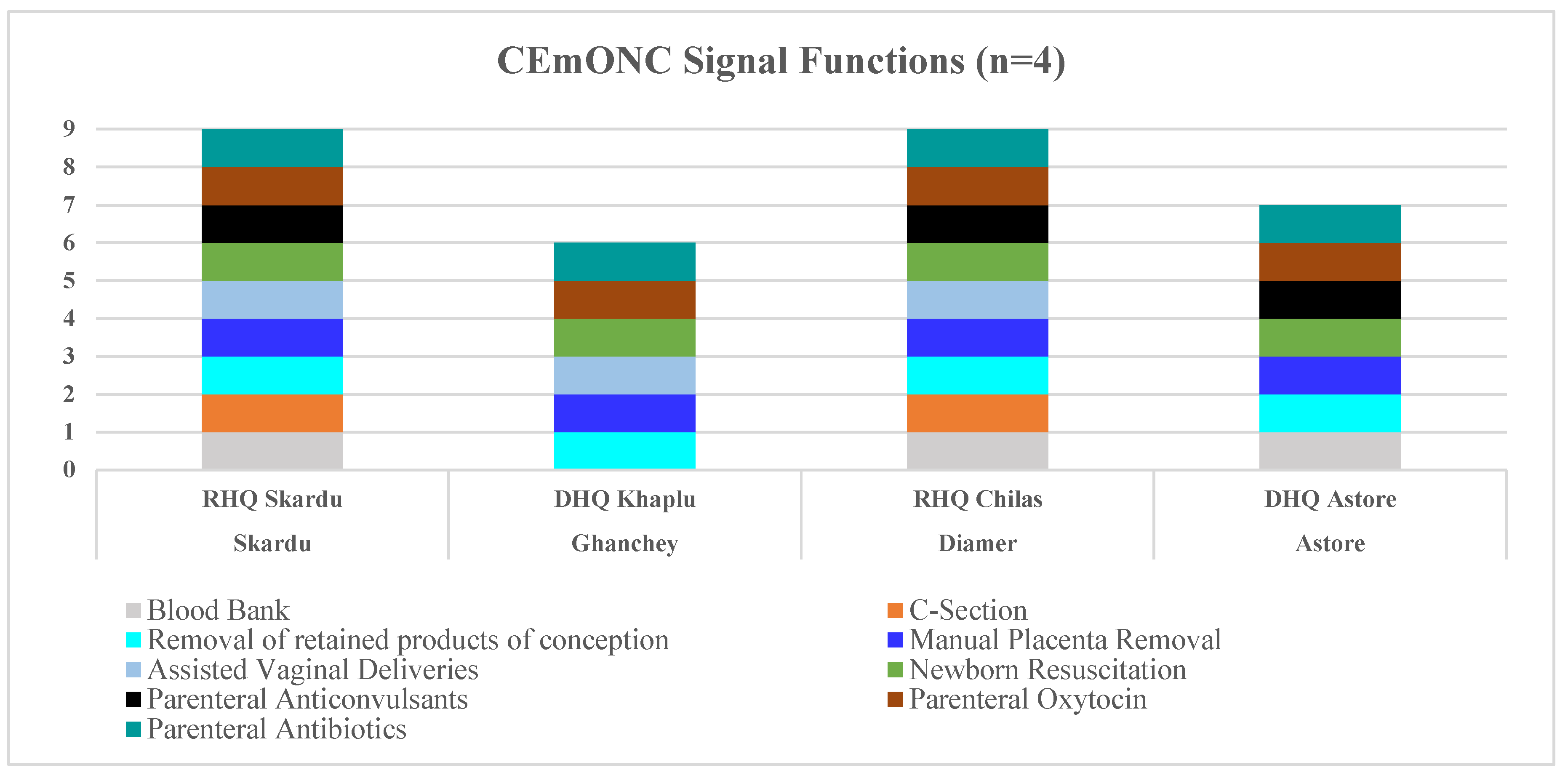
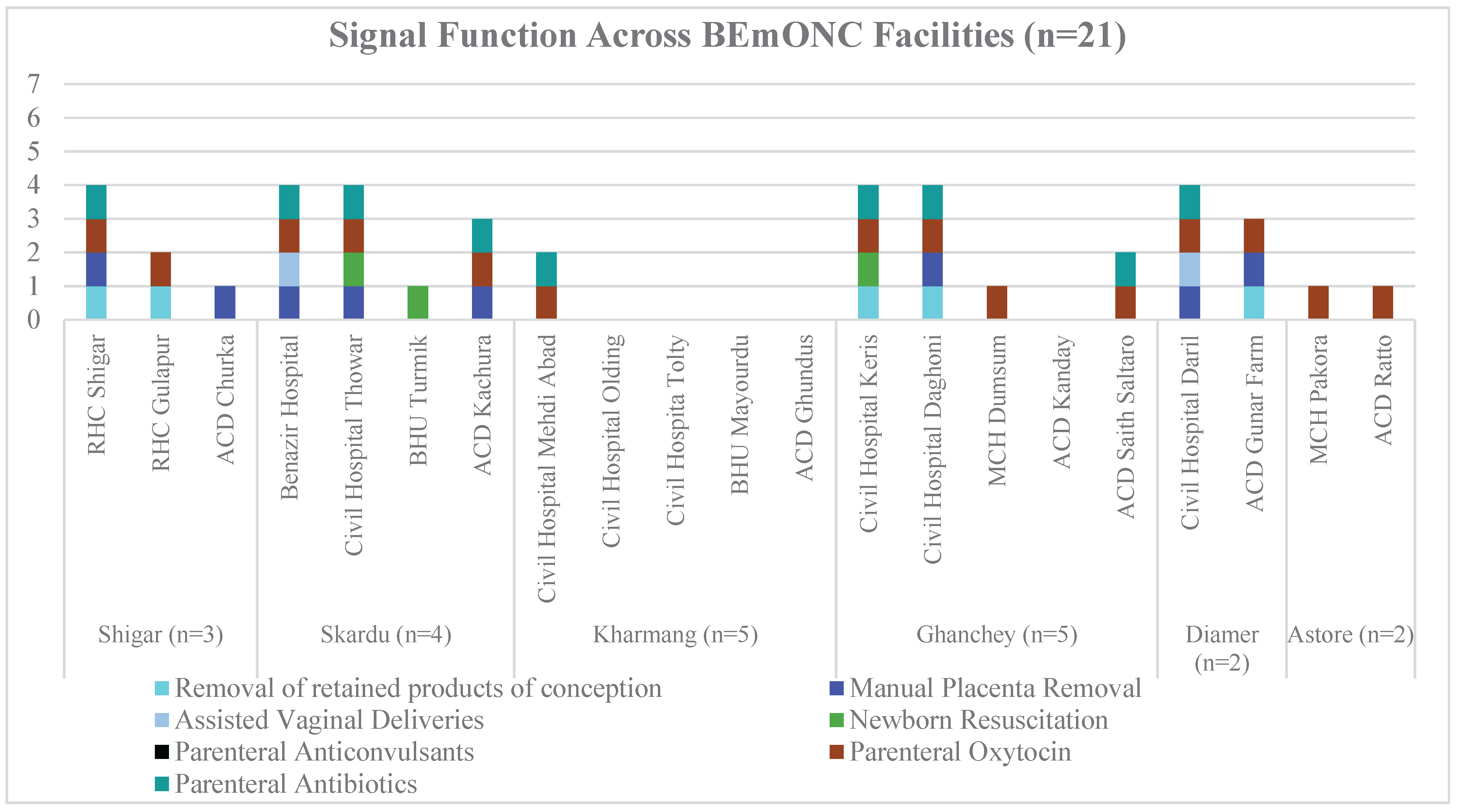
Signal function availability varied significantly; only two CEmONC facilities, located in Skardu and Chilas, offered all nine CEmONC signal functions. Ghanchey and Astore lacked C-section services. (see Graph 1). None of the 21 BEmONC facilities provided all seven BEmONC signal functions. Ten facilities (48%) offered one or none, while six (29%) provided a maximum of four signal functions. Astore had only one available signal function, parenteral oxytocin, but without any guidelines for managing pre-term deliveries. None of the facilities had parenteral anticonvulsants. (Graph 2).
Graph 1. shows the availability of signal functions across CEmONC health facilities in the four districts. CEmONC was not available in Shigar and Kharmang.
Preprints 179443 gr001
Graph 2. shows the availability of signal functions across BEmONC health facilities in the six districts.
Preprints 179443 gr002
Overall, districts faced shortages in human resources Table 4. BEmONC sites lacked specialists with no gynecologists, pediatricians, or anesthesiologists available. Among the CEmONC facilities, Ghanchey had no gynecologist, Astore had no anesthesiologist, and Skardu had only one pediatrician. There were no medical officers appointed in BEmONC facilities of Skardu and Astore, and nursing staff was unavailable in Shigar, Skardu (BEmONC), and Astore (CEmONC) facilities.
Geographical Accessibility: Majority (76.2%) of BEmONC facilities were located within a two-hour travel distance of a CEmONC facility. (Annex 3).
Health Workers’ experience and competence in managing emergencies revealed in the past 12 months, only 20–27% of doctors and nurses reported managing emergencies such as eclampsia, postpartum hemorrhage, and newborn resuscitation, highlighting limited experience and competency. Confidence levels ranged from low to moderate. Approximately 27% of doctors reported high confidence in managing obstetric complications and newborn resuscitation compared to only 6% of Lady Health Visitors. LHVs and midwives served as the primary healthcare providers across most of the facilities providing both essential and emergency clinical care. However, their confidence levels were reported as generally low across all obstetric and newborn emergencies except for managing postpartum hemorrhage, reported to be high in 30% of LHVs. Medical trainees had negligible experience in managing newborns with birth asphyxia and post-asphyxia care, ranging between 0-6%. (Table 5).
Patient Satisfaction varied across different section of care provision. In the BEmONC sites, patient satisfaction varied widely: waiting times (12–61%), cleanliness (18–47%), staff availability (27–89%), guidance received (29–78%), and medicine availability (9–53%). In the CEmONC facilities, cleanliness satisfaction ranged from 20% in Astore to 100% in Ghanchey. Staff availability was rated lowest in Astore (20%) and highest in Diamer (67%). (Annex 4).

Barriers to Health Service Utilization: Qualitative findings

Our findings revealed several critical systemic barriers leading to the underutilization of MNCH services across the Baltistan and Diamer regions. Some of the significant challenges identified included rugged terrains, geographic isolation, high out-of-pocket costs, poor transport, and service delivery gaps.
Long distances, rugged terrain, and seasonal road blockages severely hinder access to healthcare facilities. One pregnant woman noted,
"Reaching the health facility often means traveling through difficult terrain, especially during the winter when the roads are blocked by snow and landslides" (Pregnant Women, Shigar).
Lack of organized and effective referral systems further delays care, leading to suboptimal health outcomes, LHW highlighted.
We have no provision for referrals. Most women have their deliveries conducted at the same facility where they received antenatal care, regardless of the type of facility. If the facility physician or LHV refer the case, we (LHW) must arrange the vehicle ourselves. They do not give us any ambulance facilities, so we face a lot of problems (LHW, Kharmang)
A mother stated,
I had previously come to one of the district's headquarters hospitals for delivery, but due to a long journey, I lost my second child. (Mother, Ghanche)
Limited community awareness of danger signs and knowledge around the availability of services delays care-seeking. A mother stated:
Some women are aware of the problems that occur during or after childbirth, and some are not aware of them. (Mother, Ghanche)
Another key theme identified was affordability and financial constraints. High out-of-pocket and hidden costs limit the utilization of limited service. A mother lamented,
The cost of transport is 16,000 PKR, and we must also purchase the necessary equipment for the operation ourselves, which costs up to 50,000 PKR, making it difficult for us to afford (FGD, Mother, Ghanche).
Low perceived quality of care, poor infrastructure, and unhygienic conditions discouraged care-seeking, while overcrowding and provider misbehaviour further reduced service acceptability. A mother described,
The biggest problem we face in the hospital is the lack of water and clean washrooms. If the clean facilities are available, then those are for health providers only (FGD, Mother Skardu)
Another pregnant woman recounted a distressing experience during her delivery: When I asked about the operation, the staff started scolding me. I was having a lot of pain, so I got angry. Then they called the doctor. I waited the whole night in pain, amid a chaotic and overcrowded environment where my concerns went unheard. In the morning, I was operated on in an emergency, and after that, the doctor left; she did not even meet me. Staff continued to show the same behavior (Mother, Skardu)
From the community’s perspective, service acceptability was shaped by social norms, cultural practices, and family dynamics, with husbands and mothers-in-law having a significant influence on women’s care-seeking decisions. One of the mothers shared:
I went to DHQ to deliver my child, and I visited DHQ whenever I faced any problem during pregnancy. I go to DHQ alone. My mother-in-law makes all these decisions.” (Mother, Ghanche)
Past experiences and perceived needs influenced care-seeking behaviour. Negative encounters, such as neglect, mistreatment, or poor outcomes, discouraged women from returning to facilities. Similarly, perceived needs influenced service use; most women did not seek post-natal care unless complications arose.
With each pregnancy being different, my first experience with exceptional care made me proactive about post-natal care. However, complications and feeling ignored during my second pregnancy affected my trust. Now with my third child, I'm cautious, asking more questions to ensure my concerns are promptly addressed (Mother, Kharmang)
“I always prioritize my health during pregnancy because of a difficult experience with my first child. I didn't seek care early, and it led to complications. Since then, I make sure to attend all my ANC appointments regularly, even if I feel well, to avoid any issues (Pregnant women, Skardu).“
“Pregnant women in our community usually go for a check-up in the third month. And after birth, the baby is taken for vaccination. If there is no problem, then do not go for a checkup (LHW, Astore”)
Male involvement in maternal and neonatal health initiatives was recognized as essential for raising awareness and promoting a supportive environment for maternal health. One pregnant woman emphasized:
Engaging male community members is crucial for improving maternal health outcomes. When men understand and support women’s health, it creates a safer, more supportive environment for pregnancy and childbirth. (Pregnant women, Skardu)
Community health workers and pregnant women emphasized the need to improve local facilities, empower local healthcare providers, reduce financial barriers, strengthen the healthcare workforce, and involve men in maternal care. They emphasized the importance of ensuring consistent availability of providers, medicines, and essential equipment at all levels of healthcare to enhance access and affordability. One health worker stressed:
The Rural Health Centers should have a lady doctor, ultrasound facilities should be available, and the equipment required at the time of delivery should also be available (LHW, Shigar)
Families face unexpected costs when hospitals run short (of medicines and medical supplies), forcing them to buy medications privately or delay treatments. Reliable access to diagnostics like ultrasounds and blood tests is crucial to managing expenses effectively (LHW, Ghanche)
Improving physical access is equally critical, as poor road conditions and a lack of ambulance services delay emergency care, noted one health worker from Astore.
"Without proper roads and reliable ambulance services, timely patient transfers become a critical challenge. So, the government should build roads and improve the hospital, which lacks proper facilities (LHW, Astore)
Participants emphasized the need for LHW and midwife capacity building, as well as enhanced coordination with specialists, to ensure integrated care. One LHW noted:
We need training, equipment, and reliable links to ambulances and referral facilities. Doctors should also cooperate and value our referrals. (LHW, Astore)

Discussion

Our assessment of maternal and newborn facilities in Baltistan and Diamer highlights significant gaps in infrastructure, service delivery, and workforce capacity. This observation corroborates earlier research that highlights the challenges of offering obstetric services in resource-constrained settings. [21] The findings underscore the urgent need for systemic reforms to enhance the quality of maternal and neonatal care.
Infrastructure was a key barrier to quality maternal and newborn care, with gaps in maternity beds, labor, operating rooms, blood bank services, NICUs, and overall system readiness highlighted in assessments and FGDs. These findings resonate with prior studies highlighting how limited infrastructure impedes the provision of emergency obstetric and neonatal care services [21,22], thereby contributing to adverse maternal and neonatal outcomes. Establishing standalone newborn units, upgrading existing facilities, and ensuring the availability of essential infrastructure and human resources are recommended to facilitate comprehensive emergency care provision.
Significant disparities in delivery volumes were observed, with low use of BEmONC facilities and higher demand at CEmONC sites. These patterns, driven by financial, experiential, and social factors, highlight inefficient resource use and underscore the need for targeted interventions in underserved areas. Geographic isolation and varying infrastructure contribute to service disparities, [12], highlighting the need to consolidate care in higher-volume facilities to optimize resource allocation and outcomes.
Family involvement, particularly male participation, is essential for improving maternal health. Studies show that men are willing to engage in care and respond well to inclusive initiatives, thereby improving program effectiveness [24]. This collective involvement can significantly enhance the effectiveness of maternal health programs.
Quality care depends on effective interventions, strong infrastructure, and skilled, respectful providers, resulting in better outcomes and positive experiences for women and staff. The WHO vision defines quality of care as the extent to which healthcare services provided to individuals and patient populations improve the desired health outcomes [31]. It envisages a safe, effective, timely, efficient, equitable, and people-centered approach. WHO defines a set of "signal functions" as key interventions essential for safe and effective management of obstetric and newborn emergencies. These functions serve as indicators of a facility’s capacity to provide Basic and Comprehensive Emergency Obstetric and Newborn Care (BEmONC and CEmONC) [12].
BEmONC includes seven functions (administration of parenteral antibiotics, oxytocic drugs, magnesium sulfate for pre-eclampsia and eclampsia, manual removal of placenta, removal of retained products of conception, and assisted vaginal delivery). In contrast, CEmONC includes all the above functions with the addition of Surgical delivery (Cesarean section) and blood transfusion.
The availability of signal functions in BEmONC and CEmONC facilities is essential for managing newborn and obstetric complications and reducing maternal and neonatal mortality [11,12].
Our findings showed that only half of CEmONC facilities provided all essential signal functions. In contrast, no BEmONC facility met the full criteria, critically lacking lifesaving interventions like anticonvulsants and oxytocin, key to preventing maternal deaths from eclampsia and hemorrhage. This echoes previous research demonstrating that the absence of essential signal functions compromises the quality of maternal and neonatal care, leading to preventable morbidity and mortality [11]. Enhancing service provision by ensuring the availability of all signal functions in both BEmONC and CEmONC facilities is recommended to align with facility mandates.
Our study highlights severe shortages of healthcare professionals, undermining safe maternal care and newborn care. Many BEmONC centers lacked medical officers, and some facilities had no nursing staff, further straining the service delivery. The absence of specialist gynecologists, anesthetists, and pediatricians reflects a significant gap in emergency and comprehensive maternal and neonatal care. Similar staffing shortages have been documented in other resource-limited settings, indicating systemic challenges in recruiting, deploying, and retaining skilled healthcare workers, which significantly impact the quality of care and maternal mortality rates [25]. Strengthening human resource capacity, including the recruitment and deployment of adequately trained professionals, is crucial to meeting the healthcare needs of the population [25].
In Baltistan and Diamer, women rely heavily on outreach workers LHVs, LHWs, and Dais for home-based care. These frontline staff bridge gaps in remote areas but require quality capacity building, coaching, mentoring and integration into the broader healthcare system.
Geographic analysis shows most BEmONC facilities are within two hours of a CEmONC facility, indicating generally adequate access to higher-level care per WHO guidelines [12] disparities may exist in remote or underserved areas. Participants in the study highlight the challenges of accessing health facilities due to rugged terrain and the high cost of transportation, particularly during emergencies and harsh weather conditions. Unreliable referral systems and a lack of centralized ambulance services further delay timely care. Evidence suggests that geographical barriers to healthcare access disproportionately affect marginalized populations, contributing to disparities in maternal health outcomes [26,27,28].
Ensuring and enhancing access to emergency obstetric care is crucial, particularly in remote and underserved areas.
Healthcare worker competency is a critical determinant of the quality of care, good patient experience, and favourable outcomes. Our findings reveal limited provider exposure to maternal and neonatal complications, with gaps in training, supervision, and support leading to low confidence and poor clinical preparedness. Strengthening the capacity of healthcare providers through competency-based training, introduction of standard case management protocols, supportive supervision, adherence to evidence-based practices, and work-based coaching, innovative use of telemedicine, and skill development can enhance MNCH services, particularly in marginalized communities, contributing to the reduction of maternal and neonatal mortality rates [29].
Our findings reveal a wide regional variation in patient satisfaction with waiting times, cleanliness, staff availability, guidance, and access to medicine in BEmONC and CEmONC services. High satisfaction in Skardu and Ghanche reflects effective service delivery, while lower satisfaction in Astore and Kharmang highlights gaps in infrastructure and care quality. Overcrowding and unprofessional provider behavior further contributed to dissatisfaction. Literature suggests these disparities likely stem from uneven resource allocation and management [30]. Implementing regular assessments and feedback mechanisms can help identify areas for improvement and ensure adequate coverage and patient-centered care across all regions.

Strengths and Limitations

This study’s strength lies in its mixed-methods approach, which offers a comprehensive assessment of maternal and newborn services in Gilgit-Baltistan, marking one of the first efforts to explore these remote valleys. Purposive facility sampling and diverse data collection enriched the analysis of both capacity and patient experience. Limitations include potential selection bias, limited generalizability due to the region’s unique context, and reliance on self-reported data. Despite these limitations, the study's methodological rigor offers valuable insights into the healthcare challenges in the area.

Conclusions

The findings underscore significant gaps in maternal and neonatal healthcare in Baltistan and Diamer, driven by inequities in access, infrastructure, and service delivery. Achieving SDG targets requires a comprehensive approach, strengthening health systems, adopting innovative workforce models, leveraging technology to reach marginalized populations, and investing in data-driven, competency-based care. These insights provide a valuable foundation for informing policy and advancing sustainable improvements in maternal and newborn health in Gilgit-Baltistan and similar settings.

Author Contributions

SA, SBS, AJ & CH. Conceptualized the study. MAH, HF, MB & QN contributed to the design and implementation of the research. SA, MAH, MU, AS, HF, and TJ conducted tool development and training. NS, SA, developed the first draft of the manuscript. All authors reviewed the final version of the manuscript and approved it for publication.

Funding

This work was supported by the Aga Khan Foundation under the umbrella of the Foundation for Health and Empowerment (F4HE) Project.

Acknowledgements

The authors would like to acknowledge the support provided by AKDN agencies, particularly AKF Canada and AKF Pakistan, as well as the health departments of GB, healthcare providers, families, and children in the region, for their time and cooperation in conducting the survey.

Conflict of Interest

The authors declared no conflict of interest.

Author Declaration

This manuscript has not been published before, and it is not under consideration for publication elsewhere.

Ethics Approval

Ethics approval was obtained from the Aga Khan University Ethics Review Committee (ERC# 2021-6560-19740) and the National Bioethics Committee (NBC), Pakistan.

References

  1. World Health Organization. Maternal mortality [Internet]. Geneva: World Health Organization; 2024 [cited 2025 May 20]. Available from: https://www.who.int/news-room/fact-sheets/detail/maternal-mortality.
  2. World Health Organization. Neonatal mortality [Internet]. Geneva: World Health Organization; 2024 [cited 2025 May 20]. Available from: https://www.who.int/news-room/fact-sheets/detail/newborn-mortality.
  3. UNICEF. Maternal mortality [Internet]. New York: United Nations Children’s Fund; 2023 [cited 2025 May 20]. Available from: https://data.unicef.org/topic/maternal-health/maternal-mortality/.
  4. World Health Organization. Trends in maternal mortality 2000 to 2020: estimates by WHO, UNICEF, UNFPA, World Bank Group and UNDESA/Population Division [Internet]. Geneva: World Health Organization; 2023 [cited 2025 May 20]. Available from: https://www.who.int/publications/i/item/9789240068759.
  5. World Bank. Pakistan [Internet]. Washington, DC: World Bank Group; [cited 2025 May 20]. Available from: https://data.worldbank.org/country/pakistan.
  6. Anwar, J.; Torvaldsen, S.; Sheikh, M.; Taylor, R. Under-Estimation of Maternal and Perinatal Mortality Revealed by an Enhanced Surveillance System: Enumerating All Births and Deaths in Pakistan. BMC Public Health 2018, 18 (1), 428. [CrossRef]
  7. Farrar DS, Pell LG, Muhammad Y, Khan SH, Tanner Z, Bassani DG, et al. Association of maternal, obstetric, fetal, and neonatal mortality outcomes with Lady Health Worker coverage from a cross-sectional survey of >10,000 households in Gilgit-Baltistan, Pakistan. PLOS Global Public Health [Internet]. 2024 [cited 2025 May 20];4(2):e0002693. [CrossRef]
  8. National Institute of Population Studies (NIPS) [Pakistan], ICF. 2017-18 Pakistan Demographic and Health Survey: key findings [Internet]. Islamabad (PK), Rockville (MD): NIPS and ICF; 2019 [cited 2025 May 20]. Available from: https://dhsprogram.com/pubs/pdf/SR257/SR257.pdf.
  9. UNICEF. Child survival and the SDGs [Internet]. New York: United Nations Children’s Fund; 2024 [cited 2025 May 20]. Available from: https://data.unicef.org/topic/child-survival/child-survival dgs/#:~:text=The%20proposed%20SDG%20target%20for, deaths%20per% 201%2C000%20live%20births.
  10. (10) Mweemba C, Mapulanga M, Jacobs C, Katowa-Mukwato P, Maimbolwa M. Access barriers to maternal healthcare services in selected hard-to-reach areas of Zambia: a mixed methods design. Pan Afr Med J [Internet]. 2021 [cited 2025 May 20];40:4. [CrossRef]
  11. Wilunda C, Oyerinde K, Putoto G, Lochoro P, Dall’Oglio G, Manenti F, et al. Availability, utilisation and quality of maternal and neonatal health care services in Karamoja region, Uganda: a health facility-based survey. Reprod Health [Internet]. 2015 [cited 2025 May 20];12(1):30. [CrossRef]
  12. World Health Organization, United Nations Population Fund, Mailman School of Public Health. Averting Maternal Death and Disability, United Nations Children’s Fund (UNICEF). Monitoring emergency obstetric care: a handbook [Internet]. Geneva: World Health Organization; 2009 [cited 2025 May 20].
  13. Tiruneh MG, Fenta ET, Delie AM, Masresha SA, Mustofa SM, Kidie AA, et al. Service availability and readiness to provide comprehensive emergency obstetric and newborn care services in post-conflict at North Wollo Zone hospitals, Northeast Ethiopia: mixed survey. BMC Health Serv Res [Internet]. 2023 [cited 2025 May 20];23(1):205. [CrossRef]
  14. Otolorin E, Gomez P, Currie S, Thapa K, Dao B. Essential basic and emergency obstetric and newborn care: from education and training to service delivery and quality of care. Int J Gynecol Obstet [Internet]. 2015 [cited 2025 May 20];130(S2):S46–S53. [CrossRef]
  15. Faqir M, Zainullah P, Tappis H, Mungia J, Currie S, Kim YM. Availability and distribution of human resources for provision of comprehensive emergency obstetric and newborn care in Afghanistan: a cross-sectional study. Confl Health [Internet]. 2015 [cited 2025 May 20];9(1):9. [CrossRef]
  16. Srivastava A, Avan BI, Rajbangshi P, Bhattacharyya S. Determinants of women’s satisfaction with maternal health care: a review of literature from developing countries. BMC Pregnancy Childbirth [Internet]. 2015 [cited 2025 May 20];15(1):97. [CrossRef]
  17. Majeed R, Fatima U, Mahmood N, Khan MA. Public health status and socioeconomic conditions in climate change-affected northern areas of Pakistan. Int J Biol Biotechnol. 2020;17(2):307–17.
  18. World Health Organization. Service Availability and Readiness Assessment (SARA) [Internet]. Geneva: World Health Organization; 2015 [cited 2025 May 20]. Available from: https://www.who.int/data/data-collection-tools/service-availability-and-readiness-assessment-(sara).
  19. World Bank. Service Delivery Indicators (SDI) [Internet]. Washington, DC: World Bank Group; 2018 [cited 2025 May 20]. Available from: https://www.worldbank.org/en/programs/service-delivery-indicators.
  20. UNFPA. The Service Provision Assessment (SPA) [Internet]. New York: United Nations Population Fund; 2014 [cited 2025 May 20]. Available from: https://www.unfpa.org/resources/service-provision-assessment.
  21. Geleto A, Chojenta C, Musa A, Loxton D. Barriers to access and utilization of emergency obstetric care at health facilities in Sub-Saharan Africa: a systematic review of literature. Syst Rev [Internet]. 2018 [cited 2025 May 20];7(1):183. [CrossRef]
  22. Kamala SR, Julius Z, Kosia EM, Manzi F. Availability and functionality of neonatal care units in healthcare facilities in Mtwara Region, Tanzania: the quest for quality of in-patient care for small and sick newborns. PLOS ONE [Internet]. 2022 [cited 2025 May 20];17(11):e0269151. [CrossRef]
  23. Kozhimannil KB, Leonard SA, Handley SC, Passarella M, Main EK, Lorch SA, et al. Obstetric volume and severe maternal morbidity among low-risk and higher-risk patients giving birth at rural and urban US hospitals. JAMA Health Forum [Internet]. 2023 [cited 2025 May 20];4(6):e232110. [CrossRef]
  24. Fotso JC, Higgins-Steele A, Mohanty S. Male engagement as a strategy to improve utilization and community-based delivery of maternal, newborn and child health services: evidence from an intervention in Odisha, India. BMC Health Serv Res [Internet]. 2015 [cited 2025 May 20];15(S1):S5. [CrossRef]
  25. Gerein N, Green A, Pearson S. The implications of shortages of health professionals for maternal health in Sub-Saharan Africa. Reprod Health Matters [Internet]. 2006 [cited 2025 May 20];14(27):40–50. [CrossRef]
  26. Asim M, Saleem S, Ahmed ZH, Naeem I, Abrejo F, Fatmi Z, et al. We won’t go there: barriers to accessing maternal and newborn care in District Thatta, Pakistan. Healthcare [Internet]. 2021 [cited 2025 May 20];9(10):1314. [CrossRef]
  27. Tanou M, Kamiya Y. Assessing the impact of geographical access to health facilities on maternal healthcare utilization: evidence from the Burkina Faso Demographic and Health Survey 2010. BMC Public Health [Internet]. 2019 [cited 2025 May 20];19(1):838. [CrossRef]
  28. Ebener S, Stenberg K, Brun M, Monet JP, Ray N, Sobel HL, et al. Proposing standardised geographical indicators of physical access to emergency obstetric and newborn care in low-income and middle-income countries. BMJ Glob Health [Internet]. 2019 [cited 2025 May 20];4(Suppl 5):e000778. [CrossRef]
  29. Tuyisenge G, Hategeka C, Luginaah I, Babenko-Mould Y, Cechetto D, Rulisa S. Continuing professional development in maternal health care: barriers to applying new knowledge and skills in the hospitals of Rwanda. Matern Child Health J [Internet]. 2018 [cited 2025 May 20];22(8):1200–1207. [CrossRef]
  30. Love-Koh J, Griffin S, Kataika E, Revill P, Sibandze S, Walker S. Methods to promote equity in health resource allocation in low- and middle-income countries: an overview. Glob Health [Internet]. 2020 [cited 2025 May 20];16(1):6. [CrossRef]
  31. World Health Organization, Organisation for Economic Co-operation and Development, World Bank. Delivering quality health services: a global imperative for universal health coverage. Geneva: World Health Organization; 2018. Licence: CC BY-NC-SA 3.0 IGO.

Table 1. shows the number of facilities mandated for obstetric care.
Description Total Facilities Surveyed Facilities for Performing Childbirth / Deliveries Deliveries not conducted due to the absence of staffing or labor rooms Deliveries not a mandate
Shigar 10 3 4 3
Skardu 10 5 2 3
Kharmang 10 5 4 1
Ghanchey 10 6 4 0
Diamer 10 3 7 0
Astore 10 3 7 0
Total (%) 60 (100) 25 (41.7) 28 (48.3) 7 (11.7)
Table 2. shows the total number of maternity beds, labor rooms, obstetric operating theaters, facilities for blood transfusion capacity, and Nursery/NICUs.
Districts Category Capacity Maternity Beds* Labor Room Obstetric Operating Theater Facilities with Blood Transfusion Facilities with Nursery/NICU
Shigar

(N=3)
BEmONC (n = 3) 6 0 N/A N/A N/A
Skardu

(N=5)
BEmONC (n = 4) 9 1 N/A N/A N/A
CEmONC (n = 1) 22 1 1 1 0
Kharmang

(N=5)
BEmONC (n = 5) 8 0 N/A N/A N/A
Ghanchey

(N=6)
BEmONC (n = 5) 5 0 N/A N/A N/A
CEmONC (n = 1) 15 1 0 0 1
Diamer

(N=3)
BEmONC (n = 2) 2 0 N/A N/A N/A
CEmONC (n = 1) 33 1 1 1 1
Astore

(N=3)
BEmONC (n = 2) 0 0 N/A N/A N/A
CEmONC (n = 1) 8 0 0 1 0
*Maternity beds are inclusive of Labor room beds; N/A= Not Applicable.
Table 3. shows the delivery volume of health facilities in the six districts.
Districts Category Capacity
Total
Deliveries/Annum
N (%)
N = Number of Facilities
Very Low Volume
(<60) /Annum
Low Volume (60 – 364) /Annum Medium Volume (365-999) /Annum High Volume
(>1000) /Annum
Shigar
(N=3)
BEmONC (n = 3) 336 (1.8%) 1 (11.1%) 2 (16.7%) - 0 (0%)
Skardu
(N=5)
BEmONC (n = 4) 610 (3.2%) 2 (22.2%) 2 (16.7%) - 0 (0%)
CEmONC (n = 1) 3,994 (21.2%) 0 (0%) 0 (0%) - 1 (25%)
Kharmang (N=5) BEmONC (n = 5) 414 (2.2%) 2 (22.2%) 3 (25%) - 0 (0%)
Ghanchey
(N=6)
BEmONC (n = 5) 274 (1.5%) 4 (44.4%) 1 (8.3%) - 0 (0%)
CEmONC (n = 1) 1,248 (6.6%) 0 (0%) 0 (0%) - 1 (25%)
Diamer
(N=3)
BEmONC (n = 2) 477 (2.5%) 0 (0%) 2 (16.7%) - 0 (0%)
CEmONC (n = 1) 10,000 (53%)* 0 (0%) 0 (0%) - 1 (25%)
Astore
(N=3)
BEmONC (n = 2) 170 (0.9%) 0 (0%) 2 (16.7%) - 0 (0%)
CEmONC (n = 1) 1339 (7.1%) 0 (0%) 0 (0%) - 1 (25%)
Total
18,862 (100%) 9 (100%) 12 (100%) - 4 (100%)
*Estimated range is given for the CEmONC facility of Diamer Districts.
Table 4. shows the HR availability at the BEmONC & CEmONC facilities in the six districts.
Districts Category Medical Officer Gynecologists/Obstetricians Pediatricians Nurses Midwives/ LHVs Anesthetist/Anesthesiologists Anesthetists Technicians
Shigar

(N=3)
BEmONC (n = 3) 4 N/A N/A 0 4 N/A N/A
Skardu

(N=5)
BEmONC (n = 4) 0 N/A 1 0 12 N/A 3
CEmONC (n = 1) 7 5 5 7 2 2 2
Kharmang

(N=5)
BEmONC (n = 5) 8 N/A N/A 3 9 N/A 6
Ghanchey

(N=6)
BEmONC (n = 5) 3 N/A N/A 4 10 N/A N/A
CEmONC (n = 1) 10 0 1 5 14 2 2
Diamer

(N=3)
BEmONC (n = 2) 2 N/A N/A 0 6 N/A N/A
CEmONC (n = 1) 35 1 2 21 15 1 2
Astore

(N=3)
BEmONC (n = 2) 0 N/A N/A 2 5 N/A N/A
CEmONC (n = 1) 13 1 1 0 0 0 0
Table 5. shows the percentage of providers who have managed key complications in the past 12 months and their level of confidence.
Description Managed Complication in past 12 moths Confidence in Managing Complication
Doctors and Nurses
(N=15)
LHV/
Midwivesb
(N=31)
Medical Traineesc
(N=32)
Doctorsa
(N=15)
LHV
/Midwivesb
(N=31)
Medical Traineesc
(N=32)
Eclampsia/Pre-eclampsia 27% 10% 0% 27% 6% 0%
Post-partum hemorrhage 27% 32% 0% 13% 29% 3%
Obstructed labor 0% 10% 0% 7% 6% 0%
Newborn resuscitation 20% 10% 3% 27% 6% 6%
a: Doctors include FCPS, MBBS. b: LHV/ Midwives includes Midwives, LHVs, and Dais. c: Medical Trainee includes Medical Diploma holder, Nursing Diploma holder, medical technician, Senior Medical Technician, and Junior Medical Technician.
Disclaimer/Publisher’s Note: The statements, opinions and data contained in all publications are solely those of the individual author(s) and contributor(s) and not of MDPI and/or the editor(s). MDPI and/or the editor(s) disclaim responsibility for any injury to people or property resulting from any ideas, methods, instructions or products referred to in the content.
Copyright: This open access article is published under a Creative Commons CC BY 4.0 license, which permit the free download, distribution, and reuse, provided that the author and preprint are cited in any reuse.
Prerpints.org logo

Preprints.org is a free preprint server supported by MDPI in Basel, Switzerland.

Subscribe

Disclaimer

Terms of Use

Privacy Policy

Privacy Settings

© 2025 MDPI (Basel, Switzerland) unless otherwise stated