
Submitted:
01 October 2025
Posted:
02 October 2025
You are already at the latest version
Abstract
Water scarcity and pollution from anthropogenic sources pose significant global challenges, requiring sustainable and cost-effective wastewater treatment solutions. This study explores the potential of constructed wetlands as a nature-based solution for wastewater treatment. Additionally, it explores their role in resource recovery, aligning with circular economy principles and the United Nations Sustainable Development Goals. Constructed wetlands replicate natural wetland ecosystems, using essential macrophytes and different substrates to remove pollutants from wastewater. The study begins with an overview of natural wetlands and their ecological significance, highlighting their roles in water purification, flood control, and biodiversity conservation. It then examines the design and operation of constructed wetlands, including surface flow and subsurface flow systems. The study further investigates the mechanisms of pollutant removal in constructed wetlands, the importance of plant selection, and system maintenance for achieving optimal performance. A case study is presented on a constructed wetland implemented within an eco-friendly dog shelter in Portugal. This system treats wastewater from animal enclosures, demonstrating the practical application of this nature-based solution in a real-world scenario. The performance of the system was assessed based on the removal rates of key water quality parameters, including chemical oxygen demand, total suspended solids, and ammonium. The results indicate that the constructed wetlands effectively reduce most of these parameters to levels meeting national and European standards for irrigation water. However, ammonium removal requires further optimization. The study concludes that constructed wetlands provide a sustainable alternative to conventional wastewater treatment technologies. Their low energy needs, minimal maintenance, and potential for water reuse make them an attractive option for addressing water scarcity and pollution challenges. Further research is recommended to optimize their designs for enhanced pollutant removal and to explore their application across different environmental conditions.
Keywords:
water stress
; unconventional water resources
; wastewater treatment
; phytoremediation
; circular economy
; sustainability
1. Introduction
Water is an essential resource for human life, particularly for drinking and irrigation purposes (Gomes et al., 2018). Its availability depends on fresh water, with the main sources of clean water being the surface and groundwater (Sehar and Nasser, 2019). Water quality is closely linked to natural and anthropogenic factors, such as industrial growth, which constantly meets the basic needs of populations (Favas et al., 2016). Consequently, effluents inevitably cause an increase in organic and inorganic waste, instigating water contamination (Mustafa and Hayder, 2021). These events bring environmental problems, such as pharmaceuticals, antibiotics, and other contaminants (Li et al., 2014). Municipal wastewater is the primary source of freshwater and marine contaminants, but it is not the only one. This includes domestic wastewater from small communities, runoff or wastewater discharge from animal feedlots, and rural sewage (Focazio et al., 2008; Matamoros et al., 2009; Li et al., 2014). In most cases, these contaminants end up concentrating in rivers, lakes, and small watercourses, which can pose serious problems for the aquatic systems in which they are found and, consequently, for human health (Favas et al., 2016; Gomes et al., 2018; Tanner et al., 2012). For example, groundwater contamination is very difficult to detect due to its vast extent and lack of visibility, thus complicating its treatment (Mustafa and Hayder, 2021). The quality of water resources is essential to promoting economic development and conserving ecosystems, thus fulfilling sustainability goals (SDG-UN, Agenda, 2030). According to Macedonio et al. (2012), about 50% of European countries face issues related to water stress. In the United States, water consumption in certain regions exceeds the replenishment capacity (Figure 1).
Additionally, climate change significantly influences groundwater levels due to irregular precipitation patterns, leading to fluctuations in groundwater recharge, especially in arid and semi-arid regions (Dhaoui et al., 2023). Therefore, the concern about its scarcity and availability has increased (Abou-Elela and Hellal, 2012). According to the Water for Prosperity and Peace report, UNESCO (WWDR, 2024), water management must consider the evolving economic and social realities, including climate change, geopolitical shifts, and their impacts on water resources (Gomes et al., 2025a). Therefore, in a country facing water scarcity, the concept of water reuse and recycling within a circular economy framework is pertinent (Gomes et al., 2025b).
According to Simon et al. (2018), innovative and sustainable technologies have been developed to reduce water consumption and avoid secondary environmental effects. Some of these technologies, such as phytoremediation, have low installation and maintenance costs (Abou-Elela and Hellal, 2012). Constructed wetlands (CWs) are an excellent example of this. They currently represent an emerging technology capable of closely recreating a natural wetland and offering an alternative to conventional wastewater treatment systems (Gomes et al., 2025a). These systems replicate natural ecosystems that develop when water becomes the primary factor in environmental control, in conjunction with plants and animals (Gopal and Ghosh, 2008). This technique is based on a system of macrophytes in constructed wetlands, which exhibit efficient purifying capacities when applied to small population clusters, enhancing landscape integration (Kumar et al., 2020).
Ultimately, this study aims to consolidate information on constructed wetlands and provide insights into their application as a sustainable technology for wastewater treatment. It focuses on the design and types of CWs, the role of phytoremediation, and the importance of selecting effective macrophyte species for better performance. By examining a case study of a CW, this research seeks to demonstrate the practical benefits of CWs and explore their potential for achieving the United Nations Sustainable Development Goals (SDGs—UN, Agenda 2030) through circular economy principles.
2. Wetlands
2.1. Natural Wetlands
Natural wetlands are areas of land that remain consistently saturated with water, either permanently or seasonally, acting as transition zones between terrestrial and aquatic ecosystems (Ferreira et al., 2023). They encompass various ecosystems, including lakeshores, swamps, estuaries, floodplains, stagnant water zones, and temporary shallow water body zones (Gopal and Ghosh, 2008). Despite covering only a small percentage of the Earth’s surface, freshwater wetlands are home to a significant proportion of the world’s flora and fauna, highlighting their importance to global biodiversity (Zhang et al., 2020). These characteristics support the development of distinct plant species, which are entitled to aquatic plants. In this way, wetlands play important ecological roles, such as filtering water pollutants, providing flood protection, conserving biodiversity, and storing carbon, all of which contribute to environmental balance and climate change mitigation (Gomes et al., 2025a; Zhang et al., 2020). They also provide habitat functions, such as refuge and nursery; production functions, such as food, medicinal resources, ornamental resources, and raw materials; and informational functions, such as science and education, aesthetics, culture and art, spirituality, and history (De Groot et al., 2002). As described, NWs are of great importance, and their “value” is divided into three types: ecological, economic, and sociocultural (De Groot et al., 2002).
Also, interest in natural wetlands has increased due to the high nutrient absorption efficiency of various macrophyte species in these systems, serving as phytoremediation agents (Kurniawan et al., 2021). Nutrient absorption in some of these plants is high, and they can accumulate elements in specific areas, such as roots, stems, or leaves, which are in water or soil (Gomes et al., 2014). The transformation and accumulation of nutrients in these systems depend on many variables, such as their concentration in the water, the hydrological regime, the type of vegetation found at the site, the sediment, and all the surrounding biota (Gopal, 1999). The processes that occur are diverse and complex. Bacteria that grow in the submerged parts of plants’ stems and roots are helpers and are responsible for some of these processes (Elsey-Quirk et al., 2024). Hydraulic flow in these locations is generally slow due to the existing vegetation, which promotes greater contact time between water and the various surfaces of natural wetlands.
2.2. Constructed Wetlands for Wastewater Treatment
Constructed wetlands (CWs) were initially developed in Europe in the early 1950s (Vymazal, 2010). As stated by Zurita et al., (2009), they are efficient treatment systems that can be highly beneficial in developing countries due to their simplicity and low operational costs. These systems, designed for wastewater treatment, aim to recreate the natural environment of CWs, while exploring and improving the biodegradation capacity of plants (Shutes, 2001; Vymazal, 2010). Despite the typical construction of large wastewater treatment systems in many countries, which utilize technological methods and chemical products, the rising interest in CWs and their ease of implementation with ecological technologies — combined with their simplicity in maintenance — are driving factors for their growing popularity and subsequent expansion (Favas et al., 2016). Therefore, there has been a change in wastewater treatment and pollution control, and a frequent increase in the use of these systems worldwide.
Constructed wetlands are usually recommended as secondary or tertiary treatment due to their high efficacy levels (Gopal, 1999). They have different types of configurations and can be classified based on the following characteristics (Wu et al., 2015; Al Hadidi, 2021; Vymazal, 2022):
- Type of dominant macrophytes (submerged, emergent, or floating);
- Bed configuration (hybrid, single-pass, or recirculation systems);
- Type of effluent (domestic, industrial, agricultural, and leachate from landfills or mining activities);
- Required treatment (secondary, tertiary, or tuning);
- Filling medium (gravel, sand, pebbles, expanded clay, or synthetic material);
- Type of load (continuous or discontinuous).
There are two types of flow systems: surface flow systems (SF) and sub-surface flow systems (SSF), which can be either horizontal (HSSF) or vertical (VSSF) (Wallace and Knight, 2006). Figure 2 illustrates a general classification of different CW systems. It includes the type of substrate, vegetation present, and the kind of flow.
2.2.1. Surface Flow
This type of system (Figure 3a), which is more common in the United States than in Europe, is characterized by having the water level above the surface of the bed or the filling medium (Kadlec, 2009). This creates favorable conditions for biofilm formation. The removal mechanisms can be anaerobic, aerobic, or anoxic, depending on factors such as bed configuration, water height, effluent characteristics, the plant used, temperature, and others. Floating, submerged, or emergent macrophytes are used in this system. The medium in which they are placed typically has a depth ranging from 0.3 to 1.0 m and bottom slopes between 0.5% and 1.5%. This same gravel and/or sand-based filling medium has a reduced thickness of 0.10 to 0.20 m, and the body of water is generally shallow, ranging between 0.5 and 1.0 m. This type of system is widely used for treating wastewater from the domestic, agricultural, and industrial sectors (Sehar and Nasser, 2019). Additionally, SF systems offer several benefits, including reduced clogging risk and the ability to attract a wide range of wildlife (Sehar and Nasser, 2019). Contrarily, a disadvantage is the proliferation of insects and unpleasant odors due to the effluent being exposed to the atmosphere (Gomes et al., 2025a).
2.2.2. Sub-Surface Flow
This system is characterized by having the water level below the surface of the bed. Its depth can vary between 0.3 and 1.5 m, with 0.6 m being the most common depth. This system has the advantage of reducing odors, insects, and human contact with the wastewater, as the water is below the surface of the bed (Zachritz et al., 2008; Vymazal, 2010; Zhang et al., 2024). Depending on the inflow type, it is possible to distinguish between horizontal sub-surface flow systems (HSSF) and vertical sub-surface flow systems (VSSF) (Figure 3b,c) (Wei et al., 2025).
The HSSF system is the most used in European countries (Vymazal, 2009). The influent (wastewater found at the entrance to the macrophyte beds to be purified) is distributed at the entrance to the bed, travelling horizontally through the porous medium and the rhizosphere; thus, there is no surface runoff. As the tributary slowly moves through the rhizosphere, the place where the soil and plant roots meet, adsorption, precipitation, and microbial degradation mechanisms occur (Zhang et al., 2014; Li et al., 2014). The purified effluent is collected at the end opposite the inlet. Also, most CW systems with horizontal flow can reliably treat biochemical oxygen demand (BOD) and total suspended solids (TSS) (Vymazal, 2009). However, they are often less effective for nitrogen removal unless a longer hydraulic retention time and sufficient oxygenation are provided (Liu et al., 2005). The VSSF system can have two flow directions: upward or downward, the latter being more common (Vymazal, 2022). Vertical upward flow is achieved through mechanical systems, capillary action, and counter-current mechanisms.
In the downward system, the influent flows vertically over the surface of the bed, leading to faster infiltration at the base of the bed, where it will later be collected. This intermittent flooding and draining allow air to refill the substrate pores within the bed, improving the oxygen transfer from the atmosphere to the system (Prochaska and Zouboulis, 2006). The efficiency of this system in pollutant removal also depends on the aeration of the soil capacity and the properties of the filling material (Zhang et al., 2010; Saeed and Sun, 2017; Liu et al., 2019). Several studies have demonstrated that vertical flow has high efficiency in the removal of BOD, TSS, and nitrification (Abou-Elela et al., 2013; Sharma et al., 2018; Pascual et al., 2024). As shown by Nivala et al. (2019), these systems can achieve significant reductions in organic matter and suspended solids while effectively transforming ammonium into nitrate through nitrification.
Constructed wetlands are characterized by being heterogeneous systems, as they present oxidation-reduction conditions, aerobic and anaerobic phases. They are also dynamic systems that have fluctuations, which are more intense in the upper layer of the bed, in the parameters of intrinsic processes, but also in extrinsic ones (environmental parameters), such as precipitation, sun exposure, wind, in the short and long term (Gomes et al., 2025a). Vegetation is also an important factor in spatially and temporally varying environmental parameters (Truu et al., 2009). In this sense, Table 1 presents some removal mechanisms of a CW.
2.2.3. Macrophyte Bed Classification
The term macrophyte (macro: large + phyton: plant) is used for macroscopic plants; however, it is frequently applied to aquatic plants. Aquatic plants are those that present their life cycle, or at least part of it, linked to water or humid environments. According to several studies, three fundamental types of macrophyte beds are considered (Figure 4) (Kumar and Dutta 2019):
Emerging Plants
Systems based on emerging macrophytes are the most common, as they allow the two types of flows already mentioned: vertical and horizontal. They are plants rooted in the soil with leaves and most stems outside the water (Favas et al., 2016). They are generally found on the flooded banks and bodies of water. Largely due to their adaptation, growth, and development capabilities, emerging plants such as Phragmites, Typhas, and Juncus are the species most used in phytoremediation, particularly for the treatment of wastewater in CWs (Gomes et al., 2025a).
Floating Plants (Rooted or Free)
This group includes plants that float on the surface of the water. Some are rooted, with the roots attached to the sediment, but their leaves are on the water surface, like Nymphaea sp. Others may be free, not rooted in the bed, like Lemna spp. and Azolla filiculoides.
Submerged Plants
Plants anchored to the ground or suspended in water grow completely submerged, although the reproductive organs are often at or above the surface. This is the case of the species Potamogeton pectinatus and Elodea canadensis.
Plants generally play a critical role in this type of system. They provide a series of direct factors that allow for success in wastewater treatment, such as channelized flow prevention, nutrient and potential toxic element uptake, symbiotic relationships that allow the growth of attached bacteria, and increased oxygen in the water by diffusion from roots to the rhizosphere (Vymazal, 2010; Gomes et al., 2025a; Meng et al., 2014; Yahiaoui et al., 2018). This last one is due to the fact that these plants have a type of conductive and aeriferous parenchyma, known as aerenchyma, which allows them to develop better in waterlogged soils where common plants would die from root asphyxia.
These species with aerenchyma and hollow stems, such as Phragmites australis, can create high internal oxygen concentrations, which consequently enhance the oxygen levels around their roots in the external environment, known as the rhizosphere. These oxygen-rich environments foster favorable conditions for oxidation-reduction, which stimulates the aerobic decomposition of organic matter and the growth of bacteria. However, the benefits extend beyond this. The careful selection of species capable of forming dense root systems (Figure 5) and high biomass, preferably indigenous and well-adapted to the local climate, tends to enhance biodiversity in these areas (Gomes et al., 2025a). Furthermore, it improves the aesthetics of wetlands (Abou-Elela et al., 2012) and can serve educational purposes.
Species with well-developed root systems and rhizomes adapted to the site should be preferred, as they can withstand short periods of drought and different residual loads (Kumar and Dutta 2019).
It is important to consider the substrate in which the roots of plants are placed, as this significantly affects the efficacy of the systems in question. Substrates containing varying levels of clays and organic matter play a crucial role in the removal of contaminants, largely due to their cation exchange capabilities (Gomes et al., 2016). Hydrological conditions are a defining factor of humid areas, characterized by the frequency, timing, and duration of flooding/rain and water level fluctuations (Wu et al., 2023). Any alteration in water volume poses a potential threat to the overall ecosystem and its integrity (Brinson and Malvárez, 2002; Zedler and Kercher, 2005). As previously mentioned, the type of substrate, the microorganisms associated with the roots of the plants, and the plants themselves are fundamental components of this entire set, which can be referred to as phytoremediation (Gomes et al., 2025a).
2.3. Plants Maintenance
Maintaining plants in a CW makes this process so attractive, as it does not require much maintenance, resulting in low costs. Depending on the macrophyte implemented, the type of maintenance required may vary. For example, Lemna spp. has a very low biomass but a very high growth rate, so more frequent collection is necessary. Its main role is to remove nutrients from a thin layer of water. Common water hyacinth, used in some countries, also needs frequent collection but has better potential for removing nutrients and reducing suspended particles. On the other hand, larger plants such as Typha latifolia and Phragmites australis only need to be harvested once a year.
According to Gomes et al. (2025b), the maintenance of vegetation also involves controlling the water level so that good plant growth can be ensured. However, most macrophytes tolerate short periods of increased depth up to 50 cm, as well as the absence of water during drier weather (Carty et al., 2008). However, there may be additional expenses due to the accumulation of sludge in the filling material or eutrophication, which may lead to future problems in flow distribution and effluent output (Gunes et al., 2011).
2.4. Constructed Wetlands: Advantages and Disadvantages
Constructed wetlands have been recognized for their ability to treat various types of effluents with minimal energy requirements and low operational and maintenance costs (Shukla et al., 2022). These systems, based on natural processes of those found in nature, but in a controlled environment, consist of beds filled with appropriate substrates and planted with vegetation that supports microbial communities, all working together to remove contaminants (Sehar and Nasser, 2019). CWs are highly efficient at treating wastewater, and their low energy demands make them a sustainable choice compared to conventional treatment technologies (Waly et al., 2022). They are designed not only to treat effluents but also to offer additional benefits, such as carbon sequestration, conservation of wildlife habitats, and flood control (Jamion et al., 2023; Zhang et al., 2020; Kumar et al., 2021)
Despite conventional wastewater treatment systems, such as activated sludge, trickling filters, or biological discs, addressing pollution control in large population centers, they rely on energy from non-renewable resources, such as fossil fuels. These systems also require continuous monitoring and skilled workers to ensure the proper functioning of the processes and equipment used.
Furthermore, pathogens, nutrients, and organic and inorganic contaminants can generally be removed, protecting public health by preventing the transmission of waterborne diseases, for example (Kivaisi, 2001). Table 2 summarizes the main advantages and disadvantages of constructed wetlands compared to conventional wastewater treatment systems (Gopal, 1999; Parde et al., 2021).
Eutrophication is a process that can also trigger interference in the CW system. This can be defined as excessive plant growth, due to the high organic load in the beds. Being a process that increases the concentrations of biogenic elements, mainly phosphorus, and nitrogen, in dissolved inorganic and organic forms, it ends up limiting the biodiversity of the system. The choice of the most suitable species for purification to be used in CWs must be based on certain aspects (Gomes et al., 2025a):
- Showing rapid growth;
- In the case of beds with heights greater than 0.6 m, Phragmites should be chosen, as its roots can reach 1 m deep;
- If the tributaries have high sodium content, as occurs in wastewater in coastal towns, where brackish water intrusion can occur, Phragmites australis or Phragmites vulgaris should be used;
- Rapid development of the roots;
- High performance in wastewater purification and nutrient elimination;
- Having a use after purification, such as incorporation into composting;
- Easy control;
- High resistance to salinity and other contaminants
- Preference always for native species.
Figure 6 exemplifies the preparation of the species Phragmites sp., produced in a specific greenhouse, with the aim of placing it in this type of system due to its high purifying capacity.
It is worth noting that these places are home to several species, recreating the natural environment. In this way, the increase in biodiversity, as well as the provision of habitats for animal life, greatly promotes the development of wildlife and is also an advantage in the implementation of these systems (Gomes et al., 2025a). Throughout the work period, numerous species were observed, both in these CWs and nearby them (Figure 7).
3. Applied Study Case
The case study focuses on a CW integrated into a dog shelter recognized as Portugal’s first eco-friendly facility and regarded as a national benchmark. In addition to promoting animal adoption, the project supports circular economy practices, including water reuse, biomass recycling through composting, and the construction of animal enclosures using sustainable methods.
Figure 8 illustrates the water circulation within the constructed wetland, from wastewater input to its final reuse.
Generally, three groups of dominant macrophytes have been implemented in effluent treatment: emergent plants, which are rooted in the sediment with leaves extending above the water surface; floating plants, whose leaves rest on or just below the water surface; and submerged species, which remain mostly underwater (Bomfim et al., 2025). Specifically, in the CW, only one emergent macrophyte is present, the native species Phragmites australis, commonly known as reed. This species is the most widely used in constructed wetlands in Europe (Phillips et al., 2025). It has a high capacity to adapt to changing environmental conditions. It is known for its rapid growth rate (up to 6 meters in height), high biomass production, as well as an extensive rhizome system (Wdowczyk and Szymańska-Pulikowska, 2023). In the first lagoon, various species coexist, including Typha latifolia, Iris pseudacorus, Juncus effusus, Lythrum salicaria, Mentha aquatica, Nymphaea alba, and Myriophyllum spicatum.
The treatment process starts when the effluent — the wastewater generated from cleaning the animals’ enclosures of the shelter — flows into the septic tank. Here, the first phase of purification occurs, with solids being decanted. The effluent then enters the CW (P1), where it is treated by the Phragmites australis species in contact with a sandy substrate. After this, the effluent proceeds to the CW junction box (JB) before entering the first lagoon (P2). This lagoon contains the remaining plant species used for water treatment. Furthermore, this lagoon was included, as it not only facilitates treatment through phytoremediation but also aids in eliminating harmful elements such as viruses and bacteria through sunlight (UV). As noted by Sánchez et al. (2023), UV radiation is very efficient for treating effluents, especially in eliminating contaminants that are not adequately removed by standard treatment methods. This highlights the importance of UV treatment in maintaining water quality, particularly for water reuse applications.
At the end of the treatment process, the water that flows from Lagoon 1 is collected in a storage well (SW), where it remains until needed for its reuse through a water outlet (P3) installed for this purpose. This treated water is used to clean the animal enclosures, serve the sanitary facilities, and irrigate the trees of the greenhouse. The second lagoon (FL) has an ornamental purpose and receives some of this treated water and collects rainwater (Figure 8).
Figure 9 illustrates the various stages of wetland construction. The process began with excavation over one meter deep and the installation of a waterproofing liner. Next, sand and gravel were placed as substrates, inlet and outlet pipes were installed, and Phragmites australis was planted.
Since its launch in 2021, the CW has required regular operation and maintenance to ensure consistent water treatment performance, a responsibility managed by the Municipality. Figure 10 shows the evolution of the CW following the opening of the shelter and the beginning of the CW operation.
The vegetation, especially the Phragmites australis in the constructed wetland (CW), demonstrates substantial growth, likely attributed to the high nutrient concentration from effluents of the dog shelter, classified as domestic wastewater (Gomes et al., 2025b). The same authors note that ongoing monitoring has shown strong removal rates for parameters like chemical oxygen demand (COD), total suspended solids (TSS), and turbidity, with maximum values surpassing 97%. Anions and potentially harmful elements were found at very low concentrations. However, ammonium (NH4+) levels did not meet the required standards in any sampling period. This issue is thought to arise from inadequate water circulation in the system due to infrequent usage, resulting in prolonged retention times. Nevertheless, the findings indicate that the treated wastewater meets both national and European quality standards for irrigation, which is the primary objective of this system.
4. Conclusion
Water scarcity, exacerbated by climate change and anthropogenic activities, poses a significant threat to global sustainability. The increasing discharge of municipal and industrial wastewater introduces a wide range of contaminants into freshwater sources, impacting both ecosystem health and human well-being. This requires innovative and sustainable water management strategies, particularly in water-stressed regions.
This study highlights the viability of constructed wetlands as a sustainable solution for addressing water contamination and promoting water reuse, aligning with the United Nations Sustainable Development Goals. By examining the characteristics, design, and functionality of CWs, this research provided insights into their potential for replicating natural wetland ecosystems in water treatment. This reinforces the relevance of constructed wetlands as a sustainable wastewater management solution.
The case study of the constructed wetland integrated into an eco-friendly dog shelter demonstrates the practical benefits of these systems, showcasing their ability to effectively treat wastewater and facilitate water reuse. Horizontal flow CWs are often effective at treating biochemical oxygen demand and total suspended solids, which was reflected in the study’s results. These results also indicate substantial removal rates for pollutants like chemical oxygen demand, total suspended solids, and turbidity, meeting national and European quality standards for irrigation. Despite the promising results, the study also identified challenges, such as high ammonium levels due to infrequent water circulation. Further research and optimization of constructed wetland designs are essential to enhance their efficiency and address specific pollutant removal challenges.
However, the overall findings support the adoption of constructed wetlands as a viable and environmentally friendly technology for wastewater treatment, highlighting their potential not only to mitigate water scarcity but also to contribute to biodiversity conservation and habitat creation, providing additional ecological and societal benefits.
Ultimately, this study reinforces the importance of embracing nature-based solutions in the pursuit of sustainable water management practices. By integrating circular economy principles and using the inherent purification capabilities of constructed wetlands, we can move towards a more resilient and environmentally responsible approach to water resource management.
Author Contributions
Conceptualization - Patrícia Gomes; Marta Pinheiro; Data curation - Patrícia Gomes; Marta Pinheiro; Formal analysis - Patrícia Gomes; Marta Pinheiro; Funding acquisition - Patrícia Gomes; Investigation - Patrícia Gomes; Marta Pinheiro; José Martins; Methodology - Patrícia Gomes; Project administration - Patrícia Gomes; Resources - Patrícia Gomes; Supervision - Patrícia Gomes; Validation - Patrícia Gomes; Visualization - Patrícia Gomes; Marta Pinheiro; José Martins; Writing – original draft - Patrícia Gomes; Marta Pinheiro; Writing – review & editing - Patrícia Gomes; José Martins.
Funding
This research was developed under the FCT – Fundação para a Ciência e a Tecnologia, I.P. program, through the project’s reference UID/04683.
Conflicts of Interest
The authors declare that they have no known competing interests.
References
- Abou-Elela, S.I. , and Hellal, M.S. Municipal wastewater treatment using vertical flow constructed wetlands planted with Canna, Phragmites and Cyprus. Ecological engineering 2012, 47, 209–213. [Google Scholar] [CrossRef]
- Abou-Elela, S.I. , Golinielli, G., Abou-Taleb, E.M., and Hellal, M.S. Municipal wastewater treatment in horizontal and vertical flows constructed wetlands. Ecological engineering 2013, 61, 460–468. [Google Scholar] [CrossRef]
- Al Hadidi, L. Constructed wetlands a comprehensive review. International Journal of Research. Govern 2021, 9, 395–417. [Google Scholar] [CrossRef]
- Bomfim, F.F. , Carvalho, L.S., Sampaio, F.B., Juen, L., Dias-Silva, K., Casatti, L., Rayssa, S.C., Sousa, R.L.M., Cabral, G.S., Costa, A.S., and Michelan, T.S. Beta diversity of macrophyte life forms: Responses to local, spatial, and land use variables in Amazon aquatic environments. Science of The Total Environment 2025, 958, 178041. [Google Scholar] [CrossRef]
- Borne, K.E. , Fassman, E.A., and Tanner, C.C. Floating treatment wetland retrofit to improve stormwater pond performance for suspended solids, copper, and zinc. Ecological Engineering 2013, 54, 173–182. [Google Scholar] [CrossRef]
- Brinson, M.M. , and Malvárez, A.I. Temperate freshwater wetlands: types, status, and threats. Environmental conservation 2002, 29, 115–133. [Google Scholar] [CrossRef]
- Carty, A. , Scholz, M., Heal, K., Gouriveau, F., and Mustafa, A. The universal design, operation and maintenance guidelines for farm constructed wetlands (FCW) in temperate climates. Bioresource technology 2008, 99, 6780–6792. [Google Scholar] [CrossRef] [PubMed]
- Chen, Z. , Cuervo, D.P., Müller, J.A., Wiessner, A., Köser, H., Vymazal, J., Kästner, M., and Kuschk, P. Hydroponic root mats for wastewater treatment—a review. Environmental Science and Pollution Research 2016, 23, 15911–15928. [Google Scholar] [CrossRef]
- De Groot, R.S. , Wilson, M.A., and Boumans, R.M. A typology for the classification, description and valuation of ecosystem functions, goods and services. Ecological economics 2002, 41, 393–408. [Google Scholar] [CrossRef]
- Dhaoui, O. , Agoubi, B., Antunes, I.M., Tlig, L., and Kharroubi, A. Groundwater quality for irrigation in an arid region—application of fuzzy logic techniques. Environmental Science and Pollution Research 2023, 30, 29773–29789. [Google Scholar] [CrossRef]
- Elsey-Quirk, T. , Lynn, A., Jacobs, M.D., Diaz, R., Cronin, J.T., Wang, L., Huang, H., and Justic, D. Vegetation dieback in the Mississippi River Delta triggered by acute drought and chronic relative sea-level rise. Nature Communications 2024, 15, 3518. [Google Scholar] [CrossRef] [PubMed]
- Favas, P.J. , Pratas, J., Paul, M.S., Sarkar, S.K., and Prasad, M.N.V. Phytofiltration of metal (loid)-contaminated water: The potential of native aquatic plants. Phytoremediation: Management of Environmental Contaminants 2016, 3, 305–343. [Google Scholar] [CrossRef]
- Ferreira, C.S. , Kašanin-Grubin, M., Solomun, M.K., Sushkova, S., Minkina, T., Zhao, W., and Kalantari, Z. Wetlands as nature-based solutions for water management in different environments. Current Opinion in Environmental Science and Health 2023, 33, 100476. [Google Scholar] [CrossRef]
- Focazio, M.J. , Kolpin, D.W., Barnes, K.K., Furlong, E.T., Meyer, M.T., Zaugg, S.D., Barber, L.B., and Thurman, M.E. A national reconnaissance for pharmaceuticals and other organic wastewater contaminants in the United States—II) Untreated drinking water sources. Science of the Total Environment 2008, 402, 201–216. [Google Scholar] [CrossRef]
- Gomes, P. , Valente, T., Pamplona, J., Sequeira Braga, M.A., Pissarra, J., Grande Gil, J.A., and de la Torre, M.L. Metal uptake by native plants and revegetation potential of mining sulfide-rich waste-dumps. International Journal of Phytoremediation 2014, 16, 1087–1103. [Google Scholar] [CrossRef]
- Gomes, P. , Valente, T., Braga, M.A.S., Grande, J.A., and De la Torre, M.L. Enrichment of trace elements in the clay size fraction of mining soils. Environmental Science and Pollution Research 2016, 23, 6039–6045. [Google Scholar] [CrossRef]
- Gomes, P. , Valente, T., and Pereira, P. Addressing quality and usability of surface water bodies in semi-arid regions with mining influences. Environmental Processes 2018, 5, 707–725. [Google Scholar] [CrossRef]
- Gomes, P.; Valente, T.; Sousa, M. (2023). Study of the toxicity of mine waters: implications of suspended matter on the performance of tolerant plants. In: Stanley, P.; Wolkersdorfer, C.; Wolkersdorfer, K., Mugova, E.: IMWA 2023 – Y Dyfodol | The Future. – p. 172 – 177; Newport, Wales, UK (International Mine Water Association).
- Gomes, P.; Sousa, M.; Valente, T. (2025a) Environmental remediation of acid mine drainage – an overview of potential phytoremediation with Phragmites australis. Under review at Environmental Geochemistry and Health.
- Gomes, P.; Pinheiro, M.; Martins, J.; Castro, J.; Valente, T.; Ribeiro, V.; Mendes, M. Circular economy: water quality assessment for irrigation purposes in a constructed-wetland scenario. Under review at Scientific Reports.
- Gopal, B. Natural and constructed wetlands for wastewater treatment: potentials and problems. Water science and technology 1999, 40, 27–35. [Google Scholar] [CrossRef]
- Gopal, B. , and Ghosh, D. (2008). Natural Wetlands. In Applications in Ecological Engineering. Elsevier BV Amsterdam, The Netherlands.
- Gunes, K. , Tuncsiper, B., Masi, F., Ayaz, S., Leszczynska, D., Findik Hecan, N., and Ahmad, H. Construction and maintenance cost analyzing of constructed wetland systems. Water Practice and Technology 2011, 6, wpt2011043. [Google Scholar] [CrossRef]
- Jamion, N.A. , Lee, K.E., Mokhtar, M., Goh, T.L., Simon, N., Goh, C.T., and Bhat, I.U.H. The integration of nature values and services in the nature-based solution assessment framework of constructed wetlands for carbon–water nexus in carbon sequestration and water security. Environmental Geochemistry and Health 2023, 45, 1201–1230. [Google Scholar] [CrossRef]
- Kadlec, R.H. Comparison of free water and horizontal subsurface treatment wetlands. Ecological engineering 2009, 35, 159–174. [Google Scholar] [CrossRef]
- Kivaisi, A.K. The potential for constructed wetlands for wastewater treatment and reuse in developing countries: a review. Ecological engineering 2001, 16, 545–560. [Google Scholar] [CrossRef]
- Kumar, S. , Pratap, B., Dubey, D., and Dutta, V. Removal of nutrients from domestic wastewater using constructed wetlands: Assessment of suitable environmental and operational conditions. Environmental Sustainability 2020, 3, 341–352. [Google Scholar] [CrossRef]
- Kumar, S. , Agarwal, A., Villuri, V.G.K., Pasupuleti, S., Kumar, D., Kaushal, D.R., Gosain. A. K., Bronstert, A., and Sivakumar, B. Constructed wetland management in urban catchments for mitigating floods. Stochastic Environmental Research and Risk Assessment 2021, 35, 2105–2124. [Google Scholar] [CrossRef]
- Kumar, S. , and Dutta, V. Constructed wetland microcosms as sustainable technology for domestic wastewater treatment: an overview. Environmental science and pollution research 2019, 26, 11662–11673. [Google Scholar] [CrossRef]
- Kurniawan, S.B. , Ahmad, A., Said, N.S.M., Imron, M.F., Abdullah, S.R.S., Othman, A.R., Purwanti, I.F., and Hasan, H.A. Macrophytes as wastewater treatment agents: Nutrient uptake and potential of produced biomass utilization toward circular economy initiatives. Science of the total environment 2021, 790, 148219. [Google Scholar] [CrossRef]
- Li, Y. , Zhu, G., Ng, W.J., and Tan, S.K. A review on removing pharmaceutical contaminants from wastewater by constructed wetlands: design, performance and mechanism. Science of the Total Environment 2014, 468, 908–932. [Google Scholar] [CrossRef]
- Liu, Y. , Liu, X., Li, K., Lu, S., Guo, X., Zhang, J., & Xi, B. Removal of nitrogen from low pollution water by long-term operation of an integrated vertical-flow constructed wetland: Performance and mechanism. Science of the Total Environment 2019, 652, 977–988. [Google Scholar] [CrossRef]
- Liu, X. , Zhang, Y., Li, X., Fu, C., Shi, T., and Yan, P. Effects of influente nitrogen loads on nitrogen and COD removal in horizontal subsurface flow constructedwetlands during different growth periods of Phragmites australis. Science of the Total Environment 2018, 635, 1360–1366. [Google Scholar] [CrossRef]
- Macedonio, F. , Drioli, E., Gusev, A.A., Bardow, A., Semiat, R., and Kurihara, M.J.C.E. Efficient technologies for worldwide clean water supply. Chemical Engineering and Processing: Process Intensification 2012, 51, 2–17. [Google Scholar] [CrossRef]
- Matamoros, V. , Arias, C., Brix, H., and Bayona, J.M. Preliminary screening of small-scale domestic wastewater treatment systems for removal of pharmaceutical and personal care products. Water research 2009, 43, 55–62. [Google Scholar] [CrossRef]
- Meng, P. , Pei, H., Hu, W., Shao, Y., and Li, Z. How to increase microbial degradation in constructed wetlands: influencing factors and improvement measures. Bioresource technology 2014, 157, 316–326. [Google Scholar] [CrossRef]
- Mustafa, H.M. , and Hayder, G. Recent studies on applications of aquatic weed plants in phytoremediation of wastewater: A review article. Ain Shams Engineering Journal 2021, 12, 355–365. [Google Scholar] [CrossRef]
- Nivala, J. , Abdallat, G., Aubron, T., Al-Zreiqat, I., Abbassi, B., Wu, G.M., Van Afferden, M., and Müller, R.A. Vertical flow constructed wetlands for decentralized wastewater treatment in Jordan: Optimization of total nitrogen removal. Science of the Total Environment 2019, 671, 495–504. [Google Scholar] [CrossRef]
- Parde, D. , Patwa, A., Shukla, A., Vijay, R., Killedar, D.J., and Kumar, R. A review of constructed wetland on type, treatment and technology of wastewater. Environmental Technology and Innovation 2021, 21, 101261. [Google Scholar] [CrossRef]
- Pascual, A. , Álvarez, J.A., De La Varga, D., Arias, C.A., Van Oirschot, D., Kilian, R., and Soto, M. Horizontal flow aerated constructed wetlands for municipal wastewater treatment: The influence of bed depth. Science of the Total Environment 2024, 908, 168257. [Google Scholar] [CrossRef] [PubMed]
- Philips, D. , Larsen, J., and Davies, P. Systematic review and meta-analysis of Salix vs. Phragmites australis constructed wetlands. Ecological Engineering 2025, 212, 107477. [Google Scholar] [CrossRef]
- Prochaska, C.A. , and Zouboulis, A.I. Removal of phosphates by pilot vertical-flow constructed wetlands using a mixture of sand and dolomite as substrate. Ecological Engineering 2006, 26, 293–303. [Google Scholar] [CrossRef]
- . (1999). Sistemas de tratamento de efluentes em aglomerados urbanos por leitos de macrófitas emergentes. Relvão, A.M. (Ed.).
- Saeed, T. , and Sun, G. Pollutant removals employing unsaturated and partially saturated vertical flow wetlands: A comparative study. Chemical Engineering Journal 2017, 325, 332–341. [Google Scholar] [CrossRef]
- Sánchez, M. , Fernández, M.I., Ruiz, I., Canle, M., and Soto, M. Combining constructed wetlands and UV photolysis for the advanced removal of organic matter, nitrogen, and emerging pollutants from wastewater. Environments 2023, 10, 35. [Google Scholar] [CrossRef]
- Sehar, S. , and Nasser, H.A.A. Wastewater treatment of food industries through constructed wetland: a review. International Journal of Environmental Science and Technology 2019, 16, 6453–6472. [Google Scholar] [CrossRef]
- Sehar, S. , Naeem, S., Parveen, I., Ali, N., and Ahmed, S. A comparative study of macrophytes influence on wastewater treatment through subsurface flow hybrid constructed wetland. Ecological Engineering 2015, 81, 62–69. [Google Scholar] [CrossRef]
- Sharma, P.K. , Minakshi, D., Rani, A., and Malaviya, P. Treatment efficiency of vertical flow constructed wetland systems operated under different recirculation rates. Ecological Engineering 2018, 120, 474–480. [Google Scholar] [CrossRef]
- Shukla, A. , Parde, D., Gupta, V., Vijay, R., and Kumar, R. A review on effective design processes of constructed wetlands. International Journal of Environmental Science and Technology 2022, 19, 12749–12774. [Google Scholar] [CrossRef]
- Shutes, R.B.E. Artificial wetlands and water quality improvement. Environment international 2001, 26, 441–447. [Google Scholar] [CrossRef]
- Simon, R.G. , Stöckl, M., Becker, D., Steinkamp, A.D., Abt, C., Jungfer, C., Weidlich, C., Track, T., and Mangold, K.M. Current to clean water–electrochemical solutions for groundwater, water, and wastewater treatment. Chemie Ingenieur Technik 2018, 90, 1832–1854. [Google Scholar] [CrossRef]
- Sustainable Development Goals, SDGs – UN. 2030 Agenda. Accessed on October 3, 2022, at: https://www.ods.pt/.
- Tanner, C.C. , Sukias, J.P., Headley, T.R., Yates, C.R., and Stott, R. Constructed wetlands and denitrifying bioreactors for on-site and decentralised wastewater treatment: comparison of five alternative configurations. Ecological Engineering 2012, 42, 112–123. [Google Scholar] [CrossRef]
- Truu, M. , Juhanson, J., Truu, J. Microbial biomass, activity and community composition in constructed wetlands. Science of the Total Environment 2009, 407, 3958–3971. [Google Scholar] [CrossRef] [PubMed]
- UN World Water Development Report 2019. Accessed on March 28, 2025, at: https://unesdoc.unesco.org/ark:/48223/pf0000367306.
- UN World Water Development Report 2024. Accessed on March 28, 2025, at: https://unesdoc.unesco.org/ark:/48223/pf0000388948.
- Vymazal, J. Horizontal sub-surface flow constructed wetlands Ondřejov and Spálené Poříčí in the Czech Republic–15 years of operation. Desalination 2009, 246, 226–237. [Google Scholar] [CrossRef]
- Vymazal, J. Constructed wetlands for wastewater treatment. Water 2010, 2, 530–549. [Google Scholar] [CrossRef]
- Vymazal, J. Emergent plants used in free water surface constructed wetlands: a review. Ecological engineering 2013, 61, 582–592. [Google Scholar] [CrossRef]
- Vymazal, J. The historical development of constructed wetlands for wastewater treatment. Land 2022, 11, 174. [Google Scholar] [CrossRef]
- Wallace, S.D. , and Knight, R.L. (2006). Small-scale constructed wetland treatment systems: feasibility, design criteria, and O&M requirements. Water Environment Research Foundation.
- Waly, M.M. , Ahmed, T., Abunada, Z., Mickovski, S.B., and Thomson, C. Constructed wetland for sustainable and low-cost wastewater treatment. Land 2022, 11, 1388. [Google Scholar] [CrossRef]
- Wdowczyk, A. , and Szymańska-Pulikowska, A. Effect of substrates on the potential of Phragmites australis to accumulate and translocate selected contaminants from landfill leachate. Water Resources and Industry 2023, 29, 100203. [Google Scholar] [CrossRef]
- Wei, J. , Cotterill, S., and Keenahan, J. Investigating the treatment efficiency of a baffled horizontal subsurface flow constructed wetland with diverse hydraulic efficiency. Journal of Environmental Management 2025, 379, 124864. [Google Scholar] [CrossRef]
- Wu, H. , Wang, R., Yan, P., Wu, S., Chen, Z., Zhao, Y., Cheng, C., Hu, Z., Zhuang, L., Guo, Z., Xie, H., and Zhang, J. Constructed wetlands for pollution control. Nature reviews earth & environment 2023, 4, 218–234. [Google Scholar] [CrossRef]
- Wu, H. , Zhang, J., Ngo, H.H., Guo, W., Hu, Z., Liang, S., Fan, J., and Liu, H. A review on the sustainability of constructed wetlands for wastewater treatment: design and operation. Bioresource technology 2015, 175, 594–601. [Google Scholar] [CrossRef]
- Yahiaoui, K. , Zoubeidi, A., Rouahna, N., and Ouakouak, A. Study of domestic wastewater treatment bymacrophyte plant in Arid Region of South-east Algeria (case of el oued region). Journal of Fundamental and Applied Sciences 2018, 10. [Google Scholar] [CrossRef]
- Zachritz, W.H. , Hanson, A.T., Sauceda, J.A., and Fitzsimmons, K.M. Evaluation of submerged surface flow (SSF) constructed wetlands for recirculating tilapia production systems. Aquacultural Engineering 2008, 39, 16–23. [Google Scholar] [CrossRef]
- Zedler, J.B. , and Kercher, S. Wetland resources: status, trends, ecosystem services, and restorability. Annu. Rev. Environ. Resour. 2005, 30, 39–74. [Google Scholar] [CrossRef]
- Zhang, C. , Wen, L., Wang, Y., Liu, C., Zhou, Y., and Lei, G. Can constructed wetlands be wildlife refuges? A review of their potential biodiversity conservation value. Sustainability 2020, 12, 1442. [Google Scholar] [CrossRef]
- Zhang, D. , Gersberg, R.M., Ng, W.J., and Tan, S.K. Removal of pharmaceuticals and personal care products in aquatic plant-based systems: a review. Environmental Pollution 2014, 184, 620–639. [Google Scholar] [CrossRef] [PubMed]
- Zhang, L.Y. , Zhang, L., Liu, Y.D., Shen, Y.W., Liu, H., and Xiong, Y. Effect of limited artificial aeration on constructed wetland treatment of domestic wastewater. Desalination 2010, 250, 915–920. [Google Scholar] [CrossRef]
- Zhang, S. , Li, T., Xie, H., Song, M., Huang, S., Guo, Z., Hu, Z., and Zhang, J. The crucial factor for microplastics removal in large-scale subsurface-flow constructed wetlands. Journal of Hazardous Materials 2024, 480, 136023. [Google Scholar] [CrossRef] [PubMed]
- Zurita, F. , De Anda, J., and Belmont, M.A. Treatment of domestic wastewater and production of commercial flowers in vertical and horizontal subsurface-flow constructed wetlands. Ecological engineering 2009, 35, 861–869. [Google Scholar] [CrossRef]
Figure 1.
Water stress represented as the ratio between the water withdrawn by major sectors, including environmental requirements, and the total amount of renewable freshwater resources, expressed as a percentage (adapted from WWDR, 2019).
Figure 1.
Water stress represented as the ratio between the water withdrawn by major sectors, including environmental requirements, and the total amount of renewable freshwater resources, expressed as a percentage (adapted from WWDR, 2019).
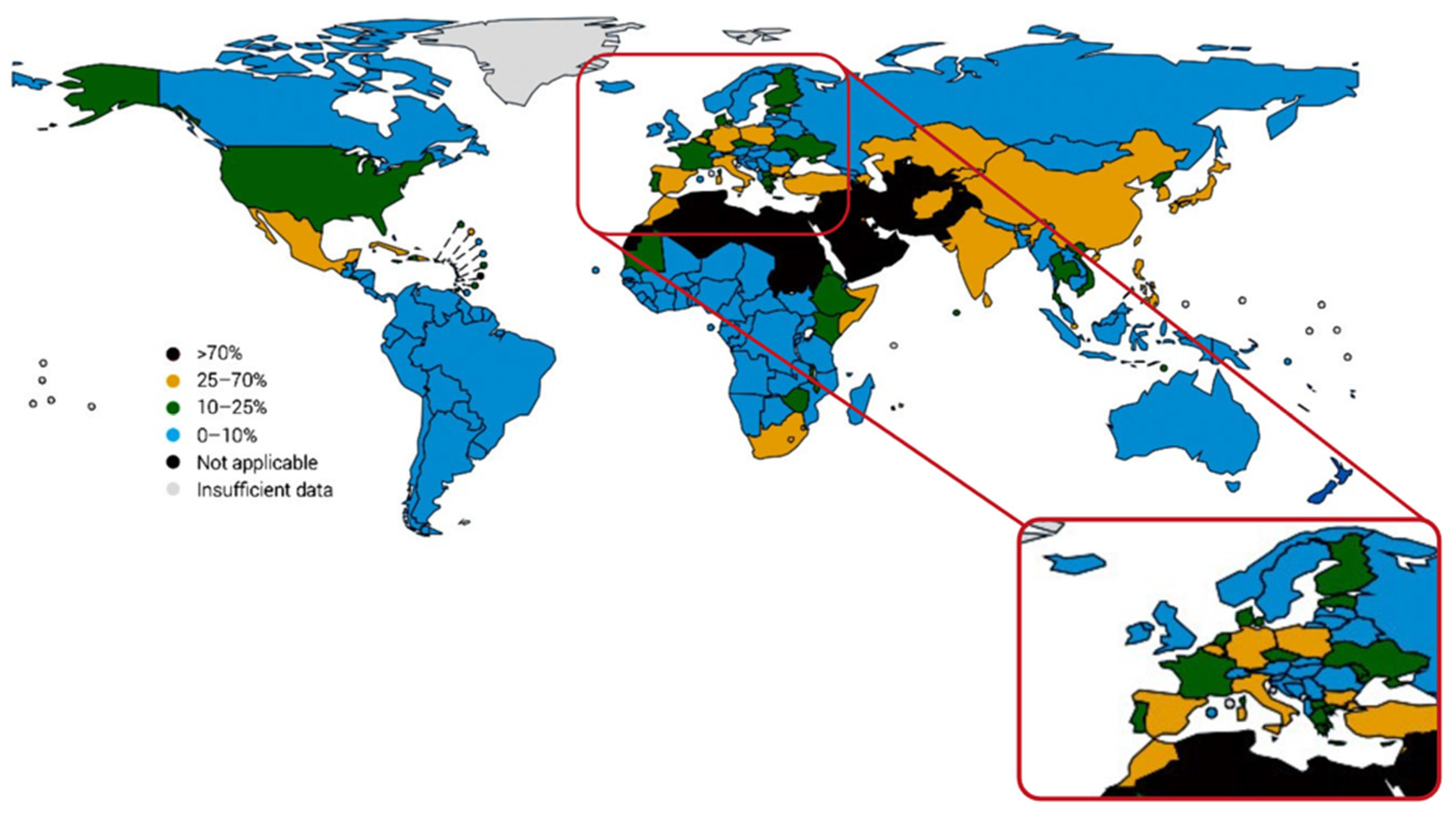
Figure 2.
General classification of constructed wetlands.
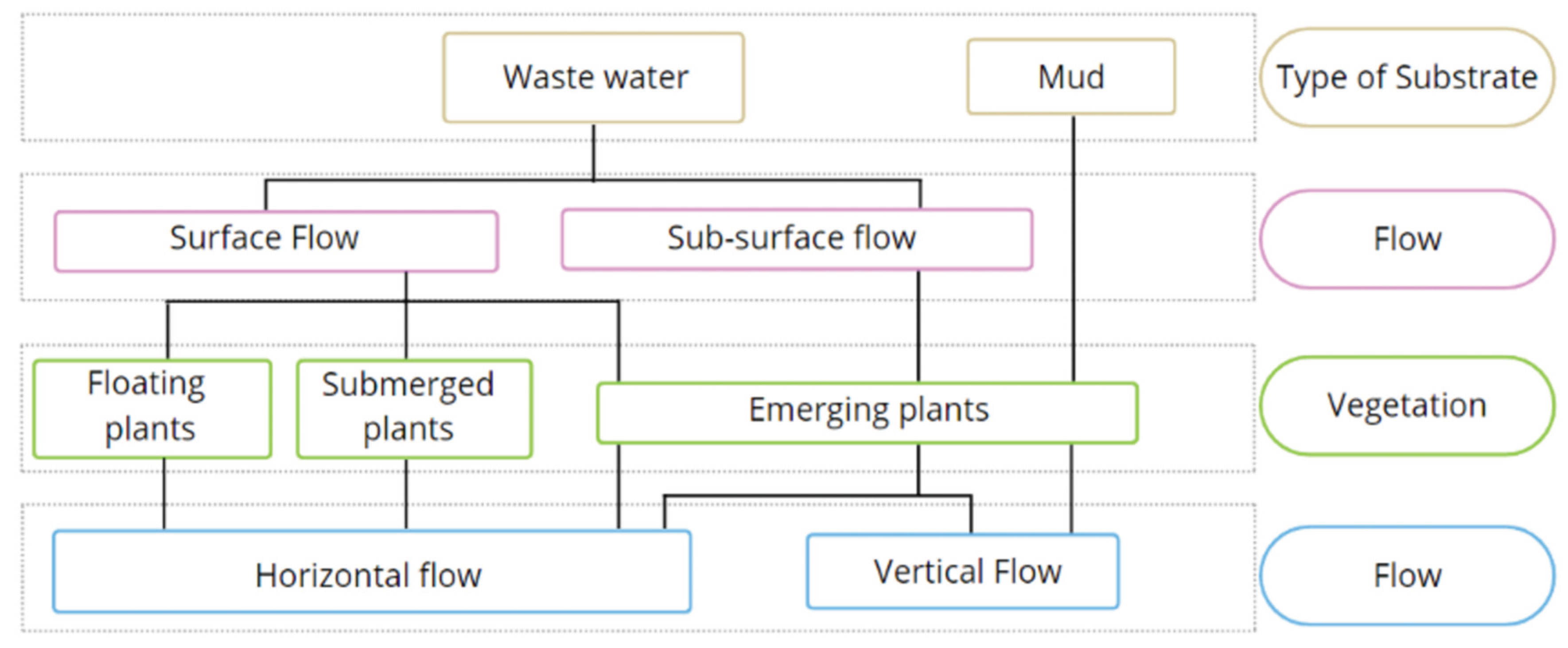
Figure 3.
Classification of different flow systems. (a) Surface flow system; (b) Horizontal sub-surface flow system; (c) Vertical sub-surface flow system.
Figure 3.
Classification of different flow systems. (a) Surface flow system; (b) Horizontal sub-surface flow system; (c) Vertical sub-surface flow system.
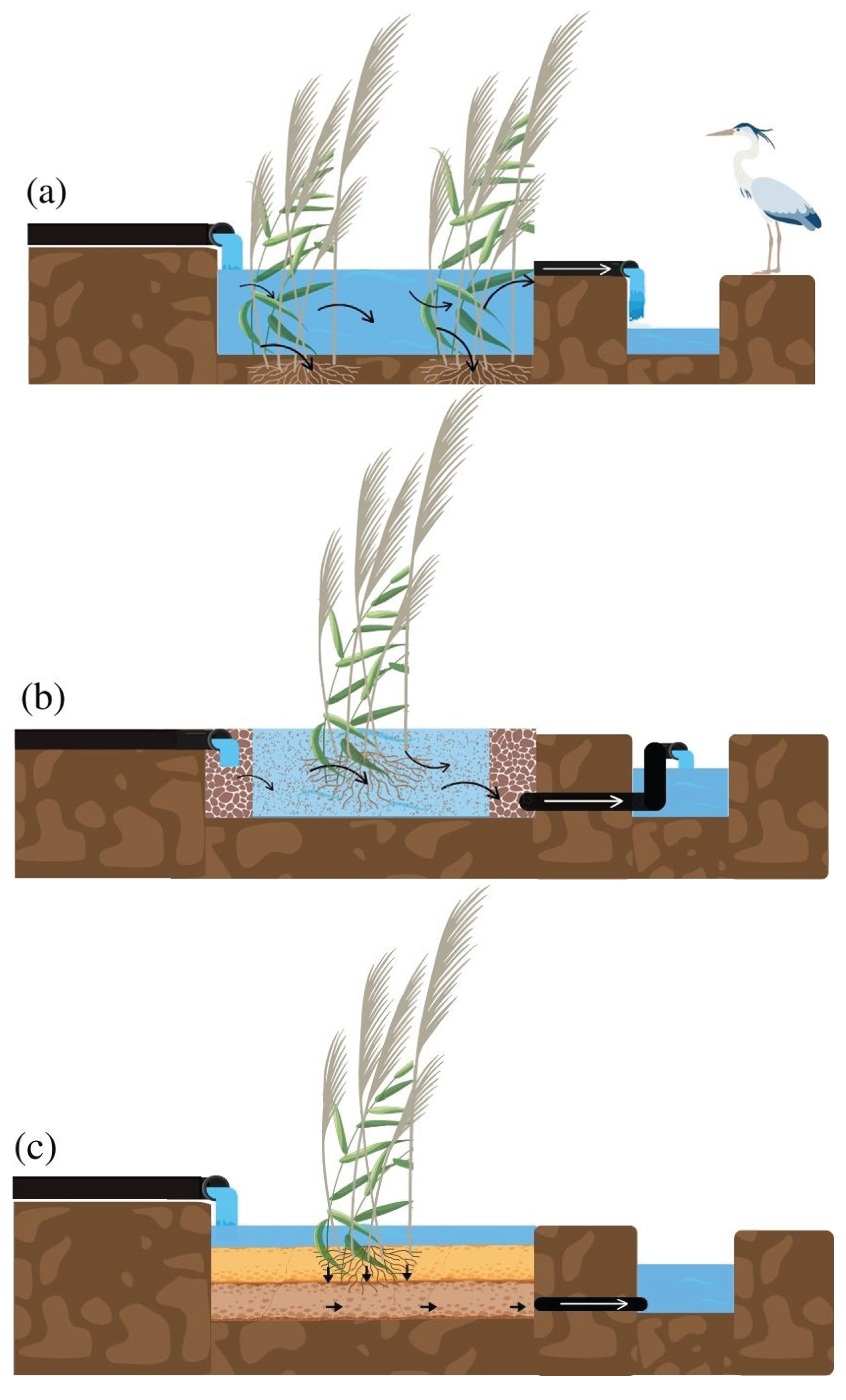
Figure 4.
Representative image of the three fundamental types of macrophyte beds: floating, submerged, and emergent.
Figure 4.
Representative image of the three fundamental types of macrophyte beds: floating, submerged, and emergent.
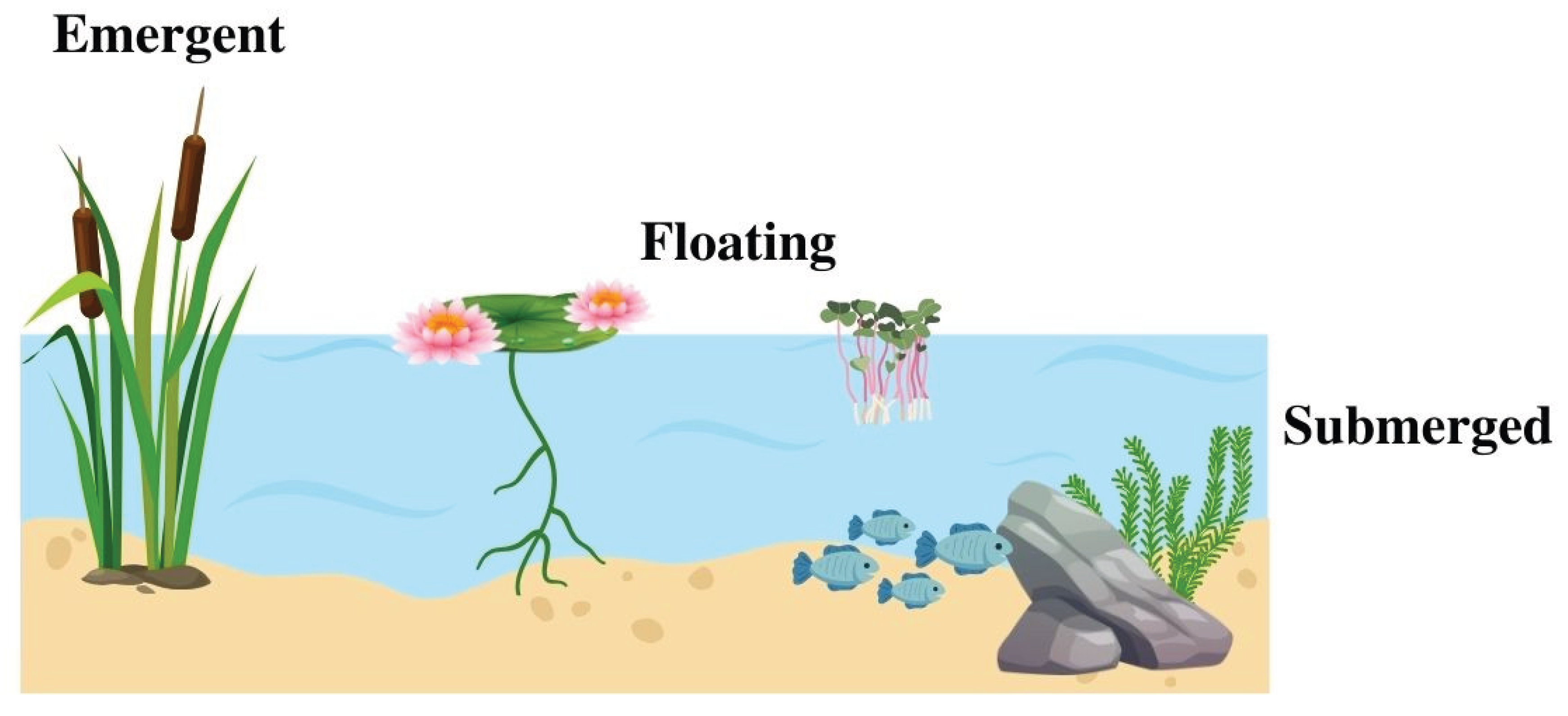
Figure 5.
Phragmites australis species. (a) The dense root system of Phragmites australis; (b) Phragmites australis in its natural habitat (Gomes et al., 2025a).
Figure 5.
Phragmites australis species. (a) The dense root system of Phragmites australis; (b) Phragmites australis in its natural habitat (Gomes et al., 2025a).
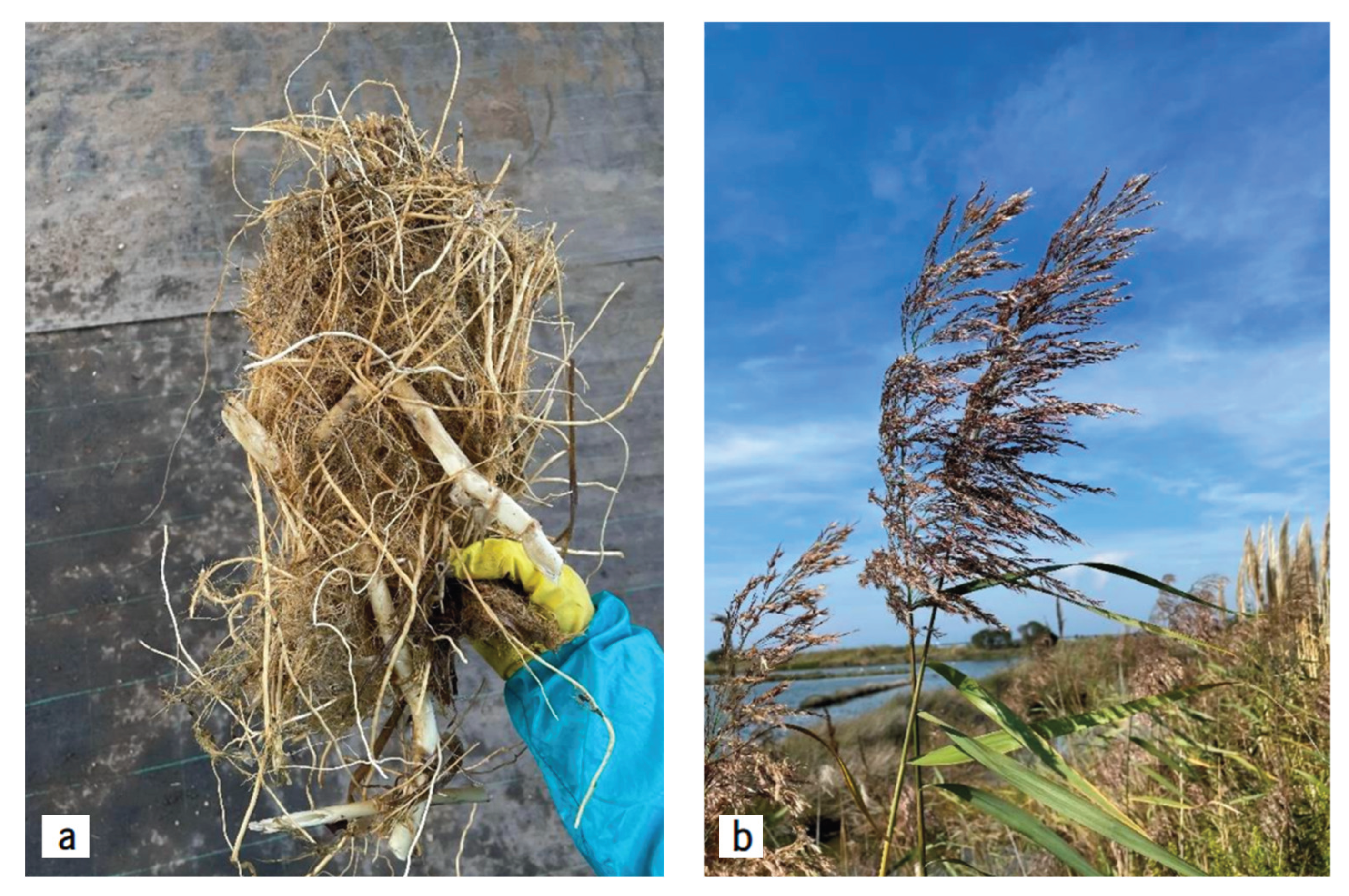
Figure 6.
Vegetative multiplication of Phragmites australis. (a) Phragmites australis inside the pond before its multiplication; (b) Phragmites australis in the planting trays; (c) Phragmites australis after vegetative multiplication; (d) Phragmites australis inside the pond after vegetative multiplication.
Figure 6.
Vegetative multiplication of Phragmites australis. (a) Phragmites australis inside the pond before its multiplication; (b) Phragmites australis in the planting trays; (c) Phragmites australis after vegetative multiplication; (d) Phragmites australis inside the pond after vegetative multiplication.
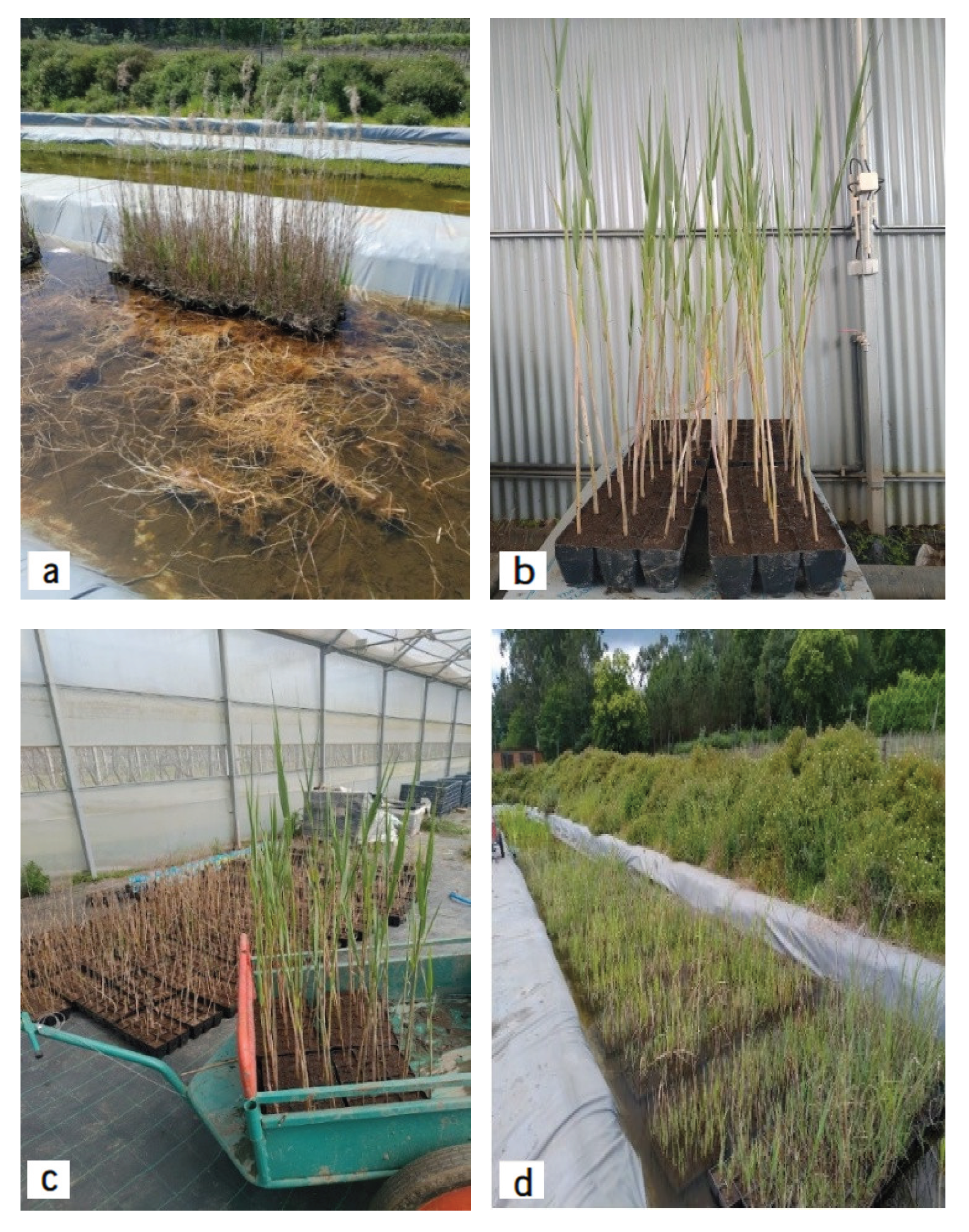
Figure 7.
Biodiversity observed in the PhytoClean CW.
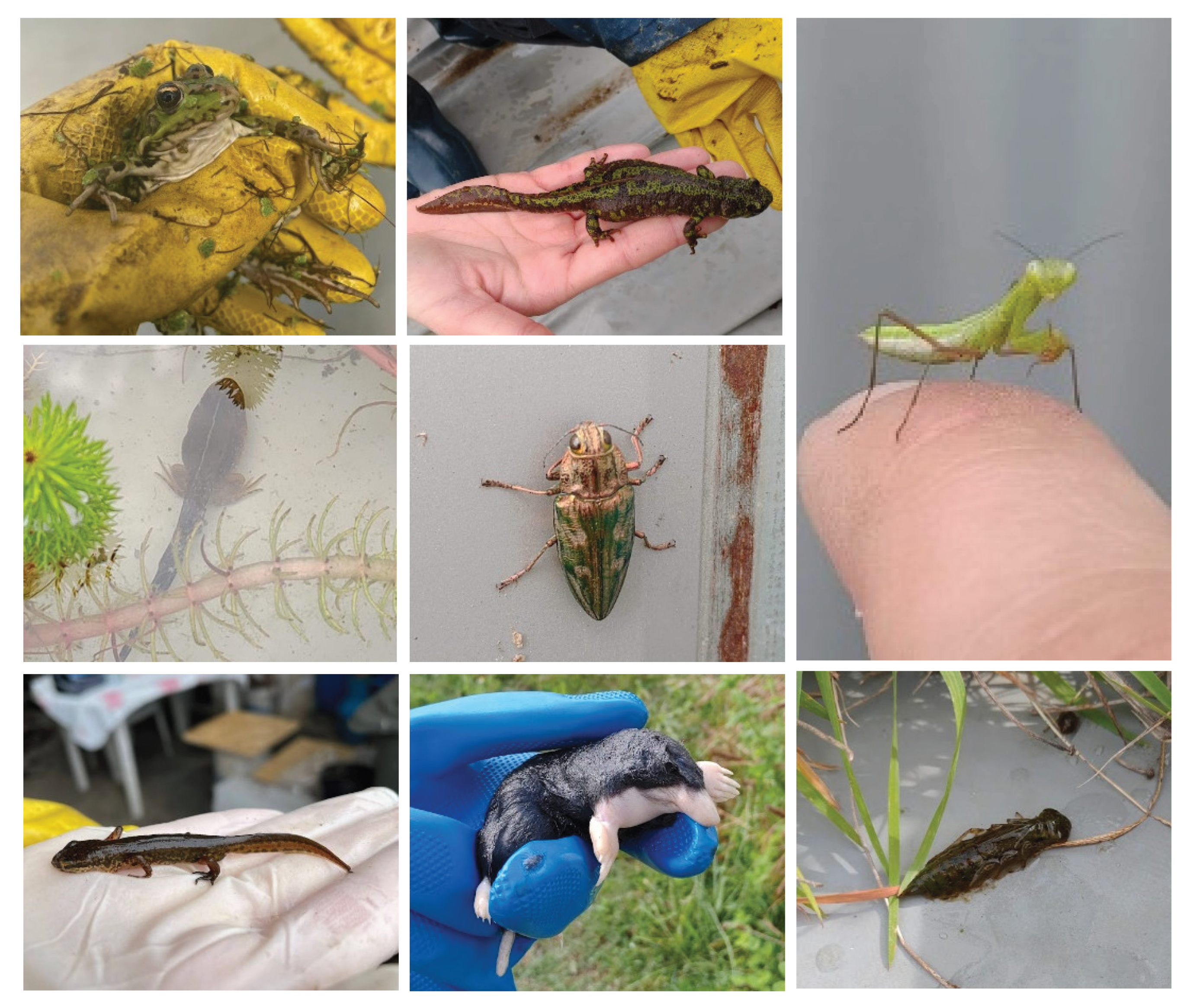
Figure 8.
Schematic layout of the eco-friendly dog shelter. P1 – Constructed wetland (CW); P2 – Lagoon 1; P3 – Water outlet. a – Fountain lagoon (FL); b – Bottom of the CW (BCW); c – Junction box (JB); d – Storage well (SW).
Figure 8.
Schematic layout of the eco-friendly dog shelter. P1 – Constructed wetland (CW); P2 – Lagoon 1; P3 – Water outlet. a – Fountain lagoon (FL); b – Bottom of the CW (BCW); c – Junction box (JB); d – Storage well (SW).
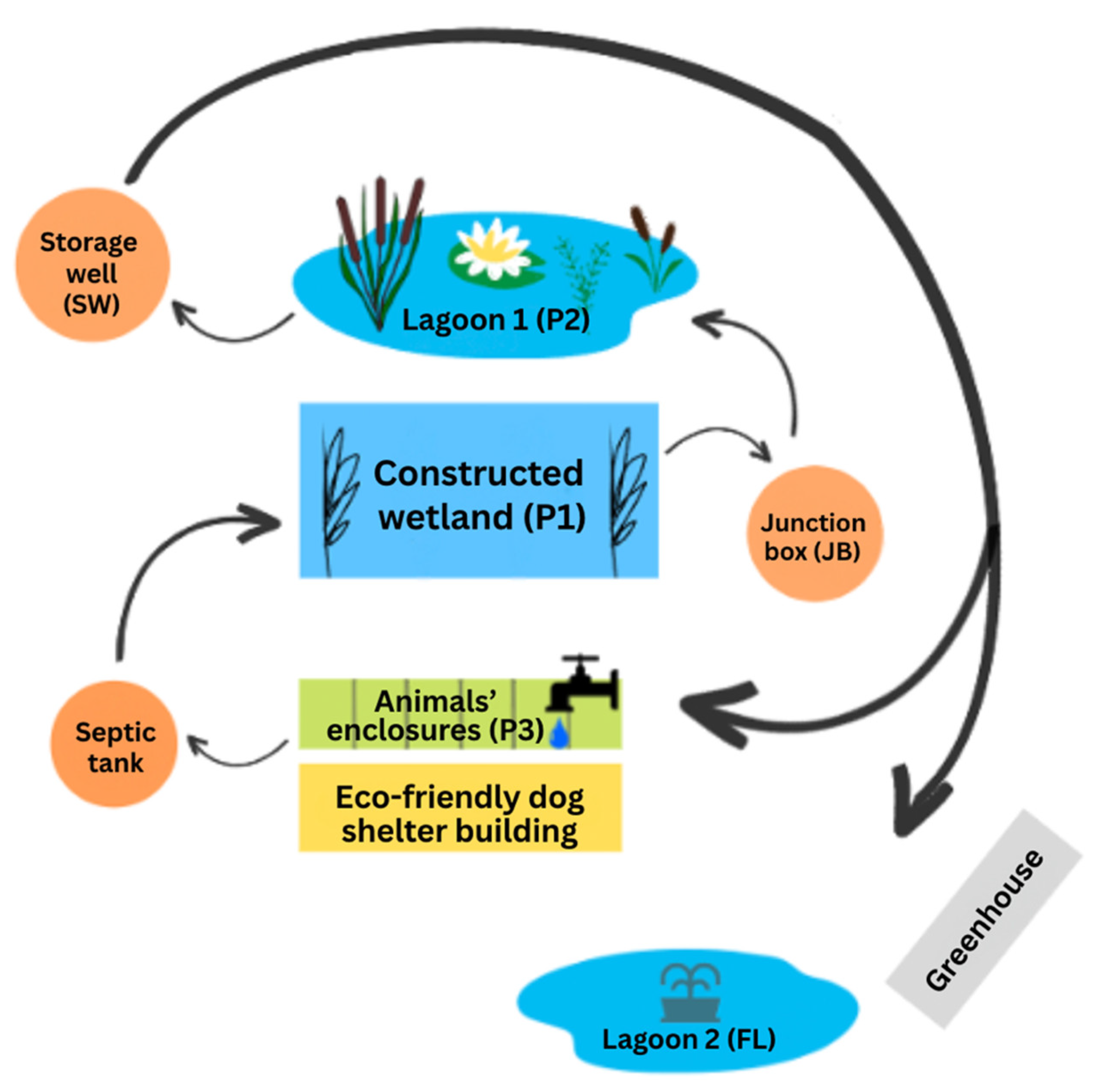
Figure 9.
Stages of the horizontal subsurface flow system CW: a) Excavation to a depth of over one meter, installation of a waterproof liner, and placement of sand and gravel as substrate; b) addition of inlet and outlet pipes for the effluent and planting Phragmites australis in the CW.
Figure 9.
Stages of the horizontal subsurface flow system CW: a) Excavation to a depth of over one meter, installation of a waterproof liner, and placement of sand and gravel as substrate; b) addition of inlet and outlet pipes for the effluent and planting Phragmites australis in the CW.
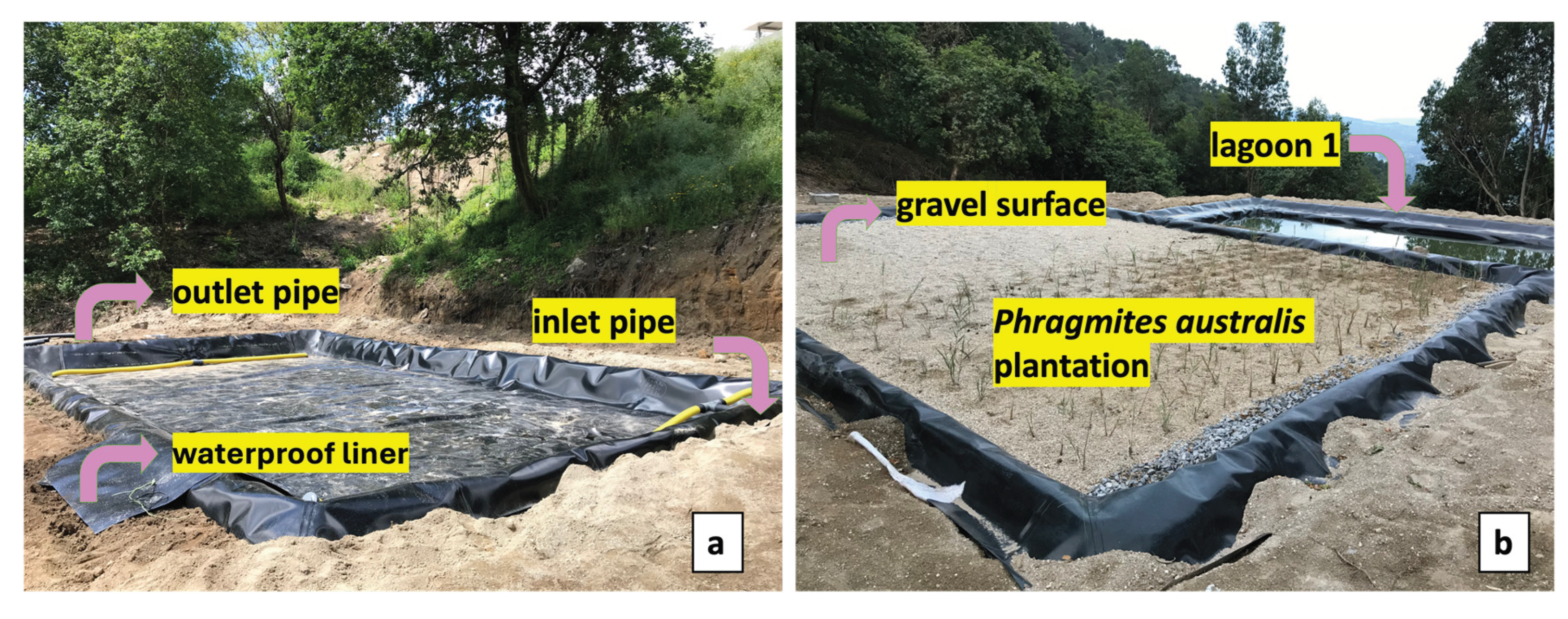
Figure 10.
Constructed wetland (CW) of the shelter: a) First stage of the CW, with the injection of clean water into the system; b); c) Operational stage; d) Current state of the CW.
Figure 10.
Constructed wetland (CW) of the shelter: a) First stage of the CW, with the injection of clean water into the system; b); c) Operational stage; d) Current state of the CW.
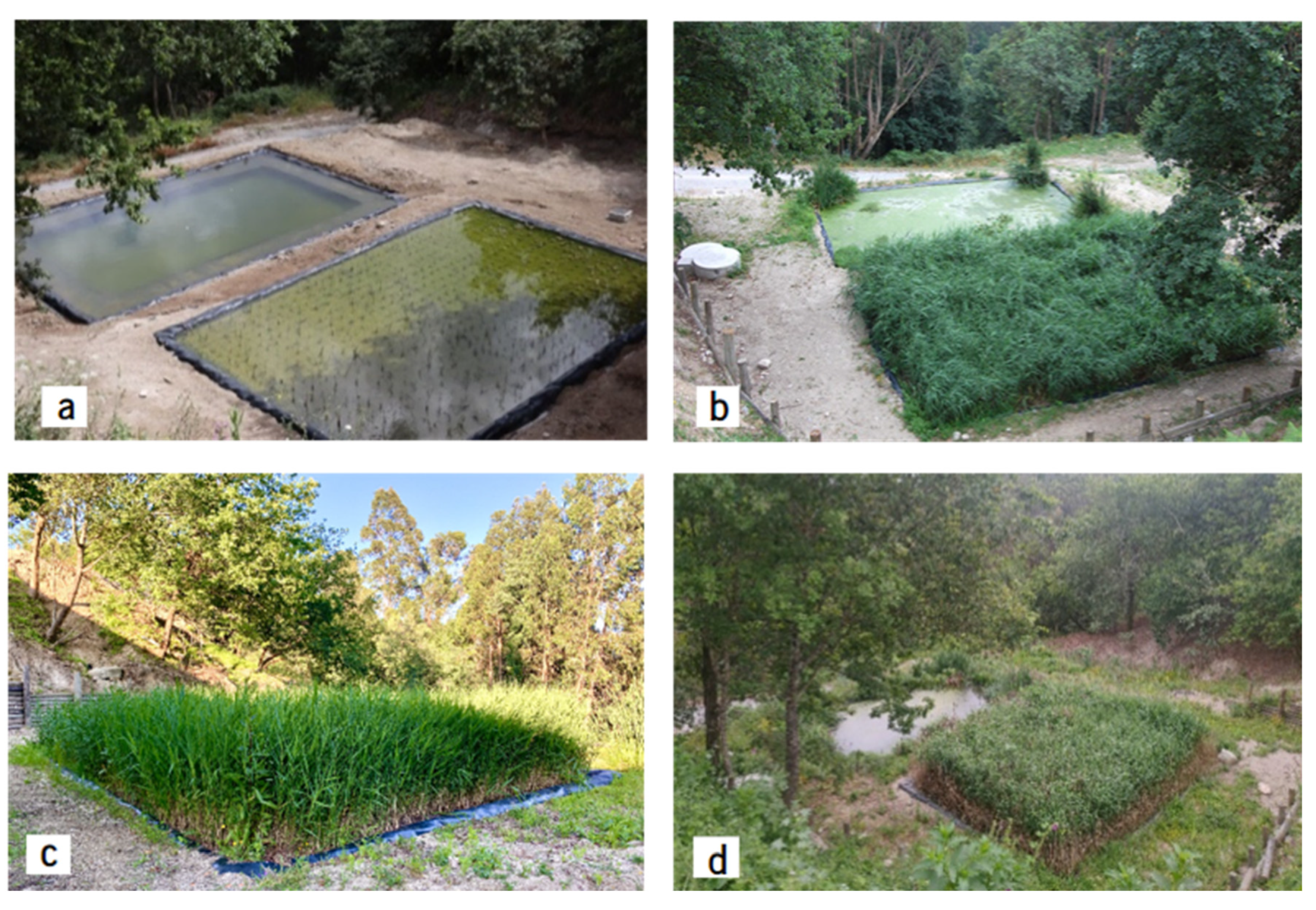

Table 1.
Example of removal mechanisms in a constructed wetland system (Wallace and Knight, 2006).
| Parameters | Physical Mechanisms | Chemical Mechanisms | Biological Mechanisms |
| Suspended Solids | Sedimentation | — | Microbial degradation |
| BOD5 (Biochemical Oxygen Demand) | Sedimentation | — | Microbial degradation |
|
COD (Chemical Oxygen Demand) |
Sedimentation | — | Microbial degradation |
|
Metals |
Sedimentation | Precipitation; Adsorption; Ion exchange |
Uptake by microorganisms; Uptake by plants |
|
Petroleum Hydrocarbons |
Volatilization |
Adsorption |
Uptake by microorganisms; Uptake by plants |
| Synthetic Hydrocarbons |
Sedimentation; Volatilization |
Adsorption; Volatilization (NH4) |
Uptake by microorganisms; Uptake by plants |
| Nitrogen Compounds |
Sedimentation |
Precipitation; Adsorption |
Uptake and transformation by microorganisms; Uptake by plants |
| Organic and Inorganic Phosphorus |
Sedimentation |
— | Uptake by microorganisms; Uptake by plants |
| Pathogenic Organisms |
Sedimentation |
— | Natural mortality; Microbial predation. |
Table 2.
Advantages and disadvantages of constructed wetlands (CWs) compared to conventional systems (Carty et al., 2008; Abou-Elela et al., 2012; Parde et al., 2021).
Table 2.
Advantages and disadvantages of constructed wetlands (CWs) compared to conventional systems (Carty et al., 2008; Abou-Elela et al., 2012; Parde et al., 2021).
| Advantages | Disadvantages |
| Low operating and maintenance costs | Different species have different pollutant removal rates |
| Treated water can be used for recreational and gardening purposes | Treatment process in construct wetlands is slower compared to other treatment processes, with higher removal efficiency in summer than in winter. |
| High efficiency in removing BOD, COD and TDS | Risk of introduced plants becoming invasive |
| Effective in removing nitrogen and phosphorus | Poor management can lead to bad odors and the proliferation of pathogenic organisms and insects |
| Contributes to drainage and flood management | High pollutant concentrations may become toxic to plants |
| Odor minimization | Larger land area required compared to conventional systems |
| Aesthetically pleasing | Risk of bed clogging due to high organic matter concentrations |
| Increases biodiversity and provides habitats for wildlife | |
| Biomass can be used for different application; | |
| Relies on natural processes | |
| No need for qualified personnel for system maintenance | |
| Low sludge production |
Disclaimer/Publisher’s Note: The statements, opinions and data contained in all publications are solely those of the individual author(s) and contributor(s) and not of MDPI and/or the editor(s). MDPI and/or the editor(s) disclaim responsibility for any injury to people or property resulting from any ideas, methods, instructions or products referred to in the content. |
© 2025 by the authors. Licensee MDPI, Basel, Switzerland. This article is an open access article distributed under the terms and conditions of the Creative Commons Attribution (CC BY) license (http://creativecommons.org/licenses/by/4.0/).
Copyright: This open access article is published under a Creative Commons CC BY 4.0 license, which permit the free download, distribution, and reuse, provided that the author and preprint are cited in any reuse.