

Submitted:
29 September 2025
Posted:
30 September 2025
You are already at the latest version
Abstract
The use of post-production and post-process by-products is an activity that is in line with the latest trends in the fruit industry. Obtaining new nutrients from them can be of great importance not only for the food industry, but also for pharmaceuticals. Cornelian cherry seeds can be one of the novel sources rich in functional ingredients with a wide range of applications in the food, nutraceutical, pharmaceutical, and cosmetic industries. Furthermore, there is currently a dynamic increase in interest in oilseeds, not only for the production of vegetable oils and oilseed meal, but also due to the growing demand for renewable energy. Cornelian cherry seeds can be a source of innovative oil with high nutritional and health-promoting properties and a high energy value. The published results of research prove the richness of attractive fatty acids, as well as many health-promoting compounds. This review discusses the nutritional and phytochemical profile, as well as the biological activity exhibited by cornelian cherry seed oil. In addition to its undoubted functionality, extensive research is still needed to promote its use at the industrial level to take advantage of all the benefits of its chemical composition.
Keywords:
residue-free technology
; Cornus mas L.
; health-promoting properties
1. Introduction
Cornelian cherry (Cornus mas L.) is a woody plant that regularly fruiting, and with age it produces an increasing yield [1]. It is a plant from the Cornaceae family, and in countries where the main fruiting species are plants from the Rosaceae family, it can contribute to increasing crop safety from attacks by pests and pathogens specific to a given species or genus. The fruit of cornelian cherry is a drupe that can be eaten as a dessert or processed at various stages of ripeness: from green, through coloured, but still hard, to fully ripe. They can be pickled, candied, processed into juices, jams, pestils, and tinctures. In each of the above-mentioned ways of using fruit, the stone with the seed embedded in it is a waste product [2,3,4,5]. With the current trend of “no waste” processing, the use of seed is important [5] In recent years, the use of plant and fruit seeds for human consumption has increased in Western countries due to the adoption of healthy dietary habits and the demand for functional foods. Seeds accumulate large amounts of nutrients in the form of energy reserves, suggesting that seed oils are the most widely used in human nutrition [6]. However, many oil plants require specific growth conditions, and their cultivation involves the use of appropriate agrotechnical techniques, including soil preparation, sowing, fertilization, and pest control. Therefore, species with fruits containing many bioactive substances and resistance to adverse environmental conditions are particularly highly valued [7,8,9,10,11,12,13,14].
Fruit growers see cornelian cherry cultivation as a profitable source of income. Cornelian cherry cultivation is developed, among others, in: Slovakia [15]; the Czech Republic [16]; Serbia [17,18,19], Bosnia and Herzegovina, Bulgaria, Montenegro [20] and in Croatia, Switzerland, Slovenia, Greece, Albania, Turkey [21,22], Italy, France, Romania, Russia, Belgium, Germany, and Poland. Cornel cultivation also occurs in Asian countries: Armenia, Azerbaijan, Iran, northern Iraq, Lebanon, and Syria [23]. Precise data on global cornelian cherry production is approximately 722.684 tons. The leading producer of cornel fruit in the world is the USA (404.880 tons). Other leading global producers include Canada (195.196 tons), Chile (106.180 tons), Turkey (11.481 tons), Azerbaijan (2.874 tons), and Romania (581 tons). Turkey is particularly noteworthy here, as Anatolia is one of the regions where the cornelian cherry tree is abundant in its natural habitat. It is estimated that 1.6 million cornelian cherry trees grow in Turkey, yielding approximately 17.000 tons of fruit annually. Most trees are seedlings of local cornelian cherry cultivars. Therefore, their fruit vary significantly in size, shape, color, and other characteristics. Over the past decade, interest in cornelian cherry fruit has been steadily growing, especially in Europe and North America, so there is an urgent need to find alternative uses for cornelian cherry seed. The cornelian cherry deserves wider cultivation, as it can increase crop biodiversity.
The nutritional and health-promoting properties of the cornelian cherry fruit pulp are widely documented [24,25,26,27,28,29] and therefore it should be assumed that the seed may also be a valuable source of health-promoting compounds. However, the research so far has been random, although it already gives a very promising picture [30].
Cornelian cherry oil can be used for food purposes [31,32] and in the cosmetics industry [33,34]. In the past, in many regions it was used to make soap [35]. The seeds can be used to produce bio-oil—a potential biofuel [4,31]. In many regions, roasted and ground seeds are traditionally used as a coffee substitute [31,32]. Historically, they were also used to make rosaries, beads, and ornament [35]. Based on the possible uses presented above, it can be concluded that Cornus mas L. seeds, previously waste (generated during fruit processing), could become a valuable material in modern industry. The possibility of their extensive use increases the profitability of cultivating this species [36].
The aim of this review is to collect and analyse the existing state of knowledge about the composition and possibilities of using cornelian cherry seed oil, the production of which could be an attractive way to manage waste generated during fruit processing.
2. Results
2.1. Cornelian Cherry as a Source of Oil
One of the most important sources of vegetable oil are oil-bearing trees [37] Olive oil, coconut oil, and palm oil are mainly extracted from the pulp of the fruit. However, palm also has seeds that provide palm kernel oil. Most of the fruits and seeds of oilseeds provide high oil yields [38] and they are also hardy and long-lived species. However, it should be emphasised that most species require a relatively warm climate: tropical for coconut and palm [39] and warm climate for olive trees. However, fats as a reserve material are present in the seeds of most species. One of such species, whose cultivation and importance are growing steadily, is the cornelian cherry. It is cultivated for its attractive fruit, and the large seed, amounting to > 20%, is a waste material in processing [30,40]. Cornelian cherry fruits contain many substances whose health-promoting properties are widely documented [41,42]. Similarly, the oil obtained from them can become a complementary and sometimes an alternative product made of waste matter. Cornelian cherry as a plant is resistant to low temperatures, can be grown in the mountains, is long-lived and yield-forming for a very long time. More than 100 kg of fruit can still be harvested from a 100-year-old specimen [43].
Fats are present in various parts of the Cornus mas tree (Figure 1). Antoniewska-Krzeska et al. [44] showed that fats are found in the highest amount in flowers (5.69%), followed by seeds (4.42%), leaves (4.37%) and fruits 1.40–1.68%. Martysiak-Żurowska and Orzołek [45] compared the content of fats and their composition in oils obtained from seeds, pulp, and whole fruits of 15 fruit-bearing species that grow in temperate climate conditions. In this experiment, the highest amount of fat was found in Borago officinalis (29.7%). The total lipid content of the raw material, which consisted of whole fruits, was the highest for Schisandra chinensis (9.38%), while for cornelian cherry it was 1.40%. Kucharska [2] examined the fat fraction in the seeds and pulp of 6 cornelian cherry cultivars and found that the average fat content in the fruit was 0.51% and in the seeds 2.9%. Taking into account that cornelian cherry fruit pulp can be used on a larger scale for the production of juices, jams and pestil, while seeds are a significant waste product, it is this raw material that can be used in the production of cornelian cherry oil.
The method of obtaining the oil affects the differences in its nomenclature. The most common division includes: “cold-pressed” oils, virgin oils and refined oils (Figure 2).
“Cold-pressed” oils are obtained as a result of mechanical processing, such as pressing or squeezing, at a temperature below 50 °C, after which they are purified by physical processes, such as sedimentation, filtration, or centrifugation. This process preserves most of the nutrients, vitamins, and enzymes present in the raw material and prevents the formation of harmful byproducts. Cold-pressed oils have an intense taste and aroma, making them highly valued in both in the kitchen and cosmetics. The pomace leftover from cold pressing can be used as a valuable feed for animals. However, it is important to note that cold-pressed oils contain associated substances that can accelerate the rancidity and oxidation process, making them less durable than refined ones [47].
Virgin oil—this is an oil obtained as a result of the same processes as cold-pressed oils, but in addition, an increased temperature of the seeds is used, which increases the efficiency of the process. The cleaning of the obtained oil is done in a similar way as in the previous method. Hot pressing can lead to the loss of some nutrients and a change in the flavour of the oil; however, the resulting oils are more stable and have a longer shelf life, making them a popular choice in the food industry [48] The conveying capacity depends on many parameters, including the temperature and pressure used. Jakovlević et al. [36] state that the quality and yield of cornelian cherry oil depend on the pressing technique used. The best method for obtaining cornelian cherry oil is the environmentally friendly supercritical CO2 (SC-CO2) extraction. SC-CO2 is an alternative method of oil production to traditional methods, such as cold pressing. This method is more efficient and, as a result, produces the highest quality oil, compared to the efficiency of cornelian cherry seed pressing at different temperatures and pressures. They showed that the process efficiency ranges from 2.35% (at 119 bar and 50 °C) to 5.18% (at 300 bar and 60 °C).
The third method is multi-stage refinement, which allows the extraction and purification of virgin oil or extraction oil [49]. First, the seeds are heated, then pressed, i.e., extra virgin oil is pressed from them. In addition, oil is extracted from oilcakes, i.e., seeds left over after pressing, using a solvent such as hexane or extraction naphtha. After extraction, the solvent is removed from both the obtained oil and the by-product, and the resulting products are extraction oil and extraction meal. The oil obtained as a result of the extraction process is very contaminated because the solvent extracts accompanying substances from the seeds, in addition to the oil. They reduce the quality of the oil. Undesirable substances may be harmful compounds, such as pesticides, heavy metals, toxic sulphur compounds. Freshly pressed fats are usually dark in colour and have an unpleasant aroma, contain substances that cause cloudiness of the oil, and generally have a short shelf life [50]. Such features are usually not accepted by industry and consumers, which is why colour and fragrance substances are also removed in the refining process. Typical oil refining consists of four processes: degumming—removal of phosphoric compounds, partly dyes and metals with phosphoric or citric acids; deacidification—removal of free fatty acids, other phosphorus compounds, dyes, and metals with sodium hydroxide (soda lye); decolorization—removal of dyes, phosphorus compounds, metals in the process of vacuum distillation with steam and deodorisation. The purpose of refining is to bring the oil to a state characterized by the desired durability and satisfactory organoleptic properties [51]. Proper storage conditions are very important. The oil should be stored in a cool, dark place to minimise oxidation. The quality of oil is influenced by all stages of production, from seed cultivation and harvesting, through their preparation and pressing, and through packaging [47].
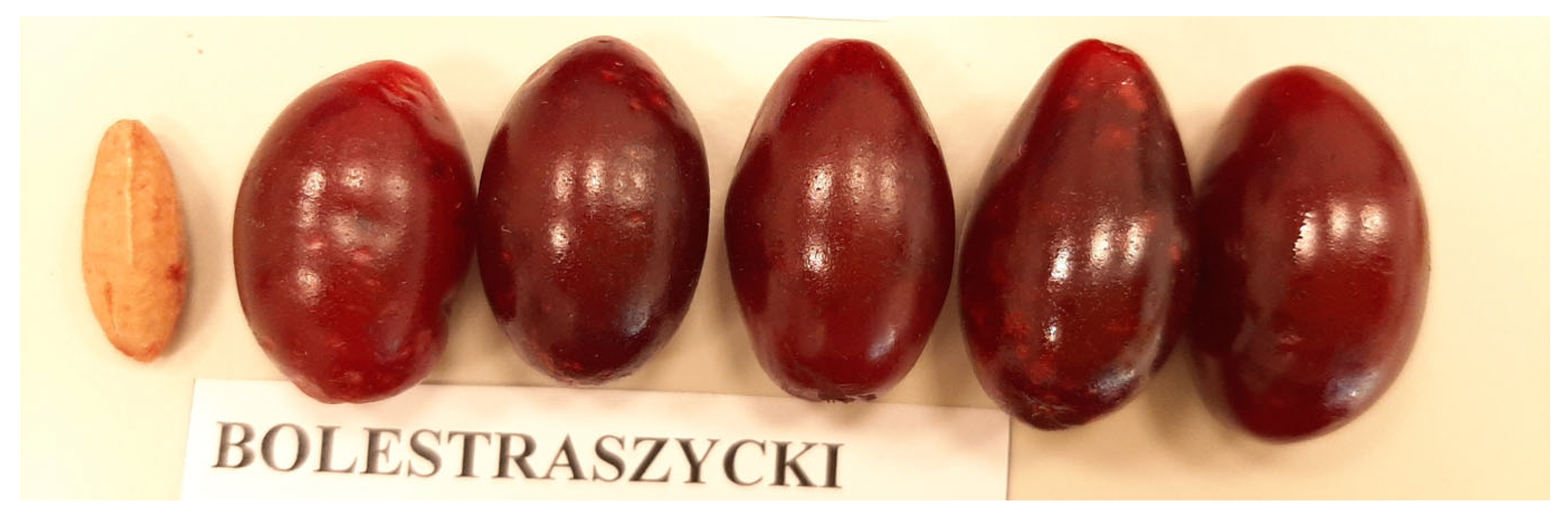
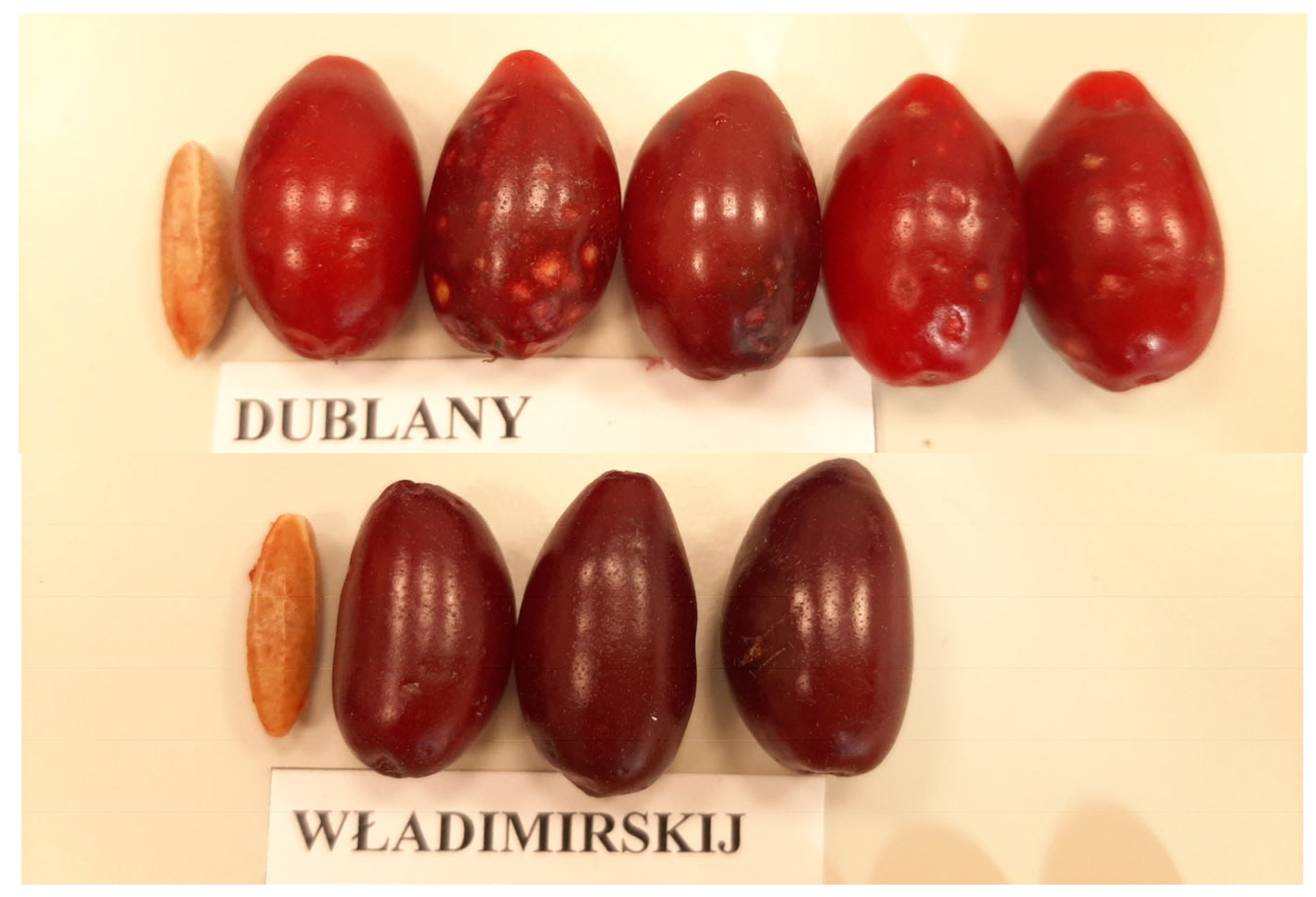
The fruit of cornelian cherries are single drupes, usually dark red. Its shape is oval or spherical, its average length is 1.0–4.6 cm, and its weight is 0.39–7.3 g. The size of the seed oil yield is, of course, determined by the size of the seed. The pit is oval-shaped, 0.5 to 2.5 cm long and weighing about 0.4 g (Figure 3).
Most cultivars have been selected for their external appearance, so they have fruits larger than those found in nature and are often characterised by a small share of the seed in the entire fruit mass (Table 1). The lowest proportion of seeds (9–10%) was recorded in the fruits of Ukrainian cultivars, such as: ‘Ekzotychnyj’, ‘Grenadier’, ’Yeljena’, ‘Yevgeniya’ ‘Mriya Shaydarovoi’, ‘Naspodevanyj’, ‘Nikolka’, ’Oryginalnyj’, ‘Pervenets’, ‘Priorskij’ and ‘Svetlyakov’. On the other hand, the highest values of the aforementioned trait (over 14%) were characterized by Polish cultivars such as: ‘Bolestrashytskii’, ‘Kresoviak’ and ‘Pachoskii. Assuming that the average weight of cornelian cherry is 3.5 g, 100 kg of fruit of cultivars, where the stone share is 9.5% (the first column of Table 1), is equivalent to the seed yield of 9.4 kg. For cultivars with a higher proportion of seeds, the yield of seeds from 100 kg of fruit can be up to 14.5 kg.
The share of seed in the entire fruit mass decreases with the ripening of the fruit. The results obtained by Szot et al. [54] show that the share of seeds in the fruits of individual ecotypes on 30 July ranged from 10.67 to 23.50%, and after a month (30 August), from 8 to 12.46%. Kashrina et al. [55] report that among cornelian cherry seedlings growing in the natural areas of the Crimean Peninsula, the average share of seeds in the total fruit weight ranged from 10.8% (from the western part of Mountainous Crimea) to 26.3% (eastern part of Crimea Mountains). In Iranian studies [56], the fruits of cornelian cherry seedlings contained a pit, the average share of which in the weight of the whole fruit was 13%. The fruits of cornelian cherry that grow in natural sites in Serbia contained a seed that constituted on average 11.25 to 17.44% [17]. Borroto Fernández [57], presenting the phenotypic characterization of a wild-type population of cornelian cherry population from Austria, found that the share of seed in the total fruit weight ranged from 8.28 to 23.19%. In the Turkish study by Ercisli et al. [58] the share of seeds in the total fruit weight of individual ecotypes ranged from 10.01 to 20.92%.
2.2. Characteristics of Cornelian Cherry Seed Oil
Cornelian cherry oil is an innovative product, and comparing it with the well-known and widely used rosehip oil, as well as with the oils of popular stone fruits such as apricot, cherry, peach, and plum, is very useful (Table 2).
Cornelian cherry is characterised by a similar share of the seed in the entire fruit mass, in relation to other stone fruits such as apricot, cherry, peach, or plum, while the nuts found in the hypanzio of wild roses constitute more, nearly 25% of the fruit. The oil is pressed from the kernels in the pit. The content of the kernel in the seeds of plants of the genus Prunus ranges from 5–50%, while in the literature, there is no information on what part of the seed of the cornelian cherry is the kernel. Cornelian cherry seeds contain between 1.77 and 9.94% oil, which is similar to the oil content of rosehip seeds (3.27–9.0), while the oil of cherry, apricot, peach, and plum seeds accounts for 17–49%. The method of pressing has an impact on the yield, composition, and quality of the oil. Jakovlević et al. [36], using supercritical extraction of CO2 obtained from cornelian cherry seeds and oil without a very valuable fatty acid, which is linolenic acid. While Vidrich et al. [74], studying the composition of oil from different genotypes of cornelian cherry seeds, obtained by popular extraction with the Soxhlet apparatus, found the presence of linolenic acid at a level of 1.5–1.6%. Soxhlet extraction facilitates the extraction of sparingly soluble substances by continuously washing the sample with a solvent (e.g., freon). Delinska and Perifanova-Nemska [73] showed that the yield of cold-pressed plum kernel oil was 20% and after freon extraction, 39.2% and it is expected that the extraction of cornelian cherry kernel oil will also increase significantly using solvent-assisted extraction.
The iodine value of an oil indicates the degree of unsaturation of the fatty acids contained in a given oil. The higher the iodine number, the more double bonds in fatty acids, so the oil is more unsaturated. That is, higher values are characteristic of more liquid fats. Cornelian cherry seed oil has an iodine value of 88.106–104.84 g·100 g−1, while the value of coconut oil is 6–11 g·100 g−1[59] The iodine value of cornelian cherry oil is within similar limits as that of roses, cherries, apricots, peaches, and plums.
The density of an oil, expressed as the mass of a substance per unit volume, indicates its specific gravity and is related to the number of oil molecules in a given volume. Higher density means that the oil is heavier, which can affect its lubricating properties, e.g., better sealing of work areas, but potentially less effective at low temperatures. The density of cornelian cherry seed oil is similar to that of other stone fruit and rosehip oils.
The peroxide value determines the content of the peroxides and products of early oxidation of fats in the oil. This parameter is particularly important in assessing the freshness and durability of oils. A low peroxide value indicates good quality and freshness of the oil. According to the requirements of the Codex Alimentarius [75] in cold-pressed oils, the peroxide value should be < 15 mmol O2∙kg−1. In the study of Jakovlević et al. [36] it was shown that the peroxide value for rosehip oil ranged from 4.70 to 29.69 mmol O2·kg−1, and for cornelian cherry seed oils from 0.55 to 7.36 mmol O2·kg−1. The lower peroxide value in the cornelian cherry samples was due to the use of freshly harvested fruits, which affected the peroxide value in the obtained oil. Nevertheless, such a low peroxide value of cornelian cherry oil indicates good resistance of this oil to oxidative transformations, which is attributed to the composition of fatty acids, as well as the presence of oil components with a clear antioxidant effect.
The acid value of the oil indicates the content of free fatty acids in the oil, which is an indicator of its freshness and degree of rancidity. The higher the acid number, the more free fatty acids, which means that the oil is prone to rapid aging, rancidity or hydrolysis. A low number is usually desirable and indicates good quality and freshness of the oil. According to the requirements of the Codex Alimentarius [75] in cold-pressed oils, the acid value should be ≤ 4.0 mg KOH∙g−1. In this list, the oil of all fruit seeds, except rosehip, met this requirement.
The saponification number of an oil indicates the average molecular weight of the fatty acids that make up a given fat or oil. The higher the saponification number, the lower the average molecular weight of fatty acids, and the other way around. The above list shows that cornelian cherry oil is characterized by the height saponification number from 146.45 [36] to 256.41 [mgKOH∙g−1], while oil from other fruits is characterized by values of the aforementioned trait from 101–210 [mgKOH·g−1].
The content of free fatty acids in the oil is another feature that proves its freshness and quality. A higher free fatty acid content usually means that the oil is older or prone to aging, and/or has been poorly stored or exposed to factors such as heat, light, or moisture, leading to the hydrolysis of triglycerides and the release of free fatty acids. Literature data indicate that the values of this feature in cornelian cherry oil are similar to those in oil from other stone species, namely apricots, cherries, peaches, and plums. Only in rosehip oil did Eren et al. [64] obtain higher values of free fatty acids, but also the acid number and the peroxide number. They found that unfavorable oxidation processes occurred during the storage of seeds and during the cold-pressing process itself. This confirms the basic principle of processing that only high-quality raw material should be used for the production of fruit preserves [76].
Vidrih et al. [74] showed that cornelian cherry seeds of individual genotypes contain 5.95–6.55% water, 0.84–1.48 g·100 g−1 DM of ash, and 4.45–7.94% fat. With a water content of less than 12% water, cornelian cherry seeds demonstrate their high shelf life during storage. Autors showed that the mineral composition of cornelian cherry seeds was most influenced by genotype (Table 3).
Among macronutrients, the highest content was recorded for calcium, potassium, phosphorus, and magnesium. Antoniewska-Krzeska et al. [44] compared the chemical composition of individual parts of cornelian cherries: flowers, leaves, fruits, and seeds, but related the chemical composition of whole seeds, that is, the seed and the kernel embedded in it. They report that cornelian cherry seeds contain 2.27% protein, 3.34% fats, 3.21 g·kg−1 fructose, less than 0.5 g·kg−1 maltose, sucrose, and lactose, less than 0.1 mg·kg−1 vitamin A, 2.08 mg·kg−1 carotene, and 22.19 mg·kg−1 vitamin E. This only gives a certain idea of what is important because the content of individual compounds in pressed cornelian cherry oil, in addition to fatty acids, is absent from the literature.
All edible fats and oils are substances that are insoluble in water and are mainly composed of glyceryl esters, fatty acids, or triglycerides, as well as non-glyceride compounds present in small quantities. Cornelian cherry is a source of polyenic fatty acids (Table 4).
These are acids with two, three, and four double bonds in their structure. Fatty acids with two double bonds—diene—are represented primarily by linoleic acid in the amount of 60.17–75%, the amount of which is the highest compared to oils from the seeds of wild rose, peach, cherry, apricot, or plum. From the diene group, there are also trace amounts of eicosadienoic acid in the oil. Fatty acids with three double bonds (trienes) are α-linolenic acid (ALA) and γ-linolenic acid (GLA), belonging to two biochemically different families, n-3 and n-6. The ALA content in cornelian cherry seeds can range from 1.3–2.1% [74] to 10.87–14.70% [77]. Also in whole fruits, Martysiak-Żurowska and Orzołek [45] found the content of ALA trienes—11.43% and GLA 1.13%. A fatty acid with four double bonds, tetraene, is present in cornelian cherry seed oil in small amounts and is an adrenic acid. Other fatty acids in cornelian cherry oils are monoenoic acids and saturated acids. Among monoenoic acids, oleic acid was the most important, present in an amount of 15.7–23.69%. Rosehip oil contains similar amounts of this acid, whereas oils from the seeds of other stone species, such as cherries, peaches, apricots, and plums, have a higher proportion of this acid. Among the saturated acids in cornelian cherry oil, the main position is palmitic acid 3.5–8.05, followed by stearic acid 1.37–2.90, and these amounts are similar to the seed oil of the other species compared. According to the above list, cornelian cherry seed oil is the richest source of polyunsaturated fatty acids (PUFA), where PUFA is at a stable level of 74.07–75.80%. Although in peach kernel oil a PUFA of 78.59% was found in one study, in the next one, only 22.01%. Cornelian cherry oil stands out among others on this list for its linoleic acid content. On the other hand, the content of saturated fatty acids is at the lowest level of 7.75–8.54%. Vasić et al. [80] note that differences in the composition and amount of fatty acids in oils from wild roses seeds can be caused by climatic, environmental, and genetic factors, as well as the extraction method. Ersoy et al. [77], comparing six genotypes of Anatolian cornelian cherry, found that ΣSTA, ΣMUFA, ΣPUFA, and ΣUFA did not differ significantly between genotypes. However, significant differences were noted in the content of some fatty acids, such as C18:3 (α-Linolenic acid), where values ranged from 10.86 to 14.70%. 2.3. Vidrih et al. [74] compared the fatty acid content of genotypes from Bosnia and Herzegovina and found that the genotype had a statistically significant effect on the content of all fatty acids except C18:3. They explained this by the relatively low concentration of this acid (1.5–1.6%) in comparison to other fatty acids and a significant standard deviation. Such large differences in linolenic acid content in cornelian cherry seeds may be due to differences in the method of extracting the oil. Ersoy et al. [77] extracted the oil from the kernels alone, while Vidrih [74], Kucharska [2], Przybylska et al. [81] reported that it was obtained from the milled seeds (i.e., the kernel and seed). Kucharska, [2] comparing the fat composition of the six tested cultivars of cornelian cherry, found that it was very similar. They were characterized by a high content of unsaturated fatty acids (approximately 90%), with linoleic acid dominating, ranging from 75.0% (cv. ‘Florianka’, ‘Shafer’’) to 70.7% (‘ Bolestrashytskii’).
2.3. Health Potential of Cornelian Cherry Oil
The valuable composition of the oil allows it to be used for food purposes. Annual vegetable oil production is at 217 million tons and is showing an upward trend. Soybeans dominate the global area of cultivation and production of oil seeds and fruits. However, due to the significantly higher fat content in oil palm fruits (70% per fruit) than in soybeans (18%) and the significantly higher yield per hectare of oil palm crops (3.6 t/ha) than soybeans (0.57%), palm oil dominates global vegetable oil production in the 21st century. This is followed by soybean oil, rapeseed oil, sunflower oil, palm kernel oil, cottonseed oil, peanut oil, and coconut oil [82]. One of the most important elements of a proper human diet is the consumption of the right amount and quality of fats [83]. Therefore, we compared the content of essential fatty acids and the ratio of omega-6 to omega-3 acids of the most popular vegetable oils on the world market in relation to cornelian cherry seed oil. Excessive consumption of saturated fatty acids and low unsaturated fatty acids, especially in the n-3 group, increases the risk of obesity, cardiovascular disease, and cancer. Saturated fatty acids (SFAs) are the primary source of energy for humans [84]. These include lauric acid, myristic acid, palmitic acid, stearic acid, and arachidic acid. Their high consumption leads to increased levels of atherogenic lipoproteins (LDL) in the blood, increased blood clotting, atherosclerosis, and ischemic heart disease. It is recommended that SFAs provide < 10% of energy [85].
Compared to other popular vegetable oils, cornelian cherry oil is characterized by a low SFAs content 7.6% (Table 5). In the above list, only rapeseed oil has lower SFAs content (6.1%). The dominant saturated fatty acid is palmitic acid (C16:0).
Monounsaturated fatty acids (MUFA) can be used as an energy source. Oleic acid (C18:1), a member of this group, has a positive effect on the human body, lowering blood cholesterol levels. It is recommended that it provide up to 25% of energy needs [85]. In the above list of vegetable oils, coconut oil has the least C18:1 (6.3%), while olive oil has the most (68.8%). The presence of erucic acid (C22:1) is detected in rapeseed oil (0.3%) and cornelian cherry (0.005%). Codex Alimentarius [75] specifies a permissible erucic acid content of 2% in low-erucic rapeseed oil. In both oils analyzed, the erucic acid content did not exceed the permissible values. Among the vegetable oils compared in Table 5, the content of eicosenoic acid (C20:1) was the highest in rapeseed oil (1.3%) and the lowest in cornelian cherry oil (0.002%)
Polyunsaturated fatty acids (PUFAs) are the primary determinant of the nutritional value of fats. They are recommended to provide up to 10% of energy needs. C. mas seed oil is dominated by linoleic acid (C18:2), an essential omega-6 polyunsaturated fatty acid, which makes up 61.8% of the oil. Among popular vegetable oils, only sunflower oil has higher C18:2 contents (Table 5). Linoleic acid has beneficial effects on skin health, modulates inflammation, and has potential anticancer properties. Its abundance in C. mas seed oil suggests that this species may serve as a promising source of essential fatty acids, contributing to various therapeutic applications, including the treatment of inflammatory diseases and in dermatology. Linoleic acid supports the integrity of cell membranes, strengthens skin barrier functions, and improves lipid profile. The human body (as well as animals) cannot synthesize omega-3 polyunsaturated fatty acids, which makes them an essential component of the diet. Long-chain forms of omega-3 acids: eicosapentaenoic acid and docosahexaenoic acid DHA are biologically active. These acids, which enter the structure of cell membranes, are necessary for the proper development and functioning of the central nervous system and the organ of vision. In addition, they reduce the level of harmful triacylglycerols in the blood, and the substances formed from them regulate the tension of the arterial walls, reduce inflammation, and inhibit intravascular coagulation [85]. Ersoy [77] found the presence of eicosapentaenoic acid EPA in cornelian cherry oil (Table 4). α-linolenic acid (ALA) is a precursor of the entire group of omega-3 fatty acids. ALA in the human body can undergo metabolic interconversion by enzymatic transformations to the long-chain forms of EPA and DHA. The same transformations are also undergoing omega-6 acids, the precursor of which is linoleic acid (LA), and the long-chain form is arachidonic acid (ARA). In the Western diet, omega-6 acids have a definite predominance over omega-3, which is unfavourable from the point of view of physiology, because the excess of substances formed from ARA intensifies inflammatory reactions. This causes excessive interconversion, which mainly affects omega-6 acids, and the effectiveness of the formation of useful EPA and DHA in the human body is usually very limited. EPA and DHA are essential for the proper functioning of the body, so the diet should include an adequate supply of them [90].
Excessive amounts of omega-6 polyunsaturated fatty acids and the very high ratio of omega-6 to omega-3 fatty acids found in the modern Western diet contribute to the pathogenesis of many diseases, including cardiovascular disease, cancer, inflammatory and autoimmune diseases, and also disrupt normal brain development [91]. Dyerberg [92] noted that an increase in the omega-3 to omega-6 ratio increased the availability of omega-3 (PUFAs), which are beneficial to human health. Numerous studies have shown that due to internal transformations, the most desirable ratio of omega-6 to omega-3 is 1 to 2:1 [91], and French nutritional recommendations allow for a ratio of 5:1. The optimal ratio of PUFA in the human diet is 2–5. In a study, Ersoy [77] showed that the omega-6 to omega-3 ratio of six different cornelian cherry genotypes growing in Anatolia ranged from 4.15% to 5.84. In the study by Martysiak-Żurowska and Orzołek [45], the coefficient mentioned for cornelian cherry whole fruit oil was 4.76, indicating that it is better from the point of view of dietetics compared to many other vegetable oils. Among the compared popular vegetable oils (Table 5), the lowest values of this ratio were found in rapeseed oil (2.2:1), followed by cornelian cherry oil (3.5:1). The remaining analyzed oils significantly exceed the recommended value for this ratio.
Martysiak-Żurowska and Orzołek [45] compared the composition of fatty acids in the seeds or whole fruits of 15 fruit-bearing plants, determining indices determine their health-promoting properties, such as atherogenicity index (AI), thrombogenicity index (TI), plasma total cholesterol (ΔTC), and low-density lipoprotein cholesterol (ΔLDL). Of the oils tested, raspberry and strawberry seed oils showed the best anti-atherosclerotic (low AI), anticoagulant (low TI), and hypocholesterol (DTC and DLDL values < 1.0 mM/L) properties, and cornelian cherry fruit oil shows values that place it in the middle of the comparison. In the test, oils from all seeds or fruits show favorable PUFA/SFA values, ranging from 1.49 (Hawthorn pulp) to very high values of 15.96 (raspberry seed oil). The values of the mentioned factor for the whole cornelian cherry oil are 4.99. WHO recommends a ratio above 0.4, which makes cornelian cherry oil more than meet this recommendation.
It's worth noting that the composition of individual fatty acids in edible fats influences their susceptibility to oxidation. Vegetable fats vary in their fatty acid composition and contain varying proportions of mono- and polyunsaturated omega-6 and omega-3 fatty acids. Susceptibility to oxidation increases geometrically, proportionally to the number of unsaturated bonds in individual fatty acids. (Table 6)
Cornelian cherry, soybean, and sunflower oils contain linoleic acid, which is more susceptible to oxidation than monounsaturated oleic acid. Olive oil, rapeseed oil, and plum, apricot, cherry, and peach kernel oils have the highest oleic acid content. Rosehip seed oil, with a high content of linolenic and linoleic acid, is most susceptible to oxidation. Oxidation also depends on the oil production method, its freshness, and storage method. As mentioned, one of the parameters indicating the degree of lipid oxidation is the peroxide value. Cornelian cherry oil has a higher peroxide value than apricot, peach, cherry or plum oils, but lower than rosehip oils (Table 2). The authors report [94,95] that fatty acid oxidation is prevented by the presence of antioxidants, of which tocopherol plays a significant role. There are no reports on the tocopherol content in cornelian cherry oil. Gillani et al., [96] however, proved that tocopherol extracted from cornelian cherry fruit was characterized by high antioxidant properties. In the study of the oxidative stability index of oil, cornelian cherry extracts showed higher resistance to oxidation than the synthetic antioxidant tert-butylhydroquinone.
Przybylska et al. [81] determined hydrolyzed tannins in cornelian cherry seeds, identifying 11 gallotannins, 7 monomeric ellagitannins, 10 dimeric ellagitannins, and 7 trimeric ellagitannins. They also found the presence of free gallic acid and ellagic acid. The total phenol content was 11.4–66.53 (mg of GAE/100 g). The cornelian cherry seed extract was characterised by high antioxidant activity expressed in mmol Tx/100 g: 255.99 (ABTS), 210.62 (FRAP), and 191.00 (DPPH). The presence of valuable health-promoting compounds and antioxidant properties explain why in countries where cornelian cherries occur in natural habitats (Turkey, Iran, Azerbaijan, Armenia), cornelian cherry seeds have medicinal importance in the case of wounds, gastric ulcers and colitis [97]. Gallotannin and ellagitannin compounds determined in cornelian cherry seeds have antioxidant, hepatoprotective, antiviral, neuroprotective and cancer-preventing properties. However, it should be emphasised that the results of Przybylska et al. [81] discuss the potential properties of whole cornelian cherry seeds, not pressed oil. Therefore, it would be necessary to investigate which of the pressing methods allows hydrolyzed tannins and other desirable compounds to enter the oil.
Stone fruits such as apricots, peaches, plums, and cherries contain cyanogenic glycosides in their pits, which are toxic to humans when converted to hydrocyanic acid (HCN). HCN is very toxic to humans, with a lethal dose ranging from 20 μg to 3.5 mg/kg body weight [98]. Therefore, preserves made from these fruits that are to be stored for longer should be made with pitted fruit. Preserves made from whole cornelian cherry fruits, such as compotes and liqueurs, are safe to consume because they do not contain amygdalin [99]. Shartma et al. [100], presenting methods for extracting oil from apricot, plum, and peach kernels, noted that all of them contained toxic prussic acid. The highest content of prussic acid was found in peach kernel oil (41.2 mg%), and the lowest in apricot kernel oil (6.5 mg). For detoxification purposes, before oil extraction, it is necessary to immerse the kernels in a 20% salt solution for 5 minutes (apricot), 15 minutes (plum) and 30 minutes (peach). Cornel fruit, free of toxic cyanogenic glycosides in the seed, does not need to be subjected to this process during oil production.
2.4. Antimicrobial Properties
The antimicrobial properties of cornelian cherry fruits are well documented [41] Milenković-Andelković et al. [101] showed that cornelian cherry fruit extract was particularly effective in reducing gram(+) Lisneria innocua bacteria and gram(−) bacteria such as Pseudomonas aeruginosa and Klebsiella pneumoniae. The antimicrobial activity of cornelian cherry fruit extracts is explained by the abundant content of anthocyanins. The antimicrobial properties of cornelian cherry are not limited to the fruits. Krzyściak et al. [102] evaluated the antimicrobial potential of fruit extracts, but also seeds, leaves, and bark. They highlighted that the alcoholic extract of the seeds and leaves of C. mas showed greater antimicrobial activity against Staphylococcus aureus, Escherichia coli, and Pseudomonas. aeruginosa and Candida albicans than the extract from the bark and fruits of this plant, indicating that not only anthocyanins affect these properties. Aydin et al. [103] compared the microbiological efficiency of fatty oil and aqueous seed extract. The oil of C. mas seeds showed high antimicrobial activity against Candida fungal species. In addition, C. mas seed oil was found to be effective against Gram-positive and Gram-negative. An aqueous extract of C. mas has been shown to be effective against Staphylococcus aureus, Bacillus subtilis, and Candida albicans. The presumed cause of this microbial activity is the presence of bioactive compounds in the extracts, such as phenolics and fatty acids, known for their antimicrobial properties. These results indicate that plant extracts can potentially be used as natural antimicrobials in the phytopharmaceutical industry as new type of antibacterial and antifungal drugs
2.5. Possibilities of Using Cornelian Cherry Oil in Cosmetology
Vegetable oils are widely used as biologically active substances in many cosmetic products, including creams, emulsions, lotions, hair conditioners, brilliantine, beauty masks, and protective lipsticks. In cosmetics, i.e., preparations for external use on the skin, oils with a high content of omega-6 essential unsaturated fatty acids, which are the main component of the skin’s lipid mantle, are of the greatest importance due to the possibility of their incorporation into the intercellular cement. Due to their health-promoting properties, cornelian cherry fruits can be used in a variety of ways, as raw material for the production of cosmetics. The oil found in the seeds of these fruits is of high quality because of its physical and chemical properties [104]. One of the important standards for oils used in cosmetology is the value of the peroxide value. The value of the peroxide value, in addition to its specific properties, is influenced, among other things, by the oil storage conditions (time, temperature, and light). Exposure of the oil to higher temperatures and light causes the peroxide value to increase. It indicates the degree of deterioration of the peroxide fat and should not exceed 15 mmol O2·kg−1 of fat in refined oils and cold-pressed oils. Oils with a peroxide value of 1–3 mmol O2·kg−1 are considered to be of very high quality. Bosnian studies [36,59] carried out on cornelian cherry oil showed that the value of the mentioned number ranges from 0 to a maximum of 7.36 mmol O2/kg. The evaluation of the quality and freshness of the oil is also carried out by determining the acid number, which should not exceed 4 mg KOH·g−1. Cornelian cherry oil has an acid value of 1.87 mg KOH·g−1. Oils intended for soap production are evaluated by determining their saponification number, which is inversely proportional to the average length of fatty acid residues in a given oil. The higher the value of the number, the more suitable the oil is for this purpose. For cornelian cherry, it is 146.45–256.41 mg/g, while for olive oil it is 185–198 mg/g, sesame oil 187–195 mg/g sunflower oil 188–194 mg/g, and coconut oil 190–209 mg/g [59]. The advantage of cornelian cherry oil is a relatively large amount of acid residues with a low molecular weight. Cornelian cherry oil is not inferior in its composition to rosehip seed oil, which has long been highly valued in the cosmetic industry.
Vegetable oil can be used for massages as a lubricant that facilitates manual techniques and makes movement smooth and pleasant. In addition, massage oils can moisturize and nourish the skin, improve blood circulation, reduce muscle tension, and have a relaxing and aromatherapeutic effect [104]. Currently, the basic carrier oils are sweet almond, apricot kernel, peach seed, grape seed, and sunflower oils. They are sometimes enriched with other carrier oils such as avocado, sesame, rosehip, and wheat germ oils. They are supposed to improve skin penetration, nourish dry, dehydrated skin, or extend the life of the oil mixture [105]. Cornelian cherry oil, due to its composition similar to rosehip oil, can become a valuable novel carrier oil. The viscosity of the massage oil is a key property that affects its spreadability and sensation during massage. Studies indicate that aromatherapy massage oils have a viscosity ranging from 2.3 to 6.0 cP. However, some aromatherapy massage oils have a higher viscosity, ranging from 9.93 to 11.59 cP. The viscosity of a massage oil is mainly influenced by the type of carrier oil, the content of essential oils, and the temperature. Unfortunately, there is no data in the literature on the dynamic viscosity of cornelian cherry seed oil, although Ahmetović et al. [59] state that the kinematic viscosity of cornelian cherry seed oil is 0.419 mm2/s, which is a good value and indicates its advantages in this respect.
Cornelian cherry seeds can also be a source of essential oils. These compounds are compounds from the group of terpenes, esters, alcohols, aldehydes, and others that give them their characteristic smell and properties. Aydin et al. [103] determined 0.14% of the essential oils described as constituents in the seeds of C. mas. They identified 17 in the mixture, which accounted for 83.4% of the oil. The two main components were unsaturated aldehydes with a distinct aromatic profile (E,E)-2,4-Decadenal (43.3%) and (E,Z)-2,4-Decadenal (12.1%). These compounds have been shown to possess antimicrobial, antifungal, and antioxidant properties, making C. mas essential oil promising for therapeutic applications, particularly in natural antimicrobial mixtures. Thus, the oil and essential oils obtained from cornelian cherry seeds can be a valuable lubricant, so that the beneficial effect of the massage can be enhanced by the antibacterial and aromatizing properties of the oil [105].
2.6. Other Uses of Cornelian Cherry Oil
Rising oil prices are forcing research into renewable energy sources. Limited fossil fuel resources can be replaced by biofuels. Akalin et al. [4] investigated the possibility of applying thermal biofuel conversion processes from cornelian cherry seeds using high-temperature water. Hydrothermal liquefaction of cornelian cherry seeds at water temperatures of 200, 250, and 300°C resulted in the production of light bio-oil from the liquid fraction and heavy bio-oil (HBO) from the solid fraction. The highest total bio-oil yield was obtained at temperatures of 250 and 300°C at the shortest residence time (0 min) and amounted to approximately 28% by weight. The main components of HBO included furfurals, phenols, and fatty acids. Among the main compounds identified in HBO, the relative concentration of linoleic acid was highest at both 250 and 300°C. Biofuel production from cornelian cherry seeds is another direction for utilizing large wastes in fruit processing using residue-free technology.
3. Conclusions
The highly valuable fruit, the cornelian cherry, little known in commercial cultivation, can be adapted for residue-free processing. The seed, which constitutes approximately 9–10% of the fruit’s weight, is a source of valuable oil. The chemical composition of cornelian cherry seed oil has been well studied in terms of individual fatty acid content, although there is significant variation in linolenic acid content. The fatty acids present in this oil are mainly linoleic acid 67.5%, oleic acid 20%, palmitic acid 5.8%, stearic acid 2.1%, and arachidic acid, while linolenic acid values range from 1.4–14.7%. It is worth describing in detail the method of obtaining the oil and determining the content of linolenic acid in future studies, as this significantly affects the omega-6/omega-3 ratio. Cornelian cherry seed oil stands out among rosehip and apricot, peach, cherry, and plum seed oils with its content of polyunsaturated fatty acids, and also a very good proportion between omega-6 fatty acids and omega-3. It can be a good source of raw materials for the production of nutraceuticals, medicines, and cosmetics. Cornelian cherry seed oil can be a diversification of a diet based on popular vegetable oils, as it has an acceptable omega-6/omega-3 acid ratio below 5:1 and a high content of linoleic acid. This composition is valuable for improving the health of the diet in Western European countries, where it is superior to oils characterized by a high omega-6/omega-3 ratio. Existing studies indicate the chemical composition of cornelian cherry seeds in terms of protein, fats, and carbohydrates, minerals, and tannins, but so far, there is no information on the amount of these substances that enter the oil, especially during cold pressing. The mineral composition of the whole seeds is also promising, although there are no precise analyses of the mineral composition of the oil. Cornelian cherry oil is safe for human health because it does not contain cyanogenic glycosides, unlike other seed fruits of the Prunus genus. In future research, it is also worth paying attention to the extent to which the initial heat treatment used to separate the stone from the pulp during the production of juices, purees, and jams influences changes in the chemical composition of the oil contained in the stone. These are certainly urgent directions of research that can expand the potential use of cornelian cherry seed oil, especially since fruit production is growing rapidly and systematically.
Author Contributions
Conceptualization, A.B., I.S., and G.P.Ł. methodology, A.B., I.S., and G.P.Ł.; software, I.S.; validation, G.P.Ł formal analysis, A.B., I.S., and G.P.Ł; investigation, A.B., I.S., and G.P.Ł.; resources, A.B., I.S., and G.P.Ł.; data curation, A.B., I.S., and G.P.Ł writing—original draft preparation, A.B., I.S., and G.P.Ł.; writing—review and editing, G.P.Ł.; visualization, I.S.; supervision, A.B., I.S., and G.P.Ł.; project administration, A.B., I.S., and G.P.Ł.; funding acquisition, G.P.Ł., I.S. All authors have read and agreed to the published version of the manuscript.
Funding
Funded by the Minister of Science under “The Regional Initiative of Excellence Program” and by the University of Warmia and Mazury in Olsztyn, Faculty of Agriculture and Forestry, Department of Agroecosystems and Horticulture, 30.610.015-110.
Institutional Review Board Statement
Not applicable.
Informed Consent Statement
Not applicable.
Data Availability Statement
Correspondent authors.
Conflicts of Interest
The authors declare no conflicts of interest.
References
- Skender, A.; Ðurić, G.; Assouguem, A.; Ercisli, S.; Ilhan, G.; Lahlali, R.; Ullah, R.; Iqbal, Z.; Bari, A. Molecular Characterisation of Cornelian Cherry ( Cornus Mas L.) Genotypes. Folia Horticulturae 2024, 36, 211–219. [Google Scholar] [CrossRef]
- Kucharska, A.Z. Związki aktywne owoców derenia (Cornus mas L.); Monografie / [Uniwersytet Przyrodniczy we Wrocławiu]; Wydawnictwo Uniwersytetu Przyrodniczego: Wrocław, 2012; ISBN 978-83-7717-096-0. [Google Scholar]
- Spychaj, R.; Kucharska, A.Z.; Szumny, A.; Przybylska, D.; Pejcz, E.; Piórecki, N. Potential Valorization of Cornelian Cherry (Cornus Mas L.) Stones: Roasting and Extraction of Bioactive and Volatile Compounds. Food Chemistry 2021, 358, 129802. [Google Scholar] [CrossRef] [PubMed]
- Akalın, M.K.; Tekin, K.; Karagöz, S. Hydrothermal Liquefaction of Cornelian Cherry Stones for Bio-Oil Production. Bioresource Technology 2012, 110, 682–687. [Google Scholar] [CrossRef]
- Kumar, H.; Guleria, S.; Kimta, N.; Nepovimova, E.; Dhalaria, R.; Dhanjal, D.S.; Sethi, N.; Alomar, S.Y.; Kuca, K. Selected Fruit Pomaces: Nutritional Profile, Health Benefits, and Applications in Functional Foods and Feeds. Current Research in Food Science 2024, 9, 100791. [Google Scholar] [CrossRef]
- Alves, E.; Simoes, A.; Domingues, M.R. Fruit Seeds and Their Oils as Promising Sources of Value-Added Lipids from Agro-Industrial Byproducts: Oil Content, Lipid Composition, Lipid Analysis, Biological Activity and Potential Biotechnological Applications. Critical Reviews in Food Science and Nutrition 2021, 61, 1305–1339. [Google Scholar] [CrossRef]
- Bieniasz, M.; Dziedzic, E.; Kaczmarczyk, E. The Effect of Storage and Processing on Vitamin C Content in Japanese Quince Fruit. Folia Horticulturae 2017, 29, 83–93. [Google Scholar] [CrossRef]
- Bieniek, A.; Bieniek, A.; Bielska, N. Variation in Fruit and Seed Morphology of Selected Biotypes and Cultivars of Elaeagnus Multiflora Thunb. in North-Eastern Europe. Agriculture 2023, 13, 495. [Google Scholar] [CrossRef]
- Bieniek, A.; Lachowicz-Wiśniewska, S.; Bojarska, J. The Bioactive Profile, Nutritional Value, Health Benefits and Agronomic Requirements of Cherry Silverberry (Elaeagnus Multiflora Thunb.): A Review. Molecules 2022, 27, 2719. [Google Scholar] [CrossRef]
- Baldi, A.; Bruschi, P.; Campeggi, S.; Egea, T.; Rivera, D.; Obón, C.; Lenzi, A. The Renaissance of Wild Food Plants: Insights from Tuscany (Italy). Foods 2022, 11, 300. [Google Scholar] [CrossRef]
- Dziedzic, E.; Błaszczyk, J.; Bieniasz, M.; Dziadek, K.; Kopeć, A. Effect of Modified (MAP) and Controlled Atmosphere (CA) Storage on the Quality and Bioactive Compounds of Blue Honeysuckle Fruits (Lonicera Caerulea L.). Scientia Horticulturae 2020, 265, 109226. [Google Scholar] [CrossRef]
- Krupa, T.; Klimek, K.; Zaraś-Januszkiewicz, E. Nutritional Values of Minikiwi Fruit (Actinidia Arguta) after Storage: Comparison between DCA New Technology and ULO and CA. Molecules 2022, 27, 4313. [Google Scholar] [CrossRef]
- Młynarczyk, K.; Walkowiak-Tomczak, D.; Staniek, H.; Kidoń, M.; Łysiak, G.P. The Content of Selected Minerals, Bioactive Compounds, and the Antioxidant Properties of the Flowers and Fruit of Selected Cultivars and Wildly Growing Plants of Sambucus Nigra L. Molecules 2020, 25, 876. Molecules 2020, 25, 876. [Google Scholar] [CrossRef]
- Ilyinska, A.; Klymenko, S. The New Earliest Cultivar of Cornelian Cherry (Cornus Mas L.). Plant. Introd. 2023, 97–98, 46–60. [Google Scholar] [CrossRef]
- Antoniewska, E.; Dolatowski, J.; Hordowski, J.; Lib, D.; Piorecki, N.; Scelina, M.; Zurawel, R. Stare derenie jadalne (Cornus mas L.) w Łukowem w Bieszczadach. Rocznik Polskiego Towarzystwa Dendrologicznego 2018, 66, 139. [Google Scholar]
- Rop, R.; Mlcek, J.; Kramarova, D.; Jurikova, T. Selected Cultivars of Cornelian Cherry (Cornus Mas L.) as a New Food Source for Human Nutrition. Afr. J. Biotechnol. 2010, 9, 1205–1210. [Google Scholar] [CrossRef]
- Bijelić, S.; Gološin, B.; Cerović, S.; Bogdanović, B. Pomological Characteristics of Cornelian Cherry (Cornus Mas L.) Selections in Serbia and the Possibility of Growing in Intensive Organic Orchards. Acta Univ. Agric. Silvic. Mendelianae Brun. 2015, 63, 1101–1104. [Google Scholar] [CrossRef]
- Bosnjakovic, D.; Ognjanov, V.; Ljubojevic, M.; Barac, G.; Predojevic, M.; Mladenovic, E.; Cukanovic, J. Biodiversity of Wild Fruit Species of Serbia. Genetika 2012, 44, 81–90. [Google Scholar] [CrossRef]
- Ognjanov, V.; Cerović, S.; Ninić-Todorović, J.; Jaćimović, V.; Gološin, B.; Bijelić, S.; Vračević, B. Selection and Utilization of Table Cornelian Cherry (Cornus Mas l.). Acta Hortic. 2009, 814, 121–124. [Google Scholar] [CrossRef]
- Martinović, A.; Cavoski, I. The Exploitation of Cornelian Cherry (Cornus Mas L.) Cultivars and Genotypes from Montenegro as a Source of Natural Bioactive Compounds. Food Chem 2020, 318, 126549. [Google Scholar] [CrossRef]
- Ercisli, S. A Short Review of the Fruit Germplasm Resources of Turkey. Genetic Resources and Crop Evolution 2004, 51, 419–435. [Google Scholar] [CrossRef]
- Demir, B.; Sayinci, B.; Sümbül, A.; Yaman, M.; Yildiz, E.; Çetin, N.; Karakaya, O.; Ercişli, S. Bioactive Compounds and Physical Attributes of Cornus Mas Genotypes through Multivariate Approaches. Folia Horticulturae 2020, 32, 189–202. [Google Scholar] [CrossRef]
- Mamedov, N.; Craker, L.E. Cornelian Cherry: A Prospective Source For Phytomedicine. Acta Hortic. 2004, 629, 83–86. [Google Scholar] [CrossRef]
- Moldovan, B.; Filip, A.; Clichici, S.; Suharoschi, R.; Bolfa, P.; David, L. Antioxidant Activity of Cornelian Cherry (Cornus Mas L.) Fruits Extract and the in Vivo Evaluation of Its Anti-Inflammatory Effects. Journal of Functional Foods 2016, 26, 77–87. [Google Scholar] [CrossRef]
- Yousefi, B.; Abasi, M.; Abbasi, M.M.; Jahanban-Esfahlan, R. Anti-Proliferative Properties of Cornus Mass Fruit in Different Human Cancer Cells. Asian Pacific Journal of Cancer Prevention 2015, 16, 5727–5731. [Google Scholar] [CrossRef] [PubMed]
- Yigit, D. Antimicrobial and Antioxidant Evaluation of Fruit Extract from Cornus Mas L. Aksaray University Journal of Science and Engineering 2018, 2. [Google Scholar] [CrossRef]
- Yarhosseini, F.; Sangouni, A.A.; Sangsefidi, Z.S.; Hosseinzadeh, M.; Akhondi-Meybodi, M.; Ranjbar, A.; Fallahzadeh, H.; Mozaffari-Khosravi, H. Effect of Cornus Mas L. Fruit Extract on Blood Pressure, Anthropometric and Body Composition Indices in Patients with Non-Alcoholic Fatty Liver Disease: A Double-Blind Randomized Controlled Trial. Clinical Nutrition ESPEN 2023, 56, 18–24. [Google Scholar] [CrossRef]
- Szumny, D.; Sozański, T.; Kucharska, A.Z.; Dziewiszek, W.; Piórecki, N.; Magdalan, J.; Chlebda-Sieragowska, E.; Kupczynski, R.; Szeląg, A.; Szumny, A. Application of Cornelian Cherry Iridoid-Polyphenolic Fraction and Loganic Acid to Reduce Intraocular Pressure. Evidence-Based Complementary and Alternative Medicine 2015, 2015, 1–8. [Google Scholar] [CrossRef]
- Omelka, R.; Blahova, J.; Kovacova, V.; Babikova, M.; Mondockova, V.; Kalafova, A.; Capcarova, M.; Martiniakova, M. Cornelian Cherry Pulp Has Beneficial Impact on Dyslipidemia and Reduced Bone Quality in Zucker Diabetic Fatty Rats. Animals 2020, 10, 2435. [Google Scholar] [CrossRef]
- Spychaj, R.; Przybylska, D.; Szachniewicz, M.; Piórecki, N.; Kucharska, A.Z. Selection of Roasting Conditions in the Valorization Process of Cornelian Cherry Stones. Molecules 2025, 30, 2900. [Google Scholar] [CrossRef] [PubMed]
- Filipović, D.; Gašić, U.; Stevanović, N.; Dabić Zagorac, D.; Fotirić Akšić, M.; Natić, M. Carbon Stable Isotope Composition of Modern and Archaeological Cornelian Cherry Fruit Stones: A Pilot Study. Isotopes in Environmental and Health Studies 2018, 54, 337–351. [Google Scholar] [CrossRef]
- Xiang, Q. (Jenny); Manchester, S.R.; Thomas, D.T.; Zhang, W.; Fan, C. Phylogeny, Biogeography, and Molecular Dating of Cornelian Cherries (Cornus, Cornaceae): Tracking Tertiary Plant Migration. Evolution 2005, 59, 1685–1700. [CrossRef]
- Demir, F.; Hakki Kalyoncu, İ. Some Nutritional, Pomological and Physical Properties of Cornelian Cherry (Cornus Mas L.). Journal of Food Engineering 2003, 60, 335–341. [Google Scholar] [CrossRef]
- Brindza, P.; Brindza, J.; Tóth, D.; Klimenko, S.V.; Grigorieva, O. Slovakian Cornelian Cherry (Cornus Mas L.): Potential for Cultivation. Acta Hortic. 2007, 760, 433–437. [Google Scholar] [CrossRef]
- Dokoupil, L.; Řezníček, V. Production and Use of the Cornelian Cherry - Cornus Mas L. Acta Univ. Agric. Silvic. Mendelianae Brun. 2013, 60, 49–58. [Google Scholar] [CrossRef]
- Jakovljevic, M.; Moslavac, T. Supercritical CO2 Extraction of Oil from Rose Hips (Rosa Canina L.) and Cornelian Cherry (Cornus Mas L.) Seeds. Croat. J. Food Sci. Technol. 2018, 10, 197–205. [Google Scholar] [CrossRef]
- Ennajeh, M.; Ouledali, S. Supplement of a Commercial Mycorrhizal Product to Improve the Survival and Ecophysiological Performance of Olive Trees in an Arid Region. Acta Sci. Pol. Hortorum Cultus 2024, 23, 75–85. [Google Scholar] [CrossRef]
- Shuaib, S.E.; Riyapan, P.; Jumrat, S.; Pianroj, Y.; Muangprathub, J. Predictions of Oil Volume in Palm Fruit and Estimates of Their Ripeness: A Comparative Study of Machine Learning Algorithms. Acta Agro 2024, 77, 1–18. [Google Scholar] [CrossRef]
- Abdel-Sattar, M.; Al-Obeed, R.S.; Aboukarima, A.M.; Górnik, K.; El-Badan, G.E. An Evaluation Rule to Manage Productivity Properties Performance of Male Date Palms. Folia Horticulturae 2024, 36, 363–380. [Google Scholar] [CrossRef]
- Szot, I. CORNELIAN CHERRY (Cornus Mas L.); 1st ed.; Wydawnictwo Uniwersytetu Przyrodniczego w Lublinie, 2024; ISBN 978-83-7259-427-3.
- Szot, I.; Łysiak, G.P.; Sosnowska, B. The Beneficial Effects of Anthocyanins from Cornelian Cherry (Cornus Mas L.) Fruits and Their Possible Uses: A Review. Agriculture 2023, 14, 52. [Google Scholar] [CrossRef]
- Szot, I.; Łysiak, G.P.; Sosnowska, B.; Chojdak-Łukasiewicz, J. Health-Promoting Properties of Anthocyanins from Cornelian Cherry (Cornus Mas L.) Fruits. Molecules 2024, 29, 449. [Google Scholar] [CrossRef]
- Szot, I.; Lipa, T.; Sosnowska, B. EVALUATION OF YIELD AND FRUIT QUALITY OF SEVERAL ECOTYPES OF CORNELIAN CHERRY (Cornus Mas L.) IN POLISH CONDIOTIONS. asphc 2019, 18, 139–148. [Google Scholar] [CrossRef]
- Antoniewska-Krzeska, A.; Ivanišová, E.; Klymenko, S.; Bieniek, A.A.; Fatrcová-Šramková, K.; Brindza, J. Nutrients Content and Composition in Different Morphological Parts of Cornelian Cherry (Cornus Mas L.). Agrobiodivers Improv Nutr Health Life Qual 2022, 6. [Google Scholar] [CrossRef]
- Martysiak-Żurowska, D.; Orzołek, M. The Correlation between Nutritional and Health Potential and Antioxidant Properties of Raw Edible Oils from Cultivated and Wild Plants. Int J of Food Sci Tech 2023, 58, 676–685. [Google Scholar] [CrossRef]
- Antoniewska, A.; Brindza, J.; Klymenko, S.; Shelepova, O. Fatty Acid Composition of Cornelian Cherry (Cornus Mas L.). 2021. [Google Scholar] [CrossRef]
- Wandhekar, S.S.; Pawr, V.S.; Shind, S.T.; Gangakhedkar, P.S. Extraction of Oil from Oilseeds by Cold Pressing: A Review. Indian Food Industry Mag 4, 63–69.
- Wroniak, M.; Kwiatkowska, M.; Krygier, K. Charakterystyka Wybranych Olejów Tłoczonych Na Zimno. Żywność. Nauka, Technologia, Jakość 2006, 2, 46–58. [Google Scholar]
- Ionescu, M.; Ungureanu, N.; Biriş, S.S.; Voicu, G.; Dilea, M. Actual Methods Fo Obtaining Vegetable Oil From Oilseeds. Conference Paper 2013.
- Baümler, E.R.; Carrín, M.E.; Carelli, A.A. Extraction of Sunflower Oil Using Ethanol as Solvent. Journal of Food Engineering 2016, 178, 190–197. [Google Scholar] [CrossRef]
- Gharby, S. Refining Vegetable Oils: Chemical and Physical Refining. The Scientific World Journal 2022, 2022, 1–10. [Google Scholar] [CrossRef] [PubMed]
- Kucharska, A.Z.; Sokół-Łętowska, A.; Piórecki, N. MORPHOLOGICAL, PHYSICAL & CHEMICAL, AND ANTIOXIDANT PROFILES OF POLISH VARIETIES OF CORNELIAN CHERRY FRUIT (CORNUS MAS L.). ZNTJ 2011. [Google Scholar] [CrossRef]
- Levon, V.; Klymenko, S. Content of Anthocyanins and Flavonols in the Fruits of Cornus Spp. Agrobiodivers Improv Nutr health life Qual 2021, 5, 9–17. [Google Scholar] [CrossRef]
- Szot, I.; Szot, P.; Lipa, T.; Sosnowska, B.; Dobrzański, B. CHANGES IN PHYSICAL AND CHEMICAL PROPERTIES OF CORNELIAN CHERRY (CORNUS MAS L.) FRUITS IN DEPENDENCE ON DEGREE OF RIPENING AND ECOTYPES. asphc 2019, 18, 251–262. [Google Scholar] [CrossRef]
- Kashirina, N.A.; Bagrikova, N.A.; Zhaldak, S.N.; Pashtetsky, V.S.; Drobotova, E.N. Morphological and Morphometric Characteristics of Cornelian Сherry (Cornus Mas L.) in Natural Conditions of the Crimean Peninsula. 2021, 726.7Kb. [CrossRef]
- Moradi, Y.; Khadivi, A.; Salehi-Arjmand, H. Morphological and Pomological Characterizations of Cornelian Cherry (Cornus Mas L.) to Select the Superior Accessions. Scientia Horticulturae 2019, 249, 208–218. [Google Scholar] [CrossRef]
- Borroto Fernández, E.G.; Mokhber, A.; Zeiser, M.; Laimer, M. Phenotypic Characterization of a Wild-Type Population of Cornelian Cherries (Cornus Mas L.) from Austria. Erwerbs-Obstbau 2022, 64, 673–683. [Google Scholar] [CrossRef]
- Ercisli, S.; Yilmaz, S.O.; Gadze, J.; Dzubur, A.; Hadziabulic, S.; Aliman, J. Some Fruit Characteristics of Cornelian Cherries (Cornus Mas L.). Notulae Botanicae Horti AgrobotaniciCluj-Napoca 2011, 39, 255–259. [Google Scholar] [CrossRef]
- Ahmetović, M.; Trumić, E.; Bajraktarević, J.; Keran, H.; Šestan, I. Examination the Quality of Oil Obtained from Cornelian Cherry (Cornus Mas L.) Seeds as an Additive in the Production of Cosmetic Preparations and Food Supplements. Int. j. res. appl. sci. biotechnol. 2021, 8, 1–6. [Google Scholar] [CrossRef]
- Adamczak, A.; Grys, A.; Buchwald, W.; Zieliński, J. Content of Oil and Main Fatty Acids in Hips of Rose Species Native in Poland. Dendrobiology 2011, 66, 55–62. [Google Scholar]
- Milala, J.; Sójka, M.; Król, K.; Buczek, M. Charakterystyka Składu Chemicznego Owoców Rosa Pomifera ’Karpatia. Żywność. Nauka. Technologia. Jakość 2013, 5, 154–167. [Google Scholar]
- Ibeabuchi, J.C.; Bede, N.C.; Kabuo, N.O.; Uzukwu, A.E.; Eluchie, C.N.; Ofoedu, C.E. Proximate Composition, Functional Properties and Oil Characterization of ‘Kpaakpa’ (Hildegardia Barteri) Seed. Integrity Research Journals 2020, 5, 16–29. [Google Scholar] [CrossRef]
- Milić, S.M.; Kostić, M.D.; Milić, P.S.; Vučić, V.M.; Arsić, A.Č.; Veljković, V.B.; Stamenković, O.S. Extraction of Oil from Rosehip Seed: Kinetics, Thermodynamics, and Optimization. Chem Eng & Technol 2020, 43, 2373–2381. [Google Scholar] [CrossRef]
- Eren, T.; Ok, S.; Yılmaz, E. Comprehensive Characterization of Physicochemical, Thermal, Compositional, and Sensory Properties of Cold-Pressed Rosehip Seed Oil. Grasas aceites 2023, 74, e534. [Google Scholar] [CrossRef]
- Azcan, N.; Demirel, E. Extraction Parameters and Analysis of Apricot Cernel Oils. Asian Journal of Chemistry 2012, 24, 1499–1502. [Google Scholar]
- Sharma, A.; Vaidya, D.; Gupta, A.; Kaushal, M. Formulation and Evaluation of Wild Apricot Kernel Oil Based Massage Cream. Journal of Pharmacognosy and Phytochemistry 2019, 8. [Google Scholar]
- Almasi, S.; Najafi, G.; Ghobadian, B.; Jalili, S. Biodiesel Production from Sour Cherry Kernel Oil as Novel Feedstock Using Potassium Hydroxide Catalyst: Optimization Using Response Surface Methodology. Biocatalysis and Agricultural Biotechnology 2021, 35, 102089. [Google Scholar] [CrossRef]
- Popa, V.-M.; Misca, C.; Bordean, D.; Raba, D.-N.; Stef, D.; Dumbrava, D. Characterization of Sour Cherries (Prunus Cerasus) Kernel Oil Cultivars from Banat. Journal of Agroalimentary Processes and Technologies 2011, 17, 398–401. [Google Scholar]
- Lazos, E.S. Compisition and Oil Characteristics of Apricot, Peach and Cherry Kernel. Cosejo Superior de Investstigaciones Cientificas Licencia Creative Commnos 3.0 Espana 1991, 42, 127–131. [Google Scholar]
- Wu, H.; Shi, J.; Xue, S.; Kakuda, Y.; Wang, D.; Jiang, Y.; Ye, X.; Li, Y.; Subramanian, J. Essential Oil Extracted from Peach (Prunus Persica) Kernel and Its Physicochemical and Antioxidant Properties. LWT - Food Science and Technology 2011, 44, 2032–2039. [Google Scholar] [CrossRef]
- Anwar, F.; Manzoor, M.; Bukhari, I.H.; Aladedunye, F. Physico-Chemical Attributes of Fruit Seed Oils from Different Varieties ofPeach and Plum. Journal of Advanced in Biology 4, 384–392.
- Savic, I.; Savic Gajic, I.; Gajic, D. Physico-Chemical Properties and Oxidative Stability of Fixed Oil from Plum Seeds (Prunus Domestica Linn.). Biomolecules 2020, 10, 294. [Google Scholar] [CrossRef]
- Delinska, N.; Perifanova-Nemska, M. Study of Plum Kernel Oil for Use in Soap Production (Prunus Domestica L.). In Proceedings of the AIP Conference Proceedings; AIP Publishing: Prague, Czech Republic, 2023; Vol. 2928, p. 080018. [Google Scholar]
- Vidrih, R.; Čejić, Ž.; Hribar, J. Content of Certain Food Components in Flesh and Stones of the Cornelian Cherry (Cornus Mas L.) Genotypes. Croatian Journal of Food Science and Technology 2012, 4. [Google Scholar]
- Codex Alimentarius. Standard for Named Vegetable Oils-Codex Stan 210-1999 Standard for Named Vegetable Oils-Codex Stan 210- 1999. Codex Alimentarius. 1999. 1999.
- Markowski, J.; Zbrzeźniak, M.; Mieszczakowska-Frąc, M.; Rutkowski, K.; Popińska, W. Effect of Cultivar and Fruit Storage on Basic Composition of Clear and Cloudy Pear Juices. LWT - Food Science and Technology 2012, 49, 263–266. [Google Scholar] [CrossRef]
- Ersoy, N.; Kalyoncu, İ.H.; Çitil, Ö.B.; Yılmaz, S. Comparison of the Fatty Acid Compositions of Six Cornelian Cherry (Cornus Mas L.) Genotypes Selected From Anatolia. Erwerbs-Obstbau 2019, 61, 67–70. [Google Scholar] [CrossRef]
- Kazimierski, M.; Reguła, J.; Molska, M. Cornelian Cherry (Cornus Mas L.) – Characteristics, Nutritional and pro-Health Properties. Acta Scientiarum Polonorum Technologia Alimentaria 2019, 18, 5–12. [Google Scholar] [CrossRef]
- Nowak, R. Fatty Acids Composition in Fruits of Wild Rose Species. Acta Soc Bot Pol 2011, 74, 229–235. [Google Scholar] [CrossRef]
- Vasić, D.; Paunović, D.; Špirović-Trifunović, B.; Miladinović, J.; Vujošević, L.; Đinović, D.; Popović-Đorđević, J. Fatty Acid Composition of Rosehip Seed Oil. Acta agriculturae Serbica 2020, 25, 45–49. [Google Scholar] [CrossRef]
- Przybylska, D.; Kucharska, A.; Cybulska, I.; Sozański, T.; Piórecki, N.; Fecka, I. Cornus Mas L. Stones: A Valuable By-Product as an Ellagitannin Source with High Antioxidant Potential. Molecules 2020, 25. [Google Scholar] [CrossRef] [PubMed]
- Rosiak, E. Światowy Rynek Olejów Roślinnych. PRS 2017, 17, 173–181. [Google Scholar] [CrossRef]
- Liu, A.G.; Ford, N.A.; Hu, F.B.; Zelman, K.M.; Mozaffarian, D.; Kris-Etherton, P.M. A Healthy Approach to Dietary Fats: Understanding the Science and Taking Action to Reduce Consumer Confusion. Nutr J 2017, 16, 53. [Google Scholar] [CrossRef]
- Briggs, M.; Petersen, K.; Kris-Etherton, P. Saturated Fatty Acids and Cardiovascular Disease: Replacements for Saturated Fat to Reduce Cardiovascular Risk. Healthcare 2017, 5, 29. [Google Scholar] [CrossRef]
- Krishnan, S.; Cooper, J.A. Effect of Dietary Fatty Acid Composition on Substrate Utilization and Body Weight Maintenance in Humans. Eur J Nutr 2014, 53, 691–710. [Google Scholar] [CrossRef]
- Jelińska, M. Kwasy Tłuszczowe - Czynniki Modyfikujące Procesy Nowotworowe. Biul. Wydz. Farm. AMW, 2005, 1. [Google Scholar] [CrossRef]
- Kowalska, M.; Aljewicz, M.; Mroczek, E.; Cichosz, G. Olej Palmowy–Tańsza i Zdrowsza Alternatywa. Bromat. Chem.Ttoksykol 2012, 45, 171–180. [Google Scholar]
- Lakhlifi El Idrissi, Z.; El Guezzane, C.; Boujemaa, I.; El Bernoussi, S.; Sifou, A.; El Moudden, H.; Ullah, R.; Bari, A.; Goh, K.W.; Goh, B.H.; et al. Blending Cold-Pressed Peanut Oil with Omega-3 Fatty Acids from Walnut Oil: Analytical Profiling and Prediction of Nutritive Attributes and Oxidative Stability. Food Chemistry: X 2024, 22, 101453. [Google Scholar] [CrossRef]
- El-Waseif, M.A.; Hashem, H.A. Utilization of Palm Oils in Improving Nutritional Value, Quality Properties and Shelf-Life of Infant Formula. Middle East Journal of Agriculture Research 2017, 6, 274–281. [Google Scholar]
- Kolanowski, W. Funkcje i Przemiany Metaboliczne Wielonienasyconych Kwasów Tłuszczowych Omega-3 w Organizmie Człowieka. Bromat. Chem. Toksykol 2013, 46, 267–278. [Google Scholar]
- Simopoulos, A. An Increase in the Omega-6/Omega-3 Fatty Acid Ratio Increases the Risk for Obesity. Nutrients 2016, 8, 128. [Google Scholar] [CrossRef]
- Dyerberg, J. Linolenate-Derived Polyunsaturated Fatty Acids and Prevention of Atherosclerosiss. Nutrition Review 44, 125–134.
- Cichosz, G.; Czeczot, H. Oxidative Stability of Edible Fats - Consequences to Human Health. Bromat. Chem. Toksykol. 2011, 1, 50–60. [Google Scholar]
- Wang, D.; Xiao, H.; Lyu, X.; Chen, H.; Wei, F. Lipid Oxidation in Food Science and Nutritional Health: A Comprehensive Review. Oil Crop Science 2023, 8, 35–44. [Google Scholar] [CrossRef]
- Kamal-Eldin, A. Effect of Fatty Acids and Tocopherols on the Oxidative Stability of Vegetable Oils. Euro J Lipid Sci & Tech 2006, 108, 1051–1061. [Google Scholar] [CrossRef]
- Gillani, F.; Raftani Amiri, Z.; Esmaeilzadeh Kenari, R. Assay of Antioxidant Activity and Bioactive Compounds of Cornelian Cherry (Cornus Mas L.) Fruit Extracts Obtained by Green Extraction Methods: Ultrasound-Assisted, Supercritical Fluid, and Subcritical Water Extraction. Pharm Chem J 2022, 56, 692–699. [Google Scholar] [CrossRef]
- Dinda, B.; Kyriakopoulos, A.M.; Dinda, S.; Zoumpourlis, V.; Thomaidis, N.S.; Velegraki, A.; Markopoulos, C.; Dinda, M. Cornus Mas L. (Cornelian Cherry), an Important European and Asian Traditional Food and Medicine: Ethnomedicine, Phytochemistry and Pharmacology for Its Commercial Utilization in Drug Industry. Journal of Ethnopharmacology 2016, 193, 670–690. [Google Scholar] [CrossRef] [PubMed]
- Grgurič, L.; Kraner Šumenjak, T.; Kristl, J. Cyanide Contents in Pits of Cherries, Gages and Plums Using a Modified Sensitive Picrate Method. Agricultura 2022, 19, 43–50. [Google Scholar]
- Szczepaniak, O.; Stachowiak, B.; Jeleń, H.; Stuper-Szablewska, K.; Szambelan, K.; Kobus-Cisowska, J. The Contribution of Cornelian Cherry (Cornus Mas L.) Alcoholic Beverages on the Sensory, Nutritional and Anti-Nutritional Characteristics—In Vitro and In Silico Approaches. Processes 2024, 12, 237. [Google Scholar] [CrossRef]
- Sharma, P.C.; Kamboj, P.; Lal Kaushal, B.B.; Vaidya, D. Utylization of Stone Fruit Kernels as a Source of Oil for Edible and Non-Edible Purposes. Acta Hortic. 2005, 551–557. [Google Scholar] [CrossRef]
- Milenkovic-Andjelkovic, A.; Radovanovic, B.; Andjelkovic, M.; Radovanovic, A.; Nikolic, V.; Randjelovic, V. The Anthocyanin Content and Bioactivity of Cornelian Cherry (Cornus Mas) and Wild Blackberry (Rubus Fruticosus): Fruit Extracts from the Vlasina Region. Adv techn 2015, 4, 26–31. [Google Scholar] [CrossRef]
- Krzyściak, P.; Krośniak, M.; Gąstoł, M.; Ochońska, D.; Krzyściak, W. Antimicrobial Activity of Cornelian Cherry (Cornus Mas L.). Postępy Fitoterapii 2011, 4, 227–231. [Google Scholar]
- Aydın, B.; Yuca, H.; Öztürk, G.; Tekman, E.; Karakaya, S.; Göger, G.; Önal, M.; Demirci, B.; Güvenalp, Z.; Sytar, O. Fruitful Remedies: Analyzing Therapeutic Potencials in Essencial and Fatty Oil, and Aqueous Extracts from Prunus Cerasifera, and Cornus Mas, Using LC-MS and GC-MS Fruitful Remedies. Ankara Ecz. Fak. Derg. 2025, 49, 13–13. [Google Scholar] [CrossRef]
- Gutierrez, J.; Komarnytsky, S. Cottonseed Oil Composition and Its Application to Skin Health and Personal Care. Front. Pharmacol. 2025, 16, 1559139. [Google Scholar] [CrossRef]
- Hongratanaworakit, T.; Soontornmanokul, S.; Wongareesanti, P. Development of Aroma Massage Oil for Relieving Muscle Pain and Satisfaction Evaluation in Humans. japs 2018, 8, 126–130. [Google Scholar] [CrossRef]
Figure 1.
Content of lipid in flowers, leaves fruit and seeds of Cornelian cherry (C. mas) [44,45,46] .
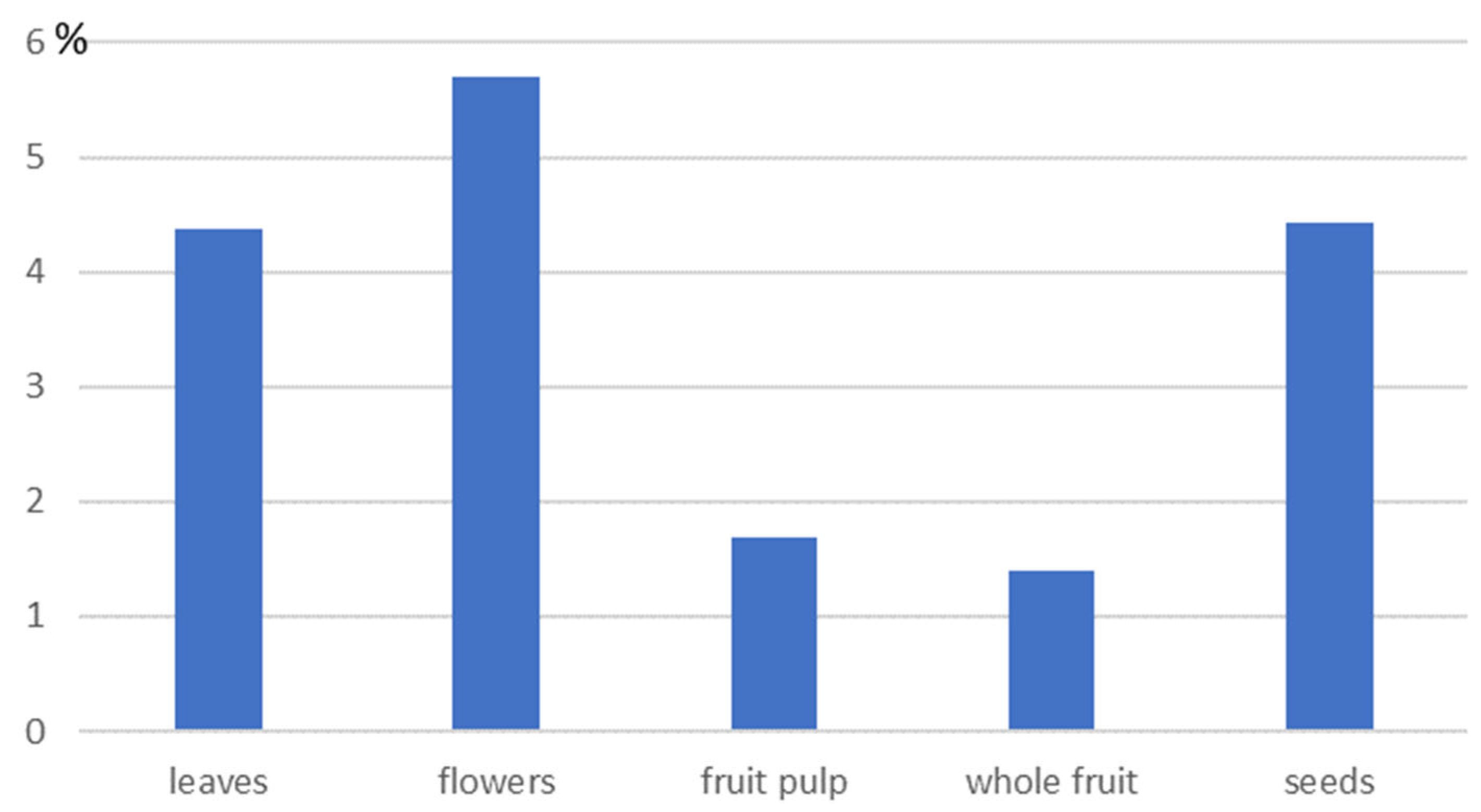
Figure 2.
Cornelian cherry oil pressing scheme.
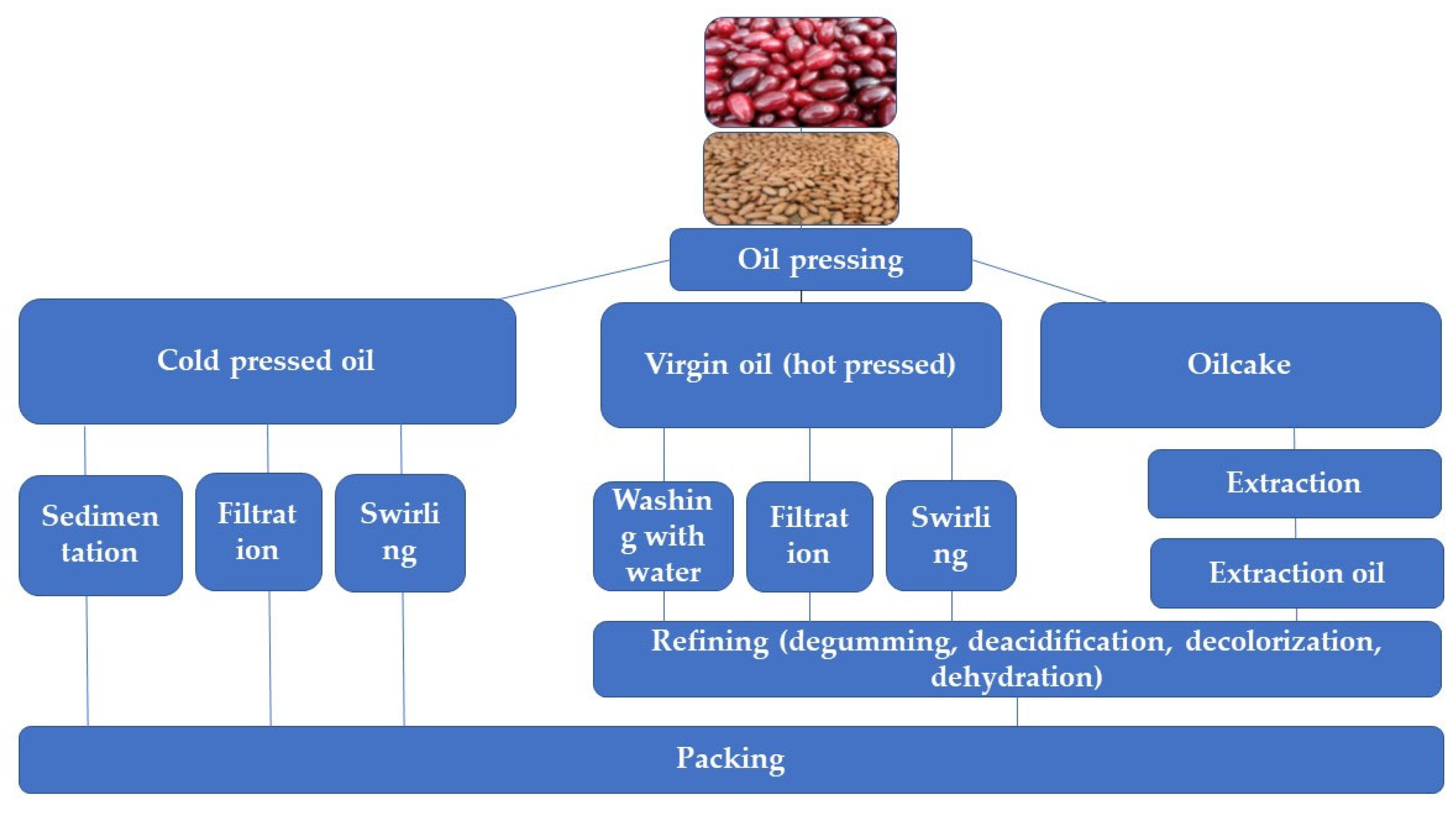
Figure 3.
Fruits and stones of cornelian cherry cultivars.

| 9–10% | 10.1–11% | 11.1–12% | 12.1–13% | 13.1–14% | Over 14% |
| Ekzotychnyj*, (syn.Ekzoticzeskiy) | Podolski | Yantarnyi (syn. Yellow) | Yulyush | Shafer | Bolestrashytskii |
| Grenadier | Alyosha, (syn. Alesha’ | ‘Kostia’ | Koralovyj | Dublany | Kresoviak |
|
Yeliena |
Bukovinsky yellow | ‘Samofertylnyj’ | Florianka | Pachoskii | |
| Yevgeniya | Elegantnyi (syn.’Elegant)’ | ‘Siemen’ (‘Semen’) | Kotula | ||
| Mriya Shaydarovoi | Koralovyj Marka | ‘Władimirskij’ (‘Volodymyrskyi’) |
Raciborski | ||
| Naspodevanyj | Lukyanivskyi | Svitlana | |||
| Nikolka | Nezhny | Slovianin | |||
| Oryginalnyj | Radist (syn. Siretski’) | ||||
| Pervenets | Starokyviskyi | ||||
| Priorskij | ‘Vavilovets’ | ||||
| ‘Svetlyachov | Vydubetsky, syn.’Red Star’) | ||||
| Vyshgorodskyi |
* Synonyms appearing on the nursery shops’ websites or in English-language literature [53] are given in brackets.
Table 2.
Comparison of physical and chemical properties of cornelian cherry oil with oils from wild roses and other stone tree species.
Table 2.
Comparison of physical and chemical properties of cornelian cherry oil with oils from wild roses and other stone tree species.
| Physical and Chemical Properties of Oil |
Cornelian Cherry [36,59] |
Wild Roses [60,61,62,63,64] |
Apricots [65,66] | Sour Cherry [67,68] |
Peach [69,70,71] |
Plum [71,72,73] |
| The share of the seed (%) | 3.6–12 | 24.4–25.6 | 5.6 | 7–15 | 7.5–12. | 2.3–6 |
| The share of the kernel in the seed (%) | No data | Not applicable | 50–25 | 23–28 | 5–8 | 5–26.7 |
| Content of oil in seed (%) | 1.77–7.94 | 3.27–9.0 | 37.9–47.4 | 17–40 | 30.5–45.8 | 25.5–49 |
| Iodine value [gI2·100 g−1] | 88.106–104.84 | 56.48–190 | 82.2–115 | 92.8–131 | 36.3–110 | 80–120 |
| Density [g·mL−1] | 9.47 | 8.70–9.16 | 8.49–9.36 | 8.81 | 8.7–9.20 | 5.0–11.0 |
| Peroxide number [mmol O2·kg−1] | 0.55–7.36 | 4.70–29.69 | 1.7–15 | 0.99–1.49 | 0.26–2.4 | 1.82–3.75 |
| Acid number [mgKOH·g−1] | 1.87 | 0.59–6.12 | 0.2–4 | 0.9–1.36 | 0.2–1.1 | 0.34–2.24 |
| Saponification number [mgKOH·g−1] | 146.45–256.41 | 175–210 | 161–195 | 184–194 | 101–201 | 150–198 |
| Free Fatty acid (%) | 0.94 | 0.59–1.61 | 1.0 | 0.1–0.93 | 0.81–0.99 |
Table 3.
Mineral and metal content of cornelian cherry seeds (mg.kg−1 of dry weight; mean ± SE) [44,74].
| Macroelements | Microelements | Metals |
| Ca 2647-4154 | Fe 82 | Al. 2.6 |
| P 977-2615 | Zn 24 | Pb 1.51 |
| K 844-3270 | Cu 4–8 | Ni 0,39 |
| S 462 | Mn 2.3 | As < 0.3 |
| Mg 394-597 | Cr 0.47 | Cd < 0.01 |
| N 9 | Se < 0.2 | Hg 0.004 |
Table 4.
Fatty acid composition (%) in cornelian cherry seeds, wild roses and in the seeds of selected stone fruits: apricots, cherries, peach and plums.
Table 4.
Fatty acid composition (%) in cornelian cherry seeds, wild roses and in the seeds of selected stone fruits: apricots, cherries, peach and plums.
| Fatty Acid | Cornelian Cherry[44,77,78] | Wild Roses [60,79,80] | Apricots [66] |
Sour Cherry [67] |
Peach [69,70] |
Plum [71,73] |
| C 8: 0 Caprylic acid | 0.0–0.07 | 0.06 | 0.01 | |||
| C10:0 Capric (Decanoate) acid | 0.0–0.02 | 0.07 | 0.02–0.03 | |||
| C12:0 Lauric acid | 0.0 | 0.11 | ||||
| C14:0 Myristic acid | 0.01–0.07 | 0.03–0.052 | 0.04–0.12 | 0.08 | 0.1–0.16 | 0.05 |
| C16:0 Palmitic acid | 3.5–8.05 | 2.0–7.91 | 3.0–10.0 | 6.54–13.3 | 5.63–9.29 | 3.0–7.5 |
| C17:0 Margaric (Heptadecanoic) acid | 0.11–0.83 | 0.05–0.12 | 0.05–0.08 | 0.13–0.17 | 0.02–0.08 | |
| C 18:0 Stearic acid | 1.37–2.90 | 1.04–5.79 | 0.5–4.0 | 2.3–4.0 | 1.18–3.57 | 1.5 |
| C 20:0 Arachidic acid | 0.02–1.8 | 0.29–26.52 | 0.08–0.20 | 0.75–0.98 | 0.03–0.31 | 0.1 |
| C 21:0 Heneicosylic | 0.01–0.02 | 4.66–19.02 | ||||
| C 22:0 Behenic acid | 3.19–13.36 | 0.02–0.1 | 0.05 | |||
| C 24:0 Lignoceric acid | 0.0–0.01 | 16.01 | 0.14 | 0.02 | ||
| ΣSFA (Saturated Fatty Acid) | 7.75–8.54 | 7.68–59.95 | 7.88–11.31 | 16.64–18.34 | 8.02–13.26 | |
| C 14:1 Myristoleic acid | 0.0 | 0.01 | 0.03 | 0.02 | ||
| C16:1, n-7 Palmitoleic acid | 0.02–0.05 | 0.03–35.68 | 0.5- 1.5 | 0.5–0.8 | 0.25–0.56 | 1.4 |
| C17:1 cis Heptadecenoic acid | 0.0–0.02 | 0.1–0.15 | 0.1 | 0.11–0.20 | 0.1 | |
| C18:1 Oleic acid | 15.7–23.69 | 3.89–20.3 | 46.06–72 | 35.45–55.2 | 39.07–72.0 | 59.5–70.4 |
| C20:1, n-9 Eicosaenoic acid | 0.01–0.03 | 0.3–0.70 | 0.11 | 0.03 | 0.03–0.06 | 0.1 |
| C 22:1 Erucic acid | 0.0 0.01 | 0.32–6.70 | 0.03 | 0.05 | ||
| C 24:1 Nervonic acid | 0.0 | |||||
| ΣMUFA (Monounsaturated Fatty Acid) | 15.74–17.77 | 15.03–47.26 | 46.28–69.00 | 36.14–56.58 | 62.16–69.89 | |
| C 18:2, n-6 Linoleic acid (LA) | 60.17–75.0 | 24.53–55.70 | 20–41.57 | 23.3–42.34 | 13.06–48.4 | 18.8–27.1 |
| C 18:3 α-Linolenic acid (ALA) | 1.3–1.5 (14.70[77]) | 4.73–38.0 | 0.11–0.18 | 0.13 | 0.05–0.3 | 0.1 |
| C 20:2 Eicosadienoic acid | 0.0–0.01 | 0.13–0.16 | ||||
| C 20:4 Arachidonic acid | 0.0 | 7.01–16.02 | ||||
| C 20:5 Eicosapentaenoic acid | 0.0–0.01 | |||||
| C 22:4 Adrenic acid | 0.0–0.01 | |||||
| C 22:5 Osbond acid | 0.0 | |||||
| ΣPUFA (Polyunsaturated Fatty Acid) | 74.07–75.80 | 25.28–68.45 | 22.05–41.75 | 23.8–52.66 | 22.01–78.59 | |
| ΣUFA (Unsaturated Fatty Acid) | 91.46–92.25 | 40.65–92.32 | 78.77–88.8 | 52.68–92.10 |
Table 5.
Fatty acid content (%) and omega-6/omega-3 ratio in selected vegetable oils [48,77,86,87,88,89].
| VegetableOil | C16:0 | C18:0 | C18:1 | C18:2 | C18:3 | C20:1 | C22:1 | Omega-6/Omega-3 |
| Palm oil | 44.3 | 4.7 | 39.2 | 10.1 | 0.3 | 54.3:1 | ||
| Soybean | 10.6 | 3.8 | 23.3 | 55.1 | 6.9 | 0.3 | No data | 7.4:1 |
| Rapeseed | 4.6 | 1.5 | 64.1 | 19.7 | 8.7 | 1.3 | 0.3 | 2.2:1 |
| Sunflower | 5.6 | 3.8 | 25.6 | 64.7 | 0.2 | 0 | 0 | 323:1 |
| Palm kernel oil | 7.8 | 2.4 | 15.0 | 4.9 | 0.1 | 0.3 | 17.5:1 | |
| Cottonseed oil | 24.7 | 3.1 | 15.4 | 53.9 | 7.2:1 | |||
| Peanut oil | 10 | 2.4 | 43 | 36 | 0.3 | 0.3 | 402:1 | |
| Coconut oil | 8.6 | 2.5 | 6.3 | 1.7 | 0 | 168:1 | ||
| Olive oil | 11.5 | 2.2 | 68.8 | 10.5 | 0.67 | 16:1 | ||
| Cornelian cherry kernels | 5.9 | 1.7 | 16.7 | 61.8 | 12.78 | 0.02 | 0.005 | 3.5:1 |
Table 6.
Oxidation rates of fatty acids [93].
Table 6.
Oxidation rates of fatty acids [93].
| Oil | The dominant fatty acid in the oil | Number of double bonds | Oxidation rate |
| Palm oil | C16:0 Palmitic acid | 0 | 1 |
| Olive oil, Rapeseed oil, Oils from apricot, sour cherry, peach and plum | C18:1 Oleic acid | 1 | 10 |
| Cornelian cherry kernel oil, Soybean oil, Sunflower oil | C 18:2, n-6 Linoleic acid | 2 | 100 |
| Seed wild roses oil | C 18:3 α-Linolenic acid | 3 | 250 |
Disclaimer/Publisher’s Note: The statements, opinions and data contained in all publications are solely those of the individual author(s) and contributor(s) and not of MDPI and/or the editor(s). MDPI and/or the editor(s) disclaim responsibility for any injury to people or property resulting from any ideas, methods, instructions or products referred to in the content. |
© 2025 by the authors. Licensee MDPI, Basel, Switzerland. This article is an open access article distributed under the terms and conditions of the Creative Commons Attribution (CC BY) license (http://creativecommons.org/licenses/by/4.0/).
Copyright: This open access article is published under a Creative Commons CC BY 4.0 license, which permit the free download, distribution, and reuse, provided that the author and preprint are cited in any reuse.