

Submitted:
26 September 2025
Posted:
29 September 2025
You are already at the latest version
Abstract
The Smart Tourism Destinations (DTI) represent innovative places established on top of an in-frastructure of advanced technology, whose objective is to promote accessible, sustainable de-velopment for tourist regions to enrich the tourist experiences and the inhabitants' quality of life. Therefore, the main objective of this research is to verify whether the indicators of existing smart tourist destinations fit within all dimensions of a smart tourist destination. For data col-lection, the bibliographic survey method was used in renowned databases. Data analysis com-prises two approaches, bibliometric and content analysis, applied sequentially. The results of the bibliometric analysis identify three main pillars in the current perspectives on DTIs: Manage-ment and Tourism Experience, Technology, and Sustainability, in addition, it revealed a duality between approaches from the Far East and Western Europe. The content analysis culminates in the proposition of two theoretical-conceptual models for the dimensions and indicators of DTIs, encompassing elements: Information and Communication Technologies (TICs), Governance, Innovation, Accessibility, Performance, Mobility and Infrastructure, as well as Segmented Sus-tainability in its economic, social, and environmental dimensions. However, the analysis high-lights the lack of consensus among studies, especially DTI indicators. The research concludes by pointing out the insufficiency of these indicators for a comprehensive assessment, notably in the environmental dimension of sustainability.
Keywords:
Smart Tourism Destinations
; Dimensions
; Indicators
; Sustainable Urban
1. Introduction
1.1. Contextualization
The concept of smart tourist destinations is inspired by the notion of smart cities (Boes et al., 2016), defined as innovative tourist destinations built on an advanced technology infrastructure that promotes the affordable, sustainable development of tourist areas to provide enhanced tourist experiences and quality of life for residents. Smart tourism is an evolutionary and logical development of traditional tourism and e-tourism (technology-based tourism), where the foundation for technology-driven innovation has been established (Gretzel et al., 2015).
Smart tourism unites issues related to the environment, society, and economy with the development and application of Information and Communication Technologies (TIC), which makes it a relevant theme for sustainable development (Gretzel et al., 2015). Within the TIC sphere, DTIs are concerned with integrating data to provide tourists with more exclusive experiences within destinations. Sustainable smart tourism can pave the way to further study tourism deeply in terms of social, economic, environmental, and cultural issues through a scientific approach (Gretzel et al., 2015).
Boes et al. (2015) developed a framework for classifying intelligence in cities and tourist destinations. For this, the researchers establish the 4 dimensions of intelligence, namely: a) human capital – developing collaborations with the participation of stakeholders, with the crossing of knowledge; b) leadership – destinations must have an institution that mediates and executes ideas, initiatives, and incorporates stakeholders to facilitate the coordination of ideas and projects; c) entrepreneurship and innovation – to stimulate innovation in the field of service by implementing the use of ICTs; d) social capital – improving the quality of public services through the collaboration of residents, through platforms that encourage social capital.
Boes et al. (2016) created a framework for developing Smart Tourist Destinations. This framework has three axes: people, technology, and leadership. Under these axes, the different parts of Smart Tourist Destinations are defined: innovation, mobility, governance, economy, life, environment, and people.
Ivars-Baidal et al. (2021), together with the Instituto Valenciano de Tecnologías Turísticas (INVAT.TUR), adapted the existing indicators in the literature on the management of tourist destinations and smart cities, to indicators of smart tourist destinations, where 9 dimensions were defined (governance, sustainability, innovation, accessibility, connectivity, intelligence, information system, online marketing, and performance indicators), subdivided into 72 indicators.
In Spain, a pioneer country for DTI studies, there are two models for the development and evaluation of DTI: the INVAT.TUR (2015) model and the SEGITTUR (Sociedad Mercantil Estatal para la Gestión de la Innovación y las Tecnologías Turísticas) model (2013). Currently, these models serve as a basis for the development and evaluation of smart tourist destinations in different countries.
1.2. Research Problem
The topic of Smart Tourist Destinations has aroused a growing interest in tourism, resulting in an increasing number of scientific papers dedicated to this subject. Many well-respected studies on smart tourism (Xiang & Fesenmaier, 2017; Xiang et al., 2017; Zhu et al., 2017; Wang et al., 2013) revealed significant gaps in the definition and understanding of concepts related to smart tourism destinations, still lacking clarity and consensus (Shafiee et al., 2019).
It is common to find indicators in smart tourism studies that measure a destination's competitiveness; however, many of these studies have gaps in relation to the complexity and multidimensionality of sustainability in destinations (Ivars-Baidal et al., 2021).
For a more comprehensive approach, smart destinations must consider a complete set of indicators that assess their performance in different dimensions, including connectivity, use of big data, technology adoption, and their relationship with destination sustainability and accessibility (Gretzel et al., 2015; Gretzel et al., 2015a; Ivars-Baidal et al., 2017).
1.3. Research Question
Considering the research problem, two questions were raised:
a) What are the main indicators and dimensions available in literature that rate Smart Tourist Destinations?
b) Are the existing indicators sufficient to rate a Smart Tourist Destination, considering all the dimensions of a DTI?
1.4. Research Hypothesis
Research questions led to the following hypothesis: the existing Smart Tourism Destination indicators are not effectively engaging to measure and rate a Smart Destination holistically, especially regarding the environmental dimension of sustainability.
1.5. Objective
The goal of this research was to verify whether the existing smart tourist destination indicators fit within all the dimensions of a smart tourist destination and to evaluate their effectiveness compared to the dimensions of DTIs.
1.6. Justification of the Study for the Field of Tourism
The DTI subject is essential for transforming the tourism sector, as it uses data continuously and accurately to make decisions, prioritize actions and anticipate challenges; in addition, these destinations promote inclusive governance, ensuring accessibility and boosting sustainable tourism management (UNWTO, 2018).
As for the Sustainable Development Goals (SDGs), the study, in the socio-environmental sphere, stands out in Goal 2, which seeks to end hunger and promote sustainable agriculture; Goal 3, which aims to ensure healthy living and well-being for all; Goal 10, which seeks to reduce inequalities within and between countries; and Goal 12, which seeks to ensure sustainable production and consumption patterns. In addition, the Innovation and Technology dimension, combined with the management of natural resources in the DTIs, is connected to Goal 6, which seeks the sustainable management of water and sanitation, and Goal 7, which ensures access to sustainable energy. The research also analyzes the lack of indicators that address the environmental dimension of sustainability in DTIs, which relates to Goal 13 to combat climate change, Goal 14 to conserve oceans and marine resources, and Goal 15 to protect terrestrial ecosystems. Finally, Goals 8, 9, and 11 are directly related to the topic of the research, as they aim to promote sustainable economic growth, build resilient infrastructure, and make cities sustainable, respectively. These goals are essential to boosting the sustainable development of tourist destinations through technological innovations and considering economic, social and environmental aspects.
Ivars-Baidal et al. (2021) emphasize the importance of rating sustainability indicators for tourist destinations. The authors understand that sustainable tourism is a continuous process, not a perfect state. It is the role of indicators to measure this evolution in destinations.
For Shafiee et al. (2019), a systematic review of the literature on Smart Tourist Destinations becomes fundamental to examining existing studies, assessing current knowledge about smart tourist destinations, and guiding future research in this field.
2. Materials and Methods
2.1. Research Characterization
The research approach is considered predominantly qualitative. However, quantitative methods were adopted for data treatment. For Creswell (2021), qualitative research involves collecting, analyzing, interpreting, and describing the data found and is based on inductive methods. Even so, quantitative methods were used to enrich how the data is treated and facilitate the analysis instruments. According to Sampieri (2013), mixed research uses the strengths of both types, combining them and trying to minimize the possible weaknesses of both approaches.
2.2. Procedures for Data Collection
Firstly, the bibliographic research focused on identifying and analyzing the main concepts related to Smart Tourist Destinations (DTIs), with the specific purpose of examining the works that explore the dimensions and indicators associated with this subject. This first collection helped to create the theoretical framework and the reference for selecting the static corpus for content analysis.
A literature review on the subject was conducted using the Web of Science and Scopus databases. The term "smart tourism destination" was used to search for relevant articles. The searches were conducted in English to access as many publications as possible. It was also decided not to limit the search to a specific time period; this was done to gain a comprehensive understanding of the evolution of the theme over time. Next, only the most relevant literature review articles were selected. The number of citations that an article had was the main way to determine its relevance (articles with over 30 citations were selected). As a result, 8 articles were selected and submitted for individual analysis. We used Excel software to categorize the references of each article and find out which references were used most. This procedure showed the publications with the most relevant theories, as they are the main sources cited in all articles.
The second phase of the bibliographic research was carried out through a systematic review aimed at the research objectives and was the theoretical basis for both the bibliometric analysis and the content analysis. To understand the most common words used in publications about Smart Tourist Destinations (DTIs), a search was carried out on the Web of Science platform. In this sense, the term "Smart Tourism Destination" was used as a search criterion, and no restrictions were applied to the date, source, or field of knowledge. This search turned up a total of 842 publications.
In a later step, these papers were transferred to the VosViewer software to create a keyword correlation map (Figure 1). Using the method of bibliometric analysis of the correlation of keywords between the various articles, the software considers all the keywords present in all the articles. The software was able to identify a total of 3,189 distinct keywords; given the number of keywords, it was decided to restrict the final map to the 30 most frequent occurrences between the words, which resulted in a set of 35 keywords selected to compose the correlation map. After the analysis of the words presented in the keyword correlation map, two other terms emerged that, although they may seem obvious, had not been considered until now to help guide the bibliographic research. These terms are "Smart Tourism" and "Smart Destination", and they are used separately. This finding highlights the relevance of the methodological approach adopted, demonstrating its effectiveness in revealing pertinent terms that might have gone unnoticed in a less comprehensive study.
After determining the three terms selected as keywords - "Smart Tourism Destination," "Smart Tourism," and "Smart Destination" - the search strategies were formulated. It was established that Boolean logic would be applied, employing the "or" operator to link the three key terms in database searches. This "or" link in database searches retrieves references that employ any of the indicated terms, i.e., references that contain "Smart Tourism Destination" OR "Smart Tourism" OR "Smart Destination". The choice to use English as the main language was based on the international nature of the databases and the universality of this language, which provides a range and relevance in terms of available publications. A seven-year period was established comprising the interval between 2017 and 2023. The search in the databases was limited to scientific articles published in academic journals. Three different platforms and databases were used in this research: Web of Science, Scopus, and EBSCOhost. These databases were chosen due to their international recognition and the scope of publications in renowned journals in applied social sciences, specifically in tourism and urbanism.
The 1462 articles were transferred to the EndNote software. There, the duplicate articles were removed. This was done manually and mechanically by the software. Then, the articles were manually deleted if they had titles in languages other than English. They were also manually deleted if they did not have all the basic information needed for the analysis including title, journal, year of publication, keywords, authors, and country of the first author. These scanning steps reduced the number to 788 articles. The next phase consisted of filtering the 788 articles; this step tries to make sure that the information is as precise as possible to achieve the goal of the research, which is the "Identification of indicators and dimensions of Smart Tourist Destinations". The articles were filtered using EndNote software, resulting in 477 articles which were then transferred to Excel software, where the following information was listed: authors, years, titles, journals, and abstracts.
This compilation served as the basis for applying the multi-criteria method, which assessed the relevance of the articles based on the information previously compiled. In addition, the number of citations of each article in Google Scholar (adjusted for the year of publication) and its relationship with the research objectives were taken into account. The attribution of a research alignment score measured the degree of relevance of the publication in relation to the established objectives: strong adherence, medium adherence, weak adherence, and no adherence. Thus, 55 articles were considered without significant adherence, while 224 articles had weak adherence; 279 were removed from the final set of analysis. On the other hand, 189 articles were evaluated with a medium level of adherence. Articles that met medium adherence standards were reviewed again to decide if they should be kept or left out of the final analysis portfolio; this method offered an impartial and objective view of the research, avoiding subjective bias (Zupic & Čater, 2015). After all these procedures, the bibliographical analysis followed.
2.3. Data Analysis
For this purpose, the qualitative content analysis approach proposed by Bardin (2011) was chosen, which adheres to some fundamental rules, such as being homogeneous, exhaustive, exclusive, objective, and adequate or pertinent. The content analysis unfolded in three distinct phases: pre-analysis, exploration of the material through coding and categorization, and results treatment. In the pre-analysis phases, exploration of the material through coding and categorization, the final corpus was formed, consisting of a sample of 20 documents.
Two key terms from the research objective were used as categories for analysis (Bardin, 2011): "DIMENSIONS" and "INDICATORS". The coding process began with a direct search within each article after the definition of the categories of analysis, using the terms "indicator" and "dimension," considering both the plural and singular forms of these terms. As this process continued, we also found other similar words for the ones we already had. For example, "dimension" had words like "pillar" and "axes" as synonyms, and "indicator" had words like "tools" and "variables" as synonyms. However, these additional terms were incorporated into the analysis only if they showed cohesion with the dimensions and indicators of Smart Tourist Destinations.
In the results treatment stage, the units of analysis were grouped and categorized, which created thematic categories. These categories simplify the raw data, organizing them into classes that combine elements with similar characteristics. The definition of these categories was based on both semantic (thematic categories) and lexical criteria (grouping of words with related meanings, including synonyms and terms with a close meaning) (Bardin, 2011).
Finally, these groupings of categories resulted in naming the groups of units. Each name was chosen to define the set of registration codes/units, taking into account the aspects that would be analyzed in each category. These categories of analysis were organized to allow the identification of the general theme, revealing the dimensions and indicators of Smart Tourist Destinations present in the literature.
3. Results
According to Bardin (2011), the approach that was used could result in the construction of two structures for analysis based on a conceptual-theoretical model. The first structure focused on the articles, aiming to extract the dimensions identified in the literature, which provide clues to the units of record and context, according to Bardin (2011). These dimensions were defined considering both the frequency and the correlations in which they appeared between the articles. With the dimensions identified, the second structure followed the same data collection approach but aimed at correlating the previously delimited dimensions with the indicators in the literature.
3.1. Dimensions
The dimensions identified in the literature were Information and Communication Technologies (TICs), Governance, Innovation, Accessibility, Performance, Mobility and Infrastructure, and Sustainability, which was divided into three dimensions: Economic Sustainability, Social Sustainability, and Environmental Sustainability. Table 1 comprises the units of record and context (Bardin, 2011) in their dimensions found in the literature.
3.1.1. Information and Communication Technologies (TICs)
The Information and Communication Technology (TIC) dimension emerges as one of the most recurrent among the analyzed studies, making explicit its importance in the development of Smart Tourist Destinations (DTIs) (Khan et al., 2017). The development of the Smart Tourist Destination is interconnected, co-created, and value-oriented through the implementation of technological applications and TIC infrastructures such as Cloud Computing and the Internet of Things (Boes et al., 2015).
Gomez-Oliva et al. (2019) point out in their study that TICs drive sustainable development by obtaining and analyzing the data made available by these TICs. This dimension also plays an important role in residents' quality of life and in tourists' experience with easier and more comprehensive communication, consequently fostering the development of destinations.
In the study conducted by Ivars-Baidal et al. (2021), which identified dimensions and indicators of Smart Tourist Destinations (DTIs), although Information and Communication Technologies (TICs) are not explicitly treated as an independent dimension, the authors introduce indicators related to TICs in practically all dimensions.
The SEGITTUR model, cited in the article by Mendes et al. (2022), which makes up the technology dimension for the development of smart tourist destinations, was also used to help define the dimensions.
3.1.2. Governance
Khan et al. (2017) state that governance subsystems encompass travel and tourism-related services, including political decision-making processes within destinations.
The term "smart governance", proposed by Cohen (2012) for the development of a Smart City and consecutively by Buhalis et al. (2013) for the development of Smart Tourist Destinations, is a recurring term among publications for this dimension.
Buhalis and Amaranggana (2013) emphasize that smart governance also encourages open data and public participation, creating an environment conducive to collaboration and involvement of the various stakeholders.
Governance in DTIs is characterized by the participation and collaboration of multiple actors, including the public and private sectors, residents, and tourists (Gomez-Oliva et al., 2019).
3.1.3. Innovation
Innovation in DTIs often relies on Information and Communication Technologies (TICs), as evidenced by Santos-Júnior et al. (2020) when emphasizing the implementation of new TIC-supported ventures. In addition, the innovation dimension in DTIs has a strong connection with the creative economy. Mendes Filho et al. (2022) indicate that the search for innovation includes the adoption of new technologies, such as QRcode, RFID, and NFC, which not only improve the visitor experience but can also be drivers of innovative economic activities.
Innovation in DTIs can contribute to the creation of unique products and services that add value to the tourist experience and foster local economic development (Allawi, 2022).
The innovation dimension must also consider intangible cultural heritage, implementing solutions that encourage resident and tourist participation and investment in this dimension (Gomez-Oliva et al., 2019). In addition, Romão and Nijkamp (2019) point out that innovation should encourage sustainable development based on its three pillars.
3.1.4. Accessibility
As noted by Santos-Júnior et al. (2020), accessibility is a cornerstone for achieving inclusion in society, using smart technologies to ensure that everyone can fully participate in tourism activities.
According to Mendes Filho et al. (2022), accessibility transcends mere physical access to tourist sites and services. It involves creating environments, products, and experiences that are equally accessible to all, promoting equal opportunities.
As highlighted by Ivars-Baidal et al. (2021), the development of an DTI should incorporate significant efforts to make tourist attractions, information, and infrastructure accessible to everyone.
3.1.5. Performance
Regarding the performance of DTIs, Ivars-Baidal et al. (2021) highlight the need for comprehensive metrics that encompass various aspects of the functioning of destinations, including connectivity, data analytics, technology adoption, and sustainability and accessibility considerations. The performance dimension gains relevance by allowing destinations to monitor and evaluate the impact of their initiatives and policies in real-time, adjusting their strategies as needed.
As Mendes Filho et al. (2022) mention, the application of Information and Communication Technologies (TICs) in the performance dimension is a crucial element. TICs allow data collection, analysis, and interpretation in real time, offering valuable information on tourists' behaviour and the effectiveness of destination interventions. In addition, using technologies such as the Internet of Things, Big Data, augmented reality, and virtual reality enhances the tourist experience and the services offered in DTIs.
3.1.6. Mobility and Urban Infrastructure
"Smart mobility" provides a more fluid and convenient travel experience for visitors and residents of the destination (Boes et al., 2016; Buhalis & Amaranggna, 2013; Buonincontri & Micera, 2016). Therefore, it is worth noting the direct relationship between this dimension and accessibility; in this sense, the relationship between smart mobility and accessibility is highlighted by Allawi (2022), who emphasizes the importance of transportation to facilitate local connections to the destination, making it attractive to both tourists and potential visitors.
As indicated by Khan et al. (2017), the Mobility dimension involves a wide range of transportation services, covering air, land, and water modalities. In addition, it includes elements of infrastructure such as roads, bridges, tunnels, intelligent transport systems (ITS), and intelligent traffic and parking management.
The definition of Smart Mobility by Buhalis and Amaranggana (2013) underscores the importance of accessibility within and outside the city and the availability of modern transportation systems. In addition, the modernization of public transport, the use of technologies to improve traffic in real-time, and the creation of transport alternatives are essential aspects of the Mobility and Urban Infrastructure dimension, where they are directly connected with the TIC dimension, as mentioned by Santos-Júnior et al. (2020).
3.1.7. Sustainability
The concept of an optimal smart tourism is based on sustainability, a circular economy, quality of life, and social value (Madeira et al., 2023).
The approach to sustainability in smart tourism destinations encompasses three fundamental pillars: economic, social, and environmental. The literature highlights the importance of balancing these dimensions to build a successful DTI (Ivars-Baidal et al., 2021).
3.1.8. Economic Sustainability
This dimension recognizes that implementing smart and innovative strategies in the economic sphere can boost entrepreneurship and increase the destination's competitiveness (Khan et al., 2017). The direct connection between economic growth and Information and Communication Technologies highlights the crucial role of technology in promoting economic advances over time (Boes et al., 2015).
In the context of DTIs, the economic dimension gains even more relevance since it seeks to promote economic growth in line with the principles of innovation and technology (Buhalis & Amaranggana, 2013).
Economic development in DTIs must be conducted in a conscious and responsible manner, considering not only quantitative growth but also the quality of life of local communities, the conservation of natural resources, and encouraging innovative entrepreneurship (Romão & Nijkamp, 2019).
3.1.9. Social Sustainability
In this dimension, the importance of continuous and collaborative dialogue with local stakeholders, including local actors and residents, is highlighted to ensure that the benefits generated by tourism are equitably distributed and optimized (Ortega & Malcolm, 2020).
It is observed that the social sustainability dimension was broadly defined to include the "Smart Living" and "Smart People" dimensions, as proposed by Buhalis and Amaranggana (2013). These dimensions advocate the development of a vibrant and engaged community with a high quality of life and access to cultural and educational services. Therefore, the social sustainability dimension encompasses material well-being, social cohesion, health, education, and culture, all essential elements for a smart and sustainable tourist destination.
The "People" dimension emphasizes promoting a culture of learning, engagement, and innovation. This includes creating environments conducive to advanced education and security and establishing a link between the educational sphere, innovation, and security with local culture. The emphasis in this dimension is also on empowering the city's human capital, recognizing that residents' skills and knowledge play a crucial role in the social sustainability of the destination (Buhalis & Amaranggana, 2013).
The "Life" dimension aims to improve the quality of life of residents, involving areas such as education, health, and culture. This dimension is connected to initiatives promoting advanced health services, smart buildings, and other facilities that benefit residents and tourists. The integration of health services with tourism infrastructure demonstrates the importance of considering residents' quality of life as a vital component to the success of a DTI (Khan et al., 2017).
3.1.10. Environmental Sustainability
The approach in this dimension includes integrating smart technologies into areas such as smart grids and buildings, advanced irrigation and water treatment systems, and smart rainwater and waste management; these initiatives aim to achieve greater efficiency in resource use and contribute to the environmental sustainability of the tourist destination (Khan et al., 2017).
The "Smart Environment" dimension is intrinsically linked to energy optimization and the sustainable management of available resources. It encompasses the implementation of technological solutions that aim to reduce energy consumption and minimize environmental impact, providing a healthier and more sustainable environment for residents and visitors (Buhalis & Amaranggana, 2013).
3.2. Indicators for Dimensions
Indicators play a key role in providing a tangible measure to assess the progress and success of initiatives to transform a destination into a smart destination. They serve as measurement tools that allow managers to monitor and evaluate the effectiveness of the strategies implemented, aiding in informed decision-making to achieve the goals and objectives of smart tourism. Follow, as a result of the record and context units (Bardin, 2011) for indicators found in the literature for each dimension:
3.2.1. Information and Communication Technologies (TIC) Indicators
Use of IoT (Internet of Things) Devices and Sensors:
Use of IoT (Internet of Things) Devices (Gomez-Oliva et al., 2019)
Sensors and Smartphones (Allawi, 2022)
Implementation of sensors in tourist signage (Ivars-Baidal et al., 2021)
Digital Apps and Platforms:
Use of mobile apps (Santos-Junior et al., 2017)
Development of a Web-App as an interactive tool (Gomez-Oliva et al., 2019)
Tourist apps with city information (Mendes Filho et al., 2022; Khan et al., 2017)
Websites with tourist information about the city (Mendes Filho et al., 2022)
Social media profiles with tourist information about the city (Mendes Filho et al., 2022)
The existence of an official destination mobile app (Ivars-Baidal et al., 2021)
Wi-Fi and Connectivity:
Wi-Fi is available throughout the city (Mendes Filho et al., 2022; Khan et al., 2017; Ivars-Baidal et al, 2021)
Wi-Fi network quality (Ivars-Baidal et al, 2021)
Availability of information on connectivity and public Wi-Fi networks (Ivars-Baidal et al., 2021)
The proportion of tourism companies offering free Wi-Fi to tourists (Ivars-Baidal et al., 2021)
Fast connection by the internet operator in the city (Mendes Filho et al., 2022)
Social Media Presence and Marketing:
Adaptation of the DMO (Destination Management Organizations) website to any device (Ivars-Baidal et al., 2021)
The active presence of the DMO on social networks to provide information (Ivars-Baidal et al., 2021)
Virtual and Interactive Assistance:
Existence of digitalized promotional material (Ivars-Baidal et al., 2021)
Existence of 24/7 information points (Ivars-Baidal et al., 2021)
Implementation of virtual assistance (Ivars-Baidal et al., 2021)
Quality, Privacy, and Standards Certifications:
Privacy and information security (Khan et al., 2017)
Destination certified by "q quality" (standard on quality of services, including information) (Ivars-Baidal et al., 2021)
Use of Big Data and Data Analytics:
Information management (Santos-Junior et al., 2017)
Use of Big Data (Allawi, 2022)
Implementation of sensors for data collection at the destination (Ivars-Baidal et al., 2021)
IoT devices and sensors allow managers to collect real-time data, making more informed decisions about the infrastructure, tourist flow, and services needed. Apps, digital platforms, and social networks provide tourists with easy access to information, interactive guides, and personalized recommendations, increasing their satisfaction and enriching their experiences.
Connectivity, represented by the availability of Wi-Fi, is essential for instant communication with tourists and continuous access to information. Adapting websites and services to mobile devices and having an active presence on social media promotes a more fluid interaction between tourists and local authorities.
Data analysis, such as using Big Data, contributes to understanding tourists' preferences and enables the personalization of offers and services. In addition, quality certification and information privacy strengthen tourists' confidence in the information provided and in the destination management.
3.2.2. Governance Indicators
Stakeholder Engagement and Community Participation:
Motivation of residents to participate in content creation and interaction with the solution (Gomez-Oliva et al., 2019)
The interest of tourism entrepreneurs, tourism agents, and local managers in smartphone-oriented solutions (Gomez-Oliva et al., 2019)
Community participation in the decision-making process of the destination (Santos-Júnior et al., 2020)
Trust in local government in decision-making on tourism (Santos-Júnior et al., 2020)
Citizen participation in solving the city's problems through digital platforms (Santos-Júnior et al., 2020)
Cooperation between stakeholders (González-Reverté, 2019)
Transparency and Smart Governance:
Fighting fake news (Santos-Júnior et al., 2017)
Transparency in governance systems; modernization of the city administration; Open Data; public involvement (Buhalis & Amaranggana, 2013)
Coordination Strategies and Mechanisms:
Existence of policies aimed at tourism (Santos-Júnior et al., 2020)
Implementation of a strategic tourism plan (Ivars-Baidal et al., 2021)
Coordination mechanism between local government departments for the development of smart tourism destination projects (Ivars-Baidal et al., 2021)
Implementation of a smart destination project (Ivars-Baidal et al., 2021)
Existence of a smart destination coordinator (Ivars-Baidal et al., 2021)
The existence of an annual operation plan for a smart destination (Ivars-Baidal et al., 2021)
Mechanism to facilitate public-private partnership (Ivars-Baidal et al., 2021)
Development of e-government/open government strategies (Ivars-Baidal et al., 2021)
Communication and Awareness:
Development of social awareness campaigns on the impacts of tourism on citizens and application of ROI (Return on Investment) analysis in tourism initiatives (Ivars-Baidal et al., 2021)
The governance dimension plays an essential role in the development of smart tourism destinations. The indicators associated with this dimension encompass the decisions made, the stakeholders, and the policies implemented in the tourism context.
Fighting fake news is an indicator that highlights the need to provide reliable and accurate information to tourists to ensure informed decisions and build trust. Policies aimed at tourism are an indicator that highlights the local government's commitment to guiding tourism development strategically, establishing clear guidelines and promoting sustainable growth. Community participation in the destination's decision-making process is key to ensuring that local voices are heard, creating a more in-depth approach to tourism planning. In addition, the increased transparency of the local government on tourism actions strengthens ties with the community and visitors, while trust in the local government in decision-making on tourism is a sign of a healthy environment for the development of the sector.
3.2.3. Innovation Indicators
Investment in Research and Development:
Regional Investment in Research and Development (Romão & Nijkamp, 2019)
Innovative Technologies and Tools:
Implementation of a Smart Point of Interaction (Smart POI) solution (Gómez-Oliva et al., 2019)
Use of new technologies such as QRcode, RFID, and NFC by companies in the tourism sector (Mendes Filho et al., 2022)
Innovation and Co-creation Ecosystem:
Technology-Mediated Co-creation Ecosystem (Allawi, 2022)
Citizen participation in solving the city's problems through digital platforms (Santos-Júnior et al., 2020)
Collaborative Economy (Santos-Júnior et al., 2020)
Innovation Management and Partnerships:
Creation of local smart departments (González-Reverté, 2019)
Implementation of innovation management systems in companies and public agencies (Ivars-Baidal et al., 2021; 2023)
Promotion of Innovation:
Last-minute promotions for the sale of tourism products and services (Mendes Filho et al., 2022)
Different tourist services compared to other destinations (Mendes Filho et al., 2022)
Change-oriented mindset (Allawi, 2022)
The deployment of Smart POI solutions and the creation of a technology-mediated co-creation ecosystem represents an approach to enhance the interaction between tourists and the destination's cultural resources. This enriches the visitor's experience and promotes the preservation and prominence of the destination's cultural heritage. In addition, the creation of smart routes to cultural Points of Interest and the focus on the participation of residents demonstrate a strategy to involve the community in promoting and sharing the region's cultural richness.
3.2.4. Accessibility Indicators
Adapted and Accessible Streets and Public Transport:
Accessibility of public transportation for tourists with disabilities (Mendes Filho et al., 2022; Ivars-Baidal et al., 2021)
Accessibility of streets for tourists with physical, hearing, or visual disabilities (Mendes Filho et al., 2022)
Adapted Information and Services:
Content Accessibility with the Web Accessibility Initiative (WAI) (Ivars-Baidal et al., 2021)
Existence of information services adapted to people with disabilities (Ivars-Baidal et al., 2021)
Accessible tourist attractions (Mendes Filho et al., 2022)
Inclusion of Accessible Resources and Businesses:
Existence of a dynamic inventory of tourism resources (Ivars-Baidal et al., 2021)
Accessible businesses and services for tourists (Ivars-Baidal et al., 2021)
Street accessibility for tourists with physical, hearing, or visual disabilities, adapted public transport, and accessible tourist attractions are crucial indicators of a destination's ability to offer inclusive experiences. The presence of adapted information services and the existence of devices or facilities for tourists with disabilities are factors that promote the autonomy and independence of visitors with special needs.
3.2.5. Performance Indicators
Economic Indicators:
Labor Productivity (Romão & Nijkamp, 2019)
Regional Gross Value Added of Tourism Activities (Romão & Nijkamp, 2019)
Level of unemployment in the service sector (Ivars-Baidal et al., 2021)
Accomodation Indicators:
Overnight stays in hotels (Aguirre et al., 2022)
Average number of hotels (Aguirre et al., 2022)
RevPAR Hotels (means revenue per available room) (Aguirre et al., 2022)
Evolution of the occupancy rate of tourist accommodation (Aguirre et al., 2022)
Tourist Satisfaction and Expense Indicators:
Level of tourist satisfaction with tourist demand (Ivars-Baidal et al., 2021)
Evolution of tourist expenditure in the destination (Ivars-Baidal et al., 2021)
Seasonality level of tourism demand (Ivars-Baidal et al., 2021)
Indicators related to labor productivity and regional gross value added from tourism activities provide a comprehensive view of tourism's contribution to the local economy. Labor productivity is a key indicator of operational efficiency and the utilization of human resources in the tourism sector. The regional gross value added reflects the generation of direct and indirect wealth from tourism activities, influencing the region's economic competitiveness.
The indicators of hotel occupancy, overnight stay in different types of accommodation, and the RevPAR (Revenue Per Available Room) analysis are crucial indicators of tourist demand, and the success of the accommodation offer. These indicators offer insight into how accommodation resources are used and how attractive the destination is to tourists.
Tourist satisfaction and the evolution of tourist spending measure the direct impact of tourist experiences on the quality of visits and average visitor spending. These indicators allow one to assess whether marketing strategies and development efforts are aligned with tourists' expectations and whether they are generating added value for the destination.
3.2.6. Mobility and Urban Infrastructure Indicators
Basic Infrastructure Indicators:
Health infrastructure (Khan et al., 2017)
Running water (Khan et al., 2017)
Sanitation (Khan et al., 2017)
Electricity (Khan et al., 2017)
Constructions (Khan et al., 2017)
Accessibility and Transportation Indicators:
Accessibility in and out of the city (Buhalis & Amaranggana, 2013)
Availability of modern transport systems (Buhalis & Amaranggana, 2013)
Highway infrastructure (Khan et al., 2017)
The indicators that refer to basic infrastructure and mobility, such as health, running water, sanitation, electricity, highway infrastructure, ports, airports, and buildings, reveal the degree of development and preparation of the city to receive both residents and tourists. Solid infrastructure is crucial to ensure a positive visitor experience and the well-being of residents. In addition, a well-maintained and efficient infrastructure contributes to a positive image of the destination and tourists' overall satisfaction.
3.2.7. Sustainability Indicators
Urban Planning and Infrastructure Indicators:
Sustainable urban planning (Mendes Filho et al., 2022)
Garbage collectors around the city (Mendes Filho et al., 2022)
Conservation of public buildings (Mendes Filho et al., 2022)
Implementation of urban regulations adjusted to sustainability principles (Ivars-Baidal et al., 2021)
Public promotion of sustainable mobility (Ivars-Baidal et al., 2021)
Development of awareness campaigns aimed at tourists on sustainability (Ivars-Baidal et al., 2021)
Legal provisions and environmental or quality certifications. (Ivars-Baidal et al., 2021)
Use of ethical codes in tourism (regulation of the activity, governance, impacts). (Ivars-Baidal et al., 2021)
Preservation of natural areas. (Santos-Junior et al., 2017)
Urban planning is a key element in the destination's overall sustainability. Indicators such as the planning of green areas, the conservation of public buildings, and the promotion of sustainable mobility demonstrate the destination's commitment to creating a pleasant urban environment for residents and tourists.
The promotion of innovation and the adoption of sustainable practices are important aspects of the Overall Sustainability dimension. Indicators such as implementing sustainable urban regulations, developing sustainability awareness campaigns, and using ethical codes in tourism highlight the destination's commitment to adopting responsible approaches in all spheres of the tourism sector. In addition, including sustainability criteria in certifications and awards encourages the adoption of positive practices by tourism companies and services.
3.2.8. Economic Sustainability Indicators
Economic Impact Indicators:
Tourism's share of regional employment and gross value added (Romão & Nijkamp, 2019)
Employees in the hotel activity (Allawi, 2022; Santos-Júnior et al., 2020)
Number of salaries paid (Allawi, 2022)
Average tourist income (Santos-Júnior et al., 2020)
Quality of products/services (Santos-Júnior et al., 2020)
Job creation in the sector (Santos-Júnior et al., 2020)
Capital investment, jobs, economies, import/export, trade, domestic finance, innovation, and economic knowledge (Khan et al., 2017)
Economic Innovation Indicators:
Implementation of economic strategies based on digital technology (Buhalis & Amaranggana, 2013)
Qualifications
Companies awarded with environmental certifications (standards) (Buhalis & Amaranggana, 2013)
Tourism's share of regional employment and gross value added are key indicators that demonstrate the sector's direct economic contribution. The number of employees in the hotel activity and the number of salaries indicated the sector's labor intensity and ability to generate direct jobs. These indicators reflect tourism's ability to create job opportunities, especially in areas that rely heavily on the hospitality industry.
Indicators such as the number of jobs in the sector, the average tourist income, and the quality of tourism products/services provide information on the breadth and quality of tourism-related economic activities. Capital investment, jobs, economies, import/export, trade, domestic finance, innovation, and economic knowledge reveal how tourism influences finances and the local market, as well as the destination's ability to innovate and adapt to economic changes.
3.2.9. Social Sustainability Indicators
Social Impact Indicators:
The educational level of the workforce in the region (Romão & Nijkamp, 2019)
Highlighting intangible cultural heritage through digital tools (Gomez-Oliva et al., 2019)
Creating smart routes to offer cultural Points of Interest (POIs) (Gomez-Oliva et al., 2019)
Focus on the residents’ participation, involving them with the proposed cultural content (Gomez-Oliva et al., 2019)
Social Inclusion, Culture and Entertainment, and Gentrification (Santos-Júnior et al., 2020)
Level of qualification of the city's human capital. (Buhalis & Amaranggana, 2013)
Indicators of Quality of Life and Community Participation:
Quality of life is measured in terms of a healthy environment (Buhalis & Amaranggana, 2013)
Availability of cultural and educational services (Buhalis & Amaranggana, 2013)
Cost of living (Santos-Júnior et al., 2020)
Health (Santos-Júnior et al., 2020)
Security (Santos-Júnior et al., 2020)
Highlighting intangible cultural heritage through digital tools, creating smart routes to cultural points of interest, and focusing on the participation of residents in promoting cultural content demonstrate the appreciation of cultural authenticity and local heritage. These indicators encourage interaction and collaboration between visitors and the community, allowing tourists to experience enriching and genuine experiences.
The analysis of these indicators also underscores the importance of addressing quality of life issues such as the cost of living, health, safety, social inclusion, culture, and entertainment. Quality of life is measured in terms of a healthy environment, social cohesion, and availability of cultural and educational services are key indicators for assessing the positive impact of tourism on society.
3.2.10. Environmental Sustainability Indicators
Waste Management Indicators:
Water Waste (Aguirre et al., 2022)
Solid Waste (Aguirre et al., 2022)
Electronic Waste (Aguirre et al., 2022)
Waste collection and treatment (Aguirre et al., 2022)
Environmental Quality Indicators:
Water quality (Khan et al., 2017; Ivars-Baidal et al., 2021)
Wastewater purification and reuse (Ivars-Baidal et al., 2021)
Efficiency in water supply (Ivars-Baidal et al., 2021)
Soil quality and noise. (Khan et al., 2017)
Level of CO2 emission (Khan et al., 2017)
Air quality (Khan et al., 2017)
Energy Optimization and Sustainable Management Indicators:
Energy optimization (Buhalis & Amaranggana, 2013; Ivars-Baidal et al., 2021)
Sustainable management of available resources (Buhalis & Amaranggana, 2013)
Preservation of natural areas (Santos-Júnior et al., 2017)
Creating climate change adaptation programs (Ivars-Baidal et al., 2021)
Area of green spaces by actual population (Ivars-Baidal et al., 2021)
Proper waste management, including water, solids, and electronics, indicates the ability to reduce space pollution. Attention to water and soil quality, as well as monitoring CO2 emissions and air quality, are indicators that assess the destination's environmental health. Energy optimization and sustainable management of available resources reduces the consumption of non-renewable resources and promotes more efficient practices.
The analysis of these indicators underscores the need to develop strategies and policies that directly address tourism's environmental challenges. Implementing sustainable practices, such as reducing the use of single-use plastics, promoting recycling, using renewable energy sources, and preserving natural areas can significantly contribute to environmental conservation.
4. Discussion
Although many scholars have emphasized that TICs do not necessarily define the 'smart' orientation of cities, some authors emphasize the TIC dimension as the main common feature among most conceptual frameworks and as essential for the successful implementation of the smart concept.
Santos-Júnior et al. (2020) point out that the governance dimension plays a central role in the decision-making, planning, and policy-making process of smart tourist destinations.
It is important to note that despite innovation being a widely discussed dimension in studies, there is a lack of consensus on what constitutes an innovative tool in DTIs. Different perspectives and approaches can lead to varied interpretations of innovation, which can result in a diversity of strategies and initiatives adopted by individual destinations.
Although accessibility is not widely cited in the sample articles, it plays an extremely relevant role in developing a smart tourist destination. The study conducted by Mendes Filho et al. (2022) addresses the dimensions that affect tourists, considering a sample without or with disabilities. The results reveal that, today, tourists may not consider this dimension to be very important. Accessibility not only meets an ethical imperative of inclusivity but also contributes to the improvement of tourism experience as a whole.
The performance dimension has emerged more clearly in recent publications. As indicated by Ivars-Baidal et al. (2021), its importance is crucial for the effective development of DTIs. Performance measurement allows destinations to assess their strategies' impact, identify improvement areas, and optimize their resources. It is through careful analysis of data provided by TICs that DTIs can dynamically adapt to each destination's specific characteristics and peculiarities, contributing to its continuous evolution and offering high-quality tourist experiences.
The mobility dimension not only aims to provide effective transportation solutions, but also to ensure tourists can easily travel within and to the country. The urban mobility and infrastructure dimension is intrinsically linked to the Smart City dimension, as it involves planning and creating an urban environment that is functional, efficient, and adapted to the needs of the local population and tourists. In addition, this dimension is strongly related to the spatial and physical measures that make the destination accessible, interconnected, and enjoyable for all visitors.
Of the studies addressing the topic of DTIs, the largest number of publications focus on the sustainability dimension, underscoring its significance in planning and managing these destinations. Although these publications often mention sustainability in general terms, their analyses rarely delve into the details and nuances of each pillar.
The economic dimension of sustainability in DTIs also presents a key challenge: finding a balance between the advantages of economic growth and the associated challenges. Economic strengthening can generate increased tax revenues, boost job creation, and attract investments. However, it is important to consider the potential adverse impacts, such as the rising cost of living, higher prices, and risks of real estate speculation, as well as environmental impacts (Santos-Júnior et al., 2020). The studies contain recurring definitions of the economic dimension, but none effectively align the economic and environmental dimensions.
In the social sustainability dimension, there is a lack of studies demonstrating techniques for involving visitors and tourists in the participatory construction of smart tourist destinations.
Although the term "environment" is widely covered in articles on Smart Tourist Destinations, such as those by Aguirre et al. (2023), Allawi (2022), and Madeira et al. (2023), it is notable that many studies do not delve into the specific issues of the environmental dimension, such as green spaces, air quality, water management, sewage treatment, noise control, soil conservation, and the relationship of rural communities or non-urban destinations with this dimension of the DTIs. This suggests that, despite the relevance of the environment to the sustainability of destinations, some studies may focus more on the implementation of smart technologies for the overall management of resources and assets without going into specific details about the environmental characteristics of different types of destinations.
It is essential to recognize that the effective implementation of TIC indicators requires significant investments in technological infrastructure, staff training, and collaboration between the public and private sectors. The security of tourist information is also a critical aspect to consider.
Citizens' participation in solving the city's problems through digital platforms reflects robust civic engagement, contributing to a more participatory and adaptive tourism management. Transparency in governance systems, the modernization of city administration, the adoption of "open data" practices, and public engagement highlight the importance of a responsible, data-driven approach to tourism decision-making. However, there is a lack of studies and practices that directly involve tourists in solutions to the social demands facing tourist destinations.
Promoting initiatives that encourage entrepreneurship and innovation in tourism, as well as the collaborative economy and the formation of new companies in the sector, fosters the growth of the creative local economy. Implementing innovative projects to improve tourism products and services, linked to the adoption of emerging technologies such as QR codes, RFID, and NFC, indicates the destination's willingness to embrace digital transformation to create unique and memorable experiences for tourists.
The analysis of accessibility indicators highlights the importance of considering technology as a powerful tool for increasing accessibility. Utilizing technologies such as QR codes, RFID, and NFC to provide relevant and tailored information to visitors with disabilities contributes to a more enriching and convenient experience.
The analysis of performance indicators can also reveal seasonal patterns, allowing the destination to adapt to changing demands throughout the year. Additionally, looking at employment and unemployment levels in the tourism-related services can provide discussions on economic stability and the sector's ability to generate sustainable jobs.
Accessibility is a critical factor to the success of a DTI. Accessibility in and out of the city, the availability of modern transportation systems, and the accessibility of public transportation for people with disabilities (PCD) are indicators of a destination's commitment to providing inclusive and efficient transportation options.
Analysis of its indicators suggests that the sustainability dimension is essential for achieving harmony between tourism and the environment, as well as for preserving the cultural authenticity and quality of life of residents. Implementing sustainable strategies contributes to the destination's long-term attractiveness and reinforces its position as a responsible, environmentally conscious, and community-conscious place.
A destination's implementation of economic strategies based on digital technology indicates its ability to adopt innovative approaches to economic growth. These technologies can boost operational efficiency, enhance tourist experience, and attract investment.
Social sustainability indicators highlight the importance of raising awareness and implementing educational strategies for residents and tourists. Involving the local population in tourism management and encouraging appreciation of cultural traditions helps preserve local identity and strengthen the sense of belonging.
Environmental sustainability indicators highlight the importance of balancing tourism growth with environmental protection. DTIs should be designed to protect and conserve natural resources while minimizing negative impacts on the local ecosystem. Doing so will contribute to the destination's long-term sustainability.
5. Conclusions
The bibliometric analysis revealed two distinct approaches to DTIs in the literature. An approach focused on technological development was observed in the Far East, particularly in China. On the other hand, Europe, particularly Spain, adopted a more sustainable development approach that emphasizes the tourist experience. The analysis of the countries where the research was published corroborated this duality, reinforcing the trend of different, geographically distinct approaches in the literature on DTIs.
In summary, the bibliometric analysis provided an overview of Smart Tourist Destinations and the predominant approaches related to DTIs. It highlighted the three aforementioned pillars and emphasized the duality between technological development and sustainability/tourist experience. This duality is represented by locations in the Far East and Europe.
The analysis revealed a notable lack of consensus among the studies regarding the dimensions and, especially, the indicators of smart tourist destinations. The most prominent DTI implementation models are the Spanish ones (SEGITTUR and INVAT.TUR). Due to advances in these models, an increased number of publications addressing these indicators have emerged. A significant gap was identified regarding the indicators and dimensions of smart tourist destinations. There is a scarcity of publications that comprehensively address both the dimensions and indicators of smart tourist destinations, and there is an absence of consensus among existing publications.
A content analysis of the studies revealed disparities in the theoretical foundation of the Smart Tourist Destinations (DTIs) dimensions and indicators. While some dimensions and indicators have solid definitions, others have gaps. For example, the Innovation dimension lacks a clear consensus on what constitutes innovative tools in DTIs. Different interpretations of innovation lead to varied strategies and initiatives adopted by different destinations. In turn, the Accessibility dimension is underrepresented in publications despite its relevance to the development of smart tourist destinations; the scarcity of specific indicators hinders the evaluation and improvement of this dimension. Although the Performance dimension is recent, it has demonstrated efficacy, as evidenced by studies such as that of Ivars-Baidal et al. (2017). These studies have enriched the development of DTIs with new indicators. The Sustainability dimension is widely cited in the sample articles, but it is such a complex topic that deep investigation and interconnection between the economy, society, and the environment still present challenges. While the economic and social dimensions demonstrate connections in publications, the environmental dimension often remains isolated, suggesting the need for a more integrated approach.
Publications aimed at non-urban tourist destinations, such as rural environments, predominantly focus on Information and Communication Technologies (TICs) or neglect the dimensions and indicators of DTI, overlooking the environmental elements that should be fundamental to these places, especially with regard to environmental conservation. These considerations were evident during the selection phase of articles for the analytical corpus, where most of the excluded rural tourism studies addressed the TIC dimension.
The evidence supports the initial hypothesis that there is a lack of indicators focused on the environmental dimension of sustainability in DTIs. It also emphasizes the urgent need for an inclusive approach in evaluating Smart Tourist Destinations, particularly in rural or non-urban contexts. This study emphasizes the importance of a balanced approach that aligns with environmental principles in smart tourist destinations. Sustainability and DTIs should not be approached separately.
The study's practical applications can be applied to DTI assessments and in reviewing and creating DTI evaluation models.
Based on these findings, future research must focus on developing specific environmental indicators for Smart Tourist Destinations (DTIs) and exploring how these metrics can be applied in non-urban contexts, such as rural areas. The absence of environmental sustainability indicators in DTIs and the emphasis on Information and Communication Technology in non-urban destinations highlight the need for a more comprehensive, integrated approach to achieve a more complete and balanced smart tourism development.
6. Patents
Author Contributions
All authors contributed equally to this publication.
Funding
This research was funded by FAPESC (Fundação de Apoio à Pesquisa do Estado de Santa Catarina) (Brazil), Proposal 54/2022, grant number 2023TR000658.
Data Availability Statement
https://www.univali.br/pos/stricto-sensu/ppgth/Paginas/default.aspx#teses-dissertacoes; https://sucupira-legado.capes.gov.br/sucupira/public/consultas/coleta/trabalhoConclusao/viewTrabalhoConclusao.jsf?popup=true&id_trabalho=14751956.
Acknowledgments
This research was funded by FAPESC (Fundação de Apoio à Pesquisa do Estado de Santa Catarina) (Brazil), Proposal 54/2022, grant number 2023TR000658.
Conflicts of Interest
The authors declare no conflict of interest.
Abbreviations
The following abbreviations are used in this manuscript:
| DTI | Smart Tourist Destinations |
| TIC | Information and Communication Technology |
| SEGITTUR | Sociedad Mercantil Estatal parala Gestión de la Innovación y las Tecnologías Turísticas |
| INVAT.TUR | Instituto Valenciano de Tecnologías Turísticas |
| SDG | Sustainable Development Goals |
| IoT | Internet of Things |
| DMO | Destination Management Organizations |
| ROI | Return on Investment |
| WAI | Web Accessibility Initiative |
| RevPAR | Revenue Per Available Room |
| QRcode | Quick Response Code |
| RFID | Radio-Frequency Identification |
| NFC | Near Field Communication |
| PCD | People with Disabilities |
References
- Aguirre, A.; Zayas, A.; Gómez-Carmona, D.; Sánchez, J.A.L. Smart tourism destinations really make sustainable cities: Benidorm as a case study. International Journal of Tourism Cities 2022, 9, 51–69. [Google Scholar] [CrossRef]
- Allawi, A.H. Towards Smart Trends for Tourism Development and its Role in the Place Sustainability-Karbala Region, a Case Study. International Journal of Sustainable Development & Planning 2022, 17. [Google Scholar] [CrossRef]
- Bardin, L. Análisis de contenido; Ediciones Akal, 2011; Vol. 89. [Google Scholar]
- Boes, K.; Buhalis, D.; Inversini, A. (2014, December). Conceptualising smart tourism destination dimensions. In Information and communication technologies in tourism 2015: Proceedings of the international conference in Lugano, Switzerland, February 3-6, 2015 (pp. 391-403). Cham: Springer International Publishing. [CrossRef]
- Boes, K.; Buhalis, D.; Inversini, A. Smart tourism destinations: ecosystems for tourism destination competitiveness. International Journal of Tourism Cities 2016, 2, 108–124. [Google Scholar] [CrossRef]
- Borges-Tiago, T.; Veríssimo, J.M.; Tiago, F. Smart tourism: a scientometric review (2008-2020); 2022. [Google Scholar]
- Buhalis, D.; Amaranggana, A. (2014, December). Smart tourism destinations enhancing tourism experience through personalisation of services. In Information and communication technologies in tourism 2015: Proceedings of the international conference in Lugano, Switzerland, February 3-6, 2015 (pp. 377-389). Cham: Springer International Publishing. [CrossRef]
- Buonincontri, P.; Micera, R. The experience co-creation in smart tourism destinations: a multiple case analysis of European destinations. Information Technology & Tourism 2016, 16, 285–315. [Google Scholar] [CrossRef]
- Cohen, B. Smart city index master indicators survey. Smart cities council. 2014. [Google Scholar]
- Cornejo Ortega, J.L.; Malcolm, C.D. Touristic stakeholders’ perceptions about the smart tourism destination concept in Puerto Vallarta, Jalisco, Mexico. Sustainability 2020, 12, 1741. [Google Scholar] [CrossRef]
- Creswell, J.W.; Creswell, J.D. Projeto de pesquisa-: Métodos qualitativo, quantitativo e misto; Penso Editora, 2021. [Google Scholar]
- Femenia-Serra, F.; Ivars-Baidal, J.A. Do smart tourism destinations really work? The case of Benidorm. Asia Pacific journal of tourism research 2021, 26, 365–384. [Google Scholar] [CrossRef]
- Gomez-Oliva, A.; Alvarado-Uribe, J.; Parra-Meroño, M.C.; Jara, A.J. Transforming communication channels to the co-creation and diffusion of intangible heritage in smart tourism destination: creation and testing in Ceutí (Spain). Sustainability 2019, 11, 3848. [Google Scholar] [CrossRef]
- González-Reverté, F. Building sustainable smart destinations: An approach based on the development of Spanish smart tourism plans. Sustainability 2019, 11, 6874. [Google Scholar] [CrossRef]
- Gretzel, U.; Werthner, H.; Koo, C.; Lamsfus, C. Conceptual foundations for understanding smart tourism ecosystems. Computers in Human Behavior 2015, 50, 558–563. [Google Scholar] [CrossRef]
- Gretzel, U.; Sigala, M.; Xiang, Z.; Koo, C. Smart tourism: foundations and developments. Electronic markets 2015, 25, 179–188. [Google Scholar] [CrossRef]
- Instituto Valenciano de Tecnologías Turísticas (2015). Valenciana, G. Universidad de Alicante.
- Ivars-Baidal, J.; Celdrán-Bernabéu, M.A.; Femenia-Serra, F. Guía de implantación de destinos turísticos inteligentes de la comunitat Valenciana. 2017. Available online: https://invattur.es/uploads/entorno_37/ficheros/62690c9e305de2073297352.pdf.
- Ivars-Baidal, J.A.; Vera-Rebollo, J.F.; Perles-Ribes, J.; Femenia-Serra, F.; Celdrán-Bernabeu, M.A. Sustainable tourism indicators: what’s new within the smart city/destination approach? Journal of Sustainable Tourism 2023, 31, 1556–1582. [Google Scholar] [CrossRef]
- Ivars-Baidal, J.A.; Celdrán-Bernabeu, M.A.; Femenia-Serra, F.; Perles-Ribes, J.F.; Vera-Rebollo, J.F. Smart city and smart destination planning: Examining instruments and perceived impacts in Spain. Cities 2023, 137, 104266. [Google Scholar] [CrossRef]
- Khan, M.S.; Woo, M.; Nam, K.; Chathoth, P.K. Smart city and smart tourism: A case of Dubai. Sustainability 2017, 9, 2279. [Google Scholar] [CrossRef]
- Madeira, C.; Rodrigues, P.; Gomez-Suarez, M. A bibliometric and content analysis of sustainability and smart tourism. Urban Science 2023, 7, 33. [Google Scholar] [CrossRef]
- Mendes Filho, L.; Mayer, V.F.; Correa, C.H.W. Dimensões que influenciam a percepção dos turistas sobre Destinos Turísticos Inteligentes. Revista Brasileira de Pesquisa em Turismo 2022, 16, e-2332. Available online: https://orcid.org/0000-0002-9175-8903. [CrossRef]
- ORGANIZAÇÃO MUNDIAL DO TURISMO (OMT) Digital Transformation. 2018. Available online: https://www.unwto.org/es/digital-transformation.
- Romão, J.; Nijkamp, P. Impacts of innovation, productivity and specialization on tourism competitiveness–a spatial econometric analysis on European regions. Current Issues in Tourism 2019, 22, 1150–1169. [Google Scholar] [CrossRef]
- SAMPIERI, R. C. (2013). CF; LUCIO, MB Metodologia de pesquisa. Porto Alegre: Penso.
- Santos-Júnior, A.; Mendes-Filho, L.; Almeida-García, F.; Manuel-Simões, J. Smart Tourism Destinations: Un estudio basado en lavisión de los stakeholders. Revista Turismo em análise 2017, 28, 358–379. [Google Scholar] [CrossRef]
- Santos-Júnior, A.; Almeida-García, F.; Morgado, P.; Mendes-Filho, L. Residents’ quality of life in smart tourism destinations: A theoretical approach. Sustainability 2020, 12, 8445. [Google Scholar] [CrossRef]
- Shafiee, S.; Ghatari, A.R.; Hasanzadeh, A.; Jahanyan, S. Developing a model for sustainable smart tourism destinations: A systematic review. Tourism Management Perspectives 2019, 31, 287–300. [Google Scholar] [CrossRef]
- SEGITTUR SOCIEDAD MERCANTIL ESTATAL PARA LA GESTIÓN DE LA INNOVACIÓN Y LAS TECNOLOGÍAS TURÍSTICAS (2013). Destinos Turísticos Inteligentes.
- Xiang, Z.; Fesenmaier, D.R. Big data analytics, tourism design and smart tourism. Analytics in smart tourism design: concepts and methods 2017, 299–307. [Google Scholar] [CrossRef]
- Xiang, Z.; Stienmetz, J.; Fesenmaier, D.R. Smart Tourism Design: Launching the annals of tourism research curated collection on designing tourism places. Annals of Tourism Research 2021, 86, 103154. [Google Scholar] [CrossRef]
- Wang, X.; Li, X.R.; Zhen, F.; Zhang, J. How smart is your tourist attraction?: Measuring tourist preferences of smart tourism attractions via a FCEM-AHP and IPA approach. Tourism management 2016, 54, 309–320. [Google Scholar] [CrossRef]
- Zhu, W.; Zhang, L.; Li, N. Challenges, function changing of government and enterprises in Chinese smart tourism. Information and communication technologies in tourism 2014, 10, 553–564. Available online: https://www.academia.edu/88202204/Challenges_Function_Changing_of_Government_and_Enterprises_in_Chinese_Smart_Tourism.
- Zupic, I.; Čater, T. Bibliometric methods in management and organization. Organizational research methods 2015, 18, 429–472. [Google Scholar] [CrossRef]
Figure 1.
Keywords testing. Source: Authors from VosViewer.
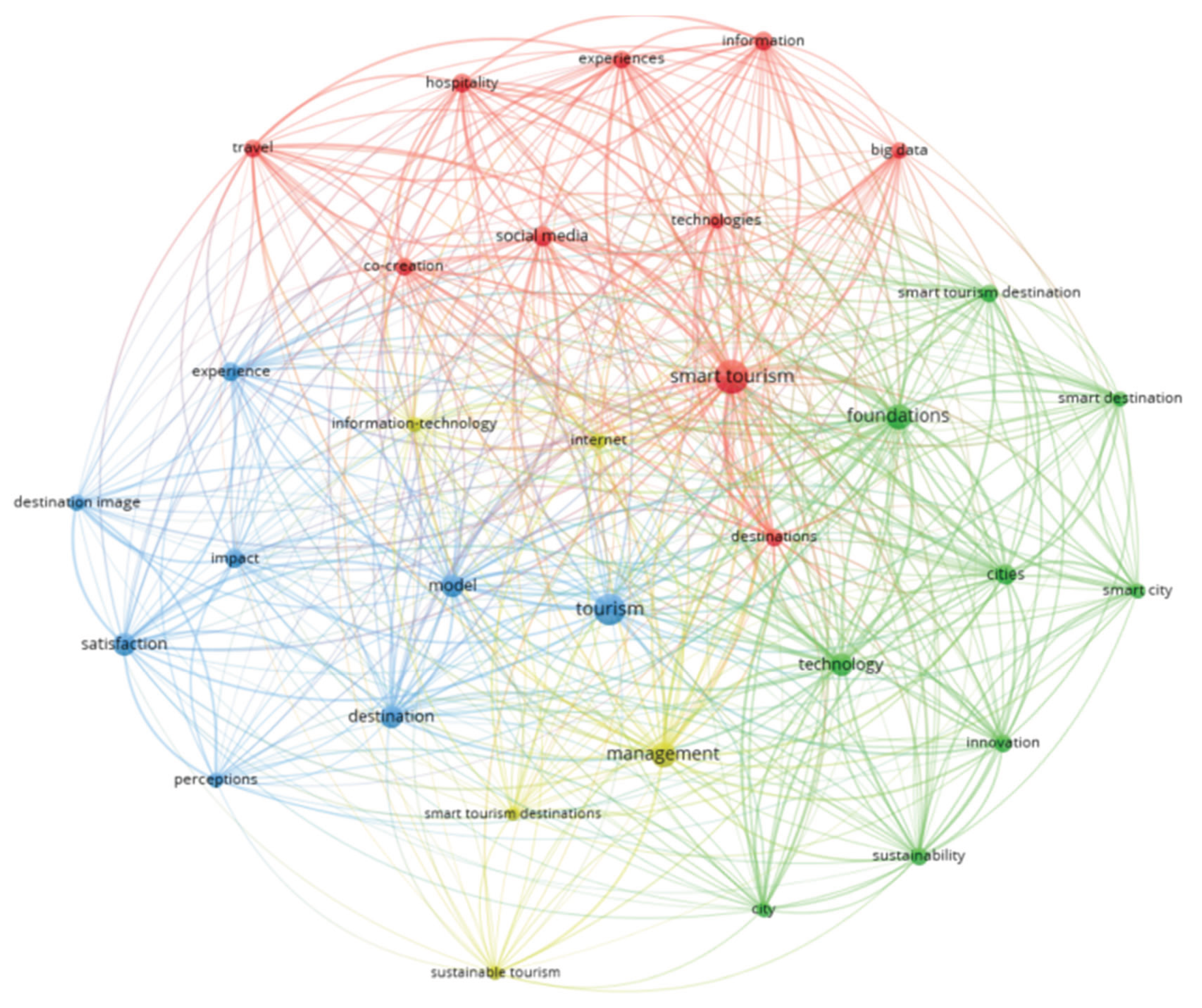

Table 1.
DTI Dimensions.
| Unit of record (found) |
Authors (cite as dimension) |
Context Unit |
| Information and Communication Technologies (TICs) (Connectivity/Information System) | GOMEZ-OLIVA, A. et al. (2019); ALLAWI, A. H. (2022); SANTOS-JÚNIOR, A. et al. (2020); MENDES FILHO, L. et al. (2022); SANTOS-JÚNIOR, A. et al. (2017); GONZÁLEZ-REVERTÉ, F. (2019); KHAN, M. S. et al. (2017); IVARS-BAIDAL, J. A. et al. (2021); IVARS-BAIDAL, J. A. et al. (2023); BOES, K.; BUHALIS, D.; INVERSINI, A. (2015); BORGES-TIAGO, T.; VERÍSSIMO, J.; TIAGO, F. (2022); FEMENIA-SERRA, F.; IVARS-BAIDAL, J. A. (2021); CORNEJO ORTEGA, J. L.; MALCOLM, C. D. (2020) | The development of the Smart Tourist Destination is interconnected, co-created and value-oriented through the implementation of technological applications and TIC infrastructures such as Cloud Computing and Internet of Things (BOES, Kim; BUHALIS, Dimitrios; INVERSINI, Alessandro, 2015). Information and Communication Technologies (TIC) are the fundamental components of smart tourism destinations, improving user experiences, efficiency, and process automation for sustainability. Although it is not the only feature, the TIC platform is essential for successfully realizing the concept of smart cities. (KHAN, M. Sajid et al. 2017). Smart tourism destinations combine environmental, economic, and socio-cultural sustainability, driven by TICs and data analytics. In addition to urban strategies, TICs also enhance daily life and communication, fostering conservation and development. (GOMEZ-OLIVA, Andrea et al. 2019). |
| Governance | GOMEZ-OLIVA, A. et al. (2019); ALLAWI, A. H. (2022); SANTOS-JÚNIOR, A. et al. (2020); GONZÁLEZ-REVERTÉ, F. (2019); KHAN, M. S. et al. (2017); BUHALIS, D.; AMARANGGANA, A. (2013); IVARS-BAIDAL, J. A. et al. (2021); IVARS-BAIDAL, J. A. et al. (2023); GRETZEL, U. et al. (2015); BOES, K.; BUHALIS, D.; INVERSINI, A. (2015); BOES, K.; BUHALIS, D.; INVERSINI, A. (2016); FEMENIA-SERRA, F.; IVARS-BAIDAL, J. A. (2021); MADEIRA, C.; RODRIGUES, P.; GOMEZ-SUAREZ, M. (2023); CORNEJO ORTEGA, J. L.; MALCOLM, C.D. (2020) | Governance subsystems encompass tourism services such as travel procedures, visas, and special requirements, encompassing extraordinary government permits when required. (KHAN, M. Sajid et al. 2017).Smart governance refers to transparency in governance systems, modernizing urban administration with open data and public engagement (BUHALIS, Dimitrios; AMARANGGANA, Aditya. 2014). Governance implies the participation and collaboration of multiple actors (public, private, residents, and tourists) in smart tourist destinations' decision-making, planning and policies, supported by advanced technologies and political leadership (SANTOS-JÚNIOR, Adalberto et al. 2020). |
| Innovation | ROMÃO, J.; NIJKAMP, P. (2019); GOMEZ-OLIVA, A. et al. (2019); ALLAWI, A. H. (2022); SANTOS-JÚNIOR, A. et al. (2020); MENDES FILHO, L. et al. (2022); SANTOS-JÚNIOR, A. et al. (2017); IVARS-BAIDAL, J. A. et al. (2021); IVARS-BAIDAL, J. A. et al. (2023); BOES, K.; BUHALIS, D.; INVERSINI, A. (2015); FEMENIA-SERRA, F.; IVARS-BAIDAL, J. A. (2021); MADEIRA, C.; RODRIGUES, P.; GOMEZ-SUAREZ, M. (2023) | Innovation is the implementation of new ventures related to tourism and other activities with the support of TICs (SANTOS-JÚNIOR, Adalberto et al. 2020). The Innovation dimension in Smart Tourist Destinations involves the adoption of technologies such as QRcode and RFID, as well as projects to improve services and municipal innovations. To become a DTI, innovative objectives are crucial, boosting a tourism ecosystem and favoring the consolidation of the destination through advanced management (MENDES FILHO, Luiz et al. 2022). The innovation dimension promotes initiatives that aim to encourage innovation in tourism and entrepreneurship. On the negative side, the degree of compliance with standardized innovation management systems is low in companies and public administrations. Innovation is primarily fostered by public administrations in DTI territories (IVARS-BAIDAL, Josep A. et al. 2021). |
| Accessibility | GOMEZ-OLIVA, A. et al. (2019); ALLAWI, A. H. (2022); SANTOS-JÚNIOR, A. et al. (2020); MENDES FILHO, L. et al. (2022); SANTOS-JÚNIOR, A. et al. (2017); IVARS-BAIDAL, J. A. et al. (2021); IVARS-BAIDAL, J.A. et al. (2023) | A DTI aims to include people in society with the support of smart technologies and accessibility (SANTOS-JÚNIOR, Adalberto et al. 2020). Accessibility means making tourism so that anyone can enjoy it. It makes it so that everyone can use the same things, like the environment, services, goods, technologies, and products in the safest, most comfortable, and most independent way possible (MENDES FILHO, Luiz et al. 2022). Regarding accessibility, further efforts are needed to ensure that all tourist attractions, information, and infrastructure are accessible to all visitors, regardless of their age, condition, or potential disability (IVARS-BAIDAL, Josep A. et al. 2021). |
| Performance | GOMEZ-OLIVA, A. et al. (2019); IVARS-BAIDAL, J. A. et al. (2021); IVARS-BAIDAL, J. A. et al. (2023); BORGES et al. (2022); ROMÃO, J.; NIJKAMP, P. (2019) | Smart destinations need a complete set of metrics encompassing performance in the various areas they are expected to engage. This includes connectivity, analysis of large volumes of data, adoption of technology, and its integration with sustainability concerns and accessibility of destinations (IVARS-BAIDAL, CELDR ́AN-BERNABEU, Maz ́on, & PERLES-IVARS, 2017). Technologies such as the Internet of Things, Big Data, and mobile devices will allow destinations to better understand the tourist behaviour in this data intelligence environment, reducing uncertainties about consumption habits. DTI should focus on enhancing the tourist experience through technologies such as augmented and virtual reality (MENDES FILHO, Luiz et al. 2022). |
| Mobility/urban infrastructure | KHAN, M. S. et al. (2017); BUHALIS, D.; AMARANGGANA, A. (2013); BOES, K.; BUHALIS, D.; INVERSINI, A. (2016); MADEIRA, C.; RODRIGUES, P.; GOMEZ-SUAREZ, M. (2023); CORNEJO ORTEGA, J. L.; MALCOLM, C.D. (2020) | The Mobility dimension involves services including air, land, and water transportation modes. Intelligent roads, bridges, and tunnels, Intelligent Transportation Systems (ITS), and intelligent traffic and parking management are integrated with tourism to provide tourists with seamless integration of travel-related services (KHAN, M. Sajid et al. 2017). Smart Mobility refers to accessibility in and out of the city and the availability of modern transportation systems (BUHALIS, Dimitrios; AMARANGGANA, Aditya. 2013). Smart accessibility and mobility mainly refer to transportation that facilitates local interconnections of the destination for tourists and potential tourists (ALLAWI, Ahmed Hussein. 2022). The mobility dimension is about the modernization of public transport, improving traffic through real-time information and other technologies, and creating alternative means of transport (SANTOS-JÚNIOR, Adalberto et al. 2020). |
| Sustainability | GOMEZ-OLIVA, A. et al. (2019); SANTOS-JÚNIOR, A. et al. (2020); ALLAWI, A. H. (2022); ROMÃO, J.; NIJKAMP, P. (2019); MENDES FILHO, L. et al. (2022); AGUIRRE, A. et al. (2022); SANTOS-JÚNIOR, A. et al. (2017); GONZÁLEZ-REVERTÉ, F. (2019); IVARS-BAIDAL, J. A. et al. (2021); IVARS-BAIDAL, J. A. et al. (2023); FEMENIA-SERRA, F.; IVARS-BAIDAL, J. A. (2021); CORNEJO ORTEGA, J. L.; MALCOLM, C.D. (2020) | The ideal smart tourism should be based on sustainability, circular economy, quality of life, and social value. The sustainability axis has the most significant number of publications on the theme of DTI (MADEIRA, Clara; RODRIGUES, Paula; GOMEZ-SUAREZ, Monica. 2023). Destination sustainability indicators adopt the approach of balancing economic, social, and environmental sustainability (IVARS-BAIDAL, Josep A. et al. 2021). |
| Economic Sustainability | ROMÃO, J.; NIJKAMP, P. (2019); ALLAWI, A .H. (2022); SANTOS-JÚNIOR, A. et al. (2020); AGUIRRE, A. et al. (2022); KHAN, M. S. et al. (2017); BUHALIS, D.; AMARANGGANA, A. (2013); BOES, K. et al. (2015); BOES, K. et al. (2016); BORGES-TIAGO, T.; VERÍSSIMO, J.; TIAGO, F. (2022); MADEIRA, C.; RODRIGUES, P.; GOMEZ-SUAREZ, M. (2023) | The economic dimension includes local strengthening, jobs, standard of living, investments, and new businesses. This can increase tax revenues but also lead to higher costs of living and prices, as well as real estate speculation. The necessary balance between advantages and challenges (SANTOS-JÚNIOR, Adalberto et al. 2020). Economic dimension: where smart and innovative economic conditions and tools are provided to fuel entrepreneurship and competitiveness (KHAN, M. Sajid et al. 2017) . Economic growth is directly connected to Information and Communication Technologies. Since the rise of computers, there has always been a constant recognition of the importance of technology in driving economic advancements (BOES, Kim; BUHALIS, Dimitrios; INVERSINI, Alessandro 2015). |
| Social Sustainability | ROMÃO, J.; NIJKAMP, P. (2019); GOMEZ-OLIVA, A. et al. (2019); SANTOS-JÚNIOR, A. et al. (2020); AGUIRRE, A. et al. (2022); KHAN, M. S. et al. (2017); BUHALIS, D.; AMARANGGANA, A. (2013); GRETZEL, U. et al. (2015); BOES, K.; BUHALIS, D.; INVERSINI, A. (2015); BOES, K.; BUHALIS, D.; INVERSINI, A. (2016); MADEIRA, C.; RODRIGUES, P.; GOMEZ-SUAREZ, M. (2023) | Smart Tourism Destination initiatives (DTIs) contribute to the enhancement of local sustainability. It is critical that they not only improve visitor experiences to achieve this goal but also develop them through continuous dialogue with locally staked parties, including local actors and residents. This approach ensures that the benefits arising from the tourism sector can be optimally distributed in local society (CORNEJO ORTEGA, José Luis; MALCOLM, Christopher D. 2020). The "People" dimension emphasizes a culture of learning, engagement, and innovation, with examples such as advanced education and intelligent security. This joins educational, innovation, and safety subsectors, all connected to local culture, providing tourists with access to cultural and social solutions. The "Life" dimension seeks to improve the quality of life through education, health, and culture, with a focus on smart buildings, eHealth, and advanced medical facilities. It connects the sustainable and smart tourism system to the quality of life, although many aspects mainly benefit local residents. The integration of health services with tourist buildings and facilities is the main link with tourism in this dimension (KHAN, M. Sajid et al. 2017). "Smart People" refers to the level of skills and knowledge of the city's human capital. On the other hand, "Smart Living" covers the quality of life, including a healthy environment, social cohesion, tourist attractiveness, and the availability of cultural and educational services (BUHALIS, Dimitrios; AMARANGGANA, Aditya. 2013). |
| Environmental Sustainability | AGUIRRE, A. et al. (2022); KHAN, M. S. et al. (2017); BUHALIS, D.; AMARANGGANA, A. (2013); BOES, K.; BUHALIS, D.; INVERSINI, A. (2016); MADEIRA, C.; RODRIGUES, P.; GOMEZ-SUAREZ, M. (2023) | In the "Environment" dimension, the focus is on intelligent asset management to reduce pollution and waste of resources. Examples include the integration of smart grids and buildings, advanced irrigation and water treatment systems, as well as intelligent rainwater and waste management. This dimension, together with its functionalities, integrates intelligent systems for the management of networks, buildings, water, sewage, and waste in the context of sustainable tourism. This creates an essential connection between tourism and sustainable practices at a macro level (KHAN, M. Sajid et al. 2017). Intelligent Environment is related to energy optimization that leads to sustainable management of available resources (BUHALIS, Dimitrios; AMARANGGANA, Aditya. 2013). |
Source: Authors.
Disclaimer/Publisher’s Note: The statements, opinions and data contained in all publications are solely those of the individual author(s) and contributor(s) and not of MDPI and/or the editor(s). MDPI and/or the editor(s) disclaim responsibility for any injury to people or property resulting from any ideas, methods, instructions or products referred to in the content. |
© 2025 by the authors. Licensee MDPI, Basel, Switzerland. This article is an open access article distributed under the terms and conditions of the Creative Commons Attribution (CC BY) license (http://creativecommons.org/licenses/by/4.0/).
Copyright: This open access article is published under a Creative Commons CC BY 4.0 license, which permit the free download, distribution, and reuse, provided that the author and preprint are cited in any reuse.