

Submitted:
12 September 2025
Posted:
16 September 2025
You are already at the latest version
Abstract
Conducting an integrative literature review on patterns of elder caregiving in Nigeria is crucial for obtaining a comprehensive understanding of the evolving dynamics and factors that influence caregiving practices in the country. As Nigeria, like many other nations, undergoes demographic shifts, such as an increasing aging population and changing family structures, it becomes essential to examine existing literature. This review aims to identify prevalent patterns of elder caregiving, explore the roles and responsibilities of caregivers, and shed light on the challenges and support needs within the unique Nigerian context. This integrative review examined elder caregiving patterns in Nigeria. The articles were sourced from databases such as Academic Search Complete, CINAHL, PubMed, PsycINFO, and Medline. The review followed the rigorous integrative review methodology and adhered to the PRISMA guidelines, ensuring a comprehensive and reliable analysis of the literature. This review utilized a data extraction matrix and thematic analysis to retrieve and analyze relevant information from the selected articles. The review included qualitative, quantitative, and mixed-methods studies published in peer-reviewed academic journals written in English. An intersectional lens was employed to examine the interconnectedness of individual experiences and systems of marginalization. Twenty articles published between 1991 and December 2022 that explored cultural, familial, and societal aspects of elder care-giving in Nigeria were examined. The findings revealed six main themes: cultural influences, gender differences, family dynamics, economic factors, challenges faced by Nigerian caregivers, and government policies and support, shedding light on the current and multifaceted nature of elder caregiving in Nigeria. The study highlights the intricate nature of elder caregiving in Nigeria and emphasizes the significance of enhancing existing support systems while also creating more comprehensive support systems and policies. Addressing challenges faced by caregivers, such as conflicting responsibilities, limited healthcare access, and a lack of formal support, necessitates a multi-dimensional approach involving government interventions, community initiatives, and cultural transformations. Recognizing the intersectional dynamics and promoting inclusive caregiving practices are crucial for enhancing the well-being and quality of life for caregivers and elderly individuals. Future research should further examine transnational caregiving and develop targeted interventions to address the unique needs and challenges in diverse caregiving contexts, both domestically and in the diaspora.
Keywords:
eldercare
; Nigeria
; caregiving patterns
; caregiving
; seniors
1. Introduction
The World Health Organization (2022) projects that by 2030, 1 in 6 people worldwide will be 60 years or over. In 2020, the population of individuals aged 60 years and over increased from 1 billion to 1.4 billion, and by 2050, it is expected to reach 2.1 billion. The number of individuals aged 80 years or older is also projected to triple from 2020 to 2050, reaching 426 million. Comparatively, Africa had a smaller proportion of elderly individuals in 2020 (5.6%) compared to other regions, such as North America (23.4%) (Wan, 2022). Nonetheless, the elderly population in Africa continues to grow and projections suggest that by 2050, Africa will have around 235 million elderly individuals. This figure will surpass the elderly population in Latin America and approach the numbers seen in Europe (Wan, 2022).
Nigeria is a Federal Republic consisting of 36 States and the Federal Capital Territory, Abuja. These states are categorized into six geopolitical zones: North Central (NC), North East (NE), North West (NW), South West (SW), South East (SE), and South South (SS). The country spans an area of approximately 923,768 square kilometers and features a vast low plateau intersected by two rivers, the Niger and Benue, located in the central region of the country. In Nigeria, the most populous country in Africa, the older population was estimated to be 11 million in 2020, making it the largest in any African country and the 19th largest globally (Population Reference Bureau, 2020). By 2050, it is projected that the number of older Nigerians will triple to over 33 million, ranking Nigeria as the 11th largest older population in the world (Wan, 2022). This indicates that elderly individuals will account for approximately 10% of Nigeria's total population by 2050 (Ebimgbo et al., 2022). Nigeria has experienced improvements in life expectancy at birth; From 32.62 in 1950 with no recorded growth rate, it rose to 46.38 in 2000, reflecting a growth rate of 0.41%. Subsequently, in 2010, life expectancy further increased to 50.64 with a growth rate of 0.87%. By 2022, it reached 55.44, maintaining a growth rate of 0.57%. The projection for 2023 estimates a similar life expectancy of 55.75, indicating a consistent growth rate of 0.57% (Macrotrends, 2023).
The increasing aging population in Nigeria will have implications for elder caregiving, as there will be a greater need for support from both expert and family caregivers (Ebimgbo et al., 2019). Understanding aging in Africa is crucial for informing government policies and regional social and economic development (Wan, 2022). However, despite the growing number of elderly individuals in developing countries like Nigeria, there is a lack of formal support arrangements and inadequate infrastructure to address the emerging issues in aged care (Togonu-Bickersteth & Akinyemi, 2014).
In the twenty-first century, population aging has emerged as one of the most significant demographic features, with implications for families and society. These changes encompass various aspects, including economic growth, social security, education, work and retirement patterns, family dynamics, socio-cultural activities, provision of resources for elderly individuals, and health, including the prevalence of chronic diseases and disabilities (Wiens, 2016). The global issue of demographic changes in the aging population arises from declining fertility rates and increasing life expectancy in both developed and developing countries (Agree, 2018). Population aging plays a crucial role in society's ability to extend longevity and plan for future generations (Agree, 2018). Fertility rates in most developed countries have fallen below the replacement level of 2.1 births per woman, creating long-term demographic challenges (International Monetary Fund [IMF], 2025). Alongside this decline, life expectancy has steadily increased across regions (International Monetary Fund [IMF], 2025). Global estimates indicate that average life expectancy rose from 71 to 76 years in recent decades, reflecting improvements in health outcomes and living standards (Yenilmez, 2015). More recent evidence shows that this trend has continued, with G20 advanced economies experiencing an increase from about 67 years in the 1950s to nearly 82 years by 2023, and emerging markets as well as African Union members gaining close to three decades in longevity (International Monetary Fund [IMF], 2025).
The concept of aging in Nigeria is multifaceted, encompassing both biological and social aspects, and holds important implications for society, community, and culture (Ani, 2014; Togonu-Bickersteth & Akinyemi, 2014). Traditionally, elder caregiving in Nigeria has been the responsibility of the family, with adult children and relatives fulfilling the caregiving role. The extended family system, deeply rooted in Nigerian culture, has historically provided support and care for elderly individuals. However, societal changes such as urbanization, migration, and modernization are impacting the traditional family structure and are leading to new patterns of elder caregiving (Eboiyehi & Onwuzuruigbo, 2014; Fajemilehin, 2000).
The traditional Nigerian family structure was characterized by patriarchy and collectivism, where communal harmony and group solidarity took precedence over individual goals (Ani, 2014; Ben-Ari & Lavee, 2004; McCarty et al., 1999). Kinship and community held great importance, and the traditional family unit provided care and support for elderly members, including food supply, welfare, and security (Ani, 2014). Elders were highly respected as they were considered the custodians of traditions, culture, and a source of wisdom. In the traditional Nigerian society, the community relied on elders for guidance, knowledge, and direction (Wahab & Isiugo-Abanihe, 2010).
According to Yankuzo (2014), the impact of globalization on traditional African cultures has led to cultural imperialism, where foreign cultures dominate indigenous cultures in both material and non-material forms. This cultural imperialism has had adverse effects on the indigenous family structure, traditional healthcare systems, and pre-colonial economies in Africa (Yankuzo, 2014). Consequently, in Nigeria, the traditional extended family system, which historically emphasized the importance of respecting and supporting older individuals, is gradually diminishing. This transformation can be attributed to factors such as the prevalence of nuclear family structures, economic development, labor migration, urbanization, industrialization, shifts in family dynamics, and the influence of new religious beliefs (Ani, 2014; Togonu-Bickersteth & Akinyemi, 2014; Yankuzo, 2014).
1.1. Problem Formulation
Elder caregiving, also referred to as eldercare, elderly caregiving, or care of older adults, involves providing physical, emotional, financial/economic support and social support to elderly individuals who require assistance due to age-related limitations or health issues. The aging population is a global phenomenon, and Nigeria, like many other nations, is undergoing a demographic transition towards a larger elderly population. This transition presents challenges for families and communities in terms of providing adequate care and support for older individuals (Ebimgbo et al., 2022). Gaining insights into the changing patterns of elder caregiving in Nigeria is essential for the development of effective policies, interventions, and support systems to meet the needs of the aging population.
The literature review examines the current landscape of elder caregiving in Nigeria, including the obstacles, gaps, and emerging trends. It highlights the factors that influence elder caregiving patterns, such as cultural norms, socioeconomic factors, and migration patterns. The review investigates the roles and responsibilities of various caregivers, including family members, formal caregivers, and community-based support systems. With the aging population growing and social dynamics evolving in Nigeria, comprehending the patterns of elder caregiving is essential for addressing the unique needs and challenges faced by elderly individuals and their caregivers. By conducting an integrative literature review, a comprehensive analysis of elder caregiving in Nigeria is presented. The overarching question guiding this review is: What are the current patterns of elder caregiving among Nigerians?
2. Materials and Methods
The integrative review design was employed to consolidate the findings. This design allows for the integration of diverse methodologies, providing a comprehensive synthesis of the literature (Whittemore & Knafl, 2005). The review was guided by an explicit theoretical perspective, enhancing its coherence and meaning (Kirkevold, 1997). Following the methodology proposed by Whittemore and Knafl (2005), the data were systematically reduced, displayed, compared, and analyzed to draw conclusions and ensure the accuracy of the findings. The PRISMA guidelines (Moher et al., 2009) were utilized to outline the selection process, justify the inclusion and exclusion criteria, and enhance the transparency of the review.
As this review focuses on the patterns of elder caregiving among Nigerians and draws on empirical studies utilizing various research methods and methodologies, an integrative review was deemed the most appropriate approach for synthesizing these diverse methodologies. The integrative review in this study is guided by an intersectional approach, which allows for a critical analysis of the intersecting factors and dimensions that influence elder caregiving in Nigeria. By considering multiple perspectives and dimensions, this approach aims to provide a comprehensive understanding of the complex dynamics and experiences related to elder caregiving in the Nigerian context.
2.1. Theoretical Perspectives
Intersectionality, originally coined by Kimberlé Crenshaw, emerged from black feminism and Critical Race Theory (Carbado et al., 2013). Since its inception, the theory has expanded and evolved across disciplines, aiming to understand how various social categories such as gender, race, class, age, and other intersecting differences shape and impact individuals and communities. Valentine (2007) explains that intersectionality recognizes the simultaneous experiences of multiple identities within specific spatial and temporal contexts throughout everyday lives. The understanding of intersectionality as a lived experience highlights the complexity and fluidity of social categories and their interconnectedness.
The intersectional lens is a critical framework employed to guide the analysis and interpretation of the findings in this synthesis. By adopting an intersectional perspective, researchers can delve into a nuanced and comprehensive analysis that explores the interconnections between individual experiences and the intersecting systems of marginalization. Drawing on the works of scholars such as Abrams (2020), Bauer (2014), and Carbado (2013), the application of the intersectional lens allows for a deeper understanding of how multiple social categories, such as gender, age, socioeconomic status, and ethnicity, interact and shape the experiences of elder caregiving.
This lens acknowledges that individuals do not experience caregiving in isolation but are situated within broader social structures and power dynamics. It recognizes that different forms of oppression and privilege can intersect and compound, resulting in unique and complex experiences for caregivers and care recipients (Cohen, 2021). Through the lens of intersectionality, the study aims to uncover the nuanced connections and dynamics that exist within the realm of elder caregiving in Nigeria, ultimately contributing to a more comprehensive and inclusive understanding of the topic. This review utilizes intersectionality as a theoretical framework to examine the patterns of elder caregiving among Nigerians. By adopting the intersectionality paradigm, not only will the experiences of elderly individuals be explored, but so too will the vulnerability and expectations faced by their informal, unpaid caregivers (most often a spouse or adult children) who assume the caregiving role. This approach enables the comprehension of the intricate complexities and challenges encountered by caregivers as they navigate their caregiving responsibilities. Furthermore, the intersectionality perspective unveils that old age vulnerability stems from a disadvantaged position within the broader socio-political landscape. It emphasizes that this vulnerability persists throughout the entire life course. By broadening the understanding of intersectionality in the context of elder caregiving, it will be possible to gain valuable insight into the experiences of the caregivers and elderly individuals. These insights can then inform the development of targeted support programs and policies tailored to address the unique needs of elderly individuals (Lane et al., 2011; Sidloyi, 2016).
2.2. Eligibility Criteria
Inclusion criteria specified studies: 1) Articles published prior to December 2022 in peer-reviewed academic journals written in English. 2) Studies focusing on elder caregiving among Nigerians. 3) Studies focusing on caregiving dynamics, experiences, and perspectives of either caregivers or care receivers. 4) Studies following quantitative, qualitative, or mixed methods study design or using any type of review design. To reduce bias, perspective, and reflection papers (commentaries/opinion papers without data) were excluded because these papers may be based on the authors' personal accounts and opinions. Dissertations, conference papers, conference abstracts, books, and book chapters were excluded because these sources are not normally peer reviewed. The PRISMA flowchart outlining the selection process is presented in Figure 1.
To expand the search and make it comprehensive, an in-depth search was done in consultation with a content-expert librarian. The Boolean literature search terms included a combination of subheadings (MeSH) and keywords: Aged* or older ad ult* or older people*, or elderly* or senior citizen* or ag* or gerontology or geriatrics AND Nigeria* or Nigeria, Eastern* or Nigeria, Western* or Nigeria, Eastern* or Nigeria, Southern* or Nigeria, Northern* or Nigerian, Overseas*, Nigerian, abroad* or AND Care or caregiv* or support.
2.3. Literature Search Stage
Multiple databases were systematically searched from inception for peer-reviewed articles conducted with/for the elderly. Various sources of information, including professional journals, periodicals, books, internet sources, dissertations, and grey literature, were used. These sources were accessed through the following databases: Academic Search Complete (Ebsco), CINAHL(Ebsco), Medline (Ovid) and PsycINFO (Ebsco), and PubMed (Medline). A hand search for relevant literature was also conducted. The initial literature search of 5 databases yielded 2,986 citations. Duplicate articles (n=1,668) were detected and removed using a bibliographic management system (EndNote). The initial screening involved assessing titles and abstracts of 1,318 articles, resulting in the elimination of 1,280 articles that were deemed irrelevant to the main subject. The remaining 35 articles underwent a full screening process, leading to the exclusion of 20 articles, which were either reflection papers or did not align with the main subject in terms of population, study focus, and outcomes. This narrowed down the articles to 15. Additionally, 14 articles were identified through a backward citation search and underwent full screening. From these, 9 articles were further excluded as they were either reflection papers, policy papers, or did not meet the criteria related to population, study focus, and outcomes. Consequently, the number of articles was reduced to 5. Twenty articles were selected based on the inclusion and exclusion criteria and their relevance to the question.
2.4. Data Extraction and Quality Appraisal
A data extraction matrix was created to provide an organized overview of the identified 20 studies (Appendix A). The matrix served as a tool for sorting and categorizing the different arguments and findings related to the research question (Garrard, 2017). Data extraction included details such as author, journal, year of publication, population, objectives, study design, methodology, data collection methods, and findings (see Appendix A). This systematic approach facilitated the synthesis of information in a structured and concise manner.
Two types of quality assessment tools were employed depending on the methodology of the included article: the Scale for the Assessment of Narrative Review Articles (SANRA) (Baethge et al., 2019) and the Mixed Methods Appraisal Tool (MMAT) (Hong et al., 2018a). On the SANRA scale, which consists of six items rated from 0 (low standard) to 2 (high standard), articles were evaluated based on the importance and aims of the review, literature search, referencing, and presentation, evidence level, and relevant endpoint data (Baethge et al., 2019). Baethge et al. (2019) have reported satisfactory feasibility, inter-rater reliability, item homogeneity, and internal consistency for the SANRA scale, which consists of six items. For more details, please refer to Appendix B.
The MMAT Version 2018 (Hong et al., 2018b) was chosen due to its capability to evaluate the methodological quality of various empirical studies using a single tool. The MMAT recognizes the distinct criteria for assessing quality in qualitative and quantitative methods, considering their different assumptions and objectives. The reliability and efficiency of the MMAT have been examined by Pace et al. (2012) for systematic mixed studies. Rather than using numerical scores, the MMAT (Mixed Methods Appraisal Tool) utilizes appraisal ratings that are classified as Yes, No, or Cannot Tell. This feature enables the inclusion of all articles rather than exclusion based on numerical scores. The interpretation of the quality assessment tools' overall scores followed a 2-point Likert scale, as recommended by Whittemore and Knafl (2005). In the case of the MMAT tool, articles with scores of 2 or lower were classified as low quality, whereas those with scores of 3 or higher were deemed high quality. For more details, please refer to Appendix C, Appendix D, Appendix E.
The quality appraisal tools were not used to exclude articles but rather to inform the analysis by identifying any possible discrepancies in findings. In integrative reviews, it is not necessary to exclude papers solely based on quality criteria, as these reviews aim to collect data from various sources. Instead, evaluating data quality in integrative reviews involves considering criteria that are relevant to the specific review, as suggested by Whittemore and Knafl (2005).
The question guiding this review focused on the patterns of elder caregiving among Nigerians, both those living in Nigeria and abroad. Thematic analysis was employed as a method for analyzing the data sets to identify and develop themes. Thematic analysis is a valuable approach for identifying and analyzing patterns of meaning in a dataset (Braun & Clarke, 2006). This analytical method effectively captures patterns, domains, and categories within the data, as outlined by Braun and Clarke (2006). Moreover, it highlights the important themes that contribute to the understanding of the phenomenon being studied, as emphasized by Daly et al. (1997).
2.5. Data Analysis
In total, twenty codes were identified during the analysis of the findings from the selected studies. These codes were then categorized into six themes based on their relevance to the research question. The themes provided a framework for organizing and interpreting the data. The findings were examined and coded according to the description provided for each theme. This process helped to identify key patterns, similarities, and differences in the data across the studies.

Table 1.
Comprehensive Search Strategy.
| Search terms | Database | Citations |
|---|---|---|
| aging or ageing or elderly or older adults or seniors or geriatrics or gerontology) AND (Nigeria or Nigeria, Eastern or Nigeria, Western or Nigeria, Eastern or Nigeria, Southern or Nigeria, Northern or Nigerian, Overseas, Nigerian, abroad) AND ( Care or caregiv* or support ) | Academic Search Complete (Ebsco) | 627 |
| "( aging or ageing or elderly or older adults or seniors or geriatrics or gerontology ) AND ( Nigeria or Nigeria, Eastern or Nigeria, Western or Nigeria, Eastern or Nigeria, Southern or Nigeria, Northern or Nigerian, Overseas, Nigerian, abroad ) AND ( Care or caregiv* or support )" OR (MH "Nigeria") OR (MH "Eldercare") | CINAHL (Ebsco) | 331 |
| "( aging or ageing or elderly or older adults or seniors or geriatrics or gerontology ) AND ( Nigeria or Nigeria, Eastern or Nigeria, Western or Nigeria, Eastern or Nigeria, Southern or Nigeria, Northern or Nigerian, Overseas, Nigerian, abroad ) AND ( Care or caregiv* or support )" OR (MH "Nigeria") OR (MH "Eldercare") | PsychINFO (Ebsco) | 532 |
| aging or ageing or elderly or older adults or seniors or geriatrics or gerontology) AND (Nigeria or Nigeria, Eastern or Nigeria, Western or Nigeria, Eastern or Nigeria, Southern or Nigeria, Northern or Nigerian, Overseas, Nigerian, abroad) AND ( Care or caregiv* or support ) | PubMed (Medline) | 612 |
| aging or ageing or elderly or older adults or seniors or geriatrics or gerontology) AND (Nigeria or Nigeria, Eastern or Nigeria, Western or Nigeria, Eastern or Nigeria, Southern or Nigeria, Northern or Nigerian, Overseas, Nigerian, abroad) AND ( Care or caregiv* or support ) | Medline (OVID) | 884 |
| Total retrieved | 2,986 |
3. Results
This review focuses on findings from 20 qualitative, quantitative, mixed methods, and review papers. The PRISMA flowchart outlining the selection process is presented in Figure 1. A summary overview of the main themes and sub-themes identified in the patterns of elder care in Nigeria is presented in Table 2.
3.1. Study Characteristics
This review aimed to provide an overview of the patterns of elder caregiving, specifically in the Nigerian context. To achieve this, relevant research articles published between 1991 and the present were included in the analysis. The selected studies focused on exploring the cultural, familial, and societal aspects of elder caregiving in Nigeria. Of the twenty selected articles, researchers used qualitative methods (n = 8), mixed methods (n = 5), quantitative methods (n = 6), and a narrative review (n = 1). The studies used various data collection methods, including various interview methods (n = 14), questionnaires (n = 10), focus group discussions (n = 4), and observation (n = 1). The 20 included studies involved participants from various age cohorts, sex/gender, and groups, including the elderly individuals (n=1,354), care partners comprising adult children, spouses, individuals with experience of caregiving (n=3,850), educators (n=684), and government officials (n=3). The studies encompassed all six geopolitical zones of Nigeria.
3.2. Themes and Sub-themes
The thematic analysis highlighted similarities and distinct differences among the studies. Six themes pertaining to elder caregiving practices in Nigeria: cultural influences, gender differences, family dynamics, economic factors, challenges faced by Nigerian caregivers, and government policies and support were identified. These themes underscore the impact of cultural norms, values, and beliefs on elder caregiving, the division of caregiving responsibilities based on gender roles and expectations, the role of immediate family members in caregiving, the influence of economic factors on the quality and availability of care, the challenges experienced by caregivers in Nigeria, and the role of governmental policies and support systems in meeting the needs of the elderly population.
3.3. Cultural Influences
The theme of cultural influences in elder caregiving practices in Nigeria pertains to how cultural norms, traditions, and beliefs shape the provision of care to elderly individuals. This theme was addressed in 11 articles within the context of this review (Wahab & Isiugo-Abanihe, 2010; Odaman & Ibiezugbe, 2014; Namadi, 2016; Animasahun & Chapman, 2017; Iwuagwu, Ngwu & Ekoh, 2022; Tanyi et al., 2018; Eboiyehi & Onwuzuruigbo, 2014; Fajemilehin, 2000; Shofoyeke & Amosun, 2014; Akinrolie et al., 2020; Ani & Isiugo-Abani, 2017; Ebimgbo et al., 2019). Cultural influences play a role in shaping and guiding elder caregiving practices in Nigeria by profoundly impacting attitudes, beliefs, values, and behaviors related to elder care (Wahab & Adedokun, 2012). For instance, old age in the Esan community is perceived based on societal notions of purity and virtuous living. Traditional Esan society operates on intergenerational exchanges of wealth and care, where children provide support to their elderly parents.
Wahab and Adedokun (2012) conducted a study in the Kano municipal area of Kano state, exploring the views of family caregivers regarding the care of elderly individuals. The findings revealed that reciprocity and obligation were the main motivators for family caregivers to provide continuous care. Spouses were driven by the commitment of marriage and love to care for their frail partners, while adult children felt a sense of filial piety and adherence to caregiving norms in caring for their aging parents. Nigerian society is diverse, consisting of numerous ethnic groups, each with its distinct cultural traditions and beliefs.
Across various cultures in Nigeria, there is a shared value of respecting and honoring elders, although it is important to acknowledge that practices may vary among different regions and communities (Wahab and Isiugo-Abanihe, 2010; Odaman & Ibiezugbe, 2014). It is considered a moral duty for younger family members to provide care and support for their aging parents or relatives (Namadi, 2016). This cultural value often drives caregiving practices within families (Animasahun & Chapman, 2017). Filial piety, the concept of children's duty and obligation to care for and honor their parents and elders, is deeply ingrained in Nigerian culture. It encompasses values of respect, obedience, and care for one's parents.
The notion of filial piety is highly valued in Nigerian society, and children are expected to fulfill their responsibilities by providing care for their elderly parents (Iwuagwu, Ngwu & Ekoh, 2022; Tanyi et al., 2018). Neglecting these duties may be perceived as a violation of cultural norms. In Nigeria, family cohesion and unity are strongly emphasized, and children are expected to demonstrate reverence and support for their aging parents (Animasahun & Chapman, 2017; Eboiyehi & Onwuzuruigbo, 2014; Fajemilehin, 2000; Namadi, 2016; Shofoyeke & Amosun, 2014). This includes providing financial assistance, offering emotional support, and assuming responsibility for the welfare of the elderly whenever possible (Akinrolie et al., 2020; Ani & Isiugo-Abani, 2017; Ebimgbo et al., 2019). The cultural value placed on filial piety influences caregiving practices within Nigerian families and highlights the importance of intergenerational support and care.
In their study, Shofoyeke and Amosun (2014) found that the living arrangements of elderly individuals varied across different geopolitical zones in Nigeria. In the South-South region, elderly people were more likely to live alone, while in the South-East and South-West regions, they predominantly lived with their children. On the other hand, in the North-Central region, elderly individuals were more likely to live with their extended family. These findings highlight the influence of cultural factors on the living arrangements of elderly individuals in Nigeria.
3.4. Gender Differences
A total of seven studies (Namadi, 2016; Mayston et al., 2017; Okoye, 2012; Ebimgbo et al., 2022; Animasahun and Chapman, 2017; Iwuagwu, Ugwu, Ugwuanyi et al., 2022; Shofoyeke and Amosun, 2014) investigated the influence of gender differences and traditional gender roles on attitudes and practices regarding elder caregiving in Nigeria, leading to a range of varied findings. Some studies indicate that family caregiving is predominantly carried out by women. For example, Namadi (2016) found that 60% of the caregivers in their study were female, and Mayston et al. (2017) observed that women were the primary caregivers in most households.
Additionally, Okoye (2012) discovered that adult daughters generally have more positive attitudes towards caregiving and are less likely to perceive it as burdensome compared to adult sons. Females tend to be more inclined to provide caregiving assistance than males (Okoye, 2012). These findings suggest that traditional gender roles and expectations influence the division of caregiving responsibilities within families in Nigeria, with women often assuming the primary caregiving role.
In Nigerian culture, adult daughters may face challenges in openly expressing their emotions but prioritize their sense of duty. The pursuit of education often leads women to relinquish caregiving roles, as modernization encourages personal goals through education, potentially resulting in inadequate care and support for elderly individuals (Ebimgbo et al., 2022). Women are more likely to experience financial limitations and face psychosocial health challenges in older age compared to men (Animasahun & Chapman, 2017). Additionally, females tend to experience chronic ailments at an earlier age than males (Namadi, 2016).
It is important to acknowledge that caregiving practices may vary across different households and communities, and not all studies have consistently reported the same gender patterns. Odaman and Ibiezugbe (2014) found a gender imbalance in providing assistance to the elderly, particularly in terms of food remittances, where elderly females received more support. On the other hand, Animasahun and Chapman (2017) highlighted the potential consequences of this gender imbalance, including reduced social support and increased risk of domestic violence for older women. However, the study conducted by Iwuagwu, Ugwu, Ugwuanyi et al. (2022) found that gender did not have a statistically meaningful effect on predicting access to support care services available to the elderly.
Peil's (1991) study indicated that age and gender play a crucial role in the level of support individuals receive, particularly in rural regions. The research found that rural men and older women residing in urban areas tend to receive less assistance compared to other groups. In addition, older women, influenced by widowhood or cultural practices, have a higher likelihood of living alone, whereas elderly men in rural areas often enter into marriages with younger partners. Furthermore, the study revealed that rural women below the age of 75 were more likely to receive gifts from their children, while elderly fathers received more substantial support. In Shofoyeke and Amosun's (2014) study across four Nigerian geopolitical zones, it was found that men generally had higher awareness of elderly individuals living in their areas compared to women. This pattern held true in the South-South, South-East, and North-Central regions. However, in the South-West region, women showed greater awareness than men. The study attributed this gender difference to men's natural inclination for better environmental interaction and awareness.
3.5. Family Dynamics
In the context of elder caregiving, multiple studies consistently show that the primary responsibility for providing care lies with the family (Ani & Isiugo-Abani, 2017; Ebimgbo et al., 2022; Namadi, 2016; Okoye, 2012; Peil, 1991; Shofoyeke & Amosun, 2014; Wahab & Adedokun, 2012). Immediate family members, including adult children, spouses, and siblings, are typically the ones who assume caregiving tasks and responsibilities. This emphasizes the significance of reciprocity and intergenerational relationships, as elderly individuals rely on their younger family members for care and support (Akinrolie et al., 2020; Namadi, 2016).
The transformation of the traditional extended family structure and cultural values has resulted in a decline in close kinship bonds and reduced availability of social support within the extended family system (Eboiyehi & Onwuzuruigbo, 2014; Fajemilehin, 2000; Odaman & Ibiezugbe, 2014; Tanyi et al., 2018). Changes in society have led to a shift away from traditional caregiving expectations, with an increasing reliance on domestic helpers to fulfill the role of family caregivers (Fajemilehin, 2000). A study by Iwuagwu, Ngwu, and Ekoh (2022) revealed that marital conflicts, sibling conflicts, and inadequate caregiving support from male children can impose a social burden with detrimental effects on the well-being of both elderly individuals and their caregivers.
Caregiving responsibilities within the family are typically shared among family members, although some individuals may bear a greater burden than others (Mayston et al., 2017; Wahab & Adedokun, 2012). The family's ability to effectively fulfill this caregiving role is crucial for the well-being and quality of life of elderly individuals (Ani & Isiugo-Abani, 2017; Iwuagwu, Ugwu, Ugwuanyi et al., 2022). Intergenerational care transfer is also observed, with elderly individuals who were once caregivers themselves now relying on their children and grandchildren for care as they age (Akinrolie et al., 2020; Iwuagwu, Ngwu & Ekoh, 2022). Married children often have elderly female relatives living with them to receive assistance, guidance, and support (Fajemilehin, 2000). Some participants mentioned relocating their parents from rural areas to urban cities, assuming responsibility for their basic needs and medical expenses (Akinrolie et al., 2020; Ani & Isiugo-Abani, 2017).
Societal transformations, including international migration, urbanization, industrialization, Western influence, and the transition to a nuclear family structure, have been recognized as influential elements that have affected the extended family system in Nigeria. (Ebimgbo & Okoye, 2022; Ebimgbo et al., 2022; Eboiyehi & Onwuzuruigbo, 2014; Fajemilehin, 2000; Peil, 1991; Wahab & Adedokun, 2012). These changes have influenced societal dynamics and caregiving practices, presenting challenges for the well-being of elderly individuals.
According to the research conducted by Ebimgbo and Okoye (2022), elderly family members who are left behind in Nigeria by their children residing overseas may face a sense of abandonment and are susceptible to engaging in substance misuse as a means of dealing with their situation. Furthermore, these elderly individuals who are left behind often disregard healthy eating habits. The absence of migrating young family members poses challenges for them in receiving instrumental support, contributing to difficulties in performing activities of daily living (ADLs). The migration of younger family members disrupts traditional care and support systems for older adults, leading to abandonment and a lack of support in performing Instrumental Activities of Daily Living (IADLs).
Research conducted by Eboiyehi and Onwuzuruigbo (2014), Fajemilehin (2000), and Wahab and Adedokun (2012) demonstrate that these societal changes have undermined the traditional norms and values surrounding filial piety. As a result, both younger and older generations have become less willing to sacrifice the prospects and aspirations of the younger generation in order to provide physical care for the elderly. In certain cultural contexts and rural areas, the extended family system remains strong, leading to a collaborative approach to elder caregiving. Peil (1991) found that rural elderly individuals maintain extensive reciprocal relationships, in contrast to their urban counterparts.
The place of residence of elderly individuals has been found to have an impact on the level of care and support they receive. Research has shown that elderl y individuals residing in urban areas are more likely to receive sufficient care and support compared to those living in rural areas (Ani & Isiugo-Abani, 2017). However, the combined influence of factors such as international migration, urbanization, industrialization, Western influence, and changing family structures has raised concerns about potential gaps in support for the elderly individual (Ebimgbo & Okoye, 2022; Ebimgbo et al., 2022; Eboiyehi & Onwuzuruigbo, 2014; Fajemilehin, 2000; Peil, 1991; Wahab & Adedokun, 2012).
3.6. Economic Factors
Financial limitations and scarce resources can have a direct impact on the availability and quality of care provided to elderly individuals (Animasahun & Chapman, 2017; Ebimgbo & Okoye, 2017; Okoye, 2012; Shofoyeke & Amosun, 2014). Families may face challenges in affording necessary medical treatments, assistive devices, and home care services, which can lead to increased caregiver burden and inadequate support for the elderly (Ebimgbo et al., 2019; Iwuagwu, Ngwu & Ekoh, 2022; Ojifinni & Uchendu, 2022). Tanyi et al. (2018) found that the level of care provided to elderly individuals varies based on financial resources. Wealthier families have the means to provide comprehensive care, including personal doctors and caregivers, while poorer families and communities may only be able to provide limited care in terms of basic needs such as feeding, medical attention, clothing, and affection.
Eboiyehi and Onwuzuruigbo (2014) found that elderly individuals employed various coping strategies to supplement the insufficient support provided by their children. Aged men utilized strategies such as subsistence farming, financial contributions, support from offspring, pension income, assistance from social service providers, and engaging in menial jobs (Eboiyehi & Onwuzuruigbo, 2014). On the other hand, aged women resorted to coping strategies such as petty trading, farming, support from social service providers, and even alms begging (Eboiyehi & Onwuzuruigbo, 2014). These findings highlight the resourcefulness and resilience of elderly individuals in navigating their economic challenges and seeking alternative means of support.
Migration, whether internal or international, driven by economic hardships, unemployment, and Westernization, has dire consequences for healthcare and support services for elderly individuals (Ebimgbo & Okoye, 2022; Eboiyehi & Onwuzuruigbo, 2014; Fajemilehin, 2000; Odaman & Ibiezugbe, 2014; Shofoyeke & Amosun, 2014). The migration of younger family members disrupts traditional care and support systems, leading to neglect and a lack of instrumental assistance for the elderly (Ebimgbo & Okoye, 2022). Care obligations towards elderly parents are adjusted to the possibilities of migrating children. In certain cases, there has been a shift among individuals in their approach to intergenerational care, departing from the traditional Nigerian family values of love and empathy. This shift is characterized by a stronger focus on materialism and a pot ential disregard for the well-being of elderly individuals, which can result in heightened vulnerability and instances of mistreatment (Animasahun & Chapman, 2017).
3.7. Challenges Faced by Nigerian Caregivers
Multiple studies reviewed in this context have shown that Nigerian caregivers encounter various challenges in providing care for elderly individuals. Financial constraints are a common issue, making it difficult for caregivers to offer adequate care and support (Ebimgbo et al., 2019; Iwuagwu, Ngwu & Ekoh, 2022; Iwuagwu, Ugwu, Ugwuanyi et al., 2022; Mayston et al., 2017; Odaman & Ibiezugbe, 2014; Ojifinni & Uchendu, 2022). Additionally, limited access to healthcare services, caregivers' lower educational attainment, and socioeconomic limitations further compound the difficulties faced by Nigerian caregivers (Iwuagwu, Ugwu, Ugwuanyi et al., 2022; Odaman & Ibiezugbe, 2014). These factors, as indicated by the reviewed studies, contribute to the complex nature of their caregiving responsibilities for elderly individuals.
Nigerian caregivers face the challenge of managing busy schedules, juggling other responsibilities, and fulfilling responsibilities towards their own families while simultaneously fulfilling their caregiving role for elderly individuals. Finding a balance between these responsibilities can be challenging and may result in compromised care for the elderly (Ebimgbo et al., 2022). This struggle of balancing multiple obligations and demands is evident in the findings of two studies included in this analysis (Akinrolie et al., 2020; Ebimgbo et al., 2019). The social burden resulting from marital conflict, sibling conflict, and inadequate caregiving support from male children poses challenges for caregivers (Iwuagwu, Ngwu & Ekoh, 2022).
Providing care for elderly individuals can have negative effects on the emotional and physical well-being of caregivers. The demanding nature of the role, coupled with the lack of support and respite, can lead to stress, burnout, and compromised health (Animasahun & Chapman, 2017; Ebimgbo et al., 2019; Iwuagwu, Ngwu & Ekoh, 2022; Ojifinni & Uchendu, 2022; Okoye, 2012). Caregivers often face a psychological burden due to the challenges of caring for very old parents, exacerbated by their hesitancy to express their concerns or complaints. The inability to openly voice their emotions and difficulties adds to the psychological burden experienced by caregivers in their caregiving role (Iwuagwu, Ngwu & Ekoh, 2022).
3.8. Government Policies and Support
Several studies have examined the role of government policies, geriatric medical services, and formal supports in meeting the needs of the elderly population in Nigeria (Ani & Isiugo-Abani, 2017; Animasahun & Chapman, 2017; Iwuagwu, Ugwu, Ugwuanyi et al., 2022; Tanyi et al., 2018). These studies emphasize the significance of implementing social policies specifically targeted at elderly individuals. Iwuagwu, Ugwu, Ugwuanyi et al. (2022) found that the lack of support care services has a negative impact on elderly individuals. The absence of government social security programs has led to the expectation that children should primarily bear the responsibility of providing care and support for their elderly parents (Ani & Isiugo-A bani, 2017).
Numerous studies have investigated the influence of government policies, geriatric medical services, and formal supports on meeting the needs of elderly individuals in Nigeria (Ani & Isiugo-Abani, 2017; Animasahun & Chapman, 2017; Iwuagwu, Ugwu, Ugwuanyi et al., 2022; Tanyi et al., 2018). These studies underscore the importance of implementing targeted social policies for elderly individuals. Iwuagwu, Ugwu, Ugwuanyi et al. (2022) discovered that the absence of support care services has a detrimental impact on elderly individuals. Due to the lack of government social security programs, there is an expectation that children should bear the primary responsibility for providing care and support to their elderly parents (Ani & Isiugo-Abani, 2017).
Animasahun and Chapman (2017) conducted a narrative review revealing the insufficient prioritization of geriatric medical services within the Nigerian health system. The review identified long waiting times for healthcare appointments, a low provider-patient ratio, and ineffective communication between elderly individuals and healthcare providers as key challenges. These factors contribute to a hesitancy among the elderly population in seeking and utilizing healthcare services in Nigeria.
4. Discussion
The objective of this review was to examine and analyze the patterns of elder caregiving in the Nigerian context. The findings revealed a wide range of caregiving dynamics and practices that are prevalent in the country. These patterns encompassed various aspects such as family roles, intergenerational relationships, sibling dynamics, gender differences, and the transfer of care across generations. Findings were organized into six themes: Economic factors, family dynamics, gender differences, cultural influences, challenges faced by Nigerian caregivers, government policies, and support. The review also highlighted the influence of cultural norms, societal changes, government policies, geriatric medical services, formal supports, economic factors, and migration on elder caregiving in Nigeria. The review included 20 studies to provide a comprehensive overview of the topic. By including studies from different regions, a more comprehensive understanding of elder caregiving patterns in Nigeria was sought. The analysis of elder caregiving patterns in Nigeria reveals several intersectional linkages among the identified themes, highlighting the complex interactions between different factors. These linkages provide a deeper understanding of the nuanced dynamics at play in elder caregiving. Cultural influences and expectations of filial piety intersect with gender differences, as cultural values in Nigeria often assign specific caregiving roles based on gender. Based on the findings, it is evident that family members, especially women, frequently assume the primary caregiving responsibilities.
These findings are consistent with previous studies that highlight the cultural value placed on filial piety and the moral obligation of younger family members to provide care for and honor their parents (Guberman et al., 1992; Kalia et al., 2021; Schulz & Eden, 2016). The cultural emphasis on filial piety reinforces the importance of family caregiving and reflects societal expectations regarding intergenerational support and respect for older family members.
The intersection of cultural influence and gender differences presents specific challenges, especially for adult daughters, who often bear additional burdens due to societal expectations and gender norms. These expectations and norms can limit their educational and financial opportunities, placing them in a disadvantaged position when it comes to providing care for elderly family members. Adult daughters may face challenges in balancing caregiving responsibilities with their own personal and professional aspirations, leading to increased strain and limited resources for caregiving. Similar studies emphasize the gendered nature of caregiving, highlighting that a majority of caregivers in Nigeria are women who bear a greater burden compared to men (Asuquo et al., 2017; Asuquo & Akpan-Idiok, 2020). Similarly, Asuquo & Akpan-Idiok documented that women's roles in caregiving are influenced by patriarchal norms shaped by ethno-religious ideologies, economic factors, and socio-cultural conditions. Other scholars challenge societal beliefs regarding women's natural caregiving responsibilities and emphasize the need for a nuanced understanding of gender dynamics in caregiving practices (Morgan et al., 2016; Sharma et al., 2016).
The dynamics within families intersect with economic factors, as family members take on the primary responsibility for elder caregiving. This means that family members, often due to cultural values and expectations, are the ones primarily involved in providing care and support for elderly individuals. However, financial limitations and limited resources can present challenges in providing adequate care and support. This intersection highlights the impact of economic constraints on caregiving arrangements and emphasizes the need for elderly individuals to employ coping strategies to supplement the support they receive. The influence of economic factors on elder caregiving is a critical aspect emphasized in this study, aligning with previous research (Nortey et al., 2017). Other studies have also examined factors contributing to the decline in traditional care and support for the elderly, as well as the coping mechanisms employed by elderly individuals (Ani, 2014; Togonu-Bickersteth & Akinyemi, 2014; Yankuzo, 2014). These studies reveal a diminishing trend in care and support for the elderly within the aging population, influenced by urbanization, Western influences, weakening extended family ties, and the economic downturn in Nigeria.
The findings illuminate the intersection between economic factors and the provision of care for the elderly. Economic challenges such as unemployment, underemployment, poverty rates, and political instability have led to urbanization and migration as individuals search for improved opportunities. These factors have implications for the care and support available to the elderly population. This review highlights how challenges faced by older family members who are left behind, including their potential reliance on unhealthy coping strategies. The absence of migrating young family members exacerbates these challenges, as it limits the instrumental support available to them and hampers their ability to perform ADLs. Okoro's (2013) work supports these findings by examining the motivations and difficulties involved in caring for elderly parents who have been left behind, particularly among Nigerians (Igbo) residing in the United States. It is important to note that there is a dearth of specific literature on transnational elder care, emphasizing the need for further investigation in this area.
Government policies, geriatric medical services, and formal supports play a crucial role in addressing the needs of the elderly population in Nigeria. Studies recognize the importance of social policies targeting elderly individuals, including provisions for income, security, healthcare, housing, and legal assistance (Tanyi et al., 2018). The lack of support care services and absence of government social security programs place the primary responsibility of caregiving on children (Iwuagwu, Ugwu, Ugwuanyi et al., 2022; Ani & Isiugo-Abani, 2017). However, Nigeria lacks a comprehensive national social security system to provide economic support during old age. Geriatric medical services are also not prioritized, leading to long waiting times, low provider-patient ratios, and inadequate communication between elderly individuals and healthcare providers (Animasahun & Chapman, 2017). Addressing these gaps in government policies, geriatric services, and formal supports is essential to improve the well-being and healthcare access of the elderly in Nigeria.
The strengths of this integrative literature review on elder caregiving in Nigeria include its comprehensive approach, rigorous methodology, and informative findings. It systematically analyzes various articles to explore intersectional linkages, incorporates diverse sources, and provides valuable insights into cultural, gendered, and economic influences on caregiving. While this study provides valuable insights into the patterns of elder caregiving in Nigeria, it is important to acknowledge its limitations. Firstly, the research relies on a review of existing literature, which may not capture all relevant data. The study's findings are limited to the available published studies, potentially overlooking unpublished or inaccessible research. Furthermore, the focus on the Nigerian context may limit the generalizability of the findings to other countries or cultural contexts. It is important to consider the diversity of caregiving experiences across different regions and cultural groups within Nigeria, as they may vary in terms of traditions, values, and resources available for elder care. Future research should aim to address these limitations by incorporating diverse sources of data and exploring caregiving experiences across a broader range of contexts.
4.1. Implications for Policy Makers, Practitioners, and Researchers
The implications for policymakers, practitioners, and researchers in elder caregiving in Nigeria are noteworthy and multifaceted. The findings emphasize the significance of targeted interventions, policy changes, and additional research to address the challenges experienced by caregivers and elderly individuals, thereby enhancing their well-being and the quality of care they receive. Advocacy efforts are essential in creating awareness among policymakers about the specific issues faced by the elderly and their caregivers, leading to the establishment and implementation of comprehensive welfare programs and policies that meet their needs.
Practitioners in the field of elder caregiving in Nigeria play a crucial role in supporting and assisting caregivers. They have a range of responsibilities that contribute to the well-being of both caregivers and the elderly. Practitioners offer caregivers valuable support through education, emotional assistance, access to resources, care planning, coordination, and advocacy. They provide training to enhance caregiving skills, guide caregivers in managing their emotions, connect them with community services, develop personalized care plans, and advocate for their needs. Collaborating with faith-based organizations, NGOs, and other stakeholders allows practitioners to leverage resources and expertise, expanding the scope and effectiveness of services for the elderly. Their crucial role empowers caregivers and promotes the overall well-being of both caregivers and the elderly.
In summary, practitioners, policymakers, and researchers play a vital role in enhancing the well-being and support available to the elderly population in Nigeria through policy advocacy, capacity building, collaboration, service delivery, and research. By actively addressing these areas, all stakeholders can contribute to creating a more inclusive and supportive environment for elderly individuals and their caregivers.
4.2. Key Recommendations
Based on the findings of this review, the following key recommendations are made to improve elder caregiving in Nigeria:
- Develop comprehensive support systems: Government agencies should prioritize the development of comprehensive support systems that address the challenges faced by caregivers, including conflicting responsibilities, limited healthcare access, and a lack of formal support. This can be achieved through the implementation of policies that provide financial assistance, improve healthcare accessibility, and establish caregiver support programs.
- Strengthen community-based initiatives: Community organizations and stakeholders should collaborate to establish and strengthen community-based initiatives that provide support to caregivers. This can include caregiver support groups, respite care services, and educational programs that equip caregivers with necessary skills and knowledge.
- Promote cultural shifts: Efforts should be made to challenge traditional gender roles and expectations associated with caregiving. This can be achieved through awareness campaigns, educational programs, and advocacy to promote equal distribution of caregiving responsibilities among family members.
- Foster intergenerational relationships: Encourage intergenerational relationships and activities that involve both elderly individuals and younger generations. This can help create a supportive environment where elderly individuals receive care and companionship while younger generations gain valuable knowledge and experience in caregiving.
- Conduct further research: Future research should expand beyond Nigeria and explore the experiences of Nigerian immigrants in transnational intergenerational caregiving. This will provide insights into the unique challenges and dynamics faced by caregivers in diaspora communities and inform the development of targeted interventions and support systems.
- Advocate for policy changes: Researchers, practitioners, and policymakers should collaborate to advocate for policy changes that prioritize elder caregiving, address the identified challenges, and improve the overall well-being of caregivers and elderly individuals. This can include lobbying for increased funding, policy reforms, and the inclusion of caregiver support in national health and social care agendas.
Implementing these recommendations can enhance the well-being and support for the elderly population in Nigeria, creating a more inclusive and supportive environment.
5. Conclusions
The findings of this study underscore the multidimensional and intricate nature of elder caregiving in Nigeria, highlighting the urgent need for comprehensive support systems and policies. Caregivers in Nigeria face a myriad of challenges, including conflicting responsibilities, limited access to healthcare, and inadequate formal support structures. To address these issues and ensure better care for the elderly, a holistic approach is necessary, encompassing interventions at the governmental, community, and cultural levels. Government interventions are crucial in establishing policies that prioritize elder caregiving, provide financial support, and improve healthcare accessibility. Community initiatives, such as the establishment of caregiver support groups and community-based care services, can enhance social support networks and alleviate the burden on individual caregivers. Additionally, cultural shifts are essential in challenging traditional gender roles and expectations, enabling more equitable distribution of caregiving responsibilities and fostering a supportive environment for caregivers.
Recognizing the intersectional dynamics at play is pivotal in understanding the unique challenges faced by different groups of caregivers. It is crucial to adopt an inclusive approach that considers factors such as gender, socioeconomic status, and cultural norms to ensure that support systems are tailored to the diverse needs of caregivers and elderly individuals in Nigeria. Future research should expand beyond the boundaries of Nigeria and explore the experiences of Nigerian immigrants, particularly in the context of transnational intergenerational caregiving. Understanding the unique challenges and dynamics of caregiving within diaspora communities will help inform targeted interventions and support systems for this growing population.
Informed Consent Statements
Informed consent was obtained from all subjects involved in the study.
Author Contributions
Conceptualization, S.F. and C.S.O.; methodology, S.F. and C.S.O.; formal analysis, C.S.O. and D.H.; data curation, C.S.O., J.H., D.H., and G.L.; writing—original draft preparation, C.S.O.; writing—review and editing, S.F. and D.H.; supervision, S.F.; project administration, C.S.O., D.H., J.H., and G.L. All authors have read and agreed to the published version of the manuscript.
Funding
This research received no external funding.
Institutional Review Board Statement
The research was conducted in accordance with the Tri-Council Policy Statement: Ethical Conduct for Research Involving Humans (TCPS 2, 2018). The research was reviewed and approved by the University of Northern British Columbia Research Ethics Board. .
Data Availability Statement
Not applicable.
Acknowledgments
The authors wish to express their profound gratitude to all the study participants.
Conflicts of Interest
The authors declare no conflicts of interest.
Appendix A
Table A1.
Data Extraction Matrix.
| Author/JournaAuthor/Journal DATT |
Sample/Population | Objectives | Methodology/Study Design | Data Collection Methods | Findings |
|---|---|---|---|---|---|
|
Akinrolie et al. Gerontological Social Work 2020 |
18 participants; 10 elderly individuals and 8 adult children in Abuja | To explore the perception of reciprocity between older parents and adult children on intergenerational support in Northern Nigeria | Qualitative | Interviews |
Cultural Influences: -Rapid modernization in developing countries had negative effects, according to elderly individuals. Family Dynamics: -Support was seen as a continuous process throughout life, flowing in multiple directions. -Some participants relocated their parents from rural areas, assuming responsibility for their needs and medical expenses. -Elderly individuals categorized support into material, monetary, and physical assistance. Economic Factors: -Elderly individuals perceived a decline in support received, attributing it to the country's deteriorating economic situation.\ -Monetary support from adult children was emphasized, while emotional support was less emphasized. Challenges for Caregivers: -Types of support received were influenced by adult children's busy schedules and limited availability. |
|
Ani & Isiugo-Abani International Journal of Sociology of the Family 2017 |
444respondents aged 65 years and above from selected Local Government Areas of Ibadan, Oyo State, Nigeria | To explore the conditions of the elderly in Ibadan Nigeria. | Mixed methods | Questionnaires and Interviews |
Cultural Influences: -Rapid modernization in developing countries had negative effects, according to elderly individuals. Family Dynamics: -Elderly individuals with larger families had the expectation of receiving support in old age. Economic Factors: -Some elderly individuals relied on pensions. -66.4% of respondents aged 65 and above continued working to compensate for inadequate care from children. -Support received was often inadequate, leading to heavy reliance on children despite limitations. -Variables such as education, residence, number of children, and income were associated with receiving adequate care. -Urban elders were twice as likely to receive adequate care compared to rural elders. Government Policies and Support: -The absence of government social security programs led to the expectation of children as primary providers of care |
|
Animasahun & Chapman African Health Sciences 2017 |
Studies done between 2000 and 2015 | To examine the driving factors for the psychosocial health challenges among the elderly in Nigeria | Narrative Review |
Family Dynamics: -Family provides up to 90% of home care, leading to caregiver stress and health risks. -Materialism and abandonment are replacing Nigerian family values, resulting in insecurity and increased abuse or neglect of the elderly. -Economic pressures cause family members to migrate to urban areas, impacting the traditional extended family structure. Gender Differences: -Gender imbalance affects social support, with older women facing more challenges and domestic violence. -Women are financially under-resourced and experience more psychosocial health challenges in older age compared to men. Government Policies and Support: -Geriatric medical services are not prioritized, leading to lengthy waiting times, low provider-patient ratios, and poor communication. |
|
|
Ebimgbo et al. Indian Journal of Gerontology 2019 |
40 caregivers aged 23 and above living in Nnewi, south-east Nigeria | To gain understanding on challenges of caregiving to elderly individuals | Qualitative | Focus group discussions |
Challenges for Caregivers: -Participants experienced stress while caring for elderly individuals. -Family caregivers had limited time for themselves and their own families due to the demands of caregiving. Economic Factors: -Participants spent significant amounts of money on food and drugs for elderly individuals. |
|
Ebimgbo & Okoye Nigerian Journal of Social Sciences 2017 |
528 elderly individuals in Nnewi, Southeast, Nigeria | To ascertain the factors that predict availability of social support whenever it is needed by elderly individuals | Quantitative study | Questionnaires |
Family Dynamics: -Factors such as financial status, attitudes of children, and health status were substantial in predicting the receipt of social support by elderly individuals. -Family networks, including children, provide the most support to elderly individuals, followed by other networks such as churches, government and NGOs, community, and friends. -The attitudes of support networks, particularly adult children, influence the receipt of social support by elderly individuals. -Better relationships between elderly individuals and their caregivers, particularly their children, result in more supportive interactions. Government Policies and Support: -Elderly individuals with low financial backgrounds are less likely to receive social support when needed. -Most respondents (64.6%) reported that the social support they received was inadequate or unsatisfactory. -Healthy elderly individuals are more likely to receive social support when needed compared to those with deteriorated health conditions. |
|
Ebimgbo et al. Community, Work & Family 2022 |
24 elderly individuals aged 80 years or older and 16 caregivers -ages of 30 and 46 years (n = 40). | To ascertain the extent to which elderly individuals receive support from the family and community networks | Qualitative |
Focus group discussions and In-depth Interviews |
Cultural Influences: -Family ties are gradually disintegrating. Family Dynamics: -Elderly individuals primarily receive financial support from their families, as indicated by most participants. -Family networks provide more health support to elderly individuals compared to the community. -Familial networks offer a greater range of social support, including financial, material, health, and instrumental support, compared to the community. -Support provided by families is often inadequate due to competing responsibilities and priorities. Gender Differences: -Caregivers in the study are predominantly educated, with women more likely to prioritize education over caregiving responsibilities. Government Policies and Support: -Participants recognized the need for non-family members to assist elderly individuals. |
|
Ebimgbo & Okoye. Journal of Population Ageing 2022 |
58 left-behind elderly individuals in Abia, Anambra, Ebonyi, Enugu, and Imo. |
To examine the challenges of left-behind older family members of international migrants in south-east Nigeria. | Qualitative | In-depth Interviews and Focus Group Discussions |
Family Dynamics: -Elderly individuals who are left behind may resort to unhealthy coping mechanism in the absence of their children. -Loneliness and lack of assistance from migrating young family members impede support for IADLs among left-behind elderly individuals, impacting their ADL performance. Cultural Influences: -The migration of younger family members disrupts traditional care and support for elderly individuals, leading to neglect. |
|
Eboiyehi & Onwuzuruigbo Journal of Sociology and Anthropology 2014 |
32 IDIs and 8 FGDs were conducted among men and women aged 60 years and above. |
To examine the nature of care and support system for the aged and the coping strategies among the Esan of South-South Nigeria | Qualitative | In-depth Interviews and Focus Group Discussions |
Family Dynamics: -Extended family ties are diminishing, leading to increased social distance between aged parents and adult children. -Age-selective rural-urban migration and the emergence of nuclear family structures have negatively impacted the care and support provided for the elderly. -Intergenerational changes in care and support for the aged are influenced by factors such as out-migration, unemployment, Westernization, and industrialization. Gender Differences: -Aged men employ coping strategies such as subsistence farming, contributions, support from offspring, pension income, support from social service providers, and menial jobs. -Aged women employ coping strategies such as petty trading, farming, support from social service providers, and alms begging. Cultural Influences and Economic Factors -Old age in the Esan community is perceived based on societal notions of purity and virtuous living. -Traditional Esan society operates on intergenerational exchanges of wealth and care |
|
Fajemilehin Africa Journal of Nursing and Midwifery |
150 elderly aged 70 years and above and their primary support providers in Ife/ljesa zone, Osun state, Southwestern Nigeria. |
To document the experiences of caregiving against the background of socio cultural and economic change | Mixed methods | Open ended questionnaires and in-depth interviews |
Cultural Influences and Economic Factors: -Westernization and education lead to rural-urban migration of children, resulting in a lack of care for the elderly. -The collapse of the traditional extended family system has diminished closeness and social support within the family. -Cultural practices of relying on maids or houseboys for elderly care have diminished. -Female elderly relatives live with married children to provide assistance, guidance, counseling, and support for the younger generation. |
|
Iwuagwu, Ngwu & Ekoh Journal of Population Ageing 2022 |
14 elderly individuals who were caregivers of their very old parents | To explore the challenges of female elderly individuals caring for their very old parents in rural Southeast Nigeria. |
Qualitative (Descriptive) | Interviews |
Challenges for Caregivers: -Caregivers experience psychological burden because of caring for their very old parents and the inability to speak up or complain increases the psychological burden. -Social burden due to marital conflict, sibling conflict, inadequate caregiving support from male children. -Caregivers experienced physical health burden. Gender Differences: -The caregiving responsibilities predominantly shouldered by older women contribute to the participants' financial hardships as they reported experiencing financial constraints. |
|
Iwuagwu, Ugwu, Ugwuanyi et al. African Journal of Social work. 2022 |
195 respondents with experience of caregiving in Enugu State | To investigate the family caregivers' awareness and perceived access to formal support care services available for elderly individuals in Enugu State, Nigeria. | Quantitative | Questionnaires |
Government Policies and Support: -Majority of respondents are aware of formal support care services for elderly individuals. -Lack of support care services negatively impacts elderly individuals. -Elderly individuals face challenges in accessing formal support care services. Economic Factors: -Financial constraints, lack of awareness, and lack of social support affect access to formal supports. -Place of residence can be a barrier or facilitator for accessing formal support care services. Gender Differences: -Gender is not an important factor in predicting access to support care services for elderly individuals. Challenges for Caregivers: -Education level is a considerable factor in predicting access to formal support care services. |
|
Mayston et al. PloS one 2017 |
Multiple family members in Peru, Mexico, China & Nigeria 60 interviews in 24 households |
To explore the social and economic effects of caring for an older dependent person, including insight into pathways to economic vulnerability. | Mixed methods (Quantitative & Qualitative) | In-depth narrative style interviews |
Government Policies and Support: -Governments were largely uninvolved in the care and support of older dependent people. Gender Differences: -In most households, women were the de facto main caregivers. -In some instances, a non-family caregiver was paid to provide care. Economic Factors: -Severe economic hardship, where households struggled to meet the costs of food and healthcare, was most common in the Nigerian case studies. -Seven households described limiting food, other household consumption, or access to healthcare because of a lack of funds. -Caregiving responsibilities and filial duty decreased earning potential and curtailed career development. |
|
Namadi Journal of Applied, Management and Social Sciences 2016 |
100 family caregivers and 100 elderly care recipients in Kano, Nigeria | To examine the interaction patterns and perceived care satisfaction among the family caregivers and the elderly care recipients in Kano | Mixed methods (Quantitative & Qualitative) | Questionnaires (quantitative) and in-depth interviews (qualitative) |
Family Dynamics: -Reciprocity and obligation are key factors motivating family caregivers to provide continuous care to older family members. Gender Differences: -Females tend to experience chronic ailments at an earlier age compared to males. -Daughters-in-law and sons/daughters are the primary caregivers for critically ill older family members. -Family caregiving is predominantly carried out by females, with women comprising 60% of caregivers. -Daughters-in-law often report lower satisfaction with caregiving roles compared to other family members. Challenges for Caregivers: -Many care recipients have multiple health issues in addition to their primary condition. -Caregivers generally report a moderate level of satisfaction as perceived by the care recipients. -Elderly care recipients prefer to have opportunities for self-care and do not want to be a burden to their family members. -Many of family caregivers have secondary or primary level education, with fewer having tertiary education. |
|
Odaman & Ibiezugbe IFE PsychologIA: An International Journal 2014 |
514 respondents were selected from homes with elderly persons, ages 65+ years, and living in them in Edo state | To investigate fo of social and economic remittances from relatives to the elderly Edo people. | Quantitative | Questionnaires |
Economic Factors: -Socioeconomic remittances from relatives to the elderly are at a poor level. -Urbanization, industrialization, and modernization have led to the disintegration of extended families, leaving the elderly uncared for. -The declining economy and unemployment have made it difficult for children to provide care and support for their aging parents. -Lack of income creates challenges for the elderly, leading to increased dependence and health problems. It also hinders their access to healthcare. Gender Differences: -There is a gender imbalance in assistance to the elderly, with elderly females receiving more food remittances. Government Policies and Support: -Many respondents reported receiving no medical support. |
|
Ojifinni & Uchendu Pan African Medical Journal 2022 |
1,119 adult caregivers aged 18-59 years in Oyo State, Nigeria | To assess the burden of care experienced by caregivers of elderly persons in family settings. | Qualitative study (case study) | Interviews-, structured questionnaires |
Challenges for Caregivers: -Burden of care is higher among rural caregivers than urban caregivers. -Burden of care is severe when the elderly are dependent for activities of daily living. -Factors found to be associated with the burden of care were wealth index, relationship with the elderly person, quality of relationship before caregiving began, and duration of caregiving. -The proportion who experienced burden of care was highest among those who cared for their spouses followed by those who cared for their spouse's parents. Family Dynamics: -Experience of burden of caregivers may not be negatively influenced by the quality of their relationship with the people they provide care for. Gender Differences: -Gender was not associated with the experience of burden of care. |
|
Okoye International Journal of Education and Ageing 2012 |
530 adult (40 + years, mostly well-educated) respondents | To effect of gender, culture, and education in caregiving. | Mixed methods | Questionnaires and in-depth interviews |
Economic Factors: -Socioeconomic remittances to the elderly are poor. -Urbanization, industrialization, and modernization disrupt extended families, leaving the elderly uncared for. -Economic decline and unemployment make it difficult for children to support aging parents. -Lack of income creates challenges for the elderly, affecting their independence, health, and access to healthcare. Gender Differences: - Females receiving more food remittances. Government Policies and Support: -Many respondents reported receiving no medical support. |
|
Peil Journal of Comparative Family Studies 1991 |
668 men and 336 women in three cities in Southern Nigeria | To explore the factors that affect the support elderly people receive from their family members | Quantitative study | Interviews (supplemented with observation, visits to homes of old people and discussions) |
Cultural Influences: -Rural elderly individuals maintain exchange relationships more extensively compared to urban parents. Family Dynamics: -Elderly individuals in Nigeria continue to engage in family exchange relationships. Gender Differences: -Age and gender play a role in the amount and type of support received, with rural men and older women in cities receiving the least assistance. -Fathers primarily provide material support to their children, while mothers offer services. -Older women are more likely to live alone due to widowhood or following cultural norms, while elderly men in rural areas often remain married to younger wives. -Rural women under the age of 75 are more likely to receive gifts from their children, while very elderly fathers receive better support. -Age and gender play a role in the amount and type of support received, with rural men and older women in cities receiving the least assistance. |
|
Shofoyeke & Amosun Journal of Social Sciences 2014 |
684 principals, head teachers, education administrators and planners in four out of six geo-political zones in Nigeria | To examine care and support for the elderly people in Nigeria. | Quantitative (Survey) |
Questionnaires |
Gender Differences: -Men are generally more aware of elderly persons living close to them than women, with variations across different regions. However, there is no relationship between male and female knowledge of where elderly people live. Economic Factors: -Children neglect the elderly due to poverty resulting from unemployment and underemployment, as well as beliefs associating elderly persons with witchcraft. Government Policies and Support: Many elderly people lack access to basic necessities like portable water and decent accommodation, resulting in poor living conditions, particularly in rural areas and urban slums. -There is a lack of clear welfare programs, elderly age security, subsidized health services, and adequate homes for the elderly at all levels of government. |
|
Tanyi et al. Cogent Social Sciences 2018 |
3 local government chairpersons in Nsukka local government area in the Enugu State of Nigeria who held a degree in any discipline in the social sciences and who were knowledgeable on issues concerning the elderly. |
To analyze the current policy lacuna and future issuesconcerning older persons in Nigeria. | Qualitative | Interviews and narratives of interviews |
Cultural Influences: -Nigerian communities culturally respect elders, and families are expected to care for them. -There are no cultural practices in Nigeria that prevent the government from taking care of the elderly. Government Policies and Support: -Social policies aimed at the elderly are important for their well-being, but Nigeria lacks a national social security system. -Faith-based organizations and concerned citizens' committees may provide care for the elderly, depending on resources. -Dysfunctional pension schemes and the collapse of traditional family care impact the elderly. Economic Factors: -Care for the elderly varies based on the wealth and well-being of families and communities. |
|
Wahab & Adedokun International Union for the Scientific Study of Population 2012 |
250 respondents determined by quota allocation of 125 respondents for both sexes Ikotun-Igando in Alimosho Local Government Area, Lagos State | To examine the changes in family structure and care provision for the elderly in Nigeria. | Quantitative | Structure interview in line with questionnaires |
Cultural Influences: -Reciprocity and obligation were the main motivators for family caregivers to provide continuous care. Family Dynamics: -Family structure and roles play an important role in elderly care. -Reciprocity and obligation were the main motivators for family caregivers to provide continuous care. -The quality of elderly care has declined due to changes in family structure. -Modernization, industrialization, population growth, urbanization, and nuclearization contribute to changes in family structures. Government Policies and Support: -Majority of respondents prefer institutionalized care for the elderly over traditional care. |
Appendix B
Table A2.
Table A2. The Scale for the Assessment of Narrative Review Articles (SANRA).
| Author (year) | Appraisal questions | ||||||
|---|---|---|---|---|---|---|---|
| Justification for the article’s importance for readership | Statement of concrete aims or formulation of questions | Description of the literature search | Referencing | Scientific reasoning | Appropriate presentation of data | Sum score | |
|
Animasahun & Chapman 2022) |
2 | 0 | 2 | 2 | 1 | 2 | 9 |
Note: 2=High standard, 1=Vague, 0=Low standard.
Quality assessment of narrative review articles
Appendix C
Table A3.
Table A3. The Mixed Methods Appraisal Tool (MMAT).
| Author (year) | Appraisal questions | |||||
|---|---|---|---|---|---|---|
| Is the qualitative approach appropriate to answer the research questions? | Are the qualitative data collection methods adequate to address the research questions? | Are the findings adequately derived from the data? | Is interpretation of results sufficiently substantiated by data? | Is there coherence between qualitative data sources, collection and analysis? | Rating | |
|
Akinrolie et al (2020) |
Y | Y | Y | Y | Y | H |
|
Ebimgbo et al. (2022) |
Y | Y | Y | Y | Y | H |
|
Ebimgbo & Okoye (2022) |
Y | Y | Y | Y | Y | H |
|
Ebimgbo et al. (2019) |
Y | Y | Y | Y | Y | H |
| Eboiyehi & Onwuzuruigbo (2014) | Y | Y | Y | Y | Y | H |
|
Iwuagwu, Ngwu & Ekoh (2022) |
Y | Y | Y | Y | Y | H |
| Ojifinni & Uchendu (2022) | Y | Y | Y | Y | Y |
H |
|
Tanyi et al. (2018) |
Y | Y | Y | Y | Y | H |
Note: Y= Yes, N=NO, CT=Can't Tell, H=High quality, L=Low quality.
Quality assessment for qualitative studies
Appendix D
Table A4.
Table A4. The Mixed Methods Appraisal Tool (MMAT).
| Is there an adequate rationale for using a mixed methods design to address the research question? | Are the different components of the study effectively integrated to answer the research question? | Are the outputs of the integration of qualitative and quantitative components adequately interpreted? | Are divergencies and inconsistencies between quantitative and qualitative results addressed? | Do the different components of the study adhere to the quality criteria of each tradition of the method involved? | ||
|---|---|---|---|---|---|---|
| Rating | ||||||
|
Ani & Isiugo-Abanihe (2017) |
Y | Y | Y | Y | Y | H |
|
Fajemilehin 2000) |
N | CT | Y | N | Y | L |
|
Mayston et al. PLOS ONE (2017) |
CT | Y | Y | Y | Y | H |
|
Namadi (2016) |
Y | Y | Y | Y | Y | H |
|
Okoye (2012) |
N | Y | Y | N | Y | H |
Note: Y= Yes, N=NO, CT=Can't Tell, H=High quality, L=Low quality.
Quality assessment for mixed method studies.
Appendix E
Table A5.
Table A5. The Mixed Methods Appraisal Tool (MMAT).
| Author/Year | Is the sampling strategy relevant to address the research? | Is the sample representative of the target population? | Are measurements appropriate? | Is the risk of non-bias low? | Is the statistical analysis appropriate to answer the research | |
|---|---|---|---|---|---|---|
| Rating | ||||||
|
Ebimgbo and Okoye (2017) |
CT | Y | Y | Y | Y | H |
|
Iwuagwu, Ugwu, Ugwuanyi et al. (2022) |
Y | Y | Y | CT | Y | H |
|
Odaman & Ibiezugbe (2014) |
Y | Y | Y | CT | Y | H |
| Peil (1991) | N | N | CT | N | Y | L |
|
Shofoyeke & Amosun (2014) |
Y | Y | Y | Y | Y | H |
|
Wahab & Adedokun (2012) |
Y | Y | CT | CT | Y | H |
Note: Y= Yes, N=NO, CT=Can't Tell, H=High quality, L=Low quality.
Quality assessment for quantitative studies
References
- Abrams, J. A., Tabaac, A., Jung, S., & Else-Quest, N. M. (2020). Considerations for employing intersectionality in qualitative health research. Social Science & Medicine. 258, 113-138. [CrossRef]
- Agree, E. M. (2018). Demography of aging and the family. In M.D. Hay ward & M.K. Majmundar MK (Eds.), Future directions for the demography of aging: Proceedings of a workshop (pp. 159-186). National Academies Press.
- Akinrolie, O., Okoh, A. C., & Kalu, M. E. (2020). Intergenerational support between older adults and adult children in Nigeria: The role of reciprocity. Journal of Gerontological Social Work, 63(5), 478-498. [CrossRef]
- Ani, J. I. (2014). Care and support for the elderly in Nigeria: a review. The Nigerian Journal of Sociology and Anthropology,12(1), 10. [CrossRef]
- Ani, J.I. & Isiugo-Abanihe, U.C. (2017) Conditions of the elderly in selected areas in Nigeria. International Journal of Sociology of the Family, 43 (1-2), 73-89.
- Animasahun, V. J., & Chapman, H. J. (2017). Psychosocial health challenges of the elderly in Nigeria: a narrative review. African Health Sciences, 17(2), 575-583. [CrossRef]
- Asuquo, E. F., Etowa, J. B., & Akpan, M. I. (2017). Assessing women caregiving role to people living with HIV/AIDS in Nigeria, West Africa. SAGE Open, 7(1). [CrossRef]
- Asuquo, E. F., & Akpan-Idiok, P. A. (2020). The exceptional role of women as primary caregivers for people living with HIV/AIDS in Nigeria, West Africa. In Suggestions for Addressing Clinical and Non-Clinical Issues in Palliative Care. Intechopen. https://doi.org/10.5772/intechopen.93670.
- Baethge, C., Goldbeck-Wood, S., & Mertens, S. (2019). SANRA—a scale for the quality assessment of narrative review articles. Research Integrity and Peer Review, 4(1), 1-7. [CrossRef]
- Bauer, G. R. (2014). Incorporating intersectionality theory into population health research methodology: Challenges and the potential to advance health equity. Social Science & Medicine, 110, 10-17. [CrossRef]
- Ben-Ari, A., & Lavee, Y. (2004). Cultural orientation, ethnic affiliation, and negative daily occurrences: A multidimensional cross-cultural analysis. American Journal of Orthopsychiatry, 74(2), 102-111. [CrossRef]
- Braun, V. & Clarke, V. (2006). Using thematic analysis in psychology. Qualitative Research in Psychology, 5(3), 77-101. [CrossRef]
- Carbado, D. W., Crenshaw, K. W., Mays, V. M., & Tomlinson, B. (2013). Intersectionality: Mapping the movements of a theory. Du Bois Review: Social Science Research on Race, 10(2), 303-312. [CrossRef]
- Cohen, A. (2021). The Challenges of intersectionality in the lives of older adults living in rural areas with limited financial resources. Gerontology and Geriatric Medicine, 7, 1-9. [CrossRef]
- Daly, J., Kellehear, A., & Gliksman, M. (1997). The public health researcher: A methodological approach. Oxford University Press.
- Ebimgbo, S. O., Chukwu, N. E., Onalu, C. E., & Okoye, U. O. (2019). Perceived challenges associated with care of older adults by family caregivers and implications for social workers in South-east Nigeria. Indian Journal Gerontology, 33(2), 160–177.
- Ebimgbo, S. O., & Okoye, U. O. (2017). Perceived factors that predict the availability of social support when it is needed by older adults in Nnewi, South-East Nigeria. Nigerian Journal of Social Sciences, 13(1), 10–17.
- Ebimgbo, S. O., Atama, C. S., Igboeli, E. E., Obi-keguna, C. N., & Odo, C. O. (2022). Community versus family support in caregiving of older adults: Implications for social work practitioners in South-East Nigeria. Community, Work & Family, 25(2), 152-173. [CrossRef]
- Ebimgbo, S. O., & Okoye, U. O. (2022). Challenges of left-behind older family members with international migrant children in south-east Nigeria. Journal of Population Ageing, 1-18. [CrossRef]
- Eboiyehi, F. A., & Onwuzuruigbo, I. (2014). Care and support for the aged among the Esan of South-South Nigeria. The Nigerian Journal of Sociology and Anthropology, 12(1), 44-61. [CrossRef]
- Fajemilehin, B. (2000). Old age in a changing society: elderly experiences of caregiving in Osun State, Nigeria. Africa Journal of Nursing and Midwifery, 2(1), 23-27.
- Garrard, J. (2017). Health sciences literature review made easy: The matrix method (5th ed.). Jones & Bartlett Learning.
- Guberman, N., Maheu, P., & Maillé, C. (1992). Women as family caregivers: Why do they care?. The Gerontologist, 32(5), 607-617. [CrossRef]
- Hong, Q. N., Fàbregues, S., Bartlett, G., Boardman, F., Cargo, M., Dagenais, P., Gagnon, M.P., Griffiths, F., Nicolau, B., O’Cathain, A. Rousseau, M.C & Pluye, P. (2018a). The Mixed Methods Appraisal Tool (MMAT) version 2018 for information professionals and researchers. Education for Information, 34(4), 285-291. [CrossRef]
- Hong, Q., Pluye, P., Fabregues, S., Bartlett, G., Boardman, F., Cargo, M., Dagenais, P., Gagnon, MP., Griffiths, F., Nicolau, B., O’Cathain, A., Rousseau, M-C., & Vedel, I. (2018b). Mixed methods appraisal tool (MMAT). Version 2018. McGill University Department of Family Medicine. [CrossRef]
- International Monetary Fund. (2025). G20 background note on aging and migration: Global demographic trends. IMF. https://www.imf.org/-/media/Files/Research/imf-and-g20/2025/G20-Background-Note-on-Aging-and-Migration.ashx.
- Iwuagwu, A. O., Ngwu, C. N., & Ekoh, C. P. (2022). Challenges of female older adults caring for their very old parents in rural Southeast Nigeria: A qualitative descriptive inquiry. Journal of Population Ageing, 15, 907–923. [CrossRef]
- Iwuagwu, A. O., Ugwu, L. O., Ugwuanyi, C. C., & Ngwu, C. N. (2022). Family caregivers' awareness and perceived access to formal support care services available for older adults in Enugu State, Nigeria. African Journal of Social Work, 12(2), 12-20.
- Kalia, P., Saini, S., & Vig, D. (2021). An appraisal of burden of stress among family caregivers of dependent elderly. Indian Journal of Health and Wellbeing, 12(1), 111-115.
- Kirkevold, M. (1997). Integrative nursing research – An important strategy to further the development of nursing science and nursing practice. Journal of Advanced Nursing, 25, 977–984. [CrossRef]
- Lane, P., Tribe, R., & Hui, R. (2011). Intersectionality and the mental health of elderly Chinese women living in the UK. International Journal of Migration, Health and Social Care, 6(4), 34-41. [CrossRef]
- McCarty, C. A., Weisz, J. R., Wanitromanee, K., Eastman, K. L., Suwanlert, S., Chaiyasit, W., & Band, E. B. (1999). Culture, coping, and context: Primary and secondary control among Thai and American youth. The Journal of Child Psychology and Psychiatry and Allied Disciplines, 40(5), 809-818.
- Macrotrends. (2023). Nigeria life expectancy 1950–2023. macrotrends.net>NGA>life.
- Mayston, R., Lloyd-Sherlock, P., Gallardo, S., Wang, H., Huang, Y., Montes de Oca, V., & Prince, M. (2017). A journey without maps—Understanding the costs of caring for dependent older people in Nigeria, China, Mexico and Peru. PloS one, 12(8), e0182360. [CrossRef]
- Moher, D., Liberati, A., Tetzlaff, J., Altman, D. G., & PRISMA Group. (2009). Preferred reporting items for systematic reviews and meta-analyses: the PRISMA statement. Annals of Internal Medicine, 151(4), 264-269.
- Morgan, T., Ann Williams, L., Trussardi, G., & Gott, M. (2016). Gender and family caregiving at the end-of-life in the context of old age: A systematic review. Palliative Medicine, 30(7), 616-624. [CrossRef]
- Namadi, M.M. (2016). Pattern of relationship between family caregivers and the elderly care recipients in Kano municipal local government area of Kano state, Nigeria. Global Journal of Applied, Management and Social Sciences (GOJAMSS), 12, 60-66.
- Nortey, S. T., Aryeetey, G. C., Aikins, M., Amendah, D., & Nonvignon, J. (2017). Economic burden of family caregiving for elderly population in southern Ghana: the case of a peri-urban district. International Journal for Equity in Health, 16, 1-9. [CrossRef]
- Odaman, O. M., & Ibiezugbe, M. I. (2014). An empirical investigation of some social and economic remittances from relatives to the elderly Edo people. IFE PsychologIA: An International Journal, 22(2), 64-71.
- Ojifinni, O. O., & Uchendu, O. C. (2022). Experience of burden of care among adult caregivers of elderly persons in Oyo State, Nigeria: a cross-sectional study. The Pan African Medical Journal, 42, 64.
- Okoro, O (2013). Long distance international caregiving to elderly parents left behind: A case of Nigerian adult children immigrants in USA. [Doctoral dissertation]. University of North Texas .
- Okoye, U. O. (2012). Family care-giving for ageing parents in Nigeria: Gender differences, cultural imperatives and the role of education. International Journal of Education and Ageing, 2(2), 139-154.
- Pace, R., Pluye, P., Bartlett, G., Macaulay, A. C., Salsberg, J., Jagosh, J., & Seller, R. (2012). Testing the reliability and efficiency of the pilot Mixed Methods Appraisal Tool (MMAT) for systematic mixed studies review. International Journal of Nursing Studies, 49(1), 47–53. [CrossRef]
- Peil, M. (1991). Family support for the Nigerian elderly. Journal of Comparative Family Studies, 22(1), 85-100. [CrossRef]
- Population Reference Bureau. (2020). Countries with the oldest population in the world. https://www.prb.org/countries-with-the-oldest-populations/.
- Schulz, R., & Eden, J. (2016). Family caregiving roles and impacts. In R. Schulz & J. Eden (Eds.), Families caring for aging America (pp. 73-122). The National Academies Press.
- Sharma, N., Chakrabarti, S., & Grover, S. (2016). Gender differences in caregiving among family-caregivers of people with mental illnesses. World Journal of Psychiatry, 6(1), 7. [CrossRef]
- Shofoyeke, A. D., & Amosun, P. A. (2014). A survey of care and support for the elderly people in Nigeria. Mediterranean Journal of Social Sciences, 5(23), 2553–2563. [CrossRef]
- Tanyi, P. L., André, P., & Mbah, P. (2018). Care of the elderly in Nigeria: Implications for policy. Cogent Social Sciences, 4(1), 1555201. [CrossRef]
- Sidloyi, S. (2016). Elderly, poor and resilient: Survival strategies of elderly women in female-headed households: An intersectionality perspective. Journal of Comparative Family Studies, 47(3), 379-396. [CrossRef]
- Togonu-Bickersteth, F., & Akinyemi, A. I. (2014). Ageing and national development in Nigeria: Costly assumptions and challenges for the future. African Population Studies, 27(2), 361-371. [CrossRef]
- Valentine, G. (2007). Theorizing and researching intersectionality: A challenge for feminist geography. The Professional Geographer, 59(1), 10-21. [CrossRef]
- Wahab, E.O. & U.C. Isiugo-Abanihe. (2010). Assessing the impact of old age security expectation on elderly persons’ achieved fertility in Nigeria. Indian Journal of Gerontology. 24(3): 357-378.
- Wahab, E. O., & Adedokun, A. (2012). Changing family structure and care of the older persons in Nigeria. International Union for the Scientific Study of Population, 25.
- Wan H. (2022). Increases in Africa’s older population will outstrip growth in any other world region. https://www.census.gov/library/stories/2022/04/why-study-aging-in-africa-region-with-worlds-youngest-population.html#:~:text=But%2C%20by%202050%2C%20the%20older,and%20approximating%20that%20of%20Europe.
- Wiens J. A. (2016). Population growth. Ecological challenges and conservation conundrums. Essays and Reflections for a Changing World, 75(6), 914–933.
- Whittemore, R., & Knafl, K. (2005). The integrative review: updated methodology. Journal of Advanced Nursing, 52(5), 546-553.
- World Health Organization. (2022). Ageing and health. https://www.who.int/news-room/fact-sheets/detail/ageing-and-health#:~:text=By%202030%2C%201%20in%206,will%20double%20(2.1%20billion).
- Yankuzo, K. I. (2014). Impact of globalization on the traditional African cultures. International Letters of Social and Humanistic Sciences, 15, 1-8. [CrossRef]
- Yenilmez, M. I. (2015). Economic and social consequences of population aging the dilemmas and opportunities in the twenty-first century. Applied Research in Quality of Life, 10(4), 735-752. [CrossRef]
Figure 1.
PRISMA Flow Diagram of the Inclusion Process.
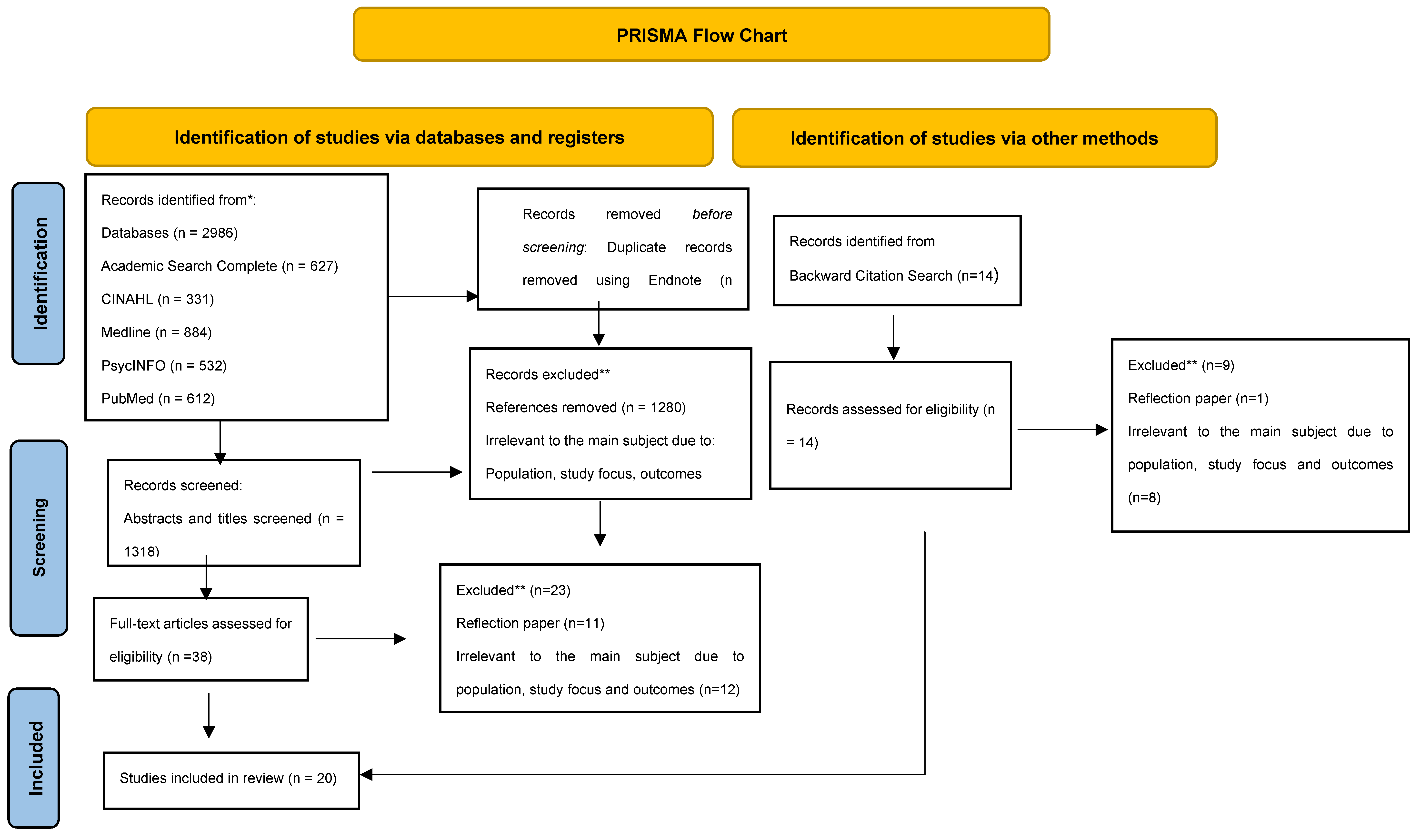
Table 2.
Overview of the Main Themes and Sub-themes.
| Themes | Sub-themes |
|---|---|
| Cultural Influences | High value on respecting and honoring elders Moral duty of younger family members to provide care and support. Filial piety and children's duty to care for and honor parents |
| Gender Differences | Women as primary caregivers in many households Female inclination to provide caregiving assistance. Challenges faced by adult daughters due to education and financial limitations |
| Family Dynamics | Primary responsibility for caregiving lies with the family. Intergenerational care transfer and reliance on younger family members Challenges in extended family system and changing family structures |
| Economic Factors | Financial limitations and scarce resources Coping strategies of elderly individuals to supplement support. Impact of migration, westernization, changing family structure, urbanization on care and support services |
| Challenges for Caregivers | Financial constraints Limited access to healthcare services Balancing multiple responsibilities demands Emotional and physical toll on caregivers |
| Government Policies and Support | Targeted social policies. Support care services for elderly individuals |
Disclaimer/Publisher’s Note: The statements, opinions and data contained in all publications are solely those of the individual author(s) and contributor(s) and not of MDPI and/or the editor(s). MDPI and/or the editor(s) disclaim responsibility for any injury to people or property resulting from any ideas, methods, instructions or products referred to in the content. |
© 2025 by the authors. Licensee MDPI, Basel, Switzerland. This article is an open access article distributed under the terms and conditions of the Creative Commons Attribution (CC BY) license (http://creativecommons.org/licenses/by/4.0/).
Copyright: This open access article is published under a Creative Commons CC BY 4.0 license, which permit the free download, distribution, and reuse, provided that the author and preprint are cited in any reuse.