

Submitted:
03 September 2025
Posted:
04 September 2025
You are already at the latest version
Abstract
Background/Objectives: Umbilical cord blood (UCB) is a valuable source of hematopoietic stem cells used in treating blood and immune disorders. Despite its potential and the availability of public banking systems in Italy, donation rates remain low due to patient misinformation, emotional barriers, and organizational inefficiencies. This study aimed to evaluate the impact of integrating Narrative Medicine (NM) and Lean Management (LM) on UCB donation rates and operational effectiveness at the University Hospital of Alessandria. Methods: This prospective, single-center observational study ran from July 2022 to December 2024. Two interventions were introduced: NM training for healthcare staff to enhance empathetic communication, and LM-based reorganization of workflows to improve process efficiency. Outcomes included changes in UCB donation and adherence rates, transplant-eligible unit percentages, and patient satisfaction, assessed through institutional and project-specific surveys (PERLA–SIMeN). Results: Post-intervention, donation rates increased from 0% in early 2022 to 30.8% (2022), 25.8% (2023), and 30.6% (2024), with adherence rates near 40%, far exceeding the national average of ~3%. Transplant-eligible unit rates peaked at 5.5% in 2023, matching national figures. Patient satisfaction improved, resulting in PERLA certification in February 2025. Conclusions: The integration of NM and LM significantly improved both patient engagement and organizational efficiency. Empathetic communication fostered trust and reduced emotional barriers, while LM optimized workflows and resource use. These results suggest the model is replicable in other hospitals to enhance UCB donation outcomes and overall quality of maternal care.
Keywords:
1. Introduction
2. Materials and Methods
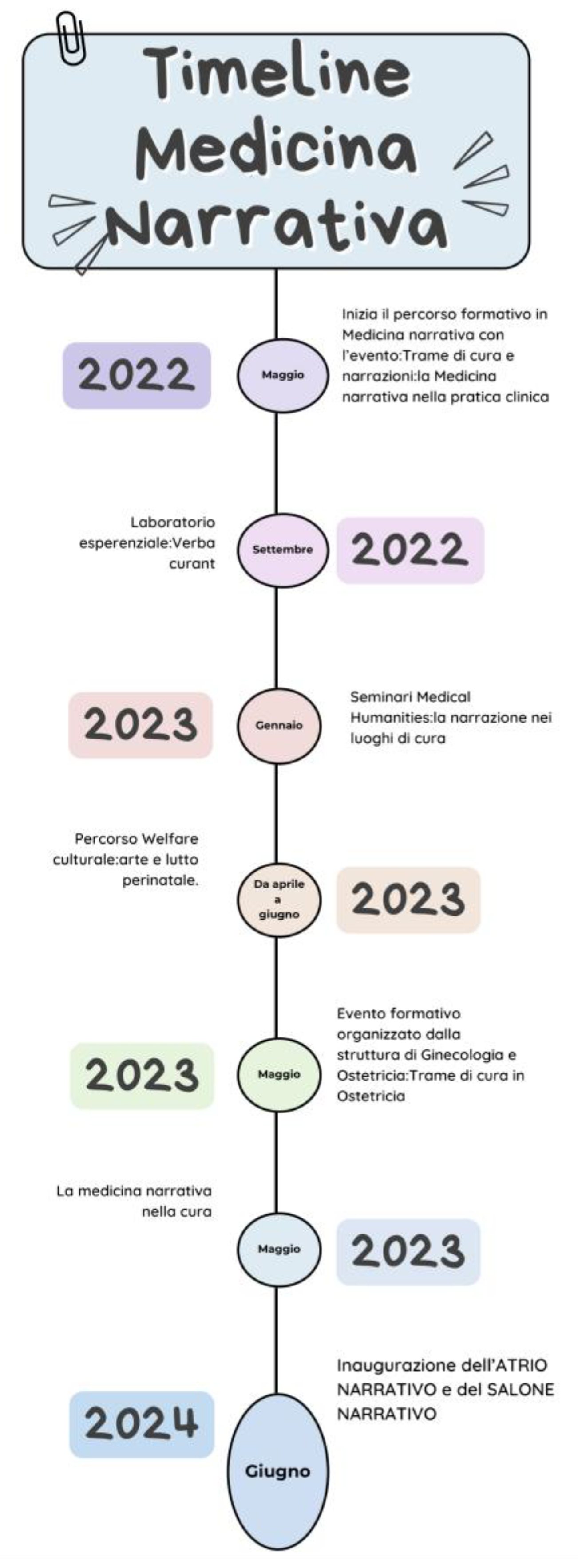
1. Narrative Medicine Integration
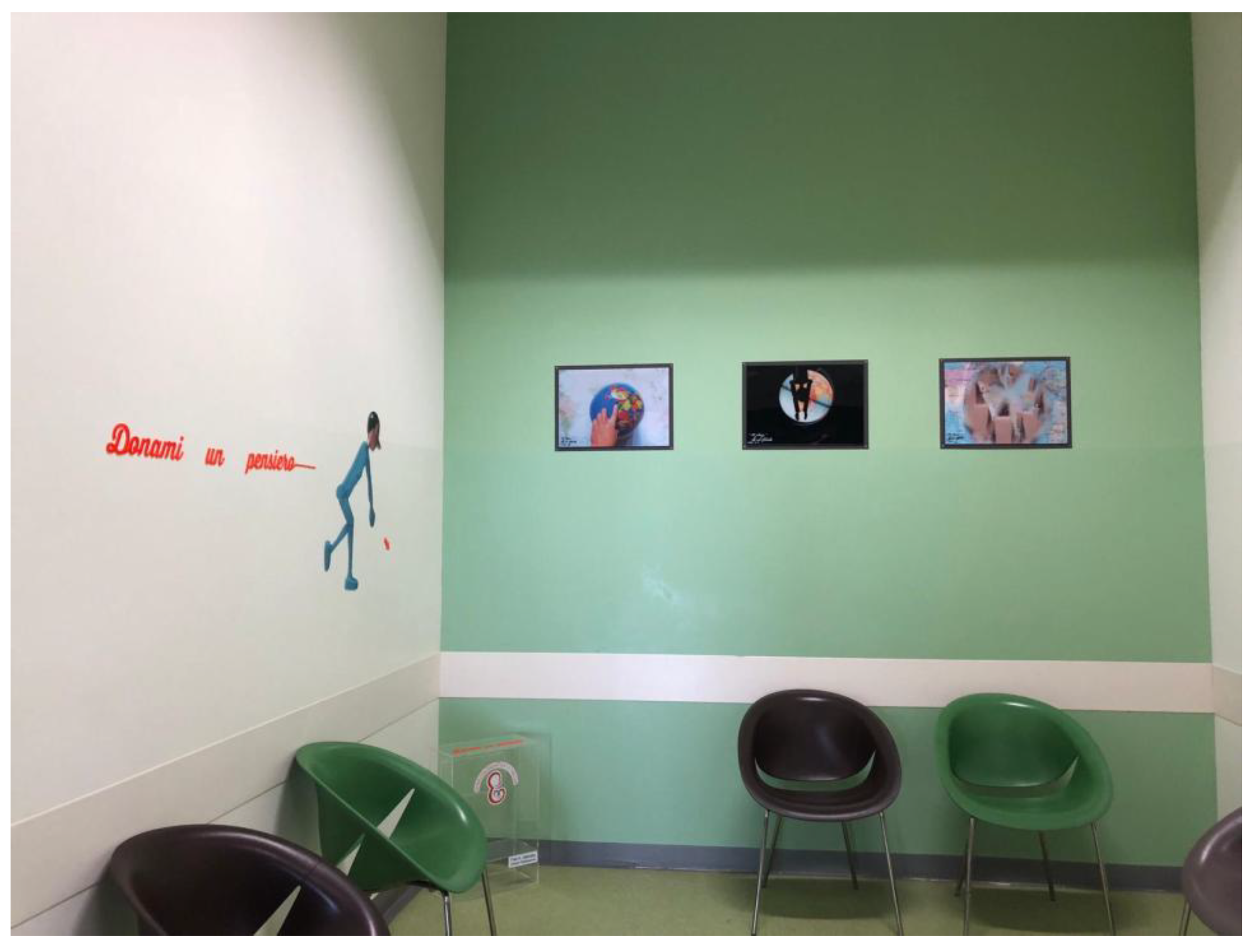
- Narrative Atrium: A redesigned waiting area encouraging storytelling and relational engagement through an interactive journey.
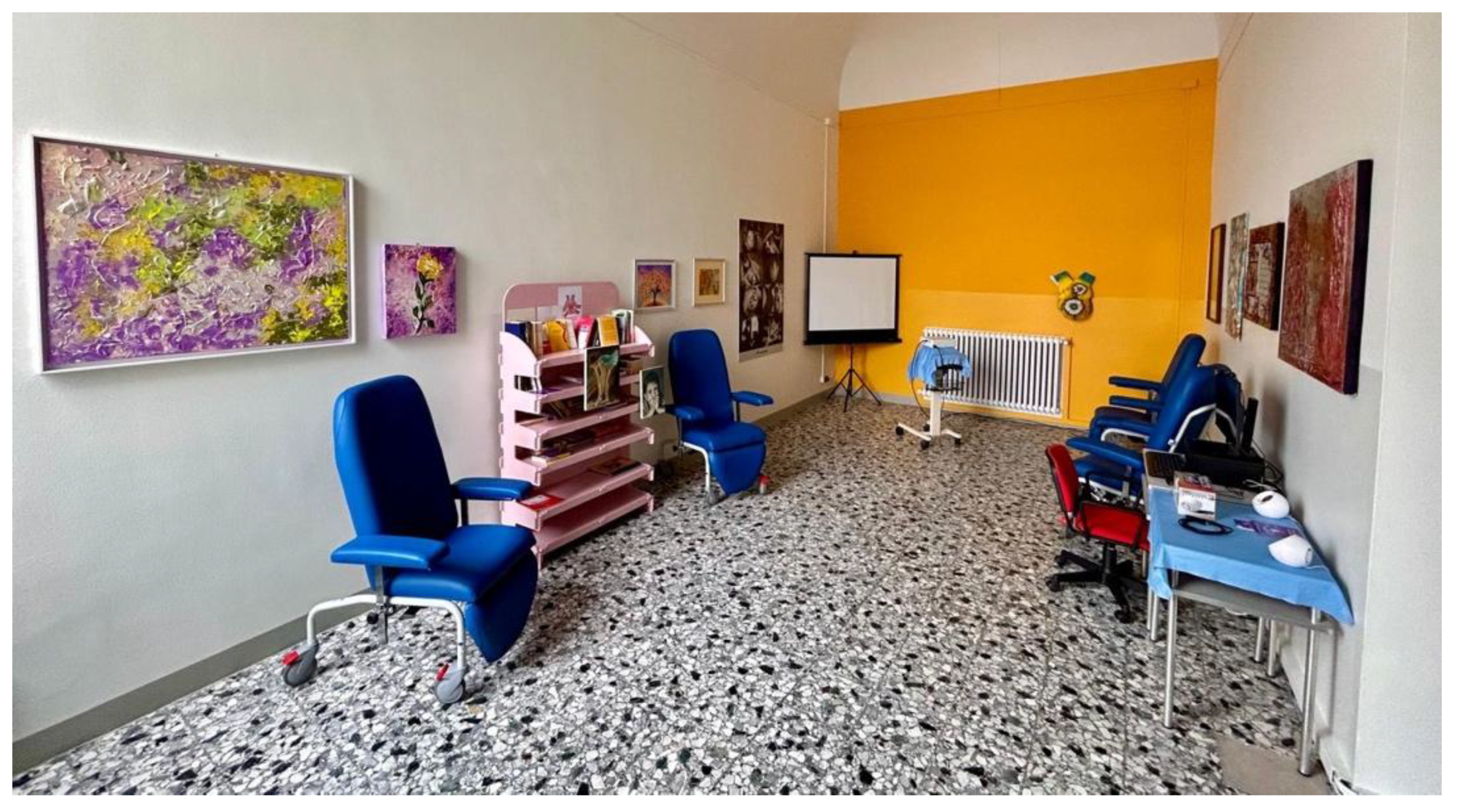
- Narrative Hall: A therapeutic space for emotional expression through books, films, artwork, and narrative journals.
2. Lean Management Implementation
- Staff training and engagement
- Process flow mapping and optimization
- Standardization of procedures
- Continuous quality improvement
- Enhanced communication strategies
- Donation Rate: Number of successful donations relative to total births.
- Collection Adherence Rate: Number of women who consented to donate UCB out of total deliveries.
- Patient Satisfaction and Perceived Quality of Care: Measured via corporate satisfaction questionnaires and “PERLA – Person-Centered Care” surveys in collaboration with SIMeN (Italian Society of Narrative Medicine).
- Transplant Eligibility: Proportion of collected UCB units banked for clinical use.

| YEAR | NUMBER OF BIRTHS | NUMBER OF DONATIONS | COLLECTION RATE |
| 2007 | 1222 | 123 | 10.06% |
| 2008 | 1356 | 102 | 7.50% |
| 2009 | 1349 | 41 | 3.03% |
| 2010 | 1298 | 113 | 8.70% |
| 2011 | 1301 | 112 | 8.21% |
| 2012 | 1364 | 65 | 4.76% |
| 2013 | 1332 | 46 | 3.45% |
| 2014 | 1423 | 18 | 1.26% |
| 2015 | 1395 | 16 | 1.14% |
| 2016 | 1307 | 9 | 0.68% |
| 2017 | 1311 | 15 | 1.14% |
| 2018 | 1180 | 20 | 1.69% |
| 2019 | 1213 | 54 | 4.38% |
| 2020 | 1085 | 26 | 2.39% |
| 2021 | 1031 | 0 | 0% |
| 01/01-30/06/2022 | 516 | 0 | 0% |
3. Results
Participant Characteristics
Improvement in Donation Rates
- Pre-intervention donation rate (2021): 2.81%
- Post-intervention donation rate (2023): 2.98%
- Donation rate during study period (2022–2024): 4.5%, with 118 donations out of 2,636 births
- Collection adherence rate (women who consented and followed through with donation): 100% among enrolled participants
- Units eligible for transplant: 19 units (16.1% of donations) met the national quality criteria for transplantation, as assessed by the Regional Cord Blood Bank in Turin
| YEAR | NUMBER OF UNITS DONATED | ELIGIBLE UNITS | ELIGIBLE UNIT RATE |
| 01/07/2022-31/12/2022 | 180 | 5 | 2.77% |
| 2023 | 270 | 15 | 5.55% |
| 2024 | 308 | 9 | 2.92% |
Patient Satisfaction and Perceived Quality of Care
- 90.3% of patients reported feeling well-informed about UCB donation
- 88.7% indicated they felt “actively listened to” by the midwifery team
- 92.5% rated their overall care experience as “excellent” or “very good”
Operational and Organizational Improvements
- Reduction in missed donation opportunities due to more consistent patient engagement throughout the prenatal pathway
- Increased internal staff autonomy: trained in-house midwives replaced reliance on an external figure, ensuring continuity and sustainability of care and elimination of annual external grant costs (€5,000) for a dedicated midwife
- Shortened collection procedure times, due to smoother and standardized processes
- Increased process reliability and safety, as reported in internal observations. Staff reported greater motivation and ownership of the donation process, while delays caused by prior inefficiencies were notably reduced.
- Standardized communication protocols and training improved interdepartmental coordination and reduced delays in consent and collection logistics
Perception of Emotional and Informational Support
- Increased trust in healthcare professionals
- Greater participation in decision-making
- Enhanced perception of being welcomed and understood
4. Discussion
Integration of Humanistic and Operational Models
Comparison with National and International Data
Implications for Healthcare Delivery
Limitations
Future Directions
5. Conclusions
Author Contributions
Funding
Institutional Review Board Statement
Informed Consent Statement
Data Availability Statement
Acknowledgments
Conflicts of Interest
Abbreviations
| UCB NM LM |
Umbilical cord blood Narrative Medicine Lean Management |
| SIMeN | Italian Society of Narrative Medicine |
| ADISCO | Italian Association of Female Cord Blood Donors |
References
- Zhu, X.; Tang, B.; Sun, Z. Umbilical cord blood transplantation: Still growing and improving. Stem Cells Transl Med. 2021 Nov;10 Suppl 2(Suppl 2):S62-S74. [CrossRef]
- Tong, J.; Zhang, L.; Liu, H.; Xu, X.; Zheng, C.; Yao, W.; Zhu, X.; Tang, B.; Wan, X.; Song, K.; Zhang, X.; Sun, G.; Sun, Z. Umbilical cord blood transplantation can overcome the poor prognosis of KMT2A-MLLT3 acute myeloid leukemia and can lead to good GVHD-free/relapse-free survival. Ann Hematol. 2021 May;100(5):1303-1309. [CrossRef]
- Copeland, N.; Harris, D., Gaballa, M.A. Human umbilical cord blood stem cells, myocardial infarction and stroke. Clin Med (Lond). 2009 Aug;9(4):342-345. [CrossRef]
- Sanberg, P.R.; Eve, D.J.; Willing, A.E.; Garbuzova-Davis, S.; Tan, J.; Sanberg, C.D.; Allickson, J.G.; Cruz, L.E.; Borlongan, C.V. The treatment of neurodegenerative disorders using umbilical cord blood and menstrual blood-derived stem cells. Cell Transplant. 2011;20(1):85-94. [CrossRef]
- Bi, Y.; Kong, R.; Peng, Y.; Yu, H.; Zhou, Z. Umbilical cord blood and peripheral blood-derived regulatory T cells therapy: Progress in type 1 diabetes. Clin Immunol. 2023 Oct;255:109716. [CrossRef]
- Ballen, K.K.; Verter, F.; Kurtzberg, J. Umbilical cord blood donation: public or private? Bone Marrow Transplant. 2015 Oct;50(10):1271-1278. [CrossRef]
- Committee on Obstetric Practice; Committee on Genetics. ACOG committee opinion number 399, February 2008: Umbilical cord blood banking. Obstet Gynecol. 2008;111 Pt 1:475–477.
- Banche del Sangue di Cordone Ombelicale Report 2023, Centro Nazionale Sangue, Ministero della Salute. Available from Centro Nazionale Sangue report database: https://www.centronazionalesangue.it/rapporti-di-attivita-delle-banche-sco/#flipbook-df_18255/1/.
- Banche del Sangue di Cordone Ombelicale Report 2022, Centro Nazionale Sangue, Ministero della Salute. Available from Centro Nazionale Sangue report database: https://www.centronazionalesangue.it/wp-content/uploads/2023/04/Banche-sco-Report-2022.pdf.
- Benvenuti, M.; Cavallini, E.; Battello, G.; Zullo, F.; Driul, L.; Cromi, A.; Mannella, P.; Nappi, R.E.; Scambia, G.; De Franciscis, P.; Riemma, G.; A.G.U.I. (Associazione Ginecologi Universitari Italiani) Knowledge, Attitudes, and Practices of Pregnant Women and Hospital Staff Regarding Umbilical Cord Blood Banking: Systematic Review and Meta-Analysis. Healthcare (Basel). 2024 Oct 25;12(21):2131. [CrossRef]
- Herlihy, M.M.; Delpapa, E.H. Obstetricians and their role in cord blood banking: promoting a public model. Obstet Gynecol. 2013 Apr;121(4):851-855. doi:10.1097/AOG.0b013e31828882aabanking: promoting a public model. Obstet Gynecol. 2013 Apr;121(4):851-85. [CrossRef]
- Charon, R. Narrative Medicine: Honoring the Stories of Illness. Oxford University Press; 2006.
- Greenhalgh, T. What is this thing called ‘lean’? J Health Serv Res Policy. 2013 Apr;18(2):128–131. [CrossRef]
- Bolgeo, T.; Gambalunga, F.; Di Matteo, R.; Gatti, D.; Roberti, E.; Dealberti, D.; Fadda, B.; Grassi, E.; Gambarini, L.; Iacorossi, L.; Maconi, A. Becoming a mother during the COVID-19 pandemic: The lived experience as told by birthing mothers: A qualitative study. J Nurs Manag. 2022 Nov;30(8):4138-4144. [CrossRef]
- Bacci, A. Lean Healthcare Management: meno sprechi, più competitività. Wolters Kluwer; 2017.
- Boggetti, M. Pattern comportamentali: percorsi di eccellenza per guidare l’innovazione organizzativa. Edra; 2016.
- Trenta, P. La postura narrativa: i modi di essere della cura. Castelvecchi; 2024.
- Womack, J.P.; Jones, D.T.Lean Thinking: Banish Waste and Create Wealth in Your Corporation. New York: Simon & Schuster; 1996. [CrossRef]
| YEAR | NUMBER OF BIRTHS | NUMBER OF DONATIONS | COLLECTION RATE | ADHERENCE RATE |
| 01/07-31/12/2022 | 584 | 180 | 30.8% | 40.4% |
| 2023 | 1046 | 270 | 25.8% | 39.8% |
| 2024 | 1006 | 308 | 30.6% | 41.6% |
Disclaimer/Publisher’s Note: The statements, opinions and data contained in all publications are solely those of the individual author(s) and contributor(s) and not of MDPI and/or the editor(s). MDPI and/or the editor(s) disclaim responsibility for any injury to people or property resulting from any ideas, methods, instructions or products referred to in the content. |
© 2025 by the authors. Licensee MDPI, Basel, Switzerland. This article is an open access article distributed under the terms and conditions of the Creative Commons Attribution (CC BY) license (http://creativecommons.org/licenses/by/4.0/).