

Submitted:
02 September 2025
Posted:
03 September 2025
You are already at the latest version
Abstract
Smart tourism destinations, arising from the integration of tourism and information technology, have become a key focus in international academic discourse. This study applies bibliometric methods via CiteSpace to perform co-authorship network analysis, co-citation analysis, keyword co-occurrence, and burst detection, aiming to reveal the knowledge structure and research evolution in the field. Based on 232 articles from the Web of Science Core Collection (2013–2025), the findings reveal a shift from technology-centered approaches to themes of visitor experience, collaborative governance, and sustainable development. The Universitat d'Alacant (Spain) and The Hong Kong Polytechnic University (China) have emerged as leading research centers, with Ivars-Baidal and colleagues as primary contributors. Foundational work by scholars such as Buhalis and Gretzel shapes the domain. Keyword trends highlight growing attention to technological efficiency and sustainable ethics. This study outlines the field’s developmental trajectory, builds a systematic knowledge framework, and suggests future paths for theoretical integration and methodological advancement. The results offer valuable insights for the academic understanding of smart tourism and provide strategic references for policymaking in destination governance.
Keywords:
smart tourism destinations
; CiteSpace
; bibliometric analysis
; knowledge mapping
; research evolution
; knowledge framework
1. Introduction
As global tourism continues to expand, traditional destinations are encountering unprecedented challenges, including intensifying market competition, increasing pressure on resource management, and the growing complexity of tourist expectations[1]. To address these challenges, tourism destinations urgently need to undergo systemic transformation through digitalization and intelligent technologies to maintain sustainable competitive advantages. Simultaneously, the digital revolution—driven by information and communication technologies (ICT)—has profoundly reshaped the tourism industry, giving rise to the concepts of smart tourism and Smart Tourism Destinations (STDs) [2]. Leveraging ICT infrastructure, the Internet of Things (IoT), artificial intelligence (AI), and big data analytics, STDs not only enhance visitor experiences and resource allocation efficiency but also offer a technological pathway for achieving sustainable tourism development [3] .
The emergence of smart tourism destinations is closely linked to the development of smart cities. By integrating innovative technologies to improve governance, optimize resource use, and enhance quality of life, smart cities represent a key strategy for sustainable urban development[4]. STDs can be viewed as an extension of the smart city paradigm within the tourism sector, aiming to provide highly personalized, interactive, and responsive travel experiences through digital infrastructure and platform-based coordination mechanisms [5]. Situated at the intersection of the "smart city–smart tourism" logic, STDs inherit the foundational infrastructure designed to serve residents while being reconfigured to meet the needs of tourists, thereby enhancing satisfaction, engagement, and overall destination competitiveness.
Broadly defined, smart tourism destinations are intelligent, interconnected, and participatory tourism ecosystems built upon the smart city framework through the integration of advanced ICT technologies such as big data, IoT, AI, and mobile communications [6,7]. The objective is not only to optimize tourism services and experiences but also to promote the destination's sustainability across economic, social, and environmental dimensions [8,9]. Current mainstream research identifies key features of STDs as technological integration, resource sustainability, co-creation of tourist experiences, and enhanced destination governance capabilities [10,11]. Theoretically, the structure of STDs can be conceptualized at three levels: the strategic-relational layer (emphasizing collaborative governance among diverse stakeholders), the instrumental layer (focused on ICT infrastructure and data management capacity), and the application layer (concerned with the implementation of smart services and mechanisms for tourist interaction) [7,12].
Driven by both policy initiatives and technological advancements, smart tourism destinations are emerging as a key pathway for global tourism governance and transformation. For instance, Spain has advanced the digital transformation of cities such as Benidorm through its National Smart Tourism Plan, positioning itself as a pioneer in smart tourism practices in Europe [13]. Italy has implemented a “data-driven” regional tourism strategy in the Apulia region [14]; China was among the first to propose a development framework for smart tourism destinations, emphasizing the application of cloud computing, the Internet of Things, and intelligent services in enhancing visitor experiences [15]; South Korea effectively coordinated tourism and public safety during the COVID-19 pandemic through its smart governance platform [16]. Moreover, the European Union has recently promoted the construction of the “Tourism Data Space” to facilitate cross-platform data sharing and enhance resource allocation efficiency [17].
Despite the growing body of research on smart tourism destinations—covering topics such as technological integration [18], sustainable development [8,19] visitor experience enhancement [20], and the application of artificial intelligence and big data [21],—the existing literature still exhibits several limitations.
First, most current reviews adopt traditional systematic or narrative approaches and lack comprehensive studies employing bibliometric tools to visually identify the evolutionary trends, knowledge structures, and research hotspots in this field [22,23]. Second, there remains a shortage of quantitative analyses revealing the distribution of research efforts, the structure of knowledge networks, the evolution of keywords, and interdisciplinary collaborations, making it difficult to capture research discontinuities and emerging frontiers [24]. Third, existing bibliometric studies often focus on broader themes such as “smart cities” or “smart tourism,” while the meso-level concept of “smart tourism destinations” has rarely been examined with precision [25]. Although some studies have attempted to construct network models, they often suffer from limitations such as narrow data samples, incomplete temporal coverage, and single-dimensional analyses, hindering the formation of a systematic and instructive knowledge map [26].
Therefore, it is necessary to employ visual bibliometric tools such as CiteSpace, based on data from the Web of Science Core Collection, to systematically analyze the evolution, knowledge base, research hotspots, and future directions of smart tourism destination studies, thereby addressing methodological and structural gaps in the current literature.
To this end, this study takes smart tourism destinations as its research focus and applies bibliometric and visualization analysis using CiteSpace, with the aim of identifying the intellectual structure, academic foundations, and emerging trends in the field. The specific research objectives are as follows:(1) To construct a global collaboration network at the levels of countries, institutions, and authors, revealing the spatial distribution and collaborative characteristics of research capacity;(2) To identify highly cited authors, core journals, and seminal publications through co-citation analysis, thereby mapping the knowledge base and theoretical roots of the field;(3) To detect research hotspots and frontier topics using keyword co-occurrence and burst analysis, and to forecast the evolutionary trajectory of future research directions;(4) Based on the above, to construct a knowledge framework of smart tourism destination research, clarifying key research challenges and potential breakthroughs.
The main contributions of this study are threefold:(1) Methodologically, by utilizing CiteSpace software and integrating co-authorship network analysis, co-citation analysis, and keyword co-occurrence analysis, this study systematically reveals the knowledge structure and developmental trends of smart tourism destination research, offering a clear and visual academic map for the field;(2) Theoretically, this study constructs a knowledge framework of smart tourism destinations, identifying their core knowledge domains, foundational literature, and evolution pathways, thereby addressing the existing gap in the integration of knowledge structures and the construction of theoretical lineages;(3) Practically, this study summarizes the major challenges and future directions in the field, providing data support and strategic references for scholars in defining research priorities and for policymakers in formulating development strategies.
The structure of the paper is as follows: Section 2 presents the data collection process and analytical methods, including the functional modules and parameter settings of CiteSpace. Section 3 conducts empirical analyses from four perspectives: publication trends, collaboration networks, co-citation analysis, and keyword co-occurrence, to reveal the structural characteristics of smart tourism destination research. Section 4 builds a knowledge framework based on the analysis results, identifying research challenges and future directions. Section 5 summarizes the key findings, outlines research limitations, and offers suggestions for future studies.
2. Materials and Methods
2.1. Data sources
To ensure the authority, representativeness, and reproducibility of the bibliometric data, this study selects the Web of Science (WoS) Core Collection as its primary data source. Developed by Clarivate Analytics, WoS is one of the most widely used citation databases globally and is extensively applied in high-level scientometric and visualization research [27]. Compared to other databases such as Scopus or Google Scholar, WoS offers higher authority and academic credibility due to its rigorous data selection criteria, quality control of source journals, and standardized citation information—making it particularly suitable for constructing high-quality citation networks and knowledge maps [28].
Regarding retrieval type, this study adopts a Topic search strategy. Unlike search types limited to the title or author keywords, Topic searches encompass titles, abstracts, author keywords, and Keywords Plus, significantly enhancing coverage and recall. This approach is widely employed in current bibliometric research [29]. Furthermore, Topic-based retrieval is more appropriate for subsequent analyses such as keyword co-occurrence, co-citation networks, and clustering, thereby facilitating the construction of high-quality knowledge structures.
The search string was designed based on mainstream terminology in the field of smart tourism destinations, while also accounting for commonly used variations in the literature. The final search strategy is as follows:TS = ((“smart tourism destination”) OR (“smart destination”))This strategy ensures thematic focus and, through the use of wildcards, covers both singular and plural forms, thus maximizing both relevance and coverage in accordance with WoS search logic and bibliometric research conventions [28].
It is worth noting that although “Smart Tourism Destination” is occasionally abbreviated as “STD” in some publications, this abbreviation more commonly refers to “Sustainable Tourism Development” within tourism research and to “Sexually Transmitted Disease” in medical and public health literature. Moreover, the abbreviation “STD” rarely appears in structured fields such as titles, abstracts, or keywords when referring to smart tourism destinations, and lacks academic consensus. To avoid semantic ambiguity and the inclusion of irrelevant documents, this study excludes “STD” from the formal search terms to ensure thematic precision and dataset accuracy.
The initial search yielded a total of 312 relevant documents. To enhance the academic authority and comparability of the dataset, this study filtered the results by document type and language, retaining only academic articles (Article), review papers (Review), and early access publications (Early Access), and limiting the language to English. This resulted in a final dataset of 232 high-quality publications.
In bibliometric research, sample size is a critical factor in ensuring the reliability of analysis, structural stability, and the quality of visualizations. According to prevailing research practices, a minimum of 150–200 documents is generally considered necessary for conducting co-authorship networks, co-citation analysis, and keyword co-occurrence analysis using visualization tools such as CiteSpace or VOSviewer [30,31]. In the case of CiteSpace, cluster analysis, burst term detection, and evolutionary pathway analysis all depend on sufficiently dense networks of citation and terminology nodes; a small sample size would hinder the formation of stable clustering structures [32].
Numerous studies have successfully constructed systematic knowledge maps based on datasets of approximately 200 documents. For instance, Yu et al.conducted a bibliometric study on tumor-derived exosomes using around 190 records[33], while Cheng et al. analyzed 213 publications in a CiteSpace-based study on land use change[34]. Therefore, the selection of 232 documents in this study meets and exceeds the standard sample size requirements for visualization-based bibliometric research, providing a solid foundation for the analysis of collaboration networks, co-citation structures, and the evolution of research hotspots.
2.2. Technique and tools
Bibliometric analysis, as a systematic and quantitative method for constructing knowledge maps, has been widely adopted in tourism research, particularly for examining interdisciplinary and emerging topics such as “smart tourism destinations” . This method utilizes mathematical statistics and visualization techniques to analyze citation information, authorship, keywords, institutional affiliations, and other metadata from core academic databases. It enables the identification of research hotspots, academic collaboration networks, theoretical foundations, and frontier topics, thereby facilitating a comprehensive understanding of the field—from macro-level grasp to structural deconstruction and future trend forecasting. The research process of this study is illustrated in Figure 1.
Among various bibliometric tools—including VOSviewer, BibExcel, HistCite, and SciMAT—CiteSpace stands out for its advantages in cluster analysis, evolutionary pathway tracking, and burst detection, making it particularly suitable for visualizing complex knowledge domains. Developed by Professor Chaomei Chen, CiteSpace is a scientific knowledge mapping tool designed to reveal the dynamic evolution and structural relationships of scientific knowledge through citation analysis. It is especially effective for exploring research hotspots, theoretical structures, and emerging themes within a given academic field [35].
Compared with other tools, CiteSpace places greater emphasis on the temporal dimension of data, offering features such as burst term detection, time slicing, and path dependency analysis, which help to delineate the knowledge evolution trajectory of a research topic. For instance, CiteSpace can construct temporal evolution maps based on co-citation networks, and evaluate clustering structures using the Modularity Q and Silhouette metrics to ensure analytical clarity and scientific validity [36]. Moreover, the tool excels in identifying “turning point” publications and “betweenness centrality” nodes, which are crucial in mapping scientific influence and knowledge diffusion. These features have led to its widespread application in fields such as management, environmental science, and tourism studies [37].
Therefore, CiteSpace not only fulfills this study’s need for systematic analysis of the research structure, knowledge evolution, and frontier themes in smart tourism destination research, but also serves as the preferred bibliometric tool due to its reproducibility and interpretability of visual outputs.
To ensure the scientific validity of the research data and the accuracy of the visualized results, this study employed the latest version of CiteSpace, 6.4.R2 (64-bit Advanced), to construct knowledge maps and analyze evolutionary trends. The operational procedures and parameter settings are detailed as follows:
A total of 232 English-language publications related to the topic of smart tourism destinations—exported from the Web of Science Core Collection (WoS Core Collection) and spanning the years 2013 to 2025 (including early access articles)—were imported into the software. During the import phase, the built-in data cleaning module was used to eliminate duplicates and standardize metadata fields, thereby ensuring the stability of network construction and the validity of subsequent analyses.
Regarding time settings, the analysis period was defined from January 2013 to December 2025 to capture the full trajectory of the topic's development. The time slicing parameter was set to one year per slice, allowing for the identification of annual changes in research dynamics.
For text data sources, the selected fields included Title, Abstract, Author Keywords, and Keywords Plus, in order to maximize semantic coverage and improve the accuracy of term clustering. Under the “Selection Criteria,” the top 50 nodes per slice (based on citation frequency or co-occurrence frequency) were selected to balance the representativeness of the data with the readability of the resulting visualizations.
To enhance computational efficiency and optimize the network structure, path pruning algorithms were applied—specifically, Pathfinder and Pruning Sliced Networks—to filter out noise links and highlight main pathways, thereby constructing logically coherent network structures.
According to the study’s objectives, the following node types were selected for different mapping tasks:
Author, Institution, and Country nodes were used to generate collaboration network maps, identifying major academic contributors and patterns of international cooperation.
Reference, Cited Author, and Cited Journal nodes were used for co-citation analysis, revealing the intellectual base and theoretical origins of the field.
Keyword nodes were used to construct co-occurrence, timezone, and burst detection maps, enabling the identification of research hotspots and the evolution of emerging themes.
Through the above settings and modular operations, this study constructed a comprehensive and multidimensional mapping system encompassing research structure, collaboration patterns, knowledge foundations, and frontier topics. These visualizations provide robust data support and analytical evidence for building theoretical frameworks and identifying future research directions.
3. Results
To comprehensively understand the foundational characteristics of smart tourism destination research, this study first conducted basic statistical and descriptive analyses of the 232 core publications collected. This section examines the overall development trends, key research contributors, and academic dissemination channels from multiple dimensions, including annual publication volume, journal outlets, and document types.
3.1. Basic Data Analysis
3.1.1. Annual Publication Analysis
As shown in the annual publication statistics chart for “Smart Tourism Destination” research from 2013 to 2025 (Figure 2), the topic has undergone a clear evolution from its initial emergence to rapid growth. The period from 2013 to 2017 can be identified as the nascent stage, with fewer than 10 publications per year. Notably, there were no publications in 2014 and 2016, indicating that the field had not yet established a stable research system or gained widespread academic attention.
Since 2018, the research interest has gradually rebounded. In 2019, annual publications surpassed double digits for the first time (18 papers, accounting for 7.76%). The number continued to grow in 2020 and 2021, reaching 32 (13.79%) and 27 (11.64%) respectively, reflecting the increasing academic focus on smart tourism under the global trend of digital transformation. The publication volume peaked in 2023, with 46 papers (19.83%), marking the beginning of a high-yield phase in this research domain.
From 2024 onward, the annual output appears to have entered a relatively stable phase. This trend is likely linked to the active implementation of smart city strategies by tourism destinations worldwide, as well as the widespread application of AI and data technologies in tourism management. Although the data for 2025 are not yet complete, 21 papers (9.05%) had already been published by July, suggesting that the total for the year will remain high. This indicates the establishment of a sustained and stable research ecosystem and points toward a transition into a more mature stage of academic development.
3.1.2. Journal Publication Analysis
Research on smart tourism destinations is primarily concentrated in a limited number of highly relevant academic journals. As shown in Table 1, the top 10 journals in terms of publication volume have collectively published 121 articles, accounting for 52.16% of the total sample. This indicates a significant core journal clustering effect in the field, consistent with the patterns of academic output concentration described by Lotka’s Law and Bradford’s Distribution.
In terms of journal categories, the majority of high-output journals focus on themes such as tourism management, destination marketing, and sustainable development. This suggests that smart tourism destination research is strongly rooted in the two core disciplines of tourism studies and sustainability research, reflecting a typical "interdisciplinary integration with thematic focus" structural feature.
Regarding academic impact, journals with an impact factor (IF) above 5 include Current Issues in Tourism (IF = 5.7) and the Journal of Destination Marketing & Management (IF = 8.9). These two journals are particularly prominent in terms of thematic authority and global dissemination, serving as key outlets for high-quality publications in the smart destination research domain.
In summary, the publication landscape of this field is characterized by two major features:(1) A strong concentration in the core areas of tourism management and sustainable development;(2) A reliance on a small number of high-output, interdisciplinary journal platforms.Together, these trends have contributed to the structural deepening and international dissemination of smart tourism destination research.
3.1.3. Based on Web of Science Category Analysis
According to the Web of Science classification system, research on smart tourism destinations is predominantly categorized under “Hospitality, Leisure, Sport & Tourism,” which accounts for 57.76% of the publications—highlighting the topic’s strong integration within the core domain of tourism studies. This is followed by “Management” (18.10%), “Environmental Studies” (15.09%), and “Green & Sustainable Science & Technology” (14.66%), indicating a high level of academic attention to governance efficiency and sustainability issues.
Technology-related categories such as “Computer Science, Information Systems” (4.31%) and “Engineering, Electrical & Electronic” (3.02%) also hold a noticeable share, suggesting the incorporation of digital technologies and engineering approaches in smart destination research. Additionally, the presence of categories such as “Business” and “Economics” reflects an expanding interest in economic performance and business models (see Table 2).
Overall, the research in this field demonstrates an interdisciplinary integration pattern centered on “tourism + management,” with extensions into “technology + sustainability + business,” thereby offering diversified theoretical and practical support for the development of smart tourism destinations.
3.2. Collaboration Analysis
To achieve Research Objective 1, this study conducted a systematic analysis of the collaboration networks present in the collected literature. Scientific collaboration is not only a key driver of knowledge innovation but also reflects the distribution of research resources and the concentration of core research forces [28]. As a highly interdisciplinary topic, the development of smart tourism destination research relies heavily on multi-actor and cross-regional cooperation. By constructing and visualizing collaboration networks at the levels of authors, institutions, and countries, this study identifies the major research contributors, key collaborative hubs, and geographic expansion trends in the field, thereby providing a foundational understanding of its knowledge production structure and international collaboration patterns.
3.2.1. Author Collaboration Network Analysis
Author collaboration network analysis helps to identify the leading researchers and their patterns of cooperation in the field of smart tourism destination research. As shown in Table 3, the top 10 most collaborative authors include Ivars-Baidal, Josep A, who ranks first with 7 instances of co-authorship, indicating his strong organizational influence and central role in advancing this area of research. He is followed by Femenia-Serra, Francisco and Celdrán-Bernabeu, Marco A, each involved in 6 collaborative publications. All three were particularly active around 2019, marking a peak period of collaboration within Spanish research teams on smart tourism destinations.
In addition, scholars such as Banos-Pino, Jose Francisco have recently emerged as new nodes of collaboration. Although their frequency of co-authorship is still relatively low, it reflects the gradual emergence of new research forces. However, all authors in the network exhibit a centrality value of zero, suggesting that current collaboration remains relatively fragmented and that no bridging authors with significant intermediary functions have yet emerged.
Figure 3 illustrates the author collaboration network in the field of smart tourism destination research. The network comprises 214 nodes and 135 links, with a density of 0.0059, indicating limited connectivity among authors. Nevertheless, two prominent academic groups can be identified: the most productive group led by Ivars-Baidal, and an emerging group in recent years represented by Baños-Pino and Sustacha.
The Ivars-Baidal team has established long-term and stable collaborative relationships with scholars such as Femenia-Serra and Celdrán-Bernabeu. Their research focuses on the relationship between smart tourism destinations and sustainable development, particularly the construction and measurement of smart tourism indicator systems, as well as the impact of ICT on the travel experiences of millennial tourists and destination management practices [7,38,39]. The research group represented by Baños-Pino and Sustacha mainly explores how ICT enhance the competitiveness, tourist experience, and brand equity of smart tourism destinations, emphasizing the critical role of ICT applications in improving destination productivity [40,41].
Overall, although a certain degree of collaboration has formed among authors in the field of smart tourism destination research, the network remains relatively fragmented, with limited depth and cross-regional synergy. Moving forward, greater efforts should be made to foster cooperation across scholars, institutions, and regions to promote knowledge sharing and theoretical integration, thereby advancing the field toward higher-quality and more globalized research development.
3.2.2. Institutional Collaboration Network Analysis
Table 4 presents the top 10 collaborative institutions, revealing a “decentralized” collaboration pattern in smart tourism destination research, with a few high-output institutions at the core. The Universitat d'Alacant in Spain ranks first with 16 recorded collaborations, demonstrating its significant leadership in this field. This institution, together with scholars such as Femenia-Serra and Ivars-Baidal, has formed a stable and in-depth research cluster focusing on topics such as smart governance, data platforms, and destination management models.
The Hong Kong Polytechnic University follows closely behind. Since 2013, it has conducted systematic research on smart tourism system architecture and tourist behavior analysis, highlighting its strong academic influence in the East Asian region [15].
Other institutions such as the Universidad de Málaga (Spain), Tarbiat Modares University (Iran), Kyung Hee University (South Korea), and Parthenope University of Naples (Italy) represent the diverse regional forces contributing to global smart tourism research. These institutions illustrate the growing involvement of research bodies from Europe, Asia, and the Middle East in knowledge production within this domain.
It is noteworthy that all institutions in the collaboration network exhibit a betweenness centrality value of zero, indicating that inter-institutional cooperation has not yet developed into a tightly coupled collaborative structure. Knowledge exchange remains largely confined to internal collaborations or weak inter-regional ties.
The institutional collaboration network (Figure 4) identifies 184 nodes and 118 connecting edges, with a network density of 0.007. Although the overall density is relatively low, several regionally representative collaboration hubs can still be identified. Among them, the Universitat d'Alacant (Spain), The Hong Kong Polytechnic University (Hong Kong, China), and Tarbiat Modares University (Iran) stand out as key nodes with higher degrees of connectivity and publication activity.
Specifically, the collaboration activity of the Universitat d'Alacant was most concentrated between 2019 and 2022, forming a network centered on Spanish institutions and extending to Spanish-speaking countries such as Argentina. This pattern reflects the facilitating role of shared language and cultural communities in international academic collaboration and supports the regional dissemination of knowledge related to smart tourism and sustainable destination development.
In contrast, Tarbiat Modares University exhibits a more regionally cohesive collaboration pattern, with nearly all of its co-authors affiliated with domestic Iranian institutions (Shafiee et al., 2021). Its collaboration peaked between 2019 and 2022. This structure suggests the university's key role in developing a localized knowledge system for smart tourism research in the Middle East, while also reflecting the efforts and challenges faced by emerging research regions in building autonomous academic communities[24].
The Hong Kong Polytechnic University, on the other hand, demonstrates a highly globalized collaboration model. Its partnerships span from 2013 to 2023 and include institutions such as the University of Nottingham, Sage Software, Oklahoma State University, Kyung Hee University, University of South Carolina, Peking University, and the University of Macau. This pattern highlights the university’s international influence and cross-cultural adaptability as a key hub in East Asian smart tourism research [15,42,43,44,45]. Such a transcontinental collaboration structure has contributed to the introduction of diverse theoretical paradigms and methodological approaches, further advancing global dialogue and integrative innovation in smart tourism destination research.
Overall, these three universities represent three distinct collaboration pathways in current smart tourism destination research: culturally homogeneous regional networks (e.g., Spain–Latin America), localized coordination networks (e.g., Iran), and globally distributed interregional networks (e.g., Hong Kong Polytechnic University).
3.2.3. Country Collaboration Network Analysis
Figure 5 presents the top 10 most collaborative countries in the field of smart tourism destination research. Spain ranks first with a total of 66 publications and the highest betweenness centrality (0.50), indicating that it not only leads in research output but also plays a significant bridging and intermediary role in the international collaboration network. This prominence is closely linked to the prolific work of Spanish scholars such as the Ivars-Baidal team and the sustained engagement of major Spanish institutions like the Universitat d'Alacant.
China follows with 31 publications and a centrality value of 0.41, highlighting its strong position both in terms of publication volume and structural importance. Italy and the United States are tied as third-tier contributors, each with 19 publications. Notably, the United States has a higher centrality value (0.34) compared to Italy (0.28), suggesting that although the U.S. publishes fewer papers, it places greater emphasis on collaborative research with other countries, thereby enhancing its node value in the global knowledge network. England also exhibits strong structural embeddedness with a centrality score of 0.26.
In addition, countries such as Brazil, South Korea, Turkey, Portugal, and Iran also rank among the top ten. Although their publication volumes are relatively modest (8–11 papers), their engagement has been growing in recent years, driven by national initiatives related to smart cities and sustainable tourism. For instance, Turkey showed a centrality of 0.10 in 2023, reflecting its rising presence as an emerging research force in international collaboration.
The national collaboration network shown in Figure 6 identifies 67 nodes and 91 connecting edges, with a network density of 0.412. The map reveals that over the past decade, research on smart tourism destinations has formed an international collaboration network centered around Spain, China, the United States, and England. This network exhibits a clear multi-core, multilateral interconnected structure.
Spain stands out with the highest number of publications (66) and the highest betweenness centrality (0.50), and it maintains the most extensive and stable collaborative ties with other countries. The map shows dense linkages between Spain and countries such as Italy, Portugal, Brazil, and Morocco. This pattern of collaboration reflects shared linguistic, regional proximity, and cultural affinities within the Ibero-Romance language sphere, reinforcing Spain’s leading role in this field through frequent multinational cooperation.
China (including both mainland and Hong Kong) has developed a radiating collaboration structure centered on itself and extending to countries such as South Korea, Malaysia, India, Australia, and the United States. This “hub-and-spoke” configuration indicates that, while rapidly building its own research output, China is also expanding its academic influence through broad international partnerships. This trend is closely linked to national policies promoting smart cities and digital tourism in China.
The map also reveals several regional collaboration clusters: for example, an Anglo-American axis formed by the U.S., Canada, and the U.K.; a Middle East–Mediterranean cluster involving Iran, Greece, and Cyprus; and a South and Southeast Asian node formed by India, Malaysia, Indonesia, and Thailand, reflecting the increasing involvement of emerging economies in smart tourism research.
From the color gradient indicating temporal progression, it is clear that most active collaboration occurred between 2019 and 2023. Notably, the collaboration chains involving Asian countries such as Malaysia, India, and the Philippines have mostly emerged in the past two years, suggesting strong latecomer potential in this region's engagement with smart tourism destination research.
Although cross-national collaboration has achieved a certain scale and regional clustering, the overall network density remains relatively low. Some countries—such as Brazil, Turkey, and South Africa—despite having published research, remain peripheral in the network and lack strong intermediary connections. Moving forward, research on smart tourism destinations should further promote Global South–North cooperation, regional integration, and global knowledge sharing to enable more comprehensive theoretical innovation and policy coordination.
3.3. Co-citation Analysis
To achieve Research Objective 2, this study conducted a co-citation analysis of the literature on smart tourism destinations. In scientometric research, co-citation analysis is a widely used network analysis method aimed at uncovering the internal knowledge structure and thematic associations within a research field. The basic principle is that when two bibliographic units (e.g., authors, journals, or references) are cited together by a third or more documents, they are said to be “co-cited,” indicating a semantic or thematic linkage between them in the academic discourse [46]. By systematically analyzing these co-citation relationships, it is possible to identify core literature, academic communities, and the evolutionary paths of knowledge in a given domain [27].
3.3.1. Author Co-Citation Analysis
Author Co-citation Analysis is a critical method for revealing the intellectual foundations and academic network structure of a research field. It measures the frequency with which different authors are cited together in other documents, thus reflecting the strength of their association and thematic proximity within the knowledge map [27,47]. In the co-citation analysis of smart tourism destination research, several key scholars have been identified.
Among them, Buhalis D ranks first with 171 co-citations, establishing his foundational position in smart tourism research. His conceptualization of the “smart tourism ecosystem” has been widely cited [48]. Gretzel U. follows closely with 167 co-citations, and her theoretical contributions to the application of smart tourism technologies and experience design are broadly recognized [3]. Although Boes K ranks third with 125 co-citations, his betweenness centrality value of 0.14 indicates a strong bridging role across different thematic clusters.
Notably, emerging authors such as Ivars-Baidal JA, Femenia-Serra F, and Shafiee S have increasingly shaped new clusters of scholarly influence in recent years, with a focus on smart destination governance structures, urban case studies, and evaluation model development[38]. In addition, Buonincontri P. (centrality = 0.15) and Baggio R. (centrality = 0.13) demonstrate strong intermediary roles, contributing to areas such as tourist engagement behavior and the integration of big data with tourism network systems.
Overall, the author co-citation analysis reveals that while most core authors are highly co-cited, their centrality values remain relatively low. This suggests that the knowledge network in the field of smart tourism destinations has not yet formed highly integrated intermediary nodes. The knowledge connections among authors are primarily concentrated within localized clusters, rather than bridging across different thematic domains.

Table 5.
Top 10 most co-cited authors
| Rank | Count | Centrality | Year | Cited author |
|---|---|---|---|---|
| 1 | 171 | 0.04 | 2015 | BUHALIS D |
| 2 | 167 | 0.01 | 2017 | GRETZEL U |
| 3 | 125 | 0.14 | 2015 | BOES K |
| 4 | 97 | 0.03 | 2019 | IVARS-BAIDAL JA |
| 5 | 82 | 0.03 | 2019 | FEMENIA-SERRA F |
| 6 | 79 | 0.04 | 2015 | WANG D |
| 7 | 79 | 0.05 | 2015 | XIANG Z |
| 8 | 69 | 0.03 | 2019 | JOVICIC DZ |
| 9 | 59 | 0.05 | 2018 | NEUHOFER B |
| 10 | 55 | 0.09 | 2017 | DEL CHIAPPAG |
Figure 7 displays the author co-citation clustering structure, identifying eight major clusters (#0–#7), comprising 465 nodes and 1,225 links, with a network density of 0.0114. The average silhouette score is 0.8235, and the modularity value is 0.6407, indicating high internal consistency and strong clustering quality.
Cluster #0 “Smart Tourism Technologies” is the largest, focusing on the construction of smart tourism technologies and user perception studies. HUANG C.D. is a highly co-cited author in this cluster, with research centered on the application of ICT in tourism management and service innovation [49]. JEONG M. and MEHRALIYEV F. explore platform ecosystems and user perceptions of information quality in smart tourism contexts [50,51]. This cluster reflects an evolution in smart tourism technology research from system construction to user experience and perceived value.
Cluster #1 “Smart Tourism Cities” centers on urban governance, digital infrastructure, and tourism development in the context of smart cities. Key contributor SIGALA M. argues for a reconsideration of technology as a transformative force in tourism [52], while CARAGLIU A. and JOHNSON A.G. discuss the definition, evaluation standards, and impacts of smart cities on urban attractiveness and residents' well-being [53]. This cluster illustrates the deep integration of smart tourism with issues of sustainable urban governance and data infrastructure strategies, forming a multidimensional research trajectory that balances governance and experience.
Cluster #2 “Artificial Intelligence” reveals the deep embedding and evolution of artificial intelligence (AI) in smart tourism. This cluster features several high-frequency co-cited core nodes, with node diameters significantly larger than those in other clusters, indicating substantial knowledge contribution and influence. BUHALIS D., one of the most influential authors in the field, introduced the concept of the “smart tourism ecosystem,” highlighting the critical role of AI in personalized services, the experience economy, and platform interaction [54]. GRETZEL U. emphasizes data-driven decision-making and algorithmic ethics in tourism platforms [3], while BOES K. investigates ecosystem-based competitiveness and the transformative effects of technology adoption on cities and tourism organizations [55]. This cluster marks a technological transformation trend reflecting the deep integration of AI and smart tourism.
In addition, Cluster #3 “Responsible Behavior” emphasizes issues of ethical tourist behavior and digital literacy, led by authors such as TUSSYADIAH I.P. and HAIR J.F., reflecting a growing trend toward behavioral governance in smart tourism; Cluster #4 “Sustainable Tourism,” involving authors like LAMSFUS C. and MO KOO CHUL, is closely tied to environmental sustainability and green development paths within smart tourism; Cluster #5 “Smart Tourism Application” focuses on case-based studies of technological implementation; Cluster #6 “Service-Dominant Logic” and Cluster #7 “Smart Tourist Destination” represent new research directions concerning shifts in marketing logic and destination development strategies, respectively.
3.3.2. Journal Co-Citation Analysis
Table 6 presents the top 10 most frequently co-cited journals in the field of smart tourism destination research. Journal co-citation refers to two journals being cited together in the same document, reflecting their interrelationship in academic discourse. The top 10 co-cited journals mostly feature high five-year impact factors (with seven journals scoring above 6), indicating their pivotal role in advancing the development of this research area. The detailed analysis is as follows:
(1) Journals with high co-citation frequency typically have strong academic influence. Tourism Management ranks first with 179 co-citations and a five-year impact factor of 13.6, followed by the Journal of Destination Marketing & Management (164 co-citations, IF 9.2) and Current Issues in Tourism (158 co-citations, IF 6.3). Journal of Travel Research exhibits the highest betweenness centrality (0.05), underscoring its bridging role in the citation network. Its influence is further reflected in journals such as Annals of Tourism Research, with recent studies exploring the impact of smart technologies on destination innovation (e.g., Femenia-Serra et al., 2021).
(2) The differences in co-citation frequencies among the top 10 journals are relatively small, suggesting an even distribution of the intellectual base across core journals. This reflects the interdisciplinary and inclusive nature of smart tourism destination research.
(3) The journal types encompass core tourism management (e.g., Tourism Management, Journal of Travel Research), destination marketing and urban tourism (e.g., Journal of Destination Marketing & Management, International Journal of Tourism Cities), sustainability (Sustainability-Basel), and technology-related fields (e.g., Electronic Markets, Tourism, Culture & Communication). This diversity illustrates the field’s integration of traditional tourism studies with technological and societal issues.
(4) Journals with relatively lower impact factors also achieve high co-citation frequencies, such as Sustainability-Basel (IF 3.6, 140 co-citations) and International Journal of Tourism Cities (IF 3.0, 119 co-citations). The former benefits from MDPI’s open-access, high-volume publishing model, while the latter attracts frequent citations due to its specialization in urban tourism and close alignment with smart destination themes.
Figure 8 visualizes the journal co-citation network in the field of smart tourism destinations, comprising nine major clusters, each representing a distinct research theme, along with the top two co-cited journals per cluster. In the visualization, nodes represent journals, node size reflects citation frequency, links indicate co-citation relationships, and color gradients from blue (earlier years) to red (more recent years) illustrate the temporal evolution of the research field. The network includes 468 nodes and 1,227 links, with a density of 0.0112. The modularity Q is 0.6124, and the average silhouette score is 0.8369, indicating a well-structured network and high clustering quality.
Cluster #0, the largest cluster, is dominated by red-colored nodes, highlighting that memorable tourism experience has become a central theme in smart destination research. It emphasizes how technologies enhance tourists’ sensory and emotional engagement. The top two co-cited journals in this cluster are Tourism Management and Journal of Destination Marketing & Management. The former, a leading journal in tourism studies, has recently published articles on the application of emerging technologies and their impact on tourist experiences [56,57,58]. The latter focuses on destination marketing and management, particularly emphasizing smart tourism marketing and experiential design [59,60].
Cluster #1 (Value Proposition) focuses on the application of value proposition in smart tourism, especially in contexts driven by information systems and technology-enabled value creation. The top two co-cited journals are MIS Quarterly and Journal of Marketing Research. MIS Quarterly, a top-tier journal in information systems, includes studies exploring how smart technologies enhance value propositions through big data and social media. Journal of Marketing Research emphasizes the role of value proposition in marketing theory and practice [61]. These two journals—representing the fields of information systems and marketing—reflect a tightly coupled research nexus emerging between tourism, IS, and marketing domains.
Cluster #2(Smart Tourism Destination Framework) emphasizes the theoretical development of smart tourism destination frameworks, focusing on sustainability and technological integration. The top co-cited journals are Journal of Tourism (to be clarified for precise identification) and Tourism Analysis. Analysis of this cluster shows that the journal co-citation network has evolved into a multi-layered system structured around several interconnected subsystems, including “economic forecasting – regional governance – smart platforms – service innovation.” Frequent co-citations between journals such as Tourism Economics, Technological Forecasting and Social Change, Journal of Hospitality & Tourism Research, and Urban Studies reveal how tourism research increasingly intersects with information systems, urban science, and service design, forming a multidisciplinary and multi-method knowledge integration system.
3.3.3. Reference Co-Citation Analysis
Table 7 presents the top 10 most co-cited references, highlighting the intellectual core of smart tourism destination research. These highly cited works primarily revolve around conceptual definitions, ecosystem construction, and technological applications, collectively forming the cognitive map of the field. The top three references represent foundational contributions that shaped the early theoretical and ecosystem-based perspectives of smart tourism destinations.
The most frequently co-cited reference is Gretzel et al. [3], cited 125 times and published in Electronic Markets. This paper systematically outlines the foundations and development of smart tourism, emphasizing the integration of the Internet of Things (IoT), cloud computing, and big data in tourism. Ranked second is Boes et al. [55], published in the International Journal of Tourism Cities (co-citation count = 92, centrality = 0.09). This article proposes an ecosystem framework for smart tourism destinations and explores how collaboration can enhance competitiveness. Its relatively high centrality indicates its bridging influence between theory and urban practice, especially in applications across European and Asian destinations.
The third most co-cited reference is Gretzel et al.[6], published in Computers in Human Behavior (co-citation count = 79), which offers a conceptual foundation for the smart tourism ecosystem with a focus on human–technology interaction and behavioral impacts.
References ranked 4 through 10build upon these foundational works, addressing topics such as the evolution of ICT [38], personalized services [54], service-dominant logic [15], destination dimensions [48,62], knowledge transfer [63], and co-creation of experiences [64]. This co-citation network illustrates the field’s evolution from conceptual introduction in 2013 to empirical expansion by 2019. Nodes with high centrality—such as Buonincontri & Micera[64], ranked tenth with a centrality of 0.12—demonstrate the bridging role of emerging themes such as experience co-creation.
The reference co-citation analysis reveals the knowledge base of smart tourism destination research, with the works of scholars like Gretzel, Boes, and Buhalis at the core. These references collectively construct the intellectual architecture of the field, spanning from conceptual frameworks to practical applications.
Figure 9 presents the reference co-citation map, comprising 431 nodes and 1,129 links, with a network density of 0.0121. The modularity Q score of 0.6261 and the weighted average silhouette score of 0.8222 indicate well-defined clusters and strong internal cohesion. The figure reveals the top 10 major clusters, each representing a key thematic area within smart tourism destination research.
Cluster #0 (Visit Intention) lies at the center of the network and is dominated by red-colored nodes, highlighting how smart tourism technologies shape tourist behavioral intentions, such as revisit and recommendation intentions. This cluster integrates psychological and experiential factors, reflecting recent research interest in user-oriented approaches. For instance, Jeong examined the impact of smart tourism technology experiences on satisfaction and behavioral intentions, identifying key drivers such as informativeness, interactivity, and personalization, while also considering the moderating role of security and privacy[50]. Huang et al. explored the impact of mobile technology adoption, emphasizing usability and privacy in information management and its extension to tourism intention formation[49]. Mehraliyev et al.reviewed the current state of smart tourism research, pointing out gaps in behavioral intention studies and calling for integrated theoretical frameworks[51]. Collectively, these works reveal how technological attributes enhance tourist experience and loyalty, pushing empirical research forward.
Cluster #1 (Digital Technologies) focuses on the foundational role of digital technologies in the smart tourism ecosystem. This cluster is marked by orange-yellow nodes that reflect developments from the mid-to-recent periods. The cluster emphasises ICT integration and management. Frequently cited works include those by Gretzel et al., which are foundational contributions that define the technological pillars of smart tourism[3,6]. Ivars-Baidal et al. , meanwhile, analysed the evolution of ICT in destination management, proposing new policy scenarios and stakeholder collaboration models and thereby extending the practical application of existing frameworks[38].
Cluster #2 (Destination Management Organizations) addresses organizational strategies in smart tourism, such as competitiveness and policymaking. For example, Buhalis advocates for technology-driven ecosystem innovation[65]; Lamsfus et al. introduced a cloud-based mobile application model based on human mobility patterns[66]; and Cavalheiro & Joia reviewed the development of smart tourism with a focus on planning and policy impacts on organizations, offering an organizational perspective on technology governance[67]. These works bridge the gap between ecosystem design and organizational adaptation, emphasizing the necessity of governance innovation.
The remaining clusters reflect the expanding thematic diversity in the field:#3 (Smart Destination Scenarios) explores scenario planning;#4 (Smart Tourism Technologies) investigates technological applications;#5 (Measurement Tools) focuses on methodological development;#6 (Service-Dominant Logic) integrates value co-creation frameworks;#7 (Community Marketing) addresses social marketing dynamics;#8 (Sustainable Tourism) emphasizes environmental sustainability;#9 (Sustainable Smart Cities) links urban and tourism sustainability themes.
Together, these clusters illustrate the field’s evolution from foundational technologies toward comprehensive, integrated applications. Overall, this map outlines the evolutionary knowledge landscape of smart tourism destination research. Clusters #0–#2 are anchored by foundational contributions from scholars such as Gretzel and Buhalis, while integrating emerging research by Jeong, Huang, and Ivars-Baidal. The field is progressively advancing toward user-centric, data-driven, and sustainability-oriented innovation, providing a robust foundation for future research.
3.4. Co-Occurrence Analysis and Research Evolution
To achieve Research Objective 3, this study applies keyword co-occurrence analysis as the core method. Using CiteSpace, it visualizes the knowledge structure and dynamic evolution of STDs research, revealing thematic relationships and hotspot distributions [46]. A Timezone View was employed to trace the temporal-spatial distribution of keywords from 2013 to 2025. Burst detection was used to identify emergent keywords, highlighting shifts in research focus.
3.4.1. Keyword Co-Occurrence Analysis
Figure 10 reveals the thematic structure of smart tourism destination research by identifying a network of high-frequency keywords. The network comprises 268 nodes and 895 links, with a density of 0.025. The modularity Q score of 0.5622 and the weighted average silhouette score of 0.8109 indicate clear and cohesive clustering. These clusters demonstrate an evolutionary trajectory from technological foundations toward sustainable applications. Significant correlations among keywords—such as "smart tourism destination" intersecting with "big data," "artificial intelligence," and "sustainable tourism"—reflect a shift from conceptual exploration to empirical validation.
The following analysis examines the primary clusters based on the most cited literature, unpacking thematic content, internal relationships, and knowledge contributions:
Cluster #0 (UTAUT Integration) is located at the center of the network and is primarily composed of red nodes. It focuses on the extension of the Unified Theory of Acceptance and Use of Technology (UTAUT) within smart tourism, emphasizing the moderating role of privacy and security risks. This cluster reflects a deepening of behavioral intention studies from technology acceptance models to psychological mechanisms. The strong interlinkage of keywords such as “satisfaction,” “adoption,” “behavior,” and “attitudes” indicates the mediating role of user cognition in destination-based technological applications.
For example, Omar proposed a UTAUT model moderated by privacy and security concerns, empirically revealing the impact of technology acceptance on tourist behavior[68]. Santos-Junior explored the relationship between quality of life and smart destinations from a sustainability perspective, extending the theoretical model to include community participation[69]. Gonzalez-Reverte analyzed risk perceptions associated with mobile device use in beach tourism, highlighting the dynamic interaction between technology use and behavioral intention[13]. Wang examined the mediating effect of arousal, linking technology experiences with revisit intentions[70]. Tavitiyaman introduced Theory of Mind as a mediator to illustrate the cognitive processing of millennial tourists[71].The co-occurrence of these studies reveals the evolution of UTAUT from a static model to a dynamic framework incorporating moderation effects. The distinctive characteristic of this cluster lies in the theoretical innovation driven by the interplay between risk perception and sustainability, pushing the field toward integrating user psychology with ecological perspectives.
Cluster #1 (Value Creation) focuses on the role of big data and social media in value co-creation within smart tourism. Keywords such as “big data,” “information,” and “artificial intelligence” are strongly connected, highlighting the data-driven restructuring of the value chain. This cluster emphasizes the transition of big data from information processing to strategic decision-making, revealing the network effects of stakeholder collaboration.
For example, Ozkose used content analysis to map value creation trends in smart tourism[72];Del Vecchio explored the implications of social big data for destination value, emphasizing interdisciplinary integration[73]; Marine-Roig analyzed large-scale user-generated content in the case of Barcelona to examine its value[74]; Diaz-Gonzalez proposed an automatic classification framework for destination quality[75]; and Shafiee conducted a systematic review on value co-creation[26]. The co-occurrence of these studies demonstrates an evolution from using technology merely as a tool to understanding it as an ecosystem enabler. The thematic relevance lies in the intersection of data privacy and sustainability, providing methodological insights for a shift from descriptive to predictive tourism management.
Cluster #2 (SOCOMO Marketing) explores the integration of social, community, and mobile (SOCOMO) marketing. Keywords such as “augmented reality,” “management,” and “technology” are closely associated, reflecting the convergence of urban marketing and tourism. This cluster underscores the strategic shift from traditional promotion to digital interaction, emphasizing the mediating role of policy tools in sustainable planning.
For instance, Ivars-Baidal examined the tools and perceived impacts of smart city planning in Spain, emphasizing how policy enhances destination competitiveness[76]; Sorokina developed a framework from the perspective of destination marketing organizations (DMOs), exploring the practical application of theoretical approaches[11]; Buhalis proposed a value co-creation model for SOCOMO marketing, analyzing empowerment mechanisms through social media in tourism[77]; Wider used co-citation and co-word analysis to uncover trends in digital tourism and trace the evolution of sustainability indicators[78]; Marchesani analyzed the moderating role of airports in the flow of smart city tourism, highlighting how mobility practices drive tourist flows[79]. These co-occurrence patterns reveal a shift in marketing from one-way communication to an interactive ecosystem, characterized by the synergy between infrastructure and tourist intentions, especially in the post-pandemic recovery phase where policy and technology converge.
Cluster #3 (Blockchain Technology) focuses on the application of blockchain in smart tourism. Keywords such as “internet,” “information technology,” and “smart tourism” show strong associations, reflecting the transformative role of decentralized technologies in enhancing data security and transparency.
Tyan discussed blockchain trends in tourism and emphasized its potential within smart ecosystems[80]; Femenia-Serra contrasted millennials’ technological expectations with reality, analyzing gaps in blockchain-supported tourist interaction[81]; Del Chiappa examined how network structures influence knowledge transfer and highlighted blockchain-enabled collaboration mechanisms[63]; Encalada used digital footprints to identify points of interest, exploring blockchain-enhanced data privacy[82]; and Mandic (2019) investigated the role of ICT in destination attractiveness, emphasizing blockchain’s contribution to sustainable development[83]. These works collectively reveal an evolution from conceptual validation to real-world application, emphasizing the inherent tension between security and sustainability.
Cluster #4 (Smart Destinations) explores the planning and management of smart destinations. Strong linkages between keywords such as “analytics,” “tourism destination,”and “progress” characterize this cluster, highlighting the integration of policy tools with impact assessment. For example, Soares questions emerging planning approaches in smart destinations, discussing shifts in management paradigms[12]; Ivars-Baidal empirically evaluates the perceived effects of smart planning tools in Spain[76]; Sustacha emphasized the significance of building smart destinations in rural areas[40]; Fernandez-Diaz emphasizes digital accessibility and inclusivity, aligning with the UN Tourism Agenda 2030 goal of reducing inequalities[84]; and Aidi uses a Colombian case to explore smart development beyond formal certification, revealing the diversity of development pathways. Collectively, these studies mark a shift from theoretical models to empirical validation in planning, with a thematic emphasis on the intersection of sustainability and equity.
Cluster #5 (New Integrated Resort Business Models) focuses on innovative models for integrated resorts. Keywords such as “co-creation,” “performance,” and “innovation” are strongly associated, indicating dynamic models of value co-creation and repeat visitation. For example, Tham proposes a new business model incorporating gamification in resort experiences[85]; Ndou develops a framework for sustainable development in the Adriatic region, emphasizing methodological rigor[86]; Chakraborty conducts a longitudinal analysis of digital technologies’ impact on revisit intentions[87]; Correa examines smart destinations from the perspective of tourists with disabilities, highlighting inclusive design[88]; Sun analyzes the impact of digitalization and infrastructure on growth, mapping the pathway toward smart destinations[89]; and Diaz reviews value co-creation in smart ecosystems, identifying past trends and future directions[90]. These works demonstrate the evolution from traditional models to smart frameworks, emphasizing the linkage between economic stability and technological innovation.
Cluster #6 (Innovative Geo-Dashboard Development) addresses the use of geographic dashboards in tourism research. Keywords such as “model,” “travel,” and “tourism planning” are closely connected, reflecting the role of data visualization in decision-making. Ordonez-Martinez proposes a framework for a tourism data space and the development and management of innovative geographic dashboards[17]; Femenia-Serra analyzes the gap between tourists' technological expectations and reality, suggesting dashboards should be aligned with user needs[91]; Liu segments markets based on growth models and proposes destination strategies using vertical dashboard analysis[92]; Jeong evaluates the impact of smart technologies on tourist intentions, emphasizing the role of dashboards in experience assessment[50]; and Nieves-Pavon examines the role of emotion in loyalty, integrating emotional data into destination management dashboards[93]. These studies collectively emphasize a shift from static models to dynamic systems, highlighting the integration of geographic data and emotional analytics.
Cluster #7 (Scientific Mapping) focuses on bibliometric mapping in smart tourism research. Keywords such as “social media” and “bibliometric analysis” are strongly connected, highlighting methodological innovation and trend identification. This cluster emphasizes a shift from descriptive analysis to predictive insight, revealing macro-level patterns in the evolution of the field. For example, Ozkose uses content analysis to map the current landscape of smart tourism research, identifying key trends and gaps[72]; Femenia-Serra conceptualizes the role of the smart tourist, analyzing their function and the gap between expectations and reality in destination contexts[81]; Mandic evaluates the impact of ICT on destination attractiveness, emphasizing the methodological implications of mapping for destination development[83]; Kalia conducts a bibliometric analysis of three decades of digital tourism literature, decoding emerging research directions[94]; and Femenia-Serra compares technological expectations with actual experiences, exploring the practical application potential of mapping tools[81]. These studies collectively demonstrate the evolution of science mapping from a single-tool method to an integrated analytical framework. Their thematic relevance lies in combining longitudinal trend analysis with methodological innovation, highlighting the role of bibliometrics in identifying post-pandemic recovery trajectories.
Cluster #8 (Smart Destination Management) is dominated by blue nodes, with “foundations” emerging as the most prominent keyword. This indicates a focus on the theoretical foundations and practical frameworks of smart tourism management. For instance, Kim uses a hybrid text mining approach to analyze negative tourist perceptions of destinations, identifying dissatisfaction drivers to support data-informed management interventions[95]. Au proposes a smart-oriented conceptualization of smart destinations, emphasizing the foundational role of data-driven decision support in management[96]. Smirnov proposes a workflow that uses computer and human processing units for tourist's itinerary planning[97]. Co-occurrence patterns show the progression from theoretical foundation-building to comprehensive intelligent management frameworks.
The keyword co-occurrence cluster analysis outlines the dynamic landscape of smart tourism destination research—from UTAUT’s psychological mechanisms (#0), to ecosystems of value co-creation (#1), through innovations in marketing and blockchain (#2–#3), and extending to planning, governance, and sustainability (#4–#8). The clusters are thematically linked through the intersection of technological and societal factors, characterized by an evolution from foundational studies around 2015 to more empirical, data-driven research by 2025. This trend reflects a growing post-pandemic emphasis on data integration and inclusivity.
3.4.2. Evolution of Research Themes
Figure 11 presents the keyword co-occurrence timezone view in smart tourism destination research. Each node (keyword) is positioned according to the year it first appeared, allowing for a clear visualization of the development trajectory of research themes from 2013 to 2025. Based on the timeline analysis, the evolution of research topics can be divided into three phases: the foundational and technology-introduction phase, the deepening and application-expansion phase, and the reflection and integration phase.
The Foundational and Technology-Introduction Phase (2013–2017) laid the groundwork for digital infrastructure. The keywords “smart tourism” and “social media” emerged in 2013, signaling the conceptual inception of the field. By 2015–2017, keywords such as “smart city,” “big data,” and “information technology” had appeared, reflecting the initial integration of smart city concepts and technological frameworks. Terms like “destinations” and “framework” promoted system-level investigations. This five-year period represents an incubation phase, aligning with the longer exploratory cycle typical of early-stage research and marking the shift from conceptual ideas to technology-driven models.
The Deepening and Application-Expansion Phase (2018–2021) advanced toward empirical validation and interactive paradigms. Keywords such as “model,” “experiences,” and “co-creation” surfaced in 2018, followed by the introduction of “sustainable tourism” and “augmented reality” in 2019. The years 2020–2021, influenced by the COVID-19 pandemic, saw increased attention to terms like “satisfaction,” “behavior,” and “attitudes,” indicating a transition from static models to dynamic applications and user-oriented themes [91,98]. This four-year period captured the construction of empirical models, regional interaction, and pandemic response, reflecting the rapid iteration between technological tools and practical applications.
The Reflection and Integration Phase (2022–2025) focuses on technology adoption and interdisciplinary synthesis. Keywords like “adoption” and “convergence” appeared in 2022, followed by “bibliometric analysis” in 2023, laying the foundation for methodological reflection. From 2024 to 2025, the emphasis shifts toward sustainable governance and efficiency optimization, including topics such as trust in smart tourism destinations and integrated technology applications [68,99,100].
In summary, the timezone analysis clearly illustrates the field’s transition from conceptual and technical grounding, through empirical expansion, to integrative reflection—offering a structured roadmap for understanding the thematic evolution of smart tourism destination research.
3.4.3. Keyword burst analysis
While the evolution path of keywords (as shown in the timezone analysis) reveals the developmental trajectory of research themes in smart tourism destinations, long-term trends alone are insufficient to identify research foci that have attracted significant scholarly attention within a short period. Therefore, this study further applies the burst detection algorithm in CiteSpace to identify keywords with strong citation bursts during the period 2013–2025, in order to uncover the field’s phase-specific hotspots.
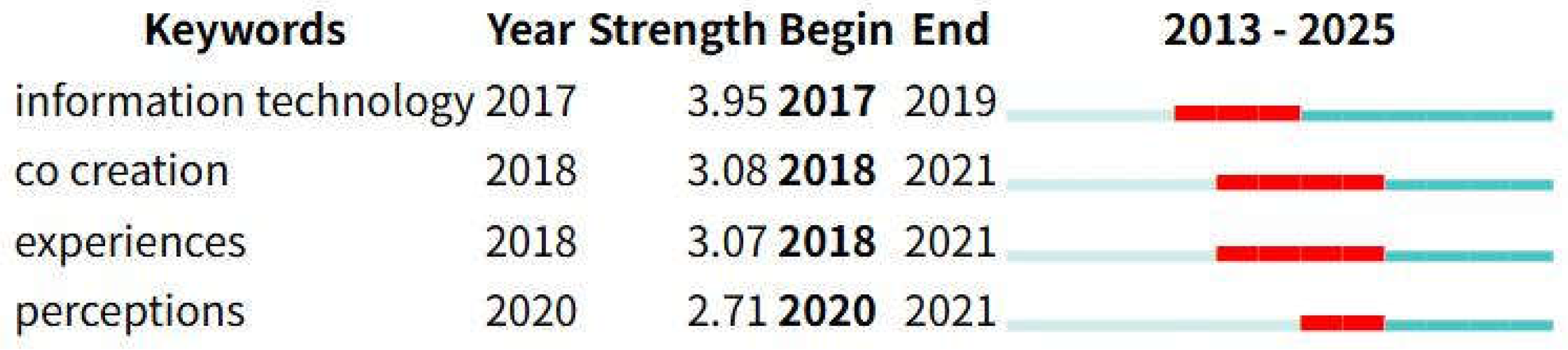
Through burst detection analysis of keywords from 2013 to 2025 in the field of smart tourism destinations, four keywords were identified with notable burst strength: “information technology” (2017–2019, burst strength = 3.95), “co-creation” (2018–2021, burst strength = 3.08), “experiences” (2018–2021, burst strength = 3.07), and “perceptions” (2020–2021, burst strength = 2.71) (see figure 11).
The burst of “information technology” signifies the entry of the field into a technology-driven stage, with the highest burst strength of 3.95, highlighting the foundational role of integrated IoT, big data, and AI as core infrastructure. This burst corresponds to the transition from conceptual foundations to applied frameworks, emphasizing technology’s role in enhancing destination connectivity and personalized services [83,101], while also exposing the early neglect of user interaction in prior studies.
The bursts of “co-creation” and “experiences” reveal the evolution of user participation from passive to active roles, reflecting a research shift toward tourist-destination interaction. The peak burst intensity during this period underscores pre- and post-pandemic trends in collaborative innovation, such as immersive experience design via AR/VR [102], which facilitated a transformation from unidirectional services to value co-creation, highlighting the convergence of inclusivity and sustainability.
The burst of “perceptions” marks a post-pandemic turn toward sensitivity to risk and cognitive evaluations, emphasizing tourists’ subjective assessments of privacy, technology usability, and sustainability. Though this keyword had a lower burst strength, its short yet concentrated duration during the pandemic peak illustrates a shift from technology-centric to human-centered risk balancing [43,103], indicating a future research focus on psychological models and behavioral prediction.
Figure 12.
Keywords with strong bursts
4. Discussion
4.1. Knowledge Framework
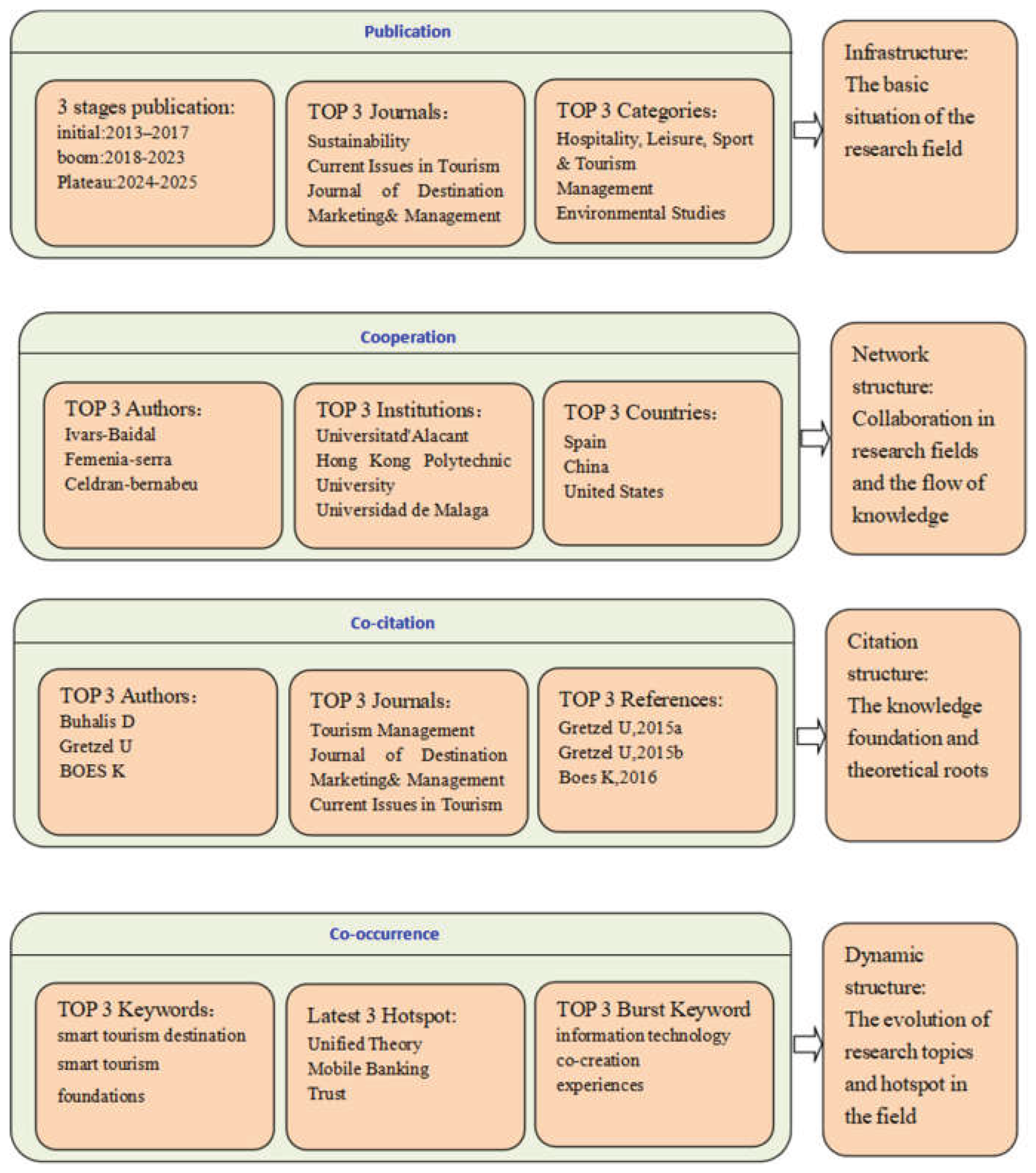
Based on bibliometric and visual analyses using CiteSpace, this study integrates basic information analysis, collaboration analysis, co-citation analysis, and co-occurrence analysis with the evolution of research themes to construct a systematic knowledge framework for STDs. This framework comprises four structural dimensions: foundational structure, network structure, citation structure, and dynamic structure. It integrates multidimensional data to reveal the evolution of the field from technological foundations to sustainable governance and user orientation, thereby supporting both theoretical advancement and practical guidance [46].
Foundational Structure reflects the general landscape of the field. A total of 232 publications from 2013 to 2025 can be categorized into three phases: the emergent stage (2013–2017), rapid growth stage (2018–2023), and stable transition stage (2024–2025). The journals Sustainability, Current Issues in Tourism, and the Journal of Destination Marketing & Management dominate the publication landscape. The most frequently involved subject categories include Hospitality, Leisure, Sport & Tourism, Management, and Environmental Studies, while the increasing involvement of technical disciplines (e.g., Computer Science, Information Systems) highlights the deepening integration of digital technologies.
Network Structure reflects collaboration patterns and knowledge flows within the field. The most active collaborators are Ivars-Baidal, Femenia-Serra, and Celdrán-Bernabéu, with an emerging team recently led by Baños-Pino. The most frequently collaborating institutions include the Universitat d'Alacant, Hong Kong Polytechnic University, and Universidad de Málaga. Geographically, Spain, China, and the United States form the most collaborative national clusters.
Citation Structure reveals the intellectual foundations and theoretical roots of the field. Influential co-cited authors include Dimitrios Buhalis, Ulrike Gretzel, and Karl Boes. The most prominent co-cited journals are Tourism Management, Journal of Destination Marketing & Management, and Current Issues in Tourism. The most frequently co-cited documents include Smart tourism: foundations and developments [3], Conceptual foundations for understanding smart tourism ecosystems [6], and Smart tourism destinations: ecosystems for destination competitiveness [55], which have laid the groundwork for STDs research.
Dynamic Structure reflects the thematic evolution and emerging hotspots in the field. Core themes include Smart tourism destination, smart tourism, and foundations. Recent research shows increased interest in the Unified Theory, mobile banking, and trust. High-impact emergent themes include information technology, co-creation, and experiences.
Figure 13.
Knowledge framework
4.2. Current Challenges
Despite the remarkable progress made in the development of STDs, several urgent challenges persist. To further advance both theoretical depth and practical application in this field, it is necessary to systematically review and reflect on the existing key issues.
The current research remains heavily dominated by a technology-led paradigm. Smart destinations are often equated with “high ICT integration,” while social, cultural, and experiential values are overlooked. Although some scholars have argued that “smartness” is not solely defined by technology use, the core literature continues to emphasize the “big data–IoT–AI” axis, focusing on tools while lacking empirical attention to human-centric and governance dimensions.
Cross-regional academic collaboration is weak. Spain and China have formed two dominant poles, yet interaction between these academic communities remains limited. National collaboration networks show a centrality of 0.50 for Spain and 0.41 for China, reflecting a multi-polar but loosely connected structure. At the institutional level, decentralization persists, with all nodes showing zero centrality.
Current research disproportionately targets millennial and younger tourists, while digital experiences of middle-aged and older cohorts are understudied. Keyword clustering reveals that much of the literature revolves around millennials’ technology acceptance. However, there is a lack of systematic research on the “post-70s” generation—individuals nearing 60 who have nonetheless been significantly shaped by the internet age.
Empirical investigation into multi-stakeholder collaboration mechanisms remains insufficient. Although theoretical frameworks for collaborative governance in STDs have been proposed, empirical validation is largely absent. Existing structural models only address collaborative governance at the “strategic relational” level, without measuring coordination among DMOs, residents, platforms, and service providers.
Current research has not adequately addressed the heterogeneity of tourism destinations and the corresponding differentiated development models. Destinations vary significantly in type and scale—urban vs. heritage sites, small towns vs. large clusters. China’s early smart destination initiatives focused on major cities, while European literature often centers on small and medium-sized coastal and cultural towns. However, comparative frameworks that address such differences remain scarce.
Most efforts to establish evaluation indicators for STDs still emphasize “technical performance,” with no unified, comprehensive assessment framework. Highly cited studies focus on technological ecosystem design and experience enhancement, yet there is no consensus on metrics such as social acceptance, data ethics, or carbon footprint.
4.3. Future Research Directions
As research on STDs continues to expand rapidly, topics and methods are increasingly diversified and intersecting. Therefore, researchers must maintain a clear and comprehensive understanding of the future trajectory of STDs studies. Based on the knowledge framework developed in this paper and the identified current challenges, we suggest the following future research directions:
The development of smart tourism destinations is inherently intertwined with technological innovation. While emerging technologies—such as humanoid intelligent robots—will continue to attract academic interest, future studies should develop integrated frameworks that balance tool-oriented metrics with human-centered outcomes. Mixed-methods approaches should be employed to assess governance effectiveness and experience quality across diverse contexts.
Future research should prioritize longitudinal case studies and international alliances to enhance knowledge exchange—particularly between Asian and European academic communities—to foster policy coordination and cross-cultural innovation.
Greater attention should be paid to intergenerational differences in technology adoption. Research should explore the barriers and preferences of middle-aged and elderly travelers, thereby informing inclusive smart destination design that accommodates aging populations.
Future studies should apply structural equation modeling (SEM) or agent-based modeling (ABM) to test governance models in STDs, quantify stakeholder interactions, and optimize resource allocation in real-world scenarios.
Comparative studies across destination types (e.g., urban vs. rural) are needed to develop scalable frameworks that account for differences in size, cultural context, and economic conditions.
Researchers should collaborate with policymakers to design multidimensional indicators that integrate qualitative and quantitative measures, enabling a comprehensive evaluation of STDs sustainability and equity. This would help align STD research with global sustainability goals.
5. Conclusions
This study employed bibliometric and visualization analysis using CiteSpace to systematically investigate the evolving landscape of STDs research. A total of 232 high-quality articles published between 2013 and 2025 were retrieved from the Web of Science Core Collection. Basic analysis shows that publications on STDs began in 2013, entered a phase of rapid growth in 2018, and peaked in 2023. Most of the journals fall under tourism management, destination marketing, and sustainable development categories. Aligned with our primary research objective, analysis of the global collaboration networks at the national, institutional, and author levels reveals a concentrated but expanding research ecosystem, with Spain and China emerging as dominant contributors. This underscores the regional synergies and the pivotal roles of institutions such as the Universitat d'Alacant and scholars like Ivars-Baidal, J. A. The field is moving toward more international and interdisciplinary collaboration, though there remains room to enhance cross-regional integration.
For the second objective, co-citation analysis revealed the foundational knowledge structure, identifying highly cited authors (e.g., Buhalis, D., with 171 citations), journals (e.g., Tourism Management, with 179 citations), and seminal references such as Gretzel et al., which trace the theoretical lineage from ICT integration to ecosystem frameworks. Regarding the third objective, keyword co-occurrence and burst analysis indicated that tourist acceptance of smart technologies, smart marketing, value co-creation, and technological advancement are the major research themes, with a projected shift toward efficiency enhancement and ethical governance.
Finally, to fulfill the fourth objective, we constructed a comprehensive theoretical knowledge framework comprising the foundational structure, network structure, citation structure, and dynamic structure of STDs research. This framework provides solid theoretical support and policy guidance for advancing research in this dynamic domain.
The main contributions of this study lie in two aspects, further enriching the existing bibliometric literature on STDs. First, this study conducted a state-of-the-art and up-to-date bibliometric analysis using CiteSpace, including basic statistics, collaboration networks, co-citation patterns, and dynamic keyword analysis. Compared to prior studies (e.g., Ercan, 2023; Palomo Santiago & Parra López, 2024), which were limited to data up to 2023 or earlier, this study incorporated the latest publications, including the 2023 peak and developments in 2024–2025, thereby providing more timely and comprehensive visual insights. Second, this research is the first to construct a coherent knowledge framework for STDs studies by integrating fragmented insights and clearly delineating the developmental trajectory of this field.
This study has two primary limitations. First, the single data source may result in limited coverage. While the Web of Science Core Collection is authoritative and citation-standardized, it may omit relevant literature found in other databases such as Scopus or Google Scholar. Second, the sample size and temporal coverage are constrained. Although the 232 publications meet basic requirements for bibliometric analysis, the relatively small dataset may affect the robustness of clustering and burst detection. Additionally, data from 2025 only cover the first seven months, limiting the capture of full-year dynamics.
Future research could integrate multiple databases (e.g., Scopus and CNKI) and include multilingual sources (especially Chinese) to support comparative analysis between Chinese and Western research on STDs. Enlarging the sample size, adopting dynamic data collection, and employing mixed methods would help to construct a more comprehensive knowledge framework and guide future policy and practice.
Author Contributions
Conceptualization, D.Y. and A.B.M.; methodology, D.Y. and A.B.M.; software, D.Y.; validation, J.Z.; data curation, J.Y. and S.T.; writing—original draft preparation, D.Y.; writing—review and editing, J.Z.; visualization, D.Y.; All authors have read and agreed to the published version of the manuscript.
Funding
This research received no external funding.
Data Availability Statement
All literature data analysed in this study can be obtained from WOS. Further inquiries can be directed to the corresponding author.
Acknowledgments
During the writing of this manuscript, the authors used the literature visualization tool CITESPACE 6.4 R2 to perform a visual quantitative analysis of the literature and utilised DEEPL to edit the text (translation, grammar, structure, spelling). The authors have reviewed and edited the output and take full responsibility for the content of this publication.
Conflicts of Interest
The authors declare no conflicts of interest. The funders had no role in the design of the study; in the collection, analyses, or interpretation of data; in the writing of the manuscript; or in the decision to publish the results.
Abbreviations
The following abbreviations are used in this manuscript:
| STDs | Smart Tourism Destinations |
| ICT | Information and Communication Technologies |
| WoS | Web of Science |
| DMOs | Destination Management Organizations |
| SEM | Structural Equation Modeling |
| ABM | Agent-based Modeling |
| UTAUT | Unified Theory of Acceptance and Use of Technology |
| IoT | Internet of Things |
| AI | artificial intelligence |
References
- Cimbaljević, M.; Stankov, U.; Pavluković, V. Going beyond the Traditional Destination Competitiveness – Reflections on a Smart Destination in the Current Research. Current Issues in Tourism 2019, 22 (20), 2472–2477. [CrossRef]
- Pencarelli, T. The Digital Revolution in the Travel and Tourism Industry. Inf Technol Tourism 2020, 22 (3), 455–476. [CrossRef]
- Gretzel, U.; Sigala, M.; Xiang, Z.; Koo, C. Smart Tourism: Foundations and Developments. Electron Markets 2015, 25 (3), 179–188. [CrossRef]
- Albino, V.; Berardi, U.; Dangelico, R. M. Smart Cities: Definitions, Dimensions, Performance, and Initiatives. Journal of Urban Technology 2015, 22 (1), 3–21. [CrossRef]
- Huertas, A.; Moreno, A.; Pascual, J. Place Branding for Smart Cities and Smart Tourism Destinations: Do They Communicate Their Smartness? Sustainability 2021, 13 (19), 10953. [CrossRef]
- Gretzel, U.; Werthner, H.; Koo, C.; Lamsfus, C. Conceptual Foundations for Understanding Smart Tourism Ecosystems. Computers in Human Behavior 2015, 50, 558–563. [CrossRef]
- Ivars-Baidal, J. A.; Celdrán-Bernabeu, M. A.; Femenia-Serra, F.; Perles-Ribes, J. F.; Giner-Sánchez, D. Measuring the Progress of Smart Destinations: The Use of Indicators as a Management Tool. Journal of Destination Marketing & Management 2021, 19, 100531. [CrossRef]
- Shafiee, S.; Rajabzadeh Ghatari, A.; Hasanzadeh, A.; Jahanyan, S. Developing a Model for Sustainable Smart Tourism Destinations: A Systematic Review. Tourism Management Perspectives 2019, 31, 287–300. [CrossRef]
- Samancioglu, E.; Kumlu, S.; Ozkul, E. Smart Tourism Destinations and Sustainability: Evidence from the Tourism Industry. WHATT 2024, 16 (6), 680–693. [CrossRef]
- Williams, A. M.; Rodriguez, I.; Makkonen, T. Innovation and Smart Destinations: Critical Insights. Annals of Tourism Research 2020, 83, 102930. [CrossRef]
- Sorokina, E.; Wang, Y.; Fyall, A.; Lugosi, P.; Torres, E.; Jung, T. Constructing a Smart Destination Framework: A Destination Marketing Organization Perspective. Journal of Destination Marketing & Management 2022, 23, 100688. [CrossRef]
- Soares, J. C.; Domareski Ruiz, T. C.; Ivars Baidal, J. A. Smart Destinations: A New Planning and Management Approach? Current Issues in Tourism 2022, 25 (17), 2717–2732. [CrossRef]
- González-Reverté, F. Building Sustainable Smart Destinations: An Approach Based on the Development of Spanish Smart Tourism Plans. Sustainability 2019, 11 (23), 6874. [CrossRef]
- Del Vecchio, P.; Passiante, G. Is Tourism a Driver for Smart Specialization? Evidence from Apulia, an Italian Region with a Tourism Vocation. Journal of Destination Marketing & Management 2017, 6 (3), 163–165. [CrossRef]
- Wang, D.; Li, X. (Robert); Li, Y. China’s “Smart Tourism Destination” Initiative: A Taste of the Service-Dominant Logic. Journal of Destination Marketing & Management 2013, 2 (2), 59–61. [CrossRef]
- Choi, J.; Lee, S.; Jamal, T. Smart Korea: Governance for Smart Justice during a Global Pandemic. Journal of Sustainable Tourism 2021, 29 (2–3), 541–550. [CrossRef]
- Ordóñez-Martínez, D.; Seguí-Pons, J. M.; Ruiz-Pérez, M. Toward Establishing a Tourism Data Space: Innovative Geo-Dashboard Development for Tourism Research and Management. Smart Cities 2024, 7 (1), 633–661. [CrossRef]
- Aguirre Montero, A.; López-Sánchez, J. A. Intersection of Data Science and Smart Destinations: A Systematic Review. Front. Psychol. 2021, 12, 712610. [CrossRef]
- Zhang, Y.; Deng, B. Exploring the Nexus of Smart Technologies and Sustainable Ecotourism: A Systematic Review. Heliyon 2024, 10 (11), e31996. [CrossRef]
- Panigrahy, A.; Verma, A. Tourist Experiences: A Systematic Literature Review of Computer Vision Technologies in Smart Destination Visits. JTF 2025, 11 (2), 187–202. [CrossRef]
- Julio Guerrero, Y. I.; Dias, F. T. P. Tourist Tracking Techniques and Their Role in Destination Management: A Bibliometric Study, 2007–2023. Sustainability 2024, 16 (9), 3708. [CrossRef]
- Palomo Santiago, M.; Parra López, E. Intellectual Influence of Smart Tourism Destinations 2000-2023. Tour. hosp. manag. 2024, 30 (3), 301–316. [CrossRef]
- Bastidas-Manzano, A.-B.; Sánchez-Fernández, J.; Casado-Aranda, L.-A. The Past, Present, and Future of Smart Tourism Destinations: A Bibliometric Analysis. Journal of Hospitality & Tourism Research 2021, 45 (3), 529–552. [CrossRef]
- Gursoy, D.; Luongo, S.; Della Corte, V.; Sepe, F. Smart Tourism Destinations: An Overview of Current Research Trends and a Future Research Agenda. JHTT 2024, 15 (3), 479–495. [CrossRef]
- Alsharif, A.; Isa, S. M.; Alqudah, M. N. Smart Tourism, Hospitality, and Destination: A Systematic Review and Future Directions. JoTS 2024, 15 (29), 72–110. [CrossRef]
- Shafiee, S.; Rajabzadeh Ghatari, A.; Hasanzadeh, A.; Jahanyan, S. Smart Tourism Destinations: A Systematic Review. TR 2021, 76 (3), 505–528. [CrossRef]
- Zupic, I.; Čater, T. Bibliometric Methods in Management and Organization. Organizational Research Methods 2015, 18 (3), 429–472. [CrossRef]
- Donthu, N.; Kumar, S.; Mukherjee, D.; Pandey, N.; Lim, W. M. How to Conduct a Bibliometric Analysis: An Overview and Guidelines. Journal of Business Research 2021, 133, 285–296. [CrossRef]
- Caputo, A.; Kargina, M. A User-Friendly Method to Merge Scopus and Web of Science Data during Bibliometric Analysis. J Market Anal 2022, 10 (1), 82–88. [CrossRef]
- Li, J.; Mao, Y.; Ouyang, J.; Zheng, S. A Review of Urban Microclimate Research Based on CiteSpace and VOSviewer Analysis. IJERPH 2022, 19 (8), 4741. [CrossRef]
- Kemeç, A.; Altınay, A. T. Sustainable Energy Research Trend: A Bibliometric Analysis Using VOSviewer, RStudio Bibliometrix, and CiteSpace Software Tools. Sustainability 2023, 15 (4), 3618. [CrossRef]
- Zhang, J.; Quoquab, F.; Mohammad, J. Plastic and Sustainability: A Bibliometric Analysis Using VOSviewer and CiteSpace. AGJSR 2024, 42 (1), 44–67. [CrossRef]
- Yu, M.; Jin, Y.; Yuan, K.; Liu, B.; Zhu, N.; Zhang, K.; Li, S.; Tai, Z. Effects of Exosomes and Inflammatory Response on Tumor: A Bibliometrics Study and Visualization Analysis via CiteSpace and VOSviewer. J Cancer Res Clin Oncol 2024, 150 (8), 405. [CrossRef]
- Cheng, P.; Tang, H.; Dong, Y.; Liu, K.; Jiang, P.; Liu, Y. Knowledge Mapping of Research on Land Use Change and Food Security: A Visual Analysis Using CiteSpace and VOSviewer. IJERPH 2021, 18 (24), 13065. [CrossRef]
- Wu, Y.; Wang, H.; Wang, Z.; Zhang, B.; Meyer, B. C. Knowledge Mapping Analysis of Rural Landscape Using CiteSpace. Sustainability 2019, 12 (1), 66. [CrossRef]
- Ji, W.; Yu, S.; Shen, Z.; Wang, M.; Cheng, G.; Yang, T.; Yuan, Q. Knowledge Mapping with CiteSpace, VOSviewer, and SciMAT on Intelligent Connected Vehicles: Road Safety Issue. Sustainability 2023, 15 (15), 12003. [CrossRef]
- Guo, Z.; Huang, L.; Lai, S. Global Knowledge Mapping and Emerging Research Trends in the Microbiome and Asthma: A Bibliometric and Visualized Analysis Using VOSviewer and CiteSpace. Heliyon 2024, 10 (2), e24528. [CrossRef]
- Ivars-Baidal, J. A.; Celdrán-Bernabeu, M. A.; Mazón, J.-N.; Perles-Ivars, Á. F. Smart Destinations and the Evolution of ICTs: A New Scenario for Destination Management? Current Issues in Tourism 2019, 22 (13), 1581–1600. [CrossRef]
- Ivars-Baidal, J. A.; Vera-Rebollo, J. F.; Perles-Ribes, J.; Femenia-Serra, F.; Celdrán-Bernabeu, M. A. Sustainable Tourism Indicators: What’s New within the Smart City/Destination Approach? Journal of Sustainable Tourism 2023, 31 (7), 1556–1582. [CrossRef]
- Sustacha, I.; Baños-Pino, J. F.; Del Valle, E. How Smartness Affects Customer-Based Brand Equity in Rural Tourism Destinations. Journal of Destination Marketing & Management 2024, 34, 100949. [CrossRef]
- Baños-Pino, J. F.; Sustacha, I.; Boto-García, D.; Del Valle, E. Are Smart Tourism Destinations More Productive Efficient? The Spanish Case. Tourism Economics 2025, 13548166241313413. [CrossRef]
- Tung, V. W. S.; Cheong, T. M. F.; To, S. J. Tourism Management in the Era of Smart Mobility: A Perspective Article. TR 2020, 75 (1), 283–285. [CrossRef]
- Tavitiyaman, P.; Qu, H.; Tsang, W. L.; Lam, C. R. The Influence of Smart Tourism Applications on Perceived Destination Image and Behavioral Intention: The Moderating Role of Information Search Behavior. Journal of Hospitality and Tourism Management 2021, 46, 476–487. [CrossRef]
- Park, S.; Zu, J.; Xu, Y.; Zhang, F.; Liu, Y.; Li, J. Analyzing Travel Mobility Patterns in City Destinations: Implications for Destination Design. Tourism Management 2023, 96, 104718. [CrossRef]
- Shin, H. H.; Kim, J.; Jeong, M. Memorable Tourism Experience at Smart Tourism Destinations: Do Travelers’ Residential Tourism Clusters Matter? Tourism Management Perspectives 2023, 46, 101103. [CrossRef]
- Chen, C. Science Mapping: A Systematic Review of the Literature. Journal of Data and Information Science 2017, 2 (2), 1–40. [CrossRef]
- White, H. D.; Griffith, B. C. Author Cocitation: A Literature Measure of Intellectual Structure. J. Am. Soc. Inf. Sci. 1981, 32 (3), 163–171. [CrossRef]
- Buhalis, D.; Amaranggana, A. Smart Tourism Destinations. In Information and Communication Technologies in Tourism 2014; Xiang, Z., Tussyadiah, I., Eds.; Springer International Publishing: Cham, 2013; pp 553–564. [CrossRef]
- Huang, C. D.; Goo, J.; Nam, K.; Yoo, C. W. Smart Tourism Technologies in Travel Planning: The Role of Exploration and Exploitation. Information & Management 2017, 54 (6), 757–770. [CrossRef]
- Jeong, M.; Shin, H. H. Tourists’ Experiences with Smart Tourism Technology at Smart Destinations and Their Behavior Intentions. Journal of Travel Research 2020, 59 (8), 1464–1477. [CrossRef]
- Mehraliyev, F.; Chan, I. C. C.; Choi, Y.; Koseoglu, M. A.; Law, R. A State-of-the-Art Review of Smart Tourism Research. Journal of Travel & Tourism Marketing 2020, 37 (1), 78–91. [CrossRef]
- Sigala, M. New Technologies in Tourism: From Multi-Disciplinary to Anti-Disciplinary Advances and Trajectories. Tourism Management Perspectives 2018, 25, 151–155. [CrossRef]
- Caragliu, A.; Del Bo, C.; Nijkamp, P. Smart Cities in Europe. Journal of Urban Technology 2011, 18 (2), 65–82. [CrossRef]
- Buhalis, D.; Amaranggana, A. Smart Tourism Destinations Enhancing Tourism Experience Through Personalisation of Services. In Information and Communication Technologies in Tourism 2015; Tussyadiah, I., Inversini, A., Eds.; Springer International Publishing: Cham, 2015; pp 377–389. [CrossRef]
- Boes, K.; Buhalis, D.; Inversini, A. Smart Tourism Destinations: Ecosystems for Tourism Destination Competitiveness. International Journal of Tourism Cities 2016, 2 (2), 108–124. [CrossRef]
- Wang, J.; Zhou, Z.; Ren, J.; Liu, L.; Morrison, A. M. From Failure to Forgiveness: Robots’ Proactive Role in the Tourism Industry. Tourism Management 2025, 111, 105246. [CrossRef]
- Jiang, C.; Zhang, K.; Zhi, Y.; Zeng, Y. Feel the Thrill: Exploring How Sensory Experiences Drive Positive Emotions on Themed Tours. Tourism Management 2025, 111, 105247. [CrossRef]
- Bai, J. Y.; Wong, I. A.; Huan, T. C. T. C.; Okumus, F.; Leong, A. M. W. Ethical Perceptions of Generative AI Use and Employee Work Outcomes: Role of Moral Rumination and AI-Supported Autonomy. Tourism Management 2025, 111, 105242. [CrossRef]
- Yawised, K.; Apasrawirote, D. The Synergy of Immersive Experiences in Tourism Marketing: Unveiling Insightful Components in the ‘Metaverse.’ Journal of Destination Marketing & Management 2025, 37, 101019. [CrossRef]
- Singh, S.; Lee, S.; Tsai, K. The Impact of Smart Tourism Technologies on Engagement, Experiences, and Place Attachment: A Focused Study with Gamification as the Moderator. Journal of Destination Marketing & Management 2025, 36, 100997. [CrossRef]
- Luri, I.; Schau, H. J.; Ghosh, B. Metaphor-Enabled Marketplace Sentiment Analysis. Journal of Marketing Research 2024, 61 (3), 496–516. [CrossRef]
- Boes, K.; Buhalis, D.; Inversini, A. Conceptualising Smart Tourism Destination Dimensions. In Information and Communication Technologies in Tourism 2015; Tussyadiah, I., Inversini, A., Eds.; Springer International Publishing: Cham, 2015; pp 391–403. [CrossRef]
- Del Chiappa, G.; Baggio, R. Knowledge Transfer in Smart Tourism Destinations: Analyzing the Effects of a Network Structure. Journal of Destination Marketing & Management 2015, 4 (3), 145–150. [CrossRef]
- Buonincontri, P.; Micera, R. The Experience Co-Creation in Smart Tourism Destinations: A Multiple Case Analysis of European Destinations. Inf Technol Tourism 2016, 16 (3), 285–315. [CrossRef]
- Buhalis, D. Technology in Tourism-from Information Communication Technologies to eTourism and Smart Tourism towards Ambient Intelligence Tourism: A Perspective Article. TR 2020, 75 (1), 267–272. [CrossRef]
- Lamsfus, C.; Martín, D.; Alzua-Sorzabal, A.; Torres-Manzanera, E. Smart Tourism Destinations: An Extended Conception of Smart Cities Focusing on Human Mobility. In Information and Communication Technologies in Tourism 2015; Tussyadiah, I., Inversini, A., Eds.; Springer International Publishing: Cham, 2015; pp 363–375. [CrossRef]
- Cavalheiro, G. M. D. C.; Joia, L. A. Examining the Implementation of a European Patent Management System in Brazil from an Actor-Network Theory Perspective. Information Technology for Development 2016, 22 (2), 220–241. [CrossRef]
- Omar, A.; Tiwari, V.; Saad, M. Smart Technology’s Potential in Smart Destinations: A Comprehensive UTAUT Model with Privacy and Safety Risk Moderation. JHTT 2025, 16 (4), 817–835. [CrossRef]
- Santos-Júnior, A.; Almeida-García, F.; Morgado, P.; Mendes-Filho, L. Residents’ Quality of Life in Smart Tourism Destinations: A Theoretical Approach. Sustainability 2020, 12 (20), 8445. [CrossRef]
- Wang, J.; Xie, C.; Huang, Q.; Morrison, A. M. Smart Tourism Destination Experiences: The Mediating Impact of Arousal Levels. Tourism Management Perspectives 2020, 35, 100707. [CrossRef]
- Tavitiyaman, P.; Qu, H.; Tsang, W. L.; Lam, C. R. Smart Tourism Application and Destination Image: Mediating Role of Theory of Mind (ToM). Asia Pacific Journal of Tourism Research 2021, 26 (8), 905–920. [CrossRef]
- Özköse, H.; Uyar Oğuz, H.; Aslan, A. Scientific Mapping of Smart Tourism: A Content Analysis Study. Asia Pacific Journal of Tourism Research 2023, 28 (9), 923–948. [CrossRef]
- Vecchio, P. D.; Mele, G.; Ndou, V.; Secundo, G. Creating Value from Social Big Data: Implications for Smart Tourism Destinations. Information Processing & Management 2018, 54 (5), 847–860. [CrossRef]
- Marine-Roig, E.; Anton Clavé, S. Tourism Analytics with Massive User-Generated Content: A Case Study of Barcelona. Journal of Destination Marketing & Management 2015, 4 (3), 162–172. [CrossRef]
- Díaz-González, S.; Torres, J. M.; Parra-López, E.; Aguilar, R. M. Strategic Technological Determinant in Smart Destinations: Obtaining an Automatic Classification of the Quality of the Destination. IMDS 2022, 122 (10), 2299–2330. [CrossRef]
- Ivars-Baidal, J. A.; Celdrán-Bernabeu, M. A.; Femenia-Serra, F.; Perles-Ribes, J. F.; Vera-Rebollo, J. F. Smart City and Smart Destination Planning: Examining Instruments and Perceived Impacts in Spain. Cities 2023, 137, 104266. [CrossRef]
- Buhalis, D.; Foerste, M. SoCoMo Marketing for Travel and Tourism: Empowering Co-Creation of Value. Journal of Destination Marketing & Management 2015, 4 (3), 151–161. [CrossRef]
- Wider, W.; Gao, Y.; Chan, C. K.; Lin, J.; Li, J.; Tanucan, J. C. M.; Fauzi, M. A. Unveiling Trends in Digital Tourism Research: A Bibliometric Analysis of Co-Citation and Co-Word Analysis. Environmental and Sustainability Indicators 2023, 20, 100308. [CrossRef]
- Marchesani, F.; Masciarelli, F.; Bikfalvi, A. Cities (r)Evolution in the Smart Era: Smart Mobility Practices as a Driving Force for Tourism Flow and the Moderating Role of Airports in Cities. IJTC 2023, 9 (4), 1025–1045. [CrossRef]
- Tyan, I.; Yagüe, M. I.; Guevara-Plaza, A. Blockchain Technology for Smart Tourism Destinations. Sustainability 2020, 12 (22), 9715. [CrossRef]
- Femenia-Serra, F.; Neuhofer, B.; Ivars-Baidal, J. A. Towards a Conceptualisation of Smart Tourists and Their Role within the Smart Destination Scenario. The Service Industries Journal 2019, 39 (2), 109–133. [CrossRef]
- Encalada, L.; Boavida-Portugal, I.; Cardoso Ferreira, C.; Rocha, J. Identifying Tourist Places of Interest Based on Digital Imprints: Towards a Sustainable Smart City. Sustainability 2017, 9 (12), 2317. [CrossRef]
- Mandić, A.; Garbin Praničević, D. Progress on the Role of ICTs in Establishing Destination Appeal: Implications for Smart Tourism Destination Development. JHTT 2019, 10 (4), 791–813. [CrossRef]
- Fernández-Díaz, E.; Jambrino-Maldonado, C.; Iglesias-Sánchez, P. P.; De Las Heras-Pedrosa, C. Digital Accessibility of Smart Cities - Tourism for All and Reducing Inequalities: Tourism Agenda 2030. TR 2023, 78 (2), 361–380. [CrossRef]
- Tham, A.; Huang, D. Game on! A New Integrated Resort Business Model. TR 2019, 74 (6), 1153–1166. [CrossRef]
- Ndou, V.; Hysa, E.; Maruccia, Y. A Methodological Framework for Developing a Smart-Tourism Destination in the Southeastern Adriatic–Ionian Area. Sustainability 2023, 15 (3), 2057. [CrossRef]
- Chakraborty, D.; Polisetty, A.; Mishra, A.; Rana, N. P. A Longitudinal Study on How Smart Tourism Technology Influences Tourists’ Repeat Visit Intentions. Asia Pacific Journal of Tourism Research 2023, 28 (12), 1380–1398. [CrossRef]
- Corrêa, S. C. H.; Gosling, M. D. S. Smart Tourism Destinations from the Perspective of Travelers with Disability. Almatourism - Journal of Tourism 2021, Culture and Territorial Development, 1-20 Paginazione. [CrossRef]
- Sun, D.; Zhou, Y.; Ali, Q.; Khan, M. T. I. The Role of Digitalization, Infrastructure, and Economic Stability in Tourism Growth: A Pathway towards Smart Tourism Destinations. Natural Resources Forum 2025, 49 (2), 1308–1329. [CrossRef]
- Díaz, E.; Esteban, Á.; Koutra, C.; Almeida, S.; Carranza, R. Co-Creation of Value in Smart Ecosystems: Past Trends and Future Directions in Tourism Literature. JHTT 2023, 14 (3), 365–383. [CrossRef]
- Femenia-Serra, F.; Perles-Ribes, J. F.; Ivars-Baidal, J. A. Smart Destinations and Tech-Savvy Millennial Tourists: Hype versus Reality. TR 2019, 74 (1), 63–81. [CrossRef]
- Liu, Y.; Hsiao, A.; Ma, E. Segmenting Tourism Markets Based on Demand Growth Patterns: A Longitudinal Profile Analysis Approach. Journal of Hospitality & Tourism Research 2021, 45 (6), 967–997. [CrossRef]
- Nieves-Pavón, S.; López-Mosquera, N.; Jiménez-Naranjo, H. The Role Emotions Play in Loyalty and WOM Intention in a Smart Tourism Destination Management. Cities 2024, 145, 104681. [CrossRef]
- Kalia, P.; Mladenović, D.; Acevedo-Duque, Á. Decoding the Trends and the Emerging Research Directions of Digital Tourism in the Last Three Decades: A Bibliometric Analysis. Sage Open 2022, 12 (4), 21582440221128179. [CrossRef]
- Kim, K.; Park, O.; Yun, S.; Yun, H. What Makes Tourists Feel Negatively about Tourism Destinations? Application of Hybrid Text Mining Methodology to Smart Destination Management. Technological Forecasting and Social Change 2017, 123, 362–369. [CrossRef]
- Au, W. C. W.; Tsang, N. K. F. What Makes a Destination Smart? An Intelligence-Oriented Approach to Conceptualizing Destination Smartness. Journal of Travel & Tourism Marketing 2022, 39 (4), 448–464. [CrossRef]
- Smirnov, A.; Ponomarev, A.; Teslya, N.; Shilov, N. Human-Computer Cloud for Smart Cities: Tourist Itinerary Planning Case Study. In Business Information Systems Workshops; Abramowicz, W., Ed.; Lecture Notes in Business Information Processing; Springer International Publishing: Cham, 2017; Vol. 303, pp 179–190. [CrossRef]
- Stylos, N.; Fotiadis, A. K.; Shin, D. (Don); Huan, T.-C. T. Beyond Smart Systems Adoption: Enabling Diffusion and Assimilation of Smartness in Hospitality. International Journal of Hospitality Management 2021, 98, 103042. [CrossRef]
- Anjum, F.; Ali, Y. Smart Tourism Technologies and Destination Perception: Implications for Revisit Intentions in Mountainous Destinations. Tour. hosp. manag. 2025, 31 (1), 107–123. [CrossRef]
- Universidad de La Laguna (España); David-Negre, T.; Gutiérrez Taño, D.; Universidad de La Laguna. Exploring Tourists’ Intention to Use Smart Tourism Apps. pasos 2025, 23 (1), 89–102. [CrossRef]
- Almobaideen, W.; Krayshan, R.; Allan, M.; Saadeh, M. Internet of Things: Geographical Routing Based on Healthcare Centers Vicinity for Mobile Smart Tourism Destination. Technological Forecasting and Social Change 2017, 123, 342–350. [CrossRef]
Figure 1.
Research process
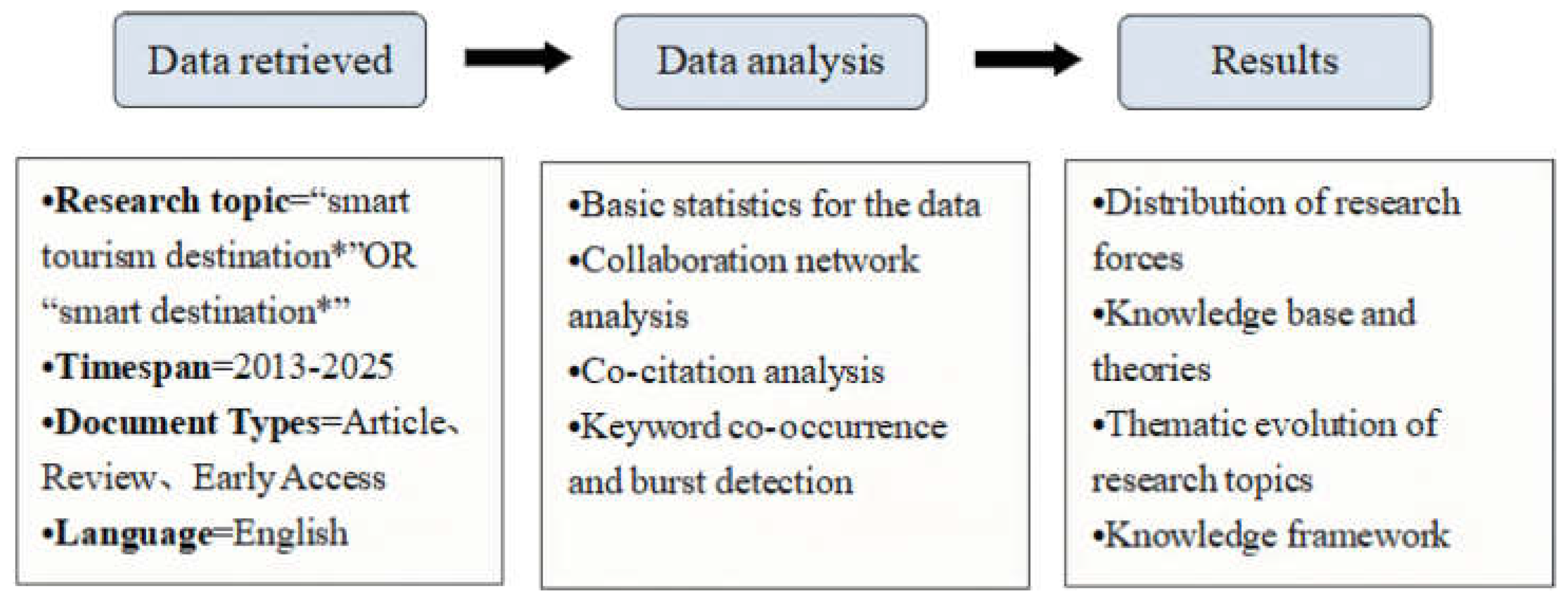
Figure 2.
Annual Publication Statistics
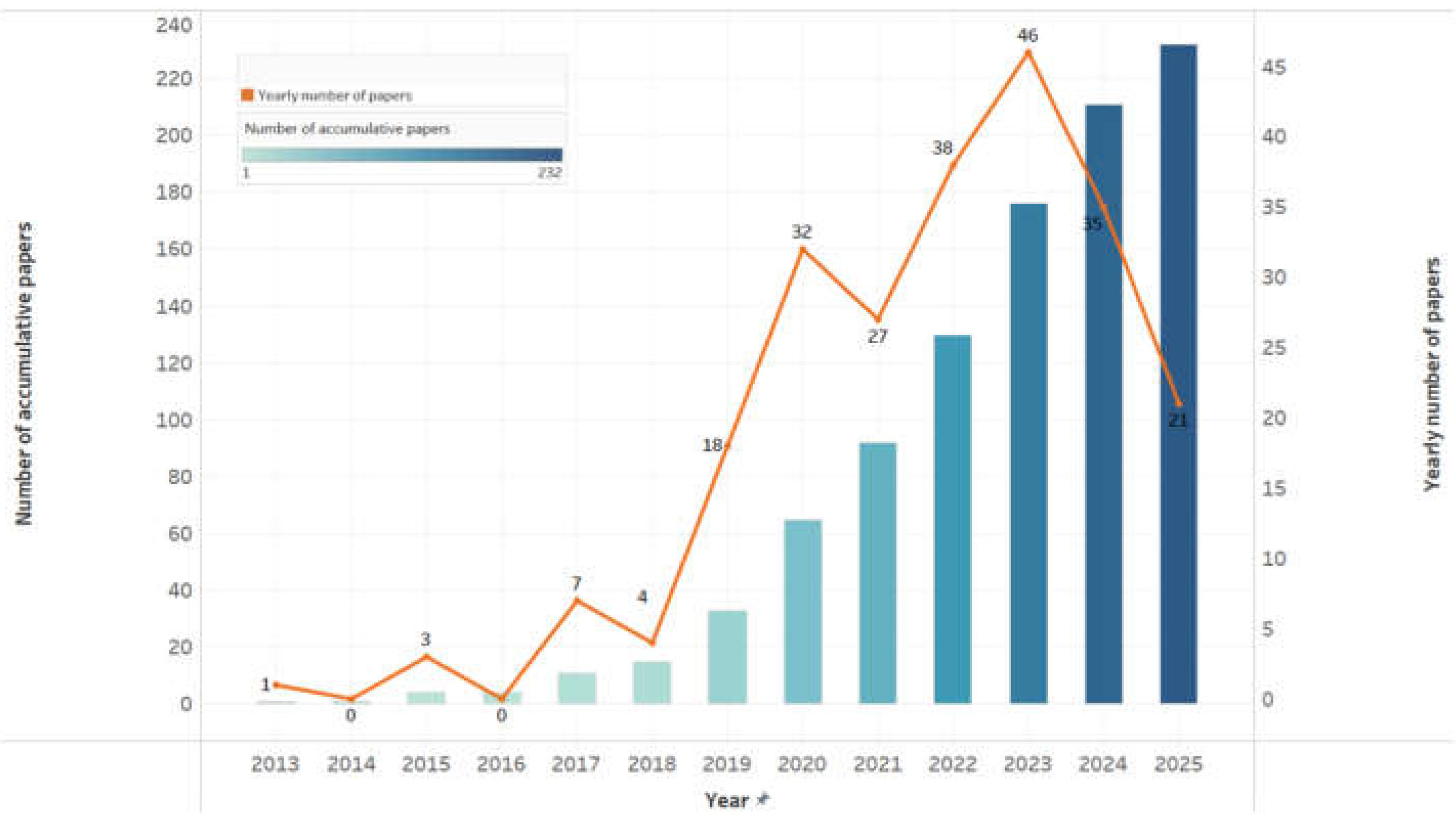
Figure 3.
Author collaboration network.
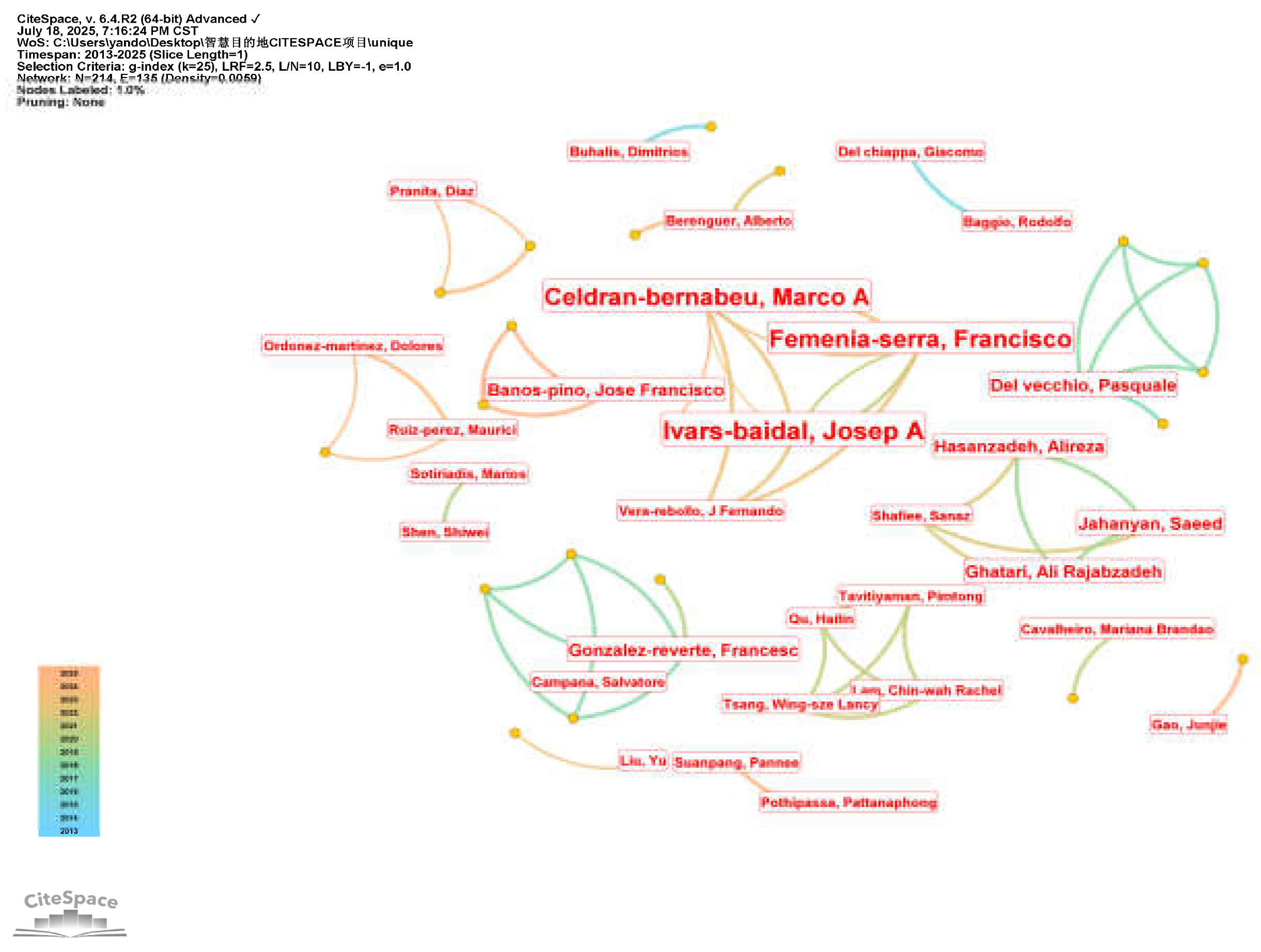
Figure 4.
Institutional collaboration network
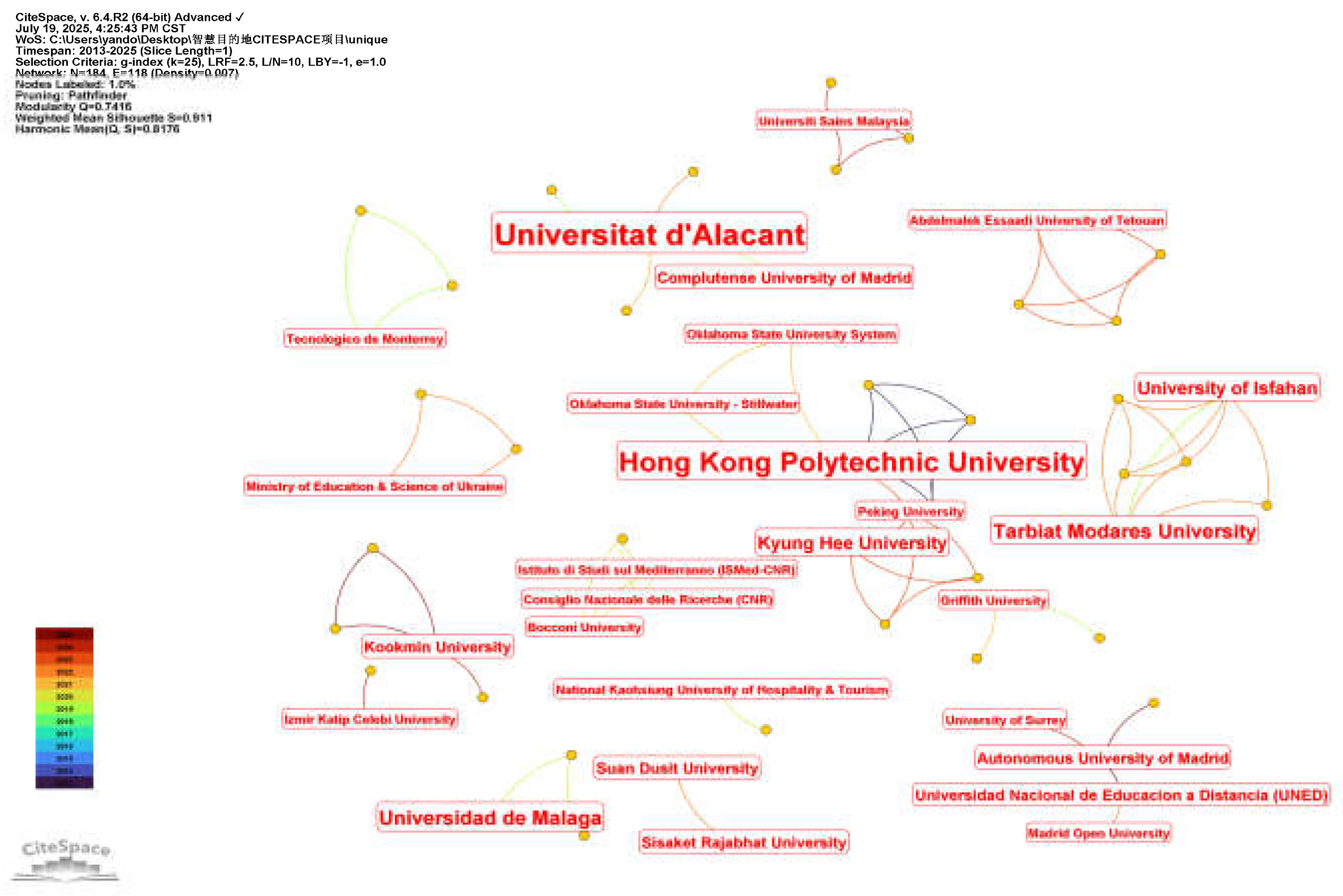
Figure 5.
Top 10 most collaborative countries
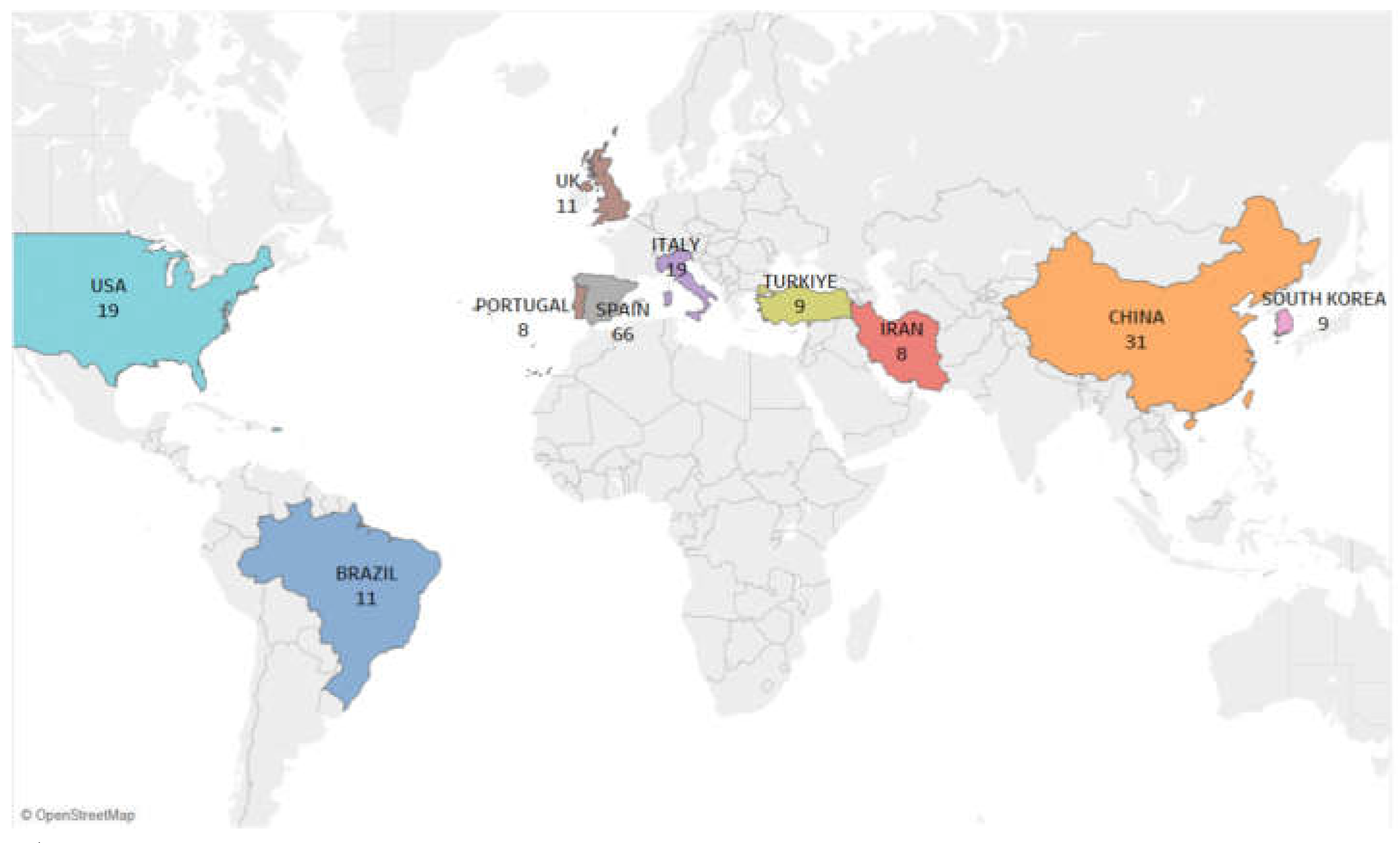
Figure 6.
National collaboration network
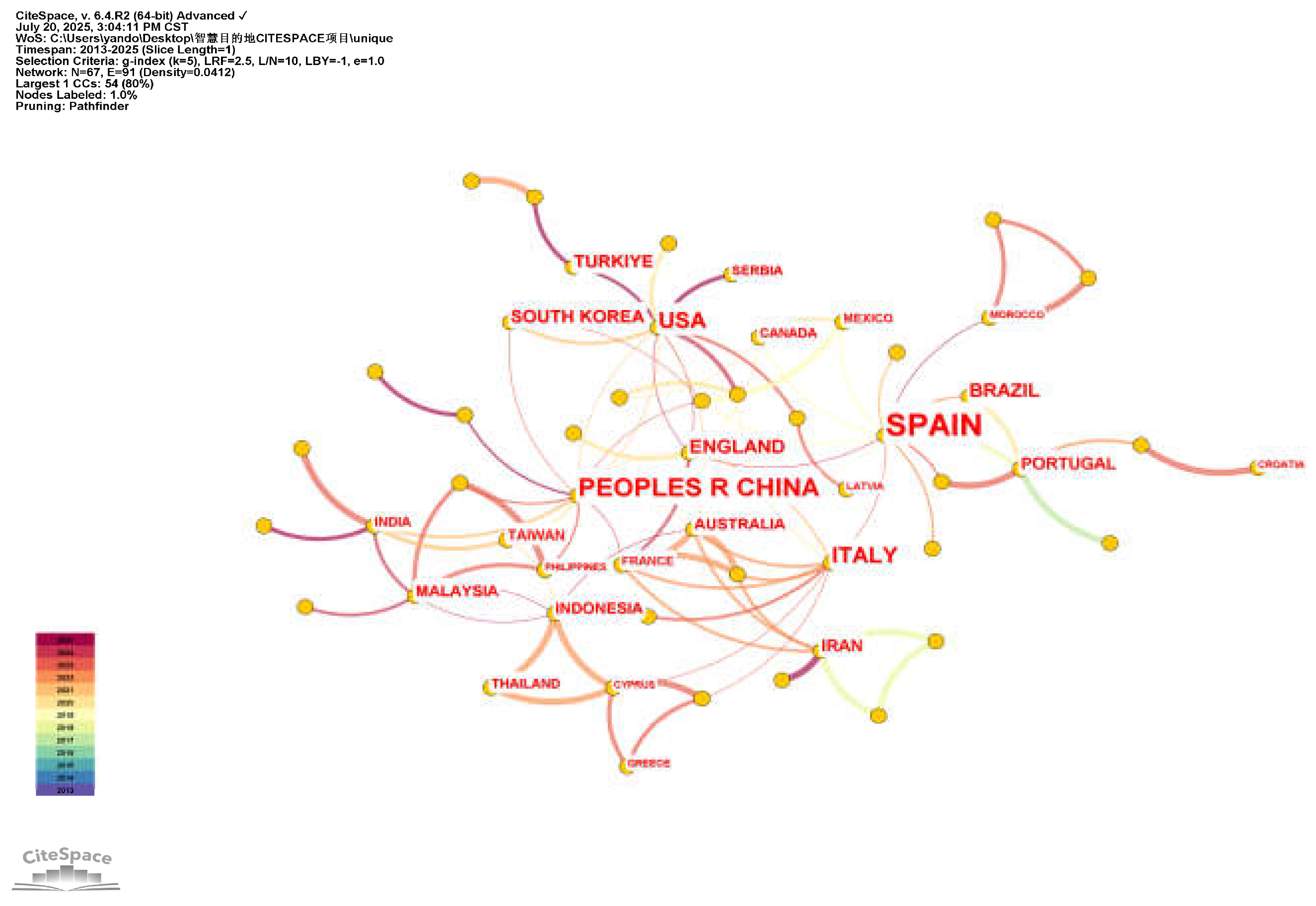
Figure 7.
Author co-citation network
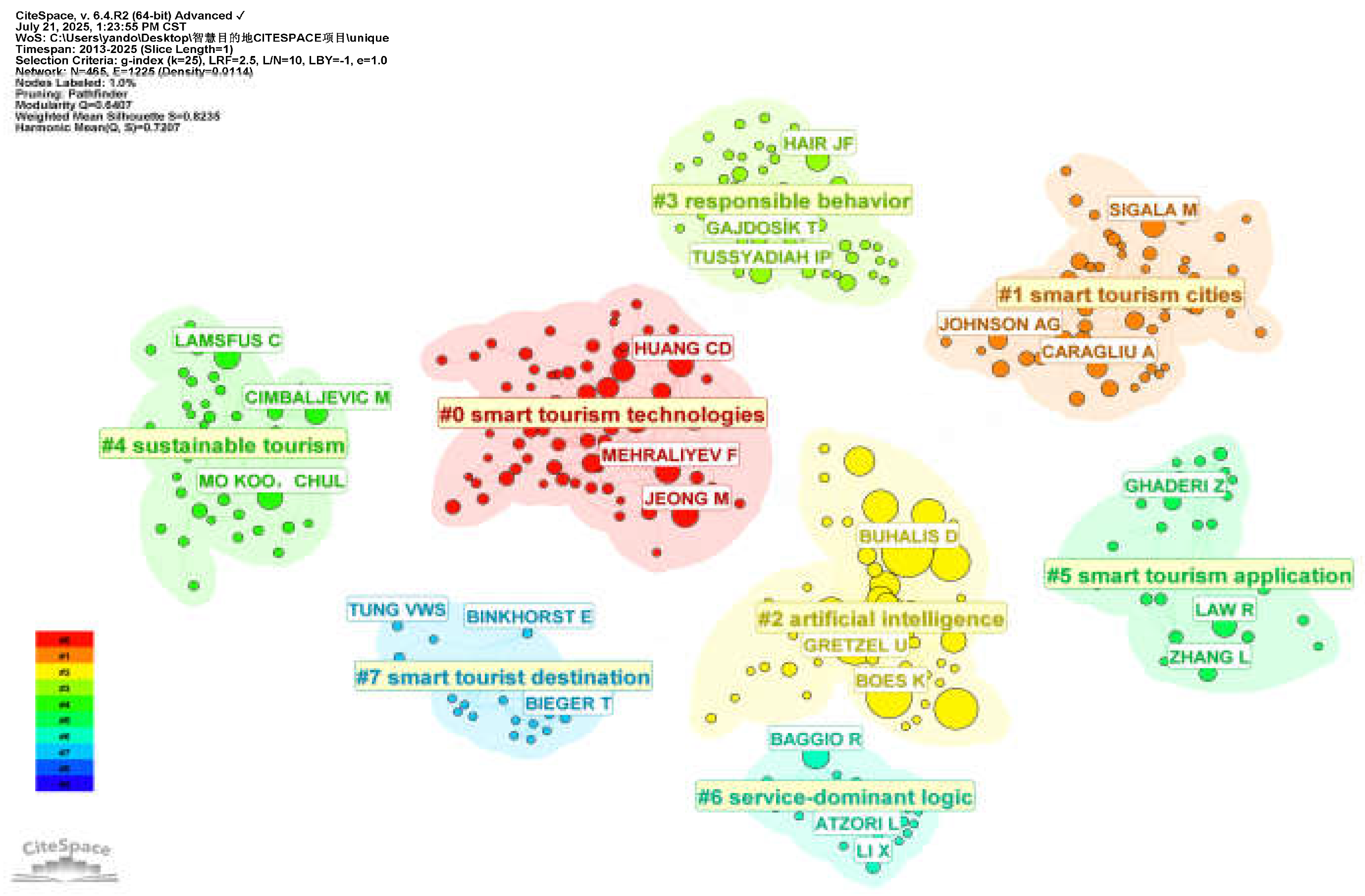
Figure 8.
Journal co-citation network
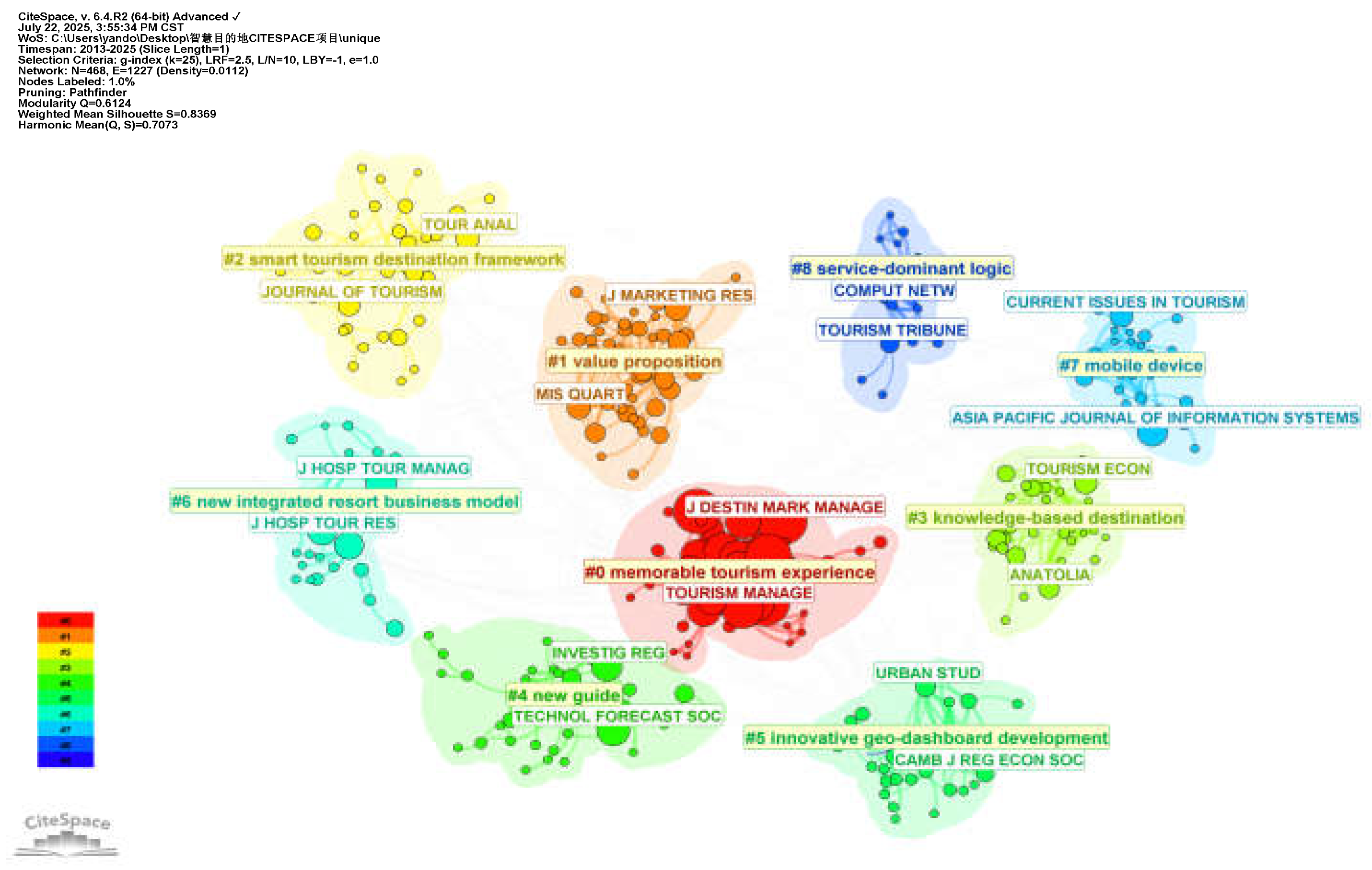
Figure 9.
Reference co-citation network
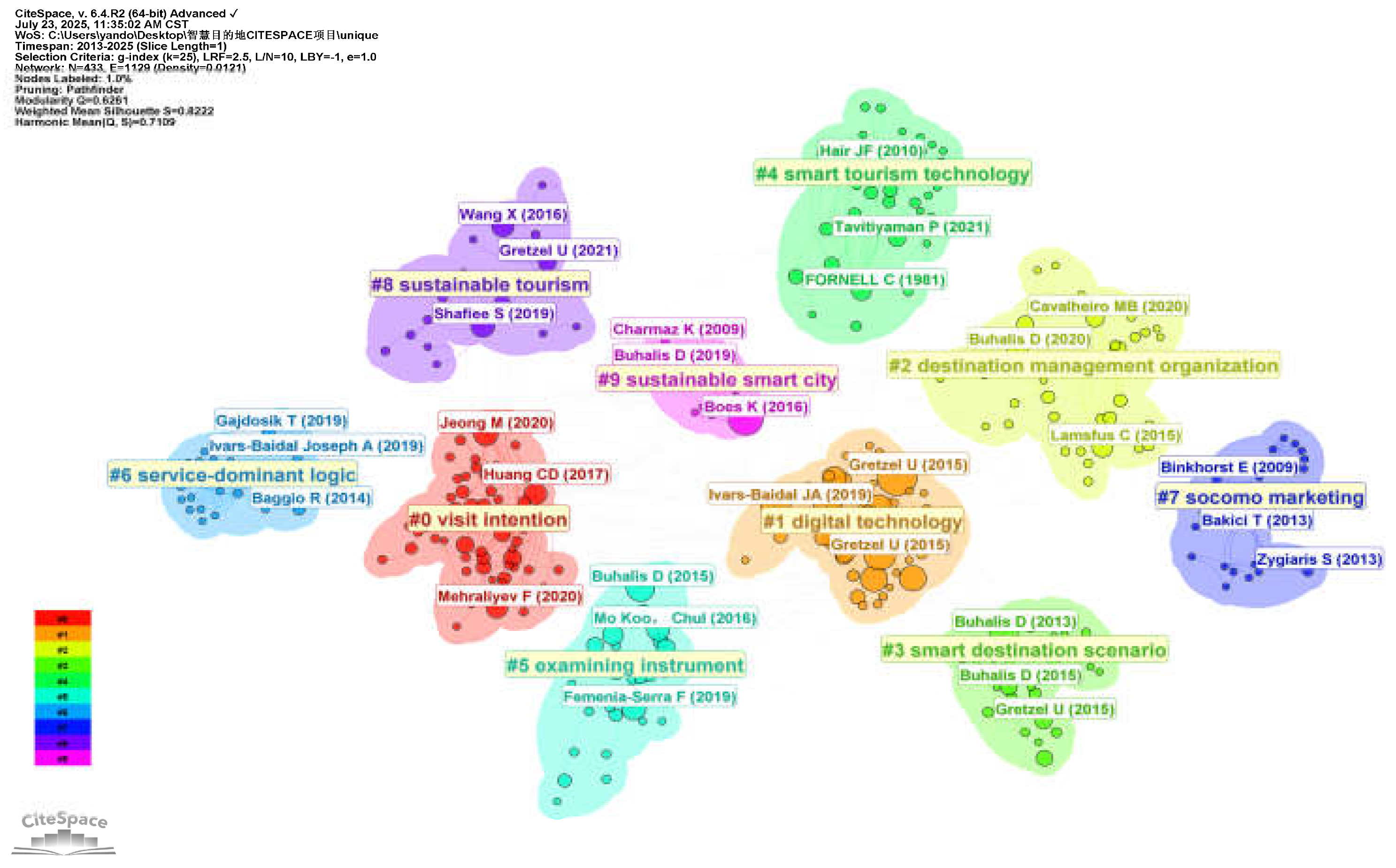
Figure 10.
Keyword co-occurrence network
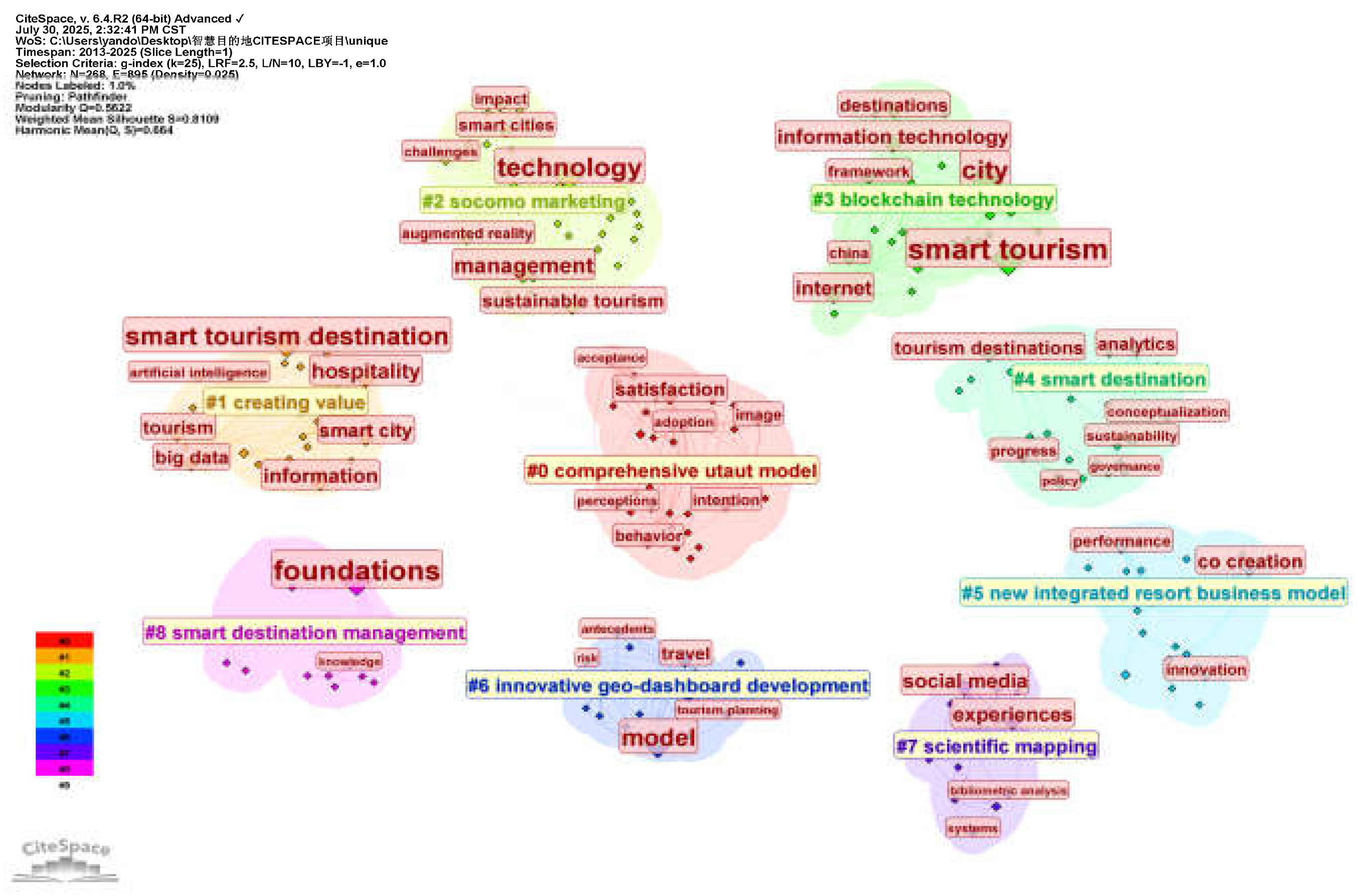
Figure 11.
Keyword time zone
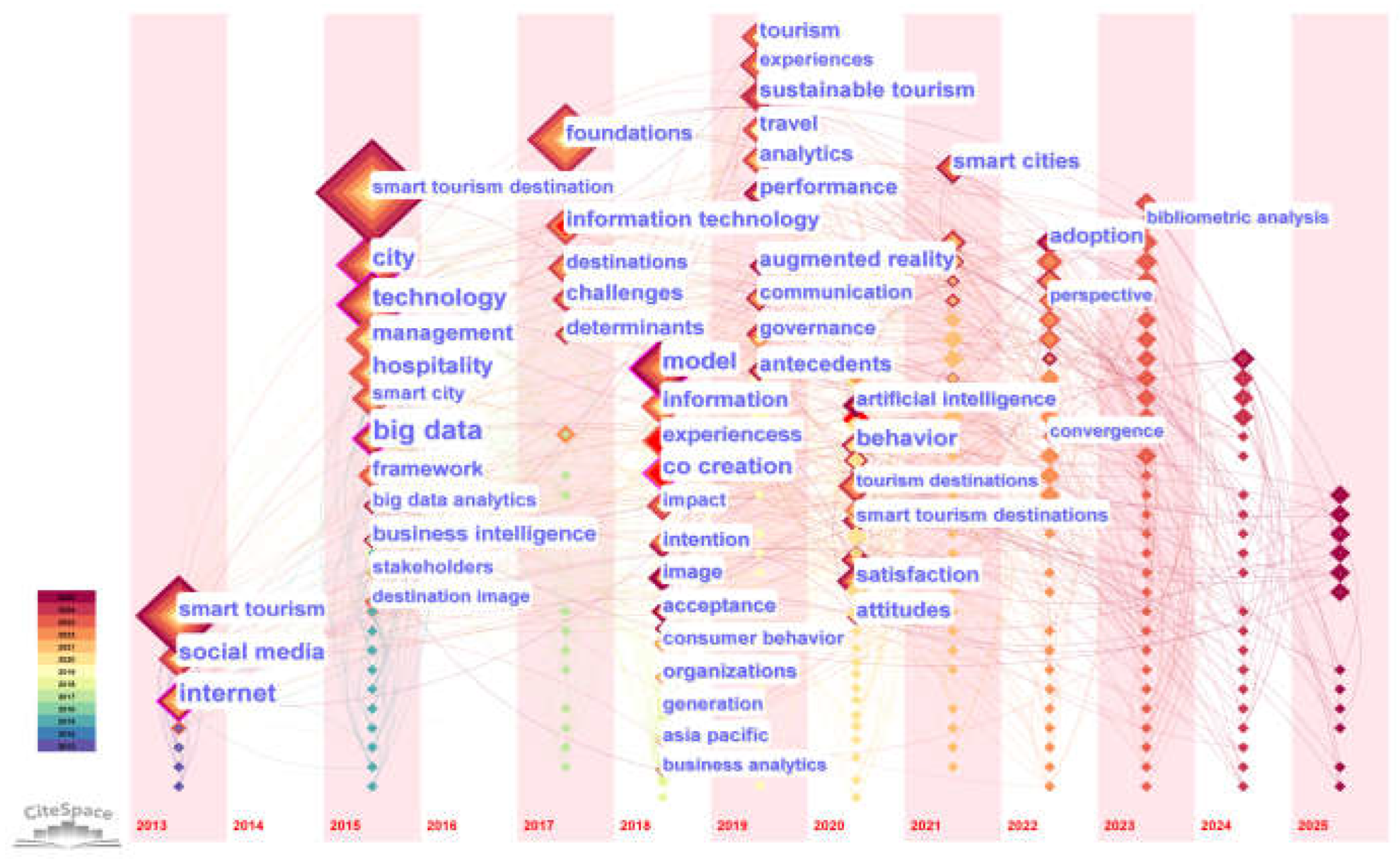
Table 1.
Top 10 publications by number of articles published
| Ranking | Journal | Count | Percentage |
|---|---|---|---|
| 1 | Sustainability | 30 | 12.93% |
| 2 | Current Issues in Tourism | 16 | 6.90% |
| 3 | Journal of Destination Marketing Management | 16 | 6.90% |
| 4 | Worldwide Hospitality and Tourism Themes | 10 | 4.31% |
| 5 | Tourism Review | 9 | 3.88% |
| 6 | Journal of Hospitality and Tourism Technology | 8 | 3.45% |
| 7 | Asia Pacific Journal of Tourism Research | 7 | 3.02% |
| 8 | Tourism Management Perspectives | 7 | 3.02% |
| 9 | International Journal of Tourism Cities | 5 | 2.16% |
| 10 | Journal of Tourism Futures | 5 | 2.16% |
Table 2.
Top 10 Journal Categories
| Ranking | Web of Science Categories | Count | Percentage |
|---|---|---|---|
| 1 | Hospitality Leisure Sport Tourism | 134 | 57.76% |
| 2 | Management | 42 | 18.10% |
| 3 | Environmental Studies | 35 | 15.09% |
| 4 | Green Sustainable Science Technology | 34 | 14.66% |
| 5 | Environmental Sciences | 32 | 13.79% |
| 6 | Computer Science Information Systems | 10 | 4.31% |
| 7 | Business | 9 | 3.88% |
| 8 | Engineering Electrical Electronic | 7 | 3.02% |
| 9 | Telecommunications | 6 | 2.59% |
| 10 | Economics | 5 | 2.16% |
Table 3.
Top 10 collaborative authors
| Rank | Count | Centrality | Year | Author |
|---|---|---|---|---|
| 1 | 7 | 0 | 2019 | Ivars-baidal, Josep A |
| 2 | 6 | 0 | 2019 | Femenia-serra, Francisco |
| 3 | 6 | 0 | 2019 | Celdran-bernabeu, Marco A |
| 4 | 3 | 0 | 2023 | Banos-pino, Jose Francisco |
| 5 | 3 | 0 | 2019 | Ghatari, Ali Rajabzadeh |
| 6 | 3 | 0 | 2019 | Hasanzadeh, Alireza |
| 7 | 3 | 0 | 2019 | Jahanyan, Saeed |
| 8 | 3 | 0 | 2018 | Gonzalez-reverte, Francesc |
| 9 | 3 | 0 | 2017 | Del vecchio, Pasquale |
| 10 | 2 | 0 | 2024 | Suanpang, Pannee |
Table 4.
Top 10 collaborative institutions
| Rank | Count | Centrality | Year | Institution |
|---|---|---|---|---|
| 1 | 16 | 0 | 2019 | Universitat d'Alacant |
| 2 | 12 | 0 | 2013 | Hong Kong Polytechnic University |
| 3 | 5 | 0 | 2020 | Universidad de Malaga |
| 4 | 5 | 0 | 2019 | Tarbiat Modares University |
| 5 | 4 | 0 | 2019 | University of Isfahan |
| 6 | 4 | 0 | 2017 | Kyung Hee University |
| 7 | 3 | 0 | 2022 | Sisaket Rajabhat University |
| 8 | 3 | 0 | 2019 | Parthenope University Naples |
| 9 | 3 | 0 | 2022 | Kookmin University |
| 10 | 3 | 0 | 2022 | Universidad Nacional de Educacion a Distancia (UNED) |
Table 6.
Top 10 most co-cited Journals
| Rank | Count | Centrality | Year | 5-Year IF | Cited Journal |
|---|---|---|---|---|---|
| 1 | 179 | 0.01 | 2015 | 13.6 | TOURISM MANAGE |
| 2 | 164 | 0.02 | 2015 | 9.2 | J DESTIN MARK MANAGE |
| 3 | 158 | 0.01 | 2015 | 6.3 | CURR ISSUES TOUR |
| 4 | 140 | 0.01 | 2019 | 3.6 | SUSTAINABILITY-BASEL |
| 5 | 137 | 0.05 | 2013 | 9.8 | J TRAVEL RES |
| 6 | 136 | 0.02 | 2017 | 10 | ELECTRON MARK |
| 7 | 130 | 0.02 | 2015 | 11.1 | ANN TOURISM RES |
| 8 | 125 | 0.01 | 2015 | N/A | INFORM COMMUNICATION |
| 9 | 119 | 0.03 | 2017 | 3.0 | INT J TOUR CITIES |
| 10 | 113 | 0.01 | 2019 | 8.3 | TOUR MANAG PERSPECT |
Table 7.
Top 10 most co-cited references
| Rank | Count | Centrality | Year | Cited References |
|---|---|---|---|---|
| 1 | 125 | 0.02 | 2015 | Gretzel U, 2015, ELECTRON MARK, V25, P179, Smart tourism: foundations and developments |
| 2 | 92 | 0.09 | 2016 | Boes K, 2016, INT J TOUR CITIES, V2, P108, Smart tourism destinations: ecosystems for destination competitiveness |
| 3 | 79 | 0.01 | 2015 | Gretzel U, 2015, COMPUT HUM BEHAV, V50, P558, Conceptual foundations for understanding smart tourism ecosystems |
| 4 | 71 | 0.02 | 2019 | Ivars-Baidal JA, 2019, CURR ISSUES TOUR, V22, P1581, Smart destinations and the evolution of ICTs: a new scenario for destination management? |
| 5 | 62 | 0.05 | 2015 | Buhalis D, 2015, INFORMATION AND COMMUNICATION TECHNOLOGIES IN TOURISM 2015, V0, P0, Smart Tourism Destinations Enhancing Tourism Experience Through Personalisation of Services |
| 6 | 60 | 0.03 | 2013 | Wang D, 2013, J DESTIN MARK MANAGE, V2, P59, China's “smart tourism destination” initiative: A taste of the service-dominant logic |
| 7 | 57 | 0.04 | 2013 | Buhalis D, 2013, INFORM COMMUNICATION, V0, PP553, Smart Tourism Destinations |
| 8 | 56 | 0.06 | 2015 | Boes K, 2015, INFORMATION AND COMMUNICATION TECHNOLOGIES IN TOURISM, V0, P0, Conceptualising Smart Tourism Destination Dimensions |
| 9 | 53 | 0.02 | 2015 | Del Chiappa G, 2015, J DESTIN MARK MANAGE, V4, P145, Knowledge transfer in smart tourism destinations: Analyzing the effects of a network structure |
| 10 | 46 | 0.12 | 2016 | Buonincontri P, 2016, INF TECHNOL TOUR, V16, P285, The experience co-creation in smart tourism destinations: a multiple case analysis of European destinations |
Disclaimer/Publisher’s Note: The statements, opinions and data contained in all publications are solely those of the individual author(s) and contributor(s) and not of MDPI and/or the editor(s). MDPI and/or the editor(s) disclaim responsibility for any injury to people or property resulting from any ideas, methods, instructions or products referred to in the content. |
© 2025 by the authors. Licensee MDPI, Basel, Switzerland. This article is an open access article distributed under the terms and conditions of the Creative Commons Attribution (CC BY) license (http://creativecommons.org/licenses/by/4.0/).
Copyright: This open access article is published under a Creative Commons CC BY 4.0 license, which permit the free download, distribution, and reuse, provided that the author and preprint are cited in any reuse.