
Submitted:
01 September 2025
Posted:
02 September 2025
You are already at the latest version
Preprints on COVID-19 and SARS-CoV-2
Abstract
This review article analyzes how decades of progress in maternal and neonatal health (MNH) are being threatened by global crises, conflicts, and socioeconomic inequities, which have led to significant health disparities in the Middle East and North Africa (MENA) region. The paper calls for context-specific research on the long-term effects of COVID-19 and its variants on MNH, as the absence of this data indicates a deep-seated deficiency in a public health infrastructure not yet equipped for sophisticated epidemiological surveillance during a crisis. While Artificial Intelligence (AI) offers transformative potential through improved diagnostics, predictive analytics, and enhanced healthcare delivery, its adoption in MENA region is hindered by digital infrastructure deficits, skill gaps, and complex data privacy and ethical concerns. This review argues that AI can only be a transformative agent if designed to address these multifaceted barriers. By reviewing current AI initiatives and their potential for equitable healthcare delivery, this review concludes with a proposed implementation roadmap for responsible and equitable AI integration to re-accelerate progress towards the Sustainable Development Goals (SDGs) for MNH in the MENA region.
Keywords:
Maternal
; Neonatal
; AI
; COVID-19 and MENA
1. Introduction
The global community has made significant, though uneven, progress in MNH over the past few decades. This progress is primarily due to concerted public health efforts, increased access to care, and medical innovations that have led to a general decline in mortality rates. Despite historical improvements, the pace of progress in maternal and neonatal health is no longer consistent, with some regions now showing a decline in key health indicators [1]. A complex interplay of systemic failures, global crises, and entrenched socio-economic and cultural barriers has caused a slowdown that now threatens to reverse decades of progress and put the 2030 SDGs specifically SDG 3.1: Maternal Mortality and SDG 3.2 at risk [2,3].
Against this backdrop, AI offers significant promise for advancing MNH through improved diagnostics, predictive analytics, and healthcare delivery. However, its effective implementation faces substantial regional, socio-economic, and geopolitical barriers, including digital infrastructure limitations, skill gaps, data privacy concerns, and unique ethical dilemmas within the MENA context [4]. While the global community has witnessed significant progress in MNH over recent decades, this positive trajectory has plateaued, with many regions experiencing reversals [5]. The MENA region presents a particularly acute case, where a complex interplay of systemic failures and global crises threatens to reverse hard-won gains and impede the achievement of SDGs for MNH [6].
This review argues that the MENA region represents a unique and particularly acute case of this global challenge. Despite some regional progress, a significant disparity exists between high-income Gulf nations and countries grappling with conflict, fragility, and economic hardship.
2. The MNH Global Crisis with Lens on MENA Region
Towards the end of the twentieth century and the beginning of the twenty-first century, global MNH attained an unprecedented level of elevation. The MDGs had an immense ability to precipitate the decline in Maternal Mortality Ratios (MMR) and in under-five mortality was immense [7]. As the service delivery system improved, progress was made in areas such as immunization, skilled birth attendance, and family planning access. By 2015, the world's MMR had, in fact, decreased almost 45% away from 1990 levels, while the Neonatal Mortality Rate (NMR) had fallen by nearly one-third [8,9,10]. These achievements were phenomenal statistical victories, saving millions of lives and improving human well-being [11]. Following significant advancements in MNH during the MDGs era, the post-2015 period has seen a concerning slowdown, and in some instances, reversals, in the decline of maternal and neonatal mortality rates. This stall is largely attributable to a complex interplay of systemic failures, global crises such as the COVID-19 pandemic and persistent socioeconomic inequities that have overwhelmed healthcare systems [12,13]. The MENA region, despite some overall improvements, exemplifies this global challenge, with vast disparities existing between high-income Gulf nations and conflict-affected countries.
2.1. Trends in Maternal and Neonatal Mortality
According to data from the WHO and UNICEF [1,14], maternal and neonatal mortality rates (MMR and NMR) in the MENA region have shown a positive overall trend, as summarized in Supplementary File Table S1.
Figure 1. Illustrates these trends, despite the general trend of improvement, the figure reveals considerable disparities in mortality rates among countries, highlighting the uneven distribution of progress. GCC countries, including the UAE have the most favorable outcomes, with an MMR, whereas such low cases represent probably the highest expenditure safe to stable health system in the world. Conversely, one interpretation of data from countries like Yemen, with an MMR of 118 and an NMR of 39, and Sudan, with an MMR of 256 and an NMR of 50, the data suggests that humanitarian crises severely undermine healthcare services, leading to poorer health outcomes.
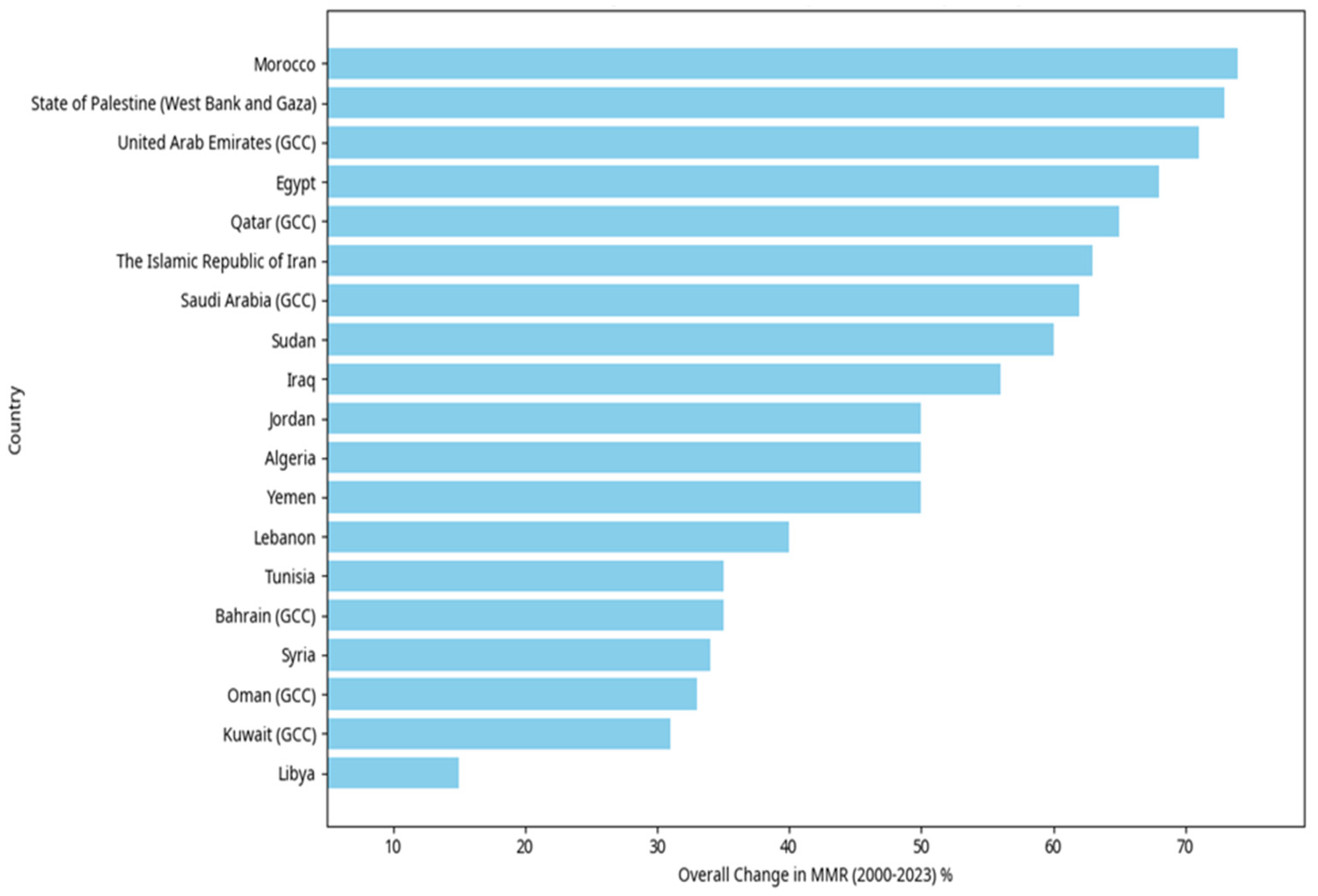
Figure 2. The "Overall change in MMR between 2000 and 2023" column shows that all listed countries experienced a significant decline, with some achieving a reduction of over 70% (e.g., State of Palestine (before war- October 2023) and UAE)
2.2. Systemic Vulnerabilities and Compounding Crises: MENA
The hard-won progress in MNH in the MENA region is being reversed by a set of escalating crises functioning as "threat multipliers". These crises do not act in isolation but exploit and aggravate the existing systematic vulnerabilities of the health sector. The COVID-19 pandemic, for example, exposed the fragility of national health systems by diverting critical resources and deterring pregnant women from seeking care, leading to increased preventable complications and deaths [15]. Furthermore women with long COVID have been found to be at a higher risk for adverse maternal and neonatal outcomes, including preterm birth and an increased need for neonatal intensive care. Similarly, a systematic review noted a stillbirth rate of 9.9 per 1000 total births in babies born to COVID-19 mothers, although it concluded that the overall rate of stillbirth was low [16,17]. The potential for COVID-19 to impact fetal brain development has been a significant area of research. Theoretical mechanisms for such an impact include maternal immune activation, placental disruption leading to conditions like preeclampsia and intrauterine growth restriction and altered epigenetic processes. However, a central and surprising finding has fundamentally shifted the understanding of this risk. A study on neurodevelopmental outcomes at six months found a profound distinction: infants born [18]. Additionally, while the Omicron variant of COVID -19 is associated with a significantly lower risk of critical care admission and preterm birth in pregnant women compared to the Delta variant, its overall risk relative to uninfected pregnancies remains to be conclusively determined [19]. As of yet, there is a paucity of research on this topic within the MENA region. These potential risks indirectly impede the achievement of SDG 3. 1& 2 of 2030.
This is further compounded by significant financial barriers, such as high out-of-pocket (OOP) healthcare expenditures. This strain is intensified by economic downturns, political instability, and conflicts. In countries such as Egypt, where OOP payments form a substantial portion of health spending, susceptible families are often confronted with a choice between MNH care and other basic necessities. Such a financial strain, an existing vulnerability, is exacerbated by economic turning downward, political instability, and conflicts [20].
The devastating impact of conflicts, exemplified by the war in Gaza and Sudan, further dismantles healthcare infrastructure and exacerbates humanitarian crises, leading to dire MNH outcomes, for example, the observed outcome from Gaza documented high prevalence of low birth weight (10.8%), maternal anemia (50.4%), high stress levels (62.08%). In Sudan, a significant majority of women (86.6%) lack access to healthcare services, with adverse outcomes linked to factors like delivery mode and gestational age [21,22]. Furthermore, systemic information and geopolitical barriers impede effective implementation of health solutions, including AI. In remote areas, 'information poverty' often compounds 'geographic poverty,' hindering access to care. Effective AI utilization necessitates massive, high-quality datasets, yet the MENA region faces significant challenges due to data and trust issues. Political tensions and a lack of standardized data governance frameworks foster mistrust regarding privacy and cross-border data sharing [23,24,25]. The absence of robust digital security also renders health data vulnerable to cyber-attacks, while the politicization of health issues can lead to inequitable resource distribution, creating a profound 'AI-equity gap' where resource-limited countries lag behind those heavily investing in digital health infrastructure [26,27,28]. This disparity risks creating a two-tiered healthcare system, where access to life-saving AI interventions is determined by geography and economic stability [29] .
3. AI: A Catalyst for MNH Progress in MENA
While the application of AI in MNH is still in its nascent stages, its rapid expansion across global healthcare systems, including the MENA region, signals a promising frontier for improving health equity and achieving sustainable development goals related to health and wellbeing [4,30].
AI4GH Innovation Hub is a collaborative effort to establish an AI innovation network to improve sexual, reproductive, and maternal health outcomes across the MENA Region. This intervention emphasizes strengthening health systems through the utilization of responsible AI solutions. The hub seeks to build a vibrant community of practice among African innovators, researchers, and other stakeholders that would result in local AI innovations catering to the needs of the region.
The project addresses crucial problems, including unintended pregnancies, early and forced marriages, complications of unsafe abortions, and gender-based violence [31]. This initiative highlights a concerted effort to leverage AI for broader public health improvements beyond direct clinical applications, focusing on systemic enhancements and equitable access to information and services. Despite the initiatives and challenges discussed earlier, several notable AI initiatives and projects are underway across the MENA region, specifically targeting MNH.
3.1. AI for Predictive Analytics and Clinical Decision Support
In Qatar AI solutions are actively being explored and implemented to enhance MNH, with a particular emphasis on precision medicine and predictive analytics. Studies are evaluating the efficacy of AI algorithms in predicting the mode of delivery, aiming to optimize birth planning and reduce complications [32]. This focus on predictive modeling extends to broader precision medicine initiatives within MNH. For instance, the AMAL-For- Qatar project is a pioneering endeavor that seeks to revolutionize prenatal care by integrating advanced AI to automate the analysis of fetal data, thereby enabling earlier and more accurate detection of potential issues [33,34].
The kingdom of Saudi Arabia (KSA) is actively integrating AI into its healthcare system, with initiatives including the evaluation of algorithms for predicting the mode of delivery [35]. The commitment to AI integration is further demonstrated by ongoing surveys assessing healthcare professionals' perspectives and readiness to adopt AI in pediatric critical care, highlighting a proactive approach to workforce preparedness [36]. A key area of development is using the application as predictive modeling to identify high-risk pregnancies and improve maternal and newborn health outcomes [37,38]. The Saudi Data and Artificial Intelligence Authority (SDAIA) play a pivotal role in driving the integration of AI across various sectors, including healthcare, to enhance service quality and address existing challenges [39].
Tunisia is also making strides in leveraging AI to improve MNH [40], the country is witnessing the introduction of AI-assisted electronic clinical decision support systems (eCDSS) specifically designed for antenatal and perinatal care, with the overarching goal of reducing maternal and neonatal mortality [41].
In the field of neonatology in Morocco, studies are exploring the feasibility and implementation of AI in university hospitals to optimize early detection, risk assessment, and personalized management of conditions such as Respiratory Distress Syndrome (RDS) in newborns [42].
3.2. AI in Medical Imaging, Diagnostics and Manpower
For MBZUAI by Mohamed Bin Zayed university located in UAE is spearheading developments in prenatal and postnatal health improvement through AI development in medical imaging and ultrasound analysis. Amongst the most innovative accomplishments, FetalCLIP is an application of AI in fetal ultrasound imaging interpretation, created in the BioMedIA Lab. This model also executes the precise measurement of fetal anatomy, which is important for assessment of its growth and development so as to enable health providers to facilitate healthier pregnancies and babies all around the world [43].
While research and initiatives in Egypt are exploring the application of AI for crucial aspects such as fetal monitoring in maternity units, accompanied by efforts to educate nursing staff on the perspectives and attitudes surrounding AI integration [44]. The role of AI in empowering obstetrical and gynecological nurses is gaining prominence, with the aim of enhancing women's safety and overall healthcare delivery [45].
3.3. AI for Mobile Health (mHealth) and Community Engagement
The GAIN MHI project in Lebanon stands as a compelling case study for the successful integration of AI-driven, gamified mHealth interventions in improving maternal health outcomes within resource-constrained settings. The study evaluating GAIN MHI demonstrated its effectiveness in enhancing Antenatal Care (ANC) utilization and improving both maternal and neonatal outcomes, particularly when healthcare providers (HCPs) were actively engaged in the intervention [46]. The study showed significantly higher odds of pregnant women having at least four ANC visits, having all recommended ultrasounds and lab tests, and increasing supplement intake in the group where HCPs were involved. There were also improvements in term delivery and a drastic 52.15% reduction in NMR resulting from the intervention. These findings underscore the critical importance of harnessing digital tools along with direct clinical support to break down systemic barriers to maternal health in resource-poor settings [46].
Other counties within MENA region not mentioned above appear to initiatives/ approaches in an early, strategic phase, with a strong emphasis on public announcements, conference events and press release aim at developing the necessary technological infrastructure to support future AI applications in healthcare, particularly within MNH. The initiatives haven’t yet resulted in peer-reviewed scientific studies.
4. The Potential of AI to Re-Accelerate Equity (with a MENA-Specific Lens)
AI can re-accelerate progress in MNH in the MENA region by offering low-tech, scalable solutions that bypass traditional infrastructure limitations. Instead of focusing on large, expensive systems, the key lies in leveraging existing mobile technology and data-driven insights to improve resource allocation and the capacity of healthcare workers.
4.1. Improving Care with Limited Infrastructure
The scope of AI in MENA is not to substitute human healthcare professionals but rather to empower them in their delivery of services in remote or under-resourced settings. Low tech AI solutions that are operated with nothing more than a smartphone or basic feature phone enhance their capacity in care to fill critical gaps. For instance, AI-powered chatbots and SMS services can give pregnant women personalized health information, breastfeeding counseling [47]. Similarly, AI can be used to analyze basic medical images captured with handheld, low-cost ultrasound devices, allowing trained midwives or community health workers to detect high-risk conditions like placenta previa or fetal growth restriction, which would otherwise go undiagnosed due to a lack of specialized radiologists [48,49,50].
4.2. Optimizing Resource Allocation
In a region with fragmented health systems and severe resource shortages, AI can become a powerful tool for strategic resource allocation. By analyzing data from mobile health applications, clinic visits, and even public health databases, AI models can predict disease outbreaks, identify underserved populations, and forecast spikes in demand for obstetric care in specific regions [51,52].This predictive capability allows governments and aid organizations to proactively dispatch mobile clinics, allocate essential supplies, and deploy skilled medical staff where they are needed most. In conflict zones, for instance, an AI model could analyze real-time data on displacement patterns and conflict intensity to predict humanitarian health needs, ensuring that a limited supply of medical resources reaches the most vulnerable populations.
4.3. Enhancing Training and Capacity-Building
AI can help to address the acute shortage of healthcare professionals and the lack of specialized training in the region. AI-driven training simulations and virtual reality (VR) platforms can provide an affordable way to educate and improve skill healthcare workers, from doctors to community health workers [53]. AI can also be a clinical decision support tool guiding frontline worker operating in remote areas that are faced with complex cases that they cannot handle alone with their own expertise. With it, they have the knowhow to make a better decision on the spot, with that shore up expertise on site improving patient outcomes and building their local capacity. By leveraging these AI-powered tools, the MENA region can start building a more resilient and equitable health workforce in MNH.
4.4. AI Implementation Roadmap for MNH in the MENA Region
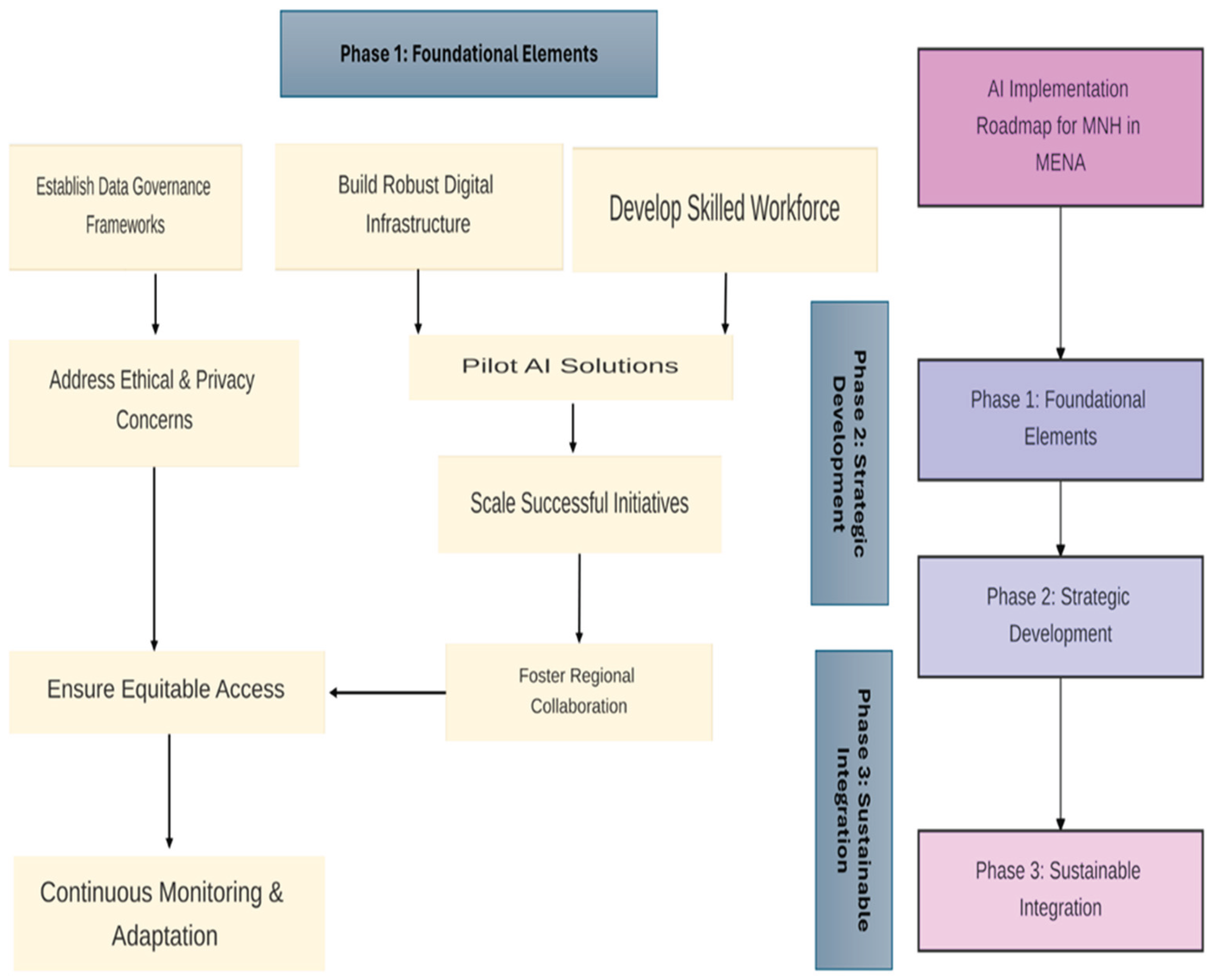
Based on the gap identified within the current review, a roadmap for suggested implantation of AI tool especially for MENA region to overcome the barriers discussed earlier. The proposed three-phased timeline is to be looked at. The first phase of the roadmap, titled “Foundational Elements,” is to focus on the creation of appropriate data governance, digital infrastructure, and workforce training. The second phase, “Strategic Development,” aims to focus on testing and scaling effective AI projects, while the third phase, “Sustainable Integration,” focuses on regional cooperation, equitable access, and ethical and privacy-related continuous monitoring and adaptation. This phased approach highlights the interconnected AI deployment efforts within technology, ethics, and collaboration.
Figure 3.
Suggested AI Implementation Roadmap for MNH in the MENA Region. This diagram outlines a three-phase approach Foundational Elements, Strategic Development, and Sustainable Integration essential for the effective and equitable deployment of AI solutions to improve MNH outcomes in the Middle East and North Africa region. It highlights key interdependencies and the iterative nature of successful AI integration, emphasizing the importance of addressing ethical and privacy concerns alongside technological and collaborative efforts.
Figure 3.
Suggested AI Implementation Roadmap for MNH in the MENA Region. This diagram outlines a three-phase approach Foundational Elements, Strategic Development, and Sustainable Integration essential for the effective and equitable deployment of AI solutions to improve MNH outcomes in the Middle East and North Africa region. It highlights key interdependencies and the iterative nature of successful AI integration, emphasizing the importance of addressing ethical and privacy concerns alongside technological and collaborative efforts.
5. Conclusions
Ultimately, this review concludes that while AI offers a powerful, conditional opportunity to re-accelerate progress in MNH and overcome the multifaceted barriers prevalent in the MENA region. Its transformative potential can only be fully realized by addressing the region's unique systemic vulnerabilities. This review also recommends and calls for context-specific research and action on the long-term effect of COIVD-19 and its variants on MNH. The absence of variant-specific data from the region is not a superficial finding but a deep-seated indicator of a public health infrastructure that is not yet equipped for sophisticated epidemiological surveillance during a crisis.
On the other hand, AI is no longer a theoretical force, but a practical one could catalyze the re-acceleration of efforts toward the SDGs for MNH in the MENA region. As demonstrated in this review, AI has great potential in various fields, from predictive analytics and clinical decision support to medical imaging and diagnostics, as well as in engaging the community with mobile health (mHealth) applications. Various initiatives throughout Qatar, KSA, Tunisia, Morocco, UAE, and Egypt highlight the growing interest in unleashing AI's transformative potential for bettering MNH outcomes in the region. However, there are major challenges to the effective and equitable integration of AI in the MENA region. Two major roadblocks include the historical digital infrastructure deficit and an alarming shortage of professionals across disciplinary streams. In addition, there are deeper challenges surrounding data fairness, privacy, trust, and governance. The politicization of health issues and the creation of an "AI-equity gap" further threaten to create a two-tiered system where access to life saving AI interventions could be determined by geographic and economics factors rather than medical need. These multifaceted barriers necessitate a nuanced and context-specific approach to AI implementation.
This, therefore, is an inflection point in the review: AI can serve as an agent of transformation only if its design and deployment are purposefully and closely aligned with the multi-layered barriers discussed. This will create a synergy between responsible AI use and efforts to tackle systemic vulnerabilities. These include digital infrastructure investment, comprehensive capacity building for health workers, the establishment of strong yet ethical data governance framework, and regional and international collaborations to close the "AI-equity gap". If the MENA region focuses on these foundational elements, it can tap the full potential of AI to overcome the current stagnation. For this reason, the review suggests an AI implementation roadmap for MNH in the MENA region, ensuring that every mother and newborn has access to quality care on any given day, irrespective of socio-economic or geographical backgrounds.
Supplementary Materials
The following supporting information can be downloaded at the website of this paper posted on Preprints.org. Table S1.
Author Contributions
Conceptualization, M.A.I. resources, M.A.I.; writing—original draft preparation, M.A.I.; writing—review and editing, M.A.I.; visualization, M.A.I.; The author has read and agreed to the published version of the manuscript.
Funding
This research received no external funding.
Institutional Review Board Statement
Not applicable.
Informed Consent Statement
Not applicable.
Data Availability Statement
No new data were created or analyzed in this study.
Acknowledgments
GenAI has been used for purposes of enhancing written communication, specifically through grammar checking and improving readability. During the preparation of this manuscript, the author used Gemini, Gemini 2.5 Flash for the purposes of improving readability. The author has reviewed and edited the output and take full responsibility for the content of this publication.
Conflicts of Interest
The authors declare no conflicts of interest.
Abbreviations
The following abbreviations are used in this manuscript:
| MNH: maternal and neonatal health |
| MENA: Middle East and Northern Africa |
| COVID19: Coronavirus disease of 2019 |
| SDGs: Sustainable Development Goals |
| MDGs: Millennium Development Goals |
| MMR: Maternal Mortality Ratios |
| NMR: Neonatal Mortality Rate |
| WHO: World Health Organization |
| UNICEF: United Nations Children's Fund |
| GCC: Gulf Cooperation Council |
| UAE: United Arab Emirates |
| U5MR: Under-Five Mortality Rate |
| OOP: out-of-pocket |
| KSA: The kingdom of Saudi Arabia |
| SDAIA: Saudi Data and Artificial Intelligence Authority |
| eCDSS: Electronic Clinical Decision Support Systems |
| RDS: Respiratory Distress Syndrome |
| ANC: Antenatal Care |
| HCPs: HealthCare Providers |
References
- WHO, U., UNFPA, World Bank Group and UNDESA/Population Division. Trends in maternal mortality 2000 to 2023: estimates by WHO, UNICEF, UNFPA, World Bank Group and UNDESA/Population Division. Available online: https://www.who.int/publications/i/item/9789240108462.
- Boldosser-Boesch, A.; Brun, M.; Carvajal, L.; Chou, D.; de Bernis, L.; Fogg, K.; Hill, K.; Jolivet, R.; McCallon, B.; Moran, A.; et al. Setting maternal mortality targets for the SDGs. Lancet 2017, 389, 696–697. [CrossRef]
- Collaborators:, G.U.-M. Global, regional, and national progress towards Sustainable Development Goal 3.2 for neonatal and child health: all-cause and cause-specific mortality findings from the Global Burden of Disease Study 2019. 2021, 398, 870–905. [CrossRef]
- Khosravi, M.; Mojtabaeian, S.M.; Demiray, E.K.D.; Sayar, B. A Systematic Review of the Outcomes of Utilization of Artificial Intelligence Within the Healthcare Systems of the Middle East: A Thematic Analysis of Findings. Health Science Reports 2024, 7, e70300. [CrossRef]
- Lee, S.; Kim, S.; Lee, H.; Park, J.; Son, Y.; Sánchez, G.F.L.; Pizzol, D.; Lee, J.; Lee, Y.J.; Lee, H.; et al. Global, Regional, and National Trends in Maternal Mortality Ratio Across 37 High Income Countries From 1990 to 2021, With Projections up to 2050: A Comprehensive Analysis From the WHO Mortality Database. Journal of Korean Medical Science 2025, 40. [CrossRef]
- Sepanlou, S.G.; Aliabadi, H.R.; Malekzadeh, R.; Naghavi, M.; In Middle East Collaborators, G.C.M. Neonate, Infant, and Child Mortality in North Africa and Middle East by Cause: An Analysis for the Global Burden of Disease Study 2019. Archives of Iranian medicine 2022, 25, 767. [CrossRef]
- Cha, S. The impact of the worldwide Millennium Development Goals campaign on maternal and under-five child mortality reduction: ‘Where did the worldwide campaign work most effectively?’. Global Health Action 2017. [CrossRef]
- Alkema, L.; Chou, D.; Hogan, D.; Zhang, S.; Moller, A.-B.; Gemmill, A.; Fat, D.M.; Boerma, T.; Temmerman, M.; Mathers, C.; et al. Global, regional, and national levels and trends in maternal mortality between 1990 and 2015, with scenario-based projections to 2030: a systematic analysis by the UN Maternal Mortality Estimation Inter-Agency Group. Lancet 2016, 387, 462–474. [CrossRef]
- Unicef. Maternal mortality declined by 34 per cent between 2000 and 2020. Topics in maternal health 2023.
- Jackson, D. Global Maternal Child Health Initiatives and Programs 1974 to 2023. Maternal and Child Health Journal 2025, 1–14. [CrossRef]
- Brault, M.A.; Mwinga, K.; Kipp, A.M.; Kennedy, S.B.; Maimbolwa, M.; Moyo, P.; Ngure, K.; Haley, C.A.; Vermund, S.H. Measuring child survival for the Millennium Development Goals in Africa: what have we learned and what more is needed to evaluate the Sustainable Development Goals? Global Health Action 2020, 13, 1732668. [CrossRef]
- Raina, N.; Khanna, R.; Gupta, S.; Jayathilaka, C.A.; Mehta, R.; Behera, S. Progress in achieving SDG targets for mortality reduction among mothers, newborns, and children in the WHO South-East Asia Region. Lancet Regional Health - Southeast Asia 2023, 18, 100307. [CrossRef]
- Yuan, H.; Wang, X.; Gao, L.; Wang, T.; Liu, B.; Fang, D.; Gao, Y. Progress towards the Sustainable Development Goals has been slowed by indirect effects of the COVID-19 pandemic. Communications Earth & Environment 2023, 4, 1–13. [CrossRef]
- Arora, A. Levels and trends in child mortality 2024 - UNICEF DATA. Available online: https://data.unicef.org/resources/levels-and-trends-in-child-mortality-2024/#:~:text=While%20the%20overall%20decline%20in%20under%2Dfive%20mortality,44%20per%20cent%20decline%20in%20neonatal%20deaths.
- Osendarp, S.; Akuoku, J.K.; Black, R.E.; Headey, D.; Ruel, M.; Scott, N.; Shekar, M.; Walker, N.; Flory, A.; Haddad, L.; et al. The COVID-19 crisis will exacerbate maternal and child undernutrition and child mortality in low- and middle-income countries. Nature Food 2021, 2, 476–484. [CrossRef]
- Kar, R.D.S.S. COVID-19 in pregnancy: the foetal perspective a systematic review. 2020, 4. [CrossRef]
- Georgakopoulou, V.E.; Taskou, C.; Spandidos, D.A.; Sarantaki, A. Long COVID-19 and pregnancy: A systematic review. Biomedical Reports 2024, 22, 15. [CrossRef]
- Dubey, H.; Sharma, R.K.; Krishnan, S.; Knickmeyer, R. SARS-CoV-2 (COVID-19) as a possible risk factor for neurodevelopmental disorders. Frontiers in Neuroscience 2022, 16, 1021721. [CrossRef]
- Auger, N.; Healy-Profitós, J. Omicron in pregnancy: time to breathe easier? Lancet. Respiratory Medicine 2022, 10, 1101. [CrossRef]
- Biltagy, M.; Hamdi, M. Public health expenditure and household poverty: case study of Egypt. Future Business Journal 2024, 10, 1–12. [CrossRef]
- Aldabbour, B.; Elamassie, S.; Mahdi, S.; Abuzaid, H.; Abed, T.; Tannira, Y.; Skaik, K.; Zaydah, Y.A.; Elkolak, A.; Alhabashi, M.; et al. Exploring maternal and neonatal health in a conflict-affected setting: cross-sectional findings from Gaza. Conflict and Health 2025, 19, 45. [CrossRef]
- Miskeen, E. The impact of the military conflict in Sudan on maternal health: a mixed qualitative and quantitative study. PeerJ 2024, 12, e17484. [CrossRef]
- Ahmadian, L.; Salehi, F.; Bahaadinbeigy, K. Application of geographic information systems in maternal health: a scoping review. East Mediterr Health J 2020, 26, 1403-1414.
- Trigui, H.; Guerfali, F.; Harigua-Souiai, E.; Qasrawi, R.; Atri, C.; Sokhn, E.S.; Morr, C.E.; Hammami, K.; Souiai, O.; Wu, J.; et al. Exploring AI governance in the Middle East and North Africa (MENA) region: gaps, efforts, and initiatives. Data & Policy 2024, 6, e83. [CrossRef]
- Moujahid, C.; Turman, J.E.; Amahdar, L. A scoping review of the social determinants of maternal health in the MENA region. Pan African Medical Journal 2024, 47, 205. [CrossRef]
- Unicef; Organization, W.H. Ending preventable newborn and stillbirths by 2030: moving faster towards high-quality universal health coverage in 2020–2025. 2020.
- Ahmed, M.I.; Spooner, B.; Isherwood, J.; Lane, M.; Orrock, E.; Dennison, A. A Systematic Review of the Barriers to the Implementation of Artificial Intelligence in Healthcare. Cureus 2023, 15, e46454. [CrossRef]
- Hleihel, W.; Najjar, N. Impact of Artificial Intelligence on Healthcare and Its Challenges in the MENA Region. In AI in the Middle East for Growth and Business: A Transformative Force; Palgrave Macmillan: Cham, Switzerland, 2025; pp. 131–144.
- Saleh, S.; Fouad, F.M. Political economy of health in fragile and conflict-affected regions in the Middle East and North Africa region. Journal of Global Health 2022, 12, 01003. [CrossRef]
- Khan, M.; Khurshid, M.; Vatsa, M.; Singh, R.; Duggal, M.; Singh, K. On AI Approaches for Promoting Maternal and Neonatal Health in Low Resource Settings: A Review. Frontiers in Public Health 2022, 10, 880034. [CrossRef]
- AI4GH. Innovation hub in the Middle East and North Africa on using artificial intelligence to improve sexual, reproductive and maternal health. Available online: https://idrc-crdi.ca/en/what-we-do/projects-we-support/project/ai4gh-innovation-hub-middle-east-and-north-africa-using.
- Al-Dewik, N.; Abuarja, T.; Younes, S.; Nasrallah, G.; Alsharshani, M.; Ibrahim, F.E.; Samara, M.; Farrell, T.; Abdulrouf, P.V.; Qoronfleh, M.W.; et al. Precision medicine activities and opportunities for shaping maternal and neonatal health in Qatar. Personalized Medicine 2024. [CrossRef]
- Agus, M.H.M. AMAL-For-Qatar: Advancing Precision Medicine with AI-Mediated for Fetal Life through Ultrasound Video Analysis. Available online: https://elmi.hbku.edu.qa/en/projects/amal-for-qatar-advancing-precision-medicine-with-ai-mediated-for-.
- AlSaad, R.; Abd-Alrazaq, A.; Choucair, F.; Ahmed, A.; Aziz, S.; Sheikh, J. Harnessing Artificial Intelligence to Predict Ovarian Stimulation Outcomes in In Vitro Fertilization: Scoping Review. Journal of Medical Internet Research 2024, 26:e53396. [CrossRef]
- Al-Shahrani, H.N.F.; Alshahrani, H.D.; Al-Masaad, N.M.M.; Almusaad, T.M.M.; Al-Musaad, H.M.M.; Dakam, F.A.M.; Almihithal, W.M.H.; Alsaad, G.M.S.; Al Saad, H.M.H.; Fawaz, A.H.N. Critical Analysis of Midwives' Impact on Maternal and Neonatal Health in Saudi Arabia. Journal of Ecohumanism 2024, 3, 2349–2357. [CrossRef]
- Al-Sofyani, K.A. Role of artificial intelligence in pediatric intensive care: a survey of healthcare staff perspectives in Saudi Arabia. Frontiers in Pediatrics 2025, 13, 1533877. [CrossRef]
- Miskeen, E.; Alfaifi, J.; Alhuian, D.M.; Alghamdi, M.; Alharthi, M.H.; Alshahrani, N.A.; Alosaimi, G.; Alshomrani, R.A.; Hajlaa, A.M.; Khair, N.M.; et al. Prospective Applications of Artificial Intelligence In Fetal Medicine: A Scoping Review of Recent Updates. International Journal of General Medicine 2025, 18:237-245. [CrossRef]
- Al Aseri, Z.; Côté, M.; Baharoon, S.; Alabdulaali, M.K.; Altamimi, S.; Arntfield, R. AI in critical care: A narrative review of prospective applications and future potential in KSA's health transformation 2030. Journal of Taibah University Medical Sciences 2025, 20, 359–364. [CrossRef]
- Memish, Z.A.; Altuwaijri, M.M.; Almoeen, A.H.; Enani, S.M. The Saudi Data & Artificial Intelligence Authority (SDAIA) Vision: Leading the Kingdom’s Journey toward Global Leadership. Journal of Epidemiology and Global Health 2021, 11, 140. [CrossRef]
- Harahap, T.H.; Mansouri, S.; Abdullah, O.S.; Uinarni, H.; Askar, S.; Jabbar, T.L.; Alawadi, A.H.; Hassan, A.Y. An artificial intelligence approach to predict infants' health status at birth. International Journal of Medical Informatics 2024, 183:105338. [CrossRef]
- Dadzie Ephraim, R.K.; Kotam, G.P.; Duah, E.; Ghartey, F.N.; Mathebula, E.M.; Mashamba-Thompson, T.P. Application of medical artificial intelligence technology in sub-Saharan Africa: Prospects for medical laboratories. Smart Health 2024, 33, 100505. [CrossRef]
- Sekkat, S.; Zouine, M.; Fangachi, O.; Sammoud, K.; Oulmaati, A.; Najdi, A. Exploring Artificial Intelligence in Neonatology: Assessing Feasibility and Perspectives for Implementation in a University Hospital in Morocco. In International Conference on Advanced Intelligent Systems for Sustainable Development (AI2SD 2024); Springer: Cham, Switzerland, 2025; pp. 58–66.
- Yaqub. Using AI to detect congenital conditions before birth. 2025.
- Shehata Ahmed, A.; Helmy Mohamed, S.; Ahmed Abd-Elhamed, M. Effect of Instructional Sessions on Nursing Perspectives and Attitudes Regarding Use of Artificial Intelligence for Fetal Monitoring in Maternity Units. Egyptian Journal of Health Care 2024, 15, 1301–1314. [CrossRef]
- Kamal Abd Elkhalek, N.; Hamdy NasrAbdelhalim, E.; Atef Osman, H.; Mohamed Ahmed Ayed, M.; Fawzy Hasab Allah Youssef, M. Effect of Educational Guidelines on Maternity Nurses' Knowledge and Attitude regarding Artificial Intelligence Application. Egyptian Journal of Health Care 2024, 15, 663–680. [CrossRef]
- Saleh, S.; El Arnaout, N.; Sabra, N.; El Dakdouki, A.; El Iskandarani, K.; Chamseddine, Z.; Hamadeh, R.; Shanaa, A.; Alameddine, M. Evaluating the impact of engaging healthcare providers in an AI-based gamified mHealth intervention for improving maternal health outcomes among disadvantaged pregnant women in Lebanon. Frontiers in Digital Health 2025, 7, 1574946. [CrossRef]
- Kerimoglu Yildiz, G.; Turk Delibalta, R.; Coktay, Z. Artificial intelligence-assisted chatbot: impact on breastfeeding outcomes and maternal anxiety. BMC Pregnancy and Childbirth 2025, 25, 1–12. [CrossRef]
- Yaseen, I.; Rather, R.A. A Theoretical Exploration of Artificial Intelligence’s Impact on Feto-Maternal Health from Conception to Delivery. International Journal of Women's Health 2024, 16, 903. [CrossRef]
- Pierucci, U.M.; Tonni, G.; Pelizzo, G.; Paraboschi, I.; Werner, H.; Ruano, R. Artificial Intelligence in Fetal Growth Restriction Management: A Narrative Review. Journal of Clinical Ultrasound 2025, 53, 825. [CrossRef]
- Ahmed, S.S.; Mahmoud, N.M. Early detection of fetal health status based on cardiotocography using artificial intelligence. Neural Computing and Applications 2025, 37, 16753–16779. [CrossRef]
- Hudu, S.A.; Alshrari, A.S.; Abu-Shoura, E.a.J.I.; Osman, A.; Jimoh, A.O. A Critical Review of the Prospect of Integrating Artificial Intelligence in Infectious Disease Diagnosis and Prognosis. Interdisciplinary Perspectives on Infectious Diseases 2025, 2025, 6816002. [CrossRef]
- Strika, Z.; Petkovic, K.; Likic, R.; Batenburg, R. Bridging healthcare gaps: a scoping review on the role of artificial intelligence, deep learning, and large language models in alleviating problems in medical deserts. Postgraduate Medical Journal 2025, 101, 4–16. [CrossRef]
- Hind, B.; Barkouk, A.; Belayachi, N.; Jallal, M.; Serhier, Z.; Othmani, M.B. Empowering Future Healthcare Professionals: Enhancing Medical Education through the Integration of Artificial Intelligence. In 2024 International Conference on Circuit, Systems and Communication (ICCSC); IEEE: pp. 28–29.
Figure 1.
The disparities in MMR and NMR for MENA region. There are significant disparities in the MMR and NMR across the MENA region, with countries affected by humanitarian crises like Sudan and Yemen having the highest rates. Conversely, GCC countries, such as Qatar and the UAE, exhibit the lowest mortality rates, reflecting a stark contrast in health outcomes.
Figure 1.
The disparities in MMR and NMR for MENA region. There are significant disparities in the MMR and NMR across the MENA region, with countries affected by humanitarian crises like Sudan and Yemen having the highest rates. Conversely, GCC countries, such as Qatar and the UAE, exhibit the lowest mortality rates, reflecting a stark contrast in health outcomes.
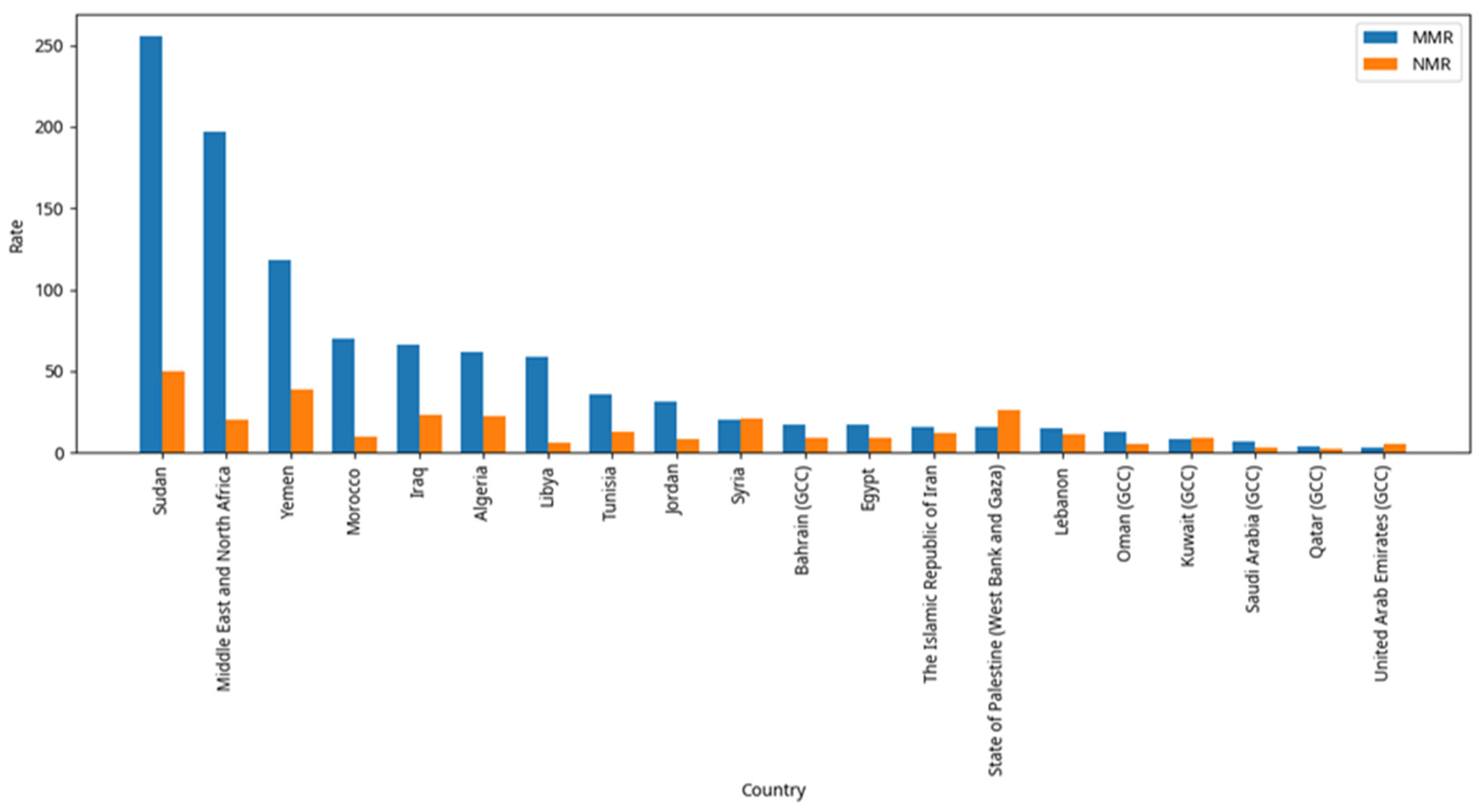
Figure 2.
The overall change in MMR between 2000-2023. However, despite this individual progress, a considerable gap and an uneven distribution of progress remain evident when comparing MMR across different nations. For example, while countries like Morocco and the United Arab Emirates have achieved a reduction of over 70%, others still face substantial challenges.
Figure 2.
The overall change in MMR between 2000-2023. However, despite this individual progress, a considerable gap and an uneven distribution of progress remain evident when comparing MMR across different nations. For example, while countries like Morocco and the United Arab Emirates have achieved a reduction of over 70%, others still face substantial challenges.
Disclaimer/Publisher’s Note: The statements, opinions and data contained in all publications are solely those of the individual author(s) and contributor(s) and not of MDPI and/or the editor(s). MDPI and/or the editor(s) disclaim responsibility for any injury to people or property resulting from any ideas, methods, instructions or products referred to in the content. |
© 2025 by the authors. Licensee MDPI, Basel, Switzerland. This article is an open access article distributed under the terms and conditions of the Creative Commons Attribution (CC BY) license (http://creativecommons.org/licenses/by/4.0/).
Copyright: This open access article is published under a Creative Commons CC BY 4.0 license, which permit the free download, distribution, and reuse, provided that the author and preprint are cited in any reuse.


