

Submitted:
21 June 2026
Posted:
22 June 2026
You are already at the latest version
Abstract
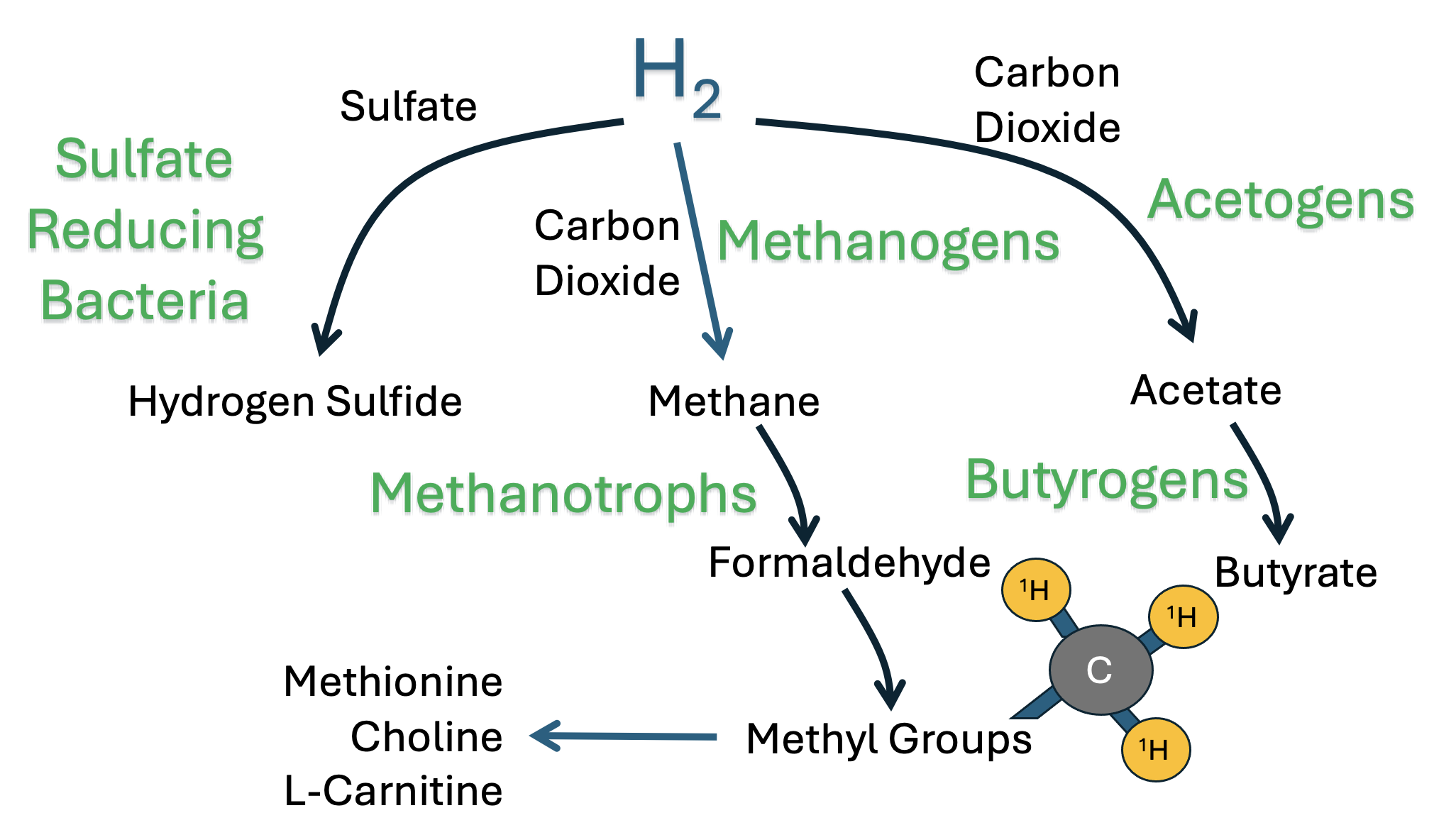
One-carbon (1C) metabolism involves the transfer of a methyl group from one molecule to another, to effect crucial cellular functions, including DNA, RNA, and protein methylation, as well as synthesis of phosphatidylcholine and L-carnitine. In this paper, we argue that impaired 1C metabolism plays a central role in mitochondrial dysfunction, due to deuterium overload in mitochondrial F1F0 ATP synthase (ATPase). Deuterium, a heavy isotope of hydrogen, damages ATPase, causing inefficiencies in ATP production and increased release of reactive oxygen species. We argue that gut microbes play a crucial role in assuring that 1C units are virtually deuterium free. S-adenosylmethionine serves as the universal methyl donor. We hypothesize that gut microbes produce extremely deuterium depleted (deupleted) hydrogen gas which they use as a reducing agent to convert carbon dioxide into organic molecules, including acetate, butyrate, formate, and the methyl groups carried in 1C metabolism. The methyl group is sourced from methyl-tetrahydrofolate (CH3-THF), while methionine, glycine, serine, formaldehyde, formate, choline, L-carnitine, and melatonin are carriers of 1C units. Through an in-depth review of methylation and demethylation processes, we hypothesize that methyl groups ultimately deliver deupleted protons to the mitochondria. Deficiencies in nutrients carrying 1C units, disrupt methylation pathways, causing disease through co-causality of mitochondrial dysfunction. Synthetic versions of choline, L-carnitine, and methionine may be problematic because they supply methyl groups that are not deupleted. Trimethylamine oxide (TMAO), derived from microbial metabolism of choline and L-carnitine, followed by oxidation in the liver, is a marker for fatty liver disease and cardiovascular disease, and it may serve as a signaling molecule for both gut dysbiosis and deuterium overload.
Keywords:
gut dysbiosis
; methanogens
; acetogens
; archaea
; butyrate
; methionine
; choline
; hydrogen gas
; deuterium
; mitochondria
Copyright: This open access article is published under a Creative Commons CC BY 4.0 license, which permit the free download, distribution, and reuse, provided that the author and preprint are cited in any reuse.


